The Real Truth About Fake News

news

Recently, I came across a New York Times feature piece bemoaning the increase of what are deemed “fake news sites.”  These are websites that purport to share what which is newsworthy, but regularly play fast and loose with the facts, usually to further a particular political agenda.  For instance, days before the election, a news story from The Denver Guardian received hundreds of thousands of shares on social media:  “FBI AGENT SUSPECTED IN HILLARY EMAIL LEAKS FOUND DEAD IN APPARENT MURDER-SUICIDE.”  It sounded salacious – and terrifying.  There was only only problem:  it was completely fabricated.  For starters, The Denver Guardian did not exist before this year.  Moreover, the article contained misspellings and demonstrably untrue details, such as a reference to the “Walkerville Police Department” in Maryland.  Walkersville does not have a police department.  It should also be noted that no other noted news outlets picked up this story, which, if true, would have caused a stir among at least certain corners of the media.  Still, this article was shared more than half a million times on Facebook alone.

Of course, fake news is nothing new.  Tabloids have been around for a long time and have managed to prove very profitable precisely because they are more concerned with feeding readers titillating stories than true ones.  Indeed, each year, Oxford Dictionaries names a “word of the year.”  This year’s word is “post-truth,” because it seems “to capture the English-speaking public’s mood and preoccupations…where people lived through divisive, populist upheavals that often seemed to prize passion above all else – including facts.”

This particular surge of fake news fury seems to have been fueled not only by political passion, but, at least in part, by what many perceive to be the bias of traditional news outlets.  For example, the Pulitzer Prize winning website politifact.com has been widely panned because, though it purports to check the truthfulness of what politicians say in public forums, it has been shown to rate what some politicians say – especially those who are more conservative – as “false” even though some of the statements in question could reasonably be considered as true.  In other words, a website that claims to be devoted to uncovering the truth has been shown to be, in some instances, clouding it.

Christians have long held the truth in high regard.  We do, after all, follow a man who not only claims to “tell the truth,” but actually to “be the truth.”  This is why it is so incumbent on us to watch what we say, what we write, what we teach, and, yes, what we post on social media.  We have not always been the best at the this.  For instance, have ever you heard it claimed that Christians divorce at the same rate as non-Christians? This may sound alarming.  But it shouldn’t be.  Because it’s not true.

One interesting trend in churches is that of fact-checking sermons.  Many folks will now Google a statistic that a pastor cites or a publicly available anecdote that a pastor shares to check whether or not it is true.  Can you imagine the damage done to the Christian witness if a pew-sitter finds that some of what a pastor is saying is not, in fact, true?

A willingness to be less than concerned with the truth can often be symptomatic of a deeper disease.  On the one hand, it can be symptomatic of an intellectual laziness.  With so many competing facts and figures floating around, sometimes it takes time to chase down what is accurate and what is not. Some people simply do not want to be bothered.  It’s easier to take the first thing you find and run with it.  But if you want to put in a little extra work to verify what you read, this terrific (and funny) article by Matt Masur offers some simple suggestions on how to fact check that Facebook post that raises your hackles.

A lack of concern with the truth can also be a symptom of a desperate desire to bolster a particular argument, even if that comes at the cost of the integrity of reality.  That is, whether it is posting a cagey news story on social media or citing a suspect statistic in a sermon, some people simply cannot resist the kind of “slam-dunk” affirmations these kinds of stories and statistics provide.  Unfortunately, once they are shown to be false, they can actually undermine the very argument they seek to make.

If we truly believe in whatever arguments we make, the truthful versions of these arguments ought to be persuasive enough.  If we don’t think they are, we don’t need a sensationalistic zinger to make our case.  We need different arguments.  After all, Jesus is quite clear that deceit comes from only one place – a place that is the antithesis of the kingdom of God.  The truth is enough.  So let’s stick with the truth, celebrate the truth, and traffic in the truth.

#Blessed

Credit:  socialmediaexaminer.com
Credit: socialmediaexaminer.com

I don’t know how many times I’ve received the prayer request.  But it’s definitely more times than I can remember.  “Pray that God will bless my…” and then fill in the blank.  “Finances.”  “Job Search.”  “Move.”  “Golf Game.”  “Baby Shower.”  And the list could go on and on.

Now, on the one hand, I have no particular problem with these kinds of prayer requests per se.  Indeed, when people come to me with these kinds of prayers, I gladly oblige.  But on the other hand, even though we pray to be blessed, I’m not so sure we always understand what it truly entails to be blessed, at least not biblically.

The other day, I came across an article by Jessica Bennett of The New York Times chronicling all the blessings she has stumbled across on social media.  She opens:

Here are a few of the ways that God has touched my social network over the past few months:

S(he) helped a friend get accepted into graduate school. (She was “blessed” to be there.)

S(he) made it possible for a yoga instructor’s Caribbean spa retreat. (“Blessed to be teaching in paradise,” she wrote.)

S(he) helped a new mom outfit her infant in a tiny designer frock. (“A year of patiently waiting and it finally fits! Feeling blessed.”)

S(he) graced a colleague with at least 57 Facebook wall postings about her birthday. (“So blessed for all the love,” she wrote, to approximately 900 of her closest friends.)

God has, in fact, recently blessed my network with dazzling job promotions, coveted speaking gigs, the most wonderful fiancés ever, front row seats at Fashion Week, and nominations for many a “30 under 30” list. And, blessings aren’t limited to the little people, either. S(he) blessed Macklemore with a wardrobe designer (thanks for the heads up, Instagram!) and Jamie Lynn Spears with an engagement ring (“#blessed #blessed #blessed!” she wrote on Twitter). S(he)’s been known to bless Kanye West and Kim Kardashian with exotic getaways and expensive bottles of Champagne, overlooking sunsets of biblical proportion (naturally).[1]

Apparently, Bennett has a lot of extraordinarily “blessed” friends.  She even tells the story of a girl who posted a picture of her posterior on Facebook with the caption, “Blessed.”  Really?

The theology behind the kind of blessing Bennett outlines is shallow at best and likely heretical in actuality.  The so-called “god” who bestows these social media blessings is ill-defined and vacuous, as Bennett intimates with her references to “god” as “s(he),” and the blessings from this divine turn out to be quite petty.  Frocks that fit, birthday wishes on Facebook, and financial windfalls all qualify to be part of the “blessed” life.

All this leads Bennett to suspect that these “blessings” are really nothing more than people cynically

… invoking holiness as a way to brag about [their] life … Calling something “blessed,” has become the go-to term for those who want to boast about an accomplishment while pretending to be humble, fish for a compliment, acknowledge a success (without sounding too conceited), or purposely elicit envy.

That sounds about right.  “Blessed” is just a word people use to thinly disguise a brag.

True biblical blessing, of course, is quite different – and much messier.  Jesus’ list of blessings sounds quite different from what you’ll find on Facebook:

Blessed are you who are poor, for yours is the kingdom of God.  Blessed are you who hunger now, for you will be satisfied. Blessed are you who weep now, for you will laugh. Blessed are you when men hate you, when they exclude you and insult you and reject your name as evil, because of the Son of Man. (Luke 6:20-22)

Poverty, hunger, mourning, and persecution all qualify to be part of the blessed life.  Why?  Because true blessing involves much more than what happens to you in this life.  It involves God’s promises for the next.

All this is not to say that the good gifts we receive in this life are not blessings.  But such blessings must be received with a proper perspective – that they are blessings not just because we happen to like them, but because it is God who gives them.  Indeed, one of the most interesting features of the Hebrew word for “blessing,” barak, is that it can be translated either as “bless” (e.g., Numbers 6:24) or as “curse” (e.g., Psalm 10:3), depending on context.  What makes the difference between whether something is a blessing or a curse?  Faith – a confidence that a blessing is defined not in terms of what something is, but in terms of who gives it.  This is why when we are poor, hungry, mourning, and persecuted, we can still be blessed.  Because we can still have the Lord.  And there is no better blessing than Him.

Put that on Instagram.

__________________________

[1] Jessica Bennett, “They Feel ‘Blessed,’” The New York Times (5.2.2014).

Happy Thanksgiving!

"Freedom from Want" by Norman Rockwell, 1943. Credit:  arthistory.about.com
“Freedom from Want” by Norman Rockwell, 1943.
Credit: arthistory.about.com

It’s been all over Facebook.  People are posting all the reasons they are thankful.  My wife has joined in the Facebook thankfulness fun.  As a teacher, she’s organizing her thankfulness thoughts alphabetically – using each letter of the alphabet to call to mind something for which she is thankful.  I wonder what she’ll post about when she gets to “Z”?

As we head into another Thanksgiving holiday this week, I want to share with you, as I did last year, some of my favorite thoughts on thankfulness from Abraham Lincoln:

The year that is drawing towards its close, has been filled with the blessings of fruitful fields and healthful skies.  To these bounties, which are so constantly enjoyed that we are prone to forget the source from which they come, others have been added, which are of so extraordinary a nature, that they cannot fail to penetrate and soften even the heart which is habitually insensible to the ever watchful providence of Almighty God.  In the midst of a civil war of unequaled magnitude and severity, which has sometimes seemed to foreign States to invite and to provoke their aggression, peace has been preserved with all nations, order has been maintained, the laws have been respected and obeyed, and harmony has prevailed everywhere except in the theatre of military conflict … Needful diversions of wealth and of strength from the fields of peaceful industry to the national defense have not arrested the plough, the shuttle or the ship; the axe has enlarged the borders of our settlements, and the mines, as well of iron and coal as of the precious metals, have yielded even more abundantly than heretofore. Population has steadily increased, notwithstanding the waste that has been made in the camp, the siege and the battlefield; and the country, rejoicing in the consciousness of augmented strength and vigor, is permitted to expect continuance of years with large increase of freedom.  No human counsel hath devised nor hath any mortal hand worked out these great things.  They are the gracious gifts of the Most High God, who, while dealing with us in anger for our sins, hath nevertheless remembered mercy.[1]

These words are from Lincoln’s Thanksgiving Day proclamation of 1863 and, like so many of the posts I’ve seen on Facebook, offer a myriad of reasons to be thankful.   But what I appreciate so much about Lincoln’s thoughts on thankfulness – and the reason I share these words again – is that his thankfulness reaches its pinnacle not as he is talking about fruitful fields and healthful skies, or the abundant yields of plough, shuttle, ship, axe, and mines, or the population increase among the states.  Rather, President Lincoln’s thankfulness reaches its pinnacle when he speaks of “the Most High God, who, while dealing with us in anger for our sins, hath nevertheless remembered mercy.”  In other words, Lincoln is most thankful for what God does through Jesus Christ.

This Thanksgiving, we certainly have many things for which we can be thankful.  But as we give thanks for many things, may we never forget to heartily celebrate and give thanks for the most important thing:  God’s Son, Jesus Christ.  He is the One who gives us reason not only to be thankful for temporal blessings now, but promises us that we will be thankful in eternal dwellings later.


[1] Abraham Lincoln, “Proclamation of Thanksgiving” (10.3.1863).

The State Of Our Public Debate: Same-Sex Marriage As A Test Case

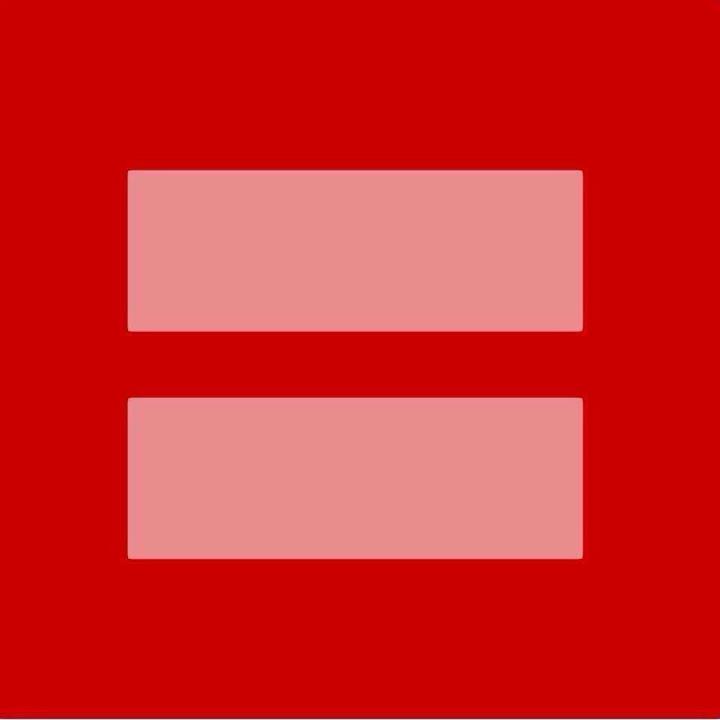
Red Equal SignWhen the Facebook page of the Human Rights Campaign changed their profile picture to a red and pink equal sign on March 25 in anticipation of the Supreme Court hearing cases on the constitutionality of Proposition 8, which prohibits same-sex marriage in California, and the Defense of Marriage Act, which restricts federal marriage benefits to only opposite sex marriages, the response of many in the Facebook universe was nearly instantaneous.  By the time the Supreme Court was listening to arguments for and against Proposition 8 the next day, roughly 2.7 million people had changed their profile pictures to the red and pink equal sign.[1]

Welcome to the way we debate and discuss watershed issues in the digital age.  We post a profile picture.

As I have watched the national debate over same-sex marriage unfold, I have been struck by the daftness of so many of the arguments concerning such a monumental issue.  As a Christian, I have grave theological and moral concerns with same-sex marriage, but others have registered cogent concerns with same-sex marriage quite apart from the traditional moorings of biblical Christianity.  For instance, in their book What Is Marriage? Man and Woman: A Defense, Sherif Girgis, Ryan Anderson, and Robert George offer an excellent argument for traditional or, as they call it, conjugal marriage over and against a revisionist view of marriage.  The heart of their argument is this:

If the law defines marriage to include same-sex partners, many will come to misunderstand marriage.  They will not see it as essentially comprehensive, or thus (among other things) as ordered to procreation and family life – but as essentially an emotional union…If marriage is centrally an emotional union, rather than one inherently ordered to family life, it becomes much harder to show why the state should concern itself with marriage any more than with friendship.  Why involve the state in what amounts to the legal regulation of tenderness?[2]

The authors’ argument is simple, yet brilliant.  Those who argue for same-sex marriage seem to define marriage based strictly on affection.  But there are many relationships that are affectionate, such as friendships, and yet are not state-regulated.  So marriage must be something more than simple affection.  But what more is it?  This is a question that proponents of same-sex marriage have a difficult time answering with any uniformity.

Sadly, the work of these authors has not been well received or responded to.  Ryan Anderson, appearing on the Piers Morgan Show to explain the arguments of his book, was attacked by Suze Orman who dismissed him as “very, very uneducated in how it really, really works.”[3]  Considering that Anderson is a fellow at the Heritage Foundation who received his degree from Princeton and is currently working on a Ph.D. from the University of Notre Dame, I find it hard to believe that he is “very, very uneducated.”

In another example of supporters of traditional marriage being flippantly dismissed, Kevin Drum of Mother Jones took Ross Douthat of the New York Times to task for daring to suggest that an orientation toward procreation ought to be part of the definition of what constitutes a marriage:

It was opponents [of same-sex marriage], after realizing that Old Testament jeremiads weren’t cutting it any more, who began claiming that SSM should remain banned because gays couldn’t have children. This turned out to be both a tactical and strategic disaster, partly because the argument was so transparently silly (what about old people? what about women who had hysterectomies? etc.) and partly because it suggested that SSM opponents didn’t have any better arguments to offer. But disaster or not, they’re the ones responsible for making this into a cornerstone of the anti-SSM debates in the aughts.[4]

In his response, Douthat questions Drum’s account of the origin of the procreation argument for traditional marriage:

If gay marriage opponents had essentially invented a procreative foundation for marriage in order to justify opposing same-sex wedlock, it would indeed be telling evidence of a movement groping for reasons to justify its bigotry. But of course that essential connection was assumed in Western law and culture long before gay marriage emerged as a controversy or a cause. You don’t have to look very hard to find quotes…from jurists, scholars, anthropologists and others, writing in historical contexts entirely removed from the gay marriage debate, making the case that “the first purpose of matrimony, by the laws of nature and society, is procreation” (that’s a California Supreme Court ruling in 1859), describing the institution of marriage as one “founded in nature, but modified by civil society: the one directing man to continue and multiply his species, the other prescribing the manner in which that natural impulse must be confined and regulated” (that’s William Blackstone), and acknowledging that “it is through children alone that sexual relations become important to society, and worthy to be taken cognizance of by a legal institution” (that’s the well-known reactionary Bertrand Russell).

Douthat ends his response to Drum with a brilliant one-liner:  “Once you’ve rewritten the past to make your opponents look worse, then you’re well on your way to justifying writing them out of the future entirely.”[5]

This line, more than any I have read in a long time, encapsulates the problem with our public debates – not just over same-sex marriage, but over many controversial issues.  No longer are people interested in debating a big issue with the kind of intellectual rigor or careful thought such issues deserve. Instead, we change our Facebook profiles to an equal sign.  Or we ridicule a Notre Dame Ph.D. candidate as “uneducated.”  Or we make patently false claims about the historical origins of our opponents’ arguments.  We try to write our opponents out of the future entirely.

We, it seems, are much less interested in intelligently discussing and debating an issue and much more interested in asserting our will on an issue.  We no longer care whether or not we arrive at the right position on an issue as long as others bow to our position on an issue.  And, lest I be accused of intimating that only proponents of same-sex marriage engage in such dubious debate tactics, let me be clear that I have seen opponents of same-sex marriage pull these same kinds of sorry tricks.  After all, they’re on Facebook too.  They host cable news shows too.  They write less than thoughtful columns too.

The nihilist Nietzsche seemed to take special delight in laying bare the basest corners of human nature.  In his seminal work Beyond Good and Evil, he summarizes his thoughts on the heart of humanity:  “A living thing seeks above all to discharge its strength – life itself is Will to Power.”  Nietzsche purported that people, at their cores, desire to assert Machiavellian power over others much more than they ever desire to converse with others.  This is why Nietzsche saw “slavery in some sense or other”[6] as necessary to human advancement.  Those who are strong must assert their wills over those who are weak.

As I have watched the debate over same-sex marriage unfold, I have become worried that Nietzsche just might be right.  In this debate, winning against the other side has become more important than discussing and reasoning with the other side to arrive at the right side.  And because of that, I can’t help but think that, no matter who wins, we might just all lose.


[1] Alexis Kleinman, “How The Red Equal Sign Took Over Facebook, According To Facebook’s Own Data,” The Huffington Post (3.29.2013).

[2] Sherif Girgis, Ryan Anderson & Robert George, What Is Marriage?  Man and Woman:  A Defense (New York:  Encounter Books, 2012), 7, 16.

[5] Ross Douthat, “Marriage, Procreation and Historical Amnesia,” The New York Times (4.2.2013).

[6] Friedrich Nietzsche, Beyond Good and Evil (New York:  The Macmillan Company, 1907), 20, 223.

Facebook Follies

“Does Facebook Wreck Marriages?”  So asked the provocative title of Quentin Fottrell’s blog for the Wall Street Journal.[1]  Of course, we know that Facebook in and of itself is not responsible for the breakdown of wedded bliss; rather, it is the way people use Facebook that damages marriages.  Still, the statistics cited in Fottrell’s article are staggering:

  • More than a third of divorce filings last year contained the word “Facebook.”
  • Over 80% of U.S. divorce attorneys say they’ve seen a rise in the number of cases using social networking.
  • Of the fifteen cases Gary Traystman, a divorce attorney in New London, Connecticut, handles per year where computer history, texts, and emails are admitted as evidence, 60% involve Facebook exclusively.

Why does Facebook play such a key role in so many connubial collapses?  Fottrell brings in an expert for keen insights:

“Affairs happen with a lightning speed on Facebook,” says K. Jason Krafsky, who authored the book Facebook and Your Marriage with his wife Kelli. In the real world, he says, office romances and out-of-town trysts can take months or even years to develop. “On Facebook,” he says, “they happen in just a few clicks.” The social network is different from most social networks or dating sites in that it both re-connects old flames and allows people to “friend” someone they may only met once in passing. “It puts temptation in the path of people who would never in a million years risk having an affair,” he says.

Krafsky’s last line is key:  “It puts temptation in the path of people.”

Jesus knew how readily people can fall to temptation when it is placed even peripherally in their path.  This is why He warns His disciples, “Watch and pray so that you will not fall into temptation. The spirit is willing, but the body is weak” (Mark 14:38).  Jesus’ caution against temptation and His diagnosis of the flesh’s relative spiritual strength, or rather, its lack thereof, ought to be taken seriously.

When a marriage is in disarray, Facebook can provide an all too easily accessible foray into the arena of temptation.  Its appeal lies at two opposing poles.  On the one side, Facebook provides a public forum for a scorned spouse to spout off about how he or she has been wronged and receive eager and many times blind support from friends who are, at best, only partially informed about the situation.  On the other side, though Facebook is public, it deceptively feels private.  After all, it’s only “friends” who can see what you are posting – that is, until a divorce attorney subpoenas records from your Facebook account and presents them in court as incriminating evidence.

Both the public and private faculties of Facebook make its appeal to those in rocky relationships almost irresistible.  But when Facebook is used to arbitrate an unsettled union, it inevitably leads to ruin.  For it allows couples to steep themselves in the sometimes rotten advice from friends or the sometimes illicit advances of lovers while avoiding conversation with the person they need to be talking with the most – the other spouse.

So, how can a couple use Facebook to connect with friends – old and new alike – while steering clear of its more seedy enticements?  A few practical, common sense safeguards can go a long way to protecting your integrity – and your marriage.

  • First, make sure your spouse has access to your Facebook account.  There is no reason why your spouse should not know what you’re posting online.  If you’re trying to surprise him or her using a little help from your Facebook friends, find another way.  Sustained trust trumps an occasional need for the secrecy of a surprise.
  • Second, if your marriage is troubled, personal details are not Facebook appropriate.  You don’t need uneven advice from partial pals, you need professional guidance from a licensed therapist.  Facebook is a great place to post thought-provoking quotes, interesting articles, and even pictures of your Memorial Day backyard barbeque or your newborn bouncing baby boy.  It is not an appropriate place, however, to air your, or someone else’s, dirty laundry.  Falstaff, though he was a shameful coward in Shakespeare’s Henry the Fourth, proved to be wise beyond his actions when he said, “The better part of valor is discretion, in the which better part I have sav’d my life.”[2]  Discretion on Facebook may just save your marriage.
  • Third, be discerning.  Believe it or not, regardless of a person’s Facebook classification as your “friend,” not everyone you communicate with on social networking sites has your best interest at heart.  And not everyone who proffers advice via the internet knows what he or she talking about, or, as the case may be, “posting” about.  This means that you should not set yourself up to get bad advice from your Facebook friends by posting sordid details of your life gone awry, nor should you insert yourself via public posts into someone else’s messy Facebook spectacle.  If you’re truly concerned about someone, a face-to-face conversation, or, if that is impossible, a private conversation by some other means, works much better than a public posting.

Finally, a sober estimation of your own sinful desires and weaknesses may be the best safeguard against the wily relational entrapments that internet social networking can bring.  No matter how strong you may think your marriage is, all it takes is one click or keystroke to lead it down the road to ruin.  And so we pray, “Lead us not into temptation” (Matthew 6:13).


[1] Quentin Fottrell, “Does Facebook Wreck Marriages?” The Wall Street Journal (5.21.12).

[2] William Shakespeare, Henry the Fourth (Part 1, Act 5, Scene 4).