Posts tagged ‘Faith’
Preemptive Thankfulness

It has become a tradition on this blog during Thanksgiving week to take a moment to reflect on a Presidential Thanksgiving Proclamation. Thanksgiving is a holiday birthed by our history and in our land and, each year, the president issues a proclamation meant to focus our attention on all the reasons we have to be grateful.
This year, I’d like to take a moment to remember a Thanksgiving Proclamation that was issued after Thanksgiving on December 26, 1941 by President Franklin Roosevelt. He had issued a more traditional Thanksgiving Proclamation on November 8 of that same year, but then, in light of the vicious December 7 attack on Pearl Harbor that lurched us into World War II, President Roosevelt felt the need to issue a second Thanksgiving Proclamation. It read thusly:
“It is a good thing to give thanks unto the Lord.” Across the uncertain ways of space and time our hearts echo those words, for the days are with us again when, at the gathering of the harvest, we solemnly express our dependence upon Almighty God. The final months of this year, now almost spent, find our Republic and the nations joined with it waging a battle on many fronts for the preservation of liberty. In giving thanks for the greatest harvest in the history of our nation, we who plant and reap can well resolve that in the year to come we will do all in our power to pass that milestone; for by our labors in the fields we can share some part of the sacrifice with our brothers and sons who wear the uniform of the United States. It is fitting that we recall now the reverent words of George Washington, “Almighty God, we make our earnest prayer that Thou wilt keep the United States in Thy holy protection,” and that every American in his own way lift his voice to heaven. I recommend that all of us bear in mind this great Psalm:
The Lord is my shepherd; I shall not want. He maketh me to lie down in green pastures; He leadeth me beside the still waters. He restoreth my soul; He leadeth me I the paths of righteousness for His name’s sake. Yea, though I walk through the valley of the shadow of death, I will fear no evil; for Thou art with me; Thy rod and Thy staff they comfort me. Thou preparest a table before me in the presence of mine enemies; Thou annointest my head with oil; my cup runneth over. Surely goodness and mercy shall follow me all the days of my life, and I will dwell in the house of the Lord forever.
Inspired with faith and courage by these words, let us turn again to the work that confronts us in this time of national emergency: in the Armed Services and the Merchant Marine; in factories and offices; on farms and in the mines; on highways, railways and airways; in other places of public service to the nation; and in our homes. Now, therefore, I, Franklin D. Roosevelt, President of the United States of America, do hereby invite the attention of the people to the joint resolution of Congress approved December 26, 1941, which designates the fourth Thursday in November of each year as Thanksgiving Day and I request that both Thanksgiving Day, November 26, 1942, and New Year’s Day, January 1, 1943, be observed in prayer, publicly and privately.
Shortly after Thanksgiving Day 1941 and what was at that point the worst attack on American soil in its history, President Roosevelt issued a proclamation already looking forward to Thanksgiving Day 1942 – nearly a year in advance.
Such a proclamation might, at first, seem tone-deaf. After all, who feels thankful when mourning so much loss, as Americans were after Pearl Harbor? Such a proclamation might also feel premature. After all, by the time Thanksgiving Day 1942 rolled around, wouldn’t the president’s proclamation from the close of 1941 have been long since forgotten? But, despite such concerns, this proclamation was needed.
Gratitude is needed most when history does its worst. For it is at these moments that gratitude focuses us – not so much on what we do or do not have, but on the One to whom we are called to be thankful. Gratitude needs an object. And, as President Roosevelt reminds us in his declaration, the object of our gratitude is rightly God.
It is no secret that 2021 has been a trying year. A pandemic has worn on longer than any of us desired or expected. Political, social, and cultural unrest, upheaval, and distrust have run rampant. And our economic future feels uncertain. How should we respond to times like these? Let’s take a page from President Roosevelt’s book and be preemptively thankful. Thankfulness is not a product of our circumstances, but an orientation of our hearts toward the One who receives our thanks.
Happy Thanksgiving.
Permitting and Preventing Suffering

Last week on this blog, I referenced Job and his yearning for resurrection after all the suffering he had experienced. Resurrection to new life after and apart from all the trials and pain we encounter in this life is our ultimate hope. But in the meantime, we still need strength to endure the trials and pain we encounter in this life.
At the beginning of Job’s story, Satan accuses this righteous man before God of only living for God because of what he gets from God:
Does Job fear God for nothing? Have You not put a hedge around him and his household and everything he has? You have blessed the work of his hands, so that his flocks and herds are spread throughout the land. But now stretch out Your hand and strike everything he has, and he will surely curse You to Your face. (Job 1:9-11)
In response, God, instead of striking Job, leaves it to Satan, but adds one critical caveat:
Everything he has is in your power, but on the man himself do not lay a finger. (Job 1:12)
God sets up a tension with these words. At the same time He permits suffering, He also prevents suffering. Later, when Satan wants to kill Job, God responds:
He is in your hands; but you must spare his life. (Job 2:6)
Again, God permits suffering while also preventing suffering – the ending of Job’s life.
When we suffer, this tension can give us tenacity. While we may remain confused as to why God permits some suffering, we can also rest assured that God is also preventing some suffering. The trouble we have when God prevents suffering is that we don’t know that God has prevented it because we never had to endure it. But even if we cannot immediately know or see when God has prevented suffering, we can be thankful that God does, in fact, prevent suffering. He has told us He does in Job’s story.
It is tempting for us to complain and even curse God when He permits suffering. But as with Job, when God permits suffering, He also has a purpose in suffering. In Job’s case, when he refuses to curse God amid his pain, Satan is proven wrong. His accusation against Job – that Job loves God only because of what God has given him – goes down in defeat. Thus, the suffering that Satan brings on Job is the same suffering that defeats his accusation against Job. So it is with Christ. The suffering that Satan delighted in when Jesus was in agony on a cross is the same suffering that defeated him – along with sin and death – when Christ died on the cross.
May we, in our suffering, pray for God’s purpose when God permits it and give thanks to God when He prevents it. He really does know what He’s doing.
Grace. Period.

In Exodus 32, while Moses is on Mount Sinai receiving the Ten Commandments, one of which is a prohibition against idolatry, the Israelites are committing idolatry at the base of the mountain by worshiping a golden calf that mimics the gods they once saw while they were slaves in Egypt. When God sees what is happening with the Israelites while He is meeting with Moses, He is furious. He says to Moses:
I have seen these people and they are a stiff-necked people. Now leave Me alone so that My anger may burn against them and that I may destroy them. Then I will make you into a great nation. (Exodus 32:9-10)
God had chosen the people of Israel to be His ambassadors to a world broken by sin. Now He wants to start over with a new ambassador in Moses. But Moses argues for a different plan:
LORD, why should Your anger burn against Your people, whom You brought out of Egypt with great power and a mighty hand? Why should the Egyptians say, “It was with evil intent that He brought them out, to kill them in the mountains and to wipe them off the face of the earth”? Turn from Your fierce anger; relent and do not bring disaster on Your people. Remember Your servants Abraham, Isaac and Israel, to whom You swore by Your own self: “I will make your descendants as numerous as the stars in the sky and I will give your descendants all this land I promised them, and it will be their inheritance forever.” (Exodus 32:11-13)
Moses intercedes for Israel, and God responds and relents:
The LORD relented and did not bring on His people the disaster He had threatened. (Exodus 32:14)
What is especially interesting is what Moses says to get God to relent. Moses argues two things: it will be bad for God’s international reputation to destroy Israel, and God will undo His prior promise to their forefathers about giving them many descendants. Moses does not, however, call on the grace of God, even though grace is what God ultimately shows. But what God shows in Exodus 32, He explicitly declares, two chapters later, in Exodus 34:
The LORD, the LORD, the compassionate and gracious God, slow to anger, abounding in love and faithfulness, maintaining love to thousands, and forgiving wickedness, rebellion and sin. (Exodus 34:6-7)
There’s more to God than commands against sin. There is grace for sinners. And although commands are what we need for our own good, grace is how we can actually relate to God. Grace is when God says to us not, “I love you if…” “I love you if you keep My commandments.” “I love you if you keep yourselves from sin.” “I love you if you prove yourselves worthy of love.” Grace says none of these things. Instead, grace simply says, “I love you. Period.”
For those who have never heard that from anyone in your lives, this is the declaration of your Father in heaven. God may give commandments. But He lavishes grace. Strive to keep His commandments. But when you don’t, find your rest, remedy, and rescue in His grace.
Perceiving and Understanding
In Matthew 13, Jesus tells His disciples about a farmer who goes out one day to scatter seed. Some seed falls on a path, where it is eaten by birds. Other seed falls on some rocks, where it springs up, but then quickly dies. Other seed falls among the thorns, which proves also not to be fertile ground. Finally, some seed falls on good soil, where it springs up and yields a crop. In Jesus’ telling, the seed is His word and our hearts are different kinds of soil. We are to hear His word and let it take deep root in our hearts, like the good soil.
After He finishes His parable, Jesus’ disciples ask Him:
“Why do you speak to the people in parables?” (Matthew 13:10)
Jesus’ answer is insightful and unsettling all at the same time:
The knowledge of the secrets of the kingdom of heaven has been given to you, but not to them. This is why I speak to them in parables: “Though seeing, they do not see; though hearing, they do not hear or understand.” (Matthew 13:11, 13)
Jesus’ final line is an allusion to Isaiah 6:9. The disciples, Jesus says, unlike the crowds who listen to His parables, see Him and perceive who He actually is. They hear Him and understand what He is actually saying.
But not all the time.
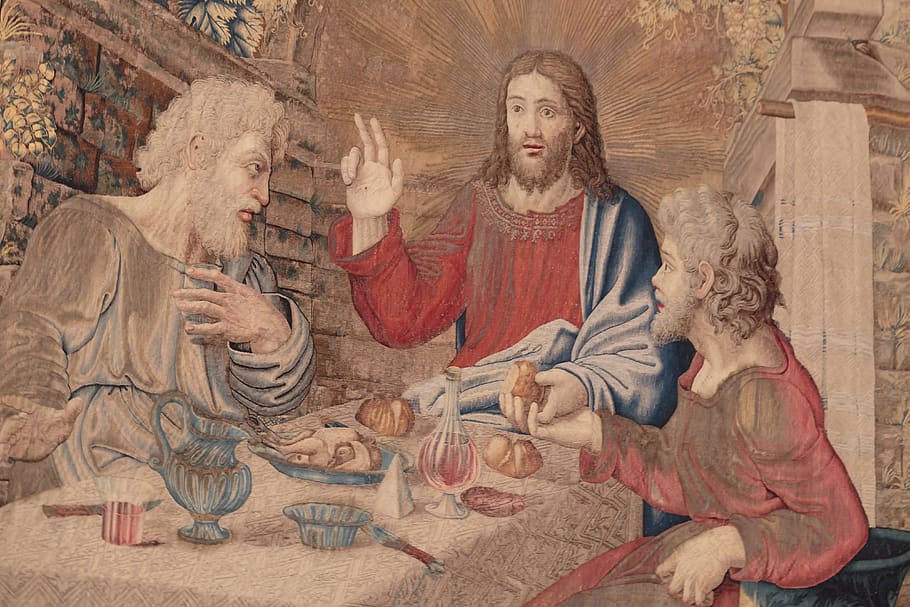
In Luke 24, after Jesus has risen, He appears to two of His disciples while they are walking along a road, but they do not recognize Him. They see Jesus, but they do not perceive who He is. Jesus then asks them what they are talking about. Ironically, they are talking about Him – His death and reports of His resurrection. Jesus responds by explaining to them how the Scriptures forecast, foretell, and point toward Him. But they still don’t get it. They hear Jesus, but they do not understand what He is saying. They are those of whom Isaiah once spoke. The disciples in Luke 24 are behaving like the crowds in Matthew 13.
One of the struggles of the Christian faith is that no matter how much we study, learn, experience, or walk with Jesus, we still have blind spots. There are things we see, but don’t perceive – hear, but don’t understand. Even if we are disciples, we still have a bit of crowd in us.
Walking in faith, then, means “walking humbly with God” (Micah 6:8). It means admitting that for all we may assume we see and know, there’s still plenty of room to grow. But this limitation also leaves blessedly endless room for maturation. This is one of the reasons Christians have been studying the Bible and meditating on the life of Jesus for millennia and are still learning. The treasures of God are inexhaustible.
After Jesus explains how the Scriptures point to Him, the disciples invite Him over for supper, still clueless to who He is. But then:
When He was at the table with them, He took bread, gave thanks, broke it and began to give it to them. Then their eyes were opened and they recognized Him. (Luke 24:30-31)
The disciples perceived and understood anew. This is an experience that can happen for us, too. So, keep seeking to perceive and understand. Jesus will open your eyes as you break bread with Him and He breaks bread for you.
Meeting With God

There is an interesting line in Galatians about how Moses received God’s law:
The law was given through angels and entrusted to a mediator. (Galatians 3:19)
When God gave the law to Moses, He mediated it through angels.
Angels regularly serve as mediators between God and people. When God has a message to deliver to a young maiden named Mary about how she will bear God’s Son, He delivers it through an angel. When God wants to notify her husband-to-be that the son in his fiancé is miraculously conceived, He sends an angel to deliver the news. When God wants to take the apostle John on a tour of heaven, He does so using an angel.
In Genesis 28, Jacob is at a low point in his life. He has become a fugitive from his home and family because he stole the family inheritance that rightly belonged to his older brother, who, when he found out, vowed to make Jacob pay with his life.
One night, while Jacob is camping out in the middle of nowhere, he has a dream:
He had a dream in which he saw a stairway resting on the earth, with its top reaching to heaven, and the angels of God were ascending and descending on it. (Genesis 28:12)
As theologian Richard Bauckham points out, the stairway Jacob sees is probably climbing the side of a ziggurat, which was a tower commonly built in ancient Mesopotamia that was meant to “touch heaven,” as it were, so that the peoples of that day could ascend it and meet with their gods.
But Jacob’s dream comes with a twist. As in so many other dreams and visions, there are these angels, who one assumes are there to mediate Jacob’s meeting with God as he climbs the stairway on the ziggurat. But this dream is different:
There beside him stood the LORD, and He said: “I am the LORD, the God of your father Abraham and the God of Isaac.” (Genesis 28:13)
In Jacob’s dream, God is not at the top of the ziggurat, waiting for angels to mediate his meeting with Jacob. Instead, He has come to the bottom of the ziggurat – to where Jacob is – to stand “beside him” and to meet with him directly.
When Jacob realizes what has happened, he declares:
“Surely the LORD is in this place, and I was not aware of it.” He was afraid and said, “How awesome is this place! This is none other than the house of God; this is the gate of heaven.” (Genesis 28:16-17)
It turns out that Jacob is only partially correct in his analysis of what has happened. Jacob believes the Lord was “in this place” – the place where Jacob happened to be sleeping that night. He perceives his meeting with God as a chance encounter. He just happened to stumble across the place where God was.
But this is not what God tells Jacob when He speaks to him in his dream. He does not tell him that He dwells in a place, but instead that He desires to dwell with His people:
“I am with you and will watch over you wherever you go.” (Genesis 28:15)
God has not bound Himself to a map, but to mortals. This is why when God wanted to demonstrate His presence most fully, He came to mortals in a mortal who brought immortality by His resurrection.
God is with us. We don’t need to climb a ziggurat or wait for an angel to meet with Him. For we have met God directly in His Son. What Jacob got a glimpse of, we have received the fullness of.
What Is Lost Is Found…Finally

In a story that could have been dreamed up by a Hollywood screenwriter, after a 24-year search, Guo Gangtang of Liaocheng, which is in northern Shandong Province in China, was reunited with his 26-year-old son, who was kidnapped when he was just two. The New York Times reports:
Mr. Guo’s son, named Guo Xinzhen at birth, disappeared on Sept. 21, 1997. He had been playing at the door of his home while his mother cooked inside, according to interviews the elder Mr. Guo has given over the years.
A frantic Mr. Guo and his wife, along with family, neighbors and friends, fanned out across the region to search for the boy. But after several months, the effort waned. That was when Mr. Guo attached large banners printed with his son’s photo to the back of a motorcycle and set out to find the boy on his own.
“Son, where are you?” the banners said, alongside an image of the boy in a puffy orange jacket. “Dad is looking for you to come home.”
But now, after crisscrossing China on ten motorcycles for nearly two-and-half decades, Guo did come home. Through tears and hugs, the family reunited.
In Luke 15, Jesus tells a parable about a lost sheep:
Suppose one of you has a hundred sheep and loses one of them. Doesn’t he leave the ninety-nine in the open country and go after the lost sheep until he finds it? And when he finds it, he joyfully puts it on his shoulders and goes home. Then he calls his friends and neighbors together and says, “Rejoice with me; I have found my lost sheep.” (Luke 15:4-6)
Jesus spins a touching story of a shepherd who refuses to give up his search when one of his little lambs becomes lost. But this story is not really about sheep. It’s about us. Jesus explains:
I tell you that in the same way there will be more rejoicing in heaven over one sinner who repents. (Luke 15:7)
When we wander off in sin, we have a loving heavenly Father who doesn’t just crisscross a country, but crisscrosses heaven and earth in His one and only Son, who searches for us so that He can reunite us with God.
Guo’s story and Jesus’ parable invite us to ask: who do we know who has wandered away from our family or from God’s family? Even if they’ve been away for a long time, all hope is not lost. A call, a note, or a conversation over coffee may be just the thing needed to invite them back into the fold. People are always worth searching for. How do I know? Because God searched for you and me.
I’m thankful I was found.
Searching for Meaning in a Condo Collapse

I first heard of the news about the collapse of Champlain Towers South, a condo complex on the beach in Surfside, Florida, early Thursday morning while staying in a condo complex on the beach in Port Aransas. The reports sounded ominous. The pictures that have emerged are dolorous. The number of people still missing is tortuous. And the reason for the building’s collapse remains mysterious.
When a tragedy like this strikes, it is natural for people to ask: Why? We have an intractable need to find meaning, even in the midst of what appears to be a desultory disaster. In our minds, a disaster is never just a disaster. There is always a reason behind it. There is always something we can learn from it.
This desire to find meaning in disaster is nothing new. The specific meanings we derive from disasters may change, but our search for some kind of meaning – any kind of meaning – remains. This search for meaning is what Jesus addresses when He references a tower collapse in His day and the meaning people had assigned to it:
Those eighteen who died when the tower in Siloam fell on them – do you think they were more guilty than all the others living in Jerusalem? I tell you, no! But unless you repent, you too will all perish. (Luke 13:4-5)
In Jesus’ day, there was an assumption that if a disaster befalls you, this indicates an especially grievous sinfulness had engulfed you. Jesus says that deriving this kind of a meaning from this kind of a disaster is wrongheaded. But just because this meaning cannot be derived from this disaster does not mean no meaning can be derived from any disaster.
So, what meaning can we rightly find in disaster?
Near the end of his life, Solomon, one of the greatest kings of ancient Israel, reflects on all he has done, experienced, and accomplished and compiles his thoughts in the book of Ecclesiastes. After much reflection, he arrives at this conclusion:
“Meaningless! Meaningless!” says the Teacher. “Utterly meaningless! Everything is meaningless.” (Ecclesiastes 1:2)
Though these words are quite famous, they also represent one of my least favorite translations in the Hebrew Bible. In Hebrew, the word translated as “meaningless” is hebel, which does not denote a lack of meaning, but instead describes transience. Hebel is a “vapor” or a “mist.” Solomon’s point, then, is this: just when we think we’ve taken a hold of something, it slips through our fingers. Solomon continues by offering a litany of things that slip through our fingers: wisdom, pleasure, hard work, and riches. And it is here with hebel that we find not meaninglessness, but some much-needed meaning in disaster. Disasters remind us that this life and everything in it is like a vapor or a mist. It slips through our fingers – sometimes when we least expect it, like when a tower shockingly crumbles. This life can be shorter than we care to admit.
So, what are we to do in light of life’s transience? On the one hand, Solomon says, this kind of transience should lead us to live joyfully in this day because we do not know whether another day awaits us:
I know that there is nothing better for people than to be happy and to do good while they live. That each of them may eat and drink, and find satisfaction in all their toil – this is the gift of God. (Ecclesiastes 3:12-13)
On the other hand, life’s transience should also lead us to search for something that is not transient – something that lasts. This is why Solomon says in the next verse:
I know that everything God does will endure forever. (Ecclesiastes 3:14)
This life may not last. But what God does will. This means that when God sent His Son to bring life, He brought a life that lasts – a life that is eternal. Tragedy may remind us that this life doesn’t last. But God gives us hope for a life that does – a life that extends far beyond this one. And that’s not just meaning we can take from a tragedy like the Champlain Towers collapse; that’s hope we can have no matter what tragedy we may face.
A “Giant” Exaggeration
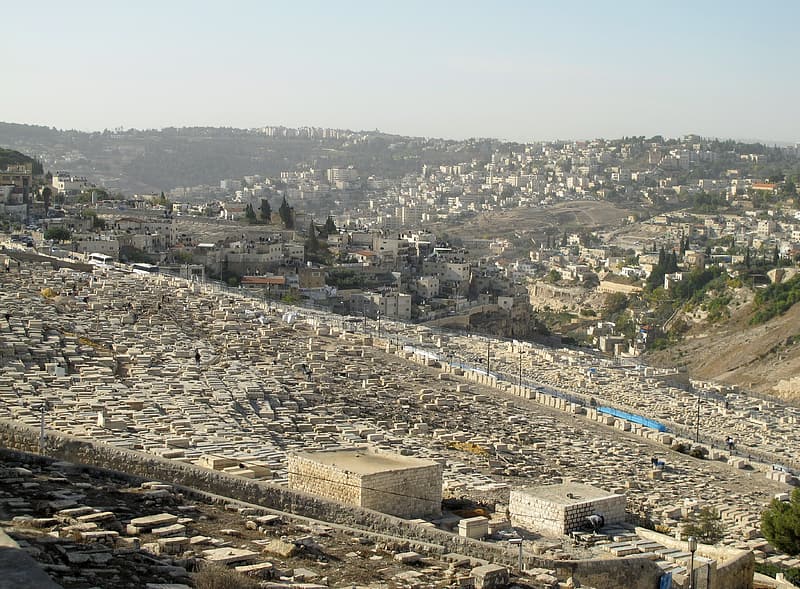
Yesterday, at the church where I serve, we kicked off a summer-long series on Deuteronomy. Deuteronomy is situated at the end of the Israelites’ forty-year wandering in the wilderness and records Moses’ final instructions to them before his death.
As the book opens, Moses begins by reminding the Israelites that they have not always done so well honoring God. Indeed, the reason it has taken them forty years to arrive at the Promised Land from Egypt is because, when they first came to the Promised Land, they refused to go in. After sending a reconnaissance team of Israelite spies to check out their new home, the team issued a frightening report about the people living there, which Moses recounts:
The people are stronger and taller than we are; the cities are large, with walls up to the sky. We even saw the Anakites there. (Deuteronomy 1:28)
The fact that the reconnaissance team saw Anakites there is interesting, to say the least. In their first-hand account, which we read in Numbers, the spies give us some more information about the lineage of the Anakites:
We saw the Nephilim there (the descendants of Anak come from the Nephilim). We seemed like grasshoppers in our own eyes, and we looked the same to them. (Numbers 13:33)
Hold on a second. They saw descendants of the Nephilim? That seems curious.
We first meet the Nephilim in Genesis 6:
The Nephilim were on the earth in those days. (Genesis 6:4)
They are described as a wicked people and as part of the reason God sends a catastrophic flood to destroy humanity:
The LORD saw how great the wickedness of the human race had become on the earth, and that every inclination of the thoughts of the human heart was only evil all the time. The LORD regretted that he had made human beings on the earth, and his heart was deeply troubled. So the LORD said, “I will wipe from the face of the earth the human race I have created – and with them the animals, the birds and the creatures that move along the ground – for I regret that I have made them.” (Genesis 6:5-7)
This begs a question: if God sends a catastrophic flood to, in part, wipe out the Nephilim in their wickedness, what are they doing in the Promised Land during the time of Moses long after the flood?
It seems as though this reconnaissance team is engaging in a little exaggeration. This becomes apparent when the spies describe the size of the people they see in the Promised Land: “We seemed like grasshoppers in our own eyes, and we looked the same to them” (Numbers 13:33). The average grasshopper is an inch tall. I’m five feet ten inches tall. This means, using my modest height as a standard sample, these men would have been 69 times my size, or nearly 397 feet tall.
Uh-huh.
So often, when there is something we don’t want to do – or, for that matter, when there is something we do want to do – we’ll exaggerate in an attempt to get our way. We’ll exaggerate and put the worst construction on what someone has said instead of a more plausible construction. We’ll exaggerate and only emphasize the positives of a purchase instead of taking a realistic look at the cost of what we want to purchase and soberly analyzing whether it is a smart financial move. We’ll exaggerate on social media and make our life or our vacation look better than it really is.
Let us learn from the Israelite spies and their very implausible description of the giants who were drowned in a flood. Exaggeration hurts us and those around us. We are called to be people of the truth. We do, after all, follow a Man who called Himself “the truth” (John 14:6). No exaggeration is needed with Him.
A Hard Way to Rest Easy

According to Jesus, salvation is hard. A narrow way constricts entry into God’s kingdom:
Enter by the narrow gate. For the gate is wide and the way is easy that leads to destruction, and those who enter by it are many. For the gate is narrow and the way is hard that leads to life, and those who find it are few. (Matthew 7:13-14)
According to Jesus, salvation is easy. He invites us to lay down the hard and harrying burdens of this world and pick up His designedly light mantle:
Come to Me, all who labor and are heavy laden, and I will give you rest. Take My yoke upon you, and learn from Me, for I am gentle and lowly in heart, and you will find rest for your souls. For My yoke is easy, and My burden is light. (Matthew 11:28-30)
Salvation is hard, Jesus says. And salvation is easy, Jesus says.
This, of course, begs a question: what is salvation, really – is it hard or is it easy? The answer is: both.
These two sayings of Jesus teach us that the hard road of salvation is the one that takes up Jesus’ easy yoke of rest. The human assumption is that, in order to be saved, we must not rest, but must instead work our way to salvation with our good works and noble character. In our day and age, we see this assumption play out in both the utopian delusions of progressive societies and in the repristination efforts of traditional ones. In both cases, we are the ones who can set our society and ourselves straight, or, to put it negatively, save our society and ourselves from those who are wrong. But, as the old apothegm goes, “The road to hell is paved with good intentions.” Our good intentions and good works, when they are employed to save our society and ourselves, seem to have all sorts of unintended consequences that often do little more than further a cycle of decay and, ultimately, destruction.
The hard way of Matthew 7 is to lay down our fiercest fights and best efforts that constitute the common way – or, as Jesus calls it, the wide way – of our world’s attempts at salvation and instead walk in the narrow way of faith, trusting that Jesus has done the hard work of salvation for us on a cross and, in exchange, has provided us the easy yoke of rest in Matthew 11. This way of faith is humbling because it declares that we cannot save our society or ourselves. Instead, we are called to rest in the One who can.
Yes, we can still work on ourselves and for the good of our society. But salvation – that’s up to Jesus. And if we find ourselves tempted to try to save our society or ourselves because things seem so bad, let us never forget that the very moment when things looked the worst for Jesus – the very moment when it looked like He could not save anything or anyone, including Himself – was the very moment at which He was “reconciling the world to Himself” (2 Corinthians 5:19).
All is not lost. We are not lost. May that promise help us rest easy.
God’s Presence in Pain
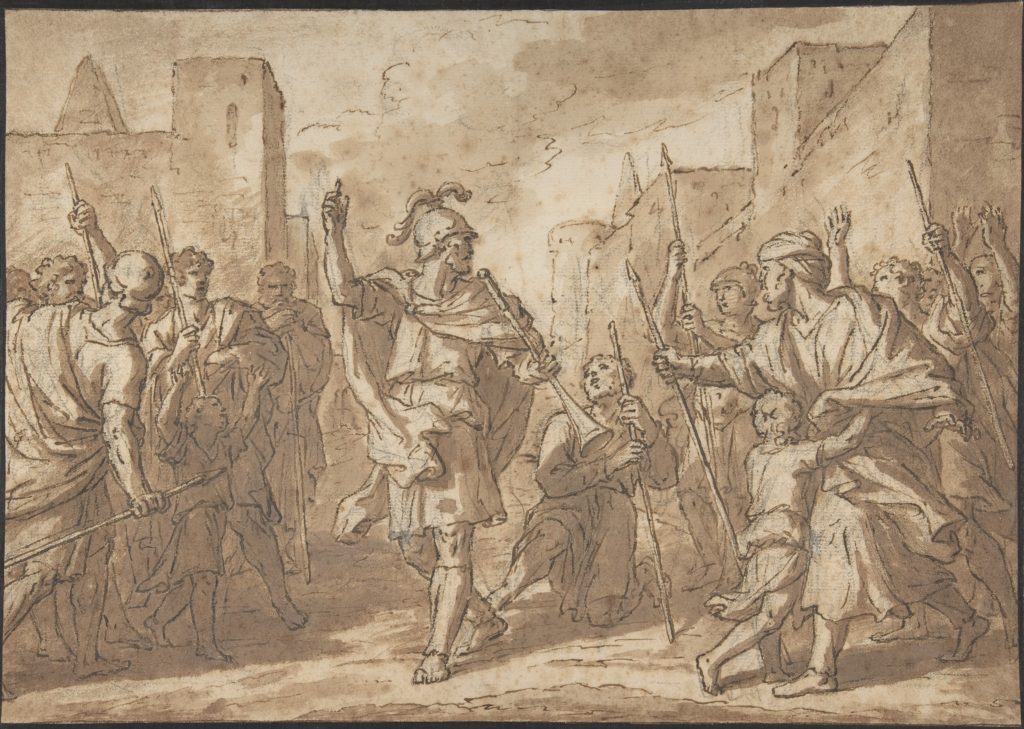
In Judges 6, the Midianites are warring with the Israelites. The Midianites are so successful in their campaign against Israel that the Israelites head for the hills – literally:
Because the power of Midian was so oppressive, the Israelites prepared shelters for themselves in mountain clefts, caves and strongholds. (Judges 6:2)
But God is preparing to rescue the Israelites from their oppressors. He appears to a man named Gideon and greets him with a flattering title and a promise of his presence:
The LORD is with you, mighty warrior. (Judges 6:12)
Gideon, however, is not dazzled, but dubious:
If the LORD is with us, why has all this happened to us? (Judges 6:13)
Gideon’s question is a perennial one. When bad things happen to us, it is easy to assume that God has taken a leave of absence from us. But nothing could be further from the truth.
Gideon’s story opens with this setting:
The Israelites did evil in the eyes of the LORD, and for seven years He gave them into the hands of the Midianites. (Judges 6:1)
It turns out not that God was deserting the Israelites, but that the Israelites were rejecting Him. They were turning their backs on the Lord in sin. God sends suffering not because He has deserted Israel, but because He is appealing to Israel: “Repent and turn toward Me!” He wants the Israelites’ suffering to drive them into His arms.
Our suffering can be similar. People sometimes wonder if some suffering they are experiencing is a result of some sin they have committed, as is the case with the Israelites in Gideon’s time. Oftentimes, it is not. Commenting on a recent slaughter of Galileans by Pontius Pilate, Jesus asks:
Do you think that these Galileans were worse sinners than all the other Galileans because they suffered this way? I tell you, no! (Luke 13:2-3)
Jesus is clear that suffering need not be connected to a specific sin. But, in the final analysis, why suffering happens is far less important than what suffering can accomplish. It can drive us to God and strengthen our faith. As Peter writes:
Now for a little while you may have had to suffer grief in all kinds of trials.These have come so that the proven genuineness of your faith – of greater worth than gold, which perishes even though refined by fire – may result in praise, glory and honor when Jesus Christ is revealed. (1 Peter 1:6-7)
Are you suffering? Are you troubled? God’s words to Gideon are also God’s words to you:
The Lord is with you.
God walks with you in suffering. You are not alone.


 Pastor Zach's Blog