Posts tagged ‘Christianity’
Practicing Contentment in 2021

Phillip Medhurst Collection of Bible Illustrations
As the Israelites wind their way through the wilderness on a trek to the Promised Land, they construct a tent of meeting. This is the place where Moses goes to meet directly with God. The tent is quite elaborate, containing yarns, fine linen, gold, silver, and bronze. Because a project of this magnitude is costly, Moses begins the project with a capital campaign of sorts where:
Everyone who was willing and whose heart moved them came and brought an offering to the LORD for the work on the tent of meeting. (Exodus 35:21)
By all accounts, the capital campaign proves to be wildly successful – so much so that they wind up raising far more than they need for the completion of the tent of meeting. As the workers are assembling the tent from what has been brought, they say to Moses:
“The people are bringing more than enough for doing the work the LORD commanded to be done.” Then Moses gave an order and they sent this word throughout the camp: “No man or woman is to make anything else as an offering for the sanctuary.” And so the people were restrained from bringing more, because what they already had was more than enough to do all the work. (Exodus 36:5-7)
The workers receive a windfall of gifts for their work on the tent of meeting. But what is really important is this: they recognize the windfall. They know they have more than enough.
It’s hard to recognize a windfall. We are too easily tempted, no matter how much we have, to always want more – and to believe we don’t yet have quite enough.
In Luke 3, John the Baptist preaches about the impending judgment of God. In response, the listening crowd asks:
“What should we do then?”John answered, “Anyone who has two shirts should share with the one who has none, and anyone who has food should do the same.” Even tax collectors came to be baptized. “Teacher,” they asked, “what should we do?” “Don’t collect any more than you are required to,” he told them. Then some soldiers asked him, “And what should we do?” He replied, “Don’t extort money and don’t accuse people falsely – be content with your pay.” (Luke 3:11-14)
To avoid God’s judgment, John calls the people to be content with what they have and not hoard more than they need.
As we head into 2021, a good resolution to make might be this:
I will practice contentment.
After all, as we reflect on 2020, it can be tempting to focus on all the things we didn’t get:
I didn’t get a raise because my company is struggling financially.
I didn’t get to keep my job because I got caught in a round of layoffs.
I didn’t get to spend time with my family over the holidays because of social distancing.
I didn’t get to go out to eat or go much of anywhere at all because so many places were closed.
I didn’t get more time with my loved one because COVID-19 took them.
All these things may be true – and some of them are downright devastating – but they’re still incomplete. Because at the same time there is much we are lacking, there is much we still have:
I still have a job even if I didn’t get the raise.
I still have the wherewithal to look for a job even if I lost my old one.
I still can see my family on Facetime even if I can’t be with them in person.
I still can order food in even if I can’t go out.
I still have loved ones who are with me and God now has a loved one who is with Him.
Statements of loss, with some practice, can turn into reflections of contentment.
No matter what this year may bring, of this much we can be sure: God will provide. And, more than likely, He will provide more than enough. Perhaps we should take some time to recognize that we might just be sitting on a windfall.
More Than A New Year

What a year 2020 has been. When this year began, I never dreamed that the way we do commerce, attend schools, worship at church, interact with each other, and generally live would change the way it has because of a virus that began spreading halfway across the world.
As this year draws to a close, I’ve heard people say again and again, “I sure am glad 2020 is almost over. We need a new year!” I understand the sentiment. I’ve felt it, too. And yet, we all know that a simple change on a calendar doesn’t mean the end of a pandemic. It also doesn’t mean the end of the frustration, fear, fury, and funk that this messy world can bring.
I’ve heard other people say, “This year has been bad, but we can still be thankful because it could have been worse!” This is certainly true. For example, the number of COVID cases to date is just now passing the total number of causalities during World War II, which were a shocking 75 million. But just asserting that things could have been worse doesn’t mean they couldn’t also have been much better. This assertion, even it’s true, isn’t really helpful. We can’t look at life through a Goldilocks lens. Just because something could be worse or could be better doesn’t make what we’re experiencing right now just right.
At a time like this, what we ultimately need is something more than a new year. We need a new creation – one that is not saddled with economic downturns, social isolation, and highly contagious viruses. We need what one of Jesus’ followers named John once saw in a vision:
Then I saw “a new heaven and a new earth,” for the first heaven and the first earth had passed away, and there was no longer any sea. I saw the Holy City, the new Jerusalem, coming down out of heaven from God, prepared as a bride beautifully dressed for her husband. And I heard a loud voice from the throne saying, “Look! God’s dwelling place is now among the people, and He will dwell with them. They will be His people, and God Himself will be with them and be their God. ‘He will wipe every tear from their eyes. There will be no more death’ or mourning or crying or pain, for the old order of things has passed away.” (Revelation 21:1-4)
John saw an age where all the pain, struggling, and suffering of this world would be wiped away. We’re certainly not there yet. But the promise is that we will get there.
I don’t know when John’s vision will come to pass. And the wait can get frustrating at times. This is why, after John has this vision, the voice from the throne continues:
“I am making everything new!” Then He said, “Write this down, for these words are trustworthy and true.” (Revelation 21:5)
While we struggle through this age waiting for the next, this voice from the throne wants us to know that He is in the process of making everything new – right now. And we can see it if we look for it. Every time an impoverished person is helped, things are being made new. Every time a lonely person is comforted, things are being made new. Every time a sick person is healed, things are being made new. And every time a person far from God is brought near in Christ, things are being made new. Yes, a lot of things are not new yet. But newness is on the march. And newness will win the war against “that ancient serpent, who is the devil, or Satan” (Revelation 20:2). A new year might not get rid of some old problems. But God’s persistent forging of a new creation will.
A new year may do us some good. But God’s new creation will is making everything great.
Losing to Win

A couple of weekends ago, we sat down as a family to play games. At this stage in my kids’ lives, the games are simple – Go Fish, Old Maid, and Crazy Eights were the chosen fare for our fun. But in the middle of some family frivolity, an unexpected display of the dark side of human nature broke out. As my kids were playing Old Maid, they both became determined to make sure they would not be the one holding that final, dreaded card. So, they engaged in peaking and grabbing and even a bit of fighting in an attempt to emerge victorious. There’s just something in human nature that loves to conquer someone else. There’s just something in human nature that loves to win.
In the final book of the Bible, John has a vision of Christ who sends seven letters to seven churches all over ancient Asia Minor. In these letters, Jesus makes promises to those who conquer and win against the forces of evil:
To the one who conquers I will grant to eat of the tree of life, which is in the paradise of God. (Revelation 2:7)
The one who conquers will not be hurt by the second death. (Revelation 2:11)
To the one who conquers I will give some of the hidden manna. (Revelation 2:17)
The one who conquers and who keeps My works until the end, to him I will give authority over the nations. (Revelation 2:26)
The one who conquers, I will make him a pillar in the temple of My God. (Revelation 3:12)
The one who conquers, I will grant him to sit with Me on My throne, as I also conquered and sat down with My Father on His throne. (Revelation 3:21)
Jesus celebrates those who win. The obvious question, then, is: how do you win? Later in his vision, John hears a voice from heaven declaring victory over the devil. And this is how God’s people have conquered him:
They have conquered him by the blood of the Lamb and by the word of their testimony, for they loved not their lives even unto death. (Revelation 12:11)
It turns out that winning, in this instance, involves losing. John hears of a lamb who loses His blood – who sacrifices His life – to vanquish Satan. And, as followers of Jesus, we are called to be willing to lose in order to win, too – loving not our lives even unto death.
Are we willing to fight our battles and gain our victories against darkness by losing? In the world – and to the world – winning by losing may be derided as naïve and ineffective. But in a world where usual victories prove fleeting and the usual way of winning always seems to give way to losing, perhaps it’s time to see if it works the other way around – if a loss can actually give way to a win. That’s the story of Good Friday and Easter Sunday – a loss of life gave way to victory over death. Let’s make that story our stories, too.
Discerning Right From Wrong

When Jacob marries both the daughters of his uncle Laban in Genesis 29, it is difficult not to suspect that these marriages will go nowhere good fast. The story goes that Jacob falls in love with Laban’s youngest daughter, Rachel, and agrees to work seven years for his uncle as a kind of dowry to gain the girl. But after Jacob’s seven years of service are completed, his uncle gives him his older daughter, Leah, instead, insisting:
It is not our custom here to give the younger daughter in marriage before the older one. Finish this daughter’s bridal week; then we will give you the other one also, in return for another seven years of work. (Genesis 29:26-27)
Jacob is so smitten by Rachel, he gladly obliges. The problem is that now Jacob has two wives – and one is clearly his favorite. Unsurprisingly, this causes a host of problems in both marriages. At first, only Leah is able to bear children for Jacob, which was critical in the ancient world. The continuation of a family line was a primary source of pride in this culture. When Rachel sees that Leah is bearing her husband children, she becomes jealous and gives Jacob one of her servants named Bilhah to sleep with, so he can have children she can claim through this servant. This arouses Leah’s jealousy, who responds by offering to her husband her servant, Zilpah, through whom he can have even more children.
In the middle of this marital mess, Jacob sleeps with Leah and she becomes pregnant. She is delighted and proclaims, “God has rewarded me for giving my servant to my husband” (Genesis 30:18).
Really? Leah really believes that God is pleased with her for offering her servant to her husband so he can sleep with her? Morally, this sounds preposterous to us. But it seems to have sounded sensible to Leah. After all, the proof of God’s pleasure at the arrangement was in the gift God gave her – a son. Right?
The Psalmist once prayed: “Who can discern their own errors? Forgive my hidden faults” (Psalm 19:12). Human beings are so deeply sinful that, sometimes, we sin and don’t even know it. This is true of Leah. She is so desperate for her husband’s affection that she is willing to bring an extra woman into a relationship that is already problematically polygamous and then interpret the fruit of that sin as a sanction from God.
A story like this should instill in us a little humility. If Leah could think that something as deeply morally wrong as offering another woman to your husband is right, is there a possibility that we might get morally confused, too?
The prophet Isaiah once warned:
Woe to those who call evil good and good evil, who put darkness for light and light for darkness, who put bitter for sweet and sweet for bitter. Woe to those who are wise in their own eyes and clever in their own sight. (Isaiah 5:20-21)
Morally, we can often try to be too clever by half. We cleverly excuse our lies using a cloak of confidentiality. We cleverly cover our gossip with a patina of prayer. And we, like Leah, can cleverly misinterpret a blessing from God as a divine imprimatur on some kind of bad behavior.
To understand right and wrong, morality and immorality, righteousness and wickedness, we must constantly return to the clear certainty of God’s commands. He is the One who can take our worst moral instincts and replace them with a godly conscience, shaped by His Spirit and truth. So, let’s not fool ourselves. Let’s listen to the Lord.
Election Day 2020

Election Day is one day away. And what an election season it’s been. In what has become a quadrennial ritual, campaigns have been waged, accusations have been leveled, statements that have very loose associations with the truth have been uttered, and our nation has become even more divided over politics than it already was.
It can be difficult for Christians to navigate through what feels like an exponentially increasing number of political landmines all around us. So, as we head into another Election Day fraught with fights and frights, let me remind you of two things.
First, Christians live as dual citizens. In his famous fifth-century work The City of God, the church father Augustine spoke of how Christians belong both to the City of Man and the City of God. Sadly, the City of Man is deeply disordered because of sin. Those who care only for the City of Man often gladly and unrepentantly operate in ways that involve much deception and transgression. Thus, though we may be among the City of Man, we cannot be in league with the City of Man. Our first, highest, and final allegiance must be to the City of God. This does not mean that we run away from the world, but it does mean that, in many ways, we refuse to operate like the world.
Second, the City of Man matters. For all its brokenness, God can still use what happens in the City of Man for His glory and the world’s good. This understanding of the City of Man was key to the success of the apostle Paul’s ministry. Paul, for instance, was not afraid to appeal to his Roman citizenship in the City of Man to protect himself from being mobbed (Acts 22:22-29). He also seems to have preferred his Roman name Paul to his Jewish name Saul. This is why, in the many letters he wrote to churches in the ancient world, he introduced himself as Paul rather than Saul, though he retained both names throughout his life (cf. Acts 13:9).
Why would this apostle prefer introducing himself using a pagan-sounding Roman name instead of his more traditional Jewish name? Because he fashioned himself as an apostle to people who were pagans in the City of Man – people who did not yet believe in the God of Israel and the Messiah He sent in Jesus. “I am an apostle to the Gentiles,” who were pagans, he wrote, and “I take pride in my ministry” (Romans 11:13). His Roman name – and his status as a Roman citizen – helped him reach pagan Roman citizens he may have not otherwise been able to reach with the gospel.
Some Christians can too often be tempted to leverage the resources of the City of Man primarily to win against others – political enemies, cultural contraries, and socioeconomic opposites. Paul, however, leveraged his citizenship – a gift bestowed on him by the City of Man – and his Roman name to win over people. He used what he gained from the City of Man to point people to the City of God.
In a recent article in National Review, Kevin Williamson wisely cautioned his readers: “There’s more to citizenship than voting, and partisanship is not patriotism.” Sometimes, I think we can be tempted to fall into the trap of believing the sum of our citizenship in the City of Man is winning an election through partisanship and voting. But being a good citizen in the City of Man goes so much further than that. Like Paul, may we use our citizenship in the City of Man not only to protect and further our interests, but to love and reach others.
That’s something we can all choose to do on Election Day – no matter who we vote for.
The President Tests Positive for COVID-19

Disease doesn’t discriminate. Anyone – high or low, rich or poor, powerful or powerless – can fall ill – sometimes mildly, sometimes seriously. This reality was brought forth in stark relief early Friday morning when the President of the United States tweeted that he and the First Lady had tested positive for COVID-19. Blessedly, their symptoms, so far, have been relatively mild and, according to his physician, the president is doing well.
But all of this has not quelled the barrage of questions that inevitably comes at news as big as this. People want to know: What is the fuller picture of the president’s health history? When, exactly, did the president first suspect or know that he had contracted the virus? Should the people in his inner circle have been more cautious in their meetings and interactions? From whom did the president contract the virus? What will happen if the president falls seriously ill? Will a second presidential debate be possible in a week and a half? And, how will all of this affect the 2020 presidential election?
Just as the brokenness of sickness can affect anyone – no matter who they are – the promises of God are offered to everyone – no matter who they are. As the Psalmist writes:
Hear this, all you peoples; listen, all who live in this world, both low and high, rich and poor alike. (Psalm 49:1-2)
God wants to speak to everyone. This is why, in the Scriptures, we read stories of God speaking to kings and to peasants, to the wise and to the foolish, to the righteous and to the depraved. Disease doesn’t discriminate. But neither does the Divine. He calls all to repentance and He promises all those who trust in Him salvation.
At a moment where so many are in danger of contracting a dangerous virus, I take comfort that even those who are high risk have a Most High God. He rules over these uncertain times and He will see us through to what will hopefully be better times.
I pray for the President and First Lady’s speedy recovery and I praise God that, even if many of the questions we have during a time like this are still unanswered, the God we serve is faithful.
Help After Hurricane Laura
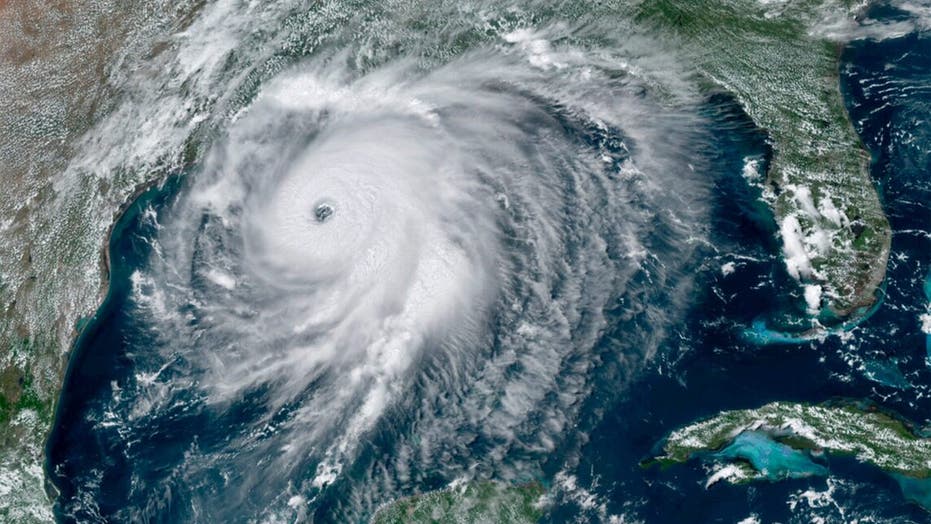
When Hurricane Laura slammed into the Louisiana and Texas Gulf Coast border, it cut a path of destruction that will take years to undo. The storm surge reached nine feet in some places. Sustained wind speeds peaked at 150 miles per hour, making it a Category 4 hurricane and tying the record for the strongest winds of any hurricane to make landfall in Louisiana. The scenes of devastation have been hard to look at. So many homes have been ruined. So many communities have been crushed. And even some lives have been lost.
The power of a storm like Laura reminds us of two things. First, it reminds us of the power we don’t have. We don’t have the power to stop a storm like this. We don’t even really have the power to fully prepare for a storm like this. But second, a storm like Laura also serves as a testament to the power we do have. We do have the power to help each other in times of crisis. We do have the power to love each other through seasons of pain.
And, as has been the case after so many other hurricanes, stories of those who have stepped up to help are already emerging – like that of Leonard Harrison, a volunteer with the Cajun Navy, who, while others were fleeing from the storm, drove 14 hours from Wilmington, North Carolina in his F-250, which he calls “Goliath,” to help with water rescues. He wound up rescuing 28 people from perilous high waters. He was using the power he had to help people in need.
While we do not have power over storms, God does. As the Psalmist reminds us:
He stilled the storm to a whisper; the waves of the sea were hushed. (Psalm 107:29)
But for all the power we don’t have over storms, we must keep in mind that we do have power after storms. We do have the power to love each other, like Leonard Harrison did. And this power has been given to us by God. As one of Jesus’ followers, John, writes:
Dear friends, let us love one another, for love comes from God. (1 John 4:7)
God has given us the power of His love so we can love each other. As we begin the process of cleaning up from Laura, now is the time to use the power God has given us instead of complaining about the power He hasn’t.
The Gulf Coast is counting on us.
To donate to Hurricane Laura relief, click here.
A Shrinking Design for COVID Times

First, a confession: I have not eaten at a Taco Bell in years – perhaps decades. But when I heard that the famed fast food chain was redesigning their dining areas, I was intrigued:
Starting next year, the restaurants will encompass 1,325 square feet (123 square meters) compared with an average 2,500 square feet for Taco Bell restaurants now.
Two drive-through lanes will highlight the new restaurants, enabling faster service for eaters who order through the chain’s app. The new facilities will provide contactless curbside-pickup service.
This is in response, the designers explained, to a new reality – that fewer people are eating out since the beginning of the COVID-19 pandemic. Obviously, this is a trend that these designers believe will continue well into the future.
I think they could be right. Even as restaurants re-open, anxiety levels remain high. Many who once felt comfortable around strangers now prefer the company of a close group of friends.
In some ways, Taco Bell’s redesign is a return to the roots of the fast-food industry. When fast food restaurants first started dotting the American landscape, many of them did not have dining areas at all. They were drive-up and walk-up food stands. Indeed, the first Taco Bell had a walk-up window only and was no larger than a two-car garage. But a lack of a dining room does not mean that community around food no longer matters.
In college, my fast food haunt was a nearby Jack In The Box. Its two tacos for 99 cents was too good a deal for a college student to resist. Though I would never actually eat at the restaurant, I would also never eat from the restaurant alone. A buddy would always go with me to the drive-thru and we would bring a bag of tacos back to our dorm to share. The community was incredible, even if the food was not.
Numerous studies have been conducted on the importance of meals and community. The Atlantic summarized a few of these studies a few years back:
Using data from nearly three-quarters of the world’s countries, an analysis from the Organization for Economic Cooperation and Development (OECD) found that students who do not regularly eat with their parents are significantly more likely to be truant at school…
Children who do not eat dinner with their parents at least twice a week also were 40 percent more likely to be overweight compared to those who do, as outlined in a research presentation given at the European Congress on Obesity in Bulgaria… On the contrary, children who do eat dinner with their parents five or more days a week have less trouble with drugs and alcohol, eat healthier, show better academic performance, and report being closer with their parents than children who eat dinner with their parents less often, according to a study conducted by the National Center on Addiction and Substance Abuse at Columbia University.
With such pronounced sociological benefits, it’s no wonder that in the early Church:
They broke bread in their homes and ate together. (Acts 2:46)
COVID-19 has taken a lot from us, including, for many, a center of community in restaurants. Many restaurants remain shuttered. For those that are open, the experience is not the same. Half empty dining areas and blocked-off tables provide a strange – instead of friendly – experience. But community will outlast COVID. After all, we need each other. Whether in our homes, in a dorm room, or in a restaurant dining room, we will find ways to be together. The early Church did. And we still will.
For right now, eating out may be dangerous to our health. But figuring out ways to be together that don’t spread disease remains good for our souls.
Processing a Pandemic

“When the pandemic is over…”
I’ve heard these words spoken over and over again by many people. And, I agree with them. I do believe this pandemic will eventually pass. But in my darker moments, I must admit that I also wonder about these words. I want to ask: “You say, ‘When the pandemic is over.’ When, pray tell, might that be?”
I have a feeling I’m not alone in asking this question. Not only am I not alone in asking this question among those around me; I am also not alone in asking this question among those throughout history.
In a really interesting long form piece for New York Magazine, Andrew Sullivan takes his reader on a whirlwind tour of plagues throughout history. His descriptions of many historic plagues are gruesome. Take, for instance, the plague that swept through Rome in 536:
Black rats arrived in the Roman port of Alexandria. They carried with them their own parasite, a flea that lived on the rats’ blood and could survive up to six weeks without a host – making it capable of enduring long sea voyages. And as the bacteria spread among the rats, and their population began to collapse, the fleas, desperate for food, sought alternatives. Living very close to the rats, humans were an easy target … For several days after infection, you were asymptomatic, then grotesque black buboes appeared on your body – swollen lymph nodes near where the fleas had bitten. Death often came several days later.
John of Ephesus noted that as people “were looking at each other and talking, they began to totter and fell either in the streets or at home, in harbors, on ships, in churches, and everywhere.” As he traveled in what is now Turkey, he was surrounded by death: “Day by day, we too – like everybody – knocked at the gate to the tomb … We saw desolate and groaning villages and corpses spread out on the earth, with no one to take up [and bury] them.”
This is not even the worst of Mr. Sullivan’s descriptions. His recounting of the 1918 flu pandemic here in the States is even more jarring:
In her book Pandemic 1918, Catharine Arnold notes that “victims collapsed in the streets, hemorrhaging from lungs and nose. Their skin turned dark blue with the characteristic ‘heliotrope cyanosis’ caused by oxygen failure as the lungs filled with pus, and they gasped for breath from ‘air-hunger’ like landed fish.” The nosebleeds were projectile, covering the surroundings with blood. “When their lungs collapsed,” one witness recounted, “air was trapped beneath their skin. As we rolled the dead in winding sheets, their bodies crackled – an awful crackling noise which sounded like Rice Crispies [sic] when you pour milk over them.”
But as the summer of 1918 began in the U.S., relief spread. Maybe it was over. And then, in the fall, confident that a vaccine was imminent, several cities, notably Philadelphia, hosted war-bond parades, with large crowds thronging the streets … In the coming weeks, the city morgue was piling bodies on top of bodies, stacked three deep in the corridors, with no ice and no embalming. The stench was rank. City authorities were reduced to asking people to put their dead loved ones out on the street for collection.
This is horrifying.
But Mr. Sullivan is not simply content to leave his reader with dreadful descriptions of plagues past. He also invites us to grapple with some hard truths that our being revealed by our present plague, like this one:
We are not in control.
This is most certainly true.
Christians, for millennia now, have known this and proclaimed this. But they have also trusted in and told of One who is in control – One who can, and even does, heal the sick and raise the dead.
Mr. Sullivan notes:
Reminding humans of our mortality, plagues throw up existential questions.
They do. Whether we take the time to grapple with these existential questions, however, is up to us. Historically, people have answered threats to their existence in one of two ways:
Let us eat and drink, for tomorrow we die! (Isaiah 22:13)
Or:
Even though I walk through the valley of the shadow of death, I will fear no evil, for You are with me; Your rod and Your staff, they comfort me. (Psalm 23:4)
Some are confronted by a time like this and simply resign themselves to revelry, for they believe that this is all there is. Others are confronted by a time like this and hope for a restoration, for they know this is not how things should be – but they also believe that there is One who will make things as they can be. And they believe that this One remains with us to comfort us, even during a pandemic.
Which way will you respond to this present moment? Choose wisely.
The Desperate Plight of the Uighur Muslims
Credit: Associated Press
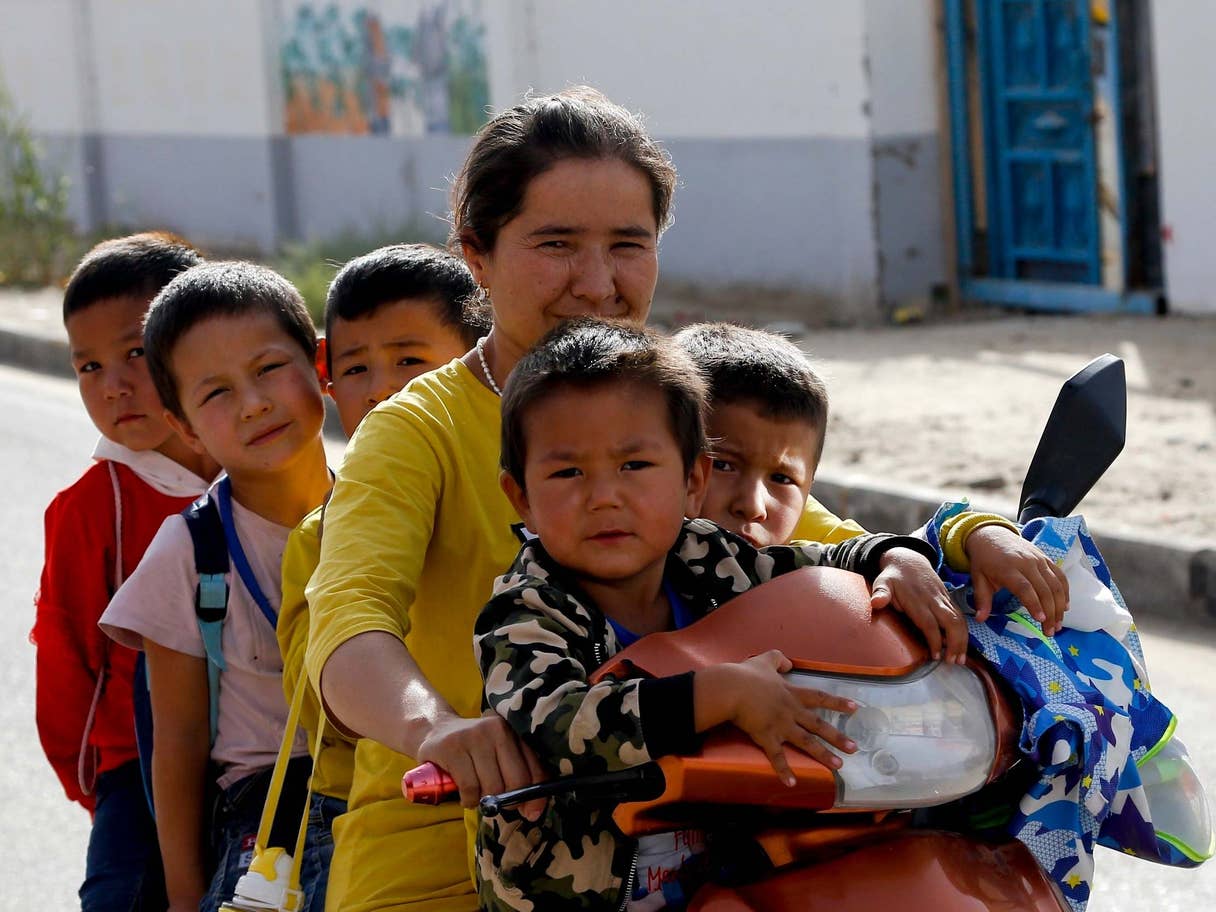
In a story that, in my opinion, has gone disturbingly under-reported, the United Kingdom has leveled shocking allegations against the Chinese government of serious human rights abuses against Uighur Muslims living in that country. The BBC reports:
UK Foreign Secretary Dominic Raab has accused China of “gross and egregious” human rights abuses against its Uighur population…
Reports of forced sterilization and wider persecution of the Muslim group were “reminiscent of something not seen for a long time,” he told the BBC…
China’s UK ambassador said talk of concentration camps was “fake.”
Liu Xiaoming told the BBC’s Andrew Marr that the Uighurs received the same treatment under the law as other ethnic groups in his country.
Shown drone footage that appears to show Uighurs being blindfolded and led to trains, and which has been authenticated by Australian security services, he said he “did not know” what the video was showing and “sometimes you have a transfer of prisoners, in any country.”
When a nation is accused of forcefully sterilizing an ethnic and religious group and shipping them by trains to camps, it is difficult not to reflexively conjure images of the abuse and genocide of countless Jews under Nazi Germany in World War II.
If the charges against the Chinese government are demonstrated to be true, the world must stand together in opposition. Persecuting or murdering any group of people is simply unacceptable.
In a speech from 2018, Senator Ben Sasse of Nebraska spoke out against Russian corruption and authoritarianism. He said:
The American people are a people, and we are a nation that believes in human dignity. We believe that this isn’t just true of 320 million Americans. It’s true of 7.5 billion people across this globe. We believe in free speech, freedom of religion, freedom of the press, freedom of assembly, the right of protest not because the government gives us those rights but God created us with dignity.
Senator Sasse’s point is critical to keep in mind as we seek to address this current crisis. What is happening in China should matter to us in America not because China has violated some arbitrary American principle of human dignity, but because China has violated the true and righteous reality of human dignity. That humans have certain immutable rights is true, as Senator Sasse points out, not only for Americans, but for all 7.5 billion people across the globe. When these rights are violated, we should stand up. When ethnic and religious groups are tortured, we should yell, “No!”
Though we may not share a common faith, Christians and Muslims share a common humanity. We also both understand that there is something beyond what we can merely see, taste, touch, smell, hear, and discern with our senses. We believe that there is a God who is all-powerful. Because Christians also believe in an all-powerful God who is all-loving as well, we should reflect His love by loving our Muslim neighbors and speaking out for their welfare and against those who would seek to rob them of their dignity – and lives.
People everywhere have a right to life. May we pray to the God who has not only given a right to life to the Uighurs, but also gives hope for a life that is eternal through Christ.


 Pastor Zach's Blog