1500-Year-Old Bible Discovered! Christianity Debunked! Not Exactly.

Turkish BibleHere we go again.

I’ve been seeing it all over Facebook.  The headline reads, “1,500 Year Old Bible Confirms That Jesus Christ Was Not Crucified – Vatican In Awe.”  It seems startling.  The only problem is, it’s not true.  And, it’s nothing new.  These kinds of articles that seek to undermine the veracity of the Bible have been being published for years now.  Indeed, the discovery of this 1,500-year-old Bible is news that’s now better than two years old.  But it’s just now hitting Facebook.  And because many people are being confused by it, it’s worth a look.

The article opens:

Much to the dismay of the Vatican, an approximately 1,500 to 2,000 year old Bible was found in Turkey, in the Ethnography Museum of Ankara.  Discovered and kept secret in the year 2000, the book contains the Gospel of Barnabas – a disciple of Christ – which shows that Jesus was not crucified, nor was He the Son of God, but a prophet.  The book also calls apostle Paul “The Impostor.”  The book also claims that Jesus ascended to heaven alive, and that Judas Iscariot was crucified in His place.[1]

Let’s separate some fact from fiction here.

“Much to the dismay of the Vatican…”  The Vatican did, according to The Christian Post, make an “official request”[2] to see and study the Bible, but it was not out of dismay.  Like any theological artifact, it piqued their curiosity.  Many people desired to study this book.

“…an approximately 1,500 to 2,000 year old Bible…”  Maybe.  But probably not.  There are reasons to believe this book is a forgery, probably written around AD 1500, which is, coincidentally enough, about a century after many scholars believe the Gospel of Barnabas itself was written.[3]  Timothy Michael Law, a Junior Research Fellow at the Oxford Centre for Hebrew and Jewish Studies, has a nice blog on the antiquity of this Bible here.

“…the book contains the Gospel of Barnabas…”  Again, maybe.  But possibly not.  We actually don’t know what the book contains because it has not been widely studied.  The Christian Post quotes theology professor Ömer Faruk Harman who notes that people may be “disappointed to see that this copy … might have no relation with the content of the Gospel of Barnabas.”

“…which shows that Jesus was not crucified … and that Judas Iscariot was crucified in His place.”  The Gospel of Barnabas does indeed purport that Judas Iscariot was crucified in Jesus’ place.  But this is because this Gospel was written as an apologetic for Islam.  Indeed, it prophesies the arrival of Muhammad, but, if the 15th century dating of this Gospel is correct, it does so about 800 years after Muhammad!  In other words, its prophecies are really no prophecies at all, but polemical forgeries.

The line from this Facebook article that made me sigh the loudest is this one:

It is believed that, during the Council of Nicaea, the Catholic Church hand-picked the Gospels that form the Bible as we know it today; omitting the Gospel of Barnabas (among many others) in favor of the four canonical Gospels of Matthew, Mark, Luke, and John.

Ever since Dan Brown’s book The Da Vinci Code, this has been a canard that just won’t die.  At no time during the Council of Nicaea did the Catholic Church hand-pick any Gospels.  The four Gospels we have today were already widely accepted by the Church by the time of this council.  If you want to read the canons issued by the Council of Nicaea for yourself, you can check them out here.  None say anything about the Gospels.  Indeed, none say anything about the canon of Scripture at all.

Ultimately, even if this Turkish Bible is indeed 1,500 years old and even if it does contain the Gospel of Barnabas, the Council of Nicaea was held in AD 325, which is still before the time of this Bible.  Thus, part of the reason the Council of Nicaea never considered the Gospel of Barnabas during its meetings is because there was not yet a Gospel of Barnabas to consider!

It was David Hannum, criticizing P.T. Barnum, who said, “There’s a sucker born every minute.”  Don’t be suckered by this Facebook article.  The Bible as we have it still stands.  And on it, your faith can still stand.

___________________________

[1] “1,500 Year Old Bible Confirms That Jesus Christ Was Not Crucified – Vatican In Awe,” Moorish Harem:  Man’s Greatest Accomplishments (4.28.2014).

[2] Clara Morris, “Turkey’s 1500-Year-Old, $28M Bible Linked to Gospel of Barnabas?The Christian Post (2.23.2012).

[3] See Jan Joosten, “The Gospel of Barnabas and the Diatessaron,” Harvard Theological Review 95, no. 1 (2002).


You’re not smart enough or good enough, even if people like you

Stuart Smalley 1It was Stuart Smalley, played by Al Franken on Saturday Night Live, who said, “I’m good enough, I’m smart enough, and, doggone it, people like me!” As it turns out, many took Smalley’s credo to heart. And the results have been sadly predictable.

Case in point: the American Bible Society, in conjunction with the Barna Group, recently published its “State of the Bible” report for 2014. The report opens with plenty of punch:

Now there are just as many Americans skeptical of the Bible as there are engaged with the Bible. According to the fourth annual State of the Bible survey, 19 percent said that they were skeptical of the Bible. This number is up from 10 percent in 2011.

This trend is even more pronounced among the Millennial generation (who range in age from 18-29). According to the State of the Bible report, Millennials are

–   Less likely to view the Bible as sacred literature (64 percent in comparison to 79 percent of adults),
–   Less likely to believe the Bible contains everything a person needs to know to lead a meaningful life (35 percent in comparison to 50 percent of adults), and
–   More likely to never read the Bible (39 percent compared in comparison to 26 percent of adults).[1]

It turns out that America’s latest generation is more suspicious of the Bible than any that has come before it.

Now, on the one hand, such suspicion requires solid biblical apologists – people who can argue for Scripture’s veracity, historicity, consistency, and even morality to a society that is increasingly questioning Scripture on all these fronts. Indeed, one factoid that came out of this report is that while 50 percent of all adults believe the Bible has too little influence on society, only 30 percent of Millennials believe this. This is, in part, because many Millennials no longer accept the basic premise that the Bible teaches right from wrong. Instead, many Millennials now believe the Bible promotes wrong rather than right – for instance, on topics like sexual ethics. Thus, they see the Bible as having a negative, rather than a positive, influence on society – one they would be happy to see continue to wane.

But there is more to this report than just what Millennials believe about the Bible. The statistic I found most telling from this report is this one: 19 percent of Millennials believe no literature is sacred compared to 13 percent of all adults who believe no literature is sacred. In other words, it’s not just that Millennials have a problem with the Bible in particular, it’s that they struggle with any literature that claims to be sacred in general.

It is here that we arrive at the core of this new generation’s struggle. For to claim a particular piece of literature is sacred is, at the same time, to say something about its authority. After all, something with a sacred, or divine, origin is, by definition, “above” me and can therefore make certain claims on me and demands from me. But this is something this current generation simply cannot endure. For to believe a book like the Bible has divine authority is to concede that if I disagree with the Bible, the Bible gets the right of way. But when I’ve been told, “I’m good enough, I’m smart enough, and, doggone it, people like me,” I cannot stand to have my goodness or moral intelligence questioned by some backward work from ancient antiquity. My modern, enlightened sensibilities cannot be wrong. I must be right.  The only sacred literature left, then, is the moral script I’ve written for myself and carry around in myself – hence, the reason so many Millennials see not only the Bible as unsacred, but any religion’s holy book as unsacred.

So with all of this in mind, perhaps it’s worth it to do a little reflection on our assumption concerning the sapience and sacredness of our moral sensibilities. We have been told we are smart enough. But are we, really? Have we never made a wrong call, a tragic error, or a bumbling fumble? We have been told we are good enough. But are we, really? Have we never broken our own moral boundaries or changed them over time because of a shifting perspective, or, more cynically, because of coldly calculated expedience? A little bit of honest introspection is enough to remind us that what Stuart Smalley taught us is profoundly untrue. Indeed, it is downright silly. And it is supposed to be. That’s why it aired on Saturday Night Live.

So let’s stop looking to ourselves for truth and morality and start looking to something higher. Let’s take an honest look at the Bible. Who knows? We may find it’s smarter and better than even we are. And, doggone it, we might even learn to like that.

____________________________

[1] “State of the Bible 2014,” American Bible Society.

A Camel Controversy

Camels 1And you thought it was it only impossible for a camel to go through the eye of a needle.

As it turns out, threading camels isn’t the only thing that’s impossible according to some archaeologists.  Domesticating them before the tenth century B.C. also turns out to be quite the trick.  Writing for the New York Times, John Noble Wilford provocatively declares, “Camels Had No Business in Genesis.”[1]  Wilford explains:

There are too many camels in the Bible, out of time and out of place.

Camels probably had little or no role in the lives of such early Jewish patriarchs as Abraham, Jacob and Joseph, who lived in the first half of the second millennium B.C., and yet stories about them mention these domesticated pack animals more than 20 times. Genesis 24, for example, tells of Abraham’s servant going by camel on a mission to find a wife for Isaac.

How does Wilford know that camels had no role in the era of the biblical patriarchs?  He cites a study, recently published by two archaeologists from Tel Aviv University, which employed radiocarbon dating to test some camel bones found in the Aravah Valley.  This study found the bones to be from the last third of the tenth century B.C., which, Wilford notes, is “centuries after the patriarchs lived and decades after the kingdom of David, according to the Bible.”  So there you have it.  Thanks to some late breaking bones, Genesis is discredited – at least the parts that talk about camels.

Now, before we fall prey to camel chaos, a few things should be noted.  First, the Tel Aviv archaeologists, by declaring that camels could not have been used in the way Genesis 24 describes them, are making an argument from silence.  Their assumption runs like this:  because we do not have domesticated camel fossils dating before first millennium B.C., there must have been no domesticated camels before the first millennium B.C.  The Bible must be wrong.  But a lack of evidence does not necessitate a lack of existence.  One need to only think back to 1961.  This was the year the “Pilate Stone” was discovered at Caesarea Maritima.  It had an inscription dedicated to the emperor of Rome at the time, Tiberius Caesar:  “To the Divine Augustus Tiberieum:  Pontius Pilate, prefect of Judea has dedicated this.”  Before this stone was discovered, because there was no hard archaeological evidence of Pontius Pilate, many assumed that Pilate was a fictional character, made up out of the sacred authors’ over-active imaginations.  Whoops.  So much for that argument from silence.

It should also be noted that the archaeologists who discovered these bones do not even have complete silence in favor of their argument against camels during the time of the biblical patriarchs.  They only have archaeological silence.  There are extra-biblical references to domesticated camels prior to the first millennium B.C.  Titus Kennedy, adjunct professor at Biola University, notes that a camel is mentioned in a list of domesticated animals from Ugarit, dating anywhere from 1950 to 1600 B.C.  In an interview with Christianity Today, Kennedy explains:

For those who adhere to a twelfth century B.C. or later theory of domestic camel use in the ancient Near East, a great deal of archaeological and textual evidence must be either ignored or explained away …

[Israel] doesn’t have much writing from before the Iron Age, 1000 B.C. … So there aren’t as many sources to look at. Whereas in Egypt, you have writing all the way back to 3000 B.C. and in Mesopotamia the same thing.[2]

Kennedy concludes that there were not only domesticated camels at the time of the biblical patriarchs, but before the time of the biblical patriarchs.  Thus, the biblical record is quite believable.  There is no reason that Abraham could not have acquired “sheep and cattle, male and female donkeys, male and female servants, and camels” (Genesis 12:16), just as Genesis says.

Ultimately, the difficulties with the premature conclusions drawn from this discovery reach much deeper than simply whether camels were around in the second millennium B.C.  These difficulties are summed up in Wilford’s conclusion:

These anachronisms are telling evidence that the Bible was written or edited long after the events it narrates and is not always reliable as verifiable history. These camel stories “do not encapsulate memories from the second millennium,” said Noam Mizrahi, an Israeli biblical scholar, “but should be viewed as back-projections from a much later period.”

In other words, the Bible cannot be trusted to get its facts straight – at least not all of them.  When reading the Bible, then, skepticism must be given preference over faith.

Finally, if I assume camels could not have been in Genesis based on an argument from paleontological silence, it is only reasonable for me to assume that a Savior cannot rise from death based on medical science.  After all, doctors have long known that dead people tend to stay that way.  Thus, Jesus’ resurrection must have never happened.   But if this is true, then my “faith is futile; I am still in my sins … [and] I am to be pitied more than all men” (1 Corinthians 15:17, 19).  Wow, that’s a downer.

Let’s hope the archaeologists are wrong on this one.  After all, I don’t really like to be pitied.


[1] John Noble Wilford, “Camels Had No Business in Genesis,” New York Times (2.10.2014).

[2] Gordon Govier, “The Latest Challenge to the Bible’s Accuracy:  Abraham’s Anachronistic Camels?Christianity Today (February 2014).

Michael Sam Makes It Public

Credit: cnn.com
Credit: cnn.com

“Does the NFL have any gay players?” my wife asked me last Sunday.  She was watching a Hallmark Valentine movie where one of the characters, an NFL quarterback, came out as homosexual.  “No, sweetie,” I responded.  “The NFL does not have any openly gay players.  There have been some players who have come out after they left the NFL, but to date, no players currently in the NFL are openly homosexual.”

It didn’t take long for that to change.

The next morning, while I was working out and watching ESPN, there was Michael Sam, former Missouri Defensive End and candidate in the NFL draft, coming out on national TV as a gay football player.   “I am an openly, proud gay man,” Sam told ESPN’s “Outside the Lines.”  Granted, Sam is not an NFL player…yet.  But his prospects are good.

I am surprised – pleasantly so – by how muted the negative response to Sam’s announcement has been.  Some journalists have hinted that responses could turn negative, but to date there is no swell of detractors decrying Sam as a dangerous degenerate.  By the same token, those who are writing and speaking about him are hailing him as a hero.  Brendon Ayanbadejo, a former linebacker who is currently a free agent, was effusive about Sam’s announcement, comparing him to Jackie Robinson and Rosa Parks.  To cap off his feelings concerning Sam, he said, “To borrow from Neil Amstrong, this is one small step for gay men and one giant leap for the LGBTQ community.”[1]  Juliet Macur of the New York Times wrote a manifesto demanding that an NFL team draft Sam.  She begins by writing, “It’s time,” and ends by declaring, “Sam must be drafted. It’s time to move forward. The teams and the league are on the clock.”[2]  For Macur, Sam’s status as a future NFL star is not a matter of his talent, but of a moral imperative that says the NFL must have an openly gay player.

For orthodox Christians, all of this can be hard to sort out.  On the one hand, there is something to be celebrated here.  It is refreshing to see so many display a measured sensitivity to and deep compassion for those with same-sex attractions and those in same-sex relationships.  The gay slurs, gay jokes, and gay bashing of yesteryear have drastically dissipated and, for my part, I say, “Good riddance.”  Such speech is diametrically opposed to the biblical command to love, which Paul says is the fulfillment and summation of all biblical commandments (cf. Romans 13:8-9).  On the other hand, Christians cannot pretend that our society’s sexual free-for-all, which demands not only the toleration of, but the celebration of sexual practices that are far from biblical standards for human sexuality, is nothing more than an issue of civil rights.  Whether it’s Michael Sam touting his homosexuality or Richie Incognito and Jonathan Martin exchanging texts about how many women they have slept with and the use of prostitutes,[3] the spacious sexual ethic of our society is simply not something Christians can endorse.  Partly because it’s immoral and Scripturally forbidden, yes.  But also because it hurts, belittles, and objectifies people, which, in and of itself, is tragic, no matter what your ethical worldview.

Ultimately, the loose sexual standards of our society are nothing new.  The path of sexual salaciousness is well worn – not only in twenty-first century America, but in all the societies that have come before her.  But we can choose a different path.  We can choose the path of sexual commitment in marriage while walking “humbly with our God” (Micah 6:8).  I pray that we do.  For when we do, we not only live out God’s sexual standard in our commitments, we show God’s lavish love by our humility.

It’s Not Tricky … It’s Really Not

Hebrew Text 2It seems like it’s been happening to me a lot lately.

The other day on the radio, I heard a commercial for “The Biblical Money Code,” a program that claims to be able to make millions for the person who follows it:

Imagine if you had a secret code for making money … a code buried deep within biblical text.  A code that certain investment titans have quietly exploited to amass billions.  And what if this code could be used by you, today, to unlock vast amounts of wealth — safely and ethically.[1]

Now, forget the fact that what the Bible has to say about money is about as straightforward and sharp as it can be.  For instance:  “No one can serve two masters.  Either he will hate the one and love the other, or he will be devoted to the one and despise the other.  You cannot serve both God and Money” (Matthew 6:24).  Forget the fact that God nowhere promises that you can or will amass billions.  Forget the fact that the Bible doesn’t even find it particularly desirable that a person would amass billions.  All of what’s in this program has to be in the Bible.  You just have to unlock the code.

But that’s not the only biblical “code” I’ve run across recently.

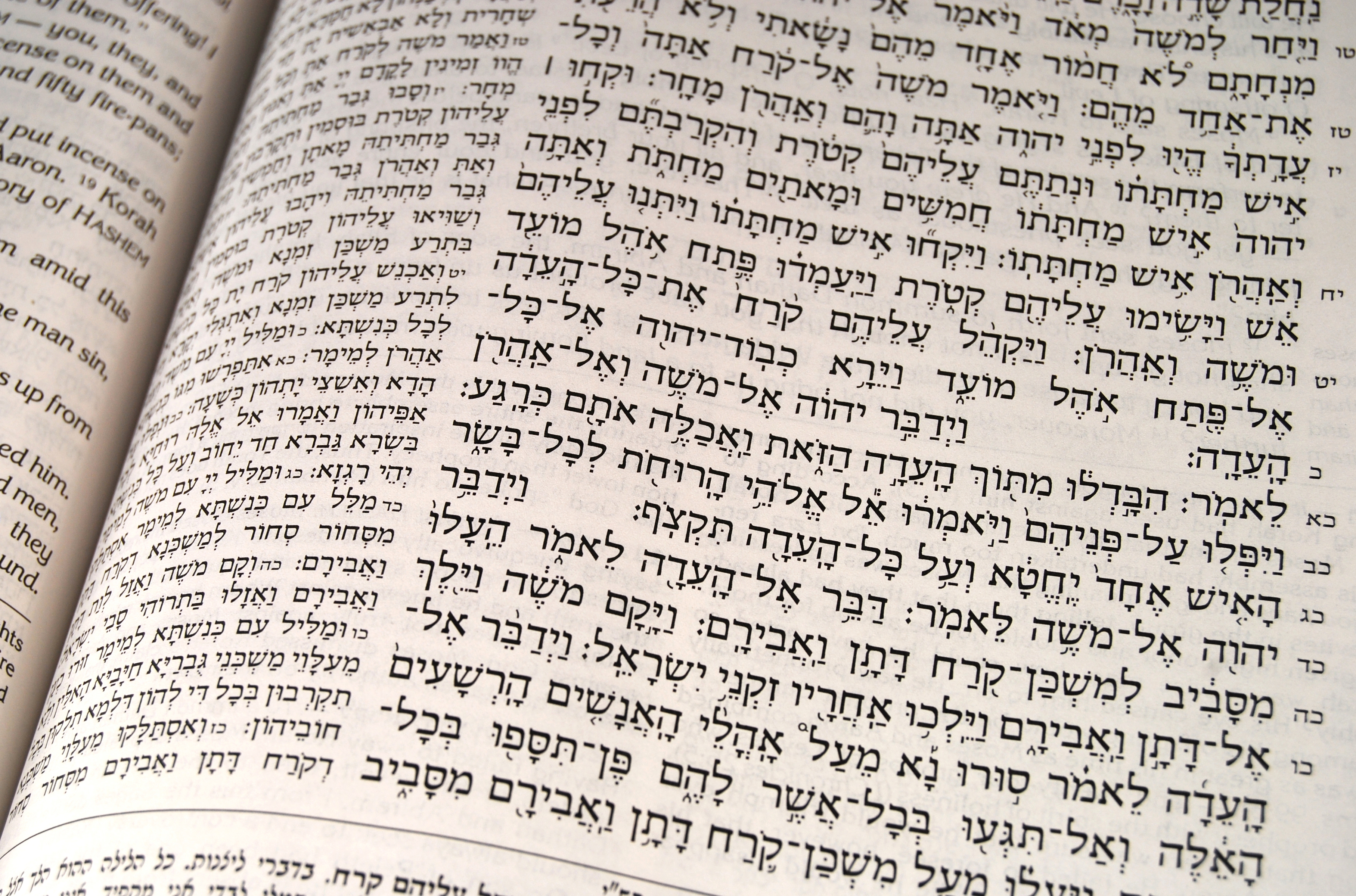
The other day, I received an email from a friend claiming the prophet Muhammad was identified by name in the Old Testament.  Where?  Song of Songs 5:16:  “His mouth is sweetness itself; he is altogether lovely.  This is my lover, this my friend, O daughters of Jerusalem.”  How does this refer to Muhammad?  The Hebrew word for “altogether lovely” is machamadim, which sounds like “Muhammad.”  Now, forget the fact that, in context, this is a statement by a wife about her husband.  Forget the fact that machamadim is a Hebrew word and Muhammad is an Arabic name.  Forget the fact that there is nothing in this verse that would indicate this is a prophetic statement.  These two words sound similar, so they must be related.  You just have to unlock the code.

But that’s not the only biblical “code” I’ve run across recently.

I remember a conversation I had with some Mormon friends about the kingdoms of glory in the afterlife.  “We can enter a telestial, terrestrial, or celestial kingdom,” my friends explained.  From where do they get this?  1 Corinthians 15:40 (KJV):  “There are also celestial bodies, and bodies terrestrial: but the glory of the celestial is one, and the glory of the terrestrial is another.”  Now, forget the fact that Paul’s point here is not to talk about afterlife destinations, but to speak of the kind of body we will receive at the resurrection of the dead, as he makes abundantly clear at the conclusion of his argument:

So will it be with the resurrection of the dead. The body that is sown is perishable, it is raised imperishable; it is sown in dishonor, it is raised in glory; it is sown in weakness, it is raised in power; it is sown a natural body, it is raised a spiritual body. (1 Corinthians 15:42-44)

Forget the fact that this verse doesn’t even mention telestial bodies.  Forget the fact that no one in the Church interpreted this verse in this way before Joseph Smith.  Paul has to be talking about different afterlife destinations.  You just have to unlock the code.

With so many so-called “religious experts” peddling so many biblical codes, it is worth it to remind ourselves of the principle of perspicuity.  Perspicuity is from a Latin word meaning “clearness.”  And classically, the Church has ascribed this characteristic to Holy Writ.  The Lutheran dogmatician Francis Pieper summarizes biblical perspicuity thusly:  “The perspicuity of Scripture consists in this, that it presents, in language that can be understood by all, whatever men must know to be saved.”[2]  Pieper goes on to note that Scripture testifies to its own perspicuity in places like Psalm 19:7:  “The statutes of the LORD are trustworthy, making wise the simple.”  One can be simple intellectually and still gain wisdom from Scripture, for Scripture is clear.  Understanding the Good Book does not take a Ph.D. in theology.

Now, this is not to say that every verse of the Bible is equally easy to understand.  No less than the great preacher Chrysostom explains that some parts of the Bible can indeed be difficult to interpret:

Let us suppose … rivers … are not of the same depth.  Some have a shallow bed, others one deep enough to drown one unacquainted with it. In one part there are whirlpools, and not in another … Why then art thou bent on drowning thyself in those depths?[3]

Chrysostom compares different parts of Scripture to different rivers.  Some parts are shallow and easy to navigate.  Other parts are deeper and more difficult to wade through.  But though some parts of Scripture are richly deep, none are nefariously tricky.  In other words, the biblical authors are not trying to hide things from us with a code, but reveal things to us under the guidance of God’s Holy Spirit.

The long and short of biblical perspicuity, then, is this:  finding codes, mysteries, and secrets that cater to our sinful lusts like greed, play “sound like” games with words across languages, and rip words out of a text and shoehorn them into meaning something which, contextually, they clearly do not and cannot mean are not only not biblical, they’re evil.  God wants us to understand and follow His Word – not be confused by it and misinterpret it.

So the next time you open your Bible, don’t pull out your decoder ring, pull out your reading glasses.  They’ll work much better.  And you’ll be much more edified.


[1]The Biblical Money Code,” newsmax.com

[2] Francis Pieper, Christian Dogmatics, vol. 1 (St. Louis:  Concordia Publishing House, 1950), 320.

[3] John Chrysostom, A Select Library of the Nicene and Post-Nicene Fathers of the Christian Church, series 1, vol. 13, P. Schaff, ed. (New York: Christian Literature Company, 1889), 507.