Posts tagged ‘Theology’
Peace and Justice in the Face of ISIS

Credit: NBC News
First it was James Foley. Days later, it was Steven Sotloff. The beheading of two journalists by ISIS has certainly thrust the travesties of this terrorist organization to the forefront of our minds and our news cycle. But these are just ISIS’s latest crimes. At the beginning of August, some 50,000 Yazidis were forced to flee into the mountains of Iraq or face death at the hands of ISIS militants. ISIS also kidnapped hundreds Yazidi women, selling them as sex slaves for as little as $25. Last week, The New York Times profiled the gut-wrenching story of Iraqi soldier Ali Hussein Kadhim who was captured along with hundreds of other soldiers by ISIS militants. Christians too have been in ISIS’s crosshairs, being threatened with death if they do not convert to radical Islam or pay a tax.
Back home, President Obama is grappling with how to deal with a terrorist threat and crimes against humanity that are half a world away. And he’s been getting pressure from all sides. On one side, a coalition of religious conservatives has signed a petition calling for decisive military action:
It is imperative that the United States and the international community act immediately and decisively to stop the ISIS … genocide and prevent the further victimization of religious minorities. This goal cannot be achieved apart from the use of military force to degrade and disable ISIS … forces.[1]
On the other side, a group of Catholic and Protestant leaders has written a letter to President, urging caution and restraint:
While the dire plight of Iraqi civilians should compel the international community to respond in some way, U.S. military action is not the answer. Lethal weapons and airstrikes will not remove the threat to a just peace in Iraq. As difficult as it might be, in the face of this great challenge, we believe that the way to address the crisis is through long-term investments in supporting inclusive governance and diplomacy, nonviolent resistance, sustainable development, and community-level peace and reconciliation processes.[2]
This is a crisis no president wants to face. This crisis also presents an ethical dilemma no Christian finds easy to confront. On the one hand, my preference and prayer would be that ISIS repent of their crimes and peace be restored to Iraq. On the other hand, I am sober-minded enough to know that ISIS shows no signs of softening. When even the Taliban is concerned about ISIS’s extremism, things are not on the right track.
So how do we understand this problem theologically?
A curious feature of biblical theology is what scholars refer to as “proleptic eschatology.” In short, proleptic eschatology asserts that bits and pieces of what will happen on the Last Day show up in our days. For example, the apostle Paul claims that Christ’s resurrection is only “the firstfruits of those who have fallen asleep” (1 Corinthians 15:20). In other words, the resurrection of all flesh on the Last Day has shown up in the resurrection of Christ on Easter Sunday. Likewise, Jesus describes His return on the Last Day to judge the earth thusly: “At that time the sign of the Son of Man will appear in the sky, and all the nations of the earth will mourn. They will see the Son of Man coming on the clouds of the sky, with power and great glory” (Matthew 24:30). But before a cosmic judgment on the Last Day, Jesus describes a smaller judgment in the destruction of the temple at Jerusalem in His day: “I tell you the truth, not one stone here will be left on another; every one will be thrown down” (Matthew 24:2). Jesus’ words come to pass when the Roman general Titus decimates Jerusalem in A.D. 70. The judgment of the Last Day shows up in the destruction of Jerusalem in Jesus’ day.
It is this theology of proleptic eschatology that Paul has in mind when he exhorts his readers: “Do not take revenge, my friends, but leave room for God’s wrath, for it is written: ‘It is mine to avenge; I will repay,’ says the Lord” (Romans 12:19). Paul promises that even if we see miscarriages of justice in our day, God will avenge evil on the Last Day.
But that’s not the only day God will avenge evil.
Paul knows the evil of our day, if left unchecked until the Last Day, would yield unspeakable horrors. This is why Paul continues by explaining that bits and pieces of God’s judgment on the Last Day show up in our day through the actions of world governments: “[The governing authority] is God’s servant, an agent of wrath to bring punishment on the wrongdoer” (Romans 13:4). The judgment of God against sin on the Last Day shows up through world governments in our day.
This, then, brings us to the Christian’s ethical dilemma. Because, on the one hand, we are called to wait patiently until the Last Day for God’s perfect judgment and justice to be revealed. On the other hand, governing authorities – including our own governing authority – can be used by God as His agents to bring temporal justice to the criminal problems of our day. This is why two sets of Christians can write two very different letters to President Obama.
I, for one, am praying that perhaps ISIS will have a Jonah moment – that they, like when Jonah preached to Nineveh, will hear the warning of God’s judgment, repent, and be spared of His wrath. But I am also very aware that after the preaching of Jonah to Nineveh came the preaching of Nahum to Nineveh – and with the preaching of Nahum to Nineveh came God’s wrath against Nineveh.
The clock is ticking on ISIS. I pray for peace and reconciliation. But I also pray that justice against these terrorists will not tarry long. The spilled blood of thousands is crying out.
__________________________
[1] “A Plea on Behalf of Victims of ISIS/ISIL Barbarism in Iraq,” iraqrescue.org.
[2] “53 national religious groups, academics, ministers urge alternatives to U.S. military action in Iraq,” Mary Knoll Office for Global Concerns (8.27.2014).
On Michael Brown and Darren Wilson

Credit: Reuters
They are the protests that just won’t stop. The cries of activists in Ferguson, Missouri are loud and only seem to be getting louder. One cry in particular caught my attention. MSNBC’s Chris Hayes was reporting from Ferguson when protestors began to throw rocks at him. Some of them yelled, “Tell the true story!” But one man shouted what I think is perhaps the most profound insight into this whole, sordid affair I have heard to date. “This isn’t about Mike Brown no more,” he said. “It’s a civil rights movement. It’s about all people.”
I agree with the protestor. Though they are often conflated, what’s happening in Ferguson today can and should be distinguished from what happened in Ferguson on August 9. This is not about Michael Brown anymore. This is about – be they real or perceived – civil rights grievances.
On the one hand, this is not all bad. This tragedy has ignited some important national conversations. On the other hand, in these conversations, we have taken the very real pain of two very real families – the Brown family and the family of the officer who shot him, the Wilson family – and turned it into an expedient talking point for rallies, protests, and cable news brawls. But their pain deserves more than our marginal mentions. We need to do more. We need to go deeper. We need to take some time to empathize with these families.
Empathy is when you take the human experience and personalize it. In other words, you use what you know from the human experience in general to try to understand one human’s experience in particular. What has happened in this case is the exact opposite. We have taken the personal experiences of two families and de-personalized them, hoisting their pain on our petard.
Michael Brown and Darren Wilson have become emblems. Michael Brown has become an emblem of racial tensions that have plagued Ferguson for decades. Darren Wilson has become an emblem of mistreated law enforcement officials. But these men are much more than impersonal emblems. Michael Brown was a son with college aspirations. Darren Wilson is a man with a family at home.
In an effort at empathy, I’ve been pondering what questions these families must be asking themselves as they watch all this unfold. I’ve been thinking about the questions I would be asking if was in their situation.
As I’ve been thinking about Michael Brown’s parents, I’ve wondered if they’ve asked themselves:
- Did Officer Wilson really have to use deadly force to subdue our son? He has lots of ways to subdue suspects.
- It was broad daylight! How in the world did the officer not know our son was not pointing a weapon at him?
- Did Officer Wilson overreact because he was scared of a black man?
- What is a jury going to say about all this? Is justice going to be served?
As I’ve been thinking about Officer Wilson and his family, I’ve wondered if they’ve asked themselves:
- Why can’t people understand how difficult it is to make snap decisions as a police officer?
- Why do people always assume officers have the worst of intentions?
- Don’t the protestors realize that their threats scare our whole family?
- What is a jury going to say about all this? Is justice going to be served?
Of course, I don’t know for sure what questions they’re asking. And I would never claim to understand how these families are feeling. But empathy is not about claiming to know how somebody feels. It’s about caring how somebody feels. And we should care about and for these families.
To this end, I would ask you to pray for these families – both of these families – and for peace to be restored in Ferguson. Try to empathize with them – their pain, their fear, their confusion – and then pray that God would give them strength, comfort, and hope during this difficult time. Remember, these families are more than causes, they’re people. We cannot forget that.
Allow me to add one final note. Just because I seek to uphold the value of empathizing with the Brown and Wilson families doesn’t mean I don’t believe larger discussions around race are unimportant. But I pray we don’t have these conversations like it’s 1963. I pray we’ve grown since then. I pray our discussions are more civil, our thinking is more compassionate, and our hearts are more, well, empathetic toward those who have different experiences and perspectives. But for now, my prayers are with the Brown and Wilson families. I hope yours are too.
The Limits of Human Freedom
 We, in America, like freedom. We talk about it. We write about it. We even sing about it. Anyone who has ever attended a sporting event where our national anthem was sung has heard in soaring melody how we live in “the land of the free and the home of the brave.”
We, in America, like freedom. And we will fight, protest, and lobby to protect the freedoms most near and dear to our hearts. Some fight, protest, and lobby to protect the freedom of religion – to practice their beliefs as they choose. Others fight, protest, and lobby for the freedom to keep and bear arms. Still others fight, protest, and lobby for the freedom to marry whoever they want – even if whoever they want is of the same gender.
Perhaps it is our love of freedom that makes the doctrine of predestination so offensive to so many. Jesus summarizes predestination thusly: “You did not choose Me, but I chose you and appointed you so that you might go and bear fruit – fruit that will last” (John 15:16). The doctrine of predestination, then, is simply this: it is God, not us, who is in charge of our salvation. When it comes to our salvation, we are not free!
This is where the hackles of our freedom-loving hearts can get raised. Indeed, the most common objection that I hear whenever I teach on predestination is, “But what about our free wills? Doesn’t predestination mean that God turns us into automatons – unable to accept or reject Him?”
I have addressed this question many times and in many ways. But to address it this time, I would turn your attention the midcentury American sociologist Philip Rieff who, I believe, writes about the limits of our free wills – and the goodness of these limits – in a poignant and powerful way. Rieff writes:
There is no feeling more desperate than that of being free to choose, and yet without the specific compulsion of being chosen. After all, one does not really choose; one is chosen. This is one way of stating the difference between gods and men. Gods choose; men are chosen. What men lose when they become as free as gods is precisely that sense of being chosen, which encourages them, in their gratitude, to take their subsequent choices seriously.[1]
To choose without first being chosen, Rieff explains, is a miserable manner of existence. After all, if there is no God who loves you enough to choose you, what does your choice of Him – or of anything else, for that matter – matter? Who would want to choose a God in their limited power who doesn’t care enough to first choose them out of His infinite power? This is why the apostle Paul speaks of predestination in such glowing terms:
Praise be to the God and Father of our Lord Jesus Christ, who has blessed us in the heavenly realms with every spiritual blessing in Christ. For He chose us in Him before the creation of the world to be holy and blameless in His sight. In love He predestined us to be adopted as His sons through Jesus Christ, in accordance with His pleasure and will – to the praise of His glorious grace, which He has freely given us in the One He loves. (Ephesians 1:3-7)
Paul is thrilled by the doctrine of predestination! For Paul knows that the only way he is free to make decisions worth making is when believes and sees that he himself is a decision that God thought was worth making in predestination. Paul’s limited free will is of no consequence if it cannot come under the tender loving care of God’s perfect free will.
So, do you long to be free? Do you fight, protest, and lobby to protect the freedoms that are near and dear to your heart? If you do, remember that your freedom of choice is only as good and meaningful as your bondage to Christ. Without being under Christ’s rule and reign, your freedom is futile. Under Christ’s rule and reign, however, your freedom is purposeful. And I don’t know about you, but I want my freedom to mean something.
_______________________
[1] Philip Rieff, The Triumph of the Therapeutic (Chicago: The University of Chicago Press, 1966), 93.
Decidophobia

Credit: thebeaconmag.com
I have a confession to make: I suffer from decidophobia.
Now, before you accuse me of making up words, this term is not my own. Walter Kaufmann, who served as a philosophy professor for over 30 years at Princeton, coined it. He explains decidophobia like this:
In the fateful decisions that mold our future, freedom becomes tangible; and they are objects of extreme dread. Every such decision involves norms, standards, goals. Treating these as given lessens this dread. The comparison and choice of goals and standards arouses the most intense decidophobia.[1]
Here’s what Kaufmann is saying: decisions form futures. Those who suffer from decidophobia worry that their decisions will tank their futures.
Now, to a certain extent, this is true. Foolish decisions can lead to bad futures. If one wracks up a lot of debt now, it leads to a lot of bills in the future. If one is having an affair now, it can lead to a heart-wrenching divorce in the future.
But there are other decisions – decisions that don’t always carry with them the ethical clarity that getting into a bottomless pit of debt or having an affair do. Decisions like, “What job should I take?” “What vehicle should I buy?” “What house should I live in?” I am trying to make a decision on the last of these three quandaries. And I have come down with a bad case of decidophobia.
As I have looked at neighborhoods and floor plans and features and storage space, I’ve become worried and concerned. Will I make the right decision? But here’s what I’ve come to realize: decisions like these, though not always easy, are not devastatingly determinative of my future. If a house does not have all the features I might like, it will still provide me with a roof over my head at the end of the day. If a job you take does not meet all your dreams and expectations, you will still have a paycheck at the end of your pay period. If a car you buy isn’t the one you’ve dreamed of since you were a teenager, it will still get you from point A to point B by the end of your trip.
I have long suspected that God gives us some decisions to make not to teach us about decisions themselves, but to teach us about the anxiety that so many of us feel when we are in the throws of a decision-making process. I read somewhere that we should “not worry about tomorrow, for tomorrow will worry about itself” (Matthew 6:34). Many of the decisions we make carry with them no biblical mandate. Any decision we make will be fine. Being free from worry, however, does carry with it a biblical mandate. That’s why it’s time to stop incessantly fretting. Decidophobia is sinful.
So what’s causing you decidophobia? Before you get your stomach tied in knots, remind yourself of Christ’s words in Matthew 6:34. These decisions are not worth your worry. You are in God’s care.
___________________________
[1] Walter Kaufmann, Without Guilt and Justice: From Decidophobia to Autonomy (New York: Peter H. Wyden, Inc., 1973), 3.
Beyond the Pale: What UK Hospitals Are Doing With Aborted Babies
 Moral standards are moving targets. Ask three people for their thoughts on a contentious moral or ethical issue and you’ll get four opinions. But there are some things so unequivocally horrifying – so undeniably mortifying – that they command universal and reflexive shock, outrage, and revulsion. Enter an exposé by London’s Telegraph newspaper on what’s heating some UK hospitals:
The bodies of thousands of aborted and miscarried babies were incinerated as clinical waste, with some even used to heat hospitals, an investigation has found.
Ten NHS trusts have admitted burning fetal remains alongside other rubbish while two others used the bodies in ‘waste-to-energy’ plants which generate power for heat.
Last night the Department of Health issued an instant ban on the practice which health minister Dr. Dan Poulter branded ‘totally unacceptable.’
At least 15,500 fetal remains were incinerated by 27 NHS trusts over the last two years alone …
One of the country’s leading hospitals, Addenbrooke’s in Cambridge, incinerated 797 babies below 13 weeks gestation at their own ‘waste to energy’ plant. The mothers were told the remains had been ‘cremated.’[1]
No matter how many times I read this article, it still makes me sick to my stomach. And I’m not the only one who finds this story nauseating, as the comments posted under the story indicate. One reader comments, “I think I am going to be sick.” Another writes, “The horror of it … what has our country become folks? This is just too much.” And still another existentially inquires, “Dear God, what have we become?”
Though much could be written about this story – and, I would add, I hope much is written about this because this is a story that needs to be thoroughly vetted – I want to offer two initial observations about this terrible, tragic report.
First, it must be admitted that here is an unabashed display of human depravity at it most dreadful depths. Just the thought of treating fetal remains so carelessly and callously should turn even the most hardened of stomachs. In Western society, we pride ourselves on making moral progress. We trumpet our advances on the frontier of human rights. A story like this one should give us a gut check. Moral progress is never far from moral regress. Indeed, even secular theorists are beginning to realize that humanity is not on an ever-improving, ever-increasing moral arc. Alan Dershowitz, one of the great secular thinkers of our time, admits as much in an interview with Albert Mohler when he says:
I think the 20th century is perhaps the most complicated, convoluted century in the history of the world perhaps because I lived in it, but it had the worst evil. Hitler’s evil and Stalin’s evil are unmatched in the magnitude in the world … On the other hand, it was the century in which we really ended discrimination based on race and based on gender. We made tremendous scientific progress … So I think the 20th century has really proved that progress doesn’t operate in a linear way … We don’t evolve morally, we don’t get better morally as time passes.[2]
Morally, we must be continually careful and endlessly vigilant. We will never become so good that we are no longer bad. To quote the caution of the apostle Paul: “If you think you are standing firm, be careful that you don’t fall” (1 Corinthians 10:12)!
The second observation I would offer on this story is that we are sadly deluded as a society if we decry the burning of fetuses on the one hand while supporting abortion on the other. There is a reason incinerating fetuses to heat hospitals has raised so many moral hackles. And it’s not because these fetuses are nothing more than “tissue.” Indeed, I find it quite telling that The Telegraph refers to these fetuses as “remains.” A quick perusal of a dictionary will find that the noun “remains” refers to “dead bodies,” or “corpses.” In other words, dead people. This is not just aborted tissue. These are aborted people. Aborted babies. But now these babies have passed. And to treat the dead in such an undignified manner as these UK hospitals have is unconscionable. The difference between the passing of these babies, however, and the passing of others who die in hospitals is that these babies have died intentionally at the hands of abortion doctors.
Yes, I am well aware of arguments for abortion that center on a woman’s right to do with her body as she pleases. But if she can do with her body as she wishes, I’m not sure why a hospital can’t do with its procedural remains as it wants. If it can throw away fluid drained from someone’s lungs in a biohazard bag, why can’t it burn a baby? Yes, I am aware that some may accuse me of making a fallacious “slippery slope” argument and they would counter-argue that you don’t need to ban abortion to decry the burning of fetal remains. But this counter-argument intimates that abortion is somehow a lesser evil than burning aborted corpses – an assumption I do not share. Indeed, I think abortion is a great and deep evil – but not just because I believe it deliberately ends the life of a child, but because I hate what abortions do to the women who suffer through them. Case in point: a recent study in The British Journal of Psychiatry shows that women who undergo abortions have an 81 percent higher risk of subsequent mental health problems.[3] Nevertheless, proponents of abortion could claim that one can support abortion without sliding all the way down the slope into the moral morass of these UK hospitals. But I would point out that we already have, in fact, slid all the way down this slope. The charred now non-remains of 15,500 babies testify to it. So perhaps it’s time to repent and, by the grace of God, start scaling the slope – and not just halfway up the slope, but all the way off the slope. Human depravity warns us that if we don’t, we’ll slide right back down again.
______________________
[1] Sarah Knapton, “Aborted babies incinerated to heat UK hospitals,” The Telegraph (3.24.2014).
[2] Albert Mohler, “Moral Reasoning in a Secular Age: A Conversation with Professor Alan Dershowitz,” albertmohler.com.
[3] Priscilla K. Coleman, “Abortion and mental health: quantitative synthesis and analysis of research published 1995–2009,” The British Journal of Psychology 199 (2011), 182.
Unreal Sales for Real Marriage
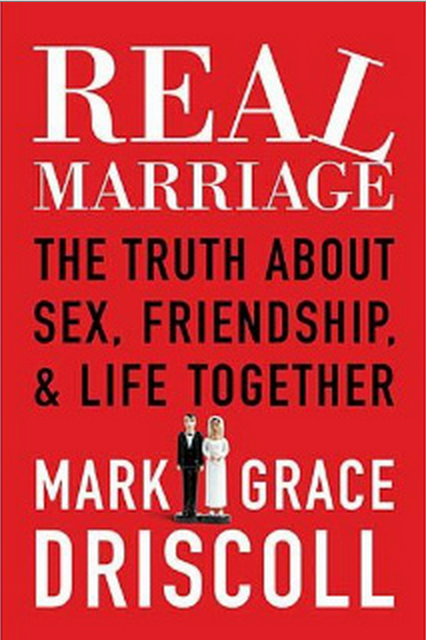 It seems as though the New York Times bestseller list just isn’t what it used to be. In an article for the Los Angeles Times, Carolyn Kellogg writes about the saga of a recent book that became a New York Times bestseller not because lots of people were buying it, but because a company called ResultSource was buying thousands of copies of the book with the express intent of turning it into a bestseller. Kellogg begins by citing from World magazine, the news outlet that broke the story:
“The contract called for the ‘author’ to ‘provide a minimum of 6,000 names and addresses for the individual orders and at least 90 names and address [sic] for the remaining 5,000 bulk orders. Please note that it is important that the makeup of the 6,000 individual orders include at least 1,000 different addresses with no more than 350 per state.’”
Measures like these are designed to game the systems set in place by BookScan and other book sales talliers to protect the integrity of their bestseller lists …
After getting thousands of names with geographic diversity, RSI took another step to place [the book] on bestseller lists, according to the World article. The agreement specifies, “RSI will use its own payment systems (ex. gift cards to ensure flawless reporting). Note: The largest obstacle to the reporting system is the tracking of credit cards. RSI uses over 1,000 different payment types (credit cards, gift cards, etc).”[1]
Wow. That sure sounds shady.
Did I mention the book in question is Real Marriage, written by famous mega-church pastor Mark Driscoll? And did I mention his church, Mars Hill in Seattle, shelled out, according to some reports, over $200,000 to get his book to the top of the New York Times bestseller list?
In many ways, Mark Driscoll and I are kindred spirits. We share many of the same theological commitments. When it comes to preaching, we both believe a good sermon must not primarily be about what we are to do, but about what God has done for us in Jesus Christ. When it comes to Scriptural authority, both of us hold doggedly to the doctrine of inerrancy, even though some voices are seeking to discredit it these days. When it comes to salvation, we both believe that, contrary to our society’s pluralistic ethos, salvation is found in no one but Christ. We share a lot in common. But for all our theological similarities, what happened with Real Marriage represents a weighty ethical difference.
I know sales number shenanigans are not at all unusual in the publishing world. Authors do this kind of thing all the time. Sarah Cunningham of the Huffington Post explains that Real Marriage’s marketing strategy is only a symptom of a systemic disease:
This book launch strategy … wasn’t shocking to anyone who has been involved in the publishing industry … There have always been ways to underwrite the success of authors in any field, religious or not, when the efforts were attached to a deep enough bank account. Don’t doubt for a second, then, that some of Mark’s … counterparts haven’t done (or tried to do) the same.[2]
According to Cunningham, when it comes to cooking sales numbers, “everybody’s doing it.” But this go-to teenage quip is a sorry justification for what is a seriously unethical practice.
When I visited ResultSource’s website, I found it curious that although they made all sorts of promises that they can get a book onto the New York Times bestseller list, they didn’t give a clear explanation of how they can get a book onto the New York Times bestseller list. Here’s a sampling of what their website boasts:
We partner with authors to create and tap an audience – to connect the potential buyers of your book directly with the bookseller to leverage your launch potential. Our goal is to reach further than just typical launch management – our deep relationships enable us to create opportunities outside of what’s expected, to gain substantial traction within the critical “first 90 days” of your launch – or booksellers will send your book back to the publisher.
RSI can:
Leverage our relationships with individuals in “Seven Channels of Influence” to promote your book. Research shows that people are influenced by multiple touch-points – and that our buying decisions are driven by as many as seven channels within our culture.
Send email promotions to as many as 300,000 book buyers on our proprietary database of business and self-help book buyers.
Write and design electronic promotions such as banners, excerpts, and Q&As.
Build a powerful merchandising program with key retailers like airport booksellers, Amazon, B&N (Brick-n-Mortar and BN.com), Borders, Books-A-Million and independent outlets. The key to a winning book launch campaign is to have copies of your book in prominent positions at as many retailers as possible – and then drive sell through.[3]
Now, besides being a little leery of any company that makes selling a book through Borders (NYSE: BGP $0.00 +0.00%) a featured component of their marketing strategy, I am also deeply unsettled by the ambiguity of their claims. I honestly have no idea what they’re talking about. What are the “Seven Channels of Influence”? What, exactly, does it mean to “build a powerful merchandising program with key retailers”? And why don’t they mention that their primary strategy to drive sales is for this company to buy thousands of copies of a particular book in a way that dupes bestseller lists into believing thousands of people are buying the book? If a company can’t talk openly and honestly about the services they offer, perhaps they shouldn’t be offering them.
Ultimately, I point out what happened with Real Marriage not to pick on Mark Driscoll, but because this scandal is indicative of a wider, toxic pattern that needs to be addressed. In this particular instance, I appreciate how the Board of Advisors and Accountability at Mars Hill has responded to this controversy, writing, “While not uncommon or illegal, this unwise strategy is not one we had used before or since, and not one we will use again.”[4] I am glad to hear that. I hope others follow suit.
From a theological perspective, Driscoll pinpoints the root of the problem in this whole saga in another one of his books when he writes, “This world’s fundamental problem is that we don’t understand who we truly are – children of God made in His image – and instead define ourselves by any number of things other than Jesus.”[5]
I couldn’t agree more. If the prestige of being a New York Times bestselling author is so bewitching that a whole company can be created to help authors pay their way onto this list, something is terribly and tragically awry. We are defining ourselves by all the wrong things.
Regardless of whether or not Mark Driscoll actually is a bestselling author, he is a child of God. So am I. And that’s good enough. Because, in the end, that’s what really matters.
[1] Carolyn Kellogg, “Can bestseller lists be bought?” Los Angeles Times (3.6.2014).
[2] Sarah Cunningham, “The Injustice of Silence: Why Our Culture Pulled Mark Driscoll Over For a Broken Headlight,” Huffington Post (3.6.2014).
[3] ResultSource.com, “Book Launch Campaigns.”
[4] “A Note From Our Board of Advisors & Accountability,” Mars Hill Church (3.7.2014).
[5] Mark Driscoll, Who Do You Think You Are? Finding Your True Identity In Christ (Nashville, Thomas Nelson, 2013), 2.
Rob Bell and Inerrancy
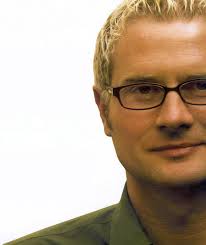 The other day, a friend sent me an article by pastor and provocateur Rob Bell on the subject of inerrancy. Traditionally, the term “inerrancy” has been defined as the belief that the biblical authors, guided and inspired by God’s Spirit, “are absolutely truthful according to their intended purposes.”[1] In other words, the biblical authors, under divine inspiration, produced writings that are “without error.” It is important to clarify that to say the Bible is “without error” does note preclude “a lack of modern technical precision, irregularities of grammar or spelling, observational descriptions of nature, the reporting of falsehoods, the use of hyperbole and round numbers, the topical arrangement of material, variant selections of material in parallel accounts, or the use of free citations.”[2] In other words, part of claiming biblical inerrancy is recognizing what does and does not constitute an actual “error.”
Regardless of the specifics concerning what does and does not constitute error, it is clear that “inerrancy” asserts an extraordinarily high view of the nature and reliability of Holy Writ. Some, however, including Rob Bell, are troubled by such an assertion.
Rob Bell teases out his beef with inerrancy thusly:
My 13 year old son is currently doing an education program that requires him to listen to a certain amount of classical music every day. So on the way to school each morning instead of listening to our usual Blink 182 and rap, he listens to…Mozart. Not his first choice, but just lately he admitted that classical music has grown on him. (How does a parent not smile at that?)
A few questions, then, about Mozart:Did Mozart’s music win?
Would you say that the work of Mozart is on top?
Is Mozart the MVP?
In your estimation, has Mozart prevailed?
Do Mozart’s songs take the cake?
Odd questions, right?
They’re odd because that’s not how you think of Mozart’s music. They’re the wrong categories.
Why?
Because what you do with Mozart’s music is you listen to it and you enjoy it.
Which brings us to inerrancy: it’s not a helpful category. And if you had only ever heard about Mozart as the one who wins, those arguments would probably get in the way of you actually listening to and enjoying Mozart.[3]
So Rob Bell’s problem with inerrancy is that for him it’s not a helpful category.
Though Rob may question the usefulness of the inerrancy “category,” countless followers of Christ have, do, and will continue to find this designation extraordinarily helpful. Yes, the word “inerrancy” is of fairly recent origin. But what it denotes – the trustworthiness of Scripture because of divine origin of Scripture – is as old as Christianity itself. Nichols and Brandt, in their book Ancient Word, Changing Worlds, helpfully sample some patristic evidence that indicates how the early Church saw the divine origin and inspiration of Scripture:
Clement of Rome, writing in 96, exhorted, “Look carefully into the Scriptures, which are the true utterances of the Holy Spirit.” Another Clement, Bishop of Alexandria, declared similarly, “I could produce then thousand Scriptures of which not ‘one tittle will pass away,’ without being fulfilled. For the mouth of the Lord, the Holy Spirit, has spoken these things.” As for a statement about the whole Bible, Origen once observed, “For the proof of our statements, we take testimonies from that which is called the Old Testament and that which is called the New – which we believe to be divine writings.”[4]
Jumping ahead to the sixteenth century, Nichols and Brandt note that John Calvin referred to Scripture as “the sure and infallible record,” “the inerring standard,” “the pure Word of God,” “the infallible rule of His Holy Truth,” “free from every stain or defect,” “the inerring certainty,” “the certain and unerring rule,” “unerring light,” “infallible Word of God,” “has nothing belonging to man mixed with it,” “inviolable,” “infallible oracles.”[5] Whoa. Calvin leaves no question as to where he stands on inerrancy.
Rob does offer some reasons as to why he believes inerrancy is not a helpful category, the first of which is, “This isn’t a word the Bible uses about itself.” But this is like saying “Trinity” is not a helpful term to describe God because it is not a term God uses to describe Himself. Terms can be helpful even when they’re not used in the Bible if these terms describe what the Bible itself teaches. And the Bible does indeed claim inerrancy for itself. One need to look no farther than the Word of God’s magnum opus on the Word of God, Psalm 19: “The law of the LORD is perfect, refreshing the soul. The statutes of the LORD are trustworthy, making wise the simple” (Psalm 19:7). If the word “perfect” doesn’t include being “without error,” what does it include?
Rob finally plays his hand as to why he is uncomfortable with inerrancy: “The power of the Bible comes not from avoiding what it is but embracing what it is. Books written by actual, finite, limited, flawed people.” Rob Bell takes issue with inerrancy because he takes issue with the doctrine of divine inspiration. He takes issue with what Clement of Rome, Clement of Alexandria, Origen, John Calvin, and, for that matter, the Bible itself claim about the Bible. Rather than being a book a written by God using men (cf. 1 Peter 1:21), the Bible for Rob is a book written by men who recount their experiences with God, which, by the way, could be mistaken and wrongheaded.[6] How do we know if their experiences with God are mistaken and wrongheaded? Rob answers: “Central to maturity is discernment, the growing acknowledgement that reality is not as clean and neat and simple as we’d like.” In other words, it’s up to us to figure out what in the Bible is wrong and what in the Bible is right. But if our world’s genocides, sexual promiscuity, oppression, economic injustice, and refusal to stand for truth because we’re not even sure of what truth is serve as any indication of our powers of discernment, in the words of Ricky Ricardo, we “have some splainin’ to do.”
Perhaps we’re not as discerning as we think we are. Perhaps, rather than tooting the horns of our own discernment faculties, we should ask the question of the Psalmist: “But who can discern their own errors” (Psalm 19:12)? Our blind spots are bigger and darker than most of us recognize.
I will grant that inerrancy has sometimes all too gleefully been used as a bully club against supposed – and, in some instances, presupposed – heretics. But I will not give up the word or the doctrine. For when inerrancy is properly understood, it is not meant as a club, but as a promise. It is a promise that we can trust this book – even more than we can trust ourselves. For this book is God’s book. And I, for one, delight in that promise because I delight in the Lord.
[1] James Voelz, What Does This Mean? Principles of Biblical Interpretation in the Post-Modern World, 2nd ed. (St. Louis: Concordia Publishing House, 1995), 239.
[2] “Chicago Statement on Biblical Inerrancy,” Article XIII (October 1978).
[3] Rob Bell, “What is the Bible? Part 21: In Air, In Sea,” robbellcom.tumblr.com (12.10.2013)
[4] Stephen Nichols and Eric Brandt, Ancient Word, Changing Worlds (Wheaton: Crossway Books, 2009), 78.
[5] Ancient Word, Changing Worlds, 78-79.
[6] Bell writes of the biblical authors in another post, “They had experiences. They told stories. They did their best to share those stories and put language to those experiences” (“What is the Bible? Part 17: Assumptions and AA Meetings”).
Godly Vision, Not Personal Agenda
 It is axiomatic that vision is integral to leadership. No less than Warren Bennis, a pioneer in the field of leadership studies, defined leadership as “the capacity to translate vision into reality.”[1] If a leader does not have a vision, he will lead aimlessly. If he cannot articulate a vision, his organization will wander aimlessly. Leadership requires vision.
But that’s not all leadership requires. Leadership also requires mission. After all, mission is what gives purpose to an organization’s very existence. Vision, then, is when the leader of an organization understands his organization’s strengths, gifts, and capacities, and capitalizes on these in ways that fulfill an organization’s mission. Thus, the mission of an organization and the vision of its leader must work in synergy with each other.
When it comes to the organization – or, better yet, the body (cf. 1 Corinthians 12:27-28) – that is the Church, her mission is clear. After all, her mission was crafted and communicated by Christ Himself: “Go and make disciples of all nations, baptizing them in the name of the Father and of the Son and of the Holy Spirit, and teaching them to obey everything I have commanded you. And surely I am with you always, to the very end of the age” (Matthew 28:19-20). The mission of the Church is to make disciples by baptizing in God’s name and teaching God’s Word, all the while exuding a lively confidence that Christ is continually with us, empowering us as we carry out His mission. How precisely this mission is accomplished from congregation to congregation is a function of the vision of a congregation’s leaders – specifically, its pastor.
Sadly, in my years of ministry, I have seen far too many pastors who, rather than casting visions that capitalize on their congregations’ strengths, gifts, and capacities, push agendas based on their own likes and dislikes, preferences and antipathies. They may say they’re casting vision to congregations that have none. But what they’re really doing is asserting agendas that bully congregations at their weakest points.
To the leaders in Christ’s Church, I offer this plea: don’t confuse your agenda – no matter how noble it may seem – with Godly vision for your congregation. One, by God’s grace, can breathe life and excitement into a congregation. The other can frustrate and deflate God’s people. And Christ’s mission is far too important to settle for that. Christ’s mission deserves true vision.
[1] Kevin Kruse, “100 Best Quotes On Leadership,” Forbes Magazine (10.16.2012).
Ghana Eye Clinic – Day 3
Today’s numbers: We shared the gospel with 354 people and gave away 253 pairs of glasses. This was our biggest day yet!
Check out the pictures and captions below to find out more about today’s clinic.

Pam works hard sorting reading glasses for the hundreds who need them.

Arnold and Tristina have been working hard all clinic long!

Our host, Ivan, talks to the pastor who is the president of the Lutheran seminary in Ghana and is taking some time out of his busy schedule to share the gospel with hundreds during the eye clinic.

Tristina poses with one of our fabulous volunteers, Justice. Justice works hard routing people through the clinic to make sure everyone gets to the right place.

More of our fabulous volunteers! This devoted group sat outside all day in the hot Ghana sun welcoming visitors to the clinic.

Tristina and Pam are still smiling even after a long day at the clinic.

This little boy’s name is Michael and our team has decided to “adopt” him. He has a degenerative eye disease and will need ongoing medical care to preserve what little vision that he has.

Michael’s eyes.

Our host, Ivan, has a friend, Mustapha, who works to build bridges between the Muslim and Christian communities in Accra. Thankfully, the relationships between Muslims and Christians are very good in Ghana. Mustapha has invited several of his friends to the clinic.

Tristina uses the portable autorefractor to measure a boy’s eyes for new glasses.
The children of St. Paul Lutheran School in Accra are a talented bunch! Check out this video of their mad musical skills.
Waiting To Be Adopted

15-year-old Davion Only with his caseworker
Credit: Tampa Bay Times
It’s heartwarming and heartbreaking all at the same time. 15-year-old Davion Only attended St. Mark Missionary Baptist Church in St. Petersburg, Florida on a recent Sunday with a request: “Somebody, anybody, please adopt me.” Lane DeGregory of the Tampa Bay Times sets the scene of this boy’s dark past:
Davion Navar Henry Only loves all of his names. He has memorized the meaning of each one: beloved, brown, ruler of the home, the one and only.
But he has never had a home or felt beloved. His name is the last thing his parents gave him.
He was born while his mom was in jail. He can’t count all of the places he has lived.
In June, Davion sat at a library computer, unfolded his birth certificate and, for the first time, searched for his mother’s name. Up came her mug shot: 6-foot-1, 270 pounds – tall, big and dark, like him. Petty theft, cocaine.
Next he saw the obituary: La-Dwina Ilene “Big Dust” McCloud, 55, of Clearwater, died June 5, 2013. Just a few weeks before.[1]
It’s hard to imagine how this young man’s childhood could have been more heart-rending.
By Davion’s own admission, he has had rage problems in the past. His caseworker once took him to a picnic hosted by an organization devoted to helping foster kids find permanent homes, but he lashed out – throwing chairs and pushing people away. But the death of his mother changed him:
When he learned his birth mother was dead, everything changed. He had to let go of the hope that she would come get him. Abandon his anger. Now he didn’t have anyone else to blame.
“He decided he wanted to control his behavior and show everyone who he could be,” [his caseworker] said.
So someone would want him.
The only thing more heartbreaking than the story of Davion’s past is that state of Davion’s present, encapsulated in this one line: “So someone would want him.”
There’s a reason the Bible often uses adoption as a descriptor for the Gospel. Paul writes, “But when the fullness of time had come, God sent forth His Son, born of woman, born under the law, to redeem those who were under the law, so that we might receive adoption as sons” (Galatians 4:4-6). Elsewhere in his writings, Paul makes it clear that God’s adoption of us as His children is in no way based on our desirability. Quite the contrary. Paul minces no words explaining just how undesirable we are: “None is righteous, no, not one; no one understands; no one seeks for God. All have turned aside; together they have become worthless; no one does good, not even one” (Romans 3:10-12). Our adoption as God’s children is not based on our desirability, but on His grace.
The Gospel, then, is this: We do not have to wait for someone to want us. For we know that someone does want us – so much, in fact, that He’s willing to die for us.
Lane DeGregory’s article ends with this postscript: “At publication time, two couples had asked about Davion, but no one had come forward to adopt him.” Praise be to God that when we are slow to adopt, our Lord is not. He signed the papers for us 2,000 years ago.
[1] Lane DeGregory, “An orphan goes to church and asks someone, anyone to adopt him,” The Tampa Bay Times (10.15.2013).


 Pastor Zach's Blog