Say Something

First it was Buffalo. Then, last week, Uvalde. In total, 31 people lost their lives. The pictures, stories, and stunted potential of so many precious people is heart-rending.

Again and again, we ask: Why can’t we stop this? And again and again, we discover all sorts of signs were there that deadly trouble was brewing. Law enforcement referred the Buffalo shooter for psychiatric evaluation because of his macabre musings. Days before the Uvalde shooter commenced with his massacre, he sent disturbing social media messages to random teenage girls in Germany and California. So, we ask again and again: If the signs were there, why didn’t someone intervene?

When Eve falls to the twisted temptations of a talking snake to eat some divinely forbidden fruit, not only does she partake, “she also gives some to her husband, who was with her, and he ate it” (Genesis 3:6). Adam was with Eve the whole time she was conversing with a snake, which, in and of itself should have been a signal to him that something was drastically amiss, but he didn’t say anything. The warning signs were there, but Adam never intervened. And the result was death as sin came into the world.

At the heart of the Christian message are people who saw something – and said something. As one of Jesus’ followers, Peter, explains:

We did not follow cleverly devised stories when we told you about the coming of our Lord Jesus Christ in power, but we were eyewitnesses of His majesty. He received honor and glory from God the Father when the voice came to Him from the Majestic Glory, saying, “This is My Son, whom I love; with Him I am well pleased.”We ourselves heard this voice that came from heaven when we were with Him on the sacred mountain. (2 Peter 1:16-18)

Because these first followers of Jesus said something, the world was changed – and lives were, for eternity, saved.

As debates continue to rage over the police response in Uvalde and over how to address and prevent these mass shootings more generally on the local, state, and national levels, on a personal level, if we see something, we need to say something. And we need to remind others to do the same. What we say might just be what saves a life – or many lives.

For those who are grieving because they have lost loved ones in these depraved shootings, here is a promise: the God who sees them and loves them will say something. And what He says will be life-restoring:

Wake up, sleeper, rise from the dead, and Christ will shine on you. (Ephesians 5:15)

The losses we have endured are unspeakably evil, but they do not have the last word. This is the last word: Christ is risen – and so will they.

2019: Year in Review

calendar-3990798_1280.jpg
Credit: Ulrike Leone from Pixabay 

It’s hard to believe another year has come and is now nearly gone. This year has had its share of memorable moments. There were the accelerating attacks on houses of worship – synagogues, mosques, and churches. There were the wildfires that devastated California and Hurricane Dorian that decimated the Bahamas. There was the huge controversy surrounding the Boeing 737 MAX, which experienced problems with one of its automated flight control systems, resulting in two deadly crashes. Politically, there was the impeachment of a president and the death of Elijah Cummings, a fixture in the US House of Representatives. And then, of course, in a story that will reach into 2020, there is a presidential election brewing.

It’s difficult not to experience a bit of déjà vu as I look back over this year’s big stories. Deadly rampages continue to terrorize communities and cultures. Natural disasters, a staple of creation since the introduction of sin, continue to wreak havoc across our nation and throughout the world. Businesses continue to find themselves in PR nightmares. And, our political fissures continue to widen and deepen. None of these problems were new to 2019. These were just new manifestations of old menaces.

Solomon famously wrote: “What has been will be again, what has been done will be done again; there is nothing new under the sun” (Ecclesiastes 1:9). This is most certainly true. But we must also remember that this is not ultimate.

The apostle Peter writes about those who, like Solomon, know that things don’t really change. But they also doubt that anything ever will change. They complain: “Everything goes on as it has since the beginning of creation” (2 Peter 3:4). But Peter knows that even if the axiom “history repeats itself” is true of history, it is not true for the future, which is why Peter holds out this hope:

The day of the Lord will come like a thief. The heavens will disappear with a roar; the elements will be destroyed by fire, and the earth and everything done in it will be laid bare. Since everything will be destroyed in this way, what kind of people ought you to be? You ought to live holy and godly lives as you look forward to the day of God and speed its coming. That day will bring about the destruction of the heavens by fire, and the elements will melt in the heat. But in keeping with His promise we are looking forward to a new heaven and a new earth, where righteousness dwells. (2 Peter 3:10-13)

Peter says there is a day coming when all the drudgery of this age will be overcome by the delight of the age to come.

But here’s the key: Peter says that, since we know that something better and different is on its way, we ought to “look forward” to what is to come. In Greek, the word for the phrase “look forward” is prosdokeo. Dokeo is a word that denotes “thinking,” and pros is a prefix that denotes “that which is first” or “at the head.” In other words, Peter is admonishing us to “think ahead.” Think ahead to a day when mass murders will die and natural disasters will be rendered unnatural and commerce will be consecrated and politics will care only about King Jesus. Think ahead to that day. Because it will be a supremely good day.

I’m praying for a great 2020. But I’m also hoping for a perfect eternity. I don’t know how God will answer my prayer. But I do know He will fulfill my hope. For my hope is His promise.

Terror Strikes New Zealand

Members of the public mourn at a flower memorial near the Al Noor Mosque in Christchurch
Credit: RTE News

“The wages of sin is death,” the apostle Paul writes in Romans 6:23.  These words were horrifyingly instantiated this past Friday when a terrorist gunman opened fire on two mosques in Christchurch, New Zealand, killing 50.  The crime was, in every way, monstrous.  Minutes before he went on his rampage, he emailed top government officials a rambling and incoherent manifesto, outlining his ardent white nationalistic beliefs.  He then strapped on a helmet camera so he could livestream his attack on social media.  Finally, he shot many worshipers at these mosques, which included several children, at point blank range as they cowered in corners.

If anyone ever doubted the dastardly death that sin – including philosophical sin like white nationalism – can bring, now would be the time to become a true believer in the devastations of depravity.

Near the end of the book of Genesis, we read of a man named Jacob and his twelve sons, the favorite of whom is Joseph.  Joseph’s brothers, Genesis 37:4 says, “hated him” because of his status as his father’s favorite son.  Their hatred eventually spawned a plot among the brothers to kill their kinsman.  And they would have, were it not for a last-second intercession by one of the brothers, Judah, who decided it would be more financially advantageous if, instead of killing Joseph, they sold him into slavery (Genesis 37:26-27).

Hatred is an acid that eats up the soul.  This is why the Bible’s consistent and continuous call is to love – and not just to love those who are like us.  The Bible’s consistent and continuous call is to love those who are very different from us and even hate us.  As Jesus puts it:

Love your enemies and pray for those who persecute you … If you love those who love you, what reward will you get? Are not even the tax collectors doing that?  And if you greet only your own people, what are you doing more than others?  Do not even pagans do that? (Matthew 5:44, 46-47)

White nationalism explicitly tramples on Jesus’ command.  It not only fails to love its enemies, it actually creates enemies where there need be none and becomes an enemy to those who do not fit its arbitrarily contrived ethnic and philosophical strictures.  It trades the foundational and universal sanctity of life for a hackneyed and exclusionary solidarity of race.

Blessedly, love did manage to rise up and break through when hatred was spraying a hail of bullets into two mosques in Christchurch.  48-year-old Abdul Aziz was at the second of the mosques.  He was there with his four children to pray.  When the terrorist began firing in the parking lot of the mosque, rather than running away, Mr. Aziz ran into the lot with the only thing he could find – a credit card machine.  After firing off many rounds, the terrorist returned to his vehicle to grab a second weapon, and Mr. Aziz hurled the credit card machine at him.  The terrorist then fired off another series of rounds at Mr. Aziz, who managed to protect himself by ducking between cars.  When the terrorist returned to his vehicle yet again to grab yet another weapon, Mr. Aziz found one of the guns he had dropped and, after realizing it was empty, threw it at the windshield of the terrorist’s car.  The windshield shattered.  The terrorist was spooked.  He sped off.  And many lives were saved.

Mr. Aziz explained, in an interview with The New York Times, “I was prepared to give my life to save another life.”  That’s love.  And it stopped hate dead when hate was trying to speed death.

Christianity teaches that there was another man – a perfect man, who was also God – who was prepared to give His life to save other lives.  His name was Jesus.  And He not only was prepared to die.  He did die.  And He not only saved lives by His death.  He bought for us eternal life with His death.

“The wages of sin is death,” the apostle Paul writes in Romans 6:23.  But he continues: “But the gift of God is eternal life in Christ Jesus our Lord.”  In Jesus’ death, love killed hate.  May this be our confidence and our conviction as we mourn the tragic losses in Christchurch.

Tragedy in California

Credit: U.S. Department of Agriculture

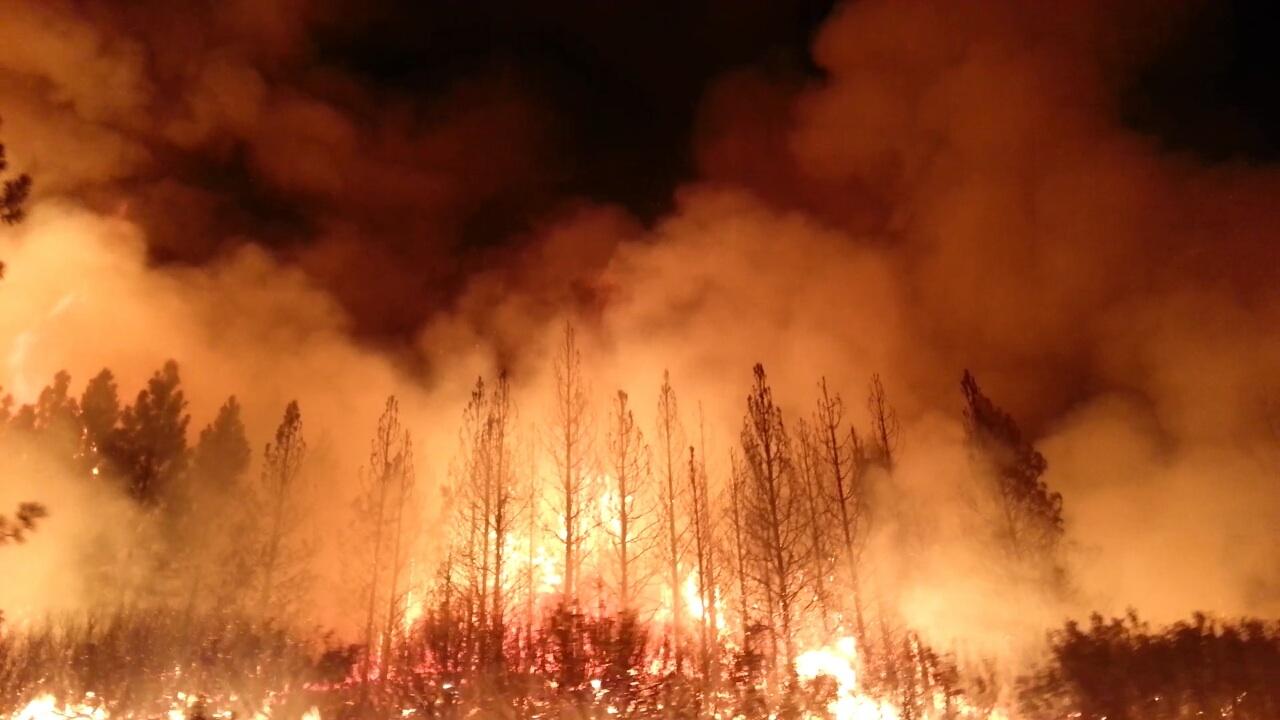
They are the worst wildfires in the history of the state of California.

Nearly 250,000 acres have burned.  79 people have been killed.  Sadly, that number will likely climb as first responders continue their search through the rubble these fires have left behind.  The town of Paradise, in the Sierra Nevada foothills, has been especially hard hit, with nearly the whole town being destroyed.

California has had a rough go of it lately.  Just two weeks ago, the state endured another tragedy as a gunman opened fire at a country bar filled with college students in Thousand Oaks, killing twelve.  The shooter was a Marine Corps veteran who appears to have had all sorts of mental health issues and was, at one time, on the cusp of being committed.

The sheer number of tragedies that roll in through each news cycle can begin to feel overwhelming.  For each town that is charred and person that is shot, we ask, “How can we stop this from happening?”  Answers to this perennial and pressing question seem to elude us.  When tragedies do strike, we are thankful for firefighters who risk their lives on the frontlines of massive and unpredictable blazes and officers who run into hails of bullets rather than away from them.  Proactively, we are instructed to keep dry brush away from homes in fire zones and guns out of the hands of mentally disturbed people.  But despite our best efforts, the tragedies keep coming.  Tragedies, even if they can be somewhat mitigated and managed by us, cannot be successfully stayed by us.

On the surface, the California fires and the California shooting seem to be two different types of tragedies.  One is a natural disaster.  The other is man-caused carnage.  Below the surface, however, these two tragedies share a common core:  sin.  The fires remind us that the sin that came into the world with Adam and Eve has disordered and distorted the world in profound and frightening ways.  The mass shooting reminds us that sin is not just in the world.  It is in us.  It’s not just that we cannot eradicate the sin that distorts creation; it’s that we cannot even kill the sin in ourselves.

The message of Christianity reminds us that, even as societies scramble to address sin, we need a victory over sin that we cannot gain for ourselves.  Sin needs not only our noble actions and timely reactions, but a perfect transaction that exchanges our sad sin for a better righteousness.  This is the transaction Christ makes for us on the cross.

Tragedies are sure to continue.  And we should be thankful for those fighting on the front lines of those tragedies.  But we can also be hopeful that tragedy’s time is short, for sin’s defeat is certain.

A Package Bomber and a Synagogue Shooter

Synagogue Shooting
Credit:  Associated Press

It’s been a tragic week in our nation.  And that’s putting it mildly.  Beginning last Monday, a series of packages containing explosive devices began to turn up at homes, at business, and in post offices.  These packages were addressed to Democratic politicians, including the Obamas and the Clintons, as well as to financier George Soros, actor Robert De Niro, and CNN.  Though none of the packages detonated, they were sent by a man who was, to put it mildly, devotedly partisan in his views.  He drove a van covered with bumper stickers showing Democratic politicians in crosshairs.  He also posted violent and threatening rhetoric on social media.

Then, on Saturday, a gunman armed with an AR-15 and three rifles showed up at the Tree of Life Synagogue in Pittsburgh.  He shouted, “All Jews must die,” and opened fire.  By the time his shots fell silent, eleven were dead and a number of others were injured.  As investigators looked into this shooter’s past, he too was found to have posted violent and threatening rhetoric on social media.  He was also a member of an egregiously anti-Semitic online community.

It’s no secret that we’re a nation on edge.  A lot of people hate a lot of other people.  This hate, in turn, when coupled with a mental health crisis that seems to be creeping across our society, erupts in violence – just as it did in the case of these two men.

At this moment, when hatred is hot, Christians must be on the frontlines advocating for love.  Our culture is fighting the wrong demons.  Our culture sees demons in politicians and positions it doesn’t like.  It sees demons in religions and races it doesn’t like.  But Scripture is clear.  We are called to fight:

…not against flesh and blood, but against the rulers, against the authorities, against the powers of this dark world and against the spiritual forces of evil in the heavenly realms. (Ephesians 6:12)

If we’re fighting other people, we’re doing it wrong.  Our struggle is against the demons the Bible identifies as truly demonic – not against the demons created for us on social media.

In his new book, Them: Why We Hate Each Other – And How To Heal, Senator Ben Sasse offers a convicting analysis of our cultural milieu:

It seems clear that in America today, we’re facing problems that feel too big for us, so we’re lashing out at each other, often over less important matters.  Many of us are using politics as a way to distract ourselves from the nagging sense that something bigger is wrong.  Not many of us would honestly argue that if our “side” just had more political power, we’d be able to fix what ails us.  Fortunately, we can avoid addressing the big problems as long as someone else – some nearer target – is standing in the way of our securing the political power even to try.  It’s easier to shriek at people on the other side of the street.  It’s comforting to be able to pin the problems on the freaks in the pink hats or the weirdos carrying the pro-life signs.

At least our contempt unites us with other Americans who think like we do.

At least we are not like them.

Senator Sasse speaks specifically to our political climate, but his words can be applied to our broader cultural problems as well.  There is an attitude prevalent among many that does not want to solve problems.  Instead, it only wants to grab power.  There is an attitude prevalent among many that does not seek understanding.  Instead, it only traffics in character assassination.  And the results, even if they are, thankfully, generally not violent, are certainly not good.  People begin to trade transcendent commitments for tribal grievances.  They stop looking at others as people who are precious by virtue of being created in God’s image and instead see them as enemies needing to be eradicated.  They make demons out of mortals.

The Psalmist describes God’s patience with the Israelites of old like this:

He was merciful; He forgave their iniquities and did not destroy them. Time after time He restrained His anger and did not stir up His full wrath. He remembered that they were but flesh, a passing breeze that does not return. (Psalm 78:38-39)

God was patient with and merciful to the Israelites because He remembered who the Israelites were – mere, fragile mortals.  Their lives were so short and fragile that they were like passing breezes.  God is patient with and merciful to us because He remembers who we are – mere, fragile mortals.  Our lives are so short and fragile that we are like passing breezes.  Perhaps we should see each other like God sees us.  Perhaps we should restrain our anger and wrath like God does for us.  I hope this past week has taught us at least that much.

Life’s too short to hate.