Practicing Patience

Patience 1The other day, I drove down to the Social Security office to apply to get a Social Security card for my daughter, Hope.  Because she is adopted, she did not get one issued to her at the hospital.  While I was on my way to visit my local friendly government agency, the skies opened up, thunder clapped, and rain poured down, slowing traffic to a crawl.

Now, usually, I hate being stuck in traffic.  I’m always looking for a way to weave in and out of traffic and find that elusive lane that is going 40 miles per hour faster than all the other lanes.  But not so on this day.  It was raining so hard that, quite frankly, I was glad traffic was moving at a snail’s pace.  I’d rather slosh down the road slowly and arrive safely at my destination than try to gun it and wind up in a wreck.

As I sat there contentedly in a sea of brake lights, my thoughts were drawn to the virtue of patience.  After all, for once in my life, I actually felt patient.  Here is what I realized in my moments spent reflecting: the virtue of patience leads to other virtues.  It is what I call a “funnel virtue.”  That is, if you practice patience, it will funnel you in to other important virtues.

For instance, take the virtue of responsibility.  At the end of the day, my wife directs Hope to clean up her toys.  But directing a one-year-old to clean up toys is never an easy – or a quick – task.  Hope will drop a toy in her toy basket only to immediately pull it out again.  But Melody knows it’s important to teach Hope responsibility.  But to teach the virtue responsibility, Melody first needs to exercise the virtue of patience (which she does marvelously, by the way).  Patience funnels into responsibility.

Or how about the virtue of joy?  The disease of road rage is well documented.  Drivers lose their minds because they feel the person in front of them is going too slow.  But what would happen if they were patient?  Perhaps they would rediscover the joy of a Sunday drive – motoring down the road more to take in the sights rater than to reach a destination.  Patience could funnel into joy.

Then, of course, there is the virtue of love.  There is perhaps no better expression of love than patience.  This is why the very first virtue that Paul uses to describe love in 1 Corinthians 13:4 is, “Love is patient.”  To be patient with someone teaches you to love someone because it forces you to put someone else’s pace and schedule above of and in front of your own.

Finally, patience also can serve as a funnel to fuller faith.  Right now, we are in the process of buying a new home.  I cannot tell you how many times I have prayed to God for an answer about something pertaining to this process…right now!  God is answering my requests in some pretty miraculous ways, just not according to my schedule.  And I am having to remember and re-learn that God really does have this all under control and I can trust Him to work things out.  But here’s the key:  the longer I have to wait on Him, the more I learn to trust Him.  Patience funnels into faith.

As it turns out, when I got to the Social Security office, I was not able to get a card for Hope.  The documentation requirements that I read in the Social Security brochure did not match the documentation requirements they had at the Social Security office.  I left empty handed with an errand list of other government agencies I had to visit to get the required documents.  I had wasted my time.  And I found I was not nearly as patient on the way back from the Social Security office as I was on the way to the Social Security office.

Perhaps my patience funnel still has room to expand.
ABC Extra – Two Kingdoms, One Ruler

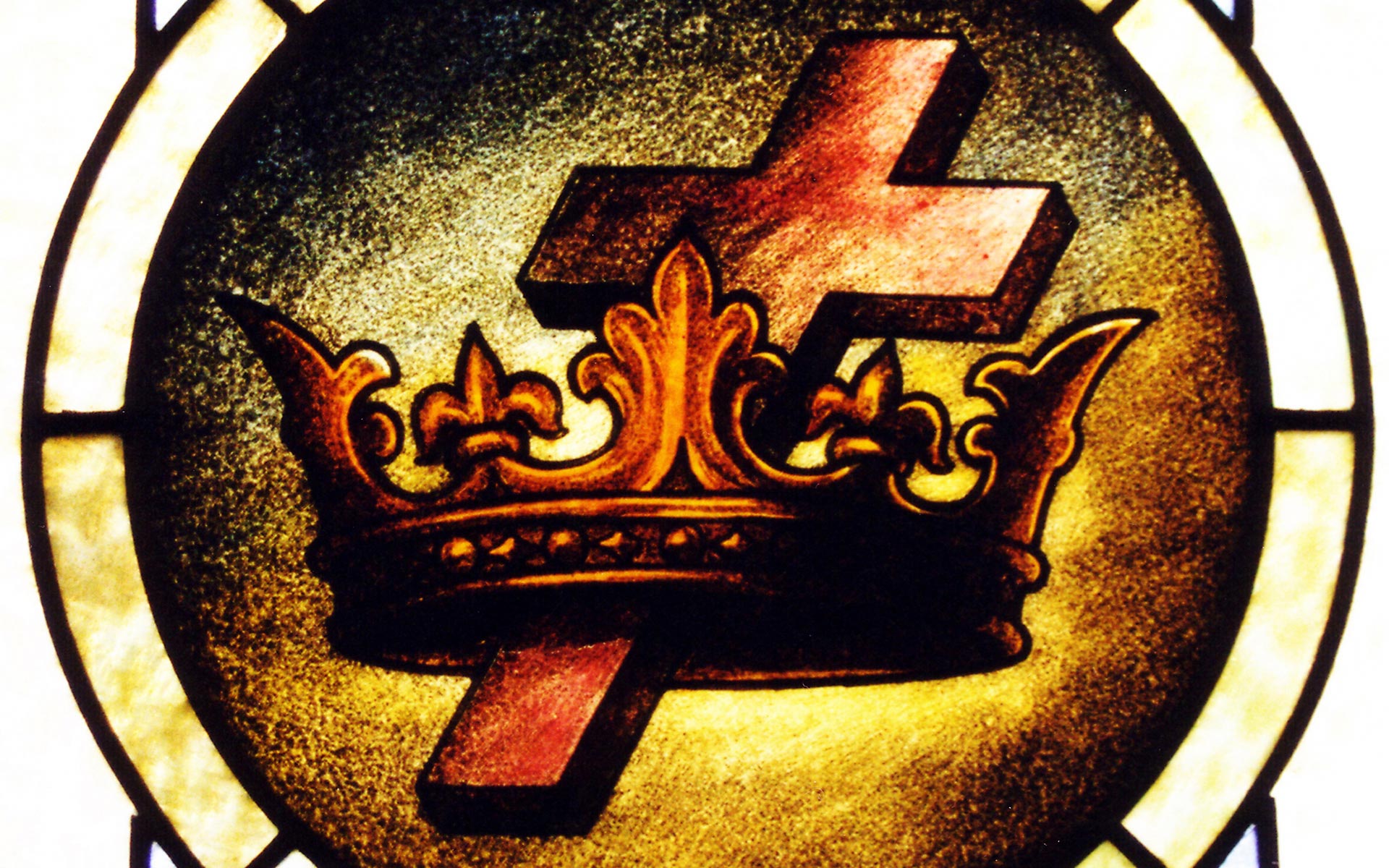
This weekend in worship and ABC, we kicked off a series called, “King Me! Life Lessons from Israel’s Lieges.”  In this series, we are taking a look at some of Israel’s kings and seeking to learn from both the good and the bad of their rules and reigns.  The theme verse for this series comes from Judges 8, where, after leading a valiant charge against the Midianites, the Israelites want to install their judge, Gideon, along with his family, into an Israelite royal dynasty.  Gideon responds, “I will not rule over you, nor will my son rule over you.  The LORD will rule over you” (Judges 8:23).  Gideon understands that, ultimately, it is the LORD who is King over all.  No earthly king can dare or deign to take God’s place.  Indeed, the subtitle for this series, “Life Lessons from Israel’s Lieges,” alludes to this.  A “liege” can be either one who rules or one who is ruled.  Earthly kings are both.  They may rule over others, but they themselves are inescapably and inexorably ruled by God.  For God is King over all.

Like Gideon, Martin Luther understood that God rules and reigns over all.  In his writings, Luther often spoke of two kingdoms.  On the one hand, Luther explains, there is a left hand kingdom, which incorporates the world and its rules and rulers. On the other hand, there is a right hand kingdom, or a spiritual kingdom, which consists of all those who have faith in Christ and are guided by the Gospel.  When teaching on these two kingdoms, I will often refer to the right hand kingdom as the Kingdom of God and the left hand kingdom as the Kingdom of Man.  “Who rules the Kingdom of God?” I will ask when I teach on this topic.  People quickly and confidently respond, “God.”  But then I follow up, “Who rules the Kingdom of Man?” Many respond, “Man.”  But the glory of the Kingdom of Man is that, despite its name, it is not ruled by man, but by God!  The Lutheran Confessions explain:  “It is taught among us that all government in the world and all established rule and laws were instituted and ordained by God for the sake of good order.”[1]  This statement echoes the words of the apostle Paul:  “Everyone must submit himself to the governing authorities, for there is no authority except that which God has established. The authorities that exist have been established by God” (Romans 13:1).  Because God institutes and establishes the rulers in the Kingdom of Man, He is also the ultimate ruler over the Kingdom of Man.  As the prophet Daniel says, “God sets up kings and deposes them” (Daniel 2:21).  There is no kingdom – be it the Kingdom of God or the Kingdom of Man – where God does not reign and rule.

Though God reigns and rules over both the Kingdom of God and the Kingdom of Man, it should be noted that God rules differently in these two kingdoms.  Luther explains:

One must carefully distinguish between these two governments. Both must be permitted to remain; the one to produce righteousness, the other to bring about external peace and prevent evil deeds. Neither one is sufficient in the world without the other. No one can become righteous in the sight of God by means of the temporal government, without Christ’s spiritual government. Christ’s government does not extend over all men; rather, Christians are always a minority in the midst of non-Christians. Now where temporal government or law alone prevails, there sheer hypocrisy is inevitable, even though the commandments be God’s very own. For without the Holy Spirit in the heart no one becomes truly righteous, no matter how fine the works he does. On the other hand, where the spiritual government alone prevails over land and people, there wickedness is given free rein and the door is open for all manner of rascality, for the world as a whole cannot receive or comprehend it.[2]

Thus, God rules in the Kingdom of God by the redemption of men through the cross of Christ and He rules in the Kingdom of Man by suppressing the wickedness of men through the auspices of earthly rulers.  We thank God for both kingdoms.  And we thank God that He is King over both.  He is King over us.

Want to learn more? Go to
www.ConcordiaLutheranChurch.com
and check out audio and video from Pastor Tucker’s
message or Pastor Zach’s ABC!


[1] AC XVI:1

[2] AE 45:92

Praying for our Government

Today begins Concordia’s Thirty Hour Famine for our youth.  During this special period of fasting, Concordia’s youth will devote themselves to prayer, as is the norm in Scripture: “I turned to the Lord God and pleaded with Him in prayer and petition, in fasting” (Daniel 9:3).  Among the items for which we are urging our youth to pray is our government.  In our politically divisive and derisive climate, it is important to remind ourselves what the Scriptures say about how Christians should relate to their government.  Thus, I have prepared a short synopsis of what the Scriptures say concerning governmental authorities which will be used as part of the Thirty Hour Famine.  Though simple, I thought I would publish it on my blog as a reminder of how we should appropriately engage in the political process.  I hope it’s a blessing to you!

Everyone must submit himself to the governing authorities, for there is no authority except that which God has established. The authorities that exist have been established by God.  Consequently, he who rebels against the authority is rebelling against what God has instituted, and those who do so will bring judgment on themselves.  (Romans 13:1-2)

Submit yourselves for the Lord’s sake to every authority instituted among men: whether to the king, as the supreme authority, or to governors, who are sent by him to punish those who do wrong and to commend those who do right.  (1 Peter 2:13-14)

I urge, then, first of all, that requests, prayers, intercession and thanksgiving be made for everyone – for kings and all those in authority, that we may live peaceful and quiet lives in all godliness and holiness.  (1 Timothy 2:1-2)

These passages from Scripture remind us of the importance of honoring our governmental authorities.   From these passages we learn:

  • God’s authority stands behind government’s authority.  God Himself has established all political authorities.
  • Because God’s authority is behind government’s authority, we ought to submit to our government as long as its policies do not conflict with God’s Word (cf. Acts 5:29).
  • Not only should we passively submit to the government’s authority, we should actively pray for our officials.  They deserve our prayers and honor.

Clearly, many people do not obey the Bible’s guidance when it comes to governmental authority.  Rather than respecting and praying for our governmental officials, many people mock and ridicule them and, in some extreme instances, even threaten them.  Yet, when all of these biblical admonitions to respect the governing authorities were written, the person in power was the Roman emperor Nero.  Nero hated Christians.  Some traditions hold that it was Nero who was at least indirectly responsible for the deaths of Peter and Paul, the authors of the above biblical quotes.  When a fire destroyed Rome in AD 64, Nero blamed the Christians for the city’s destruction and launched a fierce campaign of persecution against them.  The first century Roman historian Tacitus writes of Nero’s persecution:  “Covered with the skins of beasts, the Christians were torn by dogs and perished, or were nailed to crosses, or were doomed to the flames and burnt, to serve as a nightly illumination, when daylight had expired” (Tacitus, Annals 15.44).  In spite of all of this, the biblical authors still urged Christians to respect the governing authorities.

Whether or not we agree with the policies and politics of our elected officials, we should still respect our governing authorities and pray for them.  We should especially pray for them when they do things out of step with God’s Word.  We should pray that they would repent and listen to God’s voice.  We should also pray that God’s will be done, even if it is done through imperfect politicians.

Finally, we must remember that no matter who is in power, government will not and cannot solve all of this world’s problems.  Many people seem to believe that if one or another political party would only gain power in Congress and the White House, then all of our problems would be solved.  Though governmental officials can do many things, they cannot save the world.  Only Jesus can do that.  This is why, while respecting our governmental authorities, we do not put our ultimate trust in them.  We put our ultimate trust in Christ alone.