Posts tagged ‘Church’
Explaining Our Existence
 I recently came across two articles – both dealing with gender concerns – that caught my attention. The first article is by Lisa Wade of Salon and addresses the deep friendships – or the lack thereof – between men. Wade opens her article:
Of all people in America, adult, white, heterosexual men have the fewest friends. Moreover, the friendships they have, if they’re with other men, provide less emotional support and involve lower levels of self-disclosure and trust than other types of friendships. When men get together, they’re more likely to do stuff than have a conversation …
When I first began researching this topic I thought, surely this is too stereotypical to be true. Or, if it is true, I wondered, perhaps the research is biased in favor of female-type friendships. In other words, maybe we’re measuring male friendships with a female yardstick. It’s possible that men don’t want as many or the same kinds of friendships as women.
But they do. When asked about what they desire from their friendships, men are just as likely as women to say that they want intimacy. And, just like women, their satisfaction with their friendships is strongly correlated with the level of self-disclosure.[1]
Men want friends, Wade contends – real friends, with whom they can share real cares, concerns, and fears. But most do not have these kinds of friends. Why is this? Wade chalks it up to society’s assertions concerning what it means to be a “real man.” She explains:
[Real men] are supposed to be self-interested, competitive, non-emotional, strong (with no insecurities at all), and able to deal with their emotional problems without help. Being a good friend, then, as well as needing a good friend, is the equivalent of being girly.
Real men, our society says, keep their emotions hermetically sealed. This is why so many men eschew forming deep and abiding friendships. But as many men seek to be really masculine through sensitivity sequestration, they only wind up being really isolated.
The second article I found interesting is by Sarah Elizabeth Richards of the New York Times. Richards tells the story of Andy Inkster – a woman who underwent surgery and took testosterone to become a man, but has now stopped taking testosterone because she wants to get pregnant. As it turns out, Andy had trouble getting pregnant and sought fertility treatments from Baystate Reproductive Medicine. Baystate denied her request. She received help from another clinic and got pregnant, but sued Baystate for discrimination.
Such a desire of transgendered people to have children is not unique to Andy:
One study published last year in the journal Human Reproduction of 90 transgender men in Belgium found that 54 percent wished to have children … Other research, published in 2002, by Belgian fertility doctors with Western European transgender women found that 40 percent wanted to have children, and 77 percent felt they should have the option to preserve their sperm before hormone treatment. As fertility technology improves and becomes more widely available, transgender people are realizing that they will have more options in the future.[2]
Transgendered people apparently have a strong desire to have children in biologically traditional ways despite their deep reservations with their biologically assigned genders.
At first glance, these two articles seem to address phenomena on opposite ends of the cultural spectrum. The first has to do with entrenched machismo while the second has to do with blurred gender identity. But for all their differences, there exists a common theological root: the divorce of human existence from divine creation.
Foundational to the Christian conception of the cosmos is the belief that everything came from somewhere. Or, to put it more precisely, Christians believe that everything came from someone. We do not just exist. We were created.
It is from the Scriptural story of creation that we learn not just that we are, but who we are. We are creatures and not the Creator (cf. Genesis 3:5). We are fashioned in the image of God (cf. Genesis 1:27). We are fearfully and wonderfully made (cf. Psalm 139:14), which is to say that God intentionally and lovingly fashioned us to be a certain kind of person, the corruption of sin notwithstanding. In the old “nature versus nurture” debate, the story of creation tells us that nature does indeed shape us, but not by naturalistic means. Rather, we are shaped through nature by the One who made nature.
Both of the articles above exemplify with a convicting candor what happens when people forget this story. Men who try to play the role of the sturdy and strong lone ranger forget the part of the story where God says, “It is not good for the man to be alone” (Genesis 2:18). People who undergo surgeries and treatments in an effort to change their gender forget the part of the story where God revels in how He has created us “male and female” (Genesis 1:27).
The apostle Peter warns there will come a time when people will “deliberately forget that long ago by God’s word the heavens existed and the earth was formed” (2 Peter 3:5). They will forget their existence is a product of God’s creative word. And they will forget their existence is to be guided by God’s sacred Word. May it never be so of us. May we always be able to say: “I believe in God, the Father Almighty, creator of heaven and earth…and of me.”
[1] Lisa Wade, “American men’s hidden crisis: They need more friends!” Salon (12.7.2013).
[2] Sarah Elizabeth Richards, “The Next Frontier in Fertility Treatment,” New York Times (1.12.2014).
Angry At A God Who Isn’t There
 The other day I heard the story of a distressed parent. Their son had gone away to college as a Christian and had returned as an atheist. They wanted to know what they could do to bring their son back into the fold.
Honestly, hearing this boy’s story distressed me. After all, nothing less than this young man’s very salvation is at stake. I was tempted to break out into a rant about how far too many colleges and universities deliberately and relentlessly undermine faith while uncritically peddling a deluded vision of a far-flung utopian secular humanistic paradise, but I stopped myself and instead asked a simple question: “Why? Why did your son become an atheist? Was it because of something he heard in some class from a professor, or was it because of something else – something deeper?”
Many atheists like to present themselves as cool and collected, calmly examining empirically verifiable data and coming to the inevitable and emotionally detached conclusion that there is no God. But the reality of atheism is far less viscerally clean.
A couple of years ago, Joe Carter penned an article for First Things titled, “When Atheists Are Angry At God.” In it, he notes a strange phenomenon: many people who do not believe in God find themselves angry at God:
I’ve shaken my fist in anger at stalled cars, storm clouds, and incompetent meterologists. I’ve even, on one terrible day that included a dead alternator, a blaring blaring tornado-warning siren, and a horrifically wrong weather forecast, cursed all three at once. I’ve fumed at furniture, cussed at crossing guards, and held a grudge against Gun Barrel City, Texas. I’ve been mad at just about anything you can imagine.
Except unicorns. I’ve never been angry at unicorns.
It’s unlikely you’ve ever been angry at unicorns either. We can become incensed by objects and creatures both animate and inanimate. We can even, in a limited sense, be bothered by the fanciful characters in books and dreams. But creatures like unicorns that don’t exist – that we truly believe not to exist – tend not to raise our ire. We certainly don’t blame the one-horned creatures for our problems.
The one social group that takes exception to this rule is atheists. They claim to believe that God does not exist and yet, according to empirical studies, tend to be the people most angry at Him.[1]
But why is this? Why would people who don’t believe in God become angry at God? Carter goes on to cite Julie Exline, a psychologist at Case Western Reserve University:
Studies in traumatic events suggest a possible link between suffering, anger toward God, and doubts about God’s existence. According to Cook and Wimberly (1983), 33% of parents who suffered the death of a child reported doubts about God in the first year of bereavement. In another study, 90% of mothers who had given birth to a profoundly retarded child voiced doubts about the existence of God (Childs, 1985). Our survey research with undergraduates has focused directly on the association between anger at God and self-reported drops in belief (Exline et al., 2004). In the wake of a negative life event, anger toward God predicted decreased belief in God’s existence.
In other words, atheism is not as viscerally clean as many atheists would like to have you believe. Atheism is not always the product of cool, clean, detached observation of empirically verifiable date. Instead, atheism is often the product of not disbelief in God, but rebellion against God because a person feels slighted by God in some way. Atheism, although it may hide between a veneer of intellectualism, is also heavily emotional. It’s hardly a wonder that the Psalmists says of the atheist: “The fool says in his heart, ‘There is no God’” (Psalm 14:1). Atheism is not just a matter of the head. It’s also a matter of the heart.
I never quite did get to the root of the atheism of my friend’s son. But I suspect it was more than just some smooth-talking college professor that led him down the road to unbelief. That’s why, when sharing my faith, I not only try to speak to a person’s head; I try to minister to his heart.
[1] Joe Carter, “When Atheists Are Angry At God,” First Things (1.12.2011).
For Fathers Only
 “Fathers, do not exasperate your children; instead, bring them up in the training and instruction of the Lord” (Ephesians 6:4).
These famous words from the apostle Paul are meant to call fathers to Godliness as they raise their children. Negatively, fathers are not to “exasperate,” or anger, their children needlessly or vindictively. Positively, they are to “bring them up,” or rear them, in the Lord. The Greek word for “bring them up” is ektrepho, meaning, “to feed.” Fathers are to feed their children. But this means much more than simply “bringing home the bacon,” as it were. This also means feeding children’s souls with time, affection, discipline, and grace.
Sadly, this call to fatherhood is lost on far too many men in our society. And the effects are devastating.
Kay Hymowitz, writing for the City Journal, a quarterly affairs journal for Manhattan, recently published an article titled “Boy Trouble”[1] in which she attributes much of the dismal performance in school, in jobs, and in life of a great number of boys to absentee fathers. In other words, fathers who fail to bring their children up in the training and instruction of the Lord because of their non-presence have a profoundly negative impact on their children. Hymowitz expounds:
By the 1970s and eighties, family researchers following the children of the divorce revolution noticed that, while both girls and boys showed distress when their parents split up, they had different ways of showing it. Girls tended to “internalize” their unhappiness: they became depressed and anxious, and many cut themselves, or got into drugs or alcohol. Boys, on the other hand, “externalized” or “acted out”: they became more impulsive, aggressive, and “antisocial.” Both reactions were worrisome, but boys’ behavior had the disadvantage of annoying and even frightening classmates, teachers, and neighbors. Boys from broken homes were more likely than their peers to get suspended and arrested. Girls’ unhappiness also seemed to ease within a year or two after their parents’ divorce; boys’ didn’t.
Since then, externalizing by boys has been a persistent finding in the literature about the children of single-parent families. In one well-known longitudinal study of children of teen mothers (almost all of them unmarried), University of Pennsylvania sociologist Frank Furstenberg, a dean of family research, found “alarmingly high levels of pathology among the males.” They had more substance abuse, criminal activity, and prison time than the few boys in the study who had grown up in married-couple families.
Hymowitz goes on to consider some of the ways in which societies have sought to compensate for absentee fathers. Some societies have tried to provide robust social support programs, ensuring single mothers have all the financial resources they need to give their sons opportunities that will serve them well. But these social support programs have not stemmed the tide of troubled, fatherless boys. Others have tried to encourage male role modeling in the form of coaches, teachers, and even stepfathers. But the problem remains. Indeed, Hymowitz cites one study done on boys who were raised by their stepfathers and notes that these boys were “even more at risk of incarceration than the single-mom cohort.”
Finally, Hymowitz reaches an inevitable, even if unsurprising, conclusion: “Girls and boys have a better chance at thriving when their own father lives with them and their mother throughout their childhood—and for boys, this is especially the case.” A household needs a father.
Please understand that I do not mean to belittle or disparage the contributions that mothers – and especially single mothers – make to a household. Indeed, I know and have known many faithful single mothers who do all they can to raise their children faithfully, compassionately, and evangelically with great success. To them, I say, “Thank you.” I am saying to men, however: You are needed. The stakes are high. You cannot afford you to be derelict in your duties toward your families.
So get with it. Heed the call of the apostle Paul. You have more influence than you may ever know. Which means you have more responsibility than you could ever dream. Take that responsibility seriously. Little eyes are watching.
[1] Kay Hymowitz, “Boy Trouble,” City Journal 23, no. 4 (Autumn 2013).
Rob Bell and Inerrancy
 The other day, a friend sent me an article by pastor and provocateur Rob Bell on the subject of inerrancy. Traditionally, the term “inerrancy” has been defined as the belief that the biblical authors, guided and inspired by God’s Spirit, “are absolutely truthful according to their intended purposes.”[1] In other words, the biblical authors, under divine inspiration, produced writings that are “without error.” It is important to clarify that to say the Bible is “without error” does note preclude “a lack of modern technical precision, irregularities of grammar or spelling, observational descriptions of nature, the reporting of falsehoods, the use of hyperbole and round numbers, the topical arrangement of material, variant selections of material in parallel accounts, or the use of free citations.”[2] In other words, part of claiming biblical inerrancy is recognizing what does and does not constitute an actual “error.”
Regardless of the specifics concerning what does and does not constitute error, it is clear that “inerrancy” asserts an extraordinarily high view of the nature and reliability of Holy Writ. Some, however, including Rob Bell, are troubled by such an assertion.
Rob Bell teases out his beef with inerrancy thusly:
My 13 year old son is currently doing an education program that requires him to listen to a certain amount of classical music every day. So on the way to school each morning instead of listening to our usual Blink 182 and rap, he listens to…Mozart. Not his first choice, but just lately he admitted that classical music has grown on him. (How does a parent not smile at that?)
A few questions, then, about Mozart:Did Mozart’s music win?
Would you say that the work of Mozart is on top?
Is Mozart the MVP?
In your estimation, has Mozart prevailed?
Do Mozart’s songs take the cake?
Odd questions, right?
They’re odd because that’s not how you think of Mozart’s music. They’re the wrong categories.
Why?
Because what you do with Mozart’s music is you listen to it and you enjoy it.
Which brings us to inerrancy: it’s not a helpful category. And if you had only ever heard about Mozart as the one who wins, those arguments would probably get in the way of you actually listening to and enjoying Mozart.[3]
So Rob Bell’s problem with inerrancy is that for him it’s not a helpful category.
Though Rob may question the usefulness of the inerrancy “category,” countless followers of Christ have, do, and will continue to find this designation extraordinarily helpful. Yes, the word “inerrancy” is of fairly recent origin. But what it denotes – the trustworthiness of Scripture because of divine origin of Scripture – is as old as Christianity itself. Nichols and Brandt, in their book Ancient Word, Changing Worlds, helpfully sample some patristic evidence that indicates how the early Church saw the divine origin and inspiration of Scripture:
Clement of Rome, writing in 96, exhorted, “Look carefully into the Scriptures, which are the true utterances of the Holy Spirit.” Another Clement, Bishop of Alexandria, declared similarly, “I could produce then thousand Scriptures of which not ‘one tittle will pass away,’ without being fulfilled. For the mouth of the Lord, the Holy Spirit, has spoken these things.” As for a statement about the whole Bible, Origen once observed, “For the proof of our statements, we take testimonies from that which is called the Old Testament and that which is called the New – which we believe to be divine writings.”[4]
Jumping ahead to the sixteenth century, Nichols and Brandt note that John Calvin referred to Scripture as “the sure and infallible record,” “the inerring standard,” “the pure Word of God,” “the infallible rule of His Holy Truth,” “free from every stain or defect,” “the inerring certainty,” “the certain and unerring rule,” “unerring light,” “infallible Word of God,” “has nothing belonging to man mixed with it,” “inviolable,” “infallible oracles.”[5] Whoa. Calvin leaves no question as to where he stands on inerrancy.
Rob does offer some reasons as to why he believes inerrancy is not a helpful category, the first of which is, “This isn’t a word the Bible uses about itself.” But this is like saying “Trinity” is not a helpful term to describe God because it is not a term God uses to describe Himself. Terms can be helpful even when they’re not used in the Bible if these terms describe what the Bible itself teaches. And the Bible does indeed claim inerrancy for itself. One need to look no farther than the Word of God’s magnum opus on the Word of God, Psalm 19: “The law of the LORD is perfect, refreshing the soul. The statutes of the LORD are trustworthy, making wise the simple” (Psalm 19:7). If the word “perfect” doesn’t include being “without error,” what does it include?
Rob finally plays his hand as to why he is uncomfortable with inerrancy: “The power of the Bible comes not from avoiding what it is but embracing what it is. Books written by actual, finite, limited, flawed people.” Rob Bell takes issue with inerrancy because he takes issue with the doctrine of divine inspiration. He takes issue with what Clement of Rome, Clement of Alexandria, Origen, John Calvin, and, for that matter, the Bible itself claim about the Bible. Rather than being a book a written by God using men (cf. 1 Peter 1:21), the Bible for Rob is a book written by men who recount their experiences with God, which, by the way, could be mistaken and wrongheaded.[6] How do we know if their experiences with God are mistaken and wrongheaded? Rob answers: “Central to maturity is discernment, the growing acknowledgement that reality is not as clean and neat and simple as we’d like.” In other words, it’s up to us to figure out what in the Bible is wrong and what in the Bible is right. But if our world’s genocides, sexual promiscuity, oppression, economic injustice, and refusal to stand for truth because we’re not even sure of what truth is serve as any indication of our powers of discernment, in the words of Ricky Ricardo, we “have some splainin’ to do.”
Perhaps we’re not as discerning as we think we are. Perhaps, rather than tooting the horns of our own discernment faculties, we should ask the question of the Psalmist: “But who can discern their own errors” (Psalm 19:12)? Our blind spots are bigger and darker than most of us recognize.
I will grant that inerrancy has sometimes all too gleefully been used as a bully club against supposed – and, in some instances, presupposed – heretics. But I will not give up the word or the doctrine. For when inerrancy is properly understood, it is not meant as a club, but as a promise. It is a promise that we can trust this book – even more than we can trust ourselves. For this book is God’s book. And I, for one, delight in that promise because I delight in the Lord.
[1] James Voelz, What Does This Mean? Principles of Biblical Interpretation in the Post-Modern World, 2nd ed. (St. Louis: Concordia Publishing House, 1995), 239.
[2] “Chicago Statement on Biblical Inerrancy,” Article XIII (October 1978).
[3] Rob Bell, “What is the Bible? Part 21: In Air, In Sea,” robbellcom.tumblr.com (12.10.2013)
[4] Stephen Nichols and Eric Brandt, Ancient Word, Changing Worlds (Wheaton: Crossway Books, 2009), 78.
[5] Ancient Word, Changing Worlds, 78-79.
[6] Bell writes of the biblical authors in another post, “They had experiences. They told stories. They did their best to share those stories and put language to those experiences” (“What is the Bible? Part 17: Assumptions and AA Meetings”).
Godly Vision, Not Personal Agenda
 It is axiomatic that vision is integral to leadership. No less than Warren Bennis, a pioneer in the field of leadership studies, defined leadership as “the capacity to translate vision into reality.”[1] If a leader does not have a vision, he will lead aimlessly. If he cannot articulate a vision, his organization will wander aimlessly. Leadership requires vision.
But that’s not all leadership requires. Leadership also requires mission. After all, mission is what gives purpose to an organization’s very existence. Vision, then, is when the leader of an organization understands his organization’s strengths, gifts, and capacities, and capitalizes on these in ways that fulfill an organization’s mission. Thus, the mission of an organization and the vision of its leader must work in synergy with each other.
When it comes to the organization – or, better yet, the body (cf. 1 Corinthians 12:27-28) – that is the Church, her mission is clear. After all, her mission was crafted and communicated by Christ Himself: “Go and make disciples of all nations, baptizing them in the name of the Father and of the Son and of the Holy Spirit, and teaching them to obey everything I have commanded you. And surely I am with you always, to the very end of the age” (Matthew 28:19-20). The mission of the Church is to make disciples by baptizing in God’s name and teaching God’s Word, all the while exuding a lively confidence that Christ is continually with us, empowering us as we carry out His mission. How precisely this mission is accomplished from congregation to congregation is a function of the vision of a congregation’s leaders – specifically, its pastor.
Sadly, in my years of ministry, I have seen far too many pastors who, rather than casting visions that capitalize on their congregations’ strengths, gifts, and capacities, push agendas based on their own likes and dislikes, preferences and antipathies. They may say they’re casting vision to congregations that have none. But what they’re really doing is asserting agendas that bully congregations at their weakest points.
To the leaders in Christ’s Church, I offer this plea: don’t confuse your agenda – no matter how noble it may seem – with Godly vision for your congregation. One, by God’s grace, can breathe life and excitement into a congregation. The other can frustrate and deflate God’s people. And Christ’s mission is far too important to settle for that. Christ’s mission deserves true vision.
[1] Kevin Kruse, “100 Best Quotes On Leadership,” Forbes Magazine (10.16.2012).
Ghana Eye Clinic – Day 4
Wow! It was a busy day! Today, we saw 442 people, shared the gospel with them, and gave away 357 pairs of glasses. The word is getting around to many communities in Accra about our eye clinic. We expect another busy day tomorrow! Check out the pictures and stories from today.

This was the scene outside this morning as we arrived. There were 100 people waiting an hour before the clinic.

This was the scene inside as soon as the clinic opened.

One of the local pastors talks with a man about his vision problems.

Our host, Ivan, is hard at work making a pair of glasses.
The kids at St. Paul Lutheran Church hosted a performance in their courtyard today. Line dancing isn’t just country dance halls, it’s for school kids in Accra too!

Tristina shares the gospel with a man and prays for him.

We have made lots of new friends and seen lots of precious smiles on this trip!

Michael works with a woman to discover just the right pair of lenses for her new glasses.

Even at the end of the day, the kids of St. Paul still had plenty of energy. They were literally doing cartwheels!

The school kids had plenty of energy, but we didn’t. Arnold, Pam, and Tristina still had smiles on their faces, though, even after a long day.

At the end of a long day, a little help is always a good thing!
There’s more to come tomorrow!
Sightseeing in Ghana
 I’m not in San Antonio anymore, that’s for sure. Instead, I am halfway across the world in Ghana, Africa with a team of my fellow Concordians and, together, we are hosting an eye clinic. There are many people in this region of Ghana in desperate need of glasses. We have the special privilege and pleasure of providing people here with the glasses they need in order to see. In the process, we also get to point people to the One in whom they can see God Himself – Jesus Christ – by sharing the gospel.
As I’ve been working as a part of this vision clinic, I’ve been pondering one of my favorite stories in Scripture:
As [Jesus] went along, He saw a man blind from birth. His disciples asked Him, “Rabbi, who sinned, this man or his parents, that he was born blind?” “Neither this man nor his parents sinned,” said Jesus, “but this happened so that the work of God might be displayed in his life.” (John 9:1-3)
In the ancient world – and especially among the ancient Jews – it was generally presumed that if you faced a trial, a trouble, or an ailment, it was because you had committed some heinous sin to deserve that trial, trouble, or ailment. Your sin and your trouble were intimately and inexorably interwoven in ancient thinking. For instance, Rabbi Ammi wrote, “There is no death without sin, and there is no suffering without iniquity.” If you were suffering, the rabbis taught, it was because you had done something wrong. In fact, some rabbis taught that not only could a person be punished for his own sin, but a child could be punished for his parents’ sin. Some rabbis believed, for example, that the untimely death of a child was the direct result of his mother’s dalliance in idolatry while he was still in the womb! Such was the close correlation between sin and tragedy.
Thus, it is really no surprise that, one day, as Jesus and His disciples are walking around and see a man born blind, the disciples ask: “Rabbi, who sinned, this man or his parents, that he was born blind” (John 9:2)? Jesus’ disciples know the teaching of their Jewish rabbis well. They know a man cannot be born blind unless there is some sin to warrant such blindness.
But what the rabbis assumed about the connection between sin and trouble isn’t what a rabbi named Jesus knows about this blind man’s plight. This is why, instead of pointing to a specific sin committed by this man which had resulted in his blindness, Jesus explains to His disciples: “Neither this man nor his parents sinned, but this happened so that the work of God might be displayed in his life” (John 9:3). This suffering is not the result of this sin or that sin. Rather, God is up to something in this suffering: He is using it to display His work.
The Greek word for “display” is phanero’o, from the word phos meaning, “light.” God, it seems, desires to bring this man darkened by blindness into the light of seeing. But God’s desire centers not only on the light of physical seeing, but on the light of spiritual seeing as well. In other words, Jesus, through His eventual healing of this man born blind, desires to bring this man not only into the light of the sun, but into the light of faith. And this is exactly what happens in the end: “Do you believe in the Son of Man?” Jesus asks. “Lord, I believe,” the man responds (John 9:35, 38). When this man confesses his faith in Christ, he is brought into the light not only physically through the recovering of his sight, but spiritually through his trust in Christ.
All this week in Ghana, our goal is to help people see in two ways – spiritually and physically. I covet your prayers that eyes would be opened – not only by the glasses we share, but by the truth of the Gospel we proclaim!
Jesus – More Than Just God
 Was Jesus really human?
These days, this question does not get asked a lot. Rather, people wonder whether or not Jesus was God. And time and time again, people come to the conclusion that Jesus is not, was not, and, indeed, could not have been God. Take, for instance, Reza Aslan, author of the bestseller Zealot: The Life and Times of Jesus of Nazareth. In an interview with NPR about his book, Reza summarizes his position on Jesus’ divinity:
If you’re asking if whether Jesus expected to be seen as God made flesh, as the living embodiment, the incarnation of God, then the answer to that is absolutely no. Such a thing did not exist in Judaism. In the 5,000-year history of Jewish thought, the notion of a God-man is completely anathema to everything Judaism stands for. The idea that Jesus could’ve conceived of Himself — or that even His followers could’ve conceived of Him — as divine, contradicts everything that has ever been said about Judaism as a religion.[1]
There’s no way, Reza says, Jesus’ followers could have considered Him to be divine. He was only a man who led a failed revolution as a failed run-of-the-mill Messiah.
In my studies for a class I’m teaching on Galatians, I came across some terrific commentary from the second-century church father Tertullian on Galatians 4:4-5. The apostle Paul writes in these verses: “But when the time had fully come, God sent His Son, born of a woman, born under law, to redeem those under law, that we might receive the full rights of sons.” Tertullian comments on Paul’s phrase “born of a woman”:
To what shifts you resort, in your attempt to rob the syllable “of” of its proper force as a preposition, and to substitute another for it in a sense not found throughout the Holy Scriptures! You say that He was born through a virgin, not of a virgin, and in a womb, not of a womb.[2]
In Tertullian’s day, there were people trying to rob Jesus not of His divinity, but of His humanity. A group of called the Docetists considered everything corporeal to be evil while holding anything non-corporeal to be good. They thus denied that the non-corporeal God of the universe would ever dare to take on corporeal human flesh. This group taught that though Jesus may have been born “through” Mary, he was not born “of” Mary. In other words, He did not take on human flesh as a genuine offspring of a genuine human mother. Rather, He merely passed through Mary as an immaterial God and received nothing concrete from her. Indeed, the Docetists taught that though Jesus may have appeared to be a physical being, He was not. In fact, the very name “Docetist” comes from the Greek word meaning, “to appear.” Jesus, then, was simply an apparition – divine, yes, but certainly not a corporeal human.
Tertullian has no time for such teaching concerning Christ. He says that Docetists “murder truth”[3] and vigorously makes the case for Christ’s humanity. Thus, the problem in the early Church was not that some denied Jesus’ divinity, but that many denied His humanity! Reza has the problem exactly backwards.
Ultimately, to deny Jesus’ humanity or His divinity is to deny Him. Paul is crystal clear concerning the person of Christ: He is God’s Son and He is born of a woman. He is both God and man. Any other or lesser confession of Christ simply will not do.
[1] “Christ In Context: ‘Zealot’ Explores The Life Of Jesus,” NPR (7.15.2013).
[2] Tertullian, On the Flesh of Christ 20.
[3] Tertullian, On the Flesh of Christ 5.
Is Christianity Dumb?
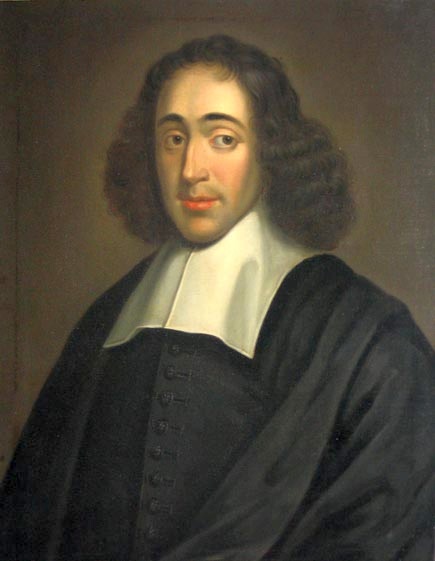
Benedict Spinoza
Credit: Wikipedia
It’s really the Enlightenment’s fault. Ever since René Descartes decided the best catalyst for rational inquiry was skepticism, the skepticism supposedly necessary to reason and the faith integral to religion have been regularly presented as at odds with each other, or, at the very least, best quarantined from each other. Consider this from Descartes devotee and Old Testament critic, Benedict Spinoza:
Those who do not know how to distinguish philosophy from theology dispute as to whether Scripture should be subject to reason or whether, on the contrary, reason should be the servant of Scripture: that is to say, whether the sense of Scripture should be accommodated to reason or whether reason should be subordinated to Scripture … It is obvious that both are absolutely wrong. For whichever position we adopt, we would have to distort either reason or Scripture since we have demonstrated that the Bible does not teach philosophical matters but only piety, and everything in Scripture is adapted to the understanding and preconceptions of the common people.[1]
Spinoza passionately contends that reason and religion must be kept in two separate spheres. If they are not, he warns, Scripture will distort reason and reason will distort Scripture. But key to understanding Spinoza’s argument for the separation of Scripture and reason is why these two entities distort each other. “Scripture,” Spinoza explains, “is adapted to the understanding and preconceptions of the common people.” Spinoza assumes that the biblical characters of antiquity did not have the intellectual faculties necessary to imbibe the great rational truths of the Enlightenment. Spinoza elsewhere explains:
God adapted His revelations to the understanding and opinions of the prophets [and other biblical authors as well], and that the prophets could be ignorant of matters of purely philosophical reason that are not concerned with charity and how to live; and indeed they really were ignorant in this respect and held contradictory views. Hence knowledge about natural and spiritual matters is by no means to be sought from them.[2]
Isn’t that nice. God would have revealed matters of rational, philosophical reason to the biblical writers, but because they were not smart enough to understand them, God had to stick with giving them moral platitudes about “charity and how to live.” Thankfully, Spinoza does understand the truths of rational philosophy and can explain them to us full-throatedly.
Unfortunately, Spinoza’s parings of reason with intelligence and religion with ignorance are still assumed in and normative to the thinking of our day. Consider this from the Huffington Post:
Are religious people less intelligent than atheists?
That’s the provocative conclusion of a new review of 63 studies of intelligence and religion that span the past century. The meta-analysis showed that in 53 of the studies, conducted between 1928 to 2012, there was an inverse relation between religiosity – having religious beliefs, or performing religious rituals – and intelligence. That is, on average, non-believers scored higher than religious people on intelligence tests.
What might explain the effect?
Scientists behind studies included in the review most often suggested that “religious beliefs are irrational, not anchored in science, not testable and, therefore, unappealing to intelligent people who ‘know better.’”[3]
Now, the rules of rational and, for that matter, statistical inquiry remind us that correlation does not equal causation. So, to surmise that religious beliefs decrease IQ from a study that happens to show some people with religious beliefs have lower IQ’s than those without religious beliefs is suspect at best. Indeed, Jordan Silberman, a co-author of the study, admitted as much to the Huffington Post:
I’m sure there are intelligent religious people and unintelligent atheists out there … The findings pertain to the average intelligence of religious and non-religious people, but they don’t necessarily apply to any single person. Knowing that a person is religious would not lead me to bet any money on whether or not the person is intelligent.
Silberman concedes that there are many anomalies that counter his correlation between religious belief and lower IQ’s, which speaks forcefully against any kind of causation. Thus, this study gives us no real insight into to whether or not religion and rationality are truly at odds with each other.
So why do I bring all of this up? Because, regardless of whether or not it is true, firmly ingrained into our society’s zeitgeist is the narrative that religion and reason are irreconcilable. I, however, believe this to be false. Christians can make full use of their rational faculties without having to sell their faith to the strictures of a seventeenth century movement and its incorrigible assumptions concerning the incompatibility of reason and religion. Regardless of any assumptions bequeathed to us by the Enlightenment, we know that we have far more than just reason or just religion, “we have the mind of Christ” (1 Corinthians 2:16). And His mind bridges both reason and religion. After all, His command created both reason and religion.
[1] Benedict Spinoza, Theological-Political Treatise, Michael Silverthorne & Jonathan Israel, trans. (Cambridge: Cambridge University Press, 2007), 186.
[2] Spinoza, Theological-Political Treatise, 40.
[3] Macrina Cooper-White, “Religious People Branded As Less Intelligent Than Atheists In Provocative New Study,” The Huffington Post (8.14.2013).
I Don’t Want To Grow Up
 It used to be just a fanciful myth. Now, it’s a psychological reality. When the Spanish conquistador Juan Ponce de León came to believe some waters at Bimini, the westernmost islands of the Bahamas, could reverse aging and restore youthfulness, he set out on an expedition to find what we have come to know as the Fountain of Youth.
These days, we don’t need a fountain to enjoy perpetual youth, just a psychological pronouncement. An article published in BBC News chronicles the shift in the way psychologists are viewing youthful adolescence. Sarah Helps, a clinical psychologist, explains:
We used to think that the brain was fully developed by very early teenagerhood and we now realise that the brain doesn’t stop developing until mid-20s or even early 30s. There’s a lot more information and evidence to suggest that actually brain development in various forms goes on throughout the life span.[1]
It is with this research in mind that child psychologists have now identified three stages of adolescence: early adolescence from 12-14 years, middle adolescence from 15-17 years, and late adolescence after 18 years. Notice there is no upper limit on late adolescence. Adolescence, it seems, can now extend into an indeterminable future. We can be forever young. Bob Dylan would be ecstatic.
This is quite a shift from the beginning of the twentieth century when, according to columnist Diana West, “Children in their teen years aspired to adulthood; significantly, they didn’t aspire to adolescence.”[2] It used to be children wanted to leave adolescence as quickly as they could so they could enjoy the promising perks of adulthood. Now, more and more grown-ups are eschewing adulthood, with all of its responsibilities, for the nostalgic perks of childhood.
I am not going to argue against scientific evidence that suggests the human brain continues to develop into the late 20s and 30s. This is, I am certain, true. But this does not mean that, even while brains are developing, these “late adolescents” are somehow incapable of living – or should not be living – as reasonably developed adults. Indeed, in any area of life, challenge is necessary for development. If one wants to develop physical strength, he must endure challenging workouts. If one wants to increase intellectual acumen, she must challenge herself with reading, researching, and thinking. If one wants to develop in maturity, he must challenge himself to live as an independent, responsible adult rather than as a dependent, carefree child.
Perhaps it is Gary Cross, Distinguished Professor of Modern History at Penn State University, who states the problem with the increasingly delayed transition into adulthood most succinctly when he writes of young men who refuse to leave the thrills of adolescence: “The culture of the boy-men today is less a life stage than a lifestyle, less a transition from childhood to adulthood than a choice to live like a teen ‘forever.’”[3] Brain development may indeed be a product of psychological biology. Maturity and immaturity, however, are consequences of moral volition.
Choose wisely.
[1] Lucy Wallis, “Is 25 the new cut-off point for adulthood?” BBC News Magazine (9.23.2013).
[2] Diana West, The Death of the Grown-Up: How America’s Arrested Development Is Bringing Down Western Civilization (New York: St. Martin’s Press, 2007), 1.
[3] Gary Cross, Men to Boys: The Making of Modern Immaturity (New York: Columbia University Press, 2008), 5.


 Pastor Zach's Blog