Posts tagged ‘Christianity’
Justice Anthony Kennedy Will Retire
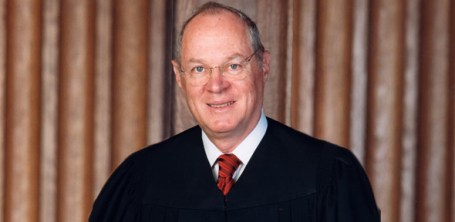
In what was one of the biggest stories of this past week, after 30 years on the bench of the Supreme Court, Justice Anthony Kennedy announced his retirement last Wednesday, effective July 31. Justice Kennedy’s tenure as a Supreme Court justice was fraught with anticipation and tension when various landmark cases were being decided, with many referring to Kennedy as the court’s “swing vote.” He voted with the more conservative branch of the court on issues such as gun control and campaign financing while siding with the more progressive branch on issues like same-sex marriage, abortion, and the death penalty.
Not surprisingly, the announcement of Justice Kennedy’s retirement has set off a flurry of political activity, with conservatives delighted that President Trump appears poised to deliver another proponent of originalist jurisprudence to the nation’s highest court while those on the liberal flank of the political divide worry about what such a justice could mean not only for the current progressive agenda, but for some of the most consequential Supreme Court decisions of the past half-century.
The fiery debate that is unfolding is a timely reminder for Christians that good judgment really does matter. Over the past few decades, it has become fashionable to decry nearly any sort of judgment as self-righteous judgmentalism, and to respond to those who call for keen legal, moral, ethical, or theological discernment with a cry for tolerance and relativism – living and letting others live. This is why an artist like Chris Brown can sing a song like “Don’t Judge Me,” where he asks his girlfriend to forgive his indiscretions. This is why Justice Kennedy himself could write, in a 1992 majority opinion on Planned Parenthood v. Casey in support of abortion:
At the heart of liberty is the right to define one’s own concept of existence, of meaning, of the universe, and of the mystery of human life. Beliefs about these matters could not define the attributes of personhood were they formed under compulsion of the State.
This is a judgment that refuses to make a judgment on something as basic and fundamental as what constitutes life. In this way, it is relativistic in the extreme. Of course, by not making a judgment on what constitutes life, Justice Kennedy makes a de facto judgment: either there is no human life in the womb, or there is no human life in the womb worth protecting. Either one is a judgment that carries with it massive life-and-death implications.
A moment like Justice Kennedy’s retirement reveals that an unmoored relativism and an absolutist tolerance ultimately cannot stand. Society needs and wants good judgment. After all, judgment, both legal and personal, decides how money is spent, how people are treated, what relationships are desirable and permissible, and, as Planned Parenthood v. Casey demonstrates, even which lives endure. The Supreme Court is called upon to render judgments on disputed issues according to the U.S. Constitution. As Christians, we are called, first and foremost, to judge our own lives according to the law of the Lord and then, second, to lovingly and compassionately call others to appreciate the beauty, the value, and the wisdom of this divine law.
Our society is in desperate need of good judgment. Sadly, we live in a time rife with poor judgment where standards, especially in the realm of politics, shift for the sake of expediency and, as the fight over a new nominee for the Supreme Court will surely reveal, power. But, as Jesus warns, “In the same way you judge others, you will be judged, and with the measure you use, it will be measured to you” (Matthew 7:2). We will not be able to elide consistent standards of judgment forever in order to suit our own fleeting fancies. Our standards and principles may slide and glide around today’s political ice rink, but God’s standards will outlast our shifts and will, ultimately, judge our shifts. Perhaps we would do well to consider His standards when making our judgments.
Children, Immigration, and Federal Law

Credit: Jordi Bernabeu Farrús
This past week, the heated debate over immigration boiled over. Last April, Attorney General Jeff Sessions announced a zero-tolerance stance toward illegal immigration, which he described as a “goal to prosecute every case that is brought to us.” When a family crossed the border unlawfully, the parents would be criminally prosecuted while the children would be sent to shelters in accordance with the 1997 Flores Settlement, which stipulated that children in such situations be placed “in the least restrictive setting appropriate to the minor’s age and special needs.”
In the past, the federal government prioritized the prosecution and deportation of what it deemed to be dangerous migrants while releasing what it perceived to be more benign families of migrants. Family separations still happened, but with the attorney general’s new zero-tolerance stance, these separations spiked, and controversy erupted.
Sadly, but also unsurprisingly, this controversy was quickly exploited for political gain. Some of those who oppose the current presidential administration compared the zero-tolerance practice to what happened in Nazi concentration camps. Some others who support the zero-tolerance practice have responded flippantly and grotesquely to heartbreaking stories of children being separated from their parents.
The attorney general defended his zero-tolerance practice, in part, by referencing a Bible passage from Romans 13. Mr. Sessions said at a press conference:
I would cite you to the apostle Paul and his clear and wise command in Romans 13, to obey the laws of the government because God has ordained them for the purpose of order. Orderly and lawful processes are good in themselves and protect the weak and lawful.
Whatever one may think of the current state of U.S. border enforcement, this is some theologizing that needs a bit of clarifying.
Romans 13 is part of a broader section that describes how Christians ought to live as both citizens of the kingdom of God and the kingdom of man. As citizens of the kingdom of God, living in a fallen world where we will often be wronged, we ought to:
…not repay anyone evil for evil … Do not take revenge, my dear friends, but leave room for God’s wrath, for it is written: “It is mine to avenge; I will repay,” says the Lord. On the contrary: “If your enemy is hungry, feed him; if he is thirsty, give him something to drink. In doing this, you will heap burning coals on his head.” Do not be overcome by evil, but overcome evil with good. (Romans 12:17, 19-21)
As Christians, we ought to respond to the great evil in this world with that which is righteous and, specifically, with that which is merciful. Instead of repaying wickedness with wrath, we ought to repay wickedness with tenderness.
But how, then, are evildoers to be punished? Mercy, after all, may be righteous, but wickedness must still be stopped! And often, stopping wickedness includes rendering judgment. This is where we can be grateful that we are also part of the kingdom of man, where God has ordained that the government:
…is God’s servant for your good. But if you do wrong, be afraid, for rulers do not bear the sword for no reason. They are God’s servants, agents of wrath to bring punishment on the wrongdoer. (Romans 13:4)
Before Christ returns on the Last Day with His final and perfect judgment that will wipe out evil once and for all, God has ordained that governmental authorities render preliminary judgments that suppress evil. For this we can and should be thankful. And because of this, we should respect our governmental authorities, as Paul directs:
Let everyone be subject to the governing authorities, for there is no authority except that which God has established. The authorities that exist have been established by God. (Romans 13:1)
In this much, the attorney general was right. We are to obey the laws of our nation, many of which, including our immigration laws, are in place for the sake of good order. What must not be lost in any analysis of Romans 13, however, is that this chapter emphasizes not only the importance of people duly subjecting themselves to the authority of the government, but the importance of the government seeking what is good and right in its formulation and implementation of legislation. Laws are not good simply because they are crafted and drafted by a government. Laws are good insofar as they comport with and do not defy the higher law of the Lord.
Governmental authorities must recognize and remember that they are not lords over people, but, in our system of government, servants of the people and, biblically and ultimately, servants of God. The gift of power from God to certain authorities must never become an excuse for the misuse and abuse of power by these same authorities. The government’s power must always be arbitrated and tempered by the government’s status as God’s servant.
As God’s servant, then, the government must seek not only to exercise power, but to exercise power well. How can our government exercise its power well to protect its citizens against nefarious actors like drug lords who breach our borders? How can our government exercise its power well to respect the dignity and humanity of children who wind up, through no fault of their own, on the wrong side of the law?
Contrary to much of the quixotic political grandstanding that has surrounded our immigration debates, these are complex questions. But they are also necessary questions that deserve our thoughtful answers.
Many in our government are struggling to craft some piece of legislation that will allow the flood of immigrant families who are lumbering their way across our borders to stay together. On Wednesday, President Trump signed an executive order that supports the idea that migrant parents should be able to remain with their children while they are detained. These politicians need our prayers, deserve our sober thoughtfulness, and, when required, should take seriously our appropriate and measured calls to accountability and change. This debate may be hot at the moment, but it would be even better if it became enlightening and productive for the long haul.
Let us pray that it will.
The Supreme Court Takes the Cake
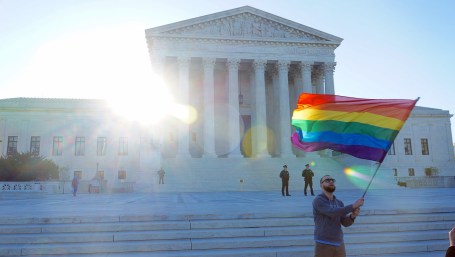
Credit: Ted Eytan
Two weeks ago, the Supreme Court rendered a verdict on a case that pitted a cake shop owner against a same-sex couple. Jack Phillips, the owner of Masterpiece Cakeshop in Lakewood, Colorado declined to bake a cake for Charlie Craig and David Mullins when, in 2012, they married in Massachusetts and asked Mr. Phillips to craft a cake to celebrate their union. Mr. Phillips cited his Christian commitments concerning marriage as the reason he could not, in good conscience, provide a custom cake for this particular celebration. The case went to the Colorado Civil Rights Commission, which ruled in favor of Mr. Craig and Mr. Mullins. The verdict was subsequently appealed and finally found its way to the Supreme Court.
The Supreme Court found in favor of Mr. Phillips, but also took great pains to offer an extremely narrow ruling. Writing for the majority, Justice Anthony Kennedy reasoned:
The case presents difficult questions as to the proper reconciliation of at least two principles. The first is the authority of a State and its governmental entities to protect the rights and dignity of gay persons who are, or wish to be, married but who face discrimination when they seek goods or services. The second is the right of all persons to exercise fundamental freedoms under the First Amendment …
Whatever the confluence of speech and free exercise principles might be in some cases, the Colorado Civil Rights Commission’s consideration of this case was inconsistent with the State’s obligation of religious neutrality … When the Colorado Civil Rights Commission considered this case, it did not do so with the religious neutrality that the Constitution requires.
Justice Kennedy cited an example of the State’s lack of “religious neutrality” by quoting one of the persons on the Colorado Civil Rights Commission who first heard this case:
Freedom of religion and religion has been used to justify all kinds of discrimination throughout history, whether it be slavery, whether it be the holocaust, whether it be – I mean, we – we can list hundreds of situations where freedom of religion has been used to justify discrimination. And to me it is one of the most despicable pieces of rhetoric that people can use to – to use their religion to hurt others.
Justice Kennedy responded to this characterization of Mr. Phillips’ faith with a stinging decrial:
To describe a man’s faith as “one of the most despicable pieces of rhetoric that people can use” is to disparage his religion in at least two distinct ways: by describing it as despicable, and also by characterizing it as merely rhetorical –something insubstantial and even insincere. The commissioner even went so far as to compare Phillips’ invocation of his sincerely held religious beliefs to defenses of slavery and the Holocaust. This sentiment is inappropriate for a Commission charged with the solemn responsibility of fair and neutral enforcement of Colorado’s antidiscrimination law – a law that protects discrimination on the basis of religion as well as sexual orientation.
This case is yet another example of the tension between Christians’ desires to live and operate, both at home and in the workplace, in ways that respect historic Christian norms concerning human sexuality and same-sex couples’ desires to freely practice their views concerning human sexuality, which includes the ability to ask a business to create a product that accords with their views and serves their needs. This ruling does not resolve this tension. Instead, it leaves the tension squarely intact while siding with Mr. Phillips in this instance seemingly simply because the Colorado Civil Rights Commission denigrated Mr. Phillips’ faith in an egregious and offensive way.
Christians will most certainly continue to be faced with these kinds of cases, questions, and tensions. How we respond is critical – both for the sake of our faithfulness and for the sake of our witness. Here, then, are two things to keep in mind when these cases, questions, and tensions arise.
First, we must remember to respect everyone simply because they are someone. Regardless of how a Christian may feel about same-sex intimate relationships theologically and personally, respecting others with whom a Christian may disagree is not only generally kind, but explicitly commanded in Scripture: “Show proper respect to everyone” (1 Peter 2:17). A Christian’s basic respect for others and gregarious treatment of others should not be fundamentally contingent upon others’ belief systems or moral commitments. Instead, it should be first based on their foundational statuses as creatures crafted in God’s image. As the philosopher Charles Taylor puts it in his book, Sources of the Self:
The original Christian notion of agape is of a love that God has for humans which is connected with their goodness as creatures … There is a divine affirmation of the creature, which is captured in the repeated phrase in Genesis 1 about each stage of creation, “and God saw that it was good.”
The simple fact that God has made someone should be enough to command a certain amount of respect, for everyone is “fearfully and wonderfully made” (Psalm 139:14).
Second, we must remember to be empathetic to those with whom we disagree. I have had many conversations with Christians who are scared that those in LGBTQ communities are out to trample their rights and destroy their faith. This leads them to sometimes marginalize and demonize these communities. I also know many in LGBTQ communities who worry that some Christians are out to destroy their communities and condemn them to hell. They do not see Christianity’s objection to same-sex practices as part of a broad ethical stance on human sexuality generally, but as an attack on the very core of their identity specifically.
What would happen if we entered into each other’s fears? Might it change our fears? Might it move us beyond myopic court battles over whether it is legally necessary to bake cakes for each other? I have no doubt that some Christians are out to get LGBTQ people and that some in LGBTQ communities are out to get Christians. For the rest of us, however, a little empathy can go a long way. Christians can advocate for a certain set of sexual ethics while still comforting those who feel threatened or marginalized. Those in LGBTQ communities can continue to advocate for fair and respectful treatment for themselves without attacking the sincerity of Christians who have questions and concerns about the helpfulness and morality of the sexual revolution.
Christians must continue to tell the truth and live according to the truth in a world that is full of confusion. The truth is that human sexuality is not indefinitely malleable. It is a gift from God that is to be celebrated guardedly and gladly in the context of a commitment in marriage between a man and a woman. But at the same time Christians must care about this truth, we also must care for people. This means sharing God’s truth, modeling God’s truth in our actions and decisions, listening to others’ fears and, yes, even objections to this truth, and loving them – not because they always do the right thing, but because love is the right thing to do.
Ireland Legalizes Abortion

Credit: William Murphy
This blog was one I was hoping I would not have to write.
When I first heard the news that Ireland was voting on a referendum to repeal the Eighth Amendment to its Constitution – which recognized that both a mother and her unborn baby have an equal right to life, effectively barring abortion-on-demand – I almost began preparing a blog under the assumption that the amendment was going to be overturned. But then I saw that polls showed a narrowing contest. So, I waited and hoped. My hopes were not realized.
Ireland was the last major European nation to have broad restrictions in place against abortion. The fact that legalized abortion-on-demand has come to yet another country grieves me deeply. Here is why:
- I am grieved because abortion clinics tend to market themselves to minority communities, leading to a devastating and decimating loss of life among these communities.
- I am grieved because some men will use this repeal as a hammer to pressure their hookups, their girlfriends, and, perhaps, even their wives into getting abortions they don’t want in order to appease astonishingly selfish men who do not want to raise children they don’t think they need.
- I am grieved because I know that, for many women, abortions leave emotional and spiritual scars of guilt, shame, and pain that often go unaddressed and unadmitted.
- I am grieved because I know that some women will not fully or truly understand that they have traded the preciousness of life for a vaunted “choice” that only proves to be shadowy and sad.
- I am grieved because I know that, before this referendum passed, some women in Ireland whose pregnancies imperiled their lives did not receive the medical attention they needed.
- I am grieved because I know that some people who claim the name “Christian” have self-righteously condemned those who have gotten abortions.
- I am grieved because thousands upon thousands of little lives will now be lost as abortion comes to yet another place.
Yes, I am grieved for many reasons. And yet, at the same time I grieve, I am not, to borrow the juxtaposition the apostle Paul uses in 1 Thessalonians 4:13, grieving without hope. Here, again, is why:
- I am hopeful because I know that, even as abortion clinics set up shop in minority communities, churches are there too, offering clarity and care to expectant mothers in frightening situations.
- I am hopeful because I know that, for every selfish man, there are many brave women who will push against the pressures and persuasions of self-centeredness and, instead, heroically raise children as single mothers, or even put up children for adoption as they seek to give their precious little ones good lives instead of tragic deaths.
- I am hopeful because I know that even as many women will surely be hurt by the abortions they endure, many more women will also discover the healing and forgiving grace of Christ and will use their pain to help others make different decisions.
- I am hopeful because I know that even a choice of death through an abortion cannot overcome the choice of God to grant life through His Son.
- I am hopeful because I know that, at the same time some medical professionals are foolish and harmful in their opinions and practices, many more are careful, kind, and wise in how they approach and treat their patients.
- I am hopeful because I know that, for all the people who self-righteously judge those who have gotten abortions, many more humbly help and demonstrate Christ’s love to those who desperately need compassion and care.
- I am hopeful because I know that the millions of children who have been lost to abortion aren’t really lost, for abortion is no match for eternal life.
I grieve what has happened in Ireland. I grieve what has been happening since 1973 in my own country. But I do not grieve without hope. Indeed, I cannot grieve without hope. For I follow a man who, when He was confronted with His own death, responded to those who were bent on His execution by saying, “Father, forgive them, for they do not know what they are doing” (Luke 23:34). Christ confronts death with forgiveness. I am hopeful that Christ will confront our decisions toward death in the same way. Abortion may have won a vote, but I am still hopeful that life will win the victory.
The U.S. Moves Its Embassy

Credit: Daniel Majewski
This past week, a piece of legislation first passed in 1995 under President Clinton was finally implemented. The Congress at that time passed the Jerusalem Embassy Act, which recognized Jerusalem as the capital city of Israel and made plans to move the U.S. embassy to Jerusalem from Tel Aviv. Since that time, Presidents Clinton, Bush, and Obama have delayed the move, citing national security concerns. President Trump decided it was finally time to make the move. So, a week ago Monday, the new U.S. embassy opened in Jerusalem.
While celebrations were taking place at the new embassy, only miles away, along Israel’s border at the Gaza Strip, members of Hamas were protesting the move, seeking to storm the border into Israel while flying incendiary kites across the border into Israel. 50 of these rioters were killed by Israeli forces. Some other Palestinians were also killed, including an eight-month-old girl.
The antipathy between the Israelis and Palestinians is nothing new. Both groups claim rights to this region and look suspiciously at the intentions and activities of the other. The terrorist provocations of Hamas serve only to heighten tensions.
To some Christians, unalloyed support for the modern-day nation of Israel by the U.S. is a theological necessity, for they believe that anything less is a direct affront to the covenant that God made with Abraham to give him and his ancestors land in this region. Other Christians, among whom I would include myself, do not see a one-to-one correlation between the ancient theocracy of the people of Israel and the modern democracy of the nation of Israel. The true heirs of Abraham are not ethnic Jews living in a particular region of the world, but all those who, by faith, call on Abraham’s God – whether these people be ethnically Jewish or ethnically Gentile. Abraham’s true heirs do not so much concern themselves with a particular piece of land in the Middle East as they do with an all-encompassing kingdom of God.
This second view does not mean, of course, that Christians should not be concerned with the events that are unfolding in the Middle East. It is standard practice for sovereign nations to be able to name their own capitals and it is standard protocol for other nations to respect and recognize these capitals and place embassies in them, as the U.S. has now done with Israel. Geopolitically, Israel’s status as a democracy in a region that is widely known for oppressive regimes is an important and stabilizing influence. It is also essential to have a safe haven for ethnic Jews in an area of the world that has proven to be widely and often vociferously anti-Semitic.
At the same time, we cannot forget or overlook the struggle and suffering that many Palestinians face. Living under Hamas has never been easy. The small number of Christians in this region are doing yeoman’s work as they open their churches and homes to their Muslim neighbors who have been displaced by riots and bombings. They are shining examples of Christ’s love in an area of our world that is regularly marked by hate and unrest. These faithful people deserve our prayers and support. They too need safe places to live and free communities in which to thrive.
The unrest and violence that has been sparked by the move of the U.S. embassy from Tel Aviv to Jerusalem is a reminder of the volatility in civilization’s cradle and the fragility of human life. Every U.S. president for the past 70 years has sought to broker peace in the Middle East and, sadly, every U.S. president has failed. This is because, more than a president, we need a Prince – a Prince who knows how to bring peace. He is the One in whom Israel once hoped. He is the One who Palestinian Christians now proclaim. And He is the One the whole world still needs.
Last week, a president kept a promise to move an embassy. On the Last Day, a Prince will keep His promise to bring peace. That’ll be a day to behold.
Character and Civics

Credit: Wikipedia
The economy is booming. There is hearty hope for a diplomatic breakthrough between the United States and North Korea. Pressure is mounting on Iran to come clean about its nuclear ambitions. And the President of the United States is embroiled in a controversy over whether or not campaign finance laws were violated when his personal lawyer, Michael Cohen, paid an adult film actress, Stormy Daniels, $130,000 during the closing days of the 2016 election to, ostensibly, keep her quiet about an affair she now claims to have had with Mr. Trump in 2006.
If the accusations against President Trump are true, this episode is morally disquieting – and not just because campaign finance laws were potentially broken. Not only that, the responses to this episode are themselves morally disquieting. Many who are opposed to the president see this episode as a convenient way to defeat a political enemy. The moral turpitude of what has allegedly happened is merely a pretext for a political power grab. Others, who are aligned with the president, are quick to cast the allegations against him as nothing more than a witch hunt. Even if they suspect the charges might be true, they calculate that sexual immorality is a small – and, I would add, historical – price to pay for the power of 1600 Pennsylvania Avenue.
Whatever your political proclivities, these accusations present Christians with much to ponder. On the one hand, it is important for us to remember that character still matters in our leaders. All the way back in the sixteenth century, Niccolo Machiavelli famously argued that political leaders do not need actual virtue. They simply need to project the appearance of virtue:
It’s seeming to be virtuous that helps; as, for example, seeming to be compassionate, loyal, human, honest, and religious.[1]
This is nonsense. Appearing to be virtuous while not actually being virtuous is, plainly and simply, hypocrisy – a sin that Jesus fiercely and consistently condemns. Hypocrisy in virtue is not only immoral; it also is dangerous. If a person cannot lead himself by cultivating in himself basic virtues, he will struggle to lead others as well as he could. Self-leadership is a necessary prerequisite for other-leadership.
This is certainly not to say that our leaders need to be perfect – no leader is, has been, or ever will be. But it is certainly preferable that our leaders be self-aware. Self-awareness cultivates both humility and curiosity – humility over how one has fallen short and curiosity about how one can grow in competence and character.
At the same time it is necessary to encourage character in our leaders, it is also important demand character in ourselves. A critical part of personal character development, according to Jesus, is to carefully consider our own shortcomings before we address the iniquity of others. Jesus explains it like this:
Why do you look at the speck of sawdust in your brother’s eye and pay no attention to the plank in your own eye? How can you say to your brother, “Let me take the speck out of your eye,” when all the time there is a plank in your own eye? You hypocrite, first take the plank out of your own eye, and then you will see clearly to remove the speck from your brother’s eye. (Matthew 7:3-5)
Notice that Jesus does not prohibit holding others accountable for their specks of sin, but He first wants us to hold ourselves accountable for our own planks of peccancy. Understanding and addressing our own struggles with sin gives us both wisdom and empathy to help others in their tussles with transgression.
Over the years, as I have watched the dialogue that unfolds during scandals involving the character of our public officials, I have come to suspect that at least a segment of our population doesn’t care too much about helping the people involved. Instead, it only cares about maximizing the power it has. Depending on one’s political preferences, maintaining or overturning the power of this or that politician becomes the driving and deciding factor in how some people respond to any given moral crisis. When this happens, we’re not really defending our politicians, even if we like them, or honoring them, as the Bible instructs. We’re simply using them. And that’s a character crisis in us that, though it may not make the headlines, should certainly serve as food for thought in our hearts.
______________________________
[1] Niccolo Machiavelli, The Prince, Tim Parks, trans. (New York: Penguin Books, 2009).
Loving Others Well: A Lesson from a Crisis at Willow Creek

For a year, from the summer of 2002 to the summer of 2003, I lived in a small town about 60 miles northwest of Chicago, where I served in a rural congregation as part of my studies to become a pastor. During that time, on Wednesday evenings, I would regularly travel about half an hour east to attend the midweek service at Willow Creek Community Church. Though the church and its model of ministry have raised certain concerns and garnered frequent criticism over the years, much of what I experienced there impacted me in positive ways. I heard preaching that was full of Scriptural insight from pastors who not only preached the gospel, but saw the gospel in the text of Scripture in ways I had never before noticed. I got to participate in moving worship, led by expert musicians, who were not only proficient, but humble. Above all, I was captivated by the picture that Willow Creek painted of the Church straight from Acts 2:42-47:
They devoted themselves to the apostles’ teaching and to fellowship, to the breaking of bread and to prayer. Everyone was filled with awe at the many wonders and signs performed by the apostles. All the believers were together and had everything in common. They sold property and possessions to give to anyone who had need. Every day they continued to meet together in the temple courts. They broke bread in their homes and ate together with glad and sincere hearts, praising God and enjoying the favor of all the people. And the Lord added to their number daily those who were being saved.
“This was the Church,” I heard time and time again, “and this is still the Church.” It was a message that was both timeless and timely.
Willow Creek blessed me as I was studying to become a pastor. This is why I was heartbroken when a story broke about a month ago in the Chicago Tribune that its senior and founding pastor, Bill Hybels, stands accused of making inappropriate advances toward females both inside and outside of his congregation. While Pastor Hybels has denied many of the accusations leveled against him, he did admit that he placed himself “in situations that would have been far wiser to avoid.” In some cases, he met alone with women in hotel rooms during his extensive travel on behalf of the congregation and the Willow Creek Association, an organization dedicated to resourcing the Church-at-Large.
In an article for First Things, Aimee Byrd takes on the scandal at Willow Creek and tries to lay out a way forward. In her piece, she takes aim at the so-called “Pence Rule,” named for the current vice-president, who has publicly announced that he never shares a meal alone with a member of the opposite sex. Ms. Byrd objects to the Pence Rule, writing:
To this rule Christians have added other prohibitions, such as sharing a car ride or an elevator, or even sending a text message to the other sex without some sort of chaperone…
By putting up fences, we foster an individualistic, self-protective morality … We need to protect one another from abusers, not from godly friendship. That likely requires case-by-case boundaries, promoting the exercise of wisdom in different circumstances, rather than coercion both from predators and from imposed moral systems. The church should model real friendship, as well as call out predators. An expanded Pence Rule, with its basis in fear, won’t help us develop the discernment to know the difference.
As a man who follows the Pence Rule, I am less skeptical of the motivations behind it and more sympathetic to the benefits of it than Ms. Byrd is. I have the privilege of working with many smart, kind, and godly women. Yet, I would never put myself into a situation with one of these ladies where I was in a private setting that isn’t in my office during regular business hours. This is not because I am scared of any of them, but because I deeply respect all of them and I want to guard not only my integrity, but theirs as well. Just an appearance of impropriety can not only destroy reputations, it can confuse and burden a church that has to try to figure out whether or not an appearance of impropriety was, in fact, actual impropriety.
The crisis at Willow Creek reminds us that no person is immune from the wiles of human sinfulness. Anyone, given the right opportunity and the right temptation, can self-destruct and deeply wound others in the process. This is why guarding our actions and our interactions is so important. Guarding our actions and interactions can also have a way of deepening our love for others. When we guard our actions and set boundaries, our hearts do not necessarily drift from people. Instead, they can actually be propelled toward people. After all, when we take the time to set appropriate boundaries in our relationships, we are saying that the people with whom we are in relationship mean so much to us that we are willing even to endure certain inconveniences – like refusing to be alone in private settings with them if they are of the opposite sex – out of respect and love for them. We would never want to put them in any situation – even innocently and unknowingly – that would somehow compromise them or us.
When you love and care for someone, sometimes, it’s not just about what you do. It’s about what you refuse to do. It sounds like Bill Hybels may have lost sight of this. Let’s use his loss as our lesson – for the sake of each other and the Church. And let’s pray for Willow Creek, the women who have come forward to tell their stories, and Bill Hybels. This scandal, with all the attention it has received, has wounded not just Willow Creek, but the Church. The Church, however, has as its foundation a wounded Savior who endured. It will endure too.
The Big Apple And The Chicken Sandwich

Credit: Tdorante10 / Wikipedia
A little over a week ago, Dan Piepenbring, writing for The New Yorker, derided what he called “Chick-fil-A’s Creepy Infiltration of New York City.” He declared:
New York has taken to Chick-fil-A. One of the Manhattan locations estimates that it sells a sandwich every six seconds, and the company has announced plans to open as many as a dozen more storefronts in the city. And yet the brand’s arrival here feels like an infiltration, in no small part because of its pervasive Christian traditionalism.
Mr. Piepenbring goes on to single out the chain’s headquarters adorned with Bible verses, its policy to close its stores on Sundays, and its CEO’s publicly expressed concerns about same-sex marriage as examples of its “pervasive Christian traditionalism.” As Mr. Piepenbring points out, the company’s purpose statement also betrays its founders’ Christian commitments. Chick-fil-A’s purpose is:
To glorify God by being a faithful steward of all that is entrusted to us and to have a positive influence on all who come in contact with Chick-fil-A.
As a Christian, such a corporate purpose statement does not trouble me, as it does Mr. Piepenbring. A cardinal claim of Christianity is that what Christians believe cannot be divorced from the work they do. The apostle Paul summarizes this spirit when he writes, “Whatever you do, whether in word or deed, do it all in the name of the Lord Jesus, giving thanks to God the Father through Him” (Colossians 3:17). A Christian’s creeds, Paul says, should always result in gracious deeds. Chick-fil-A’s purpose statement teases out this connection. The first part of the statement explains that the company’s leaders desire to give glory to God. This is a commitment to a creed. The second part of the statement explains that the company’s leaders desire to positively impact all who interact with Chick-fil-A. This is a promise to do good deeds.
There is a secular trend to espouse a kind of happy humanism that claims that people are perfectly able to do good deeds apart from having to appeal to ancient and, according to the secular mindset, distasteful theological convictions. In this way of thinking, Chick-fil-A would do better to fashion itself as an inoffensively affable and vaguely moral corporation instead of explicitly appealing to, again, according to the secular mindset, burdensome and superstitious Christian convictions.
But why would Chick-fil-A want to do this? Its founders certainly aren’t secular. Furthermore, extracting faith from goodness is trickier than many secular humanists care to admit. Even if something is perceived to be good, without an external source of authority like Christianity, secular humanism still struggles to offer consistent reasons why anyone ought to do good. Furthermore, apart from faith, people not only have no unifying set of compelling reasons why they ought to do good, they also have no set of stable standards as to what is good. A coherent morality without a transcendent authority will be inevitably fraught with fragility.
The age-old philosophical conundrums of moral authority aside, there is widespread agreement between Christians and secular humanists on the morality of things like human dignity, community involvement, and good, old-fashioned geniality. All of these are values that Chick-fil-A, with its evangelical roots, and New Yorkers, many of whom hold more secular sensibilities, espouse. For this, at least, we should be grateful. Mr. Piepenbring, however, asserts that, in a city like New York, “Chick-fil-A…does not quite belong here…Its politics, its décor, and its commercial-evangelical messaging are inflected with…suburban piety.” This may be true culturally if one assumes there is some inherent and necessary pitched battle between a down-home corporation and a high-brow cosmopolitanism, but it is certainly not true personally. The people who work at Chick-fil-A in New York are from New York. And my hunch is, they care about New York and desire to serve people around New York. Maybe we should let them. And maybe when they smile, chicken sandwich and waffle fries in hand, we should smile back. After all, one does not have to agree with every value and belief of a particular slice of society to treat them in a way that is neighborly.
I’m pretty sure someone said something about that, somewhere.
Mr. Zuckerberg Goes To Washington
Credit: NBC News
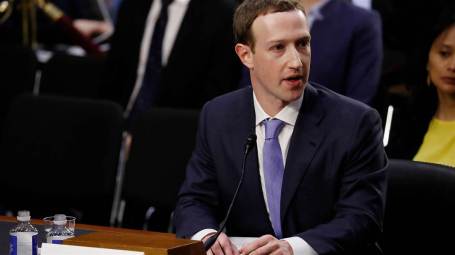
Last week, Mark Zuckerberg found himself in the hot seat as he faced Congress, who, as The New York Times reports, turned their interview with him into:
…something of a pointed gripe session, with both Democratic and Republican senators attacking Facebook for failing to protect users’ data and stop Russian election interference, and raising questions about whether Facebook should be more heavily regulated.
Along with broad calls for heavier regulations for the sake of people’s privacy came concerns that Facebook might also regulate people’s posts, especially in light of the many contested “fake news” posts that circulated during the 2016 presidential election on social media. Senator Ben Sasse of Nebraska highlighted this concern, telling Mr. Zuckerberg:
Facebook may decide it needs to police a whole bunch of speech that I think America may be better off not having policed by one company that has a really big and powerful platform … Adults need to engage in vigorous debates.
At issue for Senator Sasse is whether or not a corporation like Facebook will be able to responsibly regulate all kinds of posts that, regardless of their intellectual and logical quality, are politically, though not necessarily corporately, protected under the First Amendment. Senator Sasse is concerned that Facebook may simply begin regulating speech with which Facebook management does not agree. The senator offered the example the abortion debate as a potential flashpoint if social media speech regulations were to be instituted:
There are some really passionately held views about the abortion issue on this panel today. Can you imagine a world where you might decide that pro-lifers are prohibited from speaking about their abortion view on your platform?
Mr. Zuckerberg responded that he “certainly would not want that to be the case.”
Corporate regulation of speech is indeed a concern, for even the best regulatory intentions often come with unintended – and sometimes awful – consequences. At the same time, for Christians, a devotion to free speech must never become an excuse for reckless speech, for reckless speech can be dangerously damaging. As Jesus’ brother, James, reminds us:
The tongue is a small part of the body, but it makes great boasts. Consider what a great forest is set on fire by a small spark. The tongue also is a fire, a world of evil among the parts of the body. It corrupts the whole body, sets the whole course of one’s life on fire, and is itself set on fire by hell. (James 3:5-6)
Thus, with this in mind, it is worth it to reflect for a moment on how we exercise our tongues – on social media, and in all circumstances. In our speech – and in our posts – Scripture calls us to two things.
First, we must love the truth.
When the apostle Paul writes to a pastor named Timothy, he exhorts him:
What you heard from me, keep as the pattern of sound teaching, with faith and love in Christ Jesus. Guard the good deposit that was entrusted to you – guard it with the help of the Holy Spirit who lives in us. (2 Timothy 1:13-14)
The Greek verb that Paul uses for “guard” is philasso, from which we get the English word “philosophy.” “Philosophy” is a word that, etymologically, translates as “love of truth.” As Christians, we are called to love the truth. We do this by expecting the truth from ourselves, by defending the truth when we see lies, and by seeking the truth so we are not duped by deceit. In the sometimes wild world of social media, do we tell the truth about ourselves, or do we paint an intentionally deceptive portrait of ourselves with carefully curated posts? Do we defend the truth when we see others being defamed, or do we pile on because we find certain insults humorous? Do we seek the truth before we post, or do we pass on what we read indiscriminately because it fits our preconceived biases? As people who follow the One who calls Himself “the truth,” we must love the truth.
Second, we must speak with grace.
Not only is what we say important, how we say it is important as well. The apostle Paul explains it like this: “Let your conversation be always full of grace, seasoned with salt, so that you may know how to answer everyone” (Colossians 4:6). There are times when communicating the truth can be difficult. But even in these times, we must be careful to apply the truth as a scalpel and not swing it as a club. The truth is best used when it cuts for the sake of healing instead of when it bludgeons for the thrill of winning. This is what it means to speak the truth with grace. Paul is clear that he wants the truth proclaimed “clearly” (Colossians 4:4), but part of being clear is being careful. When anger, hyperbole, and self-righteousness become hallmarks of “telling it like it is,” we can be sure that we are no longer actually “telling it like it is.” Instead, we are obfuscating the truth under a layer of vitriol and rash rants.
Facebook has a lot to answer for as investigations into its handling of people’s privacy continue. It appears as though the company may not have been completely forthcoming in how it operates. And their deceit in this regard is getting them into trouble. Let’s make sure we don’t fall into the same trap. Let’s be people of the truth – on social media and everywhere.
The Legacy of Dr. Martin Luther King Jr.
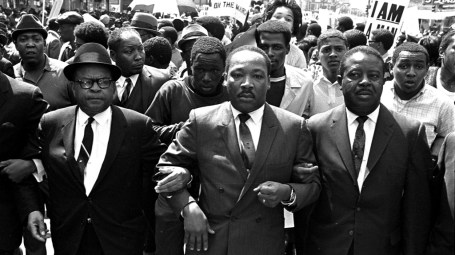
1968 was a watershed year in American history. It was in 1968 that North Vietnam launched the Tet Offensive against South Vietnam and its ally, the United States. It was in 1968 that two U.S. Athletes stared downward at the Olympic Games in Mexico City, hands stretched upward, after winning the bronze and gold medals in the 200-meter sprint, to protest racial inequities. It was in 1968 that 11 million workers in Paris – more than 22 percent of France’s total population – went on strike, with riots erupting that were so violent, they forced the French president, Charles de Gaulle, to flee the country for a short time. It was in 1968 that the leading Democratic candidate for president, Robert F. Kennedy, was assassinated at the Ambassador Hotel in Los Angeles. And it was in 1968, on April 4 – 50 years ago this past week – that the venerable icon of the civil rights movement, Dr. Martin Luther King Jr., was assassinated while standing outside his room at the Lorraine Motel in Memphis.
To this day, American society is still seeking to come to terms with Dr. King’s death and the horrific racism that sparked it. Debates over how, how deeply, and whether large swaths of America are racist rage, with no end in sight. In a decade that was rife with segregation, Dr. King was a powerful and prolific voice for racial reconciliation and human dignity. This is why 50 years after his death, we still need his wisdom and vision.
Dr. King drew from the rich well of the biblical prophets’ cries for justice to paint a portrait of what could be. From the dream that he so vividly described on the steps of the Lincoln Memorial in 1963 to the melancholy and pointed letter that he wrote to Christian clergymen while in a Birmingham jail earlier that same year, Dr. King knew that racism was a sin that could – and must – be overcome. As he explained when he was awarded the Nobel Peace Prize in 1964:
I refuse to accept despair as the final response to the ambiguities of history. I refuse to accept the idea that the “isness” of man’s present nature makes him morally incapable of reaching up for the eternal “oughtness” that forever confronts him … I refuse to accept the view that mankind is so tragically bound to the starless midnight of racism and war that the bright daybreak of peace and brotherhood can never become a reality …
I believe that unarmed truth and unconditional love will have the final word in reality. This is why right temporarily defeated is stronger than evil triumphant … I still believe that one day mankind will bow before the altars of God and be crowned triumphant over war and bloodshed, and nonviolent redemptive good will proclaim the rule of the land. “And the lion and the lamb shall lie down together and every man shall sit under his own vine and fig tree and none shall be afraid.” I still believe that we shall overcome!
Dr. King’s fight against racism was tireless, and his optimism that racism would one day be overcome by brotherhood was indefatigable, for it was rooted in a hope in a God who creates all men equal. Dr. King unwaveringly believed that God’s creative design of dignity could conquer even the acridest apartheid of men.
As Christians, we must never forget that racism cuts against the very heart of the gospel itself. Racism exchanges the love of all for the hate of some and forgets that the very people it hates were loved by Christ so much that He died for them. To be a racist is to make a mockery out of the very love of God. In this way, racism is not only an ugly blight societally, but an extremely dangerous gamble spiritually, for God will not be mocked.
Dr. King was hated by many. But those who hated him, he declared:
I have … decided to stick with love, for I know that love is ultimately the only answer to mankind’s problems. And I’m going to talk about it everywhere I go. I know it isn’t popular to talk about it in some circles today. And I’m not talking about emotional bosh when I talk about love; I’m talking about a strong, demanding love. For I have seen too much hate. I’ve seen too much hate on the faces of sheriffs in the South. I’ve seen hate on the faces of too many Klansmen and too many White Citizens Councilors in the South to want to hate, myself, because every time I see it, I know that it does something to their faces and their personalities, and I say to myself that hate is too great a burden to bear. I have decided to love.
Jesus decided to love – and He redeemed mankind. If love has this kind of power, there is simply no better thing to choose.


 Pastor Zach's Blog