“Word for Today” – Revelation 10 – www.concordialutheranchurch.com
 I am a man who loves a good burger. And so last week, when some friends invited me to lunch at Bigz Burger Joint, voted one of San Antonio’s best burgers, I could hardly resist. Unfortunately, however, no matter how much I may love a good burger, a good burger does not usually love me.
For several years now, I have fought a weak stomach. Greasy, spicy, or just otherwise tasty foods do not sit well with me. And Bigz, a restaurant, which caters to folks all over south Texas with a hankerin for red meat, definitely knows how to make ‘em greasy, tasty, and even spicy if you want to throw some jalapeños on your ground round. And so, when I walked into the barn-styled burger joint, complete with butcher table on its tables, I had a choice: a delicious burger which would surely upset my stomach or the more sensible choice of a salad, which would be good for both my weight and digestive tract.
I needed some Tums that evening.
In our reading for today from Revelation 10, as in Revelation 5, we are introduced to a heavenly scroll:
Then the voice that I had heard from heaven spoke to me once more: “Go, take the scroll that lies open in the hand of the angel who is standing on the sea and on the land.” So I went to the angel and asked him to give me the little scroll. He said to me, “Take it and eat it. It will turn your stomach sour, but in your mouth it will be as sweet as honey.” (verses 8-9)
John, in his vision, hears a voice from heaven offering him a “little scroll,” perfectly portioned to be bite-sized for the apostle to ingest.
This imagery of “eating” the sweet word of God is not unique to John. The Psalmist declares, “How sweet are your words to my taste, sweeter than honey to my mouth” (Psalm 119:103). The prophet Ezekiel, in a vision which surely forms the basis for John’s encounter with this heavenly voice, is told, “‘Son of man, eat what is before you, eat this scroll; then go and speak to the house of Israel.’ So I opened my mouth, and he gave me the scroll to eat. Then he said to me, ‘Son of man, eat this scroll I am giving you and fill your stomach with it.’ So I ate it, and it tasted as sweet as honey in my mouth” (Ezekiel 3:1-3). Indeed, the very Hebrew word for “meditate” is hagah, meaning, “to chew.” And so, when the Psalmist opens the Psalter, “Blessed is the man who does not walk in the counsel of the wicked or stand in the way of sinners or sit in the seat of mockers. But his delight is in the law of the LORD, and on his law he meditates day and night” (Psalm 1:1-2), he is literally encouraging his reader to “chew” on God’s Word as he reads the Psalms. Thus, it is not unusual that John should be given a scroll to eat.
But there is catch to this scroll. John informs us: “I took the little scroll from the angel’s hand and ate it. It tasted as sweet as honey in my mouth, but when I had eaten it, my stomach turned sour” (verse 10). The Greek here for “my stomach turned sour” is much more colorful. It reads, “The scroll pricked my colon.” Yikes! Talk about a case of colitis!
The meaning of this sour scroll is simply this: Although the Word of God may be sweet to John’s taste, it will not be sweet to the unrepentant people with whom he shares it. Indeed, they will not take kindly to, and even ferociously reject, John’s preaching.
Sometimes, sharing God’s Word is not easy. Sometimes, God’s Word is even met with ferocious rejection. Will you, like John, be willing to share the scroll of God’s truth even when others respond sourly?
Pastor Bill Hybels talks about the value of sharing “the last 10 percent” with someone. Oftentimes, Hybels says, when we need to have a difficult conversation with someone about a sin they are engaged in or about a change they need to make, we will tell them 90 percent of what they need to hear. Unfortunately, the last 10 percent, which, not coincidentally, is usually the toughest 10 percent, normally goes unsaid. This 10 percent is the sour scroll. It is the word that may be met by rejection or even retaliation. And yet, we are called to share even this last 10 percent.
So today, is there anyone with whom you need to have a difficult conversation? I know it’s challenging – and even frightening – to have a conversation that could turn sour, but as Christ’s disciples, we are called to share God’s truth. All of God’s truth. I hope you will.
“Word for Today” – Revelation 9 – www.concordialutheranchurch.com
 It seems that if you want to make a good horror movie, a fine place to start is with a terrifying title. And what could be more terrifying than the title, “Attack of the Giant…” and then you name the foreboding creature which will surely spell humanity’s demise? In a moment of idle curiosity, I googled “Attack of the Giant…” Here’s what I found: “Attack of the Giant Leeches,” “Attack of the Giant Squid,” “Attack of the Giant Baby,” “Attack of the Giant Gila Monster,” “Attack of the Giant Shrews,” “Attack of the Giant Ants,” “Attack of the Giant Spiders,” “Attack of the Giant Woman,” “Attack of the Giant Crabs,” and, last but not least, “Attack of the Giant Midget.” Wait a second. That last one doesn’t even make sense. It’s kind of like enduring an attack from a jumbo shrimp. But I digress.
I must confess that on first read, Revelation 9 sounds like a scene out of a low-budget, b-list horror movie:
And out of the smoke locusts came down upon the earth and were given power like that of scorpions of the earth. The locusts looked like horses prepared for battle. On their heads they wore something like crowns of gold, and their faces resembled human faces. Their hair was like women’s hair, and their teeth were like lions’ teeth. They had breastplates like breastplates of iron, and the sound of their wings was like the thundering of many horses and chariots rushing into battle. They had tails and stings like scorpions, and in their tails they had power to torment people for five months. (verses 3, 7-10)
What in the world could John possibly be talking about here? Is he planning on producing a corny horror flick: “Attack of the Giant Locusts”?
John’s imagery of these giant locusts isn’t nearly as esoteric and absurd as it first sounds. For the plagues which accompany the trumpets often find their origins in the famed ten plagues which God sent against Egypt. So it is with these locusts. Just as locusts once attacked the godless Egyptians (cf. Exodus 10:1-18), locusts again attack the godless people of the earth. And just as God protected the Israelites throughout the course of the ten plagues (cf. Exodus 8:22-23), God also protects his people during this devastating disaster (cf. verse 4). The character of the locusts in Revelation, however, seems to be much different from the character of the locusts in Exodus.
John’s locusts, it appears, are demonic in nature. For they rise from the Abyss (cf. verse 2). Thus, these locusts are not to be taken as literal physical creatures, but as harrowing demons who sadistically bring trouble, trial, and tribulation on those who refuse to trust in the Lamb of God. And just like Pharaoh, who had a “hardened heart, and would not let the Israelites go” (Exodus 10:20), the people who suffer under the weight of these apocalyptic locusts “still do not repent of the work of their hands; they do not stop worshiping demons” (verse 20). With great irony, then, John informs us that the very demonic locusts who assail these unrepentant sufferers are the very demons who these unrepentant sufferers continue to worship. They worship the very things which harm them.
I often wonder how often we don’t do the same thing as the sad people who suffer under these oppressive locusts. I wonder how many times we don’t worship the very things which harm us. The bottle robs of us our liver. And yet we worship at the altar of our local bar. The career robs us of our family. And yet we worship at the altar of our desk. The lover robs us of our integrity. And yet we worship at the altar of our bed. We worship the very things which harm us. And Satan’s demonic locusts get the best of us.
Is there any harmful thing which, in spite of your better sense, you nevertheless worship? Now is the time to repent and worship the true God who loves you, protects you, and saves you. Now is the time to declare freedom from the locusts that lacerate your soul. Now is the time to worship not the locusts of sin, but the Lamb of salvation. For he promises “to turn back the enemies who would wound you and instead be with you. And when the Lord is with you, you will never again will have fear any harm” (Zephaniah 3:15, paraphrase). And that’s a promise no locust could ever make.
“Word for Today” – Revelation 8 – www.concordialutheranchurch.com
 One of my favorite movies is 1993’s “Groundhog Day.” In this movie, Bill Murray portrays a narcissistic, egocentric meteorologist named Phil Connors who begrudgingly travels from the television station where he works in Pittsburgh to Punxsutawney, Pennsylvania for their renowned Groundhog Day celebration. After giving a half-hearted report on the day’s festivities, Phil tries to leave Punxsutawney, along with his crew, only to be snowed in by a blizzard which forces them to stay an extra night. When Phil wakes up the next morning, ready and eager to leave this reviled township, he finds that it is February 2 all over again. The balance of the movie portrays Phil trying to exit Punxsutawney in sometimes comical, sometimes romantic, sometimes pathetic ways. But he remains perpetually trapped in Punxsutawney on Groundhog Day until he finally finds true love with a member of his crew named Rita and the movie ends.
Talk about a day that never ends. Over and over again, Phil tries to bring February 2 to its terminus. Over and over again, he is unsuccessful. It seems like Groundhog Day would have to end eventually. But it didn’t.
Perhaps you’ve had a similar, even if not so paranormal, experience. It seems like something would have to end eventually. But it doesn’t. You try to reach a destination, but the road in front of you seems to stretch endlessly into the horizon. You are caring for a baby who, despite your best efforts at feeding, diaper changing, and rocking, won’t stop crying. You are listening to a sermon, and again and again you glance at your watch, waiting and wondering, “When will this end?” It seems like these things would have to end eventually. But they don’t.
In our reading for today from Revelation 8, we reach what seems to be the end of John’s vision. For the world has suffered its final terrible moments as seals of destruction are opened, and chapter 7 then ends with what sounds like God’s final promise of salvation: “Never again will people hunger; never again will they thirst. The sun will not beat upon them, nor any scorching heat. For the Lamb at the center of the throne will be their shepherd; he will lead them to springs of living water. And God will wipe away every tear from their eyes” (Revelation 7:16-17). Chapter 8 then opens, “When the Lamb opened the seventh seal, there was silence in heaven for about half an hour” (verse 1). Silence is a well-known image for the Day of the Lord in the Old Testament. As the prophet Zephaniah says, “Be silent before the Sovereign LORD, for the day of the LORD is near” (Zephaniah 1:7). John’s verbal and visual cues are unmistakable: the end of the world has come.
“Then the seven angels who had the seven trumpets prepared to sound them” (verse 6). What? I thought the world had already ended with the opening of the seven seals. What are these seven trumpets? It seems like the end of the world should have come. But it doesn’t.
There is much biblical literature, especially that of an apocalyptic and symbolic character, which progresses in a non-linear fashion. That is, the events explicated in some biblical stories are not so much sequential as they are thematic. Indeed, one of the most famous and obvious examples of this comes to us in the very first chapters in the very first book of the Bible. Genesis 1:27 informs us, “So God created man in his own image, in the image of God he created him; male and female he created them.” Thus, human beings come into existence. But then, in the very next chapter, we learn, “This is the account of the heavens and earth when they were created. The LORD God formed the man from the dust of the ground breathed into his nostrils the breath of life, and the man became a living being” (Genesis 2:4, 7). God here creates a human being named Adam. But wait. I thought God already created humans in Genesis 1. What’s going on here? The author of Genesis is doing what many biblical writers do. He gives a preliminary description of an event and then comes back and takes another pass at it.
Such is what John is doing with his seven seals followed by his seven trumpets. These two sequences of “sevens” actually cover the same period of time, as told from two different perspectives. Indeed, the NIV translates verse 6 unfortunately when it begins, “Then the seven angels who had the seven trumpets prepared to sound them.” The Greek word for “then” is kai, a simple conjunction meaning “and” rather than a temporal marker meaning “then.” Thus, John is saying, “I’ve given you one take at what the end of the world will look like. Now, I’m going to take another pass at it. Now, I’m going to give you a new perspective. I know it seems like everything should end, but in my book, it doesn’t. It’s going to be Groundhog Day all over again.”
So, as we continue our trek through Revelation, time has ended once. But it will end again. And for that matter, it will end again after that. After all, you can never talk about Christ’s return enough. That’s why I’m thankful for all the different perspectives that John gives us.
“Word for Today” – Revelation 7 – www.concordialutheranchurch.com
 7 x 13 = 28. At least, that’s what Lou Costello thought. In one of my favorite comedy sketches of all time, Lou tries to explain to his partner Bud Abbott, how his 28 freshly baked doughnuts can feed seven officers a hearty treat: 13 doughnuts a piece. Bud, standing amazed at such an absurdity, cannot contain his incredulity. “That’s ridiculous! What’s the matter with you?” he asks. To Lou, of course, it makes perfect sense. After all, if you take the 1 and the 3 of 13 and multiply 7 and 1, you get 7. Then multiply 7 and 3 which equals 21. Add 21 and 7 and you get…28! 7 x 13 = 28. Of course, 7 x 13 doesn’t really equal 28. That’s what makes the sketch funny. For although Lou is sincere in his calculations, he is sincerely wrong. His numbers just don’t add up.
In our reading for today from Revelation 7, John introduces us to one of his most controversial and contestable visions:
After this I saw four angels standing at the four corners of the earth, holding back the four winds of the earth to prevent any wind from blowing on the land or on the sea or on any tree. Then I saw another angel coming up from the east, having the seal of the living God. He called out in a loud voice to the four angels who had been given power to harm the land and the sea: “Do not harm the land or the sea or the trees until we put a seal on the foreheads of the servants of our God.” Then I heard the number of those who were sealed: 144,000 from all the tribes of Israel. (verses 1-4)
144,000 people sealed by God? What’s this all about?
Fascinatingly, like Lou Costello trying to convince Bud Abbott that 7 x 3 = 28, John’s accounting doesn’t add up. John multiplies 12,000 individuals by the 12 tribes of Israel to arrive at his 144,000 who are sealed by God. Yes, 12,000 x 12 does indeed equal 144,000. That’s not what makes John’s accounting strange. What makes John’s accounting strange is his tribe listing:
From the tribe of Judah 12,000 were sealed, from the tribe of Reuben 12,000, from the tribe of Gad 12,000, from the tribe of Asher 12,000, from the tribe of Naphtali 12,000, from the tribe of Manasseh 12,000, from the tribe of Simeon 12,000, from the tribe of Levi 12,000, from the tribe of Issachar 12,000, from the tribe of Zebulun 12,000, from the tribe of Joseph 12,000, from the tribe of Benjamin 12,000. (verses 6-8)
Nowhere in the Old Testament can we find the listing of tribes used by John. The tribe of Dan is omitted while a tribe never included among the Old Testament twelve, Levi, is included in John’s list, and Joseph is listed rather than his son Ephraim who is listed in the Old Testament enumerations. Moreover, the tribe of Judah appears first rather than Reuben, who is traditionally given primacy as the firstborn. In other words, John is doing math with a listing of tribes that, in the Old Testament, is non-existent!
Why would John do such a thing? After all, as a good Jew, John should know who the twelve tribes of Israel are! Why would he give us a listing of tribes that doesn’t add up?
John gives us a listing of tribes that doesn’t add up because he’s not meaning for us to add them up, at least as the historical twelve tribes of Israel. John’s interest is not in historical Israel, but in a new Israel, headed by the tribe of Judah, from whom comes “the Lion of the tribe of Judah, the Root of David” (Revelation 5:5). John is interested in a new Israel, headed by none other than Christ himself. And this new Israel is none other than the church of God – you and me.
John’s numbering here, as is his listing of tribes, seems to be symbolic. The number 12 is associated with the church in Revelation (e.g., Revelation 21:14) and the number 1,000 is a Scriptural number for completeness (e.g. Psalm 50:10, 2 Peter 3:8). Thus, John’s point is simply this: All who trust in the Lion of the tribe of Judah, the Root of David, are sealed for salvation! We need not fear “the great day of wrath” (Revelation 6:17) to come upon this earth, for we have been rescued by Christ! And just in case we miss his point, John spells it out for us using math that anyone can understand:
After this I looked and there before me was a great multitude that no one could count, from every nation, tribe, people and language, standing before the throne and in front of the Lamb. They were wearing white robes and were holding palm branches in their hands. And they cried out in a loud voice: “Salvation belongs to our God, who sits on the throne, and to the Lamb.” (verses 9-10)
John’s 144,000 turns out to be innumerable. No one can count them, for Christ’s salvation extends so far and so wide. And you and I are a part. You and I will be singing the song of the great multitude: “Salvation belongs to our God, who sits on the throne, and to the Lamb.” I can’t wait to join in the chorus.
“Word for Today” – Revelation 6 – www.concordialutheranchurch.com
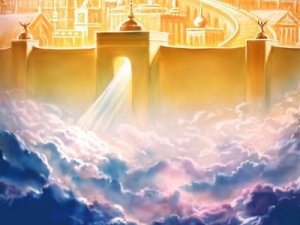 “Heaven is a wonderful place, filled with glory and grace. I wanna see my Savior’s face cause heaven is a wonderful place. I wanna go there!” Those are the lyrics to a song about I heaven I learned as a child. And these words are a great synopsis of what we are taught about heaven growing up: It’s wonderful! Jesus lives there! And we want to go there because of the eternal bliss and joy we will experience.
Indeed, heaven is a wonderful place. And that’s part of the reason why our reading for today from Revelation 6 seems so odd. As the chapter commences, the Lamb of God, Jesus Christ, is opening seals on a scroll, symbolizing the march of history toward its impending conclusion while its closing days are marked by sin-wreaked trouble. But there seems to be trouble not only on earth, but in heaven as well:
When the Lamb opened the fifth seal, I saw under the altar the souls of those who had been slain because of the word of God and the testimony they had maintained. They called out in a loud voice, “How long, Sovereign Lord, holy and true, until you judge the inhabitants of the earth and avenge our blood?” Then each of them was given a white robe, and they were told to wait a little longer, until the number of their fellow servants and brothers who were to be killed as they had been was completed. (verses 9-11)
Instead of shouting for joy at the eternal glories of heaven, these souls are lamenting: “How long?” they cry. This is the same cry of despair uttered by the Psalmist when he writes, “My soul is in anguish. How long, O LORD, how long” (Psalm 6:3)? Similarly, the prophet Habakkuk complains, “How long, O LORD, must I call for help, but you do not listen? Or cry out to you, ‘Violence!’ but you do not save” (Habakkuk 1:2)? Lamenting? Complaining? Anguish in heaven? That hardly sounds right! After all, “heaven is a wonderful place!”
Yes, heaven is a wonderful place. That’s not the issue with the lament of these heavenly martyrs. The issue with these heavenly martyrs is that although heaven is a wonderful place, it’s not the final place. That place comes in Revelation 21:
Then I saw a new heaven and a new earth, for the first heaven and the first earth had passed away, and there was no longer any sea. I saw the Holy City, the new Jerusalem, coming down out of heaven from God, prepared as a bride beautifully dressed for her husband. And I heard a loud voice from the throne saying, “Now the dwelling of God is with men, and he will live with them. They will be his people, and God himself will be with them and be their God. He will wipe every tear from their eyes. There will be no more death or mourning or crying or pain, for the old order of things has passed away.” (Revelation 21:1-4)
The conclusive place of history is not just a new heaven, but a new heaven and a new earth. It is the place where Satan is finally and fully conquered (cf. Revelation 20:10) and where sin, suffering, sorrow, and tears are no more (cf. Revelation 21:4). Thus, although heaven is a wonderful place, the martyrs in heaven, like us, are anxiously anticipating God’s final place which will arrive on the Last Day: His new heaven and earth. In the mean time, God tells these martyrs, “Wait a little longer” (verse 11).
Perhaps your life is racked and riddled by some tragedy, hardship, or terror. And perhaps you, like these heavenly martyrs, are crying out to God, “How long, O Lord? Why must I suffer such anguish?” If this is you, know this: God will rescue you, deliver you, and save you…even if you have to wait a little longer. And if you do have to wait a little longer, remember, the martyrs of heaven are waiting with you. And it seems to me, they’re pretty good company.
“Word for Today” – Revelation 5 – www.concordialutheranchurch.com
 In college, I had it down to an art. My English professor would assign a paper on a topic of total disinterest to me, such as, “Trace the themes of a A Tale of Two Cities and how Charles Dickens incited the later feminist critiques of authors like Kate Chopin and Elizabeth Cady Stanton.” My initial reaction to such an assignment was, quite honestly, one of utter disdain. “Yuck,” I would think to myself. “How boring.” But no matter how boring I may have thought the subject matter was, it was still a subject matter on which I had to write. And not only that, it was a subject matter on which I had to write ten pages! For that was the standard length of our college English papers. But that was okay. Because, as I said, in college, I had it down to an art. Change the margins from 1 inch to 1.25 inches on either side. Make sure I double-space everything. Include at least four headers in big, bold twenty-point type because that will save me from having to write at least a half-page of thoughtful text. And then, of course, type everything in Courier New. After all, nothing takes up more space than Courier New.
Although I’m ashamed to admit it now, when typing my college English papers, I had only one goal in mind: Type as little as possible while taking up as much space as possible. But then I got to seminary. And then I began typing papers on topics that interested me – really interested me. And all of a sudden, my formatting preferences changed. Only ten pages on 1 Corinthians 11? How can I possible do that? Change the margins from 1 inch to .5 inches on either side. Make sure I space-and-a-half, rather than double-space, everything to save room. Keep all my headers the same size as everything else because that will give me at least an extra half-page of thoughtful text. And then, of course, type everything in Goudy Old Style. After all, nothing takes up less space than Goudy Old Style.
In our reading for today from Revelation 5, we are introduced to a paper of sorts, written in fine first century style not on multiple 8 ½ x 11 sheets of paper printed off from a computer, but on a continuous scroll. There is, however, an especially notable characteristic of this scroll: “Then I saw in the right hand of him who sat on the throne a scroll with writing on both sides and sealed with seven seals” (verse 1). This scroll, John tells us, has “writing on both sides.” This would have been extremely rare, for usually, scrolls contained writing on one side only. The written side of the scroll, called the recto, had the fibers of a papyrus running horizontally, thereby making writing easier. Conversely, the unwritten side of the scroll, known as the verso, had the fibers of the papyrus ran vertically, making writing extremely difficult. This side, then, was usually used only for the title of the document. In some instances, however, if the author had a lot to say and not a lot of papyrus to write on, the author would use both sides of a scroll, making the scroll very unusual and very distinguished. Such is the case with this heavenly monograph. Apparently, the author of this work has a lot to say.
Another interesting feature of ancient scrolls was that in Roman society, wills, otherwise known as “testaments,” were sealed, as is this scroll, and could not be opened until the death of the person to whom the will belonged. At first John thinks this particular “testament” cannot be opened: “I wept bitterly because no one was found who was worthy to open the scroll or look inside” (verse 4). But then, the person to whom the “testament” belongs is found worthy to open his own scroll. Why? Because he has died: “You are worthy to take the scroll and to open its seals, because you were slain” (verse 9). This worthy one, of course, is Jesus. Jesus can open his own scroll. And what is on this scroll that is so important and so weighty that Jesus would have to use both sides to contain his thoughts? It is none other than God’s message of redemption: “With your blood you purchased men for God from every tribe and language and people and nation. You have made them to be a kingdom and priests to serve our God and they will reign on the earth” (verse 9-10). Jesus’ message of love for us is so extensive, so far-reaching, and so comprehensive that he has to use both sides of the scroll to contain it.
I have met more than one person who has encountered a trial, a tragedy, or a terror that has left them doubting God’s protection, grace, and love. If this is you, I would simply beg you to remember this simple promise and truth: The scroll has writing on both sides. God’s love for you has not failed, faded, or floundered. It is just as strong – and just as long – as it has always been. The scroll has writing on both sides. And that’s a better promise than even a seminary paper with .5 inch margins with space-and-a-half spacing in Goudy Old Style font. For that is a promise of God’s love. The scroll has writing on both sides. Praise be to God!
“Word for Today” – Revelation 4 – www.concordialutheranchurch.com
 One of the most infamous moments in our political history came on March 30, 1981. On that day, would-be assassin John Hinckley, Jr. shot Press Secretary James Brady and President Ronald Ronald Reagan, missing his heart by less than an inch, shortly after Reagan had left a speaking engagement at the Washington Hilton Hotel. Almost unbelievably, the shock and horror of that moment melted into laughter after Reagan’s Chief of Staff, Alexander Haig, made the following faux pa: “Constitutionally, gentlemen, you have the President, the Vice President and the Secretary of State in that order, and should the President decide he wants to transfer the helm to the Vice President, he will do so. He has not done that. As of now, I am in control here, in the White House.”
Haig’s words were meant to try to ally the nation’s fears during a deep crisis, letting people know that things in Washington had not degenerated into some sort of anarchist free-for-all. They were received, however, as a laughable and even pathetic attempt on his part to exceed the limits of his authority. For he was not really in control there – in the White House. He just thought he was.
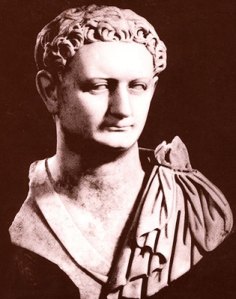
When John wrote Revelation, a man named Domitian, who is pictured above, was emporer of Rome. It was during Domitian’s reign that worship of the emporer as a divine god reached its height. It was Domitian who instituted the Capitoline Games, a celebration of who else, but Domitian. According to the German theologian and numismatist Ethelbert Stauffer:
When Domitian appeared in the circus, and took his seat beaneath the sacred canopy, in order to conduct the Capitoline Games…Domitian was enthroned, a golden wreath on his head…The spectators had to appear clad in white…Domitian loved to hear…the cry of “Hail to the Lord!”…Other forms of acclamation…were the following: Hail, Victory, Lord of the earth, Invincible, Power, Glory, Honour, Peace, Security, Holy, Blessed, Great, Unequalled, Thou Alone, Worthy art Thou, Worthy is he to inhert the Kingdom, Come, come, done not delay, Come again. (Christ and the Caesars, 155)
Do you think this guy had an ego problem? The first century Roman historian Suetonius relays that Domitian would begin his letters, “‘Our lord and our god commands so and so;’ whence it became a rule that no one should style him otherwise in writing or speaking” (The Life of Domitian XIII).
In our reading for today from Revelation 4, we are whisked away into what appears to be another kind of Capitoline games. There are spectators dressed in white (verse 4) who parody the cries of Domitian’s games and letters: “You are worthy, our Lord and God, to receive glory and honor and power, for you created all things, and by your will they were created and have their being” (verse 11). There is a throne, from which “came flashes of lightning, rumblings and peals of thunder” (verse 5). But we don’t know who’s on the throne yet. Could it be that Domitian is not only the “lord and god” of the Roman Empire, but even the “lord and god” of heaven? Hardly. For in the next chapter, the one of the throne is identified: “To him who sits on the throne and to the Lamb be praise and honor and glory and power, for ever and ever” (Revelation 5:13)! It is not Domitian who is on the throne, but the Lamb of God who takes away the sin of the world. Jesus is on the throne. Domitian is not in charge here – in the heavens. He just thinks he is.
The Lamb is on the throne. This is the message of Revelation 4. And in a world where there is so much uncertainty, chaos, and fear about the future, this is a great hope. The Lamb is on the throne. This means two things. First, it means that no matter what madness a tyrranical ruler may try to carry out, we need not fear, for they are not finally in charge. They just think they are. For the Lamb is on the throne. Second, it means that we too are not in charge of our lives and our destinies. Even if we think we are. For the Lamb is on the throne.
Today, is there something which you are seeking to control which you need to release to the Lamb who sits on the throne? If there is, I hope that you will trust this promise: You are not in control. Even if you think you are. For the Lamb is on the throne. And the Lamb will do a better job handling your harrying situation than you will anyway.
“Word for Today” – Revelation 3 – www.concordialutheranchurch.com
 “Cold” has a bad rap among south Texans. The other day, I was sharing with a congregation member the different places which I have lived. “I grew up in Portland, Oregon, I went to St. Louis for seminary and also spent a year in Chicago.” “Portland? St. Louis? Chicago? That sounds cold to me!” came the response. And indeed it could get cold in all of those towns. But then I suffer and sweat through literally weeks of 100 degree plus temperatures. I watch as the lawns around me turn brown and die as we teeter on the precipice of stage three water restrictions. And I think to myself, “Hmm, maybe cold isn’t so bad after all.”
Like south Texans who pride themselves in their ability to handle warm and even sweltering weather while eschewing the chill that states and cities farther north must regularly endure, “cold” also seems to have a bad rap among Christians. In our reading for today from Revelation 3, Jesus continues his letter writing campaign to seven first century churches, scattered throughout Asia Minor, and he saves his harshest rebuke for the final church he writes to, the church at Laodicea: “I know your deeds, that you are neither cold nor hot. I wish you were either one or the other! So, because you are lukewarm – neither hot nor cold – I am about to spit you out of my mouth” (verses 15-16).
Jesus, in his chastisement of the Laodicean churchm rebukes them for being “neither hot nor cold.” Oftentimes, this rebuke is taken as a call to be either “cold” and disparaging of Christ and his gospel or to be “hot” and “on fire,” as it were, for Christ and his gospel. In other words, Jesus is calling this church to be either clearly against him or clearly for him. A “lukewarm” and ambiguous attitude toward Jesus just won’t do.
Even though this is the way these words are often taken, this is probably not what Jesus meant. Laodicea was infamous for its notoriously terrible water. Their water supply came either from the nearby Lycus River, which was muddy and undrinkable, or from a hot springs in Hierapolis, known for its therapeutic benefits, about five miles to the northeast. Sadly, by the time this water reached Laodicea, it was tepid and stomach turning. Conversely, about eleven miles to the southeast of Laodicea was Colossae, situated on the foot of Mt. Cadmus, which, as the snow from the mountain cap melted, proved to be a source of ice cold and refreshing water. Hot and healing water to the north. Cold and refreshing water to the south. Lukewarm and nauseating water in Laodicea.
Jesus says that Laodicea’s ill-famed tepid water is an indicator of the tepidness of their souls. Indeed, this church’s tepidness is expressed in one of their creeds: “I am rich; I have acquired wealth and do not need a thing” (verse 17). Their wealth has led to spiritual apathy. But Jesus calls them to something more. Jesus calls them to something better.
Jesus calls the Laodiceans to be hot. For to be hot is to be healing. And this is a noble call. Jesus, when he commissions his disciples, sends them out “to heal every disease and sickness” (Matthew 10:1). Healing for a lost and broken world is sorely needed.
Jesus calls the Laodiceans to be cold. For to be cold is to be refreshing. And this is also a noble call. After commissioning his disciples to be hot and healing, Jesus says them, “If anyone gives even a cup of cold water to one of these little ones because he is my disciple, I tell you the truth, he will certainly not lose his reward” (Matthew 10:42). Especially interesting is this adjective “cold.” For there was no refrigeration in this day. Thus, the only way to give someone a cold cup of water was to go and draw it afresh from a well. Jesus calls his disciples not to give someone stale, tepid water that has been sitting out, but fresh, cold water. For cold water is refreshing water. As the teacher of Proverbs reminds us: “Like cold water to a weary soul is good news from a distant land” (Proverbs 25:25). Cold water is good water.
Jesus calls the Laodiceans to be hot. Jesus calls the Laodiceans to be cold. Both are good calls. And both are calls to be for him, not to be against him. “Cold” really does have a bad rap. So today, in the middle of the dog days of summer, be cold refreshment for a human soul and share God’s grace. For the message of God’s cold refreshing grace can warm a human heart.
“Word for Today” – Revelation 2 – www.concordialutheranchurch.com
 As a pastor, one of the most common questions I receive is, “If God is all-powerful and all-good, why is there so much evil in the world? Why doesn’t God simply defeat it and stop it? After all, didn’t Jesus win the victory over Satan and sin on the cross?” Indeed, this is a query that has perplexed even the brightest Christian minds. Thus, I would never be so bold or arrogant as to purport that I could cohesively and comprehensively answer such a question, much less answer it in such a brief blog. I can, however, offer some practical guidance on how to live through and in such evil times, for practical and insightful guidance comes to us in our reading for today from Revelation 2.
As the book of Revelation gets underway in earnest, we are introduced to seven first century churches, scattered throughout Asia Minor. This was not an easy time for these churches, as is indicated in the verbiage used by Jesus as he writes letters to these churches: “You have…endured hardships” (verse 3). “I know your afflictions and your poverty” (verse 9). “I know where you live – where Satan has his throne. Yet…you did not renounce your faith in me, even in the days of Antipas, my faithful witness, who was put to death in your city – where Satan lives” (verse 13). The reference to Antipas in verse 13 is especially interesting. According to the tenth century medieval Greek theologian Symeon Metaphrastes, this martyr Antipas, during the reign of Emperor Domitian, was thrown into a bronze kettle and roasted alive. All of these references paint an unambiguous picture of the evil these churches had to endure.
It is into the midst of such evil that Jesus, time and time again, proffers a call to these seven churches: “Overcome” (cf. verses 7, 11, 17, 26)! When we are faced with abominable iniquity, even though we may not fully understand the reasons why we must endure it, we must overcome it with the goodness and righteousness God. This is Jesus’ commission. As Paul reminds us, “Do not be overcome by evil, but overcome evil with good” (Romans 12:21).
Interestingly, the word for “overcome” in Greek is a present participle, indicating an ongoing and habitual action. That is, it is not that the Christians of these churches must overcome the evil which they face just once, it is that they are to continually and persistently overcome evil again and again. Jesus’ call, then, is an ongoing challenge.
But there is a payoff. “To him who overcomes, I will give the right to eat from the tree of life in the paradise of God” (verse 7). “He who overcomes will not be hurt at all by the second death” (verse 11). “To him who overcomes, I will give some of the hidden manna” (verse 17). “To him who overcomes…I will give authority over the nations” (verse 26). Although the specific references to things like a “hidden manna” and a “second death” in these promises may strike us as somewhat cryptic, finally, these promises all refer to an immutable promise of biblical theology: that of God’s salvation. Thus, Jesus’ promise to these churches who overcome evil again and again, many times at great personal cost, is that that they will receive salvation from God who, on the Last Day, will overcome evil once and for all.
One of the incentives toward good work and behavior that my wife Melody often offers her first graders is that of a party. Sometimes it’s a pizza party. Sometime’s it’s an ice cream party. Sometimes it’s a movie. Her first graders don’t know exactly what the prize will be, they only know that a glorious gift awaits them if they will only overcome their natural inclinations to be rowdy and inattentive. Indeed, in order to figure out what prize they will receive, Melody will post a “Wheel of Fortune” type puzzle on one of her bulletin boards and, every time her students do something commendable, she will uncover a letter until it finally spells out the precise nature of their coveted prize.
Oftentimes, as we trudge through our lives, the nature of God’s final victory over evil on the Last Day can strike us as fuzzy and incomprehensible. Why doesn’t God just end evil now? Why would God allow such hideous heinousness to plague even the most faithful of his people? Although I cannot fully answer those questions, I can assure you of this: The letters of God’s salvation are slowly but surely being revealed as history marches to its close. God’s party of salvation is on its way. But in the mean time, we are called to overcome. We are called to overcome the evil that grieves God’s heart and ours. So today, when you see evil, respond with righteousness. And watch another letter of God’s salvation be revealed.
“Word for Today” – Revelation 1 – www.concordialutheranchurch.com
 I first visited San Antonio in 1995. At the time, I was still in high school and was here for our church body’s national youth gathering. It is still one of my fondest memories. The Alamo. The Tower of the Americas. The food. I had never enjoyed true Texas barbeque before that week. “And my first taste of Texas,” as Ed Bruce once sang, “still lingers in my heart and on my tongue.” After visiting for the first time, I knew I just had to return to Texas. And I did the very next year to attend college in Austin. I have been an “imported native” ever since.
One of the highlights of my maiden trip to the Lonestar State was taking a riverboat cruise down the Riverwalk. I suppose it’s practically mandatory for anyone visiting San Antonio for the first time. And I remember being fascinated by what I learned from our very animated and friendly tour guide. They really constructed the Hilton Palacio Del Rio by stacking fully furnished rooms, one on top of another? Incredible! And Casa Rio, my favorite Riverwalk eatery, has been around since 1946 and was the river’s first restaurant? Now that’s longevity! And a Spanish expedition really held a mass on the river’s famed Marriage Island all the way back in 1691 at which time they christened that spot “San Antonio”? Amazing! I tipped our tour guide that day. For I was truly appreciative of all he taught me.
Today in our “Word for Today” readings, we begin the book of Revelation. This book is the apostle John’s account of a time when he was whisked away on a whirlwind tour of heaven: “After this I looked, and there before me was a door standing open in heaven” (Revelation 4:1). And on this tour, John, and by extension, we, encounter some of the most fascinating, most incredible, most amazing, and most puzzling pictures in all the Bible. Lampstands and seals. Beasts and dragons. What are these all about?
Thankfully, we have a tour guide to lead us through these strange scenes. John describes him thusly in Revelation 1: He is “someone ‘like a son of man,’ dressed in a robe reaching down to his feet and with a golden sash around his chest. His head and hair were white like wool, as white as snow, and his eyes were like blazing fire. His feet were like bronze glowing in a furnace, and his voice was like the sound of rushing waters. In his right hand he held seven stars, and out of his mouth came a sharp double-edged sword. His face was like the sun shining in all its brilliance” (verses 13-16). This is quite an impressive and even awe-inspiring tour guide! And lest we have any doubts as to this tour guide’s identity, he identifies himself: “I am the First and the Last. I am the Living One; I was dead, and behold I am alive for ever and ever! And I hold the keys of death and Hades” (verses 17-18). Our tour guide is none other than Jesus.
Part of the reason so many people become so befuddled by Revelation is because they follow the wrong tour guide. They read fantastic works of Christian fiction describing catastrophic disasters and bloody wars. They peruse strange internet conspiracy theories explaining how our precise moment in history is aligning perfectly with the visions of John. But in the midst of such fantastic portraits of the earth’s final days, may I suggest two things to you?
First, if you’re reading such fanciful and probably non-scholarly literature about Revelation rather than the literature of Revelation itself, you’re following the wrong tour guide. For Revelation already has a tour guide. And it’s not a best-selling Christian author nor is it some faceless internet conspiracist hiding behind a computer screen. No, Revelation’s tour guide is none other than Jesus. And I suspect he’s a much better tour guide than any human. As the great Christian theologian and humorist G.K. Chesterton once wrote, “Though St. John the Evangelist saw many strange monsters in his vision, he saw no creature so wild as one of his own commentators” (Orthodoxy, 29). Revelation, if you follow the tour guide who is Jesus, is not nearly so weird as some would make it out to be.
Second, most of the exotic commentary that surrounds Revelation leads to only one thing: fear. And this is terribly tragic. For as our tour guide Jesus begins taking us on a truly extraordinary journey, the first words out of his mouth are, “Do not be afraid” (verse 17). For the Christian, Revelation is not meant to incite apprehension but to invoke hope in our conquering Lord who will one day bring to us his “new heaven and new earth” (Revelation 21:1). So as we begin reading Revelation, rather than grimacing at the prospect of reading the Bible’s strangest book, delight in the prospect of taking a tour of heaven with Jesus as your guide. I promise, it’ll be even better than a Riverwalk cruise. And you won’t even have to tip your tour guide.


 Pastor Zach's Blog