“Word for Today” – Revelation 5 – www.concordialutheranchurch.com
 In college, I had it down to an art. My English professor would assign a paper on a topic of total disinterest to me, such as, “Trace the themes of a A Tale of Two Cities and how Charles Dickens incited the later feminist critiques of authors like Kate Chopin and Elizabeth Cady Stanton.” My initial reaction to such an assignment was, quite honestly, one of utter disdain. “Yuck,” I would think to myself. “How boring.” But no matter how boring I may have thought the subject matter was, it was still a subject matter on which I had to write. And not only that, it was a subject matter on which I had to write ten pages! For that was the standard length of our college English papers. But that was okay. Because, as I said, in college, I had it down to an art. Change the margins from 1 inch to 1.25 inches on either side. Make sure I double-space everything. Include at least four headers in big, bold twenty-point type because that will save me from having to write at least a half-page of thoughtful text. And then, of course, type everything in Courier New. After all, nothing takes up more space than Courier New.
Although I’m ashamed to admit it now, when typing my college English papers, I had only one goal in mind: Type as little as possible while taking up as much space as possible. But then I got to seminary. And then I began typing papers on topics that interested me – really interested me. And all of a sudden, my formatting preferences changed. Only ten pages on 1 Corinthians 11? How can I possible do that? Change the margins from 1 inch to .5 inches on either side. Make sure I space-and-a-half, rather than double-space, everything to save room. Keep all my headers the same size as everything else because that will give me at least an extra half-page of thoughtful text. And then, of course, type everything in Goudy Old Style. After all, nothing takes up less space than Goudy Old Style.
In our reading for today from Revelation 5, we are introduced to a paper of sorts, written in fine first century style not on multiple 8 ½ x 11 sheets of paper printed off from a computer, but on a continuous scroll. There is, however, an especially notable characteristic of this scroll: “Then I saw in the right hand of him who sat on the throne a scroll with writing on both sides and sealed with seven seals” (verse 1). This scroll, John tells us, has “writing on both sides.” This would have been extremely rare, for usually, scrolls contained writing on one side only. The written side of the scroll, called the recto, had the fibers of a papyrus running horizontally, thereby making writing easier. Conversely, the unwritten side of the scroll, known as the verso, had the fibers of the papyrus ran vertically, making writing extremely difficult. This side, then, was usually used only for the title of the document. In some instances, however, if the author had a lot to say and not a lot of papyrus to write on, the author would use both sides of a scroll, making the scroll very unusual and very distinguished. Such is the case with this heavenly monograph. Apparently, the author of this work has a lot to say.
Another interesting feature of ancient scrolls was that in Roman society, wills, otherwise known as “testaments,” were sealed, as is this scroll, and could not be opened until the death of the person to whom the will belonged. At first John thinks this particular “testament” cannot be opened: “I wept bitterly because no one was found who was worthy to open the scroll or look inside” (verse 4). But then, the person to whom the “testament” belongs is found worthy to open his own scroll. Why? Because he has died: “You are worthy to take the scroll and to open its seals, because you were slain” (verse 9). This worthy one, of course, is Jesus. Jesus can open his own scroll. And what is on this scroll that is so important and so weighty that Jesus would have to use both sides to contain his thoughts? It is none other than God’s message of redemption: “With your blood you purchased men for God from every tribe and language and people and nation. You have made them to be a kingdom and priests to serve our God and they will reign on the earth” (verse 9-10). Jesus’ message of love for us is so extensive, so far-reaching, and so comprehensive that he has to use both sides of the scroll to contain it.
I have met more than one person who has encountered a trial, a tragedy, or a terror that has left them doubting God’s protection, grace, and love. If this is you, I would simply beg you to remember this simple promise and truth: The scroll has writing on both sides. God’s love for you has not failed, faded, or floundered. It is just as strong – and just as long – as it has always been. The scroll has writing on both sides. And that’s a better promise than even a seminary paper with .5 inch margins with space-and-a-half spacing in Goudy Old Style font. For that is a promise of God’s love. The scroll has writing on both sides. Praise be to God!
“Word for Today” – Revelation 4 – www.concordialutheranchurch.com
 One of the most infamous moments in our political history came on March 30, 1981. On that day, would-be assassin John Hinckley, Jr. shot Press Secretary James Brady and President Ronald Ronald Reagan, missing his heart by less than an inch, shortly after Reagan had left a speaking engagement at the Washington Hilton Hotel. Almost unbelievably, the shock and horror of that moment melted into laughter after Reagan’s Chief of Staff, Alexander Haig, made the following faux pa: “Constitutionally, gentlemen, you have the President, the Vice President and the Secretary of State in that order, and should the President decide he wants to transfer the helm to the Vice President, he will do so. He has not done that. As of now, I am in control here, in the White House.”
Haig’s words were meant to try to ally the nation’s fears during a deep crisis, letting people know that things in Washington had not degenerated into some sort of anarchist free-for-all. They were received, however, as a laughable and even pathetic attempt on his part to exceed the limits of his authority. For he was not really in control there – in the White House. He just thought he was.
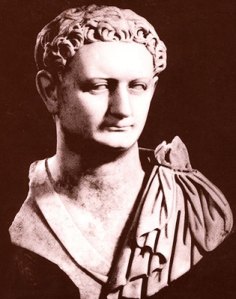
When John wrote Revelation, a man named Domitian, who is pictured above, was emporer of Rome. It was during Domitian’s reign that worship of the emporer as a divine god reached its height. It was Domitian who instituted the Capitoline Games, a celebration of who else, but Domitian. According to the German theologian and numismatist Ethelbert Stauffer:
When Domitian appeared in the circus, and took his seat beaneath the sacred canopy, in order to conduct the Capitoline Games…Domitian was enthroned, a golden wreath on his head…The spectators had to appear clad in white…Domitian loved to hear…the cry of “Hail to the Lord!”…Other forms of acclamation…were the following: Hail, Victory, Lord of the earth, Invincible, Power, Glory, Honour, Peace, Security, Holy, Blessed, Great, Unequalled, Thou Alone, Worthy art Thou, Worthy is he to inhert the Kingdom, Come, come, done not delay, Come again. (Christ and the Caesars, 155)
Do you think this guy had an ego problem? The first century Roman historian Suetonius relays that Domitian would begin his letters, “‘Our lord and our god commands so and so;’ whence it became a rule that no one should style him otherwise in writing or speaking” (The Life of Domitian XIII).
In our reading for today from Revelation 4, we are whisked away into what appears to be another kind of Capitoline games. There are spectators dressed in white (verse 4) who parody the cries of Domitian’s games and letters: “You are worthy, our Lord and God, to receive glory and honor and power, for you created all things, and by your will they were created and have their being” (verse 11). There is a throne, from which “came flashes of lightning, rumblings and peals of thunder” (verse 5). But we don’t know who’s on the throne yet. Could it be that Domitian is not only the “lord and god” of the Roman Empire, but even the “lord and god” of heaven? Hardly. For in the next chapter, the one of the throne is identified: “To him who sits on the throne and to the Lamb be praise and honor and glory and power, for ever and ever” (Revelation 5:13)! It is not Domitian who is on the throne, but the Lamb of God who takes away the sin of the world. Jesus is on the throne. Domitian is not in charge here – in the heavens. He just thinks he is.
The Lamb is on the throne. This is the message of Revelation 4. And in a world where there is so much uncertainty, chaos, and fear about the future, this is a great hope. The Lamb is on the throne. This means two things. First, it means that no matter what madness a tyrranical ruler may try to carry out, we need not fear, for they are not finally in charge. They just think they are. For the Lamb is on the throne. Second, it means that we too are not in charge of our lives and our destinies. Even if we think we are. For the Lamb is on the throne.
Today, is there something which you are seeking to control which you need to release to the Lamb who sits on the throne? If there is, I hope that you will trust this promise: You are not in control. Even if you think you are. For the Lamb is on the throne. And the Lamb will do a better job handling your harrying situation than you will anyway.
“Word for Today” – Revelation 3 – www.concordialutheranchurch.com
 “Cold” has a bad rap among south Texans. The other day, I was sharing with a congregation member the different places which I have lived. “I grew up in Portland, Oregon, I went to St. Louis for seminary and also spent a year in Chicago.” “Portland? St. Louis? Chicago? That sounds cold to me!” came the response. And indeed it could get cold in all of those towns. But then I suffer and sweat through literally weeks of 100 degree plus temperatures. I watch as the lawns around me turn brown and die as we teeter on the precipice of stage three water restrictions. And I think to myself, “Hmm, maybe cold isn’t so bad after all.”
Like south Texans who pride themselves in their ability to handle warm and even sweltering weather while eschewing the chill that states and cities farther north must regularly endure, “cold” also seems to have a bad rap among Christians. In our reading for today from Revelation 3, Jesus continues his letter writing campaign to seven first century churches, scattered throughout Asia Minor, and he saves his harshest rebuke for the final church he writes to, the church at Laodicea: “I know your deeds, that you are neither cold nor hot. I wish you were either one or the other! So, because you are lukewarm – neither hot nor cold – I am about to spit you out of my mouth” (verses 15-16).
Jesus, in his chastisement of the Laodicean churchm rebukes them for being “neither hot nor cold.” Oftentimes, this rebuke is taken as a call to be either “cold” and disparaging of Christ and his gospel or to be “hot” and “on fire,” as it were, for Christ and his gospel. In other words, Jesus is calling this church to be either clearly against him or clearly for him. A “lukewarm” and ambiguous attitude toward Jesus just won’t do.
Even though this is the way these words are often taken, this is probably not what Jesus meant. Laodicea was infamous for its notoriously terrible water. Their water supply came either from the nearby Lycus River, which was muddy and undrinkable, or from a hot springs in Hierapolis, known for its therapeutic benefits, about five miles to the northeast. Sadly, by the time this water reached Laodicea, it was tepid and stomach turning. Conversely, about eleven miles to the southeast of Laodicea was Colossae, situated on the foot of Mt. Cadmus, which, as the snow from the mountain cap melted, proved to be a source of ice cold and refreshing water. Hot and healing water to the north. Cold and refreshing water to the south. Lukewarm and nauseating water in Laodicea.
Jesus says that Laodicea’s ill-famed tepid water is an indicator of the tepidness of their souls. Indeed, this church’s tepidness is expressed in one of their creeds: “I am rich; I have acquired wealth and do not need a thing” (verse 17). Their wealth has led to spiritual apathy. But Jesus calls them to something more. Jesus calls them to something better.
Jesus calls the Laodiceans to be hot. For to be hot is to be healing. And this is a noble call. Jesus, when he commissions his disciples, sends them out “to heal every disease and sickness” (Matthew 10:1). Healing for a lost and broken world is sorely needed.
Jesus calls the Laodiceans to be cold. For to be cold is to be refreshing. And this is also a noble call. After commissioning his disciples to be hot and healing, Jesus says them, “If anyone gives even a cup of cold water to one of these little ones because he is my disciple, I tell you the truth, he will certainly not lose his reward” (Matthew 10:42). Especially interesting is this adjective “cold.” For there was no refrigeration in this day. Thus, the only way to give someone a cold cup of water was to go and draw it afresh from a well. Jesus calls his disciples not to give someone stale, tepid water that has been sitting out, but fresh, cold water. For cold water is refreshing water. As the teacher of Proverbs reminds us: “Like cold water to a weary soul is good news from a distant land” (Proverbs 25:25). Cold water is good water.
Jesus calls the Laodiceans to be hot. Jesus calls the Laodiceans to be cold. Both are good calls. And both are calls to be for him, not to be against him. “Cold” really does have a bad rap. So today, in the middle of the dog days of summer, be cold refreshment for a human soul and share God’s grace. For the message of God’s cold refreshing grace can warm a human heart.
“Word for Today” – Revelation 2 – www.concordialutheranchurch.com
 As a pastor, one of the most common questions I receive is, “If God is all-powerful and all-good, why is there so much evil in the world? Why doesn’t God simply defeat it and stop it? After all, didn’t Jesus win the victory over Satan and sin on the cross?” Indeed, this is a query that has perplexed even the brightest Christian minds. Thus, I would never be so bold or arrogant as to purport that I could cohesively and comprehensively answer such a question, much less answer it in such a brief blog. I can, however, offer some practical guidance on how to live through and in such evil times, for practical and insightful guidance comes to us in our reading for today from Revelation 2.
As the book of Revelation gets underway in earnest, we are introduced to seven first century churches, scattered throughout Asia Minor. This was not an easy time for these churches, as is indicated in the verbiage used by Jesus as he writes letters to these churches: “You have…endured hardships” (verse 3). “I know your afflictions and your poverty” (verse 9). “I know where you live – where Satan has his throne. Yet…you did not renounce your faith in me, even in the days of Antipas, my faithful witness, who was put to death in your city – where Satan lives” (verse 13). The reference to Antipas in verse 13 is especially interesting. According to the tenth century medieval Greek theologian Symeon Metaphrastes, this martyr Antipas, during the reign of Emperor Domitian, was thrown into a bronze kettle and roasted alive. All of these references paint an unambiguous picture of the evil these churches had to endure.
It is into the midst of such evil that Jesus, time and time again, proffers a call to these seven churches: “Overcome” (cf. verses 7, 11, 17, 26)! When we are faced with abominable iniquity, even though we may not fully understand the reasons why we must endure it, we must overcome it with the goodness and righteousness God. This is Jesus’ commission. As Paul reminds us, “Do not be overcome by evil, but overcome evil with good” (Romans 12:21).
Interestingly, the word for “overcome” in Greek is a present participle, indicating an ongoing and habitual action. That is, it is not that the Christians of these churches must overcome the evil which they face just once, it is that they are to continually and persistently overcome evil again and again. Jesus’ call, then, is an ongoing challenge.
But there is a payoff. “To him who overcomes, I will give the right to eat from the tree of life in the paradise of God” (verse 7). “He who overcomes will not be hurt at all by the second death” (verse 11). “To him who overcomes, I will give some of the hidden manna” (verse 17). “To him who overcomes…I will give authority over the nations” (verse 26). Although the specific references to things like a “hidden manna” and a “second death” in these promises may strike us as somewhat cryptic, finally, these promises all refer to an immutable promise of biblical theology: that of God’s salvation. Thus, Jesus’ promise to these churches who overcome evil again and again, many times at great personal cost, is that that they will receive salvation from God who, on the Last Day, will overcome evil once and for all.
One of the incentives toward good work and behavior that my wife Melody often offers her first graders is that of a party. Sometimes it’s a pizza party. Sometime’s it’s an ice cream party. Sometimes it’s a movie. Her first graders don’t know exactly what the prize will be, they only know that a glorious gift awaits them if they will only overcome their natural inclinations to be rowdy and inattentive. Indeed, in order to figure out what prize they will receive, Melody will post a “Wheel of Fortune” type puzzle on one of her bulletin boards and, every time her students do something commendable, she will uncover a letter until it finally spells out the precise nature of their coveted prize.
Oftentimes, as we trudge through our lives, the nature of God’s final victory over evil on the Last Day can strike us as fuzzy and incomprehensible. Why doesn’t God just end evil now? Why would God allow such hideous heinousness to plague even the most faithful of his people? Although I cannot fully answer those questions, I can assure you of this: The letters of God’s salvation are slowly but surely being revealed as history marches to its close. God’s party of salvation is on its way. But in the mean time, we are called to overcome. We are called to overcome the evil that grieves God’s heart and ours. So today, when you see evil, respond with righteousness. And watch another letter of God’s salvation be revealed.
“Word for Today” – Revelation 1 – www.concordialutheranchurch.com
 I first visited San Antonio in 1995. At the time, I was still in high school and was here for our church body’s national youth gathering. It is still one of my fondest memories. The Alamo. The Tower of the Americas. The food. I had never enjoyed true Texas barbeque before that week. “And my first taste of Texas,” as Ed Bruce once sang, “still lingers in my heart and on my tongue.” After visiting for the first time, I knew I just had to return to Texas. And I did the very next year to attend college in Austin. I have been an “imported native” ever since.
One of the highlights of my maiden trip to the Lonestar State was taking a riverboat cruise down the Riverwalk. I suppose it’s practically mandatory for anyone visiting San Antonio for the first time. And I remember being fascinated by what I learned from our very animated and friendly tour guide. They really constructed the Hilton Palacio Del Rio by stacking fully furnished rooms, one on top of another? Incredible! And Casa Rio, my favorite Riverwalk eatery, has been around since 1946 and was the river’s first restaurant? Now that’s longevity! And a Spanish expedition really held a mass on the river’s famed Marriage Island all the way back in 1691 at which time they christened that spot “San Antonio”? Amazing! I tipped our tour guide that day. For I was truly appreciative of all he taught me.
Today in our “Word for Today” readings, we begin the book of Revelation. This book is the apostle John’s account of a time when he was whisked away on a whirlwind tour of heaven: “After this I looked, and there before me was a door standing open in heaven” (Revelation 4:1). And on this tour, John, and by extension, we, encounter some of the most fascinating, most incredible, most amazing, and most puzzling pictures in all the Bible. Lampstands and seals. Beasts and dragons. What are these all about?
Thankfully, we have a tour guide to lead us through these strange scenes. John describes him thusly in Revelation 1: He is “someone ‘like a son of man,’ dressed in a robe reaching down to his feet and with a golden sash around his chest. His head and hair were white like wool, as white as snow, and his eyes were like blazing fire. His feet were like bronze glowing in a furnace, and his voice was like the sound of rushing waters. In his right hand he held seven stars, and out of his mouth came a sharp double-edged sword. His face was like the sun shining in all its brilliance” (verses 13-16). This is quite an impressive and even awe-inspiring tour guide! And lest we have any doubts as to this tour guide’s identity, he identifies himself: “I am the First and the Last. I am the Living One; I was dead, and behold I am alive for ever and ever! And I hold the keys of death and Hades” (verses 17-18). Our tour guide is none other than Jesus.
Part of the reason so many people become so befuddled by Revelation is because they follow the wrong tour guide. They read fantastic works of Christian fiction describing catastrophic disasters and bloody wars. They peruse strange internet conspiracy theories explaining how our precise moment in history is aligning perfectly with the visions of John. But in the midst of such fantastic portraits of the earth’s final days, may I suggest two things to you?
First, if you’re reading such fanciful and probably non-scholarly literature about Revelation rather than the literature of Revelation itself, you’re following the wrong tour guide. For Revelation already has a tour guide. And it’s not a best-selling Christian author nor is it some faceless internet conspiracist hiding behind a computer screen. No, Revelation’s tour guide is none other than Jesus. And I suspect he’s a much better tour guide than any human. As the great Christian theologian and humorist G.K. Chesterton once wrote, “Though St. John the Evangelist saw many strange monsters in his vision, he saw no creature so wild as one of his own commentators” (Orthodoxy, 29). Revelation, if you follow the tour guide who is Jesus, is not nearly so weird as some would make it out to be.
Second, most of the exotic commentary that surrounds Revelation leads to only one thing: fear. And this is terribly tragic. For as our tour guide Jesus begins taking us on a truly extraordinary journey, the first words out of his mouth are, “Do not be afraid” (verse 17). For the Christian, Revelation is not meant to incite apprehension but to invoke hope in our conquering Lord who will one day bring to us his “new heaven and new earth” (Revelation 21:1). So as we begin reading Revelation, rather than grimacing at the prospect of reading the Bible’s strangest book, delight in the prospect of taking a tour of heaven with Jesus as your guide. I promise, it’ll be even better than a Riverwalk cruise. And you won’t even have to tip your tour guide.
“Word for Today” – Matthew 28 – www.concordialutheranchurch.com
 I have never been very good at math. Reading and writing have always come much more naturally to me which, I guess, explains why I enjoy writing these blogs. I did have an algebra teacher in high school, however, whom I sincerely appreciated. Her name was Mrs. Gutknecht. Mrs. Gutknecht was a kind, soft-spoken, gentle lady who treated all her students with the utmost respect, grace, and love. Her students, however, did not always return the favor. As high schoolers, we would often misuse and abuse Mrs. Gutknecht’s good will. She would be trying to teach while we would be passing notes, listening to Walkmans (this was long before iPods, after all), and whispering amongst ourselves. At first, Mrs. Gutknecht would only mildly reprimand our disrespect with an evil eye or a hushed, “Now, you need to listen up.” But even Mrs. Gutknecht had a breaking point.
Mrs. Gutknecht’s breaking point usually came forty minutes into our class. For at the forty minute mark, she would always assign us our homework for the next day and then give us fifteen minutes to work on it before class was over. And so, as her lesson ended, all of a sudden, her voice would raise, her fists would clench, her face would turn red, and she would exclaim, “Folks! Quiet down and listen up…now! It’s homework time!” And it was at that point that we knew Mrs. Gutknecht meant business. There would be no more secret notes because we knew she would read them in front of the class. There would be no more personal entertainment devices because we knew she would confiscate them for herself. There would be no more whispered conversations for we knew she would send us to the administrator’s office. Instead, we would sit attentively and expectantly awaiting our algebraic “marching orders” for the next day.
Eventually, Mrs. Gutknecht’s call to attention became so self-evident to us that we didn’t even wait for her to finish it. She no longer had to say, “Folks! Quiet down and listen up…now! It’s homework time!” Instead, she had only to say, “Folks!” and, much like when a captain shouts “Attention!” to his company, we too would snap to hushed attention.
In our reading for today from Matthew 28, Jesus gives his disciples one final commission before ascending into heaven: “Go and make disciples of all nation, baptizing them in the name of the Father and of the Son and of the Holy Spirit, and teaching them to obey everything I have commanded you.” (verses 19-20). Much like a captain will give his company “marching orders,” Jesus here gives “marching orders” to his disciples. And Jesus’ “marching orders” are to start a discipleship ROTC program for the world consisting of two primary components: baptism and teaching. For these components are how we are trained as disciples and how we train others to be disciples.
But there’s something missing. Something Mrs. Gutknecht would never have forgotten before giving us “marching orders” for homework. Something a captain would never forget before giving his company “marching orders” into a battlefield. There’s no “Folks!” There’s no “Attention!”
Actually, there is. But rather than coming before Jesus’ marching orders, it comes after Jesus’ marching orders. The NIV translates it like this: “And surely I am with you always, to the very end of the age” (verse 20). The Greek word for “surely” is idou, an interjection which is meant to call a reader’s attention to something especially notable or interesting. It is a way to say, “Attention! This is something you don’t want to miss!” Indeed, this is the word that an angel uses when he announces to some shepherds near Bethlehem, “Idou! I bring you good news of great joy that will be for all the people. Today in the town of David a Savior has been born to you; he is Christ the Lord” (Luke 2:10-11). This is also the word the Jesus himself uses when he gives his disciples some earlier “marching orders” and warns them of the persecution they will encounter because of him: “Idou! I am sending you out as sheep among wolves” (Matthew 10:16). And now, Jesus uses this word again. But not to call attention to a command, but to call attention to a promise: “Idou! I am with you always, to very end of the age.” The final “marching order” that Jesus gives his disciples, then, is not a “marching order” at all. Instead, it is a simple recognition, realization, and reliance on his presence. For Jesus desires that we be attentive to the fact that he is always with us.
So today, where do you see Jesus in your life? Maybe it’s in a conversation with a friend. Maybe it’s in a moment of solitude where you gaze at God’s good creation in wonder. Jesus, of course, is always in the pages of Scripture and in the prayers of his saints. So “Attention!” Jesus is here! Jesus is with you.
“Word for Today” – Matthew 27 – www.concordialutheranchurch.com
 Last Wednesday began like any other day. I woke up, worked out, showered, updated my blog, got dressed, and headed out for another day at work. Upon getting into my truck, however, I noticed I was low on gas. “No big deal,” I thought to myself. “There’s a gas station on the way to the church. I’ll just stop there.” But when I arrived at the station, and when I reached into my back pocket for my wallet, I noticed something: there was no wallet! Apparently, I had forgotten it at home.
Now usually, mornings are my favorite part of the day. I am a faithful – some might even say a neurotic – early riser. And because mornings are my favorite part of the day, I almost always wake up in a good mood, anxiously anticipating a new day’s prospects. Such was the case with my new day last Wednesday. But with the discovery of an empty back pocket, my mood shifted radically and immediately. My face grimaced. My fists tightened. “I can’t believe this!” I grumbled gruffly under my breath. “Now I have to go home, get my wallet, and drive all the way back. I’m losing twenty minutes and getting absolutely nothing accomplished. This is so frustrating!” So much for my usually cheery morning disposition.
In our reading for today from Matthew 27, we encounter one of Scripture’s most tragic stories: that of Judas. In the previous chapter, Judas, disillusioned by Jesus’ ostensible unwillingness to rebel against the Roman establishment and militarily lead the Jews to sovereign statehood, agrees to betray Jesus into the hands of his enemies in the religious establishment for the paltry price of thirty pieces of silver (cf. Matthew 26:15), the meager fine in the Old Testament exacted from someone whose bull had gored a slave to death (cf. Exodus 21:32). But Judas, who was at first comfortable with the deal he had cut, when he realizes the full horror of Jesus’ fate, is “seized with remorse” (verse 3). “I have sinned,” Judas laments, “for I have betrayed innocent blood” (verse 4).
The Greek word for “seized with remorse” is metamellomai, literally meaning, “to have a change of mood.” In other words, like my morning mood, Judas’ mood too shifted quickly. Sadly, a change of mood does not always indicate a change of heart. No, a change of heart is denoted by the Greek word metanoia, most often translated as “repentance.” And repentance is not just a feeling, it is a turning – a turning from old ways of sin to new ways of righteousness; a turning from old ways of betrayal to new ways of trust. Tragically, we never hear of Judas metanoia-ing, only of him metamellomai-ing.
When my mood dramatically shifted from satisfied to sour last Wednesday, I must confess, I did not so much metanoia as I did metamellomai. For I did not take any preventative steps against forgetting my wallet in the future. Nor did I seek to clear my mind of its anger and make an intentional move toward peace and joy. No, my anger simply faded. Thus, although my wallet exploit may have changed my mood, it did not change my heart.
So it is with Judas. His betrayal may have changed his mood, but it did not change his heart. And this is the true tragedy of Judas’ story.
When it comes to our sin, we are called not to changed moods, but to changed hearts. Indeed, the very heart of Jesus’ gospel is, “Repent, for the kingdom of heaven is near” (Matthew 4:17). In other words, we are not just to feel bad because of our sin, but are to recognize that we are bad because of our sin and in need of a righteousness only Jesus can give. And this, finally, is the beauty of repentance: it moves us to despair of our own sin and trust in Jesus’ righteousness.
So today, is there anything for which you’re feeling bad? Don’t just be moody; instead, lay your transgressions at the foot of the cross. For this is repentance. And while feelings may be fickle, repentance results in redemption – no matter what our mood might be.
“Word for Today” – Matthew 26 – www.concordialutheranchurch.com
 One of the most popular game shows of all time was “Let’s Make A Deal” with Monty Hall. If you came of age in the sixties, then you surely remember the premise. Monty Hall would call contestants at random from the audience and ask them to trade whatever item they happened to have on them, such as their shoes or their coat or even their purse, for what was behind door number one, door number two, or door number three. Sometimes, the prizes behind a door were fabulous: a trip, a fur coat, electronics, furniture, an appliance, or even a new car. Other times, contestants would just assume leave their “prize” of a matchbox car, a wheelbarrow, or a t-shirt on the stage and simply walk away.
Even decades after “Let’s Make A Deal” has faded from the primetime airwaves, the allure of what’s behind door number one, door number two, or door number three has remained seared in the public consciousness. Jimmy Buffett even sang a song about these famous doors: “My whole world lies waiting behind door number three. And I don’t want what Jay’s got on his table, or the box Carol Merrill points to on the floor. No, I’ll hold out just as long as I am able, or until I can unlock that lucky door.”
In our reading for today from Matthew 26, we find Jesus in the throws of his final hours. And for his closing act, he decides to celebrate with his disciples a most sacred meal: the Passover. A traditional Jewish celebration of the Passover would involve eating matza, or unleavened bread, parsley, lamb, and sharing four cups of wine, a highly significant event, echoing God’s words in Exodus 6:6-7: “I am the LORD, and I will bring you out from under the yoke of the Egyptians. I will free you from being slaves to them, and I will redeem you with an outstretched arm and with mighty acts of judgment. I will take you as my own people, and I will be your God. Then you will know that I am the LORD your God, who brought you out from under the yoke of the Egyptians.” Each of the four cups of the Passover corresponded to each of the four divine statements in this passage: “I will bring…I will free…I will redeem…I will take.” The third cup, the cup of redemption, was especially poignant because it spoke to the exact moment that God bought the people of Israel out of their slavery in Egypt and instead made them his servants. And God accomplishes this redemption, the author of Exodus says, with an outstretched arm.
Jesus could have chosen any cup he wanted. But on this Passover night, when he institutes a new meal – his meal – Jesus chooses cup number three: the cup of redemption. “Then he took the cup, gave thanks and offered it to his disciples, saying, ‘Drink from it, all of you. This is the blood of the covenant which is poured out for many for the forgiveness of sins” (verses 27-28). Jesus uses the cup shared immediately after the Passover meal – the third cup – to share his blood with his disciples.
Jesus could have chosen any cup he wanted. But on this Passover night, when he institutes a new meal – his meal – Jesus chooses cup number three: the cup of redemption. For God, through Christ, is once again redeeming his people. Not from slavery in Egypt, but from slavery to sin so that he can make them servants of himself. And God, once again, is doing it with an outstretched arm, or, should I say, with outstretched arms. For the two arms of Jesus, outstretched on a cross, won for us redemption from sin, death, and the devil.
Jesus could have chosen any cup he wanted. But on this Passover night, when he institutes a new meal – his meal – Jesus chooses cup number three: the cup of redemption. Jesus “makes a deal,” as it were, for our souls. Not with a pair of shoes, a coat, or even a purse, but with his very blood, shed on a cross and shared in a supper. And now Jesus invites us to partake with him in what’s in cup number three. For in cup number three is the very taste of forgiveness. In cup number three is the very taste of our salvation. In cup number three is the very taste of our redemption. And so this Sunday, I can’t wait to not only see, but drink of, what’s in cup number three. I hope you’ll join me.
“Word for Today” – Matthew 25 – www.concordialutheranchurch.com
 A couple of weeks ago, I was having a conversation with a friend when, all of a sudden, what seemed to me to be out of the clear blue sky, they said to me, “Zach, I want you to know that I really appreciated last Tuesday.” Immediately, my mind sprang into action. “Last Tuesday. Last Tuesday? What did I do last Tuesday?” Although I tried to hide that puzzled stare that I’m sure emerged all over my face, my friend quickly figured out that I was lost. “The funeral that you attended last Tuesday. It really meant a lot to the family and it really meant a lot to me.”
I have to admit, at that moment, I was more than a little embarrassed. It humiliated me that I would so quickly forget about an event as significant as a funeral. But it wasn’t for lack of care and concern that I forgot about it. It was simply because I didn’t consider my attendance at that funeral to be that big of a deal. I was there, not because I felt I had to be, but because I wanted to remember the deceased and lift up his family in prayer. Honestly, I never imagined the family would notice or care whether or not I was there. But I was wrong. Because they did notice. And they did care. And they appreciated it more than I ever thought they would.
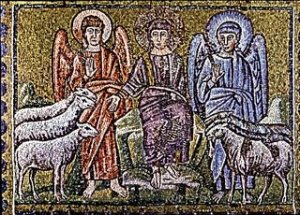
In our reading for today from Matthew 25, Jesus offers one of the most famous and memorable descriptions of his second coming: “When the Son of Man comes in his glory, and all the angels with him, he will sit on his throne in heavenly glory. All the nations will be gathered before him, and he will separate the people one from another as a shepherd separates the sheep from the goats” (verses 31-32). The sheep, of course, are those who are commended and brought to salvation. The goats, conversely, are those who are condemned and sent to damnation.
I have always found Jesus’ commendation of the sheep to be especially fascinating:
“Come, you who are blessed by my Father; take your inheritance, the kingdom prepared for you since the creation of the world. For I was hungry and you gave me something to eat, I was thirsty and you gave me something to drink, I was a stranger and you invited me in, I needed clothes and you clothed me, I was sick and you looked after me, I was in prison and you came to visit me.” Then the righteous will answer him, “Lord, when did we see you hungry and feed you, or thirsty and give you something to drink? When did we see you a stranger and invite you in, or needing clothes and clothe you? When did we see you sick or in prison and go to visit you?” The King will reply, “I tell you the truth, whatever you did for one of the least of these brothers of mine, you did for me.” (verses 34-40)
Did you catch what the sheep say to Jesus? They say, “We did what again? You were hungry and we fed you? You were in need of clothes and we clothed you? You were sick and we looked after you? You were in prison and we went and visited you? We don’t remember any of that!”
It seems as though the Last Day will, in some ways, echo my funereal forgetfulness. Because to us, so much of what we do just isn’t that big of a deal. So often, just as Jesus instructs, we are so forgetful that our right hand doesn’t even remember what our left hand is doing (cf. Matthew 6:3). But to Jesus remembers. And Jesus cares. Because to Jesus, what we do for others, we also do for him. And to Jesus, that is a big deal.
So today, recall something charitable, something gracious, perhaps even something life-altering you have done for another person and didn’t even think about it until you were later reminded. And if you can’t think of anything, that’s okay. That just means you’re doing great. You’re not supposed to remember the good things you do anyway. But don’t worry, you’ll be reminded eventually. For Jesus will remind you. And Jesus will thank you. What a glorious day that will be.
“Word for Today” – Matthew 24 – www.concordialutheranchurch.com
 It was not a pleasant experience. At the tender age of nine, my mother left me home alone for the first time. She had a couple of errands to run and figured now would be as good a time as any to teach me some independence. After all, she was only going to be gone for half an hour. I, however, was mortified at the prospect of having to spend a full thirty minutes alone in our big, creaky, creepy house. Nevertheless, my mother drove off and left me behind. I immediately dashed into my room and shut the door, petrified by the thought of burglars, which I was certain were lurking right outside the front door. Fifteen minutes passed. Then twenty. Then twenty-five. Then thirty minutes. And mom wasn’t home yet! Finally, after a full thirty-four minutes, I couldn’t take it anymore. I emerged from my room, dashed to the kitchen, and called my dad at work. “Dad,” I said misty-eyed, “Mom said she was going to be gone half an hour and she’s already been gone thirty-four minutes!” My mother came home three minutes later.
Although at age nine I was already having preteen moments of rebellion, trying to assert my independence, I still was not ready to be too independent. I still wanted to have someone around to protect me at all times. I still did not want to be left behind by my mother.
My sentiment as a child echoes the sentiment of many when it comes to the way the end times are talked about in popular Christian movies and literature. On the final day of 1995, a novel by Tim LaHaye and Jerry Jenkins hit bookshelves everywhere and changed the way millions viewed that last days of history. The novel’s title was Left Behind. The plot line tracks the life of an airplane pilot and his family after they are “left behind” following a rapture of the faithful. The moral of the story is self-evident: The end of history will be a dark, scary, tumultuous time. You don’t want to live through it. So make sure you believe in Jesus and don’t get left behind.
This may come as a shock to many, especially in light of my reticence even to be left behind at home by my mother as a child, but I actually want to be left behind. Not in the way that Tim LaHaye and Jerry Jenkins talk about it, but in the way that our text for today from Matthew 24 talks about it. Jesus says, “As it was in the days of Noah, so it will be at the coming of the Son of Man. For in the days before the flood, people were eating and drinking, marrying and giving in marriage, up to the day Noah entered the ark; and they knew nothing about what would happen until the flood came and took them all away. That is how it will be at the coming of the Son of Man. Two men will be in the field; one will be taken and the other left. Two women will be grinding with a hand mill; one will be taken and the other left” (verses 37-41).
These words from Jesus are often marshaled to teach a rapture near the end of time. There will be groups of people, the doctrine goes, and some will be taken to be with the Lord, while others will be “left behind” to suffer the pain and misery and agony of the earth’s final days.
Now, before you accuse me of losing my mind, wanting to endure such misery, it is first worth asking, “Is this what Jesus actually teaches here? Does Jesus really teach a rapture where some are taken to be with him while others are left behind?” Notice the analogy that Jesus draws in these verses. He begins with the days of Noah. He says in verse 39 that a “flood came and took them all away.” In other words, in Jesus’ analogy, it is bad to be “taken away.” Because being “taken away” means suffering judgment and death. Conversely, then, it is good to be “left behind.” Because being “left behind” means surviving judgment thanks to God’s strong salvation. Thus, when Jesus speaks of two people, one being taken while the other is left behind, he wants us to be the ones who are left behind! Because being “left behind” means being “left behind” with Jesus! Indeed, this is tone that Jesus sets from the very beginning of this chapter: “See that no one leads you astray. For many will come in my name, saying, ‘I am the Christ,’ and they will lead many astray” (verses 4-5). Jesus says, “Don’t get led astray and taken away by all the false christs and false doctrines and false messiahs out there. Instead, stay behind with me! For I am your only hope for salvation.” Peter reminds us likewise: “Be on guard so that you will not be carried away by the errors of these wicked people and lose your own secure footing” (2 Peter 3:17).
So today, declare your intention to be “left behind.” Not as a result of some rapture where you have to suffer some terrible tribulation, but declare your intention to be left behind from the leadings of sin, lies, and wickedness. For when those leave you behind, you are left standing with Jesus. And he’s a guy I’m happy to be left behind with any day.


 Pastor Zach's Blog