“Word for Today” – Luke 1 – www.concordialutheranchurch.com
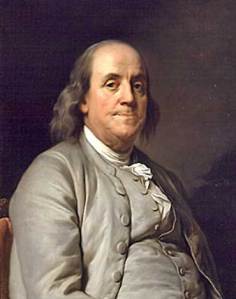 “Certainty? In this world nothing is certain but death and taxes.” So once said Benjamin Franklin. And Benjamin Franklin certainly lived up to his sobering, yet pithy, cynicism. For he lived in the shadow of eighteenth century Rationalism, trumpeted by the likes of gifted authors such as Voltaire, who wrote: “Doubt is not a pleasant condition, but certainty is absurd.” Doubting everything, it seems, was en vogue in Franklin’s day.
Of course, not much has changed. Rationalism has given way to post-modernism which has turned doubt into a near deity, calling on people to doubt even themselves and embrace what amounts to a near philosophical turpitude. Thus, as we begin reading through to gospel of Luke in the “Word for Today,” the doctor’s opening words in Luke 1 may perhaps strike us as fanciful and even absurd:
Many have undertaken to draw up an account of the things that have been fulfilled among us, just as they were handed down to us by those who from the first were eyewitnesses and servants of the word. Therefore, since I myself have carefully investigated everything from the beginning, it seemed good also to me to write an orderly account for you, most excellent Theophilus, so that you may know the certainty of the things you have been taught. (verses 1-4)
“You may know the certainty of the things you have been taught?” Come on! Certainty is absurd! But Luke is serious about certainty.
Luke 1:1-4 has been called the best Greek sentence in the whole New Testament. His vocabulary is lofty and his syntax is complex. Moreover, Luke uses certain rhetorical devices, common to his day, to lead his readers to trust his integrity and credentials. A couple of phrases deserve our special attention.
First, Luke says that he writes his gospel as a record of events “just as they were handed down to us” (verse 2). The Greek word for “handed down” is paradidomi, a technical term for delivering authoritative information, much like you might receive from a lawyer in a certified letter today. Thus, Luke is certifying his gospel’s veracity.
Second, Luke says that he has “carefully investigated everything from the beginning” (verse 3). In other words, Luke has done his homework concerning what he is getting ready to write. He has scoured sources and consulted eyewitnesses. If he were writing today, his gospel would surely contain a nearly endless parade of footnotes. For what he writes is a scholarly account of Jesus’ life.
Third, Luke engages in a rhetorical sleight of hand in his opening exordium. If you notice, Luke nowhere mentions in these verses that he is writing about Jesus. He only cryptically says that his is “an account of the things that have been fulfilled among us” (verse 1). Contrast this with Mark’s gospel, which begins unapologetically: “The beginning of the gospel of Jesus Christ, the Son of God” (Mark 1:1). Luke’s tactic is intentional. By first establishing his credentials as a careful historian and author, Luke is leading his readers to trust him just as we would trust a biographer or a scholar. This way, we will not dismiss his record of Jesus’ work and teaching out of hand as an ahistorical flight of miraculous fancy. In other words, Luke seeks first to lead us to certainty about him so that he can lead us to certainty about Jesus.
So perhaps Franklin’s statement should be amended: “Certainty? In this world nothing is certain but death, taxes…and Luke’s gospel.” And I bet if you continued searching the Scriptures you might even find that more of its books are certain. Indeed, you might even find that all of its books are certain. For they all reveal to us the Creator, Redeemer, and Sustainer of heaven and earth and of you and me. And there’s no one more certain than him. In fact, I’m so certain of him, I’m betting my very eternity on him. But I’m not worried, for even in an uncertain world, my Jesus is still a certain bet. Is he your certain bet?
“Word for Today” – Jude – www.concordialutheranchurch.com
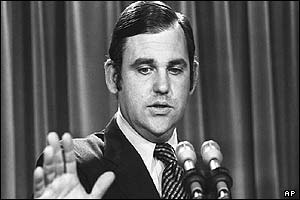 In the early 1970’s, this nation became embroiled in what is perhaps its most enduring national scandal: the Watergate scandal. On June 17, 1972, five men broke into the Watergate Hotel, which at that time served as the offices for the Democratic National Convention. They were convicted on burglary and wiretapping charges and were soon revealed to have close ties to President Nixon. As more and more information was disseminated, it became evident that this break in was linked directly to the president. And so the press became vociferous in its search for the truth behind the scandal, which led to many tense and awkward moments with Nixon’s press secretary, Ron Ziegler, who loyally tried to defend the President. In one exchange with the White House Press Corps, after Ziegler was caught in a bald-faced lie, he issued a modified statement, retracting a previous statement, by saying, “This is the operative statement. The others are inoperative.”
If only it was really that simple. “These statements are inoperative. Please ignore them.” But it’s not really that simple. For there are not just “operative” and “inoperative” statements, there are truths and there are lies. And lies can be disastrous, diseasing, and damning things.
In our reading for today from the book of Jude, the brother of Jesus warns us against the dangers of lies and the false teachers who tell them:
Certain men whose condemnation was written about long ago have secretly slipped in among you. They are godless men, who change the grace of our God into a license for immorality and deny Jesus Christ our only Sovereign and Lord. Though you already know all this, I want to remind you that the Lord delivered his people out of Egypt, but later destroyed those who did not believe. And the angels who did not keep their positions of authority but abandoned their own home – these he has kept in darkness, bound with everlasting chains for judgment on the great Day. In a similar way, Sodom and Gomorrah and the surrounding towns gave themselves up to sexual immorality and perversion. They serve as an example of those who suffer the punishment of eternal fire. (verses 4-7)
Certain men of Jude’s day were denying the Lordship of Christ. And the lies that these men were teaching were far worse than the lies told by the White House during the Watergate scandal. For these lies were not merely matters of politics, they were matters of salvation.
Jude continues by giving three examples of the kinds of judgments which await these false teachers, each successive judgment becoming more intense. First, he recalls that the Israelites were “destroyed” because they did not believe. The Greek word for “destroy” is apollumi, meaning “to damn.” This, then, was God’s hellish judgment on these wicked Israelites. Indeed, Jude says exactly that when he then speaks of the rebellious angels who are being held in hell for their final judgment on the Last Day. But it is Jude’s final example that is perhaps most striking: the judgment on these false teachers will be the same as that of Sodom and Gomorrah as they will “suffer the punishment of eternal fire.” Interestingly, like the fires of hell, the fires of Sodom and Gomorrah were thought by the ancient Jews to be eternal. The first century Jewish historian Philo writes of these fires: “Unprecedented destruction…fell upon Sodom and Gomorrah in the ruins, and ashes, and sulfur, and smoke, and dusky flame which still is sent up from the ground as of a fire smoldering beneath” (Philo, Life of Moses, II:56). Apparently, the fires of Sodom and Gomorrah were still smoldering from some 2,000 years earlier even in the first century. This is the intensity of the judgment that awaits those who teach falsely.
How are we to guard ourselves against such false and destructive teaching? Jude answers, “Contend for the faith that was once for all entrusted to the saints” (verse 3). The Greek word for “contend” is epagonizomai, from whence we get our English word “agony.” Jude challenges us to fight so valiantly and vigilantly for the true doctrines of our faith that we agonize over orthodoxy. We should be determined to allow not even the slightest lie to creep in. And we should honestly address truth and falsehood in terms more straightforward than “operative” and “inoperative.”
Do you heed Jude’s call? Do you carefully distinguish truth from falsehood? Do you agonize over the true doctrines of our precious faith? I hope you do. Because this truth isn’t just the truth about a politician, it’s the truth about God. And that’s truth that we should all be deeply interested in…and excited about.
“Word for Today” – James 5 – www.concordialutheranchurch.com
 One of my favorite movie lines of all time comes from 1995’s “Tommy Boy,” starring the late Chris Farley. Farley plays a clumsy, dimwitted, but lovable college student named Thomas R. Callahan III, a.k.a. “Tommy Boy,” who returns home to work at his father’s auto parts plant. Upon his arrival, Tommy’s father reveals to him that he is newly engaged and that Tommy will soon have a stepbrother named Paul. The first time Paul meets Tommy, he tries to coldly introduce himself to Tommy with a handshake, but Tommy will have none of it. Tommy exclaims, “Brothers don’t shake hands, brothers gotta hug!” and embraces Paul with a suffocating bear hug.
The ties of brotherhood were created to be strong. Brothers express their affection for each other with heartfelt hugs and sincere sacrifices, not hollow handshakes and polite pleasantries.
The apostle James understands the ties of brotherhood well. In fact, he refers to his readers as “brothers” no fewer than fifteen times over the course of his little letter. Indeed, his whole epistle is addressed to his Jewish brothers in Christ who are “scattered among the nations” (James 1:1), that is, except for one section. And that section comes at the beginning of our reading for today from James 5.
Whereas James customarily opens each section of his letter by speaking to his brothers, he does not do so here. Instead, he opens chapter 5:
Now listen, you rich people, weep and wail because of the misery that is coming upon you. Your wealth has rotted, and moths have eaten your clothes. Your gold and silver are corroded. Their corrosion will testify against you and eat your flesh like fire. You have hoarded wealth in the last days. Look! The wages you failed to pay the workmen who mowed your fields are crying out against you. The cries of the harvesters have reached the ears of the Lord Almighty. You have lived on earth in luxury and self-indulgence. You have fattened yourselves in the day of slaughter. You have condemned and murdered innocent men, who were not opposing you. (verses 1-6)
As I read these words, I can almost see James wagging his finger at these wealthy aristocrats: “Now listen here, you affluent snobs! You may be rich, but you’re not my brothers! No, you’re wayward, hateful sinners! And you’re really going to get it from God in the end! He’s going to slaughter you in judgment!”
Now why would James level such harsh condemnation against the wealthy of his day? Is James some kind of bumbling, backwater indigent who has something against rich people because he’s poor? Hardly. James has nothing against wealth itself, but the way in which these people use their wealth. They hoard it. They fail to pay their workers. They live for their own self-indulgence. They even murder the innocent. James declares that such wickedness will not go unpunished by God.
It’s not as if those in James’ band of brothers are without sin. James warns his readers against temptation to sin (1:13-15), favoritism (2:1-4), action-less faith (2:14-17), and malicious talk (3:9-12). James’ brothers surely fall short of God’s standards, but they are still his brothers – his brothers in Christ. And that makes all the difference. For no matter what differences, grievances, and concerns he may have with them, they still share the foundation of Christ on which they can stand together.
Finally, James’ hope is that even the rich people whom he roundly condemns might join him in Christian brotherhood. As James writes at the end of his book, “My brothers, if one of you should wander from the truth and someone should bring him back, remember this: Whoever turns a sinner from the error of his way will save him from death and cover over a multitude of sins” (verses 19-20). By condemning the sins of these rich oppressors, James hopes to lead these who have wandered from the truth to repentance so that their sins might be covered and they might become his brothers in Christ.
So today, which brother or sister in Christ can you thank God for? Is there anyone who has strayed from the brotherhood of faith whom you can seek to gently restore? For having restoring a brother in Christ means seeing another sinner forgiven. And a forgiven sinner is a joy that deserves a hug. So hug a brother or sister in Christ today. It’s only appropriate.
“Word for Today” – James 4 – www.concordialutheranchurch.com
 “Hosea, Joel, Amos, Obadiah, Jonah, Micah, Nahum, Habakkuk, Zephaniah, Haggai, Zechariah, Malachi.” I was seven years old and learning my books of the Bible in Sunday School. Some sections of the Bible’s book list were easy: “Matthew, Mark, Luke, John.” I could handle the gospels. But the so-called “minor prophets,” tucked away at the end of the Old Testament, were brutal to memorize. I thought I never would be able to remember all of them much less be able to remember all of them in order so that I could get one of those coveted Sunday School gold stars. But I kept walking around the house repeating to myself: “Hosea, Joel, Amos, Obadiah…Obadiah…What comes after Obadiah?!”
Even though it took me a while, I am proud to say that I wrote the listing of minor prophets at the beginning of this blog from memory. I may have had a difficult time memorizing these books, but once I did, I never forgot them.
In our reading for today from James 4, the apostle chastises his readers for their wicked ways:
You adulterous people, don’t you know that friendship with the world is hatred toward God? Anyone who chooses to be a friend of the world becomes an enemy of God. Or do you think Scripture says without reason that the spirit he caused to live in us envies intensely? (verses 4-5)
The grammar of verse 5 is quite interesting. The NIV takes this verse to mean that our fallen human spirits envy others, engaging in sinful behavior. The ESV translates this verse, “God yearns jealously over the spirit that he has made to dwell in us,” meaning that God is jealous for our spirits, not wanting them to belong to Satan. Either way, James’ message is clear: We ought to flee from wickedness, be it the wickedness of envy or otherwise, and flee toward the arms of God who jealously guards our spirits.
How are we to flee from wickedness and flee toward God? James gives us the answer in the following verses:
Submit yourselves, then, to God. Resist the devil, and he will flee from you. Come near to God and he will come near to you. Wash your hands, you sinners, and purify your hearts, you double-minded. Grieve, mourn and wail. Change your laughter to mourning and your joy to gloom. Humble yourselves before the Lord, and he will lift you up. (verses 7-10)
Notice that James rapidly fires verbs at his readers in a staccato fashion: “Submit, Resist, Come Near, Wash, Purify, Grieve, Mourn, Wail, Change, Humble.” Ten verbs in the scope of four verses.
Although memorizing this list of verbs may seem about as appealing as memorizing the final twelve books of the Old Testament, can I appeal to you to commit these ten verbs to memory? For they are invaluable when striving against the allures of sin. Submit to God’s perfect will rather than following your own broken will. Resist Satan’s temptations. Come near to God and rest in his true joy rather than the cheap thrills of sin. Wash and purify your soul in Jesus’ blood of forgiveness. Grieve, mourn, wail, and change when you do fall prey to sin – for you will fall prey to sin – and you will then need this language of repentance. Finally, even as you do resist sin, do not become haughty in your own righteousness; rather, remain humble, relying on God’s righteousness. For his righteousness is your one and only hope. This is James’ guidance in the face of sin’s enticements.
Lest we despair over our inability to memorize this list of ten verbs much less live them, let us not forget how James sets up his verb list: “God gives us more grace” (verse 6). It is grace that undergirds and empowers these verbs. Without God’s grace to fuel our actions and forgive us for our rebellion, these verbs stand as impossible ideals. With God’s grace, however, these verbs guide us in our Christian lives. I hope these verbs will guide you today…and every day.
“Word for Today” – James 3 – www.concordialutheranchurch.com
 When Melody and I first started flirting, we were, in typically cautious fashion, very careful about how much romantic interest we showed in each other. After all, neither one of us wanted to “play our hand,” so to speak, only to find out that the other one wasn’t interested. But then the holidays arrived. And I decided it was time to put all my cards on the table. I decided it was time to take a chance on love. And so, during our first Christmas together, I bought Melody a Christmas gift to end all Christmas gifts. I bought Melody a cute little jack russell and dachshund mix puppy, complete with a bow tied around his neck. I even named him for her. I gave him the name Satchel.
Did I mention that Satchel was a jack Russell and dachshund mix puppy – a very needy jack Russell and dachshund mix puppy who always wanted to play and who never wanted to be alone? When Melody would go to work in the morning, Satchel, who was kenneled, would begin to bark. And he would continue to bark…and bark…and bark…and bark. He would bark until his voice was horse in the afternoon. He would bark so much that one day Melody’s neighbors said to her, “Your dog must really miss you. He barks all day.” At least they put their complaint charitably.
I’m sure you’ve heard the old cliché, “His bark is worse than his bite.” In Satchel’s case, this was most certainly true. For he was a kind hearted dog who, as far as I could tell, would never have bitten anyone. But his whiny bark would give even the most stalwart dog lover a headache. Melody kept Satchel for six months before he found his new home with a friend of ours.
“His bark is worse than his bite.” As true as that may be in the case of many dogs, James tells us that it’s not always true in the case of many people. In our reading for today from James 3, the apostle writes, “The tongue is a small part of the body, but it makes great boasts. Consider what a great forest is set on fire by a small spark. The tongue also is a fire, a world of evil among the parts of the body. It corrupts the whole person, sets the whole course of his life on fire, and is itself set on fire by hell” (verses 5-6). James reminds us that, when it comes to our words, it’s not that our bark is worse than our bite, it’s that our bark is our bite. That is, we can use the bark of our words to bite other people’s hearts, souls, and reputations. We can slander them with our gossip. We can scare them with our threats. We can hurt them with our haranguing. Our bark is our bite.
James writes concerning the “bark” of our words: “If anyone is never at fault in what he says, he is a perfect man, able to keep his whole body in check” (verse 2). The apostle concludes that if we could just perfectly control our tongues, the rest of our bodies would follow suit and we would live sin free lives. Of course, none of us live sin free lives. The implication, then, is that we all have some work to do on what we say and how we control our tongues. And it is with this in mind that I would ask you to do a little introspection. Is there anyone whom you have “barked at” with your words and you now need to make amends with them? Is there anyone who has bit you with their words that you now need to forgive? Whether an apology or forgiveness is in order, do not let the bark of cruel words rule your heart.
In order to learn how to speak properly and reverently, we need only to look as far as Jesus. For, as the prophet Isaiah says, Jesus will “judge the needy with righteousness, with justice he will give decisions for the poor of the earth. He will strike the earth with the rod of his mouth; with the breath of his lips he will slay the wicked” (Isaiah 11:4). Jesus’ mouth is a mouth of only righteousness, not of wickedness, only of truth, never of lies. His mouth comforts the righteous and condemns the wicked. And this should be what our mouths do as well. Our mouths should parrot Jesus’ mouth. Thus, the best way we can keep our mouths in check is to listen to Jesus’ mouth and then simply say what he says. I hope that you have and I hope that you will.
“Word for Today” – James 2 – www.concordialutheranchurch.com
 One of my favorite current series of commercials is for DirecTV. These commercials feature board members for Cable Corp Inc., a fictional high powered cable company, sitting around a posh board room table trying to figure out ways to compete with DirecTV whose products, prices, and services are apparently killing their business. In one commercial, a board member is bemoaning that customers love DirecTV because they can watch movies in “full 1080p,” to which another board member responds, “Yes, but they can’t watch movies in 1,000,080p.” The rest of the board, completely confused because Cable Corp Inc. doesn’t broadcast in 1,000,080p, asks him to explain. In his mind, it’s quite simple: Cable Corp Inc. doesn’t broadcast in 1,000,080p and DirecTV doesn’t broadcast in 1,000,080p. The two companies, then, are on equal footing. Thus, he responds to his board members’ inquiry: “Oops! Look like someone’s just leveled the playing field!”
The humor of this commercial, of course, lies in the fact that although this flamboyant board member can talk about competing with DirecTV, he takes absolutely no action toward real and meaningful competition. And this, essentially, is James’ argument concerning faith and works in our reading for today from James 2:
What good is it, my brothers, if a man claims to have faith but has no deeds? Can such faith save him? Suppose a brother or sister is without clothes and daily food. If one of you says to him, “Go, I wish you well; keep warm and well fed,” but does nothing about his physical needs, what good is it? In the same way, faith by itself, if it is not accompanied by action, is dead. (verses 14-17)
To paraphrase, James says, “You can boast about the ‘features’ your faith has all you want. You can even try to ‘level the playing field,’ as it were, by making excuses as to why others’ faith results in action while yours remains stagnate. But if your faith helps no one, you’re merely fooling yourself. For your faith is meant not only to justify you before God apart from works (cf. Ephesians 2:8-9), your faith is meant to help others because it results in works.”
James then continues by offering two examples of persons whose faith resulted in works. The first one, especially to a first century Jewish mind like James’, would have been a no-brainer: Abraham. As James notes, Abraham was “called God’s friend” (verse 23), was the very patriarch of the Jewish nation, and was well known for his many yeoman-like feats of faith. He was a paragon of what it looked like for faith in God to result in action toward others.
But James isn’t done yet. He has another example up his sleeve: that of Rahab. Rahab? Granted, she is remembered for helping the Israelites in the book of Joshua as they sought to conquer Jericho, but she is also a Gentile rather than a Jew and she worked in the “world’s oldest profession.” Putting Rahab next to Abraham as an example of faith being put into action hardly seems fair. For the two are scores apart in their level of piety, Rahab being much lower on the scale. Why would James do such a thing?
Finally, it is faith, not their works, which made both of these people a part of God’s Kingdom. Indeed, their faith is the only thing which Abraham and Rahab seem to have in common. But their faith did indeed result in some sort of action, even if Abraham’s actions are remembered as much more numerous and much more precious than are Rahab’s. And that’s fine. For James’ point is not the amount of action that a person’s faith results in, but that a person’s faith does indeed result in some sort of righteous action.
In James’ mind, it is fruitless and futile to compare our actions of faith to another’s actions of faith. We don’t need to try to “level the playing field.” Instead, we need simply to press ahead, content with the actions that God himself has prepared for us, as Paul says: “For we are God’s workmanship, created in Christ Jesus to do good works, which God prepared in advance for us to do” (Ephesians 2:10). God has works of faith for each one of us. There’s no need to compare ourselves to others and try to outdo one another.
So today, what work of faith does God have for you? Comforting a mourner? Caring for someone who’s sick? Assisting an elder? The possibilities are endless. My prayer for you today is that you cheerfully put your faith into action. For this not only pleases God, it helps others. And we can all use a little help.
“Word for Today” – James 1 – www.concordialutheranchurch.com
 I am not a fisherman. Or, I should say, I am not a skilled fisherman. I do, however, enjoy fishing from time to time. There is just something about a line in the water and a lazy morning that refreshes and refills my soul in a way that little else can.
In college, one of my favorite places to go fishing was in Lee County, Texas on a friend’s property that had a bass tank on it. My buddy and I would wake up early – at least by college student standards – hop in his truck, and travel the dirt back roads to the secluded spot. The fishing was always great. Fish after fish, bite after bite, the experience was never disappointing.
Because we hardly ever kept the fish we caught, the fish we hooked were often ones that had been hooked before. More often than not, we would reel in a fish only to discover one, two, or even three hooks in his throat, swallowed from his previous run ins with fishing lures. And yet, he kept on biting. “Shouldn’t the fish have learned by now?” I would wonder to myself. “Hasn’t he learned how to recognize a hook? Doesn’t he know that the wiggly worm being dangled in front of his face is merely a trap set by a fisherman with nefarious intent?” Alas, the fish never seemed to learn. And so we kept on hooking him.
In our reading for today from James 1, James says that, like a bass in a tank enticed by a worm, we swim through our lives enticed by our sinful desires. James writes of our temptations:
When tempted, no one should say, “God is tempting me.” For God cannot be tempted by evil, nor does he tempt anyone; but each one is tempted when, by his own evil desire, he is dragged away and enticed. Then, after desire has conceived, it gives birth to sin; and sin, when it is full-grown, gives birth to death. (verses 13-15)
The Greek word for “enticed” at the end of verse 14 is deleazo, a word borrowed from the world of angling meaning “to lure” or “to bait.” Like a fish with a worm, we persistently and repeatedly swim toward our own sinful desires, never bothering to notice or discern that those desires have Satan’s hook lodged in them.
How do we avoid being hooked by such sinfulness? James offers two thoughts. First, we should be slow to speak. James writes, “My dear brothers, take note of this: Everyone should be quick to listen, slow to speak and slow to become angry, for man’s anger does not bring about the righteous life that God desires” (verses 19-20). Our careless and thoughtless words are often Satan’s hook to reel us into a life of wickedness. Therefore, James warns, gage your words carefully. Speak only as Jesus would speak. Second, we should be quick to help. James continues, “Do not merely listen to the word, and so deceive yourselves. Do what it says. Religion that God our Father accepts as pure and faultless is this: to look after orphans and widows in their distress and to keep oneself from being polluted by the world” (verses 22, 27). Helping widows and others in need, James says, has a funny way of steering us clear from evil because we are so busy with charitable acts that we don’t have any time for evil acts.
Be slow to speak and quick to help. This is James’ practical guidance to avoid Satan’s hooks of sin. And this is guidance we can put into practice today. What hooks of sin tempt you? What word from Jesus can you carefully and deliberately speak which would steer you clear from what tempts you? And who can you help in Jesus’ name so that you are not left alone, tempted by your sinful desires? Satan’s hooks need not hook us! For, instead of being harangued by Satan’s hooks, we can be healed by our Savior’s heart. And that’s no illusive lure, that’s a perfect promise.
“Word for Today” – Philemon – www.concordialutheranchurch.com
 Earlier this week, Melody and I were visiting some friends south of Houston. This couple has two adorable children, Ellie and Ethan. Melody, of course, took an immediate liking to both of them. At one point during our first day there, Melody was holding Ethan and wanted to run upstairs and grab something before we were to go and run some errands. She looked at me and said, “I need to run upstairs and grab something.” To which I responded, “Okay.” Clearly frustrated by my obvious oblivion, she said, “Fine, I’ll just carry Ethan up the stairs with me while I go and get what I need.” “But I didn’t know you wanted me to hold Ethan!” I protested. “You never asked me to hold him!”
I’m not very good at recognizing non-verbal cues. “Reading between the lines” and “taking hints” are most definitely not my spiritual gifts, often to the frustration of my wife, who expects me to be able to read her glances, gestures, and tone of voice. Although I’ve gotten slightly better, I admittedly still have a long way to go.
Our reading for today from Philemon is an appeal from the apostle Paul to a slave owner of the same name. Apparently, one of Philemon’s slaves, Onesimus, had run away and, by what appears to be an act of divine providence, had met Paul and become a partner with him in ministry. In this short letter, Paul appeals to Philemon for leniency toward Onesimus, since the crime of running away while enslaved carried with it brutal punishments. Walter Elwell and Robert Yarbrough write about these punishments: “[Running away] was a serious crime, which resulted in stern punishment if the offender was caught. Burning, branding, maiming, or even death was possible.” (Encountering the New Testament, 2nd ed. [Grand Rapids, MI: Baker Academic, 2005], p. 321).
Even though Paul’s initial appeal for leniency is quite clear, in order to fully understand Paul’s letter to Philemon and discern his true intentions, we must “read between the lines,” as it were, and “take hints.” Paul opens his appeal:
Therefore, although in Christ I could be bold and order you to do what you ought to do, yet I appeal to you on the basis of love. I then, as Paul – an old man and now also a prisoner of Christ Jesus – I appeal to you for my son Onesimus, who became my son while I was in chains. (verses 8-10)
Paul, in his opening statements, refuses to baldly order Philemon with regard to Onesimus. But he certainly drops plenty of hints. He writes, “Perhaps the reason Onesimus was separated from you for a little while was that you might have him back for good – no longer as a slave, but better than a slave, as a dear brother.“ (verses 15-16). Paul tells Philemon that he should recognize Onesimus not just as his slave, but as his brother in Christ. Paul then continues, expressing his confidence that Philemon will go beyond just recognizing him as a brother to treating him as a brother: “Confident of your obedience, I write to you, knowing that you will do even more than I ask” (verse 21). What is Paul here implying? It seems to be emancipation. Paul seems to be arguing that freedom in Christ should be a catalyst toward freedom from slavery. And just in case Philemon may be reticent to accept Paul’s subtle urging, Paul adds one final word: “And one thing more: Prepare a guest room for me, because I hope to be restored to you in answer to your prayers” (verse 22). In other words, Paul is telling Philemon, “I’ll be by to check up on my friend Onesimus. So, I hope you’ve ‘read between the lines’ and have ‘taken a hint’ from my letter. I hope you’ve freed Onesimus.”
Sometimes, being a Christian can involve a fair amount of “reading between the lines” and “taking hints.” For we are called to notice pains, hurts, wounds, and worries that often the rest of the world overlooks in its crush of hurried self-absorption. If someone says they’re doing “just fine,” but you can tell merely by the tone of their voice that their heart is heavy, do you pry a little deeper? If someone seems to need your assistance, even when you’re running a tight schedule, do you pause to offer a helping hand? Do you “read between the lines” and “take hints” to try to distinguish between what people say and what they actually mean…and what they really need? My prayer for you today is that, even if with just one person, you press beyond your normal, everyday surface conversations and “read between the lines” and “take a hint” and discover someone’s deeper needs. For this is the place where God’s love can ease troubled a heart and sooth a worried a soul.
“Word for Today” – Revelation 22 – www.concordialutheranchurch.com
 One of my wife Melody’s favorite TV shows is “Clean House” on the Style Network. This lighthearted series features host Niecy Nash and her team of designers who travel throughout Southern California helping people in embarrassingly messy living quarters clean out their clutter and put their homes back together. During the first half of the show, Nash and her team scour their patrons’ home looking for items to put out in a yard sale, the profits from which they use to redecorate and makeover the house.
I always find fascinating the reactions of the show’s clients when they are asked to part with certain possession so that they may turn a good profit in the yard sale. Sure the treadmill may have been sitting in the back room as a clothes rack for the past five years. But the homeowners vow to use it “one day.” Sure the chest may have been sitting in the attic for some two decades collecting nothing but dust. But the homeowners swear they will pull it down and sort through its items any day now. Sure there are a bunch of tools hiding out in the back shed which the owners didn’t even know about. But now that they know, these tools are certainly sorely needed. These people, for all the promises that this show makes about the organized and clutter free life “Clean House” can bring them, regularly have a difficult time parting with a bunch of stuff they don’t need.
We are a nation of keepers. We keep our memories in photo albums to keep them safe. We keep our sports car in the garage to keep it from getting dirty. We keep our computers up to date to keep them from getting viruses. We keep so many things.
And yet, there are some things – some things which are more precious and valuable than many of the things we so carefully keep – which we do not keep like we should. The father who does not keep the promise to his son to take him to the ballpark because he is too busy. The couple who does not keep their vows to each other and shatters their marriage with infidelity. The businessperson who does not keep his eye on the ball to see a project through to its end. For all the things we do keep, there are just as many things – many important things – which we don’t.
Jesus, in John’s closing vision in Revelation 22, leaves the apostle with this commission: “Behold, I am coming soon! Blessed is he who keeps the words of the prophecy in this book.” Jesus, it seems, wants John to carefully keep his words.
The Greek word for “keep” is tereo. And this word is used in the New Testament to encourage us to “keep” the important things of God. First and foremost, this word is used to encourage us to keep belieiving God’s Word. As the book of Revelation opens, John writes, “Blessed is the one who reads the words of this prophecy, and blessed are those who hear it and take to heart what is written in it, because the time is near” (Revelation 1:3). The Greek word for “take to heart” is tereo. Thus, when God speaks in his Word, we should always take it to heart. We should always believe what he says. For his words are words of life. Second, this word is used to encourage us to keep obeying God’s commands. Jesus says, “If you love me, you will obey what I command” (John 14:15). The Greek word for “obey” is tereo. Thus, we are to keep God’s commands. We are to walk according to his ways every day. Third, this word is used to encourage us to keep the faith until we finish its course. The apostle Paul, as he is nearing the end of his life, writes, “I have fought the good fight, I have finished the race, I have kept the faith” (2 Timothy 4:7). Through it all – good times and bad, joyous times and sad – Paul has refused to relinquish his trust and hope in Christ. He has stood firm until the end. He has kept his faith. So should we.
As John’s Revelation draws to a close, then, we are called to believe, obey, and stand fast until the end. For this is the Christian life. And with John’s vision, we not only receive a commission for this life, but a glimpse into the life of hereafter. Thus, as we wrap up this sometimes confusing, but always important and precious, book, my encouragement to you is simply this: Keep on. Keep on believing. Keep on obeying. Keep on standing firm in your faith. And you will receive the crown of life. I’m sure it will look great on you. Until then, “The grace of the Lord Jesus be with God’s people. Amen” (verse 21).
“Word for Today” – Revelation 21 – www.concordialutheranchurch.com
 For several weeks over the summer, Melody and I had the opportunity to “cat-sit” two cats for a friend of ours. I love cats. Melody, however, is not nearly so affectionate toward the frolicking felines. And frolicking these two cats were. Usually in the middle of the night. Melody and I would be fast asleep, only to be jolted awake by the scurry of two cats playfully chasing each other directly into our bedroom. This flurry of activity was often followed by a loud thump, coming from something which the cats had inadvertently knocked over in the middle of their antics. “Get those cats out of here!” my wife would exclaim, clearly frustrated by their raucous nocturnal rowdiness. So, I would get up, usher the cats out of our room, and then shut our door. “There. Now maybe we can finally get some shut eye,” I would think to myself. But it never took long. Minutes after I would shut our bedroom door to bar the cats from entering, a paw would appear, reaching through the crack between the floor and the door. And then I’d hear, “Meow. Meow.” I couldn’t help myself. I would always melt with delight. “Ah. How cute,” came my reflexive response. Melody was not so amused.
In our reading for today from Revelation 21, we catch a glimpse into the new Jerusalem, that is, the new creation which God will usher in on the Last Day. In John’s description of this cosmic metropolis, I find this to be especially notable: “On no day will Jerusalem’s gates ever be shut, for there will be no night there” (verse 25). Like I would shut our bedroom door at night to keep out the cats, ancient cities would often shut their gates at night to keep out nefarious invaders. For example, when the city of Jericho learns that the Israelites are drawing near to attack, the book of Joshua notes, “Now Jericho was tightly shut up because of the Israelites. No one went out and no one came in” (Joshua 6:1). Ancient cities closed their gates. The new Jerusalem will not.
Why is this? Because unlike the municipalities of antiquity, the new Jerusalem will have no foes of which to be afraid. For all of the city’s enemies will have been conquered, even as John says: “But the cowardly, the unbelieving, the vile, the murderers, the sexually immoral, those who practice magic arts, the idolaters and all liars – their place will be in the fiery lake of burning sulfur” (verse 8). Thus, Jesus opens the city’s doors.
Jesus is in the business of opening doors. As Jesus himself says, “Knock and the door will be opened to you” (Matthew 7:7). Paul, after a mission tour through Iconium, Lystra, and Derbe rejoices that God “had opened the door of faith to the Gentiles” (Acts 14:27). He later prays “that God may open a door for our message, so that we may proclaim the mystery of Christ, for which I am in chains” (Colossians 4:3). Christ’s desire is to open doors for his followers. Even at the beginning of Revelation, Jesus exclaims to the church at Philadelphia, “See, I have placed before you an open door that no one can shut (Revelation 3:8).
There’s an old, oft-repeated, and tired Christian cliché: “Whenever God closes one door, he always opens a window.” The premise of this statement is that God will make a way, even when things don’t turn out how you might expect or want them to. As much as I appreciate the general sentiment, I’m not so sure that the specific imagery is accurate. For when it comes to this specific image of a door, Scripture portrays God as one who opens doors rather than closing them. If we run up against a roadblock, before we blame God for slamming a door in our face, perhaps we should ask ourselves if the door was ever open in the first place. Or perhaps we should ask ourselves if it was our own sinfulness that closed a door rather than God. In fact, the only time that God is portrayed as closing a door is in Luke 13:23-28 when someone asks Jesus:
“Lord, are only a few people going to be saved?” He said to them, “Make every effort to enter through the narrow door, because many, I tell you, will try to enter and will not be able to. Once the owner of the house gets up and closes the door, you will stand outside knocking and pleading, ‘Sir, open the door for us.’ But he will answer, ‘I don’t know you or where you come from.’ Then you will say, ‘We ate and drank with you, and you taught in our streets.’ But he will reply, ‘I don’t know you or where you come from. Away from me, all you evildoers!’ There will be weeping there, and gnashing of teeth.”
The door out of hell, it seems, will be locked up tight by Christ so that the gates of the new Jerusalem can be left open, free from the fear of God’s enemies.
So today, rather than bemoaning the “closed doors” in your life, why don’t you thank God for the ones he has opened for you? For they are many. He has opened the door to his knowledge through the pages of Scripture. He has opened the door to forgiveness through his Son, Jesus Christ. And he has opened the gates of his new Jerusalem so that we may come in. I can’t wait to walk through.


 Pastor Zach's Blog