A Tale of Two Lamechs
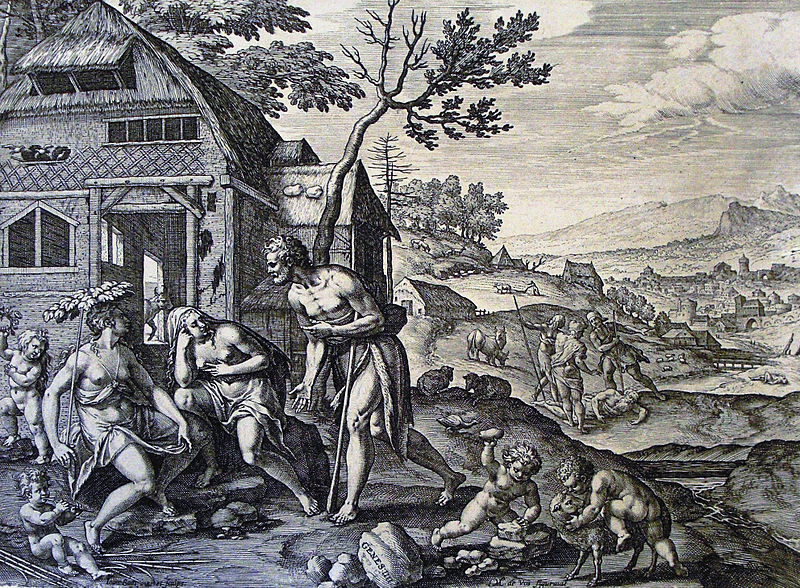
A week ago on this blog, we looked at the genealogy in Genesis 5, which recounts the lineages of the first humans. We focused on one member of this genealogy in particular, Enoch, who, we are told, “was no more, because God took him away” (Genesis 5:24). Though Enoch’s life of 365 years may seem outrageously high compared to our contemporary lifespans, compared to the other people in the genealogy, many of whom lived nearly 1,000 years, his life could be said to have been “cut short.” We discovered, however, that a life cut short is not an indication of a curse. God can bless a short life with eternal life, as He did with Enoch.
This week, I’d like to focus on another character in this genealogy – Lamech, a descendant of one of the sons of Adam and Eve, Seth, and the father of Noah:
When Lamech had lived 182 years, he had a son. He named him Noah and said, “He will comfort us in the labor and painful toil of our hands caused by the ground the LORD has cursed.” After Noah was born, Lamech lived 595 years and had other sons and daughters. Altogether, Lamech lived a total of 777 years, and then he died. (Genesis 5:28-31)
This is the second Lamech we meet in Genesis. The first was a descendant of another one of the sons of Adam and Eve, Cain. This first Lamech was filled with anger and vengeance:
Lamech married two women, one named Adah and the other Zillah. Adah gave birth to Jabal; he was the father of those who live in tents and raise livestock. His brother’s name was Jubal; he was the father of all who play stringed instruments and pipes. Zillah also had a son, Tubal-Cain, who forged all kinds of tools out of bronze and iron. Tubal-Cain’s sister was Naamah. Lamech said to his wives, “Adah and Zillah, listen to me; wives of Lamech, hear my words. I have killed a man for wounding me, a young man for injuring me. If Cain is avenged seven times, then Lamech seventy-seven times.” (Genesis 4:19-24)
Here we find history’s first instance of a polygamous relationship and the second instance of a murder. This first Lamech walks in the footsteps of his forefather Cain as he kills a man, just as Cain killed his brother Abel. This Lamech even refers to his ancestor Cain, to whom God gave the promise of protection in a stroke of grace even after his heinous murder of his brother. After punishing Cain by sending him to a distant land, God promises him: “Anyone who kills Cain will suffer vengeance seven times over” (Genesis 4:15). This Lamech tries to outdo God’s vengeance with his own vengeance, threatening vengeance seventy-seven times over (Genesis 4:24).
This leads us back to the Lamech of Genesis 5. This second Lamech serves as an antithesis to the first Lamech. Whereas the first Lamech willingly participated in the curse of death brought on by sin, this second Lamech seeks to stymie that curse. When God first cursed Adam after he fell into sin, He said:
Cursed is the ground because of you; through painful toil you will eat food from it all the days of your life. (Genesis 3:17)
This Lamech says his son Noah will:
…comfort us in the labor and painful toil of our hands caused by the ground the LORD has cursed. (Genesis 5:29)
The second Lamech seeks righteousness and comfort while the first Lamech sought vengeance by death.
Notice also his lifespan – 777 years. God’s vengeance on Cain’s behalf was seven times over – one seven. The first Lamech’s vengeance on his own behalf was seventy-seven times over – two sevens. But the second Lamech’s righteous life is 777 years – three sevens. It turns out that righteousness and comfort outdo vengeance and violence. The second Lamech’s three sevens crush the first Lamech’s two sevens.
It can be easy to follow the way of the first Lamech. When someone hurts us, we reflexively want to take vengeance. But the way of the second Lamech is where hope is found, as we yearn for someone to undo the curse sin has brought into this world. The second Lamech’s son, Noah, survived the curse of a flood, but was ultimately not unable to undo the curse of sin. But there was One who came from this line who did. Indeed, He reverses the curse of the first Lamech. When one of His disciples, Peter, asks Him:
“Lord, how many times shall I forgive my brother or sister who sins against me? Up to seven times?” Jesus answered, “I tell you, not seven times, but seventy-seven times.” (Matthew 18:21-22)
The first Lamech’s vengeance is overcome by Jesus’ forgiveness, who is the second Lamech’s hope. May He be our hope, too.
Too Young To Die

One of my most sobering tasks as a pastor is participating in funerals. Every funeral is weighty, but those that are for someone who we would say “died too early” carry with them a unique set of challenges. A young child who passes away, for instance, leaves behind intensely grieving parents. A husband or wife who dies in the prime of life leaves behind a devastated spouse.
One of the starkest portraits of life and death comes to us in Genesis 5, which is a genealogy of the first humans. There is a refrain that comes up again and again as each person is listed, beginning with Adam:
Altogether, Adam lived a total of 930 years, and then he died. (Genesis 5:5)
Altogether, Seth lived a total of 912 years, and then he died. (Genesis 5:8)
Altogether, Enosh lived a total of 905 years, and then he died. (Genesis 5:11)
Altogether, Kenan lived a total of 910 years, and then he died. (Genesis 5:14)
Altogether, Mahalalel lived a total of 895 years, and then he died. (Genesis 5:17)
Altogether, Jared lived a total of 962 years, and then he died. (Genesis 5:20)
Altogether, Enoch lived a total of 365 years. Enoch walked faithfully with God; then he was no more, because God took him away. (Genesis 5:23-24)
Altogether, Methuselah lived a total of 969 years, and then he died. (Genesis 5:27)
Altogether, Lamech lived a total of 777 years, and then he died. (Genesis 5:31)
The phrase “and then he died” evinces an inescapable reality: ever since humanity’s fall into sin, people die.
There is, however, a hiccup in this genealogy’s refrain with Enoch. The end of Enoch’s life is not characterized as “death,” but as being “no more” because God took him away (Genesis 5:24). His lifespan is also notable – 365 years. This is by far the shortest lifespan of anyone in this genealogy. Compared with lifespans as long as these, Enoch could easily be said to have been taken from this world too early. And yet, as C. John Collins reminds us in his book Reading Genesis Well in his comments on Enoch:
Apparently, there are higher values and rewards than simply length of days, and the text assumes that there lies something worthwhile beyond the grave for the faithful.
We can sometimes wonder why God takes certain people from us “early.” But, as Enoch reminds us, God taking someone is not an indication of a curse. It can be an indication of a blessing. This reality does not remove the severe sting of a person who passes young, but it does offer hope. What happened with Enoch can happen for them, too. They may be apart from us, but they are with the Lord. And anytime is a good time to be with Him.
Searching for Meaning in a Condo Collapse

I first heard of the news about the collapse of Champlain Towers South, a condo complex on the beach in Surfside, Florida, early Thursday morning while staying in a condo complex on the beach in Port Aransas. The reports sounded ominous. The pictures that have emerged are dolorous. The number of people still missing is tortuous. And the reason for the building’s collapse remains mysterious.
When a tragedy like this strikes, it is natural for people to ask: Why? We have an intractable need to find meaning, even in the midst of what appears to be a desultory disaster. In our minds, a disaster is never just a disaster. There is always a reason behind it. There is always something we can learn from it.
This desire to find meaning in disaster is nothing new. The specific meanings we derive from disasters may change, but our search for some kind of meaning – any kind of meaning – remains. This search for meaning is what Jesus addresses when He references a tower collapse in His day and the meaning people had assigned to it:
Those eighteen who died when the tower in Siloam fell on them – do you think they were more guilty than all the others living in Jerusalem? I tell you, no! But unless you repent, you too will all perish. (Luke 13:4-5)
In Jesus’ day, there was an assumption that if a disaster befalls you, this indicates an especially grievous sinfulness had engulfed you. Jesus says that deriving this kind of a meaning from this kind of a disaster is wrongheaded. But just because this meaning cannot be derived from this disaster does not mean no meaning can be derived from any disaster.
So, what meaning can we rightly find in disaster?
Near the end of his life, Solomon, one of the greatest kings of ancient Israel, reflects on all he has done, experienced, and accomplished and compiles his thoughts in the book of Ecclesiastes. After much reflection, he arrives at this conclusion:
“Meaningless! Meaningless!” says the Teacher. “Utterly meaningless! Everything is meaningless.” (Ecclesiastes 1:2)
Though these words are quite famous, they also represent one of my least favorite translations in the Hebrew Bible. In Hebrew, the word translated as “meaningless” is hebel, which does not denote a lack of meaning, but instead describes transience. Hebel is a “vapor” or a “mist.” Solomon’s point, then, is this: just when we think we’ve taken a hold of something, it slips through our fingers. Solomon continues by offering a litany of things that slip through our fingers: wisdom, pleasure, hard work, and riches. And it is here with hebel that we find not meaninglessness, but some much-needed meaning in disaster. Disasters remind us that this life and everything in it is like a vapor or a mist. It slips through our fingers – sometimes when we least expect it, like when a tower shockingly crumbles. This life can be shorter than we care to admit.
So, what are we to do in light of life’s transience? On the one hand, Solomon says, this kind of transience should lead us to live joyfully in this day because we do not know whether another day awaits us:
I know that there is nothing better for people than to be happy and to do good while they live. That each of them may eat and drink, and find satisfaction in all their toil – this is the gift of God. (Ecclesiastes 3:12-13)
On the other hand, life’s transience should also lead us to search for something that is not transient – something that lasts. This is why Solomon says in the next verse:
I know that everything God does will endure forever. (Ecclesiastes 3:14)
This life may not last. But what God does will. This means that when God sent His Son to bring life, He brought a life that lasts – a life that is eternal. Tragedy may remind us that this life doesn’t last. But God gives us hope for a life that does – a life that extends far beyond this one. And that’s not just meaning we can take from a tragedy like the Champlain Towers collapse; that’s hope we can have no matter what tragedy we may face.
The Sabbath: More Than Just a Day

One of the interesting features of the creation account comes when God rests from His work on the seventh day:
By the seventh day God had finished the work He had been doing; so on the seventh day He rested from all His work. Then God blessed the seventh day and made it holy, because on it He rested from all the work of creating that He had done. (Genesis 2:2-3)
This is history’s first Sabbath day, practiced by God Himself. But this seventh day breaks a pattern that is found in days one through six. Each of these days are described as having “evening and morning”:
And there was evening, and there was morning – the first day. (Genesis 1:5)
And there was evening, and there was morning – the second day. (Genesis 1:8)
And there was evening, and there was morning – the third day. (Genesis 1:13)
And there was evening, and there was morning – the fourth day. (Genesis 1:19)
And there was evening, and there was morning – the fifth day. (Genesis 1:23)
And there was evening, and there was morning – the sixth day. (Genesis 1:31)
On the seventh day, however, there is no “evening and morning.” God simply rests.
Though there is no reason to believe that the seventh day is any different than any of the other six days per se, the break in the pattern seems to indicate that this day is special. There is something more to this day than just a day.
The preacher of Hebrews speaks of this first Sabbath when he says:
There remains, then, a Sabbath-rest for the people of God; for anyone who enters God’s rest also rests from their works, just as God did from His. (Hebrews 4:9-10)
The preacher of Hebrews seems to be picking up on the broken pattern for the first Sabbath day. Though it may have been just a day, there seems to be something about it that lingered, something about it that transcended evening and morning, something about it that, as the preacher of Hebrews puts it, “remained” right up to the present day.
When God set a pattern of work and rest, He was not just setting a pattern, He was making a promise – a promise that rest does not merely need to be confined to one day between one evening and one morning. This is what the Jewish religious leaders of Jesus’ day forgot. They became so obsessed with keeping the Sabbath day, they forgot that the Sabbath was not just meant to be a day, but a gift for anyone whenever they needed it. As Jesus puts it, “The Sabbath was made for man, not man for the Sabbath” (Mark 2:27).
These past fifteen months have been brutal and exhausting for many people. Summer officially began yesterday. My prayer is that you’ll take advantage of God’s gift of a Sabbath during this season of time off and fun. Get some rest with family and friends. The Sabbath is God’s gift to you. And it remains for you.
It’s a gift worth using.
A “Giant” Exaggeration
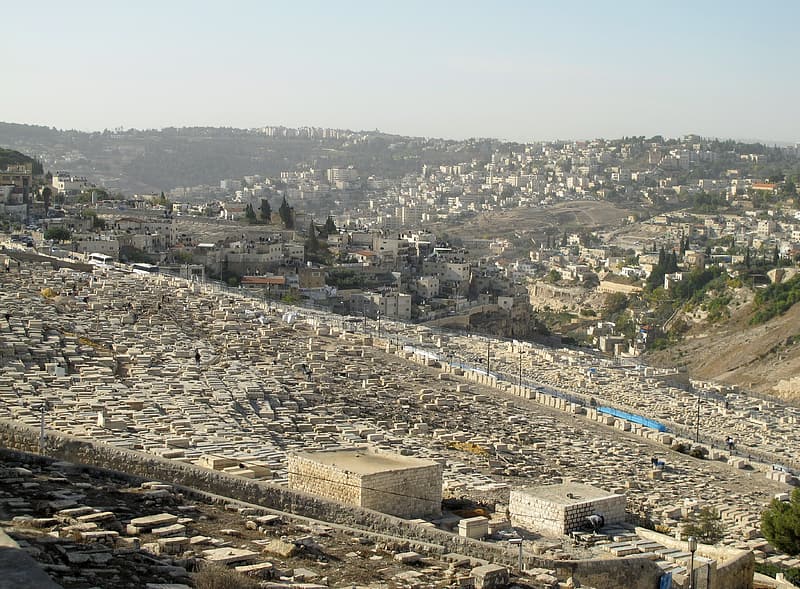
Yesterday, at the church where I serve, we kicked off a summer-long series on Deuteronomy. Deuteronomy is situated at the end of the Israelites’ forty-year wandering in the wilderness and records Moses’ final instructions to them before his death.
As the book opens, Moses begins by reminding the Israelites that they have not always done so well honoring God. Indeed, the reason it has taken them forty years to arrive at the Promised Land from Egypt is because, when they first came to the Promised Land, they refused to go in. After sending a reconnaissance team of Israelite spies to check out their new home, the team issued a frightening report about the people living there, which Moses recounts:
The people are stronger and taller than we are; the cities are large, with walls up to the sky. We even saw the Anakites there. (Deuteronomy 1:28)
The fact that the reconnaissance team saw Anakites there is interesting, to say the least. In their first-hand account, which we read in Numbers, the spies give us some more information about the lineage of the Anakites:
We saw the Nephilim there (the descendants of Anak come from the Nephilim). We seemed like grasshoppers in our own eyes, and we looked the same to them. (Numbers 13:33)
Hold on a second. They saw descendants of the Nephilim? That seems curious.
We first meet the Nephilim in Genesis 6:
The Nephilim were on the earth in those days. (Genesis 6:4)
They are described as a wicked people and as part of the reason God sends a catastrophic flood to destroy humanity:
The LORD saw how great the wickedness of the human race had become on the earth, and that every inclination of the thoughts of the human heart was only evil all the time. The LORD regretted that he had made human beings on the earth, and his heart was deeply troubled. So the LORD said, “I will wipe from the face of the earth the human race I have created – and with them the animals, the birds and the creatures that move along the ground – for I regret that I have made them.” (Genesis 6:5-7)
This begs a question: if God sends a catastrophic flood to, in part, wipe out the Nephilim in their wickedness, what are they doing in the Promised Land during the time of Moses long after the flood?
It seems as though this reconnaissance team is engaging in a little exaggeration. This becomes apparent when the spies describe the size of the people they see in the Promised Land: “We seemed like grasshoppers in our own eyes, and we looked the same to them” (Numbers 13:33). The average grasshopper is an inch tall. I’m five feet ten inches tall. This means, using my modest height as a standard sample, these men would have been 69 times my size, or nearly 397 feet tall.
Uh-huh.
So often, when there is something we don’t want to do – or, for that matter, when there is something we do want to do – we’ll exaggerate in an attempt to get our way. We’ll exaggerate and put the worst construction on what someone has said instead of a more plausible construction. We’ll exaggerate and only emphasize the positives of a purchase instead of taking a realistic look at the cost of what we want to purchase and soberly analyzing whether it is a smart financial move. We’ll exaggerate on social media and make our life or our vacation look better than it really is.
Let us learn from the Israelite spies and their very implausible description of the giants who were drowned in a flood. Exaggeration hurts us and those around us. We are called to be people of the truth. We do, after all, follow a Man who called Himself “the truth” (John 14:6). No exaggeration is needed with Him.
An Everlasting Kingdom

Kingdoms crack.
History is littered with kingdoms that, at one time, seemed invincible. They had so much wealth and power that other nations sought resources from them and alliances with them. Assyria was one such kingdom. The prophet Ezekiel pictures Assyria as a tree in which other nations find shade and protection:
All the birds of the sky nested in its boughs, all the animals of the wild gave birth under its branches; all the great nations lived in its shade. (Ezekiel 31:6)
Likewise, the kingdom of Babylon was also an empire to which other nations ran for protection, which is also pictured as a tree by the prophet Daniel:
The tree grew large and strong and its top touched the sky; it was visible to the ends of the earth. Its leaves were beautiful, its fruit abundant, and on it was food for all. Under it the wild animals found shelter, and the birds lived in its branches; from it every creature was fed. (Daniel 4:11-12)
But these kingdoms did not last. Assyria fell to the Babylonians. The Babylonians, in turn, fell to the Persians. By Jesus’ time, the Persians had fallen to the Greeks who then fell to the Romans. The shade and support these kingdoms offered did not last. But Jesus draws from this prophetic imagery of a tree to speak of a kingdom that will last:
The kingdom of heaven is like a mustard seed, which a man took and planted in his field. Though it is the smallest of all seeds, yet when it grows, it is the largest of garden plants and becomes a tree, so that the birds come and perch in its branches. (Matthew 13:31-32)
It can be tempting to seek safety and security in the things of this world’s kingdoms. Money, we believe, can secure our future. The right house or vehicle or boat, we believe, can secure our happiness. The right job, we believe, can secure our fulfillment. And the right soulmate, we believe, can secure our heart.
But all too often, the things of this world’s kingdom fail us. 401ks lose money. Houses, vehicles, and boats break and decay. Jobs are lost. And even the best relationships have draining moments. Only the kingdom of God, Jesus says, offers shelter and safety that lasts. As a bird builds its home in the branches of a tree, we can find our future in the kingdom of God.
So, when this world seems scary, may we remember that our ultimate and eternal safety rests in the branches of God’s kingdom. As the apostle Paul says to Timothy:
The Lord will rescue me from every evil attack and will bring me safely to his heavenly kingdom. To Him be glory for ever and ever. Amen. (2 Timothy 4:18)
More Than a Memorial

Today is Memorial Day. Today’s observances continue a tradition that began on May 5, 1868, when General John A. Logan called for a nationwide day of remembrance at the end of that month for those lost in the Civil war:
The 30th of May, 1868, is designated for the purpose of strewing with flowers, or otherwise decorating the graves of comrades who died in defense of their country during the late rebellion, and whose bodies now lie in almost every city, village, and hamlet churchyard in the land.
Because General Logan called for the decorating of graves, his observance was called “Decoration Day.” Over time, Decoration Day came to be known as Memorial Day and was moved to the last Monday in May by an act of Congress in 1968 and has been celebrated on this Monday ever since 1971.
As Memorial Day encourages us to do, remembering those we have lost is critical. And like its predecessor, Decoration Day, reminds us, using physical objects – from crosses to pictures to flowers to flags – to help us remember can be healing.
The night before Jesus goes to the cross, He gathers His disciples to celebrate a final meal with them. As in Decoration Day, Jesus presents His disciples with some physical objects:
Jesus took bread, and when He had given thanks, He broke it and gave it to His disciples, saying, “Take and eat; this is My body.” Then He took a cup, and when He had given thanks, He gave it to them, saying, “Drink from it, all of you. This is My blood of the covenant, which is poured out for many for the forgiveness of sins.” (Matthew 26:26-28)
And as in Memorial Day, Jesus also encourages His disciples to remember Him:
“Do this in remembrance of Me.” (Luke 22:19)
But this meal is more than simply a memorial with some tokens that help us remember a person we have lost. The apostle Paul writes that, when we partake of this meal with its objects of bread and wine, we are not only remembering with Christ, but communing with Christ here and now:
Is not the cup of thanksgiving for which we give thanks a participation in the blood of Christ? And is not the bread that we break a participation in the body of Christ? (1 Corinthians 10:16)
But how do we commune with Christ – indeed, even with His very blood and body – here and now?
If Christ had shared this meal with His disciples before He died and then remained dead, this meal would simply be a memorial. But He did not stay dead. Three days later, He rose. So we do not just remember Christ with bread and wine, we truly commune with Christ in the meal He has given us. He is our risen and living host.
Paul also writes:
We believe that Jesus died and rose again, and so we believe that God will bring with Jesus those who have fallen asleep in Him. For the Lord Himself will come down from heaven, with a loud command, with the voice of the archangel and with the trumpet call of God, and the dead in Christ will rise first. After that, we who are still alive and are left will be caught up together with them in the clouds to meet the Lord in the air. (1 Thessalonians 4:14, 16-17)
Paul reminds us that Jesus’ resurrection is only the beginning of something even bigger. Because Christ has risen, those who die in Christ will rise, too. And we will all be together again. Children who have lost parents in battle, parents who have lost children, husbands who have lost wives, and wives who have lost husbands will all be reunited. And Memorial Day will be needed no more. For on the day Christ returns, we will not just remember our lost loved ones, we will commune with them – and with Christ.
Today, let us take a moment to remember those who have given their lives in battle to protect and defend this nation. But let us also hope for the day when we will need to remember no more because we will be able to see those we have lost face-to-face. The headstones we visit today will one day give way to hugs we enjoy forever.
That’s a promise worth remembering.
Looking for a Messiah

The story of David and Goliath is a favorite of children’s bibles. It features a shepherd boy named David and a Philistine giant and nemesis of Israel named Goliath who fancies himself invincible. The Israelite army is so terrified of Goliath that no one will sign up to fight him. David, however, indicates his willingness to fight Goliath to King Saul, who tries to outfit David in his armor for the battle, only to find out that he is a 42 long while David is a 34 short. So David goes to fight Goliath with nothing but a sling and some stones. But with these unassuming homespun tools, the little boy takes the big bully out:
Reaching into his bag and taking out a stone, David slung it and struck the Philistine on the forehead. The stone sank into his forehead, and he fell facedown on the ground. So David triumphed over the Philistine with a sling and a stone; without a sword in his hand he struck down the Philistine and killed him. David ran and stood over him. He took hold of the Philistine’s sword and drew it from the sheath. After he killed him, he cut off his head with the sword. David took the Philistine’s head and brought it to Jerusalem; he put the Philistine’s weapons in his own tent. As soon as David returned from killing the Philistine, Abner took him and brought him before Saul, with David still holding the Philistine’s head. (1 Samuel 17:49-51, 54, 57)
One of the fascinating features of this story is not just that a young boy kills a towering warrior, but how David does it – he does it by striking Goliath in the head. The author of 1 Samuel seems to be quite taken by this because he uses the word “head” or “forehead” five times in these verses. Goliath’s head is so central to the image of David’s victory, that he carries the head around!
When Adam and Eve fall into sin, God curses the couple, but He also curses the one who tempted them into sin – Satan, who appears in the form of a snake. God warns Satan that there will come an offspring of Eve who will one day defeat him. But what is striking about God’s curse is not only that this offspring will crush Satan, but how he will do it. God says to the snake:
I will put enmity between you and the woman, and between your offspring and hers; he will crush your head, and you will strike his heel. (Genesis 3:15)
The offspring of this woman will crush Satan’s head.
This promise from God led the ancient Israelites to look for the fulfillment of this promise – someone who would come to save them from the sinful mess of this world by crushing the head of their enemies. They centered their hope around what they called the “Messiah,” which in Hebrew means, “anointed one.” The Israelites were looking for someone chosen and anointed by God to save them.
One chapter before the story of David and Goliath, God chooses a new king of Israel, who, unbeknownst to Saul, is Saul’s replacement. Who is this king? The giant-slayer David. God sends his prophet Samuel right before David kills Goliath to anoint him as the next king of Israel:
Samuel took the horn of oil and anointed David in the presence of his brothers, and from that day on the Spirit of the LORD came powerfully upon David. (1 Samuel 16:13)
Just a chapter later, after becoming Israel’s new “anointed one,” David crushes the head of Israel’s greatest enemy with a stone, which begs a question: Could David be the one? Could he be the Messiah?
We know from the rest of David’s story that he was not “the one.” The one who crushes Goliath’s head with a stone is crushed by his own sin when he has an affair with a woman who is not his wife and then has her husband murdered to cover up their relationship. David may have crushed the head of Goliath, but the head of the ancient snake was still spitting its poison of sin and death. The Messiah who would crush Satan’s head was still to come.
So often, when we see amazing people do amazing things – as David did with Goliath – we wonder: Could they be the one? Could they be the doctor who wipes out cancer? Could they be the politician that fixes our nation’s ills? Could they be the soulmate who mends our heart? Could they be the financial advisor who makes us rich? Could they be “the one”?
David’s story reminds us that there is only one who is “the one.” Placing our hopes in the wrong one will eventually and inevitably lead to disappointment and anger. Placing our hopes in Christ, however, will lead to salvation and peace. He is the one we’re looking for.
Slow in Anger and Full of Grace

When God appears in a burning bush to Moses and charges him to lead the Israelites out of their slavery in Egypt, Moses is fiercely skeptical of God’s rescue mission. He begins by expressing skepticism that the Israelites he is called to rescue won’t express some sort of skepticism:
What if they do not believe me or listen to me and say, “The LORD did not appear to you”? (Exodus 4:1)
God responds by giving Moses the power to perform some miracles to back up his divinely mandated mantle – he can turn his staff into a snake, make his hand leprous and then heal it again, and turn water from the Nile into blood.
But Moses is still not so sure. He is not only skeptical that the Israelites won’t be skeptical; he is also skeptical that he will be able to deliver God’s message:
Pardon Your servant, LORD. I have never been eloquent, neither in the past nor since You have spoken to Your servant. I am slow of speech and tongue. (Exodus 4:10)
God insists that Moses will do just fine. After all, He created Moses’ mouth, and He will speak through Moses’ mouth.
But Moses’ problem, it turns out, is not one of Israelite skepticism or a fear of public speaking. Instead, it is simply an old-fashioned stubborn will:
Pardon Your servant, LORD. Please send someone else. (Exodus 4:13)
Moses simply does not want to be bothered with God’s mission. And God is not happy:
Then the LORD’s anger burned against Moses. (Exodus 4:14)
Usually, when the Lord’s anger burns, He acts accordingly. When the Israelites build a false god in the form of a golden calf, God says to Moses, “Now leave Me alone so that My anger may burn against them and that I may destroy them” (Exodus 32:10). By the end of the chapter, we read: “The LORD struck the people with a plague because of what they did with the calf Aaron had made” (Exodus 32:35). When the Israelites grumble against God immediately after He provides them with a superabundance of quail, we see that “while the meat was still between their teeth and before it could be consumed, the anger of the LORD burned against the people, and He struck them with a severe plague” (Numbers 11:33).
With the Lord’s anger burning against Moses in Exodus 14, we would expect God to take decisive discipline measures against Moses. What will God do? Strike Moses with a plague? Swallow him up into the earth? Turn the burning bush into a flaming inferno that consumes him?
God does none of these things. Instead:
He said, “What about your brother, Aaron the Levite? I know he can speak well. He is already on his way to meet you, and he will be glad to see you. You shall speak to him and put words in his mouth; I will help both of you speak and will teach you what to do. He will speak to the people for you, and it will be as if he were your mouth and as if you were God to him.” (Exodus 4:14-16)
God, instead of destroying Moses because of his lack of confidence in Him, gives Moses a companion in his brother. God’s anger may burn, but so does His grace.
When Moses is up on Mount Sinai meeting with God, God proclaims His character to Moses:
The LORD, the LORD, the compassionate and gracious God, slow to anger, abounding in love and faithfulness, maintaining love to thousands, and forgiving wickedness, rebellion and sin. (Exodus 34:6-7)
It turns out that not only is God slow to anger, He is also slow in anger. Yes, sometimes His anger results in disciplinary action. But in Moses’ case in Exodus 4, God’s anger was subsumed by God’s grace. In place of judgment, God gave Moses his brother.
When we sin, God can – and, indeed, does – get angry. But as with Moses, God’s anger is ultimately subsumed by God’s grace. And in place of judgment, God gives us a brother:
Jesus’ mother and brothers arrived. Standing outside, they sent someone in to call Him. A crowd was sitting around Him, and they told Him, “Your mother and brothers are outside looking for You.” “Who are My mother and My brothers?” He asked. Then He looked at those seated in a circle around him and said, “Here are my mother and my brothers!” (Mark 3:31-34)
God is slow in anger – even with us.
A Hard Way to Rest Easy

According to Jesus, salvation is hard. A narrow way constricts entry into God’s kingdom:
Enter by the narrow gate. For the gate is wide and the way is easy that leads to destruction, and those who enter by it are many. For the gate is narrow and the way is hard that leads to life, and those who find it are few. (Matthew 7:13-14)
According to Jesus, salvation is easy. He invites us to lay down the hard and harrying burdens of this world and pick up His designedly light mantle:
Come to Me, all who labor and are heavy laden, and I will give you rest. Take My yoke upon you, and learn from Me, for I am gentle and lowly in heart, and you will find rest for your souls. For My yoke is easy, and My burden is light. (Matthew 11:28-30)
Salvation is hard, Jesus says. And salvation is easy, Jesus says.
This, of course, begs a question: what is salvation, really – is it hard or is it easy? The answer is: both.
These two sayings of Jesus teach us that the hard road of salvation is the one that takes up Jesus’ easy yoke of rest. The human assumption is that, in order to be saved, we must not rest, but must instead work our way to salvation with our good works and noble character. In our day and age, we see this assumption play out in both the utopian delusions of progressive societies and in the repristination efforts of traditional ones. In both cases, we are the ones who can set our society and ourselves straight, or, to put it negatively, save our society and ourselves from those who are wrong. But, as the old apothegm goes, “The road to hell is paved with good intentions.” Our good intentions and good works, when they are employed to save our society and ourselves, seem to have all sorts of unintended consequences that often do little more than further a cycle of decay and, ultimately, destruction.
The hard way of Matthew 7 is to lay down our fiercest fights and best efforts that constitute the common way – or, as Jesus calls it, the wide way – of our world’s attempts at salvation and instead walk in the narrow way of faith, trusting that Jesus has done the hard work of salvation for us on a cross and, in exchange, has provided us the easy yoke of rest in Matthew 11. This way of faith is humbling because it declares that we cannot save our society or ourselves. Instead, we are called to rest in the One who can.
Yes, we can still work on ourselves and for the good of our society. But salvation – that’s up to Jesus. And if we find ourselves tempted to try to save our society or ourselves because things seem so bad, let us never forget that the very moment when things looked the worst for Jesus – the very moment when it looked like He could not save anything or anyone, including Himself – was the very moment at which He was “reconciling the world to Himself” (2 Corinthians 5:19).
All is not lost. We are not lost. May that promise help us rest easy.


 Pastor Zach's Blog