On Prayer – Matthew 6:5-13
 Prayer. Most people do it. Few feel completely comfortable with it. After all, there are certain nagging questions which perennially plague those who pray. “Will God hear my prayer?” “What if I’m not comfortable praying with or in front of others?” “How do I pray, anyway?”
Recently, I received a question concerning Jesus’ teaching on prayer. Because there are many questions pertaining to prayer, I thought it might be helpful to answer the above questions in light of what Jesus teaches in Matthew 6:
And when you pray, do not be like the hypocrites, for they love to pray standing in the synagogues and on the street corners to be seen by men. I tell you the truth, they have received their reward in full. But when you pray, go into your room, close the door and pray to your Father, who is unseen. Then your Father, who sees what is done in secret, will reward you. And when you pray, do not keep on babbling like pagans, for they think they will be heard because of their many words. Do not be like them, for your Father knows what you need before you ask him. This, then, is how you should pray: “Our Father in heaven, hallowed be your name, your kingdom come, your will be done on earth as it is in heaven. Give us today our daily bread. Forgive us our debts, as we also have forgiven our debtors. And lead us not into temptation, but deliver us from the evil one.” (Matthew 6:5-13)
With Jesus’ words fresh in our minds, then, here are the most common questions I receive pertaining to prayer.
Question 1: Will God hear my prayer?
Yes! Jesus says that when you pray, “your Father…will reward you” (verse 6). For your heavenly Father to reward you, he must first hear you. And he does!
Notably, there are two different types of rewards talked about in Matthew 6. The first is the reward received by hypocrites who pray to impress men rather than to be heard by God. In verse 5, the Greek word for their “reward” is misthis, a word denoting a compensation or payment. Thus, these hypocrites earn their reward from men because their impressive, long, flowery, public prayers.
The reward which comes from our heavenly Father, however, is of a different sort. The word for “reward” in verse 6 is apodidomi, a word which simply means, “gift.” A reward from God is not earned by the merit of our prayer, but freely given by God’s grace. God wants to give his “good gifts to those who ask him” (Matthew 7:11). God hears your prayers…and he responds! He may not respond with a temporal gift, but he always gives his eternal gifts of forgiveness of sins, life, and salvation to those who ask him.
Question 2: What if I’m not comfortable praying with or in front of others?
Jesus commends those who pray “in secret” (verse 6). Thus, it is certainly okay to pray silently and by yourself. If you’re not comfortable praying with or in front of others, that’s okay. Just continue to offer personal and silent prayers to your heavenly Father.
However, as wonderful as personal praying is, we are also called to learn how to “confess your sins to each other and pray for each other so that you may be healed” (James 5:16). It is important to learn how to pray with and for others. When you do pray for others, your prayers do not need to be eloquent or long. A simple, and yes, even bumbling, prayer is heard by God like any other. And blessedly, it also boosts the spirit of the person for whom you are praying. If you’ve never prayed with someone, try it with a trusted friend!
Question 3: How do I pray, anyway?
Jesus offers guidance both in how we are and how we are not to pray. First, he explains how we are not to pray: “And when you pray, do not keep on babbling like pagans, for they think they will be heard because of their many words.” (Matthew 6:7). They key to understanding Jesus’ guidance here is the phrase, “like pagans.” The pagans of Jesus’ day offered repetitive prayers to false gods, thinking they could coerce these gods with incantations, getting them to do what they wanted. An example of this comes in Acts 19:34: “They all shouted in unison for about two hours: ‘Great is Artemis of the Ephesians!’” The true God cannot be coerced by such a sterile formulaic cry. It’s not that prayers can’t be long, it’s that God won’t hear a prayer simply because it’s verbose. Rather, he’ll hear a prayer – whether it be a prayer of many or few words – because it’s prayed in Jesus’ name.
This leads us to how we are to pray. Jesus gives us gracious guidance in this regard when he says, “This, then, is how you should pray” (Matthew 6:9) and then launches into what is popularly known as the Lord’s Prayer. The Greek word for “this” is houtos, a word meaning everything from “exactly” to “in such a manner.” In other words, Jesus, when he tells his disciples, “This…is how you should pray,” seems to be giving his followers precise instructions on prayer as well as more general parameters. Thus, we ought to both pray the Lord’s Prayer and pray like the Lord’s Prayer. When all else fails, when the words just won’t come, pray the Lord’s Prayer! After all, it was given to us by none other than our Lord himself.
But do not only pray Lord’s Prayer word for word, also use it to guide your praying. When you pray, do you approach God as your loving heavenly Father? Do you pray for his will to be done? Do pray for your needs? Do you seek God’s forgiveness of sin and protection from the evil one? These requests ought to mark our prayers because we are encouraged to make these requests by Jesus.
Finally, prayer is a precious gift from God which out to be used regularly. It is no wonder that the apostle Paul writes, “Pray continually” (1 Thessalonians 5:17). The Greek word for “continually” is adialeiptos, a word used outside the New Testament to describe chronic coughs. Thus, prayer for the Christian should be as natural as coughing is for a cold patient. So pray today…many times. Your Father will gladly hear and help.
Do you have a theological question you would like Zach to answer on his blog? Email him at
zachm@concordia-satx.com.

ABC Extra – Psalm 119:101-105
 Proverbs 14:12 soberly reminds us: “There is a way that seems right to a man, but in the end it leads to death.” In the Septuagint, the famed second century BC Greek translation of the Hebrew Old Testament, the word for “way” is hodos. The word hodos is regularly used figuratively, referring to the ethical way of humans, whether that way be one of righteousness or one of evil. Such is the case in this verse from Proverbs. The ethics of a man may seem righteous, but they are righteous only in his own eyes. To God, a human’s self-contrived way of ethics is a way only to condemnation and damnation.
In worship and Adult Bible Class this past weekend, we talked about the primacy of Scripture at Concordia. Doctrinally, I talked about how:
Scripture is inspired. This means that God speaks the very words of Holy Writ – every verb, adjective, noun, and pronoun. He also speaks all of Holy Writ – from the first chapter of Genesis to the last chapter of Revelation. Thus, we believe in the verbal, plenary inspiration of Scripture.
Scripture is inerrant. Because Scripture is inspired by God, and because God is perfect, the Bible contains no mistakes or errors in its original autographs.
Scripture is perspicuous. That is, Scripture is clear! You don’t need a PhD in theology to understand the Bible. Any Christian can read and study this book.
Scripture is sufficient. Although Scripture does not tell us everything we might want to know about God, it does tell us everything we need to know about God, for it tells us of our sin and our need for a Savior.
Following this primer on the doctrine of Scripture and its authority, we then considered together a Psalm 119, which well extols the value of Scripture. The Psalmist writes:
I have kept my feet from every evil path so that I might obey your word. I have not departed from your laws, for you yourself have taught me. How sweet are your words to my taste, sweeter than honey to my mouth! I gain understanding from your precepts; therefore I hate every wrong path. (Psalm 119:101-104)
In the Septuagint’s translation of this Psalm, as in Septuagint’s translation of Proverbs, we find the word hodos used in its ethical sense. In verse 101, when the Psalmist announces, “I have kept my feet from every evil path,” the Greek word for “path” is hodos. Again, in verse 104, when the Psalmist says, “I hate every wrong path,” the word is hodos. The Psalmist despises the way that seems right to a man. Instead, he desires to follow the way of God, as given in his Word: “Your word is a lamp to my feet and a light for my path” (Psalm 119:105). The righteous hodos of God is to be found in his Word.
“Keep the commands of the LORD your God and walk in his ways” (Deuteronomy 28:9). Again, the word for “ways” is hodos. The ways of God are to be found in the commands and Word of God, as Moses so aptly reminds us. But make no mistake about it: God’s holy Way, as given in the Scriptures, is no sterile system of ethics, contained only in some tepid tome. For in the Scriptures, a Way of God is revealed which offers us eternal life.
In John 14:6, we again hear of a hodos. Jesus says, “I am the way and the truth and the life. No one comes to the Father except through me.” The word for “way” is hodos. In the midst of a host of human futile “ways” Jesus declares himself the sole “Way” to God.
It is no surprise, then, that the earliest Christians called themselves followers of “the Way” (cf. Acts 22:4). For they knew that the ways of man, no matter how righteous they might seem, lead only to death. The Way who is Jesus, however, leads to life eternal.
Jesus is the Way. And Jesus’ Way is revealed to us in the pages of a book which the Psalmist says is a lamp to our feet and a light to our path. Scripture too, then, is God’s Way. May we cling to God’s Way of Scripture and God’s Way of his Son. For here we have the sure and certain Way of life. May we follow this Way, believe this Way, be forgiven by this Way, and read this Way. Read your copy of the Way today.
Want to learn more on this passage? Go to
www.ConcordiaLutheranChurch.com
and check out audio and video from Pastor Tucker’s
message or Pastor Zach’s ABC!
On Baptism, Babies, and Salvation…
 I received the following question recently concerning the Lutheran Church’s stance on the baptism of babies. Because this is a perennial question, I thought it might be helpful to post my answer on my blog. I hope it is a blessing to you.
Question: Would you please explain the baptism of babies? Do you think this is a salvation experience? If so, why?
There are really two parts to this question. The first has to do with the baptism of babies and whether or not such an action is appropriate. I would say it certainly is. Biblically, the “household references” which surround baptism are pertinent to understanding the baptism of infants. A few examples will suffice:
Acts 15:14-15 The Lord opened Lydia’s heart to respond to Paul’s message. When she and the members of her household were baptized, she invited us to her home.
Acts 16:31, 33 “Believe in the Lord Jesus, and you will be saved – you and your household”…At that hour of the night the jailer took them and washed their wounds; then immediately he and all his family were baptized.
1 Corinthians 1:16 “I also baptized the household of Stephanas; beyond that, I don’t remember if I baptized anyone else.”
This is just a sampling of the “household references” which surround baptism. This term “household” refers not only to adults, but also to children. Again, we do well to consider just a few biblical and historical references of households which include children:
1 Samuel 22:16, 18-19 And the king said, “You shall surely die, Ahimelech, you and all your father’s house.” Then the king said to Doeg, “You turn and strike the priests.” And Doeg the Edomite turned and struck down the priests, and he killed on that day eighty-five persons who wore the linen ephod. And Nob, the city of the priests, he put to the sword; both man and woman, child and infant, ox, donkey and sheep, he put to the sword.
This reference is significant because the “father’s house” in verse 16 is explicitly connected to those who are children and infants in verse 19.
Genesis 17:12 For the generations to come every male among you who is eight days old must be circumcised, including those born in your household or bought with money from a foreigner – those who are not your offspring.
Again, this reference is significant because eight-day old infants are considered to be part of one’s household.
Epistle to the Smyrnaeans 13:1 “Greetings to the families of my brothers, along with their wives and children.”
This greeting, written by the church father Ignatius around the turn of the second century, simply and logically notes that households include children.
The weight of the above evidence suggests that when a “household” was baptized, children too were included.
Now, on the second part of the question: “Even if children were baptized in the early church, what’s the point? Is baptism a salvation experience?” Again, the answer to this question is unequivocally, “Yes.” The witness of Scripture is clear:
Acts 2:37-39 “Repent and be baptized, every one of you, in the name of Jesus Christ for the forgiveness of your sins. And you will receive the gift of the Holy Spirit. The promise is for you and your children and for all who are far off – for all whom the Lord our God will call.”
Note here that baptism is connected to forgiveness of sins and the reception of the Holy Spirit, both marks of salvation. Not only that, but “children” are specifically mentioned, once again emphasizing the importance of baptizing even our youngest.
1 Peter 3:18-22 For Christ died for sins once for all, the righteous for the unrighteous, to bring you to God. He was put to death in the body but made alive by the Spirit, through whom also he went and preached to the spirits in prison who disobeyed long ago when God waited patiently in the days of Noah while the ark was being built. In it only a few people, eight in all, were saved through water, and this water symbolizes baptism that now saves you also – not the removal of dirt from the body but the pledge of a good conscience toward God. It saves you by the resurrection of Jesus Christ, who has gone into heaven and is at God’s right hand – with angels, authorities and powers in submission to him.
A couple of things are notable about this passage. First, Peter explicitly connects baptism to salvation. There can be no doubt as to baptism’s salvific work. Second, in verse 21, Peter maintains that the water of water of Noah’s flood “symbolizes” the water of baptism. The Greek word for “symbolizes” is antitypos, meaning a “copy” or “knock-off” the original (see Hebrews 9:24 where the earthly temple is an antitypos of the heavenly one). Peter is arguing, then, that the water of Noah’s flood was only a knock off of the water that God was already anticipating in baptism. Baptism is bigger than the flood! Thus, baptism is clearly fundamental to God’s will and work in history and in our lives.
Whenever baptism is hailed as a “salvation experience,” the inevitable objection arises: “But I thought Jesus saved! How can you say that splashing some water on someone will save them?” Martin Luther addresses this objection when he writes:
Certainly not just water, but the Word of God in and with the water does these [salvific] things, along with the faith which trusts this Word of God in the water. For without God’s Word the water is plain water and no baptism. But with the Word of God it is a baptism, that is, a life-giving water, rich in grace, and a washing of the new birth in the Holy Spirit. (SC Baptism 3)
Luther reminds us that Baptism is no good if God does not show up. Baptism does not save us without Jesus. Rather, through baptism, Jesus comes to us and saves us. He declares us to be his children, even as the Father announced Jesus to be his beloved Son when he was baptized (cf. Matthew 3:13-17).
Baptism, then, is no magic trick where water is sprinkled on a baby and that water somehow saves them. Nor is baptism to be used as an insurance policy against hell, where a parent brings their child to be baptized and then never brings them to worship or teaches them the tenets of the faith, believing that, by some mysterious, inherent, undefined virtue in a baptism performed years ago, their child will be saved. God’s Word and baptism must go hand in hand, as Jesus himself teaches: “Therefore go and make disciples of all nations, baptizing them in the name of the Father and of the Son and of the Holy Spirit, and teaching them to obey everything I have commanded you” (Matthew 28:19-20). Baptism and the teaching of God’s Word go together. For it is there that we meet Jesus. And it is there that Jesus saves us.
And so, we continue to baptize. And we continue to share God’s Word. And God continues to work to save people like you and me. And so we thank God, who has given us baptism and his Word through which we can meet him and meet with him.
Do you have a theological question you would like Zach to answer on his blog? Email him at
zachm@concordia-satx.com.
ABC Extra – Luke 2:22-33
 This past weekend at Concordia in both worship and ABC, we continued our series “Shine Like Stars: Concordia’s Core” with a look at Luke 2:22-33 and the topic of worship. At the end of Adult Bible Class, I offered four lessons on worship based on this text.
Lesson 1: Worship is commanded by God. Mary and Joseph bring Jesus to the temple “in keeping with what is said in the Law of the Lord” (verse 24). Worship is commanded by God and Mary and Joseph follow that command. And we too are commanded to worship. And we are not just to worship privately, but also corporately. As the preacher of Hebrews reminds us, “Let us not give up meeting together, as some are in habit of doing” (Hebrews 10:25). Worship is not optional for the Christian.
Lesson 2: Worship is Spirit-saturated. Simeon goes to the temple to worship when he is “moved by the Spirit” (verse 27). Worship must be led by and endowed with the Spirit. This does not mean some sort of Charismatic madness, mind you. It simply means that the Spirit speaks through the words of Scripture and rests on the praises of his people. This is why we begin every worship service, “In the name of the Father and the Son of the Holy Spirit.” We invoke the Spirit’s presence among us as we worship.
Lesson 3: Worship is from God to us. It is God who first serves us in worship. He serves us by his Word, by his Sacraments, and by his grace. We then respond by simply offering to God what he has first given us. Indeed, this is precisely what happens with Mary and Joseph when they “present Jesus to the Lord” (verse 22). They present Jesus, who is the Lord of heaven and earth, to the Lord of heaven and earth! They present what God has first given them in his Son back to God. This is what we too do in worship. For we have nothing to bring to God in worship except that which he has already brought to us.
Lesson 4: Worship is accepted by God. God gives us so much in worship. He gives forgiveness of sins, life, and salvation. What we return to God in worship is a mere pittance in comparison. Again, we see this in the case of Mary and Joseph. God gives to them his Son and, in return, Mary and Joseph bring to God “two young pigeons” (verse 24). Hardly a fair trade. And yet God, out of his love, gladly accepts these tokens of worship.
With that brief review of my ABC, here is one additional lesson on worship which I did not have time to cover.
Lesson 5: Worship is evangelical. Simeon, when he sings his song of worship to God, says, “Sovereign Lord, as you have promised, you now dismiss your servant in peace. For my eyes have seen your salvation, which you have prepared in the sight of all people, a light for revelation to the Gentile and for glory to your people Israel” (verse 29-32). Simeon’s worship of the baby Jesus begins in the temple, but it does not stay there. For the salvation that Christ brings has been prepared by God to be seen by all people. Similarly, in the early church, we read about how “Every day [Christians] continued to meet together in the temple courts. They broke bread in the their homes and ate together with glad and sincere hearts, praising God and enjoying the favor of all the people” (Acts 2:46-47). Lots of people watched the early church worship. And, through that witness of worship, “The Lord added to their number daily those who were being saved” (Acts 2:47).
When was the last time you invited someone to church with you to watch you worship? True worship of God can be offered only by believers because it is rooted in and flows from faith. But that doesn’t mean you can’t invite someone who does not believe in Jesus to church with you. For it is in worship that God will meet them. And it is in worship that God will convict them with his Law and comfort them with his Gospel. It is in worship that God just might save them. And then they will no longer just watch worship, they will worship. For they will no longer just see the salvation prepared for them, as Simeon so eloquently sings, they will believe it. And believing God’s salvation is what worship is all about.
Want to learn more on this passage? Go to
www.ConcordiaLutheranChurch.com
and check out audio and video from Pastor Tucker’s
message or Pastor Zach’s ABC!
Should’ve, May’ve, Might’ve – Philippians 2:10
 The other day, a member stopped by my office with a question about a passage of Scripture she had been reading. This particular passage is actually quite well known. The apostle Paul writes in Philippians 2:5-10:
Your attitude should be the same as that of Christ Jesus: Who, being in very nature God, did not consider equality with God something to be grasped, but made himself nothing, taking the very nature of a servant, being made in human likeness. And being found in appearance as a man, he humbled himself and became obedient to death – even death on a cross! Therefore God exalted him to the highest place and gave him the name that is above every name, that at the name of Jesus every knee…
She paused right here in her citation of this passage. “What’s the next word?” she asked me with a playful look in her eye. “Will,” I responded confidently. “Every knee will bow!” “No,” she fired back. “At least not in the NIV. It’s the word ‘should.’ The NIV translates this verse, ‘At the name of Jesus, every knee should bow.’” Then came her question: “Is Paul saying here that although every knee should bow before Jesus, not every knee will bow before Jesus?”
I have to admit, I was perplexed by her question. After all, my old reliable New American Standard Version of the Bible translates Philippians 2:10 thusly: “At the name of Jesus every knee will bow.” There’s no ambiguity in the NASB’s translation. It will happen! Every knee will bow!
“Will bow?” “Should bow?” Which one is it? First, it is important to note that Scripture is unequivocally clear about this much: On the Last Day, every knee will bow before Jesus, whether by faith or by force. As Paul elsewhere writes: “For we will all stand before God’s judgment seat. It is written: ‘As surely as I live,’ says the Lord, ‘every knee will bow before me; every tongue will confess to God.’ So then, each of us will give an account of himself to God” (Romans 14:10-12). On the Last Day, every knee will bow. If your knee bows by faith, it does so to your salvation. If it bows by force, it does so to your damnation. But one way or another, your knee will bow before Jesus. So what’s the deal with Philippians 2:10?
In Philippians 2:10, the verb “bow” is in the subjunctive mood. In Greek, the subjunctive mood indicates potentiality or contingency, but not certainty. It is often translated with the words “may” or “might” to indicate the uncertainty that this mood carries with it. “Every knee may bow…” “Every knee might bow…” Could it be that Paul is teaching that bowing knees are only a possibility and not a certainty?
With all due respect to the NIV, I think I’ll stick with the NASB’s translation of this particular passage. For the subjunctive indicates contingency except when it is used in what is known as a “purpose clause,” which, notably enough, constitute the bulk of the subjunctive’s usages in the New Testament. In the instance of a purpose clause, the subjunctive indicates not potentiality or contingency, but certainty. And this is the case in Philippians 2:9-10. God has given Jesus a “name that is above every name” with an express purpose: “That at the name of Jesus every knee will bow.” And God’s purpose cannot be thwarted. Bowing knees at Jesus’ name are sure and certain.
Interestingly, this same construction is employed in John 3:16: “For God so loved the world that he gave his one and only Son, [with the express purpose] that whoever believes in him will not perish but have eternal life.” The Greek verb for “perish” is in the subjunctive, but because it is part of a purpose clause, it is not that we “should not perish,” or “may not perish,” or “might not perish,” it is that we “will not perish.” And indeed we will not. For our salvation is as sure as the God who purposes it.
“Every knee will bow.” “Whoever believes in Christ will have eternal life.” There’s no “should,” “may,” or “might” about it. For these are immutable promises of the gospel. As God says, “My purpose will stand, and I will do all that I please” (Isaiah 46:10). Praise God for his sure and certain purpose clause!
Do you have a theological question you would like Zach to answer on his blog? Email him at
zachm@concordia-satx.com.
ABC Extra – Philippians 2:14-16
 This past weekend at Concordia, we kicked off our series titled, “Shine Like Stars: Concordia’s Core” in both worship and ABC. This series is devoted to discovering what’s at the core of Concordia. In other words, we are revisiting what it is that constitutes the heart and soul of this congregation. And to begin our series, I talked about how you – Concordia’s members – make this congregation what it is. After all, without you, there would be no Concordia!
Concordia’s mission statement is based on Philippians 2:14-16, where Paul exhorts his readers:
Do everything without complaining or arguing, so that you may become blameless and pure, children of God without fault in a crooked and depraved generation, in which you shine like stars in the universe as you hold out the word of life.
There are several notable aspects about Paul’s commission to “shine like stars” which I did not have time to cover in this weekend’s ABC. So, in the spirit of my first “ABC Extra,” here are a couple of interesting “extras” on this passage!
First, it is important to recognize that Paul’s desire that we “shine like stars” is not so much a command which we are to fulfill as it is a statement of our very being. The verb for “shine” in Greek is a present indicative, which means that it describes something we already are. It is not a command to be something we are not. Our status as “shining stars” is based on what we already been given in our salvation (cf. Philippians 2:12). Indeed, this verb is even in the passive voice in Greek. In other words, we do not have to actively work at shining like stars; rather we are made that way by God through the salvation we have already received. We are passive stars, made to shine by God himself. Thus, by the very fact that you are a child of God, you are a shining star, whether or not you always feel like you are!
Second, it is important to note that Paul’s words here about shining stars are drawn from a prophecy in Daniel 12:1-5:
At that time Michael, the great prince who protects your people, will arise. There will be a time of distress such as has not happened from the beginning of nations until then. But at that time your people – everyone whose name is found written in the book – will be delivered. Multitudes who sleep in the dust of the earth will awake: some to everlasting life, others to shame and everlasting contempt. Those who are wise will shine like the brightness of the heavens, and those who lead many to righteousness, like the stars for ever and ever. But you, Daniel, close up and seal the words of the scroll until the time of the end. Many will go here and there to increase knowledge.
Notice that these words are spoken to Daniel by the Lord as a prophecy concerning the resurrection of the dead on the Last Day. These words, then, are not only a description of our present state, they are also a promise for our glorious future. Even in a world that is full of darkness, the light of God’s stars – you and me – will eventually carry the day.
Finally, we must never forget that although we have received the blessed status of stars, we only receive this status at the pleasure of the Star. As Jesus says of himself, “I am the Root and the Offspring of David, and the bright Morning Star” (Revelation 22:16). Jesus is the Star and we are his stars. Thus, we are called to be reflectors and imitators of the Star who is Christ. Shine his light into this dark world today!
Want to learn more on this passage? Go to
www.ConcordiaLutheranChurch.com
and check out audio and video from Pastor Tucker’s
message or Pastor Zach’s ABC!
“Word for Today” – Colossians 4 – www.concordialutheranchurch.com
 Today, we come to the end of Concordia’s “Word for Today” readings for 2009. Over the past twelve months, we have read together through the New Testament, one chapter a day. For me, this program has been a tremendous blessing as I have been able not only to read these chapters, but also to write on them. As 2010 begins, we will once again be reading through the New Testament in a year. You can pick up a copy of the “Word for Today” reading schedule at Grand Central in the narthex, or you can download it as a pdf at ConcordiaLutheranChurch.com. We will also be re-posting the pastor’s daily blogs there as well as adding some fresh comments on particularly difficult or confusing sections of Scripture.
As for this blog, you will see some new features for 2010! As we seek to be a church that faithfully teaches God’s Word, I will be beginning a series of “ABC extras” on Mondays. These will feature thoughts and comments from my weekend Adult Bible Class, as well as some extra material that I didn’t have time to cover over the weekend. Yes, it’s true! Even after I talk for an hour, there are still things I don’t get to on any given text. This blog will provide a forum for me to cover this additional material. It is my prayer that this will be another tool to help us dig deeper into God’s Word.
I also regularly receive theological questions, my answers to which I plan to post on this blog over the coming year. If you have a theological question that you would like to see answered on this blog, email me at zachm@concordia-satx.com and type “Question for Blog” in the subject line.
To follow updates to my blog, you can friend request me on Facebook or follow me on Twitter. I’ll be posting notices on any updates I make to my blog on these social networking sites. Just click on the links to the right side of my blog. You can subscribe to my blog as well and receive notices of updates via your email.
Now, as we wrap up our “Word for Today” readings, we finish with Colossians 4. Paul’s letter to the church at Colossae was probably written some time around AD 60 while the apostle was languishing in prison in Rome awaiting a hearing before Caesar, after being accused by his fellow countrymen of “teaching all men everywhere against [the Jewish] people and their law” (Acts 21:28). Aware that his death is likely imminent, Paul appeals to the Colossians:
Devote yourselves to prayer, being watchful and thankful. And pray for us, too, that God may open a door for our message, so that we may proclaim the mystery of Christ, for which I am in chains. Pray that I may proclaim it clearly, as I should. (verses 2-4)
Paul, while he is unjustly incarcerated, asks the Colossians to devote themselves to prayer and, specifically, to prayer for him. He asks that they would pray that “God may open a door” (verse 3). But fascinatingly, he doesn’t ask them to pray that “God may open a door” in prison so that he may gain his freedom; rather, he asks that they pray that “God may open a door for our message, so that we may proclaim the mystery of Christ.” In other words, Paul, even while he is in prison, does not ask for prayers for his own wellbeing, but for the wellbeing of the Word of God and the Gospel of Christ! For Paul, proclaiming the Scriptures is more important than his personal safety, comfort, or even life! For Paul, it’s all about proclaiming God’s Word clearly!
What is the center of your life? Is it the God’s Word? Or, do other personal preferences, concerns, and comforts get in the way? As we enter 2010, before any other prayer, may Paul’s prayer be your first: That God would open a door for you to proclaim the mystery of Christ clearly, as you should. For there is no greater treasure on earth than God’s Word and Gospel.
“Whoever believes and holds to Christ’s Word, heaven stands open to him, hell is shut, the devil is imprisoned, sins are forgiven, and he is a child of eternal life. That is what this book teaches you – the Holy Scripture –
and no other book on earth.”
(Martin Luther)
“Word for Today” – Colossians 3 – www.concordialutheranchurch.com
 I’ve heard the snide comment more than once, usually coming from an engaged guy’s single buddies. Inevitably, shortly before his wedding day, at least one of his buddies will pipe up and say something like, “So, I guess you’re ready to give away your freedom! You’re signing up for the old ball and chain!” A statement like this, of course, is meant to evoke a visceral, almost reflexive, reaction from the betrothed as he defends his masculine autonomy: “No! She’s not going to tie me down! I’ll be the same guy I’ve always been!” The irony of his defense is that if he actually lives up to that statement, he will be a lousy husband. For at the very heart and soul of marriage is a promise to forfeit any selfish autonomy as “two become one flesh” (Ephesians 5:31). In marriage, then, two people, gladly, willingly, and under the blessing of God, give up their lives alone so that they may live life together.
The picture of marriage is an apt metaphor, and one that is employed by the Scriptures themselves, for a person’s life in Christ. For when a person becomes a Christian, he is called to forfeit his autonomous life for one with Christ. As Jesus himself says, “Whoever wants to save his life will lose it” (Mark 8:35). This is the background behind Paul’s words in Colossians 3. He writes in verse 3: “For you died, and your life is now hidden with Christ in God.”
Notice that Paul says that a Christian has a life, but to the outside world, it is not readily apparent. Rather, to the outside world, it often appears as if a Christian has signed up for a “ball and chain” of divine administrations, regulations, and stipulations. To the outside world, it appears as if a Christian has forfeited his autonomous and vibrant life of fun, frivolity, and freedom for a more somber and serious spirituality.
And yet, appearances can be deceiving. There is terrific and vibrant life in following Christ, even if that life is currently “hidden” from many. Paul says that one day, all will see the full vibrancy of a Christian’s life: “When Christ, who is your life, appears, then you also will appear with him in glory” (verse 4). One day, on the Last Day, all who once thought that those who followed Christ had signed themselves up for a “ball and chain” of deathly dictums from Christ will see an eternal and glorious life emerge.
One of the most popular shows of the 1980’s was Robin Leach’s “Lifestyles of the Rich and Famous.” Long before reality television and MTV’s “Cribs” or VH1’s “The Fabulous Life Of,” Robin Leach was whisking us around the world for an inside peak at some of the world’s most famous millionaires and bidding us “champagne wishes and caviar dreams.” And the lifestyles of these millionaires were indeed breathtaking and alluring. After all, who wouldn’t want a mammoth mansion with every conceivable amenity?
As tempting as some of Robin Leach’s featured lifestyles might have been, the truth is, they cannot even begin to compare to a life in Christ. For long after mansions crumble and what were once cutting edge amenities find themselves relegated to obscurity, life in Christ remains. For life in Christ is eternal. Rejoice in that life today.
“Word for Today” – Colossians 2 – www.concordialutheranchurch.com
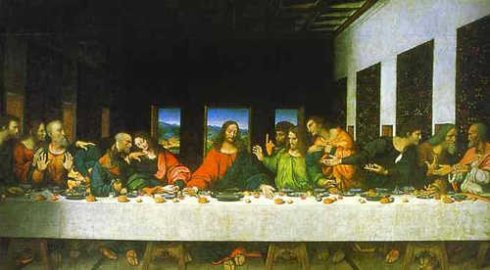 To date, it has sold 80 million copies, been translated into 44 languages, and been made into a major motion picture. It has also raised the ire of many. Whatever else may be said for or against Dan Brown’s novel The Da Vinci Code, this much is certain: a lot of people paid attention to it.
I’ll never forget watching readers react to Dan Brown’s book on cable news shows, as his novel shot to blockbuster status. One reviewer’s comments especially struck, as well as disturbed, me: “I always knew there was something wrong with Christianity,” this young man said. “Now I know that the Christian faith is nothing more than an ancient ploy for power. It all makes sense now!” And even though countless rebuttals to Dan Brown’s portrayal of Christianity have been published by both Christians and non-Christians alike, I can’t help but wonder if that young man still believes that Dan Brown’s novel actually makes honest intellectual sense of Christian history.
Such attacks on Christianity, of course, are nothing new. Christianity has sustained countless affronts from its countless enemies over what has been a nearly countless number of years. Even when Christianity was in its nascent stages in the first century, it was attacked. Indeed, the apostle Paul confronts one such attack in our reading for today from Colossians 2.
As I mentioned in yesterday’s blog, the Christian church at Colossae had been infiltrated a proto-Gnostic heresy which taught that the incorporeal was inherently good while the physical was inherently evil. The goal of this proto-Gnosticism, then, became to escape the physical and rise to the spiritual. But Paul is not impressed or persuaded by this faith system, and he warns that the Colossian Christians should not be either:
My purpose is that they may be encouraged in heart and united in love, so that they may have the full riches of complete understanding, in order that they may know the mystery of God, namely, Christ, in whom are hidden all the treasures of wisdom and knowledge. I tell you this so that no one may deceive you by fine-sounding arguments. See to it that no one takes you captive through hollow and deceptive philosophy, which depends on human tradition and the basic principles of this world rather than on Christ. (verses 2-4,8)
Two words in these verses are especially notable. In verse 4, Paul warns his readers not to be persuaded by “fine-sounding arguments.” The Greek word behind this phrase is pithanlogia, pithan meaning “persuasive” and logia meaning “speaking.” Paul’s admonishes the Colossian Christians not to be persuaded by false doctrine, no matter how pithy it might sound. The second word of note comes in verse 8 when Paul exhorts his readers: “See to it that no one takes you captive.” The phrase “takes you captive” is regularly used to describe the taking of spoils in battle. Thus, those who are seeking to persuade the Colossians with their pithy arguments are really treating the Colossians as nothing more than spoils of war. They do not truly care about the Colossians. They merely want to conquer them and carry them into their heretical theological camp as prisoners of war, bound for hell.
Today, as in Paul’s day, there are many “fine sounding arguments” which seek to persuade us away from true faith in Christ and into a false set of beliefs, like those presented in the Da Vinci Code. But remember that these false beliefs are nothing more than satanic tricks, meant to take you captive as a prisoner of hell’s war against truth. Don’t fall for it. Rather, “continue in what you have learned and have become convinced of, because you know those from whom you learned it, and how from infancy you have known the holy Scriptures, which are able to make you wise for salvation through faith in Christ Jesus” (2 Timothy 3:14-15).
“Word for Today” – Colossians 1 – www.concordialutheranchurch.com
 I’ve heard the adage, “Now you see it, now you don’t,” but I never knew it worked the other way around. Usually, this saw is quoted by magicians who are using some sleight of hand, making some relatively insignificant object “disappear.” But while these illusionists are making things disappear, our text for today from Colossians 1 is all about something that has appeared. It is a case of, “Now you don’t see it, now you do!” And the thing that has appeared is not insignificant. No, it is infinitely valuable.
“Christ is the image of the invisible God, the firstborn over all creation” (verse 15). Many biblical scholars believe that these words constitute an ancient Christian hymn, here quoted by Paul, written to confute a proto-Gnostic heresy which claimed that the spiritual and invisible was inherently good while the material and visible was inherently evil. To such a claim, this hymn declares that the God of the universe, though once spiritual and invisible, became visible and physical in Christ. And the visible Christ is certainly not evil. He is perfect! “Now you don’t see it, now you do!”
The Greek word for “image” in verse 15 is eikon, from which we get our English word “icon.” Christ makes the God “no one has ever seen” (John 1:18), visible, corporal, and knowable. Indeed, this is precisely what we celebrate this time of year: That the invisible God became visible as a baby in a manger on his way to being a Savior on a cross, as Paul later says, “Once you were alienated from God and were enemies in your minds because of your evil behavior. But now he has reconciled you by Christ’s physical body through death to present you holy in his sight, without blemish and free from accusation” (verses 21-22). Notice that Christ’s seeable, knowable, physical body is that which saves us. What we once did not see, we now see.
People all too often make a sharp distinction between their normal lives and their spiritual lives. Your normal life is what you do Monday through Saturday, at work and at home, with family and friends. Consequently, your spiritual life gets relegated to an hour on Sunday, when you worship an invisible Deity who remains relatively detached and aloof from your everyday life. But this was never God’s intention. God never meant for us to have a “normal life” and a “spiritual life.” Instead, God, who is spiritual, descended into our normal, physical lives in Christ so that everything we do in our normal, physical lives could be done with God. In other words, everything we do is spiritual!
Today, as you go about your “normal” business, do you do so with an awareness that everything you do is done in God’s presence? Do you do so with an awareness that everything you do has profound spiritual significance? Everything you do – from the way you love your spouse to the way you raise your children to the integrity that you maintain at work – is spiritual. Your “spiritual life” is not just found in Bible readings, prayers, and worship services, it is found in everything. Your spiritual life is your normal, everyday life, for God is in your normal, everyday life. God is not invisible anymore. He has come in Jesus.


 Pastor Zach's Blog