ABC Extra – From Agony to Glory – 1 Corinthians 9:24-27
 It’s not easy being a Christian. Sometimes, we too easily forget this important truth. Indeed, Jesus himself warns while also inviting us: “If anyone would come after me, he must deny himself and take up his cross and follow me” (Matthew 16:24). Following Jesus involves not only the cross of salvation, but a cross of suffering.
The early church fathers understood the cross of suffering well. For example, consider Blandina of Lyon. Blandina was a lowly slave, thrown into prison during the reign of Marcus Aurelius. When she was finally brought forth from her cell to be tortured, her companions pleaded for leniency, worried that her fragile body would not be able to endure brute beatings. The official presiding over Blandina, however, demanded that the executioners torture her in the most heinous manner possible.
Church lore has it that, even though the executioners brought their worst tortures against this frail lady, they could not kill her or even bring her down as she repeated over and over, “I am a Christian, and we commit no wrongdoing.” Being unable to kill her, she was finally scourged, placed on a red-hot grate, enclosed in a net, thrown before a wild steer who tossed her into the air with his horns, and at last killed with a dagger. Such was the gory martyrdom which this faithful woman endured.
This sad story prompted the famed church historian Eusebius to write: “Though small and weak and despised, yet clothed with Christ the mighty and conquering Athlete, she…having overcome the adversary many times might receive, through her conflict, the crown incorruptible” (Eusebius, Church History, 5.1.42). Blandina faced the most terrible of tortures, but because of her faith, even death could not thwart her final and eternal victory in Christ. Christ is “the mighty and conquering Athlete,” writes Eusebius, and he has given to Blandina “the crown incorruptible.”
Eusebius derives his analogy of Christ as an Athlete and the prize of salvation as a crown from our text for this past weekend in worship and ABC:
Do you not know that in a race all the runners run, but only one gets the prize? Run in such a way as to get the prize. Everyone who competes in the games goes into strict training. They do it to get a crown that will not last; but we do it to get a crown that will last forever. (1 Corinthians 9:24-25)
As I mentioned in ABC, the Greek word for “competes” is agonizomai, from which we get our English word “agony.” Thus, competing in the game of life is not always easy. Sometimes, it can involve agony, pain, and persecution. This is why the apostle Paul writes of his ministry: “We proclaim Christ admonishing and teaching everyone with all wisdom, so that we may present everyone perfect in Christ. To this end I labor, struggling” (Colossians 1:28-29). The Greek word for “struggling” is agonizomai. Paul freely admits that preaching the gospel and contending for the faith can sometimes be agonizing. But Paul continues: To this end I labor, struggling with all his energy, which so powerfully works in me” (Colossians 1:29). Paul’s ministry may involve agonizomai, but he does not have to face agonizomai alone. No, Christ’s strength powerfully works in him and endures it with him. After all, Christ endured the worst agonizomai of all – the agonizomai of the cross. Thus, he can surely help us as we face the agonizomais of life.
Are you suffering? Are you being persecuted? Are you hurting? Christ gives his energy to help us face the agonizomais of this world and of our lives. He gives us strength for today and a crown for eternity. And as Blandina and all the martyrs would most certainly tell us, the agonizomais of this life cannot even begin to compare with the crowns of glory which await us (cf. Romans 8:18). So stand strong!
Want to learn more on this passage? Go to
www.ConcordiaLutheranChurch.com
and check out audio and video from Pastor Tucker’s
message or Pastor Zach’s ABC!

ABC Extra – Falling in Love – 1 Timothy 6:3-11
 Melody and I are in the process of house hunting. It’s no easy task. We’ve looked at property after property and home after home. We don’t like the style of some houses. We didn’t care for the location of others. Still other houses were over-priced. But then there were those special houses – the houses that catch your eye and tickle your fancy. Those houses that are so quaint, they make you fall in love with them. Thankfully, however, as I began this process, I spoke with a dear congregational member who has a lot of history in the real estate business. He gave me some sage advice. “Pick an established neighborhood,” he told me. “You don’t want to see a strip mall go up across the street from your house in two years. And never, ever fall in love with a house. If you fall in love with a house, you’re more likely to pay too much and get too little. Remember, a house is just a commodity. There are things more important than the house you live in.”
This member’s advice concerning home buying is truly seasoned and wise, not only from a financial standpoint, but from a spiritual one. For the commodities of this world – be they homes or cars or gadgets or gizmos – have a way of trying to capture our hearts. But we are not to fall for their allurements. For these are things that “moth and rust destroy, and thieves break in and steal” (Matthew 6:19). They’re not eternal. They’re just commodities.
In our text for this weekend from 1 Timothy 6, Paul offers a stark warning against falling in love with the commodities of this world. In one of the most famous verses of all the New Testament, Paul writes, “People who want to get rich fall into temptation and a trap and into many foolish and harmful desires that plunge men into ruin and destruction. For the love of money is a root of all kinds of evil. Some people, eager for money, have wandered from the faith and pierced themselves with many griefs” (1 Timothy 6:9-10). Loving commodities and the money which purchases them is the surest way to much grief. It is a trap. Don’t fall for it.
The Greek word for “trap” in verse 9 denotes a snare. Like some wild game caught in a snare, soon to lose its life, money wants to seize us in its clutches, and it wants to “plunge us into ruin and destruction.” It wants to make us lose not only our lives, but our eternities. For it wants to entice us into “wandering from the faith.” Interestingly, Paul speaks of this same trap earlier in this same epistle when he warns, “Do not fall into disgrace and into the devil’s trap” (1 Timothy 3:7). Here, Paul alerts us to the one who sets the trap of loving money – it is none other than the devil himself.
Loving money does not just cost us our bank accounts as we try to live beyond our means, it costs us our souls as we forget about that which is truly priceless and transcendent. Perhaps the great preacher Chrysostom put it best when he said, “Riches are not forbidden, but the price of them is.” In other words, it is okay to have riches, but it is not okay to sacrifice that which is truly important – things like “righteousness, godliness, faith, love, endurance and gentleness” (verse 11) – to get those riches. That is a price for riches that is simply too high to pay.
Never, ever fall in love with money or the things which money can buy. They’re just commodities. And there are things more important than commodities. There are things that money can’t buy. Things like the forgiveness of God, bought not with a checkbook, but with the blood of his one and only Son. And it is okay if he captures your heart. For Jesus is eternal.
Want to learn more on this passage? Go to
www.ConcordiaLutheranChurch.com
and check out audio and video from Pastor Zach’s
message or Pastor Nordlie’s ABC!
Pondering Christ’s Passion
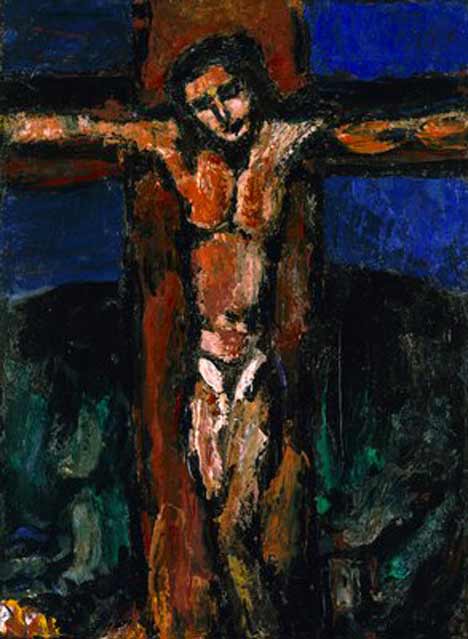 It is a traditional devotional practice during the season of Lent for Christians to take some time to reflect on Christ’s sacrifice for us on the cross. As we are in the midst of this special season, I thought it would be appropriate to share with you some selections from Martin Luther’s Meditation on Christ’s Passion from 1519. This meditation was one of Luther’s favorites. At one point he called it his “very best book.” Indeed, it is a brilliant reflection as Luther focuses with laser like clarity on Christ’s sacrifice.
As you read these words, I would encourage you to notice the way in which Luther draws a sharp distinction between God’s Law and God’s Gospel. God’s Law is expressed in a way that is harsh and inescapable. Luther’s expression and condemnation of our sinfulness might sound shocking, but it is certainly Scriptural. But Luther does not leave us in despair. With the heart of a pastor, he points us to the sacrifice of Christ and gloriously sets forth for us how it is all-sufficient for our sin.
And so I invite you to ponder now on Christ’s holy Passion. May this reflection be a blessing to you.
They contemplate Christ’s passion aright who view it with a terror-stricken heart and a despairing conscience. This terror must be felt as you witness the stern wrath and the unchanging earnestness with which God looks upon sin and sinners, so much so that he was unwilling to release sinners even for his only and dearest Son without his payment of the severest penalty for them. Thus he says in Isaiah 53:8, “I have chastised him for the transgressions of my people.” If the dearest child is punished thus, what will be the fate of sinners? It must be an inexpressible and unbearable earnestness that forces such a great and infinite person to suffer and die to appease it. And if you seriously consider that it is God’s very own Son, the eternal wisdom of the Father, who suffers, you will be terrified indeed. The more you think about it, the more intensely will you be frightened.
You must get this thought through your head and not doubt that you are the one who is torturing Christ thus, for your sins have surely wrought this. In Acts 2:36–37, St. Peter frightened the Jews like a peal of thunder when he said to all of them, “You crucified him.” Consequently three thousand alarmed and terrified Jews asked the apostles on that one day, “O dear brethren, what shall we do now?” Therefore, when you see the nails piercing Christ’s hands, you can be certain that it is your work. When you behold his crown of thorns, you may rest assured that these are your evil thoughts, etc.
We must give ourselves wholly to this matter, for the main benefit of Christ’s passion is that man sees into his own true self and that he be terrified and crushed by this. Unless we seek that knowledge, we do not derive much benefit from Christ’s passion.
After man has thus become aware of his sin and is terrified in his heart, he must watch that sin does not remain in his conscience, for this would lead to sheer despair. Just as our knowledge of sin flowed from Christ and was acknowledged by us, so we must pour this sin back on him and free our conscience of it. Therefore beware, lest you do as those perverse people who torture their hearts with their sins and strive to do the impossible, namely, get rid of their sins by running from one good work or penance to another, or by working their way out of this by means of indulgences. Unfortunately such false confidence in penance and pilgrimages is widespread.
You cast your sins from yourself and onto Christ when you firmly believe that his wounds and sufferings are your sins, to be borne and paid for by him, as we read in Isaiah 53:6, “The Lord has laid on him the iniquity of us all.” St. Peter says, “in his body has he borne our sins on the wood of the cross” (1 Peter 2:24). St. Paul says, “God has made him a sinner for us, so that through him we would be made just” (2 Corinthians 5:21). You must stake everything on these and similar verses. The more your conscience torments you, the more tenaciously must you cling to them. If you do not do that, but presume to still your conscience with your contrition and penance, you will never obtain peace of mind, but will have to despair in the end. If we allow sin to remain in our conscience and try to deal with it there, or if we look at sin in our heart, it will be much too strong for us and will live on forever. But if we behold it resting on Christ and see it overcome by his resurrection, and then boldly believe this, even it is dead and nullified. Sin cannot remain on Christ, since it is swallowed up by his resurrection. Now you see no wounds, no pain in him, and no sign of sin. Thus St. Paul declares that “Christ died for our sin and rose for our justification” (Romans 4:25). That is to say, in his suffering Christ makes our sin known and thus destroys it, but through his resurrection he justifies us and delivers us from all sin, if we believe this.
Luther’s Works: American Edition, Volume 42, pages 8-12
ABC Extra – Being Subject to Judgment – Matthew 5:21-22
 In Adult Bible Class this past weekend, we continued our “Fit for Life” series with a look at our relational health. As with emotional health in last week’s ABC Extra, I thought some statistics might offer a telling aperture into the state of our relationships:
- As of 2003, 43.7% of custodial mothers and 56.2% of custodial fathers were either separated or divorced, giving credence to the oft-quoted statistic that 50% of marriages will end in divorce. Many marriages are broken.
- According to The State of Our Unions 2005, only 63% of American children grow up with both biological parents – the lowest figure in the Western world. Families are broken.
- A 2006 study in the American Sociological Review found that Americans on average had only two close friends to confide in, down from an average of three in 1985. The percentage of people who noted having no such confidant rose from 10% to almost 25%. Friendships are broken.
Between the breakdown in marriages, families, and friendships, it is clear that our relational health is on life support.
Jesus knew all about the disaster that results from relational sickness. Divorces, grudges, and loneliness are devastating. Indeed, from the very beginning, God spoke of the importance of relationships and relational health. God says of Adam, “It is not good for the man to be alone” (Genesis 2:18). And so God makes Eve for Adam. God desires that we be in relationship with each other and with him.
It is with this in mind that Jesus offers us a stark and sobering warning about the damage a fractured or fissured relationship can bring: “You have heard that it was said to the people long ago, ‘Do not murder, and anyone who murders will be subject to judgment’” (Matthew 5:21). Notice that Jesus says those who murder are “subject to judgment.” What judgment was rendered for murder? Moses explains:
If a man strikes someone with an iron object so that he dies, he is a murderer; the murderer shall be put to death. Or if anyone has a stone in his hand that could kill, and he strikes someone so that he dies, he is a murderer; the murderer shall be put to death. Or if anyone has a wooden object in his hand that could kill, and he hits someone so that he dies, he is a murderer; the murderer shall be put to death. The avenger of blood shall put the murderer to death; when he meets him, he shall put him to death. If anyone with malice aforethought shoves another or throws something at him intentionally so that he dies or if in hostility he hits him with his fist so that he dies, that person shall be put to death; he is a murderer. The avenger of blood shall put the murderer to death when he meets him. (Numbers 35:16-21)
No matter what the means of murder, the judgment against it is the same: murder invokes capital punishment. But now, in Matthew 5, Jesus takes this dire judgment one step farther: “But I tell you that anyone who is angry with his brother will be subject to judgment” (Matthew 5:22). In other words, those who are angry are subject to same judgment as those who murder. Both anger and murder result in death.
As I mentioned in ABC, the Hebrew word for “murder” in the fifth commandment is rasach, a word that denotes murder in particular over and against killing in general. Thus, this word describes not only the act of killing someone, but the intention behind that act. In other words, if you slay someone on a field of battle in self-defense, it is not rasach. If you kill someone with malevolent intent, however, it is rasach. Thus, when Jesus speaks against being angry with your brother, he is picking up on the intention behind the action in this commandment. And so Jesus says, “Be it the action of rasach or the intention behind the action, the result is the same: you will be ‘subject to judgment.’”
But can Jesus really be serious here? After all, the judgment rendered against the act of murder is death. Certainly the judgment rendered against the anger that accompanies the action can’t also be death! Indeed, in first century Jewish communities, save the reclusive Essenes, there were no standardized punishments for anger. How can Jesus now levy a punishment as harsh as death on a mere emotion?
Anger leads to death. Sure, it may not lead to the kind of death that happens with capital punishment – a lethal injection or an electric chair or a noose – but it can certainly lead to its own kind of death. Anger can lead to the death of a friendship, the death of community, the death of a marriage, the death of joy, and finally, if unchecked and unrighteous, the death of your soul. This is why Jesus is so concerned about letting go of anger – because he knows the consequences for unrighteous and unrepentant anger can be devastating.
In truth, God has every right to be angry with us because of our sin. And yet, because of Christ’s of propitiatory work on the cross, we can rejoice that “God did not appoint us to suffer wrath but to receive salvation through our Lord Jesus Christ” (1 Thessalonians 5:9). God’s wrath at our sin was placed on Christ at the cross. God let go of his anger on Christ. And now, even as God’s wrath has been turned back at us, we are called to turn back our anger at others. As Paul says: “Get rid of all bitterness, rage and anger, brawling and slander, along with every form of malice. Be kind and compassionate to one another, forgiving each other, just as in Christ God forgave you” (Ephesians 4:31-32). May it be so with us.
Want to learn more on this passage? Go to
www.ConcordiaLutheranChurch.com
and check out audio and video from Pastor Tucker’s
message or Pastor Zach’s ABC!
ABC Preview – Righteous Anger – Matthew 5:21-22
 This weekend in Adult Bible Class, we continue our “Fit for Life” series with a look at relational health. Jesus addresses the perils of relational sickness in our text for this weekend: “You have heard that it was said to the people long ago, ‘Do not murder, and anyone who murders will be subject to judgment.’ But I tell you that anyone who is angry with his brother will be subject to judgment” (Matthew 5:21-22). Jesus says anger is antithetical to healthy relationships. And yet, again and again, we read in the pages of Scripture of a God who gets angry. Indeed, the Psalmist says: “God rebukes [the peoples] in his anger and terrifies them in his wrath” (Psalm 2:5). God gets angry. But Jesus cautions against anger. So how can one who gets angry teach against anger?
The syntax of Jesus’ words in Matthew 5 is instructive. Jesus warns against being a person “who is angry.” In Greek, this is a present tense participle, denoting not an incidental reaction to sin or injustice, but an ongoing temperament. In other words, the person “who is angry” is continually angry, perhaps with no good reason at all. Anger forms the core of this person’s character.
Our God does indeed get angry. But his anger is always with good reason and as an incidental reaction to our sin. Indeed, it would be an egregious miscarriage of his character if our holy God did not get angry at our ugly sin. God’s anger is a righteous anger.
Perhaps the best description that I have read concerning God’s righteous anger comes from J.I. Packer:
What manner of thing is the wrath of God?…It is not the capricious, arbitrary, bad-tempered, and conceited anger that pagans attribute to their gods. It is not the sinful, resentful, malicious, infantile anger that we find among humans. It is a function of that holiness which is expressed in the demands of God’s moral law (“be holy, because I am holy” [1 Peter 1:16]), and of that righteousness which is expressed in God’s acts of judgment and reward…God’s wrath is “the holy revulsions of God’s being against that which is the contradiction of his holiness”; it issues in “a positive outgoing of the divine displeasure.” And this is righteous anger – the right reaction of moral perfection in the Creator toward moral perversity in the creature. So far from the manifestation of God’s wrath in punishing sin being morally doubtful, the thing that would be morally doubtful would be for him not to show his wrath in this way. God is not just – that is, he does not act in the way that is right, he does not do what is proper to a judge – unless he inflicts upon all sin and wrongdoing the penalty it deserves. (J.I. Packer, In My Place Condemned He Stood, 35)
Blessedly, as Packer goes on to note, God makes provision for his holy anger in the cross of his Son, Jesus Christ. As Paul writes: “Since, therefore, we have now been justified by [Christ’s] blood, much more shall we be saved by him from the wrath of God” (Romans 5:9). God’s righteous anger at our sin is put on his righteous Son on the cross. In theological parlance, we call this propitiation.
Thus, there is a place for anger. But it must be the right kind of anger. It must be righteous anger. So confess the times that you have fallen prey to the “sinful, resentful, malicious, infantile anger that we find among humans,” as Packer says. And thank God for his righteous anger. For sin deserves and even demands wrath from a righteous God. But praise be to God that he poured out his wrath not on us, but on his Son. Why does God do a thing so terrible as pouring out his wrath on his Son? Because God’s anger never stands alone. It is always coupled with his love for you and me.
ABC Extra – Meaning in Meaninglessness – Ecclesiastes 1:1-11
 “Out of the depths I cry to you, O LORD” (Psalm 130:1). We all know what it feels like to be in “the depths.” A tragedy strikes, depression hits, or despair wreaks havoc on our hearts and our emotional states can quickly take a turn for the worse. Just this past week, I have heard stories of great trouble, tragedy, and trial from many of our own congregation members. Tears come to my eyes as I think of the depths they are having to endure. As they are in “the depths,” I cry to the Lord in prayer for them.
In worship this past weekend, we continued our series “Fit for Life” by talking about our emotional health. In my studies for this weekend’s theme, I found that for all the health problems we have physically as a nation – cancer and diabetes and swine flu and coughs and colds – our emotional health problems are even direr. Consider these statistics:
- According to PBS, 15 million adults, a full 8% of the US population, suffers from what is described as “major depression,” that is, depression that has become unmanageable. And this number does not even include people 18 and younger. There are millions more high school students who suffer from major depression.
- Every sixteen minutes, someone commits suicide in our country. Suicide is the seventh leading cause of death overall and the second leading cause of death among college students. Every year, more people die from suicide than homicide.
- According to the Centers for Disease Control, anti-depressants are the most prescribed drugs in America. Of the 2.4 billion prescriptions written in 2005, 118 million of those were for anti-depressants. Interestingly, the number of anti-depressants prescribed between 1999 and 2000 tripled.
These statistics sadly attest to how we, as a nation, are not emotionally healthy. Emotional sickness, however, is not unique to our day and age. Depression struck the ancients even as it strikes us.
Consider Solomon in Ecclesiastes. He opens his book: “Meaningless! Meaningless! Utterly meaningless!” (Ecclesiastes 1:2). The Hebrew word for “meaningless” is hebel, meaning, “emptiness,” or “vanity.” Notably, the Hebrew construction reads literally, “Hebel of Hebels,” or “Vanity of Vanities.” This is to express the superlative force of the meaninglessness of which Solomon speaks. In other words, Solomon is not just addressing that which is meaningless, he is addressing that which is most meaningless. And what is most meaningless? Solomon answers, “Everything is meaningless” (Ecclesiastes 1:2). Everything? Yes, everything! Money, fame, power, prestige, accomplishment, wisdom, connectedness – it’s all meaningless! Talk about a depressed outlook on life!
Blessedly, Solomon further clarifies his assertion that everything is ultimately meaningless by noting the location at which everything is meaningless: “What has been will be again, what has been done will be done again; there is nothing new under the sun” (verse 9). This phrase, “under the sun,” is key to Ecclesiastes and appears some twenty nine times. It serves as a circumlocution to speak of that which is on this earth. In other words, as long as we are on this earth and are living by the values of this earth, our lives will be ultimately devoid of meaning. We will find ourselves trapped by “the depths” of sinfulness. Thus, if we are to receive true, lasting meaning for our lives, we must receive it from somewhere – indeed, from someone – not under the sun. And so Solomon finally points us to God as our source for true meaning:
What does the worker gain from his toil? I have seen the burden God has laid on men. He has made everything beautiful in its time. He has also set eternity in the hearts of men; yet they cannot fathom what God has done from beginning to end. I know that there is nothing better for men than to be happy and do good while they live. That everyone may eat and drink, and find satisfaction in all his toil – this is the gift of God. (Ecclesiastes 3:9-13)
Even though this world is full of trouble, toil, and tribulation “under the sun,” we trust in a God who delivers his gifts from above the sun – he delivers his gifts from heaven, even as James says: “Every good and perfect gift is from above, coming down from the Father of the heavenly lights” (James 1:17). God sends his gifts from above the heavenly lights into our world. Indeed, he even sent the good and perfect gift of his Son, the ultimate heavenly Light, to redeem our world from its misery and meaninglessness. It is in Christ that we find transcendent meaning for our lives.
How is your emotional health? Are you happy or sad? Fulfilled or empty? Elated or in despair? Whether times are good or bad, remember that life is not hopeless “under the sun.” For God has sent his Son from above the sun to give us meaning and purpose as we live under the sun. And so never despair concerning your life’s meaning. For God has given your life – and every life – meaning. And that meaning’s name is Jesus.
Want to learn more on this passage? Go to
www.ConcordiaLutheranChurch.com
and check out audio and video from Pastor Tucker’s
message or Dr. Player’s ABC!
Paying the Preacher – 1 Corinthians 9:3-14
 It has become an all too well known story. A renowned pastor with a gigantic ministry has more money in his personal coffers than Fort Knox hides in its vault. A local news organization comes in to investigate the pastor’s lifestyle and what is revealed shocks believers and appalls non-believers: private jets, sprawling mansions, excessive luxuries. And the pastor at the center of it all seems to spend more time fleecing his flock than shepherding them into the green pastures of God’s Word.
With such scandalous abuses littering the history of the modern American Christian Church, it is no surprise that many people look at their pastor’s paycheck with at least a little bit of suspicion. “What’s really going on financially behind the scenes?” someone may wonder. Indeed, recently, I received a question from someone concerning 1 Corinthians 9, where Paul argues that those who preach the gospel should be duly compensated for their labor. The apostle writes:
This is my defense to those who sit in judgment on me. Don’t we have the right to food and drink? Don’t we have the right to take a believing wife along with us, as do the other apostles and the Lord’s brothers and Cephas? Or is it only I and Barnabas who must work for a living? Who serves as a soldier at his own expense? Who plants a vineyard and does not eat of its grapes? Who tends a flock and does not drink of the milk? Do I say this merely from a human point of view? Doesn’t the Law say the same thing? For it is written in the Law of Moses: “Do not muzzle an ox while it is treading out the grain.” Is it about oxen that God is concerned? Surely he says this for us, doesn’t he? Yes, this was written for us, because when the plowman plows and the thresher threshes, they ought to do so in the hope of sharing in the harvest. If we have sown spiritual seed among you, is it too much if we reap a material harvest from you? If others have this right of support from you, shouldn’t we have it all the more? But we did not use this right. On the contrary, we put up with anything rather than hinder the gospel of Christ. Don’t you know that those who work in the temple get their food from the temple, and those who serve at the altar share in what is offered on the altar? In the same way, the Lord has commanded that those who preach the gospel should receive their living from the gospel. (1 Corinthians 9:3-14)
A few things are especially notable in Paul’s arguments in these verses. First, in verse 3, Paul makes a “defense” of his ministry. The Greek word for “defense” is apologia, a technical term for a legal defense in a court of law. Thus, there are some who are questioning the very validity of Paul’s ministry. Interestingly, however, his antagonist’s accusations seem to flow not from the fact that he’s being compensated to preach the gospel, but from the fact that he’s not being compensated! Paul frankly admits that though he has a right to receive remuneration for his preaching, he “did not use this right” (verse 12). The argument of his detractors, then, is this: “You only get what you pay for! And you’re not paying Paul anything! Thus, you’re not getting good preaching! So you should turn to us! Our preaching is better that Paul’s because we’ll charge you for it!” This, of course, is the reasoning of a charlatan. Compensation or lack thereof does not make the message of the gospel any more or less true. The gospel is the gospel, regardless of remuneration.
With this in mind, Paul continues by explaining that his free preaching of the gospel does not mean that all pastors should not be compensated for their work. Paul quotes Deuteronomy 25:4 to prove his point: “Do not muzzle an ox while it is treading out the grain” (verse 9). In ancient Israel, an ox, while he pulled a sledge around a threshing floor to separate the kernels of grain from their husks, would remain un-muzzled so he could eat some the grain while he was threshing it. Thus, just as ox eats his grain as payment for his labor, so should a pastor be compensated for his labor. Indeed, Paul concludes: “The Lord has commanded that those who preach the gospel should receive their living from the gospel” (verse 14).
So what does all this mean? Well, on the one hand, Paul warns against those pastors who have a sense of entitlement because of their preaching of the gospel. A pastor should never say, “My preaching is great and therefore I deserve an exorbitant paycheck,” as those who were disparaging Paul’s ministry were saying. On the other hand, Paul clearly says that a congregation should faithfully support its pastors. Indeed, one of the things for which I consistently thank God is the way in which my beloved Concordia supports me as a pastor – and not only me, but all of the pastors here. I praise God for the faithfulness and generosity of Concordia’s members. And it is my intention and prayer, by the Spirit’s power, to serve Christ’s Church well and faithfully all the days of my life.
I am one who makes my living from preaching the gospel. And preaching the gospel is a weighty task. But it’s also a blessed privilege. I am thrilled beyond words that I get to do it.
Do you have a theological question you would like Zach to answer on his blog? Email him at
zachm@concordia-satx.com.
ABC Extra – The Real Thing – 1 Corinthians 6:12-20
 In 1969, the Coca Cola Company came out with one of their most memorable slogans: “Coke. It’s the real thing.” This slogan was meant to distinguish Coca Cola from all those other “phony colas” out there which were not the real thing, but only discount knock-offs. There’s only one real cola and these advertisers wanted us to know that it was Coke.
Of course, the great philosopher Plato would disagree with Coke’s slogan. Plato distinguished between two worlds: the material world which he described as a world of incidental, outward forms and the non-material world which he maintained was the world of true and universal Forms. Thus, a physical object like, let’s say, a bottle of Coca Cola, was only an incidental form and shadow of a larger, true, grander Form in a spiritual world of Forms. A physical bottle of Coca Cola, then, would quite literally not be the real thing. No, the real Coca Cola resided somewhere in an inaccessible spiritual world of true Forms.
Plato’s distinction between the true spiritual world of Forms and the illusionary physical world of forms has profoundly influenced nearly every philosophical system. It especially held sway over the philosophical systems of the first century. The Epicureans believed, for instance, that since everything in this physical world was only a shadow of the true spiritual world of Forms, everyone was free to live how they wanted, doing with their bodies as they wanted. After all, our physical, bodily forms did not really matter. It was our spiritual Forms that really counted.
Enter the Corinthian Christians. This congregation had apparently bought into Platonic and Epicurean philosophies and found it acceptable and even admirable to live hedonistic lives, apart from any ethical scruples. Indeed, they had a slogan to summarize their philosophical sensibilities: “All things are lawful for me” (1 Corinthians 6:12). The Corinthians believed that whatever they wanted, desired, or thought they needed, they could obtain without regard to moral law. Were they hungry? They could gorge themselves. Were they lusty? They could engage in promiscuity without so much as a second thought. After all, this physical world is only a place full of shadows and our physical bodies are only shells. The real spiritual Form of us resides somewhere else.
The apostle Paul, when addressing the Corinthians, has a somewhat different estimation of this physical world and our physical bodies. He writes, “The body is meant…for the Lord, and the Lord for the body” (1 Corinthians 6:13). Paul’s argument is simply this: what you do with your body counts. Your body is not just a shifting shadow of a greater spiritual reality in some non-descript world of Forms. Indeed, the body is so precious that the Lord is “for the body.” In other words, God thinks your body is a good thing! Tall, short, fat, skinny, black, white, Hispanic, male, female, old, young, or middle aged, God is for your body! He cares about your body! Indeed, he cares about it so much that he promises to raise it imperishably from the dead on the Last Day (cf. 1 Corinthians 15:42).
Paul finally describes the value of our physical bodies thusly: “Do you not know that your body is a temple of the Holy Spirit within you, whom you have from God? You are not your own, for you were bought with a price. So glorify God in your body” (1 Corinthians 6:19-20). There is an interesting textual variant at the end of verse 20. Some ancient manuscripts add another line to this verse. They add, “And in your spirit, which is God’s.”
This final line is probably a liturgical gloss. In other words, whenever a letter like Paul’s would be read out loud to an ancient Christian congregation, the congregation would know the letter so well that they would respond at certain strategic points in the reading. And so, much like when a pastor today says, “The peace of the Lord be with you all,” the congregation will respond, “And also with you,” when the pastor of one of these ancient congregations would read, “So glorify God in your body,” the congregation would respond, “And in your spirit, which is God’s.” These words seem to have become so commonplace, that they made it into some copies of the actual biblical text!
Although these words were almost certainly not in Paul’s original letter to the Corinthians, they do provide us with some interesting insight into how Christians viewed their bodies. The body, it seems, was so important to the early Christians that they came up with a responsive liturgy just to extol the value of our bodies along with our spirits: “Glorify God in your body. And in your spirit, which is God’s.” Thus, whether in our physical bodies or in our incorporeal spirits, we are to glorify God with everything in us. What you do with your body matters. It is not just a reflection of some spiritual reality, it is spiritual reality because in your body resides your spirit. So, in both your body and your spirit, live well and so glorify God with everything in you.
Want to learn more on this passage? Go to
www.ConcordiaLutheranChurch.com
and check out audio and video from Pastor Josh’s
message or Dr. Player’s ABC!
The Temptation of Christ – Matthew 4:1-11
 Yesterday at Concordia, we kicked off our Lenten season with a two and a half day fast. If you want more information on fasting, its theological significance, as well as some of the mechanics of fasting, you can download a pdf of our fasting booklet here.
My guess is, if you are participating in our fast from solid foods, even as you are reading this, your stomach is growling. Mine is. And yet, as I mentioned in my message last night, we fast so that we can feast. For as our stomachs are emptied, our souls are filled as we remember, “Man does not live on bread alone, but on every word that comes from the mouth of God” (Matthew 4:4).
As I was thinking further about the temptations Satan leveled at Jesus while he was fasting in the desert, a few things struck me. First, I found it striking that Satan didn’t stop at one temptation. He circled back to tempt Jesus a second and a third time. When it comes to luring people into sin, Satan’s motto seems to be, “If at first you don’t succeed, try, try again!” Thus, this is a temptation truth that we do well to remember: Fighting temptation is not a battle, it’s a war. If we resist temptation once, we can be pretty much guaranteed that Satan will come back for another round. But, then again, lest we throw up our hands in despair, believing it is futile to even try to resist temptation because Satan will simply continue to assault us, I also found Matthew 4:11 to be especially heartening: “Then the devil left Jesus.” Satan will eventually check out, even if he comes at you for a few rounds. Jesus’ brother James puts it well: “Resist the devil, and he will flee from you” (James 4:7). If you, like Jesus, are fighting a battle with Satan, I would simply offer you this exhortation: Resist the devil. And keep on resisting. Even if it takes forty days. For Satan will eventually check out.
The second thing I found striking about Satan’s encounter with Christ is what one scholar terms as the “descending Christology” of these temptations. In his first temptation, Satan addresses Jesus: “If you are the Son of God, tell these stones to become bread” (Matthew 4:3). Notice that Satan acknowledges Jesus could be the Son of God, but he does not acknowledge he is the Son of God. But Satan does not stop here. He dives deeper into heresy until he crassly declares in his third temptation: “All [the kingdoms of the world] I will give you if you will bow down and worship me” (Matthew 4:9). Satan begins his temptations by saying, “If you are the Son of God…” He ends his temptations by essentially saying, “If I am god…” He ends his temptations demanding Jesus worship him as a god. A subtler error turns into a huge and hoary one.
Satan uses the same tactic with us that he used with Jesus. He begins by tempting us with smaller errors but then tries to drag us into larger errors until he finally destroys our faith altogether. This is why, whether it be a temptation to tell a little white lie or a temptation to commit murder, we must resist Satan’s every temptation at every turn and on every front.
The final thing I found striking – and really, touching – about Christ’s battle with Satan is the final line of Matthew’s temptation account: “And angels came and attended Jesus” (Matthew 4:11). The Greek word for “attended” is diakaneo, a word which describes someone who waits on tables. This has led many scholars to believe that following Satan’s temptations, angels came and waited on Jesus with food. And so Jesus finally breaks his fast. Oh what a relief that must have been for our Lord. And oh what a joy it must have been to see all of heaven concerned with his hunger and temptations. And here is comfort for us too: When we feel hungry or weak or tempted, all of heaven is concerned with our concerns. And heaven attends to us. God’s angels and best of all, God’s Son, offer us strength when we are weak and perseverance when we are tired. And so, as you fast, rejoice that all of heaven watches. And rejoice that all of heaven cares. But most of all, rejoice that the God of heaven loves you.
ABC Extra – Darkness to Light – John 3:1-16
 Fitness. According to the Bible, it’s not just a diet program or an exercise regimen, it involves everything we are. For God desires us to be fit in every aspect of our lives, be that physically, emotionally, spiritually, relationally, or otherwise. Indeed, Jesus describes his mission thusly: “I have come that they may have life, and have it to the full” (John 10:10). Jesus desires not only that we have life, but that we have it to the full. And a full life can be found only in him.
Ultimately, a perfectly full life can never be had in this life, for this life will end. Thus, a full life, given by Jesus, involves a promise of a new life beyond this one – a new, eternal life beyond this one. This new, eternal life is the topic of conversation between Jesus and a Pharisee named Nicodemus in John 3. The chapter opens:
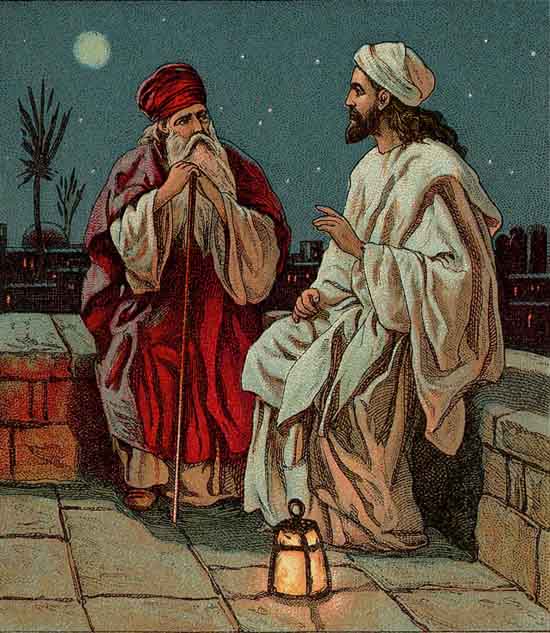
Now there was a man of the Pharisees named Nicodemus, a member of the Jewish ruling council. He came to Jesus at night and said, “Rabbi, we know you are a teacher who has come from God. For no one could perform the miraculous signs you are doing if God were not with him.” (John 3:1-2)
Especially notable in these verses is the timing of this conversation between Nicodemus and Jesus. It is “at night” (John 3:2). On the one hand, as I mentioned in Adult Bible Class, John’s gospel regularly uses the image of darkness to express not only physical darkness, but spiritual darkness. As Jesus later says in this same chapter: “This is the verdict: Light has come into the world, but men loved darkness instead of light because their deeds were evil” (John 3:19). Thus, Nicodemus’ timing in his visit to Jesus seems to express something concerning his spiritual state: he is in darkness.
But at the same time the setting of this encounter alludes to Nicodemus’ spiritual darkness, it alludes to something else: his faithfulness. According to ancient traditions, religious communities, such as the community of the Pharisees, were to study Scripture late into the night. We read in the Dead Sea Scrolls: “The general membership [of a religious community] will be diligent together for the first third of every night of the year, reading aloud from the Book, interpreting Scripture, and praying together” (1QS 6:7-8). Thus, at night, as during the day, Nicodemus was to study Scripture with his fellow Pharisees. So when Nicodemus comes to Jesus, he probably does so right after he has studied the Scriptures.
Eventually, Nicodemus comes to faith in Jesus. We read near the end of John’s gospel:
Later, Joseph of Arimathea asked Pilate for the body of Jesus. Now Joseph was a disciple of Jesus, but secretly because he feared the Jews. With Pilate’s permission, he came and took the body away. He was accompanied by Nicodemus, the man who earlier had visited Jesus at night. Nicodemus brought a mixture of myrrh and aloes, about seventy-five pounds. Taking Jesus’ body, the two of them wrapped it, with the spices, in strips of linen. This was in accordance with Jewish burial customs. At the place where Jesus was crucified, there was a garden, and in the garden a new tomb, in which no one had ever been laid. Because it was the Jewish day of Preparation and since the tomb was nearby, they laid Jesus there. (John 19:38-42)
Interestingly, by this time, Nicodemus does not seem to be nearly so shy concerning his commitment to Jesus as he was in John 3. He accompanies Joseph of Arimathea to Pontius Pilate, the very prefect of Judah. Mark records that such an act “took courage” (Mark 15:43), for Pilate could have easily condemned the two men.
Not only does Nicodemus boldly approach Pilate with Joseph, he also embalms Jesus’ body on “the Jewish day of Preparation” (John 19:42), that is, the day before the Sabbath. Jewish days were reckoned from sundown to sundown. This means that Nicodemus would have to tend to the details of Jesus’ burial before sundown – while it was still daylight.
Nicodemus’ first encounter with Jesus was under the cover of night. Nicodemus’ final encounter with Jesus was in broad daylight. Perhaps all those late night study sessions of the Scriptures helped Nicodemus after all. For hours upon hours of studying the light of God’s Word eventually led him to faith in God’s Light of the world.
Before you go to bed tonight, after it becomes dark, take a cue from Nicodemus: take a few brief moments to read and ponder the light of God’s Word, thanking God for his Light of the world.
Want to learn more on this passage? Go to
www.ConcordiaLutheranChurch.com
and check out audio and video from Pastor Tucker’s
message or Pastor Zach’s ABC!


 Pastor Zach's Blog