Posts filed under ‘Word for Today’
“Word for Today” – Philippians 3 – www.concordialutheranchurch.com
 “I’ll just wear a hat.” At least that’s what I told myself after my buddy gave me a haircut. I was in seminary at the time and did not have money to see a professional stylist. But that was okay, because my buddy had just bought a pair of clippers with guards of every number. “I want a five on the top and a two on the back and sides,” I told him. And that’s what I got. Except that one side was higher than the other. And my buddy had not learned how blend from a two guard to a five guard. So for the next week, in every class I attended and to every place I went, I wore a hat. And, perhaps illogically, I even went back to my buddy the next time I needed a haircut. Thankfully, he had vastly improved in his craft by my next visit.
Most of us have probably received a bad haircut at least once in our lives. But a bad haircut is not nearly as devastating as what some in our reading for today from Philippians 3 receive. Paul warns the Philippians to stay away from those who “put confidence in the flesh” (verse 4) rather than in Christ. He writes, “Watch out for those dogs, those men who do evil, those mutilators of the flesh” (verse 2). The Greek text of this verse is much more colorful than the NIV here translates it. First, the verb “watch out” is repeated three times in rapid succession in this one verse: “Watch out for those dogs! Watch out for those men who do evil! Watch out for those mutilators of the flesh!” Paul clearly wants the Philippians to be on their guard. Second, the phrase “mutilators of the flesh” refers to those in the early church who insisted on a physical circumcision under the stipulations of the Abrahamic covenant (cf. Genesis 17:10) in order for newly minted Christian converts to be included as part of the church. The common Greek term for “circumcision” is peritome, meaning “to cut around.” But Paul here uses the word katatome. The kata prefix is retained in such English words as “catastrophic.” In other words, these required circumcisions had gone terribly awry.
Why would Paul render such a harsh estimation of those who thought it necessary for formerly pagan Christian converts to be circumcised according to Old Testament law? Because Paul knows that such legalism can lead to a self-righteous and depraved spirit. Indeed, this was precisely Paul’s experience when he was trapped in the strangling strictures of a legalistic theology:
If anyone else thinks he has reasons to put confidence in the flesh, I have more: circumcised on the eighth day, of the people of Israel, of the tribe of Benjamin, a Hebrew of Hebrews; in regard to the law, a Pharisee; as for zeal, persecuting the church; as for legalistic righteousness, faultless. But whatever was to my profit I now consider loss for the sake of Christ. (verses 4-7)
Notably, the Greek word for “loss” is zemia, meaning not only “loss,” but “damage.” That is, Paul’s legalism was actually damaging to his faith. Why? Because it led him to place his hope and trust in something other than Christ. Indeed, it led him to put his hope and trust in himself and his own works. And such hope and trust is sorely, and even damningly, misplaced. This is why Paul so virulently rails against those who insist on circumcision. For such a requirement actually damages faith as it points away from, rather than toward, the all-sufficient work of the Savior.
All of this is not to say that the circumcision of the Abrahamic covenant is unimportant or archaic, mind you. Abrahamic circumcision is still important, but it must be the right Abrhamic circumcision, as Paul explains to his readers: “For it is we who are the circumcision, we who worship by the Spirit of God, who glory in Christ Jesus, and who put no confidence in the flesh” (verse 3). The right Abrahamic circumcision is not one of the flesh, but one that instead utterly despairs of the works if the flesh and instead trusts in Christ with the heart. As God himself says about true circumcision: “Circumcise your hearts, therefore, and do not be stiff-necked any longer” (Deuteronomy 10:16). The circumcision of the heart is the circumcision of repentance – when a person turns from their sin and toward Christ. Any other kind of circumcision is just a katatome.
Has your heart been circumcised? Martin Luther, in the first of his famous ninety-five theses, wrote: “When our Lord and Master Jesus Christ said, ‘Repent,’ he willed the entire life of believers to be one of repentance.” In other words, we are to live in our spiritual circumcision every day, repenting of our sins and trusting in Christ with our hearts. This circumcision is to mark everything we do. May it mark you today.
“Word for Today” – Philippians 2 – www.concordialutheranchurch.com
 This fall, Concordia once again held its bi-annual STARS retreats. These retreats, which are held separately for men and women, are meant to be intense devotional times, where retreatents can share their struggles, encounter Christ through his Word, and be led by his Spirit in community with others. The goal of these retreats is to energize, refresh, and renew their participants to go back to their families, jobs, and communities and “shine like stars in the universe, as they hold out the word of life.” Indeed, this is Concordia’s mission statement.
Concordia’s mission statement is also our text for today from Philippians 2:
Do everything without complaining or arguing, so that you may become blameless and pure, children of God without fault in a crooked and depraved generation, in which you shine like stars in the universe as you hold out the word of life. (verses 14-16)
Interestingly, the English Standard Version of the Bible translates verse 16 not as, “holding out the word of life,” as does the New International Version, quoted above, but as, “holding fast to the word of life.” The NIV, then, translates Paul’s words as an encouragement to share God’s word of life with others. The ESV translates Paul’s words as an admonishment to guard God’s word of life, even in the most trying of times. Which translation is correct?
Actually, both translations are correct. The Greek word for “hold out,” or “hold fast” as the case may be, is epecho. This is a compound word, made up of the verb echo, meaning, “to hold” and the word epi, a notoriously ambiguous preposition which can mean either “out” or “on to.” Thus, this verb can be taken to denote either that Paul’s readers should “hold out” the word of life in evangelism or “hold on to” the word of life in faithfulness.
Many people who have attended a Concordia’s STARS retreat relay stories of how, before the retreat, they were “barely hanging on.” A marriage was on the rocks. An addiction had taken over. A sense of guilt was strangling a soul. But then these retreatents worship and fellowship with other brothers and sisters in Christ and re-learn, or, in some cases, learn for the first time, how to hold on to God’s word of life for every trial, every need, and every promise of salvation. Then, when they return, firmly holding on to God’s word of life, they are ready and reinvigorated to hold out that word of life to others. And indeed they do. They more freely share their faith and offer spiritual counsel to others. They worship joyfully and pray earnestly. An experience holding on to the word of life at the retreat leads to a desire to hold out the word of life every day.
Both translations of Paul’s epecho in Philippians 2:16 are vital to the Christian life. For in a world that regularly scoffs at the gospel, and in times where comfort, strength, and hope are sorely needed, a Christian must hold on to God’s Word. But they must also not merely keep it to themselves. For they are also to hold it out to others. They are to share it with others so that more sainted stars can be added to God’s universe. It is my prayer that, in faith, you will both hold on to and hold out God’s word of life today.
“Word for Today” – Philippians 1 – www.concordialutheranchurch.com

“All You Need Is Love.” Such was the popular sentiment when the Beatles released a single by this name in 1967. This sentiment was so popular, in fact, that their song shot instantaneously to number one in both the US and in the UK. And in a time riddled by bloodshed in Vietnam and frantically shifting cultural tectonic plates, leading to devastating social upheaval, it was not a surprise that love alone might be touted as the answer to the word’s ills, especially since the world’s ills were all too often bulleted by hatred.
“All You Need Is Love.” It made for a number one song, but is it true? In our reading for today from Philippians 1, Paul is trapped in a society similar to that of 1967’s America. The wicked emperor Nero, known for his insanity and disdain toward Christians, is on the throne in Rome and Paul is imprisoned there, waiting to appear before Nero on charges of heresy and insurrection (cf. Acts 28:17-31). The air of society is thick and ominous. How will Paul respond to such a cultural morass? Will he say with the Beatles, “All You Need Is Love?”
Not exactly. Paul does indeed extol the value of love in a society in which hatred and contempt seem to reign supreme as he writes, “And this is my prayer: that your love may abound more and more” (verse 9). But Paul then continues to explain how this love should not operate in a vacuum, but “in knowledge and depth of insight, so that you may be able to discern what is best and may be pure and blameless until the day of Christ, filled with the fruit of righteousness that comes through Jesus Christ – to the glory and praise of God” (verses 9-11). According to Paul, love is indeed needed, but it is not wholly sufficient. For, according to Paul, the term “love” must not just be thrown around as a squishy non-descript emotion which can mystically salve the world’s ills. Instead, love must be defined. How is it defined? It is defined by knowing the righteousness given by Jesus Christ and by discerning how to apply that righteousness to everyday situations. That is, a person must allow their love for others to be structured by Christ’s righteousness and not by their own flights of emotional fancy and then they must allow the application of that righteousness to be guided not by timidity, anger, or any other human emotion, but by the discernment that comes only through God’s Spirit. In brief, love and its application to a hate-filled world is to be defined by Jesus and not by any human being.
Sadly, love is often not so well defined as it is in Paul’s letter to the Philippians. The term “love” is left to stand alone, as in the Beatles’ song, and many people of many different philosophical, ideological, theological, and ethical stripes are allowed to come along and dump whatever content they might deem appropriate into this term “love.” The irony of this, of course, is that when different people dump different content into this word “love,” suspicion, antipathy, and even scorn regularly ensues toward others who fill this word “love” with content different from theirs. That is, people hate each other over love.
As Christians, we can gladly and unapologetically define “love” by Christ’s righteousness. For in order for Christ to share with us his righteousness, he engaged in a decisive act of love – he died on a cross. No more perfect love ever has been, or ever can be, shared. Christ’s love is the perfect and ultimate love and is therefore to define every Christian’s love.
“All You Need Is Love.” No, not really. You need more than that. You need the love of Christ. For apart from Christ, we cannot know true love. With Christ, however, love can offer comfort, render righteousness, grant hope, and pave the way to salvation. And this is love that the whole world really does need. I pray that you share this love today.
“Word for Today” – 3 John – www.concordialutheranchurch.com
 They used to be called “Dear John” letters. Now they’re more like “Dear John” emails or texts or even Facebook posts. An increasing and alarming number of people, not wanting to have difficult face-to-face conversations with a partner, will opt for a less confrontational, even if more devastating, option of breaking up with their partners using electronic means of communication. The brilliant spirit of American capitalism has even, well, capitalized on this trend. A boyfriend or girlfriend can pre-record a breakup phone message to be sent to their partner so they don’t have to have an actual conversation through one service. There is another service known as the “Rejection Hotline,” available in more than eighty area codes. If, after a first date, someone does not want to give their date their real phone number, they can give them the “Rejection Hotline” phone number, which, when called, explains that they have been rejected. Then, there are “STD e-cards.” This debacle of a service allows its users to send anonymous e-cards to past sexual partners if they suspect that they may have given them an STD. A money maker? Absolutely. A pathetic example of sin and deceit at its worst? Sadly, yes.
There are certain things and situations for which a face-to-face conversation is needed. Indeed, this is John’s argument in today’s reading from 3 John. At the end of this very brief letter, the apostle concludes: “I have much to write you, but I do not want to do so with pen and ink. I hope to see you soon, and we will talk face to face” (verses 13-14). Apparently, a leader in one of John’s churches in Asia Minor named Diotrephes was gossiping maliciously about John and his fellow ministers seeking to discredit John’s ministry and wreck John’s church (verses 9-10). In light of this difficult situation, John feels a face-to-face visit, rather than just a letter, is in order with Diotrephes and this congregation.
The letters of the New Testament are the most lengthy and colorful of all the ancient world. Typically, letters from antiquity are short and without pathos. One of my favorite examples is this letter, written from Mystarion to Stoetis:
Greetings. I have sent you my Blastus to get forked sticks for my olive gardens. See that he does not loiter, for you know I need him every hour. Farewell.
Wow. How boring. This letter, however, written in AD 50, is a fine example of standard first century epistolatory fare. Contrast this with the towering rhetoric of the New Testament epistles, and there is no comparison. And yet, as towering as their written rhetoric may be, there is still no substitute for verbal, face-to-face communication. Indeed, this is one of the reasons that the reformers so extolled the value of preaching. For as wonderful as the written Word of God is, the reformers knew that the written Word of God takes on a unique power when it is spoken. In one of my favorite quotes from Martin Luther, and one that I take to heart every time I teach and preach, he declares, “The Gospel should not be written, but screamed” (AE Companion Volume 63-34). People who have heard me know that I have no problem screaming the gospel.
So here is your challenge for today. With whom can you share a message from God’s Word? Not just in an email or through a text message or over a Facebook post or via a blog (and yes, I am keenly aware of the irony of that statement), but with your mouth. With whom can you actually speak about Jesus today? We are commanded and commissioned to do such speaking and, if need be, even screaming. So speak with someone about Jesus and his gospel today. Who knows? God’s Word, spoken through you, might just change a human heart. And that’s heaven’s greatest joy. I hope it’s yours too.
“Word for Today” – 2 John – www.concordialutheranchurch.com
 “What, then, does Jesus mean to me? To me, he was one of the greatest teachers humanity has ever had,” said Mahatma Gandhi. He continued, “To his believers, he was God’s only begotten Son.” Jesus was a great teacher of humanity, even, as Gandhi would claim elsewhere, a divine teacher of humanity. But was he God’s only begotten Son? This, it seems, Gandhi could not so readily accept.
The words of Gandhi represent a stance that that is regularly, readily, and unthinkingly parroted by countless people all over the world, albeit with less eloquence than that of Gandhi. “Jesus was a great teacher and a fine moral example,” it is said, “but God’s Son? God come in the flesh? I can’t believe that!” In a stance such as this, the pluralistic sensibilities of Gandhi are often merged with the anti-miraculous biases of a naturalistic worldview to create a strange hybrid portrait of a Jesus who is spiritual in his teaching, but certainly not miraculous or theistic in his person.
All of this, of course, is nothing new. In our reading for today from 2 John, the apostle warns believers, “Many deceivers, who do not acknowledge Jesus Christ as coming in the flesh, have gone out into the world” (verse 7). In our day, people object to Jesus being God’s Son because they think it impossible for a man to be God, much less for one man exclusively to be God, as is claimed by Jesus. In John’s day, however, people objected not to a man being God, but to God being a man. For in their thinking, the divine ethereal essence would never stoop so low as to become a mortal, fleshly being. People in our day say, “Jesus ≠ God.” People in John’s day declared, “God ≠ Jesus.” On whatever side of the equation you place the factors “God” and “Jesus,” however, the effect remains the same. To quote the Nicene Creed, such equations deny that Jesus is “God of God, Light of Light, very God of very God, begotten, not made, being of one substance with the Father.”
John wastes no time dispensing with such heresy: “Any such person [who teaches that Jesus is not God] is the deceiver and the antichrist” (verse 7). Jesus is indeed God who is “coming in the flesh.” Interestingly, John uses a present tense participle to describe Jesus’ incarnation rather than a past tense verb, even though John penned these words around AD 90, some forty years after Jesus’ ascension into heaven. How can John maintain that Jesus is coming in the flesh when he has already come? Some believe John’s language here alludes to Communion and Christ’s presence therein. For instance, Ignatius of Antioch, echoing John’s language, writes:
Let no man deceive himself. Unless he believes that Christ Jesus has lived in the flesh, and shall confess his cross and passion, and the blood which he shed for the salvation of the world, he shall not obtain eternal life…[Some people] abstain from the Eucharist and from prayer, because they confess not the Eucharist to be the flesh of our Saviour Jesus Christ, which suffered for our sins, and which the Father, of his goodness, raised up again. (Ignatius of Antioch, Epistle to the Smyrnaeans, chs. 6-7)
Ignatius, along with other church fathers, say that Christ not only came as a carpenter from Nazareth, but also comes through the proclamation of his Word and the administration of his Sacraments. God, time and time again, comes to be with his people.
The question of Christ’s identity is the linchpin of history. Either he was and is the Son of God, who continues to dwell with his people even now, or he was and is a deranged madman who only claimed divine authority and God remains distant and aloof, unwilling to commingle himself with sinful and broken people. Which one is Jesus to you? My prayer is that he is the former. For a Christ who is only a good teacher can never save you or dwell with you. A Christ who is God, however, can do all this – and so much more.
“Word for Today” – 1 John 5 – www.concordialutheranchurch.com
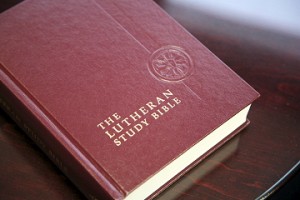 Recently, I received as a gift the new The Lutheran Study Bible. I own several study Bibles, and make regular use of them for different purposes according to their strengths. Like most study Bibles, The Lutheran Study Bible contains the biblical text on the top half of its pages with extensive notes marking the bottom half of its pages. These notes contain important interpretive commentary as well as quotes from the church fathers and even the occasional prayer to assist me as I meditate on a particular biblical text.
One of the concerns that many study Bible publishers share, including those who published The Lutheran Study Bible, is that a clear demarcation be made between the biblical text itself and the notes on the biblical text. For as helpful as study notes may be, and as salutary as the doctrine that they confess may be, a study Bible’s notes are not the inspired, inerrant words of God. Another study Bible, the ESV Study Bible, explains thusly:
The ESV Study Bible contains two kinds of words. The first kind is the actual words of the Bible, which are the very words of God to us. These are printed in the larger font at the top of each page. The second kind is the study notes, which are merely human words. These are printed in the smaller font at the bottom of each page. The difference in font sizes serves to remind readers that the words of the Bible itself are infinitely more valuable than the words of the notes. The words of the Bible are the words of our Creator speaking to us. (ESV Study Bible, 10)
As valuable as notes on the Word of God might be, it is important, say the publishers of the ESV Study Bible, to distinguish between the words of man on the Word of God and the Word of God itself. For the latter are inspired and inerrant words while the former are not.
This all brings us to our reading for today from 1 John 5. For John writes about man’s testimony about God over and against God’s testimony about himself:
This is the one who came by water and blood – Jesus Christ. He did not come by water only, but by water and blood. And it is the Spirit who testifies, because the Spirit is the truth. For there are three that testify: the Spirit, the water and the blood; and the three are in agreement. We accept man’s testimony, but God’s testimony is greater because it is the testimony of God, which he has given about his Son. (verses 6-9)
Interestingly, the King James Version of the Bible inserts another sentence immediately before verse 8 not found in the New International Version of the Bible, quoted above. The KJV includes: “There are three that bear record in heaven, the Father, the Word, and the Holy Ghost: and these three are one.” Why does the NIV not include this sentence?
The earliest biblical manuscript in which this sentence from the KJV appears is Minuscule 88, a twelfth century manuscript, now housed at a museum in Naples. Notably, this sentence is not included as part of the biblical text, but on the side margin, much like a study Bible note. Apparently, some early biblical interpreters took John’s reference to “the Spirit, the water, and the blood” in verse 8 to be a reference to the Trinity and so inserted this note clearly proclaiming the doctrine of the Trinity. With time, this originally marginal note made its way into some manuscripts as part of the actual biblical text! The translators of the KJV used one such manuscript and so included it in their translation. More recent scholarship, however, has noted that these words were not originally penned by John as part of his letter. Thus, they are not included in more modern translations.
Do these words from the KJV concerning the Father, Son, and Holy Ghost teach false doctrine? Absolutely not! Are these words helpful in properly understanding the Trinity? Of course they are! Then why leave them out from modern translations of the Bible? Because as true and helpful as these words might be, they are finally words of man, written later, and not part of the inerrant, inspired Word of God. These words make a terrific note for a study Bible, but they are not part of the Bible itself.
More notes, commentaries, and books have been written on the Good Book than any other book in the history of the world. Many of the notes, commentaries, and books have lots of enlightening, encouraging, and true things to say. But remember, they are the words of man on the Word of God, not the Word of God itself. And nothing can displace or replace the Word of God as primary for a Christian. Thus, commit yourself to continued reading of God’s Word, first and foremost. For this is the only Word in which we hear the absolute sure and certain voice of God. Everything else is just commentary. And so ends my commentary for today. Now, go and read your Bible.
“Word for Today” – 1 John 4 – www.concordialutheranchurch.com
 “Beam me up, Scotty.” “It’s elementary, my dear Watson.” “Let them eat cake.” “Play it again, Sam.” Who said each of these quotes? If you guessed James Kirk, Sherlock Holmes, Marie Antoinette, and Ingrid Bergman, you are incorrect. These are famous misquotes that, because they have been so often repeated, have become more well known than the real quotes which they parody! Captain Kirk didn’t say “Beam me up, Scotty,” but “Beam me up, Mr. Scott.” The quote “It’s elementary, my dear Watson” is found not in a Sherlock Holmes novel, but in a 1929 New York Times film review. Marie Antoinette said, “Let them eat bread,” not cake. And that oh so famous line uttered by Bergman to Dooley Wilson from Casablanca is, “Play it, Sam. Play ‘As Time Goes By.’” She never said, “Play it again, Sam.”
Accurately quoting someone is very important. That’s why books and articles have footnotes, endnotes, and in-text citations. Indeed, the value of accurate quotation is what John extols in our reading for today from 1 John 4:
Dear friends, do not believe every spirit, but test the spirits to see whether they are from God, because many false prophets have gone out into the world. This is how you can recognize the Spirit of God: Every spirit that acknowledges that Jesus Christ has come in the flesh is from God, but every spirit that does not acknowledge Jesus is not from God. This is the spirit of the antichrist, which you have heard is coming and even now is already in the world. (verses 1-3)
John reminds us that to acknowledge Jesus Christ and correct doctrine about him is paramount to the Christian faith. The Greek word for “acknowledge” is homologeo, meaning, “to speak the same thing as.” Thus, John is exhorting us to “speak the same thing as” Jesus. He is exhorting us to faithfully and accurately quote Jesus in all he teaches.
There are three main ways in which Jesus is not homologeo-d in our world. It is useful to briefly examine each of these.
People speak against what Jesus says.
The first failure to homologeo Jesus constitutes a crass and belligerent rejection of what Jesus has said and done. For example, when Jesus foretells his suffering and death to his disciples, one of his disciples, named Peter, responds, “Never, Lord! This shall never happen to you” (Matthew 16:22). Peter is speaking against Jesus’ mission of the cross. And Jesus’ response is fierce and frank: “Get behind me, Satan! You are a stumbling block to me; you do not have in mind the things of God, but the things of men” (Matthew 16:23). We are never to speak against what Jesus says.
People speak part of what Jesus says.
Some people, who are not nearly so bold as to crassly dismiss Jesus’ words, instead subtly undermine his teaching by taking into account only the parts of Jesus’ teaching which comport with an already preconceived world view. For example, some people may proudly quote Jesus saying, “Do not judge, or you too will be judged” (Matthew 7:1), but never read on to see that judgment of sin is allowed, albeit only after a Christian has carefully considered and judged his own sin (cf. Matthew 7:3-5). What is prohibited in Matthew 7 is rash and hypocritical judgment, not all judgment of sin. In order to quote Jesus correctly, a person must take all of what Jesus says, not just some of what he says.
People speak arrogantly what Jesus says.
Some people, although they may speak the words of Jesus, refuse to speak them in the spirit which Jesus sepaks them. In other words, rather than saying the same thing as Jesus from a position of humility and compassion, they say the same thing as Jesus from a position of arrogance and self-righteousness. As the apostle Peter, himself familiar with the dangers of arrogance, reminds us, “Always be prepared to give an answer to everyone who asks you to give the reason for the hope that you have. But do this with gentleness and respect” (1 Peter 3:15). We are not only to say what Jesus says, but we are to say it in the way which Jesus says it.
Homologeo-ing Jesus is a sobering mantle. For it is imperative that we speak Jesus’ words accurately and appropriately. But speaking Jesus’ words is also a joyous privilege. For his words bring hope to the hurting, joy to the pained, and even life to the spiritually dead. With whom can you homologeo Jesus’ words today?
“Word for Today” – 1 John 3 – www.concordialutheranchurch.com
 I have never had much of a green thumb. Just the other day, my wife and I received an email asking us to purchase some poinsettias as part of a fundraiser. After agreeing to the offer because the proceeds go to a good cause, we also agreed to find good homes for them. After all, if we were to keep them, they wouldn’t last a week. For I never have had much of a green thumb.
I can remember, when I was in second grade, how my class planted seeds in Dixie cups and placed them on the windowsill and waited for them to grow. Many of my classmates’ seeds sprouted quickly, beautiful, and heartily. Mine, on the other hand, never broke its soil. Indeed, the only seed I have ever had that has done anything impressive is birdseed. The pigeons loved me.
In our reading for today from 1 John 3, the apostle speaks of a Christian’s life in Jesus: “No one who is born of God will continue to sin, because God’s seed remains in him; he cannot go on sinning, because he has been born of God” (verse 9). A Christian, John says, has God’s seed in him. What seed is this? It is the same seed promised by God as he cursed Satan for his beguilement: “And I will put enmity between you and the woman, and between your seed and her Seed; he shall bruise your head, and you shall bruise his heel” (Genesis 3:15). God promised a Seed from Eve who would crush Satan’s head. Who is this Seed? None other than Jesus Christ. Indeed, Jesus even speaks of himself as Seed when he foretells his death: “I tell you the truth, unless a kernel of wheat falls to the ground and dies, it remains only a single seed. But if it dies, it produces many seeds” (John 12:24). Jesus, through his death on the cross as the Seed of Eve, produces many seeds. These seeds, in turn, are we who are “called children of God” (verse 1). We are the seeds of God.
Commenting on the Lord’s Prayer, Martin Luther writes, “God would tenderly encourage us to believe that he is our true father and that we are his true children, so that we may ask him confidently with all assurance, as dear children ask their dear father” (SC III:2). This is John’s encouragement as well. We, as Christians, are invited to approach God as our Father, for we are his children – we are his seeds.
With what do you need to approach God today? Is there something heavy on your heart? Is there a trial that you face? Perhaps there is a daunting decision that you have to make. Whatever it is, don’t forget to turn to your heavenly Father for the guidance and strength you need. He will always be there to here and to help. After all, you are family. You are his child. You are his seed.
“Word for Today” – 1 John 2 – www.concordialutheranchurch.com
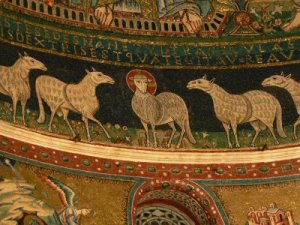 I suppose it was bound to happen sooner or later. A couple of months ago, I received a link in my email inbox to a YouTube video which made the unfounded claim that our president was the antichrist. Honestly, I just groaned a little bit. My heart also sank, knowing that this video was frightening some beloved Christian friends of mine with its polemical antics and misconstrued exegesis.
It seems as though just about everyone and everything has been called the antichrist at one time or another. The Roman Empire was seen as the antichrist in the first century. The Protestant reformers thought of the papacy as the antichrist. Then, there have been the usual more recent historical suspects: Hitler, Mussolini, our former president, and yes, our current president. I’ve even seen a few people try to argue that Billy Graham is the antichrist!
Blessedly, our reading for today from 1 John 2 encourages us to dispose of such juvenile and foolish speculation and leads us toward a more reasoned theology of the antichrist:
Dear children, this is the last hour; and as you have heard that the antichrist is coming, even now many antichrists have come. This is how we know it is the last hour. They went out from us, but they did not really belong to us. For if they had belonged to us, they would have remained with us; but their going showed that none of them belonged to us. (verses 18-19)
A few things are notable about this passage. First, worries about the antichrist are nothing new. Apparently, Christians in John’s day were also worried about this mysterious figure. Second, lest we recklessly dump the title of “antichrist” on any politician for whom we might not particularly care, John seems to indicate in verse 19 that the antichrist will come out of the church, not the secular world: “They went out from us, but they did not really belong to us.” The Lutheran reformers picked up on this line and on Paul’s words in 2 Thessalonians 2 and so wrote: The antichrist is “someone reigning in the church, not a pagan ruler…because he will invent doctrine that conflicts with the gospel and will arrogate to himself divine authority” (Tr. 39). Thus, the antichrist seems to be someone who is interested in perverting true doctrine, not just in gaining secular power. Third, notice that John mentions not just one antichrist, but “many antichrists.” In other words, looking for just one antichrist is a fool’s chase. For there are many antichrists.
The Greek prefix anti- means “in place of.” An antichrist, then, is anyone who sets him or her self up in place of the true Christ who is God. And John warns that there are many who do this. In fact, if you want to know who the first antichrists were, you need look no farther than Genesis 3:
Now the serpent was more crafty than any of the wild animals the LORD God had made. He said to the woman, “Did God really say, ‘You must not eat from any tree in the garden’? The woman said to the serpent, “We may eat fruit from the trees in the garden, but God did say, ‘You must not eat fruit from the tree that is in the middle of the garden, and you must not touch it, or you will die.’” “You will not surely die,” the serpent said to the woman. “For God knows that when you eat of it your eyes will be opened, and you will be like God, knowing good and evil.” (Genesis 3:1-5)
“You will be like God.” That’s the very definition of an antichrist – one who wants to be in the place of God. And so the very first antichrists are born. Their names? Adam and Eve.
On September 10, 1813, after defeating the British fleet in the Battle of Lake Erie, Commander Oliver Perry, sent the following message Major General William Harrison concerning their victory: “We have met the enemy, and they are ours.” This famous saying was later paraphrased in 1971 by Walt Kelly in his Pogo cartoon strip as, “We have met the enemy, and he is us.” Sadly, this is the case when it comes to John’s antichrist. So often, people speculate wildly about the identity of the antichrist. We are blind, however, to the fact that, at least in one sense, we have met the antichrist, and he is us. For all we seek to put ourselves in God’s place every time we sin. We all have a little bit of antichrist in us.
Of course, the good news of the gospel is that we don’t have to continue to play the role of Christ. After all, playing the role Christ is hard work. Playing the role Christ involves the cross. No, we don’t have to save the world and rule the universe, for we have someone who saves and rules it sovereignly, lovingly, and more efficiently than we ever could. And he is the true God. So let’s leave that to him.
Finally, we need not fear antichrists. Indeed, we need not fear even the great antichrist, spoken of in 2 Thessalonians 2, who will arise at the end of the time. For as powerful as that final antichrist might be, he’s no match for the real Christ. And it’s the real Christ who we trust. It’s the real Christ who we worship. It’s the real Christ who holds our salvation secure. Don’t settle for anything less than him.
“Word for Today” – 1 John 1 – www.concordialutheranchurch.com
 On a fairly consistent basis, I am called upon to answer questions from people who email the church looking for information concerning Concordia’s beliefs, practices, or ministries. Because these emails are not sent specifically to me, but to the church in general, I try to stay keenly aware that I am answering on behalf of my beloved congregation. Therefore, I am very careful and precise in how I answer these questions because I want to present Concordia in the best light possible. It is with this in mind that I have developed an intentional grammatical habit. Whenever I write someone on behalf of Concordia, I use first person plural pronouns rather than first person singular ones. For example, if I was to share Concordia’s mission, I would write, “We want to shine like stars in the universe” rather than “I want to shine like a star in the universe” because I am writing on behalf of the congregation. My hope, when writing such letters, is that the person to whom I am writing will eventually become a part of that first personal plural pronoun. For we at Concordia have a deep and abiding passion to welcome more and more people into our beloved family of faith.
The deep and abiding passion that runs through Concordia is clearly shared by the apostle John in our reading for today from 1 John 1. John, although writing personally, begins his letter with a communal pronoun: “That which was from the beginning, which we have heard, which we have seen with our eyes, which we have looked at and our hands have touched – this we proclaim concerning the Word of life” (verse 1). If John is the singular author of this letter, why would he use the plural pronoun “we”? Because John is not just writing for himself, he’s writing on behalf of the apostles. For all of the apostles had seen with their eyes and touched with their hand God’s very Word of life, Jesus Christ. And not only that, they received a message from him:
This is the message we have heard from him and declare to you: God is light; in him there is no darkness at all. If we claim to have fellowship with him yet walk in the darkness, we lie and do not live by the truth. But if we walk in the light, as he is in the light, we have fellowship with one another, and the blood of Jesus, his Son, purifies us from all sin. If we claim to be without sin, we deceive ourselves and the truth is not in us. If we confess our sins, he is faithful and just and will forgive us our sins and purify us from all unrighteousness. (verses 5-8)
A significant shift in the referent of the first person plural pronouns occurs at verse 6. In verses 1-4, John’s “we” refers only to John and his apostolic band. But in verses 6-9, John uses the first person plural pronoun “we” to refer to the sinfulness of all Christians and how they are all purified by the blood of Christ. In other words, the “we” of verses 6-9 includes a lot more people than does the “we” of verses 1-4. And it’s in these pronouns that John’s deep and abiding passion is to be found. For the “we” of apostles in verses 1-4 proclaims the gospel message to the “you” of verse 5, who subsequently are included in the “we” of all Christians in verses 6-9. This, then, is the mission of God: to take people from being “you’s” of the world and make them into “we’s” in the family of God. God wants his first person plural pronoun of his church to grow larger and larger.
“This is the message we have heard from him and declare to you: God is light; in his there is no darkness at all” (verse 5). With whom can you share this message today? There are so many people going through dark times who need the light of Christ to shine on their hearts. And when his light does shine on their hearts, they become part of us – they become part of God’s “we.” For they have been purified from all unrighteousness by the blood of Jesus. Here’s to the growing “we” of God’s Kingdom.


 Pastor Zach's Blog