Posts tagged ‘Salvation’
Common Question: How Were People Who Lived Before Jesus Saved?
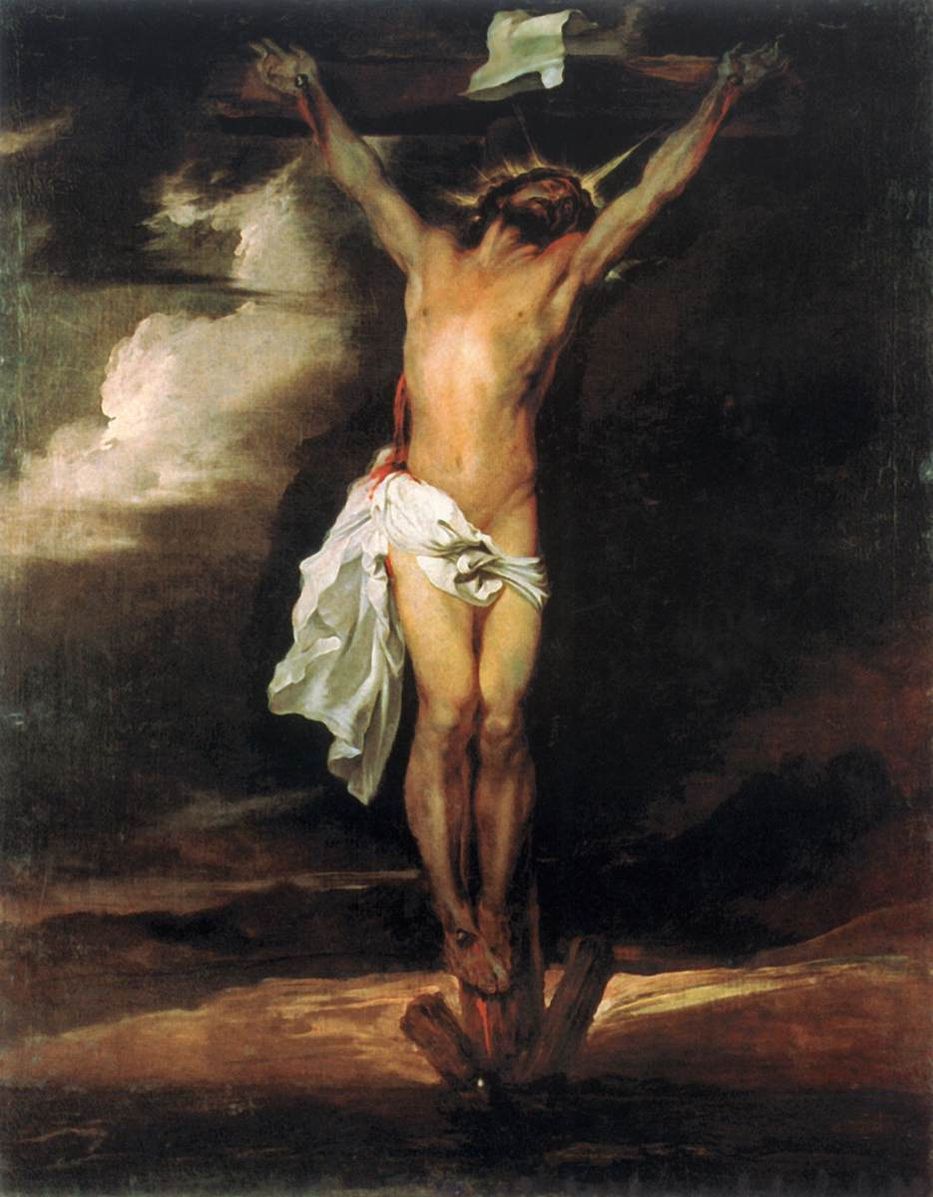
Credit: Anthony van Dyck, 1622
Last weekend at the church where I served, we talked about Jesus’ audacious claim that faith in Him and Him alone is the way to salvation. “I am the way and the truth and the life,” Jesus says. “No one comes to the Father except through Me” (John 14:6).
The truth that salvation is through faith in Christ alone raises a perennial theological question – one that, once again, came to my attention in an email I received after last weekend’s services: If people can be saved only by faith in Christ, how were those people who lived before Christ saved?
At the heart of this question lies an assumption – that people before who lived before Christ were somehow saved in a different way than those who lived after Him. The apostle Paul, however, would beg to differ. He points to one of the most famous characters in the Old Testament, Abraham, and specifically asks the question, “How was Abraham saved?” His answer is unmistakably clear:
Consider Abraham: “He believed God, and it was credited to him as righteousness.” Understand, then, that those who believe are children of Abraham. The Scripture foresaw that God would justify the Gentiles by faith, and announced the gospel in advance to Abraham: “All nations will be blessed through you.” So those who have faith are blessed along with Abraham, the man of faith. (Galatians 3:6-9)
Paul announces, “Here is how Abraham, perhaps the most famous character in the Old Testament, was saved: by faith.” How does Paul know this? Genesis 15:6, of course: “Abram believed the LORD, and He credited it to him as righteousness.” Importantly, Paul says that God “announced the gospel in advance to Abraham.” In other words, before Jesus came to save sinners, God announced that Jesus would come to save sinners. For example, the prophet Isaiah, some 700 years before Jesus’ advent, speaks of a servant who will be sent by God to take away the sins of the world:
Surely He took up our infirmities and carried our sorrows, yet we considered Him stricken by God, smitten by Him, and afflicted. But He was pierced for our transgressions, He was crushed for our iniquities; the punishment that brought us peace was upon Him, and by His wounds we are healed. (Isaiah 53:4-5)
So how were people saved, forgiven, and made righteous before Jesus? By believing that Jesus would come to save, forgive, and make them righteous. How are people saved, forgiven, and made righteous now? By believing that Jesus has come to save, forgive, and make them righteous. In other words, people both before Jesus had come and now that Jesus has come are saved in the same way. They are saved by Jesus.
Oftentimes, people harbor a misconception that people who lived before Christ were saved by following God’s Law while people living after Christ’s advent are now saved through faith in Him. Nothing could be further from the truth. People have always and only been saved by Jesus Christ and His work, even as Jesus Himself says: “I am the way and the truth and the life. No one comes to the Father except through Me.” God’s gospel has always been the only plan for our salvation.
If your life is anything like mine, plans are constantly changing. While writing this blog, I had to move an appointment because things on my calendar changed. Last week, as I was coming home from a trip to Dallas with some friends, we got a flat tire and plans, due to circumstances beyond our control, changed – we got home later than we expected. Plans are constantly changing. And oftentimes, it can be frustrating.
The promise of the gospel is that even if our plans change, God’s plans are sure and certain. The plan for our salvation always was, is, and will continue to be Jesus. There’s no need to look for another plan.
In Response to ISIS

Credit: The Christian Post
The video was titled, “A Message Signed With Blood to the Nation of the Cross.” In it, 21 Egyptian Christians, dressed in orange jump suits, were gruesomely beheaded by ISIS militants along a beach in Tripoli. One of the final frames of the video zooms in on the waters of the Mediterranean, red with the blood of these martyrs.[1]
Christians aren’t the only targets of ISIS’ rage. Just last week, ISIS released images appearing to show gay men being thrown off buildings only to be stoned after they fell to the ground. A statement released by ISIS explained that the organization is “clamping down on sexual deviance.”[2]
The reaction to such savage killings has understandably been one of untempered ire. Egypt’s president pledged retaliation against ISIS for the slaughter of its Christians. Indeed, Muslims and Christians together are raising a unified chorus of disgust at ISIS’ actions. Andrea Zaki, vice president of the Protestant Churches of Egypt, noted, “With their blood [these martyrs] are unifying Egypt.”[3]
Though the slaughter of Egypt’s Christians has gotten more press than ISIS’ heinous injustices against gay people, both demand a response in addition to whatever political or military responses may be offered in the national and international arenas. Here are two responses that, I believe, are appropriate and important for a moment such as this.
First, we need an anthropological response. After all, whether we are Christian or Muslim, gay or straight, we are all human. Indeed, as Christians, we know and believe that we are all created in God’s image, which affords us not only a shared humanity, but a necessary dignity. This collective humanity and dignity, in turn, involves certain shared hopes and desires. We all desire safety. We all desire respect. We all desire love. When these shared desires are so violently violated, as ISIS has done, basic empathy leads to visceral revulsion. Thus, we can join the world in condemning these acts, if for no other reason than that we are all human.
Second, we also need a theological response. This response is especially urgent because far too many in the broadly secularized West have refused to admit that there are theological drivers behind ISIS’ actions. Writing for The Atlantic, Graeme Wood explains:
We are misled … by a well-intentioned but dishonest campaign to deny the Islamic State’s medieval religious nature … The reality is that the Islamic State is Islamic. Very Islamic. Yes, it has attracted psychopaths and adventure seekers, drawn largely from the disaffected populations of the Middle East and Europe. But the religion preached by its most ardent followers derives from coherent and even learned interpretations of Islam.
Virtually every major decision and law promulgated by the Islamic State adheres to what it calls, in its press and pronouncements, and on its billboards, license plates, stationery, and coins, “the Prophetic methodology,” which means following the prophecy and example of Muhammad, in punctilious detail. Muslims can reject the Islamic State; nearly all do. But pretending that it isn’t actually a religious, millenarian group, with theology that must be understood to be combatted, has already led the United States to underestimate it and back foolish schemes to counter it.[4]
I should point out that parts of Wood’s history of ISIS’ theological origins – especially his claim that ISIS’ theology is of a “medieval religious nature” – are questionable and, thankfully, have been appropriately critiqued. Nevertheless, his basic premise still stands. ISIS is acting in a way that is robustly and rigorously driven by a certain religious understanding. For ISIS, theology is no mere veneer to cover up some naked ambition for power. Theology is at the heart of who they are. Thus, it does us no good, for the sake of some self-imposed, naïve political de rigueur, to pretend that at least some of ISIS’ drivers are not theological.
This is where Christians are in a unique position to lend their voices to the challenges and crises presented by ISIS. For we can offer a better theology than ISIS’ theology. We can rebuke a theology that allows the slaughtering of people with whom they religiously and culturally disagree, as Jesus did with His disciples when they wanted to destroy the Samaritans because they were a people with whom the disciples religiously and culturally disagreed. And when a theology leaves room for stoning those who live outside of traditional sexual ethics, we can say with Jesus, “If any one of you is without sin, let him be the first to throw a stone” (John 8:7).
Blessedly, the parts of this “better theology” I outlined above are ones with which the majority of the Muslim world would agree – because even though this “better theology’s” origins are explicitly Christian, its implications are broadly ethical. And even if ISIS’ understanding of Islamic theology is real, it is certainly not catholic. Plenty – and, in fact, the vast majority – of Muslims share our higher ethical aspirations. Indeed, perhaps what was once a Judeo-Christian ethic can expand into a Judeo-Muslim-Christian ethic.
Ultimately, of course, although theology includes ethics, it is more than just ethical. It is finally soteriological. And this is good. Because this means that even as ISIS continues its campaign of terror, it cannot thwart the promise of God that the faithful who have died at ISIS’ hands are now safe under heaven’s altar. For this we can be thankful. And because of this we can continue to be hopeful.
______________________
[1] Leonardo Blair, “Heartbreaking: Egyptian Christians Were Calling for Jesus During Execution by ISIS in Libya,” The Christian Post (2.18.2015).
[2] Cassandra Vinograd, “ISIS Hurls Gay Men Off Buildings, Stones Them: Analysts,” NBC News (2.15.2015).
[3] Jayson Casper, “Libya’s 21 Christian Martyrs: ‘With Their Blood, They Are Unifying Egypt’” Christianity Today (2.18.2015)
[4] Graeme Wood, “What ISIS Really Wants,” The Atlantic (March 2015).
You’re A Saint!
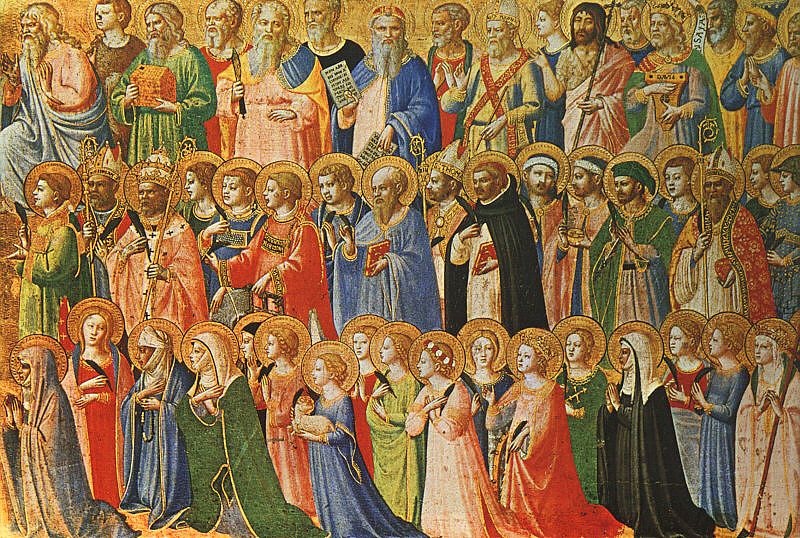
“The Forerunners of Christ with Saints and Martyrs” by Fra Angelico (1423)
This past Friday, Melody and I dressed up our daughter Hope as an owl and, with great anticipation of the delight we were about to see in her eyes, took her out trick-or-treating. It was a fun evening. She was grinning ear to ear. But as much fun as we had during our Friday evening excursions, the day after held an especially poignant place in my heart. Saturday, according to Church tradition, was All Saints’ Day, a day on which we both remember those saints in Christ who have gone before us and celebrate how we have been made saints through Christ’s death and resurrection. When I think about all the saints who have gone to be with the Lord in glory this past year, my heart can’t help but be warmed even while my eyes get a little misty. It’s a special time of remembrance.
A traditional prayer for All Saints’ Day encapsulates the meaning of this day well:
O almighty God, by whom we are graciously knit together as one communion and fellowship in the mystical body of Jesus Christ, our Lord, grant us so to follow Your blessed saints in all virtuous and godly living that we may come to those unspeakable joys which You have prepared for those who sincerely love You; through our Lord Jesus Christ, Your Son, who lives and reigns with You and the Holy Spirit, one God, now and forever. Amen!
I love this prayer for two reasons. First, it appropriately reminds us that there is much to learn from the saints who have gone before us. Their ways of “virtuous and godly living” ought to be celebrated by us and their insights into God’s Word and Christ’s gospel ought to be studied by us. There is much to be said for remembering – and practicing – the ways of the saints of old. At the same time, we must understand that we do not become saints by remembering and practicing the holy ways of these historic Christians. Rather, we become “sainted” by being “knit together as one communion and fellowship in the mystical body of Jesus Christ.” Everyone who is a member of Christ’s body is properly called a saint, even as the apostle Paul says to the church at Corinth: “To the church of God that is in Corinth, to those sanctified by Christ Jesus, called to be saints together with all those who in every place call upon the name of our Lord Jesus Christ, both their Lord and ours” (1 Corinthians 1:2). How are we made saints? We are sanctified and called by Christ. Who are the saints? They are everyone, everywhere who calls on the name of Jesus.
It is this definition of sainthood that the Church has believed and confessed for millennia, for example, in the Apostles’ Creed when we say, “I believe in the communion of saints.”
This phrase, “the communion of saints,” carries with it two meanings. On the one hand, this phrase refers to all Christians from all times in all places, both in heaven and on earth. Nicetas, a fourth century Serbian bishop, explains:
What is the Church but the congregation of all saints? Patriarchs, prophets, apostles, martyrs, all the just who have been, are, or shall be, are one Church because sanctified by one faith and life, marked by one Spirit, they constitute one body. Believe, then, that in this one Church you will attain the communion of saints.[1]
On the other hand, the Greek word for “saints” in the New Testament can be either masculine, referring to people, or neuter, referring to things. Thus, “the communion of saints” can be taken to mean “the communion of sainted, or holy, things.” This is the way that Peter Abelard, the great twelfth century French theologian, understood this phrase. In this case, the phrase, “the communion of sainted things,” was understood to mean the holy things of God: His Word, baptism, and the Lord’s Supper. The Lutheran confessors incorporate both understandings of “the communion of saints” when they write, “The Church is the congregation of saints [sainted people], in which the Gospel is rightly taught and the Sacraments are rightly administered [sainted things].”[2] Thus, the Church is made up of the sainted people of God gathered around the sainted things of God!
But there is even more to this phrase, “the communion of saints.” The Greek word for “communion” in the Creed is koinonia, a term that, even in secular Greek, describes not primarily communion with other human beings, but communion with God. For example, the first century Greek philosopher Epictetus wrote of the noble man in his “poor mortal body thinking of his fellowship (koinonia) with Zeus.”[3] Even in the pagan mind, man desires to have koinonia with god, albeit with a false god. This word koinonia was subsequently commandeered by Christians to describe communion with the true God: “God is faithful, by whom you were called into the fellowship (koinonia) of His Son, Jesus Christ our Lord” (1 Corinthians 1:9). We have koinonia with Christ. The phrase, “communion of saints,” therefore, refers not only to the communion we, as Christians, have with each other, but to the communion we have with Christ.
Finally, then, to say, “I believe in the communion of saints” is to say, “I believe that I have communion with Christ and with others who are in Christ. I believe that Christ meets me by His Word and holy gifts, cleanses me by His blood, and sanctifies me by His Holy Spirit.” But saying all this is a mouthful. So we simply say, “I believe in the communion of saints.” It’s a simple phrase that means so much. For it describes not only who we are, but who we are with. We’re with Jesus. And being with Jesus makes me feel like – well – a saint.
____________________
[1] Nicetas in Charles Augustus Briggs, The Fundamental Christian Faith (New York: Charles Scribner’s Sons, 1913), 193-194.
Robin Williams: 1951-2014

Credit: Ticketmaster
I first heard of Robin Williams’ untimely death thanks to Facebook. My wife Melody was scrolling through her newsfeed when she let out a gasp of disbelief and exclaimed, “Robin Williams died?!” My immediate thought was, “That’s fake.” Celebrity death hoaxes are common, after all. On Facebook alone, I’ve learned of the Rock’s death while filming Fast and Furious 7. I’ve read of Sylvester Stallone’s demise in a snowboarding accident. And I’ve heard that Miley Cyrus took her own life. Of course, none of these death stories are true. But I found out very quickly that Robin Williams’ death story was.
As the world began to grieve, the gruesome details began to emerge. The Marin County, California Police Department held a press conference in which they offered up details – perhaps, too many details – on Williams’ demise. Whatever the gory specifics might be, the overarching cause of death is tragically clear. Robin Williams died by suicide.
Suicide.
Just the word makes people shudder. And ponder. And question.
There are two questions that people often ask me whenever an individual – or, in the case of Robin Williams, a culture – is confronted by the harsh realities of suicide. The first is an explicitly Christian question while the second is more generally transcendent.
First, people ask me, “Can a person who commits suicide go to heaven?”
The short answer to this question is, simply, “yes.” From a theological perspective, all of us commit what I call “slow-motion suicide.” Scripture is clear that “the wages of sin is death” (Romans 6:23). Do we know this? Yes. Do we still sin intentionally and willingly? Yes. Thus, we’re killing ourselves with sin. The only difference between what we do to ourselves and what Robin Williams did last Sunday evening is the speed with which he did it. He took his life quickly. We take our lives bit-by-bit, sin-by-sin. If the person who takes his life in an instant can’t be saved, neither can the person who takes his life over decades. News of a suicide, then, is never an opportunity for judgment, but a call to introspection.
I should add that, when Jesus speaks of His forgiveness, He never singles out suicide as some sort of an unforgivable sin. Jesus declares, “I tell you the truth, all the sins and blasphemies of men will be forgiven them” (Mark 3:28). How many sins does the word “all” include? All of them. Even suicide. Thus, a person who takes his own life can be forgiven by Jesus and saved by Jesus just as well as any other sinner can. If you want to know more about suicide from a theological perspective, you can check out a blog I wrote a couple of years ago here.
Second, people ask me, “Why?” Why would a person who had so much going for him snuff out his life so recklessly?
The question of “why” has become especially acute in Robin Williams’ case because he left no note. Sadly, where facts are in short supply, gossip and speculation are plenty. I would point out, however, that even when a note is left, the question of “why” is still left unanswered. Even if a person writes of “having nothing left to live for,” or how “people will be better off without me,” those left behind still wonder: “Why didn’t he realize that he had so much to live for?” Or, “Why didn’t he realize what his death would do to us – how it would tear us apart?”
I have come to understand that the question of “why,” when it comes to suicide, has no answer – mainly because the suicidal person himself cannot answer the question. The darkness and confusion that surrounds a person when he takes his own life is so deep that genuine reasoning falters under the crushing weight of depression.
So where does all this leave us? Allow me to offer two parting thoughts.
First, a thought to those contemplating suicide: suicide is a lie of Satan. Satan entices people into suicide by making promises to “free you” or “fix you.” But he wants no such thing for you. He only wants to end you. This is why he seeks to either kill us slowly by enticing us into sin after sin or, if he can, he’ll be delighted to kill us quickly at the bottom of the barrel of a gun or by the brink of a blade. So, if you are contemplating suicide, remember: everything it promises is a lie. Get help from someone who will tell you the truth.
Second, a thought to those who have lost loved ones to suicide: life is the truth of our God. God is the master of snatching life out of the jaws of death. He did it with His Son. And He can do it with those who take their own lives. Indeed, on the Last Day, He will do it with all who trust in Him. Wherever Satan peddles his lies, God crushes them with His truth. And His truth is this: by faith in Christ, your loved one is not beyond hope. Suicidal sinners can be saved too.
I’m looking forward to seeing more than a few of them in heaven.
The Limits of Human Freedom
 We, in America, like freedom. We talk about it. We write about it. We even sing about it. Anyone who has ever attended a sporting event where our national anthem was sung has heard in soaring melody how we live in “the land of the free and the home of the brave.”
We, in America, like freedom. And we will fight, protest, and lobby to protect the freedoms most near and dear to our hearts. Some fight, protest, and lobby to protect the freedom of religion – to practice their beliefs as they choose. Others fight, protest, and lobby for the freedom to keep and bear arms. Still others fight, protest, and lobby for the freedom to marry whoever they want – even if whoever they want is of the same gender.
Perhaps it is our love of freedom that makes the doctrine of predestination so offensive to so many. Jesus summarizes predestination thusly: “You did not choose Me, but I chose you and appointed you so that you might go and bear fruit – fruit that will last” (John 15:16). The doctrine of predestination, then, is simply this: it is God, not us, who is in charge of our salvation. When it comes to our salvation, we are not free!
This is where the hackles of our freedom-loving hearts can get raised. Indeed, the most common objection that I hear whenever I teach on predestination is, “But what about our free wills? Doesn’t predestination mean that God turns us into automatons – unable to accept or reject Him?”
I have addressed this question many times and in many ways. But to address it this time, I would turn your attention the midcentury American sociologist Philip Rieff who, I believe, writes about the limits of our free wills – and the goodness of these limits – in a poignant and powerful way. Rieff writes:
There is no feeling more desperate than that of being free to choose, and yet without the specific compulsion of being chosen. After all, one does not really choose; one is chosen. This is one way of stating the difference between gods and men. Gods choose; men are chosen. What men lose when they become as free as gods is precisely that sense of being chosen, which encourages them, in their gratitude, to take their subsequent choices seriously.[1]
To choose without first being chosen, Rieff explains, is a miserable manner of existence. After all, if there is no God who loves you enough to choose you, what does your choice of Him – or of anything else, for that matter – matter? Who would want to choose a God in their limited power who doesn’t care enough to first choose them out of His infinite power? This is why the apostle Paul speaks of predestination in such glowing terms:
Praise be to the God and Father of our Lord Jesus Christ, who has blessed us in the heavenly realms with every spiritual blessing in Christ. For He chose us in Him before the creation of the world to be holy and blameless in His sight. In love He predestined us to be adopted as His sons through Jesus Christ, in accordance with His pleasure and will – to the praise of His glorious grace, which He has freely given us in the One He loves. (Ephesians 1:3-7)
Paul is thrilled by the doctrine of predestination! For Paul knows that the only way he is free to make decisions worth making is when believes and sees that he himself is a decision that God thought was worth making in predestination. Paul’s limited free will is of no consequence if it cannot come under the tender loving care of God’s perfect free will.
So, do you long to be free? Do you fight, protest, and lobby to protect the freedoms that are near and dear to your heart? If you do, remember that your freedom of choice is only as good and meaningful as your bondage to Christ. Without being under Christ’s rule and reign, your freedom is futile. Under Christ’s rule and reign, however, your freedom is purposeful. And I don’t know about you, but I want my freedom to mean something.
_______________________
[1] Philip Rieff, The Triumph of the Therapeutic (Chicago: The University of Chicago Press, 1966), 93.
Luther on Christ’s Resurrection…And Ours
 On this Easter Monday, I thought I would share with you some words from a series of seventeen sermons preached by Martin Luther in 1533 on 1 Corinthians 15. In this chapter, the apostle Paul speaks of the resurrection of Christ and the hope and assurance that it gives us that we too will be raised on the Last Day:
Because Christ is risen and gives us His resurrection against our sin, death, and hell, we must advance to where we also learn to say: “O death, where is thy sting?” [1 Corinthians 15:55] although we at present see only the reverse, namely, that we have nothing but the perishable hanging about our neck, that we lead a wretched filthy life, that we are subject to all sorts of distress and danger, and that nothing but death awaits us in the end.
But the faith that clings to Christ is able to engender far different thoughts. It can envisage a new existence. It can form an image and gain sight of a condition where this perishable, wretched form is erased entirely and replaced by a pure and celestial essence. For since faith is certain of this doctrine that Christ’s resurrection is our resurrection, it must follow that this resurrection is just as effective in us as it was for Him – except that He is a different person, namely, true God. And faith must bring it about that this body’s frail and mortal being is discarded and removed and a different, immortal being is put on, with a body that can no longer be touched by filth, sickness, mishap, misery, or death but is perfectly pure, healthy, strong, and beautiful…
God did not create man that he should sin and die, but that he should live. But the devil inflicted so much shameful filth and so many blemishes on nature that man must bear so much sickness, stench, and misfortune about his neck because he sinned. But now that sin is removed through Christ, we shall be rid of all of that too. All will be pure, and nothing that is evil or loathsome will be felt any longer on earth. (AE 28:202-203)
Luther’s final words beautifully summarize the hope of Easter: “All will be pure, and nothing that is evil or loathsome will be felt any longer on the earth.” Because Christ is risen, the evils of sin and death will be destroyed. Or, in the words of the poet John Donne, because of Easter, “death, thou shalt die!”
Christ is risen! And this means you will too.
When A Little Is A Lot
 It has long struck me how God can do so much with so little. A little bit of water and the name of God spoken over us in baptism – and we are brought into the family of Christ. A little bit of bread and a little bit of wine – and we receive Christ’s body and blood for the forgiveness of our sins. It doesn’t take much for God to do great things!
I was reminded of this point once again as I was teaching Daniel 10. In this curious chapter, Daniel receives a vision of “a man dressed in linen, with a belt of the finest gold around His waist. His body was like chrysolite, His face like lightning, His eyes like flaming torches, His arms and legs like the gleam of burnished bronze, and His voice like the sound of a multitude” (Daniel 10:5-6). The characteristics of this man are strikingly similar to those used to describe Jesus in Revelation:
I turned around to see the voice that was speaking to me. And when I turned I saw seven golden lampstands, and among the lampstands was someone “like a son of man,” dressed in a robe reaching down to His feet and with a golden sash around His chest. His head and hair were white like wool, as white as snow, and His eyes were like blazing fire. His feet were like bronze glowing in a furnace, and His voice was like the sound of rushing waters. (Revelation 1:12-15)
Daniel, it seems, is having an encounter with the pre-incarnate Christ.
What is Christ doing before His incarnation? What He does after His incarnation: fighting the forces of evil. He says, “I will return to fight against the prince of Persia” (Daniel 10:20). Many scholars take this reference to “the prince of Persia” as a reference to a fallen angel and not to the human leader of Persia at this time, Cyrus. After this prince of Persia, Jesus says, will come the king of Greece. And then, Jesus ends the chapter by saying, “No one supports me against them except Michael, your prince” (Daniel 10:21).
It is verse 21 that especially struck me. It is just the Son of God and His archangel Michael against the many and varied forces of darkness and evil. Daniel 11 goes into detail concerning those many and varied dark forces. It’s two forces for good marshaled against a countless number of forces for evil. It’s a little against a lot. And yet, good carries the day:
At that time your people – everyone whose name is found written in the book – will be delivered. Multitudes who sleep in the dust of the earth will awake: some to everlasting life, others to shame and everlasting contempt. (Daniel 12:1-2)
Evil is consigned to everlasting contempt. The redeemed of the Lord enjoy everlasting life. The seemingly little forces for good defeat the massive forces of evil.
Throughout the Bible, evil constantly seeks to gain power using sheer numbers. The Psalmist writes about how “the kings of the earth take their stand and the rulers gather together against the LORD and against his Anointed One” (Psalm 2:2). But no matter how many forces evil may be able to marshal, evil is no match for the goodness of God. The quantity of evil foes is no match for the perfect quality of God’s goodness. As Luther writes in “A Mighty Fortress” of God’s power against the devil and minions: “One little word can fell him.” One little word of God can destroy vast army of evil. And that little word has already by spoken from the cross: “It is finished” (John 19:30). From the cross, Jesus sealed Satan’s fate with just a little word. For “It is finished” means “Satan is finished.” This little word defeated great evil and saved us.
So never overlook the little things of God. A little can do a lot. After all, what the world thought was nothing more than an insignificant execution on a cross wound up offering salvation to all humanity. From a little cross flows big hope.
A Theological Look At Suicide
 It’s never easy to lose a loved one. Whether it’s an illness when someone is middle aged, a tragedy when someone is young, or even a so-called “natural” passing when someone is old, death brings tears and mourning. People may sometimes quaintly call a funeral a “celebration,” but if it is, what a strange way to celebrate – with lowered heads and furrowed brows and muffled sobs. Truth be told, death is sad. And death is heartbreaking.
Death becomes especially heartbreaking when it is the result of suicide. We will often speak of “preventable deaths” – those that could have been avoided if only he wouldn’t have gotten behind the wheel when he was drunk, or if only she would have gone to the doctor sooner after feeling a lump. But suicide seems to be the ultimate example of a “preventable death.” After all, the person who lost his life is the same person who took his life…voluntarily. He held in his own hands the power to choose life or the power to choose death. And he chose the unthinkable.
When suicide strikes, many questions inevitably arise. People ask everything from, “How could he be so selfish?” to “Is killing oneself the unforgivable sin?” Because of the many questions connected to suicide, I thought it would be worth it to take a look at suicide broadly from a theological perspective and seek to clear up some of the persistent misperceptions that surround this heartbreaking act.
In order to understand the Bible’s estimation suicide, we must begin a fundamental observation: suicide is tragic. Though this may seem self-evident to many, the reason this observation is necessary is because not everyone has believed this, nor does everyone now believe this.
The most famous suicide of the ancient world is that of Socrates. After being convicted of corrupting the minds of the youth of Athens by criticizing the city’s democratic government, the town’s officials sentenced Socrates to death by poisonous hemlock. Plato, his close friend and pupil, recounts Socrates drinking the lethal cocktail:
[Socrates] took it, and very gently…without trembling or changing color or expression…Said Socrates, “But I may and must pray to the gods that my departure hence be a fortunate one; so I offer this prayer, and may it be granted.” With these words he raised the cup to his lips and very cheerfully and quietly drained it.[1]
Notice how nobly, stoically, and even, as Plato says, “cheerfully,” Socrates drinks his poison, more in control of his life – and death – than those who handed down his capital sentence. It is this stately picture of Socrates’ suicide that gave rise to the opinion of the ancients that it is perfectly acceptable to take one’s own life. Seneca, a well-known Stoic philosopher, says of suicide, “The best thing which eternal law ever ordained was that it allowed to us one entrance in life, but many exits…This is one reason why we cannot complain of life; it keeps no one against his will….Live, if you so desire; if not, you may return to the place from whence you came.”[2] More recently, suicide has made headlines because of those who support “Death with Dignity,” a movement which maintains that doctor assisted suicide, in cases of grave and terminal illness, is justified and, yes, even dignified.[3] For some, suicide is moral and noble. The Bible, however, paints a starkly different picture of suicide. Suicide, according to the Bible, is unambiguously proscribed. Consider the reasons why below.
The Bible prohibits suicide because it results in death. Death is deeply evil. Indeed, the apostle Paul calls death “the last enemy” (1 Corinthians 15:26), ultimately to be defeated at Christ’s Second Coming. Death is so evil because it is utterly incompatible with God’s original creative intent. As we confess in the Nicene Creed, our God is “the Lord and giver of life.” God is in the business of life, not death! However, sin introduced what God never intended. Therefore, we are to hate death rather than embracing it as suicide does.
The Bible prohibits suicide because it results in murder. Most famously, murder is prohibited by the Fifth Commandment: “You shall not murder” (Exodus 20:13). But long before Moses delivered the Ten Commandments to Israel, murder was outlawed as a heinous ill. Immediately following the great flood of Noah’s day, God commands, “Whoever sheds the blood of man, by man shall his blood be shed; for in the image of God has God made man” (Genesis 9:6). Notice the general nature of both of these prohibitions. Moses’ prohibition against murder is a blanket one without so much as a direct object to specify who should not be murdered. God’s prohibition to Noah does contain a direct object – “man” – but this direct object is a general one, referring to mankind. The killing of humans by other humans, then, is clearly and consistently forbidden in the Scriptures. Thus, even the killing of oneself breaks the command of God.
The Bible prohibits suicide because it results in abuse. It is difficult to think of a more dire abuse of one’s body than the taking of one’s life. Because God created our bodies, redeems our bodies through His Son Jesus Christ, and will raise our bodies on the Last Day, our bodies – and what we do with them – matter to God! As Paul writes, “Do you not know that your body is a temple of the Holy Spirit, who is in you, whom you have received from God? You are not your own; you were bought at a price. Therefore honor God with your body” (1 Corinthians 6:19-20). Killing one’s body can hardly be considered an honorable way to treat one’s body.
It is important to note that honoring God with one’s body precludes not only suicide, but anything that damages the body. There are many people who refuse to honor God with their bodies in countless ways and for countless reasons. Some do not eat well. Some do not exercise. Some do not visit their physicians. When these people sometimes die prematurely, they do so to everyone’s sorrow, but not necessarily to everyone’s shock. After all, we know that abuse can eventually result in death. So often, we confine our definition of “suicide” to a one-time act that ends in the loss of life. But far too many people are willing to commit what I call “slow-motion suicide” by abusing their bodies over months, years, and decades. This too is prohibited by Paul’s injunction in 1 Corinthians 6.
Though the Bible flatly condemns suicide, even something as seemingly final as the taking of one’s life is not unsalvageable for the Christian. People will sometimes refer to suicide as “the unforgivable sin.” The thinking goes like this: because a person who commits suicide cannot repent of his sin, he cannot be forgiven and will therefore be eternally damned. This thinking, however, is flawed on two counts. First, this thinking does not take into account the extenuating circumstances that often accompany suicide, for a person who takes his own life often does so during a moment of deep despair, depression, or even insanity. This can hardly be considered to be a belligerent and unrepentant sin against God. Rather, the person who takes his life in this kind of an instance may not even understand what he is doing. Second, the thinking that calls suicide “unforgivable” assumes repentance is a cognitive act of sorrow that feels remorse over a specific sin and that this remorse is necessary to offset a sin’s damnable effect. This, however, is not a true picture of biblical repentance. For if a person had to feel cognitive remorse for every sin specifically, none could be saved, for we all commit sins that we either do not remember or do not even notice in the first place. This is why the Psalmist pleads with God, “Forgive my hidden faults. Keep your servant also from willful sins; may they not rule over me. Then will I be blameless, innocent of great transgression” (Psalm 19:12-13). Notice that the Psalmist makes a distinction between “hidden faults” and “willful sins.” The “hidden faults” are those sins unknown to the Psalmist whereas the “willful sins” are those sins which the Psalmist has intentionally and knowingly committed. The Psalmist believes that God will forgive both types of sins – both his known and unknown sins.
Martin Luther says of repentance, “Our Lord and Master Jesus Christ, when He said Repent, willed that the whole life of believers should be repentance.”[4] Like the Psalmist, Luther believes that repentance is more than just specific remorse over a specific sin; rather, repentance is part and parcel of the posture of a Christian’s heart, for a repentant Christian continually believes that he is a person who continually sins and is thereby continually in need of God’s grace and forgiveness. Thus, just because a person does not express remorse for committing suicide specifically does not mean that he is not living a life of repentance generally.
Some people may still ask, “But what about Judas? Didn’t Judas commit suicide and didn’t he go to hell?” Though it is true that Scripture implies Judas’ ultimate eternal damnation (cf. Acts 1:25), we must understand that Judas did not go to hell because he committed suicide, but because he refused to trust in Jesus to forgive his sin. Matthew tells us, “When Judas, who had betrayed Him, saw that Jesus was condemned, he was seized with remorse” (Matthew 27:3). The Greek word for “remorse” is metamelomai. Though there is some semantic overlap, this word is nevertheless distinct from the Greek word for “repentance,” which is metanoia. Thus, even though Judas seems to experience some level of remorse over his terrible wickedness, he does not seem to repent of his sin and turn to Christ for forgiveness. Tragically, Judas’ remorse leads only to despair which leads only to his eventual suicide. The stain of human sin cannot be absolved by feeling bad about oneself through remorse. It can only be absolved by turning to Jesus in repentance.
Finally, it is important that we support and encourage those who have lost loved ones to suicide and seek immediate help for those who may be considering suicide. As Christians, we are called to remind everyone that, through faith in Christ, despair and death do not need to have the final say. God’s plan of eternal, joyous life for us can ultimately prevail. As the apostle Paul exclaims:
Listen, I tell you a mystery: We will not all sleep, but we will all be changed – in a flash, in the twinkling of an eye, at the last trumpet. For the trumpet will sound, the dead will be raised imperishable, and we will be changed. For the perishable must clothe itself with the imperishable, and the mortal with immortality. When the perishable has been clothed with the imperishable, and the mortal with immortality, then the saying that is written will come true: “Death has been swallowed up in victory. Where, O death, is your victory? Where, O death, is your sting?” The sting of death is sin, and the power of sin is the law. But thanks be to God! He gives us the victory through our Lord Jesus Christ. (1 Corinthians 15:51-57)
Despair and death are no match for the victory and life that Jesus brings. Of this we can be sure! And in this we can take comfort.
ABC Extra – Our Plans and God’s Purpose
 “Many are the plans in a man’s heart, but it is the LORD’s purpose the prevails” (Proverbs 19:21). In Hebrew, the word for “plans” is machashabah, a word that describes the inventions of man. In Exodus 31, God sets apart certain Israelites to be the craftsmen of the country. God says, “See, I have chosen Bezalel son of Uri, the son of Hur, of the tribe of Judah, and I have filled him with the Spirit of God, with skill, ability and knowledge in all kinds of crafts – to make artistic designs for work in gold, silver and bronze, to cut and set stones, to work in wood, and to engage in all kinds of craftsmanship” (Exodus 31:2-5). The Hebrew word for “make” in verse 4 is machashabah. Bezalel is called by God to be an inventor, or a crafter, of art.
Man loves to invent. Indeed, some of our society’s biggest technological and medical breakthroughs are thanks to irrepressible human ingenuity. But not only does man love to invent things, he also loves to invent plans for his future. He plans where he will live, how much money he will make, what kind of car he will drive, and what kind of success he will achieve. But man’s invented plans cannot stand against God’s eternal purpose. The Psalmist warns, “The LORD knows the thoughts of man; He knows that they are futile” (Psalm 94:11). The Hebrew word for “thoughts” is again machashabah. Man’s plans, no matter how grand, are futile if they do not comport to God’s purpose.
In Luke 12, Jesus tells the story of a farmer who takes in a bumper crop. In fact, his crop is so big that he doesn’t have room for his bounty, and so he has to build more grain silos to store all he has grown. And then, with his grain safely stored, he begins to make plans. He says to himself, “You have plenty of good things laid up for many years. Take life easy; eat, drink and be merry” (Luke 12:19). But the rich man’s fleeting and foolish plans are no match for the finality of death. God appears to his man and says to him, “You fool! This very night your life will be demanded from you. Then who will get what you have prepared for yourself” (Luke 12:20)? This man invented many plans. But they all fell apart.
During Easter at Concordia, we began a series titled “Living on Purpose” where we are discussing and discovering God’s eternal purpose as expressed in His Son, Jesus Christ. All too often, however, we confuse our plans with God’s purpose. It is against this mistake that Proverbs 19:21 warns. You can plan all you want. But you can’t thwart God’s purpose. Just ask the devil. His plan of sin could not thwart God’s purpose of salvation through the cross of Christ.
What are you planning? It’s great to plan, but your plans should never be at odds with God’s purpose. Why? Because God’s purpose for us is good and loving. The apostle Paul reflects on God’s purpose for us when he writes, “God has saved us and called us to a holy life – not because of anything we have done but because of His own purpose and grace” (2 Timothy 1:9). God’s purpose is our salvation. And in comparison to purpose as transcendent as this, my plans seem only measly. His purpose is greater than my plans. Praise be to God!
Want to learn more? Go to
www.ConcordiaLutheranChurch.com
and check out audio and video from Pastor Tucker’s
message or Pastor Zach’s ABC!
The Whole Christ

"The Crucifixion of Christ" by Gerhard Remisch
The other morning, I was reading 2 John as part of my devotions, when I once again came across a verse I have reflected on many times: “For many deceivers have gone out into the world, those who do not confess the coming of Jesus Christ in the flesh. Such a one is the deceiver and the antichrist” (2 John 7). Though these words may strike us as harsh, they are true and necessary. For theology – the study of God – and Christology – the study of Christ – are inextricably connected. If one has an errant view of Christ, he will inevitably have an errant view of God, for it is precisely through Christ that God is revealed. This is why, especially in the early centuries of the Christian Church, there were so many creedal formulations concerning Christ. The early Christians wanted to make sure they accurately and faithfully confessed their Lord and Savior. Alister McGrath notes, “The history of early Christian doctrine is the basically the emergence of the Christological.”[1]
Martin Luther offers three ways in which Christology can go askew:
The devil has work to do and attacks Christ in three lines of battle. One will not let Him be God, another will not let Him be man, and the third will not let Him do what He has done. Each of the three wants to reduce Christ to nothing. For what does it profit you to confess that He is God, if you do not also believe that He is man? Then you do not have the whole, real Christ with that, but only a phantom of the devil’s. What does it profit you to confess that He is man, if you do not also believe that He is God? What does it profit you to confess that He is God and man, if you do not also believe that He has become everything and done everything for you?[2]
Luther’s insists that, in order to believe in Christ, we must believe in His humanity, His divinity, and His work on the cross. If we deny one part of this confession, we deny the whole Christ. Why? Because the person of Christ as true God and true man cannot be separated from the work of Christ, which is salvation. Notice how the Nicene Creed confesses Christ’s person and work all together in one eloquently integrated sweep: “For us men and for our salvation, [Christ] came down from heaven and was incarnate by the Holy Spirit of the virgin Mary and was made man; and was crucified also for us under Pontius Pilate.” Here we read that Christ “came down from heaven,” a reference to His divinity, He was “incarnate,” a reference to His humanity, and “was crucified also for us under Pontius Pilate,” a reference to His salvific work. This is Christ. He can be nothing less and He can do nothing less.
John’s tirade against those who deny “the coming of Jesus Christ in the flesh” is due to the fact that he cannot bear to think that someone would miss out on all that Christ is and all that He has done. After all, why would we want something or someone less than the whole Christ? For the whole Christ is one with God and, at the same time, in solidarity with us. And whole Christ saves us wholly, without any worth or merit on our parts. John can’t dream of settling for anyone or anything less. I can’t either. How about you?


 Pastor Zach's Blog