Posts tagged ‘Resurrection’
Reflections on London

As I finish my preparations for worship at Concordia tomorrow, I do so knowing that people across the world are hurting tonight as terrorists have launched an attack yet again, this time in London.
As I’ve been reflecting on another tragic night, I cannot help but hold out hope. Here’s why. Terrorists strike. They quickly detonate a bomb, or mow down people using a car. Terrorists strike. Our God, however, does something more. He abides. He abides with us to comfort us in our distress. He abides with us to dry our eyes when they are filled with tears. He abides with us to give us strength when we are weak. Terrorists strike. Our God abides.
And abiding is better.
Abiding is better because it outlasts a strike. Abiding is better because long after terrorists disappear into the shadows to plan their next sinister attack, our God remains by the sides of those who have lost loved ones. Abiding is better because long after the police clear, loved ones are laid to rest, and today’s tragic story gets coopted by the next big tragic story, our God will not forget the events of this night.
One of my favorite hymns is “Abide with Me.” Two of its verses are especially poignant to me tonight. The first of these verses is for those who are mourning losses in these attacks. The hymn reminds us of how Christ’s abiding presence can comfort us in our loss:
Come not in terrors, as the King of kings;
But kind and good, with healing in Thy wings;
Tears for all woes, a heart for every plea;
Come, Friend of sinners, and abide with me!
In a world of terror, we do not need Christ to be our terrible Judge. Instead, we need Him to be our gentle Healer. May Christ begin the healing process in all those who are grieving.
The second of the verses reminds us of the hope that we have for the lost:
I fear no foe, with Thee at hand to bless;
Ills have no weight, and tears no bitterness:
Where is death’s sting? Where, grave, thy victory?
I triumph still if Thou abide with me.
Terrorists struck tonight. And with them, death struck. But when Christ abides with us, we triumph.
Terrorism doesn’t stand a chance.
Praying for London.
Terror in Manchester

Terror struck again, this time at an Ariana Grande concert in Manchester, England. What began as a night of fun for fans of the pop music diva ended with 22 dead, many of them children, and 59 others wounded when a suicide bomber detonated himself in the middle of the concert arena. ISIS quickly claimed responsibility for the attack, which was carried out by 22-year-old Salman Abedi who seems to have become radicalized after travelling to Syria.
Once again, the world is left struggling with what can only be described as a senseless and ghastly act of violence. As I have after other similar attacks, I want to offer a few thoughts on how to process yet another week marred by a terrorist’s malice. Here are three things to consider.
Sin is real.
In general, we want to believe that people are good. Sure, there may an occasional evil outlier, but, overall, we like to assume that people are hardwired for goodness. The steady stream of terrorist attacks, however, indicates differently. Indeed, the tragedy in Manchester was the most widely reported terrorist attack of last week, but three additional attacks were also launched this past week – one in Egypt, another in the Philippines, and yet another in Indonesia. Heinous acts of evil are rampant. Sin is all too real.
It is true that the vast majority of people, thankfully, will never be party to a terrorist plot. Every one of us, however, will struggle with some kind of sin. Whether it be the sin of deception, or lust, or pride, or anger, none of us can escape the sirens of our sinister sides. Because we live in a broken world, we have to live with the sad fact that the sin of terrorism will continue to be “out there.” But because we ourselves are broken people, we also have to live with the sad fact that we will continue to struggle with sin in us. The apostle Paul is right when he writes, “For all have sinned” (Romans 3:23). Sin is real and is everywhere.
Righteousness is real.
We may struggle against sin, but we also yearn for righteousness. We recoil in disgust against terrorism precisely because we know it’s wicked and we yearn for what is right. But how do we know what is right and that terrorism is wrong? Paul explains that, even if we do not know God, we know what is right and wrong because God has written righteousness on our hearts: “When [people], who do not have the law, do by nature things required by the law, they are a law for themselves, even though they do not have the law. They show that the requirements of the law are written on their hearts” (Romans 2:14-15). This is why, in the face of evil, we appeal to and press toward righteousness.
Justice is coming.
In his famous “I Have a Dream” speech, Martin Luther King Jr. declared, “We refuse to believe that the bank of justice is bankrupt.” At a time when racism was rampant, Dr. King believed justice would ultimately triumph. And although racism still spreads its ugly tentacles through our society, justice has been slowly but surely bludgeoning the evil of racism over the 54 years since Dr. King’s speech. What is true of racism is also true of ISIS and other organizations like it. The evil of ISIS is simply no match for the justice of God. ISIS may delight in the death of the innocent, but a day will come when “there will be no more death” (Revelation 21:4), for “death will be swallowed up in victory” (1 Corinthians 15:54) through Christ. Indeed, Christ has already defeated death by His resurrection. And because of Christ’s resurrection, those who lose their lives in Him do not lose their lives forever. Death, for them, is but a pause in the drumbeat of life. Their resurrections are soon to come when Jesus comes.
So after a week when a terrorist did his worst, we can take comfort in the biblical promise of everlasting life. To quote the poet and pastor John Donne:
One short sleep past, we wake eternally
And death shall be no more; Death, thou shalt die.
Death Is Dying

Even as we celebrated Easter yesterday, it was difficult not to be burdened by the death we see around us every day. This past Sunday, 44 worshipers lost their lives at St. George Church in Tanta and St. Mark’s Cathedral in Alexandria, both in Egypt, when ISIS suicide bombers detonated themselves in the middle of these churches’ Palm Sunday worship services. Closer to home, in San Bernardino, a man signed himself into an elementary school at the front desk and then proceeded to walk into the classroom where his estranged wife was teaching and fatally shoot her while also wounding two students, one of whom later died from the injuries he sustained. After his shooting spree, he took his own life. Then, of course, earlier this month, there were the sarin gas attacks by the Assad regime against his own people in northwestern Syria. Death is all around us.
And this is why I am so glad we get to celebrate Easter.
The story of Easter is a story of many things. It is a story of joy, as the people close to Jesus realize the man who they thought was dead has risen. It is a story of fear, as the women who come to the tomb that first Easter morning encounter angelic beings who startle and scare them with their fantastic message. But it is also a story of subversion. It is a story of subverting all those who prefer death to life.
N.T. Wright explains the subversive nature of Easter well:
Who…was it who didn’t want the dead to be raised? Not simply the intellectually timid or the rationalists. It was, and is, those in power, the social and intellectual tyrants and bullies; the Caesars who would be threatened by a Lord of the world who had defeated the tyrant’s last weapon, death itself; the Herods who would be horrified at the postmortem validation of the true King of the Jews.[1]
In a world where terrorist attacks, school shootings, and chemical bombings instill fear into all who see and hear about them, the resurrection of Jesus reminds us that, in the words of the prophet, “no weapon forged against [us] will prevail” (Isaiah 54:17), even if these weapons kill us, for “the one who raised the Lord Jesus from the dead will also raise us” (2 Corinthians 4:14). A tyrant may kill us. But God will raise us. This is Easter’s promise. And this is why it is so good to celebrate Easter at a time like this. For Easter reminds us that even if this world full of death, we need not fear. Christ has risen. And because He has risen, we will rise.
Take that, death.
___________________________________
[1] N.T. Wright, Surprised by Hope (New York: HarperOne, 2008), 75.
Blessed Are Those Who Mourn
 The women on that first Easter went to the tomb to mourn. They went to mourn the loss of their friend. They went to mourn the loss of, for one of the women, a family member. They went to mourn the loss of hope. Of course, when they arrived the tomb, they got something they had never bargained for. They were greeted by a glorious being with an unlikely message: “Do not be afraid, for I know that you are looking for Jesus, who was crucified. He is not here; He has risen, just as He said” (Matthew 28:5-6).
It was on Easter morning that these women, to use the words of the prophet Jeremiah, had their “mourning [turned] into gladness” and received “comfort and joy instead of sorrow” (Jeremiah 31:13).
Mourning may not be pleasant, but it is needed. In many ways, I would argue that we don’t mourn enough. At funerals, rather than addressing the reality of death, people will often try to dull the pain of a loss by casting the service in terms of a celebration of the person who has died. A eulogist will say something like, “This person wouldn’t have wanted us to be sad!” Mourning, which is nothing other than the natural and inescapable response to something as heinous as death, is dismissed, downplayed, and depressed in favor of a skin-deep smile.
To make matters worse, when we are not mourning something as intense as the loss of a loved one, we can wind up jettisoning mourning altogether. We not only try to moderate our mourning, we can replace our mourning with something different entirely.
There is plenty that should command our mournfulness. Greed, corruption, malfeasance, and general godlessness should pain us all. Sadly, rather than mourning these things, we often trade mourning for grumbling. This seems especially true in the political arena. We grumble about health care. We grumble about immigration. We grumble about political constituencies that are not our political constituencies. But replacing mourning with grumbling is dangerous.
The ancient Israelites were experts at grumbling. Exodus 16:2 says, “In the desert the whole community grumbled against Moses and Aaron.” Numbers 14:2 repeats the same refrain: “All the Israelites grumbled against Moses and Aaron, and the whole assembly said to them, ‘If only we had died in Egypt! Or in this wilderness!’” The ancient Israelites were experts at grumbling. But their grumbling carried with it consequences. The Psalmist recounts the story of Israel during her wandering in the wilderness and says: “They grumbled in their tents and did not obey the LORD. So He swore to them with uplifted hand that He would make them fall in the wilderness” (Psalm 106:25-26). The apostle Paul admonishes his readers to “not grumble, as some of [the Israelites] did – and were killed by the destroying angel” (1 Corinthians 10:10). Clearly, God has little time or tolerance for grumbling. Why? Because grumbling leads nowhere good. It leads to rebellion. The Israelites grumbled about God and then built a golden calf in rebellion against God. It leads to revenge. Cain grumbled about his brother Abel’s sacrifice to God right before he killed his brother. Grumbling leads to sin. James puts it quite succinctly when he writes, “Don’t grumble against one another, brothers and sisters, or you will be judged” (James 5:9).
There is plenty for us, in our day, to mourn. But sincere mourning over sin is quite different from self-righteous grumbling against sinners. One perpetuates sin by doing little more than whining about it. The other fights sin by asking the Lord to rescue us from it.
In a world filled with grumbling, may we remember how to mourn. And may we also believe Christ’s promise: “Blessed are those who mourn, for they will be comforted” (Matthew 5:4). Mourning, Jesus says, is blessed. Grumbling, Scripture warns, is condemned. Let’s make sure we’re doing what God blesses rather than falling prey to what He condemns.
We’ve Only Just Begun
 As a kid, I remember a song my mom used to play from the 70’s by the Carpenters called “We’ve Only Just Begun.” The song is about a couple’s wedding day and imagines all the things still to come in their relationship. “We’ve only just begun to live,” the song muses.
The message of this golden oldie is a message I often share with the soon-to-be-wedded couples I counsel. “The wedding day is a big day,” I will say, “but it is only one day. Don’t just plan for your wedding day. Plan for all the days that come after your wedding day. After all, when you walk down that aisle and make your vows, you’ve only just begun.”
Yesterday, we celebrated the resurrection of Christ. The apostle Paul summarizes Christ’s resurrection thusly:
For what I received I passed on to you as of first importance: that Christ died for our sins according to the Scriptures, that He was buried, that He was raised on the third day according to the Scriptures. (1 Corinthians 15:3-4)
For Paul, Christ’s death for our sins and resurrection three days later is “of first importance.” The Greek word for this phrase is protos, from which we get our word “prototype.” A prototype, of course, is a first run of a product or procedure meant to be a test for what comes after it. And this is precisely what Christ’s resurrection is. For, according to Paul, Christ’s resurrection – glorious as it is – is only the beginning. Paul explains:
Christ has indeed been raised from the dead, the firstfruits of those who have fallen asleep. For since death came through a man, the resurrection of the dead comes also through a man. For as in Adam all die, so in Christ all will be made alive. (1 Corinthians 15:20-22)
Paul argues that in Christ’s resurrection on Easter Day, God was doing a test run for our resurrections on the Last Day. As glorious as Easter is, then, it is only a foretaste of what is to come. It is only a prototype for the big roll out of resurrection and life that will burst forth at Christ’s return. God has “only just begun” to raise people from death. An even bigger Easter is still on its way – an Easter when we will not only shout, “Christ has risen,” but, “We have risen!”
Remembering the Lost
 Today, we remember those who sacrificed their lives in service to their country. Memorial Day is always a day full of mixed emotions. On the one hand, we celebrate the bravery, valor, and commitment of these soldiers who were willing to suffer all – even death – to serve our nation. On the other hand, as with any loss of life, we mourn. And we should. After all, in the words of the apostle Paul, death is not only an enemy, but the enemy (cf. 1 Corinthians 15:26). We want death to be defeated. We do not want it to defeat us. But even as we mourn the loss of those we love, we can take heart in the promise of the Gospel that death’s defeat of us is only partial and temporary. It is partial because death destroys only our bodies and not our souls. And it is only temporary because when Jesus returns, He will raise our bodies to live with Him forever.
On this Memorial Day, as we remember our fallen, I would point you to some words from one of our nation’s founding fathers, John Hancock:
I hereby call upon ministers and people of every denomination, to…devoutly and sincerely offer to almighty God, the gratitude of our hearts, for all His goodness towards us; more especially in that He has been pleased to continue to us so a great a measure of health, to cause the earth plentifully to yield her increase so that we are supplied with the necessaries and the comforts of life, to prosper our merchandise and fishery, and, above all, not only to continue to us the enjoyment of our civil rights and liberties, but the great and most important blessing, the gospel of Jesus Christ. And together with our cordial acknowledgments, I do earnestly recommend, that we may join the penitent confession of our sins, and implore the further continuance of the divine protection, and blessings of heaven upon this people; especially that He would be graciously pleased to direct, and prosper the administration of the federal government, and of this, and the other states in the Union, to afford Him further smiles on our agriculture and fisheries, commerce and manufactures, to prosper our university and all seminaries of learning, to bless the virtuously struggling for the rights of men…and to afford his almighty aid to all people, who are established in the world; that all may bow to the scepter of our Lord Jesus Christ, and the whole earth be filled with His glory.[1]
A few things are notable about Hancock’s words here. First, as Hancock would guide us, it is important that we always remember to give thanks. We are called by our Lord, even when times are trying and tenuous, to give thanks to Him for His blessings to us, His presence with us, and, most importantly, His gospel for us. No amount of sin or tragedy can circumvent the good and sturdy promises of almighty God – even the tragedy of losing a loved one in battle. For this, we can be thankful.
Second, Hancock encourages all of us to acknowledge our sinfulness. After all, the sinfulness and brokenness of this world is the reason there are wars. History is littered with tyrants who, rife with evil intent, needed to be defeated in battle so they could not carry out – or, in most instances, continue to carry out – their wicked agendas. When we confess our sins, we do so with the knowledge that the whole earth is broken by sin and needs healing. We also acknowledge that even if we can curb and contain evil thanks to the valiant efforts of our brave troops, we cannot finally defeat it. This can only be done by Christ.
Third, Hancock desires that we pray for the safety and protection of our troops. On a day when we remember lives that have been lost, it is most certainly appropriate to pray that no more will be lost.
Finally, Hancock points us toward the Christian’s hope that, on the Last Day, “all may bow to the scepter of our Lord Jesus Christ, and the whole earth be filled with His glory.” One day, wars will cease. One day, tyrants will be no more. One day, nations will not take up arms against nations. Because one day, all will bow to Jesus and the whole earth will be filled with His glory.
As we remember those who have died waiting and longing for this day, may we ourselves pray that it would come soon so that we may be reunited with those we have lost and celebrate the final defeat of evil in the presence of our Savior.
[1] John Hancock, “Proclamation – Thanksgiving Day – 1791, Massachusetts.”
Luther on Christ’s Resurrection…And Ours
 On this Easter Monday, I thought I would share with you some words from a series of seventeen sermons preached by Martin Luther in 1533 on 1 Corinthians 15. In this chapter, the apostle Paul speaks of the resurrection of Christ and the hope and assurance that it gives us that we too will be raised on the Last Day:
Because Christ is risen and gives us His resurrection against our sin, death, and hell, we must advance to where we also learn to say: “O death, where is thy sting?” [1 Corinthians 15:55] although we at present see only the reverse, namely, that we have nothing but the perishable hanging about our neck, that we lead a wretched filthy life, that we are subject to all sorts of distress and danger, and that nothing but death awaits us in the end.
But the faith that clings to Christ is able to engender far different thoughts. It can envisage a new existence. It can form an image and gain sight of a condition where this perishable, wretched form is erased entirely and replaced by a pure and celestial essence. For since faith is certain of this doctrine that Christ’s resurrection is our resurrection, it must follow that this resurrection is just as effective in us as it was for Him – except that He is a different person, namely, true God. And faith must bring it about that this body’s frail and mortal being is discarded and removed and a different, immortal being is put on, with a body that can no longer be touched by filth, sickness, mishap, misery, or death but is perfectly pure, healthy, strong, and beautiful…
God did not create man that he should sin and die, but that he should live. But the devil inflicted so much shameful filth and so many blemishes on nature that man must bear so much sickness, stench, and misfortune about his neck because he sinned. But now that sin is removed through Christ, we shall be rid of all of that too. All will be pure, and nothing that is evil or loathsome will be felt any longer on earth. (AE 28:202-203)
Luther’s final words beautifully summarize the hope of Easter: “All will be pure, and nothing that is evil or loathsome will be felt any longer on the earth.” Because Christ is risen, the evils of sin and death will be destroyed. Or, in the words of the poet John Donne, because of Easter, “death, thou shalt die!”
Christ is risen! And this means you will too.
Worst Funeral Ever
 It started with MTV’s “The Real World.” And ever since, television has never been the same. So-called “reality TV” has become a staple of both cable and network prime time lineups. It used to be “Big Brother,” “Survivor,” “The Bachelor,” and “Fear Factor.” Then came reality talent competitions like “American Idol” and “Dancing with the Stars.” These days, shows like “The Biggest Loser” and “The Voice” top the ratings. And now, new to the reality TV field is the surprise hit … “Best Funeral Ever”?
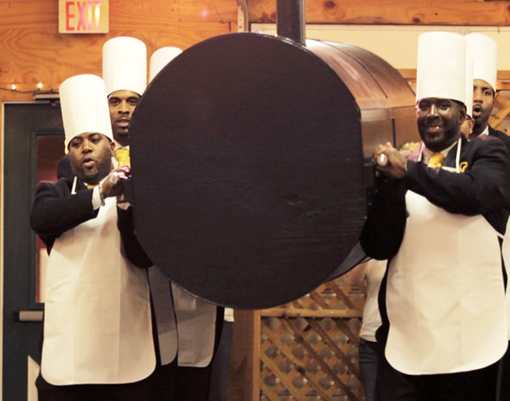
I wish I was making this up, but I’m not. TLC’s newest reality show features over-the-top funerals directed by the over-the-top Golden Gate funeral home in Dallas. The funeral home’s motto describes its philosophy: “You may be in a casket, but it can still be fantastic.” So far, the show has featured a Christmas-themed funeral complete with a mourner dressed as a snowman as well as a funeral for the singer of the Chili’s Baby Back Ribs jingle, Willie McCoy, which boasted a barbeque sauce fountain, ribs for the guests, live pigs, and a coffin shaped like a smoker.
The garishness of these funerals may provide a ratings boost for “Best Funeral Ever,” but its irreverence also invokes deep discomfort. Clinton Yates of the Washington Post lamented, “TLC’s exploitation of how families mourn their dead is shameful in an era in which we can barely focus on keeping each other alive.”[1] Turning mourning into a spectacle just doesn’t seem right.
Of course, there is a reason turning mourning into a spectacle doesn’t seem right. It doesn’t seem right because it isn’t right. Death and the mourning that it brings is an indicator of something gone terribly wrong and tragically awry. This is why death is referred to in the Bible as an “enemy to be destroyed” (1 Corinthians 15:26). Death is no joking matter.
The ancients were well aware of the gravity of death. After all, it was all around them. In first century Rome, the average life expectancy was a mere twenty years. And the Romans hated this. This is why when a person died, he was taken outside the city to be buried. This is why a Roman law mandated, “No body be buried or cremated inside the city.” People did not want to be near death. They did not want to confront the mortality that surrounded them.
But then, something changed. Rather than burying the dead far away from the living, cemeteries began to become a part of the local landscape. As Christians began to build houses of worship, many cemeteries were plotted directly on church grounds. To worship the living God, you would have to walk through the valley of the shadow of death. In our day, we might find this unsettling. But for many early Christians, such a move was intentional. For these Christians believed that death was not only an enemy to be destroyed, but an enemy that would be destroyed. These Christians believed the somber scene of the cemetery was only temporary. Indeed, even the word “cemetery” is from the Greek word for “dormitory” – a place where one dwells only for a time. These cemeteries, then, were not tragically permanent dwellings, but only provisional dormitories. One day, the people buried in them would move out and move on to be with the Lord at the resurrection of the dead. There was no need to be scared of them.[2]
The tragedy of a show like “Best Funeral Ever” is that it replaces resurrection anticipation with TV tawdriness. Snowmen, barbeque fountains, live pigs, and smoker shaped caskets offer little in the way of true and lasting hope.
As Christians, we know that what a funeral needs is not cheap antics, but an empty tomb. It is there that we find cause for real celebration, for it is there that we find God’s promise of life.
[1] Clinton Yates, “‘Best Funeral Ever’: Most frightening reality TV show to date?” Washington Post (1.7.2013).
[2] For a good discussion of how the Christian hope of the resurrection changed ancient views on death, see John Ortberg, Who Is This Man? The Unpredictable Impact of the Inescapable Jesus (Grand Rapids: Zondervan, 2012), 191.
When Darkness Closes In: Processing a Tragedy
 The tragedy at Sandy Hook Elementary School in Newtown, Connecticut has touched – and shattered – many lives. Last weekend in worship and ABC, the pastors of Concordia offered some thoughts on this tragedy in light of God’s Word and promises. You can check out Pastor Tucker’s message and my Adult Bible Class below.
We pray that God would comfort and keep all those devastated by this terrible travesty. And may the families find their solace and hope in God’s promise of the resurrection of the dead to eternal life!
A Life That Ended Too Soon…At 116 Years

Besse Cooper (Photo: David Goldman, AP)
Last Tuesday afternoon, Besse Cooper of Monroe, Georgia passed away peacefully. She was 116 years of age. She was also the world’s oldest woman.[1]
I was doing the math in my head. And though I don’t know her birthday so my I may be a year off on some of my calculations, I’m still pretty close. Besse Cooper was born in 1896. This means when the Titanic sank, she was sixteen. When the United States entered World War I, she was twenty-one. When the stock market crashed the Great Depression hit, she was thirty-three. When Pearl Harbor was bombed, she was forty-five. When John F. Kennedy was assassinated, she was comfortably settled into retirement at sixty-seven. When Apollo 11 landed, she was seventy-three. And when 9/11 rocked our nation, she had passed the century mark at one hundred and five.
As I thought back over all the events to which this woman had been witness, even if only from afar, I stood in awe. A lot of history happens in 116 years! And yet, even a life as long and robust and Mrs. Cooper’s is hardly a hairbreadth long in the eyes of the God who gives it. The Psalmist puts it bluntly: “Man is like a breath; his days are like a fleeting shadow” (Psalm 144:4). On the stage of history as a whole, 116 years occupies nary a dark corner.
Though the biblical writers may look at life as fleeting, they nevertheless do not resign themselves fatalistically to its end. Instead, they kick mightily against the truncated span of life. The prophet Isaiah notes that a life that lasts a mere century – or perhaps a little more – has not lasted nearly long enough! He yearns for a world where “he who dies at a hundred will be thought a mere youth” (Isaiah 65:20). Even one hundred years is not enough for Isaiah. He wants more.
Finally, the problem the biblical writers have has nothing to do with when life comes to end, but with that life comes to end. A life that ends – be that at ten days, ten months, ten years, or ten years times ten years – is a life that ends too soon. And indeed, this is true. For God, when He gave us life, intended life to be a gift we keep. He intended life to be a gift that lasts.
Sin, of course, had other plans. But this is why Christ came on a mission – to recapture and raise, by His resurrection, people who die way too soon. To recapture and raise, by His resurrection, people who die at all. Like Besse Cooper. May she rest in peace. But better yet, may she wake at the telos’s trumpet.
[1] Associated Press, “Woman, 116, listed as ‘world’s oldest’ dies in Ga.,” USA Today (12.5.2012).


 Pastor Zach's Blog