Posts tagged ‘Martin Luther’
Can’t We All Just Get Along?

From CBS News: “An armed man waves his rifle as buildings and cars are engulfed in flames after being set on fire inside the U.S. consulate compound in Benghazi, Libya, Sept. 11, 2012.”
Libya. Yemen. Egypt. Last week was a rough one on the other side of the world. First, in an attack deliberately timed to correspond to the eleventh anniversary of 9/11, Libyan Islamists staged a military-style assault on the U.S. Consulate in Benghazi, killing the U.S. ambassador to Libya, Christopher Stevens, along with three other Americans. On Thursday, Islamist protesters stormed the U.S. Embassy in Yemen. Riots also erupted in Egypt, with people climbing into the embassy compound in central Cairo and ripping down the American flag.
One of the inciting factors of these protests is an obscure movie with a less than positive portrayal of the Muslim prophet Muhammad titled, “The Innocence of Muslims.” Clips from the low-budget film have been making their rounds in cyberspace for weeks. In the movie, Muhammad is portrayed a womanizing, homosexual, child-abuser. For many Muslims, any depiction of Muhammad is blasphemous – hence, the reason for these violent protests.
As I have watched these protests unfold, two things have struck me. First, I have been struck by the fact that our Constitutional right to free speech does not carry with it a guarantee that such speech will be charitable or even accurate. As Christians, we are called speak charitably and accurately to and about others not because our Constitution legislates it, but because Holy Scripture commands it. As the apostle Peter reminds us, “In your hearts set apart Christ as Lord. Always be prepared to give an answer to everyone who asks you to give the reason for the hope that you have. But do this with gentleness and respect” (1 Peter 3:15). Patently offensive and inflammatory caricatures of other religions, though not civically illegal, are certainly theologically sinful. After all, we, as Christians, do not appreciate having our faith lambasted by flimsy straw-men half-truths. So we ought never do the same thing to other faiths nor should we encourage others who do.
Second, I have been struck by the intolerance – in fact, the violent intolerance – of these Islamist protesters. These protestors breach embassies and kill ambassadors who have no relation whatsoever to those who made this outlandish film except that they all happen to be citizens of the same country. This makes no sense to me. And yet, for a few too many people, it seems to make all too much sense. The headlines tell the story.
In the face of such intolerance, it is important to remember that Christians uphold the value of tolerance and its significance in public life. Granted, the Christian conception of tolerance is not that same as its secular counter-conception. Christians consistently do and have accepted the existence of different points of view. We know that not everyone believes as we do. Moreover, in general, we do not support the suppression – especially the violent suppression – of different points of view. In this sense, then, we believe in “free speech.” What is troublesome for Christians is not tolerance in this sense, but the secular conception of tolerance which not only advocates for acceptance of the existence of different views, but demands the acceptance of the truthfulness of these different views. D.A. Carson explains this tolerance well:
The new [secular] tolerance suggests that actually accepting another’s position means believing that position to be true, or at least as true as your own. We move from allowing the free expression of contrary opinions to the acceptance of all opinions; we leap from permitting the articulation of beliefs and claims with which we do not agree to asserting that all beliefs and claims are equally valid.[1]
Of course, the great irony of this tolerance is that if one refuses to accept this definition of tolerance or play by its rules, that person will not be tolerated! As Leslie Armour, professor emeritus of philosophy at the University of Ottawa, wryly noted, “Our idea is that to be a virtuous citizen is to be one who tolerates everything except intolerance.”[2]
One of the most striking lessons in true tolerance comes from Jesus in His Parable of the Weeds. Jesus tells of a master who plants some wheat. But while everyone is sleeping, the master’s enemy sneaks in and sows weeds with the wheat. When the master’s servants see what has happened, they ask, “Do you want us to go and pull them up?” But the master replies, “Let both grow together until the harvest” (Matthew 13:28, 30). The master in this parable, of course, is Jesus. The wheat are those who trust in Him while the weeds are those who reject Him. But rather than immediately destroying those who reject Him, Jesus is tolerant: He allows the weeds to grow with the wheat. Martin Luther comments on this parable:
Observe what raging and furious people we have been these many years, in that we desired to force others to believe; the Turks with the sword, heretics with fire, the Jews with death, and thus outroot the tares by our own power, as if we were the ones who could reign over hearts and spirits, and make them pious and right, which God’s Word alone must do.[3]
Violent oppression of those with whom we disagree is not an option for the Christian, Luther asserts. He goes on to state that if we violently deal with someone who is not a Christian and kill him or her, we take away that person’s chance to trust Christ and be saved by Him. We thus work against the gospel rather than for it. This echoes Paul’s sentiment in Romans where he speaks of God’s tolerance as kindness which leads to repentance (cf. Romans 2:4).
Finally, Christianity teaches an even higher virtue than just tolerance – it teaches love. And after a week that has seen so much hatred, perhaps that is what we need to share with our world.
ABC Extra – By Scripture Alone

Luther Bible from 1720
This past weekend in worship and ABC, we looked at the life and times of King Josiah. Following the reigns of two exceedingly wicked kings, his father Amon and his grandfather Manasseh, Josiah was a much-needed breath of fresh air. The author of Kings can barely contain his delight when he writes, “He did what was right in the eyes of the LORD” (2 Kings 22:2). What was it that made Josiah such a noble king? Succinctly put, Josiah was a man who followed God’s Word. To cast Josiah’s piety in Reformation-era lingo, Josiah was a man committed to the principle of sola Scriptura – that Scripture alone should be the norm and guide for righteousness before God in faith and life. This guiding principle comes out especially clearly when the high priest of Israel at this time, Hilkiah, discovers the Book of the Law (i.e., the Pentateuch, or first five books of the Bible) tucked away in the dusty recesses of the temple. Heretofore, this book, with all of its guidelines for righteousness, has been lost to Israel. When Josiah hears what the Book of the Law teaches, he immediately recognizes it as the word of the Lord and tears his robes in repentance over all the ways in which he and Israel have disobeyed God’s commands in this book. For Josiah knows that Scripture alone should guide Israel’s life and his life.
Though the principle of sola Scriptura is clearly embraced by Josiah, it is not so eagerly welcomed by many in our day, even by those who claim the name of Christ. A couple of weeks ago, I came across a quote on Facebook rejecting the principle of sola Scriptura, and one of its creedal texts, 2 Timothy 3:16-17: “All Scripture is God-breathed and is useful for teaching, rebuking, correcting and training in righteousness, so that the man of God may be thoroughly equipped for every good work.” The quote commented:
The fact is that this passage does not even hint at Scripture being the sole rule of faith. It says that Scripture is inspired and necessary – a rule of faith – but in no way does it teach that Scripture alone is all one needs to determine the truth about faith and morals in the Church.
This quote was written as part of an article by the Roman Catholic apologist Tim Staples and argues that along with Scripture, Church tradition and the ecclesial Magisterium should hold pride of place as sources and norms of doctrine. A couple of points are necessary.
First, 2 Timothy 3:16-17 makes an explicit claim to sufficiency which, by default, is an implicit claim to sole primacy. Paul, when describing the benefits of Scripture, notes that it thoroughly equips the Christian for every good work. Words such as “thoroughly” and “every” leave no remainder. Thus, Scripture is solely sufficient for teaching us all we need to know about righteousness before God in faith and life. Second, Scripture is replete with warnings against adding to or subtracting from Holy Writ (Deuteronomy 4:2, 12:32, Proverbs 30:5-6, Revelation 22:18-19). Such warnings, especially those against adding to Scripture, leave no doubt that Scripture considers itself a sufficient and sole source.
Finally, the difficulty with rejecting the principle of sola Scriptura is one of authority. If Scripture is not the sole and supreme authority in one’s life, something else will be – whether that “something else” is tradition, another human, or one’s own sensibilities and desires. And these other things, as authorities, will inevitably trump Scriptural authority in some fashion. For when one has multiple authorities, these authorities inexorably wrestle for primacy. Thus, to hold to the principle of sola Scriptura is to hold to biblical authority over and against all other sources of authority. And to hold to biblical authority is to hold to the doctrine of divine inspiration, for the reason Christians believe the Bible is supremely authoritative is because of its supreme and divine author. And to hold to the doctrine of divine author is to trust in God – in this life…and for the next.
I can’t think of any one and any words I’d rather trust. How about you?
Want to learn more? Go to
www.ConcordiaLutheranChurch.com
and check out audio and video from Pastor Tucker’s
message or Pastor Zach’s ABC!
The Whole Christ

"The Crucifixion of Christ" by Gerhard Remisch
The other morning, I was reading 2 John as part of my devotions, when I once again came across a verse I have reflected on many times: “For many deceivers have gone out into the world, those who do not confess the coming of Jesus Christ in the flesh. Such a one is the deceiver and the antichrist” (2 John 7). Though these words may strike us as harsh, they are true and necessary. For theology – the study of God – and Christology – the study of Christ – are inextricably connected. If one has an errant view of Christ, he will inevitably have an errant view of God, for it is precisely through Christ that God is revealed. This is why, especially in the early centuries of the Christian Church, there were so many creedal formulations concerning Christ. The early Christians wanted to make sure they accurately and faithfully confessed their Lord and Savior. Alister McGrath notes, “The history of early Christian doctrine is the basically the emergence of the Christological.”[1]
Martin Luther offers three ways in which Christology can go askew:
The devil has work to do and attacks Christ in three lines of battle. One will not let Him be God, another will not let Him be man, and the third will not let Him do what He has done. Each of the three wants to reduce Christ to nothing. For what does it profit you to confess that He is God, if you do not also believe that He is man? Then you do not have the whole, real Christ with that, but only a phantom of the devil’s. What does it profit you to confess that He is man, if you do not also believe that He is God? What does it profit you to confess that He is God and man, if you do not also believe that He has become everything and done everything for you?[2]
Luther’s insists that, in order to believe in Christ, we must believe in His humanity, His divinity, and His work on the cross. If we deny one part of this confession, we deny the whole Christ. Why? Because the person of Christ as true God and true man cannot be separated from the work of Christ, which is salvation. Notice how the Nicene Creed confesses Christ’s person and work all together in one eloquently integrated sweep: “For us men and for our salvation, [Christ] came down from heaven and was incarnate by the Holy Spirit of the virgin Mary and was made man; and was crucified also for us under Pontius Pilate.” Here we read that Christ “came down from heaven,” a reference to His divinity, He was “incarnate,” a reference to His humanity, and “was crucified also for us under Pontius Pilate,” a reference to His salvific work. This is Christ. He can be nothing less and He can do nothing less.
John’s tirade against those who deny “the coming of Jesus Christ in the flesh” is due to the fact that he cannot bear to think that someone would miss out on all that Christ is and all that He has done. After all, why would we want something or someone less than the whole Christ? For the whole Christ is one with God and, at the same time, in solidarity with us. And whole Christ saves us wholly, without any worth or merit on our parts. John can’t dream of settling for anyone or anything less. I can’t either. How about you?
Common Question: What’s up with Lutheran worship?
 One of the highlights of my week is weekend worship at Concordia. It is very moving for me to gather with the people of God and sing praises to God, hear God’s Word, witness a baptism, and receive Christ’s body and blood in Communion. Lutherans worship in a unique, yet thoroughly theological, way. In fact, more than one person has asked me, “Why do Lutherans worship the way in which they do?” It is with this question in mind that I write today’s blog.
First, it is important to understand there are two definitions of worship – one that is broad and one that is narrow. Worship in the broad sense includes any way which we hail something or someone as god, either implicitly or explicitly. This definition of worship is part and parcel of the First Commandment: “You shall have no other gods before Me. You shall not make for yourself an idol in the form of anything in heaven above or on the earth beneath or in the waters below. You shall not bow down to them or worship them” (Exodus 20:3-5). According to this definition of worship, we are all worshipers, whether or not we worship the true God, for we all worship a god. Everyone has something or someone which holds prime place in their life and, as such, they worship this something or someone, for they hail it as god.
Worship in the narrow sense describes an activity that is distinctly Christian. Perhaps my favorite definition of worship in this sense comes via the introduction to the hymnal, Lutheran Worship:
Our Lord speaks and we listen. His Word bestows what it says. Faith that is born from what is heard acknowledges the gifts received with eager thankfulness and praise…The rhythm of our worship is from Him to us, and then from us back to Him. He gifts His gifts, and together we receive and extol them.[1]
With this definition of worship, we learn three important things. First, we learn that worship begins with what God gives to us and not with what we bring to God. This is why, for instance, the highest holy day of worship in Israel was the Day of Atonement – a day not about what Israel brought to God, but about the forgiveness God gave to Israel (cf. Leviticus 16). Second, we learn that after and only after God gives to us His gifts, can we respond to God with thankfulness and praise. This is why, for instance, psalm after psalm celebrates and extols what God has done for His people (e.g., Psalms 107, 118, 136). Third, we come to realize that worship can happen anywhere and at any time. For God continuously bestows His gifts of grace and, as such, we can continuously say, “Thank you.” Martin Luther colorfully quips:
The worship of God is the praise of God. This should be free at the table, in private rooms, downstairs, upstairs, at home, abroad, in all places, by all people, at all times. Whoever tells you anything else is lying as badly as the pope and the devil himself.[2]
The heart and soul of worship, then, is this: God meets us with His gifts at all times and places and we respond in turn with thanksgiving at all times and places.
The above theology of worship is what guides and informs weekend worship at Concordia Lutheran Church. It is worth it to briefly outline the shape and scope of a worship service at Concordia and consider how each element in one of our services reflects this broader theology of worship.
Invocation
Each service opens with the name of God: “In the name of the Father and of the Son and of the Holy Spirit.” This Invocation is meant to orient us around the reality that worship does not begin with us, but with God. Indeed, our whole life in Christ begins with God, for the same name that marks the beginning of worship also marked us in our baptisms. This is why we baptize in the name of the Father and of the Son and of the Holy Spirit. Further, this name reminds us that we are bound together in Christ, for we call upon “one Lord” and share together “one faith, one baptism, one God and Father of all” (Ephesians 4:5-6). Luther Reed sums up the beauty of the Invocation nicely when he writes:
[With the Invocation], we formally express our “awareness” of the Presence of God, we place ourselves in that Presence, and invoke the Divine blessing upon the service which is to follow. We confess our faith in the Holy Trinity, for whose worship we are assembled. We solemnly call God to witness that we are “gathered together” in His name (Matthew 18:20) and in that name offer all our prayer, praise, and thanksgiving (John 16:23).[3]
Confession and Absolution
Part of the reason worship must begin with God is because we would be hopelessly lost if worship began with us, for we are sinners, completely unworthy to somehow storm the gates of God’s presence. Confession reminds us of this. It calls us to believe that, in light of the sin which we admit to in Confession, if we are to be in God’s presence in worship, God must come to us! We cannot go to God. Absolution, then, provides us with the assurance that God has indeed come to us in the person and work of Christ and still dwells with us according to His promise: “Surely, I am with you always, to the very end of the age” (Matthew 28:20).
Music
Luther famously says of music:
I am not satisfied with him who despised music, as all fanatics do; for music is an endowment and a gift of God, not a gift of men. It also drives away the devil and makes people cheerful; one forgets all anger, unchasteness, pride, and other vices. I place music next to theology and give it the highest praise.[4]
Throughout a worship service, we sing. We sing because we believe music is a gift from God. We sing because many fine hymns and songs have been written which confess the gospel of God and express our praise and thanksgiving. In these ways, God gives to us through music.
Scripture Reading
As the Introduction to Lutheran Worship says, “Our Lord speaks and we listen.” Worship would be void and tragic if we did not hear from God! Because Scripture is God’s Word, we can be fully assured that when we hear Scripture, we hear God. This is why, at Concordia, we place such an emphasis on being in God’s Word. From our Word for Today Bible reading program to our Memorize His Word Bible memory program, we want people to listen to the Lord! And we know people can and will hear from God wherever and whenever Scripture is read.
Apostles’ Creed
The Introduction to Lutheran Worship says, “Saying back to God what He has said to us, we repeat what is most true and sure.” The recitation of the Apostles’ Creed allows us an opportunity to do just this. Because this creed is thoroughly biblical, we can be assured that we are confessing what God has first said to us. Because this creed is blessedly universal and historical, we can revel in the fact that we join a chorus of Christians all over the world and throughout the ages who confess this same true, holy Christian and apostolic faith.
Children’s Message
The Scriptures are clear on the responsibility we have to share with the next generation the works of the Lord: “We will tell the next generation the praiseworthy deeds of the LORD, His power, and the wonders He has done” (Psalm 78:4). In one of Israel’s creedal biblical chapters, we read, “These commandments…are to be upon your hearts. Impress them on your children.” (Deuteronomy 6:6-7). The goal of a children’s message is to take seriously Scripture’s call to share the gospel with all – old and young alike. The children’s message, then, is catechetical in nature, teaching children the basic tenets of the Christian faith.
Offering
One of my favorite hymns declares:
We give Thee but Thine own,
Whate’er the gift may be;
All that we have is Thine alone,
A trust, O Lord, from Thee.[5]
This is a wonderfully succinct synopsis of the Christian doctrine of stewardship. God is the owner of everything, even as the Psalmist declares, “The earth is the LORD’s, and everything in it” (Psalm 24:1). Out of His grace, however, God graciously shares what is His with us. The Offering, therefore, is a time to give thanks to God for what He has given us by offering it to Him, for it belongs to Him in the first place.
Prayers and Lord’s Prayer
From the earliest days of the Church, Christians prayed. Talking to God is part and parcel of being a Christian. At Concordia, we include with our prayers the Lord’s Prayer because we believe it to be the perfect prayer. After all, it was taught by our perfect Lord! One of the beauties of the Lord’s Prayer is that it is a prayer God is guaranteed to answer with a “Yes!” for the prayer is based on God’s promises. For instance, when we pray, “Lead us not into temptation,” we know that Scripture promises, “God does not tempt anyone” (James 1:13). Thus, we know God will gladly not lead us into temptation, for this is His very promise!
Communion
The Lord’s Supper is a weighty moment. Indeed, it is so weighty that Paul rails against the Church at Corinth when they misuse and abuse this precious meal from God (cf. 1 Corinthians 11:17-34). Communion calls for both repentance and faith. As Scripture directs, we are to “examine ourselves” (1 Corinthians 11:28) before partaking of the Lord’s Supper and repent of our sins. We are also to believe that, in the Supper, Christ offers the remedy for our sins as He gives to us His own body and blood in, with, and under the bread and wine for the forgiveness of our sins (cf. Matthew 26:26-28). Christ’s presence in this meal is His simple, yet profound, promise.
Sermon
The sermon serves four main functions: to convict, to comfort, to call, and to catechize. In a sermon, first and foremost, we ought to be convicted of our sins and comforted by the gospel. The sermon also ought to call us to walk according to God’s way of righteousness as well as catechize us in, or teach to us, Christian doctrine and biblical theology. In this way, we can “grow in the grace and knowledge of our Lord and Savior Jesus Christ” (2 Peter 3:18).
Benediction
Just as the service begins with the name of God, the service ends with the blessing of God. After all, after being forgiven for our sins, hearing God’s Word in Scripture and sermon, approaching God through prayer, thanking God for what He has given us, and receiving Christ’s body and blood in Communion, how could we not be blessed? The Benediction, then, is an affirmation of everything that has taken place in the worship service. We have been blessed by the Lord, and as we go forth from weekend worship, we will continue to be blessed by the Lord. At Concordia, we include with the Benediction a Commissioning, drawn from Philippians 2:15-16, where we exhort worshipers to “shine like stars in the universe as you hold out the word of life.” As we have been blessed in worship by God’s gifts, our call is to be a blessing to others by sharing with them these same gifts. As God says to Abraham: “I will bless you…and you will be a blessing” (Genesis 12:2).
So there it is. This is the shape and scope of a worship service at Concordia. As the service moves from element to element, two things are clear. First, it is clear that God is meeting His people with His gifts. Second, the only appropriate response to such a monumental meeting is, “Thank you!” May you offer God a “thank you” today – and every day – in worship!
[1] Lutheran Worship, Prepared by the Commission on Worship of the Lutheran Church – Missouri Synod (St. Louis: Concordia Publishing House, 1982) 6.
[2] What Luther Says, Ewald Plass, ed. (St. Louis: Concordia Publishing House, 1959) 1546.
[3] Luther Reed, The Lutheran Liturgy (Philadelphia: Muhlenberg Press, 1947) 241.
[4] What Luther Says, 980.
[5] Lutheran Service Book, Prepared by the Commission on Worship of the Lutheran Church – Missouri Synod (St. Louis: Concordia Publishing House, 2006) 781.
ABC Extra – Two Kingdoms, One Ruler
 This weekend in worship and ABC, we kicked off a series called, “King Me! Life Lessons from Israel’s Lieges.” In this series, we are taking a look at some of Israel’s kings and seeking to learn from both the good and the bad of their rules and reigns. The theme verse for this series comes from Judges 8, where, after leading a valiant charge against the Midianites, the Israelites want to install their judge, Gideon, along with his family, into an Israelite royal dynasty. Gideon responds, “I will not rule over you, nor will my son rule over you. The LORD will rule over you” (Judges 8:23). Gideon understands that, ultimately, it is the LORD who is King over all. No earthly king can dare or deign to take God’s place. Indeed, the subtitle for this series, “Life Lessons from Israel’s Lieges,” alludes to this. A “liege” can be either one who rules or one who is ruled. Earthly kings are both. They may rule over others, but they themselves are inescapably and inexorably ruled by God. For God is King over all.
Like Gideon, Martin Luther understood that God rules and reigns over all. In his writings, Luther often spoke of two kingdoms. On the one hand, Luther explains, there is a left hand kingdom, which incorporates the world and its rules and rulers. On the other hand, there is a right hand kingdom, or a spiritual kingdom, which consists of all those who have faith in Christ and are guided by the Gospel. When teaching on these two kingdoms, I will often refer to the right hand kingdom as the Kingdom of God and the left hand kingdom as the Kingdom of Man. “Who rules the Kingdom of God?” I will ask when I teach on this topic. People quickly and confidently respond, “God.” But then I follow up, “Who rules the Kingdom of Man?” Many respond, “Man.” But the glory of the Kingdom of Man is that, despite its name, it is not ruled by man, but by God! The Lutheran Confessions explain: “It is taught among us that all government in the world and all established rule and laws were instituted and ordained by God for the sake of good order.”[1] This statement echoes the words of the apostle Paul: “Everyone must submit himself to the governing authorities, for there is no authority except that which God has established. The authorities that exist have been established by God” (Romans 13:1). Because God institutes and establishes the rulers in the Kingdom of Man, He is also the ultimate ruler over the Kingdom of Man. As the prophet Daniel says, “God sets up kings and deposes them” (Daniel 2:21). There is no kingdom – be it the Kingdom of God or the Kingdom of Man – where God does not reign and rule.
Though God reigns and rules over both the Kingdom of God and the Kingdom of Man, it should be noted that God rules differently in these two kingdoms. Luther explains:
One must carefully distinguish between these two governments. Both must be permitted to remain; the one to produce righteousness, the other to bring about external peace and prevent evil deeds. Neither one is sufficient in the world without the other. No one can become righteous in the sight of God by means of the temporal government, without Christ’s spiritual government. Christ’s government does not extend over all men; rather, Christians are always a minority in the midst of non-Christians. Now where temporal government or law alone prevails, there sheer hypocrisy is inevitable, even though the commandments be God’s very own. For without the Holy Spirit in the heart no one becomes truly righteous, no matter how fine the works he does. On the other hand, where the spiritual government alone prevails over land and people, there wickedness is given free rein and the door is open for all manner of rascality, for the world as a whole cannot receive or comprehend it.[2]
Thus, God rules in the Kingdom of God by the redemption of men through the cross of Christ and He rules in the Kingdom of Man by suppressing the wickedness of men through the auspices of earthly rulers. We thank God for both kingdoms. And we thank God that He is King over both. He is King over us.
Want to learn more? Go to
www.ConcordiaLutheranChurch.com
and check out audio and video from Pastor Tucker’s
message or Pastor Zach’s ABC!
Weekend Extra – Don’t Settle for All-Natural
 In 1802, British Christian apologist William Paley published what has become one of the most famous arguments for the existence of God. He wrote:
“In crossing a heath, suppose I pitched my foot against a stone, and were asked how the stone came to be there; I might possibly answer, that, for any thing I know to the contrary, it had lain there forever…But suppose I had found a watch upon the ground, and it should be inquired how the watch happened to be in that place; I should hardly think of the answer which I had given before…For its several parts are framed and put together for a purpose.”[1]
This argument is classically called “the argument from design.” The argument runs like this: When we look around at the irreducible complexity of our world, we cannot help but wonder about the origin of our stunning surroundings. For someone certainly had to knit together this vast and intricate universe! And that “someone,” Paley argues, is God.
In his argument, Paley appeals to what is known as “natural revelation.” Natural revelation describes the human ability to discern God’s existence by means of basic reason. And basic reasons deduces, when confronted with a remarkable creation like ours, that there is indeed a Creator! Thomas Aquinas explains natural revelation thusly: “There are some truths which the natural reason is able to reach. Such are that God exists, that He is one, and the like.”[2] John of Damascus describes natural revelation similarly, but adds that we not only deduce God’s existence by our reason, but know of God’s existence from our very creation: “The awareness that God exists in implanted by nature in everybody.”[3]
Scripturally, the doctrine of natural knowledge is asserted in Psalm 19:
The heavens declare the glory of God; the skies proclaim the work of His hands. Day after day they pour forth speech; night after night they display knowledge. There is no speech or language where their voice is not heard. Their voicegoes out into all the earth, their words to the ends of the world. (Psalm 19:1-4)
The verbs in verse 1 are striking. “The heavens declare the glory of God…” The verb “declare” is often translated as “number.” The glories of God are infinitely numbered by the heavens! After all, every star is a testament to its Creator! “The skies proclaim the work of His hands…” The verb for “proclaim” in Hebrew is nagad, meaning, “conspicuous.” In other words, God is not hidden by His creation, He is plainly revealed through His creation for anyone who cares to see! This is natural revelation.
As wonderful as natural revelation is, it only goes so far. For although natural revelation can tell us there is a God, it cannot tell us who this God is. Indeed, the Thomas Aquinas quote I cited earlier is only the second half of the quote. The whole quote reads: “There is a twofold mode of truth in what we profess about God. Some truths about God exceed all the ability of human reason. Such is the truth that God is triune. There are some truths which the natural reason is able to reach. Such are that God exists, that He is one, and the like.” Aquinas knows that human reason can only get you so far when it comes to the divine. In fact, human reason won’t get you very far when it comes to the divine! Martin Luther explains why:
All heathen known to say that much of God as reason can know from His works, i.e. that He is a creator of all things, and that one should be obedient to Him etc. We know, however, that they don’t yet have the true God, because they do not want to hear His word, which He has revealed about Himself from the beginning of the world to the holy fathers and prophets, and at last through Christ Himself and His apostles.[4]
Luther here makes a critical distinction between natural revelation and biblical revelation. Natural revelation can declare the glory of God. But only biblical revelation can tell someone about Jesus and His sacrifice. Natural revelation can reveal God’s power. But only biblical revelation can comfort with God’s grace. This is why the Psalmist does not leave us stuck in the realm of natural revelation. He continues:
The law of the LORD is perfect, reviving the soul. The statutes of the LORD are trustworthy, making wise the simple. The precepts of the LORD are right, giving joy to the heart. The commands of the LORD are radiant, giving light to the eyes. The fear of the LORD is pure, enduring forever. The ordinances of the LORD are sure and altogether righteous. They are more precious than gold, than much pure gold; they are sweeter than honey, than honey from the comb. By them is Your servant warned; in keeping them there is great reward. Who can discern his errors? Forgive my hidden faults. (Psalm 19:7-12)
The Psalmist moves from God’s glory in creation to God’s forgiveness in Scriptural revelation. He asks the Lord to forgive his sins.
The sunny days. The starry nights. The majestic mountains. The gentle breezes. The lazy rivers. In all of these we see God. But only in Scripture do we hear God. For in Scripture God declares to us His intention for us. And His intention is one of salvation. Praise God that we can not only see His handiwork, but read His Word![5]
Want to learn more? Go to
www.ConcordiaLutheranChurch.com
and check out audio and video from Pastor Tucker’s
message!
[1] William Paley, Natural Theology (London: J. Faulder, 1809) 1-2.
[2] Thomas Aquinas, Summa Contra Gentiles, 1.3.2.
[3] John of Damascus, De fide Orthodoxa, 1.1.
[4] Martin Luther, WA 51:151 (Roland Ziegler, trans.).
[5] For a nice discussion of natural revelation, see Roland Ziegler, “Natural Knowledge of God and the Trinity,” Concordia Theological Quarterly, vol. 69:2 (April 2005) 133-154. Many of my thoughts in this blog are indebted to this article.
ABC Extra – Unbaptized Money
 Though I’m almost sure it’s apocryphal, Martin Luther is credited with saying, “There are three conversions necessary – the conversion of the heart, of the mind, and of the purse.” Regardless of whether or not Luther actually spoke these words, this quote can serve to remind us of the importance our Lord places on faithful stewardship. What we do with money matters.
In his book The Money Map, Howard Dayton writes, “When the Crusades were fought during the twelfth century, the Crusaders purchased the services of mercenaries to fight for them. Because it was a religious war, the Crusaders insisted that the mercenaries be baptized before fighting. As they were being baptized, the soldiers would take their swords and hold them up out of the water to symbolize that Jesus Christ was not in control of their swords, that they retained the freedom to use their weapons in any way they wished.” Like Crusaders wielding swords in whatever unbaptized way they saw fit, many people wish to use money in whatever unsanctified way they see expedient. But God wants our money to be “baptized,” so to speak, in that He wants us to steward our money faithfully and well. And first and foremost, stewarding our money faithfully and well means being generous with others even s God has been generous to us.
In our text from this past weekend, Solomon writes, “A generous man will prosper; he who refreshes others will himself be refreshed” (Proverbs 11:25). God wants us to be generous and refreshing toward others. Notably, the Hebrew verb for “refreshes” in this verse is rawah, meaning, “to water.” In Hebrew, this word is in the Hiphil mood, which is an intensive form of the Hebrew verb. Thus, when Solomon encourages us to “refresh others,” he encourages us to do so intensively. That is, we are to be as generous as we possible can be. And as we do so, we ourselves will “be refreshed.” This phrase “be refreshed” is in the Hophal voice, another intensive Hebrew verbal form. Thus, as we intensively refresh others through our generosity, God will intensively refresh us through His generosity.
Money that is not baptized by the gospel only causes harm and grief. Judas, when he sells his Lord for thirty pieces of silver, despairs and commits suicide (Matthew 27:1-5). Hezekiah, when he shows off his temple treasury to envoys from Babylon, seals the demise of his nation (Isaiah 39). And Ananias and Sapphira, when they duplicitously hold back some money from the sale of a field, claiming that they had given all the proceeds to the Church, are struck down by God (Acts 5:1-11). Money used apart from the purposes of God ends in disaster. Conversely, money that is “baptized” by the gospel can be used to illustrate the gospel itself! The apostle Paul writes, “You were bought at a price” (1 Corinthians 6:20, 7:23). What is this price? It is the price of Christ’s blood. The monetary picture of a price is used to describe our redemption. Indeed, the very word “redeemed” is monetary, for it describes how Christ purchased us “from the empty way of life” (1 Peter 1:18), that is, from the empty ways of sin, death, and the devil.
Do you allow the money with which you have been entrusted to be used at God’s pleasure and for His purposes? Or, are your finances an area in which you remain functionally “unconverted,” holding your pocketbook out of the water while the rest of you is baptized into Christ, too afraid to heed Christ’s invitation to steward your finances in a way that is commiserate with His Kingdom values? True financial joy and freedom is found only when your money is brought under the authority of Christ. Jesus has been generous enough to give you all that you have. Do you trust Him to be wise enough to use the money you have for your good and His glory?
Want to learn more? Go to
www.ConcordiaLutheranChurch.com
and check out audio and video from Pastor Tucker’s
message or Pastor Zach’s ABC!
Holy Week Sorrow and Celebration
 Right now in my personal devotions, I am reading through the book of Lamentations, a sorrowful song written by the prophet Jeremiah, which describes Israel’s defeat and exile at the hands of the Babylonians in 586 BC. Some of the language Jeremiah uses to describe Israel’s demise is grotesque and gut wrenching:
- The tongue of the nursing infant sticks to the roof of its mouth for thirst. (Lamentations 4:4)
- Their skin has shriveled on their bones; it has become dry as wood. (Lamentations 4:8)
- The hands of compassionate women have boiled their own children; they became their food during the destruction of the daughter of my people. (Lamentations 4:10)
Clearly, this is a tragic, despairing time. Indeed, even for a professional prophet such as Jeremiah, who has seen much sin and tragedy, the despair of the exile seems overwhelming. And Jeremiah places the blame for this despair squarely at the feet of God.
In chapter 3, Jeremiah laments his plight:
I am the man who has seen affliction under the rod of His wrath; He has driven and brought me into darkness without any light; surely against me He turns His hand again and again the whole day long. He has made my flesh and my skin waste away; He has broken my bones; He has besieged and enveloped me with bitterness and tribulation; He has made me dwell in darkness like the dead of long ago. He has walled me about so that I cannot escape; He has made my chains heavy; though I call and cry for help, He shuts out my prayer; He has blocked my ways with blocks of stones; He has made my paths crooked. He is a bear lying in wait for me, a lion in hiding; He turned aside my steps and tore me to pieces; He has made me desolate; He bent His bow and set me as a target for His arrow. He drove into my kidneys the arrows of his quiver; I have become the laughingstock of all peoples, the object of their taunts all day long. He has filled me with bitterness; He has sated me with wormwood. He has made my teeth grind on gravel, and made me cower in ashes. (Lamentations 3:1-16)
Notice the pronoun Jeremiah employs again and again to describe who is responsible for his misery: “He.” “He” has brought Jeremiah misery, trouble, pain, and despair. It’s “His” fault that Jeremiah’s plight is what it is. Who is this “He”? None other than God, of course. God has afflicted Jeremiah in the most miserable of ways.
And yet, even in his misery, Jeremiah has not lost all hope: “But this I call to mind, and therefore I have hope: The steadfast love of the LORD never ceases; His mercies never come to an end; they are new every morning; great is Your faithfulness” (Lamentations 3:21-23). Jeremiah believes that finally, ultimately, God’s steadfast love will prevail. Indeed, it’s interesting the way Jeremiah describes this steadfast love just verses later: “Though He cause grief, He will have compassion according to the abundance of His steadfast love; for He does not willingly afflict or grieve the children of men” (Lamentations 3:32-33). Though God does afflict and grieve people because of their sin, Jeremiah says, He does not willingly do so. God’s will is not to pour out His hot wrath, but His steadfast love. The Hebrew word for “willingly” is milibo, a word meaning, “from His heart.” Thus, Jeremiah is saying that from God’s heart does not come affliction. Rather, from God’s heart comes His steadfast love. God’s will is wrapped in love.
Luther describes God’s wrath at sin and God’s will of love by making a distinction between the “alien” and the “proper” work of God:
We must know what is meant by the work of God. It is nothing else but to create righteousness, peace, mercy, truth, patience, kindness, joy, and health, inasmuch as the righteous, truthful, peaceful, kind, joyful, healthy, patient, merciful cannot do otherwise than act according to His nature. Therefore God creates righteous, peaceful, patient, merciful, truthful, kind, joyful, wise, healthy men…But He cannot come to this His proper work unless He undertakes a work that is alien and contrary to Himself…Therefore, since He can make just only those who are not just, He is compelled to perform an alien work in order to make them sinners, before He performs His proper work of justification. Thus He says, “I kill and I make alive; I wound and I heal.” (AE 51:18-19)
God must judge us before He can justify us, Luther says. His alien and His proper work go hand in hand. Thus, both God’s alien work of judgment and God’s proper work of love are needed in Jeremiah’s life. And both God’s alien work of judgment and God’s proper work of love are needed in our lives too. But lest we forget, through faith in Christ, God’s proper work prevails!
The alien and the proper work of God meet most clearly in the death and resurrection of Christ, which we remember during this Holy Week. Luther explains:
God’s alien work is the suffering of Christ and sufferings in Christ, the crucifixion of the old man and the mortification of Adam. God’s proper work, however, is the resurrection of Christ, justification in the Spirit, and the vivification of the new man, as Romans 4:25 says: “Christ died for our sins and was raised for our justification.” (AE 51:19)
God judges His Son on the cross, killing Him for the sins of the world. This was not something He delighted in doing – it was alien to Him – but it was necessary. For Christ’s crucifixion satisfied God’s righteous wrath at sinners…sinners like you and me (cf. Romans 3:25-26). And with God’s wrath satisfied through Christ’s suffering and death on the cross, God could now move to His proper work: Giving to His children His steadfast love which never ceases.
This Holy Week, spend some time meditating on both the alien and the proper work of God. For both are needed. But finally, one prevails! For God’s work does not end in an alien way. Rather, it ends in its proper way. It ends in our salvation through faith in Christ. Praise be to God!
Weekend Extra – “If it’s good enough for Jesus…”
 It’s an apocryphal story, but one that has tenaciously hung on, thanks to everything from its publication in the New York Times to its unrelenting retelling by Kinky Friedman. The story goes that Ma Ferguson, Texas’ first woman governor, was infuriated by the suggestion that Spanish speaking immigrants would benefit from public school classes taught in their own native language. In a fit of rage, she picked up a copy of the King James Version of the Bible and exclaimed, “If English was good enough for Jesus, it’s good enough for Texas!”
English, at least in the way we know it today in the King James Bible, did not arise until 1550. And the King James Version was not translated until 1611. Jesus did not speak English. He spoke Aramaic. Whoops.
Though Ma Ferguson’s fabled declaration is goofy because it betrays a complete ignorance of the history of language, the principle behind her statement, even if she never said it, is actually quite profound: “If it was good enough for Jesus, perhaps it ought to be good enough for us.” Indeed, Jesus Himself puts forth this principle when He says things like, “A servant is not greater than his master. If they persecuted Me, they will also persecute you” (John 15:20). Jesus is essentially saying, “If the way of suffering, persecution, and the cross is good enough for Me, it’s good enough for you also. You too will suffer.” As Jesus elsewhere teaches, “If anyone would come after Me, let him deny himself and take up his cross and follow Me” (Matthew 16:24).
Over the course of my ministry, I have occasionally encountered Christians who, for one reason or another, do not want to be baptized. Sometimes they will tell me, “I’m just not ready yet.” Other times, their excuses are a little more nuanced: “I already believe in Jesus and that means I’m already saved! So why do I need to be baptized?” My response to such objections echoes Ma Ferguson’s: “If it’s good enough for Jesus, it’s good enough for you!” Indeed, this is precisely what Jesus Himself teaches in the text we studied this past weekend in worship.
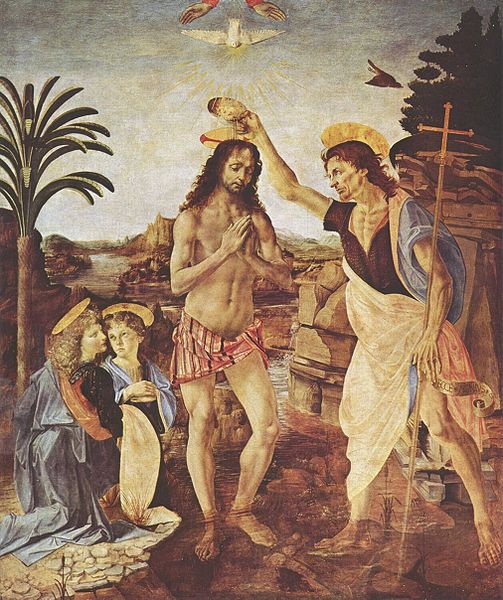
In Matthew 3, Jesus travels from His home in Galilee to the Jordan so that He may be baptized by John. John, knowing that Jesus is sinless, and, as far as he can tell, in no need of a regenerative bath, objects: “I need to be baptized by You, and do You come to me” (Matthew 3:14)? Jesus responds, “Let it be so now, for thus it is fitting for us to fulfill all righteousness” (Matthew 3:15). I appreciate Hippolytus’ paraphrase of and commentary on Jesus’ statement:
Let it be so now, for it so becomes us to fulfill all righteousness. I am the Fulfiller of the law; I seek to leave nothing wanting to its whole fulfillment, so that after Me Paul may exclaim, “Christ is the fulfilling of the law for righteousness to every one that believes.” Let it be so now, for it so becomes us to fulfill all righteousness. Baptize Me, John, in order that no one may despise baptism. I am baptized by you, the servant, that no one among kings or dignitaries may scorn to be baptized by the hand of a poor priest. (ANF 5:236).
Hippolytus states Jesus’ point this way: Christ is baptized so that no one may despise, eschew, or reject baptism. In other words, if baptism is good enough for Jesus, it ought be good enough for us! So do not despise it!
Have you been baptized? If not, let me ask you a simple question: “If baptism is good enough for Jesus, shouldn’t it be good enough for you?” Moreover, think about the promises attached to this Sacrament. Luther explains: “Baptism works forgiveness of sins, rescues from death and the devil, and gives eternal salvation to all who believe this, as the words and promises of God declare” (Small Catechism). With promises such as these, why wouldn’t you want to be baptized?
Finally, baptism is good enough for you not only because it was good enough for Jesus, but because you’re bad enough for baptism. You, as Scripture declares, are sinful. And you need God’s holy bath to wash you clean. So, “be baptized and wash your sins away” (Acts 22:16)!
Want to learn more on this passage? Go to
www.ConcordiaLutheranChurch.com
and check out audio and video from Pastor Tucker’s
message!
ABC Extra – Many Workers, Same Denarius
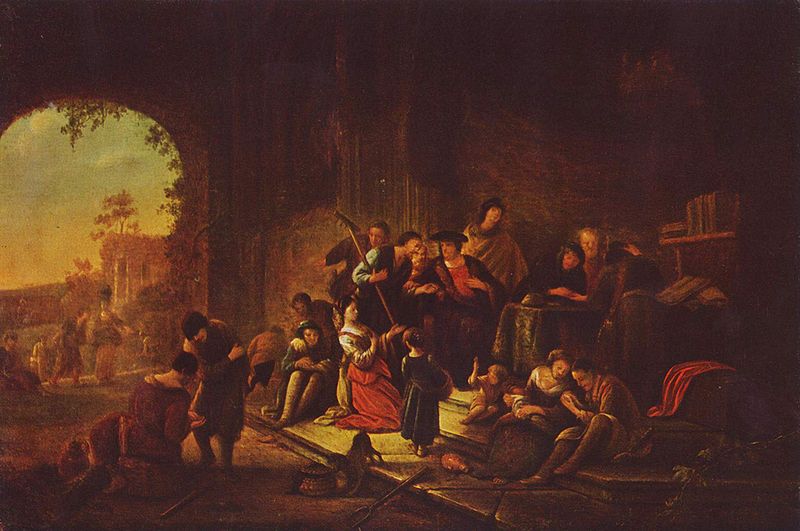 One of my favorite parables is that of the Laborers in the Vineyard. Jesus says:
For the kingdom of heaven is like a landowner who went out early in the morning to hire men to work in his vineyard. He agreed to pay them a denarius for the day and sent them into his vineyard. About the third hour he went out and saw others standing in the marketplace doing nothing. He told them, “You also go and work in my vineyard, and I will pay you whatever is right.” So they went. He went out again about the sixth hour and the ninth hour and did the same thing. About the eleventh hour he went out and found still others standing around. He asked them, “Why have you been standing here all day long doing nothing?” “Because no one has hired us,” they answered. He said to them, “You also go and work in my vineyard.” When evening came, the owner of the vineyard said to his foreman, “Call the workers and pay them their wages, beginning with the last ones hired and going on to the first.” The workers who were hired about the eleventh hour came and each received a denarius. So when those came who were hired first, they expected to receive more. But each one of them also received a denarius. When they received it, they began to grumble against the landowner. “These men who were hired last worked only one hour,’ they said, ‘and you have made them equal to us who have borne the burden of the work and the heat of the day.” But he answered one of them, “Friend, I am not being unfair to you. Didn’t you agree to work for a denarius? Take your pay and go. I want to give the man who was hired last the same as I gave you. Don’t I have the right to do what I want with my own money? Or are you envious because I am generous?” (Matthew 20:1-15)
This is a parable, of course, about how all who believe in Christ, whether they have come to faith through baptism as an infant and have labored in the vineyard of Christ’s Church all their life, or whether they believe on their deathbed, finally receive the same heavenly reward. This is what the “denarius” stands for: eternal life. And Jesus’ point is that eternal life is a gift of God’s grace. It cannot be merited by our piety and works.
In verse 2, the landowner agrees “to pay them a denarius for the day.” The NIV here makes it sound as though the workers are somehow meriting their award of a denarius because they are getting paid for what they do in the vineyard. However, in Greek, the word “pay” never appears. The ESV does better: “After agreeing with the laborers for a denarius a day, he sent them into his vineyard.” There is no notion of payment, only a predetermined agreement. Finally, we learn that the denarius was not a payment at all, but a gift. After the laborers who began work at the start of the day begin to grumble because they receive the same denarius as those who began work at the end of the day receive, the landowner asks, “Didn’t you agree to work for a denarius? Take your pay and go.” (And again, the word “pay” does not appear in the Greek.) “I want to give the man who was hired last the same as I gave you. Don’t I have the right to do what I want with my own money? Or are you envious because I am generous” (verses 13-15)? It is the generosity of the landowner that leads to the gift of the denarius, not the work of the laborers. For eternal life is a gift of God’s grace.
Luther explains this well when he writes that in eternity, “In his person none shall be more or have more than the other, Saint Peter no more than you and I.” Even the most notable saints on earth finally all receive the same heavenly reward. For, “in short, all are to be alike before God in faith and grace and celestial bliss” (St. L. VIII:1223). It is important to note that Luther goes on to say that we are indeed recognized with differing degrees of glory for our good works (cf. Luke 19:12-19, 2 Corinthians 5:10, Galatians 6:8-9), but the reward of eternal life itself is universal for all who trust in Christ.
Thus, all Christians are all on their way to the same destiny: eternal life in, with, and through Christ. And when the days in the vineyard of this earth get long, that is a great hope. So lift up your eyes to the heavens! Your denarius awaits.
Want to learn more on this passage? Go to
www.ConcordiaLutheranChurch.com
and check out audio and video from Pastor Tucker’s
message or Pastor Zach’s ABC!


 Pastor Zach's Blog