Posts tagged ‘Jesus’
Comfort in Stormy Times: Reflections on Hurricane Matthew

The people of Florida are picking up the pieces. Along with the people of Georgia. And the people of the Carolinas. And the people of Cuba. And the people of Haiti. As Hurricane Matthew churned its way through the Caribbean and up the east coast, it left a path of destruction in its wake. In Florida, mandatory evacuations were issued before the storm. Grocery store shelves were stripped bare. Gas stations were pumped dry.
It could have been worse. They eye of Hurricane Matthew skirted much of the eastern seaboard, sparing these regions from what could have been even greater damage. But even if things were not as bad as they could have been, this storm was still a whopper. For a brief time, Hurricane Matthew reached Category 5 status, making it the first storm to reach a hurricane’s most powerful potential since Hurricane Felix in 2007.
Whenever a natural disaster of this magnitude strikes, it presents a unique set of struggles and questions. When we suffer a man-made disaster in a shooting or in an accident or even in a terrorist attack, we can point to the source of the calamity and explain that the person who created the catastrophe is unstable or incompetent or even evil. When a hurricane strikes however, there is no one from whom we can demand a mea culpa, save nature and nature’s God. And such a mea culpa is tough to come by.
So how are we to process this disaster? Here are a few things to keep in mind.
We cannot control everything.
In an election year such as this one, it is easy to live under the illusion that we wield a great amount of power and authority. We do, after all, have a say – even if it is a small one – in who the leader of the free world should be. But for every bit of control we think we have, there are so many things that simply fall outside our hands. Hurricanes are one of these things. We can forecast them, but we cannot steer them. They strike where they may. They strike with the energy that water temperatures give to them. The smallness of our power when compared to the scope of something like the weather should lead us to marvel at the bigness of God’s creation. There is still so much we cannot tame.
We can help others.
Though we do not have power over all things, this does not mean that we can help in some things – like in hurricane relief. My congregation, Concordia Lutheran in San Antonio, has set up a relief fund to help those in Haiti. We are exploring opportunities to help those in other areas as well. You can donate by clicking here. Part of our calling as Christians is to be a neighbor to those in need. Being neighborly need not be constrained by proximity, nationality, economy, or any other earthly barrier. To help others is to love Christ! Rolling up our sleeves by opening up our pocketbooks is a great way to get involved.
There is someone who is in control.
In a world that seems shaky, it is important that we remind ourselves that just because we are not in control does not mean that everything is out of control. Christian theologians will often describe God as omnipotent, a word that means “all power.” In other words, God has all control. When a storm like Matthew strikes, it serves us well to consider the many instances in Scripture that remind us that God, quite literally, guides the weather. In the case of His disciples, Jesus saves them from a storm on the Sea of Galilee by calming it with just a word. In the case of Jonah, God saves him with a storm that forces some sailors he is with to toss him overboard so God can send a giant fish to take the prophet where he needs to be. In the words of the Psalmist, God can also save people through storms as they seek refuge in Him: “God is our refuge and strength, an ever-present help in trouble. Therefore we will not fear, though the earth give way and the mountains fall into the heart of the sea” (Psalm 46:1-2). God, then, does not use storms in the same way in every instance. Sometimes, He saves us from storms as weather patterns change. Other times, he saves us with storms as these trials turn us toward Him. Still other times, He gives us strength to make it through storms, even if they hit us straight on.
Ultimately, it is important to remember that no matter what storms – whether they be literal or figurative – this world may bring, we have assurance in them because of Christ. When Christ was on the cross, the Gospel writers tell us that “darkness came over all the land” (Matthew 27:45). In other words, it stormed. But what looked like a storm of death became a storm that gave way to life three days later. Jesus overcame the storm of the cross so that we would never be lost to the storms caused by sin. For even if a storm takes lives, as did Hurricane Matthew, we can be assured that those who die in Christ go to a place where there is “a sea of glass, clear as crystal” (Revelation 4:6). In other words, in heaven, the weather is a flat calm. There, every storm has been conquered by Christ.
With the extent of the damage from Hurricane Matthew just now becoming clear, there is still a lot – economically, emotionally, and theologically – to sort through. But this much is clear: God does not abandon us in storms like these. He is there. And He cares.
Nice, Turkey, and Baton Rouge

Baton Rouge police block Airline Highway after a sniper kills three and wounds three officers. Credit: AP Photo/Max Becherer
In Genesis 3, Adam and Eve eat from the fruit of a tree about which God had said, “You must not eat…for when you eat from it you will certainly die” (Genesis 2:17). By Genesis 4, death has already had its way as Cain kills his brother Abel.
That didn’t take long.
The grim efficiency of death has loomed large over these past few days. First, word came from Nice, France last Thursday that 84 people had been killed when a terrorist drove a large, white paneled truck at high speeds into a crowd of revelers who were celebrating Bastille Day. Then, on Saturday, we learned that around 290 people were killed in a failed coup against the president of Turkey, Recep Tayyip Erdogan, who has now arrested over 6,000 people and has vowed to root out what he calls the “virus” that is plaguing his country. Then, yesterday, tragedy hit Baton Rouge as three police officers were killed and three others were injured when a sniper ambushed and shot at the officers who had responded to a report of trouble near the Hammond Aire Plaza shopping center.
Three stories of death in nearly as many days. And these come on the heels of another week before this last week that was also packed with three stories stories of death from Saint Paul, from Dallas, and, again, from Baton Rouge. Yes, death is grimly efficient.
These are terrible times. There was a time when weeks like these – with so many major stories of unrest and death – were nearly unthinkable. But in the summer of 2016, weeks like these are becoming all too predictable. Indeed, I can sometimes struggle with how to process all of these types of tragedies precisely because there are so many of these types of tragedies.
In processing this week’s worth of carnage, I would point to what I have already pointed to in the past. After the tragedies in Baton Rouge, Saint Paul, and Dallas, I pointed people to the importance of being empathetic with those who grieve, of receiving Christ’s peace in the midst of unrest, and, most importantly, of remembering that death does not have the last word. Christ does.
As I look back on this week of tragedies, all of these reminders still hold. And yet, I wish I didn’t have to remind people of these reminders – again.
Even though I feel a little overwhelmed by so much death in such a short period of time, I am not particularly surprised by it. After all, death, as Genesis 3 and 4 teach us, is indeed grimly efficient. It works fast and it works tenaciously. And it has no intention of giving up on its prey.
What is most striking to me about Abel’s death in Genesis 4 is that even though God condemned Adam and Eve to death because of their transgression against His command, it was their son, Abel, who first suffered under the fruit of their sin. It who their son, who, ostensibly, did nothing particularly wrong who dies. Indeed, the reason Abel’s brother Cain kills him is because he did something right. He made an offering that was pleasing to God. Cain became jealous of that offering and murdered him.
The first death in history, then, was that of an apparently innocent person. This is why, when God finds out what Cain has done to his brother, He is furious and asks Cain, “What have you done?” which, interestingly, is the same question God asks Eve when she eats from His forbidden fruit. God continues by answering His own question: “Listen! Your brother’s blood cries out to Me from the ground” (Genesis 4:10).
Ever since that moment, the blood that cries out to God has been getting deeper and deeper as death has been spreading farther and wider. Nice, Turkey, and Baton Rouge have now added their blood to Abel’s.
Finally, there is only one way to stem the flow of death and blood. The preacher of Hebrews explains:
You have come to God, the Judge of all, to the spirits of the righteous made perfect, to Jesus the mediator of a new covenant, and to the sprinkled blood that speaks a better word than the blood of Abel. (Hebrews 12:23-24)
Just like Abel, there was a man who was not only ostensibly innocent, He was actually innocent. Just like Abel, this was a man who did what was pleasing in God’s sight. And just like Abel, this was a man who had His blood spilled by those who were jealous of Him. But Jesus’ blood, the preacher of Hebrews says, is better than Abel’s blood. Why? Because Jesus’ blood did what Abel’s blood could not. Instead of just crying out, as did Abel’s blood, Jesus’ blood saved us. By His blood, Jesus solved the problem of Abel’s blood…and Nice’s blood…and Turkey’s blood…and Baton Rouge’s blood. For by His blood, Jesus said to death’s grim efficiency: “Your reign will end. My blood will overtake all the blood that cries with a blood that can save all.”
In a week that has seen far too much blood and far too many tears, Jesus’ blood is the blood that we need. For Jesus’ blood is the only blood that doesn’t wound our souls as we mourn loss; it mends our souls as we yearn for salvation.
Processing the Terror in Orlando

Credit: The Guardian
Terror doesn’t sleep.
This is one of the lessons we’re learning from what has become the worst mass shooting in U.S. history carried out early this morning around 2 o’clock at a nightclub in Orlando.
The shooter’s name was Omar Mateen. He had drawn the attention of the FBI in the past, and before he carried out his terror attack, he called 911 to pledge his allegiance to ISIS. By the time his AR-15-style rifle and his handgun were silenced, 50 people were dead and over 50 were injured. Mr. Mateen himself was killed by law enforcement officials while he was holed up in one of the club’s bathrooms with hostages.
News reports have been filled with people expressing shock, sadness, and outrage. All of these responses are certainly appropriate, but what especially grieves me is that they are also entirely predictable. We know how people will respond to a terror attack emotionally precisely because we have had so much practice responding to terror attacks emotionally. Paris. San Bernardino. Brussels. But this tragedy – like the ones that have come before it – is too important not to respond. When human life is senselessly and violently taken, we should stop and we should reflect and we should respond. Here are a few things, then, to keep in mind.
Do not be afraid.
This is not the first time I have written this in the face of a terror attack. But this is also something that bears repeating. After all, whenever an attack like this one unfolds, our natural and almost reflexive reaction is to ask, “Am I next? Am I safe?” But such questions are unhelpful because such questions are utterly unanswerable. There is no way for us to control the future. This is why the apostle Paul commends us to be people of prayer rather than people of worry and fear: “Do not be anxious about anything, but in every situation, by prayer and petition, with thanksgiving, present your requests to God” (Philippians 4:6). We may not be able to control the future, but we do know someone who holds the future. We are called to present our fear to Him and place our trust in Him.
I should point out that there is a difference between being afraid and being vigilant. Fear happens when a person mulls over all sorts of possible, though unverifiable, bad scenarios for the future. Vigilance is when a person looks for clues of trouble in the present and reports them to the appropriate authorities for investigation. Being vigilant is helpful. Being afraid is needless.
Remember, there is a reason attacks like the one in Orlando are called acts of terror. They are attacks specifically designed to instill fear. Don’t let these attacks have their way in your heart. Christ is stronger than terror.
Be careful connecting dots.
One of the major focal points of this story has been the clientele to whom this night club in Orlando catered. The club at which these attacks were carried out is called the Pulse, which is well-known as a hotspot for those in the LGBT community. Shortly after the attacks, GLAAD, a gay rights advocacy group, tweeted, “Our hearts break for the victims and families of this horrific act of violence. We stand in solidarity with the LGBTQ community in #Orlando.” The call to stand in a solidarity of care, concern, and compassion is well-taken.
At the same time, many in the media and beyond are already wondering and conjecturing out loud concerning whether or not the fact that this is an LGBT club in any way served as a motive for the shooter. In an article for the Huffington Post, Michelangelo Signorile offers a brief history of attacks against LGBT spaces, strongly intimating that the Orlando attack was probably more of the same.
Whether or not the patronage of this nightclub is somehow connected to the motive of the shooter is certainly a question that needs to be asked and answered. At this point, however, overly confident pronouncements can do more harm than good. A good rule of thumb is this: investigation precedes correlation. In other words, let’s not jump to conclusions.
As a Christian, this is something that I must regularly remember. It can be far too tempting to search for some pious, consoling, and grandiose reason why a God who Scripture reveals to be a strong and sure defense would allow a horrific tragedy like this to happen. But correlating current events to overly specific divine purposes is a theological fool’s errand. Theologically, I must say only what I can know for sure according to Scripture: (1) that such a shooting is an expression of deep sinfulness and depravity (Romans 3:15); (2) that events of death grieve the heart of God because death is not a part of His design (1 Corinthians 15:20-22); and (3) that God is with and cares for those who have lost loved ones (Psalm 23:4).
Connecting disparate facts now will only leave you looking a fool later. So be careful.
Remember Christianity’s unique message.
As I have said in the past, I am sympathetic to those who claim that ISIS does not represent Islamic theology, at least in any responsible sense. Just as I do not see the theological stances of, let’s say, the Westboro Baptist Church to be authentically Christian in any regular sense of the term, I can understand why many Muslim theologians would decry and deny that ISIS represents their faith. But even if ISIS does not represent the Islamic faith in any theologically and academically rigorous way, it does represent some sort of faith – even if the faith it represents calls on its adherents to destroy those it hates. And this is where Christianity stands apart. The beauty of the Christian faith is that it centers around a man who loved those who hated Him and sought to destroy Him. Moreover, whereas ISIS calls on its fighters to lay down their lives in order to bring death to infidels, Christianity has a Savior who laid down His life in order to bring life to sinners. In other words, Christianity serves as the perfect foil to all the terror ISIS is dishing out. Christianity loves when ISIS hates. Christianity promises life when ISIS seeks death. This is why, on a day that is full of plenty of reasons to hate and to grieve, I once again to turn to Christ who gives me reasons to love and to hope. And I ask you to join me in doing the same.
May Christ reveal His love and His life to Orlando.
Ministry Myth: Jesus Always Addressed Felt Needs
 A while back, I was in a meeting with church leaders from across the country who are devoted to bringing Christ’s gospel to all nations. In our discussions, one of these leaders pointed out that, as important as church programs and friendly atmospheres may be for engaging people who don’t know Christ, ultimately, what reaches people is the preaching of the gospel. “It is the Word of God,” he said, “that touches and transforms hearts.” To this, another person replied, “Yes, the gospel is important. But we can’t start with the gospel because the gospel alone won’t reach people. We need to begin with people’s felt needs. Jesus always began with people’s felt needs.”
Well, yes He did…except when He didn’t.
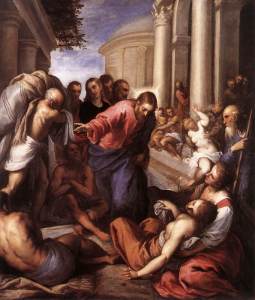
Like the time a paralytic’s friends brought him to Jesus. Jesus saw that they had faith enough to bring their friend to Him for healing. But He did not respond to their felt need for healing – at least not right away. Instead, He said, “Son, your sins are forgiven” (Mark 2:5). Jesus dealt with this man’s deeper need – his need for forgiveness – before He dealt with this man’s felt need – his need to be healed from his paralysis.
Or how about the time one of Jesus’ dearest friends – a man named Lazarus – fell ill? His sisters, Mary and Martha, begged Jesus to hurry over and heal him. But Jesus did not meet their need. Instead, He intentionally let His dear friend die. Why? So that Jesus could address humanity’s deeper need – the need to be rescued from death – which far outweighs the felt need of being temporarily healed from a frustrating ailment. This is why Jesus says to Martha, “I am the resurrection and the life. The one who believes in Me will live, even though they die; and whoever lives by believing in Me will never die” (John 11:25-26).
Don’t get me wrong. I am not saying that Jesus never began by addressing people’s felt needs. After all, He fed a crowd of 5,000 by miraculously multiplying loaves of bread before declaring Himself to be the bread of life (cf. John 6:1-35). He began with a felt need for physical food before He moved to a deeper need for heavenly food. Jesus does sometimes initiate an engagement by addressing people’s felt needs. However, Jesus does not always begin this way. Indeed, sometimes, He flat out denies people’s felt needs as He challenges them with their deeper needs.
The problem with felt needs is that, often, felt needs are not helpful needs. Sometimes, felt needs can even be sinfully selfish needs. Jesus has little interest in meeting our felt needs for riches, for ease, and even for happiness. Thus, for us to begin and base our ministries on what people think they need, and then to try to meet those needs before we share Jesus, can devolve, if we are not careful, into merely enabling sin.
I have learned over the years that Jesus has a funny way of resisting the easy ministry models we like to apply to Him. To those who say that Jesus always begins by addressing people’s felt needs so they will be open to the gospel, I must say, “I think you’re wrong.” But then again, to those who say that Jesus never begins by addressing people’s felt needs as a foray to share the gospel, I also must say, “I think you’re wrong.” Jesus does both.
We should too.
Perhaps we would do well to learn to pray a slightly modified version of Reinhold Niebuhr’s famous, though contested, Serenity Prayer as we seek to faithfully reach the world with the gospel: “God, grant me the tenderness to address people’s felt needs at certain times, the boldness to challenge them with their deepest needs at other times, and the wisdom to know when to do which.”
That’s my prayer as I seek to reach out with the gospel. Will you join me in praying the same?
Blessed Are Those Who Mourn
 The women on that first Easter went to the tomb to mourn. They went to mourn the loss of their friend. They went to mourn the loss of, for one of the women, a family member. They went to mourn the loss of hope. Of course, when they arrived the tomb, they got something they had never bargained for. They were greeted by a glorious being with an unlikely message: “Do not be afraid, for I know that you are looking for Jesus, who was crucified. He is not here; He has risen, just as He said” (Matthew 28:5-6).
It was on Easter morning that these women, to use the words of the prophet Jeremiah, had their “mourning [turned] into gladness” and received “comfort and joy instead of sorrow” (Jeremiah 31:13).
Mourning may not be pleasant, but it is needed. In many ways, I would argue that we don’t mourn enough. At funerals, rather than addressing the reality of death, people will often try to dull the pain of a loss by casting the service in terms of a celebration of the person who has died. A eulogist will say something like, “This person wouldn’t have wanted us to be sad!” Mourning, which is nothing other than the natural and inescapable response to something as heinous as death, is dismissed, downplayed, and depressed in favor of a skin-deep smile.
To make matters worse, when we are not mourning something as intense as the loss of a loved one, we can wind up jettisoning mourning altogether. We not only try to moderate our mourning, we can replace our mourning with something different entirely.
There is plenty that should command our mournfulness. Greed, corruption, malfeasance, and general godlessness should pain us all. Sadly, rather than mourning these things, we often trade mourning for grumbling. This seems especially true in the political arena. We grumble about health care. We grumble about immigration. We grumble about political constituencies that are not our political constituencies. But replacing mourning with grumbling is dangerous.
The ancient Israelites were experts at grumbling. Exodus 16:2 says, “In the desert the whole community grumbled against Moses and Aaron.” Numbers 14:2 repeats the same refrain: “All the Israelites grumbled against Moses and Aaron, and the whole assembly said to them, ‘If only we had died in Egypt! Or in this wilderness!’” The ancient Israelites were experts at grumbling. But their grumbling carried with it consequences. The Psalmist recounts the story of Israel during her wandering in the wilderness and says: “They grumbled in their tents and did not obey the LORD. So He swore to them with uplifted hand that He would make them fall in the wilderness” (Psalm 106:25-26). The apostle Paul admonishes his readers to “not grumble, as some of [the Israelites] did – and were killed by the destroying angel” (1 Corinthians 10:10). Clearly, God has little time or tolerance for grumbling. Why? Because grumbling leads nowhere good. It leads to rebellion. The Israelites grumbled about God and then built a golden calf in rebellion against God. It leads to revenge. Cain grumbled about his brother Abel’s sacrifice to God right before he killed his brother. Grumbling leads to sin. James puts it quite succinctly when he writes, “Don’t grumble against one another, brothers and sisters, or you will be judged” (James 5:9).
There is plenty for us, in our day, to mourn. But sincere mourning over sin is quite different from self-righteous grumbling against sinners. One perpetuates sin by doing little more than whining about it. The other fights sin by asking the Lord to rescue us from it.
In a world filled with grumbling, may we remember how to mourn. And may we also believe Christ’s promise: “Blessed are those who mourn, for they will be comforted” (Matthew 5:4). Mourning, Jesus says, is blessed. Grumbling, Scripture warns, is condemned. Let’s make sure we’re doing what God blesses rather than falling prey to what He condemns.
Faith and Morality
 On this blog, I have written at length on moral issues. I believe, quite firmly, that morality has a helpful role to play in the public square and, therefore, moral questions should be discussed and debated and moral standards should be regarded as useful and necessary for and in society. For all my support public morality, however, there is a part of public morality that I find terrifying. Here’s what I mean.
There can be little doubt that the experiment of societal moral relativism has failed. Throwing off the shackles of a transcendent and traditional morality for a culturally conditioned and convenient one that ultimately assumes that there is only amorality never got us Thomas Hobbes’ Epicurean dream. It just left us Adolf Hitler’s Third Reich nightmare. Leviathan, it turns out, wasn’t nearly as competent to do its job as Hobbes thought.
Moral relativism, then, can be quite deadly. It does no society any good because, by definition, it is utterly individualistic. And individuals, left to their own devices, seem to come up with awfully immoral relative moralities. A traditional and transcendent morality is needed to order society in such a way that we do not (A) wind up killing each other, and (B) actually do some things that are helpful for each other. For these reasons, as well as for many others, public morality is needed.
But at the same time a traditional and transcendent public morality is needed, it is also terrifying.
Once a month, I teach a Bible study at a local business. This year, I am working through the book of James when, a while back, I came to these famous words:
What good is it, my brothers, if a man claims to have faith but has no deeds? Can such faith save him? Suppose a brother or sister is without clothes and daily food. If one of you says to him, “Go, I wish you well; keep warm and well fed,” but does nothing about his physical needs, what good is it? In the same way, faith by itself, if it is not accompanied by action, is dead. (James 2:14-17)
As a Lutheran, James’ trumpeting of moral works as important to faith can sometimes arouse in me an almost allergic reaction! As an avid reader of all things Pauline, I know that works do not help faith. Indeed, I know that works can actually be in opposition to faith:
[We] know that a person is not justified by the works of the law, but by faith in Jesus Christ. So we, too, have put our faith in Christ Jesus that we may be justified by faith in Christ and not by the works of the law, because by the works of the law no one will be justified. (Galatians 2:16)
“Faith” and “works,” Paul says, do not mix when it comes to salvation.
Of course, James’ point is not that works somehow help faith when it comes to salvation, but that faith results in works that flow from salvation. A saving faith, James argues, is inevitably an active faith. Indeed, James would go so far to argue that a saving faith that is not an active faith is not even faith. To quote his brother’s words: “By their fruit you will recognize them” (Matthew 7:16). A faith that does not result in moral works does not exist. Such a faith is a myth that belongs on the shelf with unicorns, leprechauns, and that time your mom told you that if you swallow your gum, it will stay in your stomach for seven years.
This is why, at the same time I believe public morality is needed, I am also terrified by it. A faith without moral works is impossible. James says so. Christians should not be frightened, therefore, to declare moral works as “necessary” to faith. What is frightening, however, is that the inverse does not hold true. Moral works may be necessary to faith, but faith is not necessary for moral works. One can be very moral and still be very damned. And herein lies the good and the bad of public morality. Public morality helps others. It may even help you. But it doesn’t help you before God. Only faith can help you before the Almighty.
Even as I continue to argue for the merits of public morality if for no other reason than that I’m not a big fan of the Third Reich, I will continue to serve proudly as a pastor to point people toward faith in Jesus Christ. I like morality that comes from faith a lot better than morality that is divorced from faith. The second morality may be nice for society, but the first receives a “well done” in eternity.
How Starbucks (Didn’t) Steal Christmas

Credit: Starbucks
It was the coffee kerfuffle that wasn’t. When a story about Christian outrage over Starbucks’ plain red holiday cups began trending on social media, something about it seemed off to me. Sure, there was a video of a self-styled evangelist shoving a red Starbucks cup into the camera and shouting about how Starbucks employees are not allowed to say Merry Christmas and explaining in a Facebook post that “Starbucks REMOVED CHRISTMAS from their cups because they hate Jesus.” And sure, there were the stories about all the controversy it was igniting in the Twittersphere. But as I checked my own social media feeds, what I saw was not Christian outrage over the Starbucks’ minimalist holiday cups, but outrage over the fact that there was so much outrage over something as inane as a coffee cup. Outrage over outrage. Is it just me, or does this all seem, well, outrageous?
I have a funny feeling that the evangelist who opined his offense at Starbucks’ holiday cups on Facebook may have done so more for clicks and shares than out of earnest conviction. In my opinion, this is little more than a shoddily manufactured controversy. But even if I am right and this controversy is manufactured, I am grateful that commentary by Christians on the controversy has been largely thoughtful. Take this from Ed Stetzer:
Folks, we really need to calm down. If you’ve posted an outraged Facebook update, take it down.
Starbucks cups are red because of the Christmas season. Starbucks is not persecuting you. Starbucks may be attempting to respect those who don’t celebrate Christmas – and that’s OK. That’s their choice. They’re a business that exists to serve all customers without preference, regardless of what winter holidays they do or do not celebrate. If they choose to do that by means of a plain, red cup, that’s their call …
Here’s what I would say – this is the wrong fight and being done in the wrong way. And, it’s just making Christians look silly, like so many of these fake controversies do.
We have a better story to tell than one of faux outrage. So let’s tell it. It’s not the job of your barista to share the gospel. It’s your job to share the gospel.[1]
Ed Stetzer is exactly right. It’s ridiculous and embarrassing when a man trying to start a faux movement to protest red coffee cups gets more attention than the Church who has been charged to be an ongoing movement to spread the gospel.
Setting coffee cups aside for a moment, it is important to understand that this kind of unhelpful outrage has implications far beyond the clear-cut inanity of supposedly, but not really, offensive coffee cups. Far more serious ethical and cultural issues like abortion and same-sex marriage and stewardship of creation and treatment of the poor have ignited no small amount of outrage. And make no mistake about it: we, as Christians, should have plenty to say about these issues. But if we become so embroiled in outrage over these issues that we lose sight of the joy of sharing the gospel of Christ’s death for sinners, we have become lovers of issues rather than people. And when this happens, we lose sight of the gospel.
It is interesting to me that for all the well-documented differences between conservative and liberal Christians, they can both often fall into the same trap. Sure, more conservative-leaning Christians may beat the drum about issues like abortion and same-sex marriage (and they should) while more liberal-leaning may beat the drum about issues like stewardship of creation and treatment of the poor (and they also should). But in both instances, each side can easily wind up becoming so obsessed with current ethical and cultural issues that they lose sight of the evangelical and soteriological cross of Christ. In this regard, both sides, whether conservative or liberal, have traded Billy Graham for Walter Rauschenbusch. The soteriological gospel has been sacrificed to the social gospel.
It is this that takes us back to the Starbucks, ahem, brew-haha. The evangelist who posted his now viral Facebook tirade suggested that customers tell baristas their name is “Merry Christmas” so servers will be forced to write “Merry Christmas” on their holiday symbol-less cups. Besides the fact that I am pretty sure that this will do little to nothing to shift cultural sentiment concerning Christmas and what it represents, I am even surer that it adds nothing to the proclamation of Christ and Him crucified. Thankfully, most Christians already know this. That’s why they have rejected his strategy.
So let’s take this lesson from a bout of Starbucks silliness about what’s most important and use it to keep our priorities straight as we engage our world on much more pressing topics. Our witness to the world on these topics must never be only ethical and cultural. It must be first and foremost evangelical and soteriological. For without Christ and Him crucified, ethics and culture become nothing because they save no one.
Crux sola est nostra theologia.
________________________________
[1] Ed Stetzer, “When We Love Outrage More Than People: Starbucks Cups and You,” Christianity Today (11.9.2015).
The Best of Times and the Worst of Times
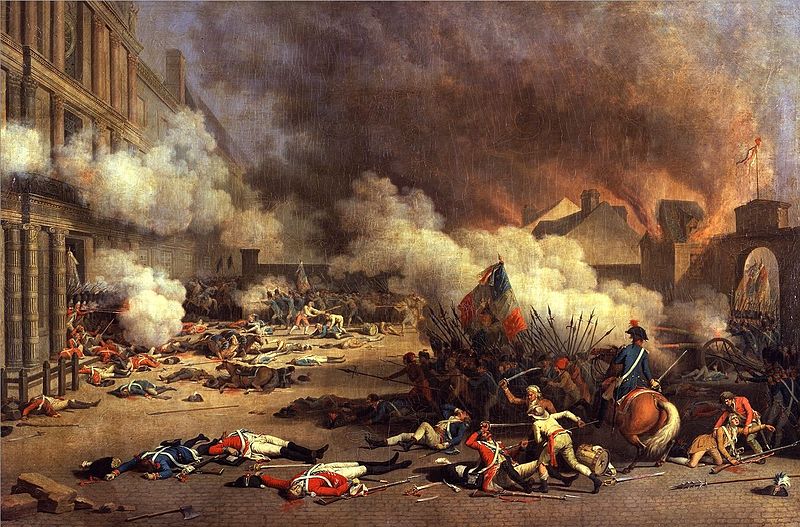
Jean Duplessis-Bertaux | Depiction of the storming of the Tuileries Palace during the French Revolution
“It was the best of times, it was the worst of times, it was the age of wisdom, it was the age of foolishness, it was the epoch of belief, it was the epoch of incredulity, it was the season of Light, it was the season of Darkness, it was the spring of hope, it was the winter of despair…”[1]
So begins Charles Dickens’ A Tale of Two Cities. Though the story is set during the French Revolution, its opening line strikes a universal tone. Life comes mixed with good and bad, wisdom and foolishness, faith and doubt, light and darkness, hope and despair. This is true even of Jesus’ life. For example, in Mark 7, Jesus heals a blind man:
Some people brought to [Jesus] a man who was deaf and could hardly talk, and they begged Him to place His hand on the man. After He took him aside, away from the crowd, Jesus put His fingers into the man’s ears. Then He spit and touched the man’s tongue. He looked up to heaven and with a deep sigh said to him, “Ephphatha!” (which means, “Be opened!”). At this, the man’s ears were opened, his tongue was loosened and he began to speak plainly. (Mark 7:32-35)
On its surface, this story looks like one that should be marked only by joy. After all, a blind and mute man gets healed! But right before Jesus heals this man, He looks up to heaven and lets out “a deep sigh” (Mark 7:34). The Greek word for this sigh is stenazo, which denotes a groan of sorrow (e.g., Romans 8:23). Why would Jesus groan in sorrow right as He is getting ready to do something as joyful as a healing?
Like Charles Dickens, Jesus knows that even when it’s the best of times, it’s also the worst of times. He knows that even as He is getting ready to do something great, evil is not far off. Indeed, Jesus knows that He will soon face the horror of the cross. And so He lets out a groan.
The Old Testament prophets spoke of a Messiah who would come and do many miraculous things, including that of making the deaf hear and the mute speak:
Your God will come, He will come with vengeance; with divine retribution He will come to save you. Then will the eyes of the blind be opened and the ears of the deaf unstopped. Then will the lame leap like a deer, and the mute tongue shout for joy. (Isaiah 35:4-6)
Notice even in this prophecy that the best of times and worst of times are comingled. On the one hand, the Messiah will open the eyes of the blind and unstop the ears of the deaf. This is good. On the other hand, the Messiah will come with “vengeance” and “divine retribution.” This sounds bad. But it also seems strange. Isaiah says, “With divine retribution [God] will come to save you.” Just how does God intend to use His retribution for our salvation? Isn’t His retribution supposed to lead to condemnation?
Timothy Keller notes that, when Jesus came, retribution and salvation were not so much in tension with each other as they were complimentary to each other, for Jesus “didn’t come to bring divine retribution; He came to bear it.”[2] On the cross, Jesus took the retribution our sins deserve so we could receive the salvation we could never earn. This is how divine retribution can lead to our salvation.
In A Tale of Two Cities, a kind of dualism runs through its opening salvo. There is good and bad, hopefulness and despair, and the reader does not know which one will ultimately prevail – or if either will prevail. In the case of Christ, though good and bad, hopefulness and despair are real and are in tension with each other, there is no doubt which will finally carry the day. Jesus may have groaned. But He still healed. And Jesus may bear divine retribution on a bloodied cross, but He still brings salvation out of an empty tomb. In Christ, the tension of Dickens is resolved. And that’s why we can have hope.
______________________________
[1] Charles Dickens, A Tale of Two Cities (Mineola, NY: Dover Publications, 1999), 1.
[2] Timothy Keller, King’s Cross (New York: Dutton, 2011), 94
Pope Francis and What’s Most Important

Credit: AFP Photo/Paul J. Richards
The New York Times may have called him “the spiritual leader of 1.2 billion Catholics,” but it seemed nearly impossible for journalists and pundits to filter Pope Francis’ visit to the United States, which wrapped up last night in Philadelphia, through anything but a political lens. After an obligatory nod to his spiritual status, the Times went on to report about the Pope’s address to a joint session of Congress:
While he checked boxes in calling for religious liberty and defending the family, the heart of his address, and the most time, was dedicated to aspects of Catholic teaching embraced by progressives, especially the overriding need to help the poor and destitute. He was at his most passionate in embracing immigration, alluding to his own family’s history of moving from Italy to Argentina, where he was born …
He also warned of the excesses of globalization, though in far more measured tones than he has in the past, when he used fiery language and the memorable phrase “dung of the devil” to describe unbridled capitalism.[1]
“Religious liberty.” “The excesses of globalization.” “Unbridled capitalism.” Though these things certainly have theological implications, as the First Article of the Apostles’ Creed would remind us, in our society, they are cast first and foremost as political concerns. Indeed, the Times ultimately concluded:
In the end, both sides could walk away citing parts of his message. But the liberal agenda items in his speech were explicit and clear while the conservative ones were more veiled.
Apparently, the real value of Francis’ speech, according to the Times, lies in how politicians will be able to leverage it and not in the theology that was contained in it.
Filtering theology through political policy is fraught with danger. In such a system, orthodox doctrine all too often gets sacrificed to Machiavellian expediency and a Savior who died gets turned into a political operative who just happens to hate all the same people we do.
On the one hand, Francis seemed to defy such bare politicization of the papacy, as Peter Johnson points out in his article for The Federalist, “10 Stories The Media Won’t Tell You About The Pope’s USA Visit.” Mr. Johnson explains how the Pope has taken on both liberal and conservative concerns – everything from climate change and immigration to government overreach and the dangers inherent in the Affordable Care Act. Such political schizophrenia is inherent in Christian ethics, which has the pesky habit of refusing to conform to both the liberal and conservative party platforms. Christianity can, at times, annoy both the left and the right.
On the other hand, it’s not too difficult to understand why the Pope’s address to Congress has been interpreted politically rather than theologically. After all, in a speech that lasted for nearly an hour before a joint session of Congress, the Pope, while covering a whole range of geopolitical and ethical issues, failed to mention Jesus – even once! This seems odd and, honestly, downright disturbing for the leader of a body of whom the apostle Paul noted is at its best when it resolves “to know nothing … except Jesus Christ and Him crucified” (1 Corinthians 2:2).
In one sense, the domination of the geopolitical and the ethical at the expense of the Christological in the Pope’s words is understandable both in terms of the ecclesiology and the soteriology of the Roman Catholic Church.
Ecclesiologically, popes have historically laid claim not only to spiritual authority, but to temporal power as well. Such power was crystalized in 800 on Christmas Day when Pope Leo III crowned Charlemagne as the emperor of Rome. A spiritual authority, on that day, crowned a political one. These days, though the Pope’s temporal power formally extends only as far as Vatican City – and even that authority is largely titular – the papacy’s interest in and influence over temporal affairs lingers. So it comes as no surprise that Francis would seek to shape geopolitical events. In some ways, I welcome such an effort. Our geopolitics needs all the sanctified wisdom it can get. But when geopolitical concerns drown out any mention of Christ in a major address from a man who claims to be the head of Christ’s Church, I begin to get a little nervous.
Soteriologically, Roman Catholicism’s view of righteousness and its relationship to salvation lends itself to Francis’ deep concern over ethical issues. As a Lutheran Christian, I will often speak of two kinds of righteousness. The first kind of righteousness is that which is imputed to me from God in Christ by faith. In the words of the apostle Paul:
But now a righteousness from God, apart from law, has been made known, to which the Law and the Prophets testify. This righteousness from God comes through faith in Jesus Christ to all who believe. (Romans 3:21-22)
Christ’s perfect righteousness is a righteousness that leads to my salvation quite apart from anything I have done or ever will do. This righteousness is not an ethical task, but a sheer gift, not based on my actions, but based on Christ’s action for me on the cross. The second kind of righteousness involves the good deeds that I do for my neighbor. I am called to love, serve, and help my neighbor, as Jesus explains forcefully in His Parable of the Good Samaritan. When I do these things, I am acting in the way of righteousness. But such a righteousness does not save me. It simply helps others.
In the Roman Catholic system of theology, these two kinds of righteousness are collapsed into one. The righteous acts we do for our neighbor are righteous acts that are also taken into account when we receive salvation from God. The Catechism of the Catholic Church makes this clear enough:
Since the initiative belongs to God in the order of grace, no one can merit the initial grace of forgiveness and justification, at the beginning of conversion. Moved by the Holy Spirit and by charity, we can then merit for ourselves and for others the graces needed for our sanctification, for the increase of grace and charity, and for the attainment of eternal life.[2]
The Catechism baldly asserts that my righteousness cooperates with Christ’s righteousness so that I may attain eternal life. All the good things of which the Pope spoke in his speech, then, pertain to salvation because our good works on these good things aid in our salvation. It’s no wonder, then, that Francis would be especially concerned with our good works, even as the good work of Christ went missing in his words to Congress.
For all the excitement Francis’ visit and words generated, I fear that we managed to overlook what is the most important business of the Church: to proclaim Christ’s forgiveness for sinners. This, to borrow a phrase from Paul, is “of first importance” (1 Corinthians 15:3). All of the things the Pope addressed in his speech to Congress are important and should be discussed, but they are not most important.
Mollie Hemmingway puts the situation well when she writes:
It’s wonderful that some people say that Francis makes them feel the church is more welcoming to them. But if it’s just making people feel more comfortable in their politics, instead of making them feel the comfort of absolution, communion and strengthening of faith, that’s not much to get excited about.[3]
This is most certainly true. We can get excited over and become passionate about geopolitical issues. We can strongly advocate for ethical issues. I do all the time on this very blog. But our deepest commitment must be to Jesus. Our first proclamation must be of Him. For long after the concerns of this age fade way – indeed, long after this visit from this Pope is forgotten – Jesus will remain. The best thing this Pope can do, then, is invite us to turn our attention – and our hearts – to Him.
__________________________________
[1] Peter Baker & Jim Yardley, “Pope Francis, in Congress, Pleads for Unity on World’s Woes,” The New York Times (9.24.2015).
[2] Catechism of the Catholic Church (Collegeville, MN: 1994), § 2010.
[3] Mollie Hemmingway, “The Pope Francis Effect: Enthusiasm, But To What End?” The Federalist (9.25.2015).
The Problem with Pep Rallies

Credit: Mark J. Terrill, AP
It’s still thirteen and a half months away, but with the way it’s being covered – and with the ratings that CNN scored last week when it hosted the second of the Republican primary presidential debates – you’d think the presidential election of 2016 was right around the corner.
As we rush headlong into another presidential election cycle, we see all the typical trappings of what have become nothing short of political and journalistic rituals. We have a conservative action group that has launched a set of attack ads against Republican frontrunner Donald Trump. On the Democratic side, controversy has boiled over concerning the relative dearth of Democratic primary debates as compared to the number of Republican primary debates and how this favors Democratic frontrunner Hillary Clinton. As for the media, they are busy fact checking everything every candidate says. And then there are the rallies – the never ending rallies in every state and in what seems to be every American city.
Rallies, of course, are great when a politician wants to solidify his or her base of supporters. Rallies also incite and excite a candidate’s supporters to vote. Rallies, in a democratic election system like ours, are necessities.
Unfortunately, in our culture, we have taken what works well during an election cycle and have applied it, without much critical thought, to many different areas of life, including in our use of social media. Many of the posts I see on social media are meant to rally people who agree with one point of view by belittling and demeaning those who hold a differing point of view. Such posts follow a predictable pattern. First, an article, a meme, or even an out and out diatribe is posted that espouses the utter rightness of one point of view while attacking those who hold an opposing point of view as nothing less than reprobates. Second, people “pile on,” as it were, by posting comments. Third, anyone who dares to disagree with the view expressed in the initial post by posting a critical comment is harangued and attacked. Finally, nothing changes. People who agree with the sentiment expressed in the initial post still agree. And people who disagree still disagree.
We need a better way.
When posting on social media, it is time for us to start asking ourselves a question: in this post, am I trying to rally people or persuade them? The goal of persuasion is, in its strictest sense, to change someone’s mind on a particular position. In a broader sense, persuasion can also seek to engender empathy from someone who disagrees with a particular position. Even if someone does not agree with me on a particular position, I still deeply appreciate it when they at least understand why I think what I think, just as, I assume, other people appreciate it when I understand why they think what they think.
The trouble with persuading people is that it is much more difficult than rallying them. Rallying people usually only needs a stake in the ground and a line in the sand. Persuading people often needs tortured, lengthy nuanced arguments about a particular position. Rallying people can make a person feel good because, when others express agreement with a particular point, the rallier is quickly assured that he or she is not alone. Persuading people can often feel much lonelier because it does not provide a common enemy against whom you and those who agree with you can join forces, but it also does not provide the kind of toleration and capitulation that your opponents might ultimately desire. Rallying people can be done in minutes. After all, social media posts can go viral in nearly no time at all. Persuading people takes relationship building, trust, and, usually, hours, months, and even years worth of conversations. And even then, sometimes, people remain unpersuaded.
All this is to say that I can see the appeal of rallying people around a particular position. And, at times, rallies are necessary and desirable – especially in the face of a heinous evil that will not be persuaded, so it must be defeated. The problem is, as a long-range strategy, rallying doesn’t solve much. It may engender excitement and incite anger. It may get out a vote to defeat an opponent. But it doesn’t change a heart.
We, as Christians, believe there are certain things the world needs to believe. We want the world to be persuaded to believe these things. Thus, particularly as we post on issues that have to do with our faith, we need to eschew the easy way of the rally and instead choose the harder way of persuasion. After all, eternal truth is at stake. And, in many instances, so are people’s souls.
So think before you post. As Christians, we don’t want to just lambast those who might disagree with us, we want to show, with nuanced and thoughtful compassion, why people can, and should, agree with Christ. After all, Christ has persuaded us. Why would we want to do anything less than persuade others?


 Pastor Zach's Blog