Posts tagged ‘Jesus’
No Longer Shut Out
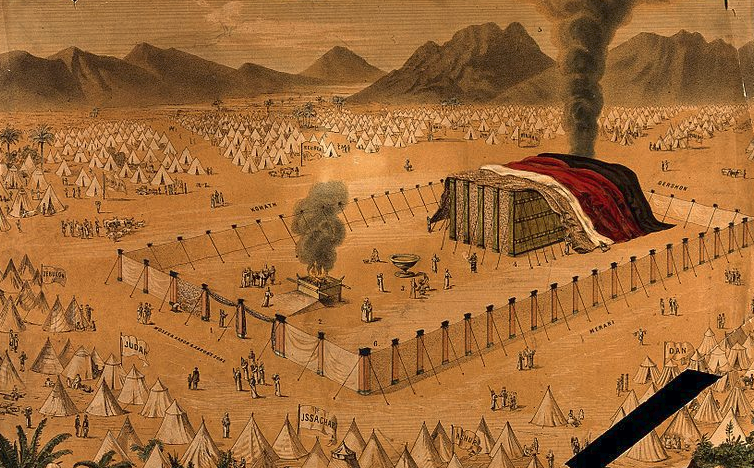
At the end of the book of Exodus, Moses and Israel have just set up the tabernacle – the place where God dwells. But when Moses tries to enter it to be with God, something unsettling happens:
The cloud covered the tent of meeting, and the glory of the LORD filled the tabernacle. Moses could not enter the tent of meeting because the cloud had settled on it, and the glory of the LORD filled the tabernacle. (Exodus 40:34-35)
Moses cannot enter to meet with God.
The Psalmist asks:
Who may ascend the mountain of the LORD? Who may stand in His holy place? The one who has clean hands and a pure heart, who does not trust in an idol or swear by a false god. (Psalm 24:3-4)
The Israelites do not have clean hands or pure hearts. They are recalcitrant and rebellious. As Exodus 32 recounts for us, they have sworn by idols. They cannot stand in the Lord’s holy place because of their sin.
The book of Exodus, then, leaves its reader wondering if God’s people will ever be able to meet with God. Or, has God cut them off because of their sin?
John’s Gospel opens with this description of Jesus:
The Word became flesh and made His tabernacle among us. We have seen His glory, the glory of the one and only Son, who came from the Father, full of grace and truth. (John 1:14)
The Israelites were barred from standing in God’s holy place by His glory. Jesus comes to us as God’s holy place and freely shows us His glory. How? By grace and with truth. John 1 is the answer to Exodus 40. Despite our sin, we are not blocked from being with God, because God has chosen to be with us in Christ.
Don’t Destroy Yourself!
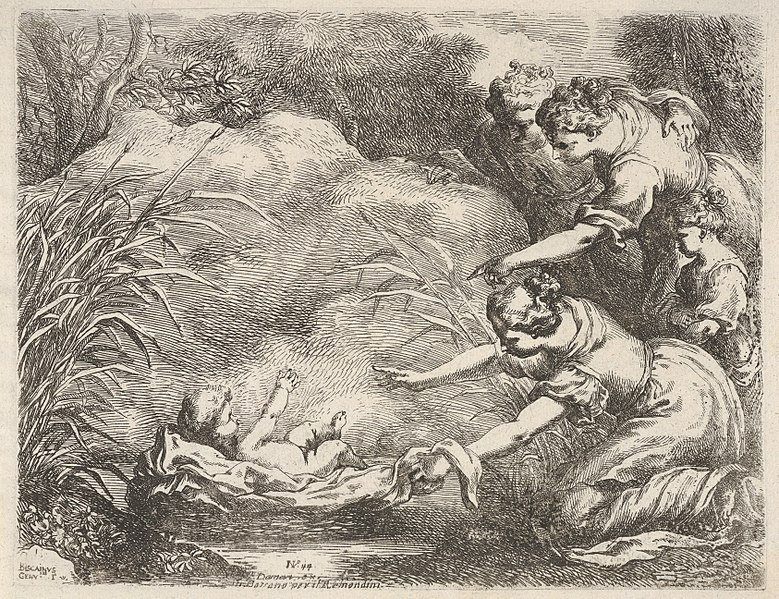
In the book of Exodus, the Pharaoh of Egypt seeks the destruction of the Israelites because they “have become far too numerous for us” (Exodus 1:9), and he is worried that “they will become even more numerous and, if war breaks out, will join our enemies, fight against us and leave the country” (Exodus 1:10). In response, Pharaoh issues an edict: “Every Hebrew boy that is born you must throw into the Nile, but let every girl live” (Exodus 1:22).
It is at this time a Levite woman gives birth to a son and, at first, attempts to hide him so he might not drown in the Nile:
But when she could hide him no longer, she got a papyrus basket for him and coated it with tar and pitch. Then she placed the child in it and put it among the reeds along the bank of the Nile. (Exodus 2:3)
This brave mother follows the letter of Pharaoh’s edict to throw her son into the Nile, but with a twist. She places her son into a basket, and then places the basket with her son into the Nile. Famously, this basket boy survives and grows up to become Moses – the one who rescues the Israelites out of their slavery in Egypt.
In a showdown with another Pharaoh of Egypt that takes place some 80 years after Moses was first placed into a basket as a baby in the reeds of the Nile, Moses and the Israelites find themselves backed up against a sea called the Sea of Reeds, which we know today as the Red Sea (Exodus 13:18), with Pharaoh and his army coming to destroy them. But just like God protects Moses from the waters of the Nile when he is placed among the reeds, God protects Israel from the waters of the Sea of Reeds by splitting them into two, so the Israelites can pass “through the sea on dry ground, with a wall of water on their right and on their left” (Exodus 14:23). But when Pharaoh and his army try to pursue them, “the water flowed back and covered the chariots and horsemen – the entire army of Pharaoh that had followed the Israelites into the sea. Not one of them survived” (Exodus 14:28).
Pharaoh sought the destruction of the Israelites by declaring that they must be drowned among the reeds of the Nile. But instead, he himself is destroyed by being drowned in the Sea of Reeds. Pharaoh’s berserk desire for destruction only destroyed him.
When we are slighted or hurt by someone, it can be easy for us to wish for – and, perhaps, even work for – their destruction – the destruction of their job, their reputation, or our friendship with them. But our desire for destruction – our desire for vengeance – more often than not, only destroys us. The bitterness and anger we harbor toward someone drowns our souls. This is why Jesus says, “If you hold anything against anyone, forgive them” (Mark 11:25). Jesus does not just say call for forgiveness in an effort to let someone who has upset us or hurt us off the hook. He calls for forgiveness to let us off the hooks of our own dangerous desires for destruction that will, if left unchecked, only destroy us. God doesn’t want our souls to get trapped in a vengeful Sea of Reeds.
So, who is God calling you to forgive today? Remember, forgiveness not only helps someone else; it rescues you.
And you’re worth rescuing.
Thorny Lies

Satan loves to send malicious messages. This was something the apostle Paul struggled with. When writing to the church he planted in Corinth, he admits:
I was given a thorn in my flesh, a messenger of Satan, to torment me. (2 Corinthians 12:7)
Paul struggled with a thorn. Exactly what this “thorn” was, we don’t know. Some people think it was a physical malady like a loss of sight while others conjecture that he battled some spiritual temptation. Whatever it was, Satan used this thorn as his messenger to torment Paul.
Satan does the same thing with us, too. When we struggle with and suffer from life’s thorns, Satan loves to say:
“This thorn is because God is angry at you for a sin.”
“This thorn means God does not care for you.”
“This thorn proves you are unworthy of others’ love.”
“This thorn will never end. You’ll be miserable forever.”
Have you ever struggled with thoughts that sound something like these? Satan is tormenting you with his malevolent messages.
Do not believe them. Do not believe him.
Paul certainly doesn’t. Because at the same time Satan is seeking to torment Paul with his deceptive messages, God is speaking loving words to Paul:
My grace is sufficient for you, for My power is made perfect in weakness. (2 Corinthians 12:9)
God responds to Satan’s lies of human worthlessness with the truth of His worthiness, which He gladly and freely shares with us out of His grace. When Satan tells us we are insufficient, God reminds us that His grace is wonderfully sufficient.
Satan may try to speak to us through thorns, but these thorns, instead of destroying us, are taken for us. They’ve all landed on Jesus’ head. And, in exchange, He gives us grace.
Believe that. Believe Him.
“Very Good”

Creation was never intended to be what it has become. Wars. Disease. Hunger. Refugees. This world has come a long way from what God called “very good” when He first made it (Genesis 1:31).
When Jesus arrived, part of His mission was to restore what God had made “very good” to its intended and original state. This is why Jesus preached peace, healed disease, fed the hungry, and gave a place in His kingdom to the displaced of the world.
The German theologian Jürgen Moltmann captures this mission in Jesus’ ministry well when he writes:
When Jesus expels demons and heals the sick, He is driving out of creation the powers of destruction, and is healing and restoring created beings who are hurt and sick. The lordship of God, to which the healings witness, restores creation to health. Jesus’ healings are not supernatural miracles in a natural world. They are the only truly “natural” thing in a world that is unnatural, demonized, and wounded.
What Jesus does, Moltmann argues, is the work of recreation in a world where the destructive and demonic powers of de-creation are hard at work.
This begs a question: where has your life been de-created? Are you struggling with a sin? Is your body ravaged by illness? Are you mired in depression and despondency? Are you somehow unable to provide for yourself or your family adequately?
At moments like these, we often pray for miracles – acts of power that are supernaturally wrought by God Himself. But perhaps we also ought to pray for Genesis 1:31 to come to pass in our life. Perhaps we should pray that the most natural thing fathomable would come to pass in our lives – that we, and the world around us, would be restored to its God-ordained and God-intended created state – that of “very good.”
A New Genesis

The Old Testament opens with these famous words:
In the beginning God created the heavens and the earth. (Genesis 1:1)
In Greek, one word for “beginning” is genesis, which is why we call the first book of the Bible “Genesis.” It is a book about humanity’s beginning.
The New Testament opens with these words:
This is the genealogy of Jesus the Messiah the son of David, the son of Abraham. (Matthew 1:1)
In Greek, the word for “genealogy” is genesis. Matthew opens with a genealogy that describes Jesus from the beginning, which echoes the beginning described in Genesis 1:1 because, as John notes, Jesus “was with God in the beginning” (John 1:2). In other words, there was never a time – even in the very beginning – when Jesus was not.
But there’s more.
A little later in Genesis, we read:
This is the book of the generations of Adam. (Genesis 5:1)
What follows is a genealogy of Adam’s descendants, just like in Matthew we get a genealogy of Jesus’ ancestors. And the Greek word behind “generations” is again genesis.
But by Genesis 5, there is a problem. Adam has fallen into sin and has reaped the consequences of sin, including pain, struggle, and death. In other words, Adam’s beginning is now marching toward a tragic end. He will perish.
The story of Scripture, then, is that of a struggle and search for a new beginning that will not inevitably end in pain, struggle, and death. And in Matthew 1, the Scriptures show us that ever since the beginning of Genesis 1, God has been planning to give us a new beginning in Jesus Christ. Genesis 1 is not the only genesis we have. We have a new genesis in Jesus.
So, where do you need a fresh start? A second chance? A new beginning? What has tragically ended for you in this life? A relationship? A hope? A dream?
Christ takes your first beginning – the one we have in Adam – and nails it to a cross and exchanges it for another beginning that will not end. No ending in this life can stop what will endure eternally in the next life.
Now that’s the kind of new beginning we all need.
The end.
Fair-Weather Faith

In 2 Samuel 7, David, king of Israel, comes to the prophet Nathan with a concern:
Here I am, living in a house of cedar, while the ark of God remains in a tent. (2 Samuel 7:2)
David wants to build a temple for God, whose place of residence has, up until this point, been a tent that the Israelites took with them across the wilderness on their way from Egypt to the Promised Land.
In Psalm 132, we learn more about just how committed David was to procuring a more permanent residence for God:
He swore an oath to the LORD, he made a vow to the Mighty One of Jacob: “I will not enter my house or go to my bed,I will allow no sleep to my eyes or slumber to my eyelids, till I find a place for the LORD, a dwelling for the Mighty One of Jacob.” (Psalm 132:2-5)
The oath that David swears as he is considering building a temple for God is the same oath that David will hear just chapters later after he has committed adultery with another man’s wife.
When David sleeps with Bathsheba, the wife of one of his military commanders named Uriah, and gets her pregnant, he tries to cover up the affair by summoning Uriah in from the battlefield and encouraging him to go home and “enjoy” his wife so that no one will suspect she has been forced into sleeping with another man. But Uriah refuses, telling David:
The ark and Israel and Judah are staying in tents, and my commander Joab and my lord’s men are camped in the open country. How could I go to my house to eat and drink and make love to my wife? As surely as you live, I will not do such a thing! (2 Samuel 11:11)
Like David four chapters earlier, Uriah refuses to go to his home while the ark of God is in a tent and his men are on a battlefield. But the same oath that David once made has now become a liability that David has. So, David commands his general, Joab:
“Put Uriah out in front where the fighting is fiercest. Then withdraw from him so he will be struck down and die.” So while Joab had the city under siege, he put Uriah at a place where he knew the strongest defenders were. When the men of the city came out and fought against Joab, some of the men in David’s army fell; moreover, Uriah the Hittite died. (2 Samuel 11:15-17)
It turns out that David’s oath to God was a fair-weather oath. It was fine for a building project that would make David look good, but it was discarded when David was caught in a sin that made him look bad.
We are called to be more than fair-weather fans of God. Our faith in Him is refined not when it’s easiest to commit to Him, but when it’s hardest. In the words of one of Jesus’ followers named Peter, who himself struggled to stick with his faith when things got tough:
Trials have come so that the proven genuineness of your faith – of greater worth than gold, which perishes even though refined by fire – may result in praise, glory, and honor when Jesus Christ is revealed. (1 Peter 1:7)
May the oaths that we make be the oaths that we keep. May we be faithful. After all, God has been, is, and will continue to be faithful to us.
Russia Invades Ukraine

Last Thursday, the world changed.
When Vladimir Putin ordered an invasion of Russia’s neighbor to the southwest, Ukraine, tanks rolled in, troops marched in, missiles were launched, military and civilian casualties were sustained, and the world stood aghast. NATO Secretary-General Jens Stoltenberg thundered in response to the invasion:
Russia has attacked Ukraine. This is a brutal act of war. Our thoughts are with the brave people of Ukraine … NATO is the strongest alliance in history, and make no mistake we will defend every ally against any attack on every inch of NATO territory. An attack on one ally will trigger a response from the whole alliance.
Certainly, Russia’s aggression has put much of the world on edge.
Like Ukrainians today, ancient Jews were no strangers to invaders. First it was the Assyrians who invaded northern Israel. Then the Babylonians invaded the southern half of the nation. Then the Persians conquered the Babylonians and ruled Israel followed by the Greeks who conquered the Persians. By the first century, it was the Romans who were occupying Israel. Also like Ukrainians today, ancient Jews struggled and suffered under a steady stream of invaders. This is why so many ancient Jews were looking for a militarized Messiah. They wanted someone who could depose their intruders.
Jesus, however, did not turn out to be that kind of Messiah. As He told Pontius Pilate when He was on trial:
My kingdom is not of this world. (John 18:36)
Often, it is assumed that Jesus was waxing poetically about some “pie-in-the-sky” otherworldly kingdom that sounds nice theologically, but is of very little value practically in a world where realpolitik rules. But this interpretation of Jesus’ words is a misinterpretation of Jesus’ words.
When Jesus says His kingdom is not of this world, He does not mean that His kingdom has no effect in this world. Quite the contrary. Jesus’ kingdom is over all earthly kingdoms, which means that every earthly kingdom – both ruthless and righteous – will not and cannot escape accountability to Jesus’ eternal kingdom.
Injustices will be righted. Lives taken will be vindicated. And Jesus will be our peace. As our world grapples with yet another war, may this be our hope.
“Peace I leave with you; my peace I give you. I do not give to you as the world gives. Do not let your hearts be troubled and do not be afraid.” (John 14:27)
A Bridegroom of Blood

Recently, I received a question about a strange story in Exodus 4. God has just called Moses to be the new leader of the children of Israel and has commissioned him to confront the Pharaoh of Egypt, who is enslaving the Israelites, and demand that he let the people go. While Moses is heading to Egypt to carry out his task:
At a lodging place on the way, the LORD met Moses and was about to kill him. But Zipporah took a flint knife, cut off her son’s foreskin and touched Moses’ feet with it. “Surely you are a bridegroom of blood to me,” she said. So the LORD let him alone. (At that time she said “bridegroom of blood,” referring to circumcision.) (Exodus 4:24-26)
This is indeed an odd story. God, at the very time Moses is traveling to Egypt to do the thing God had just told him to do, tries to murder Moses.
But why?
Moses was on his way to becoming the spiritual leader of Israel. The first spiritual leader of Israel was also the progenitor of Israel – a man named Abraham. How did God mark Abraham as the father of this nation?
This is My covenant with you and your descendants after you, the covenant you are to keep: Every male among you shall be circumcised. You are to undergo circumcision, and it will be the sign of the covenant between Me and you. For the generations to come every male among you who is eight days old must be circumcised. (Genesis 17:10-12)
Moses, as the incoming spiritual leader of Israel, had not even marked his own son with the most basic sign of God’s covenant. He has disobeyed God’s command. And God is not happy. So, God seeks to punish Moses.
In many ways, this story in Exodus 4 and another story in Numbers 20 serve as bookends to Moses’ ministry. In Numbers 20, the community of Israel is in the desert on their way to the Promised Land after their rescue from Israel, but they do not have any water. So, Moses approaches God to discuss the problem, and God offers these instructions:
“Take the staff, and you and your brother Aaron gather the assembly together. Speak to that rock before their eyes and it will pour out its water. You will bring water out of the rock for the community so they and their livestock can drink.” So Moses took the staff from the LORD’s presence, just as He commanded him. He and Aaron gathered the assembly together in front of the rock and Moses said to them, “Listen, you rebels, must we bring you water out of this rock?” Then Moses raised his arm and struck the rock twice with his staff. Water gushed out, and the community and their livestock drank. But the LORD said to Moses and Aaron, “Because you did not trust in Me enough to honor me as holy in the sight of the Israelites, you will not bring this community into the land I give them.” (Numbers 20:8-12)
In Numbers 20, Moses disobeys God by striking a rock to get water from it rather than speaking to it. And his punishment is death. In Exodus 4, Moses disobeys God by failing to circumcise his son, and his punishment should have been death. But someone intercedes. Zipporah circumcises their son and touches Moses’ feet with the blood and foreskin to remind him that the same feet that just one chapter earlier stood before God on “holy ground” (Exodus 3:5) as God appeared to Moses famously in the form of a burning bush have now wandered into sin. His feet – and his very self – need covering and cleansing. And this is what they get.
After Zipporah performs the circumcision, she calls Moses “a bridegroom of blood” (Exodus 4:25). We, too, have a bridegroom of blood. But unlike Moses, His feet have never wandered into sin. Instead, they have only staggered to a cross where He shed His blood so that we could have “a bridegroom of blood” who saves us from sin.
Israel needed a greater and better leader than Moses. And so do we. And we have One in Jesus.
God Is With Us
God has a funny way of defying the expectations people put on His presence.
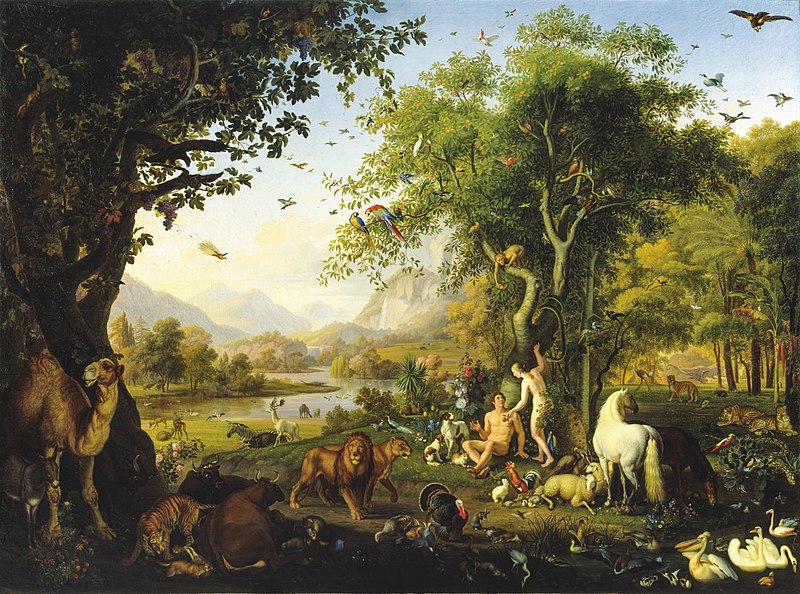
When God appears to the first two humans, Adam and Eve, we find Him searching for them by “walking in the garden in the cool of the day” (Genesis 3:8). But this paradisical picture soon turns ugly when He finds out they have fallen into sin by eating fruit from His forbidden Tree of the Knowledge of Good and Evil. In punishment, God casts the couple out of the cool and lush Garden of Eden with a warning to Adam that now “by the sweat of your brow you will eat your food” (Genesis 3:19). The refreshing cool of the garden is shut off to humans and exchanged for a sweltering sweat. And it feels like God has barred humanity from His presence.
But He hasn’t.
In Genesis 18, we meet a man named Abraham who is “near the great trees of Mamre…sitting at the entrance to his tent in the heat of the day” (Genesis 18:1). Because “the cool of the day” of the Garden of Eden has gone, Abraham tries to shade himself by some trees and with his tent in “the heat of the day.” But in the middle of this sweaty scene, we read:
The LORD appeared to Abraham near the great trees of Mamre while he was sitting at the entrance to his tent in the heat of the day. (Genesis 18:1)
It turns out that God shows up not only in the cool of the day, but in the heat of the day – not only in a garden, but in a desert.
Too often, we harbor unexamined assumptions about how God’s presence has manifested itself in our lives:
“I got new job because God was with me.”
“I didn’t get the virus because God was with me.”
“I won the award because God was with me.”
“My life has turned out well because God was with me.”
All these statements may well be true. But their inverses are most certainly not:
“I didn’t get the new job because God wasn’t with me.”
“I did get the virus because God doesn’t care for me.”
“I didn’t win the award because God is against me.”
“My life has turned out tragically because God has forsaken me.”
God is with us in the garden and in the desert – in the cool of the day and in the heat of the day.
God’s presence with us even when life makes us sweat should come as no surprise to us. The word “sweat” is found twice in the Bible – once when Adam is cursed in a garden and once when Jesus is struggling in a garden:
Being in anguish, He prayed more earnestly, and His sweat was like drops of blood falling to the ground. (Luke 22:44)
Jesus knows what it’s like to sweat. And He’s promised to be with us when we sweat, too. Our circumstances – even when they are difficult and tempt us to become despondent – are not barometers of His presence. He is present with us because He has promised to be. Period.
Scary Storms

Storms can be scary.
Whenever some legendary Texas severe weather rolls through San Antonio, my kids get uptight. They have trouble sleeping and stick close to mom and dad. My dog does, too. So, it’s understandable that when God shows up as a storm to the children of Israel on top of Mount Sinai, they become frightened:
When the people saw the thunder and lightning and heard the trumpet and saw the mountain in smoke, they trembled with fear. They stayed at a distance. (Exodus 20:18)
Storms can be scary.
This is why, when the disciples are caught in a storm on the Sea of Galilee, they, like the people of Israel at the base of Mount Sinai, respond with terror. But they also become frustrated with Jesus, who is with them, but is sleeping:
A furious storm came up on the lake, so that the waves swept over the boat. But Jesus was sleeping. The disciples went and woke him, saying, “Lord, save us! We’re going to drown!” (Matthew 8:24-25)
But this time, instead of Jesus manifesting divine power by showing up as a storm as God did on Mount Sinai, Jesus calms this storm:
He got up and rebuked the winds and the waves, and it was completely calm. (Matthew 8:26)
In our lives, there are times we need God to show up as a storm. We need some thunder and lightning in our lives to get our attention and to call us to repentance. But there are also times when we need God to calm a storm. We need a wind to die down and some waves to be stilled and be rescued by whatever it is that is harming us. The really difficult part is this: many times, we don’t know whether we need God as the storm or we need God to calm the storm. But God knows. And God will do what is best.
The ultimate comfort is this: storm or no storm, God is there with us, using whatever we’re experiencing for us and not against us. Storms may be scary, but they are not lonely.


 Pastor Zach's Blog