Posts tagged ‘Hope’
A Journalist Is Murdered
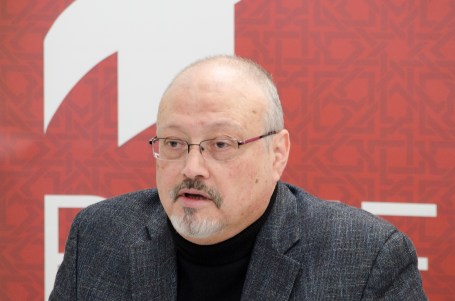
Credit: POMED
When Jamal Khashoggi walked into the Saudi consulate in Istanbul on October 2, he was planning to pick up some documents for his upcoming marriage. Instead, he walked into an ambush that took his life. The purported details of the ambush are grim – from dismemberment to acid being used to dispose of his remains.
Mr. Khashoggi wrote articles for The Washington Post that were critical of Saudi Crown Prince Mohammed bin Salman’s autocratic tendencies. Suspicions are running high that behind Mr. Khashoggi’s murder is a furious Crown Prince. In a phone call with President Trump, however, the royal vehemently denied any knowledge of or participation in the crime.
On the one hand, as an article by Kevin D. Williamson cautions us, there is still plenty we do not yet know about Mr. Khashoggi’s death. This is why investigators are hot on this case. Leveling ironclad accusations and jumping to confident conclusions now may damage our credibility later. Patience, to modify an old Latin proverb, often winds up being the mother of accuracy.
On the other hand, even as new facts continue to tumble in, there does seem to be a preponderance of circumstantial evidence that points to the Crown Prince’s involvement. Thus, provisional, measured, and appropriately humble suspicions that call for further investigation are appropriate.
As it stands right now, this story could have all the makings of a modern-day crime of Cain. Like Cain cultivated bitterness against Abel for bringing to light his faulty sacrifice, a ruler may have nursed jealously against a journalist for uncovering his ruthless rule. Instead of rethinking his ways, he may have exacted his vengeance. If this is, in fact, the case, this we can know: the truth of this crime, one way or another, will come to light. God discovers Cain’s crime against his brother when Abel’s blood cries out to Him from the ground (Genesis 4:10). The victims of sin, it turns out, do not stay silent – even in death. Sin always seems to get discovered and uncovered.
Thankfully, as Christians, we know that sin is not only inexorably revealed, it will also be eventually routed. Abel’s blood spoke the truth of Cain’s crime. But, as the preacher of Hebrews reminds us, there is a “blood that speaks a better word than the blood of Abel” (Hebrews 12:24). For this blood doesn’t just speak of foul play; it secures a holy redemption. The blood does not just cry for justice; it confers justification. This blood does not just point to death; it defeats death. And this blood does not just spill because of man’s sin; it flows from the side of a perfect Savior.
Mr. Khashoggi was ruthlessly murdered in an ambush. Jesus was ruthlessly murdered on a cross. But Jesus was also raised. And He is returning to raise those who have died in Him to live with Him. And there will be nothing any royal regime, no matter how repressive and resentful, will be able to do about it.
A Senator, A Pope, And A Shooter

Credits: Gage Skidmore, Catholic Church, Getty Images
This past weekend was a busy one in the news, to say the least. Friday, it was announced that Senator John McCain would discontinue treatment for his brain cancer. 24 hours later, he passed away. Around this same time Saturday, news broke that Pope Francis may have known of accusations against one of his closest confidants, former Washington D.C. archbishop Cardinal Theodore McCarrick, who resigned this summer after it was discovered that he may have sexually abused a minor some 50 years ago. Then, yesterday afternoon, a gunman opened fire in a Jacksonville, Florida bar during a Madden 19 video game tournament, killing three and wounding eleven.
After a weekend like this one, it is easy to be left reeling and restive. When cancer takes the life of an American hero, when a spiritual leader is accused of covering for sexual abuse, and when another – yes, another – mass shooting unfolds on another soft target, it can be extremely difficult to take everything in, much less to make sense of much or any of it.
So, how do we process any of this?
During relatively peaceful times, which seem fewer and farther between these days, we can be lured into a false sense of security. We can be tricked into forgetting that, in the words of God to Cain, “sin is crouching at the door” (Genesis 4:7) and it can rear its head at any moment. However, during tumultuous times, which seem to have become all too common, we can become drawn into alarmism and catastrophism. We can have a false sense that, in the words of Chicken Little, “the sky is falling.” Both senses are false. Generally, things are never quite as bad or quite as good as we think they are.
The message of Christ can provide us with a reality check after a weekend like this one. Jesus has no problem warning the world of the full damage and devastation that human sinfulness can wreak. Jesus warns that, in this age, there will be an “increase of wickedness, and the love of most will grow cold” (Matthew 24:12). But Jesus also is clear that He has come to overcome sin. In the words of Jesus’ dear friend John, Jesus is “the light shines in the darkness, and the darkness has not overcome it” (John 1:5). Sin will not ultimately get its way.
Christians can respond to the tragedies of our world with both a sober realism and an indefatigable hope. The death of a man as well regarded and as widely celebrated as John McCain can serve as a reminder of the brokenness of our political system and the often illogical rancor that eats away at any generative discourse. The promise of the man Jesus Christ is that He has come to bring peace between divided peoples and parties. The alleged secrecy of a man like Pope Francis in the face of a terrible crime like the one allegedly committed by Theodore McCarrick reminds us that sin runs for cover so it can continue its damaging and damning work. The promise of the man Jesus Christ is that He has come not only to reveal sin, but to heal those ravaged by it. The murderous intentions of a man like Jacksonville’s mass shooter is a reminder that death comes for everyone – sometimes at the times we least expect it. The promise of the man Jesus Christ is that by His death, He has conquered death.
Every tragedy yearns for a Savior. Christianity promises that every tragedy has a Savior. And after a weekend like this one, that’s what we need to know most – and believe deeply.
The Dioceses of Pennsylvania
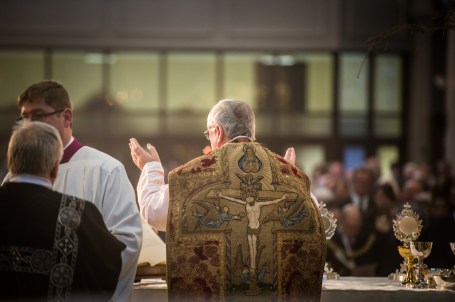
In what is the biggest sex scandal to rock the Roman Catholic Church yet, a report from a Pennsylvania grand jury, released last Tuesday, found that over 300 priests from across six dioceses in that state abused sexually abused more than 1,000 victims over a period of 70 years.
As The New York Times explains, the report:
…catalogs horrific instances of abuse: a priest who raped a young girl in the hospital after she had her tonsils out; a victim tied up and whipped with leather straps by a priest; and another priest who was allowed to stay in ministry after impregnating a young girl and arranging for her to have an abortion.
Even more tragically, the report also notes that there are likely many more victims who were and are too afraid to come forward.
How was this able to continue for so long among so many? According to the grand jury, church officials seemed to have a method of intentionally and even maliciously obfuscating what was happening. For instance, the grand jury reports that when a sexual assault came to light, church records would never clearly identify a horrific crime like rape. Instead church officials would employ euphemisms such as “inappropriate contact” or “boundary issues” to describe the crime. Many priests who sexually assaulted children, instead of being defrocked, would simply be moved to another parish where their sins were not known.
This is gut wrenching stuff. But it is more than that. It is downright wicked. It is godless. It is satanic. But it is also, terrifyingly, human.
What humans are capable of is truly shocking. History is littered with numberless testaments to the bottomlessness of human depravity. The prophet Jeremiah aptly describes the horrifying proclivities of the human heart when he says, “The heart is deceitful above all things, and desperately wicked: who can know it” (Jeremiah 17:9)? Jeremiah is not being hyperbolic here. The human heart and all it entails – emotions, desires, and drives – really is deceitful above everything else. There is nothing so dangerous as the human heart.
Jeremiah’s question of the heart – “Who can know it?”, or, as another translation puts it, “Who can understand it?” – takes on fresh meaning in light of this scandal. It seems nearly impossible to fully understand how any heart can commit this kind of sin for so long against so many. But even if we could understand the darkness in the hearts behind these crimes, it would, ultimately, do us no good. Understanding cannot undo a crime, restore a violated little body, or comfort a crushed soul. What we need is not understanding, but change. We don’t need to analyze the human heart; we need to guard our own hearts. In the words of Solomon, “Above all else, guard your heart, for everything you do flows from it” (Proverbs 4:23).
Yes, indeed. What we do flows from what’s in our hearts. That is why our hearts must always be Christ’s home.
The Biggest Humanitarian Crisis In The World

Credit: USAID
Katherine Zimmerman, a Middle East expert, has called it the biggest humanitarian crisis in the world. In 2014, war broke out in the poverty-stricken nation of Yemen when Iranian-backed rebels stormed and occupied Yemen’s capital city of Sanaa. Since then, a Saudi-led coalition, along with the Yemeni government, has been trying to take back the city. Over 10,000 people have died, half of which have been civilians, as a direct result of the fighting. Indirect casualties are even higher. Save the Children reports that 130 children are dying every day in Yemen. Ms. Zimmerman fears that conditions in the country will continue to deteriorate, explaining, “As the conflict goes on, the people are suffering, and it’s to the point now where we’re looking at a cholera epidemic, and massive risk of famine.”
Sadly, this crisis, half a world away, has been regularly eclipsed by a steady stream of riveting domestic intrigue. But the cries of these victims of war deserve our listening ears and concerned hearts.
One of the most common prayers in the Bible, especially in the Psalms, is that the Lord would hear the cries of the oppressed:
- “Hear my cry for help, my King and my God, for to You I pray.” (Psalm 5:2)
- “Hear my cry for mercy as I call to You for help, as I lift up my hands toward Your Most Holy Place.” (Psalm 28:2)
- “Hear my cry, O God; listen to my prayer.” (Psalm 61:1)
The glorious promise is that the Lord does hear the cries of the oppressed:
- “The LORD has heard my cry for mercy; the LORD accepts my prayer.” (Psalm 6:9)
- “Praise be to the LORD, for He has heard my cry for mercy.” (Psalm 28:6)
- “I love the LORD, for He heard my voice; He heard my cry for mercy.” (Psalm 116:1)
If the Lord hears the cries of the downtrodden, we should too. So please join me in lending your prayers to the cries of the Yemenis, asking God to bring this crisis to an end. Pray also that famine and disease would not overtake this land.
In a world where our news cycles regularly revolve around the powerful, it can be all too easy to forget about those on the margins of our societies. The gospel, however, reminds us that we worship a God who marginalized Himself by being born into a poor village called Bethlehem and growing up as a poor carpenter from Nazareth only to become a poor rabbi who was executed by His enemies on a cross. Jesus lived His life as a marginalized man. This man on the margins, however, has promised to use His very marginalization on the cross to draw all people to Himself (cf. John 12:32). This man on the margins has turned out to be nothing less than the very center of history.
Jesus’ method of marginalization should most certainly inform our mission of reaching and loving the world for Him and in Him. So, let’s keep our peripheral vision peeled to see those others miss and love those our world overlooks. For this is what Jesus has done with us.
Digitizing Life After Death

Credit: Martin420
There seems to be something hardwired into humans that wants to cheat death. Writing for NBC News, Kevin Van Aelst, in his article “Disrupting death: Technologists explore ways to digitize life,” chronicles a new bevy of scientific experiments designed to con the grim reaper.
In one experiment, researchers work at mapping brain connections in an attempt to digitize the mind so that, even after a body dies, a “human being can live in on virtual form.” In another experiment:
Artificial intelligence specialists are developing digital avatars that replicate users’ personalities and can continue to communicate with loved ones after their owners have passed away … The program, Augmented Eternity, will then be able to communicate memories of your life and answer questions on certain topics, such as your political views, depending on what information is stored in your data.
Even before these technologies have been thoroughly tested and refined, their limits are glaring. Having someone live on as a digitized mind makes bioethicist John Harris wonder, because “we are so much flesh and blood creatures,” what it would be like to “continue to exist in a disembodied state.” Another woman, who created an avatar of a friend she lost, describes the avatar as a “sort of digital tomb to come to and mourn” and freely admits that her friend is no longer alive – at least in any sort of meaningful way. In other words, for all of science and technology’s attempts to cheat death, its reality and finality still loom large.
Christ does what science and technology cannot. All of our experiments, from digitizing minds to fashioning avatars, only succeed in mimicking life after death. Christ actually gives life after death. As He says to Martha: “I am the resurrection and the life. The one who believes in Me will live, even though they die” (John 11:25). The Christian hope is much more than a digital grave that a person can pay a visit to in order to hear a phantom voice. It is a real life that we are promised.
The scientific and technological advances that address life and death are both problematic in that they blur distinctions between the two and promising in that they give us insight into the two. But whatever their problems and promises may be, this much is clear: they will always only be partial. Only Christ can give real life – a life that is “to the full” (John 10:10).
Hope From the Cave

Credit: Jayakarthi Natarajan
In a saga that began June 23, twelve boys from a Thai soccer team found themselves trapped in Thailand’s Tham Luang cave system for over two weeks. What began as an assistant coach taking his team on a rite of passage through a cave wound up teetering on the brink of disaster after the sky outside opened up while the boys were in the cave and the rains flooded their exit route from the cave. It took a team of 1,000 local army and navy troops along with teams from the U.S., the U.K., China, and Australia, as well as a crack team of Thai Navy SEALs, to find and rescue the boys. Even with all these people on site, the rescue still spanned multiple days. But now, the boys are out safely and a nation – along with many across the world – is celebrating.
In an age where so many tragedies end tragically, tragedies that are hijacked into victories buoy our spirits because they bring into sharp clarity the reality and the persistence of hope. Today’s state, no matter how dire it may seem, does not have to be tomorrow’s fate. This is why the message of Christ continues to find resonance in people’s lives and take up residence in people’s hearts. For Christ came to bring hope – a hope that the sin and calamity of this world could and would be undone and defeated by Him. And though we still await the final consummation of this hope upon His return, we get glimpses of this hope every time a vaccine for a dreaded disease appears promising, a crippled airliner lands safely, and a group of boys escape from a waterlogged cave.
Come to think of it, these boys aren’t the first ones to make a miraculous escape from a cave that seemed impermeable. Jesus pulled that off 2,000 years ago on a morning we now call Easter.
Is it any wonder He is our source of hope?
U.S. Life Expectancy Slides

Credit: Nazrul Islam Ripon
King Solomon makes a sobering statement in the book of Ecclesiastes:
The wise have eyes in their heads, while the fool walks in the darkness; but I came to realize that the same fate overtakes them both. (Ecclesiastes 2:14)
Solomon knows that, for all humanity’s wisdom, no one is clever enough to outrun, outsmart, or outmaneuver fate. The wise, just like the foolish, share the same fate of death. As Solomon puts it later in Ecclesiastes: “Death is the destiny of everyone” (Ecclesiastes 7:2).
I was reminded of this truth when I came across this headline: “With death rate up, U.S. life expectancy is likely down again.” Mike Stobbe, writing for the Associated Press, explains:
The U.S. death rate rose last year, and 2017 likely will mark the third straight year of decline in American life expectancy, according to preliminary data.
Death rates rose for Alzheimer’s disease, diabetes, flu and pneumonia, and three other leading causes of death, according to numbers posted online Wednesday by the Centers for Disease Control and Prevention.
The progress we have made in fighting disease has been nothing short of astonishing. From advances in treating HIV to new drugs for ALS and MS to promising gene therapies for certain types of cancer, we are making extraordinary strides in protecting and extending life. But disease still haunts us and hurts us. What’s more, it’s not just disease that threatens us existentially, it’s we who threaten ourselves personally. As Mr. Stobbe notes:
Full-year data is not yet available for drug overdoses, suicides or firearm deaths. But partial-year statistics in those categories showed continuing increases.
The indicators from late-2017 looked grim on both drug overdose, where U.S. deaths skyrocketed 21 percent, and on firearm deaths, two-thirds of which are suicides. As it turns out, we are often our own worst enemies.
I sometimes wonder if our societally sliding life expectancy doesn’t have an inverse relationship to our personally skyrocketing life expectations. Far too many people have unattainable, unsustainable, and, frankly, misplaced expectations for life. Some people expect riches. Others expect pleasure. Others expect ease. Still others expect perfection. When these expectations are not met, sometimes, some people slide into destructive habits, patterns, addictions, and even moments of despair. And a life expectancy craters because life expectations are not met.
In Ecclesiastes, Solomon notes that even if a person recklessly indulges every desire, his life expectations will remain impoverished. Life expectations based in things like riches, pleasure, ease, and perfection can never satisfy. This is why we must place our deepest expectations not with our individual longings, but in our transcendent Lord. For when we do, even if our life expectancy is cut short, our eternity remains secure.
The nation’s average life expectancy may continue to slide. But our lives do not have to fall forever. Because of the One who was lifted up on a cross, we can be lifted up from the grave. And that’s not an expectation that can be dashed. That’s real hope that lasts.
Ireland Legalizes Abortion

Credit: William Murphy
This blog was one I was hoping I would not have to write.
When I first heard the news that Ireland was voting on a referendum to repeal the Eighth Amendment to its Constitution – which recognized that both a mother and her unborn baby have an equal right to life, effectively barring abortion-on-demand – I almost began preparing a blog under the assumption that the amendment was going to be overturned. But then I saw that polls showed a narrowing contest. So, I waited and hoped. My hopes were not realized.
Ireland was the last major European nation to have broad restrictions in place against abortion. The fact that legalized abortion-on-demand has come to yet another country grieves me deeply. Here is why:
- I am grieved because abortion clinics tend to market themselves to minority communities, leading to a devastating and decimating loss of life among these communities.
- I am grieved because some men will use this repeal as a hammer to pressure their hookups, their girlfriends, and, perhaps, even their wives into getting abortions they don’t want in order to appease astonishingly selfish men who do not want to raise children they don’t think they need.
- I am grieved because I know that, for many women, abortions leave emotional and spiritual scars of guilt, shame, and pain that often go unaddressed and unadmitted.
- I am grieved because I know that some women will not fully or truly understand that they have traded the preciousness of life for a vaunted “choice” that only proves to be shadowy and sad.
- I am grieved because I know that, before this referendum passed, some women in Ireland whose pregnancies imperiled their lives did not receive the medical attention they needed.
- I am grieved because I know that some people who claim the name “Christian” have self-righteously condemned those who have gotten abortions.
- I am grieved because thousands upon thousands of little lives will now be lost as abortion comes to yet another place.
Yes, I am grieved for many reasons. And yet, at the same time I grieve, I am not, to borrow the juxtaposition the apostle Paul uses in 1 Thessalonians 4:13, grieving without hope. Here, again, is why:
- I am hopeful because I know that, even as abortion clinics set up shop in minority communities, churches are there too, offering clarity and care to expectant mothers in frightening situations.
- I am hopeful because I know that, for every selfish man, there are many brave women who will push against the pressures and persuasions of self-centeredness and, instead, heroically raise children as single mothers, or even put up children for adoption as they seek to give their precious little ones good lives instead of tragic deaths.
- I am hopeful because I know that even as many women will surely be hurt by the abortions they endure, many more women will also discover the healing and forgiving grace of Christ and will use their pain to help others make different decisions.
- I am hopeful because I know that even a choice of death through an abortion cannot overcome the choice of God to grant life through His Son.
- I am hopeful because I know that, at the same time some medical professionals are foolish and harmful in their opinions and practices, many more are careful, kind, and wise in how they approach and treat their patients.
- I am hopeful because I know that, for all the people who self-righteously judge those who have gotten abortions, many more humbly help and demonstrate Christ’s love to those who desperately need compassion and care.
- I am hopeful because I know that the millions of children who have been lost to abortion aren’t really lost, for abortion is no match for eternal life.
I grieve what has happened in Ireland. I grieve what has been happening since 1973 in my own country. But I do not grieve without hope. Indeed, I cannot grieve without hope. For I follow a man who, when He was confronted with His own death, responded to those who were bent on His execution by saying, “Father, forgive them, for they do not know what they are doing” (Luke 23:34). Christ confronts death with forgiveness. I am hopeful that Christ will confront our decisions toward death in the same way. Abortion may have won a vote, but I am still hopeful that life will win the victory.
Kilauea’s Fury and God’s Promise
 It’s destruction in slow motion.
When Hawaii’s Kilauea Volcano began erupting a week and a half ago, cracks in and around the volcano began to emerge, spewing molten lava and dangerous gas. So far, 18 fissures have opened in the ground, 36 structures have been destroyed by creeping lava, and 2,000 residents have had to evacuate their homes. And geologists have no idea how long these eruptions will continue. Officials now worry that the lava lake in Kilauea’s crater will fall below the level of the groundwater, which could spark dangerous stream-driven explosions, spewing boulders – some weighing many tons – into the air.
The flow of lava is nearly impossible to stop. Its temperature checks in at around 2,000 degrees, which makes dousing it with water ineffective. Because the lava is so heavy, diversion channels also do not tend to work. The lava will simply flow over them. Residents can only stand by and watch in horror as melted, red-hot rock destroys everything it is path. David Nail, who lives on the gentle slopes of Kilauea in Leilani Estates, had his home consumed by a 20-foot tall pile of lava. “All we could do was sit there and cry,” he explained.
Natural disasters such as this raise a perennial question about faith: why, if there is a good God, would He allow such terrible disasters to happen? Christianity is unique in its approach to this question because it not only seeks to grapple with this quandary philosophically, but to empathize with people who have to endure the pain wrought by natural disasters personally.
Christianity teaches that the overall sinfulness of humanity affects and infects every part of creation. The sinfulness of humanity is why earthquakes topple communities and hurricanes flood them. The sinfulness of humanity is why severe weather strikes the south and volcanoes erupt in the west. Because of sin, creation, to borrow a memorable phrase from the apostle Paul, “has been groaning as in the pains of childbirth” (Romans 8:22). In this regard, the natural disasters we experience are anything but natural. Instead, they are a result of an alien sinfulness first thrust onto the world by our forbearers, Adam and Eve. Thus, nature doesn’t like these disasters any more than we do. Natural disasters are painful to nature, just as they are to us.
With all of this being said, Christianity also doesn’t just wag its finger ignominiously at the sinfulness in humanity for causing the suffering of humanity. Christianity teaches that God is in the midst of suffering. At the heart of Christianity is the cross – an agent not only of deep suffering, but of cruel torture. Christianity teaches that God came into suffering through His Son and endured the ultimate suffering as He bore the sins of the world in His death. Though we may not have all the answers to why God allows suffering, we do have a promise that God is deeply familiar with suffering. He suffers with us.
When Moses receives the Ten Commandments on top Mount Sinai, the scene looks downright volcanic: “The mountain…blazed with fire to the very heavens, with black clouds and deep darkness” (Deuteronomy 4:11). The Israelites at the base of the mountain who saw what was happening on the mountain, understandably, “trembled with fear” (Exodus 20:18). And yet, for all the fear Sinai’s violent eruption may have caused in the people who saw it, Deuteronomy also reminds us that “the LORD spoke…out of the fire” (Deuteronomy 4:12). Sinai may have been spewing fire and ash, but God was there, speaking His words to His people.
Kilauea is not Sinai. I highly doubt anyone will come striding down Kilauea after its eruption with a couple of stone tablets in hand. And yet, just as God was present with the Israelites camping in the shadow Sinai, God is also present with the Hawaiians living in the shadow of Kilauea. And the words that He spoke at Sinai to Israel, He still speaks to us today: “I am the LORD your God” (Exodus 20:2). God still invites us to be His people so He can love us as His children. Of this, every Hawaiian – and every person – can be assured.
The Austin Bombings Come To An End

Credit: Eric Gay / AP
The city of Austin is breathing a sigh of relief. After a total of five explosions spread over 19 days, the man responsible for planting nail-filled bombs wrapped in innocent looking parcels on porches and sidewalks all over the city blew himself up as police officers were closing in to apprehend him near a northside Austin hotel in the early morning hours of last Wednesday.
The bomber turned out to be 23-year-old Mark Anthony Conditt from Pflugerville – a northeastern suburb of Austin. According to his grandmother, he came from a tight-knit family, was homeschooled, and later attended Austin Community College, but did not graduate.
His family is shocked by his crimes and released a statement that reads, in part:
We are devastated and broken at the news that our family could be involved in such an awful way. We had no idea of the darkness that Mark must have been in … Right now our prayers are for those families that have lost loved ones, for those impacted in any way, and for the soul of our Mark. We are grieving and we are in shock.
There is no other word to describe Mark Conditt’s actions but “evil.” Human depravity was on full display in this man’s attacks. Thus, as our nation grapples with this sickening spate of bombings, it is worth it for us to reflect on the dangers of and collateral from human sin. Here, then, are three thoughts on sin and its consequences.
Sin defies logic.
Following the Las Vegas shooting, when the motive of the gunman began to elude – and, to this day, still eludes – investigators, I wrote:
The questions of “why” will always be, in some sense, unanswerable – even if a motive is discovered and a record of the assailant’s thinking is uncovered … Sin never leads people to act sanely.
What was true then is still true now. Even as law enforcement officials continue to try to untangle this bomber’s motives, it remains unfathomable how any grievance, any grudge, or any goal could drive anyone to commit these kinds of monstrous, and seemingly random, crimes. And yet, what feels utterly inscrutable has a strange way of becoming tragically possible when the darkness of human depravity collides with the astounding faculties of our God-given rationality. Sin corrupts and darkens minds. It makes the unthinkable, reasonable and the ghastly, justifiable. Mark Conditt’s actions are a consummate case-in-point.
Sin desires death.
The apostle Paul writes, “The wages of sin is death” (Romans 6:23). We can be tempted to excuse the apostle’s words here as a bit of hyperbole until we are confronted with a case like this. The bomber’s sin took the lives of two innocent people and, ultimately, his sin cost him his own life. Sin has a cunning way of leading us down a corridor to catastrophe before we even realize what is happening. The alcoholic who poisons his liver, the reckless driver who is killed in an accident, and the despot who commits genocide against his own people are only a few examples of just how slippery the slope can be from sin to death. And it’s awfully tough to stop ourselves halfway down the slope. This is why it’s best not even to start down it. The Psalmist says of God’s righteousness: “Your righteousness is like the highest mountains” (Psalm 36:6). Let’s stay on the summit and off of the slopes.
Sin doesn’t succeed.
This bomber saw five of his devilish devices detonated. He did not succeed, however, in taking five lives. This bomber thought he could perpetually terrorize a city. His plans were frustrated, however, by law enforcement officials who deserve our gratitude. This bomber’s sin got cut off and cut short again and again. He did not succeed – at least not as much as he wanted to.
Sadly, the fact remains that two lives are still lost because of Mark Conditt. There is a 39-year-old father, Anthony Stephan House, who won’t be coming home to his 8-year-old daughter because of this bomber. There is a 17-year-old aspiring musician, Draylen Mason, who will never get to experience college life at the University of Texas because of this bomber.
Even in these tragic cases, however, sin’s victory is tenuously temporary. The Christian Church will celebrate this Sunday that Christ has conquered death. And because Christ is risen, we too will rise. To quote, once again, the apostle Paul: “Christ has indeed been raised from the dead, the firstfruits of those who have fallen asleep” (1 Corinthians 15:20). Nails on a cross could not hold Christ down. And by faith in Him, nails from a bomb cannot take victims out.
This week, we can take comfort in these words: Christ is risen.


 Pastor Zach's Blog