Posts tagged ‘Gospel’
The Pursuit of Perfection

Credit: nsunews.nova.edu
Somehow, I knew just by the title of the article that “Confessions of a Mormon housewife” was not going be particularly titillating reading. And sure enough, I was right. This Mormon housewife’s confession was that when she became sick, and when ladies from her ward came to visit her, she “started to become insecure with [her] appearance and the state of [her] home.”[1] Jill Strassburg, the housewife in question, explains:
When they would come visit me, they were completely “put together,” and I began to think that they were perfect.
So I stopped answering my door. I didn’t want them to see me sick or see that the house wasn’t cleaned up. The thoughts I was having made me feel like I was, somehow, less of a woman.
I was beginning to realize that I was living in a culture of attaining perfection. And I started to wonder, why do so many Mormon women strive for perfection?
On the one hand, when I read Jill’s confession of worry over the cleanliness of her home, I think of Johann von Staupitz’s admonition to Martin Luther. Exasperated by Luther’s overwhelming guilty conscience and never-ending confessions, Staupitz eventually quips:
Look here, brother Martin. If you’re going to confess so much, why don’t you go do something worth confessing? Kill your mother or father! Commit adultery! Quit coming in here with such peccadillos![2]
Worry, although definitely a sin according to Jesus in Matthew 6:25, is also a societally safe sin. No one has ever been jailed or shunned for worry.
On the other hand, the nature of her sin aside, Jill’s question haunts me: “I started to wonder, why do so many Mormon women strive for perfection?”
This is a profound question. But Jill’s answer leaves me puzzled. She writes: “While I’m not a historian, scholar or official representative for the LDS church, I think this obsession with perfection is rooted in the church’s historical values and traditions.” She goes on to talk about how Mormon women “followed traditional roles of womanhood” and how the church still promotes “traditional values.” But traditional gender roles and values are not the same thing as perfection. A person can be traditional without aspiring to or feeling pressured to be perfect.
I can’t help but think that the true culprit of the Mormon quest for perfection is theological. Indeed, foundational to Mormonism’s doctrine of salvation is a striving for perfection. Consider this from the Book of Mormon:
Yea, come unto Christ, and be perfected in Him, and deny yourselves of all ungodliness; and if ye shall deny yourselves of all ungodliness, and love God with all your might, mind and strength, then is His grace sufficient for you, that by His grace ye may be perfect in Christ.[3]
According to the Book of Mormon, God has grace for a person unto salvation, but only after he has denied all ungodliness and loved God with everything in him. In other words, God has grace for you, but only if you’re perfect – or at least pretty close to it.
How do you know when you’ve denied enough ungodliness and loved God to such an extent that God’s grace will be sufficient for you? Herein lies Mormonism’s existential crisis that results in its relentless pursuit of perfection. Mormons cannot know whether or not they will be good enough to merit God’s grace. They can only wish and hope.
Jill finally admits:
We all know that perfection is unattainable, but we should still strive to be the best we can be every day. If we could actually be perfect, there would be nothing to work toward. There wouldn’t be anything left to gain from this life that we live.
Jill knows she can’t be perfect. But in her mind, that doesn’t mean she shouldn’t try.
Holy Scripture paints quite a different picture from the Book of Mormon of what it means to pursue perfection: “When perfection comes, the imperfect disappears” (1 Corinthians 13:10). Paul says perfection is not something to be pursued, but a promise that will pursue us and come to us on the Last Day. Indeed, more than that, perfection is a person who will pursue us and come to us on the Last Day when Jesus comes for us on the Last Day. This is why, finally, I’m not really interested in attaining some depersonalized virtue of perfection. I’m much more interested in Jesus. In my mind, being forgiven by a perfect Savior is much better – and a lot less stressful – than trying to be a perfect person.
I pray Jill comes to the same realization.
_________________________________
[1] Jill Strasburg, “Confessions of a Mormon housewife,” CNN (10.2.2014).
[2] Gerald R. McDermott, The Great Theologians: A Brief Guide (Downer’s Grove: InterVarsity Press, 2010), 83.
It’s Time For A Change

Credit: Mateusz Stachowski
Periodically, I receive email solicitations encouraging me to “take a stand.” I need to “take a stand” against abortion. I need to “take a stand” against sexual immorality. I need to “take a stand” against poverty. There is a whole myriad of things against which I need to “take a stand.”
Now, on the one hand, it is important to stand for truth in a world full of lies. The apostle Paul makes this clear enough when he writes of the armor of God: “Stand firm then, with the belt of truth buckled around your waist” (Ephesians 6:14). Indeed, I have written about the importance taking a stand elsewhere. On the other hand, if all we’re doing is standing against sin in our world, we are falling woefully short of our calling as Christians.
When Martin Luther sparked a reformation of the Church by posting 95 theses for discussion to a church door in Wittenberg, Germany in 1517, his first thesis described the heart and soul of what it means to be – and for that matter, to become – a Christian: “When our Lord and Master, Jesus Christ, said ‘Repent,’ He called for the entire life of believers to be one of repentance.”[1] The Christian life, Luther asserted, is grounded in repentance.
In Greek, the word “repentance” is metanoia, which is made up of two parts. The prefix meta means “to change” and the noun nous refers to the mind. To repent, then, means “to change your mind.” For instance, if a husband wants to divorce his wife because he is no longer happy in his marriage, for him to repent would mean that he stop thinking his marriage is all about his happiness and instead see it as a reflection of the commitment that Christ has to His bride, the Church. Repentance requires a shift in one’s worldview. It asks a person to stop thinking the way he used to think.
When Christ launched His ministry, He launched it with a message of repentance: “Repent, for the kingdom of heaven has come near” (Matthew 4:17). Christ’s desire was not just to take a stand against sin, but to change people’s minds about sin. He wanted people who looked at infants as disposable entities who could be left outside to die – which many in the ancient world did – to change their minds and believe that every life is precious to God. He wanted people who believed it was fine to sleep around – as many in Jesus’ day did – to change their minds and instead be faithful and tender to their spouses. He wanted people who looked past the impoverished – as the rich man in Jesus’ story about the beggar Lazarus did – to change their minds and offer what they could in Jesus’ name.
I have heard many a discussion about the sins that beset our culture and how the Church should respond to these sins. Sadly, more often than not, people want the Church only to “take a stand” while ignoring the fact that, first and foremost, the Church is to help “make a change.” The Church is to call people to repentance.
How can the Church do this? By making two shifts.
First, we must stop looking at people who are far from God as merely evil and start looking at them as lost. Looking at people who are far from God as merely “evil” incites our indignation. Seeing them as “lost” arouses our compassion.
I heard a story last week at a conference I was attending about a man who was at the deathbed of his brother. His brother was a recalcitrant non-believer. He refused to trust in Jesus, even as he was drawing his final gasping breaths. As this man stood by his brother’s bedside, trying to comfort him, the thought passed through his mind: “This is the last time my brother will ever experience any comfort. After this, it will only be eternal separation from Christ.” If that doesn’t break your heart, I don’t know what will.
There are millions of people headed for the same destiny as this man’s brother. How can we only get angry at them as evil without caring for them as lost?
Second, we must stop playing only defense when it comes to evil and start playing offense. I get the impression that some people think if we could just outlaw certain evils, our problems would be solved. But legislation against evil only defensively curbs it. It doesn’t offensively change people’s mind about the fundamental nature of right and wrong. This is why legislation passed in one Congress is so easily reversed by the next Congress. As Christians, our legislative efforts need to take a backseat to our desire to understand and empathize with how our culture thinks so we can winsomely respond to what our culture thinks. If you need a good place to start learning how to do this, I would recommend reading The Reason for God by Timothy Keller. I would also add that changing people’s minds takes time. Sometimes, it takes lots of time. So be patient! A mind changed is worth the wait.
“Taking a stand” may reveal the sin in our world. However, “making a change” – repentance – conquers the sin in our world because it leads people to Christ. And I’d much rather win against sin instead of just complaining about sin.
____________________________
[1] Martin Luther, “Disputation on the Power and Efficacy of Indulgences,” (October 31, 1517).
Serving Others In Jesus’ Name
Credit: CBS News
A state of emergency has been declared in Liberia. Guinea, Sierra Leone, and Nigeria have lost more than 930 people to the virus. Monrovia has set up a military blockade to keep people from regions known to have high instances of infections from entering the city.[1] And the World Health Organization is meeting to discuss whether or not to use experimental drugs to try to help those infected by the virus.[2]
All this over a virus called Ebola.
The problem is that there is no known cure for Ebola and, as President Sirleaf of Nigeria noted, “ignorance and poverty, as well as entrenched religious and cultural practices, continue to exacerbate the spread of the disease.”[3] Indeed, many people infected by the virus, rather than being quarantined at medical facilities to stem Ebola’s spread, remain at home and pass the virus on to their families.
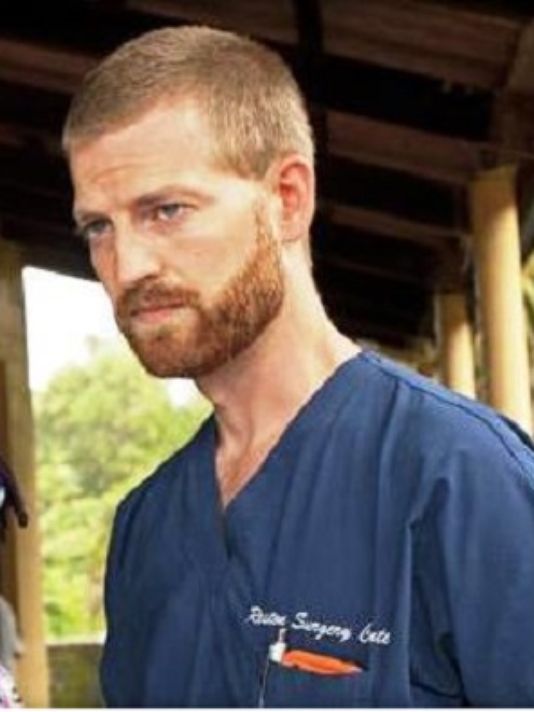
The fear surrounding this outbreak is intense. When Dr. Kent Brantly, a medical missionary who contracted the disease while treating patients in Liberia, was brought home for treatment here in the States, some questioned the wisdom of bringing a man infected by a dreaded disease into this country.[4] Others took their criticism farther, like political pundit Ann Coulter, who lambasted Dr. Brantly for going to Africa in the first place:
I wonder how the Ebola doctor feels now that his humanitarian trip has cost a Christian charity much more than any services he rendered.
What was the point?
Whatever good Dr. Kent Brantly did in Liberia has now been overwhelmed by the more than $2 million already paid by the Christian charities Samaritan’s Purse and SIM USA just to fly him and his nurse home in separate Gulfstream jets, specially equipped with medical tents, and to care for them at one of America’s premier hospitals …
Can’t anyone serve Christ in America anymore?[5]
I would point out to Ms. Coulter that there are, in fact, many people and organizations that do indeed serve Christ in America like, well, Samaritan’s Purse. You can learn more about their local relief efforts here. I would also point out that Christ’s commission is to make disciples of “all nations” (Matthew 28:19), which, by definition, includes nations other than our own. Finally, I would point out that the Christian Church has a long and storied history of reaching out to those in dire medical need. For instance, in the 160s, and again in the 260s, a series of plagues struck the Roman Empire. These plagues were so devastating that during one smallpox epidemic, a quarter to a third of the population died. When these plagues swept through, most people – scared of becoming infected – took the sick and threw them into the streets to die. But Christians, rather than casting the sick out, brought the sick in. Dionysius, the bishop of Alexandria during the second sweep of plagues, writes about how Christians responded to these outbreaks:
Most of our brother Christians showed unbounded love and loyalty; never sparing themselves and thinking only of one another. Heedless of danger, they took charge of the sick, attending to their every need and ministering to them in Christ, and with them departed this life serenely happy; for they were infected by others with the disease, drawing on themselves the sickness of their neighbors and cheerfully accepting their pains. Many, in nursing and caring for others, transferred their death to themselves and died in their stead.[6]
The Christians in Dionysius’ day, like Dr. Brantly in our day, cared for the sick – many of them dying because of their efforts. Dr. Brantly’s faithfulness is to be commended, not derided as Ann Coulter has done.
With this being said, all Christians need not travel to Liberia to respond faithfully to this worldwide health crisis. We can be faithful in our prayers that the spread of Ebola would be stemmed, and we can certainly join in prayer for Dr. Brantly and others like him. Finally, we can reach out in Christian love to the sick in our own communities, offering them our prayers and support.
When I think of Dr. Brantly’s efforts, I can’t help but believe he will hear some very pleasant words one day: “I was sick and you looked after Me” (Matthew 25:36). Let’s make it our goal to hear these words too.
__________________________________
[1] “Liberia declares state of emergency over Ebola virus,” BBC News (8.7.2014).
[2] Sydney Lupkin, “World Health Organization to Debate Ethics of Using Experimental Ebola Drug in Outbreak,” ABC News (8.6.2014).
[3] “Liberia declares state of emergency over Ebola virus,” BBC News (8.7.2014).
[4] Joel Achenbach, Brady Dennis, & Caelainn Hogan, “American doctor infected with Ebola returns to U.S.,” The Washington Post (8.2.2014).
[5] Ann Coulter, “Ebola Doc’s Condition Downgraded To ‘Idiotic,’” anncoulter.com (8.6.2014).
[6] Dionysius of Alexandria in Rodney Stark, The Rise of Christianity: How the Obscure, Marginal Jesus Movement Became the Dominant Religious Force in the Western World in a Few Centuries (San Francisco: Harper Collins, 1997), 82.
The Limits of Human Freedom
 We, in America, like freedom. We talk about it. We write about it. We even sing about it. Anyone who has ever attended a sporting event where our national anthem was sung has heard in soaring melody how we live in “the land of the free and the home of the brave.”
We, in America, like freedom. And we will fight, protest, and lobby to protect the freedoms most near and dear to our hearts. Some fight, protest, and lobby to protect the freedom of religion – to practice their beliefs as they choose. Others fight, protest, and lobby for the freedom to keep and bear arms. Still others fight, protest, and lobby for the freedom to marry whoever they want – even if whoever they want is of the same gender.
Perhaps it is our love of freedom that makes the doctrine of predestination so offensive to so many. Jesus summarizes predestination thusly: “You did not choose Me, but I chose you and appointed you so that you might go and bear fruit – fruit that will last” (John 15:16). The doctrine of predestination, then, is simply this: it is God, not us, who is in charge of our salvation. When it comes to our salvation, we are not free!
This is where the hackles of our freedom-loving hearts can get raised. Indeed, the most common objection that I hear whenever I teach on predestination is, “But what about our free wills? Doesn’t predestination mean that God turns us into automatons – unable to accept or reject Him?”
I have addressed this question many times and in many ways. But to address it this time, I would turn your attention the midcentury American sociologist Philip Rieff who, I believe, writes about the limits of our free wills – and the goodness of these limits – in a poignant and powerful way. Rieff writes:
There is no feeling more desperate than that of being free to choose, and yet without the specific compulsion of being chosen. After all, one does not really choose; one is chosen. This is one way of stating the difference between gods and men. Gods choose; men are chosen. What men lose when they become as free as gods is precisely that sense of being chosen, which encourages them, in their gratitude, to take their subsequent choices seriously.[1]
To choose without first being chosen, Rieff explains, is a miserable manner of existence. After all, if there is no God who loves you enough to choose you, what does your choice of Him – or of anything else, for that matter – matter? Who would want to choose a God in their limited power who doesn’t care enough to first choose them out of His infinite power? This is why the apostle Paul speaks of predestination in such glowing terms:
Praise be to the God and Father of our Lord Jesus Christ, who has blessed us in the heavenly realms with every spiritual blessing in Christ. For He chose us in Him before the creation of the world to be holy and blameless in His sight. In love He predestined us to be adopted as His sons through Jesus Christ, in accordance with His pleasure and will – to the praise of His glorious grace, which He has freely given us in the One He loves. (Ephesians 1:3-7)
Paul is thrilled by the doctrine of predestination! For Paul knows that the only way he is free to make decisions worth making is when believes and sees that he himself is a decision that God thought was worth making in predestination. Paul’s limited free will is of no consequence if it cannot come under the tender loving care of God’s perfect free will.
So, do you long to be free? Do you fight, protest, and lobby to protect the freedoms that are near and dear to your heart? If you do, remember that your freedom of choice is only as good and meaningful as your bondage to Christ. Without being under Christ’s rule and reign, your freedom is futile. Under Christ’s rule and reign, however, your freedom is purposeful. And I don’t know about you, but I want my freedom to mean something.
_______________________
[1] Philip Rieff, The Triumph of the Therapeutic (Chicago: The University of Chicago Press, 1966), 93.
Common Question: What’s the Deal with the Apocrypha?
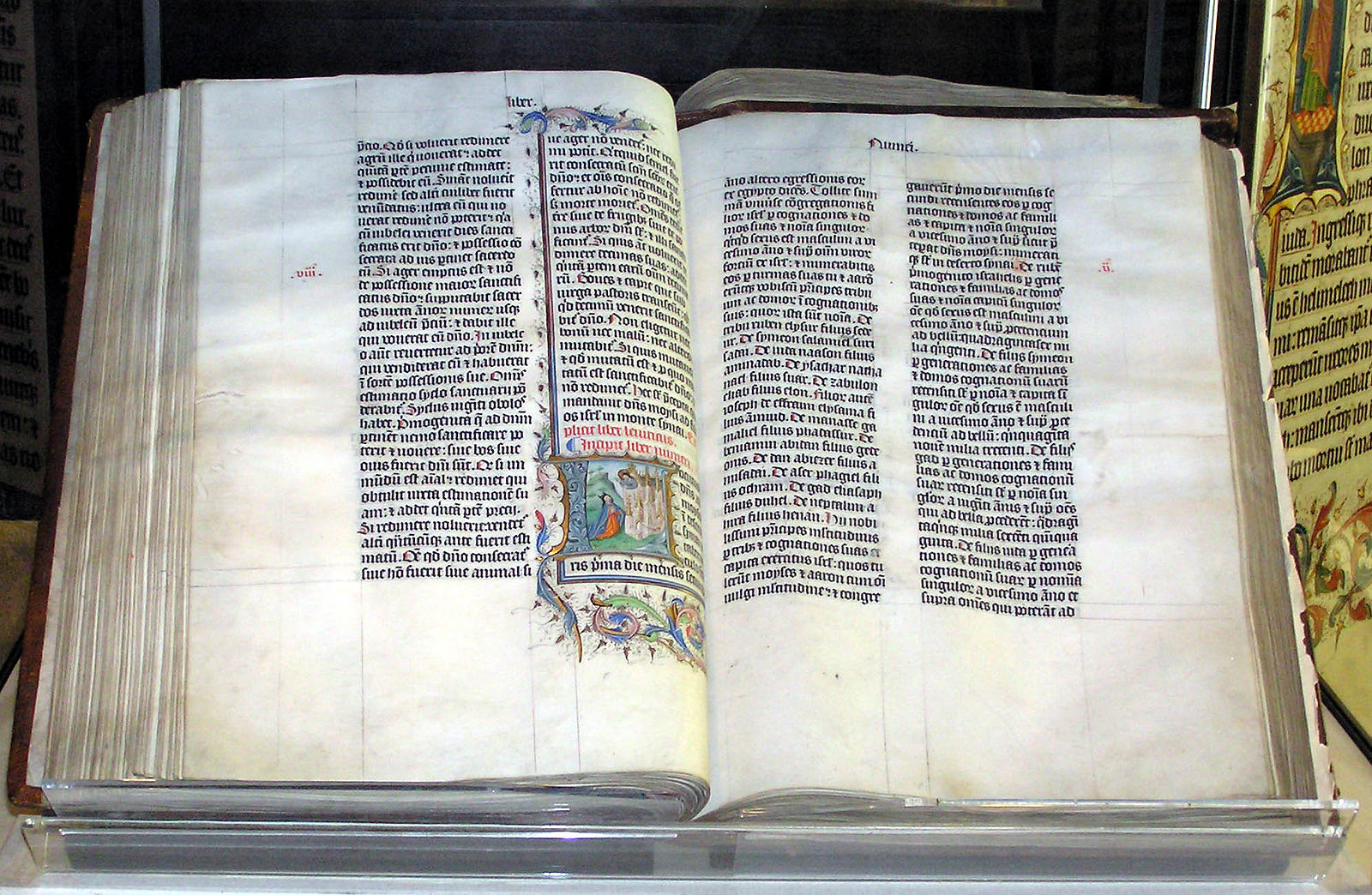 66 books. That’s how many books are in the Good Book. At least, that’s what I had always been taught. But then, a Roman Catholic friend of mine in high school claimed there was more to the Bible than the 66 books I had read since I was a little boy. There were actually 73 books, he explained. And these additional books had strange names like “Maccabees” and “Judith” and “Tobit” and even “Bel and the Dragon.” As he showed me these books, I was flummoxed. “Why hadn’t I ever heard of these books?” I asked myself.
These mysterious books to which I was introduced in high school are widely known as the “Apocrypha,” a Greek adjective meaning “hidden.” And though many Christians do not regularly read these books, they are indeed a part of the Roman Catholic canon of Scripture. In fact, one of the questions I often receive as a pastor is, “Why do Roman Catholics have ‘extra’ books in their Bible?”
Because the Apocrypha is a source of a lot of confusion, I thought it would be worth it to offer a brief history of these books along with an analysis of them from a Lutheran Christian perspective.
The books of the Apocrypha were written between the close of the Old Testament in 430 BC and the beginning of the New Testament. These books include historical accounts, supplements to famous Old Testament books such as Daniel and Esther, and wisdom books akin to the Proverbs.
From the beginning, these books were never fully embraced by the Church as inspired Scripture. Paul Maier, Professor Emeritus of Ancient History at Western Michigan University, explains:
The Apocrypha … were not included in the final canon of the Hebrew Bible, which was debated by rabbis at Jamnia (near Jerusalem) in AD 93. Thus they were also not included among the very 39 books that comprise the Old Testament in Christian Bibles today …
Early on … churchmen such as Origen of Alexandria noted a difference between the Apocrypha and the Hebrew Scriptures. Cyril of Jerusalem and Jerome also drew a line of separation between the two, using the term Apocrypha for the first time in reference to these writings. To be sure, Jerome included them in his Latin translation if the Bible, the Vulgate, but advised that the Apocrypha should be read for edification, not for supporting church dogma.[1]
Jerome’s warning against using the Apocrypha as a basis for Christian doctrine is especially important. His doctrinal concern is perhaps best illustrated by 2 Maccabees 12:44-45 when the Jewish liberator Judas Maccabeus prays for some who have died, seeking to make atonement for the sins they committed while they were still alive. From these verses, the Roman Catholic Church derives its doctrine of Purgatory, a place where deceased believers undergo a final purification from sin that readies them for the bliss of heaven. The Catechism of the Catholic Church explains the doctrine of Purgatory thusly:
All who die in God’s grace and friendship, but still imperfectly purified, are indeed assured of their eternal salvation; but after death the undergo purification, so as to achieve the holiness necessary to enter the joy of heaven.
The Church gives the name Purgatory to this final purification of the elect.[2]
This teaching runs contrary both to the broad teaching of canonical Scripture, which declares that a person enters either paradise or hell immediately upon death (e.g., Luke 16:19-31; 23:39-43), and to the gospel, because it adds to Christ’s perfectly purifying work on the cross our own work of purification in Purgatory by which we may “achieve the holiness necessary to enter the joy of heaven.” By adding our achievements to Christ’s achievement, the doctrine of Purgatory belittles and undermines the sufficiency of Christ’s sacrifice. Thus, the universal Church does not treat the Apocrypha as divinely inspired.
Interestingly, the Apocrypha was not even fully embraced by the Roman Catholic Church until the Fourth Session of the Council of Trent in 1546. In this session, it was declared:
But if any one receive not, as sacred and canonical, the said books entire with all their parts, as they have been used to be read in the Catholic Church, and as they are contained in the old Latin Vulgate edition; and knowingly and deliberately contemn the traditions aforesaid; let him be anathema.[3]
With this decree, the Roman Catholic Church effectively erased the distinction between ancient books that should be read for private edification and inspired books that should be appealed to for Christian doctrine – a distinction that Jerome, the very one who translated the Latin Vulgate, which Rome was here declaring to be its official translation, had made! Thus, Rome took Jerome’s translation, but disregarded his distinction. And the Church has been the worse for it over the years.
All of this is not to say that the Apocrypha should be altogether disregarded. Maier notes that “Clement of Alexandria, Polycarp, Tertullian, Hippolytus, Cyprian, and Augustine” cited heartily from the Apocrypha. These books give us much valuable historical insight into this time period and chronicle for us the origins of the religious parties we meet in the New Testament, such as the Pharisees and Sadducees. Thus, the Apocrypha is worth our time and study. We need to know about these books. Indeed, Martin Luther superscribed the books of the Apocrypha like this: “Books that are not be regarded as the equal of Holy Scripture but are nonetheless profitable and good to read.”[4]
If you’re looking for a good book, then, pick up the Apocrypha. If you’re looking for a divinely inspired book, however – that book still has only 66 books.
__________________________
[1] Paul Maier, “Foreword,” The Apocrypha: The Lutheran Edition with Notes (St. Louis: Concordia Publishing House, 2012), xv-xvi.
[2] See Catechism of the Catholic Church (Collegeville: The Liturgical Press, 1994), §1030-1031.
[3] The Fourth Session of the Council of Trent (April 1546).
[4] Martin Luther, What Luther Says, Ewald M. Plass, ed. (St. Louis: Concordia Publishing House, 1959), 1512, n. 20.
“Look at me!”
 This past weekend in ABC, I talked about how far too many of us live by the narcissistic credo, “Look at me.” What children will say to their parents at the pool right before they do a flip or a dive is the same thing we want, albeit we may not say so in so many words. Instead, it is our actions – sometimes wild and dramatic; other times passive, yet aggressive – that cry out for people to notice. And oftentimes, our actions produce their desired effect. Oftentimes, people look at us, even if for all the wrong reasons.
Sadly, having others “look at me” is a desire that not only resides in the hearts of people in the world out there; it is a desire that resides in my heart. I want people to take note of who I am and what I do. Whether it’s a Bible study that I lead or a sermon that I preach or a blog that I post, I can quickly become all too curious to know what people think of what I have said or written and if people care. And if they don’t think highly of what I’ve said or written, or if they don’t care, I can easily become hurt. After all, just like so many others, I like to be remembered and recognized. I want people to “look at me.”
One of the most puzzling motifs in the Gospels is what a scholar named William Wrede deemed “the Messianic secret.” The Messianic secret describes those times when, after a particularly profound and revealing utterance or after some miraculous feat, Jesus warns His disciples not to share His identity or actions with anyone else. For instance, after Peter claims Jesus to be “the Christ,” that is, the Messiah, Jesus warns the disciples “not to tell anyone about Him” (Mark 8:29-30).
Wrede claims that, historically, Jesus did not believe Himself to be and did not speak of Himself as the Messiah. Later Christians came to this conclusion quite apart from what Jesus actually said and did. According to Wrede, the Gospel writers made up these Messianic “secrets” and inserted them into the Gospels as an apologetic to argue for Jesus’ Messianic identity.
Not surprisingly, orthodox Christians take a different view of these secretive statements. We believe these statements were not later glosses to create for Jesus a Messianic identity He never claimed, but genuine statements by Jesus concerning who He is and what He had come to do.
But why would He want to keep His grand identity a secret? The general consensus is that Jesus knew many people would misunderstand what it means for Him to be the Messiah, for many of the Jews of that day had visions of the Messiah as a political revolutionary dancing in their heads. Jesus, of course, was no such Christ. He had not come to overthrow a government, but to usher in a Kingdom.
Beyond this, Jesus’ secretive statements also seem to reflect the fulfillment of prophecy. One of the marks of the Messiah, according to Isaiah, is His humility. The Messiah will not clamor to pronounce before the world His identity and power: “He will not shout or cry out, or raise His voice in the streets” (Isaiah 42:2). In other words, the Messiah will not come to this world announcing, “Look at me!”
In a world where we struggle with the desire to be noticed, there is a lesson to be learned from the Messianic secret. Jesus eschewed notice, and yet there has never been anyone more noticeable than Him. His noticeability came through His humility.
Perhaps our noticeability should come the same way. Perhaps rather than shouting “Look at me,” we should practice a gentle humility.
Righteousness from God

“Crucifixion of Jesus of Nazareth” by Marco Palmezzano, ca. 1490
Credit: Wikipedia
Because the gospel is the crux of our Christian faith, we can never ponder it, speak of it, or write about it too much. This is why I was delighted to stumble across this passage from Ezekiel while reading devotionally a few days ago:
The righteousness of the righteous man will not save him when he disobeys, and the wickedness of the wicked man will not cause him to fall when he turns from it. The righteous man, if he sins, will not be allowed to live because of his former righteousness. If I tell the righteous man that he will surely live, but then he trusts in his righteousness and does evil, none of the righteous things he has done will be remembered; he will die for the evil he has done. (Ezekiel 33:12-13)
What a beautiful explanation of the gospel and what kind of righteousness saves. Ezekiel is clear: you cannot be saved by your own righteousness! Indeed, even if you act righteously, just one evil act erases all memory of your righteousness. As James writes: “For whoever keeps the whole law and yet stumbles at just one point is guilty of breaking all of it” (James 2:10). To receive salvation, you need another kind of righteousness that is not your own. You need a righteousness that comes from God. The apostle Paul brings clarity to what kind of righteousness this is: “But now a righteousness from God, apart from law, has been made known, to which the Law and the Prophets testify. This righteousness from God comes through faith in Jesus Christ to all who believe” (Romans 3:21-22).
Besides reminding us that our own righteousness does not and cannot save us, Ezekiel’s words also remind us that the gospel is not confined to the New Testament. In both Testaments, the message of the gospel is consistent: it is God’s righteousness, not our own, that saves us. As God promises through the prophet Isaiah, “I am bringing My righteousness near, it is not far away; and My salvation will not be delayed.”
Happy Thanksgiving!

“Freedom from Want” by Norman Rockwell, 1943.
Credit: arthistory.about.com
It’s been all over Facebook. People are posting all the reasons they are thankful. My wife has joined in the Facebook thankfulness fun. As a teacher, she’s organizing her thankfulness thoughts alphabetically – using each letter of the alphabet to call to mind something for which she is thankful. I wonder what she’ll post about when she gets to “Z”?
As we head into another Thanksgiving holiday this week, I want to share with you, as I did last year, some of my favorite thoughts on thankfulness from Abraham Lincoln:
The year that is drawing towards its close, has been filled with the blessings of fruitful fields and healthful skies. To these bounties, which are so constantly enjoyed that we are prone to forget the source from which they come, others have been added, which are of so extraordinary a nature, that they cannot fail to penetrate and soften even the heart which is habitually insensible to the ever watchful providence of Almighty God. In the midst of a civil war of unequaled magnitude and severity, which has sometimes seemed to foreign States to invite and to provoke their aggression, peace has been preserved with all nations, order has been maintained, the laws have been respected and obeyed, and harmony has prevailed everywhere except in the theatre of military conflict … Needful diversions of wealth and of strength from the fields of peaceful industry to the national defense have not arrested the plough, the shuttle or the ship; the axe has enlarged the borders of our settlements, and the mines, as well of iron and coal as of the precious metals, have yielded even more abundantly than heretofore. Population has steadily increased, notwithstanding the waste that has been made in the camp, the siege and the battlefield; and the country, rejoicing in the consciousness of augmented strength and vigor, is permitted to expect continuance of years with large increase of freedom. No human counsel hath devised nor hath any mortal hand worked out these great things. They are the gracious gifts of the Most High God, who, while dealing with us in anger for our sins, hath nevertheless remembered mercy.[1]
These words are from Lincoln’s Thanksgiving Day proclamation of 1863 and, like so many of the posts I’ve seen on Facebook, offer a myriad of reasons to be thankful. But what I appreciate so much about Lincoln’s thoughts on thankfulness – and the reason I share these words again – is that his thankfulness reaches its pinnacle not as he is talking about fruitful fields and healthful skies, or the abundant yields of plough, shuttle, ship, axe, and mines, or the population increase among the states. Rather, President Lincoln’s thankfulness reaches its pinnacle when he speaks of “the Most High God, who, while dealing with us in anger for our sins, hath nevertheless remembered mercy.” In other words, Lincoln is most thankful for what God does through Jesus Christ.
This Thanksgiving, we certainly have many things for which we can be thankful. But as we give thanks for many things, may we never forget to heartily celebrate and give thanks for the most important thing: God’s Son, Jesus Christ. He is the One who gives us reason not only to be thankful for temporal blessings now, but promises us that we will be thankful in eternal dwellings later.
[1] Abraham Lincoln, “Proclamation of Thanksgiving” (10.3.1863).
Ghana Eye Clinic – Day 2
We’re all settled in and things are going great! Today, we saw 256 people and shared the gospel with each one of them. We also gave away 220 pairs of glasses. Four of the people we saw were deaf. Thankfully, our team leader, Julie, is great with sign language! Our clinic closed a little early because Ghana was playing against Egypt in a big football game (that would be “soccer” to us), qualifying them for the World Cup. After our day at the clinic, we stopped by some local markets and perused some of the local wares.
Here are some pictures. I’ll post more soon.
Does this thing come with a snooze button? Good morning!

If you think San Antonio rush hour is bad, you ought to try morning traffic in Accra!
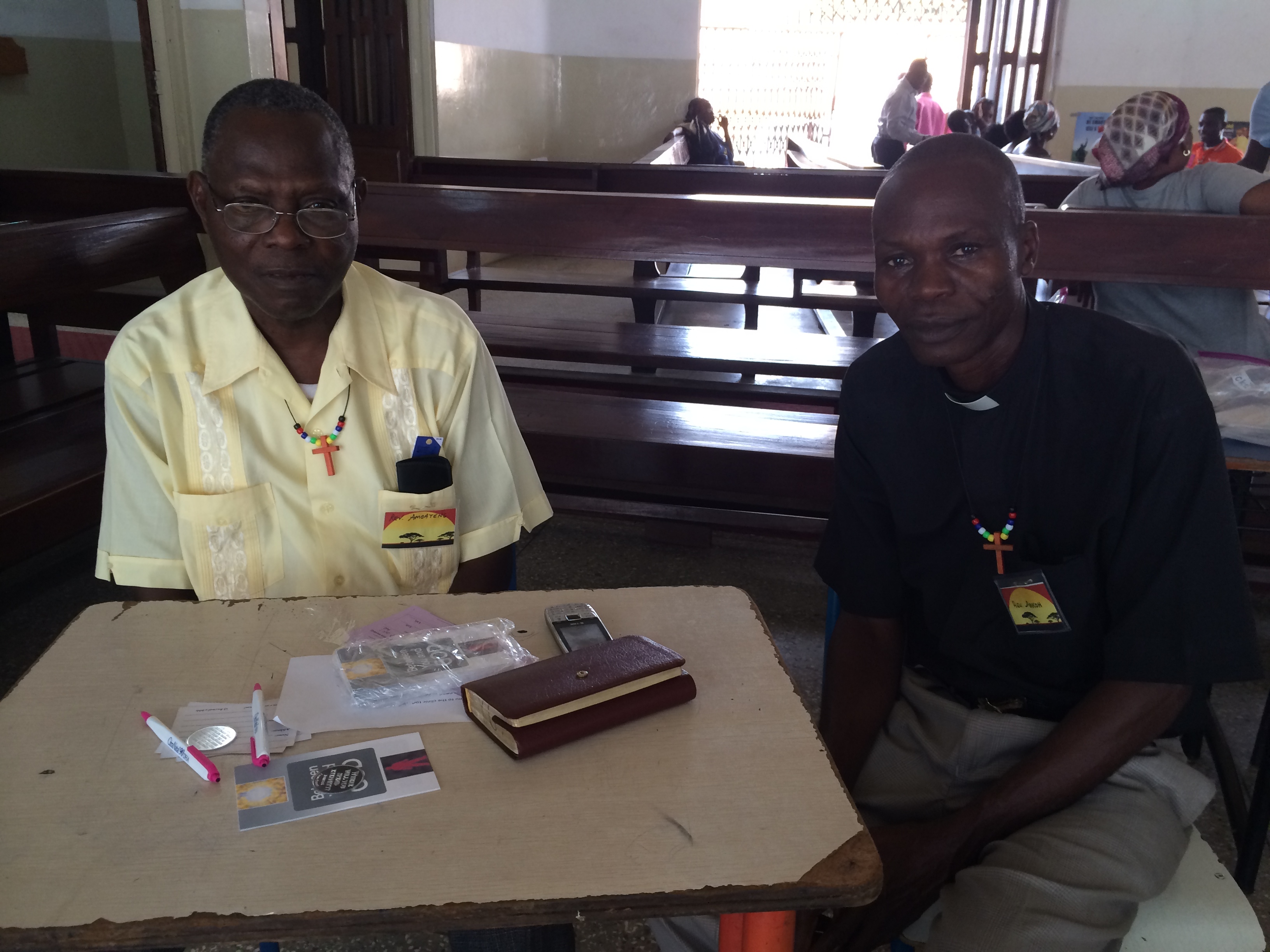
Two terrific pastors assisted in helping triage patients, figuring out what glasses they needed and sharing the gospel with them.

Michael and Arnold are hard at working, making glasses for all sorts of different prescriptions.

Julie signs to a deaf man so he can understand what glasses he needs.

The girl on the left came in yesterday, but we couldn’t offer her treatment without her mother. Today, both mother and daughter came in and received glasses!

I’m pretty sure Julie is working on a passport for this little man so she can bring him home. She didn’t want to let him go!

Pam and our host in Ghana, Ivan, screen people for reading glasses.

There was plenty of fresh fruit at the street market.

Pam made a new friend with one of the street vendors!
Ghana Eye Clinic – Day 1
Our first day in Accra, Ghana at the eye clinic was terrific! We saw 315 people who needed vision care and gave out 217 pairs of glasses. We also had an optometrist onsite to see people who had a whole host of eye care needs. Most importantly, we shared the gospel with everyone who came through our clinic. Through the glasses, we helped people see God’s world. With the gospel, we helped people see God’s Son!
Check out these pictures from our first day.

The morning was beautiful!

Pastor Bill shares the gospel with people as they first come to the clinic.

The kids from the day school at St. Paul Lutheran in Accra sing us a song.

One of our sweet kids receives a sweet from Julie!

Many people came to receive glasses and hear the gospel!

Two great Concordians, Michael and Arnold, are stylin’ in the glasses we’re sharing with the folks of Accra.
I’ll be posting more pictures soon, so keep checking back. Please continue to pray for our team!


 Pastor Zach's Blog