Posts tagged ‘Church’
True Confessions
 I love to read all sorts of things. Theological tomes. Biographies. Histories. The Bible. I love to read op-ed pieces in newspapers and long form journalism – an art form I am concerned is all too quickly disappearing – in newsmagazines.
I love to read. But I don’t always like what I read about.
Case in point. This past week, I was scrolling through my newsfeed when up popped a story about a pastor who had to resign from his church because of serious ongoing turpitude. I wish I could say I’m surprised. But I’m not. I’m not surprised because I’ve seen far too many of these kinds of stories for them to shock me. I’m not surprised because I know the human heart can be a dark place, leading people to do dark things. I’m not surprised because I know my heart can be a dark place, leading me to do dark things. I’m not surprised. But I am heartbroken. I am heartbroken when I think about the pain, regret, and fear this brother in Christ must be experiencing. I am heartbroken by how his story is being talked about on social media. An Internet mob has predictably descended on Facebook pages, Twitter feeds, and comment walls to attack and destroy this man in a sickening display of schadenfreude. This man is in my prayers and, if I can be so bold, he should be in yours.
It is out of my heartbreak that I want to sound a warning not only to my brother pastors, but also to all Christians: Satan hates you and is out to destroy you. This is why Revelation 9:11 calls Satan “the Destroyer.” Satan wants to destroy you along with all the people you love and all the people who love you. Indeed, the sin of this pastor has not only compromised his security and livelihood, it has also deeply wounded his congregation – exposing them to ridicule in the hot spotlight of a nationally trending news story – as well as, I’m sure, emotionally devastating his family.
A few years back, in The Asbury Journal, David Werner asked an important question: “How is your doing?” He asked this question in the spirit of John Wesley, who took great care always to connect “how one was doing internally (in one’s soul) … to what one did, or how one lived out the Christian life externally (in one’s actions).”[1] In other words, Wesley wanted Christians to seriously consider how well their actions comported with their words and worldview.
So, let me ask you: How is your doing? Are there any “doings” that you are hiding? Is there a sin that remains secret? Now is the time to confess it, repent of it, and receive forgiveness for it. Now is the time to share it with a pastor, a counselor, or a trusted friend in Christ so you can be held appropriately accountable for it and, ultimately, be absolved of it.
The apostle Peter exhorts us to two important “doings” when he writes, “Be self-controlled and alert” (1 Peter 5:8). Both parts of Peter’s admonition are critical. If you cannot control yourself, your ability to help and lead others will be inevitably compromised and, in some instances, discredited and destroyed. And if you are not continually vigilant, watching out for Satan’s tricks and traps, he will use your slumber toward righteousness to take you down before you even know what hit you. Being self-controlled and alert is key.
But even more important than Peter’s admonition is Peter’s invitation in the verse prior: “Cast all your anxiety on God because He cares for you” (1 Peter 5:7). Sin tells a sinister, but enticing, lie. It promises you that if you fall to it, it will release you from your anxiety. “Imbibing too much alcohol can help you lighten up and have fun,” whispers sin. “Misusing God’s gift of sex can give you a much needed thrill in a hard knocks world,” says sin. But, in the end, sin never helps your anxiety. Instead, it only adds to your anxiety pain, hurt, brokenness, and guilt.
Peter reminds us that only God can take our anxiety because only God has taken care of our anxiety by taking care of our sin on the cross of His Son, Jesus Christ. So lay your anxiety – and your sin – on Him. In the words of the old hymn:
I lay my sins on Jesus,
The spotless Lamb of God;
He bears them all, and frees us
From the accursed load.
I bring my guilt to Jesus,
To wash my crimson stains
White in His blood most precious,
Till not a spot remains.
There is a chance that this man who has had to resign from his church will not serve again as a pastor. But even if his vocation as a pastor has passed, his vocations as a husband and as a father still stand. My prayer is that, out of his pain, this man serves in these callings from God repentantly, patiently, and lovingly and that he finds his comfort in what God has called him: His forgiven child.
My prayer is that you find your comfort there too.
_______________________________
[1] David Werner, “John Wesley’s Question: ‘How is Your Doing?’” The Asbury Journal 65, no. 2 (2010): 68.
Must Christianity Change or Die?

Credit: Rudy Tiben
Sometimes, it can feel as though the sky is falling and the bottom is dropping out all at the same time. It seems like I can go barely a day without reading a dire report on church attrition, especially among the younger generation. Between high school and turning 30, 43 percent of once-active young adults stop attending church.[1] As of 2012, almost one-third of young adults were unaffiliated with a religious institution.[2] In one survey, researchers found that nearly one-third of young adults left the Christian faith because of its “negative teachings” related to gays and lesbians.[3]
Such gloomy statistics lead to predictable calls to fix the Church by changing its teachings, lest the next generation, discontent with the Church’s antiquated morals, leave her altogether. Take, for instance, this call from popular Christian blogger Rachel Held Evans:
Young adults perceive evangelical Christianity to be too political, too exclusive, old-fashioned, unconcerned with social justice and hostile to lesbian, gay, bisexual and transgender people …
Young evangelicals often feel they have to choose between their intellectual integrity and their faith, between science and Christianity, between compassion and holiness …
The evangelical obsession with sex can make Christian living seem like little more than sticking to a list of rules, and … millennials long for faith communities in which they are safe asking tough questions and wrestling with doubt …
What millennials really want from the church is not a change in style but a change in substance.[4]
Evans’ last line is striking to me. In response to changing cultural norms, Evans maintains that the Church must change the substance of her message. In the words of the famed Episcopalian bishop John Shelby Spong, “Christianity must change or die.”[5] How must Christianity change? Evans offers some suggestions:
We want an end to the culture wars. We want a truce between science and faith. We want to be known for what we stand for, not what we are against.
We want to ask questions that don’t have predetermined answers.
We want churches that emphasize an allegiance to the kingdom of God over an allegiance to a single political party or a single nation.
We want our LGBT friends to feel truly welcome in our faith communities.
We want to be challenged to live lives of holiness, not only when it comes to sex, but also when it comes to living simply, caring for the poor and oppressed, pursuing reconciliation, engaging in creation care and becoming peacemakers.
Evans’ words here are fascinating – and confusing – to me because, understood one way, they are commendable, orthodox, and necessary. But understood another way, they are deeply troubling. For instance, if a “truce between science and faith” means understanding the respective spheres of each and welcoming scientific discovery while at the same time remaining faithful to Scripture’s narrative, I’m onboard. If, however, it means dumping the historicity of Scripture’s creation account, I’m troubled. If having “our LGBT friends feel truly welcome in our faith communities” means showing love, compassion, and going out of our way to listen and learn from the LGBT community, I’m more than all for it. If it means calling what is sinful, “just,” I’m troubled. Sadly, I can’t help but think that, all too often, it’s the latter understandings of these statements that are insinuated. Otherwise, it is feared, a whole generation of young people will leave the Church.
But is this really the case?
Take Rob Bell. Here is a man who has, at least in part, bought into Spong’s motto, “Christianity must change or die.” In his book, What We Talk About When We Talk About God, Bell asks candidly, “Can God keep up with the modern world?”[6] He fought to build a community – Mars Hill Church in Grand Rapids – that would lead the way in this new Christianity. Until he left. In an interview with Oprah, he says his Sunday mornings are now regularly filled with he and his 13-year-old son surfing.[7] Rob Bell was leading a changed church. But even a changed church wasn’t enough to keep Bell around. And he isn’t the only one.
For decades now, churches that have changed the substance of the Christian faith have not been gaining members, but losing members. And now, even as young people are leaving traditional churches, they are not joining these changed churches. They are leaving altogether.[8]
It would seem that if a church is willing to “get with the times,” so to speak, and embrace our culture’s zeitgeist, its pews should be filled to overflowing with the ranks of the enlightened, all breathing a collective sigh of relief that, finally, the offensive, narrow, bigoted Christianity of yesteryear has been relegated to the scrap heap of history. But this has not happened.
The problem with changing the faith of the Church – even the parts of the faith that are not particularly palpable to our modern ears – is that such changes inevitably displace Christianity’s eschatological hope with an evolutionary drum.
What do I mean?
Whether it’s the so-called “war” between science and faith, or the question of gay marriage, or the role of politics in faith, many Christians have simply traded one side of Rachel Held Evans’ despised culture war for the other. They desire to evolve beyond what they perceive as a restrictive, judgmental, intellectually archaic Christian faith. So they laugh at those who take Genesis’ creation account historically, or cry “bigotry” against those who express concern with gay marriage, or look down on those who argue for a more traditionally moral politics. These are old ways that must be done away with, they think.
But what happens is that they become so animated by grievances from the past and trying to right them right now that they forget about – or at least relegate to the background – any sort of ultimate hope for the future. They wind up fighting for a certain kind of culture rather than finding their hope in a different type of Kingdom. They become so obsessed with what’s next that they forget about what’s last.
When you dispel the Christian faith down to nothing more than a fight for this or that cause célèbre, more often than not, you end up with nothing – or at least with nothing that can’t be found elsewhere. And why would anyone go somewhere for something they can get anywhere? This is why changing Christianity’s substance doesn’t gain people; it only loses them.
So what course of action can a Christian take? In a world full of cultural convolution, Christianity’s answer is elegantly simple: “Stand firm in the faith … Do everything in love” (1 Corinthians 16:13-14). Don’t change the faith. Love others. That’s it. And really, who can improve on that? Some things don’t need to change.
_____________________
[1] Melissa Stefan, “Have 8 Million Millennials Really Given Up on Christianity?” Christianity Today (5.17.2013).
[2] Vern L. Bengtson, Families and Faith: How Religion is Passed Down Across Generations (New York: Oxford University Press, 2013), 148.
[3] “A Shifting Landscape: A Decade of Change in American Attitudes about Same-Sex Marriage and LGBT Issues,” Public Religion Research Institute (2.26.2014).
[4] Rachel Held Evans, “Why millennials are leaving the church,” cnn.com (7.27.2013).
[5] John Shelby Spong, Why Christianity Must Change Or Die (San Francisco: Harper Collins, 1999).
[6] Rob Bell, What We Talk About When We Talk About God (New York: Harper Collins, 2014), 8.
[7] “Super Soul Sunday: Oprah Goes Soul to Soul with Rob Bell,” Oprah.com.
[8] Rod Dreher, “The Dying (No, Really) Of Liberal Protestantism,” The American Conservative (7.25.2013).
Newsweek Takes On the Bible
 It’s frustrating, but sadly predictable. Just in time for a new year, Newsweek trots out an article full of old attacks on the Bible. Kurt Eichenwald, who became nationally known for chronicling a massive financial scandal at Prudential in 1995, has gotten into the business of faith, critiquing the Bible and its believers in a lengthy screed titled, “The Bible: So Misunderstood It’s a Sin.”[1]
The article has everything a pedantic diatribe against the Bible could ever hope to have, including a picture of picketers from Westboro “Baptist Church” (and yes, the quotation marks are intentional because they are neither Baptist nor are they a Church, at least in the theological sense of the terms) along with a cartoonish characterization of the average Christian in America:
They wave their Bibles at passersby, screaming their condemnations of homosexuals. They fall on their knees, worshipping at the base of granite monuments to the Ten Commandments while demanding prayer in school. They appeal to God to save America from their political opponents, mostly Democrats. They gather in football stadiums by the thousands to pray for the country’s salvation.
Granted, I am only speaking for myself, but I have never waved my Bible at anyone while screaming condemnations of gay people. I have never worshiped at the base of a granite monument to the Ten Commandments. I do have a congregation I love with whom I worship, however. I have never appealed to God to save America from my political opponents. Indeed, if you have followed this blog for any length of time, you know I can be somewhat skeptical of the political process in general, fearing that some expect out of politics what only Christ can give. I have also never gathered in a football stadium to pray for my country’s salvation, though I have cheered from my stadium seat as I watched my Texas Longhorns put a hurtin’ on some Aggies. Again, I know I am speaking only from my own experience, but I have a feeling I’m not alone. It’s easy to make Christians sound really bad when you misrepresent what the majority of Christians do and believe.
Such a gross mischaracterization of Christians aside, the preponderance of Eichenwald’s jeremiad is reserved for the Bible itself. Eichenwald opines:
No television preacher has ever read the Bible. Neither has any evangelical politician. Neither has the pope. Neither have I. And neither have you. At best, we’ve all read a bad translation – a translation of translations of translations of hand – copied copies of copies of copies of copies, and on and on, hundreds of times.
About 400 years passed between the writing of the first Christian manuscripts and their compilation into the New Testament. (That’s the same amount of time between the arrival of the Pilgrims on the Mayflower and today.) The first books of the Old Testament were written 1,000 years before that. In other words, some 1,500 years passed between the day the first biblical author put stick to clay and when the books that would become the New Testament were chosen.
I honestly have no idea where Eichenwald is getting his history. Modern translations of the Bible are not based “a translation of translations of translations.” Rather, they are based on the best available hand-written copies of Hebrew Old Testament and Greek New Testament initial biblical manuscripts. And Eichenwald’s 400 year time frame from the writing of the New Testament text to its compilation is laughable. The Codex Sinaiticus, for instance, is a copy of both the Old and New Testaments dating to around AD 340. Assuming the last New Testament book was written around AD 90, that gives us a 250 year – not a 400 year – period between writing and compilation. But the period is actually much shorter than this. The Muratorian Fragment is a list of New Testament books from around AD 170. So now the time period between writing and compilation is reduced to 80 years. But even this misrepresents the situation. Paul’s letters circulated as a collection among Christian churches from the second century onward and the church father Justin Martyr developed, also in the second century, an influential harmony of the four Gospels known as the Diatessaron, demonstrating that the early church read the Gospels and Paul’s letters as a collection from the very beginning. In other words, the Church has always held the books we have in the New Testament to be worthy of our consideration and study. It did not take 400 years to compile the Bible.
But Eichenwald isn’t done yet. He continues:
In the past 100 years or so, tens of thousands of manuscripts of the New Testament have been discovered, dating back centuries. And what biblical scholars now know is that later versions of the books differ significantly from earlier ones.
So Eichenwald would have us believe that we have radically different variations of the books now in our Bible hidden somewhere in a colossal cache of ancient manuscripts. What do these radically different variations entail? “Most of those discrepancies are little more than the handwritten equivalent of a typo.” I’m confused. Which is it? Do we have significantly different versions of biblical books or minor discrepancies that amount to nothing more than handwritten “typos”? Not only is Eichenwald wrong on his historical facts, he isn’t even internally consistent.
Eichenwald also has fun with how scholars have translated the Bible. He cites Philippians 2:6, which says, in the King James Version, that Christ was “in the form of God,” and notes:
The Greek word for form could simply mean Jesus was in the image of God. But the publishers of some Bibles decided to insert their beliefs into translations that had nothing to do with the Greek. The Living Bible, for example, says Jesus “was God” – even though modern translators pretty much just invented the words.
I find it hard to believe that a journalist for Newsweek knows more about Greek and how words should be translated than degreed biblical scholars who actually study this stuff for a living. And just for the record, the Greek word for what Eichenwald says should be translated as “image” is morphe, which comes into Latin as forma and into English as, what do you know, “form.” Contrary to Eichenwald, reputable Bible translators generally do not just decide “to insert their beliefs into translations.”
There’s plenty more in Eichenwald’s article that could be critiqued. If you want to read some trenchant responses, you can find them here, here, and here. Honestly, I find it hard to believe that a major publication like Newsweek would publish something that looks more like a two-bit sensationalistic hit piece on the Bible than an honest piece of investigative journalism. This whole article seems to me to be little more than clickbait.
That being said, let me conclude with a passage from this article with which I actually agree. Granted, it’s not a long passage. There’s plenty around it that’s not true. In fact, I can’t even cite Eichenwald’s whole sentence. But this much is true: “If [Christians] … believe all people are sinners, then salvation is found in belief in Christ and the Resurrection. For everyone. There are no exceptions in the Bible for sins that evangelicals really don’t like.” For all that is not true in this article, this much is: Christ came to save sinners – all sinners – through faith in Him. This means that no matter what your sin, Jesus came to save you.
And even in an article that’s really bad, that’s still good news.
_______________________
[1] Kurt Eichenwald, “The Bible: So Misunderstood It’s a Sin,” Newsweek (12.23.2014).
Subpoenaing Sermons

Credit: houstonmatters.org
“Show us your sermons.” This was the message of the City of Houston to five area pastors. Last May, Houston’s City Council passed an equal rights ordinance prohibiting “any type of discrimination based on sex, race, color, ethnicity, national origin, age, familial status, marital status, military status, religion, disability, sexual orientation, genetic information, gender identity, or pregnancy”[1] among private and public employers. Almost immediately, those in faith communities and even in some businesses raised concerns. Will this limit a pastor’s ability to address issues such as same-sex marriage and gender identity in his sermons? Could a business be sued for refusing to allow a transgender person to use the restroom of the gender with which that person identifies, even if that identity does not match up with his or her assigned gender?
Opponents of the ordinance rallied and gathered some 500,000 signatures in an effort to repeal it, but the validity of the signatures was called into question and the ordinance was not repealed. This is when things got really contentious. As The Washington Post reports:
A group of Christians sued the city. In response, city attorneys issued subpoenas to five local pastors during the case’s discovery phase, though the five pastors were not involved in the lawsuit.
The subpoenas sought “all speeches, presentations, or sermons related to HERO, the Petition, Mayor Annise Parker, homosexuality, or gender identity prepared by, delivered by, revised by, or approved by you or in your possession,” according to the Houston Chronicle.[2]
The City subpoenaed sermons. And people were furious. Indeed, when several national news outlets picked up on this story, the City had to change course. Mayor Parker announced last Friday that the City would narrow the scope of the subpoena and City Attorney David Feldman admitted, “When I looked at [the subpoena] I felt it was overly broad, I would not have worded it that way myself … It’s unfortunate that it has been construed as some effort to infringe upon religious liberty.”[3]
So what are we to make of all this?
On the one hand, as Eugene Volokh of The Washington Post notes, the City, by all reasonable standards, overreached and needs to be called to account:
I don’t quite see how “all speeches, presentations, or sermons related to HERO, the Petition, Mayor Annise Parker, homosexuality, or gender identity prepared by, delivered by, revised by, or approved by you or in your possession” would be relevant to the litigation about the validity of the referendum petitions.
At the very least, the subpoena seems vastly overbroad. And the fact that it seeks the contents of religious speeches does counsel in favor of making the subpoena as narrow as possible (which would likewise be the case if it sought the contents of political speeches). I’m not sure what sort of legally relevant information might be contained in the subpoenaed sermons. But the subpoena ought to be narrowed to that legally relevant information, not to all things about homosexuality, gender identity, the mayor, or even the petition or the ordinance.[4]
On the other hand, if these pastors were indeed “using the pulpit to do political organizing … [by] encouraging congregation members to sign petitions and help gather signatures for equal rights ordinance foes,”[5] as the City Attorney suggests, even if such conduct is Constitutionally permissible, theologically, this kind of political posturing can compromise the integrity of the Office of the Ministry and can actually impugn the Church’s witness on the moral and ethical issues of our day. Charles Colson explains why:
Because it tempts one to water down the truth of the gospel, ideological alignment, whether on the left or the right, accelerates the church’s secularization. When the Church aligns itself politically, it gives priority to the compromises and temporal successes of the political world rather than its Christian confession of eternal truth.[6]
When pastors try to address concerns that are, at their heart, theological by using political means like petitions, theology can all too readily and quickly – even if unknowingly – get sacrificed on the altar of political expediency. We need to be careful we don’t compromise our witness for the sake of cynical political gain.
Make no mistake about it: I do not believe City of Houston officials should, in any way, shape, form, or fashion critique or try silence what pastors preach. Such actions are beyond their purview of their vocations. But as a Christian, I also believe that what the Church and her pastors have to say about human sexuality and gender identity is best said from the Word of God and not with a petition.
So, to the pastors who have been subpoenaed, I say: rather than looking at these subpoenas as infringements on your rights, consider them opportunities for ministry (cf. Ephesians 5:15-16). City Hall – even if the wording of the subpoena has now been changed – has invited you to send in your sermons. So do so! Inundate City Hall with the sermons from God’s Word – and not just with sermons where you happen to mention sex or gender. Send in as many of your sermons as you can. While you’re at it, include a charitable note indicating that you are praying for your leaders and praying that your sermons will be a blessing to them.
Remember, with God’s Word comes God’s promise: “My word that goes out from My mouth: It will not return to me empty, but will accomplish what I desire” (Isaiah 55:11). The preaching of God’s Word can do more than a petition could ever hope to accomplish. A petition can win a political war. God’s Word can change a human heart.
Which sounds better to you?
_______________________________
[1] City of Houston, Texas, Ordinance No. 2014-530.
[2] Sarah Pulliam Bailey, “Houston subpoenas pastors’ sermons in gay rights ordinance case,” The Washington Post (10.15.2014).
[3] “Houston Backtracks on Church Subpoenas,” ktrh.com (10.15.2014).
[4] Eugene Volokh, “Is it constitutional for a court to enforce a subpoena of ministers’ sermons?” The Washington Post (10.15.2014).
[5] Jacob Gershman, “Houston Mayor Says City’s Sermon Subpoenas Came as a Surprise,” The Wall Street Journal (10.15.2014).
[6] Charles Colson in Render Unto Caesar…and Unto God: A Lutheran View of Church and State, A Report of the Commission on Theology and Church Relations of the Lutheran Church – Missouri Synod (September 1995), 60.
1500-Year-Old Bible Discovered! Christianity Debunked! Not Exactly.
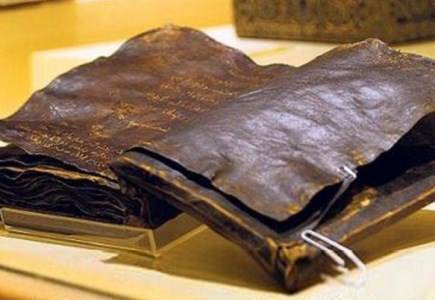 Here we go again.
I’ve been seeing it all over Facebook. The headline reads, “1,500 Year Old Bible Confirms That Jesus Christ Was Not Crucified – Vatican In Awe.” It seems startling. The only problem is, it’s not true. And, it’s nothing new. These kinds of articles that seek to undermine the veracity of the Bible have been being published for years now. Indeed, the discovery of this 1,500-year-old Bible is news that’s now better than two years old. But it’s just now hitting Facebook. And because many people are being confused by it, it’s worth a look.
The article opens:
Much to the dismay of the Vatican, an approximately 1,500 to 2,000 year old Bible was found in Turkey, in the Ethnography Museum of Ankara. Discovered and kept secret in the year 2000, the book contains the Gospel of Barnabas – a disciple of Christ – which shows that Jesus was not crucified, nor was He the Son of God, but a prophet. The book also calls apostle Paul “The Impostor.” The book also claims that Jesus ascended to heaven alive, and that Judas Iscariot was crucified in His place.[1]
Let’s separate some fact from fiction here.
“Much to the dismay of the Vatican…” The Vatican did, according to The Christian Post, make an “official request”[2] to see and study the Bible, but it was not out of dismay. Like any theological artifact, it piqued their curiosity. Many people desired to study this book.
“…an approximately 1,500 to 2,000 year old Bible…” Maybe. But probably not. There are reasons to believe this book is a forgery, probably written around AD 1500, which is, coincidentally enough, about a century after many scholars believe the Gospel of Barnabas itself was written.[3] Timothy Michael Law, a Junior Research Fellow at the Oxford Centre for Hebrew and Jewish Studies, has a nice blog on the antiquity of this Bible here.
“…the book contains the Gospel of Barnabas…” Again, maybe. But possibly not. We actually don’t know what the book contains because it has not been widely studied. The Christian Post quotes theology professor Ömer Faruk Harman who notes that people may be “disappointed to see that this copy … might have no relation with the content of the Gospel of Barnabas.”
“…which shows that Jesus was not crucified … and that Judas Iscariot was crucified in His place.” The Gospel of Barnabas does indeed purport that Judas Iscariot was crucified in Jesus’ place. But this is because this Gospel was written as an apologetic for Islam. Indeed, it prophesies the arrival of Muhammad, but, if the 15th century dating of this Gospel is correct, it does so about 800 years after Muhammad! In other words, its prophecies are really no prophecies at all, but polemical forgeries.
The line from this Facebook article that made me sigh the loudest is this one:
It is believed that, during the Council of Nicaea, the Catholic Church hand-picked the Gospels that form the Bible as we know it today; omitting the Gospel of Barnabas (among many others) in favor of the four canonical Gospels of Matthew, Mark, Luke, and John.
Ever since Dan Brown’s book The Da Vinci Code, this has been a canard that just won’t die. At no time during the Council of Nicaea did the Catholic Church hand-pick any Gospels. The four Gospels we have today were already widely accepted by the Church by the time of this council. If you want to read the canons issued by the Council of Nicaea for yourself, you can check them out here. None say anything about the Gospels. Indeed, none say anything about the canon of Scripture at all.
Ultimately, even if this Turkish Bible is indeed 1,500 years old and even if it does contain the Gospel of Barnabas, the Council of Nicaea was held in AD 325, which is still before the time of this Bible. Thus, part of the reason the Council of Nicaea never considered the Gospel of Barnabas during its meetings is because there was not yet a Gospel of Barnabas to consider!
It was David Hannum, criticizing P.T. Barnum, who said, “There’s a sucker born every minute.” Don’t be suckered by this Facebook article. The Bible as we have it still stands. And on it, your faith can still stand.
___________________________
[1] “1,500 Year Old Bible Confirms That Jesus Christ Was Not Crucified – Vatican In Awe,” Moorish Harem: Man’s Greatest Accomplishments (4.28.2014).
[2] Clara Morris, “Turkey’s 1500-Year-Old, $28M Bible Linked to Gospel of Barnabas?” The Christian Post (2.23.2012).
[3] See Jan Joosten, “The Gospel of Barnabas and the Diatessaron,” Harvard Theological Review 95, no. 1 (2002).
Common Question: What’s the Deal with the Apocrypha?
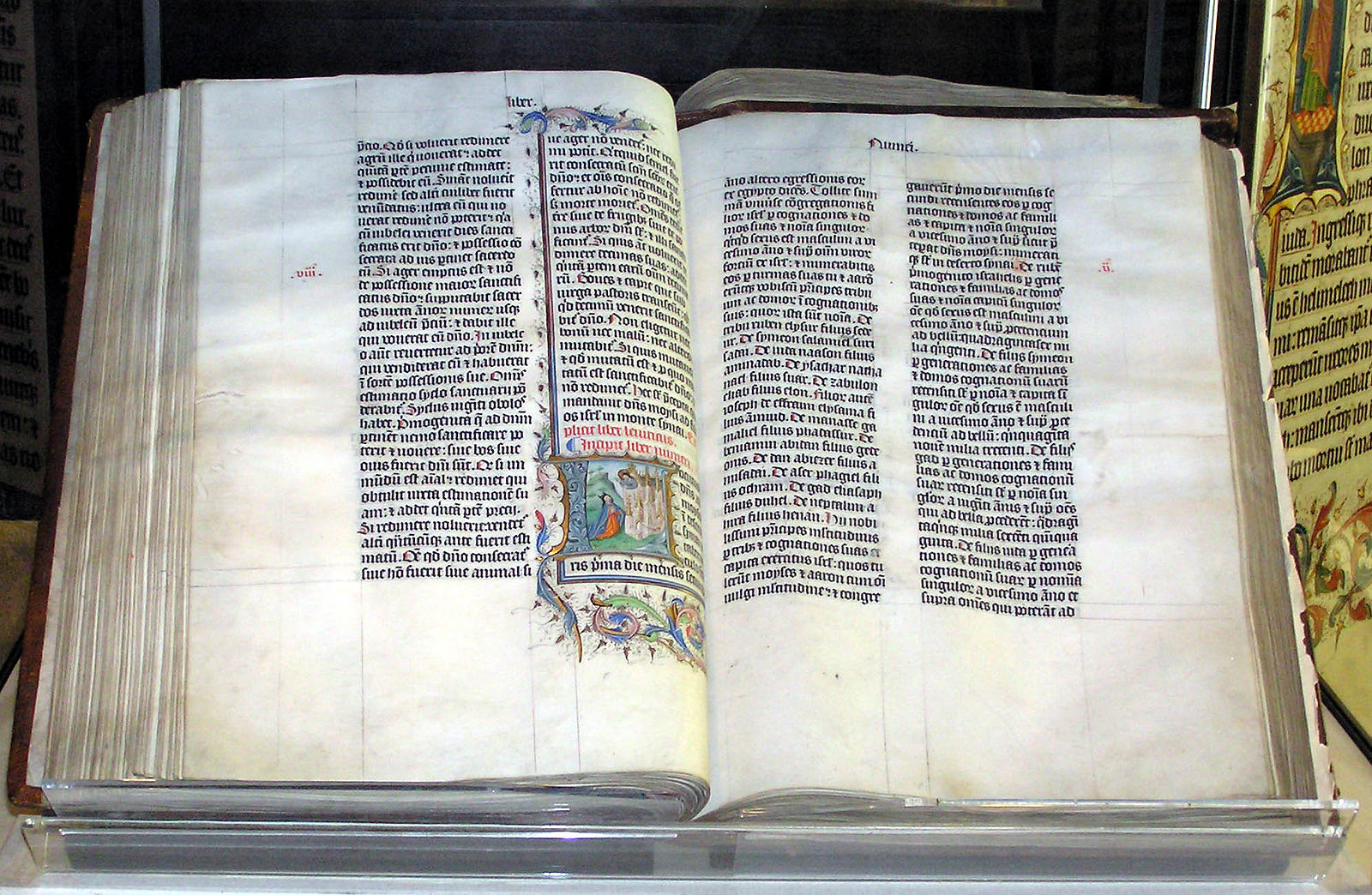 66 books. That’s how many books are in the Good Book. At least, that’s what I had always been taught. But then, a Roman Catholic friend of mine in high school claimed there was more to the Bible than the 66 books I had read since I was a little boy. There were actually 73 books, he explained. And these additional books had strange names like “Maccabees” and “Judith” and “Tobit” and even “Bel and the Dragon.” As he showed me these books, I was flummoxed. “Why hadn’t I ever heard of these books?” I asked myself.
These mysterious books to which I was introduced in high school are widely known as the “Apocrypha,” a Greek adjective meaning “hidden.” And though many Christians do not regularly read these books, they are indeed a part of the Roman Catholic canon of Scripture. In fact, one of the questions I often receive as a pastor is, “Why do Roman Catholics have ‘extra’ books in their Bible?”
Because the Apocrypha is a source of a lot of confusion, I thought it would be worth it to offer a brief history of these books along with an analysis of them from a Lutheran Christian perspective.
The books of the Apocrypha were written between the close of the Old Testament in 430 BC and the beginning of the New Testament. These books include historical accounts, supplements to famous Old Testament books such as Daniel and Esther, and wisdom books akin to the Proverbs.
From the beginning, these books were never fully embraced by the Church as inspired Scripture. Paul Maier, Professor Emeritus of Ancient History at Western Michigan University, explains:
The Apocrypha … were not included in the final canon of the Hebrew Bible, which was debated by rabbis at Jamnia (near Jerusalem) in AD 93. Thus they were also not included among the very 39 books that comprise the Old Testament in Christian Bibles today …
Early on … churchmen such as Origen of Alexandria noted a difference between the Apocrypha and the Hebrew Scriptures. Cyril of Jerusalem and Jerome also drew a line of separation between the two, using the term Apocrypha for the first time in reference to these writings. To be sure, Jerome included them in his Latin translation if the Bible, the Vulgate, but advised that the Apocrypha should be read for edification, not for supporting church dogma.[1]
Jerome’s warning against using the Apocrypha as a basis for Christian doctrine is especially important. His doctrinal concern is perhaps best illustrated by 2 Maccabees 12:44-45 when the Jewish liberator Judas Maccabeus prays for some who have died, seeking to make atonement for the sins they committed while they were still alive. From these verses, the Roman Catholic Church derives its doctrine of Purgatory, a place where deceased believers undergo a final purification from sin that readies them for the bliss of heaven. The Catechism of the Catholic Church explains the doctrine of Purgatory thusly:
All who die in God’s grace and friendship, but still imperfectly purified, are indeed assured of their eternal salvation; but after death the undergo purification, so as to achieve the holiness necessary to enter the joy of heaven.
The Church gives the name Purgatory to this final purification of the elect.[2]
This teaching runs contrary both to the broad teaching of canonical Scripture, which declares that a person enters either paradise or hell immediately upon death (e.g., Luke 16:19-31; 23:39-43), and to the gospel, because it adds to Christ’s perfectly purifying work on the cross our own work of purification in Purgatory by which we may “achieve the holiness necessary to enter the joy of heaven.” By adding our achievements to Christ’s achievement, the doctrine of Purgatory belittles and undermines the sufficiency of Christ’s sacrifice. Thus, the universal Church does not treat the Apocrypha as divinely inspired.
Interestingly, the Apocrypha was not even fully embraced by the Roman Catholic Church until the Fourth Session of the Council of Trent in 1546. In this session, it was declared:
But if any one receive not, as sacred and canonical, the said books entire with all their parts, as they have been used to be read in the Catholic Church, and as they are contained in the old Latin Vulgate edition; and knowingly and deliberately contemn the traditions aforesaid; let him be anathema.[3]
With this decree, the Roman Catholic Church effectively erased the distinction between ancient books that should be read for private edification and inspired books that should be appealed to for Christian doctrine – a distinction that Jerome, the very one who translated the Latin Vulgate, which Rome was here declaring to be its official translation, had made! Thus, Rome took Jerome’s translation, but disregarded his distinction. And the Church has been the worse for it over the years.
All of this is not to say that the Apocrypha should be altogether disregarded. Maier notes that “Clement of Alexandria, Polycarp, Tertullian, Hippolytus, Cyprian, and Augustine” cited heartily from the Apocrypha. These books give us much valuable historical insight into this time period and chronicle for us the origins of the religious parties we meet in the New Testament, such as the Pharisees and Sadducees. Thus, the Apocrypha is worth our time and study. We need to know about these books. Indeed, Martin Luther superscribed the books of the Apocrypha like this: “Books that are not be regarded as the equal of Holy Scripture but are nonetheless profitable and good to read.”[4]
If you’re looking for a good book, then, pick up the Apocrypha. If you’re looking for a divinely inspired book, however – that book still has only 66 books.
__________________________
[1] Paul Maier, “Foreword,” The Apocrypha: The Lutheran Edition with Notes (St. Louis: Concordia Publishing House, 2012), xv-xvi.
[2] See Catechism of the Catholic Church (Collegeville: The Liturgical Press, 1994), §1030-1031.
[3] The Fourth Session of the Council of Trent (April 1546).
[4] Martin Luther, What Luther Says, Ewald M. Plass, ed. (St. Louis: Concordia Publishing House, 1959), 1512, n. 20.
Christian Persecution Under the Stars and Stripes
 Are rabid secularists persecuting Christians in the United States? This is the question Robert Boston of Salon takes up. His answer is an unambiguous and unapologetic “no way.” He opens his article in an almost combative tenor:
Certain words should not be tossed around lightly. Persecution is one of those words.
Religious right leaders and their followers often claim that they are being persecuted in the United States. They should watch their words carefully. Their claims are offensive; they don’t know the first thing about persecution.
One doesn’t have to look far to find examples of real religious persecution in the world. In some countries, people can be imprisoned, beaten, or even killed because of what they believe. Certain religious groups are illegal and denied the right to meet. This is real persecution. By contrast, being offended because a clerk in a discount store said “Happy Holidays” instead of “Merry Christmas” pales. Only the most confused mind would equate the two.[1]
Boston goes on to rehearse a litany of privileges that religious institutions enjoy in our society along with some examples of what he considers to be true religious persecution:
Go to Saudi Arabia, where it’s illegal to even open a Christian church, and experience the fear of those Christian believers who dare to worship in private homes, aware that at any moment they may be imprisoned.
Visit North Korea, where all religions have been swept away and replaced with a bizarre form of worship of the state and its leader that purports to promote self-reliance but, in reality, merely serves as a vehicle for oppression.
Visit any region under the control of the Taliban, a movement so extreme that, in Afghanistan, they trashed that nation’s cultural heritage by blowing up two sixth-century statutes of Buddha because they were declared false idols by religious leaders who are intolerant of any other faith but Islam.
There is real religious persecution in the world. Right-wing Christians in America aren’t experiencing it.
On the one hand, there are some things to affirm in Boston’s article. First, I agree that it is awfully tough to make the leap from someone wishing a Christian “Happy Holidays” rather than “Merry Christmas” to religious persecution. That is not only a questionable example of persecution, but a silly one. Second, I wholeheartedly and unequivocally affirm that compared to what Christians are experiencing in other countries, Christians who live “in the land of the free and the home of the brave” have it great. There is no reason – ever – for Christians in this country to compare themselves to Christians who are, let’s say, awaiting execution in North Korea.[2]
But…
There’s always a “but,” isn’t there?
For all of Boston’s bravado about how Christians in the States are not persecuted, I’m not sure he really understands Christianity or persecution.
Boston rails against what he calls “right-wing Christians” and “religious conservatives.” Just in case we’re unclear as to what he means, headlining his piece is a picture of Glenn Beck, Phil Robertson, and Michelle Bachmann. His implicit message seems to be that those who claim that Christian persecution is taking place in the States are nothing more than puppets and parrots of conservative political groups. But this is not fair to the breadth or the depth of Christianity. Christian theology is much better defined in terms of “orthodoxy” and “heresy” rather than in terms of “liberalism” and “conservatism.” After all, Christianity is much more concerned with the right teaching of divine truths than with a particular 21st century political ideology. This is why there are Christians who are Republicans and Democrats. No earthly political party can claim a monopoly on the Kingdom of God.
Second, though I understand Boston’s concern with Christians who brandish about the word “persecution” carelessly, I can’t help but suspect that he is guilty of precisely that which he rails against in his article. I find it strange that while writing about Christian persecution, Boston never pauses to consider what Christ has to say on the subject! So let’s do it ourselves. Jesus says, “Blessed are you when people insult you, persecute you and falsely say all kinds of evil against you because of Me” (Matthew 5:11). Notice that Jesus here explains persecution in terms of words rather than actions. Jesus says that people will both insult and tells lies about His followers. There can be little doubt that this does indeed happen – even in the United States. And this, Jesus says, is part of persecution. Thus, Boston’s stipulations on what qualifies as Christian persecution are far too restrictive – at least according to Christ.
I am aware there is quite a gap between the definition of persecution theologically and the definition of persecution popularly. It is dangerous to throw out a word like “persecution” without any sort of background on how this word is used biblically and theologically. Hopefully, the dust up during the Romney campaign over whether or not Mormonism is a cult taught us that not all people define all words the same way.[3] Thus, if we’re going to apply the word “persecution” to anything that happens to Christians in the States, we need to explain what we mean.
Whatever you may think does or does not qualify as persecution, what is most important is how Christians respond to those who are against them. Boston says Christians have reacted to that which they perceive to be persecution with “so much carping.” This, I agree, is tragic. When Christians are persecuted, our response should not be one of carping, whining, or fretting. After all, according to Jesus’ Beatitudes, when we are persecuted, we are not victimized, but “blessed.” This is why, when the apostles experience physical persecution at the hands of the Sanhedrin, they leave “rejoicing because they had been counted worthy of suffering disgrace for the Name” (Acts 5:41).
I like what Robert Morgan of the Huffington Post says about Christian persecution:
The Bible anticipated [persecution] years ago. The founder of Christianity, after all, was tortured to death and His original 12 followers were all persecuted; most were slain. Though His message was a Gospel of peace, His critics nailed Him to a cross but failed to keep Him in the tomb. They hated Him but could not contain Him. They sought to limit His influence, but they only broadened His impact.[4]
Ultimately, no matter how badly Christianity may be persecuted, threatened, belittled, cajoled, and legislatively restricted, it just won’t die. Why? Because its Founder lives.
[1] Robert Boston, “The ultimate guide to debunking right-wingers’ insane persecution fantasies,” Salon (3.16.2014).
[2] Cheryl Chumley, “Kim Jong-un calls for execution of 33 Christians,” Washington Times (3.6.2014).
[3] Richard Oppel & Erik Eckholm, “Prominent Pastor Calls Romney’s Church a Cult,” New York Times (10.7.2011).
[4] Robert Morgan, “The World’s War on Christianity,” Huffington Post (1.14.2014).
David Wise’s “Alternative” Lifestyle

Credit: David Calvert for The New York Times
He’s a husband. He’s a father. He’s a follower of Jesus who can see himself becoming a pastor one day. And, oh yeah, he’s also an Olympic freestyle skier of halfpipe who won that gold. His name is David Wise.
Recently, Skyler Wilder of NBC Sports wrote a profile on Wise in which he made a special note on Wise’s character:
Wise is mature far beyond his years. At only twenty-three years old, he has a wife, Alexandra, who was waiting patiently in the crowd, and together they have a two-year-old daughter waiting for them to return to their home in Reno, Nevada.
At such a young age, Wise has the lifestyle of an adult. He wears a Baby Bjorn baby carrier around the house. He also attends church regularly and says he could see himself becoming a pastor a little later down the road.[1]
When reading such a description of this young man and his family, you can’t help but envision something straight out of a Norman Rockwell painting – except that, as Wilder points out, Wise can “nail two double corks wearing baggy pants.”
What strikes me about Wilder’s profile of Wise, however, is not Wise’s fascinating life, but Wilder’s unique title for his profile: “David Wise’s alternative lifestyle leads to Olympic gold.” Wilder calls Wise’s lifestyle as husband, father, and Christian “alternative.”
When Wilder published his profile on Wise with this headline, almost immediately, people raised concerns and critiques. You can read some here, here, and here.
These concerns and critiques notwithstanding, frankly, I’m okay with the designation of Wise’s lifestyle as “alternative” – not because I like what it says about the values of our society, but because it’s true. Statistically, there can be little doubt that Wise’s lifestyle at Wise’s age is not mainstream. As David Weigel of Slate points out:
Wise got married and had a kid at a far younger age than most people. According to data published by the National Campaign to Prevent Teen and Unplanned Pregnancy, the median age of the American first marriage is 26 and a half. The average age for an American bringing the first child into his/her homes: About 25 and a half. So, yes, David Wise is very good at skiing, and he figured out, as the Internet might refer to it, that whole adulthood thing much faster than the median American or median famous Olympian.[2]
The character Wise has and the lifestyle he lives at the tender age of 23 is far beyond his years. In this sense, it is alternative. But it is also hopeful.
Several years ago, sociologist Rodney Stark wrote a book titled, The Rise of Christianity: How the Obscure, Marginal Jesus Movement Became the Dominant Religious Force in the Western World in a Few Centuries. Stark opens his book with some numbers:
For a starting number, Acts 1:14-15 suggests that several months after the Crucifixion there were 120 Christians … Yet only six decades later, Christians were so numerous that Constantine found it expedient to embrace the church … Goodenough estimated that 10 percent of the empire’s population were Christians by the time of Constantine. If we accepted 60 million as the total population at that time … this would mean that there were 6 million Christians at the start of the fourth century.[3]
The Christian Church grew from 120 to 6 million in just over three centuries. That’s staggering! But how did it happen? Though Christianity’s rise is thanks to multiple factors – not the least of which is the grace of God – one reason Christianity showed such incredible growth is because it offered an alternative. It was different from the rest of the world.
For instance, in the 160’s, and then again in the 260’s, a series of plagues struck the eastern provinces of Roman Empire. These plagues were so devastating that during a smallpox epidemic in 165, a quarter to a third of the population died. When these plagues swept through, most people – scared of becoming infected – took the sick and threw them into the streets to die. But there was one group of people who, rather than casting the sick out, brought the sick in: Christians. Dionysius, the bishop of Alexandria during the second sweep of plagues in the 260’s, writes about how Christians responded to these plagues:
Most of our brother Christians showed unbounded love and loyalty; never sparing themselves and thinking only of one another. Heedless of danger, they took charge of the sick, attending to their every need and ministering to them in Christ, and with them departed this life serenely happy; for they were infected by others with the disease, drawing on themselves the sickness of their neighbors and cheerfully accepting their pains. Many, in nursing and caring for others, transferred their death to themselves and died in their stead.[4]
While everyone else was casting the sick out, Christians were bringing the sick in – many of them dying because of their efforts. Christians offered an “alternative.” And the Church grew.
It is no secret that what Christians teach and the ways in which Christians live is out of step with our society’s Zeitgeist. We are “alternative.” But considering the pain, hopelessness, corruption, despair, emptiness, and oppression that our society’s Zeitgeist reaps (for examples, just look here, here, and here), don’t we need an alternative?
So when someone calls us “alternative,” perhaps we should embrace the distinction. For we do offer an alternative. We offer the alternative of Christ to the mainstream of sin. And when we offer that alternative, we offer hope. And hope is an alternative that our world sorely needs.
[1] Skyler Wilder, “David Wise’s alternative lifestyle leads to Olympic gold,” NBCOlympics.com (2.18.2014).
[2] David Weigel, “Will This Young, Happily Married Olympian Start a New Culture War?” Slate (2.19.2014).
[3] Rodney Stark, The Rise of Christianity: How the Obscure, Marginal Jesus Movement Became the Dominant Religious Force in the Western World in a Few Centuries (San Francisco: Harper Collins, 1997), 5-6.
[4] Dionysius of Alexandria in Rodney Stark, The Rise of Christianity, 82.
S.B. 1062
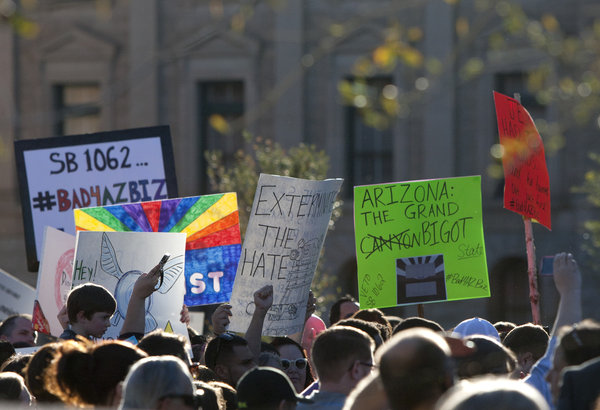
Credit: LA Times
A funny thing happened on my way back from a recent trip I took to Arizona. The state became embroiled in a heated political battle over Senate Bill 1062.[1] Okay, it may not have been funny. But these kinds of battles are common.
According to some, S.B. 1062 championed religious liberty, allowing business owners with religious convictions to deny service to a party if the business owner felt that serving that party would substantially burden or contradict his religious convictions. According to others, S.B. 1062 violated the civil rights of homosexuals by formally and legally legitimatizing discrimination against them.
Last Wednesday, Governor Jan Brewer vetoed the bill, explaining, “I have not heard of one example in Arizona where business owners’ religious liberty has been violated … The bill is broadly worded and could result in unintended and negative consequences.”[2] Of course, the political pressure on Governor Brewer was hot:
Companies such as Apple Inc. and American Airlines, and politicians including GOP Sen. John McCain and former Republican presidential nominee Mitt Romney were among those who urged Brewer to veto the legislation. The Arizona Super Bowl Host Committee, which is overseeing preparations for the 2015 game, came out with a statement against the legislation. The Hispanic National Bar Association on Wednesday said it canceled its 2015 convention in Phoenix over the measure.[3]
In observing the volley between supporters and detractors of this bill, two things strike me.
First, homosexuality – and, specifically, gay rights – is not only a hot topic in our society, it is the hot topic in our society. Interestingly, nowhere does S.B. 1062 mention homosexuality. It simply speaks of “the free exercise of religion.” Yet, USA Today reported on Governor Brewer’s veto of the bill with this headline: “Arizona governor vetoes anti-gay bill.”[4] These days, how a piece of legislation will affect the gay community is the litmus test as to whether or not a bill can or should pass, even if that bill does not specifically mention the gay community. Gay rights, then, are front and center. They are the battleground du jour of our society.
Second, there are a lot of homosexuals who deeply despise Christians with orthodox beliefs concerning the sinfulness of homosexual activity and will go to great – and even duplicitous – lengths to paint Christians as homophobic bigots. Stories abound of people who have concocted heinous hate crimes against themselves. Take, for instance, the lesbian couple that spray-painted their own garage with the message “Kill the gay.”[5] Or how about the Tennessee man who falsely claimed that three men beat him and robbed his store in an anti-gay attack?[6] Then, of course, there was the famed incident of the waitress who falsely claimed she was stiffed on a tip because she was a lesbian.[7] Personally, I don’t want to think of anyone in the homosexual community as my enemy. Life is too short to keep an enemies’ list. But I am not so naïve as to believe that there aren’t some in the homosexual community who think of me as their enemy.
So what am I to do?
Jesus’ admonition to pray for those who are on the outs with you (cf. Matthew 5:44) seems to be especially apropos for a time such as this. To this end, I would invite you to join me in praying for three things as the culture war over sexual rights continues to rage.
First, pray for forgiveness. Though it is painful to admit, it was not too long ago that it was exponentially more likely for a message like “Kill the gay” to be spray painted not by someone self-imposing a hate crime, but by someone committing one. And sometimes, that someone was even a self-professed Christian. This, of course, directly defies a myriad of biblical commandments concerning our conduct as Christians. Our call to tell the truth about sin must never be a license to commit sin – especially the sin of hate. We need forgiveness for our missteps – which are plenty – in this debate.
Second, pray for understanding. I want to be understood. I want people to understand and believe that I am not a homophobic hate monger who wants to oppress, humiliate, and exile those who do not share my same faith and ethical commitments. But if I want this for myself, it is only fair that I afford the same courtesy to others. Martin Luther summarized the Eighth Commandment by saying that, when dealing with our neighbors, we should “put the best construction on everything.”[8] I can think of no better way to respond to those who put the worst construction on Christians’ intentions than by putting the best construction on theirs. Generous understanding offers our greatest hope for peace in the midst of a hotly contested and, sadly, dirtily fought culture war.
Third, pray that true love would prevail. The “true” is just as important as the “love” here, for our society has settled for a counterfeit love that reduces love to nothing more than tolerance. Just the other day, I heard a caller to a radio talk show explain how one of the primary virtues of Christianity is tolerance. Really? A quick search of the word “tolerate” in the Bible brings up verses like these:
- Whoever slanders their neighbor in secret, I will put to silence; whoever has haughty eyes and a proud heart, I will not tolerate. (Psalm 101:5)
- Your eyes are too pure to look on evil; You cannot tolerate wrongdoing. Why then do You tolerate the treacherous? (Habakkuk 1:13)
- It is actually reported that there is sexual immorality among you, and of a kind that even pagans do not tolerate: A man is sleeping with his father’s wife. (1 Corinthians 5:1)
Tolerance does not seem to be the high brow Scriptural virtue that some would like to peddle it as. This is not to say that we shouldn’t live with, work alongside with, and care for people who do not share our same moral commitments. In this way, we should indeed be tolerant. But tolerance does not necessarily entail endorsement.
Ultimately, as Christians, we ought to aspire to a much higher value than that of tolerance. We ought to aspire to love. “Love,” the apostle Paul reminds us, “does not delight in evil but rejoices with the truth” (1 Corinthians 1:6). To love someone well, we must tell him the truth, even when the truth is unpopular. This is our calling with all sin – sexual and otherwise.
So these are my prayers. Now, it’s your turn. Will you join me in praying the same?
[2] Aaron Blake, “Arizona governor vetoes bill on denying services to gays,” The Washington Post (2.26.2014).
[3] Bob Christie, “Arizona Religious Bill That Angered Gays Vetoed,” ABC News (2.27.2014).
[4] Dan Nowicki, Yvonne Wingett Sanchez and Alia Beard Rau, “Arizona governor vetoes anti-gay bill,” USA Today (2.26.2014).
[5] Alyssa Newcomb, “Lesbian Couple Charged With Staging Hate Crime,” ABC News (2.19.2012).
[6] Chuck Ross, “Report: Man falsified police report in alleged anti-gay attack,” The Daily Caller (12.26.2013).
[7] Cavan Sieczkowski, “New Jersey Waitress In Anti-Gay Receipt Saga Reportedly Let Go From Job,” The Huffington Post (12.9.2013).
Michael Sam Makes It Public

Credit: cnn.com
“Does the NFL have any gay players?” my wife asked me last Sunday. She was watching a Hallmark Valentine movie where one of the characters, an NFL quarterback, came out as homosexual. “No, sweetie,” I responded. “The NFL does not have any openly gay players. There have been some players who have come out after they left the NFL, but to date, no players currently in the NFL are openly homosexual.”
It didn’t take long for that to change.
The next morning, while I was working out and watching ESPN, there was Michael Sam, former Missouri Defensive End and candidate in the NFL draft, coming out on national TV as a gay football player. “I am an openly, proud gay man,” Sam told ESPN’s “Outside the Lines.” Granted, Sam is not an NFL player…yet. But his prospects are good.
I am surprised – pleasantly so – by how muted the negative response to Sam’s announcement has been. Some journalists have hinted that responses could turn negative, but to date there is no swell of detractors decrying Sam as a dangerous degenerate. By the same token, those who are writing and speaking about him are hailing him as a hero. Brendon Ayanbadejo, a former linebacker who is currently a free agent, was effusive about Sam’s announcement, comparing him to Jackie Robinson and Rosa Parks. To cap off his feelings concerning Sam, he said, “To borrow from Neil Amstrong, this is one small step for gay men and one giant leap for the LGBTQ community.”[1] Juliet Macur of the New York Times wrote a manifesto demanding that an NFL team draft Sam. She begins by writing, “It’s time,” and ends by declaring, “Sam must be drafted. It’s time to move forward. The teams and the league are on the clock.”[2] For Macur, Sam’s status as a future NFL star is not a matter of his talent, but of a moral imperative that says the NFL must have an openly gay player.
For orthodox Christians, all of this can be hard to sort out. On the one hand, there is something to be celebrated here. It is refreshing to see so many display a measured sensitivity to and deep compassion for those with same-sex attractions and those in same-sex relationships. The gay slurs, gay jokes, and gay bashing of yesteryear have drastically dissipated and, for my part, I say, “Good riddance.” Such speech is diametrically opposed to the biblical command to love, which Paul says is the fulfillment and summation of all biblical commandments (cf. Romans 13:8-9). On the other hand, Christians cannot pretend that our society’s sexual free-for-all, which demands not only the toleration of, but the celebration of sexual practices that are far from biblical standards for human sexuality, is nothing more than an issue of civil rights. Whether it’s Michael Sam touting his homosexuality or Richie Incognito and Jonathan Martin exchanging texts about how many women they have slept with and the use of prostitutes,[3] the spacious sexual ethic of our society is simply not something Christians can endorse. Partly because it’s immoral and Scripturally forbidden, yes. But also because it hurts, belittles, and objectifies people, which, in and of itself, is tragic, no matter what your ethical worldview.
Ultimately, the loose sexual standards of our society are nothing new. The path of sexual salaciousness is well worn – not only in twenty-first century America, but in all the societies that have come before her. But we can choose a different path. We can choose the path of sexual commitment in marriage while walking “humbly with our God” (Micah 6:8). I pray that we do. For when we do, we not only live out God’s sexual standard in our commitments, we show God’s lavish love by our humility.
[1] Mike Foss, “Ex-NFL player: Draft prospect who came out is like Jackie Robinson and Rosa Parks,” USA Today (2.10.2014).
[2] Juliet Macur, “It’s Time for the N.F.L. to Welcome a Gay Player,” New York Times (2.9.2014).
[3] Adam H. Beasley, “Texts shed light on relationship between Miami Dolphins’ Jonathan Martin, Richie Incognito,” Miami Herald (2.5.2014).


 Pastor Zach's Blog