Posts tagged ‘Christianity’
Coronavirus Concern Sweeps the Nation

Arlington National Cemetery is one of the many public spaces that has been closed in the wake of the spread of COVID-19.
Credit: National Guard
As I write about COVID-19 for the third time now on this blog, I must admit that I never expected to devote this much attention and concern to a virus that first emerged halfway across the world. But the state and spread of this virus is shifting so quickly, it’s nearly impossible not to be riveted by what is unfolding. So much has happened this week.
The World Health Organization officially declared COVID-19 a pandemic.
The NBA, the NHL, and MLB have all suspended their seasons.
The NCAA has cancelled March Madness.
Public spaces across the nation – including places like Disneyland – are closing.
The financial markets are suffering from whiplash.
Air travel to and from Europe has been suspended.
And we’re still having trouble slowing the virus’s spread.
Many of these actions above are the result of an abundance of caution, which is good. But along with much caution, there is also much fear. After all, there’s still so much we do not know about this virus. Its mortality rate continues to be elusive to us. The actual number of infections remains unclear. Testing for the virus remains limited. And, of course, treatment options are nearly non-existent.
Fear like this at a situation like this can lead to all sorts of panicked responses. Stories of stores selling out of staples like bottled water and toilet paper abound. But panic does not equal prevention. The continued calls to wash your hands, wipe down surfaces, and practice social distancing are the things that are necessary to stymie the spread of this virus.
In 1519, the city of Zurich, Switzerland was overrun by the Black Death. It claimed the lives of a third of the city’s population. There was a famous reformer of the Church who lived in Zurich at this time, Ulrich Zwingli. As he cared for those who were ill, he himself contracted the disease. In what seems like a near miracle, he did not die. But while he was in the throes of his sickness, he composed a poem:
My pains increase;
Haste to console;
For fear and woe
Seize body and soul.
Death is at hand.
My senses fail.
My tongue is dumb;
Now, Christ, prevail.
Lo! Satan strains
To snatch his prey;
I feel his grasp;
Must I give way?
He harms me not,
I fear no loss,
For here I lie
Beneath Thy cross.
Whether in sickness or in health, whether in times of prosperity or pandemic, we lie beneath the cross. And because of this, even as we are cautious, we are not afraid. If a cross could not overcome Christ, a pandemic cannot conquer His promises to us.
Temporary Peace and Perfect Peace

In a story that has largely flown under the radar, a week ago Saturday, the United States signed a deal with the Taliban that begins the process of ending the war in Afghanistan. The process of withdrawing our troops will be a protracted one, and the end of this war is anything but certain. Mujib Mashal reports for The New York Times:
The agreement signed in Doha, Qatar, which followed more than a year of stop-and-start negotiations and conspicuously excluded the American-backed Afghanistan government, is not a final peace deal, is filled with ambiguity, and could still unravel …
The withdrawal of American troops – about 12,000 are still in Afghanistan – is dependent on the Taliban’s fulfillment of major commitments that have been obstacles for years, including its severance of ties with international terrorist groups such as Al Qaeda.
The agreement also hinges on more difficult negotiations to come between the Taliban and the Afghan government over the country’s future. Officials hope those talks will produce a power-sharing arrangement and lasting cease-fire, but both ideas have been anathema to the Taliban in the past.
This war may finally end – but only maybe. What’s more, the lack of American presence in the region could lead to the re-oppression of historically marginalized groups there:
The United States, which struggled to help secure better rights for women and minorities and instill a democratic system and institutions in Afghanistan, has struck a deal with an insurgency that has never clearly renounced its desire for a government and justice system rooted in a severe interpretation of Islam.
Though the Taliban get their primary wish under this agreement – the withdrawal of American troops – they have remained vague in commitments to protect the civil rights that they had brutally repressed when in power.
In short, the peace agreement that is being forged in this region is a very tenuous one and comes with a price that include the loss of some civil rights.
The prophet Isaiah famously prophesies the coming of the Messiah as One who will be the “Prince of Peace” (Isaiah 9:6). What is sometimes missed in Isaiah’s description of the Messiah, however, is how this Prince of Peace will establish His peace:
He will reign on David’s throne and over his kingdom, establishing and upholding it with justice and righteousness from that time on and forever. (Isaiah 9:7)
The Prince of Peace will bring His peace by establishing “justice and righteousness.” An enduring peace cannot be accomplished by overlooking injustice and righteousness – by looking past sin – but only by dealing directly with sin. This is why human peace treaties – no matter how noble – always seem to be temporary. For as long as there is sin in this world, there can be no perfect peace.
Thus, though we may wait expectantly for and even celebrate a peace treaty for Afghanistan, we rest assuredly in the perfect peace our Prince of Peace will bring on the Last Day when He will:
…judge between the nations and will settle disputes for many peoples. They will beat their swords into plowshares and their spears into pruning hooks. Nation will not take up sword against nation, nor will they train for war anymore. (Isaiah 2:4)
That’s perfect peace. And it’s coming – no matter what happens in Afghanistan.
Less Anger and More Smiles

According to Guinness World Records, we have a new world’s-oldest-male:
A Japanese man with a sweet tooth who believes in smiles has become the world’s oldest male at 112 years … Chitetsu Watanabe, who was born in Niigata in northern Japan in 1907, received a certificate for his accomplishment on Wednesday at a nursing home in the city. The previous record holder, Masazo Nonaka, another Japanese, died last month.
As is often the case with aged people, Mr. Watanabe was asked about to what he credits his longevity. He answered, “Don’t get angry and keep smiling.”
In a society that has no shortage of anger, Mr. Watanabe certainly offers some contrarian advice. And yet, medically, Mr. Watanabe just might be right. Study after study has shown that, although anger can be helpful in flashes to solve big problems, sustained anger, if not directly, is at least secondarily damaging to your health. Dr. Michael Kutcher, an interventional cardiologist at Wake Forest Baptist Medical Center, explains:
It’s kind of an adjunctive risk factor. It’s not of and by itself a cause of coronary artery disease or a cause of heart disease. But if the anger is sustained and the blood pressure is affected and the heart rate is affected, that indirectly can lead to coronary disease or disease of the heart muscle.
John Schinnerer, an anger management coach in Danville, California, links anger to a whole host of health problems:
It’s been linked to obesity, low self-esteem, migraines, drug and alcohol addiction, depression, sexual performance problems, increased heart attack risk, lower-quality relationships, higher probability of abusing others emotionally or physically or both, higher blood pressure, and stroke.
In short, anger is something you don’t want to mess around with.
Perhaps Jesus’ brother James was on to something when he wrote: “Human anger does not produce the righteousness that God desires” (James 1:20). And perhaps Solomon really was wise when he wrote: “Do not be quickly provoked in your spirit, for anger resides in the lap of fools” (Ecclesiastes 7:9).
Although Christians sometimes talk about a “righteous anger” at the sinfulness and brokenness of this world, we must admit that our appeals to “righteous anger” can be, at times, just thin justifications for anger that is far more sinful than it is saintly. Our anger can be more often self-interested than justice-oriented. I would also point out that, even when the Bible does speak of “righteous anger,” it is immediately followed by a warning: “In your anger do not sin” (Ephesians 4:26). The line between righteous and unrighteous anger, it turns out, is razor thin.
Living life with joy rather than anger seems to be a much safer proposition. The apostle Paul encourages us: “Rejoice in the Lord always. I will say it again: Rejoice” (Philippians 4:4)! Joy is so good, Paul says, it is something we should have “always.” Why? Well, I can’t guarantee that it’ll help you live to 112. But it will be a blessing to those around you. And they’re reason enough to smile.
The Coronavirus: Serving Our Sick Neighbors

Credit: Wikipedia
It’s spreading so quickly. What started as a little-known virus, infecting a group of people in Wuhan in eastern China, is now spreading across the world. The World Health Organization has declared the coronavirus a global health emergency. The United States has issued a Level 4 travel advisory, its highest alert, against travel to China.
Part of what makes the coronavirus so frightening is the unknowns associated with it. A live map that tracks the virus shows over 17,000 confirmed cases of the virus. Almost over 500 people have recovered from the virus while over 350 have, sadly, died. This leaves over 16,000 people who are still sick and whose fates we are still awaiting. Doctors are also not sure precisely how the virus can spread. Can it spread before symptoms appear? The jury is still out. There are some reports that the virus can enter a body through simply rubbing one’s eyes if a person has picked up a trace of the virus on their hands.
In the midst of much fear, one of the things we can be thankful for are doctors who go into harms’ way to care for patients. This kind of care has not always, historically, been how society has reacted to sicknesses. In his book The Triumph of Christianity, Rodney Stark quotes the Christian bishop Dionysius of Alexandria, who describes how many people reacted when a smallpox epidemic swept through the Roman Empire in the third century:
At the first onset of the disease, people pushed the sufferers away and fled from their dearest, throwing them into the roads before they were dead and treated unburied corpses as dirt, hoping thereby to avert the spread and contagion of the fatal disease.
Dionysius goes on explain that the response of Christians to this epidemic was quite different:
Most of our brothers showed unbounded love and loyalty, never sparing themselves and thinking only of one another. Heedless of danger, they took charge of the sick, attending to their every need and ministering to them in Christ, and with them departed this life serenely happy; for they were infected by others with the disease, drawing on themselves the sickness of their neighbors and cheerfully accepting their pains.
It is this uniquely Christian spirit and legacy of caring for the sick, instead of leaving them to die, that endures across much of the world even today.
In 1527, the bubonic plague arrived in Wittenberg Germany, where a monk named Martin Luther was teaching. He chose to stay in Wittenberg and provide care for the sick, during which time he wrote a tract: Whether One May Flee from a Deadly Plague. Luther encouraged people not take unnecessary risks during epidemics, writing:
Examples in Holy Scripture abundantly prove that to flee from death is not wrong in itself. Use medicine; take potions which can help you; fumigate house, yard, and street; shun persons and places wherever your neighbor does not need your presence or has recovered, and act like a man who wants to help put out the burning city.
And yet, even as Luther encouraged people to take every available precaution to prevent the spread of a disease, he did not encourage them to do so at the expense of those who were suffering, even if helping the suffering endangered their own lives:
It is the devil who…takes delight in making us deathly afraid, worried, and apprehensive so that we should regard dying as horrible and have no rest or peace all through our life. And so the devil would excrete us out of this life as he tries to make us despair of God, become unwilling and unprepared to die, and, under the stormy and dark sky of fear and anxiety, make us forget and lose Christ, our light and life, and desert our neighbor in his troubles.
Luther goes on to explain why, if we find ourselves in a position to help during a plague, we should defy the fears the devil plants in us:
If Christ shed His blood for me and died for me, why should I not expose myself to some small dangers for His sake and disregard this feeble plague? If you can terrorize, Christ can strengthen me. If you can kill, Christ can give life. If you have poison in your fangs, Christ has far greater medicine. Should not my dear Christ, with His precepts, His kindness, and all His encouragement, be more important in my spirit than you, roguish devil, with your false terrors in my weak flesh? God forbid! Get away, devil. Here is Christ and here am I, His servant in this work. Let Christ prevail! Amen.
Amen, indeed.
And so today, while nations across the world continue to take precautions to prevent the spread of the coronavirus, I give thanks for the medical professionals who are taking great risks to care for those who are dangerously ill. These professionals are serving their neighbors – both those neighbors who are sick and those neighbors who will not get sick, thanks to their work.
May their love and care do much good for our world.
Kobe Bryant: 1978-2020
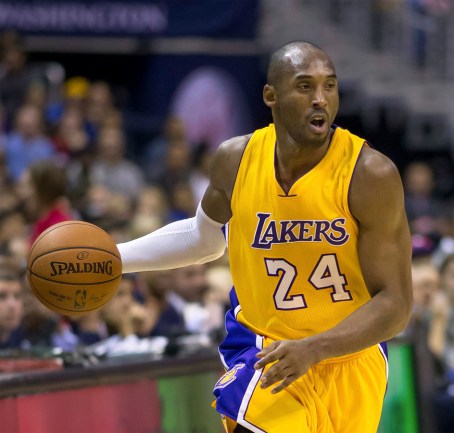
Credit: Alexandra Walt / Flickr
When my wife said to me from the other room, “Kobe Bryant is dead?!” I thought at first she had been taken in by another one of those celebrity death hoaxes that sometimes make their rounds on social media. But she hadn’t. The news was true. The loss was real.
As the story of Kobe’s untimely death began to sink in, my first thought was, “He was my age.” He was born a mere two weeks before me. Then when I learned that his daughter was with him on the helicopter flight that crashed and took their lives, this tragedy felt even worse. Kobe leaves behind his wife and three other daughters. I cannot imagine the pain they must be experiencing right now.
As the news played a never-ending loop of Kobe Bryant highlights, reporters interviewed fellow stars who were memorializing him and fans who were crying over him. The death of a household name like Kobe Bryant – especially under the fluke circumstances of a terrible crash – brings into sharp focus something so many of us are generally loathe to consider: the stark and dark reality of death.
As a nation grapples with the loss of one of its biggest stars, there is an ancient perspective on death – the Christian perspective on death – that is worth our reflection, for, I believe, it can be a source of hope. So, here are three Christian claims about death.
Death is unnatural.
Contrary to what Forrest Gump’s momma told him, dying is not just a part of life. There’s a reason that, when someone dies, tears flow, questions of “why” are asked, and anger at a life-gone-too-soon ensues. It’s because we can feel that there is something profoundly unnatural about death.
The Christian faith teaches that this feeling about death is nothing less than a good theology of death. Death is the result of and the punishment for sin. It is not, however, part of God’s creative design. It was introduced only after Adam and Eve disobeyed God. This is why the apostle Paul calls death an “enemy” (1 Corinthians 15:26).
So, if you ever find yourself mourning a death, don’t feel as though you must feel that death is natural. It’s not. Your tears can flow, your questions can be asked, and you can shake your fist at what has taken your loved one from you.
Death is inevitable.
Death may not be natural, but it is inevitable. Part of what makes a passing like Kobe Bryant’s so shocking and tragic is because he was a man who seemed invincible. A sports columnist for the Los Angeles Times, Bill Plaschke, eulogized the basketball great this way:
Bryant, 41, and his 13-year-old daughter, Gianna, were among nine people who died in a helicopter crash Sunday in Calabasas and how does that happen? Kobe is stronger than any helicopter. He didn’t even need a helicopter. For 20 years he flew into greatness while carrying a breathless city with him.
This can’t be true.
This is the way Kobe seemed – stronger than any helicopter. And yet, life’s fragility – and death’s inevitability – have coldly slapped a culture that treats its sports stars as invincible in its face.
The 17th century English poet John Donne wrote a poem in 1624 about a bout he had with spotted fever. While in the throes of his sickness, Donne heard the bells of a nearby church ringing at a funeral. He opined:
No man is an island,
Entire of itself.
Each is a piece of the continent,
A part of the main.
If a clod be washed away by the sea,
Europe is the less.
As well as if a promontory were.
As well as if a manor of thine own
Or of thine friend’s were.
Each man’s death diminishes me,
For I am involved in mankind.
Therefore, send not to know
For whom the bell tolls,
It tolls for thee.
Donne knew that even if he survived this sickness, he would not survive every sickness. One day, the bell would toll for him. Indeed, one day, the bell will toll for us all – no matter how strong, how rich, how famous, how moral, how respected, or how invincible we are.
It is maddening. But it is true. Death is inevitable.
Death is destroyable.
The first claim of Christianity – that death is unnatural – we feel. The second claim of Christianity – that death is inevitable – we can empirically verify, for we all die. This final claim of Christianity – that death is destroyable – is one that calls for faith.
On its face, death does not seem destroyable. It seems only to destroy us. And yet, Christianity claims that there was once a man who was destroyed by death on cross who managed to return the favor to death when He rose again three days later, destroying death. And because He destroyed death for Himself, Christianity claims that He can also destroy death for us. For just as He once emptied His grave, He will one day empty our graves. As the apostle Paul explains:
Listen, I tell you a mystery: We will not all sleep, but we will all be changed – in a flash, in the twinkling of an eye, at the last trumpet. For the trumpet will sound, the dead will be raised imperishable, and we will be changed. For the perishable must clothe itself with the imperishable, and the mortal with immortality. When the perishable has been clothed with the imperishable, and the mortal with immortality, then the saying that is written will come true: “Death has been swallowed up in victory.” (1 Corinthians 15:51-54)
Death is destroyable, Paul says.
The same poet who once reflected on the inevitability of his own death also wrote a sonnet about his hope for life. John Donne called it “Death Be Not Proud”:
Death, be not proud, though some have called thee
Mighty and dreadful, for thou art not so;
For those whom thou think’st thou dost overthrow
Die not, poor Death, nor yet canst thou kill me.
From rest and sleep, which but thy pictures be,
Much pleasure; then from thee much more must flow,
And soonest our best men with thee do go,
Rest of their bones, and soul’s delivery.
Thou art slave to fate, chance, kings, and desperate men,
And dost with poison, war, and sickness dwell,
And poppy or charms can make us sleep as well
And better than thy stroke; why swell’st thou then?
One short sleep past, we wake eternally
And death shall be no more; Death, thou shalt die.
When death takes a life, John Donne reminds us, it “swell’st thou.” It swells with pride that it has separated another family, brought on more tears, and broken more hearts. But even if death is stronger than us, it is not stronger than the One who once called Himself “the life” (John 14:6). And because of His life, we can have life, too – eternal life.
Kobe Bryant has died. But death should not be proud. Because Kobe’s death is not the last word on his life. For this much I know:
Death, thou shalt die.
May it be so quickly.
2019: Year in Review

Credit: Ulrike Leone from Pixabay
It’s hard to believe another year has come and is now nearly gone. This year has had its share of memorable moments. There were the accelerating attacks on houses of worship – synagogues, mosques, and churches. There were the wildfires that devastated California and Hurricane Dorian that decimated the Bahamas. There was the huge controversy surrounding the Boeing 737 MAX, which experienced problems with one of its automated flight control systems, resulting in two deadly crashes. Politically, there was the impeachment of a president and the death of Elijah Cummings, a fixture in the US House of Representatives. And then, of course, in a story that will reach into 2020, there is a presidential election brewing.
It’s difficult not to experience a bit of déjà vu as I look back over this year’s big stories. Deadly rampages continue to terrorize communities and cultures. Natural disasters, a staple of creation since the introduction of sin, continue to wreak havoc across our nation and throughout the world. Businesses continue to find themselves in PR nightmares. And, our political fissures continue to widen and deepen. None of these problems were new to 2019. These were just new manifestations of old menaces.
Solomon famously wrote: “What has been will be again, what has been done will be done again; there is nothing new under the sun” (Ecclesiastes 1:9). This is most certainly true. But we must also remember that this is not ultimate.
The apostle Peter writes about those who, like Solomon, know that things don’t really change. But they also doubt that anything ever will change. They complain: “Everything goes on as it has since the beginning of creation” (2 Peter 3:4). But Peter knows that even if the axiom “history repeats itself” is true of history, it is not true for the future, which is why Peter holds out this hope:
The day of the Lord will come like a thief. The heavens will disappear with a roar; the elements will be destroyed by fire, and the earth and everything done in it will be laid bare. Since everything will be destroyed in this way, what kind of people ought you to be? You ought to live holy and godly lives as you look forward to the day of God and speed its coming. That day will bring about the destruction of the heavens by fire, and the elements will melt in the heat. But in keeping with His promise we are looking forward to a new heaven and a new earth, where righteousness dwells. (2 Peter 3:10-13)
Peter says there is a day coming when all the drudgery of this age will be overcome by the delight of the age to come.
But here’s the key: Peter says that, since we know that something better and different is on its way, we ought to “look forward” to what is to come. In Greek, the word for the phrase “look forward” is prosdokeo. Dokeo is a word that denotes “thinking,” and pros is a prefix that denotes “that which is first” or “at the head.” In other words, Peter is admonishing us to “think ahead.” Think ahead to a day when mass murders will die and natural disasters will be rendered unnatural and commerce will be consecrated and politics will care only about King Jesus. Think ahead to that day. Because it will be a supremely good day.
I’m praying for a great 2020. But I’m also hoping for a perfect eternity. I don’t know how God will answer my prayer. But I do know He will fulfill my hope. For my hope is His promise.
In a World Full of Much News, Christmas is Good News

Credit: Alexas_Fotos from Pixabay
Christmas is almost here. As many of us go on last-minute buying binges while we search and shop for the perfect presents for all our special someones, it is worth remembering that what makes Christmas special is not everything we do for this holiday, but what we are called to focus on in this holiday.
The first Christmas was a birthday punctuated by an angelic announcement to some shepherds who were in close proximity to a historically incomparable infant. An angel said to these shepherds:
“Do not be afraid. I bring you good news that will cause great joy for all the people. Today in the town of David a Savior has been born to you; He is the Messiah, the Lord. This will be a sign to you: You will find a baby wrapped in cloths and lying in a manger.” (Luke 2:10-12)
Here, in this angel’s message, we find a sort of executive summary of what not only Christmas, but Christianity, is all about. The angel explains that a Savior has been born who is “good news.”
This two-word phrase – “good news” – is the echocardiogram by which the heartbeat of the Christian faith is measured. If this phrase permeates Christianity, the Christian faith is alive and well. If it does not, the Christian faith is doomed to anemia and obsolescence. Here’s why.
Culturally, two types of religion are prevalent. In more traditional cultures, religion that demands “good behavior” reigns. This version of religion promises that if you do what you should do and don’t do what you shouldn’t do, God will be pleased with you. This version of religion rewards one who walks the straight and narrow and lives as a straight arrow. Conversely, in more progressive cultures, religion that focuses on “good feelings” carries the day. This version of religion eschews what it sees as the needlessly constrictive and primitive commands of traditional religion and instead seeks the supernatural in what makes you feel good. Creeds of this religion include, “You do you,” “If it feels good do it,” and, “God wouldn’t want me to be unhappy.” Interestingly, though these two religions sound different, at their core, they share the same assumption: the onus for spiritual fulfillment is on you because religion is about you. You are the one who is responsible for your spirituality – either by your behavior or in your emotional state.
Christianity is utterly different. Christianity is not about you. Instead, Christianity is for you. And there is a world of difference between these two.
Christianity is about Christ – His birth that an angel announces to some shepherds, His ministry that He carries out in front of a myriad of eyewitnesses, His death that He dies in place of sinners, and His resurrection by which He conquers death. This is why the angel calls Christ’s birth “news.” News is about what someone else from somewhere else has done. Christ is someone else from somewhere else – from heaven itself. And He has done for us what we cannot do for ourselves. He has lived the life we cannot live, died the death we deserved to die, and offered the penalty for sin we cannot pay. Christianity is news about Christ. But it is not just “news,” it is “good news.” Why? Because, as the angel says, even though Christianity is about Christ, it is “for all the people.” And “all the people” includes you. What Christ has done, then, He has done for you.
Christianity promises that responsibility for spiritual fulfillment does not rest on you. Instead, it rests on the One who lies in a manger, dies on a cross, and empties a tomb. Jesus has done all the work necessary to procure the ultimate spiritual fulfillment of salvation for you. That’s the news the angel offers these shepherds. And I, for one, happen to think that news is quite good.
My prayer for you, this Christmas, is that you think it’s good, too. And that you believe that this news is for you. For it is this news that makes Christmas merry and hope real.
All the Days After the Big Day

Credit: Christine Harris on Reshot
Multiple studies have sounded foreboding warnings about the decline of marriage rates in the U.S. According to the Pew Research Center, while 72% of American adults ages 18 and older were married in 1960, that number has plummeted to 50%. More people are marrying later in life, and more people are choosing simply not to marry at all. Traditionally-oriented sociological observers point out that these falling marriage rates pose real problems not only for individuals personally, but for society collectively. The Heritage Foundation, for instance, explains:
Decades of statistics have shown that, on average, married couples have better physical health, more financial stability, and greater social mobility than unmarried people.
Other studies show that the children of those couples are more likely to experience higher academic performance, emotional maturity, and financial stability than children who don’t have both parents in the home.
The social and economic costs of family breakdown are paid by everyone.
Studies show divorce and unwed childbearing cost taxpayers over $110 billion each year. But the real victims are children.
Children raised in single-parent homes are statistically more likely to abuse drugs and alcohol, exhibit poor social behaviors, and commit violent crimes. They’re also more likely to drop out of school.
And when it comes to fighting poverty, there is no better weapon than marriage. In fact, marriage reduces the probability of child poverty by 80%.
These are sobering statistics. And yet, there is this interesting tension. While marriage rates may be on the decline, the wedding industry continues to grow. Forbes reports that, as of 2018, the wedding industry is a $72 billion a year money-maker, with the average cost of a wedding now ballooning to $35,000. Why are weddings so expensive? Forbes explains that couples feel compelled “to create ever more extravagant wedding experiences to make their day memorable for themselves and their guests.”
This heightened pressure around creating a perfect day for couples has given birth to a cottage industry – that of wedding therapy. Alyson Krueger reports for The New York Times:
The reality for many couples is that wedding planning is a tricky time. Deep-rooted family problems sometimes rear up. Some families face financial strain or must deal with contrasting values of how money should be spent. It’s also a time when couples and their families are going through big, fragile transitions.
The problems soon-to-be newlyweds encounter include things like:
“I can’t make a decision about who to have as my bridesmaid,” or, “I don’t know how to have a conversation with someone about not picking them as my bridesmaid.”
Other concerns, of course, are more systemic and serious. But the fact that there is a “wedding therapy” industry at all says something about our cultural mores and priorities.
In pre-marital counseling, I will often tell couples that the most important day of their marriage is not the first day of their marriage, but the last day of their marriage. “When death finally does you part,” I’ll ask, “what kind of marriage will you want to have – one that is marked by coldness and bitterness due to years of unaddressed issues, or one that is marked by warmth and forgiveness as you have weathered life’s storms together?” My point is this: if you want the last day of your marriage to be a good one, the time to begin working toward that is now. Far too many couples put all their effort and emphasis into the first day of their marriage – their wedding day – while thinking little about what their life together will look like after that. The wedding therapy industry is yet another indicator of our obsession with the first day of our marriages and the stress that first day brings. We have made our weddings about, well, our weddings – the dresses, tuxes, receptions, entrées, cake, gifts, decorations, and celebrations. But the wisest weddings are not about the weddings. They are not even really about the couple. The wisest weddings are ones that celebrate the gift that marriage is to humanity and reflect Christ’s love for the Church.
Perhaps if we made God’s gift of marriage and Christ and His Church the focus of our weddings, we would not only save ourselves from needing wedding therapy for the big day, we would also limit our need for marriage counseling for the days thereafter. I’ll take a healthy marriage over a perfect wedding any day. If you’re married, or especially if you used to be married, I have a feeling you would say the same thing, too.
Learning to Give

A new report released by the Indiana University Lilly Family School of Philanthropy and Vanguard Charitable found that the percentage of U.S. adults who donated to charity dropped significantly between 2000 and 2016. 20 million fewer households donated to charity in 2016 than in 2000. While some attribute this drop in charitable giving to the Great Recession, which began back in 2008, giving has not recovered since this economic downturn, which has led researchers to seek out other drivers to explain the decline. And one driver has become quite apparent. Una Osili, who is one of the co-authors of this report on charitable giving, explains that God and giving seem to go hand in hand:
“Attending services is correlated with giving to religious organizations, but it’s also correlated with giving to secular groups.”
It turns out that a decline in worship attendance can be correlated with a decline in giving. People of faith tend to give to their communities of faith, but they give even beyond their community of faith, as Professor Osili notes, to secular organizations. Faith and generosity work together. To jumpstart generosity, then, perhaps a good place to start is not with a fundraiser, a plea, or a guilt trip, but with an invitation to trust in a God who is inordinately magnanimous and to worship Him on a regular basis.
Christians are driven to give because we know that God has first given to us. We believe that God has given us all that we have. So, if God has given us everything, the least we can do is give something.
This does not make giving easy, of course. Christians can still sometimes wonder if they have enough to give. Christians can still be tempted to horde their resources instead of sharing their resources. But this does not mean that giving is not a call. And this does not mean that giving is not a command.
Allow me to offer a challenge: as this year draws to a close, figure out a way to give – whether that be to a church, a charity, or a worthy cause. But then, take it a step further. Don’t just give once in the spirit of the holidays; make it your practice to give consistently as an exercise of faith. Giving is not meant to be an occasional anomaly in your life; it’s meant to be the way of your life. And, by the way, when it is, you bless the lives of others.
And everyone could use a blessing.
Religious Persecution in China

King Solomon writes:
Speak up for those who cannot speak for themselves, for the rights of all who are destitute. Speak up and judge fairly; defend the rights of the poor and needy. (Proverbs 31:8-9)
Solomon calls us to speak up and speak out against oppression wherever and whenever we see it. And we can see it in spades in China right now. Last week, The New York Times published an exposé on a Chinese government crackdown on minority Muslim groups in that country:
403 pages of internal documents…have been shared with The New York Times in one of the most significant leaks of government papers from inside China’s ruling Communist Party in decades. They provide an unprecedented inside view of the continuing clampdown in Xinjiang, in which the authorities have corralled as many as a million ethnic Uighurs, Kazakhs and others into internment camps and prisons over the past three years.
The party has rejected international criticism of the camps and described them as job-training centers that use mild methods to fight Islamic extremism. But the documents confirm the coercive nature of the crackdown in the words and orders of the very officials who conceived and orchestrated it.
Xi Jinping, the General Secretary of the Communist Party of China, has publicly spoken out against what he refers to as the “extremist religious thought” of Muslims, saying:
The psychological impact of extremist religious thought on people must never be underestimated. People who are captured by religious extremism – male or female, old or young – have their consciences destroyed, lose their humanity and murder without blinking an eye.
And, in other speech:
As soon as you believe in it, it’s like taking a drug, and you lose your sense, go crazy and will do anything.
With public statements like these, it is frightening to imagine what might be going on in internment camps like his.
Mr. Xi, of course, has not limited his crusade against religion to Muslims, but has also persecuted Chinese Christians – banning the sale of Bibles, shutting down churches, and even bulldozing some church buildings.
Whether they are Muslims or Christians, Christ calls upon His faithful to speak up for the oppressed. During His ministry, Christ stood up for those who were castigated from their communities – tax collectors, the sick, people of sexual ill-repute, and even those who were theologically out of sync with the kingdom Christ taught and brought. His followers should react similarly when they see people marginalized, and, in the case of these minority Chinese Muslims, tyrannized.
Solomon also writes:
The poor and the oppressor have this in common: the LORD gives sight to the eyes of both. (Proverbs 29:13)
President Xi has the same sight as those he is oppressing. He can see what he is doing. And we can see, too. And so, we must stand up and speak up in defense of those who cannot defend themselves.
Though Christians do not share the same faith as Muslims, Christians can stand with Muslims in their persecution and point them to a way through persecution and a hope beyond persecution – Jesus.


 Pastor Zach's Blog