Posts tagged ‘Christianity’
ABC Extra – Two Kingdoms, One Ruler
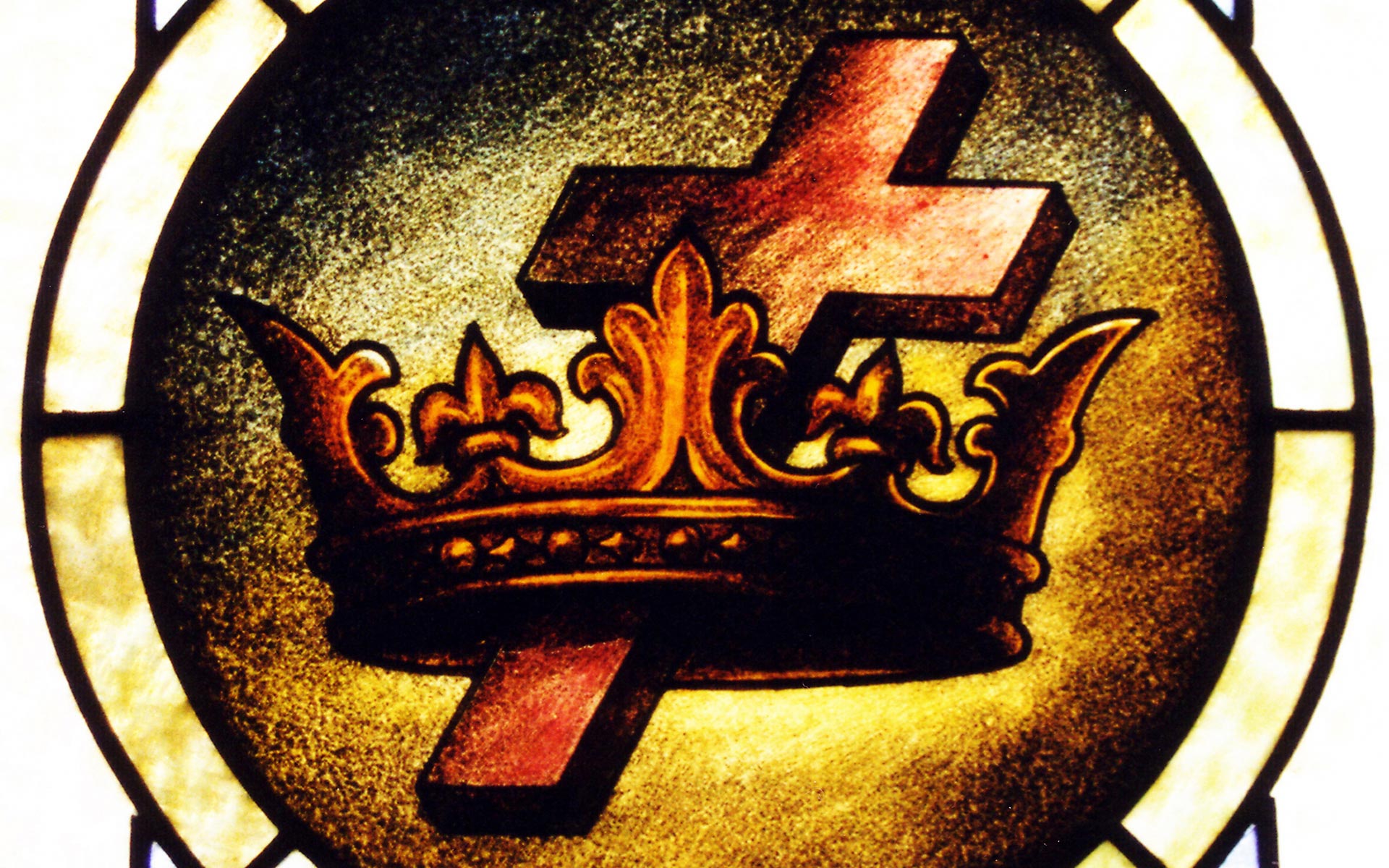 This weekend in worship and ABC, we kicked off a series called, “King Me! Life Lessons from Israel’s Lieges.” In this series, we are taking a look at some of Israel’s kings and seeking to learn from both the good and the bad of their rules and reigns. The theme verse for this series comes from Judges 8, where, after leading a valiant charge against the Midianites, the Israelites want to install their judge, Gideon, along with his family, into an Israelite royal dynasty. Gideon responds, “I will not rule over you, nor will my son rule over you. The LORD will rule over you” (Judges 8:23). Gideon understands that, ultimately, it is the LORD who is King over all. No earthly king can dare or deign to take God’s place. Indeed, the subtitle for this series, “Life Lessons from Israel’s Lieges,” alludes to this. A “liege” can be either one who rules or one who is ruled. Earthly kings are both. They may rule over others, but they themselves are inescapably and inexorably ruled by God. For God is King over all.
Like Gideon, Martin Luther understood that God rules and reigns over all. In his writings, Luther often spoke of two kingdoms. On the one hand, Luther explains, there is a left hand kingdom, which incorporates the world and its rules and rulers. On the other hand, there is a right hand kingdom, or a spiritual kingdom, which consists of all those who have faith in Christ and are guided by the Gospel. When teaching on these two kingdoms, I will often refer to the right hand kingdom as the Kingdom of God and the left hand kingdom as the Kingdom of Man. “Who rules the Kingdom of God?” I will ask when I teach on this topic. People quickly and confidently respond, “God.” But then I follow up, “Who rules the Kingdom of Man?” Many respond, “Man.” But the glory of the Kingdom of Man is that, despite its name, it is not ruled by man, but by God! The Lutheran Confessions explain: “It is taught among us that all government in the world and all established rule and laws were instituted and ordained by God for the sake of good order.”[1] This statement echoes the words of the apostle Paul: “Everyone must submit himself to the governing authorities, for there is no authority except that which God has established. The authorities that exist have been established by God” (Romans 13:1). Because God institutes and establishes the rulers in the Kingdom of Man, He is also the ultimate ruler over the Kingdom of Man. As the prophet Daniel says, “God sets up kings and deposes them” (Daniel 2:21). There is no kingdom – be it the Kingdom of God or the Kingdom of Man – where God does not reign and rule.
Though God reigns and rules over both the Kingdom of God and the Kingdom of Man, it should be noted that God rules differently in these two kingdoms. Luther explains:
One must carefully distinguish between these two governments. Both must be permitted to remain; the one to produce righteousness, the other to bring about external peace and prevent evil deeds. Neither one is sufficient in the world without the other. No one can become righteous in the sight of God by means of the temporal government, without Christ’s spiritual government. Christ’s government does not extend over all men; rather, Christians are always a minority in the midst of non-Christians. Now where temporal government or law alone prevails, there sheer hypocrisy is inevitable, even though the commandments be God’s very own. For without the Holy Spirit in the heart no one becomes truly righteous, no matter how fine the works he does. On the other hand, where the spiritual government alone prevails over land and people, there wickedness is given free rein and the door is open for all manner of rascality, for the world as a whole cannot receive or comprehend it.[2]
Thus, God rules in the Kingdom of God by the redemption of men through the cross of Christ and He rules in the Kingdom of Man by suppressing the wickedness of men through the auspices of earthly rulers. We thank God for both kingdoms. And we thank God that He is King over both. He is King over us.
Want to learn more? Go to
www.ConcordiaLutheranChurch.com
and check out audio and video from Pastor Tucker’s
message or Pastor Zach’s ABC!
ABC Extra – Christ and Culture

Source: http://www.gospelcoalition.org
This past weekend in worship and ABC, we wrapped up our series, “Unresolved,” looking at how we, as Christians, are called to relate to our world. This question of how a Christian interacts with the world is a longstanding quandry, and was perhaps most famously addressed in 1951, by Yale theology professor H. Richard Niebuhr in what would become the defining work of his career, Christ and Culture. In this seminal work, Niebuhr outlines five ways in which Christianity has responded to culture, or the world:
- Christ against culture. Niebuhr summarizes this response as one which “uncompromisingly affirms the sole authority of Christ over the Christian and resolutely rejects culture’s claims to loyalty” (45).[1] Thus, this response to culture eschews most encounters with culture. For instance, “political life is to be shunned…Military service is to be avoided because it involves participation in pagan religious rites and the swearing of an oath to Caesar” (54). This way of thinking, then, takes a stance of deep suspicion and antagonism toward things of the world.
- The Christ of culture. People who adhere to this system of theologizing “feel no great tension between church and world, the social laws and the gospel, the workings of divine grace and human effort, the ethics of salvation and the ethics of social conservation or progress. On the one hand they interpret culture through Christ, regarding those elements in it as most important which are most accordant with His work and person; on the other hand they understand Christ through culture, electing from His teaching and action as well as from the Christian doctrine about Him such points as seem to agree with what is best in civilization” (83). Thus, this response is liberal and affectionate to the zeitgeist of a culture.
- Christ above culture. This, historically, has been a majority position in the Church, and posits that “the ‘world’ as culture [cannot] be simply regarded as the realm of godlessness; since it is at least founded on the ‘world’ as nature, and cannot exist save as it is upheld by the Creator and Governor of nature” (117-118). In other words, though Christ is not opposed to culture inherently because He in some sense created it, He nevertheless reigns above it and is certainly grieved by the sin that has crept into it. As Niebuhr writes, “The fundamental issue does not lie between Christ and the world, important as that issue is, but between God and man” (117), for man is sinful.
- Christ and culture in paradox. Like the response of Christ above culture, this view sees the fundamental issue as one between God and man: “The issue lies between the righteousness of God and the righteousness of self. On the one side are we with all of our activities, our states and our churches, our pagan and our Christian works; on the other side is God in Christ and Christ in God…It is not a question about Christians and pagans, but a question about God and man” (150). How does Christ deal with men who are against Him? By means of His law and His gospel. Niebuhr says this is the position of great theological luminaries such as Augustine and Luther.
- Christ the transformer of culture. This response “is most closely akin to dualism [i.e., Christ and culture in paradox], but…what distinguishes conversionists from dualists is their more positive and hopeful attitude toward culture…[Conversionists have] a view of history that holds that to God all things are possible in a history that is fundamentally not a course of merely human events but always a dramatic interaction between God and men” (190-191, 194).
Although Niebuhr never explicitly endorses any of these five views, he offers no criticism of the fifth view. Many scholars, then, believe that this is the view to which Niebuhr gives his tacit approval.
So which view is correct? On the one hand, save the second response, all of these views have something valuable to offer to orthodox Christians. On the other hand, to simple accept each view as equally valid quickly degenerates into an anachronistic and individualistic pluralism. That is, accepting each view indiscriminately enables each individual Christians to respond anachronistically to different situations in their lives using whichever model they arbitrarily deem best at the time. This will not do. The question we must ask, then, is, “Which of these five views is normative for the other four?” The Lutheran response would be, “Christ and culture in paradox.” Why? Two reasons come to mind. First, this view understands the root of our problem, which is not culture per se, but us. The reason there is even any discussion concerning how Christ relates to culture is because the people of culture are sinful and depraved, hostile to God. Second, because this view is realistic about human sinfulness, it does not fall into self-righteousness, for it understands that “all of us are in the same boat,” as it were, and therefore encourages us to love our neighbor and serve in our respective vocations, just as Christ commands. Thus, we, as Christians, in our life’s stations, are called to proclaim the “gospel of faith in Christ working by love in the world of culture” (179). This understanding, in turn, frees us up to decry the evil not only of culture, but of ourselves, as does the view of Christ against culture. Yet, it does not fall into separatism. It allows us to herald the transcendent gospel as the solution to this world’s problems as does the view of Christ above culture. Yet, it does not fall into dualism or even a soft Deism. And it allows us to serve in our vocations for the good of our neighbors, transforming culture, as does the view of Christ the transformer of culture. Yet, it still realizes that we, as culture is transformed, are by no means able or responsible for creating a utopian society.
Perhaps the biggest strength of the view that Christ and culture are in paradox is simply this: it acknowledges and allows the tension between Christ and culture. And it admits that we can never remove this tension or relegate it to a non-issue. This, in turn, empowers us, as Christians, to engage our world thoughtfully and humbly, for we, like the rest of the world, are sinners, but we are also joyfully and freely redeemed by Christ.
Want to learn more? Go to
www.ConcordiaLutheranChurch.com
and check out audio and video from Pastor Tucker’s
message or Pastor Zach’s ABC!
[1] H. Richard Niebuhr, Christ and Culture (New York: Harper & Row, 1951).
Common Questions: Lutherans and the Lord’s Supper

"Last Supper" by Pascal Adolphe Dagnan-Bouveret
A couple of weeks ago, a man came into my office wanting to know what Concordia Lutheran Church was all about. My answer? “Concordia is all about the gospel – that Jesus died on a cross in our place to forgive our sins, and there is nothing we can do to earn this forgiveness. Rather, it is received only by faith.” He seemed satisfied with my answer. But he had a follow up question: “I’ve heard weird things about what Lutherans teach about the Lord’s Supper. What does Concordia teach?” I surmised that this question was the real reason he stopped by my office. And I was happy to share with him what we teach about the Lord’s Supper. After all, this is not an uncommon question. Indeed, because it is so common, I thought I would address it in the “Common Questions” feature on my blog.
What do Lutherans teach concerning the Lord’s Supper?
Martin Luther himself summarizes the nature of the Lord’s Supper when he writes: “It is the true body and blood of our Lord Jesus Christ, under the bread and wine, for us Christians to eat and drink, instituted by Christ Himself.”[1] In other words, we believe that when Jesus breaks bread and takes a cup of wine and says to His disciples, “This is My body” and “This is My blood” (Matthew 26:26, 28), Jesus means precisely what He says – the bread and wine are His true body and blood.
The classical term for this teaching is the “sacramental union.” Again, Luther clarifies this term well:
Out of two kinds of objects a union has taken place, which I shall call a “sacramental union,” because Christ’s body and the bread are given to us as a sacrament…Therefore, it is entirely correct to say, if one points to the bread, “This is Christ’s body”…Thus also it is correct to say, “He who takes hold of this bread, takes hold of Christ’s body; and he who eats this bread, eats Christ’s body; he who crushes this bread with teeth or tongue, crushes with teeth or tongue the body of Christ.” And yet it remains absolutely true that no one sees or grasps or eats or chews Christ’s body in the way he visibly sees and chews any other flesh. What one does to the bread is rightly and properly attributed to the body of Christ by virtue of the sacramental union.[2]
Thus, the sacramental union refers to the fact that Christ’s true body is present “in the bread, under the bread, with the bread”[3] and likewise with Christ’s blood and the wine.
What the sacramental union is not…
Because so many Christians teach so many things concerning the nature of the Lord’s Supper, it is important to briefly touch on some things which the sacramental union is not, lest there be any confusion.
The sacramental union is not transubstantiation
The Roman Catholic Church teaches that the bread and the wine in the Lord’s Supper cease to be bread and wine and instead become the body and blood of Christ. The Catechism of the Catholic Church summarizes transubstantiation:
By the consecration the transubstantiation of the bread and wine into the Body and Blood of Christ is brought about. Under the consecrated species of bread and wine Christ Himself, living and glorious, is present in a true, real, and substantial manner: His Body and His Blood, with His soul and His divinity.[4]
Central to the doctrine of transubstantiation is an Aristotelian distinction between the “substance” of a thing and its “accident.” The “substance” of a thing is its fundamental essence. It is that which, if it ceases to be, the thing loses its identity. The “accident” of a thing is an attribute which may or may not belong to a substance without affecting its core essence.
The doctrine of transubstantiation teaches that, when a priest recites the Words of Institution at the Lord’s Supper, the substance of the bread and wine transform into the substance Christ’s body and blood and the bread and the wine are no longer essentially present. They are only outward, “accidental” forms. In this sense, then, the forms of the bread and wine are “faking us out,” for they are not really, essentially there. All that is there is Christ’s body and blood.
Luther responds to the doctrine of transubstantiation thusly:
The Evangelists plainly write that Christ took bread[5] and blessed it, and when the Book of Acts and the Apostle Paul in turn call it bread,[6] we have to think of real bread and real wine, just as we do of a real cup…Therefore it is an absurd and unheard-of juggling with words to understand “bread” to mean “the form or accidents of bread,” and “wine” to mean “the form or accidents of wine”…The church kept the true faith for more than twelve hundred years, during which time the holy fathers never, at any time or place, mentioned this transubstantiation (a monstrous word and a monstrous idea), until the pseudo philosophy of Aristotle began to make its inroads into the church in these last three hundred years.[7]
The sacramental union is not symbolism
There are many church bodies which teach that when Christ said, “This is My body” and “This is My blood,” what He really meant was, “This symbolizes my body” and “This symbolizes My blood.” For instance, “The Baptist Faith and Message” confesses, “The Lord’s Supper is a symbolic act of obedience whereby members of the church, through partaking of the bread and the fruit of the vine, memorialize the death of the Redeemer and anticipate His second coming.”[8] Notice that this confessional statement refers to the Lord’s Supper explicitly as “a symbolic act” and does not even make mention of Christ’s body and blood.
There are some who, holding to a symbolic understanding of the Lord’s Supper, accuse Lutherans of being anachronistic when we insist that the word “is” when Christ says “This is My body and “This is my blood” indicates that Christ’s body and blood are truly present with the bread and wine. One friend made this argument to me: “When I show you a picture of my family and say, ‘This is my family,’ I mean, ‘This is a picture of my family.’ When Jesus held up bread and wine, He meant to say the same thing: ‘This is a picture of My body and blood!’” I’ll grant that it would strain the bounds of good exegesis to base the doctrine of the sacramental union entirely on the word “is.” But Lutherans do no such thing. Rather, we take into consideration three additional factors. First, we take into account who is speaking these words. Because Christ is speaking these words, it is of no difficulty for Him to make His body and blood miraculously present in, with, and under the bread and wine. The difference between me saying, “This is a picture of my family” and Christ saying, “This is My body and blood” is the speaker! One speaker can work miracles and speak truth into existence. The other cannot. Second, we take into account how Scripture itself interprets these words. The apostle Paul indicates a lively confidence in the sacramental union when he asks, “Is not the cup of thanksgiving for which we give thanks a participation in the blood of Christ? And is not the bread that we break a participation in the body of Christ” (1 Corinthians 10:16)? Paul believes that when we eat the bread and drink of the cup, we are actually participating with the body and blood of Christ. This hardly leaves room for a symbolic reading. Negatively, Paul warns, “Whoever eats the bread or drinks the cup of the Lord in an unworthy manner will be guilty of sinning against the body and blood of the Lord” (1 Corinthians 11:27). Paul warns that partaking of the Lord’s Supper without self-examination and repentance (cf. 1 Corinthians 11:28) can lead to sin against Christ’s body and blood. How can such thing happen? Because in the Lord’s Supper, we actually receive Christ’s body and blood. Third, we take into account how the church has interpreted these words throughout the centuries. The Lutheran Confessions, in their defense of the sacramental union, cite the second century Christian apologist Justin Martyr:
This we receive not as common bread and common drink. We receive them as Jesus Christ, our Savior, who through the Word of God became flesh. For the sake of our salvation He also had flesh and blood. So we believe that the food blessed by Him through the Word and prayer is the body and blood of our Lord Jesus Christ.[9]
Taking these three factors into consideration, then, Lutherans believe that we have solid Christological, exegetical, historical, and ecclesial grounds for interpreting Jesus’ words as we do.
The sacramental union is not just a spiritual presence
Calvinists will regularly teach that Christ’s body and blood are present in the Lord’s Supper, though only in a spiritual sense. Consider, for instance, this passage from Calvin’s Institutes of the Christian Religion:
The presence of Christ in the Supper we must hold to be such as neither affixes Him to the element of bread, nor encloses Him in bread, nor circumscribes Him in any way (this would obviously detract from His celestial glory); and it must, moreover, be such as neither divests Him of His just dimensions, nor dissevers Him by differences of place, nor assigns to Him a body of boundless dimensions, diffused through heaven and earth. All these things are clearly repugnant to His true human nature. Let us never allow ourselves to lose sight of the two restrictions. First, let there be nothing derogatory to the heavenly glory of Christ. This happens whenever He is brought under the corruptible elements of this world, or is affixed to any earthly creatures. Secondly, let no property be assigned to His body inconsistent with His human nature. This is done when it is either said to be infinite, or made to occupy a variety of places at the same time.[10]
Calvin’s argument for a spiritual presence in the Lord’s Supper is this: Christ had both a human nature and a divine nature. His human nature is circumscribed by the normal spatial restriction that a person cannot be physically present in more than one place simultaneously. Therefore, Christ’s body, as part of His human nature, cannot be present in the Lord’s Supper, for Christ’s body is in heaven, seated at the right hand of God. Jesus can only be spiritually present according to His divine nature. Luther responds to such an argument thusly:
We merge the two distinct natures [of Christ] into one single person, and say: God is man and man is God…[You] will not and cannot prove that the two propositions, “Christ is in heaven, and His body is in the Supper,” are contradictory. So the words, “This is My body,” remain to us just as they read, for one letter of them is better and surer to us than the books of all the fanatics, even if they should fill the world with the books they write. Again, since they do not prove that the right hand of God is a particular place in heaven, the mode of existence of which I have spoken also stands firm, that Christ’s body is everywhere because it is at the right hand of God which is everywhere, although we do not know how that occurs. For we also do not know how it occurs that the right hand of God is everywhere. It is certainly not the mode by which we see with our eyes that an object is somewhere, as the fanatics regard the sacrament. But God no doubt has a mode by which it can be somewhere and that’s the way it is until the fanatics prove the contrary.[11]
For Luther, then, the sacramental union of Christ’s body and blood with the bread and wine in the Lord’s Supper is a Christological issue. The question Luther would have us ask is: “Do we believe that Christ’s body can be present in more than one place simultaneously, or do we insist on circumscribing His human nature by the space-time restrictions of our world?” How you answer this question reveals what you believe about what Christ, as both God and man, can and cannot do. If Christ from rise from the dead in both His human and divine nature, it is certainly not too difficult for Him to be present in the Lord’s Supper in both His human and divine nature.
Finally, Luther would remind us of the blessing of the Lord’s Supper:
The Sacrament is given as a daily pasture and sustenance, that faith may refresh and strengthen itself…For the devil is such a furious enemy. When he sees that we oppose him…he prowls and moves about on all sides. He tries every trick and does not stop until he finally wears us out, so that we either renounce our faith or throw up our hands and put up our feet, becoming indifferent or impatient. Now to this purpose the comfort of the Sacrament is given when the heart feels that the burden is becoming too heaven, so that it may gain here new power and refreshment.[12]
May you gain such power and refreshment from the Lord’s Supper, for in it, Jesus gives His body and blood – His very self – for you!
ABC Extra – In Sickness And In Health
 Death is inescapable. It doesn’t matter how rich or how poor, how healthy or how sick, how old or how young a person is. Eventually and inevitably, death comes for each one of us. After Steve Jobs passed away, many bloggers and journalists spoke of how Jobs sought to receive “the best care money could buy.” And indeed, he did receive terrific care from world-renowned doctors. But although they may have been able to prolong his life, they were not able to save it. He passed away last year. Death came for Steve Jobs. Shortly after the world-renowned and lovably cantankerous atheist apologist Christopher Hitchens was diagnosed with cancer, he described his ailment in his characteristically colorful tone: “Against me is the blind, emotionless alien, cheered on by some who have long wished me ill. But on the side of my continued life is a group of brilliant and selfless physicians plus an astonishing number of prayer groups.”[1]
Like Steve Jobs, Christopher Hitchens turned to the most “brilliant and selfless physicians” money could buy, and though they may have been able to prolong his life, they were not able to save it. He passed away last year. Death came for Christopher Hitchens.
Death is inescapable. And yet, I find it interesting that, particularly in the case of Christopher Hitchens, it wasn’t just medical professionals who were working to prolong his life, it was Christians who were praying to redeem his life.
In worship and ABC this past weekend, we looked at the story of a demon-possessed boy in Mark 9. Initially, the disciples try to heal this boy, but they cannot (cf. Mark 9:17-18). Jesus, however, is able to drive out the torturing spirit (cf. Mark 9:25-27). Beleaguered by their embarrassing failure, the disciples ask Jesus privately, “Why couldn’t we drive it out?” Jesus’ answer is clarifying and convicting: “This kind can come out only by prayer” (Mark 9:28-29). This boy could not be healed by a pill, a surgery, a physician, or an exorcism rite. Rather, persistent and consistent prayer was the key to this boy’s recovery.
For all of man’s collective medical wisdom, there are still some diseases which can be healed only by prayer. This is why James asks, “Is any one of you sick? He should call the elders of the church to pray over him and anoint him with oil in the name of the Lord” (James 5:14). Prayer is more powerful and potent than any human remedy. For prayer has God’s will and mercy as its answer.
Tragically, even in the face of certain death, Christopher Hitchens wrote, “Please do not trouble deaf heaven with your bootless cries.” Christopher Hitchens’ commitment to his atheism was unflappable. He refused to believe that his kind of sickness could “come out only by prayer.” Then again, after asking people not to pray for him, he added this little caveat: “Unless, of course, it makes you feel better.”[2]
Christopher Hitchens never came to understand and see that prayer is not just for the therapy of weak minds, it is for the strengthening of brave souls. Prayer, perhaps, really could have made him feel better – not only in his cancerous plight, but in his eternity as well. For not only can God hear our prayers and sometimes grant us a temporal recovery, He will hear our prayers and always grant us a glorious eternity through Christ. And that is a gift and blessing we dare not miss.
Want to learn more? Go to
www.ConcordiaLutheranChurch.com
and check out audio and video from Pastor Tucker’s
message or Pastor Zach’s ABC!
Common Question: What’s the deal with the Lutheran doctrine of baptism?
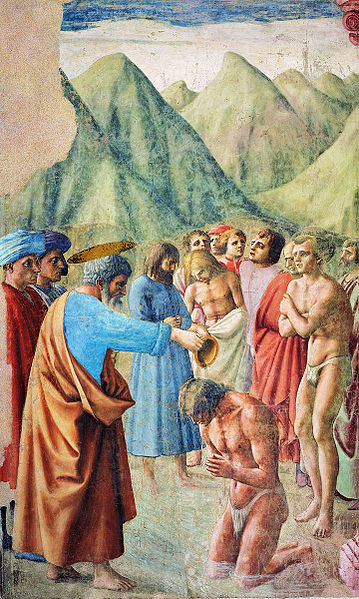
"Baptism of Neophytes" by Masaccio (15th century)
“Why can’t women be ordained in the Lutheran Church – Missouri Synod?” “How does evolution square with the biblical record of creation?” “We confess in the Apostles’ Creed that Christ ‘descended into hell.’ Where does it teach that in the Bible?” I receive questions such as these – as well as many others – about why Lutherans believe and teach what they believe in teach. So periodically, over the course of the next several weeks and months, I will be taking some time to answer some of the most common questions I regularly receive about Lutheran doctrine.
Today, we begin with a question that is perhaps the most ubiquitous of all: “What’s the deal with the Lutheran doctrine of baptism?” Before we dive into this doctrine, it is important to clarify two things. First, I believe the Lutheran doctrine of baptism is the Christian doctrine of baptism. That is, I believe that the Lutheran doctrine of baptism is what Scripture itself teaches. Second, I am fully aware that many sincere and godly Christians differ over the doctrine of baptism. As I discuss this doctrine, then, I do so in a spirit of humility, respecting and loving those with whom I disagree. I do not, however, discuss this doctrine with a spirit of relativism, believing that different teachings on baptism are equally true or that what we believe and teach about baptism makes no difference. Quite the contrary. If the doctrine of baptism matters to the authors of Scripture, it should matter to us. Therefore, we should consider carefully what they teach.
What is baptism?
Baptism is a divine ordinance, instituted by Christ Himself, whereby He makes disciples through water combined with God’s name. Jesus says, “Go and make disciples of all nations, baptizing them in the name of the Father and of the Son and of the Holy Spirit” (Matthew 28:19). The participle “baptizing” can be translated as a participle of means. Baptism, therefore, is a means by which disciples are made.
It is important to recognize that baptism is something God does for us and not something we do for God. This is why Paul says of baptism, “We were therefore buried with Christ through baptism into death in order that, just as Christ was raised from the dead through the glory of the Father, we too may live a new life” (Romans 6:4). Notice the passive voice of the verbs: “buried,” “raised.” These are divine passives, indicating that God is the One burying our old, sinful natures and raising us to new life in Christ. We are passive in the matter. This runs contrary to the teaching of some who describe baptism merely as an act of obedience while denying its divine power. Consider this quote from a large denomination’s confessional statement: “Baptism is an act of obedience symbolizing the believer’s faith in a crucified, buried, and risen Saviour, the believer’s death to sin, the burial of the old life, and the resurrection to walk in newness of life in Christ Jesus.”[1] Two things are especially notable about this statement. First, while obedience is emphasized, the blessings of baptism are not mentioned. Second, this statement references Romans 6:4, but relegates Paul’s language concerning burial and resurrection to that of symbolism, emphasizing the believer’s faith rather than God’s action. Paul, however, nowhere indicates that he is speaking symbolically in this verse. Rather, his language indicates that he has a lively confidence in an actual new life, offered by God through baptism.
Does baptism save?
Yes, baptism does save. Peter writes, “Baptism now saves you also – not the removal of dirt from the body but the pledge of a good conscience toward God. It saves you by the resurrection of Jesus Christ, who has gone into heaven and is at God’s right hand – with angels, authorities and powers in submission to Him” (1 Peter 3:21-22). Peter could not be clearer: Baptism saves you. However, it is important to note not only that baptism saves you, but how baptism saves you. It saves you “by the resurrection of Jesus Christ.” Without the resurrected Christ, baptism is emptied of its power and promise.
There are some who object to the teaching that baptism saves, saying, “Faith in Christ alone saves you!” They often quote Scripture passages such as Romans 10:9: “If you confess with your mouth, ‘Jesus is Lord,’ and believe in your heart that God raised him from the dead, you will be saved.” They then argue: “Paul says that faith in Christ saves you and nowhere mentions baptism in Romans 10:9. Therefore, faith in Christ, and not baptism, saves you.” This type of argument deeply disturbs me because it engages in what I call “Bible Verse Battleship.” In this sad game, people line up their favorite Bible verses to support their favorite pet positions and then, when shown Scriptural testimony which calls into question their position, rather than seeking to reconcile the verses and take into account the whole counsel of God’s Word, they simply declare, “Because my pet Bible verse is true, you must be incorrect! My Bible verse sunk your Bible verse!” We should never use Bible verses to “sink” other Bible verses. Rather, we should assume that all Scripture as speaks with one, harmonious, voice concerning the one, true Christian faith. Thus, when Peter says, “Baptism now saves you” (1 Peter 3:21), we ought to take his words as complimentary, and not contradictory, to what Paul says in Romans 10:9.
So then, how do we understand Romans 10:9 and 1 Peter 3:21 harmoniously? Like this. Baptism does not save simply because it’s baptism, but because it has the promise of Jesus’ presence attached to it (cf. Matthew 28:19-20). This is why baptism is regularly referred to as a “means of grace.” God works through simple things such as water in baptism, bread and wine in the Lord’s Supper, and words on a page in Holy Scripture to speak to, meet with, and provide gifts for His people. Martin Luther explains wonderfully: “Without God’s word the water [of baptism] is plain water and no baptism. But with the word of God it is a baptism, that is, a life-giving water, rich in grace, and a washing of the new birth in the Holy Spirit.”[2] Thus, to say that baptism saves you is simply to say that Jesus saves you because Jesus is doing His work in and through baptism!
Why do Lutherans baptize infants?
Lutherans do not baptize infants. Rather, we baptize people in accordance with Christ’s commands to baptize “all nations” (Matthew 28:19). The Bible teaches that all are born into sin and deserve God’s condemnation (cf. Psalm 51:5). Therefore, babies need the salvation Jesus gives in baptism just as much as adults do. The Bible nowhere prohibits baptizing babies. In fact, we are told specifically that the promise of baptism is indeed for children: “The promise [of baptism] is for you and your children and for all who are far off – for all whom the Lord our God will call” (Acts 2:39).
There are some who maintain that a profession of faith must precede baptism. And because a baby cannot profess his faith in Christ, he should not be baptized until he is old enough to make such a profession. In response to this objection, I would point out two things. First, I would question the assumption that a profession of faith is a necessary prerequisite of baptism. It often happens that that a person in Scripture confesses his faith before he is baptized, but common occurrence doesn’t always necessarily indicate a divine mandate. Just because the Bible offers a description of certain things and events (e.g., a person offering a profession of faith before baptism) does not necessarily mean that the Bible is mandating a universal prescription. Second, I would question the assumption that children cannot confess their faith. The Psalmist reminds us, “From the lips of children and infants You have ordained praise” (Psalm 8:2, cf. Matthew 21:16). Children can and do praise God, even if it is with broken grammar and babble. Finally, from a historical perspective, from the early days of the Christian Church, it was common practice to have parents or sponsors confess the Christian faith on behalf of their children. The Roman theologian Hippolytus writes this concerning baptism in AD 215: “Baptize first the children, and if they can speak for themselves let them do so. Otherwise, let their parents or other relatives speak for them.”[3] I have written more about infant baptism here: http://bit.ly/qHp97b.
Baptism is a joyous gift from God. For through it, God meets us with His gifts. Luther sums up the joy and promise of baptism nicely when he writes: “We see what a very splendid thing baptism is. It snatches us from the jaws of the devil, makes us God’s own, restrains and removes sin, and then daily strengthens the new man within us.”[4] Thus is the blessing and gift of baptism!
[1] “The Baptist Faith and Message,” VII.
[2] Luther’s Small Catechism, “Baptism,” 3.
[3] Hippolytus, Apostolic Tradition, 21.15.
[4] What Luther Says, Ewald M. Plass, ed. (St. Louis: Concordia Publishing House, 1959) 61.
ABC Extra – Tackling Temptation

"The Temptation of Christ" by Ary Scheffer (1854)
Whether or not you or a loved one has struggled with alcoholism, the Twelve Steps of Alcoholics Anonymous have become nearly ubiquitously helpful to millions who struggle with an addiction, habit, or hurt. What I find so interesting about the Twelve Steps is that Step One is essentially an explication of the Christian doctrine of human depravity: “We admitted we were powerless over alcohol – that our lives had become unmanageable.” Of course, one could insert a whole array of different sins in place of the word “alcohol.” “We admitted we were powerless over lust – that our lives had become unmanageable.” “We admitted we were powerless over greed – that our lives had become unmanageable.” “We admitted we were powerless over self-righteousness – that our lives had become unmanageable.”
This past weekend in worship and ABC, we talked about the trials of temptation. Satan is a “tempter,” the Bible reminds us (Matthew 4:3), and wants nothing more than to drag us into sin. And, just as with any other banal allurement or enticement, under our own power, we are helpless to resist Satan’s taunting temptations. As AA would remind us, “We admitted we were powerless over temptation – that our lives had become unmanageable.”
Sadly, human depravity in the face of sinful temptation is born out again and again in the Scriptures. When Cain is tempted to murder his brother Abel, God warns Cain, “If you do what is right, will you not be accepted? But if you do not do what is right, sin is crouching at your door; it desires to have you, but you must master it” (Genesis 4:7). But Cain does not master his sin. He falls to temptation and kills his brother, Abel. When Israel is led out of their slavery in Egypt and God ushers them into a place of prosperity, God warns the people: “When your herds and flocks grow large and your silver and gold increase and all you have is multiplied, then your heart will become proud and you will forget the LORD your God” (Deuteronomy 8:13-14). God’s warning against forgetting Him proves to be eerily prophetic: “The Israelites did evil in the eyes of the LORD; they forgot the LORD their God” (Judges 3:7). The allurements and enticements of this world are too overwhelming and overburdening for any human to face and defeat.
Augustine described powerlessness of humans against temptation and transgression using the Latin phrase, non posse non pecarre, meaning, we are “not able not to sin.” Blessedly, however, Jesus has the remedy for the dourness of our depravity. For He stands up under temptation on our behalf. In our text for this past weekend from Matthew 4:1-11, we read how Jesus takes His stand against the devil’s temptations not once, not twice, but three times. Jesus then takes this victory over temptation and gives it to us by means of His death on the cross. The preacher of Hebrews explains: “We do not have a high priest who is unable to sympathize with our weaknesses, but we have one who has been tempted in every way, just as we are – yet was without sin. Let us then approach the throne of grace with confidence, so that we may receive mercy and find grace to help us in our time of need” (Hebrews 4:15-16). Because Jesus stood up under temptation, we have the mercy and grace that we need to help us in our time of temptation. For without God’s mercy and grace, we are powerless to resist the allurements and enticements of this world.
So when you are tempted, look not to your own strength, will, or fortitude, but to the cross. For on the cross Christ encounters a final temptation from a crowd of jeerers: “Come down from the cross, if you are the Son of God” (Matthew 27:40)! Interestingly, this phrase – “If you are the Son of God – is the same phrase Satan uses to tempt Jesus in the desert in Matthew 4 (cf. Matthew 4:3, 6). But as with Satan, Christ resists this temptation too. He does not come down from the cross. Instead, He dies to achieve victory over sin. And so on that cross, our victory over temptation is secured. Praise be to God!
Want to learn more? Go to
www.ConcordiaLutheranChurch.com
and check out audio and video from Pastor Tucker’s
message or Pastor Zach’s ABC!
ABC Extra – Daunting Decisions
 This past weekend in worship and ABC, we kicked off a new series called “Unresolved” where we are addressing some of the biggest issues and struggles which are often left unresolved in people’s hearts and lives. This weekend, we asked the question, “What happens when you are unresolved as to which direction you should take or which decision you should make for your life? How do you receive direction from God?”
I have learned that, in general, God gives us direction in one of the three ways. First, there are some things on which God directs us, “Go!” These are things we ought to do and directions we ought to take. For instance, God instructs the prophet Jonah, “Go to the great city of Nineveh and preach against it, because its wickedness has come up before me” (Jonah 1:2). Jonah, however, disregards God’s commission and hops a ship to Tarshish, a city in the opposite direction of Nineveh. Understandably, God is not pleased with Jonah’s rebellion and sends a storm in judgment on Jonah and his sailing companions. In order to save themselves, the sailors throw Jonah overboard so that God will calm the crazy seas. When Jonah is cast overboard, God appoints a fish to swallow Jonah and spit him up, poetically enough, right on the banks of Nineveh! From Jonah, then, we learn that there is grave danger in not heeding God’s direction to “Go!” In theological parlance, we call a failure to “Go” a “sin of omission.” That is, when we know what we should do and where we should go, but we fail to do and go, we commit a sin of omission. We omit God’s direction and instruction from our lives.
Second, there are some things on which God directs us, “Whoa!” These are things we ought not to do and directions we ought not to take. For instance, the famous “Thou shalt nots” of many of the Ten Commandments are things to which God says, “No!” Should I sneak away with a lover and ruin my marriage? “Thou shalt not commit adultery” (Exodus 20:14). Should I tell a lie about someone else? “Thou shalt not bear false witness against your neighbor” (Exodus 20:16). Should I spend my time trying to coax others into giving me their things? “Thou shalt not covet” (Exodus 29:17). If we do not heed God’s commands and go where God says “Whoa,” in theological parlance, we call this a “sin of commission.” That is, we cross a boundary God has drawn and thus commit a sin. These sins too, like sins of omission, are gravely dangerous and offensive to God.
Finally, there are some things on which God directs us, “Grow!” These are some decisions that God leaves us to make. For instance, there are times that God will leave it up to us to choose a job, choose a place to live, or choose the stocks we invest our money in. God can give us clear guidance on these decisions, but He does not promise to. Therefore, sometimes He guides us in a specific direction concerning these issues and sometimes He does not. The times when He does not specifically guide us help us grow, for we learn to make wise, reasonable decisions for ourselves. The times when He does specifically guide us also help us grow, for they teach us to listen closely and carefully for God’s leading and prompting.
As I mentioned in ABC, it is with decisions like these – where God gives us no clear direction in His Word – that we do well to include three things in our decision making process. First, we must ask for God’s wisdom and guidance. Though this may sound obvious, far too many people do not do this! They do not even consider the possibility that God may indeed have an opinion on a life decision! Thus, learning simply to take your decisions – big and small – to God in prayer not only allows you to experience God’s guidance, it also strengthens your relationship with Him because you are speaking with Him about the significant and small things of your life on a daily basis. Second, we should wait expectantly and intentionally for God’s answer. So often, even when we do pray to God about a decision we must make or a challenge we must face, we do not wait for God’s answer. We simply continue charging ahead at full speed, expecting God to strike us like a lightning bolt out of the blue with His answer. But we must not only learn how to ask God for guidance, we must also learn how to listen. This means taking time in slowness and solitude, seeking God’s direction. Finally, we should counsel with other Christians. Just as God can lead and guide us, he can lead and guide others. Thus, the wisdom of other Christians is invaluable in helping us make wise decisions..
God can and does direct you. As the Psalmist prays, “Direct my footsteps according to Your word.” May his prayer be our prayer! And may God give you His guidance!
Want to learn more? Go to
www.ConcordiaLutheranChurch.com
and check out audio and video from Pastor Tucker’s
message or Pastor Zach’s ABC!
Reflections For A New Year
 As we begin a new year, it is useful to take a moment to reflect on our lives – where we are, where we have been, and where we are going. Reflecting is important not only for the realms of finances, family, or fitness, but also for the realm of faith. For above all, we must realize and recognize who we are in relationship to our Creator. To this end, the British theologian N.T. Wright has written a set of five questions every Christian must answer – or, better yet, simply remember the answer already given – in order to appropriately and insightfully take stock of his or her life. I relay these questions – and their answers – so that you may remember who you are in God’s sight.[1]
Who are we?
We must never forget that, as the apostle Paul writes, we are “in Christ” (1 Corinthians 15:22). This means our identity and purpose must always and only be founded and grounded not in the things, titles, or accolades of this world, but in the cross of our crucified Savior. This is certainly where the apostle’s identity is found: “May I never boast except in the cross of our Lord Jesus Christ” (Galatians 6:14). If we find our identities in anyone or anything else other than Christ and His cross, we are called to repent and turn back to Him.
Where are we?
N.T. Wright explains: We are “in the good creation of the good God.” Sometimes we can forget, especially when life becomes dark and difficult, that when God created the world, He created it “good” (Genesis 1:25). Yes, not all is right with creation. Yes, there is pain, suffering, and tragedy – none of which were part of God’s dream and design. But try as it might, evil cannot utterly destroy the goodness of God’s creation. Indeed, God promises to restore the complete goodness of His creation on the Last Day: “The creation itself will be liberated from its bondage to decay and brought into the glorious freedom of the children of God” (Romans 8:21). For all of its brokenness, we are still in a good place. Thus, we ought to celebrate and appreciate the creation in which God has given us to live.
What’s wrong?
In a word, “sin.” Indeed, this is why God’s good world appears so marred and messed up. And sin is what is wrong not only with our world at large, but with each of us individually and personally. Each of us is born into sin. Because of Adam and Eve, the effects of sin plague us all. This is called “original sin.” Each of us also commit sin. We transgress God’s laws and do not do what we are commanded to do. This is called “actual sin.” In a sense then, we are the problem. We are the ones who make God’s good world a mess through our injustice and iniquity.
What’s the solution?
In a word, “Jesus.” Jesus is God’s remedy to sin and redemption from sin. The apostle Peter explains: “Christ died for sins once for all, the righteous for the unrighteous, to bring you to God” (1 Peter 3:18). It is important to note that not only is Jesus God’s solution to sin, Jesus is God’s only solution to sin: “Salvation is found in no one else, for there is no other name under heaven given to men by which we must be saved” (Acts 4:12). This means that all other attempts to deal with sin – be they moralistic or legalistic or liberalistic or relativistic – will ultimately fail. If Christ is not your Forgiver and Redeemer, your sin has not been solved. Period.
What time is it?
In the Scriptural view, time is not marked by the days on a calendar, but by the acts of our God. In other words, what matters about the new year is not that we have transitioned from 2011 to 2012, but what God has done for us in the past and will continue to do for us into the future. N.T. Wright explains cogently the time in which we live: “We live between resurrection and resurrection, that of Jesus and that of ourselves; between the victory over death at Easter and the final victory when Jesus ‘appears’ again.” This is finally what makes 2012 special. For we are another year closer to the coming of Christ and the salvation of our souls. And that sure and certain hope makes this year a year worth celebrating!
[1] The questions and quotes in this blog can be found in N.T. Wright, The Resurrection of the Son of God (Minneapolis: Fortress Press, 2003) 275.
Christ was there. Christ is here.
 A couple of weeks ago, I was having lunch with a friend and he shared with me a dark time he had gone through years ago. He was in the midst of a spiritual crisis, and he decided to move overseas and explore the world. Unfortunately, his move away from home only precipitated his fall. He fell in with the wrong crowd, he did the wrong things, and, one night, he found himself at a point of despair. Walking alone along a dark street, he cried out, “Jesus, if You’re there, I really need You to show up right now.” After making his way to a phone booth, he fumbled through the phone book inside, deposited his change, and called the first church he could find. The pastor of the church answered. The next day, the two of them had lunch. And thus began my friend’s re-awakening to the glory of God and the grace of Christ. My friend felt all alone on that dark night. But he wasn’t. Christ was there. In that phone booth.
One of the texts that has long been compelling to me is 1 Corinthians 10:
For I do not want you to be ignorant of the fact, brothers, that our forefathers were all under the cloud and that they all passed through the sea. They were all baptized into Moses in the cloud and in the sea. They all ate the same spiritual food and drank the same spiritual drink; for they drank from the spiritual rock that accompanied them, and that rock was Christ. (1 Corinthians 10:1-4)
Paul is here recounting the history of Israel during the Exodus. And he uses Israel’s history to warn the Corinthians against the dangers of unrepentance:
Now these things occurred as examples to keep us from setting our hearts on evil things as they did. Do not be idolaters, as some of them were; as it is written: “The people sat down to eat and drink and got up to indulge in pagan revelry.” We should not commit sexual immorality, as some of them did – and in one day twenty-three thousand of them died. We should not test the Lord, as some of them did – and were killed by snakes. And do not grumble, as some of them did – and were killed by the destroying angel. (1 Corinthians 10:6-10)
In the midst of the unrepentance, evil, and rebellion of the Israelites, Paul says, Christ was there. In that rock. The same rock which poured forth water in the wilderness for the Israelites to drink (Exodus 17:1-7). What a strange place for Christ to be! And yet, Christ was there.
The other day, I was reading an article by a prominent evangelical theologian, who was bemoaning the dangers of inserting Christ recklessly and relentlessly into every page and phrase of Scripture. He wrote, “Christ cannot be found under every rock.”[1] I would agree – in part. It is dangerous to present Christ in ways that the biblical text does not mean present Him. For instance, the Church Father Origen, famous for his excessive allegorizing of the Bible, reads Exodus 17:9 – “Moses said to Joshua, ‘Choose some of our men and go out to fight’” – as “Moses said to Jesus,” since the Hebrew name for Joshua, Yeshua, comes to us in English as “Jesus.” Origen comments:
Up to this point the Scripture has never anywhere mentioned the blessed name of Jesus. Here for the first time the brightness of the name shines forth. For the first time Moses makes an appeal to Jesus and says to him, “Choose men.” Moses calls on Jesus; the Law asks Christ to choose strong men from among the people. Moses cannot choose; it is Jesus alone who can choose strong men; He has said, “You did not choose Me, but I chose you.”[2]
Origen’s words here certainly strain the bounds of responsible biblical exegesis. To so immediately equate Joshua with Jesus presents a whole host of problems, not the least of which is that Joshua was flawed and fallen (e.g., Joshua 9:1-14), something which Jesus was not. Thus, we must be careful in how we interpret biblical texts. However, there is a sense in which, contrary to what this scholar says, we can indeed find Jesus under every rock, for Jesus is the center, focus, and locus of the Scriptures. Indeed, in 1 Corinthians 10:4, we don’t just find Christ under a rock, He is the rock! Indeed, this is the very doctrine of the incarnation: that Christ shows up in the strangest of ways and places – even under rocks. Christ was there. In the phone booth of my friend. Christ was there. In that rock. Christ was there. In the manger. Christ was there. On the cross. And Christ is here. In the pages of Scripture. Christ is here. In the waters of baptism. Christ is here. In the bread and wine of Communion. Christ is here. In our hearts.
Christ was there. Christ is here. This is the mystery and glory of the incarnation – and of Christmas.
Want to learn more? Go to
www.ConcordiaLutheranChurch.com
and check out audio and video from Pastor Tucker’s
message!
[1] Ben Witherington III, “Towards a Biblical Theology – Part Two” (11.21.11).
[2] Origen in Sidney Greidanus, Preaching Christ from the Old Testament: A Contemporary Hermeneutical Method (Grand Rapids: William B. Eerdmans, 1999) 86.
ABC Extra – How Firm A Foundation
 Some of my fondest memories as a child are of our family trips to the beach. The sun, the white sand, the clear blue water. Wait, check that. I grew up in Oregon. It was always cloudy, the sand was rocky, and the water was murky. But I loved the beach nonetheless. And even in the rocky sand, I loved to build sandcastles. I would always make sure I had my pail and spade in tow, ready to create an impenetrable fortress right there at the base of beach. Except that, inevitably, my fortress would always be penetrated – and washed away – by the water. For sand castles, no matter how well you build them, never last. They always succumb to the relentless pounding of the surf.
This past weekend in worship and ABC, we were introduced to one of history’s most infamous rulers – Herod the Great. Known for his ruthlessness and megalomania, Herod would stop at nothing to protect and extend his reign and rule as “king of the Jews,” a title bestowed on him by the Roman Senate in 40 BC. He was married to no fewer than ten women over his life, most of whom he married out of political expediency rather than out of love. He banished his first wife, Doris, because he wanted to marry his second wife, Miriamne. He eventually had her executed after they got into a fight. He also killed his mother-in-law, brother-in-law, as well as three of his sons under suspicion that they were trying to usurp his power. Herod was a tyrant indeed.
But for all of Herod’s tyranny, he was also a monarch of great skill and vision. Most notably, Herod was a master builder. He built a whole city called the Caesarea Maritima, situated on the banks of the Mediterranean Sea, which had a breathtaking manmade harbor spanning more than forty acres. He built himself a palace which included baths, a pool, a colonnaded garden, and a 600 foot long terrace. He named it, modestly, the Herodium. But most famously, Herod rebuilt the temple in Jerusalem bigger and better than ever. He plastered it in marble and gold. It ascended higher than a fifteen-story building. It was truly a monument to Herod’s skill as an artisan. Herod began his work on the temple in 19 BC. It was not completely finished until 68 years after his death. If Herod died, as the German theologian Emil Schürer asserted, in 1 BC, that means the temple was finally finished in AD 67. In AD 70, the Roman general Titus laid siege to the city of Jerusalem and destroyed its temple. Herod’s completed temple stood for only three years.
Like my sandcastles on the beach, Herod’s building projects weren’t as enduring as he thought they would be. His crowing achievement, the Jerusalem temple, was destroyed only a few years after it was completed. His architecture succumbed to the relentless march of human history.
Jesus once told a story about the fate of building projects:
Everyone who hears these words of Mine and puts them into practice is like a wise man who built his house on the rock. The rain came down, the streams rose, and the winds blew and beat against that house; yet it did not fall, because it had its foundation on the rock. But everyone who hears these words of Mine and does not put them into practice is like a foolish man who built his house on sand. The rain came down, the streams rose, and the winds blew and beat against that house, and it fell with a great crash. (Matthew 7:24-27)
Jesus warns that man’s building projects can and do fall. The only way to make them last is to build them upon a firm foundation – and that firm foundation is Christ. Herod never learned this. Indeed, we learn in Matthew 2:16 that he wanted to kill Christ, not build his life and legacy on Him.
What are you building? And more importantly, on whom are you building? The things you build to your own fame will inevitably fall. But what is built on the rock of Christ and to His glory will endure. Do you build on the rock of Christ at your job, with your family, and throughout your life? Or, like Herod, are you only building monuments to your own greatness, which are really no sturdier than sandcastles? As the apostle Paul warns, “If any man builds…his work will be shown for what it is, because the Day will bring it to light. It will be revealed with fire, and the fire will test the quality of each man’s work” (1 Corinthians 3:12-13). May our work not be found wanting – not because of our skill, but because of Christ’s foundation.
Want to learn more? Go to
www.ConcordiaLutheranChurch.com
and check out audio and video from Pastor Tucker’s
message or Pastor Zach’s ABC!


 Pastor Zach's Blog