Posts tagged ‘Christianity’
Ghana Eye Clinic – Day 1
Our first day in Accra, Ghana at the eye clinic was terrific! We saw 315 people who needed vision care and gave out 217 pairs of glasses. We also had an optometrist onsite to see people who had a whole host of eye care needs. Most importantly, we shared the gospel with everyone who came through our clinic. Through the glasses, we helped people see God’s world. With the gospel, we helped people see God’s Son!
Check out these pictures from our first day.

The morning was beautiful!

Pastor Bill shares the gospel with people as they first come to the clinic.

The kids from the day school at St. Paul Lutheran in Accra sing us a song.

One of our sweet kids receives a sweet from Julie!

Many people came to receive glasses and hear the gospel!

Two great Concordians, Michael and Arnold, are stylin’ in the glasses we’re sharing with the folks of Accra.
I’ll be posting more pictures soon, so keep checking back. Please continue to pray for our team!
The Court of Public Opinion

Credit: rmsbunkerblog.wordpress.com
We are a nation of polls. We poll public opinion on just about everything imaginable – from how Congress is doing their jobs to how the president is doing his job to how many people support gay marriage to how many people support tougher gun control laws to how many people support the legalization of marijuana.
It’s this last bit of polling data that formed the focus of an L.A. Times article by Robin Abcarian, which chronicled the shifting tide of public opinion on our culture’s most famous controlled substance:
The Gallup organization released a poll showing that for the first time in 44 years, a wide margin of Americans – 58% to 39% – believe marijuana should be legalized.
Less than a year ago, only 48% said pot should be legal. That is an astonishing leap of 10 points in the last 11 months alone.[1]
The article explains that Colorado and Washington have led the curve by legalizing recreational marijuana use and their progressive policies, in turn, are moving the country forward: “Like gay marriage, pot is here to stay. And just like gay marriage, it seems like the rest of the country is finally starting to catch on. Or light up.”
Personally, I find it ironic and more than a little medically disingenuous that at the same time cigarettes are increasingly controlled and decried because of the health risks associated with inhaling nicotine, tar, and smoke, using marijuana, which impairs motor abilities and adversely affects cardiopulmonary health, is increasingly accepted.
Regardless of the medical and, for the matter, moral arguments against the legalization of marijuana, I nevertheless must agree with Abcarian’s conclusion: “Like gay marriage, pot is here to stay.”
Why do I concur with Abcarian’s conclusion? Because we live in a society obsessed with and ruled by public opinion. Our working presupposition is that if the majority of people approve of something, that something ought to be implemented societally. And if the majority of people approve of something, that something ought to be considered good and right. Public opinion, then, shapes far more than our federal policy; it guides our society’s morality.
But there is a problem with public opinion. Because the people who proffer it are sinful, public opinion can be sinful. One need look no farther than Pontius Pilate’s opinion poll: “What shall I do, then, with Jesus who is called the Messiah” (Matthew 27:22)? I’m not sure the public was right or righteous when they gave their opinion on Jesus’ sentence.
The apostle Paul reminds us of the stark sinfulness that can sometimes mark public opinion when he writes:
[People] have become filled with every kind of wickedness, evil, greed and depravity. They are full of envy, murder, strife, deceit and malice. They are gossips, slanderers, God-haters, insolent, arrogant and boastful; they invent ways of doing evil; they disobey their parents; they are senseless, faithless, heartless, ruthless. Although they know God’s righteous decree that those who do such things deserve death, they not only continue to do these very things but also approve of those who practice them. (Romans 1:29-32)
According to Paul, the public delights in sanctioning sin. Far from being good and moral, the public is sinful and wicked. And lest we think we are somehow immune to the depravity of the general public, Paul reminds us that we too play a role in society’s degeneracy:
You, therefore, have no excuse, you who pass judgment on someone else, for at whatever point you judge the other, you are condemning yourself, because you who pass judgment do the same things. (Romans 2:1)
It’s not just that public opinion “out there” can be wrong, it’s that our own opinions can be wrong because our opinions are stained and maimed by sin.
In a culture where public opinion shapes nearly everything, Christians have a countercultural message: what is moral and best is not always what is popular and promoted. Instead, what is moral and what is best is that which is revealed by God.
So what does this mean for the debate over legalizing marijuana? It means that a debate such as this one cannot be settled by a poll. Instead, we, as Christians, need to think about this issue in light of God’s Word. Perhaps what Paul says in 1 Corinthians 6:20 is a good place to begin: “Therefore honor God with your body.”
[1] Robin Abcarian, “Like gay marriage, medical marijuana is here to stay,” L.A. Times (10.23.2013).
Is Christianity Dumb?
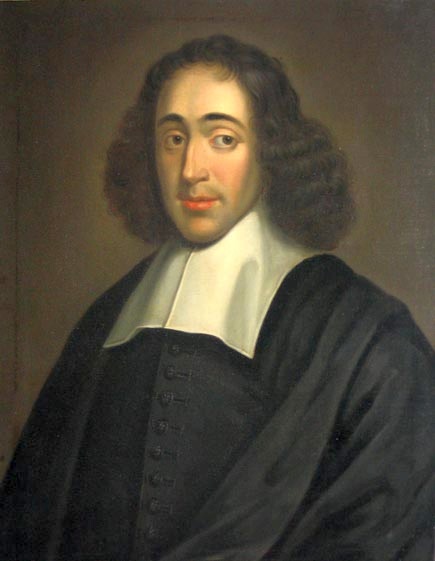
Benedict Spinoza
Credit: Wikipedia
It’s really the Enlightenment’s fault. Ever since René Descartes decided the best catalyst for rational inquiry was skepticism, the skepticism supposedly necessary to reason and the faith integral to religion have been regularly presented as at odds with each other, or, at the very least, best quarantined from each other. Consider this from Descartes devotee and Old Testament critic, Benedict Spinoza:
Those who do not know how to distinguish philosophy from theology dispute as to whether Scripture should be subject to reason or whether, on the contrary, reason should be the servant of Scripture: that is to say, whether the sense of Scripture should be accommodated to reason or whether reason should be subordinated to Scripture … It is obvious that both are absolutely wrong. For whichever position we adopt, we would have to distort either reason or Scripture since we have demonstrated that the Bible does not teach philosophical matters but only piety, and everything in Scripture is adapted to the understanding and preconceptions of the common people.[1]
Spinoza passionately contends that reason and religion must be kept in two separate spheres. If they are not, he warns, Scripture will distort reason and reason will distort Scripture. But key to understanding Spinoza’s argument for the separation of Scripture and reason is why these two entities distort each other. “Scripture,” Spinoza explains, “is adapted to the understanding and preconceptions of the common people.” Spinoza assumes that the biblical characters of antiquity did not have the intellectual faculties necessary to imbibe the great rational truths of the Enlightenment. Spinoza elsewhere explains:
God adapted His revelations to the understanding and opinions of the prophets [and other biblical authors as well], and that the prophets could be ignorant of matters of purely philosophical reason that are not concerned with charity and how to live; and indeed they really were ignorant in this respect and held contradictory views. Hence knowledge about natural and spiritual matters is by no means to be sought from them.[2]
Isn’t that nice. God would have revealed matters of rational, philosophical reason to the biblical writers, but because they were not smart enough to understand them, God had to stick with giving them moral platitudes about “charity and how to live.” Thankfully, Spinoza does understand the truths of rational philosophy and can explain them to us full-throatedly.
Unfortunately, Spinoza’s parings of reason with intelligence and religion with ignorance are still assumed in and normative to the thinking of our day. Consider this from the Huffington Post:
Are religious people less intelligent than atheists?
That’s the provocative conclusion of a new review of 63 studies of intelligence and religion that span the past century. The meta-analysis showed that in 53 of the studies, conducted between 1928 to 2012, there was an inverse relation between religiosity – having religious beliefs, or performing religious rituals – and intelligence. That is, on average, non-believers scored higher than religious people on intelligence tests.
What might explain the effect?
Scientists behind studies included in the review most often suggested that “religious beliefs are irrational, not anchored in science, not testable and, therefore, unappealing to intelligent people who ‘know better.’”[3]
Now, the rules of rational and, for that matter, statistical inquiry remind us that correlation does not equal causation. So, to surmise that religious beliefs decrease IQ from a study that happens to show some people with religious beliefs have lower IQ’s than those without religious beliefs is suspect at best. Indeed, Jordan Silberman, a co-author of the study, admitted as much to the Huffington Post:
I’m sure there are intelligent religious people and unintelligent atheists out there … The findings pertain to the average intelligence of religious and non-religious people, but they don’t necessarily apply to any single person. Knowing that a person is religious would not lead me to bet any money on whether or not the person is intelligent.
Silberman concedes that there are many anomalies that counter his correlation between religious belief and lower IQ’s, which speaks forcefully against any kind of causation. Thus, this study gives us no real insight into to whether or not religion and rationality are truly at odds with each other.
So why do I bring all of this up? Because, regardless of whether or not it is true, firmly ingrained into our society’s zeitgeist is the narrative that religion and reason are irreconcilable. I, however, believe this to be false. Christians can make full use of their rational faculties without having to sell their faith to the strictures of a seventeenth century movement and its incorrigible assumptions concerning the incompatibility of reason and religion. Regardless of any assumptions bequeathed to us by the Enlightenment, we know that we have far more than just reason or just religion, “we have the mind of Christ” (1 Corinthians 2:16). And His mind bridges both reason and religion. After all, His command created both reason and religion.
[1] Benedict Spinoza, Theological-Political Treatise, Michael Silverthorne & Jonathan Israel, trans. (Cambridge: Cambridge University Press, 2007), 186.
[2] Spinoza, Theological-Political Treatise, 40.
[3] Macrina Cooper-White, “Religious People Branded As Less Intelligent Than Atheists In Provocative New Study,” The Huffington Post (8.14.2013).
You Don’t Want To Be Number One

“Moses with the Tablets of the Law” by Rembrandt, 1659
Credit: Wikipedia
Idolatry is rampant in our society. And this is no surprise. After all, people have loved to worship, serve, and trust in gods of their own making for millennia now. From money to sex to power to education to an obsession with whatever rights we think we’re supposed to have, we have no shortage of gods on hand and in our hearts. And idolatry begins when we are young.
I remember a chapel service I conducted for a childcare center at the church I used to serve. I was talking to the kids about the First Commandment, which I paraphrased like this: “God is number one.” It was with this paraphrase that I heard a little two year old voice pipe up from the back of the room: “No!” the voice protested, “I’m number one!” I was taken aback. So I tried to clarify: “You are special and important,” I said, “But God is number one. He’s number one over everything.” The voice, however, wasn’t buying it. “No! I’m number one!” it fired back.
By the end of my chapel message, it was almost comical. Whenever I said, “God is number one,” this little voice would respond, “No! I’m number one!” It seems the idolatrous desire to take God’s place is ingrained in us from the earliest of years.
Martin Luther comments on the First Commandment:
Now this is the work of the First Commandment, which enjoins, “Thou shalt have no other gods.” This means, “Since I alone am God, thou shalt place all thy confidence, trust, and faith in Me alone and in no one else.”[1]
I love how Luther describes the spirit of the First Commandment not in terms of obedience, but in terms of faith. In the First Commandment, Luther explains, God invites us to trust in Him rather than in the idols we make for ourselves. Why? Because the idols we make for ourselves take from us, hurt us, and condemn us. The true God, however, gives to us, blesses us, and saves us. Idols pain us. The true God comforts us.
The pain of idolatry becomes especially acute when the idols we make for ourselves happen to be ourselves. When we are our own gods, we are inevitably left disparaging and hating ourselves, for we fail ourselves and find that we are not the kinds of gods we need ourselves to be.
The First Commandment, then, is not just a dictate, but a promise – a promise that we do not have to worry about running everything as number one gods. The real God already has that number one spot – and all the responsibility and peril that comes with it – covered. So don’t just obey the First Commandment, have faith in the One who issues it. For it is only by faith that this commandment is kept.
[1] Martin Luther, Luther’s Works, vol. 44, J. J. Pelikan, H. C. Oswald & H. T. Lehmann, eds. (Philadelphia: Fortress Press, 1966), 30.
I Don’t Want To Grow Up
 It used to be just a fanciful myth. Now, it’s a psychological reality. When the Spanish conquistador Juan Ponce de León came to believe some waters at Bimini, the westernmost islands of the Bahamas, could reverse aging and restore youthfulness, he set out on an expedition to find what we have come to know as the Fountain of Youth.
These days, we don’t need a fountain to enjoy perpetual youth, just a psychological pronouncement. An article published in BBC News chronicles the shift in the way psychologists are viewing youthful adolescence. Sarah Helps, a clinical psychologist, explains:
We used to think that the brain was fully developed by very early teenagerhood and we now realise that the brain doesn’t stop developing until mid-20s or even early 30s. There’s a lot more information and evidence to suggest that actually brain development in various forms goes on throughout the life span.[1]
It is with this research in mind that child psychologists have now identified three stages of adolescence: early adolescence from 12-14 years, middle adolescence from 15-17 years, and late adolescence after 18 years. Notice there is no upper limit on late adolescence. Adolescence, it seems, can now extend into an indeterminable future. We can be forever young. Bob Dylan would be ecstatic.
This is quite a shift from the beginning of the twentieth century when, according to columnist Diana West, “Children in their teen years aspired to adulthood; significantly, they didn’t aspire to adolescence.”[2] It used to be children wanted to leave adolescence as quickly as they could so they could enjoy the promising perks of adulthood. Now, more and more grown-ups are eschewing adulthood, with all of its responsibilities, for the nostalgic perks of childhood.
I am not going to argue against scientific evidence that suggests the human brain continues to develop into the late 20s and 30s. This is, I am certain, true. But this does not mean that, even while brains are developing, these “late adolescents” are somehow incapable of living – or should not be living – as reasonably developed adults. Indeed, in any area of life, challenge is necessary for development. If one wants to develop physical strength, he must endure challenging workouts. If one wants to increase intellectual acumen, she must challenge herself with reading, researching, and thinking. If one wants to develop in maturity, he must challenge himself to live as an independent, responsible adult rather than as a dependent, carefree child.
Perhaps it is Gary Cross, Distinguished Professor of Modern History at Penn State University, who states the problem with the increasingly delayed transition into adulthood most succinctly when he writes of young men who refuse to leave the thrills of adolescence: “The culture of the boy-men today is less a life stage than a lifestyle, less a transition from childhood to adulthood than a choice to live like a teen ‘forever.’”[3] Brain development may indeed be a product of psychological biology. Maturity and immaturity, however, are consequences of moral volition.
Choose wisely.
[1] Lucy Wallis, “Is 25 the new cut-off point for adulthood?” BBC News Magazine (9.23.2013).
[2] Diana West, The Death of the Grown-Up: How America’s Arrested Development Is Bringing Down Western Civilization (New York: St. Martin’s Press, 2007), 1.
[3] Gary Cross, Men to Boys: The Making of Modern Immaturity (New York: Columbia University Press, 2008), 5.
When Marriage Isn’t What You Expect
 From the pages of the New York Times comes this startling statistic:
A half-century ago, only 2.8 percent of Americans older than 50 were divorced. By 2000, 11.8 percent were. In 2011, according to the Census Bureau’s American Community Survey, 15.4 percent were divorced and another 2.1 percent were separated. Some 13.5 percent were widowed.[1]
It turns out that for the first time in American history, more people over 50 are divorced than widowed. Sam Roberts, the deliverer of this sobering statistic, puts the situation curtly: “So much for ‘till death do us part.’”
Unsurprisingly, the reasons more and more couples are divorcing after they pass into their golden years are manifold and varied, but Stephanie Coontz’s analysis in this article of one of the reasons for the increasing divorce rate is especially insightful:
It’s still true that in general the longer you are married, the lower your chance of divorce, but it’s sure no guarantee anymore … Staying together until death do us part is a bigger challenge than it used to be because we expect so much more of marriage than we did in the past, and we have so many more options when a marriage doesn’t live up to those expectations.
Coontz’s analysis is sadly brilliant because it not only identifies a reason for marital breakdown – that people’s expectations from marriage are not being met – it also offers insight into what many believe about marital makeup. People increasingly view marriage as a commodity to be consumed rather than a commitment to be kept. This is why if the commodity of marriage does not live up to whatever arbitrary standards a particular spouse sets for the relationship, that spouse is willing to search elsewhere for a commodity that better meets their expectations.
Certainly there are – and should be – expectations for marriage. The Bible itself lays out certain expectations, including faithfulness (cf. Matthew 19:4-9) and gentleness (cf. Colossians 3:19). But a crassly consumer oriented view of marriage rooted in arbitrarily prescribed criteria is destined for failure. One person cannot meet the wants – or, for that matter, even the needs – of another person all the time. It is for these times, when disappointment with your spouse sets in, that commitment is needed. It is for these times that God’s wisdom on marriage is necessary: “A man shall leave his father and his mother and hold fast to his wife, and they shall become one flesh” (Genesis 2:24). Marriage means holding fast to your spouse in spite of disappointments, frustrations, and hurts along the way. This is what makes a marriage work. This is what makes a marriage last.
Your spouse will not always meet all your wants and needs. But your spouse can be devoted to you in love – even when you’re not all that fulfilling to be around. And you can be devoted to your spouse in love – even when they’re not all that fulfilling to be around. And such devotion can, in and of itself, be fulfilling.
[1] Sam Roberts, “Divorce After 50 Grows More Common,” New York Times (9.20.2013).
Syria’s Setting the Stage for…the End of the World?

Credit: The New York Times
I had to chuckle. While I was doing research for this blog, an email hit my inbox with an ominous subject line: “History’s final chapter will be written in Jerusalem.” It was a promotion for the latest Christian apocalyptic thriller, matrixing today’s headlines with cherry picked Scripture verses which come together to portend disaster. This email was especially funny to me because I was researching precisely these kinds of doomsday declarations for this post.
These days, of course, doomsday’s ground zero is Syria. And for those who have a penchant for taking ancient prophecies and sensationalizing them in light of current crises, Isaiah 17:1 has taken center stage: “See, Damascus will no longer be a city but will become a heap of ruins.” Joel Rosenberg, author of a new book, Damascus Countdown, is leading the charge of Syrian doom and gloom, writing on his blog, “No, we don’t know that these prophecies will come to pass soon, or even in our lifetime. But yes, it is possible that Isaiah 17 … could come to pass in our lifetime.”[1] Predictably, news outlets are picking up on his new take on this old passage. Everyone from the Huffington Post to USA Today to Fox News to Mother Jones to The Blaze has run stories on Isaiah’s prophecy and its relationship to the current Syrian imbroglio.
For the record, let me say that I highly doubt the prophecy of Isaiah 17 will come to pass in our lifetimes. How can I say this? Because it already has come to pass…over 2,700 years ago. Isaiah originally proffered this prophecy during the Syro-Ephraimite alliance of 735-732 BC. This is why the fates of the Syrians and Ephraimites are linked in verse 3: “The fortified city will disappear from Ephraim, and royal power from Damascus.” Ephraim – that is, northern Israel – made a treaty with Syria in a last ditch effort to defend herself against an immanent attack from Assyria, one of the most menacing superpowers of the eighth century BC. This is why we read in Isaiah 7:2: “Syria is in league with Ephraim.” The alliance did not work. In 732 BC, the Assyrians, led by Shalmaneser, sacked the Syrians, destroying the alliance between Ephraim and Syria. Ten years later, the Assyrians came for Ephraim, and northern Israel was no more. Yet, even after this devastating defeat, God made a promise that His people would endure: “Some gleanings will remain, as when an olive tree is beaten, leaving two or three olives on the topmost branches, four or five on the fruitful boughs” (Isaiah 17:6). Isaiah uses an agricultural metaphor to describe how God’s people, though defeated by the Assyrians, will never be destroyed. There will always be a remnant faithful to Him.
To turn this ancient prophecy, fulfilled some twenty-seven centuries ago, into a modern day harbinger of hopelessness is to do violence to it. Indeed, I am frustrated that many journalists reporting on this story and the debate between those who think this prophecy has already been fulfilled and those who think it is yet to be fulfilled are casting this debate as one between theologians who look at this text literalistically and others who do not. Take, for instance, this line from Time magazine: “Nearly all Biblical scholars … argue that such a literalist interpretation of the text is highly problematic.”[2] The debate over this text is not between those who read this text in a literalistic manner as a prophecy of things to come and those who read it as already being fulfilled in ancient times. Being “literal” or “non-literal” has nothing to do with this debate. Rather, this is a debate over how to handle this biblical text responsibly, carefully looking at its context and seeking to understand this text in the manner Isaiah himself would have understood it. Thus, a responsible reading of this text would note that this oracle against Syria is just one of a series of oracles against places like Philistia, Moab, and Cush, all of which no longer exist. In context, then, it is clear that Isaiah is speaking not of modern day Syrian warfare, but of an attack against the Syria of his day along with attacks against other nations of his day, leading to their demise.
Ultimately, what is happening in Syria is the fulfillment of biblical prophecy, but not of the one in Isaiah 17. Instead, words from Jesus come to mind: “You will hear of wars and rumors of wars, but see to it that you are not alarmed. Such things must happen, but the end is still to come.” (Matthew 24:6). Jesus tells us there will be war. And not just war, but wars. The current conflict in Syria is just one such example. Jesus also tells us that these wars do not mean the end of the world has arrived. Conflicts are indicative that the end is indeed coming, but they are not determinative that the end has come. Finally, and perhaps most importantly, Jesus reminds us that we should not be alarmed at these troubled times. Indeed, instead of fear, we should feel compassion toward those whose lives have been turned upside down by this terrible conflict. The fear mongering that passes for theology in many best selling books is in direct contradiction to Jesus’ admonishment to be not afraid. After all, what do we have to fear? Jesus has the end of the world – and everything leading up to it – taken care of.
We can trust in Him.
[1] Joel C. Rosenberg, “Pastors: here are 24 pages of study notes on Isaiah 17, Jeremiah 49 & the future of Damascus. Please feel free to share with others,” flashtrafficblog.wordpress.com (9.11.2013).
[2] Elizabeth Dias, “Some Evangelicals See Biblical Prophecy In Syrian Crises,” Time (8.29.2013).
The Endurance of Ethics

Judge G. Todd Baugh
Credit: cnn.com
I’m not quite sure if she really believes what she wrote, or if she is just trying to make a name for herself.
When a Montana high school teacher was found guilty of raping one of his 14-year-old students who, two years later, committed suicide, the judge in the case shocked the victim’s family and all those following the trial when he handed down a sentence of a paltry thirty days in prison. The outrage was quick and hot. “I don’t believe in justice anymore,” the victim’s mother said in a statement. “She wasn’t even old enough to get a driver’s license.” A protest organizer against the judge’s verdict noted, “Judges should be protecting our most vulnerable children … not enabling rapists by placing blame on victims.”[1] It seemed the public disdain for what had transpired – both in the relationship between the teacher and his student and in the sentence that was passed down – was universal.
Except that it wasn’t.
Leave it to Betsy Karasik of the Washington Post to outline – and incite outrage with – an alternative view:
As protesters decry the leniency of Rambold’s sentence – he will spend 30 days in prison after pleading guilty to raping 14-year-old Cherice Morales, who committed suicide at age 16 – I find myself troubled for the opposite reason. I don’t believe that all sexual conduct between underage students and teachers should necessarily be classified as rape, and I believe that absent extenuating circumstances, consensual sexual activity between teachers and students should not be criminalized … There is a vast and extremely nuanced continuum of sexual interactions involving teachers and students, ranging from flirtation to mutual lust to harassment to predatory behavior. Painting all of these behaviors with the same brush sends a damaging message to students and sets the stage for hypocrisy and distortion of the truth.[2]
As I noted at the beginning of this post, I’m not quite sure if Karasik really believes what she wrote, or if she is just trying to make a name for herself. If it’s the latter, she has certainly succeeded. Her words have caused a big stir, as a perusal of the Washington Post’s comments section will readily reveal. Words like “disgusting,” “sick,” and “ridiculous” pepper the comments section of her article.
So why all the outrage over a woman who argues for the legality of teacher-student sexual relations? The answer is traditional ethics. And, more specifically, traditional sexual ethics. In a culture that sanctions all sorts of sexual shenanigans, our ethical compass on statutory rape stands strong. And this is good – not only for the victims of these crimes, but for society at large. Though I do not always agree with the way in which some express outrage at immorality, it is nevertheless important to note how our society’s occasional bursts of ethical outrage indicate that, despite our culture’s best attempts at relativizing and minimizing all sorts of ethical standards, traditional ethical standards just won’t die. They are here to stay.
The nihilist philosopher Friedrich Nietzsche famously sought to replace traditional ethical standards with one ethical standard – that of power. “What is good?” Nietzsche asked, “All that heightens the feeling of power in man, the will to power, power itself. What is bad? All that is born of weakness. What is happiness? The feeling that power is growing, that resistance is overcome.”[3] For Nietzsche, traditional notions of good and evil, right and wrong, needed to be discarded in favor of whatever gained a person the most power. This is why Nietzsche so vehemently railed against Christianity. He regarded Christianity as the font and foundation of a fundamentally broken ethic that favored servility over supremacy. Nietzsche wrote of Christianity:
I regard Christianity as the most fatal and seductive lie that has ever yet existed – as the greatest and most impious lie: I can discern the last sprouts and branches of its ideal beneath every form of disguise, I decline to enter into any compromise or false position in reference to it – I urge people to declare open war with it.[4]
According to Nietzsche, Christianity’s ethics had to be destroyed so an ethic of power might prevail. But here’s the funny thing about Nietzsche’s quest to destroy Christian ethics: in his quest to destroy Christian ethics, he appeals to a Christian ethic – that of truthfulness. He calls Christianity a “fatal and seductive lie.” Using Nietzsche’s own ethical standard, I am compelled to ask, “So what? If this fatal and seductive lie has led to the ascendency of Christian power, and power is the ultimate good, what’s the problem?”
Yes, traditional ethics – even in a Nietzschean nihilist worldview – stubbornly rear their heads. Yes, traditional ethics – even in our sexually saturated civilization – continue to inform our moral outrages. Traditional ethics just won’t die.
But why won’t they die, despite our most valiant efforts to vanquish them?
Maybe, just maybe, it’s because traditional ethics are true. And maybe, just maybe, truth has a pull on the human heart that can be clouded by lies of relativism and nihilism, but never eclipsed. And for that, I thank God.
“The light shines in the darkness, and the darkness has not overcome it” (John 1:5).
[1] Christine Mai-Duc, “Judge in rape case criticized for light sentence, remarks about victim,” Los Angeles Times (8.28.2013).
[2] Betsy Karasik, “The unintended consequences of laws addressing sex between teachers and students,” Washington Post (8.30.2013).
[3] Friedrich Nietzsche, The Antichrist, H.L. Mencken, trans. (New York: Alfred A. Knopf, 1920), 42-43.
[4] Friedrich Nietzsche, The Will To Power, 2 vols., Anthony M. Ludovici, trans. (Digireads.com Publishing, 2010), 82.
Weary from Work

Credit: http://www.celalteber.com
It’s that time of year again. You know, the time of year when school begins, extracurricular activities increase, social events get scheduled, and work projects pile up. This time of year is difficult and wearisome for many – from parents right down to their kids. When the calendar fills up, it can be easy to throw your hands up in resignation. How does one navigate the wiles of overwhelming obligations?
It must be understood that becoming weary from a sometimes heavy workload is simply part of living in a sinful, fallen, broken world. This is why, after the first man Adam eats of the fruit of the tree of which God has warned, “You shall not eat” (cf. Genesis 2:16-17), God says to Adam:
Cursed is the ground because of you; through painful toil you will eat of it all the days of your life. It will produce thorns and thistles for you, and you will eat the plants of the field. By the sweat of your brow you will eat your food until you return to the ground, since from it you were taken; for dust you are and to dust you will return. (Genesis 3:17-19)
When sin enters the world, Adam’s work gets hard. He must earn his wages by the sweat of his brown and be nicked and pricked by thorns and thistles. And he cannot escape this. He must simply deal with this.
So where, then, is the hope for those weary from work? The hope is in Jesus. There’s a reason Jesus contrasts His work with our work in the world by saying:
Come to Me, all you who are weary and burdened, and I will give you rest. Take my yoke upon you and learn from Me, for I am gentle and humble in heart, and you will find rest for your souls. For My yoke is easy and My burden is light. (Matthew 11:28-30)
Jesus says this because He knows whereas the brokenness of this world’s work can drain us, the glory of His work can fill us. Jesus’ work on our behalf on the cross and our labor under His name for the sake of His Kingdom can bring contentment and joy like no other work can.
Finally, we can take comfort in the promise that the wearisome work of this world will not go on forever. The prophet Isaiah speaks of a time when “instead of the thornbush will grow the pine tree, and instead of briers the myrtle will grow” (Isaiah 55:13). Rather than the thorns and thistles of Genesis 3, Isaiah reminds us that in eternity we will enjoy lush pines and myrtles. In other words, the pain of this world’s work will be wiped away in favor of work that bring joy, peace, and fulfillment. Work lasts forever. Wearying work, however, does not.
So if you feel overwrought by your work right now, take heart that you will one day feel overjoyed by serving God in glory.
In Defense of Child Rearing
Credit: Time Magazine
I’ve been a dad for five months now. I know that makes me nowhere close to an expert on parenting, but it is amazing how steep the learning curve is when you’re a daddy. I’ve learned how to change a diaper, how to burp a baby, how to swaddle a baby, how to fasten a car seat, and which brands of formula stain badly after your daughter spits up on you. But beyond these nuts and bolts lessons, I have learned something else: having a child makes your life exponentially more complicated. There are schedules you have to arrange, bedtimes you have to keep, and a whole host of new chores you have to do. It’s not simple being a dad.
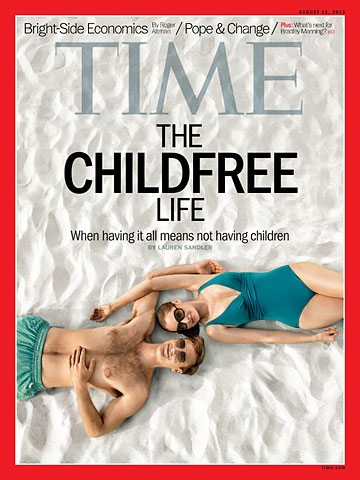
It was this realization that with raising children comes complications that led Lauren Sandler to write an apologetic for childlessness in Time Magazine titled, “Having It All Without Having Children.” In her article, she notes how people are opting out of parenthood with ever increasing frequency:
The birthrate in the U.S. is the lowest in recorded American history, which includes the fertility crash of the Great Depression. From 2007 to 2011, the most recent year for which there’s data, the fertility rate declined 9%. A 2010 Pew Research report showed that childlessness has risen across all racial and ethnic groups, adding up to about 1 in 5 American women who end their childbearing years maternity-free, compared with 1 in 10 in the 1970s.[1]
Kids, for many people it turns out, are cumbersome – too cumbersome. There is, of course, the financial burden of raising children:
The rise of attachment parenting, with its immersive demands, and the sheer economic cost of raising a child – for a child born in 2011, an average of $234,900 until age 18, according to the USDA, and $390,000 if your household earns over $100,000 – has made motherhood a formidable prospect for some women.
There is also the burden raising a child puts on one’s career: “The opportunity costs for an American woman who gets off the career track could average as high as $1 million in lost salary, lost promotions and so on.” But perhaps the most interesting burden that childhood brings, according to one researcher, is an intellectual burden:
At the London School of Economics, Satoshi Kanazawa has begun to present scholarship asserting that the more intelligent women are, the less likely they are to become mothers … Kanazawa analyzed the U.K.’s National Child Development Study, which followed a set of people for 50 years, and found that high intelligence correlated with early – and lifelong – adoption of childlessness. He found that among girls in the study, an increase of 15 IQ points decreased the odds of their becoming a mother by 25%. When he added controls for economics and education, the results were the same: childhood intelligence predicted childlessness.
As titillating at these statistics might be, they generate more heat than light. Indeed, they are only props marshaled to justify the real reason people do not want to have kids. The real reason can be found in the words of documentary filmmaker Laura Scott, whom Lauren Sandler quotes at the beginning of her article: “My main motive not to have kids was that I loved my life the way it was.” Scott makes no secret of the reason she opted out of parenthood: her life is her life. Kids make her life not about her. And that, she decided, is something she cannot endure.
One has to wonder when it became commendable to be so unashamedly selfish. The beauty and blessing of giving your life to the nurture and care of another is apparently lost on far too many people.
In the face of such cultural confusion concerning child rearing, it is useful to briefly review what the Bible says about children:
- Children matter to God which means they should matter to us too. Jesus’ words and actions express vividly His concern and care for kids. When people are bringing their children to Jesus to have Him bless them and the disciples try to keep the kids away, Jesus chides the Twelve, saying, “Let the little children come to Me, and do not hinder them, for the kingdom of God belongs to such as these” (Mark 10:14). Jesus enjoys spending time with children and blessing them. We should too.
- Bearing and raising children, though it is not commanded specifically for every individual, is generally commendable. God’s commission at creation has an inescapably universal ring to it: “Be fruitful and increase in number; fill the earth and subdue it” (Genesis 1:28). Though we have plenty of biblical examples of people who did not have children due to one circumstance or another, a disdain for and avoidance of childbearing runs contrary to the biblical estimation of kids.
- Children, even when they feel like a burden, are in reality a divine blessing! The words of the Psalmist sum it up: “Children are a heritage from the Lord, offspring a reward from Him” (Psalm 127:3).
So what does all this mean? It means simply this: kids are precious and well worth celebrating. Past cultural adages such as “Children should be seen and not heard” as well as a present cultural avoidance and diminishment of child rearing are sad testimonies to human sinfulness and selfishness. Conversely, engaging children can be not only fun, it can also be sanctifying. And everyone needs opportunities to be sanctified.
[1] Lauren Sandler, “Having It All Without Having Children,” Time (8.12.2013).


 Pastor Zach's Blog