Posts tagged ‘Christianity’
The Pew View of the LCMS

Last year, the Pew Research Center released a landmark Religious Landscape Study that surveyed over 35,000 adults from across the nation about their religious beliefs. As a part of their research, Pew studied the church body of which I am a part, the Lutheran Church – Missouri Synod. Though I am well-aware of the risks associated with navel-gazing, I wanted to share a few thoughts on the section of Pew’s study that specifically pertains to my church body, because turning the mirror on oneself and seeing oneself for what one truly is – even when it is uncomfortable – can often be a helpful exercise.
Before we dig into the data, I should note that Pew’s survey of LCMS congregants has a 6-point margin of error, which, statistically, is significant. This does not mean, however, that this survey is not worth our time and attention. Even with a 6-point margin of error, the study’s findings are statistically substantial enough to be quite revealing. So on to the study.
I was surprised to see how well my demographic is represented in my church body. I had stereotypically assumed that my denomination was older than it actually turns out to be. According to Pew, 30 to 49 year olds, which is my demographic, comprise the largest segment of my church body at 32%. Generation X, which is my generation, comprises the second largest segment of my church body at 28% next to Baby Boomers, who are at 35%. Millennial representation is much lower at only 13%. Demographically, then, I am, in many ways, a typical member of an LCMS congregation. I am not, however, typical in every way – especially in my theological and moral beliefs. It is in these areas that the data becomes particularly interesting.
For example, when Pew asked LCMS people what they look to for guidance on right and wrong, while 41% answered “religion,” 45% answered “common sense.” In one way, this is not a surprise. In the face of the information onslaught of the digital age, we have become informational pluralists. We garner and glean our information and, by extension, our opinions, values, and beliefs, from a wide array of sources. The idea of a turning to a single, divinely-authored book as the first and final word on morality is simply untenable to most people. Indeed, when LCMS congregants were asked about their “frequency of participation in prayer, Scripture study or religious education groups” and about their “frequency of reading Scripture,” the largest percentage of respondents in both categories fell into the “Seldom/Never” tier. Thus, it is perfectly logical that more people would get their guidance on right and wrong from common sense than from religion and from the book on which the Christian religion is grounded, the Bible. After all, a majority of people don’t even study the Bible enough to have a nuanced understanding of what’s in it.
The Pew study also revealed that many LCMS congregants seem more unified around a politically conservative economic policy than they are around issues that pertain to traditional Christian morality. Politically, 52% of LCMS people identify as conservative over and against 33% who identify as moderate and 10% who identify as liberal. 72% prefer a smaller government with fewer services and 62% say that government aid programs do more harm than good. Morally, 46% of LCMS people believe abortion should be legal in all or most cases versus 51% who believe it should be illegal, and 56% believe homosexuality should be accepted with 45% favoring same-sex marriage. Compare this to 50% of people who identify as pro-choice nationwide and 55% who favor same-sex marriage nationwide. There is a gap between what LCMS people believe about hot button moral issues and what the general public believes, but this gap is not as wide as one might think. And, on both the issues of abortion and same-sex marriage, the LCMS is less unified than it is around conservative economic policy.
Theologically, I find it unsettling that our opinions on moral issues, which call for our Scriptural agreement, are so diverse while in areas where it’s okay and even desirable to be diverse, we are monolithic. Take, for instance, the racial makeup of the LCMS. 95% of LCMS congregants are white. This hardly seems to reflect the picture of the Church Triumphant with its people from “every nation, tribe, people and language” (Revelation 7:9). I understand that we cannot create this kind of Church by our own efforts and I also am well aware that the Church Militant, because it marches forth in a fallen world and because it does not reveal to us the universal Church, will always look different than the Church Triumphant. But let’s not use our inability to create the Church of Revelation 7:9 as an excuse to not desire it. After all, every member of the Church Triumphant starts out as a member of the Church Militant. So the Church Militant should look, at least in some way, like Church Triumphant.
When it comes to the moral and ethical issues that clearly divide not only our society, but also many in my church body, I would simply say that these are issues that demand our continued attention and discussion. And when discussing these issues, we must understand that just being a part of a church body does not guarantee, nor does it even make it likely, that a person will believe what the church body teaches. Frankly, in our current cultural configuration, the Church’s voice is just one voice – heard by most only once a week at best – among a steady stream of other voices that speak much more frequently and regularly into people’s lives. In order to gain a serious hearing among all these voices, it is important for the Church to speak charitably enough that people trust it and clearly enough that people know what the Bible teaches, even if they disagree.
Pew’s Religious Landscape Study has presented us with a challenge – and an opportunity. It has revealed some areas of moral, theological, and even demographic concern. My prayer is that we, as God’s people, rise to meet the challenge – not only for the sake of a church body, but for the sake of the world.
2015 In Review

This past week, I took some time to scroll through my blogs for 2015. It was, in some ways, an unsettling exercise. Consider these headlines:
- January: Transgender teen Leelah Alcorn takes her own life December 28, 2014. By January 2015, rallies are being held in her memory and in support of the transgender movement.
- February: The erotic movie “Fifty Shades of Grey” hits theatres, earning $570 million worldwide.
- March: The University of Oklahoma’s Sigma Alpha Epsilon chapter is shutdown after some of its members are caught on camera chanting offensive racial slurs.
- April: Rolling Stone retracts its cover article, detailing a gruesome gang rape of a woman at the University of Virginia, after it is discovered that the details of its story cannot be verified and may, in fact, be falsified.
- May: Pew Research publishes a poll chronicling the precipitous decline of people claiming to be religiously affiliated.
- June: Olympic decathlete Bruce Jenner comes out as transgender woman Caitlyn Jenner, nine worshipers are shot and killed by a racist gunman in Charleston, and the Supreme Court legalizes same-sex marriage in all 50 states.
- July: The Center for Medical Progress begins releasing undercover videos purporting to show Planned Parenthood officials offering to sell aborted fetal parts for profit.
- August: The website for Ashley Madison, which advertises itself as a service to help people have affairs, is hacked and the data of 37 million of its members is compromised.
- September: Kentucky County Clerk Kim Davis refuses to issue marriage licenses to same-sex couples and Pope Francis visits the United States.
- October: Fallout continues from the Planned Parenthood undercover videos.
- November: Students stage demonstrations on college campuses across America protesting what they perceive to be systemic campus racism and Paris is struck by a series of six coordinated terror attacks.
- December: A couple opens fire at a holiday party in San Bernardino, California killing 14 in an apparent act of terrorism.
Blogging can be a frustrating discipline because, at times, as my list above intimates, it can become flat-out depressing. It seems as though I’ve blogged on a never-ending succession of tragedies, controversies, and indignities this past year. And yet, as tough as these topics might be to tackle, I believe they are vital for us as Christians to understand and address.
A few themes have emerged as I’ve watched the headlines unfold in 2015. First, it seems as though we are obsessed with sex and oppressed by violence. Between “Fifty Shades of Grey,” the Ashley Madison scandal, and same-sex marriage, headlines relating to human sexuality and the sexual ethics have dominated. But so have headlines relating to violence. The acronym ISIS is now the stuff of household lore. Planned Parenthood’s gruesome harvesting of fetal parts sent shivers up the spines of many. Beatings and shootings with racist tinges dominate the headlines. As a child, I remember my parents criticizing many movies for having too much “sex and violence.” Was art imitating life back then or is life imitating art now?
A second theme that has emerged is a search for who we are as humans. I would be intellectually, emotionally, and relationally naïve if I did not recognize that same-sex marriage is about much more than sex. It is about the ability of people to define themselves as they see themselves. This is also the case with the transgender recrudescence. How internal desires correspond to a person’s biological ordering is key to understanding the existential angst that many people in the LGBT community experience.
Third, issues of race and religion have taken center stage this past year. From the racist chant by members of Sigma Alpha Epsilon to the shooting at the church in Charleston, racism is frustratingly alive and well. At the same time the LGBT community is trying to figure out who it is and arriving at some spiritually dangerous answers, we seem to have forgotten some of the older spiritually salutary lessons we had to learn about who we are as a nation of immigrants. And I would contend that this is true across the racial spectrum. Trumped up charges of racism in the form of the newly minted category of “microaggression” do not help, but neither do denials that racism is real and consequential. Religiously, we are learning quickly – both from Paris and San Bernardino – that bad theologies have terrible consequences. The theological drivers of groups like ISIS cannot be minimalized or rationalized. They must be confronted.
As I reflect on the stories I have covered, I have become convinced more than ever that our world is not just in need of good thinking, but theological thinking on the things that ail us. The problems we have encountered in 2015 are not just the results of some bad thinking that needs to be tuned up by an enlightened intelligentsia so we can march boldly into a utopian era. Rather, the problems we have encountered in 2015 are the results of nothing short of a deeply depraved sinfulness that needs to be confronted by the Word of God. And this is where we, as Christians, have something unique to offer our world. While the world is trying to solve its problems by political, intellectual, and social gerrymandering, we can be confronting and forgiving the sinners – even when those sinners are us – who create the problems. In my mind, that’s our greatest hope for a better world.
Human sin, sadly, will probably continue to give me plenty of reasons to write in 2016. But grace, thankfully, will give me even more reasons to rejoice. So let’s see where the year takes us.
Do Muslims and Christians Worship the Same God?

Dr. Larycia Hawkins
Last week on this blog, I discussed the danger of trading theological integrity for political expediency in the wake of Donald Trump’s proposed ban on all non-resident Muslims entering our country. As I explained, Mr. Trump’s claim that his ban is “not about religion,” though politically palatable, cannot be factually truthful. His ban, I argued, is necessarily about religion because it affects a whole group of thoroughgoingly religious people.
I also argued that it is important for us, as Christians, to have honest theological conversations with our Muslim friends. We may disagree on a great number of things, but at least we agree that theology matters. Categories like orthodoxy and heresy, truth and deity are important to us. In a culture that is far too dismissing of theology, Muslims and Christians should be enthusiastically engaging in theology.
This is what I argued for last week. And now this week, almost providentially, I have an opportunity to practice what I blog.
One of America’s premier evangelical institutions, Wheaton College, is embroiled in an imbroglio after one of its professors, Dr. Larycia Hawkins, claimed that Muslims and Christians worship the same God. Wheaton placed Dr. Hawkins on paid administrative leave, explaining in a press release:
As a Christian liberal arts institution, Wheaton College embodies a distinctive Protestant evangelical identity, represented in our Statement of Faith, which guides the leadership, faculty and students of Wheaton at the core of our institution’s identity. Upon entering into a contractual employment agreement, each of our faculty and staff members voluntarily commits to accept and model the Statement of Faith with integrity, compassion and theological clarity … Dr. Hawkins’ administrative leave resulted from theological statements that seemed inconsistent with Wheaton College’s doctrinal convictions.[1]
Dr. Hawkins’ assertion is well worth our time and attention because it is an example of precisely the kind of theological discussions I would argue Christians and Muslims ought to be having. Do Christians and Muslims worship the same God? Is Dr. Hawkins correct?
As a Christian, I would answer the question of a shared deity among Christians and Muslims in two ways: “No, but…” The answer “no” is necessary for theological honesty. The answer “but” is crucial to Christian hospitality. Let me briefly explain both answers.
“No”
It is very difficult to assert, at least in any way that demands a nuanced theology of divinity, that Muslims and Christians worship the same God. In defending her assertion on social media, Dr. Hawkins cited theologian Miroslav Volf, who, in an interview for Christianity Today, explained:
I think that Muslims and Christians who embrace the normative traditions of their faith refer to the same object, to the same Being, when they pray, when they worship, when they talk about God. The referent is the same …
God is one in both traditions. That’s very important. Two, God is merciful. Also, God is just. God’s oneness, God’s mercy, and God’s justice are significant commonalities. We have different understandings of each of these, but the overlaps are really impressive.[2]
Volf argues that Christians and Muslims worship the same God based on a list of divine attributes that happen to be the same between the two faiths. His list of divine attributes, however, strikes me as ad hoc. What about the Christian contention that God is one, yet also three persons? Muslims do not believe this (cf. Surah 4:171). What about God’s humanity? At the heart and soul of a Christian’s faith is the God-man Jesus Christ. Muslims flatly reject this (cf. Surah 10:68). What about God’s greatest attribute – that He is love (cf. 1 John 4:8)? Though one of the 99 names Muslims have for God is “the Loving One,” that God is love seems to be a bridge too far for Islamic theology.
Volf acknowledges such differences, but then moves quickly to downplay them:
There are significant differences that are the subject of strenuous debates. Some differences really are foundational to the faith, like the doctrine of the Trinity. At the same time, there’s this amazing overlap and similarity. We need to build on what is similar rather than simply bemoan what’s different.
Volf’s assertion that Muslims and Christians worship the same God in spite of significant differences in their respective conceptions of Him begs a question: where would Volf draw his line? When do differences in theology become profound enough for there to be a difference of divinities?
If somebody postulates the existence of more than one God, I would have to say we don’t worship the same God. If somebody says that God is basically one with the world, I would also have to say we don’t worship the same God.
Again, all of this seems very ad hoc to me. For Volf, the attributes of God’s oneness and His distinction from creation are vital. The attribute of God as three persons is not. Why? Simply because Volf says so?
Jesus is quite clear that, in order to be a true worshiper, a person must worship “in the Spirit and in truth” (John 4:23-24). It is quite difficult to worship “in the Spirit” while denying the Spirit’s personhood, as do Muslims, and it is impossible to worship “in truth” while denying at least parts of what Scripture says is true about God. It is important to note that the issue here is not whether a person has a complete understanding of God. Jesus affirms that a person can worship the true God while not having a complete understanding of Him when He says of the Samaritans, “You Samaritans worship what you do not know” (John 4:22). Worship does not require perfect knowledge. True worship does, however, require faith.
But the Scriptures are also very clear that if a person perverts what can be known about God from biblical revelation, he has moved from worship to idolatry. This is why the apostle Paul, when he was in Athens, was “greatly distressed to see that the city was full of idols” (Acts 17:16), but was also willing to engage the Athenians in a theological conversation around the altar the they had built “TO AN UKNOWN GOD” (Acts 17:23). The Athenians’ altar stemmed from ignorance. Their idols were built on false and dangerous ideas about divinity. The altar propelled Paul to further conversation. The idols incited his unapologetic condemnation.
Considering that Islam does not claim to be ignorant of God, but rather claims that God is widely different from whom Christians claim He is, it is difficult to see how either a Christian or a Muslim can honestly say that both faiths worship the same God. Just because two divinities share a short list of attributes does not mean they are the same God any more than a mother and a daughter who share some genes are the same person. This is why I must answer “No” to the question, “Do Christians and Muslims worship the same God?” If this is all I was to say, however, I would not be saying enough.
“But”
I firmly believe that Christians and Muslims do not worship the same God. This is not to say that I think Muslims have no knowledge of what I as a Christian would confess to be the true God or that the God of Muhammad does not reflect in certain ways the God of the Bible. In Romans 1, Paul reminds us that “since the creation of the world God’s invisible qualities – His eternal power and divine nature – have been clearly seen, being understood from what has been made” (Romans 1:20). It is no surprise, then, from a Christian standpoint, that the God of Muhammad would have attributes that are influenced and informed by the God of the Bible, for the God of the Bible is not only particularly revealed in Scripture, but generally, though not salvifically, knowable through creation.
Ultimately, even if someone believes that Christians and Muslims do indeed worship the same God, this still does not settle the question of what is true about God, how one is to approach God, and how one receives eternal life with God. The Quran, for instance, speaks of Jesus, but rejects His death for sinners (cf. Surah 4:157-158). The Bible makes Jesus’ death for sinners the very locus of His identity (cf. 1 Corinthians 2:2). Thus, when Muslims and Christians talk about Jesus, the question should not be, “Do the Bible and the Quran talk about the same Jesus?” Even if they do, this is finally of little consequence. A better question would be, “Does the Bible or the Quran authoritatively reveal the true Jesus?” After all, who Jesus is matters just as much as that He exists.
What is true of Jesus specifically is true of God generally. We need to be asking, “Does the Bible or the Quran authoritatively reveal the true God?” Who has the true and supreme revelation about God from God? As a Christian, my answer must be that the Bible has the true and supreme revelation about God from God. My guess is a Muslim would beg to differ. But this is why a willingness to have hospitable theological discussions is so important. And this is why, if a Muslim friend would like to offer his or her thoughtful and respective perspective on the God of Muhammad and the God of the Bible, I would love to hear it. Understanding may not always lead to agreement, but it does generally lead to charity. And that’s a virtue both our religions share.
_________________________
[1] “Wheaton College Statement Regarding Dr. Larycia Hawkins,” Wheaton College (12.16.2015).
[2] Mark Galli, “Do Muslims and Christians Worship the Same God?” Christianity Today (4.15.2011).
Mizzou, Truth, and What Pleases Us

Credit: David Eulitt/Kansas City Star/TNS via Getty Images
Last month’s heavily publicized protests at the University of Missouri are tragic for several reasons. The racist slur that ignited them is tragic. The fumbled response of the University President is tragic. The threats from a member of Mizzou’s Department of Communication toward the media, calling for “some muscle” when an ESPN reporter was trying to cover the student protests, is tragic. But so is the response of the students. Their protests quickly spun out of control – moving from a specific instance of racism to outrage over everything from systemic racism to sexism to patriarchy. When others with differing viewpoints tried to engage Mizzou’s students on these important issues, the students blew up.
What happened at Mizzou has revealed just how incapable some college students are of having a conversation with someone with whom they disagree. Or, to put it a little less charitably, perhaps these students aren’t so much incapable as they are intransigent. It could be, I suppose, that they simply refuse to listen to viewpoints that differ from theirs. Indeed, the now famous student “safe spaces” are unapologetically touted as places of refuge where students can flee from any idea that triggers in them any sort of emotional distress. In fairness, it should be noted, as The Wall Street Journal rightly points out, that safe spaces are not just cloisters for the thin-skinned:
All of us seek “safety” from genuinely rancid views – how many of us would stay at a party where someone dominated the conversation with overtly racist bloviations? These students have merely overextended the bounds of the conclusively intolerable.[1]
It is true that there are some fools whose foolish viewpoints do not need to be answered according to their folly. The problem is not that students refuse to engage with a particularly rancid viewpoint. The problem is that some students refuse to engage with almost any viewpoint that does not mirror and mimic their own. Even a mildly disagreeable viewpoint, to some students, is an aggressively hostile and morally repugnant viewpoint.
Mizzou’s riots have brought to the forefront a hard reality. For many people, it no longer matters in any significant degree whether someone who has a viewpoint that opposes their viewpoint has a point. Categories like logic, truth, and prudence – particularly on moral and ethical issues – have been shuffled into the sunset as quaintly archaic interests. What matters most now is how someone’s viewpoint makes someone else feel. And if someone’s viewpoint makes someone else feel threatened, even if, according to the aforementioned categories, the point should be well taken, it is rejected out of hand. Philip Rieff proved to be quite prophetic when he wrote in 1966, “Religious man was born to be saved; psychological man is born to be pleased.”[2] What matters is not whether something is true. What matters is whether people are pleased by it.
It’s not just college students who have fallen prey to this therapeutic bias. In 2011, Susanna Dilliplane published an article in the Public Opinion Quarterly titled, “All the News You Want to Hear: The Impact of Partisan News Exposure on Political Participation,” where she laments how more and more Americans get their news only from outlets that share their own political views. It turns out that adults have their own “safe spaces” in the forms of cable news channels, Internet sites, and newspapers.
Even the media itself can fail to listen to viewpoints that differ from its editors. A recent article in The Economist asked, “Can porn be good for us?” Several contributors debated the question, almost all of whom accepted the premise that porn can indeed be good for us, a position which The Economist, if its own editorials are to be believed, seems to share. The debate was presented, at least implicitly, as closed. “Porn can be good for us.” But then The Economist posed the question to its readers. 80% disagreed with the newspaper. In one particularly tragic comment, a reader wrote:
Dear Madam,
Can porn be good for us? NO!! My husband has been trapped for forty years now. He stole “our” sex life used it all up for himself.[3]
The Economist thought the answer to its question was obvious. As it turned out, the editors spent too much time listening to themselves and not enough time listening to their readers. They got duped by their own sexually licentious safe space.
It’s time we begin to ask ourselves some hard questions. Have we become a people completely unwilling and unable to listen to those with whom we disagree? Have we become so impervious to arguments that threaten our worldviews that, even if they contain truth, we cannot concede that someone else who does not agree with us on many things may, in fact, have a point on at least one thing? Have we blithely rejected Patrick Henry’s famed statement – “For my part, whatever anguish of spirit it may cost, I am willing to know the whole truth; to know the worst, and to provide for it”[4] – preferring to believe lies that make us feel good instead of confronting truths that unsettle us? Have we become so proud that we can no longer consider and humbly admit that some of what we say and think may, in fact, be just plain wrong, or at least incomplete?
Whether we are students on a college campus or adults with a daily dose of news or a news outlet with a suspiciously stilted question for debate, we seem to have become much less interested in informing ourselves with rigorous analysis and much more prone to amusing ourselves with tendentious pontificating. I fear, however, that we may be doing a little more than, to borrow a book title from Neil Postman, “amusing ourselves to death.”[5]
___________________________
[1] John H. McWhorter, “Closed Minds on Campus,” The Wall Street Journal (11.27.2015).
[2] Philip Rieff, The Triumph of the Therapeutic: Uses of Faith After Freud (Chicago: The University of Chicago Press, 1987), 24-25.
[3] “Online Pornography: Can porn be good for us?” The Economist (11.17.2015-11.27.2015).
[4] Patrick Henry, “Give Me Liberty or Give Me Death!” (Richmond, VA: St. John’s Church, 3.23.1775).
[5] Neil Postman, Amusing Ourselves to Death: Public Discourse in the Age of Show Business (New York: Penguin Books, 1985).
Pray for Paris
 I first heard the news on the radio when I was driving home from work Friday night. Phrases like “breaking news” and “continuing coverage” caught my attention. As more and more details of the ghastly attacks trickled in from across the Atlantic, I knew it was going to be a long night for the people of Paris. 129 dead. 352 injured, 99 critically. And ISIS was claiming responsibility for the coordinated attacks that hit six targets at once. After opening fire on their victims, all but one of ISIS’s operatives blew themselves up when police approached, hoping to kill even more people with suicide bombings.
Considering these attacks came just days after ISIS was suspected of downing Metrojet Flight 9268 over northern Sinai as it was on its way from Sharm el-Sheikh to St. Petersburg, it is quickly becoming apparent that ISIS will stop at nothing to intimidate the world. As of now, their tactics are working. Many, many people are very, very scared.
As Christians, we know we are commanded to be not afraid. The words of Psalmist come to mind: “God is our refuge and strength, an ever-present help in trouble. Therefore we will not fear, though the earth give way and the mountains fall into the heart of the sea” (Psalm 46:1-2). Logically, we also know that fear does us little good at a time like this. It solves nothing. It changes nothing. It only paralyzes us and clouds our judgment. But at the same time we are called not to fear, we are also called to be in prayer. Indeed, the apostle Paul addresses both fear and prayer when he writes, “Do not be anxious about anything, but in everything, by prayer and petition, with thanksgiving, present your requests to God” (Philippians 4:6). At a time like this, when the world is fearing, we should be praying.
As this tragedy continues to unfold, allow me offer four things for which I think we can and should pray. My hope is that God will not only comfort you as you pray these petitions, but that He will use these petitions to help you process what has happened. After all, what has happened affects not only the city of Paris or the nation of France; it affects the world. Nous sommes tous les Parisiens.
On to the prayers.
Pray for Paris.
In one way, this goes without saying. And, thankfully, it is already happening. A quick check of my Twitter account shows #Prayers4Paris is trending. So pray for the grieving. Pray for the fearful. Pray for the people of a city who are trying to pick up the pieces of an illusion of safety that has just been shattered. Pray for Paris.
But let me take this a step farther. Because as Christians, to pray for Paris means to pray for all of Paris – even for those who support and sympathize with the attackers. Jesus admonishes us to pray not only for those with whom we share a kinship, but even for our enemies: “Pray for those who persecute you” (Matthew 5:44). So pray for ISIS operatives in Paris and, for that matter, all over the world. Pray, yes, that any further plots would be thwarted. But also pray that their hearts would be changed. A changed heart stops evil much better than even the most sophisticated international intelligence operation.
Pray for sobriety.
The shock and sadness of yesterday’s attacks will soon dissolve into political posturing and raw outrage. Rash responses will be given. Foolhardy decisions will be made. We need to stay away from all such impulsiveness.
If history is any indication, I am especially concerned that many will fall into what logicians refer to as the fallacy of composition. This fallacy asserts that if something is true for the part, it must also be true for the whole. So in this instance, if a few radical Muslims who are part of ISIS are terrorists, then it is reasonable to be wary of any Muslim because he or she might be a terrorist.
Don’t fall for – or propagate – this fallacy!
I have many friends who own firearms. They are, of course, very responsible and cautious with their weapons. But every time a mass shooting happens – in Roseburg, in Charleston, in Fort Hood, in Sandy Hook – many of them openly worry that the actions of a few deranged lunatics will affect all firearm owners. They worry that people will take the actions of a few and use it to stifle the whole. And so they lobby not only for their rights as firearm owners, but also for their character as people.
What firearm owners do for each other, Christians can and should do for Muslims. Let’s not lose our ability to think soberly and clearly not only about these attacks specifically, but about Muslims generally. The vast majority of Muslims are people who hold much in common, especially ethically, with Christians. They love their families. They despise promiscuity. And they support traditional values like honesty, hard work, and generosity. Let’s be willing to vouch for the character of Muslims. And let’s be willing to support and love them as people.
Pray for governments.
The French government, the U.S. government, and many other governments across the world have some difficult decisions to make. ISIS must be stopped. Thankfully, God has given governments the authority to do just this. The apostle Paul explains:
He who rebels against the [governing] authority is rebelling against what God has instituted, and those who do so will bring judgment on themselves. For rulers hold no terror for those who do right, but for those who do wrong. (Romans 13:2-3)
Paul says that those who rebel against good order arranged by good governments will bring judgment on themselves. For good governments will seek to avenge and deter – often with force – evil events. The terrorists, then, have every reason to be terrified.
As governments across the world try to discern how to respond to these attacks, pray that their responses would be decisive, measured, and Godly. In short, pray that world governments would act in ways that thwart evil while honoring God’s Word.
Pray, “Come, Lord Jesus.”
Ultimately, we know that governments, though they can do much to suppress evil, cannot stop evil. Only God can do that. In fact, shortly before Paul writes his words concerning government, he writes about God’s final judgment: “Do not take revenge, my friends, but leave room for God’s wrath, for it is written: ‘It is Mine to avenge; I will repay,’ says the Lord” (Romans 12:19). God’s vengeance is the only vengeance that gives victory.
When does God avenge evil? On the Last Day. Then and only then will evil be wiped out once and for all. Until then, attacks will happen. Lives will be lost. Evil will rear its head. And we will “groan inwardly as we wait eagerly for our adoption as sons, the redemption of our bodies” (Romans 8:23). Considering that none of this is pleasant or good, the final prayer of the Bible can be our prayer today: “Come, Lord Jesus” (Revelation 22:20). “Come and wipe out evil. Come and make everything – including those hurting in Paris – new.”
And He will.
Reverse-Engineering Your Life
 The other night, I, along with three other pastors, had the pleasure of meeting with a group of seminary students for an informal discussion about life and ministry. I cherished my time with these guys. Even though we were with them for only a short time, it quickly became apparent that they are theologically curious and nuanced and have a deep passion to serve in Christ’s Church as pastors. I am excited to see what the future holds for these men.
Our discussion took on an informal Q&A feel, with seminary students asking any questions they wanted. One question particularly struck me: “What goals do you have for ministry and how do you work backwards from those goals to develop a plan to reach those goals?” This is a great question. It’s a question of reverse-engineering. You start with the end in mind and work back from that to get to that. But this question also took me aback a little bit. Because I do have goals. And I have done my share of reverse-engineering to try to reach these goals. But my goals are not particularly inspiring, captivating, or scintillating. I simply want to love Jesus, love my family, and be a faithful pastor.
I used to have other goals. More exciting goals. Once upon a time, I wanted to build and pastor the largest congregation in my church body. Once upon a time, I wanted to become a renowned and respected spokesperson for orthodox Lutheranism. After all, it seems like on the broader stage of Christian dialogue, Lutherans are all but missing in action. Once upon a time, I wanted to be an esteemed public scholar to whom people would turn for insight. Once upon a time, I wanted to be a pastor who would change the world. Now, I just want to be a person who finishes life well.
As I ultimately wound up telling the student, long before you worry about reverse engineering your goals for ministry, you need to begin by reverse engineering your goals for life and, specifically, for your family. After all, if you change the world as a pastor but forsake your family as a husband or father, you have failed miserably because prior to your vocation as a pastor is your vocation as a husband and father.
The New York Times recently published an article on the state of today’s family. Its title sums up its mood: “Stressed, Tired, Rushed: A Portrait of the Modern Family.” Clair Miller, writing for the Times, explains:
Working parents say they feel stressed, tired, rushed and short on quality time with their children, friends, partners or hobbies, according to a new Pew Research Center survey …
Fifty-six percent of all working parents say the balancing act is difficult, and those who do are more likely to say that parenting is tiring and stressful, and less likely to find it always enjoyable and rewarding. For example, half of those who said the work-family balance was not difficult said parenting was enjoyable all the time, compared with 36 percent of those who said balance was difficult.
This is sad, but it is also not surprising. As workplace demands continue to rise and the line between company time and personal time continues to blur, time to invest in family inevitably suffers.
Being a pastor carries with it many demands, which are often difficult – and, quite honestly, sometimes impossible – to juggle well. There is no doubt about it. But this is why, long before you sketch out goals for ministry, you do need to set out goals for your marriage and your family. Goals of time together as a family. Goals of date nights with your spouse. Goals of daily expressions of love and affection. Before you worry about what is outside your home, tend to who is inside your home.
Jesus once asked, “What good is it for a man to gain the whole world, yet forfeit his soul” (Mark 8:36)? It may behoove us to ask similarly: What good is it if a man changes the world, yet forfeits those closest to him? This question good not only for pastors, it’s good for everyone.
I hope you’re asking it. The people closest to you will thank you if you are.
The Best of Times and the Worst of Times

Jean Duplessis-Bertaux | Depiction of the storming of the Tuileries Palace during the French Revolution
“It was the best of times, it was the worst of times, it was the age of wisdom, it was the age of foolishness, it was the epoch of belief, it was the epoch of incredulity, it was the season of Light, it was the season of Darkness, it was the spring of hope, it was the winter of despair…”[1]
So begins Charles Dickens’ A Tale of Two Cities. Though the story is set during the French Revolution, its opening line strikes a universal tone. Life comes mixed with good and bad, wisdom and foolishness, faith and doubt, light and darkness, hope and despair. This is true even of Jesus’ life. For example, in Mark 7, Jesus heals a blind man:
Some people brought to [Jesus] a man who was deaf and could hardly talk, and they begged Him to place His hand on the man. After He took him aside, away from the crowd, Jesus put His fingers into the man’s ears. Then He spit and touched the man’s tongue. He looked up to heaven and with a deep sigh said to him, “Ephphatha!” (which means, “Be opened!”). At this, the man’s ears were opened, his tongue was loosened and he began to speak plainly. (Mark 7:32-35)
On its surface, this story looks like one that should be marked only by joy. After all, a blind and mute man gets healed! But right before Jesus heals this man, He looks up to heaven and lets out “a deep sigh” (Mark 7:34). The Greek word for this sigh is stenazo, which denotes a groan of sorrow (e.g., Romans 8:23). Why would Jesus groan in sorrow right as He is getting ready to do something as joyful as a healing?
Like Charles Dickens, Jesus knows that even when it’s the best of times, it’s also the worst of times. He knows that even as He is getting ready to do something great, evil is not far off. Indeed, Jesus knows that He will soon face the horror of the cross. And so He lets out a groan.
The Old Testament prophets spoke of a Messiah who would come and do many miraculous things, including that of making the deaf hear and the mute speak:
Your God will come, He will come with vengeance; with divine retribution He will come to save you. Then will the eyes of the blind be opened and the ears of the deaf unstopped. Then will the lame leap like a deer, and the mute tongue shout for joy. (Isaiah 35:4-6)
Notice even in this prophecy that the best of times and worst of times are comingled. On the one hand, the Messiah will open the eyes of the blind and unstop the ears of the deaf. This is good. On the other hand, the Messiah will come with “vengeance” and “divine retribution.” This sounds bad. But it also seems strange. Isaiah says, “With divine retribution [God] will come to save you.” Just how does God intend to use His retribution for our salvation? Isn’t His retribution supposed to lead to condemnation?
Timothy Keller notes that, when Jesus came, retribution and salvation were not so much in tension with each other as they were complimentary to each other, for Jesus “didn’t come to bring divine retribution; He came to bear it.”[2] On the cross, Jesus took the retribution our sins deserve so we could receive the salvation we could never earn. This is how divine retribution can lead to our salvation.
In A Tale of Two Cities, a kind of dualism runs through its opening salvo. There is good and bad, hopefulness and despair, and the reader does not know which one will ultimately prevail – or if either will prevail. In the case of Christ, though good and bad, hopefulness and despair are real and are in tension with each other, there is no doubt which will finally carry the day. Jesus may have groaned. But He still healed. And Jesus may bear divine retribution on a bloodied cross, but He still brings salvation out of an empty tomb. In Christ, the tension of Dickens is resolved. And that’s why we can have hope.
______________________________
[1] Charles Dickens, A Tale of Two Cities (Mineola, NY: Dover Publications, 1999), 1.
[2] Timothy Keller, King’s Cross (New York: Dutton, 2011), 94
What If Planned Parenthood Is Sincere?

Credit: AFP Photo/Mandel NGAN
Last week, Cecile Richards, president of Planned Parenthood, announced in a letter to the National Institutes of Health that the organization she heads will no longer be accepting reimbursements of any kind for its disbursements of fetal tissue:
Our Federation has decided, going forward, that any Planned Parenthood health center that is involved in donating tissue after an abortion for medical research will follow the model already in place at one of our two affiliates currently facilitating donations for fetal tissue research. That affiliate accepts no reimbursement for its reasonable expenses – even though reimbursement is fully permitted … Going forward, all of our health centers will follow the same policy, even if it means they will not recover reimbursements permitted.[1]
This new policy comes on the heels of a firestorm over whether or not Planned Parenthood has been illegally selling aborted baby parts for profit. A series of undercover videos published by the Center for Medical Progress appears to show Planned Parenthood officials admitting that they do, in fact, make money off the sale of fetal tissue, even if such profit is minimal. Profit from the sale of fetal tissue is a federal offense.
Upon the release of this new policy, abortion opponents were quick to react with cynicism, asking why, if Planned Parenthood has done nothing wrong as it has been claiming throughout this controversy, the organization would need to change their current policy at all. Bre Payton, writing for The Federalist, opines, “Despite its previous claims of innocence, Planned Parenthood’s announcement today suggests that the organization knew its activities were almost certainly illegal.”[2]
Ms. Payton may be right. It may be that Planned Parenthood knew that what it was doing was illegal and was simply gaming the system. But I’m not so sure. Planned Parenthood’s statement may actually be sincere.
If I was to be accused of some wrongdoing – let’s say, financial mismanagement – not only would I adamantly maintain my innocence if I believed I had done nothing wrong, I would take extra precautionary measures to guard against further accusations. So, using the example I cited above, I may institute an annual independent audit of my income and expenses and share the results with key people in my life to make sure I am held financially accountable. But this would not be an admission I had done something wrong. Rather, it would be an attempt to be above reproach in my finances so that all could see I was committed to doing right.
I have to at least entertain the possibility that Planned Parenthood is acting in this same way by refusing to take any sort of reimbursement for their disbursement of fetal tissue. They may simply be trying to be above approach in how they handle their fetal tissue. If this is the case, however, it terrifies me. Here’s why.
If Planned Parenthood really is simply trying to be above reproach in their fetal tissue disbursements, this means that they truly believe that what they have done is not illegal and, even more disturbingly, not immoral. In other words, it could be that some – indeed, even many – at Planned Parenthood believe that what they are doing by offering abortions and dispersing baby parts is good, needed, and right. What is happening is not flowing out of sinister conniving, but out of genuine conviction.
I used to think people knew somewhere deep-down that abortion was a moral blight on our modern culture. As I have written before, if abortion isn’t self-evidentially morally repulsive, then nothing is. I still believe that most people do know this somewhere within the deep recesses of their souls. But after watching #ShoutYourAbortion trend on Twitter, I have come to recognize that some people do not. Consider these tweets:
I’ve never wanted to have children, so I had an abortion. I’m thriving, without guilt, without shame, without apologies. #ShoutYourAbortion (@favianna, 9.21.2015)
I had an abortion in 2008, and it was the easiest decision I ever made. Long before I got pregnant I had decided that… (Birdy Eugenie-Clark, 9.21.2015)
These women could be lying about their experiences with abortion. But, then again, they could be telling the truth. They really could be okay with and even happy about their abortions.
Columnist Dennis Prager distinguishes between that which “feels good” and that which “does good.” These two things, he notes, are not always the same. Take, for instance, in the realm of parenting:
It feels good to give one’s children what they want, but it rarely does good. It feels good to build children’s self-esteem – giving them trophies for no achievement, for example – but when the self-esteem is unearned, it doesn’t do good. It feels good to provide one’s adult children with money and other material benefits when they should be providing for themselves, but it doesn’t do good. And it feels good to coddle children rather than discipline them. But, same deal: It’s not good for them.[3]
What is true in parenting is true also of abortion. For some people – at least as far as they will publicly admit – abortion may feel good. It may feel good because it relieves a person of the burden of having to raise an unwanted child. It may feel good because it allows a person to have sex without having to worry about its divinely designed procreative telos. It may feel good because it feels empowering. It is the ultimate way to declare, “No one will tell me what to do with my body! Not even nature and nature’s God!” The problem is that many people have made what feels good equivalent to what is good. This is why I am willing to entertain the sincerity of Planned Parenthood’s statement about the trafficking of fetal tissue even if I am not willing to entertain its objective morality. We may have genuinely come to a point in our society where people have bought into a modified version of the old adage my mother once warned me against: “If it feels good, do it!” We now say, “If it feels good, it is good!”
As Christians, we need to continually remember and proclaim that what is good objectively cannot be determined only by what feels good internally. Good needs an external regulator. Christians believe this external regulator is Scripture and, in a secondary way, God’s ordering of creation. Even if our culture flatly rejects the first regulator, they’re still left to grapple with the second. Every pregnancy, even if it ends in abortion, is proof of that.
I hope we’re there to help people grapple with what true good looks like – and to lead them to surrender. Otherwise, this letter from Planned Parenthood will only be the first in a series of sad, but sincere, attempts to be above reproach while engaging in what is morally repulsive. And that would be heartbreaking.
____________________________________
[1] Cecile Richards, “Planned Parenthood Opt-Out,” Planned Parenthood Federation of America (10.13.2015).
[2] Bre Payton, “Planned Parenthood: We’re Going To Stop Doing That Thing We Said Was Totally Legal,” The Federalist (10.13.2015).
[3] Dennis Prager, “Feeling Good vs. Doing Good,” National Review (10.22.2015).
Honor, Dignity, Victimization, and Power
Credit: Franck Prevel/Getty Images
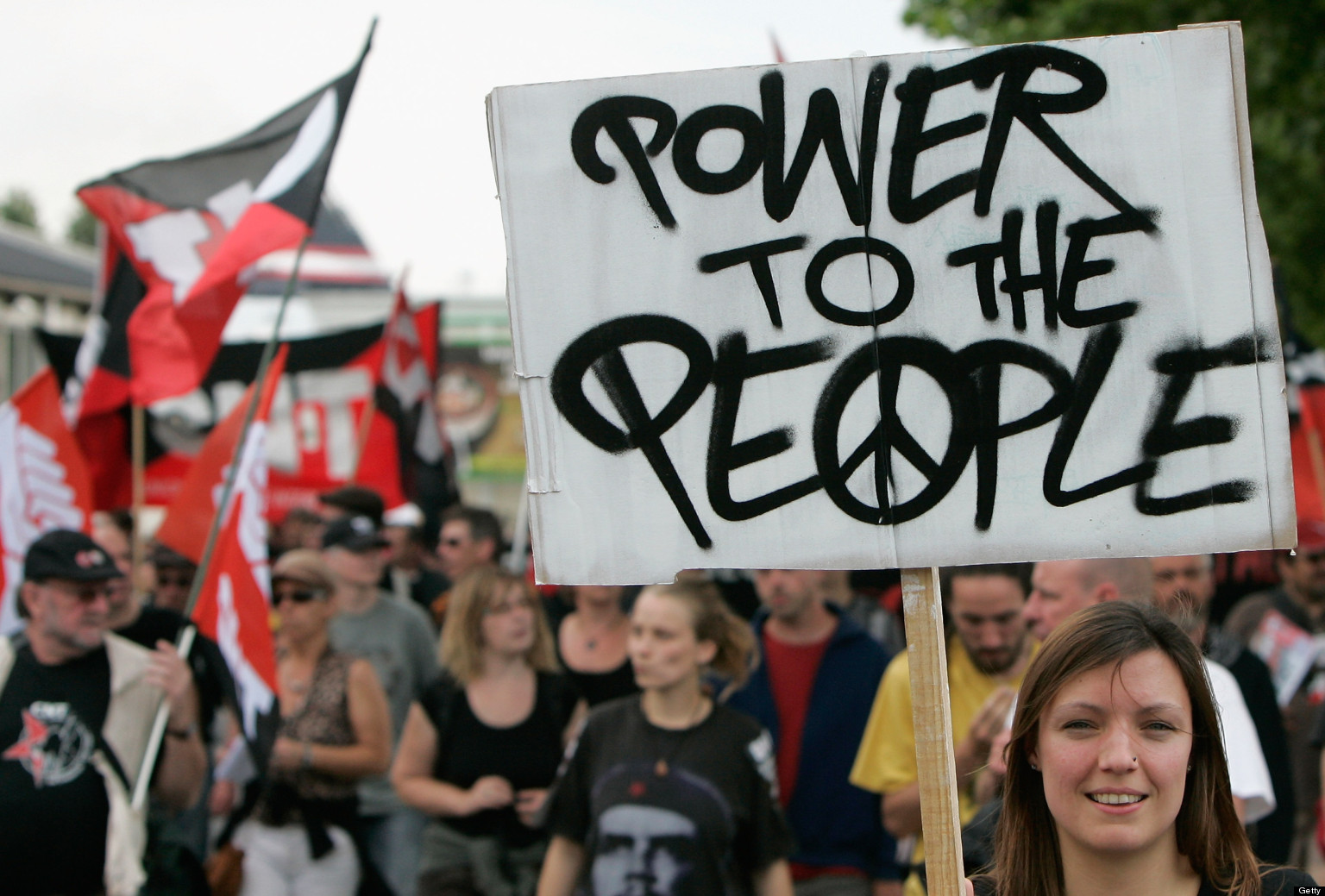
It doesn’t take much to offend people these days. Sometimes, it doesn’t take anything at all. This is what Bradley Campbell and Jason Manning argue in their paper, “Microaggression and Moral Cultures.”
Campbell and Manning cull their definition of what constitutes a microaggression from Derald Wing Sue, professor of counseling psychology at Columbia University. Microaggressions are:
The brief and commonplace daily verbal, behavioral, and environmental indignities, whether intentional or unintentional, that communicate hostile, derogatory, or negative racial, gender, and sexual orientation, and religious slights and insults to the target person or group.[1]
Two things are especially notable in Wing Sue’s definition. First, microaggressions can be either “intentional or unintentional.” What counts is not what a sender intends, but what a receiver perceives. Second, words like “indignities,” “hostile,” and “derogatory” in Wing Sue’s definition cast microaggressions in a vocabulary of victimization. Microaggressions, no matter how pint-sized they may seem, are really part of a broader caste system that relentlessly oppresses certain groups of people. The cry of those who perceive themselves as having been microaggressed, then, is really the cry of those who have been systemically victimized by this system and its cultural and socioeconomic assumptions.
Interestingly, Campbell and Manning argue that, for all the complaining that the microaggressed may do about being victimized, our newfound concern with microaggressions actually encourages a culture of victimization rather than discouraging it:
Victimization [is] a way of attracting sympathy, so rather than emphasize their strength or inner worth, the aggrieved emphasize their oppression and social marginalization … We might call this moral culture a culture of victimhood because the moral status of the victim … has risen to new heights.
In an article for the Atlantic, Conor Friedersdorf cites one example of a blossoming culture of victimization in an exchange between two students at Oberlin College. In the exchange, a white student invites a Hispanic student to a game of fútbol who takes offense at the invitation, writing on an Oberlin blog devoted to calling out microaggressions:
Who said it was ok for you to say futbol? … White students appropriating the Spanish language, dropping it in when convenient, never ok. Keep my heritage language out your mouth![2]
A big blow up and a public shaming over a single word. Welcome to the world of microaggressions.
Of course, things were not always this way. Before there was a culture of victimization, Campbell and Manning point out that there was a culture or honor. In this culture:
One must respond aggressively to insults, aggressions, and challenges or lose honor. Not to fight back is itself a kind of moral failing … Because insulting others helps establish one’s reputation for bravery, honorable people are verbally aggressive and quick to insult others.
After a culture of honor came a culture of dignity, where:
People are said to have dignity, a kind of inherent worth that cannot be alienated by others … Insults might provoke offense, but they no longer have the same importance as a way of establishing or destroying a reputation for bravery. It is commendable to have a “thick skin” that allows one to shrug off slights and even serious insults.
Though vestiges of these cultures of honor and dignity remain (compare Campbell and Manning’s definition of a culture of honor with some of the things Donald Trump has said in his presidential campaign and you’ll quickly realize that even though honor culture is on the decline, it is certainly not dead), they are quickly losing ground to a culture of victimization.
But why?
The answer seems to be “power.” Victimization, in our culture, can often be the fastest track to status and power, just as, in previous ages, honor and dignity were inroads to influence. For instance, in recent clashes over same-sex marriage, many in favor of the institution claim discrimination and victimization while many against same-sex marriage claim discrimination and victimization as well. Both groups hope that, by portraying themselves as aggrieved, oppressed, and victimized, they can engender sympathy and, ultimately, the upper hand in this debate. In other words, both sides are hoping to gain cultural capital, or power, by means of their own victimization.
Certainly, not all instances – indeed, not even most instances – of victimization represent grabs for power. One thinks of those who are sexually assaulted or emotionally abused. Such tragic examples of victimization have nothing to do with power. Rather, they represent grave injustices and deserve our prayers, our sympathy, and our action. But in cases of microaggressions and similar self-declared cries of victimization, for all their claims of powerlessness, they often turn out to be nothing more than cynical means of leveraging power.
It is here that we find that, for all of their differences, the cultural systems of honor, dignity, and victimization hold something in common: they are all means to an end of power. And this is where all of these systems run into trouble.
In His ministry, Jesus sometimes fought for honor, sometimes upheld human dignity, and sometimes embraced victimization. But His goal was not that of gaining power. When Jesus fought for honor, it was the honor of God Himself for which Jesus fought, refusing to allow the religious elites of His day to honor God with their lips while blaspheming Him in their hearts (cf. Matthew 15:8). When Jesus upheld dignity, it was the dignity of the ridiculed and marginalized He championed, like the time He rescued a woman caught in adultery from being stoned (cf. John 8:2-11). And when Jesus allowed Himself to be victimized on a cross, He did so not as a backdoor to power, but in order to ransom us from our sin (cf. Mark 10:45). Jesus, it turns out, picked up on elements from each of these cultures without endorsing the shared goal of all of these cultures. He used honor, dignity, and victimization as ways to love people rather than dominate them.
Like Jesus, His followers should feel free to fight for honor, uphold human dignity, and even see themselves, in some instances, as victimized. But none of these cultural constructs, in the economy of Christ, should be methodically used as mere means to power. Rather, they are to be used to love others.
So for whose honor will you fight? And whose dignity will you champion? And how can your victimization lead to someone else’s restoration? Rather than eschewing these cultural constructs altogether, let’s use them differently. Let’s use them for love. For when we use these things for love, even if we do not gain power culturally, we exercise power spiritually. And that’s a better kind of power anyway.
__________________________________________
[1] Bradley Campbell & Jason Manning, “Microaggression and Moral Cultures,” Comparative Psychology 13 (2014): 692-726.
[2] Conor Friedersdorf, “The Rise of Victimhood Culture,” The Atlantic (9.11.2015).
The Problem with Pep Rallies

Credit: Mark J. Terrill, AP
It’s still thirteen and a half months away, but with the way it’s being covered – and with the ratings that CNN scored last week when it hosted the second of the Republican primary presidential debates – you’d think the presidential election of 2016 was right around the corner.
As we rush headlong into another presidential election cycle, we see all the typical trappings of what have become nothing short of political and journalistic rituals. We have a conservative action group that has launched a set of attack ads against Republican frontrunner Donald Trump. On the Democratic side, controversy has boiled over concerning the relative dearth of Democratic primary debates as compared to the number of Republican primary debates and how this favors Democratic frontrunner Hillary Clinton. As for the media, they are busy fact checking everything every candidate says. And then there are the rallies – the never ending rallies in every state and in what seems to be every American city.
Rallies, of course, are great when a politician wants to solidify his or her base of supporters. Rallies also incite and excite a candidate’s supporters to vote. Rallies, in a democratic election system like ours, are necessities.
Unfortunately, in our culture, we have taken what works well during an election cycle and have applied it, without much critical thought, to many different areas of life, including in our use of social media. Many of the posts I see on social media are meant to rally people who agree with one point of view by belittling and demeaning those who hold a differing point of view. Such posts follow a predictable pattern. First, an article, a meme, or even an out and out diatribe is posted that espouses the utter rightness of one point of view while attacking those who hold an opposing point of view as nothing less than reprobates. Second, people “pile on,” as it were, by posting comments. Third, anyone who dares to disagree with the view expressed in the initial post by posting a critical comment is harangued and attacked. Finally, nothing changes. People who agree with the sentiment expressed in the initial post still agree. And people who disagree still disagree.
We need a better way.
When posting on social media, it is time for us to start asking ourselves a question: in this post, am I trying to rally people or persuade them? The goal of persuasion is, in its strictest sense, to change someone’s mind on a particular position. In a broader sense, persuasion can also seek to engender empathy from someone who disagrees with a particular position. Even if someone does not agree with me on a particular position, I still deeply appreciate it when they at least understand why I think what I think, just as, I assume, other people appreciate it when I understand why they think what they think.
The trouble with persuading people is that it is much more difficult than rallying them. Rallying people usually only needs a stake in the ground and a line in the sand. Persuading people often needs tortured, lengthy nuanced arguments about a particular position. Rallying people can make a person feel good because, when others express agreement with a particular point, the rallier is quickly assured that he or she is not alone. Persuading people can often feel much lonelier because it does not provide a common enemy against whom you and those who agree with you can join forces, but it also does not provide the kind of toleration and capitulation that your opponents might ultimately desire. Rallying people can be done in minutes. After all, social media posts can go viral in nearly no time at all. Persuading people takes relationship building, trust, and, usually, hours, months, and even years worth of conversations. And even then, sometimes, people remain unpersuaded.
All this is to say that I can see the appeal of rallying people around a particular position. And, at times, rallies are necessary and desirable – especially in the face of a heinous evil that will not be persuaded, so it must be defeated. The problem is, as a long-range strategy, rallying doesn’t solve much. It may engender excitement and incite anger. It may get out a vote to defeat an opponent. But it doesn’t change a heart.
We, as Christians, believe there are certain things the world needs to believe. We want the world to be persuaded to believe these things. Thus, particularly as we post on issues that have to do with our faith, we need to eschew the easy way of the rally and instead choose the harder way of persuasion. After all, eternal truth is at stake. And, in many instances, so are people’s souls.
So think before you post. As Christians, we don’t want to just lambast those who might disagree with us, we want to show, with nuanced and thoughtful compassion, why people can, and should, agree with Christ. After all, Christ has persuaded us. Why would we want to do anything less than persuade others?


 Pastor Zach's Blog