Posts tagged ‘Abortion’
Marching for Life

This past Friday, hundreds of thousands of people descended on Washington D.C. for the 43rd annual March for Life. The march finds its origin in a decision handed down by the Supreme Court on January 22, 1973, which legalized abortion in all 50 states. From its outset, the ruling was controversial, as can be seen in a dissenting opinion from one of the justices on the Court at the time, Justice Byron White:
With all due respect, I dissent. I find nothing in the language or history of the Constitution to support the Court’s judgment. The Court simply fashions and announces a new constitutional right for pregnant mothers and, with scarcely any reason or authority for its action, invests that right with sufficient substance to override most existing state abortion statutes. The upshot is that the people and the legislatures of the 50 States are constitutionally disentitled to weigh the relative importance of the continued existence and development of the fetus, on the one hand, against a spectrum of possible impacts on the mother, on the other hand.
Justice White frames his dissent in a couple of ways. First, he frames it in terms of states’ rights. At the time of Roe v. Wade, four states had legalized abortion on demand while thirteen states had legalized abortion in cases of rape, incest, and endangerment to a woman’s health. Justice White is concerned that the high court’s federal ruling runs roughshod over decisions that rightly belong to the states. But that’s not all he’s concerned about. He also frames his dissent around the morality of deciding “the relative importance of the continued existence and development of the fetus, on the one hand, against a spectrum of possible impacts on the mother, on the other hand.” This moral quandary is the one that remains and rages to this day. The question is this: is the fetus important? Should a fetus be protected in some way, shape, form, or fashion because of what the fetus is – a baby in utero?
The answer from those who participate in the March to Life each year to these moral questions has been a resounding “yes.” And Christianity’s answer to these questions has been a resounding “yes” as well. Indeed, the story of Christianity can be summed up quite accurately as a war on death. Ever since Adam’s fall into sin brought death into the world, God has been working to undo death’s grimly efficient accomplishments. God’s war on death, of course, finds its climax and consummation in Easter, but all throughout Scripture we see that death gets cheated as a warning to death that it will ultimately be defeated. Death gets cheated when God leads the children of Israel through the Red Sea, rescuing them from Pharaoh’s sword. Death gets cheated when the prophet Elijah raises a widow’s son back to life. Death gets cheated when a king of Israel, Hezekiah, falls ill, but God adds fifteen years to his life. And death gets cheated all throughout Jesus’ ministry, where the terminal are treated, the reposed are raised, and the graves are gutted. Yes, the Scriptures tell the story of God’s war on death.
Of course, we know that, in a pluralistic democracy, Scriptural theology doesn’t always translate into broad public policy. Nevertheless, even from the vantage point of a pluralistic democracy, concerns about life must be addressed. Questions of anthropology, such as whether life matters and whose life matters, demand our time and attention if we are to have any sort of a functioning and orderly society. The March for Life dares to raise these questions. And for that, it should be commended.
One of the criticisms I have heard of the pro-life movement is that though it seeks to defend the lives of the unborn, if often turns a deaf ear to the lives of the already born – the economically oppressed, minorities, and the socially marginalized. I agree. I agree that it is hypocritical to defend some life while turning a blind eye to other life. But I also believe it is tragic to privilege the desires of one life at the expense of another life. Yet, this is precisely the argument abortion proponents regularly make. One abortion proponent explained it like this:
Here’s the complicated reality in which we live: All life is not equal…A fetus can be a human life without having the same rights as the woman in whose body it resides. She’s the boss. Her life and what is right for her circumstances and her health should automatically trump the rights of the non-autonomous entity inside of her. Always…
I would put the life of a mother over the life of a fetus every single time – even if I still need to acknowledge my conviction that the fetus is indeed a life. A life worth sacrificing.
This is a chilling – and, dare I say, downright evil – rationalization for abortion.
To speak out against abortion is to understand that it is awfully difficult to defend the lives of the economically oppressed, minorities, and the socially marginalized if those lives are never allowed to leave the womb alive because they are aborted. And studies have shown they are aborted – again and again. It is because of that reality that I am thankful for the March for Life.
Life matters – whether it is in the womb, on this earth, or with Jesus in eternity. And that’s something worth marching for.
Abortion, Absolution, and Pope Francis

In a letter dated Sunday, November 20, Pope Francis announced that any woman who has had an abortion can now be forgiven for that sin by a priest. This move toward priestly absolution for abortion began a full year ago when the pope announced a “Year of Mercy.” Before this special year, only ecclesiastical higher ups could absolve someone of an abortion unless a particular region gave special disposition to its local priests to absolve this sin, which the Catholic Church in the United States had already done. The pope’s announcement of a Year of Mercy gave this right to priests worldwide. And now the pope has extended this right into perpetuity. In his missive, the pope explained:
We have celebrated an intense Jubilee Year in which we have received the grace of mercy in abundance. Like a gusting but wholesome wind, the Lord’s goodness and mercy have swept through the entire world. Because each of us has experienced at length this loving gaze of God, we cannot remain unaffected, for it changes our lives…
Lest any obstacle arise between the request for reconciliation and God’s forgiveness, I henceforth grant to all priests, in virtue of their ministry, the faculty to absolve those who have committed the sin of procured abortion. The provision I had made in this regard, limited to the duration of the Extraordinary Holy Year, is hereby extended, notwithstanding anything to the contrary.
When the pope first announced his Year of Mercy, The New York Times ran an editorial by Jill Filipovic titled, “The Pope’s Unforgiving Message of Forgiveness on Abortion.” In her piece, Ms. Filipovic decries the idea that those who had obtained an abortion should need forgiveness. She writes:
Instead of treating women as adults who make their own decisions, the pope condescends to “all the women who have resorted to abortion,” saying he is “well aware of the pressure that has led them to this decision.” The threat of excommunication, at the very least, makes the church’s views on women’s rights clear. Offering forgiveness is a softer version of the same judgment: that the millions of women around the world who have abortions every year are sinners. Inviting women to feel shame and guilt for their abortions isn’t a mercy; it’s cruelty.
At issue for Ms. Filipovic is the fact that abortion would be classified as a sin at all. For her, forgiveness for an abortion is neither needed nor desirable. What is needed is a wholehearted endorsement and promotion of abortion itself.
The biblical position on abortion and forgiveness undermines both the Roman Catholic Church’s strange view of absolution, especially before this recent papal pronouncement, along with the secularist’s cynicism toward the sinfulness of abortion. The secular view of abortion and forgiveness is inadequate precisely because the emotions of “shame and guilt,” contrary to Ms. Filipovic’s assertion, should be the affective outcome of any sin, including abortion. Our sin should make us feel bad – at least if we take what God commands seriously. Only God’s gospel can remedy our shame and guilt as it releases our sins to Christ on the cross. Abortion cannot be excused and explained away. It can only be forgiven.
Likewise, the Roman Catholic Church’s view on abortion and forgiveness also will not do. The now former restriction on priestly absolution for abortion seems to have been largely meant as a threatening deterrent against particularly grievous sins, as is explained in the Baltimore Catechism:
The absolution from some sins is reserved to the pope or bishop to deter or prevent, by this special restriction, persons from committing them, either on account of the greatness of the sin itself or on account of its evil consequences.
This restriction overlooks the fact that, theologically speaking, every sin is an affront against all divine law, therefore making any sin damnable. It also overlooks the fact that to make forgiveness difficult to obtain via a barrage of ecclesiastical red tape takes what is meant to be a gift from God and perverts it into a work of man. This makes the forgiveness spoken of here antithetical to the gospel rather than the center of the gospel, for the gospel is never about what we do, but about what God has done for us in Jesus Christ.
So where does this leave us? It leaves us here: if you are a woman who has had an abortion, there is hope beyond shame, release beyond burden, and wholeness beyond brokenness. Not because there shouldn’t be any shame, any burden, or any brokenness. And not because you can somehow claw your way out shame, burden, and brokenness by a work, even if that work is a work of self-debasing sorrow before a bishop or a priest. No, there is hope and release and wholeness because of Jesus. After all, He suffered death to conquer death, which means, even if a life has been lost to abortion, that life can be recovered too. And your life can be made new.
That’s the promise abortion needs.
Standing for Life

I grew up in the first state in our union to legalize physician-assisted suicide. When Oregon passed the Death with Dignity Act in 1997, which allowed a terminally ill patient to administer lethal drugs to him or her self under the direction of a doctor, it stirred a lot of controversy. Though other states and regions have since followed suit, even nearly twenty years later, laws like the Death with Dignity Act still stir a lot of controversy and concern.
Our nation’s capital is now joining the fray of this debate with the D.C. Council readying themselves to vote tomorrow on legislation that would allow doctors to prescribe lethal drugs to terminally ill people. Fenit Nirappil of The Washington Post explains:
A majority of D.C. Council members say they plan to vote for the bill when it comes before them Tuesday.
But chances for enactment are unclear. The council will have to vote on the bill twice more by the end of the year. Mayor Muriel E. Bowser (D) has not indicated whether she will sign the legislation, although her health director has testified against it, saying it violates the Hippocratic oath. It is not certain that proponents have enough votes for an override. And Congress could also strike down the legislation.[1]
Many in the African-American community of Washington D.C. strongly oppose the legislation. The charge against the legislation is being led by Rev. Eugene Rivers III, who is leading a group called No DC Suicide. Rev. Rivers calls the legislation “back end eugenics,” and believes it is aimed at eliminating poor blacks. Leona Redmond, a community activist, echoes Rev. Rivers’ sentiment, saying, “It’s really aimed at old black people. It really is.” Proponents of the law have made countless assurances that there is no racial component to the legislation. Donna Smith, herself an African-American and the organizer for Compassion and Choices, argues, “This just isn’t a ‘white’ issue. This issue is for everyone who’s facing unbearable suffering at the end of life.”
Certainly, any move by any group to end people’s lives based on their race is repulsive. Indeed, if this legislation is enacted and, even if unintentionally, disproportionately affects a particular race, serious questions will need to be asked and stern objections will need to be raised. The problem for the Christian, however, extends beyond the boundaries of race to the dignity of humanity itself.
In the third article of the Nicene Creed, Christians confess, “I believe in the Holy Spirit, the Lord and giver of life.” Fundamental to what we confess as Christians is that God is the giver of life. When the apostle Peter is preaching a sermon on Pentecost day, he says to those assembled, “You killed the author of life, but God raised Him from the dead” (Acts 3:15). Because God is the author of life, Christians believe that life is a sacred gift from God to us and ought to be stewarded carefully and lovingly by us. This is why orthodox Christianity has consistently stood against the taking of life whether that be through abortion at life’s beginning or through physician-assisted suicide as life may be nearing its end. Both of these practices treat life not as a gift to be stewarded, but as burden to be manipulated and, ultimately, destroyed.
It is true that life can sometimes become burdensome. But when a young lady becomes terrified at the specter of an unexpected pregnancy, or when a person is suffering through the throes of a terminal illness, we must remind ourselves that life itself is not the culprit in these types of tragic situations. A world broken by sin is the culprit. So attacking life itself doesn’t relieve the burden. Instead, attacking life actually succumbs to the burden because it capitulates to what sin wants, which is always ultimately death. To fight against sin, therefore, is to fight for life.
As Christians fight for life, it is very important that they fight for all of life and not just certain moments in life. All too often, Christians have been concerned with fighting for those at the beginning of life as they stand against abortion, or fighting for those who may be nearing the end of life as they stand against physician-assisted suicide. But there is so much more to life than just its beginning and its end. Christians should be fighting against human trafficking, which treats lives as commodities to be traded rather than as souls to be cherished. Christians should be fighting against racism, which trades the beauty of a shared humanity for the dreadfulness of discriminatory distinctions. Christians should be concerned with genocide in places like Aleppo, as Syria’s army continues to launch indiscriminate military strikes against its own citizens with horrifying results. To celebrate life means to celebrate all of life – from the moment of conception to the moment of death and everything in between.
So let’s stand for and celebrate life. After all, after this life comes everlasting life through faith in Christ. Life will win out in the end. So we might as well surrender to and celebrate life now.
______________________________
[1] Fenit Nirappil, “Right-to-die law faces skepticism in nation’s capital: ‘It’s really aimed at old black people,’” The Washington Post (10.17.2016).
Texas, Abortion, and the Terrible Triumph of the Human Will
Credit: Associated Press
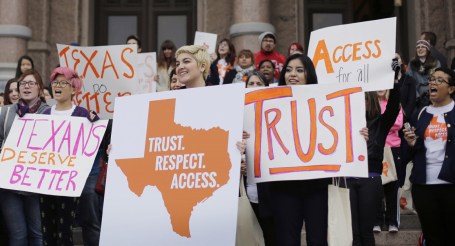
Along with the headline, there was an infographic with this caption: “The Supreme Court Drifts to the Left.” Sadly, this is the way the abortion debate is often now cast: conservative versus liberal, right versus left. But there is far more at stake in this case than just political or ideological points. What is at stake in this case is human lives.
Yes, the lives of the babies lost to abortion are at stake. But so are the lives of the women who suffer through the loss of a child to abortion. Abortion can change profoundly the lives of the women who endure it – and not necessarily for the better. Indeed, some studies have shown that women can suffer under a crushing weight of hidden hurt and regret after obtaining an abortion.
Yet, regardless of its mental, physical, emotional, and spiritual tolls, many in our society continue to fight for the widest possible access to abortion and, as the Supreme Court ruling symptomizes, raising any concerns about the way the abortion industry operates is regularly met with little more than scorn and skepticism. The right to abortion, in this view, is sovereign.
The problem, however, with making the right to abortion sovereign is that it makes physical reality subservient to the human will. The physical reality of life in utero becomes becomes dependent on a person’s choice. To borrow a quip from 2004 presidential candidate Wesley Clark: it means that “life begins with the mother’s decision.”
Except that it doesn’t. Life begins in spite of a person’s choice. But life, tragically, can be ended by a person’s choice. To try to make the physical reality of life subservient to the human will is to deny that physical reality really matters at all. But the denial of physical reality in light of human decision seems to be en vogue – not only with babies in wombs, but with people in their lives.
Several weeks ago on this blog, I wrote about the connection between transgenderism and Platonism. Just like Platonism sees that which is non-corporeal as more important and, in some sense, more real than the physical, transgenderism gives preference to a non-corporeal inner identification over a person’s physical biological sex. Sherif Girgis made a similar observation about the relationship of the physical to the internal in an article for First Things:
The body doesn’t matter…Since I am not my body, I might have been born in the wrong one. Because the real me is internal, my sexual identity is just what I sense it to be. The same goes for other valuable aspects of my identity. My essence is what I say and feel that it is…
On the old view, you could know important things about me unmediated, by knowing something about my body or our shared nature. And our interdependence as persons was as inescapable as our physical incompleteness and need: as male and female, infants and infirm. But if the real me lies within, only I know what I am. You have to take my word for it; I can learn nothing about myself from our communion. And if I emerge only when autonomy does – if I come into the world already thinking and feeling and choosing – it’s easy to overlook our interdependence. I feel free to strike out on my own, and to satisfy my desires less encumbered by others’ needs.[1]
Girgis’ final line is key. If we are fundamentally defined by our internal wills rather than by our physical bodies, our wills must be held as sovereign and defining. Anything and anyone that would encroach on our wills – even a baby growing inside of us – must be put it in its place.
In this way, everything from same-sex marriage to transgenderism to abortion is of one piece. It privileges the human will over everything else. I can choose who I want to marry without any regard for a created complementarianism. I can choose my gender quite apart from what are, in most cases, very clear biological markers. And I can choose to keep a baby inside of me or to rid myself of it.
I understand and am sensitive to the fact that, in each of these cases, there are strong stirrings that can lead to difficult decisions. The stirring of affection for someone of the same-sex can lead to a same-sex marriage. The stirring toward the lifestyles of the opposite gender can lead a person to live as transgender. And the stirring of fear over what it takes to raise a child can lead to an abortion. But even when these stirrings are strong, I think it is worth it to at least ask the question of whether or not it is wise to make human stirrings so defining that they can eclipse and even try to deny actual physical states of being.
According to the Supreme Court, the stirring of a person’s choice in pregnancy is defining. And if anything – even a raising of medical standards for abortion clinics in Texas – impedes that choice, choice must have its way. So it will. And with deadly results.
_________________________
[1] Sherif Girgis, “Obergefell and the New Gnosticism,” First Things (6.28.2016).
The Fight to Defeat Zika
Credit: AP Photo/Felipe Dana
When I searched for it, the first article that came up was from CNN and was titled, “What are the chances I’ll get it?” The “it” is the Zika virus. And right now, the virus constitutes a menacing epidemic.
On the one hand, societies have seen and battled viruses far more serious than Zika. As CNN explains:
Only about one in five people infected with Zika virus will actually become ill, according to the [Centers for Disease Control]. “The most common symptoms of Zika are fever are rash, joint pain or conjunctivitis (red eyes). Other symptoms include muscle pain and headache,” the CDC says. For most people, the illness is mild with symptoms lasting from several days to a week. People don’t usually get sick enough to require a hospital visit, and the virus very rarely results in death.[1]
This is not good, but it is also not particularly devastating. One needs only to remember the Ebola outbreak of 2014 to realize that Zika’s threat pales in comparison. Indeed, the CDC also notes that once a person has contracted the virus, he is likely to be inoculated from future infections.
So why all the concern?
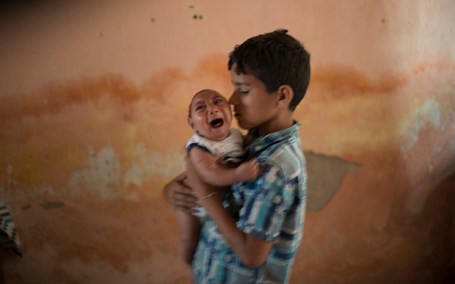
The concern lies primarily in Zika’s adverse effects during pregnancy. The virus has been linked to birth defects that include microcephaly and Guillain-Barré. Furthermore, the disease, it turns out, can be contracted not only from mosquitos, but also from sexual contact. On February 2, Dallas County Health and Human Services confirmed via the CDC that a woman contracted the Zika virus after having unprotected sex with a man who had just returned from a country where Zika is prevalent.
How the Zika virus will run its course and how far it will spread across not only other countries, but across this country, is still to be determined. But this much is already certain: our nation is facing a serious public health threat. As Christians, there are a few things we should keep in mind.
First, we should pray for those who have contracted the virus and we should pray that the spread of the virus would be quickly stymied. Even if the virus does not affect many of the infected adversely, any kind of sickness is never a part of God’s plan for His creation (cf. Matthew 4:23). It is always, therefore, appropriate to pray against disease. Because the virus is spread primarily by mosquitos, we should also pray that the governments of the nations who are being most affected by this virus would quickly develop effective methods of controlling these varmints.
Second, we should continue to declare that every life is precious – even those lives in the womb. Because Zika is widely associated with serious birth defects, many in Latin American countries, where Zika is most prevalent, are beginning to argue for looser abortion restrictions because of the large number of women who are pregnant and who are getting pregnant while being infected with the virus. The Washington Post reports:
Across Latin America, calls to loosen some of the most restrictive abortion laws in the world in the face of the Zika virus outbreak are gaining momentum but encountering strong and entrenched opposition.
In El Salvador, where abortions are banned under any circumstance, the health minister has argued for a revision of the law because of the dangers the virus poses to fetal development.
In Colombia, an organized movement to lift restrictions on abortion has gained allies in the government but has run into determined opposition from religious authorities. The same is happening in Brazil – and some doctors say that as a consequence, illegal, back-alley abortions are on the rise.
Nearly everywhere in Latin America, including in those countries hit hardest by Zika, women who wish to terminate their pregnancies have few legal options. But as U.N. health officials have projected as many as 4 million infections in the Americas this year, activists are pressing lawmakers to act as swiftly as possible to ease rigid restrictions …
“If I were a woman, had just got pregnant and discovered that I had been infected by the Zika virus, I would not hesitate an instant to abort the gestation,” columnist Hélio Schwartsman wrote in the daily newspaper Folha de Sao Paulo. Each mother should be able to follow her own instincts, he said.[2]
To use an epidemic to argue for American-style abortion legalization in countries that have traditionally looked at the practice with moral suspicion defies decency and smacks of the worst kind of political opportunism. The effects that Zika can have on the unborn are devastating. But a moral solution to this concern involves sexual self-control until this epidemic passes. It does not and cannot involve the taking of innocent human life. Indeed, Zika should remind us that sexual intimacy carries with it great power and responsibility. This is true both for the couple enjoying sexual intimacy and for the progeny who can result from such intimacy.
Passing the Zika virus through sexual contact is a real possibility. Thus, even for people who are married, sexual restraint may be in order. Sexual restraint is also necessary in order to avoid dangerous pregnancies. In a hyper-sexualized world, such self-control can appear to be impossible, regressive, and oppressive. But at a time like this, what an act of love it would be for a person to deny himself the pleasures of sex in order to protect both the health of his spouse and the life of one who could come after him. We must ask ourselves: are we willing to love even when it involves self-denial? Or have we become so selfish and base that to deny our desires is out of the question?
Finally, we should refuse to give into fear. Every epidemic raises questions. How will this epidemic be halted? How many lives might it take? How many birth defects might it result in? How widespread may it become? At this point, we do not have answers to these questions. But a lack of answers does not need to lead to an abundance of fear. This is not to say we should not be cautious. But there is a difference between caution and fear. Caution responds to a situation wisely. Fear panics about a situation needlessly.
As Zika continues to spread, I lean on the words of the Psalmist: “Praise the LORD, my soul, and forget not all His benefits – who forgives all your sins and heals all your diseases” (Psalm 103:2-3). The benefits of God are greater than the denouements of disease. Zika will not have the last word.
_____________________
[1] Ben Tinker, “Zika virus: What are the chances I’ll get it? (And other Q&As),” cnn.com (2.9.2016).
[2] Dom Phillips, Nick Miroff and Julia Symmes Cobb, “Zika prompts urgent debate about abortion in Latin America,” The Washington Post (2.8.2016).
Planned Parenthood, Legality, and Morality
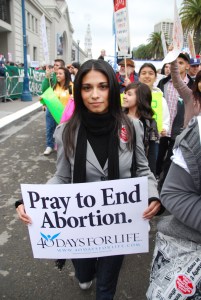 Last July, the Center for Medical Progress began releasing a series of undercover videos cataloguing conversations between its operatives, posing as potential buyers of aborted fetal parts for a human biologics company, and high level Planned Parenthood representatives, who appeared to be willing to sell fetal parts for profit, even if that profit was minimal. Selling fetal parts for profit is a federal offense. Getting reimbursed for the cost of procuring and transferring fetal parts, however, is not. Thus, there has been a protracted debate over whether or not Planned Parenthood has broken the law.
Last week, a grand jury in Houston took its shot at answering this debate. Though the grand jury did not find sufficient evidence to indict Planned Parenthood, it did indict David Daleiden, one of the producers of the undercover videos. Danielle Paquette, writing for The Washington Post, explains the reasoning behind the indictment:
David Daleiden, the director of the Center for Medical Progress, faces a felony charge of tampering with a governmental record and a misdemeanor count related to buying human tissue.[1]
In order to gain access to a Planned Parenthood facility in Houston, Mr. Daleiden and his companion, Sandra Merritt, presented fake California driver’s licenses. According to The Washington Post article, using fake IDs with “intent to cause harm” is a felony for which Mr. Daleiden could face anywhere from two to twenty years in prison if he is convicted. The misdemeanor charge has to do with Mr. Daleiden’s overtures to purchase fetal parts. According to Texas law, it is illegal, irrespective of whether or not Mr. Daleiden’s offers were genuine, to offer to pay for fetal parts.
This is a strange outcome to a sensational story. How many cases are there where a grand jury is asked to decide whether or not it should indict one party and it winds up indicting another party?
The New York Times editorial board came out in favor of the indictment of Mr. Daleiden, writing:
One after the other, investigations of Planned Parenthood prompted by hidden-camera videos released last summer have found no evidence of wrongdoing. On Monday, a grand jury in Harris County, Tex., went a step further. Though it was convened to investigate Planned Parenthood, it indicted two members of the group that made the videos instead.
The Harris County prosecutor, Devon Anderson, a Republican who was asked by the lieutenant governor, a strident opponent of Planned Parenthood, to open the criminal investigation, said on Monday that the grand jurors had cleared Planned Parenthood of any misconduct.
Yet despite all the evidence, Texas’ Republican governor, Greg Abbott, said on Monday that the state attorney general’s office and the State Health and Human Services Commission would continue investigating Planned Parenthood. This is a purely political campaign of intimidation and persecution meant to destroy an organization whose mission to serve women’s health care needs the governor abhors.
Fortunately, in the Harris County case, the jurors considered the facts.[2]
What is most fascinating about The New York Times’ editorial is not its opinion about this case, but how it reports the facts of this case: “One after the other, investigations of Planned Parenthood prompted by hidden-camera videos released last summer have found no evidence of wrongdoing.” It seems as though, for The New York Times editorial board, that which is legal is coterminous with that which is moral. Because Planned Parenthood was not found guilty of doing anything illegal, they must also not have been guilty of any, to use The New York Times’ own terminology, “wrongdoing.”
As a Christian, I have to disagree. The first and final source and arbiter of moral activity – what is right-doing and what is wrongdoing – is not rooted in a humanly contrived legality, but in a graciously given theopneusty.
At the church where I serve, we are preaching and teaching through the book of Judges and I was reminded once again of how the Bible views and treats unborn life when I came to the story of Samson. Samson, most famous for his strength, was also consecrated to the Lord as a Nazirite from before birth. Being a Nazirite involved a vow to reject, among other things, any food or drink made from grapes. When the Lord comes to Samson’s mother and announces that she will bear a deliverer for Israel, He says to her, “Now see to it that you drink no wine or other fermented drink and that you do not eat anything unclean, because you will conceive and give birth to a son” (Judges 13:4-5). Notice that the Lord is concerned not only with Samson keeping his vow, but with his mother keeping his vow in his stead even before he is born. The Lord regards the actions of Samson’s mother as his actions, knowing that her actions can affect the child in her womb not only medically – after all, refraining from “fermented drink” is sage advice for any expecting woman – but also spiritually. Samson’s vow, then, binds him not only from the day of his birth, but from the day of his conception. Why? Because even in the womb, he is alive. And his life is important to God and ought to be kept sacred for God. The taking of any life by abortion, therefore, though it may be legal, is certainly not moral.
As Albert Mohler, president of the Southern Baptist Theological Seminary, rightly points out in his commentary on this story, what The New York Times has posited in its editorial amounts to a kind of legal positivism – a theory of law that, while being acutely concerned with societal legality, has no use for transcendent morality. The editorial board applauds Planned Parenthood simply because its disbursement of fetal parts has been found to be purportedly legal. The board never takes the time, however, to go beyond the legal questions and consider the intrinsic merits and morality of abortion law itself, for these considerations involve all the questions legal positivism does not care or dare to ask. But I would argue that some of the greatest triumphs of justice over the previous century have come not because people were content with the law as it was, but because they strove for a moral standard beyond the law that, at the time, was not, but should be. Watershed victories like women’s suffrage and the Civil Rights Act happened not because editorial boards assumed that the legality of an issue was its warp and woof, but because they knew that legality must work in tandem with a higher morality.
This is not to say that there are no questions to be asked of the Center for Medical Progress. Its action of obtaining fake IDs and having misleading conversations with Planned Parenthood officials raise not only legal concerns, but moral ones too. There is the moral question of deceit. Is it ever moral to lie for the sake of a just cause? Uncovering the true and disturbing nature of what happens at Planned Parenthood clinics is certainly just, but should a person present a fake ID in order to gain access to what happens at these clinics? Rahab told a lie to her compatriots to protect the lives of a group of Israelite spies who had come to case her city, and she is hailed as a hero of the faith in the Bible (cf. Hebrews 11:31)! Can we not do the same?
My personal view is that though there may be an occasional extraordinary circumstance – such as trying to protect a life – where telling a lie is the lesser of two evils, this does not make lying moral, it only makes it understandable and, perhaps, reluctantly preferable. Furthermore, I would hope that we would generally try to avoid willingly placing ourselves in situations where we would feel compelled to lie.
There is also the moral problem of the Center for Medical Progress’ violation of the law in its use of fake IDs. Considering we are called to “be subject to the governing authorities” (Romans 13:1), it is important to ask if it is appropriate to violate the moral law of truthfully representing one’s identity in order to bring to light the immoral practice of aborting babies and harvesting their organs for disbursement.
I would note that even as the actions of the Center for Medical Progress raise some moral questions about truthfulness and legality, Planned Parenthood’s actions raise these same moral quandaries. By all appearances, Planned Parenthood’s desire to be less than forthcoming about its fetal tissue disbursement practices, perhaps even to the point of deceit, and the question of whether or not Planned Parenthood violated any laws in its handling of fetal organs are issues worth pursuing further. Planned Parenthood was, at the very least, living near the edge of the law, which oftentimes leads to, at minimum, isolated instances of going outside of the law.
There are many moral questions that surround this story, but this much is morally certain: Scripturally, putting an end to abortion and the gruesome harvesting of fetal organs for disbursement is one of the great ethical imperatives of our time. In a story that raises many moral question marks, this should be a moral period. This is something for which Christians must call.
___________________
[1] Danielle Paquette,“The charges against anti-Planned Parenthood filmmaker, explained,” The Washington Post (1.26.2016).
[2] The Editorial Board, “Vindication for Planned Parenthood,” The New York Times (1.26.2016).
What If Planned Parenthood Is Sincere?

Credit: AFP Photo/Mandel NGAN
Last week, Cecile Richards, president of Planned Parenthood, announced in a letter to the National Institutes of Health that the organization she heads will no longer be accepting reimbursements of any kind for its disbursements of fetal tissue:
Our Federation has decided, going forward, that any Planned Parenthood health center that is involved in donating tissue after an abortion for medical research will follow the model already in place at one of our two affiliates currently facilitating donations for fetal tissue research. That affiliate accepts no reimbursement for its reasonable expenses – even though reimbursement is fully permitted … Going forward, all of our health centers will follow the same policy, even if it means they will not recover reimbursements permitted.[1]
This new policy comes on the heels of a firestorm over whether or not Planned Parenthood has been illegally selling aborted baby parts for profit. A series of undercover videos published by the Center for Medical Progress appears to show Planned Parenthood officials admitting that they do, in fact, make money off the sale of fetal tissue, even if such profit is minimal. Profit from the sale of fetal tissue is a federal offense.
Upon the release of this new policy, abortion opponents were quick to react with cynicism, asking why, if Planned Parenthood has done nothing wrong as it has been claiming throughout this controversy, the organization would need to change their current policy at all. Bre Payton, writing for The Federalist, opines, “Despite its previous claims of innocence, Planned Parenthood’s announcement today suggests that the organization knew its activities were almost certainly illegal.”[2]
Ms. Payton may be right. It may be that Planned Parenthood knew that what it was doing was illegal and was simply gaming the system. But I’m not so sure. Planned Parenthood’s statement may actually be sincere.
If I was to be accused of some wrongdoing – let’s say, financial mismanagement – not only would I adamantly maintain my innocence if I believed I had done nothing wrong, I would take extra precautionary measures to guard against further accusations. So, using the example I cited above, I may institute an annual independent audit of my income and expenses and share the results with key people in my life to make sure I am held financially accountable. But this would not be an admission I had done something wrong. Rather, it would be an attempt to be above reproach in my finances so that all could see I was committed to doing right.
I have to at least entertain the possibility that Planned Parenthood is acting in this same way by refusing to take any sort of reimbursement for their disbursement of fetal tissue. They may simply be trying to be above approach in how they handle their fetal tissue. If this is the case, however, it terrifies me. Here’s why.
If Planned Parenthood really is simply trying to be above reproach in their fetal tissue disbursements, this means that they truly believe that what they have done is not illegal and, even more disturbingly, not immoral. In other words, it could be that some – indeed, even many – at Planned Parenthood believe that what they are doing by offering abortions and dispersing baby parts is good, needed, and right. What is happening is not flowing out of sinister conniving, but out of genuine conviction.
I used to think people knew somewhere deep-down that abortion was a moral blight on our modern culture. As I have written before, if abortion isn’t self-evidentially morally repulsive, then nothing is. I still believe that most people do know this somewhere within the deep recesses of their souls. But after watching #ShoutYourAbortion trend on Twitter, I have come to recognize that some people do not. Consider these tweets:
I’ve never wanted to have children, so I had an abortion. I’m thriving, without guilt, without shame, without apologies. #ShoutYourAbortion (@favianna, 9.21.2015)
I had an abortion in 2008, and it was the easiest decision I ever made. Long before I got pregnant I had decided that… (Birdy Eugenie-Clark, 9.21.2015)
These women could be lying about their experiences with abortion. But, then again, they could be telling the truth. They really could be okay with and even happy about their abortions.
Columnist Dennis Prager distinguishes between that which “feels good” and that which “does good.” These two things, he notes, are not always the same. Take, for instance, in the realm of parenting:
It feels good to give one’s children what they want, but it rarely does good. It feels good to build children’s self-esteem – giving them trophies for no achievement, for example – but when the self-esteem is unearned, it doesn’t do good. It feels good to provide one’s adult children with money and other material benefits when they should be providing for themselves, but it doesn’t do good. And it feels good to coddle children rather than discipline them. But, same deal: It’s not good for them.[3]
What is true in parenting is true also of abortion. For some people – at least as far as they will publicly admit – abortion may feel good. It may feel good because it relieves a person of the burden of having to raise an unwanted child. It may feel good because it allows a person to have sex without having to worry about its divinely designed procreative telos. It may feel good because it feels empowering. It is the ultimate way to declare, “No one will tell me what to do with my body! Not even nature and nature’s God!” The problem is that many people have made what feels good equivalent to what is good. This is why I am willing to entertain the sincerity of Planned Parenthood’s statement about the trafficking of fetal tissue even if I am not willing to entertain its objective morality. We may have genuinely come to a point in our society where people have bought into a modified version of the old adage my mother once warned me against: “If it feels good, do it!” We now say, “If it feels good, it is good!”
As Christians, we need to continually remember and proclaim that what is good objectively cannot be determined only by what feels good internally. Good needs an external regulator. Christians believe this external regulator is Scripture and, in a secondary way, God’s ordering of creation. Even if our culture flatly rejects the first regulator, they’re still left to grapple with the second. Every pregnancy, even if it ends in abortion, is proof of that.
I hope we’re there to help people grapple with what true good looks like – and to lead them to surrender. Otherwise, this letter from Planned Parenthood will only be the first in a series of sad, but sincere, attempts to be above reproach while engaging in what is morally repulsive. And that would be heartbreaking.
____________________________________
[1] Cecile Richards, “Planned Parenthood Opt-Out,” Planned Parenthood Federation of America (10.13.2015).
[2] Bre Payton, “Planned Parenthood: We’re Going To Stop Doing That Thing We Said Was Totally Legal,” The Federalist (10.13.2015).
[3] Dennis Prager, “Feeling Good vs. Doing Good,” National Review (10.22.2015).
What I Write, How I Write It, and Why

Credit: zen / Foter / CC BY-NC-SA
I write my message on issues. I craft my message on hunches. I hope with my message to make a difference.
These past few weeks have presented me with no shortage of blog-worthy issues to write about. Bruce Jenner became Caitlyn Jenner. The Supreme Court legalized same-sex marriage nationwide. On the heels of a horrific racist shooting in Charleston, a fight erupted over whether and how to display the Confederate flag. And a secret video of a Planned Parenthood executive talking casually about abortion and the sale of aborted fetal tissue was posted on YouTube. It’s been a busy few weeks.
As I’ve been thinking about the crush of big stories that have occupied my thoughts, something struck me regarding two of the stories about which I had written. When writing about the Supreme Court’s ruling on same-sex marriage, my tone was gentle and measured – concerned about ethics, but much more focused on people. When writing about Planned Parenthood, my tone was considerably more straightforward and even somewhat brash. Why?
I write my message on issues. I craft my message on hunches. I hope with my message to make a difference. I just had a hunch that the legalization of same-sex marriage needed to be handled more delicately and interpersonally than the revelation that Planned Parenthood is allegedly selling aborted organs for possible profit. So I crafted my message accordingly.
Ontologically, of course, what advocates of same-sex marriage and Planned Parenthood promote is very similar. Both tout what one author has referred to as “erotic liberty” – that is, freedom to have sex with whom you want, when you want, and how you want without having to consider or confront the natural and reasonable entailments sex brings with it. Sexual desire and autonomy, in this view, cannot be impeded by gender or pregnancy.
But even though these two issues share a great deal in common ontologically, they are perceived in very different ways epistemologically in our broader culture. In other words, the nature of these things in and of themselves may be quite similar, but how people think and talk about these things is very different.
When it comes to same-sex marriage, there is a tension between what people know and what they believe. Most people know that Christianity places certain ethical restrictions on sexual expression. But many cannot bring themselves to believe that these ethical restrictions are reasonable or loving. In a world where it is increasingly difficult – and, I would add, unnecessary and unreasonable – not to have friends, relatives, coworkers, or, at the very least, acquaintances who are in same-sex relationships, believing that such relationships deserve anything less than a full-throated endorsement is a hard pill for many to swallow. After all, so many of these relationships seem healthy and loving. So even if many know what Christianity teaches about sexual intimacy, they have a hard time believing it’s right.
Likewise, when it comes to Planned Parenthood and abortion, there is also a tension between what people know and what people believe. In this instance, however, the tension is inverted. The problem is not so much with what people intuitively believe as it is with what people intellectually know. Most people – regardless of their political sensibilities – can’t help but be viscerally repulsed by Planned Parenthood executives who talk casually about a “‘less crunchy’ technique to get more whole specimens” of aborted organs for medical research and how, when performing an abortion, you have be “cognizant of where you put your graspers, you try to intentionally go above and below the thorax … I’m going to basically crush below, I’m gonna crush above, and I’m gonna see if I can get it all intact.” It is hard to escape a nagging belief that this is not an outright assault against human dignity and life. This is why, when I address abortion, I quickly strip away sterile terms like “dilation,” “curettage,” “aspiration,” “evacuation,” and “Intrauterine Cranial Decompression” to write in frank and sometimes startling terms about what abortion really is: the ending of life in utero. Intuitively, people already believe this. I want people to intellectually know, however, just how grave the situation really is with Planned Parenthood.
In the case of same-sex marriage, people often know what Christianity says about sexual ethics, they just have a hard time believing it. When it comes to Planned Parenthood’s practices, there are a great number of people, including those who publicly support abortion, who believe what Planned Parenthood has done is wrong. They just don’t always know how to express their concerns in ethically rigorous ways.
It is this distinction between knowing and believing that shapes how I have written over these past few weeks. When I write about same-sex marriage, I know I am diving into deeply held and tender beliefs about love. So I address these beliefs tenderly. When I write about Planned Parenthood, I know I am up against a whole host of euphemisms meant to obscure what people actually know about abortion. So I cut through the euphemisms with candor. In the first instance, I’m trying to persuade people to believe a little bit differently. In the second instance, I’m trying to bring attention to something I think people need to know more about.
When we address today’s cultural issues as Christians, it is important to ask ourselves: What are we trying to do? Are we trying to change a belief? Are we trying to share important knowledge? And how do the ways in which we address broad concerns actually make things better?
Though my approach to addressing society’s issues du jour is by no means exhaustive or comprehensive, I hope it proves helpful – at least in a limited way. Frankly, it is born out of a concern that, all too often, when addressing cultural controversies, many of us who are Christians wind up doing little more than beating our chests in self-righteous indignation at our culture’s ills. The problem is, even if this makes us feel better, it does nothing to make our world better. Our world needs gentle persuasion when it believes wrongly. It needs frank facts when it lacks knowledge. But most of all, it needs people who are devoted not only to being right about issues, but to doing good for our world. This is why Jesus, during His earthly ministry, wasn’t just right in what He said, He was righteous in how He said it. And thanks to Him, the world has never been the same.
May Jesus’ legacy be evident in our lives.
What Planned Parenthood Wants You To Believe About Sex
 “Planned Parenthood.” “Selling.” “Aborted Baby Parts.” When a friend first texted me a link with these words in the URL, I knew I was in for a wild ride. The Center for Medical Progress, an anti-abortion group, released a video, recorded in 2014, of two of their operatives, posing as employees from a biotech firm, having a discussion over lunch with Deborah Nucatola, Planned Parenthood’s Senior Director of Medical Research. The Center for Medical Progress claims the video blows the whistle on the trafficking of aborted baby organs. Planned Parenthood disputes these claims. Eric Ferrero, Planned Parenthood’s Vice President of Communications, issued this statement:
In health care, patients sometimes want to donate tissue to scientific research that can help lead to medical breakthroughs, such as treatments and cures for serious diseases. Women at Planned Parenthood who have abortions are no different. At several of our health centers, we help patients who want to donate tissue for scientific research, and we do this just like every other high-quality health care provider does – with full, appropriate consent from patients and under the highest ethical and legal standards. There is no financial benefit for tissue donation for either the patient or for Planned Parenthood. In some instances, actual costs, such as the cost to transport tissue to leading research centers, are reimbursed, which is standard across the medical field.
In the video, however, Ms. Nucatola seems to contradict Mr. Ferrero’s statement when she explains:
I think every provider has had patients who want to donate their tissue, and they absolutely want to accommodate them. They just want to do it in a way that is not perceived as, “This clinic is selling tissue, this clinic is making money off of this.” I know in the Planned Parenthood world they’re very, very sensitive to that. And before an affiliate is gonna do that, they need to, obviously, they’re not – some might do it for free – but they want to come to a number that doesn’t look like they’re making money …
I think for affiliates, at the end of the day, they’re a non-profit, they just don’t want to – they want to break even. And if they can do a little better than break even, and do so in a way that seems reasonable, they’re happy to do that.
Ms. Nucatola’s slippery language is striking. She never asserts that Planned Parenthood is not, as a matter of fact, making money off organs from abortions, she just says Planned Parenthood doesn’t want it to “look like they’re making money.” She even admits, “If they can do a little better than break even … they’re happy to do that.” In other words, Planned Parenthood does make money off selling organs from aborted babies according to Ms. Nucatola, they just don’t make a lot of money off it.
It sounds like Planned Parenthood may be gaming federal law. 42 U.S. Code § 289g–2 states:
It shall be unlawful for any person to knowingly acquire, receive, or otherwise transfer any human fetal tissue for valuable consideration if the transfer affects interstate commerce … [which] does not include reasonable payments associated with the transportation, implantation, processing, preservation, quality control, or storage of human fetal tissue.
Selling fetal tissue for profit is illegal. Getting reimbursed for expenses associated with shipping and processing fetal tissue, however, is not. It seems as though Planned Parenthood will take any money they can claim as reasonable reimbursement for the costs of transporting and processing aborted organs, and if these monies are slightly more than what the actual costs are, so be it – as long as they’re not exorbitant enough to look like “profit.”
Planned Parenthood may not have gamed federal law as well as they thought, however. In the video, Ms. Nucatola links Planned Parenthood to an organization called StemExpress, a company that bills itself as providing “qualified research laboratories with human cells, fluids, blood and tissue products for the pursuit of disease protection and cure.” StemExpress also explains to potential allies that “by partnering with StemExpress, not only are you offering a way for your clients to participate in the unique opportunity to facilitate life-saving research, but you will also be contributing to the fiscal growth of your own clinic.” I’m not sure how “the fiscal growth of your own clinic” can be construed to be anything other than profit for your clinic. And considering the prices StemExpress charges for their fetal organs, if StemExpress does indeed share some portion of their proceeds with Planned Parenthood for the “fiscal growth” of their clinics, it seems awfully shady for them to claim they are not, at least indirectly, profiting, perhaps handsomely, off fetal tissue.
This is really bad. But it gets worse.
In the conversation, Ms. Nucatola also talks about intentional steps clinics will take during abortions to keep a baby’s organs in tact so they can be sold later:
You’re just kind of cognizant of where you put your graspers, you try to intentionally go above and below the thorax, so that, you know, we’ve been very good at getting heart, lung, liver, because we know that, so I’m not gonna crush that part, I’m going to basically crush below, I’m gonna crush above, and I’m gonna see if I can get it all intact. And with the calvarium, in general, some people will actually try to change the presentation so that it’s not vertex, because when it’s vertex presentation, you never have enough dilation at the beginning of the case, unless you have real, huge amount of dilation to deliver an intact calvarium. So if you do it starting from the breech presentation, there’s dilation that happens as the case goes on, and often, the last, you can evacuate an intact calvarium at the end.
This is all deeply disturbing. What is allegedly happening is not only potentially illegal; it is profoundly immoral. In what world is it okay to turn a baby breech so you can smash its legs, kill it, and then harvest its organs for profit? Is there any conceivable scenario where this is okay? Have we decided that a baby, growing in its mother’s womb, is so devoid of any rights and is so unable to be considered life in any meaningful way that it can be stripped of its dignity limb by limb – literally? This is self-evidentially morally repugnant. And if you can’t see that, we no longer need to have a conversation about abortion. We need to have a conversation about nihilism.
This is not to say Planned Parenthood doesn’t have its supporters, even if supporting the organization is a little untenable right now. Amanda Marcotte, writing for Slate Magazine, admits:
As someone who is squeamish, it was extremely difficult for me to listen to Nucatola talk about extracting liver, heart, and other parts to be donated to medical research. (I nearly fainted when a friend showed me the video of her knee operation once.) But people who work in medicine for a living do, in fact, become inured to the gore in a way that can seem strange to those of us who aren’t regularly exposed to it. She also thought she was speaking to people in her profession who would be similarly accustomed to this sort of thing.
Abortion is gross, no doubt about it. It becomes grosser the later in a pregnancy it gets. But so is heart surgery. So is childbirth, for that matter.
Behold, the fallacy of false equivalence. How one can equate the grossness of abortion to the grossness of heart surgery or birth is beyond me. Two of these things sustain life. One of these things, as more honest abortion supporters will admit, ends life. As any child who watches Sesame Street could tell you, “One of these things is not like the other.”
In researching for this blog, I went to Planned Parenthood’s website. I was greeted by a banner that said, “Worried? Had unprotected sex?” It is here that we find the real reason behind Planned Parenthood’s existence. This organization exists to promote sex-on-demand, divorced from any of the entailments that come with it like, in this instance, children. Sex with whom you want, when you want, and how you want is Planned Parenthood’s holy grail. And it is so sacred that they will kill for it – again, literally.
In other posts on this blog, I have painstakingly sought to not flippantly dismiss or diminish the desires and struggles people face when it comes to sexuality. I want to be as sensitive and empathetic as possible. These are, after all, confusing issues that deserve compassionate thought rather than self-righteous ire. But this is not about these issues. In fact, this is not about individuals and abortion. This is not about the woman who has suffered through the trauma of an abortion, though I grieve for you and, I am afraid, many times, with you. This is not about the woman who went too far and is now pregnant and scared and is contemplating an abortion, though I would encourage you to seek guidance and help from people committed to alternatives to abortion. You are in genuinely confusing and painful situations and have my concern, my compassion, and my prayers. This is not about you. This is about Planned Parenthood and their pack of twisted lies that unashamedly promotes the sacrifice of life for sex, which, I should point out, is the precise opposite of what sex is meant for and, by its very nature, is designed to do. Sex is not meant to take life. It’s meant to give it. This is not about personal sexual confusion. This is about an organization’s out and out corruption that has expressed itself again and again in the most macabre of ways – this time, in the sale of aborted organs.
At the risk of being offensive, I think it’s time for us to ask ourselves a few frank questions: Is indulging every sexual impulse in ways that transgress the sanctity of marriage and the security of family really our best strategy for intimacy? Is this really the legacy we want to leave our children, our children’s children, and so on? Is this really the evolutionary ethical curve we want to ride? Is it really beneficial for us to do what we want, when we want, and with whom we want and then use any means necessary to impede the entailments of our actions, even when impeding the entailments of our actions includes ending lives in utero? Is sexual self-control – even when it is difficult and involves some emotional pain – really that out of the question? Have we become that banal? Is Planned Parenthood’s view of human sexuality really the banner we want to wave and the worldview we want to adopt? And does it really take deceitful operatives from an anti-abortion organization secretly videotaping a conversation with Planned Parenthood’s Senior Director of Medical Research, which itself presents us with a whole other set of legal and ethical difficulties, to get us to ask these questions? Shouldn’t we be thinking about the weighty ethical implications and aberrations of abortion even when there’s not a titillating video making its rounds on the Internet?
Ms. Marcotte was right about this much in her article for Slate:
This latest attack on Planned Parenthood is not just about abortion, but about demonizing an organization that makes sex safer and easier, while making it possible for women to plan when they have children.
This is exactly what Planned Parenthood is all about. They’re all about “safe sex,” which, if we’re honest, is just a euphemism for what Ms. Marcotte refers to next: “easy sex” – sex without responsibility, commitment, or offspring. So really, Planned Parenthood is about easy sex – even when easy sex involves dismembering babies and selling their organs. So let me ask:
Is the easy sex worth it?
Hand, Meet Glove: Why We Need Both Justice and Morality
 It was George Washington who, in his farewell address, explained, “Of all the dispositions and habits which lead to political prosperity, religion and morality are indispensable supports.”[1] It was John Adams who, in a letter to Zabdiel Adams, said, “It is religion and morality alone, which can establish the principles upon which freedom can securely stand.”[2] It was Benjamin Franklin who, in a letter to the Abbés Chalut and Arnaud, wrote, “Only a virtuous people are capable of freedom. As nations become corrupt and vicious, they have more need of masters.”[3] The founding fathers of this country saw a rich and deep connection between morality and freedom. And rightly so. As Os Guinness points out:
Sustainable freedom depends on the character of the rulers and the ruled alike, and on the vital trust between them – both of which are far more than a matter of law. The Constitution, which is the foundational law of the land, should be supported and sustained by the faith, character and virtue of the entire citizenry, which comprises its moral constitution, or habits of the heart.[4]
A freedom that lacks morality is not a freedom that will last long. It will hemorrhage to death by the hand of its own hedonism. The founding fathers knew this.
Sadly, for all the concern that many of our founding fathers devoted to morality, ethics, and virtue, their concern did not always translate into active efforts toward justice. The failure to fight the institution of slavery and the racism behind it is just one of the many blights on this country’s history. In such instances, morality needed a push from democracy to blossom into justice, which is a sad twist of irony, considering this nation’s very charter has in its preamble its intention to “establish justice.”
The tragic reality is that our treatment of morality and justice has been and continues to be deeply schizophrenic. We persistently seek to separate one from the other. The philosophical and, for that matter, theological reality, however, is that morality and justice are inextricable concomitants of each other. This is why, in Scripture, we are treated both to warnings against those who “pervert the grace of our God into a license for immorality” (Jude 4) and to warnings against those who “devise injustice, and … mete out violence on the earth” (Psalm 58:2). Morality and justice go together.
Currently, I am concerned that, just as in the earlier days of our nation many preached a morality without justice, we have now moved into a time where many are preach justice while eschewing any steadying moral tiller. For instance, the sexual revolution, culminating in the legalization of abortion in 1973, was hailed by proponents as part of an inexorable march of justice toward freedom. No longer could people be told what to do in their bedrooms or with their bodies! The dragon of old-fashioned, constrictive sexual morality and its connection to marriage had finally been slain and severed. What happened? Those in economically depressed areas of this country found themselves economically oppressed by a new set of sexual freedoms as they had lots of children born outside of old-fashioned, constrictive marriages and, it turns out, born outside of the economic stability these old-fashioned, constrictive marriages afforded. Not even legalized abortion could stem the tide of out-of-wedlock births. It seems as though sexual justice, when ripped from its moorings of sexual morality, only boomeranged back to further perpetuate another kind of injustice – that of economic injustice.
Before we clamor for justice, we should always ask, “Is this justice moral?” And before we pontificate on morality, we should always ask, “Am I willing to turn my moral words into just actions?” Both are needed. Both are Scriptural. But neither are easy. And in a socio-political system where we all too often look for easy, or at least broadly palatable, answers to our society’s most difficult challenges, I’m afraid the hard hurdle of both justice and morality is one few are willing to try to jump.
___________________________________
[1] George Washington, Farewell Address (1796).
[2] John Adams, Letter to Zabdiel Adams (6.21.1776).
[3] Benjamin Franklin, Letter to the Abbés Chalut and Arnaud (4.17.1787).
[4] Os Guinness, A Free People’s Suicide: Sustainable Freedom and the American Future (Downer’s Grove: InterVarsity Press, 2012), 99.


 Pastor Zach's Blog