“Word for Today” – Acts 7 – www.concordialutheranchurch.com
 They arrive in my email inbox almost daily. Because of my solid character and good reputation, a rich financier from somewhere in Africa would like to deposit millions of dollars in my personal bank account of which I, of course, will remain the chief executor. All I have to do is share my personal account information with this person so that she can make the transaction. What a deal! And what a scam! As most people already know, these emails are sent out by the millions by spammers, just hoping that people will send them their account information. For with such sensitive information, these scammers can withdraw, not deposit, money from their victims’ accounts. Sure, the email sounds good, but, as the old saying goes, “If it sounds too good to be true, it probably is.” And indeed, these emails are too good to be true.
Because of the massive amount of misinformation and disinformation floating around the internet, the website snopes.com has become wildly popular in recent years. Snopes is devoted to tracking down spam emails, false claims, and dangerous schemes, examining their claims, and then asking a very simple question: “Is it true?” Does what an email or website claims to offer line up with what it actually delivers?
“Is it true?” This is the question asked of a Christian named Stephen in today’s reading from Acts 7. As Acts 6 concludes, Stephen stands accused by the Jewish religious leaders of his day of “speaking against the temple and against the law” (Acts 6:13). Now, as Acts 7 opens, the high priest has only one question for Stephen: “Are these charges true” (verse 1)? “Are these charges just a scam suitable for Snopes,” the high priest wants to know, “or do you really pose a threat to our temple and our faith system?” Is it true?
Stephen’s answer to this simple question constitutes one of the most eloquent summaries of biblical theology and history in all Scripture. Rather than answering the high priest’s question concerning whether or not the charges against him specifically are true, Stephen launches into a soliloquy concerning truth in general. Indeed, he offers a cogent and beautiful defense of the truth of Scripture – from its reckoning of Abraham to Isaac to Joseph to Moses to Joshua to David to Solomon. “God’s Word is true!” Stephen declares. He then speaks to the charges against him using the truth of Scripture:
The Most High does not live in houses made by men. As the prophet says: “Heaven is my throne, and the earth is my footstool. What kind of house will you build for me? says the Lord. Or where will my resting place be? Has not my hand made all these things?” (verses 48-50)
Quoting Scripture, Stephen says that the Jewish temple is no longer needed. Why? Because “the Most High does not live in houses made by men.” The Most High needs no temple in which to dwell because he dwells in Jesus. Jesus is the temple of God! This is the truth that Stephen declares to his accusers.
“At this they covered their ears…” (verse 57). Stephen proclaims the truth and the religious leaders refuse to listen to it. What a terrible tragedy.
Do you listen to Jesus? Or, like the religious leaders, are there Scriptural teachings at which you cover your ears? Are you listening when God speaks on how you manage your money or how you train your children or how you honor your spouse or how you guard your sexuality? Or, do you turn a deaf ear and remain recalcitrant in sin? Stephen would call us to listen to the truth – to uncover our ears. As the prophet Jeremiah says, “Hear the word of the LORD; open your ears to the words of his mouth” (Jeremiah 9:20). Keep an ear open to God’s Word today. For God will certainly speak to you!
“Word for Today” – Acts 6 – www.concordialutheranchurch.com
 “Keep me as the apple of your eye, hide me in the shadow of your wings” (Psalm 17:8). Such is a prayer of David and a promise of God. We, as the crown of God’s creation and the redeemed of God’s Son, are the apple of God’s eye. Not to give the same weight to a secular proverb as to a Scriptural promise, but an old saying here intersects with this Scriptural axiom: “The apple does not fall far from the tree.”
The origin of this saying is uncertain, although some ascribe it to the famed fourth century BC physician, and the father of modern medicine, Hippocrates. Whatever its origins, this proverb is an apt affirmation that certain traits and habits have a proclivity to be passed on from one generation to the next. To put it another way, “Like father, like son.”
As Jesus’ redeemed, we are called his “children” (cf. 1 John 3:1). And, as Jesus’ children, the proverb, “the apple does not far fall from the tree,” would seem to apply. Indeed, as Jesus himself says, “Remember the words I spoke to you: ‘No servant is greater than his master.’ If they persecuted me, they will persecute you also” (John 15:20). What happens to Jesus, even that which is harsh and harrying, will also happen to us as his children. For the apple does not fall far from the tree.
In our reading for today, we see one such an example of the life of one of Jesus’ children echoing the life of Christ himself. Acts 6 recounts the life – and, sadly, the death – of the first Christian martyr Stephen. The parallels between Jesus’ life and Stephen’s are legion. Consider these:
-
Stephen angers sinful religious leaders who, try as they might, “can not stand up against his wisdom or the Spirit by whom he spoke” (verse 10). Jesus also angers sinful religious leaders who, try as they might, “can not say a word in reply” to Jesus (Matthew 22:46).
-
Stephen is persecuted by these same religious leaders who “stir up the people and the elders and the teachers of the law” (verse 12). Jesus is also persecuted by these religious leaders who “stir up the crowd” (Mark 15:11).
-
Stephen is tried on trumped up charges, brought by “false witnesses, who testified, ‘This fellow never stops speaking against this holy place and against the law’” (verse 13). Jesus too is tried on trumped up charges, also brought by “false witnesses…who declared, ‘This fellow said: I am able to destroy the temple of God and rebuild it in three days’” (Matthew 26:59-60).
The apple does not fall far from the tree. Jesus was persecuted and finally killed. And so Stephen too was persecuted and finally martyred.
As it was with Jesus, so it was with Stephen. And as it was with Stephen, so it is with us. Although we may not be martyred for our faith, we are sure to endure hardship and persecution. In fact, I received an email from a dear congregational member just this past week, seeking some assistance because an atheist friend of his was viciously attacking his faith. Such trials are sure to come. For the apple does not fall far from the tree.
As many hardships as we may have to endure as God’s “apples,” we can be assured of this: We will also enjoy God’s successes and blessings. After all, for all the persecution that Jesus had to endure, those who opposed him could not stop him. And the apple doesn’t fall far from the tree. Those who oppose us won’t be able to stop us either. Indeed, in spite of Stephen’s martyrdom, Acts reminds us, “The Word of God spread” (verse 7). Try as it might, this world’s rage cannot stop the gospel’s spread. For the Gospel is spread by us. And no one – no power or principality, no angel or demon – can thwart us apples of God’s eye, for us apples never fall far from God’s tree. And God can never be stopped! And that means, neither can we. So today, march forth boldly with God’s gospel. For the more people who hear and believe the gospel, the more apples are added to God’s tree. And what a marvelous tree it is. I’m proud to be a part. I hope you are too.
“Word for Today” – Acts 5 – www.concordialutheranchurch.com
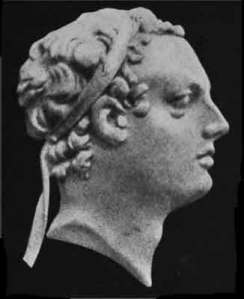 In the second century BC, a Greek dictator named Antiochus IV Epiphanes came to power in the Seleucid Empire, one of the tracts of Alexander the Great’s empire that were doled out to various rulers after its collapse. To put it mildly, Antiochus IV Epiphanes was a ruthless tyrant. He claimed divine epithets for himself as no other ruler had. For example, he demanded that people called him theos epiphanes, or “god manifest.” But his eccentric habits and insane actions led many of his contemporaries to call him Epimanes, a play of the name Epiphanes, meaning “mad one.” And indeed he was.
Antiochus IV Epiphanes hated the Jews and did everything within his power to destroy them. A story passed down to us in the book of 2 Maccabees, a history volume recounting Epiphanes’ reign, tells of seven Jewish brothers who Epiphanes gleefully tortured by flogging them with whips and forcing them to eat pig flesh, an animal declared unclean by Levitical law (cf. Leviticus 11:7). When the brothers proclaimed their continuing fidelity to God in spite of their unjust tortures, Epiphanes became infuriated:
The king fell into a rage and gave order to have pans and caldrons heated. These were heated immediately, and he commanded that the tongue of their spokesman be cut out and that they scalp him and cut off his hands and feet, while the rest of the brothers and the mother looked on. When he was utterly helpless, the king ordered them to take him to the fire, still breathing, and to fry him in a pan. (2 Maccabees 7:3-5)
What a pleasant picture, huh? Following the first brother’s death, each of the remaining six brothers was martyred in the same way. When the king reached the sixth brother, he defiantly warned Epiphanes: “Do not think that you will go unpunished for having tried to fight against God” (2 Maccabees 7:19).
Epiphanes tried to “fight against God.” So said the sixth brother. This phrase is only one word in Greek – theomachos. Theos means “God” and machomai means “to fight.” Epiphanes was a God-fighter. And he lost. He died suddenly of disease in 164 BC and the Jews reclaimed their theology.
In our reading for today from Acts 5, we meet some Jews who are once again being unjustly and heinously tortured. Except that these Jews are not being persecuted at the hands of some mad Greek dictator, they are being tortured at the hands of their fellow Jews for proclaiming the good news of God’s Messiah, Jesus. Like Antiochus, members of the Sanhedrin, the Jewish ruling body, “were furious and wanted to put these ‘Jews for Jesus’ to death” (verse 33). And they would have carried through their plans would it not have been for a religious leader named Gamaliel.
Gamaliel was the most famous and most respected Jewish teacher of that day. Indeed, when Gamaliel died, one admirer wrote, “Since Rabbo Gamaliel the Elder died, there has been no more reverence for the law, and purity and piety died out at the same time” (Mishnah Sotah 9:15). Such was the respect that Gamaliel commanded. Thus, when Gamaliel spoke, everyone listened. And Gamaliel, in the presence of an angry Sanhedrin mob, speaks:
Men of Israel, consider carefully what you intend to do to these men. Some time ago Theudas appeared, claiming to be somebody, and about four hundred men rallied to him. He was killed, all his followers were dispersed, and it all came to nothing. After him, Judas the Galilean appeared in the days of the census and led a band of people in revolt. He too was killed, and all his followers were scattered. Therefore, in the present case I advise you: Leave these men alone! Let them go! For if their purpose or activity is of human origin, it will fail. But if it is from God, you will not be able to stop these men; you will only find yourselves fighting against God. (verses 35-39)
“You will only find yourselves fighting against God.” Theomachos. Gamaliel was accusing his Jewish brothers of acting like Epiphanes. And his accusation was sufficiently stinging: “His speech persuaded them” (verse 40). And these Jews for Jesus lived on to share the gospel.
Fighting against God, as Gamaliel reminds us, is futile. Whether it is out of silly stubbornness, antipathetic anger, or dangerous depravity, you can never win a theomachos. Pharaoh didn’t win when he defied God’s command to free the Israelites from their slavery. Jonah didn’t win when he tried to shirk his preaching duties to Nineveh. And we won’t win if we try to depravedly disregard God’s dictates.
Interestingly, when Luke opens his book of Acts, he begins with this dedication: “In my former book, Theophilus, I wrote about all the things that Jesus began to do and teach until the day he was taken up to heaven” (Acts 1:1-2). Theophilus. A name which means not “God-fighter,” but “God-lover.” Theos means “God” and phileo means “to love.” Luke’s book is not for those who theomachus, but for those who theophilus, even as Christ commands: “Love the Lord your God with all your heart and with all your soul and with all your mind and with all your strength” (Mark 12:30). May we theophilus today…and every day. For God loves us.
“Word for Today” – Acts 4 – www.concordialutheranchurch.com
 Last month was my aunt’s birthday and Melody and I decided to have her over for a homemade birthday supper, complete with homemade birthday cake. In our house, I do most of the cooking, especially when it comes to desserts, and so I was responsible for baking her cake. I settled on a red velvet cake, my aunt’s favorite. And if I do say so myself, it turned out pretty well – a beautiful two layer cake with white icing. I was quite proud of my culinary masterpiece until Melody walked into the kitchen. “Hey,” she said inquisitively, “What’s this red stuff on the counter…and on the linoleum…and on the rug?!” Then I saw it. I had made a mess out of the kitchen. There were red specks – or perhaps, more precisely, red stains – all over our kitchen and even on my shirt. The cake was certainly tasty, but it was not tidy.
In our reading for today from Acts 4, Peter and John are confronted by an angry mob of religious leaders who are disturbed that the disciples are “teaching the people and proclaiming in Jesus the resurrection of the dead” (verse 2). Peter and John are finally hauled before the high priest and are called to account for a man they had miraculously healed in some days earlier (cf. Acts 3:1-10). The high priest and his attendant cronies demand to know: “By what power or what name did you do this” (verse 7)? Peter answers:
Rulers and elders of the people! If we are being called to account today for an act of kindness shown to a cripple and are asked how he was healed, then know this, you and all the people of Israel: It is by the name of Jesus Christ of Nazareth, whom you crucified but whom God raised from the dead, that this man stands before you healed. He is “the stone you builders rejected, which has become the capstone.” Salvation is found in no one else, for there is no other name under heaven given to men by which we must be saved. (verses 8-12)
Peter’s closing words here concerning salvation are some of the most famous in all Scripture. They claim unambiguously and unequivocally that salvation is found only on Christ. What is especially interesting to me, however, is that this response concerning salvation is given to a question concerning a miraculous healing of a cripple. Why would Peter and John answer a question concerning healing with a statement of salvation?
The Greek word for “save” is sozo. Notably, this word is often translated not only as “save,” but as “heal,” and is used regularly of Jesus’ healings (e.g., Matthew 9:22, Mark 6:56, Luke 8:36). Thus, healing is equated with salvation in the gospels. But wait a minute! How can salvation be equated with physical healing? I thought salvation was spiritual eternal life with God!
Salvation is indeed spiritual eternal life with God. But that’s not all it is. For like my red velvet cake left specks of sweetness all over our kitchen, God’s Son Jesus Christ, when he came to this earth, left specks of salvation all over his earth – foretastes of what our final and full salvation with God will be like, where there will be no more sickness, weakness, death, or pain. And so it is when Peter utters his famous words – “Salvation is found in no one else, for there is no other name under heaven given to men by which we must be saved” – the healed cripple is “standing there with them” (verse 14). For he is living, breathing proof of the specks of salvation that God so generously showers on his people. This is why “there was nothing the religious leaders could say” (verse 14). For God’s very salvation was staring them in the face. They could not deny it.
On the one hand, our salvation is still in the future. It has not been and will not be realized fully until the Last Day. On the other hand, specks of God’s salvation abound. From creation itself to modern day miracles to Jesus’ body and blood in Communion, we see specks of God’s good salvation day in and day out. So look carefully today. For God’s specks of salvation are all around you.
“Word for Today” – Acts 3 – www.concordialutheranchurch.com
 One of my favorite photos of all time was taken by a pioneer in photojournalism, Margaret Bourke-White. Bourke-White began her work as a photojournalist at the dawn of the Great Depression in 1929. She began her career with Fortune magazine, but later moved to Life magazine when one of her photos landed on the cover of Life’s inaugural edition in 1936. My favorite photo from her is the one shown here, published in Bourke-White’s book, You Have Seen Their Faces. The book chronicles the difficult and even severe conditions so many faced during the turmoil of the Depression. This particular picture shows people waiting in a soup line following a devastating flood. What makes this picture so striking, obviously, is its sad irony. For those who have been left with nothing are standing in front of a billboard declaring that Americans should have everything.
In our reading for today from Acts 3, we encounter another strange sight, similar to that of Margaret Bourke-White’s Depression-era photo. The chapter opens:
One day Peter and John were going up to the temple at the time of prayer – at three in the afternoon. Now a man crippled from birth was being carried to the temple gate called Beautiful, where he was put every day to beg from those going into the temple courts. (verses 1-2)
Now isn’t this an ironic sight? A man, crippled from birth, his body hideously deformed by a dreaded and incurable disease, begging for money, and lying next to a gate in Jerusalem named “Beautiful.” What an odd combination. But this odd combination is about to be transformed. For on this day, Peter and John have come to the temple for their afternoon prayers.
According to Jewish tradition, a person was to pray three times a day – he was to pray a morning prayer called the shacarit, an afternoon prayer called the mincha, and an evening prayer called the ma’ariv. In Acts 3, Peter and John are on their way to pray the mincha, where according to its traditional liturgical form, they would recite these words from the Psalmist: “The LORD upholds all those who fall and lifts up all who are bowed down” (Psalm 145:14). And on this day, the LORD does exactly this. For on this day, Peter and John behold the maligned man at the gorgeous gate. And Peter, repelled by this sad site, says to the man, “Look at us” (verse 4)! As they lock eyes, Peter continues, “Silver or gold I do not have, but what I have I give you. In the name of Jesus Christ of Nazareth, walk” (verse 6). And the man does. In fact, he does more than simply walk, he jumps: “He went with them into the temple courts, walking and jumping, and praising God” (verse 8).
The Greek word for “jumping” here is hallomai, an extremely rare word that also happens to be found in Isaiah 35:4, 6 to describe the coming of God:
Say to those with fearful hearts, “Be strong, do not fear; your God will come, he will come with vengeance; with divine retribution he will come to save you.” Then will the lame jump like a deer, and the mute tongue shout for joy.
When God comes, Isaiah prophesies, the lame will jump. And in Acts 3, we find that God had come. He had come in Jesus.
The promise of Christ is that one day – on the Last Day when Christ comes again – the sadly ironic pictures of our broken world will fade from our film rolls. Poverty will no longer beg at the feet of riches. Sickness will no longer strewn about next to health. And death will no longer stare down those who are alive. For God’s creation will be perfectly renewed and restored. And it will be perfectly renewed and restored in the name of Jesus Christ of Nazareth. And so we pray not only the prayers of the mincha as Peter and John did on that day in Acts 3, we pray much more. We pray, “Come, Lord Jesus.”
“Word for Today” – Acts 2 – www.concordialutheranchurch.com
 Earlier this month, I endured another birthday. I say I endured another birthday because my birthday is not a favorite day of mine. Indeed, I much prefer a low-key and reflective day rather than a celebratory and boisterous one.
In preparation for my birthday, my wife Melody asked me what I wanted as gifts. I answered as I always do: “Books!” I have an acute case of “bookophilia,” as anyone who has visited my office knows. I love to read theological tomes. I even keep a wish list on amazon.com so that Melody can buy me exactly what I want for special occasions. Not a lot of creativity is needed when choosing a gift for me. Simply select a book from my wish list.
Over the years, it seems that gift giving has gone from being creative to calculated. People are no longer happy with just any gift; rather, they want a specific gift. And if they do not receive that specific gift, they return their unwanted gift to the store. In fact, I stumbled across a website the other day called yourchristmaslist.com. It allows you to, with great specificity, identify what gifts you would like to see under your softly lit Christmas tree on the morning of December 25. Its home page boasts: “Tired of standing in long lines, exchanging all of your unwanted Christmas gifts? Here’s your chance to get what you want this year! Sign up now for a Christmas Gift List!” Clearly, we have become hopelessly particular when it comes to our gifts.
Our attitude toward the gifts of this world has sadly spilled over into the gifts of God’s Spirit. There are some Christians who, with great definitiveness and earnestness, demand that God give them one spiritual gift or another. This is especially true with the so-called “spectacular gifts,” such as the gift of tongues or the gift of healing. But unlike the wish lists we create for our birthdays and Christmas, we can place no such specific demands on the Holy Spirit. Rather, the Spirit passes out his gifts when and where he pleases.
In our reading for today from Acts 2, we read of an outpouring of God’s Spirit that is truly remarkable in the history of the church: the outpouring of God’s Spirit on Pentecost. In this particular instance, God’s Spirit enables Jesus’ disciples to speak in languages they have not learned to spread the message of Jesus. As verse 4 says, “All of them were filled with the Holy Spirit and began to speak in other tongues as the Spirit enabled them.” I like the old King James Version of this verse because it more closely corresponds to the Greek: “And they were all filled with the Holy Ghost, and began to speak with other tongues, as the Spirit gave them utterance.” Did you catch that? The Spirit gave the disciples the ability to speak in tongues. It was a gift. That means they couldn’t coerce or demand their sudden linguistic proficiency. It was a gift given by the Spirit when and where he pleased.
In 1 Corinthians 12, Paul speaks of the Spirit’s gifts thusly:
There are different kinds of gifts, but the same Spirit. To one there is given through the Spirit the message of wisdom, to another the message of knowledge by means of the same Spirit, to another faith by the same Spirit, to another gifts of healing by that one Spirit. (1 Corinthians 12:4, 8-9)
Paul is abundantly clear: Not every person receives every one of the Spirit’s gifts. To one the Spirit gives a certain gift. To another the Spirit gives a different gift. Different gifts for different people. And yet, there is only one Spirit. For it is the “same Spirit” who doles out gifts of wisdom, knowledge, healing, and even tongues. As Christians, we may have different gifts, but we all have the same Spirit. This is why, after Peter receives the spiritual gift of tongues and begins to preach, he finishes his sermon with this invitation: “Repent and be baptized, every one of you, in the name of Jesus Christ for the forgiveness of your sins. And you will receive the gift of the Holy Spirit” (verse 38). The gift of God’s Spirit is for every one of us.
Blessedly, Jesus’ disciples received just the right gift for just the right moment on that Pentecost day. For because they could share the gospel in many languages, “three thousand were added to their number that day” (verse 41). The Spirit’s gift was right on target for the gospel’s cause that day. And the promise is that the Spirit continues to give out gifts to his people that are right on target for the gospel’s cause in our day. So whatever your spiritual gift may be, know that it is just the right gift for you and, perhaps more importantly, it is just the right gift for the cause of God’s kingdom. No spiritual gift wish list needed.
“Word for Today” – Acts 1 – www.concordialutheranchurch.com
 It is one of the most oft quoted statements of Jesus. The setting is the Last Day. The Lord has returned and is going about separating his faithful sheep from Satan’s reprobate goats. To the sheep he says:
Come, you who are blessed by my Father; take your inheritance, the kingdom prepared for you since the creation of the world. For I was hungry and you gave me something to eat, I was thirsty and you gave me something to drink, I was a stranger and you invited me in, I needed clothes and you clothed me, I was sick and you looked after me, I was in prison and you came to visit me. (Matthew 25:34-36)
The sheep, unaware of the kindnesses they had shown to Jesus, are befuddled by Jesus’ commendation. They ask:
When did we see you hungry and feed you, or thirsty and give you something to drink? When did we see you a stranger and invite you in, or needing clothes and clothe you? When did we see you sick or in prison and go to visit you? (Matthew 25:36-39)
Then comes Jesus’ marvelous answer: “I tell you the truth, whatever you did for one of the least of these brothers of mine, you did for me” (Matthew 25:40).
What we do, we do for the Lord. This is a cornerstone of Christian theology. As Paul writes to the little church at Colosse: “Whatever you do, work at it with all your heart, as working for the Lord” (Colossians 3:23).
As true as it may be that as Christians, we are called to work for the Lord, there is even more to our Christian work than this. In our “Word for Today” readings, we begin studying the book of Acts. Like the gospel of Luke, which we have just finished reading, Acts too is written by Luke, a careful historian, respected doctor, and skilled rhetorician. Luke opens his second theological volume thusly:
In my former book, Theophilus, I wrote about all that Jesus began to do and to teach until the day he was taken up to heaven, after giving instructions through the Holy Spirit to the apostles he had chosen. (verses 1-2)
The word “began” in verse 1 has long intrigued me. What does Luke mean when he says that he has written in his gospel “about all that Jesus began to do and teach?” I’ve read Luke’s gospel and it pretty much sums up all of Jesus’ life and work – from his birth to his ascension, from his beginning to his end. What more is there to write about Jesus’ work? How can Luke claim to have written only a beginning?
As we read through Acts, we quickly find our answer. Jesus’ work continues through his people. Indeed, Jesus’ thirty-three short years on this earth were truly only a beginning. For his work has continued through all those Christians who feed the hungry, give the thirsty something to drink, invite the stranger in, clothe the needy, and visit the prisoner. And this is the other side our Christian life. It’s not just that we do things for Jesus, it’s that Jesus does things through us. His work has just begun.
One of my favorite songs growing up was a 1970 hit by the brother and sister duo, the Carpenters. It was titled, “We’ve Only Just Begun.” Originally a jingle for a bank commercial, Richard Carpenter turned it into one of the Carpenters’ most successful singles. The lyrics sing of a newly wedded couple and how their life together has only just begun.
As Christians, we believe and trust that whether we are at the beginning of our earthly life or nearing our end, our life in Christ has “only just begun.” Even as Jesus’ incarnation, death, resurrection, and ascension was only just the beginning of a mission that has continued for some 2,000 years, our temporal lives are only just the beginning of our eternal ones. And so, just as we will for all eternity, we continue our work for Jesus. And Jesus continues his work through us. And praise be to God, this is only just the beginning. There is so much more life in Christ to come, for there is an eternal life in Christ to come!
“Word for Today” – Luke 24 – www.concordialutheranchurch.com
 Mnemonic devices saved my college career. As part of my studies to become a pastor, I had to take New Testament Greek. And gazing at vocabulary list after vocabulary list caused my memory of these lists to eventually fade and falter. I had to come up with a way to remember all these words and remember them well. Thus, I turned to mnemonics. For example, the verb for “see” in Greek is blepo. “I see the blimp,” I would think to myself. See = blepo. Or how about the word for “good”? In Greek, it’s kalos. To remember this, I would think to myself, “She isn’t a callous person, she’s good.” Good = kalos. I know these associations may sound strange and even far-fetched. But they worked. I remember them to this day.
In our reading for today from Luke 24, we encounter a glorious account of Christ’s resurrection. We know the story well. It is early on a Sunday morning. Mary Magdalene and Mary come to Jesus’ tomb to embalm Jesus’ body. But instead of finding their deceased friend, they find two men clad in white who announce:
Why do you look for the living among the dead? He is not here; he has risen! Remember how he told you, while he was still in Galilee: “The Son of Man must be delivered into the hands of sinful men, be crucified and on the third day be raised again.” (verses 6-7)
“Remember how Jesus told you: He will be crucified and on the third day be raised again.” This is the angels’ instruction to these women. That’s kind of a strange instruction, don’t you think? I mean, how could they forget something as intriguing as a prophetic announcement of a resurrection? If someone was to tell me that they would be killed, but then would be raised to life again, I would hope that I would remember their words, if for no other reason than that I would think they had taken leave of their senses! How could the women forget such an unusual and seemingly outlandish claim?
The men in Luke 24 do not fair much better. As the chapter continues, we meet two men journeying to Damascus. Jesus appears to them on the road, but they do not recognize him. Noticing that they are deep in conversation, Jesus asks them, “What are you discussing together as you walk along” (verse 17)? These men respond:
We are discussing Jesus of Nazareth. He was a prophet, powerful in word and deed before God and all the people. The chief priests and our rulers handed him over to be sentenced to death, and they crucified him; but we had hoped that he was the one who was going to redeem Israel. And what is more, it is the third day since all this took place. In addition, some of our women amazed us. They went to the tomb early this morning but didn’t find his body. They came and told us that they had seen a vision of angels, who said he was alive. (verses 19-23)
These men note that Jesus is reported to be alive, but they refuse to affirm this, even though he foretold his resurrection on many occasions. Interestingly, Jewish tradition taught that the soul would remain near its body for three days, hoping to return to it, after which time it gave up hope and depart for good. Thus, when these men say to Jesus, “It is the third day since all this took place” (verse 21), they seem to be saying, “Jesus’ body is missing, but he can’t be alive. His soul has already departed. It’s already been three days!” They too have forgotten Jesus’ promise of resurrection.
Besides mnemonic devices, one of the things which helps me remember important truth is sheer repetition. When I am preparing for a sermon, for instance, you can find me holed up in my office, rehearsing my remarks again and again. Eventually, after practicing my sermon several times, it is committed to memory. Thus is the case with the women and men of Luke 24. They have already heard Jesus’ promise of resurrection many times. But they have forgotten. And so they are reminded once more. Jesus repeats himself. He says to the men traveling to Damascus, “Did not the Christ have to suffer these things and then enter his glory” (verse 26)? Jesus reminds them of what they have been formerly taught.
Faulty human memory is the reason that week after week, month after month, year after year, and even decade after decade now, Concordia has proclaimed and will continue to proclaim the suffering, death, and resurrection of Jesus for the forgiveness of our sins. Like the women at the tomb and the men on the road, we prove sadly forgetful if we are not reminded of Jesus’ gospel again and again. And besides, this gospel is a gospel that never gets old. For this gospel is a gospel which promises us our salvation. And who wouldn’t want to be reminded of a gospel like that again and again?
“Word for Today” – Luke 23 – www.concordialutheranchurch.com
 At Concordia, we are currently in a teaching series covering the life of Moses titled, “Never Lost.” Thus, I have been spending a fair amount of time in the book of Exodus lately. In Exodus 2, Moses, after he inadvertently kills an Egyptian soldier (cf. Exodus 2:12), flees to the wilderness of Midian where he meets a man named Reuel (cf. Exodus 2:18-21). Although it’s not common, “Reuel” has quickly become a favorite name of mine. It is from the Hebrew words re’eh, meaning “friend,” and el, meaning “God.” What a wonderful moniker – to be called a friend of God.
Even today, being God’s friend is a notion which delights and comforts countless Christians. Phillips, Craig, and Dean sing a song which declares, “I am a friend of God.” More classically, I have been to nary a funeral where they have not sung, as consolation for grieving hearts and souls, “What a Friend We Have in Jesus.” As people who believe in God, we trust not only that he is the transcendent sovereign of the universe, but also our immanent friend.
As much as we may want to be God’s friend, we also struggle giving up other affections which would damage and even destroy our friendship with God. As Jesus’ brother James warns us, “Don’t you know that friendship with the world is hatred toward God” (James 4:4)? It is a difficult, and finally impossible, feat to be a friend of God while also maintaining ties with wicked ways of this world. Consider Pontius Pilate, for instance, in our reading for today from Luke 23.
During this time, Pilate’s political career is on the rocks. His approval ratings are plummeting. The first century Jewish philosopher Philo relays the story of how Pilate had some golden shields inscribed with a dedication to the emperor of Rome at this time, Tiberius Caesar, and thus infuriated the Jews:
Pilate, not more with the object of doing honor to Tiberius than with that of vexing the multitude, dedicated some gilt shields…in the holy city…But when the multitude heard what had been done…they entreated him to alter and to rectify the innovation which he had committed in respect of the shields…But he steadfastly refused this petition, for he was a man of a very inflexible disposition, and very merciless as well as very obstinate. (Philo, On the Embassy to Gaius, par. 299-301)
For the Jews at this time, even an inscription dedicated to someone other than God smacked of idolatry and thus offended their religious sensibilities. In response to Pilate’s offense, the Jewish leaders crafted a letter of protest which Herod Antipas, one of the tetrarchs of Palestine, eagerly forwarded to Tiberius in an attempt to bolster his own political capital. Upon receiving the letter, Tiberius shot off a nasty letter to Pilate, demanding that he remove the offensive shields. This episode made Pilate and Herod Antipas bitter enemies.
In Luke 23, then, Pilate faces a choice. He can either strike back at Herod Antipas with a political low blow – some sort of smear campaign – or he can show him kindness – offer him an olive branch of sorts – in hopes of mending their broken relationship and thus better cementing his own political position because he has newfound friends in high places. Pilate opts for the latter. Knowing that Antipas has long been a fan of Jesus (cf. verse 8), when Jesus lands in Pilate’s Praetorium, accused of insurrection, Pilate ships him off to Antipas as a goodwill gesture. Thus Luke writes: “That day Herod and Pilate became friends – before this they had been enemies” (verse 12).
“Herod and Pilate became friends.” Pilate uses his shrewd political prowess to make a new friend. The problem is, he made friends with the wrong guy. He opted for friendship with a ruler of the world rather than friendship with the Son of God. And when he has yet another opportunity to befriend Jesus and stand fast against those who falsely accuse him, he instead “surrenders Jesus to their will” (verse 25). Jesus is crucified.
Friendship means fidelity. In other words, friendship with God means you can’t rely on God and his ways while also flirting with ways of this world. To be a friend of Christ means to be a friend of Christ alone. Thankfully, Jesus is a forgiving friend. Even when we run off to befriend the world, Jesus still stands with his hand outstretched, inviting us back to friendship with him. I hope he is a friend of yours, for he wants to be. And there is no better friend to have.
“Word for Today” – Luke 22 – www.concordialutheranchurch.com
 He’s six foot three and 220 pounds. He has charm, charisma, and poise. He just turned nineteen and is a freshman at USC. He is also their starting quarterback. His name is Matt Barkley.
I have to admit that I am no fan of the Trojans. I am a dyed in the wool Texas Longhorn through and through. But even I am watching with interest to see what USC’s quarterback can do. He definitely has raw talent. The question on everyone’s mind, however, is, “Can mere raw talent carry a football program at prestigious and ambitious as USC’s to victory, or will Matt Barkley choke under the pressure of having to play California and Ohio State?” Doesn’t USC need someone with more experience? Someone who is more trained in the rigors of the national football stage? Time will tell. And I’ll be watching.
In our reading for today from Luke 22, Jesus’ end is drawing near. Indeed, Jesus is facing a challenge much more rigorous and taxing than having to play California and Ohio State combined. For Jesus is on his way to his death – his death on a cross. Perhaps Jesus, in the face of such of a terrible fate, will run and hide from those who seek his life. Perhaps he, as the Son of God, will crush his opponents with a divine fury that he could surely and effortlessly deliver.
Jesus does neither of these things. Instead, Luke informs us that, in preparation for his crucifixion, “Jesus went out as usual to the Mount of Olives, and his disciples followed him. On reaching that place…he withdrew about a stone’s throw beyond them, knelt down and prayed” (verses 39-41). Jesus, as he faces the most harrowing moment of his ministry and life, prays to his heavenly Father.
Quite honestly, if I was faced with the same plight, I don’t think I would respond with the same kind of spiritual fortitude with which Jesus responds. His disciples certainly don’t. When questioned about his relationship to Jesus, Peter denies that he even knows him (cf. verses 54-62) and the other disciples desert him in terror (cf. Matthew 26:56).
So how does Jesus do this? How does Jesus keep his spiritual grounding even in the midst of his impending death? Luke gives us a clue: “Jesus went out as usual to the Mount of Olives” (verse 39) where he prayed. The Greek word for the phrase “as usual” is ethos, denoting the characteristic spirit of a person’s being. In other words, Jesus’ prayer at the Mount of Olives is something which flows from the very core of his being. It is his very ethos to pray, for this is not the first time that Jesus has been to this mount to commune and communicate with his heavenly Father. Indeed, it has become usual practice for him. As Luke earlier informs us, “Each day Jesus was teaching at the temple, and each evening he went out to spend the night on the hill called the Mount of Olives” (Luke 21:37). Jesus has spent a lot of time on this mount praying to heavenly Father. Now, when facing his darkest moment, Jesus does not lose his spiritual grounding. He does not “choke,” as it were, because of his previous training in praying with his heavenly Father. Jesus thus completes his mission and defeats his opponent Satan.
The apostle Paul writes, “Everyone who competes in the games goes into strict training. They do it to get a crown that will not last; but we do it to get a crown that will last forever” (1 Corinthians 9:25). Paul says that, like Jesus, there are some things we ought to be doing as usual practice. For these things are training for our souls. Things like Bible study, prayer, worship, and fellowship are invaluable so that we do not “choke” when we face the allures of sin and the challenges of this world. In fact, Jesus himself gives us precious training for our souls when he offers to us his body and blood and then says, “Do this in remembrance of me” (verse 19). Jesus wants communion with him in his supper to become usual practice for us.
In what ways can you continue to train your soul so that when a big trial or challenge comes, you do not “choke”? Without God’s Spirit, we would certainly all choke at the faintest hint of sinful temptation and yet, blessedly, God’s Spirit uses what we do as usual in our lives to help us resist temptation at the monumental crossroads of our lives. So today, do what you usually do. But remember, just because it’s usual, doesn’t mean it’s insignificant. For it is in the usual that God trains our souls.


 Pastor Zach's Blog