“Word for Today” – Acts 17 – www.concordialutheranchurch.com
 It was a Mensa Select prizewinner in 1999, although I’m not quite sure why since the game is not particularly challenging. It was also named the “Party Game of the Year” by Games magazine and has received the seal of approval of the National Parenting Center. The game is Apples to Apples.
Apples to Apples is the ultimate exercise in loose – and I mean very loose – associations. Each player draws seven red apple cards, each of which has a noun such as “Canada,” or “Spanish Inquisition,” or “National Park” on it. One player then draws a single green apple card, containing an adjective such as “patriotic,” or “repelling,” or “frightening” on it. Every player then chooses a red apple card to the give to the player holding the green apple card, trying to associate their nouns on the red apple cards with the adjective on the green apple card. And some of these associations can be quite hilarious, if not downright ridiculous. For example, a player once drew a green apple card with the adjective “greasy” on it. I couldn’t resist. I gave them my red apple card with “Tom Arnold” on it. I won that round.
In our reading for today from Acts 17, Paul encounters what is perhaps the most strident opposition so far to his preaching of the gospel. While in Thessalonica, some jealous Jews form a riotous mob to protest Paul’s preaching (cf. verse 5). Paul is thus forced to move to Berea, only to have these same shady characters follow him there (cf. verse 13), once again prompting him to move, this time to Athens. While in Athens, Paul again encounters resistance to his message: “A group of Epicurean and Stoic philosophers began to dispute with him. Some of them asked, ‘What is this babbler trying to say’” (verse 18)? The Greek word for “babbler” is spermologos, a word describing someone who pecks at and picks up ideas and then spits them out again without fully digesting and synthesizing their meaning, much like a bird picks up seed only to drop it again. These philosophers, then, are accusing Paul of having a rudimentary rhetoric, not suitable for or persuasive to the more enlightened and educated likes of them. Paul’s theological associations, these philosophers would say, are too loose. It’s like he’s playing a game of Apples to Apples with theological ideas, none of which fit together tightly enough to impress these elitists.
Theological arguments are of a unique sort. No matter how reasoned, intelligent, and cohesive they may be, there always will be some who will look on them with utter disdain. They will always demand just one more attestation of God’s existence, just one more existential loophole closed. Indeed, this is precisely the kind of demand that Jesus himself encounters while on the cross. Even after a multitude of miracles, signs, and wonders, many still refuse to believe in him. They say to him, “He’s the King of Israel! Let him come down now from the cross, and we will believe in him” (Matthew 27:42). These passers-by promise to believe if only Jesus will just once more verify his identity with a miracle. But be assured, even if Jesus would have wrenched himself away from the cross, these people still wouldn’t have believed, as Matthew clues us into when he describes their request of Jesus as “mocking” (cf. Matthew 27:41). In other words, these people were not honestly seeking truth. Instead, they were sardonically scorning Jesus.
So it is with Paul at Athens. Make no mistake, Paul intelligently and forcefully argued for the truth of the gospel. Yet there were some, no matter how cogent Paul’s argument may have been, who simply refused to believe and instead chose to disdainfully mock Paul’s mental faculties. They called him “spermologos.” And yet Paul, undaunted and undeterred by their ad hominem attacks, pressed forward in his proclamation of the gospel. For Paul was willing to be derided as a babbler for Jesus.
How about you? Are you willing to be a babbler for Jesus? Some will call you “foolish.” Some will call you “inept.” Some will even call you “extreme.” But even as the Psalmist exclaims, “I would rather be a doorkeeper in the house of my God than dwell in the tents of the wicked” (Psalm 84:10), so also should we rather be a babbler for Jesus than wise in the eyes of the world. For though this world may rage against the Christian message, it cannot conquer it. For the Christian message is the very message of salvation. And that’s enough to make me a babbler for Jesus any day.
I hope you’ve enjoyed my babble for today. More babble to come tomorrow.
“Word for Today” – Acts 16 – www.concordialutheranchurch.com
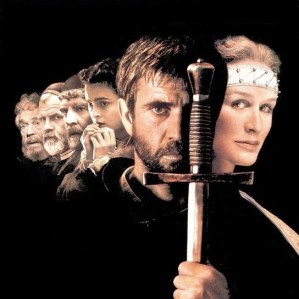
They are some of the most famous words ever spoken in English. Act three, scene one. Hamlet reflects:
To be, or not to be: that is the question:
Whether ‘tis nobler in the mind to suffer
The slings and arrows of outrageous fortune,
Or to take arms against a sea of troubles,
And by opposing end them? To die: to sleep;
No more; and by a sleep to say we end
The heart-ache and the thousand natural shocks
That flesh is heir to, ‘tis a consummation
Devoutly to be wish’d.
Although these words are dearly cherished by Shakespeare lovers everywhere, I have never cared for them that much. For Hamlet sings the praises not of his “to be,” but of his “not to be.” That is, he wishes for death so that his suffering and trouble may end, although later in his soliloquy, he somberly notes that not even death promises certain bliss:
But that the dread of something after death,
The undiscover’d country from whose bourn
No traveller returns, puzzles the will
And makes us rather bear those ills we have
Than fly to others that we know not of?
Thus, Hamlet remains ambiguous toward his very life – wavering between the options of “to be” and “not to be.”
Hamlet’s famous opening line – “To be, or not to be: that is the question” – has become a cliché way of expressing ambiguity toward two competing options. Almost every verb imaginable has been substituted in place of Hamlet’s “to be.” “To eat or not to eat: that is the question.” “To work or not to work: that is the question.” I’ve even come across, in tribute to our technological obsession, “To text or not to text while driving: that is the question.”
In our reading for today from Acts 16, we once again find use for Hamlet’s famous query. Our text opens:
Paul came to Derbe and then to Lystra, where a disciple named Timothy lived, whose mother was a Jewess and a believer, but whose father was a Greek. The brothers at Lystra and Iconium spoke well of him. Paul wanted to take him along on the journey, so he circumcised him because of the Jews who lived in that area, for they all knew that his father was a Greek. (verses 1-3)
Now wait a minute! I thought in the previous chapter, the Christian church met in council at Jerusalem and concluded that “we should not make it difficult for the Gentiles who are turning to God” (Acts 15:19). Therefore, circumcision of the uncircumcised was not to be required. Why does Paul here require Timothy to be circumcised? To paraphrase Hamlet: “To circumcise or not to circumcise: that is the question!”
Clearly, Timothy’s circumcision is not connected to his salvation. For the church has always believed that “it is through the grace of our Lord Jesus that we are saved” (Acts 15:11), not by any effort of our own, including that of circumcision. No, Timothy is circumcised not for salvation, but out of consideration – consideration toward those Jews who had long included circumcision as a primary part of their piety. Because Timothy will be ministering among them, out of respect, he becomes like one of them so that they will be maximally open to his sharing of Christ’s gospel.
“To be or not to be: that is the question.” The Bible’s answer is consistently, “to be.” As Paul writes:
To the Jews I became like a Jew, to win the Jews. To those under the law I became like one under the law (though I myself am not under the law), so as to win those under the law. To those not having the law I became like one not having the law (though I am not free from God’s law but am under Christ’s law), so as to win those not having the law. To the weak I became weak, to win the weak. I have become all things to all men so that by all possible means I might save some. (1 Corinthians 9:20-22)
Paul is willing to become many things to many people to share the most important thing with all people: the grace of God through Christ.
How about you? Who can you be to share the gospel? Can you be a friend to someone in need? Can you be a listening ear to one who is hurting? Can you be a crier of repentance to someone who is sinning? Who can you be to share the gospel? My prayer for you today is that, moved by deep compassion toward others, you would be all you can be for the sake of the gospel. For Hamlet’s “to be or not to be” is not really a question for the Christian. We are called to be ambassadors of Christ’s gospel. No question about it.
“Word for Today” – Acts 15 – www.concordialutheranchurch.com
 “Choose your battles wisely.” What parent hasn’t had to remind themselves of this axiom when their teenager comes home with that crazy haircut? Or when the boss makes that unreasonable demand? Or when that relative demands that the rest of the family come to their house for Christmas? “Choose your battles wisely,” you’ll say to yourself in your best self-soothing tone. “It’s no big deal.”
Our text for today from Acts 15 opens thusly: “Some men came down from Judea to Antioch and were teaching the brothers: ‘Unless you are circumcised, according to the custom of Moses, you cannot be saved’” (verse 1). Hmmm. That doesn’t sound quite right. Isn’t the message of the gospel, “Clearly no one is justified before God by the law [of Moses], because, ‘The righteous will live by faith’” (Galatians 2:11)? How is it, then, that these men are making a law from Moses necessary for salvation?
Listening to these men and their claims concerning the law of Moses were Paul and Barnabas, both champions of the doctrine of salvation through grace by faith in Christ, and apart from works of the law. The question is: “How will they respond to these men who are in error? Will they simply say to themselves, ‘I ought to choose my battles wisely. This is no big deal.’” Hardly. Luke continues: “This brought Paul and Barnabas into sharp dispute and debate with them.” The Greek for the phrase “sharp dispute” is ouk oliges zetezeos, meaning literally, “no small dispute.” In other words, not only did Paul and Barnabas do battle with these men, they did big battle with these men. For what these men were teaching was a big deal. They were corrupting the very gospel of Jesus Christ.
What these men were teaching was such a big deal that the believers decided to travel to Jerusalem and hold the first ever church council to discuss the issue. Luke tells us that there was “much discussion” (verse 7). After all, this was a battle worth fighting – a topic worth discussing. Finally, Peter stands up and says:
Brothers, you know that some time ago God made a choice among you that the Gentiles might hear from my lips the message of the gospel and believe. God, who knows the heart, showed that he accepted them by giving the Holy Spirit to them, just as he did to us. He made no distinction between us and them, for he purified their hearts by faith. Now then, why do you try to test God by putting on the necks of the disciples a yoke that neither we nor our fathers have been able to bear? No! We believe it is through the grace of our Lord Jesus that we are saved, just as they are. (verses 7-11)
Peter has clearly drawn his line in the sand and staked out his claim: The Gentiles need not be circumcised in order to be saved, for this would contradict the message of grace which is the very heartbeat of the gospel. The church council agreed. Paul and Barnabas fought a battle over the gospel and the gospel won.
The old proverb, “Choose your battles wisely” is all too readily interpreted by some to mean, “Choose as few battles as possible! Avoid conflict at all cost! Keep the peace, even it means compromising or hiding what you believe.” But this is a gross misinterpretation and misrepresentation of this axiom. For at the same time we must choose our battles wisely, we must also always remember that some battles are worth fighting. And the battle for the gospel of Jesus is always worth fighting.
As in Acts 15, in our day, the gospel of Jesus is still trampled. It is trampled by those outside the church who deny and even denounce Christ. It is trampled by those inside the church who arrogantly claim that their salvation is in someway connected to their own righteousness rather than to the cross of Christ alone. But like Paul, Barnabas, and Peter, we can take a principled stand for the gospel. This is not easy, mind you. Sometimes there can be “much discussion” concerning the gospel, some of which can be difficult and lengthy. But the gospel is always worth it. For the gospel tells of a Savior who forgives sins and saves people. And people’s eternities are worth the fight. Your eternity was worth the fight. That’s why your Savior fought for you on the cross. Your call, now, is to fight so that others hear of him.
“Word for Today” – Acts 14 – www.concordialutheranchurch.com
 One afternoon, a long time ago, I was planning to host a night of food and football with some friends. After thinking about what dish I could prepare for what was to be a television watching, small talk making, male-bonding event, I finally settled on the perfect cuisine for any and every gathering of carnivorous males: pizza. I would make a pizza – with lots of pepperoni, beef, Italian sausage, and ham, of course. After carefully preparing and baking my cholesterol laden, artery clogging masterpiece, I proudly pulled it from the oven. But then, it happened. As I removed my pizza, my finger slipped off the potholder right into the middle of a bubbling, skin-searing mound of cheese. “Ouch!” I yelped, as I began to lose my grip on the pizza. And before I knew it, my culinary tour de force was lying toppings-down on the kitchen floor.
Immediately, my mind began to race: “What do I do? I don’t have time to make another pizza. But I can’t serve my buddies a pizza I just dropped on the floor. Wait! The five second rule! But it’s already been ten seconds. Okay, the ten second rule! It’ll be fine. After all, what they don’t know won’t hurt them.”
“What they don’t know won’t hurt them.” Maybe you’ve said these words before too. You made a mistake that no one knows about. You received credit for something that really wasn’t due you. Sure, you could say something, but what people don’t know won’t hurt them. Right?
Our reading for today from Acts 14 relays what is one of the most peculiar encounters that Paul and Barnabas have in all their travels. It takes place in Lystra after Paul has healed crippled man in front of a large crowd:
When the crowd saw what Paul had done, they shouted in the Lycaonian language, “The gods have come down to us in human form!” Barnabas they called Zeus, and Paul they called Hermes because he was the chief speaker. The priest of Zeus, whose temple was just outside the city, brought bulls and wreaths to the city gates because he and the crowd wanted to offer sacrifices to them. (verses 11-13)
This crowd’s bazaar actions, it seems, stem from an ancient legend, told by the Roman poet Ovid that, once upon a time, the gods Zeus and Hermes visited the Phrygian hill country, disguised as mortals, looking for a place to stay. After asking at a thousand homes, and being rejected by all of them, they came to the shack of an elderly husband and wife, Pilemon and Baucis, meagerly cobbled out of straw and reeds. This tender couple welcomed the gods. In gratitude, Zeus and Hermes transformed their shack into a temple with a golden roof and marble columns. Lystra’s current residents, seeing Paul’s miraculous healing, seem to think that, once again, “the gods have come down in human form,” and seem determined not to miss their chance to be hospitable to them.
It is at this point that Paul and Barnabas have a decision to make. Do they tell these misguided superstitionists that they’re not really divine or do they just keep quiet and receive their frenzied adoration and adulation? After all, what they don’t know won’t hurt them. Right?
Paul and Barnabas opt for honesty over accolades:
Men, why are you doing this? We too are only men, human like you. We are bringing you good news, telling you to turn from these worthless things to the living God, who made heaven and earth and sea and everything in them. (verse 15)
Shortly thereafter, Luke tells us: “Some Jews came from Antioch and Iconium and won the crowd over. They stoned Paul and dragged him outside the city” (verse 19). From acclaim to attempted execution, all in four verses – that’s what Paul gets for telling the truth.
Do you ever withhold the truth and simply receive what comes your way, even when you know it is not rightfully yours? When the grocery store cashier inadvertently forgets to charge you for an item, do you point out the oversight? When the ticket office at the brand new Cowboys Stadium accidently gives you much better seats to the game than you paid for, do you mention it to the attendant? Or, do you simply excuse yourself from any culpability by whispering under your breath, “What they don’t know won’t hurt them.”
One of the great calls to Christianity is its call to honesty. In the gospels, Jesus says, “I tell you the truth” some seventy eight times. Clearly, Christianity is obsessed with the truth and with telling the truth. For, in the final analysis, Christianity teaches that what people don’t know can hurt them. As Paul later says to those in Athens, “In the past God overlooked such ignorance, but now he commands all people everywhere to repent” (Acts 17:30). What you don’t know can not only hurt you, it can damn you. Thus, we are called to tell the truth, especially the truth about God. So share the truth – about yourself, about others, and about God – today and every day.
“Word for Today” – Acts 13 – www.concordialutheranchurch.com
 “Therefore, encourage each other and build each other up” (1 Thessalonians 5:11). So says the apostle Paul to the church at Thessalonica. The fourth century church father, Gregory of Nyssa, paints a beautiful picture of what Paul’s admonition to “encourage each other” might look like:
At horse races, the spectators intent on victory shout to their favorites in the contest, even though the horses are eager to run. From the stands, they participate in the race with their eye, thinking to incite the charioteer to keener effort, at the same time urging the horses on while leaning forward and flailing the air with their outstretched hands instead of with a whip. They do this not because their actions themselves contribute anything to the victory; but in this way, by their good will, they eagerly show in voice and deed their concern for the contestants. I seem to be doing the same thing myself, most valued friend and brother. While you are competing admirably in the divine race along the course of virtue, lightfootedly leaping and straining constantly for the prize of the heavenly calling, I exhort, urge and encourage you vigorously. (Gregory of Nyssa, The Life of Moses, Prologue)
This is one of my favorite illustrations of what it means to “encourage each other.” While each of us are treading on life’s track, our fellow brothers and sisters in Christ are in the stands, cheering us, supporting us, and calling us to “run with perseverance the race marked out for us” (Hebrews 12:2).
In our reading for today from Acts 13, Paul and Barnabas are deployed from Antioch on a joint missionary jaunt. Upon arriving Pisidian Antioch, they receive this request from the rulers of the local synagogue: “Brothers, if you have a message of encouragement for the people, please speak” (verse 15).
This is not an especially strange request of Paul and Barnabas, especially since Barnabas’ very name means “Son of Encouragement” (cf. Acts 4:36). Thus, it is only natural that the “Son of Encouragement” would deliver a message of encouragement. Interestingly, the Greek word for “encouragement” is paraklesis, a cognate of a word used by Jesus in John 14:26 when he promises his disciples, “But the Counselor, the Holy Spirit, whom the Father will send in my name, will teach you all things and will remind you of everything I have said to you.” The word for “Counselor” is parakletos. Apparently, God is in the business of encouraging his people and has even sent his Holy Spirit to do so.
So how do Paul and Barnabas encourage those at the synagogue that day? With the gospel, of course! Paul tells those gathered, “I want you to know that through Jesus the forgiveness of sins is proclaimed to you. Through him everyone who believes is justified from everything you could not be justified from by the law of Moses” (verses 38-39). The message of unmerited, undeserved, unearned salvation is Paul and Barnabas’ encouragement to the congregation.
Though some two thousand years have passed since Paul and Barnabas preached their encouraging sermon, we, as Christ’s followers, are called to share this same message of encouragement time and time again with each other.
I once had a lady come into my office who questioned my preaching. “Why is it,” she asked, “That you always talk about Jesus in every sermon? I already know what he did for me. I don’t need to hear about every Sunday.” The reason I share Jesus in every sermon and in every Bible study is simple: I can think of no other more encouraging message. I can think of no other message which comforts us in our sins, soothes us in our souls, and keeps us unto salvation. And that’s a message I want to share. Indeed, that’s a message I can’t help but to share. I’ll share it from the pulpit. I’ll teach it from the lectern. I’ll shout it from the stands at a horse race. Occasionally, as those who have watched me preach and teach already know, I’ll even “flail the air with my outstretched arms,” just like Gregory of Nyssa. For I want to continue to encourage and be encouraged with Christ’s cross. I hope you do too.
“Word for Today” – Acts 12 – www.concordialutheranchurch.com
 He was a politician of virtually unmatched savvy. Indeed, he used his savvy to eventually become the ruler of all Palestine. But his road to the top was a rocky one. When he was only three years old, he saw his grandfather, Herod the Great, kill his father, Aristobulus. As a young man, he went into severe debt. In those days, creditors were authorized to either kill you or put you in prison if you didn’t pay up, and so he was thrown into prison for about seven months as punishment for his debt. But right around the time he was released from prison, an old friend of his named Caligula became emperor of Rome. And he leveraged this friendship to become ruler of a little tract of land in northern Palestine called Traconitis. He later added Galilee and Perea to his real estate portfolio, and then finally Judea and Samaria. In a few short years, he had gone from languishing in a dungeon to being the king of Palestine. His name was Herod Agrippa.
After becoming ruler of Palestine, Herod Agrippa spent much of his reign further consolidating and securing his power. He built a theatre, an amphitheatre, baths and porticoes, and finally finished an aqueduct begun by his grandfather. Yes, Herod was an impressive ruler.
As such an impressive – and successful, I might add – ruler, Herod regularly received adamant adulation from his subjects. Our reading for today from Acts 12 tells of one such instance:
On the appointed day Herod, wearing his royal robes, sat on his throne and delivered a public address to the people. They shouted, “This is the voice of a god, not of a man.” Immediately, because Herod did not give praise to God, an angel of the Lord struck him down, and he was eaten by worms and died. (verses 21-23)
All of Herod’s political savvy, it seems, could not compensate for his theological blasphemy. Interestingly, the Bible not only records this event, the first century Jewish historian Josephus also mentions it:
Herod put on a garment made wholly of silver, and of a contexture truly wonderful, and came into the theater early in the morning; at which time the silver of his garment being illuminated by the fresh reflection of the sun’s rays upon it, shone out after a surprising manner, and was so resplendent as to spread a horror over those that looked intently upon him; and presently his flatterers cried out, one from one place, and another from another, that he was a god…Upon this the king did neither rebuke them, nor reject their impious flattery…A severe pain also arose in his belly, and began in a most violent manner…And when he had been quite worn out by the pain in his belly for five days, he departed this life. (Josephus, Antiquities, 19.343-352)
Whether it be Josephus’ account or the Scriptural one, the implication is clear: Herod’s failure to give glory to God resulted in judgment from God. Herod died. And all of his theatres and amphitheatre, baths and porticoes, aqueducts and real estate holdings got passed on to someone else.
At the end of the Lord’s Prayer, it is our tradition to append the Chronicler’s cry to God: “For thine is the kingdom and the power and the glory, forever and ever. Amen” (1 Chronicles 29:11). It is this cry that Herod failed to heed. For instead of declaring that the kingdom, power, and glory were God’s, he acted as if the kingdom, power, and glory were his. After all, his rags to riches story surely deserved the praise of his subjects, right? Not from God’s perspective. For it is God who “sets up kings and deposes them” (Daniel 2:21). Herod’s power was the result of God’s grace, not of his political savvy.
The Westminster Shorter Catechism commences famously with these words: “Man’s chief end is to glorify God and enjoy him forever.” Do we glorify God in all we do? Or do we, like Herod, say not “thine is the kingdom and the power and the glory,” but “mine is the kingdom and the power and the glory”? Today, as you go about your daily business, ask, “How can this task, this work, this deal, or this appointment glorify God?” For long after the kingdoms of this world crumble, God’s glory will remain.
“Word for Today” – Acts 11 – www.concordialutheranchurch.com
 Almost a decade ago, county star Clay Walker released a single titled “The Chain of Love.” The song tells the heartwarming story of a woman stranded on the side of a road with a flat tire when a gentleman named Joe stops to fix her tire, only to refuse her payment when she offers to compensate him for her services. Instead, he tells her:
You don’t owe me a thing, I’ve been there too.
Someone once helped me out,
Just the way I’m helping you.
If you really want to pay me back, here’s what you do:
Don’t let the chain of love end with you.
The song continues with this woman, in her newly repaired vehicle, stopping at a nearby café to grab some food when she meets a pregnant waitress. With Joe’s words still ringing in her mind, she leaves a $100 bill on the table and slips out the door. At the end of the song, we find out that the waitress is Joe’s wife. The “chain of love” has become a full “circle of love,” all in the short scope of a four-minute song.
We like songs like Clay Walker’s “The Chain of Love” because of the tender sentiment it expresses toward helping others and because it promotes the belief – or at the very least, strong hope – that such charity on our parts will eventually be rewarded. The “chain of love,” we believe, is a “circle of love.” And it will always and eventually circle back to us.
The idea of a “chain of love” is nothing new. Indeed, a hallmark of the early Christian church is that they “sold their possessions and goods, and gave to anyone as he had need” (Acts 2:45). And it is this “chain of love” that plays itself out in concrete history in our reading for today.
In Acts 11, Luke records the birth of the Christian church at Antioch. But at the same time the church at Antioch is going gangbusters under the direction of Barnabas and Saul (cf. verse 26), the more seasoned Christian church at Jerusalem has hit some hard times following Stephen’s martyrdom (cf. Acts 8:1). Luke records the Jerusalem church’s woes thusly:
During this time some prophets came down from Jerusalem to Antioch. One of them, named Agabus, stood up and through the Spirit predicted that a severe famine would spread over the entire Roman world. (This happened during the reign of Claudius.) The disciples, each according to his ability, decided to provide help for the brothers living in Judea. This they did, sending their gift to the elders by Barnabas and Saul. (verses 27-30)
A chain of love flows from Antioch to Jerusalem when this poor church needs it the most. Regrettably, this chain of love has to continue its flow to Jerusalem years after the initial financial support of Acts 11. Paul writes some fourteen years later to the church at Rome: “For Macedonia and Achaia were pleased to make a contribution for the poor among the saints in Jerusalem” (Romans 15:26).
As far as we know, the “chain of love” toward Jerusalem never became a “circle of love” back toward those churches which offered their financial support. The church at Jerusalem took, but never gave back. History’s reckoning of the “chain of love,” it seems, is not nearly so fair and reciprocal as Clay Walker’s idealized vision of it.
Jesus says, “When you give a luncheon or dinner, do not invite your friends, your brothers or relatives, or your rich neighbors; if you do, they may invite you back and so you will be repaid” (Luke 14:12). The chain of love, Jesus teaches, does not always become a circle. Sometimes, it is simply a one-way succession of selflessness.
Whether or not the chain of love circles back to us, our call is clear: to share and to be God’s love to others. We are a link in God’s chain of love. Who can you help today without expectation of receiving anything in return? Who can you serve without any chains attached to your chain of love? Jesus finally promises, whether or not you ever repaid by another human for your love toward them, “you will be blessed” (Luke 12:14). And that’s reason enough to love anyone, even as Jesus has already loved us.
“Word for Today” – Acts 10 – www.concordialutheranchurch.com
 I just couldn’t stand it any longer. My wife Melody was out of town this past weekend and our apartment was sorely in need of a good cleaning. So I decided to make the most of a lonely Saturday afternoon. I pulled out the big yellow cleaning gloves and the Formula 409, drug the vacuum out of the closet, and scrubbed the apartment.
For as long as I can remember, I have been a neatnik. In college, while many of my buddies lived in what could only be described as disturbing squalor, I was relentless in my drive to keep things clean. We had a community vacuum in our dorm hallway, but it should have just been stored in my room. After all, I was the only one who ever used it. And although I have since relaxed my cleanliness standards quite a bit, to this day, I still have to take a few moments before I leave the house and when I first get home just to “straighten things up.”
If there were ever some biblical neatniks, they would have to be the Jews of the first century. After centuries of being a bit sloppy in their piety, many of the Jews of this day decided to “clean up their acts,” as it were, and get serious about their religion. And so they read and followed God’s commands – carefully. Religious orders, moral codes, punishment for sins – nothing was overlooked – especially when it came to an ancient Levitical distinction between those things which were clean and those things which were unclean.
In Leviticus 11, God gives Moses a checklist of sorts to help him distinguish between animals that are clean and acceptable as food for the Israelites and those that are unclean and therefore prohibited. By the first century, these dietary restrictions had stood for some fourteen centuries and had become a centerpiece of Jewish piety. Any Jew who was even remotely serious about his faith had to follow the dietary restrictions of Levitical law. So you can imagine how surprised a devout and dutiful Jew named Peter must have been when, in our reading for today from Acts 10, he receives a vision from God:
About noon…Peter went up on the roof to pray. He became hungry and wanted something to eat, and while the meal was being prepared, he fell into a trance. He saw heaven opened and something like a large sheet being let down to earth by its four corners. It contained all kinds of four-footed animals, as well as reptiles of the earth and birds of the air. Then a voice told him, “Get up, Peter. Kill and eat.” “Surely not, Lord!” Peter replied. “I have never eaten anything impure or unclean.” The voice spoke to him a second time, “Do not call anything impure that God has made clean.” (verses 9-15)
After some 1,400 years, God doesn’t just ask Peter to “loosen up” a little bit when it comes to his neatnik diet, he asks Peter to totally disregard it. A ham sandwich slathered in processed cheese product? Sure! Peter can go for it.
In the final analysis, Acts 10 isn’t so much about clean and unclean food as it is about clean and unclean people. For Jews considered not only certain foods, but also certain peoples “unclean” because they did not follow the ceremonial, religious, and even moral laws of God. Thus, Peter’s vision concerning so-called unclean foods is simply preparation for experiences that Peter will soon have with unclean people. Indeed, almost immediately after Peter’s vision, the apostle hears a knock at his door. It is an envoy asking Peter to come and visit the house of a Roman centurion – a man who would have been unclean according to Jewish religious law.
Upon arriving at the centurion’s house, Peter says, “You are well aware that it is against our law for a Jew to associate with a Gentile or visit him. But God has shown me that I should not call any man impure or unclean” (verse 28). Peter has learned his lesson. His vision from God was not so much about food as it was about people. For God has not just made all foods clean, he also desires to make all people clean through the blood of his Son, Jesus Christ.
One of the ways that my compulsive cleanliness rears its head is when we host company for a meal. I can’t stand dirty dishes left in the sink. Thus, as soon as we’re finished eating, I usually dash into the kitchen and begin washing dishes while my wife is left entertaining our guests. It’s at these times that Melody has to remind me, “Zach, the dishes can wait. You don’t have to clean them right now. Your obsession with cleanliness is keeping you from our guests.”
Your obsession with cleanliness is keeping you from our guests. What’s true with me in the kitchen is sadly true with so many of our relationships in general. How often do we shy away from those who have messy hang-ups or disturbing dependencies or abhorrent addictions? How often does our desire for clean-cut, easy clarity steer us away from those with unclean lives?
Jesus never avoided a messy person. He always addressed them and ministered to them with deep compassion and love. And so should we. For as there were in Peter’s day, there are also unclean people in our day – people whose lives have been wrecked by unrepentant sin. But as messy as their lives might be, they can be made clean – they can be made clean by Jesus. I hope that today, you’ll get messy enough with someone to share with them the cleanliness that comes through Christ’s cross. For Christ’s cross is a neatnik we all need.
“Word for Today” – Acts 9 – www.concordialutheranchurch.com
 I began to notice it during Vacation Bible School. A couple of summers ago, the church where I worked was holding its annual VBS. A couple of days into the event, I began to notice that the contact in my left eye was very uncomfortable and even seemed to be clouding my vision. So, I swapped my old contacts for a new pair. But it didn’t change a thing. My left eye was still red and watering and my vision was still cloudy.
I finally decided that it was time to visit the optometrist. The prognosis was not good. “Your left eye is infected,” he informed me. You’re going to need to get rid of your contacts, wear glasses for a couple of months, and make a visit to the ophthalmologist to get some prescription eye drops. And so began a long road to recovery in my left eye. According to my optometrist, I had been harboring this infection for some time. I had just gotten so used to my blurry eyesight, however, I had barely even noticed.
One of the accusations that Jesus levels against the religious leaders of his day is that they are “blind guides” (Matthew 23:16,24). The religious leaders would have been deeply offended at such a statement, for they prided themselves on their ability to see and discern spiritual truth. As Paul writes concerning the pious Jews of his day: “You are convinced that you are a guide for the blind, a light for those who are in the dark, an instructor of the foolish, a teacher of infants, because you have in the law the embodiment of knowledge and truth” (Romans 2:19-20). These Jews, of course, are not nearly so lucid as they perceive themselves to be. Paul continues, “You, then, who teach others, do you not teach yourself? You who preach against stealing, do you steal? You who say that people should not commit adultery, do you commit adultery? You who abhor idols, do you rob temples? You who brag about the law, do you dishonor God by breaking the law” (Romans 2:21-23)? The religious elite, it seems, had a spiritual eye infection of sorts. But they had gotten so used to their blurry – and even blinded – eyesight, they had barely even noticed.
Our reading for today from Acts 9 recounts one of the most important stories in all Christian history – the conversion of Saul to Christianity. One commentator duly notes about this event:
The most important event in human history apart from the life, death and resurrection of Jesus of Nazareth is the conversion to Christianity of Saul of Tarsus. If Saul had remained a Jewish rabbi, we would be missing thirteen of twenty-seven books of the New Testament and Christianity’s early major expansion to the Gentiles. (William J. Larkin, IVP New Testament Commentary Series: Acts)
The story is well known. Saul is “breathing out murderous threats against the Lord’s disciples” (verse 1). Indeed, he stood guard at the stoning of Christianity’s first martyr, Stephen (cf. Acts 8:1). And now he’s journeying to Damascus to continue his crusade against Christianity. But as he’s on his way, “a light from heaven flashes around him” (verse 3) and the living Lord speaks to him: “Saul, Saul, why do you persecute me” (verse 4)? Following his encounter with Christ, Luke makes this important note about Paul’s eyesight: “Saul got up from the ground, but when he opened his eyes he could see nothing” (verse 8). It seems as though Jesus had given Saul a physical manifestation of his sad spiritual state. For Saul was one of the blind guides that Jesus had so acerbically condemned during his earthly ministry.
Blessedly, Saul’s blindness was only temporary. Three days later, after he was filled with the Holy Spirit, “something like scales fell from Saul’s eyes, and he could see again. He got up and was baptized” (verse 18). Saul has gone from a blinded spiritual reprobate to a seeing regenerated child of God!
Most everyone has sung the words of the old John Newton hymn: “I once was lost, but now am found; was blind, but now I see.” This was most certainly the case – spiritually and physically – in Saul’s life. But it is true in our lives too. For, as God’s children, we can see! Although this sinful world and our depraved natures prevent us from seeing perfectly (cf. 1 Corinthians 13:12), we can nevertheless see all we need to see for our salvation – for we can see the cross.
“Word for Today” – Acts 8 – www.concordialutheranchurch.com
 “It’s a dirty job, but somebody’s gotta do it.” Such is the premise of the Discovery Channel’s “Dirty Jobs with Mike Rowe.” Mike travels the country looking for the most disgusting, most repelling, most stomach-churning jobs around. And he does not disappoint. Fish gutter, sewer inspector, owl vomit collector, alligator farmer – These jobs don’t even sound real! But they are. And Rowe loves to show his viewers the ins and outs of jobs most people didn’t even know existed.
Although I’m not sure it qualifies as a dirty job in the sense that it gets you literally, physically dirty, it still turns my stomach and repels my senses. I’m talking about the dirty, yet biblical, job of “eunuch.” In the Ancient Near East, eunuchs were commonly high ranking political assistants who, because they were incapable of having children, would not be tempted to seize power and start a dynasty of their own and were thus entrusted with a large amount of power by a nation’s sovereign. What could gain a person desirable political status, however, would not gain them a desirable spiritual status. For Scripture commands, “No one who has been emasculated by crushing or cutting may enter the assembly of the LORD” (Deuteronomy 23:1). Thus, in Israel at least, eunuchs were excluded from the temple of God and were considered religiously abhorrent.
In our reading for today from Acts 8, we meet a man with the dirty job of a eunuch. As was common, he was a high-ranking political official, being an assistant “in charge of all the treasury of Candace, queen of Ethiopia” (verse 26). But his high rank came with a cost – a cost of exclusion from the temple in Jerusalem. But this eunuch’s life was about to change. For an angel of the Lord has directed a Christian named Philip to meet with this Ethiopian eunuch who, in a moment of divine providence, just happens to be reading a passage from the prophet Isaiah:
He was led like a lamb to the slaughter, and as a sheep before her shearers is silent, so he did not open his mouth. By oppression and judgment he was taken away. And who can speak of his descendants? For he was cut off from the land of the living. (Isaiah 53:7-8)
Upon meeting Philip, this eunuch wants to know, “’Who is the prophet talking about, himself or someone else?’ Then Philip began with that very passage of Scripture and told him about the good news of Jesus Christ” (verses 34-35). And although the eunuch may still have been prevented from entering the Jewish temple, he is not prevented from receiving a Christian baptism: “Both Philip and the eunuch went down into the water and Philip baptized him” (verse 38). This eunuch is no longer excluded from God, for he has received a relationship with God through baptism in the name of Jesus Christ.
Only a few chapters after the one the Ethiopian eunuch was reading that day when he met with Philip, the prophet Isaiah declares:
For this is what the LORD says: “To the eunuchs who keep my Sabbaths, who choose what pleases me and hold fast to my covenant – to them I will give within my temple and its walls a memorial and a name better than sons and daughters; I will give them an everlasting name that will not be cut off.” (Isaiah 56:4-5)
God’s intention, it seems, was to include eunuchs as a part of his people all along. Indeed, they receive a name even better than those who were allowed in the temple under Deuteronomical law.
Although no one reading this blog probably has the dirty job of a eunuch, we all have dirty jobs that we must face in our lives. Standing up for integrity in a corrupt workplace. Parenting a rebellious child. Staying with an unfaithful spouse. Shepherding a family through a terrible tragedy. All of these are dirty jobs. And it is when we are called to work these dirty jobs that we sometimes wonder, “Is God there with me as I work these dirty jobs? Can I approach him and ask him for the power, wisdom, and direction that I need? Does God even care about I’m going through?” The answer the Ethiopian eunuch would give would be a resounding, “Yes!” Whether we work a dirty job or are dirtied by sin, we can be assured that we have “an everlasting name that will not be cut off” (Isaiah 56:5). For we have the everlasting name of God placed upon us in our baptisms. And this name is a name which guides us even unto salvation.


 Pastor Zach's Blog