A Pastoral Response to Mormonism in the Public and Political Square
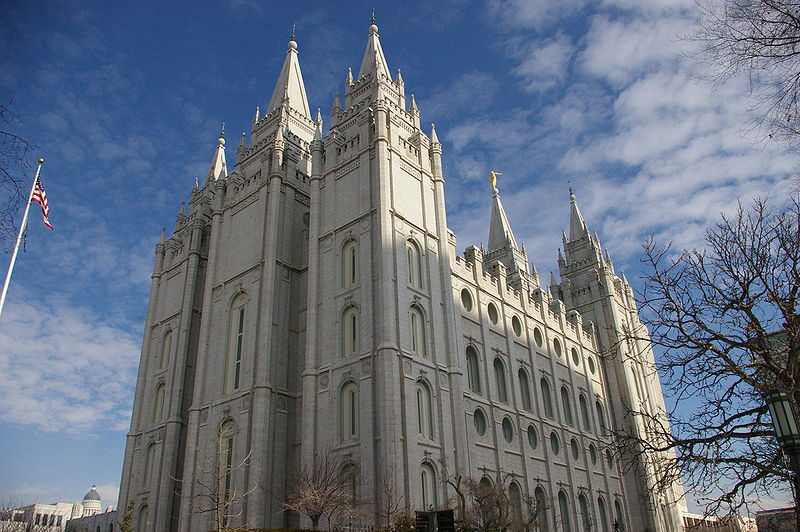 With the election cycle kicking into full gear, politicians, pastors, and pundits are beginning to offer endorsements with regard to who they would like to see elected President of the United States. At the Values Voter Summit, in an endorsement for Rick Perry, a Republican candidate for president, Robert Jeffress, Senior Pastor of First Baptist Church in Dallas, asked, “Do we want a candidate who is a good, moral person, or do we want a candidate who is a born-again follower of the Lord Jesus Christ?”[1] Following his remarks, Pastor Jeffress was asked to clarify his comments and explain specifically what he thought of Rick Perry over and against another frontrunner candidate, Mitt Romney, to whom he seemed to allude when he spoke of a “good, moral person.” The pastor replied, “Rick Perry’s a Christian. He’s an evangelical Christian, a follower of Jesus Christ. Mitt Romney’s a good, moral person, but he’s not a Christian. Mormonism is not Christianity. It has always been considered a cult by the mainstream of Christianity.”[2] These remarks sparked a firestorm, with many voters and reporters alike indignant that the pastor would designate Mormonism as a “cult.”
Because of the attention and ire that Pastor Jeffress’ comments have drawn, we have received many questions concerning the Mormon Church[3] and its relationship to mainstream Christianity. In light of these questions, we thought it would be appropriate to briefly address the teachings of Mormonism theologically, the status of Mormonism religiously, and the duty Christians have as voting citizens vocationally. Here is a broad overview of what is to follow.
First, we will discuss how Mormonism cannot be considered a part of historic, orthodox Christianity. Its teachings concerning the Trinity, the nature of God the Father and His Son, Jesus Christ, are far removed from biblical and historical Christian teaching. Mormonism does not confess the Trinity nor does it believe that a person is saved by God’s grace through faith in Christ alone. Rather, Mormons believe they are saved by grace and their works.
Next, we will tackle the question du jour, “Is Mormonism a cult?” Theologically, we can say that Mormonism is a cult, for it claims new, advanced, divine revelation in addition to the Bible. Psychologically and sociologically, the validity of calling Mormonism a cult becomes less clear. A cult, as the word is used in its secular sense, denotes a body which is explicitly psychologically and sociologically subversive. Mormonism does not necessarily bear this hallmark of a cult. Thus, when we call Mormonism a “cult,” it is important that we define the term.
Finally, we will ask the question, “May Christians vote for a candidate who is not a Christian?” In this section, we will discuss how because those in political offices rule in the kingdom of the world and not in the Kingdom of God, they can be competent to rule even if they are not Christian. Christians are free to pick the most competent candidate, even if he is not a Christian candidate, for political office.
With this overview, we now move to discuss each of the above points in more depth.
The Teachings of Mormonism
First, we turn to the teachings of Mormonism from a theological perspective. As stated previously, theologically, we must understand that Mormonism cannot be considered a part of historic, orthodox Christianity. Indeed, Mormonism explicitly rejects claims that it is part of the Christian tradition. Mormonism teaches that before May 15, 1829, there was no true Church on earth. It was on this day that John the Baptist allegedly visited Joseph Smith and conferred upon him and his friend, Oliver Cowdery, the Aaronic priesthood. Before this prophetic encounter with John the Baptist, Mormons claim, “There was no one living in mortality who held the keys to this Priesthood.”[4] In other words, before this time, Mormons teach that no one had the priestly pedigree to be a part of true Christianity. It had been completely lost from the days of the apostles. Thus, according to their own statements, Mormons claim to be the restoration and repristination of Christianity and not a part of the history or orthodoxy of the Church over the past two thousand years. Therefore, we should take Mormons at their word and not call them “Christians” in any historic or orthodox sense.
A brief survey of Mormon beliefs reveals that Mormons are indeed far removed from traditional and foundational Christian doctrines.
The Trinity
To begin with, Mormons reject the doctrine of the Trinity which states that there is one God, consisting of three co-equal and co-eternal persons: “Latter-Day Saints reject the doctrines of the Trinity as taught by most Christian churches today.”[5] Mormons also have beliefs about the individual persons of the Godhead, Father, Son, and Holy Spirit, that are at wide variance with traditional Christianity. For instance, they teach, “The Father has a body of flesh and bones as tangible as man’s.”[6] It should be noted that this flatly contradicts the Scriptural witness that “God is spirit” (John 4:24)[7] and “a spirit does not have flesh and bones” (Luke 24:39). Moreover, Mormons teach that God was once a man: “God himself was once as we are now, and is an exalted man, and sits enthroned in yonder heavens!”[8] This, of course, denies the immutability and the eternality of God (cf. Malachi 3:6, Psalm 90:2).
Christology
As for Christ, Mormonism teaches that Jesus is the spirit brother of Lucifer. Mormons espouse that when the world was in need of a Savior, both Jesus and Satan presented their cases before the Father as to who would make the better Redeemer. Then, “after hearing both sons speak, Heavenly Father said, ‘I will send the first.’ Jesus Christ was chosen and ordained to be our Savior.”[9] Certainly this fanciful meeting between the Father, Son, and Satan is far outside the pale of biblical Christianity. Jesus is consistently referred to as God’s “only Son” (John 1:14, 3:16, 18, 1 John 4:9) and, as such, was not chosen to be the Savior over any other Messianic contenders, especially Satan. Instead, God planned our salvation in Christ from “before the foundation of the world” (Ephesians 1:4). Salvation in Christ was God’s original and eternal plan.
Salvation
With such a skewed Trinitarian theology and Christology, it is no surprise that the Mormon gospel of salvation is really no gospel at all. For Mormons, salvation is two-fold. First, salvation is a person’s personal progression to divinity. That is, Mormons believe humans can become gods. Joseph Smith explains: “Here, then, is eternal life – to know the only wise and true God; and you have got to learn how to be Gods yourselves…To inherit the same power, the same glory and the same exaltation, until you arrive at the station of God, and ascend the throne of eternal power.”[10] This is not only an untrue statement, but resonates all the way back to the Garden of Eden where Satan tempted Adam and Eve to believe they could usurp God’s position and prerogative. This is why he says to Adam and Eve, when he is trying to entice them to eat God’s forbidden fruit, “You will be like God” (Genesis 3:5). Mormons jettison a fundamental distinction of Christian theology: the distinction between the created and the Creator. They imagine that creatures can become like the Creator. This is flatly false.
Second, Mormons teach that salvation is ultimately a product of a person’s moral progression. Though Mormons believe that humans are saved by grace, they do not believe they are saved by grace alone. A famous and oft-quoted passage from the Book of Mormon makes this clear enough: “For we know that it is by grace that we are saved, after all we can do.”[11] Contrast this with the apostle Paul’s famous words concerning God’s grace: “For by grace you have been saved through faith. And this isnot your own doing; it is the gift of God, not a result of works, so that no one may boast” (Ephesians 2:8-9). Jesus’ work on the cross for our salvation is complete. There is no work we can do to contribute to our salvation.
This is only a small sampling of the false teachings promulgated by The Church of Jesus Christ of Latter-Day Saints. Other teachings, as well as the historical and moral veracity of Mormonism’s sacred writings, are highly suspect as well.[12] Therefore, whatever one may believe about Mormonism’s moral value or theological worth, it cannot be said that Mormonism is “Christian” in any traditional sense of the term. Albert Mohler summarizes the problem with Mormon theology well:
Mormonism borrows Christian themes, personalities, and narratives. Nevertheless, it rejects what orthodox Christianity affirms and it affirms what orthodox Christianity rejects. It is not orthodox Christianity in a new form or another branch of the Christian tradition. By its own teachings and claims, it rejects any claim of continuity with orthodox Christianity. Insofar as an individual Mormon holds to the teachings of the Latter-Day Saints, he or she repudiates biblical Christianity.[13]
In short, Mormonism is not Christianity, nor is it a branch or part of Christianity. If you’d like to learn more about Mormonism and its theological teachings, you can find a wealth of resources at http://www.evidenceministries.org.[14]
The Status of Mormonism
Having addressed the teachings of Mormonism theologically, we now move to discuss the status of Mormonism religiously. Pastor Jeffress called the religion a “cult.” Is it?
In its original context, the word “cult” did not carry with it the negative connotations it has today. The word comes from the Latin cultus, originally describing merely the worship of a deity. Today, however, this word carries with it a wide variety of definitions, many of them sounding sinister. For the sake of brevity, we will examine two definitions of this word – the first being theological in nature and the second being psychological and sociological in nature – and evaluate the status of Mormonism as a cult accordingly.
Theologically, a good definition of a “cult” can be found in the book, The Future of Religion: Secularization, Revival, and Cult Formation. In this work, sociologists Rodney Stark and William Sims Bainbridge define a “cult” thusly: “The cult is something new vis-à-vis the other religious bodies of the society…The cult adds to that culture a new revelation or insight justifying the claim that it is different, new, ‘more advanced.’”[15] According to this definition, Mormonism clearly qualifies as a cult. It is a new revelation and religion which objects to the historic, orthodox Christian position as something corrupt and apostate. Indeed, the very byline of The Book of Mormon, “Another Testament of Jesus Christ,” is a claim of additional, peculiar, and advanced revelation. In this sense, then, Pastor Jeffress is correct. Mormonism is considered to be a cult by most major evangelical denominations and is often called a cult within our own church body, The Lutheran Church – Missouri Synod.[16]
Psychologically and sociologically, we can use a definition of a “cult” from Louis Joylon West:
A cult is a group or movement exhibiting a great or excessive devotion or dedication to some person, idea or thing and employing unethically manipulative techniques of persuasion and control (e.g. isolation from former friends and family, debilitation, use of special methods to heighten suggestibility and subservience, powerful group pressures, information management, suspension of individuality or critical judgment, promotion of total dependency on the group and fear of leaving it, etc.) designed to advance the goals of the group’s leaders.[17]
According to West, a cult is that which is explicitly psychologically and sociologically subversive. It brings to mind people such as Jim Jones and David Koresh and their movements rather than The Church of Jesus Christ of Latter-Day Saints.[18] Much of the outrage in the media over Pastor Jeffress’ words calling Mormonism a cult would seem to stem from defining the word “cult” psychologically and sociologically rather than theologically.
As Christians, who are called to think theologically about issues such as this, we can indeed call Mormonism a “cult” because of its claim to additional revelation apart from and outside of Holy Scripture which results in the maligning of Christian theology. This designation, however, does not necessarily imply that Mormonism has all the psychological and sociological hallmarks of a cult. A Christian’s designation of Mormonism as a cult is primarily a theological rather than a psychological and sociological one.
Our Duty as Christians
Lastly, we move to consider how we, as Christian citizens, can respond to this controversy vocationally. The word “vocation” is from the Latin vocatio and means “calling.” The doctrine of vocation states that all Christians have been called by God to serve in different stations in life – whether that be the station of an employee, an employer, a husband, a wife, a mother, a father, a child, a volunteer, etc.[19] One of the vocations, or callings, God has given to Christians is that of “citizen.” On the one hand, we are citizens of God’s Kingdom by faith in Jesus Christ (Ephesians 2:19). On the other hand, we are also citizens, either by birth or by naturalization, of a particular country. This earthly vocation of citizen, in turn, comes with both duties (e.g., Luke 20:21-25) and privileges (e.g., Acts 22:25) as determined by governing authorities which are themselves instituted by God.[20] One of the duties and privileges United States citizens carry is that of voting for the country’s president. As Christians, the question arises: “How can I vote in a way that is faithful to God while also seeking to elect a person who will do the best job leading the country?”
It must be noted that there is no easy – or singular – answer to this question. Nevertheless, there are some guiding principles which can help us cast an informed vote.
First, it is important to understand that, while we, as Christians, live in two kingdoms – the Kingdom of God and the kingdom of man – the leaders we elect rule over only one kingdom – the kingdom of man. Thus, our primary concern should be with their competence to lead in this kingdom. This means that when we vote, we should consider a candidate’s familiarity with our Constitution and laws and his ability to navigate the intricacies of our legislative process. If he is inept in either of these areas, this should give us pause. A public official’s inability to operate effectively inside our nation’s governmental system can spell disaster for our public policy and welfare, for the official will be unable to execute the demands of his office. Competence is key.
Second, we must also understand that some of the spiritual concerns of the Kingdom of God are part of the natural, moral law which God has placed in this world and thus pertain to the political and public policy making of the kingdom of man.[21] Issues such as abortion, which pertains to the natural, moral duty we have to uphold human life (cf. Exodus 20:13),[22] homosexuality, which goes against the natural design of creation (cf. Romans 1:26-27), and care for those who cannot care for themselves, to which we are naturally inclined despite our depravity (cf. Matthew 7:9-11), ought to be taken into consideration as we decide for whom we will vote. If a candidate runs a platform contrary to natural, moral law, this too should give us pause, for this candidate can potentially do harm to our nation’s citizens.
With these two criteria in mind, then, we have a Christian duty to vote for candidates who, on the one hand, are capable and competent to rule in the kingdom of man, for this is what they are called to do, while, on the other hand, are at the same time aligned with those concerns of the natural, moral law of God which pertain to the political and public policy making in the kingdom of man.
All of this is to say that a candidate does not have to be Christian to be a suitable candidate for public office, though we can certainly be thankful that there are Christians in public and political offices. Ultimately, Luther would advise us to vote for a competent candidate, even if he is not personally moral or Christian:
The reasonable question has been put whether it is better to have a good but imprudent ruler…or a prudent but personally bad one. Moses here certainly calls for both [ref. Deuteronomy 1:13-16]: a good and prudent ruler. However, if both qualifications cannot be had, a prudent ruler who is not personally good is better than a good one who is not prudent, because a good one rules nothing but is only ruled – and only by the worst of people. Even though a prudent but personally bad ruler may harm the good people, he nevertheless rules the evil ones at the same time; and this is more necessary and proper for the world, since the world is nothing but a mass of evil people.[23]
Because a politician rules in the kingdom of man, his competence to do so should be the primary criterion used in discerning his fitness for office. If he is a Christian, great! If not, it is better to have a competent ruler who is not a Christian than an incompetent ruler who is a Christian.
Finally, Christians, out of theological conviction and consecrated consciences, can and do vote for different candidates. Because we live in a sinful and fallen world and, as such, we vote for sinful and fallen candidates, Christians come to differing conclusions as to which candidate would best serve in a particular public office. Christians’ consciences need not be unduly bound in such decisions. The pastors of Concordia believe that, given the choice between two candidates of equal competence, if one is a Christian and the other is not, wisdom instructs us to vote for the Christian candidate because he will not only serve his country skillfully as a politician, but faithfully as a Christian as he seeks God’s guidance. This guidance will make his leadership in public office all the more effective.
Pastor Jeffress has endorsed Rick Perry for President of the United States. As a citizen, he is certainly free to make this endorsement. As a pastor, however, he must be careful speaking on behalf of a political candidate in a public forum such as the Values Voter Summit. For his primary vocation as a pastor is the faithful stewardship of the gospel. Anything that jeopardizes this stewardship is to be rejected. The Commission on Theology and Church Relations of the Lutheran Church – Missouri Synod explains: “The church is a precious institution for us, which dare not be jeopardized by immersion in secular politics.”[24] We, as Christian citizens of this country, are also free to endorse and vote for our preferred candidates. However, our preferred candidates need not be the same as Pastor Jeffress’. Each Christian can come to his own conclusions concerning for whom he will vote.
As citizens of this country, we are free to vote for whomever we want. As citizens of the Kingdom of God, we are free to vote in accordance with our consecrated consciences. Thank God for both freedoms.
[1] Robert Jeffress at the Values Voter Summit, October 7, 2011, http://www.deseretnews.com/article/700186158/Video-of-Pastor-Robert-Jeffress-at-Values-Voters-Summit.html.
[2] Associated Press, “Perry Backer: Romney in a ‘Cult,’ Not a Christian,” http://www.foxnews.com/politics/2011/10/07/perry-backer-romney-in-cult-not-christian/.
[3] “The Church of Jesus Christ of Latter-Day Saints” is the official and legal name of what is colloquially called “the Mormon Church.” Both names are used interchangeably throughout this statement.
[4] Joseph Fielding Smith, Essentials in Church History (Salt Lake City: Deseret News Press, 1922) 68.
[5] Daniel Peterson and Stephen Ricks, “Comparing LDS Beliefs with First-Century Christianity” (March 1988) http://lds.org/ensign/1988/03/comparing-lds-beliefs-with-first-century-christianity?lang=eng.
[6] Doctrine and Covenants, 130.22, http://lds.org/scriptures/dc-testament/dc/130?lang=eng.
[7] Scriptural citations are taken from The Holy Bible, English Standard Version (Wheaton: Crossway Bibles, 2001).
[8] Achieving a Celestial Marriage: Student Manual (Salt Lake City: The Church of Jesus Christ of Latter-Day Saints, 1992) 129.
[9] Gospel Principles, Chapter 3, http://lds.org/library/display/0,4945,11-1-13-6,00.html.
[10] Joseph Smith cited in R. Philip Roberts, Mormonism Unmasked (Nashville: Broadman and Holman Publishers, 1998) 55.
[11] The Book of Mormon (Salt Lake City: The Church of Jesus Christ of Latter-Day Saints, 1981) 2 Nephi 25:23.
[12] For instance, The Book of Mormon makes an inaccurate historical claim that Jesus was born in Jerusalem (Alma 7:10). He was born in Bethlehem. The Book of Mormon becomes morally suspect when one realizes that Joseph Smith plagiarized large portions of the King James Version of the Bible and inserted them wholesale into his work (e.g., compare Moroni 10 with 1 Corinthians 12:1-11, 2 Nephi 14 with Isaiah 4, and 2 Nephi 12 with Isaiah 2). Moreover, Joseph Smith claimed to have translated The Pearl of Great Price, part of the Mormon canon of scriptures, from Egyptian scrolls which he explained, “Contained the writings of Abraham, another the writings of Joseph of Egypt, etc.” (History of the Church 2:236). Egyptologists have since found that these papyri are nothing more than standard Egyptian funereal documents, speaking of Egyptian gods and goddesses (http://en.wikipedia.org/wiki/Book_of_Abraham). Richard John Neuhaus says of Mormonism, “There is…the surpassingly awkward fact that not a single person, place, or event that is unique to the Book of Mormon has ever been proven to exist. Outside the fanum of true believers, these tales cannot help but appear to be the product of fantasy and fabrication” (http://www.irr.org/mit/neuhaus.html).
[13] Albert Mohler, “Mormonism, Democracy, and the Urgent Need for Evangelical Thinking” (October 10, 2011) http://www.albertmohler.com/2011/10/10/mormonism-democracy-and-the-urgent-need-for-evangelical-thinking/.
[14] If you would like to know more about the religious worldview of the Mormon Church, click the third slide on the Evidence Ministries home page. This article was written by the Mormon Church and appears in one of their official teaching manuals. In the opinion of Evidence Ministries, it is the best thing a Christian can read in order to understand the clearly non-Christian nature of Mormonism.
[15] Rodney Stark & William Sims Bainbridge, The Future of Religion: Secularization, Revival, and Cult Formation (Berkeley: University of California Press, 1985) 25-26. Surprisingly, the authors later assert that Mormonism is not a cult, even though they admit that, according their own definition, Mormonism qualifies to be classified as such: “The Church of Jesus Christ of Latter-Day Saints presents problems of classification. Clearly it is not just another protestant sect….The Mormon Church has added so much novel doctrine to the Christian-Judaic tradition that it represents a new religious tradition in its own right, and there can be no doubt that this tradition is deviant….Clearly, Mormonism fits our definition of a cult. However, because the Mormons succeeded in building their Zion in the empty deserts of the West, most Mormons do not experience life as members of a religious minority. In Utah, Mormonism is the dominant religious tradition, and this feeling sustains Mormons in nearby states as well. For this reason…we classified schismatic Mormon groups in Utah as sects, coding such groups as cults only if they developed outside of Utah” (245). Stark and Bainbridge do not classify Mormonism as a cult simply because of the number of Mormons in some western parts of the country.
[16] For instance, Edgar P. Kaiser’s short book, How To Respond to the Latter-Day Saints, is filed under “Cults” in Concordia Publishing House’s cataloging system.
[17] L.J. West & M.D. Langone, “Cultism: A conference for scholars and policy makers. Summary of proceedings of the Wingspread conference on cultism, 9-11 September” (Weston: American Family Foundation, 1985).
[18] It should be noted that Joseph Smith was known to be quite coercive, threatening damnation on young ladies so that he could procure them as his wives (http://www.irr.org/mit/neuhaus.html). In this sense, Mormonism, during its formative stage, displayed some cult-like tendencies as they are defined above.
[19] For more on vocation, see Gene Veith, God at Work: Your Christian Vocation in all of Life (Wheaton: Crossway, 2002).
[20] Lutherans have always affirmed a legitimate role for government in the kingdom of this world. Accordingly, we ought to pray “for kings and all who are in high positions, that we may lead a peaceful and quiet life, godly and dignified in every way” (1 Timothy 2:2). For a good discussion on the government’s role in the Christian’s life, see Render Unto Caesar…A Lutheran View of Church and State, A Report of the Commission on Theology and Church Relations of The Lutheran Church – Missouri Synod (September 1995) http://www.lcms.org/page.aspx?pid=465.
[21] Whether or not a person is a Christian, the Bible reminds us that God has instilled in each human being a natural, moral compass: “For when Gentiles [i.e., pagans], who do not have the law [of God], by nature do what the law requires, they are a law to themselves even though they do not have the law. They show that the work of the law is written on their hearts, while their conscience also bears witness, and their conflicting thoughts accuse or even excuse them” (Romans 2:14-15). These verses remind us that there are basic moral strictures incumbent on every human being whether or not they are Christians.
[22] Exodus 20:13, “You shall not murder,” is one of the Ten Commandments. Lutherans have classically understood the Ten Commandments to be an expression of natural, moral law. “The Ten Commandments had spread over the whole world not only before Moses but even before Abraham and all the patriarchs” (Martin Luther, Luther’s Works, vol. 47, J. J. Pelikan, H. C. Oswald & H. T. Lehmann, eds. [Philadelphia: Fortress Press, 1999] 89). “In some way human reason naturally understands the [Ten Commandments] (for it has the same judgment divinely written in the mind)” (Concordia: The Lutheran Confessions, Paul McCain et al, eds. [St. Louis: Concordia Publishing House, 2005] Ap IV 7).
[23] Martin Luther, What Luther Says, Ewald Plass, ed. (St. Louis: Concordia Publishing House, 1959) 582.
[24] Render Unto Caesar…A Lutheran View of Church and State, 91.
ABC Extra – God’s Immutable Provision
 An old spiritual says:
I don’t know about tomorrow;
I just live from day to day.
I don’t borrow from its sunshine
For its skies may turn to gray.
I don’t worry o’er the future,
For I know what Jesus said.
And today I’ll walk beside Him,
For He knows what lies ahead.[1]
These words are simple, but powerfully true. And, I would add, they are also sorely needed in our world.
We live in a world full of uncertainty. The stock market can swing several hundred points in a day. A single poll can crown a new frontrunner in our current presidential race. Tragedy can strike in an instant. It’s impossible to know what tomorrow will bring. That’s why I love the words of this spiritual: “Today I’ll walk beside Him, for He knows what lies ahead.” Jesus, the song says, knows with certainty what lies ahead in an uncertain world. The chorus continues:
Many things about tomorrow
I don’t seem to understand,
But I know who holds tomorrow
And I know who holds my hand.
We cannot even manage to predict the weather of tomorrow, much less control the events of tomorrow. But Christ can do both. Tomorrow is held by Christ.
In ABC this past weekend, we kicked off a two-week mini-series titled “More Blessed” where we are taking a look at faithful stewardship. The Bible calls us to steward our resources faithfully by stewarding them generously. The Psalmist puts it succinctly when he says, “The righteous give generously” (Psalm 37:21). However, I know that in such a shaky world, sometimes the call to give generously can be a daunting one. After all, the specter of being generous with our resources only to watch them evaporate in the calamity of a terrible tomorrow is unsettling. This is why so many people prefer to keep what they have while they still have it!
Contrary to the world’s call to keep what you have while you still have it, Christians are called to be givers and sharers. And we can be givers and sharers – and feel at peace about it – thanks to the doctrine of God’s immutability. For with the rock-solid assurance God’s changeless character, we can trust Him to provide for our needs, even as He has done in the past (cf. Luke 11:3). This frees us up to fearlessly share with others that which God already has provided us. For more good gifts are sure to come from His hand.
The church father Augustine connected the doctrine of God’s immutability to the doctrine of God’s omniscience:
God does not pass from this to that by transition of thought, but beholds all things with absolute unchangeableness; so that of those things which emerge in time, the future, indeed, are not yet, and the present are now, and the past no longer are; but all of these are by Him comprehended in His stable and eternal presence.[2]
Augustine’s argument concerning God’s immutability and omniscience is an important one. Because God, Augustine argues, knows all – past, present, and future – nothing catches God off-guard. Thus, God responds to the tragedies, trials, and terrors of this world not spastically or sporadically, but intentionally and wisely because He is already thoroughly familiar with them, even before they happen. We can therefore trust God with our futures and be assured that He will carry us through by “His stable and eternal presence.”
Augustine’s words are a great comfort to me. For if God knows all, then he knows all that I need. And He will surely provide for what I need in His changeless, steady, stable, and immutable way. For nothing – none of my needs, tragedies, or trials – catches my God off guard.
The final verse of that old spiritual goes:
I don’t know about tomorrow,
It may bring me poverty.
But the One who feeds the sparrow
Is the One who stands by me.
This is the precious promise of God’s immutable provision. I hope you steward your resources like you believe it.
Want to learn more? Go to
www.ConcordiaLutheranChurch.com
and check out audio and video from Pastor Tucker’s
message or Pastor Zach’s ABC!
[1] “I Know Who Holds Tomorrow,” http://www.hymnlyrics.org/newlyrics_i/i_know_who_holds_tomorrow.php
[2] Augustine, City of God, 11.21, http://www.newadvent.org/fathers/120111.htm
ABC Extra – Knowing and Being Known
 In 1754, Jean-Jacques Rousseau, the preeminent Genevan philosopher of his day and pictured in this blog, wrote a book titled Discourse on the Origin and Foundations of Inequality Among Men. In it, Rousseau opines longingly for man’s primitive state. Contrary to the restrictions and mores modern society thrusts on us, primitive man, Rousseau declares, was carefree, without any language, any personal property, and any need to live in committed relationships. Rousseau declares, “Males and females united fortuitously, according to chance encounters, opportunity, and desire…They parted just as readily.”[1] In other words, primitive society was the ultimate free love society, that is, minus the love part. Rousseau continues, “Man’s first sentiment was that of his existence, his first care that for his preservation. The earth’s products provided him with all necessary support, instinct moved him to use them…There was one [instinct] that prompted him to perpetuate his species; and this blind inclination, devoid of any sentiment of the heart, produced only a purely animal act.”[2] According to Rousseau’s primitive, paradisiacal world, sex was only a brute, animal act, devoid of any pesky sentiments or connections. There was no affection, no emotional warmth – just skin against skin, flesh against flesh.
Rousseau’s vision and version of primitive man, of course, is diametrically opposed to the Bible’s account of our origins. Sex, according to the Bible, is not the result of brute, animal instinct. Rather, sex is a gift from God, bestowed on humans to connect husbands and wives in every human way possible: “For this reason a man will leave his father and mother and be united to his wife, and they will become one flesh” (Genesis 2:24).
The Old Testament uses an interesting euphemism for sexual relations. Rather than using the word “sex” as a verb, it will speak of people “knowing” each other. For example, when Adam and Eve come together as husband and wife, Genesis says, “Now Adam knew Eve his wife, and she conceived and bore Cain” (Genesis 4:1).
This euphemism of “knowing” for sex gives us some insight into the depth and profundity of human sexuality. Contrary to Rousseau’s assertion, sex is not just skin against skin and flesh against flesh devoid of any commitment or compassion. Sex unites people – not just physically, but emotionally and spiritually as well. The apostle Paul explains it this way: “Do you not know that your bodies are members of Christ himself? Shall I then take the members of Christ and unite them with a prostitute? Never! Do you not know that he who unites himself with a prostitute is one with her in body? For it is said, ‘The two will become one flesh.’ But he who unites himself with the Lord is one with him in spirit” (1 Corinthians 6:15-17). As I mentioned in ABC, the city of Corinth boasted a temple dedicated to Aphrodite, the Greek goddess of love and sex. At the temple, there were over one thousand prostitutes who serviced so-called “worshippers” in wild orgies celebrating Aphrodite. Apparently, even the Corinthian Christians developed a penchant for participating the temple’s debauchery. Like the pagans of Corinth, the Christians too began hooking up and breaking up. It was a Rousseaurian dream. But Paul knows that this kind of sexual looseness is not God’s dream. “Sex,” Paul says, “unifies one person to another in body. Thus, if you have sex with a prostitute, you are unifying yourself to her bodily.” But sex does not stop with fleshly unification. Paul also speaks of being “one with the Lord in spirit.” This too is a part of sex. This is why the Hebrew writers use the word “know” as a euphemism for sex. For sex creates a deep, emotional bond between two people. This is why divorces hurt so badly. Two people are being ripped apart who have been connected at the deepest levels of their being.
The apostle Paul writes concerning eternity: “Now I know in part; then I shall know fully, even as I am fully known” (1 Corinthians 13:12). The knowing of sexual intimacy is deep and abiding. But it will pale in comparison to the richness and depth and breadth with which we will know our Savior in heaven. This is the true and greatest knowledge for which we hope…and for which we wait.
Want to learn more? Go to
www.ConcordiaLutheranChurch.com
and check out audio and video from Pastor Tucker’s
message or Pastor Zach’s ABC!
A Simple Thought from the Life of Steve Jobs
 “It’s really hard to design products by focus groups. A lot of times, people don’t know what they want until you show it to them.” – Steve Jobs[1]
When I was in college, I worked as a DJ at the number one radio station in Austin. It was a country station, owned by a former mayor of Austin, and operated by a general manager who seemed to have a knack for picking the next country hit and formatting the station in such a way to draw in thousands upon thousands listeners – even those far beyond the Austin city limits. But then, in 1998, the station was sold to a large conglomerate that operated hundreds of stations across the country. The changes to station came almost instantaneously. The corporation set up several focus groups, asking listeners what they wanted out of a country station. Changes to the format were then made accordingly. And the ratings plummeted. In fact, they were cut in half.
How could this have happened? After all, the corporation was only listening to the listeners! But then, the listeners stopped listening to the very things for which they asked! Perhaps they should have taken a lesson from Steve Jobs: “It’s really hard to design products by focus groups. A lot of times, people don’t know what they want until you show it to them.”
There has never been, nor will there probably ever be, anyone quite like Steve Jobs. He revolutionized – quite literally – the way we interact not only with technology, but they way we interact with each other and our world. The products he dreamed up are everywhere. In fact, I have to chuckle to myself even as I type this blog. I am typing it on my MacBook Pro. On my desk, sits my iPhone, on which I have already texted and talked this morning, as well as my iPad, on which I read the news of Steve Jobs’ passing.
One of the secrets to Steve Jobs’ success seems to have been his ability to dream. Rather than reacting to what people wanted, he dreamed of what could be. He figured that if his dreams of what could be captured his imagination, they might capture the imaginations of others as well. Indeed, Jobs often described his own creations as “magical.” Now there’s a word that captures the human imagination!
Apple’s products have certainly captured my imagination. Just three years ago, I did all my work on a PC. Now, I do everything on Apple products. Why? Because Steve Jobs cast a vision for me of a highly integrated system of devices that would increase my productivity and, of course, be a lot of fun to use! This is something I would never have dreamed of for myself. But I’m happy that somebody dreamed it for me – and for countless others.
People don’t know always what they need. So someone must dream what people need for them. Understanding this simple truth has served as a catalyst for many of the most visionary corporations in our world today. It is also the simple truth of the gospel. The fact of the matter is this: On our own, we do not know what we need. We do not know that we need a Savior. As Jesus tells the Sadducees, a group of religious leaders who thought they knew God well, “You are in error because you do not know the Scriptures or the power of God” (Matthew 22:29). On our own, we cannot fathom the seriousness of our sinfulness. On our own, we cannot confess the depth of our depravity. On our own, we cannot recognize our requirement for a Redeemer. This is why, rather than leaving us grappling to understand the desperate state of our wicked and wretched plight, God sends us Jesus to tell us what we need. And what we need is simple: We need Him. And so Jesus gives us Himself on a cross to sanitize us from our sinfulness, destroy our depravity, and escort us into eternity.
Steve Jobs was a brilliant man. And I am thankful for his life and his legacy. But as great as his technological innovations may have been, they cannot save us. They cannot save him. Only Jesus can do that. I hope you know that you need Him…even more than your iPad.
[1] “Back To The Future At Apple,” Business Week (May 25, 1998).
ABC Extra – Harder Than A Hard Day’s Night
 Christianity promotes and celebrates the value and the glory of work. Indeed, the famed, even if sometimes maligned, “Protestant Work Ethic” has been instrumental in engendering much of the industriousness that has marked the history of this country. From the faith’s earliest years, Christians have esteemed work and eschewed laziness. The Didache, a manual of early Christian practice, doctrine, and discipline from the turn of the second century, lays down this rule for those who wish to join the Christian community:
Let every one that comes in the name of the Lord be received…If the comer is a traveller, assist him, so far as you are able; but he shall not stay with you more than two or three days, if it be necessary. But if he wishes to settle with you, being a craftsman, let him work for and eat his bread. But if he has no craft, according to your wisdom provide how he shall live as a Christian among you, but not in idleness. If he will not do this, he is trafficking upon Christ. Beware of such men. (Didache 12:1-5)
With these words, we hear a call to both charity and industry. On the one hand, Christians are to receive even strangers into their midst and assist them as much as possible. On the other hand, if Christians catch whiffs of idleness among a person who joins their ranks, he is to be disciplined. Laziness will not be tolerated.
Certainly such a strict and demanding work ethic has raised more than a little ire among many. Overbearing corporate policies and malfeasance among management types is the bane of many rank and file employees. These troubles, in turn, often lead to a spirit of idleness. After all, the reasoning goes, if a work environment is miserable and miserly, why would an employee want to give it their all? If the powers that be won’t treat them fairly, they simply won’t offer their best. They’ll just do what they need to do to keep their job until a better prospect comes along. The difficulty with this kind of thinking, however, is that it is patently unbiblical. The apostle Peter admonishes:
Slaves, submit yourselves to your masters with all respect, not only to those who are good and considerate, but also to those who are harsh. For it is commendable if a man bears up under the pain of unjust suffering because he is conscious of God. But how is it to your credit if you receive a beating for doing wrong and endure it? But if you suffer for doing good and you endure it, this is commendable before God. (1 Peter 2:18-20)
A couple of words jump out at me from this passage. First, the word for “masters” is despotes, from which we get our English word “despot.” In our day and age, nobody likes a despot. Dictionary.com defines a “despot” as “any tyrant or oppressor.”[1] Peter says, despite the wickedness of some despotic superiors, we still ought to work hard. Their vileness should not result in our laziness. Second, the word for “harsh” in Greek is skolios, from which we get our medical term “scoliosis,” a condition which describes an abnormal lateral curvature of the spine, or, more popularly stated, a crooked back. Peter knows full well that many managers are crooked. Yet, he encourages us to be faithful in our work even when these managers are unfaithful in their leadership.
The sentiment put forth by Peter’s words is certainly not a popular one. But is a Christian one. Peter knows and admits that our work will not always be easy. And yet, when our work is hard and the road is long, we have this promise: God is working in us and through us amidst even the most adverse of circumstances. As Paul reminds us, “For it is God who works in you to will and to act according to His good purpose” (Philippians 2:13). Our work, then – even our arduous work – is a place and a space for God to work. God hides His glorious work in our sorrowful work.
Do you see your work this way? By faith, you can. I love the way Gene Veith puts it in his book on Christian vocation: “It is faith that transforms suffering into a cross.”[2] May we see the suffering we encounter in our vocations as a cross, gifted to us by Christ, redeeming our suffering for His glory.
Want to learn more? Go to
www.ConcordiaLutheranChurch.com
and check out audio and video from Pastor Tucker’s
message or Pastor Zach’s ABC!
[1] http://dictionary.reference.com/browse/despot
[2] Gene Edward Veith, Jr., God at Work: Your Christian Vocation in All of Life (Wheaton: Crossway Books, 2002) 153.
Civic Law: Why It Matters To Christians
 God’s law is external to us and internal in us all at the same time. On the one hand, it is external to us. God, quite apart from our opinions and objections, has clearly revealed His law in His Word. And regardless of cultural sentiments, sensibilities, or sensitivities, and oftentimes in direct opposition to these, God’s Word stands. As the prophet Isaiah declares, “The word of our God stands forever” (Isaiah 40:8). On the other hand, God’s law is also internal in us. In Romans 1 and 2, the apostle Paul discuses how those who do not have God’s external, revealed law, as given in Holy Scripture, nevertheless know right from wrong. This is his conclusion:
When Gentiles, who do not have the law, by nature do what the law requires, they are a law to themselves, even though they do not have the law. They show that the work of the law is written on their hearts, while their conscience also bears witness and their conflicting thoughts accuse or even excuse them on that day when, according to the gospel, God judges the secrets of man by Jesus. (Romans 2:14-16)
Thus, even if someone is not a biblical scholar, he can still know right from wrong and righteousness from wickedness, for God has gone to the trouble of sketching and etching His law on every individual’s heart. This is why, when we fall prey to immorality, an innate twinge of guilt wells up inside of us.
In doctrinal parlance, we call the sketching and etching of God’s law on each human heart the doctrine of “natural law.” Because human beings are created by God, human beings know, by nature, what God’s law requires.
The theological principle of God’s natural, moral law, and the way it is sketched and etched on every human heart, has long been foundational in understanding our nation’s legal, civic law. Traditionally, in order for a person to be convicted of a crime, they have to be found to have a mens rea, a Latin legal term meaning “a guilty mind.” Under our nation’s legal system, it is generally assumed that a person must know he is committing a crime in order for him to be found guilty of that crime. This is why if a dog, for instance, mauls a postal worker, though we may put the dog down, we do not put the dog in jail. For he does not have “a guilty mind.” He does not know that what he has done is wrong. But this principle of mens rea is changing.
Yesterday, in The Wall Street Journal, Gary Fields and John Emshwiller published an article titled, “As Federal Crime List Grows, Threshold of Guilt Declines.”[1] They note, “What once might have been considered simply a mistake is now sometimes punishable by jail time.” The authors go on to explain that in order to convict a person of a crime, prosecutors no longer have to prove that a defendant has a mens rae. One especially disturbing incident cited by the authors involves the 1998 case of Dane A. Yirkovsky. While doing some remodeling work, Mr. Yirkovsky found a .22 caliber bullet underneath a carpet, which he subsequently put in a box in his room. Though he did not think he was doing anything wrong, because he had a criminal record, federal officials contended that possessing even a single bullet violated a federal law prohibiting felons from having firearms. He is currently serving a fifteen-year sentence.
Part of the problem, Fields and Emshwiller note, is the rapid proliferation of federal laws. The article states:
Back in 1790, the first federal criminal law passed by Congress listed fewer than 20 federal crimes. Today there are an estimated 4,500 crimes in federal statutes, plus thousands more embedded in federal regulations, many of which have been added to the penal code since the 1970s.
With so many new laws on the books, it’s no wonder people can commit crimes utterly unaware that what they’re doing is illegal! And these days, it doesn’t matter whether or not a person is aware that what he’s doing is illegal. A person can be tried and convicted quite apart from the principle of mens rea.
Why should Christians be concerned with the deterioration of mens rea? Because it marks the divorce of our nation’s civic law from God’s internally inscribed natural law. For decades, our legal codes were generally tied to overriding and undergirding moral concerns, internally ingrained into humans by their Creator. Even something as seemingly morally arbitrary as the speed limit was connected to a moral concern – that of human safety. But as our civic law has become more and more divorced from its moral counterpart, our civic law now permits things like abortion, something that clearly defies moral law, for it involves the deliberate taking of a human’s life in the name of human choice. When this kind of activity is permitted by civic law, it not only makes civic law confusing, because it has no natural rhyme or reason but is instead bureaucratically and politically driven, it also diminishes natural, moral law. For when something permitted by civic law contradicts natural, moral law, people often use the civic code to bludgeon and silence their consciences which testify to God’s natural, moral law. This, in turn, radically alters even Christians’ attitudes toward basic moral and ethical issues. For example, in a survey conducted by the Barna group, researchers found among people aged twenty-three to forty-one, 59 percent thought cohabitation between unmarried persons was morally acceptable, 44 percent considered sex before marriage to be morally permitted, and 32 percent thought abortion was a moral option for an unwanted pregnancy.[2] Our civic permissions are changing our God-given moral sensibilities.
Finally, when people rebel against God’s natural, moral law, they walk down a road, even if this road is paved by civic permissions, to deep pain and suffering. And this should break our hearts and, kind of ironically, trouble our consciences.
Civic law that contradicts moral law is immoral. And because God has inscribed His moral law into the natural, and thereby universal, realm, we, as Christians, should lovingly and steadfastly stand up for that which God has given, even when our civics contradict it. It’s only natural.
[1] Gary Fields & John R. Emshwiller, “As Federal Crime List Grows, Threshold of Guilt Declines,” The Wall Street Journal (September 27, 2011).
[2] Cited in David Kinnaman, UnChristian: What A New Generation Really Thinks About Christianity And Why It Matters (Grand Rapids: Baker Books, 2007) 53.
ABC Extra – Rejoice! Don’t Rage

Anger does strange things to people.
A couple of years ago, a country song came out called, “I Pray for You.” In this song, the artist recounts a recent breakup with his girlfriend. It was tough, but even with all the pain and heartache she caused him, he says he still prays for her. And, according to the song, this is what he prays:
I pray your brakes go out runnin’ down a hill,
I pray a flower pot falls from a window sill
And knocks you in the head like I’d like to.
I pray your birthday comes and nobody calls,
I pray you’re flyin’ high when your engine stalls,
I pray all your dreams never come true.
Just know wherever you are, honey, I pray for you.[1]
Do these lyrics strike anyone else as wholly inappropriate? Whenever I would hear this song on one of our local country stations, I always had to change the station. The bitterness and resentment which comes seething from this song was just too much for me.
No matter how unfortunate the lyrics to this song might be, they do give us a window into the havoc anger can reek in a person’s heart and soul. Anger does strange things to people.
In our text from this past weekend, we read about the anger the religious leaders directed against the apostles: “They were furious and wanted to put them to death” (Acts 5:33). As I mentioned in ABC, the Greek word for “furious” is diaprio, which means “to saw in half.” The religious leaders are so angry with the apostles, they want to lay them on the sawmill and cut them in two. This is the stuff of which horror movies are made! In Luke 6, the religious leaders become angry with Jesus because He has the audacity to teach it is lawful to do good deeds on the Sabbath, even though the Sabbath calls for rest: “They were furious and began to discuss with one another what they might to do to Jesus” (Luke 6:11). In this instance, the Greek word for “fury” is anoia, from the word nous, meaning “mind,” fronted by an alpha privative negating the nous which follows it. Thus, to be anoia means “to lose one’s mind.” The religious leaders are so filled with fury, Luke says they can’t think straight! They have lost their minds!
Yes, anger does strange things to people. This is why the apostle Paul calls us to put off anger in Ephesians 4: “‘In your anger do not sin’: Do not let the sun go down while you are still angry, and do not give the devil a foothold” (Ephesians 4:26-27). We should not allow anger to rule and pervert us the way it does ancient religious leaders and modern country stars.
So how do we break the vice anger can so quickly get on us? In ABC, I spoke of alternate responses to anger. Rather than getting angry, we can love, we can steadfastly resist evil while not bludgeoning evildoers, we can be patient, and we can even rejoice. Perhaps it is this final alternate response that is most mystifying. Rejoicing in the face of evil that should rightly make us angry hardly sounds reasonable or desirable. And yet, this is precisely what Scripture urges: “Consider it pure joy, my brothers, whenever you face trials of many kinds, because you know that the testing of your faith develops perseverance” (James 1:2-3). We ought to respond to trials – even those brought forth from evil circumstances – with rejoicing. But do not overlook why we are to rejoice in these trials: “the testing…develops perseverance.” In other words, it is not the evil trials themselves in which we rejoice, but that which the trials produce in us, namely, perseverance. Finally, then, we rejoice not in evil, but through evil. For God works through evil things to bring about His great good for us and for others.
Finally, rejoicing is a much more powerful tool against evil than is anger. Anger simply decries the inequity of wickedness. Rejoicing, conversely, puts wickedness on notice: Wickedness can be laughed at because wickedness will not win! It has been conquered by Christ on the cross, it is used by Christ to develop perseverance in us, and it will be utterly destroyed at Christ’s return on Last Day. Wickedness does not stand a chance.
So what enrages you? What angers you? Because Jesus wins, take some time to rejoice today. After all, His victory is worth your joy.
Want to learn more? Go to
www.ConcordiaLutheranChurch.com
and check out audio and video from Pastor Tucker’s
message or Pastor Zach’s ABC!
[1] “I Pray for You,” Jaron and the Long Road To Love (Big Machine Records, 2010).
ABC Extra – I Didn’t Invent The Truth And Neither Did You
 The former anchor of World News Tonight, the late Peter Jennings, once said, “There is no one absolutely essential truth for all people…Every time I look at a coin, I instinctively want to look at the other side.”[1] This statement, proffered by a prominent and well-respected news anchor encapsulates for many the truth about the truth. A truth, according to many, resides ultimately in the minds and hearts of those who believe it and cannot be universalized or externalized to all people in all places in all times. This position on truth is popularly known as post-modernism. To quote the famed French philosopher Jean-François Lyotard’s definition of post-modernism, “Simplifying to the extreme, I define postmodern as incredulity toward metanarratives.”[2] In other words, a grand, unifying, universally true narrative that gives meaning to life, such as we find in the Bible, is not possible in post-modern thinking, nor is it desirable. Everyone has their own personal narratives – their own personal truths.
With the onset of the new millennium, this take on truth has thankfully waned. In some ways, its ebbing was inevitable, for its central tenant is internally incoherent. When Peter Jennings claims, “There is no one absolutely essential truth for all people,” one almost wants to chide him with a friendly chuckle and ask, “So is the fact that there is no one absolutely essential truth for all people an absolutely essential truth for all people?” One cannot escape the fact that post-modernity’s claim against universal truth is itself a claim of a universal truth! In addition to being internally incoherent, this stance against universal truth is also impossibly impractical. It is a stance that cannot be argued for because there is no essential truth over which to argue! Thus, people who hold this view are finally left with nothing to say and no position for which they can persuasively argue because their position, by its very nature, must be contextualized ad infinitum into extinction.
Even though the absurdity of the popular version of post-modern position on truth has been well documented, this does not stop many from using the “no universal truth” argument against those with whom they simply do not care to have a discussion. “Well, that truth may work for you,” a common cop out goes, “but it doesn’t mean it works for me. You have your truth. I have mine.” Rather than presenting a well-reasoned rebuttal to a point with which one disagrees, this statement retreats into an ad hominem excuse for whatever one might think or however one might act.
From a Christian perspective, the problem with the “personal truths” of post-modernity is their insufferable self-centeredness and arrogance. To think that one individual could be the arbiter, holder, or creator of truth, even if only for themselves, should make even the proudest person wince at least a little. In this regard, post-modernity seems to be a tragically logical consequence of the rugged individualism for which Americans are so famous. Furthermore, to deny people a “metanarrative,” or a grand story, into which they can fit makes life awfully grim. After all, for all of post-modernity’s incredulity toward metanarratives, metanarratives remind us that we are part of something bigger than ourselves. As Christians, we believe that we are part of a broad, sweeping story of redemption and love, revealed unambiguously for us in the person and work of Jesus Christ. This is the truth Christians believe and confess! Finally, post-modernity is a direct affront to the Gospel because while the Gospel always and only looks outward to Jesus for the truth of salvation, post-modernism can only look inward for personal opinions.
Truth is bigger than you. Truth is outside of you. Truth is given to you by Christ and revealed by Holy Scripture. And happily, you will find that, believing the truth of the Gospel, this truth will work for you because Christ will be working in you, even unto salvation. No personal truths needed.
Want to learn more? Go to
www.ConcordiaLutheranChurch.com
and check out audio and video from Pastor Tucker’s
message or Pastor Zach’s ABC!
[1] Peter Jennings, “In Peter Jennings’ Own Words” (8.8.05).
[2] Jean-François Lyotard, The Postmodern Condition: A Report on Knowledge, trans. G. Bennington and B. Massumi (Minneapolis: University of Minnesota Press, 1984), xxiv.
ABC Extra – The Me I Want To Be
 Everybody wants to be somebody. That’s the premise of our new series, “The Me I Want To Be.” Some people want to be successful. Some people want to be good-looking. Some people want to be famous. Some people want to be smart. All people want to be loved. Everybody wants to be somebody. However, as I mentioned this past weekend in ABC, who we want to be does not always match up with who we actually are. If we are overweight, we want to be thin. If we are thin, we want to be bulkier. If our lives are solemn and simple, we wish they were more exciting and successful. If our lives are exciting and successful, we yearn for solemnity and simplicity. Who we want to be does not always match up with who we actually are.
Of course, there is no shortage of products and gimmicks that promise to bridge the gap between who we are and who we want to be. Do you want to be stronger? No problem! Just do P90X and drink plenty of Muscle Milk. You’ll be thin, trim, and tough in no time. Do you want to get into a different career field but need more education? No problem! Just apply to the University of Phoenix and you can take night and weekend classes at one of their local campuses or online. And what’s more, you’ll have your degree in only two years! Do you want to be a better person? No problem! Just watch the O! Network, take in a few episodes of Dr. Phil, and get a subscription to Psychology Today. You’ll be better than ever before you know it.
In his book, The Quest for Holiness, Adolf Köberle[1] reflects on people’s quest to bridge the gap between who they are and who they want to be. But Köberle’s quest considers not only effort humans make to bridge the gap between who they are and who they want to be for themselves, but the effort humans make to bridge the gap between who they are and who they want to be before God. Köberle desires nothing less than a way to bridge the gap between the sinfulness of man and the holiness of God. But what way might this be? Köberle outlines three ways.
The first way people try to bridge the gap between who they are and who they want to be before God, Köberle says, is through moralism. Moralism consists of people leveraging their good works, words, and will to try to bring themselves closer to God. Köberle writes of moralism, “The attempt is made to compel God’s favor by moral fervor” (5). The second way people try to bridge the gap, Köberle says, is through intellectualism. Intellectualism, rather than finding its locus and focus in good works, seeks to cultivate a sharp mind. Those who follow this way think, “If I simply learn enough about the Bible and about God, then I can ascend to Him by means of my insight and intellect!” Köberle offers this definition of intellectualism: “In the act of thinking a direct contact is established between the human and divine spirit” (13). The third way people try to bridge the gap between who they are and who they want to be before God, Köberle explains, is through emotionalism. The liberal theologian Friedrich Schleiermacher was perhaps the most famous proponent of emotionalism, maintaining, “This is the level on which religion stands…its feelings.”[2] Thus, emotionalism presumes to pave a path to God by feeling close to Him.
So which of these paths to God succeed in taking us from who we to who we want to be before God? None of them. Even our best works are tinged with evil intentions. Moralism cannot pave the way. Even our loftiest thoughts are nothing when compared with God’s wisdom. Intellectualism cannot pave the way. And even our most affectionate moments toward God are quickly cooled by the cares of this world. Emotionalism cannot pave the way. None of these paths succeed in taking us from who we are to who we want to be before God.
Truth be told, there is no way in which we can take ourselves from who we are to who we want to be or, even more importantly, who God calls us to be. For when we try to bridge the gap between who we are and who we want to be by our own efforts, we succeed only in separating ourselves from God rather than drawing close to God because we become arrogant of our own abilities. Köberle explains:
Legalistic Pharisees who boasted of their place with God, zealous scribes who desired to be a light to those walking in darkness, intellectual Sadducees, politically clever rulers who possessed a quite up-to-date wisdom, enthusiastic disciples, eager crowds of pilgrims who riot in the pious emotions of the rich ritual of the great holy days, they all despise, hate and put to death the Servant of God…By their actions they all reveal the bankruptcy of humanity whose most intensified piety accomplishes nothing more than the derision and rejection of God in God’s name. (46)
When we seek to build a bridge between who we are and who we want to be before God, we become so enamored by our own impressive bridge building prowess that we forget to whom we are building are bridge. We forget about God. And then, when God builds a bridge to us through His Son, Jesus Christ, we feel threatened in our own bridge building efforts and kill the Son of God.
The only way to be who we want to be and who God calls us to be, then, is to forgiven by Christ. Nothing else will do. The person you want to be is found not in your own efforts, it is hidden in the cross.
Want to learn more? Go to
www.ConcordiaLutheranChurch.com
and check out audio and video from Pastor Tucker’s
message or Pastor Zach’s ABC!
ABC Extra – It’s Good To Be Old
 Recently, I read a news report concerning a rash of scams in Grand Prairie, Texas. According to the story, crooks offer to sell folks iPads and MacBooks in the parking lots of local area shopping centers and convenience stores. The asking price? $300 for one of the products or $500 for both. Considering a MacBook starts at $1,000 and an iPad starts at $500, this deal is too lucrative for many to pass up. However, as the old saying goes: If it seems too good to be true, it probably is. And this was certainly the case in this situation. After unsuspecting buyers purchased MacBooks and iPads, upon opening the packaging, they found out that it contained only a block of wood, cleverly painted and disguised to make it look like a Mac device. As I read this report, I especially appreciated the final line of the police release, which noted: “The public should be advised that it is unwise to purchase anything from the trunk of a car, no matter how good the deal seems.”[1] True indeed.
Unfortunately, scammers are always on the lookout for those who are greedy, gullible, or distraught. Last week, a cable news show featured some massive scams that took advantage of 9.11 victims shortly after the attacks. Sadly, the elderly seem to be an especially favorite target of scammers. Earlier this year, ABC News ran a story on what it called “The Imposter Grandchildren Scam.”[2] In this scam, a con artist contacts an elderly person by phone, claiming to be a grandchild who is in some sort of serious trouble – be it a car accident, or being stranded in some foreign country. The supposed “grandchild” then begs for financial assistance, asking the elderly person not to tell his or her parents. Unfortunately, many elderly people have wired cash to what they thought was their grandchild, only to find out later that they had been scammed. Con artists who prey on the elderly do so because these people can be especially easy targets because they are often easily confused.
This past weekend in worship and ABC, we talked about the glory of aging. Solomon celebrates the elderly in his Proverbs: “Gray hair is a crown of splendor; it is attained by a righteous life” (Proverbs 16:31). Because aging and being aged is a good thing according to Scripture, we are to show respect for the elderly, as Moses reminds us: “Rise in the presence of the aged, show respect for the elderly and revere your God. I am the LORD” (Leviticus 19:32). Schemes and scams that prey on the elderly, then, are wholly inappropriate and sinful.
As I talked about in ABC, our culture does not have a high view of aging. To be young is much preferred to being old. And yet, Scripture speaks of the elderly with special affection and calls upon us who are younger to treat those who are older with respect and dignity. Is there an elderly person who has played a special role in your life? Take some time this week to write a note, make a phone call, or even stop by for a visit and express your thanks to them. For these elderly people are gifts from God and deserve our thanks.
Want to learn more? Go to
www.ConcordiaLutheranChurch.com
and check out audio and video from Pastor Tucker’s
message or Pastor Zach’s ABC!
[1] Jordan Golson, “Buying an iPad in a Parking Lot is a Bad Idea,” (August 29, 2011).
[2] Susanna Kim, “Imposter Grandchildren Scam the Elderly for Big Bucks,” (March 29, 2011).


 Pastor Zach's Blog