Peace and Justice in the Face of ISIS

Credit: NBC News
First it was James Foley. Days later, it was Steven Sotloff. The beheading of two journalists by ISIS has certainly thrust the travesties of this terrorist organization to the forefront of our minds and our news cycle. But these are just ISIS’s latest crimes. At the beginning of August, some 50,000 Yazidis were forced to flee into the mountains of Iraq or face death at the hands of ISIS militants. ISIS also kidnapped hundreds Yazidi women, selling them as sex slaves for as little as $25. Last week, The New York Times profiled the gut-wrenching story of Iraqi soldier Ali Hussein Kadhim who was captured along with hundreds of other soldiers by ISIS militants. Christians too have been in ISIS’s crosshairs, being threatened with death if they do not convert to radical Islam or pay a tax.
Back home, President Obama is grappling with how to deal with a terrorist threat and crimes against humanity that are half a world away. And he’s been getting pressure from all sides. On one side, a coalition of religious conservatives has signed a petition calling for decisive military action:
It is imperative that the United States and the international community act immediately and decisively to stop the ISIS … genocide and prevent the further victimization of religious minorities. This goal cannot be achieved apart from the use of military force to degrade and disable ISIS … forces.[1]
On the other side, a group of Catholic and Protestant leaders has written a letter to President, urging caution and restraint:
While the dire plight of Iraqi civilians should compel the international community to respond in some way, U.S. military action is not the answer. Lethal weapons and airstrikes will not remove the threat to a just peace in Iraq. As difficult as it might be, in the face of this great challenge, we believe that the way to address the crisis is through long-term investments in supporting inclusive governance and diplomacy, nonviolent resistance, sustainable development, and community-level peace and reconciliation processes.[2]
This is a crisis no president wants to face. This crisis also presents an ethical dilemma no Christian finds easy to confront. On the one hand, my preference and prayer would be that ISIS repent of their crimes and peace be restored to Iraq. On the other hand, I am sober-minded enough to know that ISIS shows no signs of softening. When even the Taliban is concerned about ISIS’s extremism, things are not on the right track.
So how do we understand this problem theologically?
A curious feature of biblical theology is what scholars refer to as “proleptic eschatology.” In short, proleptic eschatology asserts that bits and pieces of what will happen on the Last Day show up in our days. For example, the apostle Paul claims that Christ’s resurrection is only “the firstfruits of those who have fallen asleep” (1 Corinthians 15:20). In other words, the resurrection of all flesh on the Last Day has shown up in the resurrection of Christ on Easter Sunday. Likewise, Jesus describes His return on the Last Day to judge the earth thusly: “At that time the sign of the Son of Man will appear in the sky, and all the nations of the earth will mourn. They will see the Son of Man coming on the clouds of the sky, with power and great glory” (Matthew 24:30). But before a cosmic judgment on the Last Day, Jesus describes a smaller judgment in the destruction of the temple at Jerusalem in His day: “I tell you the truth, not one stone here will be left on another; every one will be thrown down” (Matthew 24:2). Jesus’ words come to pass when the Roman general Titus decimates Jerusalem in A.D. 70. The judgment of the Last Day shows up in the destruction of Jerusalem in Jesus’ day.
It is this theology of proleptic eschatology that Paul has in mind when he exhorts his readers: “Do not take revenge, my friends, but leave room for God’s wrath, for it is written: ‘It is mine to avenge; I will repay,’ says the Lord” (Romans 12:19). Paul promises that even if we see miscarriages of justice in our day, God will avenge evil on the Last Day.
But that’s not the only day God will avenge evil.
Paul knows the evil of our day, if left unchecked until the Last Day, would yield unspeakable horrors. This is why Paul continues by explaining that bits and pieces of God’s judgment on the Last Day show up in our day through the actions of world governments: “[The governing authority] is God’s servant, an agent of wrath to bring punishment on the wrongdoer” (Romans 13:4). The judgment of God against sin on the Last Day shows up through world governments in our day.
This, then, brings us to the Christian’s ethical dilemma. Because, on the one hand, we are called to wait patiently until the Last Day for God’s perfect judgment and justice to be revealed. On the other hand, governing authorities – including our own governing authority – can be used by God as His agents to bring temporal justice to the criminal problems of our day. This is why two sets of Christians can write two very different letters to President Obama.
I, for one, am praying that perhaps ISIS will have a Jonah moment – that they, like when Jonah preached to Nineveh, will hear the warning of God’s judgment, repent, and be spared of His wrath. But I am also very aware that after the preaching of Jonah to Nineveh came the preaching of Nahum to Nineveh – and with the preaching of Nahum to Nineveh came God’s wrath against Nineveh.
The clock is ticking on ISIS. I pray for peace and reconciliation. But I also pray that justice against these terrorists will not tarry long. The spilled blood of thousands is crying out.
__________________________
[1] “A Plea on Behalf of Victims of ISIS/ISIL Barbarism in Iraq,” iraqrescue.org.
[2] “53 national religious groups, academics, ministers urge alternatives to U.S. military action in Iraq,” Mary Knoll Office for Global Concerns (8.27.2014).
Mark Driscoll’s Fruit Punch

Credit: Mars Hill Church
Jesus once explained how the world could recognize His disciples: “By their fruit you will recognize them” (Matthew 7:20). “Fruit,” of course, is what the apostle Paul describes as “love, joy, peace, patience, kindness, goodness, faithfulness, gentleness and self-control” (Galatians 5:22-23). Thus, if others want to know whether or not a person follows Jesus, they need only to look at how he acts.
Of course, there is a little more to it than just this. Because even people who follow Jesus do not always bear the kind of fruit Paul enumerates. Indeed, even Paul himself admits, “What I do is not the good I want to do; no, the evil I do not want to do – this I keep on doing” (Romans 7:19). Paul’s spiritual fruit is more like a fruit punch – a mix of good fruit and bad fruit, righteous fruit and sinful fruit.
This past week has been a tough one for Mars Hill Church of Seattle. Last Sunday, its pastor, Mark Driscoll, announced to the congregation that he will be taking at least six weeks away from the pulpit, explaining:
Storm clouds seem to be whirling around me more than ever in recent months and I have given much thought and sought much counsel as to why that is and what to do about it …
Some have challenged various aspects of my personality and leadership style, and while some of these challenges seem unfair, I have no problem admitting I am deserving of some of these criticisms based on my own past actions that I am sorry for …
I have requested a break for processing, healing, and growth for a minimum of six weeks while the leadership assigned by our bylaws conduct a thorough examination of accusations against me.[1]
Usually, when a pastor steps away from his pulpit because of some controversy or scandal, it makes no news. But Mars Hill Church is one of America’s most famous congregations. Thus, the controversy surrounding Driscoll has been very public – front page of The New York Times public, in fact. Two days before Driscoll announced his leave of absence, the Times published an exposé:
Mark Driscoll has long been an evangelical bad boy, a gifted orator and charismatic leader who built one of the nation’s most influential megachurches despite, or perhaps fueled by, a foul mouth, a sharp temper and frank talk about sex …
But now Mr. Driscoll’s empire appears to be imploding. He has been accused of creating a culture of fear at the church, of plagiarizing, of inappropriately using church funds and of consolidating power to such a degree that it has become difficult for anyone to challenge or even question him. A flood of former Mars Hill staff members and congregants have come forward, primarily on the Internet but also at a protest in front of the church, to share stories of what they describe as bullying or “spiritual abuse,” and 21 former pastors have filed a formal complaint in which they call for Mr. Driscoll’s removal as the church’s leader.
Mr. Driscoll is rapidly becoming a pariah in the world that once cheered him.[2]
When The New York Times says your empire is “imploding” and calls you a “pariah,” that’s not good. But this is what Mark Driscoll is now facing.
As I’ve been reading people’s comments on Driscoll’s absence from Mars Hill’s pulpit, it’s been fascinating to read both the comments of his fervent supporters as well as those of his vociferous detractors. On Mark Driscoll’s Facebook page, people came out with glowing messages of support and prayer:
BEST BIBLE TEACHER EVER! Love you pastor Mark, thanks for teaching me how to man up and love Jesus and my family! Your sermons helped me through one of the most difficult moments in my life. I thank God for your faithfulness in teaching his word and I can’t wait to see you come back and do more amazing things!
And this:
Pastor Mark, I got baptized a few years back with Mars Hill on Easter and my now husband got baptized this past Easter. What makes it even more amazing is that after he got baptized he turned and baptized his 9 year old son … You have changed us and my marriage is truly saved by the grace of God but we wouldn’t have gotten here if it wasn’t for your teachings.[3]
On a blog critical of Mark Driscoll, readers can be treated to comments like this:
Driscoll needs to step down for good, not for 6 weeks. The man is dangerous. He has fired high ranking members of his staff on the spot, and created a culture of spiritual abuse disguised as “church discipline.” He is mean, he has publicly insulted “effeminate worship leaders” and implied Ted Haggard’s homosexuality
was the result of “wives who let themselves go,” to name but a few of many highlights.
And this:
[Mark] has repeatedly found himself embroiled in accusations of abuse, stealing others intellectual property, fleecing his church to pay for his best seller status, fleecing his church with his fake global fund … He has lived more as a son of the devil than the son of GOD.[4]
There doesn’t seem to be a lot of middle ground when it comes to opinions about Mark Driscoll. Even his apology has gotten mixed reviews. Some people believe Driscoll has sincerely repented of his sin and is the best man to lead Mars Hill Church while others doubt Mark’s sincerity. One person commented, “I listened to Mark’s ‘apology’ and I didn’t see any repentance.”[5]
So what are we to make of all this?
In a sentence, I would say: Mark Driscoll has made fruit punch. Like the apostle Paul, Mark has born both good fruit and bad fruit, righteous fruit and sinful fruit. And whether or not you applaud or denounce him has to do with what fruit of his you are looking at. To only applaud his good fruit while ignoring his bad is to make an idol out of him. Only Jesus bears only good fruit. But to only denounce his bad fruit while overlooking his good is to stand in self-righteous condemnation of him. We must never forget that it’s not only Mark Driscoll who makes fruit punch. We do too.
So from one fruit-punch-making pastor to another I say, “Mark, I’m praying for you. And, I’m praying that the team of overseers who are reviewing the charges against you make a decision that is best for you, for Mars Hill, and for the glory of God’s Kingdom.” Then, for all Christians who make fruit punch – and we all do – I am also praying. I am praying that we would continue to be “transformed into [the Lord’s] likeness with ever-increasing glory” (2 Corinthians 3:18) until our fruit punch becomes the Spirit’s pure fruit in heaven.
_______________________________________
[1] Mark Driscoll, “An Update From Pastor Mark,” marshill.com (8.24.2014).
[2] Michael Paulson, “A Brash Style That Filled Pews, Until Followers Had Their Fill,” The New York Times (8.22.2014).
[4] Warren Throckmorton, “Announcement: Mark Driscoll Will Take At Least Six Weeks Off,” patheos.com (8.24.2014).
[5] Celeste Gracey, “Forgiving My Pastor, Mark Driscoll,” Christianity Today (August 2014).
On Michael Brown and Darren Wilson

Credit: Reuters
They are the protests that just won’t stop. The cries of activists in Ferguson, Missouri are loud and only seem to be getting louder. One cry in particular caught my attention. MSNBC’s Chris Hayes was reporting from Ferguson when protestors began to throw rocks at him. Some of them yelled, “Tell the true story!” But one man shouted what I think is perhaps the most profound insight into this whole, sordid affair I have heard to date. “This isn’t about Mike Brown no more,” he said. “It’s a civil rights movement. It’s about all people.”
I agree with the protestor. Though they are often conflated, what’s happening in Ferguson today can and should be distinguished from what happened in Ferguson on August 9. This is not about Michael Brown anymore. This is about – be they real or perceived – civil rights grievances.
On the one hand, this is not all bad. This tragedy has ignited some important national conversations. On the other hand, in these conversations, we have taken the very real pain of two very real families – the Brown family and the family of the officer who shot him, the Wilson family – and turned it into an expedient talking point for rallies, protests, and cable news brawls. But their pain deserves more than our marginal mentions. We need to do more. We need to go deeper. We need to take some time to empathize with these families.
Empathy is when you take the human experience and personalize it. In other words, you use what you know from the human experience in general to try to understand one human’s experience in particular. What has happened in this case is the exact opposite. We have taken the personal experiences of two families and de-personalized them, hoisting their pain on our petard.
Michael Brown and Darren Wilson have become emblems. Michael Brown has become an emblem of racial tensions that have plagued Ferguson for decades. Darren Wilson has become an emblem of mistreated law enforcement officials. But these men are much more than impersonal emblems. Michael Brown was a son with college aspirations. Darren Wilson is a man with a family at home.
In an effort at empathy, I’ve been pondering what questions these families must be asking themselves as they watch all this unfold. I’ve been thinking about the questions I would be asking if was in their situation.
As I’ve been thinking about Michael Brown’s parents, I’ve wondered if they’ve asked themselves:
- Did Officer Wilson really have to use deadly force to subdue our son? He has lots of ways to subdue suspects.
- It was broad daylight! How in the world did the officer not know our son was not pointing a weapon at him?
- Did Officer Wilson overreact because he was scared of a black man?
- What is a jury going to say about all this? Is justice going to be served?
As I’ve been thinking about Officer Wilson and his family, I’ve wondered if they’ve asked themselves:
- Why can’t people understand how difficult it is to make snap decisions as a police officer?
- Why do people always assume officers have the worst of intentions?
- Don’t the protestors realize that their threats scare our whole family?
- What is a jury going to say about all this? Is justice going to be served?
Of course, I don’t know for sure what questions they’re asking. And I would never claim to understand how these families are feeling. But empathy is not about claiming to know how somebody feels. It’s about caring how somebody feels. And we should care about and for these families.
To this end, I would ask you to pray for these families – both of these families – and for peace to be restored in Ferguson. Try to empathize with them – their pain, their fear, their confusion – and then pray that God would give them strength, comfort, and hope during this difficult time. Remember, these families are more than causes, they’re people. We cannot forget that.
Allow me to add one final note. Just because I seek to uphold the value of empathizing with the Brown and Wilson families doesn’t mean I don’t believe larger discussions around race are unimportant. But I pray we don’t have these conversations like it’s 1963. I pray we’ve grown since then. I pray our discussions are more civil, our thinking is more compassionate, and our hearts are more, well, empathetic toward those who have different experiences and perspectives. But for now, my prayers are with the Brown and Wilson families. I hope yours are too.
Robin Williams: 1951-2014

Credit: Ticketmaster
I first heard of Robin Williams’ untimely death thanks to Facebook. My wife Melody was scrolling through her newsfeed when she let out a gasp of disbelief and exclaimed, “Robin Williams died?!” My immediate thought was, “That’s fake.” Celebrity death hoaxes are common, after all. On Facebook alone, I’ve learned of the Rock’s death while filming Fast and Furious 7. I’ve read of Sylvester Stallone’s demise in a snowboarding accident. And I’ve heard that Miley Cyrus took her own life. Of course, none of these death stories are true. But I found out very quickly that Robin Williams’ death story was.
As the world began to grieve, the gruesome details began to emerge. The Marin County, California Police Department held a press conference in which they offered up details – perhaps, too many details – on Williams’ demise. Whatever the gory specifics might be, the overarching cause of death is tragically clear. Robin Williams died by suicide.
Suicide.
Just the word makes people shudder. And ponder. And question.
There are two questions that people often ask me whenever an individual – or, in the case of Robin Williams, a culture – is confronted by the harsh realities of suicide. The first is an explicitly Christian question while the second is more generally transcendent.
First, people ask me, “Can a person who commits suicide go to heaven?”
The short answer to this question is, simply, “yes.” From a theological perspective, all of us commit what I call “slow-motion suicide.” Scripture is clear that “the wages of sin is death” (Romans 6:23). Do we know this? Yes. Do we still sin intentionally and willingly? Yes. Thus, we’re killing ourselves with sin. The only difference between what we do to ourselves and what Robin Williams did last Sunday evening is the speed with which he did it. He took his life quickly. We take our lives bit-by-bit, sin-by-sin. If the person who takes his life in an instant can’t be saved, neither can the person who takes his life over decades. News of a suicide, then, is never an opportunity for judgment, but a call to introspection.
I should add that, when Jesus speaks of His forgiveness, He never singles out suicide as some sort of an unforgivable sin. Jesus declares, “I tell you the truth, all the sins and blasphemies of men will be forgiven them” (Mark 3:28). How many sins does the word “all” include? All of them. Even suicide. Thus, a person who takes his own life can be forgiven by Jesus and saved by Jesus just as well as any other sinner can. If you want to know more about suicide from a theological perspective, you can check out a blog I wrote a couple of years ago here.
Second, people ask me, “Why?” Why would a person who had so much going for him snuff out his life so recklessly?
The question of “why” has become especially acute in Robin Williams’ case because he left no note. Sadly, where facts are in short supply, gossip and speculation are plenty. I would point out, however, that even when a note is left, the question of “why” is still left unanswered. Even if a person writes of “having nothing left to live for,” or how “people will be better off without me,” those left behind still wonder: “Why didn’t he realize that he had so much to live for?” Or, “Why didn’t he realize what his death would do to us – how it would tear us apart?”
I have come to understand that the question of “why,” when it comes to suicide, has no answer – mainly because the suicidal person himself cannot answer the question. The darkness and confusion that surrounds a person when he takes his own life is so deep that genuine reasoning falters under the crushing weight of depression.
So where does all this leave us? Allow me to offer two parting thoughts.
First, a thought to those contemplating suicide: suicide is a lie of Satan. Satan entices people into suicide by making promises to “free you” or “fix you.” But he wants no such thing for you. He only wants to end you. This is why he seeks to either kill us slowly by enticing us into sin after sin or, if he can, he’ll be delighted to kill us quickly at the bottom of the barrel of a gun or by the brink of a blade. So, if you are contemplating suicide, remember: everything it promises is a lie. Get help from someone who will tell you the truth.
Second, a thought to those who have lost loved ones to suicide: life is the truth of our God. God is the master of snatching life out of the jaws of death. He did it with His Son. And He can do it with those who take their own lives. Indeed, on the Last Day, He will do it with all who trust in Him. Wherever Satan peddles his lies, God crushes them with His truth. And His truth is this: by faith in Christ, your loved one is not beyond hope. Suicidal sinners can be saved too.
I’m looking forward to seeing more than a few of them in heaven.
Serving Others In Jesus’ Name
Credit: CBS News
A state of emergency has been declared in Liberia. Guinea, Sierra Leone, and Nigeria have lost more than 930 people to the virus. Monrovia has set up a military blockade to keep people from regions known to have high instances of infections from entering the city.[1] And the World Health Organization is meeting to discuss whether or not to use experimental drugs to try to help those infected by the virus.[2]
All this over a virus called Ebola.
The problem is that there is no known cure for Ebola and, as President Sirleaf of Nigeria noted, “ignorance and poverty, as well as entrenched religious and cultural practices, continue to exacerbate the spread of the disease.”[3] Indeed, many people infected by the virus, rather than being quarantined at medical facilities to stem Ebola’s spread, remain at home and pass the virus on to their families.
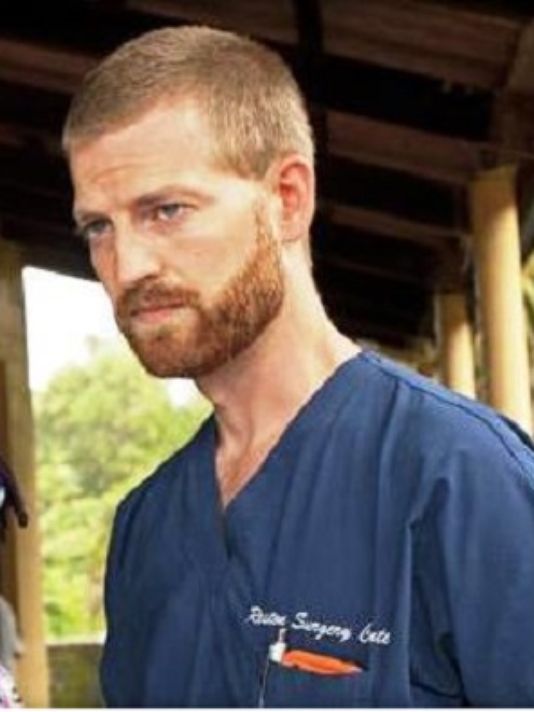
The fear surrounding this outbreak is intense. When Dr. Kent Brantly, a medical missionary who contracted the disease while treating patients in Liberia, was brought home for treatment here in the States, some questioned the wisdom of bringing a man infected by a dreaded disease into this country.[4] Others took their criticism farther, like political pundit Ann Coulter, who lambasted Dr. Brantly for going to Africa in the first place:
I wonder how the Ebola doctor feels now that his humanitarian trip has cost a Christian charity much more than any services he rendered.
What was the point?
Whatever good Dr. Kent Brantly did in Liberia has now been overwhelmed by the more than $2 million already paid by the Christian charities Samaritan’s Purse and SIM USA just to fly him and his nurse home in separate Gulfstream jets, specially equipped with medical tents, and to care for them at one of America’s premier hospitals …
Can’t anyone serve Christ in America anymore?[5]
I would point out to Ms. Coulter that there are, in fact, many people and organizations that do indeed serve Christ in America like, well, Samaritan’s Purse. You can learn more about their local relief efforts here. I would also point out that Christ’s commission is to make disciples of “all nations” (Matthew 28:19), which, by definition, includes nations other than our own. Finally, I would point out that the Christian Church has a long and storied history of reaching out to those in dire medical need. For instance, in the 160s, and again in the 260s, a series of plagues struck the Roman Empire. These plagues were so devastating that during one smallpox epidemic, a quarter to a third of the population died. When these plagues swept through, most people – scared of becoming infected – took the sick and threw them into the streets to die. But Christians, rather than casting the sick out, brought the sick in. Dionysius, the bishop of Alexandria during the second sweep of plagues, writes about how Christians responded to these outbreaks:
Most of our brother Christians showed unbounded love and loyalty; never sparing themselves and thinking only of one another. Heedless of danger, they took charge of the sick, attending to their every need and ministering to them in Christ, and with them departed this life serenely happy; for they were infected by others with the disease, drawing on themselves the sickness of their neighbors and cheerfully accepting their pains. Many, in nursing and caring for others, transferred their death to themselves and died in their stead.[6]
The Christians in Dionysius’ day, like Dr. Brantly in our day, cared for the sick – many of them dying because of their efforts. Dr. Brantly’s faithfulness is to be commended, not derided as Ann Coulter has done.
With this being said, all Christians need not travel to Liberia to respond faithfully to this worldwide health crisis. We can be faithful in our prayers that the spread of Ebola would be stemmed, and we can certainly join in prayer for Dr. Brantly and others like him. Finally, we can reach out in Christian love to the sick in our own communities, offering them our prayers and support.
When I think of Dr. Brantly’s efforts, I can’t help but believe he will hear some very pleasant words one day: “I was sick and you looked after Me” (Matthew 25:36). Let’s make it our goal to hear these words too.
__________________________________
[1] “Liberia declares state of emergency over Ebola virus,” BBC News (8.7.2014).
[2] Sydney Lupkin, “World Health Organization to Debate Ethics of Using Experimental Ebola Drug in Outbreak,” ABC News (8.6.2014).
[3] “Liberia declares state of emergency over Ebola virus,” BBC News (8.7.2014).
[4] Joel Achenbach, Brady Dennis, & Caelainn Hogan, “American doctor infected with Ebola returns to U.S.,” The Washington Post (8.2.2014).
[5] Ann Coulter, “Ebola Doc’s Condition Downgraded To ‘Idiotic,’” anncoulter.com (8.6.2014).
[6] Dionysius of Alexandria in Rodney Stark, The Rise of Christianity: How the Obscure, Marginal Jesus Movement Became the Dominant Religious Force in the Western World in a Few Centuries (San Francisco: Harper Collins, 1997), 82.
The Limits of Human Freedom
 We, in America, like freedom. We talk about it. We write about it. We even sing about it. Anyone who has ever attended a sporting event where our national anthem was sung has heard in soaring melody how we live in “the land of the free and the home of the brave.”
We, in America, like freedom. And we will fight, protest, and lobby to protect the freedoms most near and dear to our hearts. Some fight, protest, and lobby to protect the freedom of religion – to practice their beliefs as they choose. Others fight, protest, and lobby for the freedom to keep and bear arms. Still others fight, protest, and lobby for the freedom to marry whoever they want – even if whoever they want is of the same gender.
Perhaps it is our love of freedom that makes the doctrine of predestination so offensive to so many. Jesus summarizes predestination thusly: “You did not choose Me, but I chose you and appointed you so that you might go and bear fruit – fruit that will last” (John 15:16). The doctrine of predestination, then, is simply this: it is God, not us, who is in charge of our salvation. When it comes to our salvation, we are not free!
This is where the hackles of our freedom-loving hearts can get raised. Indeed, the most common objection that I hear whenever I teach on predestination is, “But what about our free wills? Doesn’t predestination mean that God turns us into automatons – unable to accept or reject Him?”
I have addressed this question many times and in many ways. But to address it this time, I would turn your attention the midcentury American sociologist Philip Rieff who, I believe, writes about the limits of our free wills – and the goodness of these limits – in a poignant and powerful way. Rieff writes:
There is no feeling more desperate than that of being free to choose, and yet without the specific compulsion of being chosen. After all, one does not really choose; one is chosen. This is one way of stating the difference between gods and men. Gods choose; men are chosen. What men lose when they become as free as gods is precisely that sense of being chosen, which encourages them, in their gratitude, to take their subsequent choices seriously.[1]
To choose without first being chosen, Rieff explains, is a miserable manner of existence. After all, if there is no God who loves you enough to choose you, what does your choice of Him – or of anything else, for that matter – matter? Who would want to choose a God in their limited power who doesn’t care enough to first choose them out of His infinite power? This is why the apostle Paul speaks of predestination in such glowing terms:
Praise be to the God and Father of our Lord Jesus Christ, who has blessed us in the heavenly realms with every spiritual blessing in Christ. For He chose us in Him before the creation of the world to be holy and blameless in His sight. In love He predestined us to be adopted as His sons through Jesus Christ, in accordance with His pleasure and will – to the praise of His glorious grace, which He has freely given us in the One He loves. (Ephesians 1:3-7)
Paul is thrilled by the doctrine of predestination! For Paul knows that the only way he is free to make decisions worth making is when believes and sees that he himself is a decision that God thought was worth making in predestination. Paul’s limited free will is of no consequence if it cannot come under the tender loving care of God’s perfect free will.
So, do you long to be free? Do you fight, protest, and lobby to protect the freedoms that are near and dear to your heart? If you do, remember that your freedom of choice is only as good and meaningful as your bondage to Christ. Without being under Christ’s rule and reign, your freedom is futile. Under Christ’s rule and reign, however, your freedom is purposeful. And I don’t know about you, but I want my freedom to mean something.
_______________________
[1] Philip Rieff, The Triumph of the Therapeutic (Chicago: The University of Chicago Press, 1966), 93.
When Cultures Clash
 Three weeks ago on this blog, I shared a quote from The Gospel Coalition’s Trevin Wax that I think brilliantly summarizes a radical shift in our culture:
A generation ago, a person’s religious observance was a public matter, a defining characteristic of one’s identity, while a person’s sexual activity was something private. Today, this situation is reversed. A person’s sexual behavior is now considered a defining characteristic of identity, a public matter to be affirmed (even subsidized) by others, while religious observance is private and personal, relegated to places of worship and not able to infringe upon or impact the public square.
The culture clash today is less about the role of religion in business or politics, and more about which vision of humanity best leads to flourishing and should therefore be enshrined in or favored by law.[1]
Sex has become a – if not the – defining characteristic for many in our society. I recently read an article about a professor who, in a women’s studies course, asked the class to write down the moment they realized they were gay, straight, bisexual, or queer.[2] For many, one’s sexual awakening has become their road to Emmaus. It is nothing less than their conversion experience. I grew up Baptist, and the question I was often asked was, “When did you ask Jesus into your heart?” Now the question is, “When did you have your sexual awakening?” Sexuality is what gives many their meaning, purpose, and identity.
As I wrote three weeks ago, as a Christian, I cannot define myself in the way so many in our society have chosen to define themselves. I must define myself by Christ and His Gospel. I am, however, well aware that when I define myself in this way, I offend a whole host of societal sensibilities, especially as they pertain to sexuality.
As I’ve been pondering this clash of values, I’ve come to realize that Jesus faced much the same situation. First century society was rife with sexual standards that were radically different from His. Take for instance, the emperor of Rome during Jesus’ day, Tiberius Caesar, who, according to the Roman historian Suetonius, enjoyed watching group sex.[3] This type of sexual licentiousness is, thankfully, offensive to many in our day, but, sadly, nevertheless acceptable and practiced among some. So how did Jesus respond to sexual ethics that contradicted His own?
First, Jesus was ethically rigorous. Jesus didn’t compromise His sexual standards in an effort win allies or appear tolerant. I think of Jesus’ clash with the religious leaders over divorce. In a world where many religious teachers taught that it was acceptable for a man “to divorce his wife for any and every reason,” Jesus responds, “I tell you that anyone who divorces his wife, except for marital unfaithfulness, and marries another woman commits adultery” (Matthew 19:3, 9). This sexual standard was so rigorous that Jesus’ own disciples exclaimed, “If this is the situation between a husband and wife, it is better not to marry” (Matthew 19:10).
It was William Ralph Inge, Dean of St. Paul’s Cathedral in London, who famously quipped: “Whoever marries the spirit of this age will find himself a widower in the next.”[4] Jesus was not interested in conforming to the sexual spirit of His age. We should not be interested in conforming either.
But there is another side to Jesus’ engagement with the sexual spirit of His society. For at the same time that Jesus was ethically rigorous, He was also relationally generous. In other words, even if people were in lifestyles He could not condone, He did not shun them. He loved them. I think of the woman at the well in John 4. Or the woman caught in adultery in John 8. Or the woman who anoints Jesus with perfume in Luke 7. Jesus cared deeply for these people. We should too – even if they do not share our ethical commitments.
A faithful Christian response to the sexual standards of our society, then, demands that we answer two questions. First, where do we stand? Have we compromised biblical sexual standards to kowtow to the spirit of our age? If so, no less than the living Lord commands that we hold the line. But second, who are our friends? Do we generously befriend those who do not think or live like we do? If our friends are only those who share our ethical commitments, we have traded Jesus’ love for quarantined law. And that helps no one.
As Christians, we need both ethical standards and relational grace. I hope you have both. You should. Jesus has given you both. After all, how do you think He befriended you?
_____________________________
[1] Trevin Wax, “The Supreme Court Agrees With Hobby Lobby, But Your Neighbor Probably Doesn’t,” The Gospel Coalition (6.30.2014).
[2] W. Blue, “When Did You Know You Were Gay?” Psychology Today (7.15.2014).
[3] Suetonius, Life of Tiberius 43.
[4] Tony Lane, Exploring Christian Doctrine: A Guide to What Christians Believe (Downers Grove, IL: InterVarsity Press, 2014), 48.
Processing Another Malaysia Airlines Tragedy
Credit: AFP/Getty Images
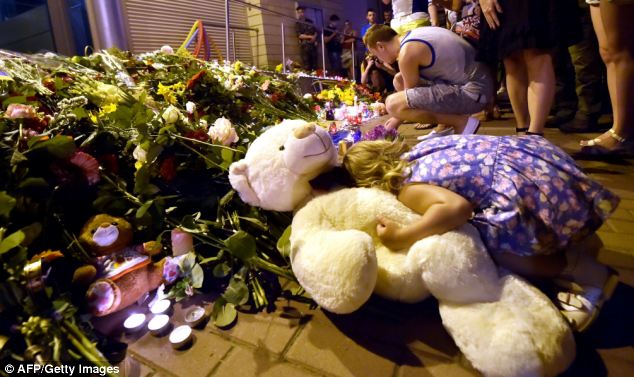
“Following are images from the scene – warning: GRAPHIC.”[1]
This is the caption that greeted me as I was reading through headlines about the crash of Malaysia Airlines passenger flight MH17, shot down by a surface-to-air missile while flying over Ukraine. The crash scene is gut-wrenchingly sad – dozens of pictures of smoldering wreckage, many of these with portions blurred out to cover up the gruesome sights of human remains. It’s no surprise, then, that before I scrolled through images from the scene posted by Business Insider, they included the above warning.
Regardless of whether this missile strike was an accidental shooting down of an airliner that was thought to be a military transport jet or an intentional targeting of civilians, the precipitating cause in this crisis, according to experts, is Russia’s conflict with Ukraine. The New York Times editorial board posted an excellent opinion piece, calling on Russian President Vladimir Putin to put a stop to not only tragedies like these, but to end a war of his own making against Ukraine:
Growing casualties on the ground, a major escalation of American sanctions against Russia, a military plane shot down and now the appalling destruction of a Malaysian jetliner with 298 people on board, shot by a surface-to-air missile. The Ukrainian conflict has gone on far too long, and it has become far too dangerous.
There is one man who can stop it – President Vladimir Putin of Russia, by telling the Russian-backed separatists in eastern Ukraine to end their insurgency and by stopping the flow of money and heavy weaponry to those groups. But for all his mollifying words and gestures, Mr. Putin has only continued to stoke the flames by failing to shut down those pipelines, failing to support a cease-fire and avoiding serious, internationally mediated negotiations.[2]
Mr. Putin is so obsessed with getting to Ukraine, it seems, that even the tragic loss of a civilian airliner is not too large a price to pay to pacify his Macbethian-style political and empire-building ambitions. But the pictures from this airliner crash are rallying the world into sharp disagreement with the Russian president. This must stop.
Of all the grueling pictures I have seen from this story, the one I posted at the beginning of this blog has perhaps touched my heart most deeply. There was no warning caption of graphic content posted above this image, but there should have been. For far more tragic than smoldering wreckage are the shattered lives of those who have lost loved ones. A girl’s grief is far more explicit than a flaming fuselage.
My parents used to warn me, “Power corrupts.” After following this story, I wish that was all power could do. For whether from the halls of the Kremlin or from an open plane dotted by missiles, in this instance, power didn’t just corrupt. It killed. Is it any wonder that, as Christians, we rejoice in the promise that “all authority in heaven and on earth” has been given to Jesus (Matthew 28:18)? After all, He seems to be the only one who knows how to use it – at least perfectly. For He uses His power not to kill, but to make alive (cf. John 10:10).
May Jesus’ perfect use of power be a comfort and consolation to those who have lost loved ones in this depraved display of aggression.
________________________
[1] Michael B. Kelley, “More Than 300 People Killed As Passenger Plane Shot Down In East Ukraine,” Business Insider (7.17.2014).
[2] The Editorial Board, “Vladimir Putin Can Stop This War,” The New York Times (7.17.2014).
Decidophobia

Credit: thebeaconmag.com
I have a confession to make: I suffer from decidophobia.
Now, before you accuse me of making up words, this term is not my own. Walter Kaufmann, who served as a philosophy professor for over 30 years at Princeton, coined it. He explains decidophobia like this:
In the fateful decisions that mold our future, freedom becomes tangible; and they are objects of extreme dread. Every such decision involves norms, standards, goals. Treating these as given lessens this dread. The comparison and choice of goals and standards arouses the most intense decidophobia.[1]
Here’s what Kaufmann is saying: decisions form futures. Those who suffer from decidophobia worry that their decisions will tank their futures.
Now, to a certain extent, this is true. Foolish decisions can lead to bad futures. If one wracks up a lot of debt now, it leads to a lot of bills in the future. If one is having an affair now, it can lead to a heart-wrenching divorce in the future.
But there are other decisions – decisions that don’t always carry with them the ethical clarity that getting into a bottomless pit of debt or having an affair do. Decisions like, “What job should I take?” “What vehicle should I buy?” “What house should I live in?” I am trying to make a decision on the last of these three quandaries. And I have come down with a bad case of decidophobia.
As I have looked at neighborhoods and floor plans and features and storage space, I’ve become worried and concerned. Will I make the right decision? But here’s what I’ve come to realize: decisions like these, though not always easy, are not devastatingly determinative of my future. If a house does not have all the features I might like, it will still provide me with a roof over my head at the end of the day. If a job you take does not meet all your dreams and expectations, you will still have a paycheck at the end of your pay period. If a car you buy isn’t the one you’ve dreamed of since you were a teenager, it will still get you from point A to point B by the end of your trip.
I have long suspected that God gives us some decisions to make not to teach us about decisions themselves, but to teach us about the anxiety that so many of us feel when we are in the throws of a decision-making process. I read somewhere that we should “not worry about tomorrow, for tomorrow will worry about itself” (Matthew 6:34). Many of the decisions we make carry with them no biblical mandate. Any decision we make will be fine. Being free from worry, however, does carry with it a biblical mandate. That’s why it’s time to stop incessantly fretting. Decidophobia is sinful.
So what’s causing you decidophobia? Before you get your stomach tied in knots, remind yourself of Christ’s words in Matthew 6:34. These decisions are not worth your worry. You are in God’s care.
___________________________
[1] Walter Kaufmann, Without Guilt and Justice: From Decidophobia to Autonomy (New York: Peter H. Wyden, Inc., 1973), 3.
It’s Not About The Supreme Court Ruling

Credit: Wikipedia
There was the ruling. And then there was the reaction to the ruling. When the Supreme Court ruled in favor of the arts and crafts chain Hobby Lobby, saying it did not have to pay for certain types of birth control as mandated by the Affordable Care Act because it considered them abortifacients which violated the theological beliefs of the company’s owners, the reaction was swift and fierce – from both sides. Mark Goldfeder, senior fellow at the Center for the Study of Law and Religion at Emory University, announced:
Here is what the decision means: People have First Amendment rights, and even if the corporations themselves are not entitled to Free Exercise exemptions, the people behind the corporate veil, the business owners themselves, certainly are.
On the other side, Judy Waxman, vice president of health and reproductive rights at the National Women’s Law Center, lamented:
We think it’s a bitter pill to swallow for women, and that the decision is saying that bosses know best and their religious beliefs can trump very basic health-care coverage. It’s especially harmful to women, but beyond this, down the line, there will be other cases, other challenges, that could have an even broader effect.[1]
Of course, along with these measured responses, there were also the less measured responses of the Twitterverse, like one post advocating arson: “#HobbyLobby are scum of the earth. Burn every single one down, build a homeless shelter there instead.”[2] Then, there was another very humble post from a person who agreed with SCOTUS’s ruling: “Ha. Ha. It’s The. Law.”[3]
What fascinates me about all these responses – whether they be sophisticated or sleazy – is how little they have to do with the actual legal ins and outs of this case and how much they reflect the radically disparate worldviews of our society. I have found no better synopsis of the clash of worldviews in this case than this from Trevin Wax:
A generation ago, a person’s religious observance was a public matter, a defining characteristic of one’s identity, while a person’s sexual activity was something private. Today, this situation is reversed. A person’s sexual behavior is now considered a defining characteristic of identity, a public matter to be affirmed (even subsidized) by others, while religious observance is private and personal, relegated to places of worship and not able to infringe upon or impact the public square.
The culture clash today is less about the role of religion in business or politics, and more about which vision of humanity best leads to flourishing and should therefore be enshrined in or favored by law.[4]
This is exactly right. Different people value different things. For some, their faith is their defining characteristic. Thus, they have a strong desire to practice their faith in every area and aspect of their lives, including their business dealings. For others, some other thing – like their sexuality – is their defining characteristic. And anything perceived as an affront to their sexual identity is worthy of unrestrained caustic choler.
As a Christian, I really have no choice when it comes to how I will define myself: my life must be defined by Christ. In the words of the apostle Paul, “It is no longer I who live, but Christ who lives in me” (Galatians 2:20). So what does this mean for my interactions with those who define themselves by other things? A few things come to mind.
First, I must love those with differing worldviews. As Ed Stetzer so pointedly says in his article on the Hobby Lobby ruling, “You can’t hate a people and reach a people at the same time.”[5] People who live outside a Christian worldview are not to be destroyed or oppressed in a political or judicial power grab, but loved through a winsome witness.
Second, I must realize that my worldview is no longer a privileged majority worldview in our society. Indeed, many people are not at all concerned that a Christian may be legislatively or legally forced to do something that goes against his conscience. Again, Ed Stetzer writes, “Most Americans are not as passionate about the religious liberty issue (when connected to contraception, even abortifacient contraception) as most evangelicals and conservative Catholics.” Trevin Wax reveals that “a record number of Americans (1 in 3) said the first amendment [which grants religious liberty] goes too far in the freedom it promises.” This is just a reality.
Third, I must make the case – through both a rigorous intellectual defense and a gentle, quiet lifestyle – why my worldview should be seriously considered and why it does indeed lead to true human flourishing. It is important to note that this case cannot be made quickly. Indeed, it cannot even be made by just my life or in just my lifetime. No, this is a case the whole Church must make. And blessedly, the Church has been making it for millennia. For instance, the Church made its case here. And here. And here. And here. This is why I doubt any Supreme Court ruling – be it in favor of or against religious liberty – will kill the Church’s case. For this is the case and cause of Christ.
Let’s keep making it.
______________________________
[1] Ashby Jones, “Legal Experts, Advocates React to Supreme Court’s Hobby Lobby Ruling,” The Wall Street Journal (6.30.2014).
[2] Costa Koutsoutis, @costa_kout, 6.30.2014
[3] Harriet Baldwin, @HarrietBaldwin, 6.30.2014
[4] Trevin Wax, The Supreme Court Agrees With Hobby Lobby, But Your Neighbor Probably Doesn’t,” The Gospel Coalition (6.30.2014).
[5] Ed Stetzer, “Hobby Lobby Wins: Where Do We Go from Here?” The Exchange (6.30.2014).


 Pastor Zach's Blog