A Pastoral Statement on Today’s Supreme Court Decision
 As you have no doubt probably heard by now, the Supreme Court of the United States has legalized same-sex marriage in all 50 states. At the church where I serve, the pastoral team is working to address some of the issues involved in this ruling, including potential repercussions for religious liberty, but for now, I want to offer three brief thoughts.
First, as Christians, we need to continue to be committed to what God’s Word has to say about all our relationships and, specifically, those relationships that are deeply intimate in nature. Sexual integrity is a much bigger issue than whether or not you support same-sex marriage. Sexual integrity touches nearly every aspect of our lives – from how we guard our purity if we are single to how we appropriately relate to our coworkers and friends to how we hold sacred our most intimate moments if we are married. God has put boundaries on sexuality and intimacy not to needlessly constrict us, but to lovingly protect us.
Second, as with any major cultural shift, reactions to the Supreme Court ruling have been instantaneous and, in many cases, extreme. Some are unfettered in their celebration. Others are paralyzed by deep trepidation. As Christians, we are called to be measured in our words and peaceful in our hearts, always and fully trusting in God’s providence. We do not need to join our culture in its emotionally charged reactions. We have nothing to fear.
Third, please remember to be kind in any reactions and responses you may offer to the Supreme Court ruling. Chief Justice John Roberts, in his dissenting opinion, expressed concern about how we regularly feel “compelled to sully those on the other side of the debate.” As Christians, we should never sully others. We can disagree with others without hating them. On Facebook, I saw a simple thought that expresses well how we ought to dialogue about the Supreme Court ruling on same-sex marriage: “We don’t have to agree on anything to be kind to one another.” This is exactly right. For this reflects the very character of our God. As the Psalmist says, “God’s merciful kindness is great toward us: and the truth of the LORD endures forever” (Psalm 117:2). Like our Lord, may we be people of merciful kindness and truth. It’s what our world needs – now, more than ever.
Charleston

Credit: Brendan Smialowski/AFP/Getty Images
There have been plenty of tears in Charleston these past few days. When 21-year old Dylann Roof first walked into the Emanuel African Methodist Episcopal Church, he appeared as though he came to join the congregation in its Wednesday evening Bible study. But after nearly an hour, he opened fire, killing nine people, including the church’s pastor, the Reverend Clementa Pinckney. According to reports, he announced as he stood up and drew his gun that he was there “to shoot black people.” Survivors said Roof also told the congregation, “You rape our women and you’re taking over our country. And you have to go.”
I wish I could attribute what happened in Charleston to the simple fact that Roof is a deranged lunatic, which, if preliminary reports are any indication, he probably is. But there is more at work here than just Roof’s psychological health. What happened in Charleston is also a reminder that ideas have consequences. Good ideas have good consequences. And yes, bad ideas can have devastating consequences. Roof, as insane as he may be, is a man with ideas – deeply racist ideas. And these ideas have now left a church, a town, and a nation in mourning. This is why, in today’s blog, I want to take a moment to remind you of what the gospel has to say about racism. For the bad ideas of racist hatred can never be allowed to trump the holy ideals of perfect love.
Acts 10 tells the story of a Roman soldier named Cornelius and one of Jesus’ apostles, a Jew named Peter. Generally, Jews and Romans did not get along. This had to do in part with the fact that the Romans were the occupying force in Israel at this time. It also had to do with the fact that Romans were Gentiles, and Jews and Gentiles despised each other. One of the prayers many pious Jews of this day would pray was, “Blessed art Thou, [O God], who did not make me a Gentile.” So you can imagine that Peter must have been more than a little uncomfortable when three men came to his door and said, “We have come from Cornelius the centurion” (Acts 10:22). Just the mention of a Gentile soldier, especially when that Gentile soldier happens to be working for the army that is occupying your nation, would have turned Peter’s stomach. But this group of men had a special request of the apostle: “A holy angel told him to have you come to his house so that he could hear what you have to say” (Acts 10:22).
It is at this point that Peter had a decision to make: does he turn his nose up in disgust at these men because of their racial and political differences, or does he welcome them and honor their request?
“Then Peter invited the men into the house to be his guests. The next day Peter started out with them” (Acts 10:23).
Peter, rather than walking the well-worn and socially accepted road of the racism of his day, instead chose the road of racial reconciliation. Indeed, when Peter finally does talk to Cornelius, he announces, “I now realize how true it is that God does not show favoritism but accepts men from every nation who fear Him and do what is right” (Acts 10:34-35). God, Peter explains, loves people without regard to race. He loves people “from every nation.” This is why, when another apostle named John sees a vision of heaven, he sees people “from every nation, tribe, people and language, standing before the throne and in front of the Lamb” (Revelation 7:9).
Peter’s words, then, cut the core of the problem with racism. Racism says, “Even if God accepts people from every nation, I will not.” And to not accept someone that God has is not only hateful, it is wicked.
In my mind, the most eerie, yet poignant, part of this tragedy at Charleston is that Roof, when he first entered the church building, walked up and sat next to Pastor Pinckney. In a predominantly black congregation, and as someone who had not been there before, he would have surely stuck out. The pastor could have shunned him, or, at the very least, ushered him to a more “appropriate” spot that wasn’t right next to the church’s leader. But Pastor Pinckney welcomed him. He gladly let him sit next to him. He, as Jesus said, loved his enemies even though, at the time, he didn’t know Roof was his enemy. Indeed, in one of Roof’s most chilling confessions, he said he “almost didn’t go through with it because everyone was so nice to him.” Now that’s amazing love from a congregation who has every reason to hate.
Oh, that we would all have a double portion of Emanuel African Methodist Episcopal’s spirit. For a spirit like that is just what we need to prevent tragedies like this.
+ IN MEMORIAM +
Cynthia Hurd
Susie Jackson
Ethel Lance
Rev. DePayne Middleton-Doctor
Rev. Clementa Pinckney
Tywanza Sanders
Rev. Dr. Daniel Simmons
Rev. Sharonda Singleton
Myra Thompson
Marriage, Thriving, and Character
 This past week, Trish Regan, writing for USA Today, sounded the alarm over what has become an infamous decline in U.S. marriage rates:
According to the Pew Research Center, the American marriage rate hit a rock bottom of 50.3% in 2013, down from 50.5% the previous year. Compare that to 1960, when 72.2% of Americans married. Meanwhile, a new finding by the forecasting firm Demographic Intelligence, suggests marriage rates will continue falling into next year as Millennials choose to opt out of traditional relationships.
Marriage is going out of style and that’s a problem. An economic one.[1]
Regan is concerned about declining marriage rates. Why? Because declining marriage rates lead to increasing economic volatility:
Historically, a rising household formation rate has contributed to America’s financial success. People meet, they marry, they buy a home, they have children and they buy more things. One new household adds an estimated $145,000 to the U.S. economy thanks to the ripple effect of construction spending, home improvements and repairs …
According to an American Enterprise Institute study by economists Robert Lerman and Brad Wilcox, young married men, ages 28-30 make, on average, $15,900 more than their single peers, while married men ages 33-46 make $18,800 more than unmarried men.
Marriage, it turns out, is not only good for love, it’s also good for your pocketbook. Therefore, Regan argues, we need more of it.
But at the same time marriage may be good for your financial situation, Sarah Knapton, science editor for The Telegraph, points out that marriage may not be so good for a woman’s health – at least not as good as we once thought:
Marriage has long been cited as a health booster, with couples living in wedded bliss more likely to live longer and have fewer emotional problems.
Yet a new study suggests that women hardly benefit from tying the knot.
Landmark research by University College London, the London School of Economics and The London School of Hygiene and Tropical Medicine found that single women do not suffer the same negative health effects as unmarried men.
In fact, middle aged women who had never married had virtually the same chance of developing metabolic syndrome – a combination of diabetes, high blood pressure and obesity – as married women.
And although they showed slightly higher levels of a biomarker which signifies an increased risk of breathing problems, it was far lower than the risk of illness for unmarried men. The same was true of a biomarker for heart problems which was raised 14 per cent in men but was barely noticeable in women.[2]
To marry or not to marry? It turns out that for a woman, it doesn’t really matter all that much.
Many of the arguments I have read in support of marriage at a time when marriage rates are on a precipitous decline are rooted in how this staid institution leads to human thriving. Marriage, it is argued, leads to greater economic stability. Marriage, at least for men, and in some studies even for women, does have certain health benefits. These arguments for marriage are well and good. But if the benefits of marriage are attenuated to only those things which lead to human thriving, when a person feels as though they are no longer thriving in a marriage, they may be tempted to check out and give up. Or, if marriage doesn’t have certain demonstrable and quantifiable benefits, as is the case with the health benefits study from the University College London, it can be all too easy just to opt out of getting married in the first place.
As Christians, we must never forget that as important as human thriving may be, human character is even more critical. And marriage most definitely shapes a person’s character. Over my nine years of marriage, I have learned invaluable lessons about selflessness, commitment, love, advocacy, confidentiality, service, compassion, kindness, and a whole host of other important character traits.
In a marriage, human thriving may help us do well for ourselves. Human character, however, even when such character is forged through difficult and daunting marital circumstances, compels us to do good for our world. And good is something our broken world needs.
Which is just another reason to get – and to stay – married.
___________________________________
[1] Trish Regan, “Regan: Marriage is going out of style, and that could hurt,” USA Today (6.1.2015).
[2] Sarah Knapton, “Marriage is more beneficial for men than women, study shows,” The Telegraph (6.11.2015).
The Shifting Moral Tide
 A couple of weeks ago, it was the Pew Foundation’s report on the decline of those who self-identify as “Christian” that left the faithful rattled. Last week, Gallup published survey on Americans’ moral attitudes that, once again, shook Christians. Gallup reports:
Americans are more likely now than in the early 2000s to find a variety of behaviors morally acceptable, including gay and lesbian relations, having a baby outside of marriage and sex between an unmarried man and woman. Moral acceptability of many of these issues is now at a record-high level.[1]
In the scope of fifteen years, the percentage of people who believe gay and lesbian relations are morally acceptable has gone up 23 percent. 61 percent of people now believe having a baby outside of marriage is morally acceptable compared to 45 percent fifteen years ago. Support for polygamy has more than doubled: only 7 percent believed it was morally acceptable 15 years ago compared to 16 percent today. And the case for doctor-assisted suicide is gaining traction. 56 percent of people now find it morally credible. According to this report, only two issues have seen their moral favorability decline over the past fifteen years. Fewer people now believe the death penalty and medical testing on animals are morally acceptable.
In some ways, this survey is merely a lagging indicator of a moral revolution that has already taken place. Frank Newport, who wrote the article on Gallup’s findings, explains:
Americans are becoming more liberal on social issues, as evidenced not only by the uptick in the percentage describing themselves as socially liberal, but also by their increasing willingness to say that a number of previously frowned-upon behaviors are morally acceptable.
Notice that Newport explicitly locates the change in Gallup’s poll in what people are willing to say. This poll does not measure what people may have already believed. If our own president is any indication, people may believe something is morally acceptable long before they are willing to publicly admit it, especially when what they believe is controversial.
So what are we to make of this tide of evolving moral sentiment? If this poll is indeed a lagging indicator of what people already believe and how people are already living, I would suggest this survey represents as much of a human desire for catharsis as it does a shifting of the moral tide. After all, when people do not live up to a given moral standard – which has been happening for a long time – they have two options. First, they can bring their lives into alignment with the moral standard in question. Second, they can bring the moral standard in question into alignment with the way they are already living. Option one is challenging because it demands change and effort. Option two is cathartic because it makes people feel better about what they’re already doing. This, I suspect, plays a large part in why so many are so willing to shift their standards. They don’t want to feel bad because their lives don’t measure up to a given moral standard, so they just change the standard so it no longer makes them feel guilty. Our shifting moral standards have become therapeutic comforts.
There is, of course, a third option for morality and life. This option admits our lives will never measure up to any moral standard – at least not any moral standard worth having – and so the way to address our shortfalls and shortcomings is not by shifting moral standards, but by repentance. This is the way of the cross. And this is the way our world needs.
We can try to live up to transcendent moral standards, but we will always fail. We can try to change transcendent moral standards, but history will only mark us as deluded. So we must repent. And we must be forgiven. Because forgiveness is what we need – even when it’s forgiveness for when we immorally shift our moral standards.
____________________________________
[1] Frank Newport, “Americans Continue to Shift Left on Key Moral Issues,” Gallup.com (5.26.2015)
True Confessions
 I love to read all sorts of things. Theological tomes. Biographies. Histories. The Bible. I love to read op-ed pieces in newspapers and long form journalism – an art form I am concerned is all too quickly disappearing – in newsmagazines.
I love to read. But I don’t always like what I read about.
Case in point. This past week, I was scrolling through my newsfeed when up popped a story about a pastor who had to resign from his church because of serious ongoing turpitude. I wish I could say I’m surprised. But I’m not. I’m not surprised because I’ve seen far too many of these kinds of stories for them to shock me. I’m not surprised because I know the human heart can be a dark place, leading people to do dark things. I’m not surprised because I know my heart can be a dark place, leading me to do dark things. I’m not surprised. But I am heartbroken. I am heartbroken when I think about the pain, regret, and fear this brother in Christ must be experiencing. I am heartbroken by how his story is being talked about on social media. An Internet mob has predictably descended on Facebook pages, Twitter feeds, and comment walls to attack and destroy this man in a sickening display of schadenfreude. This man is in my prayers and, if I can be so bold, he should be in yours.
It is out of my heartbreak that I want to sound a warning not only to my brother pastors, but also to all Christians: Satan hates you and is out to destroy you. This is why Revelation 9:11 calls Satan “the Destroyer.” Satan wants to destroy you along with all the people you love and all the people who love you. Indeed, the sin of this pastor has not only compromised his security and livelihood, it has also deeply wounded his congregation – exposing them to ridicule in the hot spotlight of a nationally trending news story – as well as, I’m sure, emotionally devastating his family.
A few years back, in The Asbury Journal, David Werner asked an important question: “How is your doing?” He asked this question in the spirit of John Wesley, who took great care always to connect “how one was doing internally (in one’s soul) … to what one did, or how one lived out the Christian life externally (in one’s actions).”[1] In other words, Wesley wanted Christians to seriously consider how well their actions comported with their words and worldview.
So, let me ask you: How is your doing? Are there any “doings” that you are hiding? Is there a sin that remains secret? Now is the time to confess it, repent of it, and receive forgiveness for it. Now is the time to share it with a pastor, a counselor, or a trusted friend in Christ so you can be held appropriately accountable for it and, ultimately, be absolved of it.
The apostle Peter exhorts us to two important “doings” when he writes, “Be self-controlled and alert” (1 Peter 5:8). Both parts of Peter’s admonition are critical. If you cannot control yourself, your ability to help and lead others will be inevitably compromised and, in some instances, discredited and destroyed. And if you are not continually vigilant, watching out for Satan’s tricks and traps, he will use your slumber toward righteousness to take you down before you even know what hit you. Being self-controlled and alert is key.
But even more important than Peter’s admonition is Peter’s invitation in the verse prior: “Cast all your anxiety on God because He cares for you” (1 Peter 5:7). Sin tells a sinister, but enticing, lie. It promises you that if you fall to it, it will release you from your anxiety. “Imbibing too much alcohol can help you lighten up and have fun,” whispers sin. “Misusing God’s gift of sex can give you a much needed thrill in a hard knocks world,” says sin. But, in the end, sin never helps your anxiety. Instead, it only adds to your anxiety pain, hurt, brokenness, and guilt.
Peter reminds us that only God can take our anxiety because only God has taken care of our anxiety by taking care of our sin on the cross of His Son, Jesus Christ. So lay your anxiety – and your sin – on Him. In the words of the old hymn:
I lay my sins on Jesus,
The spotless Lamb of God;
He bears them all, and frees us
From the accursed load.
I bring my guilt to Jesus,
To wash my crimson stains
White in His blood most precious,
Till not a spot remains.
There is a chance that this man who has had to resign from his church will not serve again as a pastor. But even if his vocation as a pastor has passed, his vocations as a husband and as a father still stand. My prayer is that, out of his pain, this man serves in these callings from God repentantly, patiently, and lovingly and that he finds his comfort in what God has called him: His forgiven child.
My prayer is that you find your comfort there too.
_______________________________
[1] David Werner, “John Wesley’s Question: ‘How is Your Doing?’” The Asbury Journal 65, no. 2 (2010): 68.
The Pew Survey On Christianity: It’s Not As Bad Or As Good As You Might Think
 The Washington Post led with a headline that sounded nearly apocalyptic: “Christianity faces sharp decline as Americans are becoming even less affiliated with religion.”[1] The faithful quickly jumped in to temper the premature reports of Christianity’s cardiac arrest with op-ed pieces like this one by Ed Stetzer that ran in USA Today: “Survey fail – Christianity isn’t dying: Ed Stetzer.”[2]
The topic of discussion and debate is a new Pew Research Center poll that finds:
… the percentage of adults (ages 18 and older) who describe themselves as Christians has dropped by nearly eight percentage points in just seven years, from 78.4% in an equally massive Pew Research survey in 2007 to 70.6% in 2014. Over the same period, the percentage of Americans who are religiously unaffiliated – describing themselves as atheist, agnostic or “nothing in particular” – has jumped more than six points, from 16.1% to 22.8%.[3]
Taken by themselves, these statistics sound dire and dour. But, as Ed Stetzer helpfully points out in his article, there is more to these statistics than what first meets the eye:
Rather than predict the impending doom of the church in America, this latest study affirms what many researchers have said before. Christianity isn’t collapsing; it’s being clarified. Churches aren’t emptying; rather, those who were Christian in name only are now categorically identifying their lack of Christian conviction and engagement …
Nominals – people whose religious affiliation is in name only – are becoming nones – people who check “none of the above” box on a survey.
Those who value their faith enough to wake up on Sunday morning and head to their local church are mostly still going. What I have described as “convictional Christianity” will continue. Those who say their faith is very important to their lives are not suddenly jettisoning those beliefs to become atheists.
According to Pew, unaffiliated Americans grew from 16 to nearly 23% in the last seven years. That increase largely came from the ranks of Catholics and Mainline Protestants, religious traditions with high numbers of nominals.
Stetzer’s point is well taken. By no stretch of the imagination should we read the Pew survey as a funeral dirge for Christianity – especially for Evangelical Christianity, contrary to this misreading of the Pew survey.[4] Still, even if Pew’s numbers do not portend the sure demise of Christianity, they do indicate a real shift in Christianity. Here’s how.
For better or for worse, the nominal Christians who once warmed the pews in Mainline Protestant churches and are now hemorrhaging to the “nones” had as their counterparts the academic Protestant Christians among the elites. Names such as Reinhold Niebuhr, Harry Emerson Fosdick, Paul Tillich, and Karl Barth once held court as America’s public intellectuals – their books being widely read and disseminated not only into Protestant Christendom, but into society in general. These men enjoyed unrivaled cultural gravitas – so much so, that each of them took their turn gracing the cover of Time Magazine. And though none of these men can be considered orthodox in their doctrine in an Evangelical Christian sense, they nevertheless passed down to American society some generally and even genuinely Christian concerns and insights. Reinhold Niebuhr defended a robust doctrine of original sin, thundering against the pride of society and those who thought they were generally good people. Harry Emerson Fosdick, though he firmly espoused a liberal Protestant ethos, was not afraid to critique it by warning the Church against a blind cultural accommodation to the spirit of the age. Paul Tillich served as an apologist of sorts, explaining how life’s deepest existential questions can be answered by divine revelation. And Karl Barth bequeathed to us an 8,000 page series on church dogmatics that still informs – and occasionally irritates – Christian thinkers to this day. The work these and other men did kept Christian concerns in the forefront of people’s minds and Christian ethical commitments in the center of people’s worldviews.
The latest Pew survey reminds us that these Christian concerns and ethics are disappearing in broad society. The Protestant lions of old are being replaced by the secularist elites of today. The Pew survey, then, does not just tell the story of a non-committed Christian-esque demographic that, in a twist of delicious justice, is deservedly disappearing; it tells the story of a broader Christian influence that – even if it was of the liberal variety – is waning.
This, of course, is not all bad. The heterodoxy and, in some instances, the outright heresy of these Protestant theologians posed a serious challenge to orthodox Christianity. But, then again, the disappearance of influential Protestantism is also not all good. After all, these Protestant theologians did serve broadly, even if unintentionally, as a tenuous bridge between orthodox Christians on the one hand and powerful elites on the other, enabling the two sides to talk to each other.[5] But this bridge has now collapsed, leaving a yawning canyon between a group of orthodox Christians who are increasingly frightened by and hostile to secularism and a group of powerful elites who are increasingly uninformed about and uninhibited by a generally Christian view of life. Our challenge, then, is to bridge this canyon. And that is no easy task.
I agree with Ed Stetzer that Christians should not respond to the Pew survey apoplectically. But the survey does make me miss some of the Protestant leaders of yesteryear, no matter how much I may have been at odds with them theologically. They may have not always been right, but sometimes, they were helpful.
_______________________________________
[1] Sarah Pulliam Bailey, “Christianity faces sharp decline as Americans are becoming even less affiliated with religion,” The Washington Post (5.12.2015).
[2] Ed Stetzer, “Survey fail – Christianity isn’t dying: Ed Stetzer,” USA Today (5.13.2015).
[3] “America’s Changing Religious Landscape,” Pew Research Center (5.12.2015).
[4] Although I share many of Matt Walsh’s concerns with what he saw of Evangelical Christianity and would agree that many Evangelical churches need more robust and Christocentric teaching and preaching, his stated cause of Christianity’s losses is not specifically born out by the Pew data.
[5] For example, Billy Graham and Karl Barth were friends and were comfortable enough with each other to spar with each other on occasion. See Mark Noll, American Evangelical Christianity: An Introduction (Oxford: Blackwell Publishers, 2001), 47.
Fairness Over Family
 How important is it to be fair?
This is the question that Adam Swift, professor of political theory at the University of Warwick, and Harry Brighouse, professor of philosophy at the University of Wisconsin in Madison, wrestle with in their book, Family Values: The Ethics of Parent-Child Relationships.[1] For Brighouse and Swift, the answer to the question of fairness is evident, even if it is admittedly difficult. Being fair is of preeminent importance. Indeed, being fair is so important to these professors that they are willing to severely inhibit one of society’s most cherished institutions in order to achieve their vision of equality: the family.
In their introduction, the authors explain that the family “poses two challenges to any theory of social justice.” One is the liberal challenge, which questions whether it is best to have a child’s parents “determine what [a] child eats or drinks, where she sleeps, what television programs she watches, what school she attends.” Liberals see it as “one of the state’s tasks to protect its citizens, and its prospective citizens, from undue interference by others, including their parents.” Though not advocating for the abolition of the family altogether, these authors do look at the family with a fair amount of skepticism.
The other challenge the family poses to social justice is the egalitarian challenge, which:
… focuses on the distribution of goods and opportunities between children born into different families … Economists tend to focus on expected income over the life-course; sociologists investigate chances of social mobility; philosophers typically think in more abstract terms such as resources or opportunities for well-being. But however we frame or measure the inequality, it is clear that children born into different families face unequal prospects.
For Swift and Brighouse, these “unequal prospects” between families just won’t do. Indeed, in an interview with the Australian Broadcasting Corporation, Swift offers an example of an unequal prospect that particularly troubles him:
The evidence shows that the difference between those who get bedtime stories and those who don’t – the difference in their life chances – is bigger than the difference between those who get elite private schooling and those that don’t.[2]
How does one deal with the challenge of unequal prospects between families who do and do not read to their children before they go to bed? Swift answers:
I don’t think parents reading their children bedtime stories should constantly have in their minds the way that they are unfairly disadvantaging other people’s children, but I think they should have that thought occasionally.
Swift and Brighouse stretch their apologetic for equality as far it can go. Even if a parent won’t stop reading bedtime stories to their children, the fact that there may be other children out there who don’t get read bedtime stories should at least make that parent feel occasionally guilty for “unfairly disadvantaging” those other children.
This line of reasoning is very strange to me. Although I would agree that equality is important in its appropriate context, I would not consider it to be of highest importance as Swift and Brighouse do. Here’s why.
As a Christian, I know – and can empirically verify – that sin has en inevitably entropic effect on society. Thus, to seek equality by trying not to “unfairly disadvantage” others rather than by pursuing what is advantageous for others will only create an equality of increasing pain, suffering, and wickedness, which, interestingly enough, is precisely what the Bible affirms as the only way in which, left to our own devices, we are all truly equal: “There is no difference, for all have sinned and fall short of the glory of God” (Romans 3:22-23). It is hard for me to understand why Swift and Brighouse would advocate guilt over a good thing for the sake of equality with a bad thing.
As I think about Swift and Brighouse’s near deification of equality, I can’t help but think back to an era before 1954 and Brown v. Board of Education when “separate but equal” schools for black and white kids were commonplace in our educational system. Part of the offense of “separate but equal” schools was, of course, that they were not, in fact, equal! But for the sake of argument, let’s say we were able to create schools that were truly separate but equal. Let’s say they had equal funding, equal caliber teachers, and even equal outcomes. My guess – and my hope, quite frankly – is that we would still be indignant at such an arrangement. Why? Because even if such an arrangement could keep in tact the value of fairness, it would break the law of love. After all, it’s hard to love someone when you intentionally separate yourself from someone for no other reason than the color of his skin.
This is the danger in Swift and Brighouse’s proposal. In their efforts to orchestrate fairness between families, they undermine families themselves. They advocate limiting the ways in which parents can love their children, thereby breaking the law of love, for the sake of a disadvantageously normed equality. But families who struggle do not need families who are in better shape to be equal to them out of misplaced pity, they need families who are in better shape to serve them, mentor them, sacrifice for them, and, ultimately, love them. They need these families to be a family to them. Such an arrangement will not create perfect equality. But, then again, though Swift and Brighouse may be loath to admit it, perfect equality is not possible. Beautiful love, however, is. This is why we should strive for love – even over fairness. And where can love grow best? The family.
Maybe we should keep it around.
_________________________________
[1] Harry Brighouse & Adam Swift, Family Values: The Ethics of Parent-Child Relationships (Princeton: Princeton University Press, 2014).
[2] Joe Gelonesi, “Is having a loving family an unfair advantage?” abc.net.au (5.1.2015).
Hand, Meet Glove: Why We Need Both Justice and Morality
 It was George Washington who, in his farewell address, explained, “Of all the dispositions and habits which lead to political prosperity, religion and morality are indispensable supports.”[1] It was John Adams who, in a letter to Zabdiel Adams, said, “It is religion and morality alone, which can establish the principles upon which freedom can securely stand.”[2] It was Benjamin Franklin who, in a letter to the Abbés Chalut and Arnaud, wrote, “Only a virtuous people are capable of freedom. As nations become corrupt and vicious, they have more need of masters.”[3] The founding fathers of this country saw a rich and deep connection between morality and freedom. And rightly so. As Os Guinness points out:
Sustainable freedom depends on the character of the rulers and the ruled alike, and on the vital trust between them – both of which are far more than a matter of law. The Constitution, which is the foundational law of the land, should be supported and sustained by the faith, character and virtue of the entire citizenry, which comprises its moral constitution, or habits of the heart.[4]
A freedom that lacks morality is not a freedom that will last long. It will hemorrhage to death by the hand of its own hedonism. The founding fathers knew this.
Sadly, for all the concern that many of our founding fathers devoted to morality, ethics, and virtue, their concern did not always translate into active efforts toward justice. The failure to fight the institution of slavery and the racism behind it is just one of the many blights on this country’s history. In such instances, morality needed a push from democracy to blossom into justice, which is a sad twist of irony, considering this nation’s very charter has in its preamble its intention to “establish justice.”
The tragic reality is that our treatment of morality and justice has been and continues to be deeply schizophrenic. We persistently seek to separate one from the other. The philosophical and, for that matter, theological reality, however, is that morality and justice are inextricable concomitants of each other. This is why, in Scripture, we are treated both to warnings against those who “pervert the grace of our God into a license for immorality” (Jude 4) and to warnings against those who “devise injustice, and … mete out violence on the earth” (Psalm 58:2). Morality and justice go together.
Currently, I am concerned that, just as in the earlier days of our nation many preached a morality without justice, we have now moved into a time where many are preach justice while eschewing any steadying moral tiller. For instance, the sexual revolution, culminating in the legalization of abortion in 1973, was hailed by proponents as part of an inexorable march of justice toward freedom. No longer could people be told what to do in their bedrooms or with their bodies! The dragon of old-fashioned, constrictive sexual morality and its connection to marriage had finally been slain and severed. What happened? Those in economically depressed areas of this country found themselves economically oppressed by a new set of sexual freedoms as they had lots of children born outside of old-fashioned, constrictive marriages and, it turns out, born outside of the economic stability these old-fashioned, constrictive marriages afforded. Not even legalized abortion could stem the tide of out-of-wedlock births. It seems as though sexual justice, when ripped from its moorings of sexual morality, only boomeranged back to further perpetuate another kind of injustice – that of economic injustice.
Before we clamor for justice, we should always ask, “Is this justice moral?” And before we pontificate on morality, we should always ask, “Am I willing to turn my moral words into just actions?” Both are needed. Both are Scriptural. But neither are easy. And in a socio-political system where we all too often look for easy, or at least broadly palatable, answers to our society’s most difficult challenges, I’m afraid the hard hurdle of both justice and morality is one few are willing to try to jump.
___________________________________
[1] George Washington, Farewell Address (1796).
[2] John Adams, Letter to Zabdiel Adams (6.21.1776).
[3] Benjamin Franklin, Letter to the Abbés Chalut and Arnaud (4.17.1787).
[4] Os Guinness, A Free People’s Suicide: Sustainable Freedom and the American Future (Downer’s Grove: InterVarsity Press, 2012), 99.
Egalitarianism That Oppresses
 The Christian gospel is egalitarian in its effect. In the words of the apostle Paul: “There is neither Jew nor Greek, slave nor free, male nor female, for you are all one in Christ Jesus” (Galatians 3:28). In Christ, Paul argues, divisions between Jews and Greeks, slaves and free men, and males and females have been broken down. Social strata have no bearing in the economy of God’s salvation.
It is important to note that the locus of Paul’s egalitarianism is explicitly and specifically redemptive. In other words, Paul is not arguing that all societal differences between people should disappear. Rather, he is claiming that such differences have no bearing on whether or not Christ saves a person.
When Paul penned Galatians 3:28, the egalitarianism of which he spoke was nothing short of radical and, I would hasten to add, good. I am concerned, however, that Paul’s redemptive egalitarianism has been coopted by another kind of egalitarianism – one that is not so good.
In his book, To Change The World, James Davison Hunter speaks of a populism that:
…is often transformed into an oppressive egalitarianism that will suffer no distinction between higher and lower or better and worse. At its worse, it can take form as “tyranny of the majority” that will recognize no authority, nor hierarchy of value or quality or significance.[1]
Though it seems oxymoronic to speak of an “oppressive egalitarianism,” this is where, culturally, I fear we have arrived.
With the rise of postmodernity, Paul’s redemptive egalitarianism was traded for an ethical egalitarianism that eschewed distinctions between right and wrong, higher and lower, better and worse. Of course, such a refusal to place an ethical stake in the ground inevitably undermines traditional, historical, biblical morality. But it was this ethical egalitarianism, free from the nagging and wagging finger of traditional ethical commitments, that paved the way for another kind of egalitarianism – the populous egalitarianism of today that picks and chooses new ethical standards by simple majority vote (with a little front-end help, of course, from elite opinion leaders who not only shape, but sometimes shoehorn, certain elements of public policy). This is why serious ethical issues are regularly framed as little more than political squabbles with nothing more than polling data needed to solve them. This is what Hunter means when he speaks of the “tyranny of the majority.”
What happens to those who do not share the ethical sentiments of the majority? They are ridiculed and caricatured. They are philosophically discredited, even if by logically dubious means, and intellectually castigated. They become victims of an “oppressive egalitarianism.”
In the apostle Paul’s redemptive egalitarianism, egalitarianism is a gift, granted by Christ’s work on the cross. In today’s populous egalitarianism, egalitarianism is a locus of power – a way to oppress transcendent, historical ethical commitments with the fickle ethical commitments of the masses. Populist ethics, however, are never far from social chaos. After all, no matter what “we the people” may want ethically, transcendence has a funny way of eventually getting its way.
A populous egalitarianism that battles transcendent ethics is doomed to fail. Conversely, a redemptive egalitarianism that saves people regardless of their social standing is a promise from God. And, as such, it is destined to emerge victorious.
Let’s make sure we’re on the right side of the right kind of egalitarianism.
_______________________________
[1] James Davison Hunter, To Change the World: The Irony, Tragedy, and Possibility of Christianity in the Late Modern World (New York: Oxford University Press, 2010), 94.
Common Question: How Were People Who Lived Before Jesus Saved?
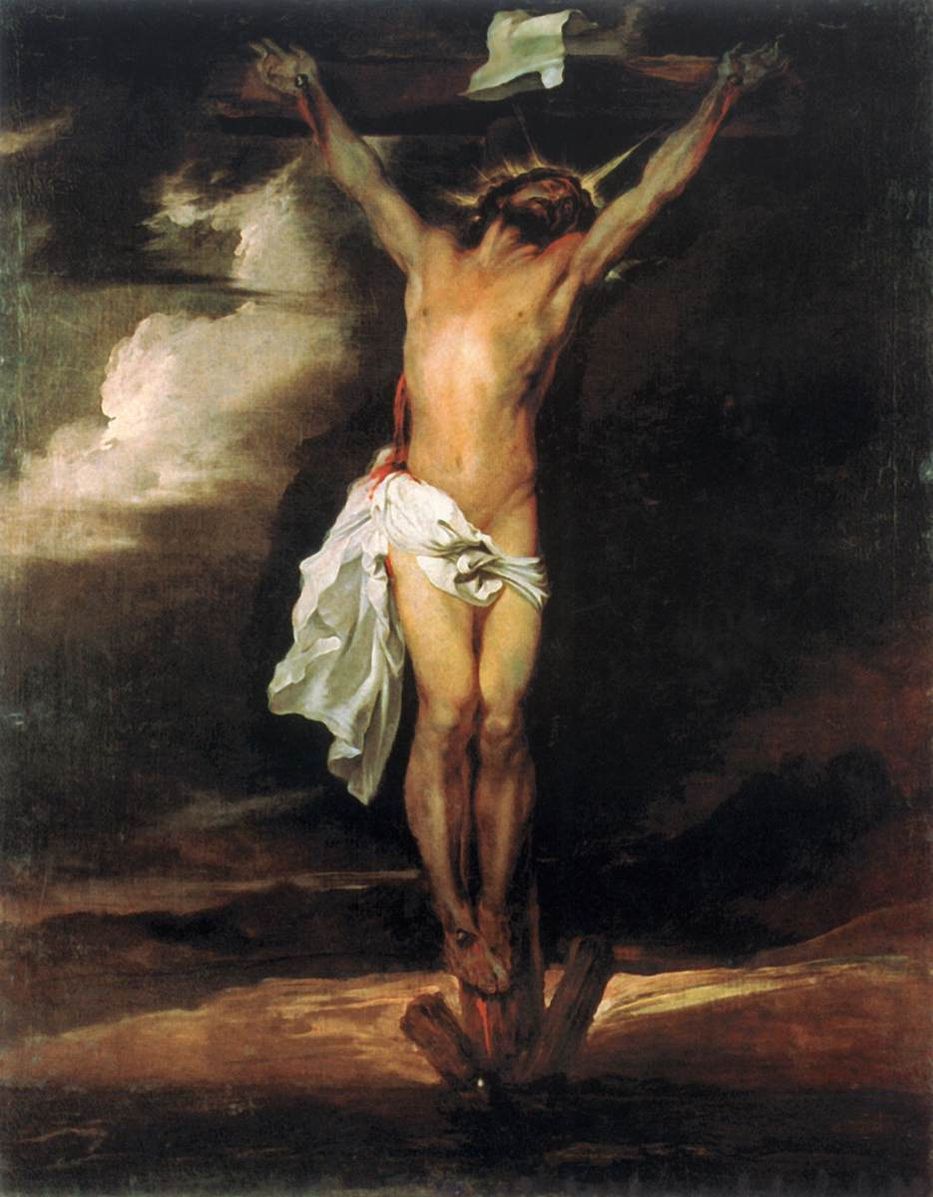
Credit: Anthony van Dyck, 1622
Last weekend at the church where I served, we talked about Jesus’ audacious claim that faith in Him and Him alone is the way to salvation. “I am the way and the truth and the life,” Jesus says. “No one comes to the Father except through Me” (John 14:6).
The truth that salvation is through faith in Christ alone raises a perennial theological question – one that, once again, came to my attention in an email I received after last weekend’s services: If people can be saved only by faith in Christ, how were those people who lived before Christ saved?
At the heart of this question lies an assumption – that people before who lived before Christ were somehow saved in a different way than those who lived after Him. The apostle Paul, however, would beg to differ. He points to one of the most famous characters in the Old Testament, Abraham, and specifically asks the question, “How was Abraham saved?” His answer is unmistakably clear:
Consider Abraham: “He believed God, and it was credited to him as righteousness.” Understand, then, that those who believe are children of Abraham. The Scripture foresaw that God would justify the Gentiles by faith, and announced the gospel in advance to Abraham: “All nations will be blessed through you.” So those who have faith are blessed along with Abraham, the man of faith. (Galatians 3:6-9)
Paul announces, “Here is how Abraham, perhaps the most famous character in the Old Testament, was saved: by faith.” How does Paul know this? Genesis 15:6, of course: “Abram believed the LORD, and He credited it to him as righteousness.” Importantly, Paul says that God “announced the gospel in advance to Abraham.” In other words, before Jesus came to save sinners, God announced that Jesus would come to save sinners. For example, the prophet Isaiah, some 700 years before Jesus’ advent, speaks of a servant who will be sent by God to take away the sins of the world:
Surely He took up our infirmities and carried our sorrows, yet we considered Him stricken by God, smitten by Him, and afflicted. But He was pierced for our transgressions, He was crushed for our iniquities; the punishment that brought us peace was upon Him, and by His wounds we are healed. (Isaiah 53:4-5)
So how were people saved, forgiven, and made righteous before Jesus? By believing that Jesus would come to save, forgive, and make them righteous. How are people saved, forgiven, and made righteous now? By believing that Jesus has come to save, forgive, and make them righteous. In other words, people both before Jesus had come and now that Jesus has come are saved in the same way. They are saved by Jesus.
Oftentimes, people harbor a misconception that people who lived before Christ were saved by following God’s Law while people living after Christ’s advent are now saved through faith in Him. Nothing could be further from the truth. People have always and only been saved by Jesus Christ and His work, even as Jesus Himself says: “I am the way and the truth and the life. No one comes to the Father except through Me.” God’s gospel has always been the only plan for our salvation.
If your life is anything like mine, plans are constantly changing. While writing this blog, I had to move an appointment because things on my calendar changed. Last week, as I was coming home from a trip to Dallas with some friends, we got a flat tire and plans, due to circumstances beyond our control, changed – we got home later than we expected. Plans are constantly changing. And oftentimes, it can be frustrating.
The promise of the gospel is that even if our plans change, God’s plans are sure and certain. The plan for our salvation always was, is, and will continue to be Jesus. There’s no need to look for another plan.


 Pastor Zach's Blog