Name-Calling

One of the most common responses to last week’s vice-presidential debate that I heard was that of a sigh of relief. It was noticeably mild-mannered compared the first presidential debate held a week earlier. Both President Trump and Vice-President Biden came under sharp critique for their name-calling of each other. Check out these headlines:
‘Will you shut up, man?’: Debate devolves to name-calling as Trump derails with interruptions
First Trump-Biden Presidential Debate Devolves Into Interruptions, Name-Calling
First Presidential Debate Turns Into Fighting and Name-Calling
Quite apart from politics, name-calling, in general, concerns me. As anyone who has been badgered or belittled on a school playground knows, sticks and stones may break some bones, but names can also hurt you.
Last week, as I was preparing to lead a study on Isaiah 1, I came across this passage:
Hear the word of the LORD, you rulers of Sodom; listen to the instruction of our God, you people of Gomorrah! “The multitude of your sacrifices – what are they to Me?” says the LORD. “I have more than enough of burnt offerings, of rams and the fat of fattened animals; I have no pleasure.” (Isaiah 1:10-11)
Isaiah encourages the towns of Sodom and Gomorrah to hear the word of the Lord. Historically, the prophet writes these words around 740 BC. The towns of Sodom and Gomorrah, however, were famously destroyed by fire and brimstone some 1,300 years earlier. They no longer exist. So, to whom is Isaiah speaking?
Here, the famed cities are being invoked metaphorically to refer to the rebellious people of God – the Israelites. Isaiah is making the point that the wickedness of the Israelites has become so great that they might as well be the people of Sodom and Gomorrah – cities renowned for their depravity. In other words, Isaiah is calling the Israelites names.
Name-calling seems to be an awfully unbecoming behavior for a prophet of God. And yet, what sounds like disrespect at first is actually an act of desperation. He asks earlier:
Why should you be beaten anymore? Why do you persist in rebellion? Your whole head is injured, your whole heart afflicted. (Isaiah 1:5)
Isaiah longs for the Israelites to repent before they become afflicted by God. Isaiah’s name-calling, then, is not meant to insult, but to implore. The prophet is imploring people of Israel to understand just how precarious their spiritual situation really is. So, he uses the most jarring example of systemic and sanctioned sin he can think of: the cities of Sodom and Gomorrah.
Of course, this is not the only time Isaiah calls the Israelites names. Later in his book, he writes:
But now, this is what the LORD says – He who created you, Jacob, He who formed you, Israel: “Do not fear, for I have redeemed you; I have summoned you by name; you are Mine.” (Isaiah 43:1)
God calls the people of Israel names to help them understand their sin. But He also calls them a name to promise them redemption from their sin:
Mine.
I’m not big on name-calling, but that’s a name I’d love to be called by God any day. Because of Christ, I know I am. And because of Christ, you are too.
The President Tests Positive for COVID-19

Disease doesn’t discriminate. Anyone – high or low, rich or poor, powerful or powerless – can fall ill – sometimes mildly, sometimes seriously. This reality was brought forth in stark relief early Friday morning when the President of the United States tweeted that he and the First Lady had tested positive for COVID-19. Blessedly, their symptoms, so far, have been relatively mild and, according to his physician, the president is doing well.
But all of this has not quelled the barrage of questions that inevitably comes at news as big as this. People want to know: What is the fuller picture of the president’s health history? When, exactly, did the president first suspect or know that he had contracted the virus? Should the people in his inner circle have been more cautious in their meetings and interactions? From whom did the president contract the virus? What will happen if the president falls seriously ill? Will a second presidential debate be possible in a week and a half? And, how will all of this affect the 2020 presidential election?
Just as the brokenness of sickness can affect anyone – no matter who they are – the promises of God are offered to everyone – no matter who they are. As the Psalmist writes:
Hear this, all you peoples; listen, all who live in this world, both low and high, rich and poor alike. (Psalm 49:1-2)
God wants to speak to everyone. This is why, in the Scriptures, we read stories of God speaking to kings and to peasants, to the wise and to the foolish, to the righteous and to the depraved. Disease doesn’t discriminate. But neither does the Divine. He calls all to repentance and He promises all those who trust in Him salvation.
At a moment where so many are in danger of contracting a dangerous virus, I take comfort that even those who are high risk have a Most High God. He rules over these uncertain times and He will see us through to what will hopefully be better times.
I pray for the President and First Lady’s speedy recovery and I praise God that, even if many of the questions we have during a time like this are still unanswered, the God we serve is faithful.
Loneliness and Depression in a Time of COVID-19

Credit: Jeswin Thomas / Pexels.com
More and more research indicates that COVID-19 is affecting not only our physical health, but our mental health as well. David Kinnaman, who is the president of the Barna Group – a Christian research organization – outlined some of his organization’s latest research on just how lonely people have become because of the isolated situations in which so many of us find ourselves. He writes:
In a snapshot poll we took during the pandemic, we found that half of adults said they experience loneliness at least weekly. One third of adults (32%) say that loneliness affects their most important relationships.
As disturbing as a statistic like this may be, it is only the tip of the iceberg. The pandemic is creating and heightening all sorts of mental health struggles. In another statistic, David notes that 39% of people say they have become so depressed that their depression is destroying their relationships.
Speaking of depression, in an article for The Player’s Tribune, Kevin Love, who plays for the Cleveland Cavaliers, opened up about his personal struggle with the disease. The whole article is worth reading, but Kevin’s explanation of how he tried to achieve his way out of depression is especially striking:
Everybody who goes through mental health issues has a unique story, but for me (and I think this is probably true for a lot of people), my entire identity was tied to one thing in a really unhealthy way. Way before I was in the NBA or even in college, my self-worth was all about performing. I was what I did, which I think a lot of people can relate to, whether they’re a chef or a lawyer or a nurse or whatever the profession. I just happened to play basketball.
When I wasn’t performing, I didn’t feel like I was succeeding as a person.
I didn’t really know how to be comfortable in my own skin. I could never just be unapologetically Kevin, walking into a room. I was never in the moment, alive. It was always the next thing, the next game, the next, next, next. It was like I was trying to achieve my way out of depression.
Kevin goes on to write about how, years earlier, he had broken his wrist twice and was not able to “achieve” like he wanted to and what he wanted to in basketball. His depression became overwhelming for him:
The future started to feel meaningless. And when it gets to the point where you lose hope, that’s when the only thing you can think about is, “How can I make this pain go away?”
I don’t think I have to say much more than that.
If it hadn’t been for a couple of my closest friends, I don’t know if I would be here today telling my story. And 99.9% of the people in my life probably don’t know how bad it got for me. But as hard as that might be for them to hear, I feel like I need to get that off my chest for the people out there who might be in a similar situation right now …
All I can say to you is this:
Talk to somebody.
You would be amazed at how freeing it is just to talk to somebody, and tell them the truth about what you’re going through.
And listen, I’m not trying to sell you some fairy-tale version of mental health. It took me years and years – hell, it genuinely took 29 years for me to realize what I needed.
I needed medication. I needed therapy.
I still need those things now, and I probably always will.
This is incredible insight. And it goes to the heart of why David Kinnaman’s statistic on loneliness is so sinister. Loneliness cannot win if we’re going to be okay. Isolation cannot carry the day. We need each other. We need to talk to each other. And we need to be there for each other. This does not mean that we disregard protocols to protect our physical health against a serious virus. Social distancing, masks, handwashing, and avoiding large gatherings are still wise ideas. But none of these protocols need prevent us from picking up a phone and talking to each other, or FaceTiming with each other. None of these protocols need stall us in seeking professional help. None of these protocols need stop us from loving each other.
If you’re struggling right now, listen to Kevin Love:
Talk to somebody.
You’ll be glad you did. And they’ll be glad you did, too. Because they love you.
Dealing with Depression

This weekend at the church where I serve, we began a two-week series on mental health. A new study, published in The Journal of the American Medical Association, found that symptoms of depression in adults across the country has more than tripled since the COVID-19 pandemic began:
In the weeks after the outbreak prompted quarantines and stay-at-home orders, 27.8% of those surveyed had at least one symptom of depression. That compares to just 8.5% of people in 2017 and 2018.
And it’s not just that the proportion of people experiencing signs of depression had increased by mid-April – the burden of those symptoms increased as well. After the pandemic caused a radical shift in daily life, there were “fewer people with no symptoms and more people with more symptoms.”
None of this is particularly surprising. It is difficult to imagine a scenario where the societal upheaval we have endured over these past few months does not have an effect on our mental health.
Struggles with mental health are nothing new. In Psalm 119, the Psalmist has a line that jumped off the page at me as I was reading it as part of my morning devotions this past week:
My soul is weary with sorrow. (Psalm 119:28)
I wonder how many of us can relate to these words because we feel the weight of these words?
The question, of course, is: What do we do when we do feel the weight of these words? In the series we are at my church on mental health, we are talking about how there is both a clinical and a spiritual side to depression. Both must be addressed. Clinically, depression can – and often should – be treated through professional counseling and, perhaps, medication. Spiritually, the Psalmist offers a great place to start in order to address our depression:
My soul is weary with sorrow; strengthen me according to Your word. (Psalm 119:28)
To heal in our depression, we need a word from the Lord – a word that He loves us, that He will take care of us, and that there is hope for us.
If you’re struggling in depression right now, please know that you’re not alone. Please seek clinical help if you need it. But please also meditate on God’s Word. It is full of people who felt like you do. And it is full of people who God helped like He will you. Depression does not need to be determinative. God has a word of hope for you in His Word.
Divorce Inquiries Climb as the Pandemic Lingers

Among the casualties of the coronavirus are many Americans’ marriages. New released data indicates that sales of divorce agreements have soared by 34 percent during the pandemic. The pandemic seems to have had especially adverse effects on new marriages, with couples married five months or less pursuing divorce at double the rate of 2019. According to The Daily Mail, “the combination of quarantine life, wavering finances, mounting unemployment rates, illnesses, deaths of loved ones, mental illness and child care” has led to the spike in divorce inquiries.
As long as there has been marriage, there have been stressors and strains on marriages. History’s first marriage featured a husband who ill-advisedly blamed his wife for his bad behavior after he ate some forbidden fruit. When he was confronted by God over his sin, he claimed: “The woman You put here with me – she gave me some fruit from the tree, and I ate it” (Genesis 3:12). His was quick to blame his wife instead of taking responsibility for his own sin. And couples have been following in his footsteps ever since.
In Jesus’ day, countless numbers of marriages were crumbling. Many Jewish rabbis in the first century permitted husbands to divorce their wives for pretty much any reason. There was one school of thought that actually taught that a husband may divorce his wife “if she spoiled a dish for him,” or “even if he found another woman more beautiful than she.” Jesus, however, was having none of this. He pointedly declared: “I tell you that anyone who divorces his wife, except for sexual immorality, and marries another woman commits adultery” (Matthew 19:9). Jesus wants couples to remain together, even during trying times.
COVID-19 has certainly brought its share of trials. Many marriages are struggling. Some are not surviving. But hope is not lost. Jesus, at the same time He confronts those who don’t take seriously a commitment to marriage, also comforts those who are struggling in marriage. He knows circumstances can become difficult, and He cares.
So, if you are struggling in your marriage, now is the time to ask for help. You can certainly reach out to the church where I serve, Concordia, and we would be happy to talk with you. COVID-19 has created enough casualties. Let’s not add our marriages to that sad list.
Help After Hurricane Laura
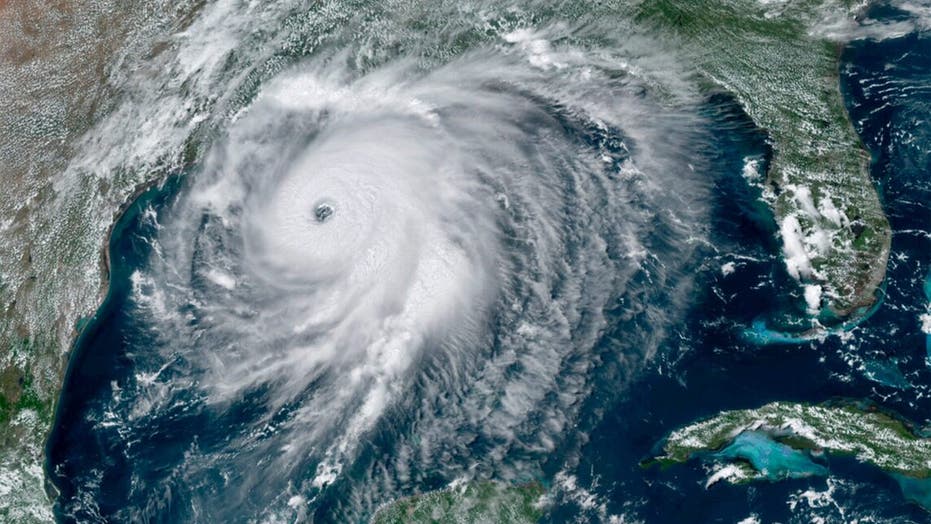
When Hurricane Laura slammed into the Louisiana and Texas Gulf Coast border, it cut a path of destruction that will take years to undo. The storm surge reached nine feet in some places. Sustained wind speeds peaked at 150 miles per hour, making it a Category 4 hurricane and tying the record for the strongest winds of any hurricane to make landfall in Louisiana. The scenes of devastation have been hard to look at. So many homes have been ruined. So many communities have been crushed. And even some lives have been lost.
The power of a storm like Laura reminds us of two things. First, it reminds us of the power we don’t have. We don’t have the power to stop a storm like this. We don’t even really have the power to fully prepare for a storm like this. But second, a storm like Laura also serves as a testament to the power we do have. We do have the power to help each other in times of crisis. We do have the power to love each other through seasons of pain.
And, as has been the case after so many other hurricanes, stories of those who have stepped up to help are already emerging – like that of Leonard Harrison, a volunteer with the Cajun Navy, who, while others were fleeing from the storm, drove 14 hours from Wilmington, North Carolina in his F-250, which he calls “Goliath,” to help with water rescues. He wound up rescuing 28 people from perilous high waters. He was using the power he had to help people in need.
While we do not have power over storms, God does. As the Psalmist reminds us:
He stilled the storm to a whisper; the waves of the sea were hushed. (Psalm 107:29)
But for all the power we don’t have over storms, we must keep in mind that we do have power after storms. We do have the power to love each other, like Leonard Harrison did. And this power has been given to us by God. As one of Jesus’ followers, John, writes:
Dear friends, let us love one another, for love comes from God. (1 John 4:7)
God has given us the power of His love so we can love each other. As we begin the process of cleaning up from Laura, now is the time to use the power God has given us instead of complaining about the power He hasn’t.
The Gulf Coast is counting on us.
To donate to Hurricane Laura relief, click here.
A Shrinking Design for COVID Times

First, a confession: I have not eaten at a Taco Bell in years – perhaps decades. But when I heard that the famed fast food chain was redesigning their dining areas, I was intrigued:
Starting next year, the restaurants will encompass 1,325 square feet (123 square meters) compared with an average 2,500 square feet for Taco Bell restaurants now.
Two drive-through lanes will highlight the new restaurants, enabling faster service for eaters who order through the chain’s app. The new facilities will provide contactless curbside-pickup service.
This is in response, the designers explained, to a new reality – that fewer people are eating out since the beginning of the COVID-19 pandemic. Obviously, this is a trend that these designers believe will continue well into the future.
I think they could be right. Even as restaurants re-open, anxiety levels remain high. Many who once felt comfortable around strangers now prefer the company of a close group of friends.
In some ways, Taco Bell’s redesign is a return to the roots of the fast-food industry. When fast food restaurants first started dotting the American landscape, many of them did not have dining areas at all. They were drive-up and walk-up food stands. Indeed, the first Taco Bell had a walk-up window only and was no larger than a two-car garage. But a lack of a dining room does not mean that community around food no longer matters.
In college, my fast food haunt was a nearby Jack In The Box. Its two tacos for 99 cents was too good a deal for a college student to resist. Though I would never actually eat at the restaurant, I would also never eat from the restaurant alone. A buddy would always go with me to the drive-thru and we would bring a bag of tacos back to our dorm to share. The community was incredible, even if the food was not.
Numerous studies have been conducted on the importance of meals and community. The Atlantic summarized a few of these studies a few years back:
Using data from nearly three-quarters of the world’s countries, an analysis from the Organization for Economic Cooperation and Development (OECD) found that students who do not regularly eat with their parents are significantly more likely to be truant at school…
Children who do not eat dinner with their parents at least twice a week also were 40 percent more likely to be overweight compared to those who do, as outlined in a research presentation given at the European Congress on Obesity in Bulgaria… On the contrary, children who do eat dinner with their parents five or more days a week have less trouble with drugs and alcohol, eat healthier, show better academic performance, and report being closer with their parents than children who eat dinner with their parents less often, according to a study conducted by the National Center on Addiction and Substance Abuse at Columbia University.
With such pronounced sociological benefits, it’s no wonder that in the early Church:
They broke bread in their homes and ate together. (Acts 2:46)
COVID-19 has taken a lot from us, including, for many, a center of community in restaurants. Many restaurants remain shuttered. For those that are open, the experience is not the same. Half empty dining areas and blocked-off tables provide a strange – instead of friendly – experience. But community will outlast COVID. After all, we need each other. Whether in our homes, in a dorm room, or in a restaurant dining room, we will find ways to be together. The early Church did. And we still will.
For right now, eating out may be dangerous to our health. But figuring out ways to be together that don’t spread disease remains good for our souls.
Processing a Pandemic

“When the pandemic is over…”
I’ve heard these words spoken over and over again by many people. And, I agree with them. I do believe this pandemic will eventually pass. But in my darker moments, I must admit that I also wonder about these words. I want to ask: “You say, ‘When the pandemic is over.’ When, pray tell, might that be?”
I have a feeling I’m not alone in asking this question. Not only am I not alone in asking this question among those around me; I am also not alone in asking this question among those throughout history.
In a really interesting long form piece for New York Magazine, Andrew Sullivan takes his reader on a whirlwind tour of plagues throughout history. His descriptions of many historic plagues are gruesome. Take, for instance, the plague that swept through Rome in 536:
Black rats arrived in the Roman port of Alexandria. They carried with them their own parasite, a flea that lived on the rats’ blood and could survive up to six weeks without a host – making it capable of enduring long sea voyages. And as the bacteria spread among the rats, and their population began to collapse, the fleas, desperate for food, sought alternatives. Living very close to the rats, humans were an easy target … For several days after infection, you were asymptomatic, then grotesque black buboes appeared on your body – swollen lymph nodes near where the fleas had bitten. Death often came several days later.
John of Ephesus noted that as people “were looking at each other and talking, they began to totter and fell either in the streets or at home, in harbors, on ships, in churches, and everywhere.” As he traveled in what is now Turkey, he was surrounded by death: “Day by day, we too – like everybody – knocked at the gate to the tomb … We saw desolate and groaning villages and corpses spread out on the earth, with no one to take up [and bury] them.”
This is not even the worst of Mr. Sullivan’s descriptions. His recounting of the 1918 flu pandemic here in the States is even more jarring:
In her book Pandemic 1918, Catharine Arnold notes that “victims collapsed in the streets, hemorrhaging from lungs and nose. Their skin turned dark blue with the characteristic ‘heliotrope cyanosis’ caused by oxygen failure as the lungs filled with pus, and they gasped for breath from ‘air-hunger’ like landed fish.” The nosebleeds were projectile, covering the surroundings with blood. “When their lungs collapsed,” one witness recounted, “air was trapped beneath their skin. As we rolled the dead in winding sheets, their bodies crackled – an awful crackling noise which sounded like Rice Crispies [sic] when you pour milk over them.”
But as the summer of 1918 began in the U.S., relief spread. Maybe it was over. And then, in the fall, confident that a vaccine was imminent, several cities, notably Philadelphia, hosted war-bond parades, with large crowds thronging the streets … In the coming weeks, the city morgue was piling bodies on top of bodies, stacked three deep in the corridors, with no ice and no embalming. The stench was rank. City authorities were reduced to asking people to put their dead loved ones out on the street for collection.
This is horrifying.
But Mr. Sullivan is not simply content to leave his reader with dreadful descriptions of plagues past. He also invites us to grapple with some hard truths that our being revealed by our present plague, like this one:
We are not in control.
This is most certainly true.
Christians, for millennia now, have known this and proclaimed this. But they have also trusted in and told of One who is in control – One who can, and even does, heal the sick and raise the dead.
Mr. Sullivan notes:
Reminding humans of our mortality, plagues throw up existential questions.
They do. Whether we take the time to grapple with these existential questions, however, is up to us. Historically, people have answered threats to their existence in one of two ways:
Let us eat and drink, for tomorrow we die! (Isaiah 22:13)
Or:
Even though I walk through the valley of the shadow of death, I will fear no evil, for You are with me; Your rod and Your staff, they comfort me. (Psalm 23:4)
Some are confronted by a time like this and simply resign themselves to revelry, for they believe that this is all there is. Others are confronted by a time like this and hope for a restoration, for they know this is not how things should be – but they also believe that there is One who will make things as they can be. And they believe that this One remains with us to comfort us, even during a pandemic.
Which way will you respond to this present moment? Choose wisely.
Disaster in Beirut

Credit: Anwar Amro/AFP via Getty Images
When I first saw the video footage out of Beirut, I, like so many, was horrified. As so many others have noted, what began as a raging fire turned into what looked like an atomic bomb explosion in the heart of Beirut’s harbor – complete with the mushroom cloud that literally knocked people down for miles around.
But it was not an atomic bomb. It was not an attack by some nefarious force or enemy nation. The culprit here was negligence. It is now being reported that at the site of the explosion, there were thousands of tons of ammonium nitrate stored alongside a cache of fireworks. How they got there is a case study in incompetence. The Guardian interviewed a former port worker, Yusuf Shehadi, who explained that the Lebanese military had demanded that the ammonium nitrate be housed there. Mr. Shehadi explained:
We complained a lot about this over the years. Every week, the customs people came and complained and so did the state security officers. The army kept telling them they had no other place to put this. Everyone wanted to be the boss, and no one wanted to make a real decision … The port workers did not put the chemicals there in the first place. That outrage rests with the government.
The fireworks stored there date back all the way to 2010, after customs confiscated them and needed a place to put them. Apparently, a decade was not long enough for customs to find a more suitable storage spot for the fireworks. In other words, this was a disaster waiting to happen. Of course, now that the disaster has happened, there is plenty of finger pointing, but little to no responsibility taking.
After history’s first disaster – humanity’s fall into sin – just like with Beirut, there was plenty of finger pointing, but little to no responsibility taking. When God discovers that Adam and Eve have eaten from the tree He had forbidden to them, both of them are quick to try to pass the buck:
The man said, “The woman you put here with me – she gave me some fruit from the tree, and I ate it.” Then the LORD God said to the woman, “What is this you have done?” The woman said, “The serpent deceived me, and I ate.” (Genesis 3:12-13)
Sadly, this finger pointing did not solve anything. It only led to death – just like in Beirut. In that town, the latest death toll stands at 154 with more than 5,000 people injured.
When Jesus is on trial before Pontius Pilate, there is plenty of finger pointing going on. “We have found this man subverting our nation. He opposes payment of taxes to Caesar and claims to be Messiah, a king,” some say as they point at Jesus (Luke 23:2). “He stirs up the people all over Judea by His teaching. He started in Galilee and has come all the way here,” others accuse (Luke 23:5). And just like in the Garden and just like at Beirut, this finger pointing leads to death – Jesus’ death. But this death is different.
The prophet Isaiah says of Jesus’ crucifixion:
Surely He took up our pain and bore our suffering. (Isaiah 53:4)
Rather than taking the fingers of His enemies and pointing them right back at them in their sin, Jesus willingly took up their finger pointing and he took up responsibility for the sinfulness and brokenness of the world.
It is unlikely someone will actually step up to take responsibility for this tragedy. In reality, no one person can. There are no doubt dozens if not hundreds of people who were complicit in this dangerous storage setup. And besides, no amount of human finger pointing or human responsibility taking will bring back those who have lost their lives in Beirut’s tragic explosion. There is only One who can take responsibility in a way that will actually solve this tragedy – in a way that will actually bring those who have lost their lives back in a resurrection. And His name is Jesus.
He takes responsibility for what we cannot.
The Desperate Plight of the Uighur Muslims
Credit: Associated Press
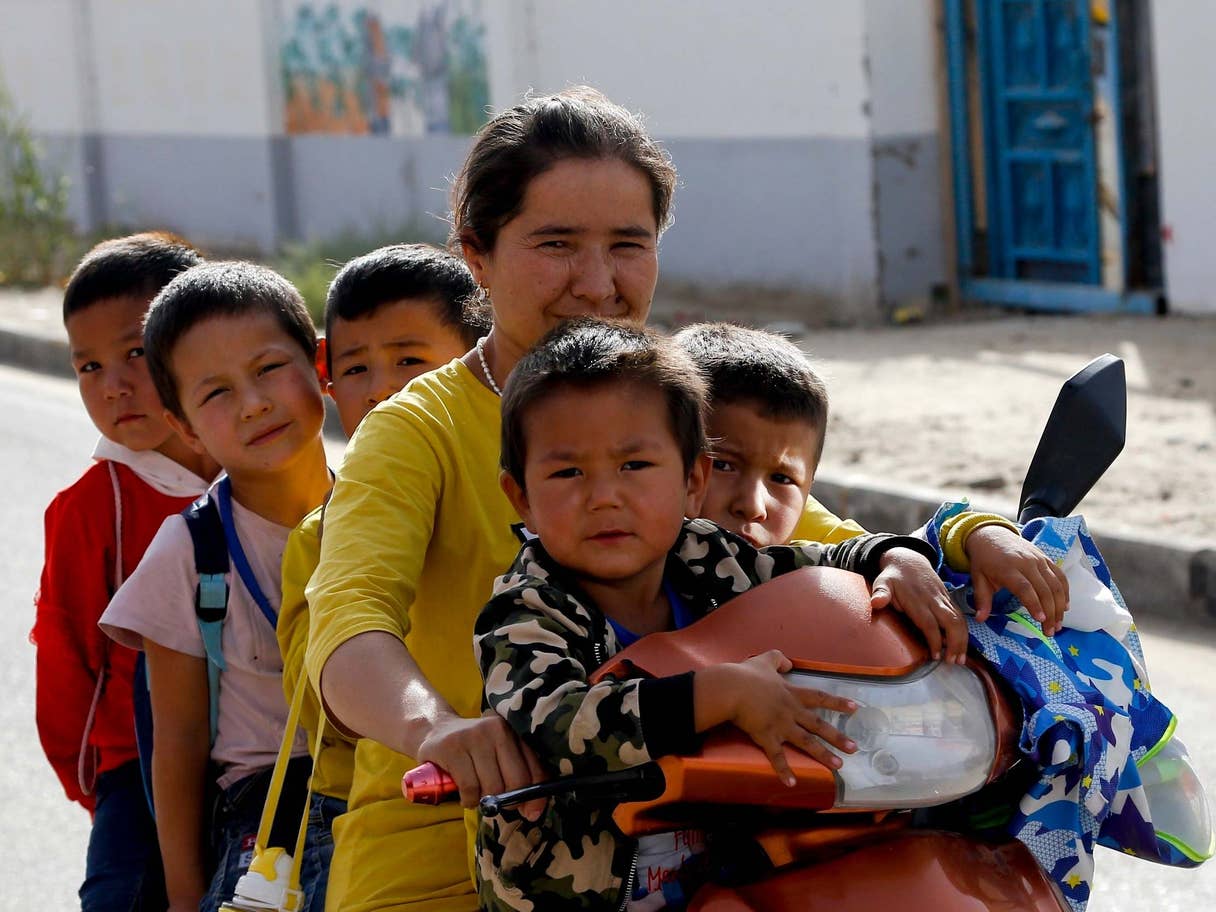
In a story that, in my opinion, has gone disturbingly under-reported, the United Kingdom has leveled shocking allegations against the Chinese government of serious human rights abuses against Uighur Muslims living in that country. The BBC reports:
UK Foreign Secretary Dominic Raab has accused China of “gross and egregious” human rights abuses against its Uighur population…
Reports of forced sterilization and wider persecution of the Muslim group were “reminiscent of something not seen for a long time,” he told the BBC…
China’s UK ambassador said talk of concentration camps was “fake.”
Liu Xiaoming told the BBC’s Andrew Marr that the Uighurs received the same treatment under the law as other ethnic groups in his country.
Shown drone footage that appears to show Uighurs being blindfolded and led to trains, and which has been authenticated by Australian security services, he said he “did not know” what the video was showing and “sometimes you have a transfer of prisoners, in any country.”
When a nation is accused of forcefully sterilizing an ethnic and religious group and shipping them by trains to camps, it is difficult not to reflexively conjure images of the abuse and genocide of countless Jews under Nazi Germany in World War II.
If the charges against the Chinese government are demonstrated to be true, the world must stand together in opposition. Persecuting or murdering any group of people is simply unacceptable.
In a speech from 2018, Senator Ben Sasse of Nebraska spoke out against Russian corruption and authoritarianism. He said:
The American people are a people, and we are a nation that believes in human dignity. We believe that this isn’t just true of 320 million Americans. It’s true of 7.5 billion people across this globe. We believe in free speech, freedom of religion, freedom of the press, freedom of assembly, the right of protest not because the government gives us those rights but God created us with dignity.
Senator Sasse’s point is critical to keep in mind as we seek to address this current crisis. What is happening in China should matter to us in America not because China has violated some arbitrary American principle of human dignity, but because China has violated the true and righteous reality of human dignity. That humans have certain immutable rights is true, as Senator Sasse points out, not only for Americans, but for all 7.5 billion people across the globe. When these rights are violated, we should stand up. When ethnic and religious groups are tortured, we should yell, “No!”
Though we may not share a common faith, Christians and Muslims share a common humanity. We also both understand that there is something beyond what we can merely see, taste, touch, smell, hear, and discern with our senses. We believe that there is a God who is all-powerful. Because Christians also believe in an all-powerful God who is all-loving as well, we should reflect His love by loving our Muslim neighbors and speaking out for their welfare and against those who would seek to rob them of their dignity – and lives.
People everywhere have a right to life. May we pray to the God who has not only given a right to life to the Uighurs, but also gives hope for a life that is eternal through Christ.


 Pastor Zach's Blog