Posts filed under ‘Word for Today’
“Word for Today” – Luke 8 – www.concordialutheranchurch.com
 Last week, the New York Times published an article titled, “Believers Invest in the Gospel of Getting Rich.” In her piece, Laurie Goodstein chronicled a Fort Worth crusade, headlined by the reigning patriarch and matriarch of prosperity theology, Kenneth and Gloria Copeland. Goodstein writes:
Even in an economic downturn, preachers in the “prosperity gospel” movement are drawing sizable, adoring audiences. Their message – that if you have sufficient faith in God and the Bible and donate generously, God will multiply your offerings a hundredfold – is reassuring to many in hard times.
Goodstein’s summary, I would say, is a fair encapsulation of what prosperity theology believes and teaches. No less than Copeland himself has said, “Faith is a spiritual force….It is substance. Faith has the ability to effect natural substance.” What is Copeland’s premise? If a person has enough faith, he can, quite literally, bring things into being – things like money and luxury items and good times. All he needs to do is believe strongly and make a donation to Kenneth Copeland Ministries, of course.
Prosperity theology is a false theology, partly because it promises far too little. It promises only mere pittances of worldly provision whereas the true gospel promises nothing less than forgiveness of sins, life, and salvation – the things most sorely needed by any human. Moreover, prosperity theology’s connection between faith and reward is disingenuous and dangerous. I know many people with incredibly strong faith who still struggle deeply, whether those struggles are financial, relational, or physical. A strong faith does not necessarily result in a lavish lifestyle. Indeed, this is precisely the case in our reading for today from Luke 8.
Jesus has just returned to his home base of Galilee following a brief stint in the Decapolis. The crowds stand elated at Jesus’ return:
Now when Jesus returned, a crowd welcomed him, for they were all expecting him. Then a man named Jairus, a ruler of the synagogue, came and fell at Jesus’ feet, pleading with him to come to his house because his only daughter, a girl of about twelve, was dying. (verses 40-42)
Jairus is a man of strong faith. He publicly and unashamedly falls at Jesus’ feet and pleads with him to heal his daughter. According to prosperity theology, he should be a shoe-in for instant blessing. But Luke’s narrative doesn’t play out that way:
As Jesus was on his way, the crowds almost crushed him. And a woman was there who had been subject to bleeding for twelve years, but no one could heal her. She came up behind him and touched the edge of his cloak, and immediately her bleeding stopped. “Who touched me?” Jesus asked. When they all denied it, Peter said, “Master, the people are crowding and pressing against you.” But Jesus said, “Someone touched me; I know that power has gone out from me.” Then the woman, seeing that she could not go unnoticed, came trembling and fell at his feet. In the presence of all the people, she told why she had touched him and how she had been instantly healed. Then he said to her, “Daughter, your faith has healed you. Go in peace.” (verses 42-48)
This doesn’t make any sense! Here is this woman whose faith is so timid and so weak that she tries to “sneak a healing,” as it were, out of Jesus. And she gets one! Not only that, but Jesus commends her faith! But then there’s Jairus, a man with a strong and public faith, and he’s still waiting. Indeed, things even take a turn for the worse: “While Jesus was still speaking, someone came from the house of Jairus, the synagogue ruler. ‘Your daughter is dead,’ he said. ‘Don’t bother the teacher anymore’” (verse 49). A timid faith results in healing. A bold faith leaves a man with a dead daughter. How much more backward can this be?
In the end, Jesus travels to Jairus’ home and, gloriously, raises his daughter from the dead. This story does indeed have a happy ending. But not every story does. Some sicknesses end in deaths that are not immediately thwarted. Some depression tightens rather than loosens its grip. Some emotional wounds never get healed in this life. It doesn’t matter how much faith you have.
Although it may not sound like it at first, the discontinuity between the strength of our faith and the severity of our suffering is actually good news. Because this discontinuity serves as a promise that we need not have superhero-like faith in order to receive God’s blessings. For this anonymous woman’s faith was anything was bold, but it received healing from Jesus nonetheless. That’s because the blessings of our faith are not the results of our faith’s intrinsic strength; rather, they are the results of the strength of the One to whom our faith clings: Jesus Christ. And Jesus is always strong, even when our faith is weak.
So whether your faith feels strong or weak right now, remember, Jesus still has good things for you. Maybe not things like lots of money and perfect health charts, but he does have things much better than those. He has things for you like forgiveness of sins, life, and salvation – his best blessings. And I’ll take those any day.
“Word for Today” – Luke 7 – www.concordialutheranchurch.com
 One of my favorite country songs is Alabama’s “Cheap Seats.” It sings the praises of that minor league baseball magic – everything from the blind umps to the players’ unknown names to the flat beer and greasy hot dogs – that is so prevalent throughout many American midsized towns. Perhaps the reason this song strikes such a deep chord in me is because when I lived in the Coastal Bend, I was one of those cheap seat dwellers.
A favorite pastime of mine on a sweltering Sunday afternoon was to spend five dollars and sit on the general admission lawn of Whataburger Field in the way, way, way outfield to watch the Corpus Christi Hooks play ball. Sure, the drinks were five bucks and the burgers were seven, but experiencing America’s favorite pastime was priceless.
In our reading for today from Luke 7, we meet a woman who has “lived a sinful life” (verse 36). Exactly what her sinful life entailed, we do not know. In 591, Pope Gregory preached a sermon in which he identified her sin as that of prostitution. This identification, although speculative, has become a traditional one. Whatever the nature of her sin, this woman invites herself a dinner party, hosted by a prominent Pharisee, which Jesus himself is attending. To do this would not have been especially unusual per se. For in this day, people of ill repute would often come to an elite meal, but they would always stay outside, away from the honorable guests who dined inside. In other words, they would sit in the “cheap seats,” hoping to catch wind of the mealtime conversation that was taking place in the more expensive seats.
It is not scandalous, then, that this sinful woman would come to a house full of religious leaders where a well-known and well- respected teacher like Jesus was dining. What is scandalous, however, is that she would actually enter the house and approach Jesus:
She brought an alabaster jar of perfume, and as she stood behind him at his feet weeping, she began to wet his feet with her tears. Then she wiped them with her hair, kissed them and poured perfume on them. (verses 37-38)
What in the world is this woman doing? She is leaving her cheap seat outside of this dinner party and heading for an expensive seat right next to Jesus! And Jesus does nothing about it! The Pharisee hosting the dinner party cannot contain his incredulity at this shocking breach of social etiquette. He says, “If this man were a prophet, he would know who is touching him and what kind of woman she is – that she is a sinner” (verse 39). The syntax of this Pharisee’s sentence is instructive. In Greek, this is a contrary-to-fact conditional statement. That is, this Pharisee implies that Jesus is not a prophet. A paraphrase of this sentence might read, “If you were a prophet Jesus, but you’re not, then you would know that this is a sinful woman who is anointing you!”
Jesus wastes no time responding to this man’s stinging accusation:
Do you see this woman? I came into your house. You did not give me any water for my feet, but she wet my feet with her tears and wiped them with her hair. You did not give me a kiss, but this woman, from the time I entered, has not stopped kissing my feet. You did not put oil on my head, but she has poured perfume on my feet. Therefore, I tell you, her many sins have been forgiven. (verses 44-47)
Jesus forgives this woman’s sins. He “pays the price,” as it were, for her to sit next to him in an expensive seat around the mealtime table. Without cost, Jesus moves this woman up from the cheap seat of her sin to the costly seat of his salvation.
Every once in a while, I would get to sit in a front row seat right on the third base line at a Corpus Christi Hooks game. There was a friend of mine at the congregation I was serving who had season tickets for the Hooks and would regularly invite me to go to games with him. Interestingly, these “expensive seats” were actually less costly for me than even my five dollar “cheap seats” because my friend would always pick up the tab. On these occasions, my seat wasn’t just cheap, it was free.
So it is with the forgiveness that comes from God. When Jesus moves us up from the cheap seats of our sin to the privileged seat of his salvation, he doesn’t just do it for cheap, he does it for free. For he has already paid the price for that seat of salvation on the cross. So today, take a seat with Jesus. It won’t cost you a thing.
“Word for Today” – Luke 6 – www.concordialutheranchurch.com
 It wasn’t fair, really. The Pharisees were just no match for Jesus. After all, they had to try to hide their intentions from a man who could read their very minds. In our text for today from Luke 6, Jesus is engaged in a series of so-called “Sabbath controversies” with the religious leaders who are accusing Jesus and his followers of brazenly disregarding the day’s rules for rest. In the second of these controversies, the Pharisees are “watching Jesus closely to see if he would heal on the Sabbath” (verse 7). The Greek for “watching him closely” is paratereo, meaning “to spy,” or, as one Greek dictionary puts it, “to watch scrupulously.” The sense is that the Pharisees are peering at Jesus out of the corners of their eyes, hoping that Jesus will not notice their ill-intended paratereo. But Jesus does notice: “But Jesus knew what they were thinking” (verse 8). The Pharisees’ spying, it seems, is not match for Jesus’ mind reading.
In order to rebuke the Pharisees’ ill-intended paratereo, Jesus calls to himself a man with an atrophied hand. He asks the religious leaders, “Which is lawful on the Sabbath: to do good or to do evil, to save life or to destroy it” (verse 9)? No one responds. There is only dead silence. Jesus continues by saying to the man, “‘Stretch out your hand.’ The man did so, and his hand was completely restored” (verse 10).
Interestingly, in this particular Sabbath controversy, Jesus does nothing that could be considered Sabbath-breaking, even by the legalistic standards of the religious leaders. Jesus does not physically assist this ailing man, nor does he even touch him, he simply speaks to him: “Stretch out your hand.” And speaking is surely not prohibited on the Sabbath! The man whom Jesus heals also does nothing which would transgress Sabbath laws. After all, reaching out a hand hardly constitutes doing work.
Jesus does nothing here that would break Sabbath law or tradition. And yet, the Pharisees, even when Jesus adheres to their Sabbath stipulation playbook, become blinded with rage at Jesus: “They were furious and began to discuss with one another what they might do to Jesus” (verse 11). Once again, the Greek is instructive. The word for “furious” is anoia. This is a compound word made up of noos, the Greek word for “mind” and a, a Greek negative prefix. Thus, the religious leaders are so angry at Jesus that they literally “loose their minds.” Their fury toward Jesus is baseless. It has no logical grounding in what Jesus has actually done. It is insane anger.
All too often, our anger echoes that of the religious leaders. It is anoia anger. It is insane rage. Last week, I took my wife Melody to a bed and breakfast in the Texas Hill Country in celebration of her birthday. On our way, we, of course, got stuck in heavy traffic on I-35. As we were sitting there, bumper to bumper and brake light to brake light, I could feel my temperature rising. My hands gripped the wheel, my head craned forward trying to see when this traffic snarl might end, and I almost lost it. I almost began griping passionately and crassly about the traffic tribulation that is I-35 and how they really need to do something about this horrible highway. Thankfully, I caught myself…this time. I took a deep breath, I loosened my grip on the steering wheel, and I tried to relax. Sadly, I am not always so self-controlled. Sometimes, I become livid over something as innocuous as a traffic jam. There is nothing I can do about it, no way I can fix it, but nevertheless, I blindly froth with rage as I sit, stopped on the highway in my truck. I become, even if only momentarily, anoia.
What is it that raises your ire, even when there is no real cause for anger? It is little wonder that Scripture reminds us, “Man’s anger does not bring about the righteous life that God desires” (James 1:20). I find it gripping that, in the final analysis, the religious leaders never had true cause for anger against Jesus, for Jesus, as God’s Son, never acted out of accordance with his Father’s will. The anger of the religious leaders toward Jesus was always baseless. How often is it the same for us?
Today, rather than losing your mind to anger, rest in the peace of God, which surpasses and salves human anger. For this is the kind of righteous life that God desires. I hope you desire it for yourself as well.
“Word for Today” – Luke 5 – www.concordialutheranchurch.com
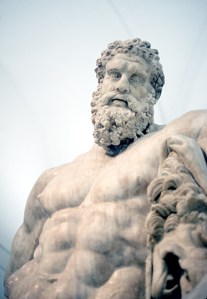 The famed Aesop relays the story of a wagoner who was driving a heavy load of cargo along a road muddied by a recent rainstorm. The wagoner came to a spot where the road was especially treacherous and his wheels sunk deep into the mire. The harder the wagoner whipped his horses to pull, the deeper his wheels sank. Finally, the wagoner exited his chariot, knelt, and prayed to Hercules: “O Hercules, help me in this my hour of distress.” Incredibly, Hercules appeared and responded: “Tut, man, don’t sprawl there. Get up and put your shoulder to the wheel. The gods help those who help themselves.” Such is the origin of this well-known cliché.
Not only is the above cliché well known, it is also widely believed, even among Christians. In fact, in a recent survey, some eighty percent of Christians who describe themselves as “born-again” believe that Aesop’s moralism is a direct quote from the Bible!
As it is in our day, so it was in ancient antiquity. The sentiment that “God helps those who help themselves” was well regarded among the theological elite of Jesus’ day. The rabbis taught, for instance, that God would not help sinners or liars. But then Jesus came to this earth. And Jesus, contrary to prevailing theological sentiments, believed and acted as if God, instead of only helping those who can help themselves, actually helps those who can’t help themselves. Such is the case in our reading for today from Luke 5.
In this chapter, Luke introduces us to a paralytic – an archetypal image of a helpless man. By this point, Jesus’ reputation as a healer has already spread so far and wide and that a huge crowd gathers, hoping to see another miraculous salving. But in the case of this paralytic, Jesus surprises everyone. Rather than soothing his sickness, Jesus says to this man: “Friend, your sins are forgiven” (verse 20). The crowd thought it was this man’s paralysis that made him helpless. Jesus had another idea. It was his sin that left him truly helpless. For his sin paralyzed him not physically, but spiritually.
The rabbis taught, “A sick man does not recover from his sickness until all his sins are forgiven him” (Babylonian Talmud Nedarim 41a). Jesus, in this instance, extols the salutariness of this rabbinical statement and does what is more vital first: he forgives this man’s sins. Ironically, the religious leaders, contrary to their own teaching and tradition, become indignant: “Who is this fellow who speaks blasphemy? Who can forgive sins but God alone” (verse 21)? Jesus, in order demonstrate his authority to forgive sins, responds, “That you may know that the Son of Man has authority on earth to forgive sins…I tell you, get up, take your mat and go home” (verse 24). And the man does! The man is no longer helpless – physically or spiritually. For he has been healed and forgiven by Christ.
The unequivocal affirmation of Scripture is that we are all helpless. Sin has left us this way. And yet, God’s good news is that “while we were still helpless, at the right time Christ died for the ungodly” (Romans 5:6). God doesn’t help those who can help themselves, he helps those who can’t help themselves.
So where are you feeling helpless? Has your financial situation spiraled out of control? Is a relationship in shambles? Is there a sinful addiction you just can’t break? Before you vainly try to help yourself, cry out to God for his help – for his strength, endurance, and forgiveness. Because it’s then, and only then, that you can take appropriate and wise steps to help yourself – and others.
“Word for Today” – Luke 4 – www.concordialutheranchurch.com
 About a month ago, I received my first ever dental crown. Unbeknownst to me, I had recently chipped one of my teeth, and my dentist noticed my periodontal problem during a routine cleaning. Unfortunately, before he placed a crown on my chipped tooth, he first had to do some drilling. Following a couple of injections of Novocain, he assured me that I need not worry. I would feel only “a little discomfort” in my mouth. If by “a little discomfort” he meant searing shots of pain, I suppose he was correct. Apparently, Novocain doesn’t work quite as well on me as he had hoped. He even gave me an extra injection, but to no avail. The pain continued. Thankfully, the procedure didn’t take long.
Although the pain I experienced that day in the dentist’s chair was certainly uncomfortable, at least it wasn’t utterly unbearable. Perhaps what was most disheartening about my experience is that I was hoping for one thing, but got another. I was expecting only “discomfort.” What I got was actual pain.
In our reading for today from Luke 4, Jesus, who is now an adult, returns to his hometown of Nazareth. As a pious first century Jew, Jesus attends synagogue on the Sabbath where he has the privilege of sharing Scripture reading and the message for the day. He reads from the scroll of the prophet Isaiah:
The Spirit of the Lord is on me, because he has anointed me to preach good news to the poor. He has sent me to proclaim freedom for the prisoners and recovery of sight for the blind, to release the oppressed, to proclaim the year of the Lord’s favor. (verses 18-19)
Luke then gives us an important note following Jesus’ reading: “Then he rolled up the scroll, gave it back to the attendant and sat down” (verse 20). In this day, it was customary to proffer and authoritative teaching while sitting down. Indeed, we still have vestiges of this practice in the Roman Catholic Church today. When the pope makes an official announcement, he does so ex cathedra, a Latin phrase meaning “from the chair.” Thus, when a teacher sat down in this day, everyone was to listen closely because he was getting ready to say something important. That is why “the eyes of everyone in the synagogue were fastened on Jesus” (verse 20). For everyone knew that an important proclamation was on Jesus’ lips. And indeed it was. Jesus announces, “Today this Scripture is fulfilled in your hearing” (verse 21). With these words, Jesus declares himself to be the fulfillment of Isaiah 61.
At least at first, everyone is delighted with his declaration: “All spoke well of him and were amazed at the gracious words that came from his lips” (verse 22). But just seven verses later, we read that the people “got up, drove him out of town, and took him to the brow of the hill on which the town was build, in order to throw him down the cliff” (verse 29). Interestingly, the Mishnah Sanhedrin, a compendium of ancient rabbinical teaching, explains that pushing someone over a cliff is the first step in stoning him to death. Thus, the intention of these people is clear: they want to kill Jesus.
But how can this be? How can this crowd go from “speaking well of Jesus” to desiring to stone him within the scope of a mere seven verses? Jesus gives us this answer: “Surely you will quote this proverb to me: ‘Physician, heal yourself! Do here in your hometown what we have beard that you did in Capernaum’” (verse 23). Apparently, the residents of Nazareth only thought well of Jesus because they thought that he could magically solve their problems. As soon as Jesus refuses to engage their superstitious penchant for miracles, the people turn on him. Thus, we find that the people’s expectations of Jesus and their actual experience of him do not match up. People were expecting Jesus to heal them of their sicknesses. When Jesus instead explains that these words from Isaiah do not mean free healings for all but instead that he is the very Messiah of God, the people are stirred into a fury and try to kill him.
Not much has changed since the first century. People’s expectations of Jesus still do not always match up with the reality of his stature as God’s Messiah. People are fine as long as Jesus remains in his safe and inoffensive position as a great teacher or a moral example or a highly enlightened individual. But Jesus is much more than these. He is the Messiah.
So today, ask yourself: What are my expectations of Jesus? Are they biblical or are they of my own making? Do I lean on Jesus as a crutch to solve my problems or do I trust in him as my Savior to ransom my soul? Whatever your expectations, remember that what Jesus actually gives is always greater, better, and more needed than what we would or could ever expect. As the apostle Paul writes, “Now to him who is able to do immeasurably more than all we ask or imagine, according to his power that is at work within us, to him be glory in the church and in Christ Jesus throughout all generations, for ever and ever! Amen.” (Ephesians 3:20-21). Jesus doesn’t meet our expectations, he shatters them. Praise be to God!
“Word for Today” – Luke 3 – www.concordialutheranchurch.com
 In December of 1122, Pope Calixtus II convened the First Lateran Council, the ninth in a series of so-called ecumenical councils in the West. At issue was the relationship between the church and its laypeople and what privileges laypeople could exercise within the church as well as the relationship between the church and state and what authority the state could exercise over the church. As pressing as those issues may have been at the time, however, the First Lateran Council is most famously remembered for the declaration of its twenty-first canon: “We absolutely forbid priests, deacons, subdeacons, and monks to have concubines or to contract marriage. We decree in accordance with the definitions of the sacred canons, that marriages already contracted by such persons must be dissolved, and that the persons be condemned to do penance.” Thus began the practice of the clerical celibacy in the Roman Catholic Church.
Of course, official canonical law doesn’t always translate into actual practice, even among the popes who authorize and enforce such law. Subsequent to the First Lateran Council’s imposition of celibacy on clergy, several popes still managed to father children. Pope Alexander VI, who was pope from 1492-1503, was widely known as a philanderer and fathered four children by his mistress. Then there was Pope Julius III, pontiff from 1550-1555, who was rumored to have had an ongoing affair with his teenage adopted nephew.
Such scandals, as indicated by the sordid side of church history, are nothing new to our day and age. Indeed, there were many similar scandals among other popes, secular rulers, and even first century biblical characters. Even first century biblical characters like Jesus.
Jesus’ origin was certainly a source of much calumny among his detractors. In our reading for today from Luke 3, the doctor tips us off to the controversy which surrounded Jesus’ birth: “He was the son, so it was thought, of Joseph” (verse 23). But there were rumors to the contrary.
In Mark 6, Jesus returns to his hometown of Nazareth to teach in the synagogue. After demonstrating himself to be a brilliant teacher, the people around him ask:
Where did this man get these things? What’s this wisdom that has been given him, that he even does miracles! Isn’t this the carpenter? Isn’t this Mary’s son and the brother of James, Joseph, Judas and Simon? Aren’t his sisters here with us? (Mark 6:2-3)
In this society, it was standard practice to trace someone’s family origin through their father, not their mother. But in this instance, they trace Jesus’ lineage through his mother, Mary. Why? Because there were rumors afoot as to the true identity Jesus’ father. And rumor had it that it wasn’t Joseph. That is why, immediately following their questioning of Jesus’ origin, Mark says, “And they took offense at him” (Mark 6:3). They took offense at his shady pedigree.
We, as believers in Christ, know Jesus’ true origin. True enough, he is not the natural son of Joseph, but he is the only Son of God. Interestingly, right before Luke delineates Jesus’ earthly family tree in verse 23-37 and calls him the “son, so it was thought, of Joseph” (verse 23), he proudly proclaims Jesus’ true divine origins:
When all the people were being baptized, Jesus was baptized too. And as he was praying, heaven was opened and the Holy Spirit descended on him in bodily form like a dove. And a voice came from heaven: “You are my Son, whom I love; with you I am well pleased.” (verses 21-22)
Jesus may have not been the son of Joseph, but he was most definitely the Son of God.
As Christians, whatever our earthly roots, be they wholesome or scandalous, boring or broken, we too have a heavenly family tree – a heavenly family tree into which God has adopted us as his children. As Saint John writes, “How great is the love the Father has lavished on us, that we should be called children of God! And that is what we are” (1 John 3:1)! Through our baptisms, God has said to us, “You are my child, whom I love. In light of Christ’s cross, I am well pleased.” So today, give thanks not only for your earthly relatives, but for your brothers and sisters from different mothers. For these are your brothers and sisters in Christ.
“Word for Today” – Luke 2 – www.concordialutheranchurch.com
 In 1993, F.H. Rauscher, G.L. Shaw, and K.N. Ky, three researchers from the University of California, published an article in Nature magazine titled “Music and Spatial Task Performance.” In it, these researchers found that children who listened to a sonata by Mozart had significantly increased spatial intelligence scores. That is, they were better able visualize spatial patterns and mentally manipulate them to solve problems.
In their experiment, Rauscher and his colleagues administered one of three standardized tests to children after they had listened to a sonata by Mozart, a piece of repetitive relaxation music, and a time of simple silence. The researchers found that the participants scored 8 to 9 IQ points higher after listening to Mozart over and against the relaxation music or the silence. The results of this study popularly became known as “the Mozart effect” and claims like, “Mozart makes you smarter” and, “Mozart helps your kids grow” spread like wildfire.
Although the findings and significance of this study have been severely misrepresented and overblown, I can’t help but think that maybe John the Baptist and Jesus listened to some really good music growing up after reading Luke 2.
Our reading for today is one of the most beloved in all Scriptures. An inn, a manger, shepherds, and angels mean that we can be nowhere else but Christmas. And yet, as charming as the story of Jesus’ birth may be, it’s the story of Jesus’ growth that really captivated me when I read this familiar chapter once again.
Luke 1 ends with these words concerning Jesus’ cousin John the Baptist: “And the child grew and became strong in spirit; and he lived in the desert until he appeared publicly to Israel” (Luke 1:80). Interestingly, John’s growth spurt comes on the heels of a song sung to him by his father Zechariah:
You, my child, will be called a prophet of the Most High; for you will go on before the Lord to prepare the way for him, to give his people the knowledge of salvation through the forgiveness of their sins, because of the tender mercy of our God, by which the rising sun will come to us from heaven to shine on those living in darkness and in the shadow of death, to guide our feet into the path of peace. (Luke 1:76-79)
Then, with a masterful parallelism only Luke can muster, we read these words in Luke 2 concerning John the Baptist’s cousin Jesus: “The child grew and became strong; he was filled with wisdom, and the grace of God was upon him” (verse 40). When does Jesus experience his growth spurt? After a good song, of course. When Jesus is at the temple to be dedicated to the Lord according to the Old Testament law, a man named Simeon sings these words to him:
Sovereign Lord, as you have promised, you now dismiss your servant in peace. For my eyes have seen your salvation, which you have prepared in the sight of all people, a light for revelation to the Gentiles and for glory to your people Israel. (verse 29-32)
Both John and Jesus, it seems, experienced the Mozart effect before there was even a Mozart. Music inaugurates their ministries.
The Christian church has long celebrated the value of a good song. Not so much because we believe it carries some mystical power in and of itself to make us grow smarter, but because a good song with good lyrics about Jesus can help us grow in our faith. Words like “Amazing grace, how sweet the sound” and “Holy, holy, holy, Lord God Almighty” and, in a nod to our reading from Luke 2, “Silent night, holy night” buoy our trust in God like few other things can. They help us grow and become strong in our faith. So today, sing a song to Jesus. It doesn’t even have to be a piece by Mozart. After all, when it comes to strengthening our faith in Jesus, any faithful song is a marvelous choice.
“Word for Today” – Luke 1 – www.concordialutheranchurch.com
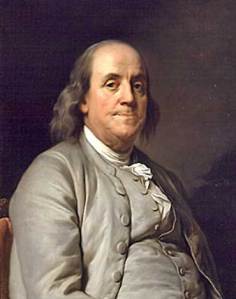 “Certainty? In this world nothing is certain but death and taxes.” So once said Benjamin Franklin. And Benjamin Franklin certainly lived up to his sobering, yet pithy, cynicism. For he lived in the shadow of eighteenth century Rationalism, trumpeted by the likes of gifted authors such as Voltaire, who wrote: “Doubt is not a pleasant condition, but certainty is absurd.” Doubting everything, it seems, was en vogue in Franklin’s day.
Of course, not much has changed. Rationalism has given way to post-modernism which has turned doubt into a near deity, calling on people to doubt even themselves and embrace what amounts to a near philosophical turpitude. Thus, as we begin reading through to gospel of Luke in the “Word for Today,” the doctor’s opening words in Luke 1 may perhaps strike us as fanciful and even absurd:
Many have undertaken to draw up an account of the things that have been fulfilled among us, just as they were handed down to us by those who from the first were eyewitnesses and servants of the word. Therefore, since I myself have carefully investigated everything from the beginning, it seemed good also to me to write an orderly account for you, most excellent Theophilus, so that you may know the certainty of the things you have been taught. (verses 1-4)
“You may know the certainty of the things you have been taught?” Come on! Certainty is absurd! But Luke is serious about certainty.
Luke 1:1-4 has been called the best Greek sentence in the whole New Testament. His vocabulary is lofty and his syntax is complex. Moreover, Luke uses certain rhetorical devices, common to his day, to lead his readers to trust his integrity and credentials. A couple of phrases deserve our special attention.
First, Luke says that he writes his gospel as a record of events “just as they were handed down to us” (verse 2). The Greek word for “handed down” is paradidomi, a technical term for delivering authoritative information, much like you might receive from a lawyer in a certified letter today. Thus, Luke is certifying his gospel’s veracity.
Second, Luke says that he has “carefully investigated everything from the beginning” (verse 3). In other words, Luke has done his homework concerning what he is getting ready to write. He has scoured sources and consulted eyewitnesses. If he were writing today, his gospel would surely contain a nearly endless parade of footnotes. For what he writes is a scholarly account of Jesus’ life.
Third, Luke engages in a rhetorical sleight of hand in his opening exordium. If you notice, Luke nowhere mentions in these verses that he is writing about Jesus. He only cryptically says that his is “an account of the things that have been fulfilled among us” (verse 1). Contrast this with Mark’s gospel, which begins unapologetically: “The beginning of the gospel of Jesus Christ, the Son of God” (Mark 1:1). Luke’s tactic is intentional. By first establishing his credentials as a careful historian and author, Luke is leading his readers to trust him just as we would trust a biographer or a scholar. This way, we will not dismiss his record of Jesus’ work and teaching out of hand as an ahistorical flight of miraculous fancy. In other words, Luke seeks first to lead us to certainty about him so that he can lead us to certainty about Jesus.
So perhaps Franklin’s statement should be amended: “Certainty? In this world nothing is certain but death, taxes…and Luke’s gospel.” And I bet if you continued searching the Scriptures you might even find that more of its books are certain. Indeed, you might even find that all of its books are certain. For they all reveal to us the Creator, Redeemer, and Sustainer of heaven and earth and of you and me. And there’s no one more certain than him. In fact, I’m so certain of him, I’m betting my very eternity on him. But I’m not worried, for even in an uncertain world, my Jesus is still a certain bet. Is he your certain bet?
“Word for Today” – Jude – www.concordialutheranchurch.com
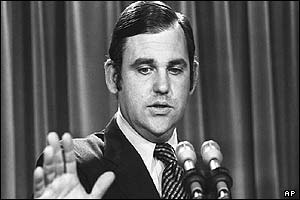 In the early 1970’s, this nation became embroiled in what is perhaps its most enduring national scandal: the Watergate scandal. On June 17, 1972, five men broke into the Watergate Hotel, which at that time served as the offices for the Democratic National Convention. They were convicted on burglary and wiretapping charges and were soon revealed to have close ties to President Nixon. As more and more information was disseminated, it became evident that this break in was linked directly to the president. And so the press became vociferous in its search for the truth behind the scandal, which led to many tense and awkward moments with Nixon’s press secretary, Ron Ziegler, who loyally tried to defend the President. In one exchange with the White House Press Corps, after Ziegler was caught in a bald-faced lie, he issued a modified statement, retracting a previous statement, by saying, “This is the operative statement. The others are inoperative.”
If only it was really that simple. “These statements are inoperative. Please ignore them.” But it’s not really that simple. For there are not just “operative” and “inoperative” statements, there are truths and there are lies. And lies can be disastrous, diseasing, and damning things.
In our reading for today from the book of Jude, the brother of Jesus warns us against the dangers of lies and the false teachers who tell them:
Certain men whose condemnation was written about long ago have secretly slipped in among you. They are godless men, who change the grace of our God into a license for immorality and deny Jesus Christ our only Sovereign and Lord. Though you already know all this, I want to remind you that the Lord delivered his people out of Egypt, but later destroyed those who did not believe. And the angels who did not keep their positions of authority but abandoned their own home – these he has kept in darkness, bound with everlasting chains for judgment on the great Day. In a similar way, Sodom and Gomorrah and the surrounding towns gave themselves up to sexual immorality and perversion. They serve as an example of those who suffer the punishment of eternal fire. (verses 4-7)
Certain men of Jude’s day were denying the Lordship of Christ. And the lies that these men were teaching were far worse than the lies told by the White House during the Watergate scandal. For these lies were not merely matters of politics, they were matters of salvation.
Jude continues by giving three examples of the kinds of judgments which await these false teachers, each successive judgment becoming more intense. First, he recalls that the Israelites were “destroyed” because they did not believe. The Greek word for “destroy” is apollumi, meaning “to damn.” This, then, was God’s hellish judgment on these wicked Israelites. Indeed, Jude says exactly that when he then speaks of the rebellious angels who are being held in hell for their final judgment on the Last Day. But it is Jude’s final example that is perhaps most striking: the judgment on these false teachers will be the same as that of Sodom and Gomorrah as they will “suffer the punishment of eternal fire.” Interestingly, like the fires of hell, the fires of Sodom and Gomorrah were thought by the ancient Jews to be eternal. The first century Jewish historian Philo writes of these fires: “Unprecedented destruction…fell upon Sodom and Gomorrah in the ruins, and ashes, and sulfur, and smoke, and dusky flame which still is sent up from the ground as of a fire smoldering beneath” (Philo, Life of Moses, II:56). Apparently, the fires of Sodom and Gomorrah were still smoldering from some 2,000 years earlier even in the first century. This is the intensity of the judgment that awaits those who teach falsely.
How are we to guard ourselves against such false and destructive teaching? Jude answers, “Contend for the faith that was once for all entrusted to the saints” (verse 3). The Greek word for “contend” is epagonizomai, from whence we get our English word “agony.” Jude challenges us to fight so valiantly and vigilantly for the true doctrines of our faith that we agonize over orthodoxy. We should be determined to allow not even the slightest lie to creep in. And we should honestly address truth and falsehood in terms more straightforward than “operative” and “inoperative.”
Do you heed Jude’s call? Do you carefully distinguish truth from falsehood? Do you agonize over the true doctrines of our precious faith? I hope you do. Because this truth isn’t just the truth about a politician, it’s the truth about God. And that’s truth that we should all be deeply interested in…and excited about.
“Word for Today” – James 5 – www.concordialutheranchurch.com
 One of my favorite movie lines of all time comes from 1995’s “Tommy Boy,” starring the late Chris Farley. Farley plays a clumsy, dimwitted, but lovable college student named Thomas R. Callahan III, a.k.a. “Tommy Boy,” who returns home to work at his father’s auto parts plant. Upon his arrival, Tommy’s father reveals to him that he is newly engaged and that Tommy will soon have a stepbrother named Paul. The first time Paul meets Tommy, he tries to coldly introduce himself to Tommy with a handshake, but Tommy will have none of it. Tommy exclaims, “Brothers don’t shake hands, brothers gotta hug!” and embraces Paul with a suffocating bear hug.
The ties of brotherhood were created to be strong. Brothers express their affection for each other with heartfelt hugs and sincere sacrifices, not hollow handshakes and polite pleasantries.
The apostle James understands the ties of brotherhood well. In fact, he refers to his readers as “brothers” no fewer than fifteen times over the course of his little letter. Indeed, his whole epistle is addressed to his Jewish brothers in Christ who are “scattered among the nations” (James 1:1), that is, except for one section. And that section comes at the beginning of our reading for today from James 5.
Whereas James customarily opens each section of his letter by speaking to his brothers, he does not do so here. Instead, he opens chapter 5:
Now listen, you rich people, weep and wail because of the misery that is coming upon you. Your wealth has rotted, and moths have eaten your clothes. Your gold and silver are corroded. Their corrosion will testify against you and eat your flesh like fire. You have hoarded wealth in the last days. Look! The wages you failed to pay the workmen who mowed your fields are crying out against you. The cries of the harvesters have reached the ears of the Lord Almighty. You have lived on earth in luxury and self-indulgence. You have fattened yourselves in the day of slaughter. You have condemned and murdered innocent men, who were not opposing you. (verses 1-6)
As I read these words, I can almost see James wagging his finger at these wealthy aristocrats: “Now listen here, you affluent snobs! You may be rich, but you’re not my brothers! No, you’re wayward, hateful sinners! And you’re really going to get it from God in the end! He’s going to slaughter you in judgment!”
Now why would James level such harsh condemnation against the wealthy of his day? Is James some kind of bumbling, backwater indigent who has something against rich people because he’s poor? Hardly. James has nothing against wealth itself, but the way in which these people use their wealth. They hoard it. They fail to pay their workers. They live for their own self-indulgence. They even murder the innocent. James declares that such wickedness will not go unpunished by God.
It’s not as if those in James’ band of brothers are without sin. James warns his readers against temptation to sin (1:13-15), favoritism (2:1-4), action-less faith (2:14-17), and malicious talk (3:9-12). James’ brothers surely fall short of God’s standards, but they are still his brothers – his brothers in Christ. And that makes all the difference. For no matter what differences, grievances, and concerns he may have with them, they still share the foundation of Christ on which they can stand together.
Finally, James’ hope is that even the rich people whom he roundly condemns might join him in Christian brotherhood. As James writes at the end of his book, “My brothers, if one of you should wander from the truth and someone should bring him back, remember this: Whoever turns a sinner from the error of his way will save him from death and cover over a multitude of sins” (verses 19-20). By condemning the sins of these rich oppressors, James hopes to lead these who have wandered from the truth to repentance so that their sins might be covered and they might become his brothers in Christ.
So today, which brother or sister in Christ can you thank God for? Is there anyone who has strayed from the brotherhood of faith whom you can seek to gently restore? For having restoring a brother in Christ means seeing another sinner forgiven. And a forgiven sinner is a joy that deserves a hug. So hug a brother or sister in Christ today. It’s only appropriate.


 Pastor Zach's Blog