Posts filed under ‘Uncategorized’
More on Baton Rouge, Saint Paul, and Dallas

Credit: Dallas Morning News
Imagine you’re a police officer in Baton Rouge. You’ve been called to a convenience store where a 37-year-old man named Alton Sterling has been reported to have recently threatened another man with a gun. You approach Mr. Sterling and pin him to the ground when someone shouts, “He’s got a gun! Gun!” Fear takes over. Shots are fired. And Alton Sterling lies dead.
Now imagine you’re a police officer in Saint Paul, Minnesota. You pull over a vehicle that has a broken taillight. The man inside, Philando Castile, dutifully explains that he has a concealed carry permit and has a firearm in the vehicle. When Mr. Castile reaches for his license and registration, however, you think he’s reaching for his gun. Fear takes over. Four shots are fired. And Mr. Castile dies in front of his girlfriend and four-year-old daughter.
Finally, imagine you’re a 25-year-old black man named Micah Xavier Johnson who has watched other black men be shot and killed in altercations with the police under suspicious circumstances time and time again. You see protest after protest against these shootings by Black Lives Matter, but in your mind, these protests do not equate to real action. After the tragedies in Baton Rouge and St. Paul unfold, you seize on these moments to exact revenge. At a protest in Dallas, you, with anger coursing through your veins, aim your arsenal of firearms at twelve officers, killing five of them, only to finally be taken down yourself by law enforcement officials.
Are you still with me?
Now, let’s do a little math.
Fear + Anger = Eight People Dead
At this point, I need to include some caveats.
First, don’t misunderstand the intent of my thought experiment. I am not trying to exonerate bad behavior by asking us to imagine ourselves in each of these men’s shoes – by asking us to empathize with them. Empathy never tries to excuse sin, but it does try to understand people because, when we understand people better, we can understand what leads to a week like the one we just experienced better and, hopefully, take steps to prevent another week like this one from happening again – ever.
Second, the facts in all these cases are still unfolding. When 49 people were shot and killed by a terrorist at an Orlando nightclub, I offered an encouragement on this blog for people to patiently wait for the facts rather than jumping to conclusions about the shooter’s motives. The same caution applies here. It could be that one or both of these officers in Baton Rouge were animated by naked racial animus and shot and killed one or both of these men in cold blood. If this were the case, the equation above would still hold, albeit on the anger side rather than on the fear side. It could also be that, as more facts surface, one or both of these officers were not animated by fear, but by a legitimate concern for self-defense. Turning to Dallas, it could be that Mr. Johnson was clinically insane and not in his right mind when he carried out these horrific attacks. If this were the case, what he did still could not be excused, and his anger and hatred would still loom large, but it might be understood a little differently. Carefully sorting through the facts – and being patient enough to do so – is incredibly important in tragedies like these.
Third, I am not a law enforcement official. I know some law enforcement officials, and I have nothing but the utmost respect and love for them. Honestly, if I had to walk in their shoes, I’m not sure that the altercations with Mr. Sterling and Mr. Castile would have gone down any differently. I can imagine myself becoming very frightened very quickly. The fact that so many law enforcement officials keep their cool when tensions are high is a testimony to the character and competence of so many of these men and women.
Fourth, I am not a black man. I have heard enough stories of incipient and systemic racism against black men, however, that my heart breaks. I would not want to live under a cloud of such constant suspicion. I would not want to have to teach my son the lessons of what little slights, sideways glances, and clinched purses could mean. If I had to endure that day after day, I would be angry too. And if someone was to needlessly take the life of someone that I loved, I can’t say I wouldn’t be tempted to exact an eye for an eye. The fact that so many African-Americans keep their protests peaceful and focused on change rather than turning them into opportunities for revenge is a testimony to the character and compassion of so many of these men and women.
What has happened this week, then, is not an indictment of the masses, but the fruits of a few.
But…
Even though what happened this week was not by our hands, this is not to say it couldn’t have been by our hands. Remember the equation?
Fear + Anger = Eight People Dead
Have you let fear take over your heart any time this week? How about anger? Is anything from the way you manage money to the way you treat your family to the friends you avoid to the grudges you hold to the politics you have that is driven by fear or anger? The results of your fear and anger may not be eight dead, but are the results in any way good? Let’s adjust the equation a little bit.
Fear + Anger = Plenty That Is Not Good
Is this true of you?
Fear and anger are part of the human condition and are devastatingly etched into the annals of human history. One needs to look no further than the night before Jesus’ death. When Judas betrays Jesus into the hands of the religious leaders, Peter goes from being so angry at what is about to beset his Master that he cuts off the ear of a man in the mob that has come to arrest Jesus to being so fearful at what is transpiring with his Master that, just hours later, when a servant girl asks him if he knows Jesus, he denies his Savior and friend. Fear and anger coalesce into one necrotic night.
The truth is this: there’s plenty of fear and anger to go around – among the masses and, if we’re brutally honest, in our hearts. The equation holds true for us all.
So, on the heels of a terribly tragic week, let me conclude with two gentle reminders:
“Do not be afraid” (Luke 12:32).
And…
“Refrain from anger and turn from wrath” (Psalm 37:8).
Think on these things.
A Week of Tragedy: Baton Rouge, Saint Paul, and Dallas

This has been a terribly tragic week. Today, three cities are in mourning: Baton Rouge, Saint Paul, and now, overnight, Dallas.
In Baton Rouge, 37-year-old Alton Sterling was shot to death while being pinned to the ground by law enforcement officials. In Saint Paul, Philando Castile was shot and killed by an officer after being pulled over for a broken taillight. In both of these cases, there are questions over whether or not police officers used excessive force. Then, last night in Dallas, when protesters gathered to decry what happened in Baton Rouge and Saint Paul, five officers were shot and killed, with an additional seven officers shot and wounded, by a sniper who was enraged by the shootings in Baton Rouge and Saint Paul. It is the largest single loss of first responder lives since September 11, 2001.
As events continue to unfold, here are some things to keep in mind.
Grieve with those who grieve.
To all of the families who have lost loved ones this week in these tragedies, we should offer our condolences. We should hold them up in prayer. Losing loved ones are occasions for tears. Empathy should be the hallmark of every Christian because it so closely reflects the incarnation. In Christ, God came into our pain. He experienced our pain. He walked through our pain. This is why the preacher of Hebrews can say that, in Christ, “we do not have a high priest who is unable to empathize” (Hebrews 4:15). For us to withhold empathy denies us the opportunity to show the world who we are by our love. “Mourn with those who mourn” (Romans 12:15).
Receive Christ’s peace.
When a week spirals into tragedy like this one has, we can be tempted to respond either with fear or with anger, or with both. I’ll have more on these responses Monday on my blog. For right now, suffice it to say that these responses are not helpful. When the world is troubling, rather than responding with fear and anger, it is better to receive the peace that only Christ can give.
The night before Jesus goes to His death on a cross, He knows His disciples will respond both with anger (cf. John 18:10) and with fear (cf. John 18:15-18, 25-26). But Jesus wants His disciples to receive His peace. So He says to them, “Peace I leave with you; My peace I give you. I do not give to you as the world gives. Do not let your hearts be troubled and do not be afraid” (John 14:27). God’s peace is stronger than human tragedy.
Trust that tragedy does not have the last word.
It was Dr. Martin Luther King, echoing the words of the nineteenth century abolitionist Theodore Parker, who said, “The arc of the moral universe is long, but it bends toward justice.” How a moral arc can bend toward things like justice and righteousness and goodness can be tough to see after a week like this. Yet, what is good has not been lost.
Jesus tells the story of a widow who comes to a judge, begging him to grant her justice against someone who has wronged her. The judge, who apparently is not at all concerned with justice, continually diminishes and dismisses her concerns until he finally decides to grant her what she wants, simply because she won’t leave him alone. This widow’s quest for what is good overcomes this judge’s careless embrace of what is wrong. Jesus concludes His story by pointing to God: “Will not God bring about justice for His chosen ones, who cry out to Him day and night? Will He keep putting them off? I tell you, He will see that they get justice, and quickly” (Luke 18:7-8).
Jesus promises that in a world where plenty is wrong, God is a just judge who will eventually make things right. God will not put us off in our tears, in our hurt, and in our devastation. And although God’s conception of a justice that comes “quickly” may not fit our conception of a justice that comes “quickly,” we can rest assured that God’s final defeat of all that is wrong will have its say on the Last Day. Not only that, God’s defeat of all that is wrong has already had its say in Christ, who triumphed over sin and death by the cross (cf. Colossians 2:15). In a week that has been full of tragedy, this is something in which we can take deep comfort and by which we can hold out great hope.
Terrible tragedy will not have the final say. Jesus will.
Processing the Terror in Orlando
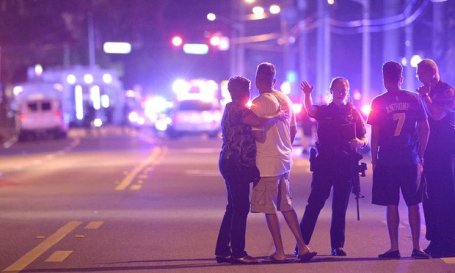
Credit: The Guardian
Terror doesn’t sleep.
This is one of the lessons we’re learning from what has become the worst mass shooting in U.S. history carried out early this morning around 2 o’clock at a nightclub in Orlando.
The shooter’s name was Omar Mateen. He had drawn the attention of the FBI in the past, and before he carried out his terror attack, he called 911 to pledge his allegiance to ISIS. By the time his AR-15-style rifle and his handgun were silenced, 50 people were dead and over 50 were injured. Mr. Mateen himself was killed by law enforcement officials while he was holed up in one of the club’s bathrooms with hostages.
News reports have been filled with people expressing shock, sadness, and outrage. All of these responses are certainly appropriate, but what especially grieves me is that they are also entirely predictable. We know how people will respond to a terror attack emotionally precisely because we have had so much practice responding to terror attacks emotionally. Paris. San Bernardino. Brussels. But this tragedy – like the ones that have come before it – is too important not to respond. When human life is senselessly and violently taken, we should stop and we should reflect and we should respond. Here are a few things, then, to keep in mind.
Do not be afraid.
This is not the first time I have written this in the face of a terror attack. But this is also something that bears repeating. After all, whenever an attack like this one unfolds, our natural and almost reflexive reaction is to ask, “Am I next? Am I safe?” But such questions are unhelpful because such questions are utterly unanswerable. There is no way for us to control the future. This is why the apostle Paul commends us to be people of prayer rather than people of worry and fear: “Do not be anxious about anything, but in every situation, by prayer and petition, with thanksgiving, present your requests to God” (Philippians 4:6). We may not be able to control the future, but we do know someone who holds the future. We are called to present our fear to Him and place our trust in Him.
I should point out that there is a difference between being afraid and being vigilant. Fear happens when a person mulls over all sorts of possible, though unverifiable, bad scenarios for the future. Vigilance is when a person looks for clues of trouble in the present and reports them to the appropriate authorities for investigation. Being vigilant is helpful. Being afraid is needless.
Remember, there is a reason attacks like the one in Orlando are called acts of terror. They are attacks specifically designed to instill fear. Don’t let these attacks have their way in your heart. Christ is stronger than terror.
Be careful connecting dots.
One of the major focal points of this story has been the clientele to whom this night club in Orlando catered. The club at which these attacks were carried out is called the Pulse, which is well-known as a hotspot for those in the LGBT community. Shortly after the attacks, GLAAD, a gay rights advocacy group, tweeted, “Our hearts break for the victims and families of this horrific act of violence. We stand in solidarity with the LGBTQ community in #Orlando.” The call to stand in a solidarity of care, concern, and compassion is well-taken.
At the same time, many in the media and beyond are already wondering and conjecturing out loud concerning whether or not the fact that this is an LGBT club in any way served as a motive for the shooter. In an article for the Huffington Post, Michelangelo Signorile offers a brief history of attacks against LGBT spaces, strongly intimating that the Orlando attack was probably more of the same.
Whether or not the patronage of this nightclub is somehow connected to the motive of the shooter is certainly a question that needs to be asked and answered. At this point, however, overly confident pronouncements can do more harm than good. A good rule of thumb is this: investigation precedes correlation. In other words, let’s not jump to conclusions.
As a Christian, this is something that I must regularly remember. It can be far too tempting to search for some pious, consoling, and grandiose reason why a God who Scripture reveals to be a strong and sure defense would allow a horrific tragedy like this to happen. But correlating current events to overly specific divine purposes is a theological fool’s errand. Theologically, I must say only what I can know for sure according to Scripture: (1) that such a shooting is an expression of deep sinfulness and depravity (Romans 3:15); (2) that events of death grieve the heart of God because death is not a part of His design (1 Corinthians 15:20-22); and (3) that God is with and cares for those who have lost loved ones (Psalm 23:4).
Connecting disparate facts now will only leave you looking a fool later. So be careful.
Remember Christianity’s unique message.
As I have said in the past, I am sympathetic to those who claim that ISIS does not represent Islamic theology, at least in any responsible sense. Just as I do not see the theological stances of, let’s say, the Westboro Baptist Church to be authentically Christian in any regular sense of the term, I can understand why many Muslim theologians would decry and deny that ISIS represents their faith. But even if ISIS does not represent the Islamic faith in any theologically and academically rigorous way, it does represent some sort of faith – even if the faith it represents calls on its adherents to destroy those it hates. And this is where Christianity stands apart. The beauty of the Christian faith is that it centers around a man who loved those who hated Him and sought to destroy Him. Moreover, whereas ISIS calls on its fighters to lay down their lives in order to bring death to infidels, Christianity has a Savior who laid down His life in order to bring life to sinners. In other words, Christianity serves as the perfect foil to all the terror ISIS is dishing out. Christianity loves when ISIS hates. Christianity promises life when ISIS seeks death. This is why, on a day that is full of plenty of reasons to hate and to grieve, I once again to turn to Christ who gives me reasons to love and to hope. And I ask you to join me in doing the same.
May Christ reveal His love and His life to Orlando.
Ministry Myth: Jesus Always Addressed Felt Needs
 A while back, I was in a meeting with church leaders from across the country who are devoted to bringing Christ’s gospel to all nations. In our discussions, one of these leaders pointed out that, as important as church programs and friendly atmospheres may be for engaging people who don’t know Christ, ultimately, what reaches people is the preaching of the gospel. “It is the Word of God,” he said, “that touches and transforms hearts.” To this, another person replied, “Yes, the gospel is important. But we can’t start with the gospel because the gospel alone won’t reach people. We need to begin with people’s felt needs. Jesus always began with people’s felt needs.”
Well, yes He did…except when He didn’t.
Like the time a paralytic’s friends brought him to Jesus. Jesus saw that they had faith enough to bring their friend to Him for healing. But He did not respond to their felt need for healing – at least not right away. Instead, He said, “Son, your sins are forgiven” (Mark 2:5). Jesus dealt with this man’s deeper need – his need for forgiveness – before He dealt with this man’s felt need – his need to be healed from his paralysis.
Or how about the time one of Jesus’ dearest friends – a man named Lazarus – fell ill? His sisters, Mary and Martha, begged Jesus to hurry over and heal him. But Jesus did not meet their need. Instead, He intentionally let His dear friend die. Why? So that Jesus could address humanity’s deeper need – the need to be rescued from death – which far outweighs the felt need of being temporarily healed from a frustrating ailment. This is why Jesus says to Martha, “I am the resurrection and the life. The one who believes in Me will live, even though they die; and whoever lives by believing in Me will never die” (John 11:25-26).
Don’t get me wrong. I am not saying that Jesus never began by addressing people’s felt needs. After all, He fed a crowd of 5,000 by miraculously multiplying loaves of bread before declaring Himself to be the bread of life (cf. John 6:1-35). He began with a felt need for physical food before He moved to a deeper need for heavenly food. Jesus does sometimes initiate an engagement by addressing people’s felt needs. However, Jesus does not always begin this way. Indeed, sometimes, He flat out denies people’s felt needs as He challenges them with their deeper needs.
The problem with felt needs is that, often, felt needs are not helpful needs. Sometimes, felt needs can even be sinfully selfish needs. Jesus has little interest in meeting our felt needs for riches, for ease, and even for happiness. Thus, for us to begin and base our ministries on what people think they need, and then to try to meet those needs before we share Jesus, can devolve, if we are not careful, into merely enabling sin.
I have learned over the years that Jesus has a funny way of resisting the easy ministry models we like to apply to Him. To those who say that Jesus always begins by addressing people’s felt needs so they will be open to the gospel, I must say, “I think you’re wrong.” But then again, to those who say that Jesus never begins by addressing people’s felt needs as a foray to share the gospel, I also must say, “I think you’re wrong.” Jesus does both.
We should too.
Perhaps we would do well to learn to pray a slightly modified version of Reinhold Niebuhr’s famous, though contested, Serenity Prayer as we seek to faithfully reach the world with the gospel: “God, grant me the tenderness to address people’s felt needs at certain times, the boldness to challenge them with their deepest needs at other times, and the wisdom to know when to do which.”
That’s my prayer as I seek to reach out with the gospel. Will you join me in praying the same?
Honor, Dignity, Victimization, and Power

Credit: Franck Prevel/Getty Images
It doesn’t take much to offend people these days. Sometimes, it doesn’t take anything at all. This is what Bradley Campbell and Jason Manning argue in their paper, “Microaggression and Moral Cultures.”
Campbell and Manning cull their definition of what constitutes a microaggression from Derald Wing Sue, professor of counseling psychology at Columbia University. Microaggressions are:
The brief and commonplace daily verbal, behavioral, and environmental indignities, whether intentional or unintentional, that communicate hostile, derogatory, or negative racial, gender, and sexual orientation, and religious slights and insults to the target person or group.[1]
Two things are especially notable in Wing Sue’s definition. First, microaggressions can be either “intentional or unintentional.” What counts is not what a sender intends, but what a receiver perceives. Second, words like “indignities,” “hostile,” and “derogatory” in Wing Sue’s definition cast microaggressions in a vocabulary of victimization. Microaggressions, no matter how pint-sized they may seem, are really part of a broader caste system that relentlessly oppresses certain groups of people. The cry of those who perceive themselves as having been microaggressed, then, is really the cry of those who have been systemically victimized by this system and its cultural and socioeconomic assumptions.
Interestingly, Campbell and Manning argue that, for all the complaining that the microaggressed may do about being victimized, our newfound concern with microaggressions actually encourages a culture of victimization rather than discouraging it:
Victimization [is] a way of attracting sympathy, so rather than emphasize their strength or inner worth, the aggrieved emphasize their oppression and social marginalization … We might call this moral culture a culture of victimhood because the moral status of the victim … has risen to new heights.
In an article for the Atlantic, Conor Friedersdorf cites one example of a blossoming culture of victimization in an exchange between two students at Oberlin College. In the exchange, a white student invites a Hispanic student to a game of fútbol who takes offense at the invitation, writing on an Oberlin blog devoted to calling out microaggressions:
Who said it was ok for you to say futbol? … White students appropriating the Spanish language, dropping it in when convenient, never ok. Keep my heritage language out your mouth![2]
A big blow up and a public shaming over a single word. Welcome to the world of microaggressions.
Of course, things were not always this way. Before there was a culture of victimization, Campbell and Manning point out that there was a culture or honor. In this culture:
One must respond aggressively to insults, aggressions, and challenges or lose honor. Not to fight back is itself a kind of moral failing … Because insulting others helps establish one’s reputation for bravery, honorable people are verbally aggressive and quick to insult others.
After a culture of honor came a culture of dignity, where:
People are said to have dignity, a kind of inherent worth that cannot be alienated by others … Insults might provoke offense, but they no longer have the same importance as a way of establishing or destroying a reputation for bravery. It is commendable to have a “thick skin” that allows one to shrug off slights and even serious insults.
Though vestiges of these cultures of honor and dignity remain (compare Campbell and Manning’s definition of a culture of honor with some of the things Donald Trump has said in his presidential campaign and you’ll quickly realize that even though honor culture is on the decline, it is certainly not dead), they are quickly losing ground to a culture of victimization.
But why?
The answer seems to be “power.” Victimization, in our culture, can often be the fastest track to status and power, just as, in previous ages, honor and dignity were inroads to influence. For instance, in recent clashes over same-sex marriage, many in favor of the institution claim discrimination and victimization while many against same-sex marriage claim discrimination and victimization as well. Both groups hope that, by portraying themselves as aggrieved, oppressed, and victimized, they can engender sympathy and, ultimately, the upper hand in this debate. In other words, both sides are hoping to gain cultural capital, or power, by means of their own victimization.
Certainly, not all instances – indeed, not even most instances – of victimization represent grabs for power. One thinks of those who are sexually assaulted or emotionally abused. Such tragic examples of victimization have nothing to do with power. Rather, they represent grave injustices and deserve our prayers, our sympathy, and our action. But in cases of microaggressions and similar self-declared cries of victimization, for all their claims of powerlessness, they often turn out to be nothing more than cynical means of leveraging power.
It is here that we find that, for all of their differences, the cultural systems of honor, dignity, and victimization hold something in common: they are all means to an end of power. And this is where all of these systems run into trouble.
In His ministry, Jesus sometimes fought for honor, sometimes upheld human dignity, and sometimes embraced victimization. But His goal was not that of gaining power. When Jesus fought for honor, it was the honor of God Himself for which Jesus fought, refusing to allow the religious elites of His day to honor God with their lips while blaspheming Him in their hearts (cf. Matthew 15:8). When Jesus upheld dignity, it was the dignity of the ridiculed and marginalized He championed, like the time He rescued a woman caught in adultery from being stoned (cf. John 8:2-11). And when Jesus allowed Himself to be victimized on a cross, He did so not as a backdoor to power, but in order to ransom us from our sin (cf. Mark 10:45). Jesus, it turns out, picked up on elements from each of these cultures without endorsing the shared goal of all of these cultures. He used honor, dignity, and victimization as ways to love people rather than dominate them.
Like Jesus, His followers should feel free to fight for honor, uphold human dignity, and even see themselves, in some instances, as victimized. But none of these cultural constructs, in the economy of Christ, should be methodically used as mere means to power. Rather, they are to be used to love others.
So for whose honor will you fight? And whose dignity will you champion? And how can your victimization lead to someone else’s restoration? Rather than eschewing these cultural constructs altogether, let’s use them differently. Let’s use them for love. For when we use these things for love, even if we do not gain power culturally, we exercise power spiritually. And that’s a better kind of power anyway.
__________________________________________
[1] Bradley Campbell & Jason Manning, “Microaggression and Moral Cultures,” Comparative Psychology 13 (2014): 692-726.
[2] Conor Friedersdorf, “The Rise of Victimhood Culture,” The Atlantic (9.11.2015).
Planned Parenthood: The Scandal Continues
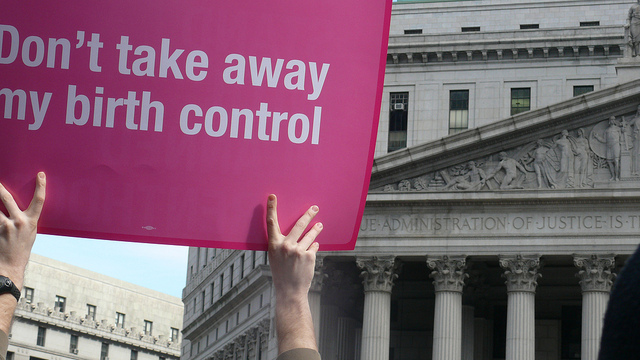 I wish I didn’t feel the need to write about this again. I wish that after the first video hit the web exposing Planned Parenthood’s alleged sale of fetal organs, our society would have risen up with unified moral outrage and called for an end to such a ghastly practice. But as things often go, positions are so entrenched and worldviews are so decided that even when people are confronted with something that can be described as nothing less than reprehensible, they are more devoted to defending a cause than they are to figuring out what is right.
Such is the case with the Planned Parenthood scandal. Though some supporters have expressed new reservations in light of what has been exposed, the needle of public opinion concerning the organization remains largely unmoved. People who despise Planned Parenthood continue to despise Planned Parenthood. And people who support Planned Parenthood continue to support Planned Parenthood. But what has happened will never be truly addressed if all we do is wage another culture war where two sides, impenetrable in their positions, muster their troops and try to defeat each other. What is needed is not a war, but a thoughtful consensus on what has happened and what can change into the future. So allow me to offer a few thoughts, once again, on Planned Parenthood with the hope of fostering discussion and, ultimately, some sort of agreement.
First, when I last blogged on Planned Parenthood after the scandal initially broke, I asked, “In what world is it okay to turn a baby breech so you can smash its legs, kill it, and then harvest its organs for profit? Is there any conceivable scenario where this is okay?” In light of a newer video, I can ask similar questions: In what world is it okay to abort a baby and, while its heart is still able to beat, cut down the middle of the baby’s face to extract the brain? Is there any possible moral system that makes this acceptable? The answer can only be, “No.” This is so self-evidentially morally repugnant, the only appropriate response is utter disgust. And if we are not disgusted, we have moved far beyond an ethical issue to be discussed. We have moved into a psychopathy that needs to be treated.
Second, supporters of Planned Parenthood have trumpeted again and again the good the organization does. Consider this from Molly Redden of Mother Jones:
While its opponents tried to brand Planned Parenthood as an abortion mill, the group has stressed that abortions make up only 3 percent of its services, and STI screenings, Pap tests, and pregnancy prevention comprise the vast majority of its activities. The group, which now receives $528 million in federal funding (or 41 percent of its annual budget), also provides contraception to almost 40 percent of women who rely on public programs for family planning.[1]
Planned Parenthood’s supporters argue that the organization does so much good, that the abortions they perform – something that comprises only 3 percent of their services (which, as others have pointed out, is misleading and little more than an ethical dodge) – and the baby parts they traffic are simply not worth our intense scrutiny. We need to forget about the ethically questionable practices of Planned Parenthood and instead focus on the morally venerable services of Planned Parenthood.
But as even some abortion advocates have pointed out, to dismiss the moral problems incumbent on abortion and the sale of baby parts by simply saying, “Planned Parenthood does a lot of good stuff too,” is logically and ethically spurious. This would be much like saying, “This benevolent benefactor left millions to his extended family of 75 members and only murdered one of them, his wife – and that was because she was cheating on him! In light of all the good he has done, and because his anger at his cheating wife is understandable, any murder charges that might be brought against him should be dismissed.” Most people would say it doesn’t matter how much good he has done for the rest of his family. He needs to be held to account for taking his wife’s life. A lot of good cannot excuse this kind of bad. Likewise, Planned Parenthood’s good health services do not and must not excuse their bad abortions.
Third, supporters of Planned Parenthood, when faced with the ghastly reality of what is happening, seem willing to content themselves with the technicalities of whether or not what Planned Parenthood has done is legal, implying that as long as it’s legal, it must also be moral. In a slight variation on this theme, supporters also point to polls that show majority support for continued federal funding of some of Planned Parenthood’s services, implying that if voters are okay with Planned Parenthood, Planned Parenthood must, in fact, actually be okay. But one does not need to be an expert in ethics or, for that matter, history to know that what is right is not always coterminous with what is legal or popular. Slavery, after all, was once legal and popular. But we would certainly not say it was right. Morality must in some way transcend current popular human sentiment. Otherwise, historical and contemporary standards of morality collapse into a morass of relativism. Legality and popularity simply will not do when it comes to settling morality.
Finally, for all the concerns I have outlined with those who support Planned Parenthood, I should also point out that if you’re against Planned Parenthood, you must be known not only for what you’re against, but who you’re for. You need to be for life. And you need to be for the moms who carry new life.
On Facebook the other day, I came across a faux, but helpful, conversation that captures the anxiety that often surrounds birth and abortion:
Question: I’m pregnant. What should I do?
Answer: Keep the baby!
Question: Okay! Can I have prenatal vitamins?
Answer: What?
Question: Can I have financial help for doctor appointments?
Answer: Ummm…
Question: Can I at least get paid maternity leave?
Answer: Excuse me?
The point of the conversation is well taken. To support life means to support those who are carrying new life. So if you are pregnant and scared, before you call Planned Parenthood, get help from someone who is committed to supporting the new life in you because they love you and want what’s best not only ethically for society, but for you personally.
Perhaps the saddest part of these continued Planned Parenthood exposés is that, with the release of each video, public interest continues to wane. This is why I decided to write another blog on this ongoing, even if mutedly so, scandal. This is something that deserves our attention and our moral conviction. This is something that demands our voices and our efforts. Will you lend your voice and hand to help?
___________________________________
[1] Molly Redden, “Pro-Choicers Are Actually Freaked Out About These Planned Parenthood Sting Videos,” Mother Jones (7.23.2015).
Charleston

Credit: Brendan Smialowski/AFP/Getty Images
There have been plenty of tears in Charleston these past few days. When 21-year old Dylann Roof first walked into the Emanuel African Methodist Episcopal Church, he appeared as though he came to join the congregation in its Wednesday evening Bible study. But after nearly an hour, he opened fire, killing nine people, including the church’s pastor, the Reverend Clementa Pinckney. According to reports, he announced as he stood up and drew his gun that he was there “to shoot black people.” Survivors said Roof also told the congregation, “You rape our women and you’re taking over our country. And you have to go.”
I wish I could attribute what happened in Charleston to the simple fact that Roof is a deranged lunatic, which, if preliminary reports are any indication, he probably is. But there is more at work here than just Roof’s psychological health. What happened in Charleston is also a reminder that ideas have consequences. Good ideas have good consequences. And yes, bad ideas can have devastating consequences. Roof, as insane as he may be, is a man with ideas – deeply racist ideas. And these ideas have now left a church, a town, and a nation in mourning. This is why, in today’s blog, I want to take a moment to remind you of what the gospel has to say about racism. For the bad ideas of racist hatred can never be allowed to trump the holy ideals of perfect love.
Acts 10 tells the story of a Roman soldier named Cornelius and one of Jesus’ apostles, a Jew named Peter. Generally, Jews and Romans did not get along. This had to do in part with the fact that the Romans were the occupying force in Israel at this time. It also had to do with the fact that Romans were Gentiles, and Jews and Gentiles despised each other. One of the prayers many pious Jews of this day would pray was, “Blessed art Thou, [O God], who did not make me a Gentile.” So you can imagine that Peter must have been more than a little uncomfortable when three men came to his door and said, “We have come from Cornelius the centurion” (Acts 10:22). Just the mention of a Gentile soldier, especially when that Gentile soldier happens to be working for the army that is occupying your nation, would have turned Peter’s stomach. But this group of men had a special request of the apostle: “A holy angel told him to have you come to his house so that he could hear what you have to say” (Acts 10:22).
It is at this point that Peter had a decision to make: does he turn his nose up in disgust at these men because of their racial and political differences, or does he welcome them and honor their request?
“Then Peter invited the men into the house to be his guests. The next day Peter started out with them” (Acts 10:23).
Peter, rather than walking the well-worn and socially accepted road of the racism of his day, instead chose the road of racial reconciliation. Indeed, when Peter finally does talk to Cornelius, he announces, “I now realize how true it is that God does not show favoritism but accepts men from every nation who fear Him and do what is right” (Acts 10:34-35). God, Peter explains, loves people without regard to race. He loves people “from every nation.” This is why, when another apostle named John sees a vision of heaven, he sees people “from every nation, tribe, people and language, standing before the throne and in front of the Lamb” (Revelation 7:9).
Peter’s words, then, cut the core of the problem with racism. Racism says, “Even if God accepts people from every nation, I will not.” And to not accept someone that God has is not only hateful, it is wicked.
In my mind, the most eerie, yet poignant, part of this tragedy at Charleston is that Roof, when he first entered the church building, walked up and sat next to Pastor Pinckney. In a predominantly black congregation, and as someone who had not been there before, he would have surely stuck out. The pastor could have shunned him, or, at the very least, ushered him to a more “appropriate” spot that wasn’t right next to the church’s leader. But Pastor Pinckney welcomed him. He gladly let him sit next to him. He, as Jesus said, loved his enemies even though, at the time, he didn’t know Roof was his enemy. Indeed, in one of Roof’s most chilling confessions, he said he “almost didn’t go through with it because everyone was so nice to him.” Now that’s amazing love from a congregation who has every reason to hate.
Oh, that we would all have a double portion of Emanuel African Methodist Episcopal’s spirit. For a spirit like that is just what we need to prevent tragedies like this.
+ IN MEMORIAM +
Cynthia Hurd
Susie Jackson
Ethel Lance
Rev. DePayne Middleton-Doctor
Rev. Clementa Pinckney
Tywanza Sanders
Rev. Dr. Daniel Simmons
Rev. Sharonda Singleton
Myra Thompson
Marriage, Thriving, and Character
 This past week, Trish Regan, writing for USA Today, sounded the alarm over what has become an infamous decline in U.S. marriage rates:
According to the Pew Research Center, the American marriage rate hit a rock bottom of 50.3% in 2013, down from 50.5% the previous year. Compare that to 1960, when 72.2% of Americans married. Meanwhile, a new finding by the forecasting firm Demographic Intelligence, suggests marriage rates will continue falling into next year as Millennials choose to opt out of traditional relationships.
Marriage is going out of style and that’s a problem. An economic one.[1]
Regan is concerned about declining marriage rates. Why? Because declining marriage rates lead to increasing economic volatility:
Historically, a rising household formation rate has contributed to America’s financial success. People meet, they marry, they buy a home, they have children and they buy more things. One new household adds an estimated $145,000 to the U.S. economy thanks to the ripple effect of construction spending, home improvements and repairs …
According to an American Enterprise Institute study by economists Robert Lerman and Brad Wilcox, young married men, ages 28-30 make, on average, $15,900 more than their single peers, while married men ages 33-46 make $18,800 more than unmarried men.
Marriage, it turns out, is not only good for love, it’s also good for your pocketbook. Therefore, Regan argues, we need more of it.
But at the same time marriage may be good for your financial situation, Sarah Knapton, science editor for The Telegraph, points out that marriage may not be so good for a woman’s health – at least not as good as we once thought:
Marriage has long been cited as a health booster, with couples living in wedded bliss more likely to live longer and have fewer emotional problems.
Yet a new study suggests that women hardly benefit from tying the knot.
Landmark research by University College London, the London School of Economics and The London School of Hygiene and Tropical Medicine found that single women do not suffer the same negative health effects as unmarried men.
In fact, middle aged women who had never married had virtually the same chance of developing metabolic syndrome – a combination of diabetes, high blood pressure and obesity – as married women.
And although they showed slightly higher levels of a biomarker which signifies an increased risk of breathing problems, it was far lower than the risk of illness for unmarried men. The same was true of a biomarker for heart problems which was raised 14 per cent in men but was barely noticeable in women.[2]
To marry or not to marry? It turns out that for a woman, it doesn’t really matter all that much.
Many of the arguments I have read in support of marriage at a time when marriage rates are on a precipitous decline are rooted in how this staid institution leads to human thriving. Marriage, it is argued, leads to greater economic stability. Marriage, at least for men, and in some studies even for women, does have certain health benefits. These arguments for marriage are well and good. But if the benefits of marriage are attenuated to only those things which lead to human thriving, when a person feels as though they are no longer thriving in a marriage, they may be tempted to check out and give up. Or, if marriage doesn’t have certain demonstrable and quantifiable benefits, as is the case with the health benefits study from the University College London, it can be all too easy just to opt out of getting married in the first place.
As Christians, we must never forget that as important as human thriving may be, human character is even more critical. And marriage most definitely shapes a person’s character. Over my nine years of marriage, I have learned invaluable lessons about selflessness, commitment, love, advocacy, confidentiality, service, compassion, kindness, and a whole host of other important character traits.
In a marriage, human thriving may help us do well for ourselves. Human character, however, even when such character is forged through difficult and daunting marital circumstances, compels us to do good for our world. And good is something our broken world needs.
Which is just another reason to get – and to stay – married.
___________________________________
[1] Trish Regan, “Regan: Marriage is going out of style, and that could hurt,” USA Today (6.1.2015).
[2] Sarah Knapton, “Marriage is more beneficial for men than women, study shows,” The Telegraph (6.11.2015).
Fairness Over Family
 How important is it to be fair?
This is the question that Adam Swift, professor of political theory at the University of Warwick, and Harry Brighouse, professor of philosophy at the University of Wisconsin in Madison, wrestle with in their book, Family Values: The Ethics of Parent-Child Relationships.[1] For Brighouse and Swift, the answer to the question of fairness is evident, even if it is admittedly difficult. Being fair is of preeminent importance. Indeed, being fair is so important to these professors that they are willing to severely inhibit one of society’s most cherished institutions in order to achieve their vision of equality: the family.
In their introduction, the authors explain that the family “poses two challenges to any theory of social justice.” One is the liberal challenge, which questions whether it is best to have a child’s parents “determine what [a] child eats or drinks, where she sleeps, what television programs she watches, what school she attends.” Liberals see it as “one of the state’s tasks to protect its citizens, and its prospective citizens, from undue interference by others, including their parents.” Though not advocating for the abolition of the family altogether, these authors do look at the family with a fair amount of skepticism.
The other challenge the family poses to social justice is the egalitarian challenge, which:
… focuses on the distribution of goods and opportunities between children born into different families … Economists tend to focus on expected income over the life-course; sociologists investigate chances of social mobility; philosophers typically think in more abstract terms such as resources or opportunities for well-being. But however we frame or measure the inequality, it is clear that children born into different families face unequal prospects.
For Swift and Brighouse, these “unequal prospects” between families just won’t do. Indeed, in an interview with the Australian Broadcasting Corporation, Swift offers an example of an unequal prospect that particularly troubles him:
The evidence shows that the difference between those who get bedtime stories and those who don’t – the difference in their life chances – is bigger than the difference between those who get elite private schooling and those that don’t.[2]
How does one deal with the challenge of unequal prospects between families who do and do not read to their children before they go to bed? Swift answers:
I don’t think parents reading their children bedtime stories should constantly have in their minds the way that they are unfairly disadvantaging other people’s children, but I think they should have that thought occasionally.
Swift and Brighouse stretch their apologetic for equality as far it can go. Even if a parent won’t stop reading bedtime stories to their children, the fact that there may be other children out there who don’t get read bedtime stories should at least make that parent feel occasionally guilty for “unfairly disadvantaging” those other children.
This line of reasoning is very strange to me. Although I would agree that equality is important in its appropriate context, I would not consider it to be of highest importance as Swift and Brighouse do. Here’s why.
As a Christian, I know – and can empirically verify – that sin has en inevitably entropic effect on society. Thus, to seek equality by trying not to “unfairly disadvantage” others rather than by pursuing what is advantageous for others will only create an equality of increasing pain, suffering, and wickedness, which, interestingly enough, is precisely what the Bible affirms as the only way in which, left to our own devices, we are all truly equal: “There is no difference, for all have sinned and fall short of the glory of God” (Romans 3:22-23). It is hard for me to understand why Swift and Brighouse would advocate guilt over a good thing for the sake of equality with a bad thing.
As I think about Swift and Brighouse’s near deification of equality, I can’t help but think back to an era before 1954 and Brown v. Board of Education when “separate but equal” schools for black and white kids were commonplace in our educational system. Part of the offense of “separate but equal” schools was, of course, that they were not, in fact, equal! But for the sake of argument, let’s say we were able to create schools that were truly separate but equal. Let’s say they had equal funding, equal caliber teachers, and even equal outcomes. My guess – and my hope, quite frankly – is that we would still be indignant at such an arrangement. Why? Because even if such an arrangement could keep in tact the value of fairness, it would break the law of love. After all, it’s hard to love someone when you intentionally separate yourself from someone for no other reason than the color of his skin.
This is the danger in Swift and Brighouse’s proposal. In their efforts to orchestrate fairness between families, they undermine families themselves. They advocate limiting the ways in which parents can love their children, thereby breaking the law of love, for the sake of a disadvantageously normed equality. But families who struggle do not need families who are in better shape to be equal to them out of misplaced pity, they need families who are in better shape to serve them, mentor them, sacrifice for them, and, ultimately, love them. They need these families to be a family to them. Such an arrangement will not create perfect equality. But, then again, though Swift and Brighouse may be loath to admit it, perfect equality is not possible. Beautiful love, however, is. This is why we should strive for love – even over fairness. And where can love grow best? The family.
Maybe we should keep it around.
_________________________________
[1] Harry Brighouse & Adam Swift, Family Values: The Ethics of Parent-Child Relationships (Princeton: Princeton University Press, 2014).
[2] Joe Gelonesi, “Is having a loving family an unfair advantage?” abc.net.au (5.1.2015).


 Pastor Zach's Blog
The Death of the Hegelian Dialectic
Don’t misunderstand me. In seminary, I was taught to be suspicious of the Hegelian dialectic as it is popularly explained. The idea that a thesis and antithesis should somehow always be reconciled and, ultimately, compromised to form a synthesis spelled death for Christian orthodoxy, my professors warned me. And I agree. I cannot endure a Hegelian dialectic that synthesizes away the truth claims of Christianity. Nor can I tolerate a Hegelian dialectic that undermines the very nature of God, as Hegel himself was prone to do, believing that God was a thesis who had need of an antithesis to form a new synthesis. Hegel saw God not as a concrete Being, but as an ever-evolving process, always on the road of becoming. I should also register my utter revulsion for how the dialectic was used by men such as Karl Marx in the promotion of Communist tyranny. Furthermore, I would also disagree with the Hegelian dialectic’s contention that its outcomes should ultimately be devoid of any real resolution as a synthesis immediately becomes the next thesis in need of antithesis – a never-ending tension to an anxious nowhere. But, with its dangers duly noted, I also believe that Hegel’s dialectic has some usefulness for the moral conversations of our day. The ability to clearly lay out a moral thesis is important. And listening to another’s antithesis – working to understand both its reasoning and its merits, even while noting its deficiencies – is generous. And working toward a synthesis that actually lasts rather than just becoming the next thesis – provided such a synthesis serves to clarify rather than to compromise important moral principles – is noble and needed. In this specific and admittedly somewhat idiosyncratic understanding of Hegel’s dialectic, while still keeping my eyes wide open to its problems and pitfalls, I find it useful. But Hegel’s dialectic seems all but dead in 2016.
Writing for The New York Times, Thomas Friedman puts his finger squarely on the moral mood of our age in his article, “The Age of Protest.” Mr. Friedman, quoting Dov Seidman who is the author of the book How, explains:
“People everywhere seem to be morally aroused,” said Seidman. “The philosopher David Hume argued that ‘the moral imagination diminishes with distance.’ It would follow that the opposite is also true: As distance decreases, the moral imagination increases. Now that we have no distance – it’s like we’re all in a crowded theater, making everything personal – we are experiencing the aspirations, hopes, frustrations, plights of others in direct and visceral ways.”[1]
Moral arousal has become ubiquitous, says Seidman. Everyone everywhere seems to be commenting on some morally significant issue.
Now, on the one hand, as Seidman notes elsewhere in his comments, moral arousal can be a good thing. When we see evil in the world, we need to be willing to confront it. Indeed, this is what the Christus Victor theory of atonement, for all its problems, explains well – that God in Christ has confronted and conquered sin, death, and the devil. On the other hand, there is a shadowy underbelly to our constant state of moral arousal, which Seidman goes on to pinpoint as moral outrage:
When moral arousal manifests as moral outrage … “it can result in a vicious cycle of moral outrage being met with equal outrage, as opposed to a virtuous cycle of dialogue and the hard work of forging real understanding and enduring agreements.”
Furthermore, “when moral outrage skips over moral conversation, then the outcome is likely going to be acquiescence, not inspired solutions.”
This strikes me as profoundly true. Rather than looking at one moral thesis, another antithesis, and then, when appropriate, forming a helpful synthesis that engages a more morally comprehensive reality, the goal has become to bludgeon into submission anyone who disagrees with or has a concern about a given moral thesis.
In his interview with Seidman, Friedman notes:
There is surely a connection between the explosion of political correctness on college campuses – including Yale students demanding the resignation of an administrator whose wife defended free speech norms that might make some students uncomfortable – and the ovations Donald Trump is getting for being crudely politically incorrect.
Both in the case of the Yale protesters as well as in the case of Donald Trump’s presidential campaign, the anger and bluster of moral outrage has nearly drowned out the sobriety and thoughtfulness of moral conversation. In an article for Commentary, John Podhoretz notes that the rise of both Donald Trump among Republicans and Bernie Sanders among Democrats has much to do with the raw anger in both parties: “Trump said in the last debate that he was content to be a ‘vessel for anger.’ Sanders yells a lot in debate, thus signaling anger.”[2] These days, moral outrage appears to be non-partisan. But it doesn’t mean it is particularly helpful.
Sober and thoughtful moral conversation on complicated issues requires, as Seidman notes in The New York Times, “perspective, fuller context, and the ability to make meaningful distinctions.” The problem is that many of the people who howl the loudest with moral outrage do not seem to be too interested in the hard work it takes to have moral conversation. Instead, they want only tendentious and raucous stump speeches that buttress their angry biases.
So what is the way out of this culture of moral outrage? I hesitate to wax prophetic – because predicting the future is a dangerous and, if you get it wrong, an embarrassing business – but I have at least a hunch that the answer may simply be “time.” Our bout with fury may simply need to burn white hot until it burns out and we are left confronting the truth about which James, the brother of Jesus, wrote so long ago: “Human anger does not produce the righteousness that God desires” (James 1:20). In other words, nothing is really solved by our constant outrage.
Eventually, we’re going to have calm down and thoughtfully figure out what is right instead of thoughtlessly diving headlong into the kind of angry tirades that feel right right now. Because of this, I am confident in the return of a cautious version of the Hegelian dialectic. And I am also confident that we can become a little wiser if we, once again, learn to use it a little oftener in our moral conversations – not to compromise on principle, but to clarify what is true and good instead of just being angry at what is wrong and bad.
___________________________
[1] Thomas L. Friedman, “The Age of Protest,” The New York Times (1.13.2016).
[2] John Podhoretz, “Trump and Sanders: ‘Apocalypse Now,’” Commentary (1.21.2016).
January 25, 2016 at 5:15 am Leave a comment