Posts filed under ‘Devotional Thoughts’
A New Genesis

The Old Testament opens with these famous words:
In the beginning God created the heavens and the earth. (Genesis 1:1)
In Greek, one word for “beginning” is genesis, which is why we call the first book of the Bible “Genesis.” It is a book about humanity’s beginning.
The New Testament opens with these words:
This is the genealogy of Jesus the Messiah the son of David, the son of Abraham. (Matthew 1:1)
In Greek, the word for “genealogy” is genesis. Matthew opens with a genealogy that describes Jesus from the beginning, which echoes the beginning described in Genesis 1:1 because, as John notes, Jesus “was with God in the beginning” (John 1:2). In other words, there was never a time – even in the very beginning – when Jesus was not.
But there’s more.
A little later in Genesis, we read:
This is the book of the generations of Adam. (Genesis 5:1)
What follows is a genealogy of Adam’s descendants, just like in Matthew we get a genealogy of Jesus’ ancestors. And the Greek word behind “generations” is again genesis.
But by Genesis 5, there is a problem. Adam has fallen into sin and has reaped the consequences of sin, including pain, struggle, and death. In other words, Adam’s beginning is now marching toward a tragic end. He will perish.
The story of Scripture, then, is that of a struggle and search for a new beginning that will not inevitably end in pain, struggle, and death. And in Matthew 1, the Scriptures show us that ever since the beginning of Genesis 1, God has been planning to give us a new beginning in Jesus Christ. Genesis 1 is not the only genesis we have. We have a new genesis in Jesus.
So, where do you need a fresh start? A second chance? A new beginning? What has tragically ended for you in this life? A relationship? A hope? A dream?
Christ takes your first beginning – the one we have in Adam – and nails it to a cross and exchanges it for another beginning that will not end. No ending in this life can stop what will endure eternally in the next life.
Now that’s the kind of new beginning we all need.
The end.
What’s So Great About God?
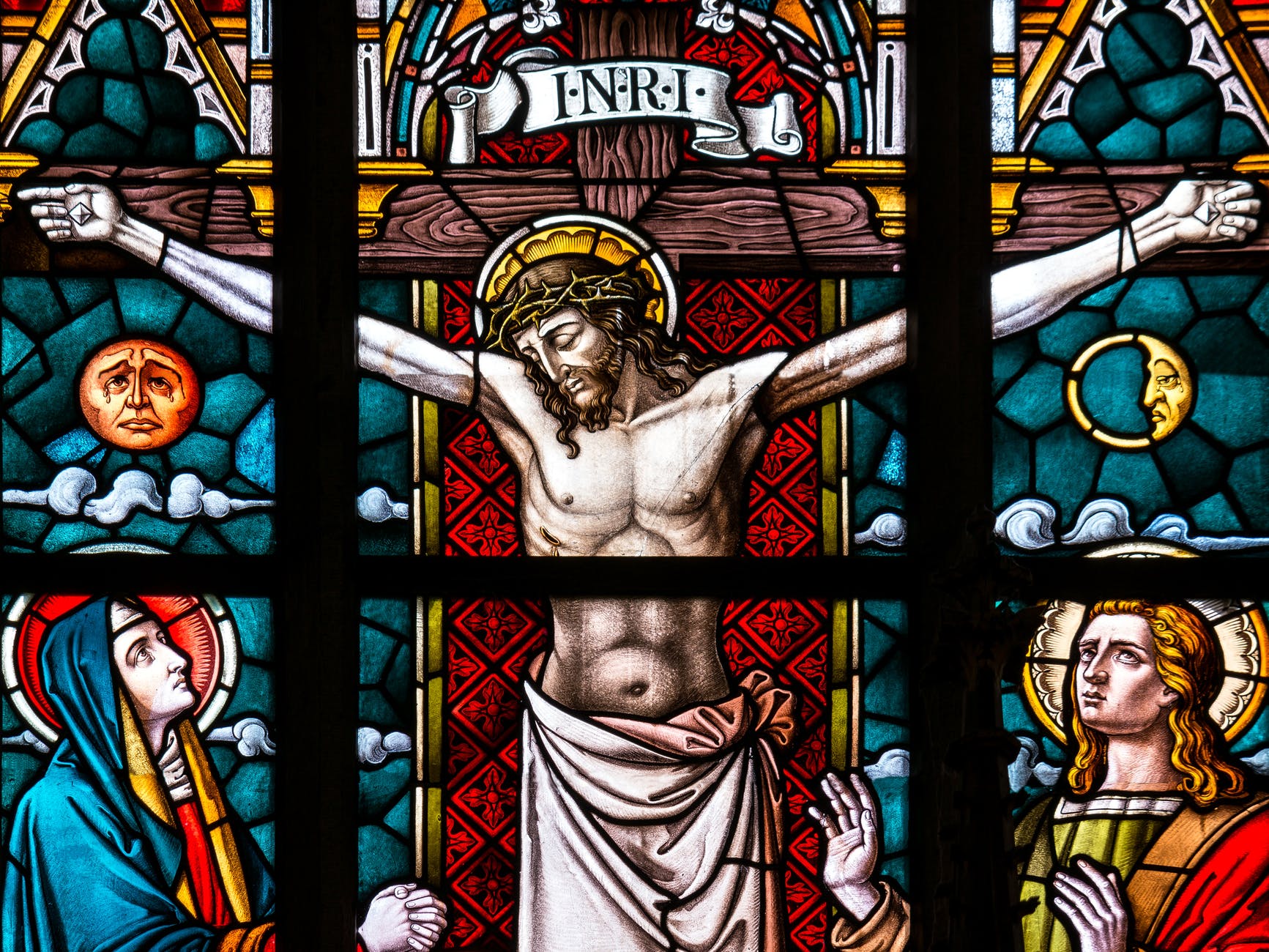
In Hebrew, the name “Micah” means “Who is like the Lord?”
In the Old Testament, the prophet Micah concludes the book that bears his name with the question his name asks:
Who is a God like You? (Micah 7:18)
Right before he asks this question, Micah speaks of God’s unmatched power on behalf of Israel:
“As in the days when you came out of Egypt, I will show them My wonders.” Nations will see and be ashamed, deprived of all their power. They will put their hands over their mouths and their ears will become deaf. They will lick dust like a snake, like creatures that crawl on the ground. They will come trembling out of their dens; they will turn in fear to the LORD our God and will be afraid of you. (Micah 7:15-17)
Just as God dazzled the world when He rescued the people of Israel out from under their slavery to the world’s preeminent superpower at that time – Egypt – God will do so again during Micah’s day when, again, He rescues His people out from under their oppression under the likes of the Assyrians and Babylonians.
But this unlimited and unmatched power is not what makes Micah’s God unique. It is not just that Micah’s God can “beat up” on other nations’ gods.
Instead, what makes Micah’s God truly unequaled is something other than His power:
Who is a God like You, who pardons sin and forgives the transgression of the remnant of His inheritance? You do not stay angry forever but delight to show mercy. You will again have compassion on us; You will tread our sins underfoot and hurl all our iniquities into the depths of the sea. (Micah 7:18-19)
What makes God matchless, according to Micah, is His mercy. All other religions and gods find their foundations in merit – you do your best, and the gods will perhaps sweep in and do the rest. But Micah reminds us that even when we do our worst, God, though He may discipline us, ultimately takes our worst and hurls it down into the deepest ocean trench and, in exchange, gives us His compassion.
Power, then, is not what foundationally makes God, God. Mercy is. Yes, we should fear God’s judgment on our sin. But we can actually see God’s mercy for our sin. Because “we do see Jesus” (Hebrews 2:9). And there is no one like Him – One who would die for our sin.
Fair-Weather Faith

In 2 Samuel 7, David, king of Israel, comes to the prophet Nathan with a concern:
Here I am, living in a house of cedar, while the ark of God remains in a tent. (2 Samuel 7:2)
David wants to build a temple for God, whose place of residence has, up until this point, been a tent that the Israelites took with them across the wilderness on their way from Egypt to the Promised Land.
In Psalm 132, we learn more about just how committed David was to procuring a more permanent residence for God:
He swore an oath to the LORD, he made a vow to the Mighty One of Jacob: “I will not enter my house or go to my bed,I will allow no sleep to my eyes or slumber to my eyelids, till I find a place for the LORD, a dwelling for the Mighty One of Jacob.” (Psalm 132:2-5)
The oath that David swears as he is considering building a temple for God is the same oath that David will hear just chapters later after he has committed adultery with another man’s wife.
When David sleeps with Bathsheba, the wife of one of his military commanders named Uriah, and gets her pregnant, he tries to cover up the affair by summoning Uriah in from the battlefield and encouraging him to go home and “enjoy” his wife so that no one will suspect she has been forced into sleeping with another man. But Uriah refuses, telling David:
The ark and Israel and Judah are staying in tents, and my commander Joab and my lord’s men are camped in the open country. How could I go to my house to eat and drink and make love to my wife? As surely as you live, I will not do such a thing! (2 Samuel 11:11)
Like David four chapters earlier, Uriah refuses to go to his home while the ark of God is in a tent and his men are on a battlefield. But the same oath that David once made has now become a liability that David has. So, David commands his general, Joab:
“Put Uriah out in front where the fighting is fiercest. Then withdraw from him so he will be struck down and die.” So while Joab had the city under siege, he put Uriah at a place where he knew the strongest defenders were. When the men of the city came out and fought against Joab, some of the men in David’s army fell; moreover, Uriah the Hittite died. (2 Samuel 11:15-17)
It turns out that David’s oath to God was a fair-weather oath. It was fine for a building project that would make David look good, but it was discarded when David was caught in a sin that made him look bad.
We are called to be more than fair-weather fans of God. Our faith in Him is refined not when it’s easiest to commit to Him, but when it’s hardest. In the words of one of Jesus’ followers named Peter, who himself struggled to stick with his faith when things got tough:
Trials have come so that the proven genuineness of your faith – of greater worth than gold, which perishes even though refined by fire – may result in praise, glory, and honor when Jesus Christ is revealed. (1 Peter 1:7)
May the oaths that we make be the oaths that we keep. May we be faithful. After all, God has been, is, and will continue to be faithful to us.
Meaning in Life

David Foster Wallace’s final unfinished novel, The Pale King, describes a handful of IRS employees looking for meaning in life. One employee, Lane Dean Jr., seems to be particularly overwhelmed by the apparent tedious and utter meaninglessness of his job:
The rule was, the more you looked at the clock the slower the time went. None of the wigglers wore a watch, except he saw that some kept them in their pockets for breaks. Clocks on Tingles were not allowed, nor coffee or pop. Try as he might, he could not this last week help envisioning the inward lives of the older men to either side of him, doing this day after day. Getting up on a Monday and chewing their toast and putting their hats and coats on knowing what they were going out the door to come back to for eight hours. This was boredom beyond any boredom he’d ever felt.
Lane Dean Jr. tries to browbeat his boredom into beauty by imagining a beach, full of sunshine and warmth, but after just an hour of work:
The beach was a winter beach, cold and gray and the dead kelp like the hair of the drowned, and it stayed that way despite all attempts.
Lane Dean Jr. could not seem, try as he might, to conjure meaning in what felt to him to be a meaninglessness job.
Lane Dean Jr.’s struggle for meaning was a reflection of Wallace’s own intensely personal and desperate struggle. For all of his success as an innovative and creative novelist, who is still widely read and well regarded to this day, he too was on a search for meaning in life. But try as he did, he was simply not resourceful enough to create meaning ex nihilo in his admittedly brilliant novels. And his struggle cost him dearly as, tragically, he took his own life.
Wallace’s sad struggle with meaning in life is nothing new. It was King Solomon who once cried:
Meaningless! Meaningless! Utterly meaningless! Everything is meaningless. (Ecclesiastes 1:2)
Solomon, like so many others before and after him, struggled to see meaning in life. Indeed, the Hebrew word for “meaningless” here is hebel, which refers to a “vapor” or “mist.” Solomon knew that so much of the stuff in life that we tout as meaningful – our jobs, our successes, our paychecks, our social networks, and even our morality – always and eventually evaporate before our eyes. They do not and cannot be lastingly meaningful in and of themselves.
So, what is the solution to our futile and desperate attempts to create meaning in life? It is to trade our obsession to create meaning in life for a humble and sincere desire to seek the meaning of life. For life to have lasting meaning, meaning must come from somewhere beyond life and from something larger than life. Humans cannot create true meaning ex nihilo. Instead of being created, true meaning must be revealed. This is why Solomon, after declaring all human attempts to create meaning futile, concludes:
Of making many books there is no end, and much study wearies the body. Now all has been heard; here is the conclusion of the matter: Fear God and keep His commandments, for this is the duty of all mankind. (Ecclesiastes 12:12-13)
People may write volumes upon volumes of books, as did David Foster Wallace, seeking to make life meaningful, but only God and His Word can provide true and lasting meaning. It is in His Word that the true and lasting meaning of life is revealed – to obey God’s commands and to be loved by Him even when we do not.
Is this the foundation of your meaning?
Never Left Without a Blessing

Reaping the consequences of sin is terrible and tragic. When Adam and Eve fall into sin, God proscribes many devastating consequences:
To the woman He said, “I will make your pains in childbearing very severe; with painful labor you will give birth to children. Your desire will be for your husband, and he will rule over you.” To Adam Je said, “Because you listened to your wife and ate fruit from the tree about which I commanded you, ‘You must not eat from it,’ Cursed is the ground because of you; through painful toil you will eat food from it all the days of your life. It will produce thorns and thistles for you, and you will eat the plants of the field. By the sweat of your brow you will eat your food until you return to the ground, since from it you were taken; for dust you are and to dust you will return.” (Genesis 3:16-18)
There will be pain in childbearing, pain in work, and eventual death. This sounds awful. Indeed, it sounds hopeless. But then, in the very next verse, we read:
Adam named his wife Eve, because she would become the mother of all the living. (Genesis 3:19)
Eve’s ability to have children is notable, because God blessed people with the gift of children before they fell into sin:
God blessed them and said to them, “Be fruitful and increase in number; fill the earth and subdue it.” (Genesis 1:28)
Even as God curses people because of their sin, He does not leave them without a blessing in their sin. Even though Adam and Eve will die, new life will come from them, resulting in, supremely, the birth of a Savior.
It can be tempting to believe, when we struggle with sin and experience and endure the consequences of sin, that God has forsaken us because of our sin. But as with Adam and Eve, even when we suffer under the curse of sin, God never leaves us without a blessing. He never leaves us without a promise of a new life.
Eve’s blessing was to be the mother of all the living. Our blessing is to be loved and blessed by the One who came from Eve and redeemed her – and us.
A Bridegroom of Blood

Recently, I received a question about a strange story in Exodus 4. God has just called Moses to be the new leader of the children of Israel and has commissioned him to confront the Pharaoh of Egypt, who is enslaving the Israelites, and demand that he let the people go. While Moses is heading to Egypt to carry out his task:
At a lodging place on the way, the LORD met Moses and was about to kill him. But Zipporah took a flint knife, cut off her son’s foreskin and touched Moses’ feet with it. “Surely you are a bridegroom of blood to me,” she said. So the LORD let him alone. (At that time she said “bridegroom of blood,” referring to circumcision.) (Exodus 4:24-26)
This is indeed an odd story. God, at the very time Moses is traveling to Egypt to do the thing God had just told him to do, tries to murder Moses.
But why?
Moses was on his way to becoming the spiritual leader of Israel. The first spiritual leader of Israel was also the progenitor of Israel – a man named Abraham. How did God mark Abraham as the father of this nation?
This is My covenant with you and your descendants after you, the covenant you are to keep: Every male among you shall be circumcised. You are to undergo circumcision, and it will be the sign of the covenant between Me and you. For the generations to come every male among you who is eight days old must be circumcised. (Genesis 17:10-12)
Moses, as the incoming spiritual leader of Israel, had not even marked his own son with the most basic sign of God’s covenant. He has disobeyed God’s command. And God is not happy. So, God seeks to punish Moses.
In many ways, this story in Exodus 4 and another story in Numbers 20 serve as bookends to Moses’ ministry. In Numbers 20, the community of Israel is in the desert on their way to the Promised Land after their rescue from Israel, but they do not have any water. So, Moses approaches God to discuss the problem, and God offers these instructions:
“Take the staff, and you and your brother Aaron gather the assembly together. Speak to that rock before their eyes and it will pour out its water. You will bring water out of the rock for the community so they and their livestock can drink.” So Moses took the staff from the LORD’s presence, just as He commanded him. He and Aaron gathered the assembly together in front of the rock and Moses said to them, “Listen, you rebels, must we bring you water out of this rock?” Then Moses raised his arm and struck the rock twice with his staff. Water gushed out, and the community and their livestock drank. But the LORD said to Moses and Aaron, “Because you did not trust in Me enough to honor me as holy in the sight of the Israelites, you will not bring this community into the land I give them.” (Numbers 20:8-12)
In Numbers 20, Moses disobeys God by striking a rock to get water from it rather than speaking to it. And his punishment is death. In Exodus 4, Moses disobeys God by failing to circumcise his son, and his punishment should have been death. But someone intercedes. Zipporah circumcises their son and touches Moses’ feet with the blood and foreskin to remind him that the same feet that just one chapter earlier stood before God on “holy ground” (Exodus 3:5) as God appeared to Moses famously in the form of a burning bush have now wandered into sin. His feet – and his very self – need covering and cleansing. And this is what they get.
After Zipporah performs the circumcision, she calls Moses “a bridegroom of blood” (Exodus 4:25). We, too, have a bridegroom of blood. But unlike Moses, His feet have never wandered into sin. Instead, they have only staggered to a cross where He shed His blood so that we could have “a bridegroom of blood” who saves us from sin.
Israel needed a greater and better leader than Moses. And so do we. And we have One in Jesus.
God Is With Us
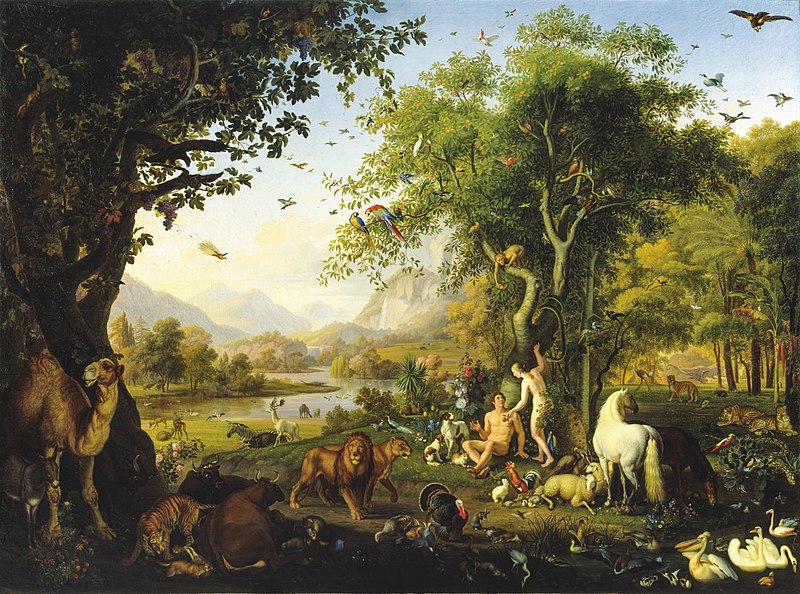
God has a funny way of defying the expectations people put on His presence.
When God appears to the first two humans, Adam and Eve, we find Him searching for them by “walking in the garden in the cool of the day” (Genesis 3:8). But this paradisical picture soon turns ugly when He finds out they have fallen into sin by eating fruit from His forbidden Tree of the Knowledge of Good and Evil. In punishment, God casts the couple out of the cool and lush Garden of Eden with a warning to Adam that now “by the sweat of your brow you will eat your food” (Genesis 3:19). The refreshing cool of the garden is shut off to humans and exchanged for a sweltering sweat. And it feels like God has barred humanity from His presence.
But He hasn’t.
In Genesis 18, we meet a man named Abraham who is “near the great trees of Mamre…sitting at the entrance to his tent in the heat of the day” (Genesis 18:1). Because “the cool of the day” of the Garden of Eden has gone, Abraham tries to shade himself by some trees and with his tent in “the heat of the day.” But in the middle of this sweaty scene, we read:
The LORD appeared to Abraham near the great trees of Mamre while he was sitting at the entrance to his tent in the heat of the day. (Genesis 18:1)
It turns out that God shows up not only in the cool of the day, but in the heat of the day – not only in a garden, but in a desert.
Too often, we harbor unexamined assumptions about how God’s presence has manifested itself in our lives:
“I got new job because God was with me.”
“I didn’t get the virus because God was with me.”
“I won the award because God was with me.”
“My life has turned out well because God was with me.”
All these statements may well be true. But their inverses are most certainly not:
“I didn’t get the new job because God wasn’t with me.”
“I did get the virus because God doesn’t care for me.”
“I didn’t win the award because God is against me.”
“My life has turned out tragically because God has forsaken me.”
God is with us in the garden and in the desert – in the cool of the day and in the heat of the day.
God’s presence with us even when life makes us sweat should come as no surprise to us. The word “sweat” is found twice in the Bible – once when Adam is cursed in a garden and once when Jesus is struggling in a garden:
Being in anguish, He prayed more earnestly, and His sweat was like drops of blood falling to the ground. (Luke 22:44)
Jesus knows what it’s like to sweat. And He’s promised to be with us when we sweat, too. Our circumstances – even when they are difficult and tempt us to become despondent – are not barometers of His presence. He is present with us because He has promised to be. Period.
Hagar, Sarah, Abraham, and Circumcision

We all have concocted a harebrained scheme a time or two to try to solve some problem or get ourselves out of some jam. The people of the Bible were no different.
When God appears to Abraham and Sarah and promises them that they will have a son who will be the progenitor of a great nation even though they are both well past their childbearing and childrearing years, Abraham, at first, responds with incredible faith:
Abram believed the LORD, and He credited it to him as righteousness. (Genesis 15:6)
But after years of waiting and no baby on the way to show for their patience, Abraham and Sarah decide to take matters into their own hands:
Sarai said to Abram, “The LORD has kept me from having children. Go, sleep with my slave Hagar; perhaps I can build a family through her.” Abram agreed to what Sarai said. (Genesis 16:2-3)
This is a shocking turn of events and rightly should be repulsive to us. Predictably, Abraham and Sarah’s scheme does not work out well for them:
Abraham slept with Hagar, and she conceived. When she knew she was pregnant, she began to despise her mistress. Then Sarai said to Abram, “You are responsible for the wrong I am suffering. I put my slave in your arms, and now that she knows she is pregnant, she despises me. May the LORD judge between you and me.” “Your slave is in your hands,” Abram said. “Do with her whatever you think best.” Then Sarai mistreated Hagar; so she fled from her. (Genesis 16:4-6)
Jealousy and abuse are the fruit of a pitifully and pathetically sexually disordered relationship, leaving the reader to wonder: Is there any way forward? Can any of this be repaired or restored?
In response to Abraham’s sexually disastrous choices, God announces:
You are to undergo circumcision, and it will be the sign of the covenant between Me and you. (Genesis 17:11)
I have been asked many times why God chose circumcision as the sign of the covenant He made with Abraham. It seems strange until one realizes that God takes the very spot Abraham had used to deny and disparage God’s covenant promise of a son and turns it into the very sign of His covenant. Circumcision, it turns out, is a bit of strategic sanctification. It is certainly painful, which Abraham certainly deserves in punishment for his sin. But it is also a sign to Abraham that God’s covenant promises to him still stand. In other words, Abraham’s circumcision is a surgery of grace. And grace is what Abraham needs to cover his sin.
It is no secret that sexual sin runs rampant in our world. But this is nothing new. Just ask Abraham, Sarah, and Hagar. And yet, when such sin works to betray trust, shatter promises, separate marriages, and break hearts, God is right there with His grace – working to redeem sexual sinners in their brokenness and restore those who have been sinned against sexually from their shame and pain. The sign God gave to Abraham is a testament to this – and a promise for us. God’s grace meets us when we sin sexually and when we are sinned against sexually.
If you are struggling with either sexual sin or being sinned against sexually, you can ask for help – from God and from others. Even after his sexual sin, God made Abraham the father of a great nation – Israel. And even after being sinned against by her husband, Sarah went on to become the mother of that same great nation. And even after Hagar was sinned against by both Abraham and Sarah, she and her son Ishmael, who also became a great nation, were protected and cared for by God.
God did all that with a giant mess of sexual sin. What can God do with you? It’s a question worth asking – and a hope worth holding.
Sneaky Polytheism

One of the most startling religious claims made by the ancient Israelites was that their God was the only true God. God Himself argues for His singularity when He says through the prophet Isaiah:
I am the LORD, and there is no other; apart from Me there is no God. (Isaiah 45:5)
This echoes the command God gives to the children of Israel through Moses:
You shall have no other gods besides Me. (Exodus 20:3)
In our religious milieu, unlike in the ancient world, the majority of people of faith are monotheists – that is, they believe there is only one God.
Yet, even if monotheism is common to believe, it is much harder to practice. Isaiah explains why when he speaks of the fall of Babylon:
Now then, listen, you lover of pleasure, lounging in your security and saying to yourself, “I am, and there is none besides me. I will never be a widow or suffer the loss of children.” Both of these will overtake you in a moment, on a single day: loss of children and widowhood. They will come upon you in full measure, in spite of your many sorceries and all your potent spells. You have trusted in your wickedness and have said, “No one sees me.” Your wisdom and knowledge mislead you when you say to yourself, “I am, and there is none besides me.” (Isaiah 47:8-10)
God’s judgment on Babylon feels horrifyingly harsh to us. But notice what God’s judgment is in response to. It is in response to those who say of themselves:
I am, and there is none besides me. (Isaiah 47:8, 10)
Sound familiar – like what God has just claimed for Himself two chapters earlier in Isaiah?
It turns out that the Babylonians were not just worshiping many gods, they were putting themselves in the place of God, claiming, “We are all who matter! We are all we need! There is no one else who can do what we do!”
Even if theological polytheism no longer appeals to many of us, sociological polytheism is just as prevalent in our day as it was in Isaiah’s. We are incessantly tempted to believe that our moment in history is the pinnacle of history. We understand what those who have gone before us did not and could not. We can solve the problems of the world – and, indeed, must solve the problems of the world – because our forebearers were too doddering to do so. We are quick to quip: “I am, and there is none besides me.”
This kind of arrogance is what leads Isaiah to say: “Your wisdom and knowledge mislead you” (Isaiah 47:10). Our forbearers were not as incompetent as we can sometimes think they were, and we are not as smart as we can sometimes think we are.
So, what do we need? We who declare “I am” need to humble ourselves before the true and great “I AM” (Exodus 3:14). We need to realize that having “none beside me” is not desirous, but disastrous. We, in short, need to know our place. We are under God and beside each other. That’s right where we’re supposed to be. And that’s a great place to be.
Scary Storms

Storms can be scary.
Whenever some legendary Texas severe weather rolls through San Antonio, my kids get uptight. They have trouble sleeping and stick close to mom and dad. My dog does, too. So, it’s understandable that when God shows up as a storm to the children of Israel on top of Mount Sinai, they become frightened:
When the people saw the thunder and lightning and heard the trumpet and saw the mountain in smoke, they trembled with fear. They stayed at a distance. (Exodus 20:18)
Storms can be scary.
This is why, when the disciples are caught in a storm on the Sea of Galilee, they, like the people of Israel at the base of Mount Sinai, respond with terror. But they also become frustrated with Jesus, who is with them, but is sleeping:
A furious storm came up on the lake, so that the waves swept over the boat. But Jesus was sleeping. The disciples went and woke him, saying, “Lord, save us! We’re going to drown!” (Matthew 8:24-25)
But this time, instead of Jesus manifesting divine power by showing up as a storm as God did on Mount Sinai, Jesus calms this storm:
He got up and rebuked the winds and the waves, and it was completely calm. (Matthew 8:26)
In our lives, there are times we need God to show up as a storm. We need some thunder and lightning in our lives to get our attention and to call us to repentance. But there are also times when we need God to calm a storm. We need a wind to die down and some waves to be stilled and be rescued by whatever it is that is harming us. The really difficult part is this: many times, we don’t know whether we need God as the storm or we need God to calm the storm. But God knows. And God will do what is best.
The ultimate comfort is this: storm or no storm, God is there with us, using whatever we’re experiencing for us and not against us. Storms may be scary, but they are not lonely.


 Pastor Zach's Blog