Posts filed under ‘Devotional Thoughts’
Did I Do Something to Deserve My Suffering?

People who are struggling can sometimes wonder: Is God angry with me? Is He disciplining me because of some sin in my life? Did I do something to deserve this? These questions become particularly acute when people read biblical stories of God punishing places like Sodom and Gomorrah or Jericho or Babylon or even Israel because of their sin.
The prophet Amos lived during a time of spiritual depravity in Israel. This depravity was masked, however, by general political stability and economic prosperity. Because of these conditions, the Israelites were lured into believing they were experiencing God’s favor. But God called Amos to deliver a damning declaration:
This is what the LORD says: “For three sins of Israel, even for four, I will not relent. They sell the innocent for silver, and the needy for a pair of sandals. They trample on the heads of the poor as on the dust of the ground and deny justice to the oppressed. Father and son use the same girl and so profane My holy name.” (Amos 2:6-7)
God’s judgment was coming on Israel’s sin. But at the same time such a declaration may sound unsettling, it can also be comforting.
God regularly used the ancient prophets to remove ambiguity about His judgment. People did not need to guess whether God was punishing them because of their sin because the prophets clearly revealed whether God was punishing them because of their sin. In Amos’s case, God even reveals through this prophet the specific sins for which Israel was being punished.
God leaves no ambiguity when it comes to His punishment of sin. As Amos goes on to explains:
When disaster comes to a city, has not the LORD caused it? Surely the Sovereign LORD does nothing without revealing His plan to His servants the prophets. (Amos 3:6-7)
If God brings judgment, He will make known what He is doing. He renders no judgment without revealing whether it is, in fact, His judgment.
You never have to wonder, then, in the face of some struggle or suffering, whether God is angry at you. Or whether He is disciplining you. Or whether you have done something to deserve what you are experiencing. If you are left wondering, you already have your answer: He is not angry with you. He is not lobbing suffering at you out of His wrath toward you. God’s judgment is not meant to be secret or mysterious. Instead, it is designed to be clear so that it can unambiguously call people out of their sin and back to His righteousness.
If you are suffering, God is not judging you. You can know that. But you can also know this: He is with you. He does not remain aloof from you, but comes to you through Christ. If you are suffering, remember that Christ has also suffered. He knows what suffering feels like. And He knows – and cares – what you feel like. His response to your suffering is not judgment, but love.
Hope In Troubles

Recently, in my personal devotions, I have been reading through the book of Hosea. Hosea is the first of the so-called “Minor Prophets” at the end of the Old Testament. He, like so many of the other ancient Israelites prophets, carried out his ministry during a time of great trouble and turmoil in Israel. The people had fallen prey to idolatry. They were defrauding and exploiting each other. They were engaged in all sorts of crass and harmful immorality, such as cultic sexual rituals. God raised up prophet after prophet to try to call the people back to righteousness – back to Him.
When God called Hosea, He called him not only to be a preacher, but, in some sense, a performer. Hosea is asked by God to use his life as a giant object lesson as a divine message to Israel:
The Lord said to him, “Go, marry a promiscuous woman and have children with her, for like an adulterous wife this land is guilty of unfaithfulness to the Lord.” (Hosea 1:2)
So, Hosea does. And, predictably, she cheats on him. What Israel has done to God – cheating on Him by worshiping other gods – Hosea plays out in his life and marriage, at a great personal expense of suffering.
But even in the midst of much sin and pain, all is not lost. God makes a promise through Hosea to Israel:
I am now going to allure her; I will lead her into the wilderness and speak tenderly to her. There I will give her back her vineyards, and will make the Valley of Achor a door of hope. (Hosea 2:14-15)
God promises to restore Israel even after her faithlessness. This promise does not mean there will be no fallout from her sin. Hosea speaks of the “Valley of Achor,” which, in Hebrew, means “valley of trouble.” This is the same valley where, eight centuries earlier, a man named Achan was stoned to death for lying about stealing what belonged to God (cf. Joshua 7:24-26). Sin brings trouble.
But God reminds us that trouble does not have the last word. For, even in the Valley of Achor, God brings a “door of hope.”
Where has sin brought trouble in your life? Maybe your trouble is the result of a lie you told, a confidence you betrayed, or a boundary you breached. Then again, perhaps trouble has come to you through no fault of your own. Perhaps it is simply the result of living in a sinful, broken world. No matter what trouble you may be facing, even if God does not rescue you from the Valley of Achor, God will not abandon you in the Valley of Achor. Instead, when you are most troubled, God will give you a door – right in the midst of your valley of trouble. He will provide hope – right there in your pain.
How? Through One who has seen trouble, too – not in a valley, but on a hill called Calvary. And as this One once said:
I am the door. (John 10:7).
Jesus is our hope, no matter what our trouble.
Water and New Life

When God is first ordering creation, He begins with a formless, watery blob:
Now the earth was formless and empty, darkness was over the surface of the deep, and the Spirit of God was hovering over the waters. (Genesis 1:2)
But the watery blob does not last long. He separates the waters up above from the waters down below, and He separates the waters below into land and water:
And God said, “Let there be a vault between the waters to separate water from water.” So God made the vault and separated the water under the vault from the water above it. And it was so. God called the vault “sky.” … And God said, “Let the water under the sky be gathered to one place, and let dry ground appear.” And it was so. God called the dry ground “land,” and the gathered waters he called “seas.” And God saw that it was good. (Genesis 1:6-8)
The separation of these waters eventually sets the stage for God to give life to human beings:
God said, “Let Us make mankind in Our image, in Our likeness, so that they may rule over the fish in the sea and the birds in the sky, over the livestock and all the wild animals, and over all the creatures that move along the ground.” So God created mankind in His own image, in the image of God He created them; male and female He created them. (Genesis 1:26-27)
When God rescues the Israelites from their slavery in Egypt, they quickly find themselves backed up against the banks of the Red Sea, being pursued by the full force of the Egyptian army, and being terrified at the prospect of their impending slaughter:
“Was it because there were no graves in Egypt that you brought us to the desert to die? What have you done to us by bringing us out of Egypt? Didn’t we say to you in Egypt, ‘Leave us alone; let us serve the Egyptians’? It would have been better for us to serve the Egyptians than to die in the desert!” (Exodus 14:11-12)
But then God steps in and redoes what He did at creation – He separates the waters of the Red Sea and forms dry land:
The waters were divided, and the Israelites went through the sea on dry ground, with a wall of water on their right and on their left. (Exodus 14:21-22)
The separation of these waters sets the stage for God to rescue His people and give them a new life.
Over the past few months at the church where I serve, I have been privileged to witness and be a part of many baptisms. In baptism, God does once again what He did at creation and at the Red Sea. Waters are separated by pouring or dipping, and the separation of these waters is the stage on which God promises to give people life – new life as His children:
We were therefore buried with Christ through baptism into death in order that, just as Christ was raised from the dead through the glory of the Father, we too may live a new life. (Romans 6:4)
With water, God not only creates, He recreates. And He does so intimately – personally – for you. If you have not been baptized, now is your time! If you have been, give thanks to God for His creative work in you. It’s a beautiful gift of His love for you.
What Does God Think of You?

In Daniel 4, the king of Babylon, Nebuchadnezzar, loses his mind. In punishment for his pride over his accomplishments as king and his power over his kingdom, God strikes him with a bout of insanity that causes him to believe he is a wild beast:
He was driven away from people and ate grass like the ox. His body was drenched with the dew of heaven until his hair grew like the feathers of an eagle and his nails like the claws of a bird. (Daniel 4:33)
God restores Nebuchadnezzar’s sanity when, instead of reveling in his pride and power, he looks toward heaven and praises his Maker:
I, Nebuchadnezzar, raised my eyes toward heaven, and my sanity was restored. Then I praised the Most High; I honored and glorified Him who lives forever. (Daniel 4:34)
His song of praise to God is particularly notable:
His dominion is an eternal dominion; His kingdom endures from generation to generation. All the peoples of the earth are regarded as nothing. He does as He pleases with the powers of heaven and the peoples of the earth. No one can hold back His hand or say to Him: “What have You done?” (Daniel 4:34-35)
Nebuchadnezzar’s ad hoc worship song sounds pious, but its theology is a bit off. The Psalmist asks:
LORD, what are human beings that You care for them, mere mortals that You think of them? They are like a breath; their days are like a fleeting shadow. (Psalm 144:3-4)
The Psalmist admits that, before God, humans are nothing. And yet, he also marvels that God cares for them and thinks of them anyway.
Nebuchadnezzar sings:
All the peoples of the earth are regarded as nothing. (Daniel 4:35)
But this is not how God regards people. He cares for them and thinks of them. In fact, He cared for Nebuchadnezzar so deeply that He personally disciplined him in his pride so he could learn the value of humility. Certainly, being struck by insanity did not feel to Nebuchadnezzar like God regarded him as much of anything. But Nebuchadnezzar was wrong. What felt like abandonment by God was a gift from God to, ultimately, sanctify him.
We, too, are regarded as precious by God. When things turn hurtful or hard, it may not feel that way. It may feel like we are nothing to God, or perhaps like we have been abandoned by God. But even times of trial can be used by God to sanctify us.
The Psalmist is right. God cares for us and is mindful of us – so much so that He sent His one and only Son to us.
No Longer Shut Out
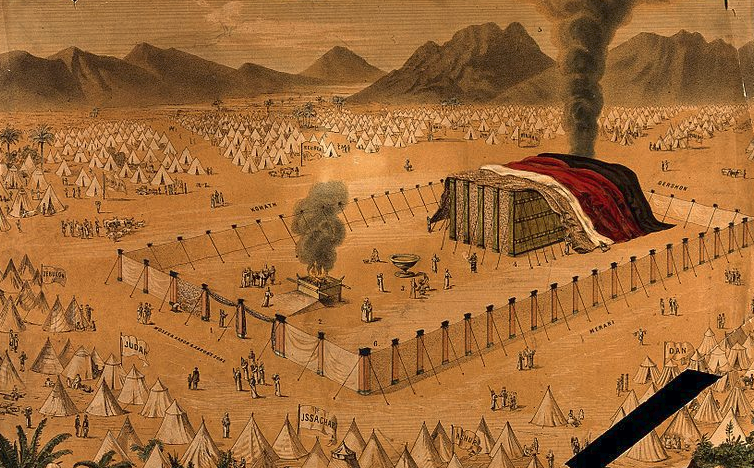
At the end of the book of Exodus, Moses and Israel have just set up the tabernacle – the place where God dwells. But when Moses tries to enter it to be with God, something unsettling happens:
The cloud covered the tent of meeting, and the glory of the LORD filled the tabernacle. Moses could not enter the tent of meeting because the cloud had settled on it, and the glory of the LORD filled the tabernacle. (Exodus 40:34-35)
Moses cannot enter to meet with God.
The Psalmist asks:
Who may ascend the mountain of the LORD? Who may stand in His holy place? The one who has clean hands and a pure heart, who does not trust in an idol or swear by a false god. (Psalm 24:3-4)
The Israelites do not have clean hands or pure hearts. They are recalcitrant and rebellious. As Exodus 32 recounts for us, they have sworn by idols. They cannot stand in the Lord’s holy place because of their sin.
The book of Exodus, then, leaves its reader wondering if God’s people will ever be able to meet with God. Or, has God cut them off because of their sin?
John’s Gospel opens with this description of Jesus:
The Word became flesh and made His tabernacle among us. We have seen His glory, the glory of the one and only Son, who came from the Father, full of grace and truth. (John 1:14)
The Israelites were barred from standing in God’s holy place by His glory. Jesus comes to us as God’s holy place and freely shows us His glory. How? By grace and with truth. John 1 is the answer to Exodus 40. Despite our sin, we are not blocked from being with God, because God has chosen to be with us in Christ.
Daily Bread

As inflation continues to wreak havoc and interest rates rise, the future can feel uncertain and even ominous. Before I wrote this blog, I checked my stocks. They were all red. My stocks weren’t the only things that sank. My heart did, too.
And yet, in the midst of uncertain times, we are called to trust God with our resources. In fact, we are called to trust that God will give us all the resources we need. We are called to believe that God will answer our prayer: “Give us today our daily bread” (Matthew 6:11).
Jesus’ words from this famous in line in the Lord’s Prayer echo a story from ancient Israel. In Exodus 16, God feeds the Israelites with bread from heaven as they wander through the wilderness on their way to the Promised Land:
The LORD said to Moses, “I will rain down bread from heaven for you. The people are to go out each day and gather enough for that day. In this way I will test them and see whether they will follow My instructions. On the sixth day they are to prepare what they bring in, and that is to be twice as much as they gather on the other days.” (Exodus 16:4-5)
God provides the Israelites with all the resources they need. But His provision comes with a provisio – they are only to gather what they need for each day. It is daily bread. And on the sixth day, when they are to gather what they need for two days, this is so they might rest on the seventh day.
Unsurprisingly, the Israelites struggle to follow God’s instructions. Some try to gather more than what they need for each day:
Some of them kept part of the bread until morning, but it was full of maggots and began to smell. (Exodus 16:20)
Others, instead of saving bread so they can rest on the seventh day, try to work every day:
Some of the people went out on the seventh day to gather it, but they found none. (Exodus 16:27)
The Israelites’ struggles mirror our own struggles. On the one hand, like the Israelites who tried to hoard bread, we can fail to trust God for what we need each day. On the other hand, like the Israelites who failed to sufficiently save bread and tried to work on the seventh day, we can also fail to save for tomorrow so we can enjoy rest one day. Gathering and saving. Working and resting. And, above all, trusting. These are the pillars of stewarding what God has given us.
The Israelites lived in a world where resources could feel scarce. We do, too. But just because resources feel scarce doesn’t mean they are scarce. God still provides. We are called to trust that. We are called to trust Him – even in a time that can feel uncertain.
Don’t Destroy Yourself!
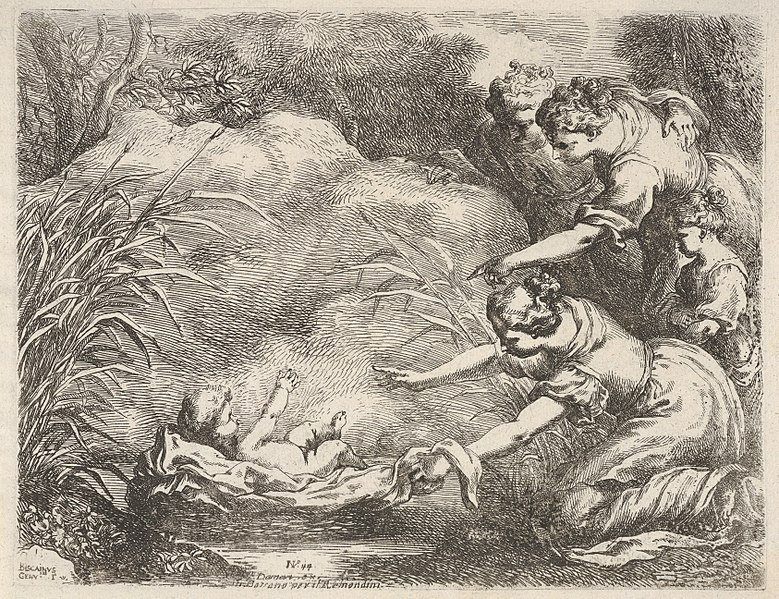
In the book of Exodus, the Pharaoh of Egypt seeks the destruction of the Israelites because they “have become far too numerous for us” (Exodus 1:9), and he is worried that “they will become even more numerous and, if war breaks out, will join our enemies, fight against us and leave the country” (Exodus 1:10). In response, Pharaoh issues an edict: “Every Hebrew boy that is born you must throw into the Nile, but let every girl live” (Exodus 1:22).
It is at this time a Levite woman gives birth to a son and, at first, attempts to hide him so he might not drown in the Nile:
But when she could hide him no longer, she got a papyrus basket for him and coated it with tar and pitch. Then she placed the child in it and put it among the reeds along the bank of the Nile. (Exodus 2:3)
This brave mother follows the letter of Pharaoh’s edict to throw her son into the Nile, but with a twist. She places her son into a basket, and then places the basket with her son into the Nile. Famously, this basket boy survives and grows up to become Moses – the one who rescues the Israelites out of their slavery in Egypt.
In a showdown with another Pharaoh of Egypt that takes place some 80 years after Moses was first placed into a basket as a baby in the reeds of the Nile, Moses and the Israelites find themselves backed up against a sea called the Sea of Reeds, which we know today as the Red Sea (Exodus 13:18), with Pharaoh and his army coming to destroy them. But just like God protects Moses from the waters of the Nile when he is placed among the reeds, God protects Israel from the waters of the Sea of Reeds by splitting them into two, so the Israelites can pass “through the sea on dry ground, with a wall of water on their right and on their left” (Exodus 14:23). But when Pharaoh and his army try to pursue them, “the water flowed back and covered the chariots and horsemen – the entire army of Pharaoh that had followed the Israelites into the sea. Not one of them survived” (Exodus 14:28).
Pharaoh sought the destruction of the Israelites by declaring that they must be drowned among the reeds of the Nile. But instead, he himself is destroyed by being drowned in the Sea of Reeds. Pharaoh’s berserk desire for destruction only destroyed him.
When we are slighted or hurt by someone, it can be easy for us to wish for – and, perhaps, even work for – their destruction – the destruction of their job, their reputation, or our friendship with them. But our desire for destruction – our desire for vengeance – more often than not, only destroys us. The bitterness and anger we harbor toward someone drowns our souls. This is why Jesus says, “If you hold anything against anyone, forgive them” (Mark 11:25). Jesus does not just say call for forgiveness in an effort to let someone who has upset us or hurt us off the hook. He calls for forgiveness to let us off the hooks of our own dangerous desires for destruction that will, if left unchecked, only destroy us. God doesn’t want our souls to get trapped in a vengeful Sea of Reeds.
So, who is God calling you to forgive today? Remember, forgiveness not only helps someone else; it rescues you.
And you’re worth rescuing.
Help Needed

Moses had gotten himself in too deep. As he and the children of Israel were traveling through the wilderness on their way to the Promised Land, he had not only taken on the role of leader, but of judge:
Moses took his seat to serve as judge for the people, and they stood around him from morning till evening. (Exodus 18:13)
The Israelites were going a bit stir crazy in the wilderness, and they were getting into so many disagreements and disputes with each other that Moses was spending all day trying to arbitrate their altercations. He had time for nothing else.
When Moses’ father-in-law, Jethro, comes to visit his son-in-law, he is impressed by what God has done for Israel, but is concerned over what Moses is doing with Israel. He says to Moses:
What you are doing is not good. You and these people who come to you will only wear yourselves out. The work is too heavy for you; you cannot handle it alone. (Exodus 18:17-18)
Jethro knows that Moses needs help. He cannot judge alone.
Jethro’s words hearken back to God’s words when He saw that the first man He created, Adam, had no one to help him through and with life:
It is not good for the man to be alone. I will make a helper suitable for him. (Genesis 2:18)
So, God created Eve.
In a world where it is noble to be a self-made person and self-sufficiency rules, Jethro reminds us that our limits are blessings. We cannot do it all. We need help. Contrary to our cultural myths of independence and autonomy, it is not good for us to be alone and to try to carry every burden alone.
We don’t always like to hear this, because our limits humble us. Sometimes, we’d prefer to live under a delusion that we are, if not theoretically and theologically, at least functionally omnipotent. But our limits are ultimately meant to bless us. Because they create opportunities for us to form relationships with others who we need – and who need us.
Who do you need to ask for help? The help you ask for may just be the start of a beautiful friendship that you need. And that is good.
Thorny Lies

Satan loves to send malicious messages. This was something the apostle Paul struggled with. When writing to the church he planted in Corinth, he admits:
I was given a thorn in my flesh, a messenger of Satan, to torment me. (2 Corinthians 12:7)
Paul struggled with a thorn. Exactly what this “thorn” was, we don’t know. Some people think it was a physical malady like a loss of sight while others conjecture that he battled some spiritual temptation. Whatever it was, Satan used this thorn as his messenger to torment Paul.
Satan does the same thing with us, too. When we struggle with and suffer from life’s thorns, Satan loves to say:
“This thorn is because God is angry at you for a sin.”
“This thorn means God does not care for you.”
“This thorn proves you are unworthy of others’ love.”
“This thorn will never end. You’ll be miserable forever.”
Have you ever struggled with thoughts that sound something like these? Satan is tormenting you with his malevolent messages.
Do not believe them. Do not believe him.
Paul certainly doesn’t. Because at the same time Satan is seeking to torment Paul with his deceptive messages, God is speaking loving words to Paul:
My grace is sufficient for you, for My power is made perfect in weakness. (2 Corinthians 12:9)
God responds to Satan’s lies of human worthlessness with the truth of His worthiness, which He gladly and freely shares with us out of His grace. When Satan tells us we are insufficient, God reminds us that His grace is wonderfully sufficient.
Satan may try to speak to us through thorns, but these thorns, instead of destroying us, are taken for us. They’ve all landed on Jesus’ head. And, in exchange, He gives us grace.
Believe that. Believe Him.
“Very Good”

Creation was never intended to be what it has become. Wars. Disease. Hunger. Refugees. This world has come a long way from what God called “very good” when He first made it (Genesis 1:31).
When Jesus arrived, part of His mission was to restore what God had made “very good” to its intended and original state. This is why Jesus preached peace, healed disease, fed the hungry, and gave a place in His kingdom to the displaced of the world.
The German theologian Jürgen Moltmann captures this mission in Jesus’ ministry well when he writes:
When Jesus expels demons and heals the sick, He is driving out of creation the powers of destruction, and is healing and restoring created beings who are hurt and sick. The lordship of God, to which the healings witness, restores creation to health. Jesus’ healings are not supernatural miracles in a natural world. They are the only truly “natural” thing in a world that is unnatural, demonized, and wounded.
What Jesus does, Moltmann argues, is the work of recreation in a world where the destructive and demonic powers of de-creation are hard at work.
This begs a question: where has your life been de-created? Are you struggling with a sin? Is your body ravaged by illness? Are you mired in depression and despondency? Are you somehow unable to provide for yourself or your family adequately?
At moments like these, we often pray for miracles – acts of power that are supernaturally wrought by God Himself. But perhaps we also ought to pray for Genesis 1:31 to come to pass in our life. Perhaps we should pray that the most natural thing fathomable would come to pass in our lives – that we, and the world around us, would be restored to its God-ordained and God-intended created state – that of “very good.”


 Pastor Zach's Blog