Posts filed under ‘Devotional Thoughts’
When Your Family Becomes Your Enemy

Jesus proffers plenty of tough challenges over the course of His ministry, but one of His toughest moments comes when He warns His disciples:
Do not suppose that I have come to bring peace to the earth. I did not come to bring peace, but a sword. For I have come to turn “a man against his father, a daughter against her mother, a daughter-in-law against her mother-in-law – a man’s enemies will be the members of his own household.” (Matthew 10:34-36)
Jesus’ words here make me grimace every time I think about giving a sweet wake-up kiss to my daughter or hoisting my son up over my head as he squeals with delight. I love my family fiercely. I would guess that you do, too. Jesus’ words sound harsh. And yet, Jesus’ words are also needed. Here’s why.
Part of the background for Jesus’ teaching comes from God’s instruction to Moses:
If your very own brother, or your son or daughter, or the wife you love, or your closest friend secretly entices you, saying, “Let us go and worship other gods” (gods that neither you nor your ancestors have known, gods of the peoples around you, whether near or far, from one end of the land to the other), do not yield to them or listen to them. (Deuteronomy 13:6-8)
God loves families. But He also knows that family structures, like everything else in creation, are marked and marred by sin. Even family members can lead us astray. Some family members can lead other family members into idolatry. God’s worship, Deuteronomy 13 reminds us, must trump even our own family’s wishes.
Sometimes, then, as Jesus warns, we may fight with our families. Our own family members may, at times, feel like our enemies. We may put faith first while other family members do not. We may declare, “Jesus is Lord,” while other family members live as if they are their own lords. Such faith divisions can cause relational frictions. And yet, fighting with our family over such transcendent questions can, ultimately, prove to be fighting for our family. Because we love our family, we want our family members to experience true hope. Because we love our family, we want our family members to experience true peace. Because we love our family, we want our family members to experience God’s promise of and invitation to life. And so, even when it’s tough and even though rejection is a real possibility, we are called to carry the gospel to everyone – including our own family.
Over my years in ministry, I have had to encourage more than one parent who had a wayward child to draw boundaries and demand accountability. Yes, this would mean that a parent might have to fight with their child. But this would also mean that a parent was fighting for their child because they love their child and want what is best for their child – even if the child doesn’t want what is best for their own self.
Over the course of His ministry, Jesus was willing to make a lot of enemies. The religious leaders hated Him. The Roman government was suspicious of Him. Even one of His own disciples betrayed Him. Yet, Jesus was never afraid to speak tough truth to His enemies – not because He wanted to fight with them, but because He wanted to fight for them. Jesus loved His enemies and wanted what was best for them – even if they didn’t want what was best for their own selves.
Jesus’ words about family continue to be challenging. No one likes to fight with their family. No one wants their family members to become their enemies. But even if our family members’ response to our commitment to Christ is rejection, our response to them can be drawn from our commitment to Christ: “Love your enemies” (Matthew 5:44).
Just because someone is mad at you doesn’t mean you can’t love them. And love, after all, is what being a family is all about.
“I am thirsty.”

Credit: Gerard de la Vallée, “Longinus piercing Christ’s side with a spear,” 17th cent.
This Friday, Christians around the world will commemorate the death of Jesus Christ. At the church where I serve, we will hold services centering around the traditional seven final phrases that Jesus speaks from the cross. Many of these phrases are extraordinarily well-regarded and famous. For instance, when Jesus prays for His executioners, saying, “Father, forgive them, for they do not know what they are doing” (Luke 23:34), we are treated to a tour de force in what true forgiveness looks like. When Jesus cries out, “My God, My God, why have You forsaken Me?” (Mark 15:34) we hear in His words both an ache for God’s presence in suffering as well as a separation from God because of sin.
One of my favorite phrases from Jesus on the cross is one that can sometimes be overlooked:
“I am thirsty.” (John 19:28)
This hardly seems like a profound statement. It seems more like a mundane request. A man who is baking in the hot ancient Near Eastern sun while hanging exposed on a cross has developed a case of cotton mouth. And yet, these words represent not only the cry of a parched mouth, but the yearning of a scorched soul.
The Psalmist once said:
As the deer pants for streams of water, so my soul pants for You, my God. My soul thirsts for God, for the living God. When can I go and meet with God? (Psalm 42:1-2)
The Psalmist describes his desperate thirst for God. And how does God respond to his thirst?
Deep calls to deep in the roar of Your waterfalls; all Your waves and breakers have swept over me. (Psalm 42:7)
God not only gives the Psalmist’s soul spiritual water, He offers the Psalmist a superabundance of this water in the form of waves and breakers.
Jesus invites anyone who has a thirst like the Psalmist’s:
“Let anyone who is thirsty come to Me and drink. Whoever believes in Me, as Scripture has said, rivers of living water will flow from within them.” (John 7:37-38)
But this takes us back to Jesus’ words from the cross. For when Jesus, who offers all men refreshment for their souls, Himself complains of thirst, how do men respond to Him?
A jar of wine vinegar was there, so they soaked a sponge in it, put the sponge on a stalk of the hyssop plant, and lifted it to Jesus’ lips. (John 19:29)
God responds to human thirst with refreshing water. Humans respond to God’s thirst with bitter vinegar. What a contrast.
And yet, the incredible thing about Jesus’ death on the cross is that sin’s vinegar never quite manages to strip Him of His life-giving water:
One of the soldiers pierced Jesus’ side with a spear, bringing a sudden flow of blood and water. (John 19:34)
The water of life stubbornly remains, flowing from the side of the One who died.
This week, as we reflect on and remember Jesus’ death, may we drink deeply from the water of His life. For the water of His life gives us eternal life.
A Carol Turns 200

200 years ago, on this night, the modern Christmas carol was born. A small church in Oberndorf, Austria had an organ that was in need of repair, and the parish priest there, Joseph Mohr, wanted a Christmas song he could sing with his congregants sans the usual stops and pipes. He composed some lyrics that a local teacher, Franz Gruber, set to music, and the two of them performed the song, accompanied simply by guitar, for the first time during their Christmas Eve service on December 24, 1818. The name of the song was “Silent Night.”
The song’s appeal is indisputably enduring. It was sung in the trenches as a part of an unofficial Christmas truce in 1914 during World War I by German soldiers to their British enemies. It was sung again during World War II in the wake of the attack on Pearl Harbor by Franklin D. Roosevelt and Winston Churchill in the Rose Garden of the White House. When Bing Crosby recorded the song in 1935, it became the third best-selling single of all time. And, of course, tonight, millions will gather across the world to sing the song by candlelight with warm hearts and, by God’s grace, lively faith.
Part of the song’s appeal is its utter simplicity. Both the tune and lyrics are extraordinarily unassuming. But the song also tells the story of Christmas extremely well. Everything from Jesus’ birth to the angelic announcement to some nearby shepherds to the truth of Jesus’ identity is contained in this carol. The last verse is my favorite:
Silent night, holy night,
Son of God, love’s pure light;
Radiant beams from Thy holy face
With the dawn of redeeming grace,
Jesus, Lord, at Thy birth,
Jesus, Lord, at Thy birth.
Here, in just this one verse, we find who Jesus is, why Jesus has come, and what He has come to do. Jesus is the Lord who has come as a baby in a manger out of love to bring redeeming grace. That’s more than a verse in a carol. That’s the gospel. That’s why, 200 years later, this is still a carol worth singing. Because it tells of a birth that, 2,000 years later, is still most definitely worth celebrating.
Merry Christmas.
Happy Thanksgiving

Credit: Max Pixel
Thanksgiving is my favorite holiday. So much of my day-to-day life centers around what I must do. There are tasks to complete and errands to run and bills to pay and conversations to have and decisions to make and Bible studies and sermons to write and preach. These things to do are often, even if not always, joyous, but Thanksgiving reminds me that I must never get so caught up in what I have to do that I forget about what has already been done. God has done great things for me. He has given me a family I adore, a church I love, and a forgiveness I need. And for these things, I am called to be thankful.
Thanksgiving keeps me humble. When I am tempted to boast in all I have accomplished, Thanksgiving reminds me of all I’ve been given. Even my life itself is a gift of God’s grace. This is why I must continually and humbly rely on Him.
Each year, I make it my tradition to read a Thanksgiving Proclamation from one of our nation’s founders. This year, I came across George Washington’s Thanksgiving Proclamation of 1789. In it, he thanks God:
…for His kind care and protection of the people of this country previous to their becoming a nation; for the signal and manifold mercies and the favorable interpositions of His providence in the course and conclusion of the late war; for the great degree of tranquility, union, and plenty which we have since enjoyed; for the peaceable and rational manner in which we have been enabled to establish constitutions of government for our safety and happiness, and particularly the national one now lately instituted; for the civil and religious liberty with which we are blessed, and the means we have of acquiring and diffusing useful knowledge; and, in general, for all the great and various favors which He has been pleased to confer upon us.
President Washington rattles of a list of the many blessings for which, he believes, a newly minted nation should be thankful. And he’s right. These are things for which our nation should still be thankful. But what I love most about his proclamation comes in what he says next:
May we then unite in most humbly offering our prayers and supplications to the great Lord and Ruler of Nations, and beseech Him to pardon our national and other transgressions.
President Washington was under no delusion that our nation’s blessings were somehow the product of our nation’s – or her individuals’ – intrinsic merit. This is why he offers not only a prayer of thanksgiving, but a prayer of confession. For he knew that God had blessed this new nation in the same way He has always blessed every nation: by grace.
When God chose Israel to be His people and gave to her a Promised Land, He made sure she knew her blessings came by His grace:
It is not because of your righteousness that the LORD your God is giving you this good land to possess, for you are a stiff-necked people. Remember this and never forget how you aroused the anger of the LORD your God in the wilderness. From the day you left Egypt until you arrived here, you have been rebellious against the LORD. (Deuteronomy 9:6-7)
God did not bless Israel because of her righteousness, but in spite of her unrighteousness. God works this way with every nation and every person.
Ultimately, then, to be thankful is to be repentant, knowing that we have what we have not because we’ve earned it or deserved it, but because God has willed it. Thus, each Thanksgiving, I am called to make little of myself and my accomplishments, which are few, and much of God and His blessings, which are bountiful.
As this long weekend draws to a close, my prayer is that the holiday of Thanksgiving becomes a habit of thanksgiving. After all, I have plenty to be thankful for.
You do, too.
The Only Sacrifice You Need

“David Plays the Harp for Saul” by Rembrandt, circa 1650
The downfall of Saul began with a sacrifice.
We usually think of sacrifices as being noble – like when parents sacrifice for their children or when soldiers sacrifice for their country. And these sacrifices certainly are noble. But King Saul’s sacrifice was different. King Saul’s sacrifice was not noble, but self-serving.
In 1 Samuel 15, the prophet Samuel instructs Saul, “Go, attack the Amalekites and totally destroy all that belongs to them” (1 Samuel 15:3). Saul does attack the Amalekites. He does defeat the Amalekites. But he does not destroy all that belongs to them:
Saul and the army spared…the best of the sheep and cattle, the fat calves and lambs – everything that was good. These they were unwilling to destroy completely, but everything that was despised and weak they totally destroyed. (1 Samuel 15:9)
Saul disobeys Samuel’s – and, by extension, God’s – instruction. When Samuel confronts Saul in his disobedience, Saul first tries to deny that he disobeyed at all. He says to Samuel, “I have carried out the LORD’s instructions” (1 Samuel 15:13). When Samuel catches him in his lie, Saul claims, “The soldiers spared the best of the sheep and cattle to sacrifice to the LORD your God, but we totally destroyed the rest” (1 Samuel 15:15). Samuel, though, is having none of it. He asks:
Does the LORD delight in burnt offerings and sacrifices as much as in obeying the LORD? To obey is better than sacrifice, and to heed is better than the fat of rams … Because you have rejected the word of the LORD, He has rejected you as king. (1 Samuel 15:22-23)
Saul thought he could use a sacrifice to weasel out of his disobedience. He was sorely mistaken.
What was true of Saul’s sacrifice, the Bible says, is true of all sacrifices. God cannot be somehow bribed to overlook sin by a sacrifice. The preacher of Hebrews says of the Old Testament sacrificial system: “Day after day every priest stands and performs his religious duties; again and again he offers the same sacrifices, which can never take away sins” (Hebrews 10:11). Sacrifices do not fix sins. That is, except for one sacrifice: Christ’s. For by Christ’s “one sacrifice He has made perfect forever those who are being made holy” (Hebrews 10:14).
Whereas kings and priests would offer broken sacrifices in their sin, Jesus offered a perfect sacrifice for our sin. The one man who needed no sacrifice for Himself because He was sinless was the one man who made a sacrifice for all in their sinfulness. And His sacrifice changed everything.
The next time you are caught in a sin, then, do not try to hide your sin, like Saul. Instead, confess your sin freely. And do not try slyly redeem yourself by making a sacrifice, like Saul. Instead, rejoice that you have been forgiven by a sacrifice already made. Jesus is all the sacrifice you need.
Who Is God’s Enemy?
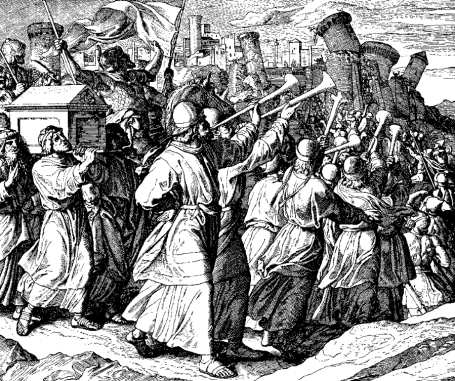
There is a fascinating exchange between Joshua and an unnamed man right before he fights the battle at Jericho. As Joshua is nearing the city and mustering his troops, he looks up and sees a man with a sword drawn in his hand. He asks him, “Are you for us or for our enemies?” The man replies, “Neither, but as a commander of the army of the LORD I have now come” (Joshua 5:13-14).
This exchange, though somewhat cryptic, is extremely revelatory. In this exchange, this man reveals who He is. He is part neither of Israel’s army nor of the army of Israel’s enemy. Instead, He commands the forces of God Almighty. In other words, He is not just a man. He is divine. This is why this commander echoes the words that God speaks to Joshua’s predecessor, Moses, from a burning bush. “Take of your sandals,” this commander says to Joshua, “for the place where you are standing is holy” (Joshua 5:15). This commander speaks the same words God once spoke to Moses because He Himself is God, who is now speaking to Joshua.
But the revelation that is given to Joshua in this man does not end here. For this man reveals not only who God is, but who God cares about. Before one of the biggest battles in Israel’s history, this commander comes to Joshua and tells him that He is not somehow blindly for Israel and against Jericho. But neither is he for Jericho and against Israel. Instead, He is for God who, ultimately, is for all. It is indeed true that God does rain down His wrath on Jericho’s sin in this story. But this does not mean that He does not love Jericho’s people. God is much more interested in saving people than in siding against them.
In our current milieu, I think it can be all too easy to forget that God cares about not only us, but those who we call “enemies.” But if we took the time to actually ask Him, “Are you for us or for our enemies?” God’s answer might just surprise us. It might just be, “Neither.” God is much more interested in loving the world than He is in making enemies.
The next time you are tempted to hate your enemy, remember this commander’s interaction with Joshua. And remember the admonition of Jesus: “Love your enemies and pray for those who persecute you” (Matthew 5:44). And, most importantly, remember the action of Jesus: “While we were God’s enemies, we were reconciled to Him through the death of His Son” (Romans 5:10). Paul says that God’s enemy, before the cross, was you. So, ask yourself, “How did God treat me when I was His enemy?”
Go and do likewise with your enemy.
Everybody Wants To Be Famous

Credit: Wikipedia
Simon Cowell has finally received his star on the Hollywood Walk of Fame – an honor that was long overdue, at least if you ask Mr. Cowell. He began his remarks at a ceremony honoring him by quipping, “Before we start, I would just like to ask you: why did this take so long?” He quickly added, “I’m kidding.”
Mr. Cowell rose to fame in the early 2000s when he joined Paula Abdul and Randy Jackson as a judge on the hit show “American Idol,” which he created. His acerbic personality, which often revealed itself in biting criticisms of the show’s singing contestants, garnered him both affection and hatred from the millions who watched him. But whether you loved him or hated him, you knew him. He was – and still is – famous. Hence, his newly concreted star in Hollywood history.
At the conclusion of his remarks, Mr. Cowell noted how much he enjoyed being famous: “If anyone says fame is a bad thing, I don’t know what you’re talking about. It’s the best thing in the world.” I appreciate that Mr. Cowell admits what many of us only secretly think: fame is awesome!
People covet fame because it generally rests at the intersection of money and power. With fame, there often comes a fat paycheck as people are willing to pay top dollar for a star’s appearances and work. With fame, there also normally comes throngs of people who hang on a star’s every word and an entourage of handlers who attend to a star’s every wish. It’s no wonder Simon Cowell thinks fame is awesome.
But, of course, this is not a complete portrait of fame. Scripture is clear that with great fame comes great responsibility – and no shortage of great danger.
One of the most famous figures in the Bible is King David. David gained his fame by his monumental military accomplishments. 2 Samuel 8 outlines David’s victories in battle and includes this note: “David became famous” (2 Samuel 8:13). But David’s fame went to his head. He not only set out to conquer Israel’s enemies, just three chapters later, in 2 Samuel 11, he set out to cover up his own sin. After having an affair with a woman who was not his wife, he had this woman’s husband Uriah, a famous warrior in his own right, killed when it was discovered that she was pregnant by David and that her husband would be able to quickly discern that the baby was not his. A man who had made a name for himself in battle killed another man who had made a name for himself in battle all in an attempt to ensure that his fame would not become infamy.
Nearly 400 years after David, the prophet Habakkuk wrote:
LORD, I have heard of Your fame; I stand in awe of Your deeds, LORD. Repeat them in our day, in our time make them known; in wrath remember mercy. (Habakkuk 3:2)
Habakkuk knew what fame chasers often forget – the most important fame we can desire is not our own. It is the Lord’s.
The Lord freely grants fame to people out of His grace. The Lord gave Israel “fame and honor high above all the nations” (Deuteronomy 26:19). He made Joshua’s “fame spread throughout the land” (Joshua 6:27). Fame, in and of itself, is not bad. But man’s fame, as the old saying goes, lasts only briefly – 15 minutes or so, if you believe Andy Warhol. God’s fame, however, endures. Which is good. Because God is famous for His compassion, grace, and salvation. And everyone should know about that. Because everyone needs plenty of that.
Hope From the Cave

Credit: Jayakarthi Natarajan
In a saga that began June 23, twelve boys from a Thai soccer team found themselves trapped in Thailand’s Tham Luang cave system for over two weeks. What began as an assistant coach taking his team on a rite of passage through a cave wound up teetering on the brink of disaster after the sky outside opened up while the boys were in the cave and the rains flooded their exit route from the cave. It took a team of 1,000 local army and navy troops along with teams from the U.S., the U.K., China, and Australia, as well as a crack team of Thai Navy SEALs, to find and rescue the boys. Even with all these people on site, the rescue still spanned multiple days. But now, the boys are out safely and a nation – along with many across the world – is celebrating.
In an age where so many tragedies end tragically, tragedies that are hijacked into victories buoy our spirits because they bring into sharp clarity the reality and the persistence of hope. Today’s state, no matter how dire it may seem, does not have to be tomorrow’s fate. This is why the message of Christ continues to find resonance in people’s lives and take up residence in people’s hearts. For Christ came to bring hope – a hope that the sin and calamity of this world could and would be undone and defeated by Him. And though we still await the final consummation of this hope upon His return, we get glimpses of this hope every time a vaccine for a dreaded disease appears promising, a crippled airliner lands safely, and a group of boys escape from a waterlogged cave.
Come to think of it, these boys aren’t the first ones to make a miraculous escape from a cave that seemed impermeable. Jesus pulled that off 2,000 years ago on a morning we now call Easter.
Is it any wonder He is our source of hope?
The Resurrection of Jesus in History
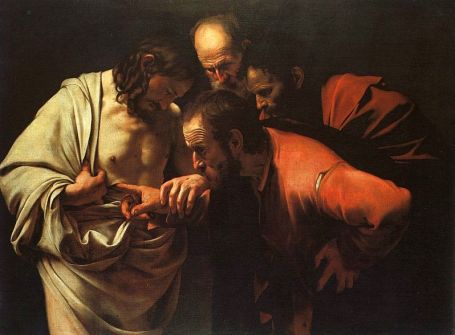
Yesterday, Christians around the world gathered to celebrate the defining claim of their faith: the resurrection of Jesus Christ from the dead. The apostle Paul is very frank in his estimation of the importance of Christ’s resurrection:
If Christ has not been raised, our preaching is useless and so is your faith … And if Christ has not been raised, your faith is futile; you are still in your sins. (1 Corinthians 15:14, 17)
Paul places the full weight of Christianity’s reality and practicality on the resurrection’s actuality. If the resurrection is not a historical fact, Paul declares, then the whole of the Christian faith is foolish.
But how can we decipher whether or not the resurrection happened historically? N.T. Wright, in his seminal work, The Resurrection of the Son of God, notes that the empty tomb of Jesus combined with appearances from Jesus offers a compelling testimony to the historicity of the resurrection. If only there was only an empty tomb, Christians would not have been able to claim that Jesus rose from the dead. Likewise, if there were only phantasms of someone who looked like Jesus, Christians could not have claimed a resurrection.
Wright explains the power of this combination thusly:
An empty tomb without any meetings with Jesus would have been a distressing puzzle, but not a long-term problem. It would have proved nothing; it would have suggested nothing, except the fairly common practice of grave-robbery … Tombs were often robbed in the ancient world, adding to grief both insult and injury.[1]
Indeed, grave robbery was so common in the ancient world that emperor of Rome shortly after the time of Jesus, Claudius, issued an edict meant to intimidate anyone who would consider pillaging tombs:
Ordinance of Caesar. It is my pleasure that graves and tombs remain undisturbed in perpetuity … If any man lay information that another has either demolished them, or has in any other way extracted the buried, or has maliciously transferred them to other places in order to wrong them, or has displaced the sealing or other stones, against such a one I order … the offender be sentenced to capital punishment.[2]
Apparently, the problem of grave robbery had become so pervasive that Claudius saw no other recourse to end it than to threaten capital punishment for it. Wright consequently concludes:
Nobody in the pagan world would have interpreted an empty tomb as implying resurrection; everyone knew such a thing was out of the question.[3]
Wright continues by noting that mere appearances of Jesus alone could also not make a case for a resurrection:
‘Meetings’ with Jesus, likewise, could by themselves have been interpreted in a variety of ways. Most people in the ancient world … knew that visions and appearances of recently dead people occurred … The ancient world as well as the modern knew the difference between visions and things that happen in the ‘real’ world.[4]
It is only the combination of an empty tomb along with multiple appearances of Christ that could have given rise to the idea that Christ had, in actuality, risen from the dead. This is part of Paul’s point when he writes that Christ “appeared to more than five hundred of the brothers and sisters at the same time, most of whom are still living, though some have fallen asleep” (1 Corinthians 15:6). Paul knows that one person can suffer a delusion of a resurrection. It is much more difficult for 500 people to have the same delusion. And in case anyone has any questions about what these 500 saw, Paul notes that most of them are still living. People can simply go ask them.
With all of this being said, a primary objection to the historical veracity of the resurrection remains, which is this: dead people tend to stay that way. I have never – and I would guess that you also have never – seen a dead person come back to life. So how can we accept something as fact in the past when we cannot repeat it in the present?
Again, N.T. Wright offers two helpful thoughts. The first is that history, by its very nature, is the study of that which is unrepeatable:
History is the study, not of repeatable events as in physics and chemistry, but of unrepeatable events.[5]
In other words, just because we cannot – and, in many cases should not – repeat historical events – such as the crash of the Hindenburg, the sinking of the Titanic, or the horrors of the Holocaust – does not mean that they did not happen. To apply a standard of “repeatability” to the resurrection in order to accept its truthfulness is to apply a standard by which no other happening in history could be deemed true.
But second, and even more importantly, Wright explains that the early Christians themselves would agree that dead people stay dead! This is what makes their claim that there was a dead person who did not stay that way all the more astounding:
The fact that dead people not ordinarily rise is itself part of early Christian belief, not an objection to it. The early Christians insisted that what had happened to Jesus was precisely something new; was, indeed, the start of a whole new mode of existence, a new creation. The fact that Jesus’ resurrection was, and remains, without analogy is not an objection to the early Christian claim. It is part of the claim itself.[6]
The early Christians fully understood that what they were claiming was radically unique. But they claimed it anyway. Whatever one may think of the historicity of the resurrection, one must at least admit that the biblical witnesses saw something and experienced something that they could explain in no other way than in a bodily resurrection from death.
These considerations, of course, do not constitute an airtight or empirically verifiable case that the resurrection did, in fact, happen. But history rarely affords us such luxuries. Nevertheless, these considerations do present us with a case that makes the resurrection, according to the normal canons of history, highly probable and worthy of our consideration and, perhaps, even our embrace. There is enough evidence that we must at least ask ourselves: has Christ risen? And the answer of not only Scripture, but of history, can come back, with sobriety and credibility: Christ is risen!
Which is why, 2,000 years later, Easter is still worth celebrating.
___________________________________
[1] N.T. Wright, The Resurrection of the Son of God (Minneapolis: Fortress Press, 2003), 688.
[2] Ibid., 708-709.
[3] Ibid., 689.
[4] Ibid., 689, 690.
[5] Ibid., 686.
[6] Ibid., 712.
Every Day Can Be Christmas

Adoration of the Shepherds by Gerard van Honthorst, 1622
The first Christmas was a work day.
These days, Christmas is one of the few days of the year widely marked by time off. But for the first people to hear of Christ’s birth, Christmas day was not a holiday, but a normal day:
And in the same region there were shepherds out in the field, keeping watch over their flock by night. And an angel of the Lord appeared to them, and the glory of the Lord shone around them, and they were filled with great fear. And the angel said to them, “Fear not, for behold, I bring you good news of great joy that will be for all the people. For unto you is born this day in the city of David a Savior, who is Christ the Lord.” (Luke 2:8-11)
There was no glistening tree, no holiday feast, no gift exchange, no melodic carols, and no time off to be with family when an angel appeared to some shepherds that first Christmas night. There was only another day at the office of the open field, with lots of sheep milling about. The first Christmas was a work day.
The holiday of Christmas is, of course, precious. I love to open gifts with my family and enjoy all the traditions and accoutrements that accompany this time of year. But if the message of Christmas is kept within the boundaries of the actual holiday of Christmas, the truth of Christmas will be quickly lost.
The heart of the Christmas message is that God became human in the person of Jesus Christ. He “took and flesh and made His dwelling among us” (John 1:14). But Jesus did not become human to give us a holiday, as wonderful as that holiday may be, but to change our everyday. This is why Jesus poured Himself into twelve men for three years. This is why He healed the sick and fed the masses. This is why He taught the curious and rebuffed the self-righteous. He poured Himself into the everyday lives, struggles, and sins of people not to give them another holiday, but to show them that He was for and with them every day.
Assuming the traditional chronology of Jesus’ crucifixion and resurrection is correct, I find it telling that the climax of Jesus’ work – His death and resurrection – occurred between holidays. The Thursday night before Jesus died, He celebrated the high holy Jewish holiday of Passover with His disciples. The Saturday Jesus was in the grave was the holiday of a Sabbath. Jesus died on a Friday and rose on a Sunday. He accomplished His mission not on important holidays, but during two common days.
The message of Christmas extends long beyond the holiday of Christmas, for the message of Christmas reminds us that Christ is with us not just during a day full of carols, decorations, presents, and food, but “always, to the very end of the age” (Matthew 28:20). So, as we celebrate Christmas today, let’s not forget why need Christmas tomorrow – and all year long.


 Pastor Zach's Blog