Posts filed under ‘Current Trends’
Sheltering-In-Place

Credit: Tirachard Kumtanom from Pexels
As COVID-19 continues to sweep through our nation, infections are increasing, some hospitals are being overwhelmed, doctors and nurses are working exhaustingly extended shifts, and a good portion of our nation has been ordered to “shelter-in-place” to try to stymie the spread of the virus.
In 1 Samuel 22:1, a young man named David is being pursued by Saul, who is the king of Israel. Saul has become jealous of David who has proven himself a valiant warrior by killing a nemesis of the nation of Israel, a giant named Goliath. When King Saul realizes his own nation respects this young warrior more than they do him, he becomes inflamed with jealousy and makes repeated attempts to kill David, but to no avail. He escapes each time. David, fearing for his life, is eventually reduced to hiding out in a cave called Adullam. While in this cave, David pens the words of Psalm 57, which opens:
Have mercy on me, my God, have mercy on me, for in You I take refuge. I will take refuge in the shadow of Your wings until the disaster has passed.
David is sheltering-in-place in a cave, trying to avoid the disaster of Saul’s jealousy. It had to be hard. But David knows something. David knows that, ultimately, it is not a cave that is his shelter. It is the Lord. He is David’s refuge. And He will be with David through and beyond his disaster. His disaster will pass. The Lord’s presence, however, will never pass away.
During this disaster of COVID-19, remember that – even as you shelter-in-place and, perhaps, go a little stir crazy because you’re itching to get out – your shelter, ultimately, is not in where you’re sheltering. It is in who your shelter is. Your shelter and your refuge are in the Lord. And He will be with you through and beyond this disaster. This disaster will pass – hopefully, soon. The Lord’s presence, however, will never pass away.
And that’s great news.
Coronavirus Comfort

Credit: Pixabay
It’s been another tough week in our nation. I keep wondering where the peak of the coronavirus’s spread is on the one hand and where the bottom of our economy is on the other. The number of people becoming infected is increasing – exponentially. And the economy is collapsing. Goldman Sachs is forecasting a 24% decline in our GDP in the second quarter while J.P. Morgan predicts a more “modest” decline of 14%. Families are trying to stay healthy by sheltering-in-place while businesses are trying to figure out how to stay afloat. And no one seems to know quite how or when all this will end.
At times like these, the words of Martin Luther’s famed hymn seem especially poignant:
A mighty fortress is our God,
A bulwark never failing;
Our helper He, amid the flood
Of mortal ills prevailing.
This moment in our history is certainly filled with “mortal ills.” And yet, God is stronger than any illness. God is bigger than our own mortality.
This is why Luther concludes his hymn:
Let goods and kindred go,
This mortal life also;
The body they may kill:
God’s truth abideth still,
His kingdom is forever.
Even if coronavirus can quarantine a society, it cannot quell God’s presence. And even if coronavirus kills a body, it cannot conquer God’s kingdom. His kingdom is forever. Coronavirus is not.
Let’s try to remember that during these long days.
Coronavirus Concern Sweeps the Nation

Arlington National Cemetery is one of the many public spaces that has been closed in the wake of the spread of COVID-19.
Credit: National Guard
As I write about COVID-19 for the third time now on this blog, I must admit that I never expected to devote this much attention and concern to a virus that first emerged halfway across the world. But the state and spread of this virus is shifting so quickly, it’s nearly impossible not to be riveted by what is unfolding. So much has happened this week.
The World Health Organization officially declared COVID-19 a pandemic.
The NBA, the NHL, and MLB have all suspended their seasons.
The NCAA has cancelled March Madness.
Public spaces across the nation – including places like Disneyland – are closing.
The financial markets are suffering from whiplash.
Air travel to and from Europe has been suspended.
And we’re still having trouble slowing the virus’s spread.
Many of these actions above are the result of an abundance of caution, which is good. But along with much caution, there is also much fear. After all, there’s still so much we do not know about this virus. Its mortality rate continues to be elusive to us. The actual number of infections remains unclear. Testing for the virus remains limited. And, of course, treatment options are nearly non-existent.
Fear like this at a situation like this can lead to all sorts of panicked responses. Stories of stores selling out of staples like bottled water and toilet paper abound. But panic does not equal prevention. The continued calls to wash your hands, wipe down surfaces, and practice social distancing are the things that are necessary to stymie the spread of this virus.
In 1519, the city of Zurich, Switzerland was overrun by the Black Death. It claimed the lives of a third of the city’s population. There was a famous reformer of the Church who lived in Zurich at this time, Ulrich Zwingli. As he cared for those who were ill, he himself contracted the disease. In what seems like a near miracle, he did not die. But while he was in the throes of his sickness, he composed a poem:
My pains increase;
Haste to console;
For fear and woe
Seize body and soul.
Death is at hand.
My senses fail.
My tongue is dumb;
Now, Christ, prevail.
Lo! Satan strains
To snatch his prey;
I feel his grasp;
Must I give way?
He harms me not,
I fear no loss,
For here I lie
Beneath Thy cross.
Whether in sickness or in health, whether in times of prosperity or pandemic, we lie beneath the cross. And because of this, even as we are cautious, we are not afraid. If a cross could not overcome Christ, a pandemic cannot conquer His promises to us.
Temporary Peace and Perfect Peace

In a story that has largely flown under the radar, a week ago Saturday, the United States signed a deal with the Taliban that begins the process of ending the war in Afghanistan. The process of withdrawing our troops will be a protracted one, and the end of this war is anything but certain. Mujib Mashal reports for The New York Times:
The agreement signed in Doha, Qatar, which followed more than a year of stop-and-start negotiations and conspicuously excluded the American-backed Afghanistan government, is not a final peace deal, is filled with ambiguity, and could still unravel …
The withdrawal of American troops – about 12,000 are still in Afghanistan – is dependent on the Taliban’s fulfillment of major commitments that have been obstacles for years, including its severance of ties with international terrorist groups such as Al Qaeda.
The agreement also hinges on more difficult negotiations to come between the Taliban and the Afghan government over the country’s future. Officials hope those talks will produce a power-sharing arrangement and lasting cease-fire, but both ideas have been anathema to the Taliban in the past.
This war may finally end – but only maybe. What’s more, the lack of American presence in the region could lead to the re-oppression of historically marginalized groups there:
The United States, which struggled to help secure better rights for women and minorities and instill a democratic system and institutions in Afghanistan, has struck a deal with an insurgency that has never clearly renounced its desire for a government and justice system rooted in a severe interpretation of Islam.
Though the Taliban get their primary wish under this agreement – the withdrawal of American troops – they have remained vague in commitments to protect the civil rights that they had brutally repressed when in power.
In short, the peace agreement that is being forged in this region is a very tenuous one and comes with a price that include the loss of some civil rights.
The prophet Isaiah famously prophesies the coming of the Messiah as One who will be the “Prince of Peace” (Isaiah 9:6). What is sometimes missed in Isaiah’s description of the Messiah, however, is how this Prince of Peace will establish His peace:
He will reign on David’s throne and over his kingdom, establishing and upholding it with justice and righteousness from that time on and forever. (Isaiah 9:7)
The Prince of Peace will bring His peace by establishing “justice and righteousness.” An enduring peace cannot be accomplished by overlooking injustice and righteousness – by looking past sin – but only by dealing directly with sin. This is why human peace treaties – no matter how noble – always seem to be temporary. For as long as there is sin in this world, there can be no perfect peace.
Thus, though we may wait expectantly for and even celebrate a peace treaty for Afghanistan, we rest assuredly in the perfect peace our Prince of Peace will bring on the Last Day when He will:
…judge between the nations and will settle disputes for many peoples. They will beat their swords into plowshares and their spears into pruning hooks. Nation will not take up sword against nation, nor will they train for war anymore. (Isaiah 2:4)
That’s perfect peace. And it’s coming – no matter what happens in Afghanistan.
The Coronavirus Continues to Spread
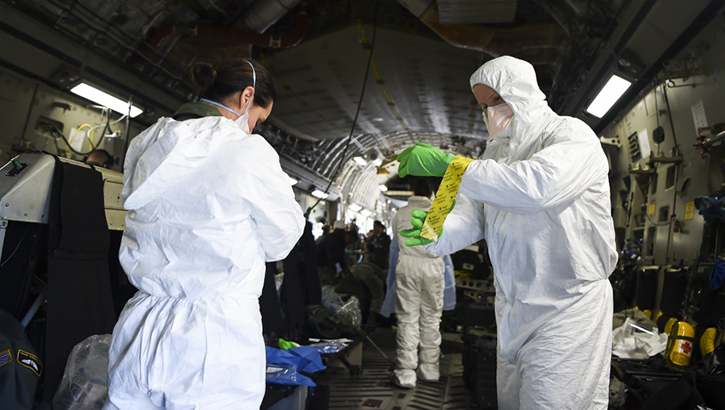
The coronavirus outbreak continues to spread – rapidly. Yesterday’s update from the Washington Post is worth citing:
A northwest Oregon resident has tested positive for coronavirus with no known history of travel to countries severely affected by the outbreak and no known contact with infected individuals, state health officials said Friday.
The case, in Washington County, marks the third case of unknown origin in the United States and indicates that the virus is spreading. It is also the first coronavirus case in Oregon …
Earlier Friday, health officials in Santa Clara County, Calif., said a 65-year-old resident also had a case of coronavirus with unknown origin – becoming the second U.S. case of community transmission. The nation’s first community-transmission patient was a woman in Solano County, about 90 miles away.
The World Health Organization on Friday raised its risk assessment of the coronavirus to “very high,” citing the risk of spread and impact. WHO officials said their assessment – the highest level short of declaring a global pandemic – doesn’t change the approach countries should take to combat the virus but should serve as a “wake up” and “reality check” for countries to hurry their preparations.
The U.S. stock market fell for the seventh straight day amid fears of global economic damage from the escalating outbreak, and the Federal Reserve took the unusual step of issuing a statement to reassure Americans.
“The fundamentals of the U.S. economy remain strong. However, the coronavirus poses evolving risks to economic activity,” Fed Chair Jerome H. Powell said. “The Fed is closely monitoring developments and their implications for the economic outlook. We will use our tools and act as appropriate to support the economy.”
It is sobering to realize that despite all our modern medical advances and all our yeoman’s efforts at containment, the world still stands relatively defenseless against a virus that carries with it a startling mortality rate of, at present, 2.3% – a rate that far outpaces the mortality rate of the seasonal flu, which sits at around .1%.
This past Wednesday, the Christian Church began its observance of the liturgical season of Lent, which kicked off with Ash Wednesday. In churches across the world, the words God once spoke to Adam after he fell into sin were repeated to the faithful: “Dust you are and to dust you will return” (Genesis 3:19). These grim words are meant to call us to reflect on our own mortality. Death is inescapable. The mortality rate associated with the coronavirus may be at 2.3%. The mortality rate of humanity itself sits at 100%. As President Kennedy said in a famous speech at American University in 1963, “We are all mortal.” Our problem, it turns out, is bigger than any virus. Our problem is our very selves.
I am deeply grateful that scientists and medical professionals across the world are working tirelessly to quickly identify, contain, and develop a vaccine against the deadly coronavirus. I am thankful that governments are taking the needed – and often ambitious – steps to combat the virus’s spread. But the coronavirus epidemic should serve as yet another reminder of just how fragile life really is. The culmination of Lent into Easter, however, is a promise of just how powerful Jesus’ life really was. A deadly disease is just no match for an empty tomb. And in a world where the headlines smack of death, that’s the kind of life we need.
Baseball Scandals and Echo Chambers

Credit: Erik Drost / Wikipedia
It’s the biggest shakeup Major League Baseball has faced since the steroid scandal of the 90s. The Astros coming up with an elaborate system to steal opposing teams’ pitching signs got them all the way to the World Series, but it cost them their reputation and has left their franchise in shambles. Commissioner Rob Manfred’s comments strike me as especially insightful as their scheme continues to unravel:
The culture of the baseball operations department, manifesting itself in the way its employees are treated, its relations with other Clubs, and its relations with the media and external stakeholders, has been very problematic. At least in my view, the baseball operations department’s insular culture – one that valued and rewarded results over other considerations, combined with a staff of individuals who often lacked direction or sufficient oversight, led, at least in part, to…an environment that allowed the conduct described in this report to have occurred.
Mr. Manfred’s point is critical. Not only can people justify their own questionable actions, they can justify each other’s if the payoff feels high enough. This can create an echo chamber where, if one were to look from the outside in at what was happening, the problems would be obvious, but, from the inside, the compromises seem merely logical and at worst paltry. The Astros February 13 press conference, which was long on excuses and finger pointing and short on apologies, demonstrated just how easy it can be to convince ourselves of our own rightness even when everyone around us is shouting, “Wrong!”
The apostle John once wrote: “If we claim to be without sin, we deceive ourselves and the truth is not in us” (1 John 1:8). The plural pronouns here are important. Not only can one person deceive him or her self about his or her personal sin, we can, together, John says, deceive ourselves about our corporate sin. This is why one of the fundamental assertions of Christianity is that we need someone outside of ourselves to tell us the truth about ourselves.
Theologians will speak of how salvation works extra nos – Latin for “outside ourselves.” We do not – indeed, we cannot – save ourselves. Christ must come in from the outside and do the work of salvation for us. The inverse of this is another Latin phrase, this one conceptualized by the church father Augustine: incurvitas in se, which means, “turned in on oneself.” This is the essential nature of sin. Sin draws us further and further into ourselves – our excuses, our half-truths, and our pathetic justifications. Christianity beckons us to turn from ourselves and toward Christ.
The crisis with the Astros Club does not just point to a problem with baseball, but to a larger broken condition in humanity. The question we must ask ourselves is this: where are we tempted to look to ourselves, rather than to Christ, to deal with our sin? When are we tempted to conceal, instead of to confess, where we have done wrong? The more we rely on ourselves to fix ourselves, the more damage we do to ourselves.
So, unlike the Astros, let’s not believe our own press. Instead let us press in to the One who is God’s Son.
Disagreement and Division

Credit: Michael Krause / Pixabay
In his book Love Your Enemies, Arthur Brooks argues for the often-overlooked value in disagreement using a template drawn from Aristotle’s Nicomachean Ethics:
Aristotle wrote that there were three kinds of friendship: The first and lowest form of friendship is based on utility, wherein both people derive some benefit from each other … The next level of friendship for Aristotle is based on pleasure; both people are drawn to each other’s wit, intelligence, talent, good looks, or other attractive qualities … The highest form of friendship – the “perfect friendship” in Aristotle’s telling – is based on willing the good of the other and a shared sense of what is virtuous and true.
In the first two levels of friendship, Brooks explains, we carefully avoid disagreeing, because we don’t want to lose whatever it is we’re gaining from the other person. In the third level of friendship, conversely, we heartily engage in disagreement because we want what’s best for the other person, and, if they are heading down a path that is harmful or unhealthy, we are not afraid to call it out. In other words, disagreement can be helpful because disagreement can be revealing. Disagreement can be refining.
Disagreement can be good. Division, however, is something quite different.
In his letter to the church at Corinth, the apostle Paul practically begs his readers not to fall prey to division:
I appeal to you, brothers and sisters, in the name of our Lord Jesus Christ, that all of you agree with one another in what you say and that there be no divisions among you, but that you be perfectly united in mind and thought. (1 Corinthians 1:10)
The Corinthians were divided over a whole host of things, including which spiritual leader they liked the most:
One of you says, “I follow Paul”; another, “I follow Apollos”; another, “I follow Cephas”; still another, “I follow Christ.” (1 Corinthians 1:12)
For Paul’s part, he finds the notion of division dangerous, asking, “Is Christ divided” (1 Corinthians 1:13)?
This past week, the deep political divisions that have long plagued our nation reared their heads in obvious and astounding ways. When the Speaker of the House, Nancy Pelosi, tore up her copy of the State of the Union address the President had handed her at the beginning of his speech, she – even if inappropriately – perhaps unintentionally acted out physically a deeper relational reality in our nation. There are certain groups of people who cannot stand – and indeed hate – other groups of people. There are parts of us that are torn apart.
I will not pretend that I can even begin to fix the partisan hatred that ails us. But it is worth reminding ourselves that, for those of us who bear Christ’s name, even if we can’t fix our world’s divisions, we can model a holy communion.
A holy communion does not just arise when we all agree with each other. Instead, it is also forged in how we disagree with each other. Do we truly listen to what a person is saying, or do we quickly move to caricature their comments? Do we assume the best in each other rather than the worst? Do we celebrate places of agreement, even as we hash out points of disagreement? And, most importantly, is our love for someone contingent on their agreement with us, or does it flow from the grace that God has first given us? If we disagree without love, we are left only with sore division. If we disagree with love, we can retain devotion to each other even as we dispute with each other. If we disagree with love, we can keep and reach people, even as we question their opinions and positions. And this is not just a way to avoid division. This is the Church’s very mission. May we carry it out faithfully by God’s grace and under His guidance.
The Coronavirus: Serving Our Sick Neighbors

Credit: Wikipedia
It’s spreading so quickly. What started as a little-known virus, infecting a group of people in Wuhan in eastern China, is now spreading across the world. The World Health Organization has declared the coronavirus a global health emergency. The United States has issued a Level 4 travel advisory, its highest alert, against travel to China.
Part of what makes the coronavirus so frightening is the unknowns associated with it. A live map that tracks the virus shows over 17,000 confirmed cases of the virus. Almost over 500 people have recovered from the virus while over 350 have, sadly, died. This leaves over 16,000 people who are still sick and whose fates we are still awaiting. Doctors are also not sure precisely how the virus can spread. Can it spread before symptoms appear? The jury is still out. There are some reports that the virus can enter a body through simply rubbing one’s eyes if a person has picked up a trace of the virus on their hands.
In the midst of much fear, one of the things we can be thankful for are doctors who go into harms’ way to care for patients. This kind of care has not always, historically, been how society has reacted to sicknesses. In his book The Triumph of Christianity, Rodney Stark quotes the Christian bishop Dionysius of Alexandria, who describes how many people reacted when a smallpox epidemic swept through the Roman Empire in the third century:
At the first onset of the disease, people pushed the sufferers away and fled from their dearest, throwing them into the roads before they were dead and treated unburied corpses as dirt, hoping thereby to avert the spread and contagion of the fatal disease.
Dionysius goes on explain that the response of Christians to this epidemic was quite different:
Most of our brothers showed unbounded love and loyalty, never sparing themselves and thinking only of one another. Heedless of danger, they took charge of the sick, attending to their every need and ministering to them in Christ, and with them departed this life serenely happy; for they were infected by others with the disease, drawing on themselves the sickness of their neighbors and cheerfully accepting their pains.
It is this uniquely Christian spirit and legacy of caring for the sick, instead of leaving them to die, that endures across much of the world even today.
In 1527, the bubonic plague arrived in Wittenberg Germany, where a monk named Martin Luther was teaching. He chose to stay in Wittenberg and provide care for the sick, during which time he wrote a tract: Whether One May Flee from a Deadly Plague. Luther encouraged people not take unnecessary risks during epidemics, writing:
Examples in Holy Scripture abundantly prove that to flee from death is not wrong in itself. Use medicine; take potions which can help you; fumigate house, yard, and street; shun persons and places wherever your neighbor does not need your presence or has recovered, and act like a man who wants to help put out the burning city.
And yet, even as Luther encouraged people to take every available precaution to prevent the spread of a disease, he did not encourage them to do so at the expense of those who were suffering, even if helping the suffering endangered their own lives:
It is the devil who…takes delight in making us deathly afraid, worried, and apprehensive so that we should regard dying as horrible and have no rest or peace all through our life. And so the devil would excrete us out of this life as he tries to make us despair of God, become unwilling and unprepared to die, and, under the stormy and dark sky of fear and anxiety, make us forget and lose Christ, our light and life, and desert our neighbor in his troubles.
Luther goes on to explain why, if we find ourselves in a position to help during a plague, we should defy the fears the devil plants in us:
If Christ shed His blood for me and died for me, why should I not expose myself to some small dangers for His sake and disregard this feeble plague? If you can terrorize, Christ can strengthen me. If you can kill, Christ can give life. If you have poison in your fangs, Christ has far greater medicine. Should not my dear Christ, with His precepts, His kindness, and all His encouragement, be more important in my spirit than you, roguish devil, with your false terrors in my weak flesh? God forbid! Get away, devil. Here is Christ and here am I, His servant in this work. Let Christ prevail! Amen.
Amen, indeed.
And so today, while nations across the world continue to take precautions to prevent the spread of the coronavirus, I give thanks for the medical professionals who are taking great risks to care for those who are dangerously ill. These professionals are serving their neighbors – both those neighbors who are sick and those neighbors who will not get sick, thanks to their work.
May their love and care do much good for our world.
Kobe Bryant: 1978-2020

Credit: Alexandra Walt / Flickr
When my wife said to me from the other room, “Kobe Bryant is dead?!” I thought at first she had been taken in by another one of those celebrity death hoaxes that sometimes make their rounds on social media. But she hadn’t. The news was true. The loss was real.
As the story of Kobe’s untimely death began to sink in, my first thought was, “He was my age.” He was born a mere two weeks before me. Then when I learned that his daughter was with him on the helicopter flight that crashed and took their lives, this tragedy felt even worse. Kobe leaves behind his wife and three other daughters. I cannot imagine the pain they must be experiencing right now.
As the news played a never-ending loop of Kobe Bryant highlights, reporters interviewed fellow stars who were memorializing him and fans who were crying over him. The death of a household name like Kobe Bryant – especially under the fluke circumstances of a terrible crash – brings into sharp focus something so many of us are generally loathe to consider: the stark and dark reality of death.
As a nation grapples with the loss of one of its biggest stars, there is an ancient perspective on death – the Christian perspective on death – that is worth our reflection, for, I believe, it can be a source of hope. So, here are three Christian claims about death.
Death is unnatural.
Contrary to what Forrest Gump’s momma told him, dying is not just a part of life. There’s a reason that, when someone dies, tears flow, questions of “why” are asked, and anger at a life-gone-too-soon ensues. It’s because we can feel that there is something profoundly unnatural about death.
The Christian faith teaches that this feeling about death is nothing less than a good theology of death. Death is the result of and the punishment for sin. It is not, however, part of God’s creative design. It was introduced only after Adam and Eve disobeyed God. This is why the apostle Paul calls death an “enemy” (1 Corinthians 15:26).
So, if you ever find yourself mourning a death, don’t feel as though you must feel that death is natural. It’s not. Your tears can flow, your questions can be asked, and you can shake your fist at what has taken your loved one from you.
Death is inevitable.
Death may not be natural, but it is inevitable. Part of what makes a passing like Kobe Bryant’s so shocking and tragic is because he was a man who seemed invincible. A sports columnist for the Los Angeles Times, Bill Plaschke, eulogized the basketball great this way:
Bryant, 41, and his 13-year-old daughter, Gianna, were among nine people who died in a helicopter crash Sunday in Calabasas and how does that happen? Kobe is stronger than any helicopter. He didn’t even need a helicopter. For 20 years he flew into greatness while carrying a breathless city with him.
This can’t be true.
This is the way Kobe seemed – stronger than any helicopter. And yet, life’s fragility – and death’s inevitability – have coldly slapped a culture that treats its sports stars as invincible in its face.
The 17th century English poet John Donne wrote a poem in 1624 about a bout he had with spotted fever. While in the throes of his sickness, Donne heard the bells of a nearby church ringing at a funeral. He opined:
No man is an island,
Entire of itself.
Each is a piece of the continent,
A part of the main.
If a clod be washed away by the sea,
Europe is the less.
As well as if a promontory were.
As well as if a manor of thine own
Or of thine friend’s were.
Each man’s death diminishes me,
For I am involved in mankind.
Therefore, send not to know
For whom the bell tolls,
It tolls for thee.
Donne knew that even if he survived this sickness, he would not survive every sickness. One day, the bell would toll for him. Indeed, one day, the bell will toll for us all – no matter how strong, how rich, how famous, how moral, how respected, or how invincible we are.
It is maddening. But it is true. Death is inevitable.
Death is destroyable.
The first claim of Christianity – that death is unnatural – we feel. The second claim of Christianity – that death is inevitable – we can empirically verify, for we all die. This final claim of Christianity – that death is destroyable – is one that calls for faith.
On its face, death does not seem destroyable. It seems only to destroy us. And yet, Christianity claims that there was once a man who was destroyed by death on cross who managed to return the favor to death when He rose again three days later, destroying death. And because He destroyed death for Himself, Christianity claims that He can also destroy death for us. For just as He once emptied His grave, He will one day empty our graves. As the apostle Paul explains:
Listen, I tell you a mystery: We will not all sleep, but we will all be changed – in a flash, in the twinkling of an eye, at the last trumpet. For the trumpet will sound, the dead will be raised imperishable, and we will be changed. For the perishable must clothe itself with the imperishable, and the mortal with immortality. When the perishable has been clothed with the imperishable, and the mortal with immortality, then the saying that is written will come true: “Death has been swallowed up in victory.” (1 Corinthians 15:51-54)
Death is destroyable, Paul says.
The same poet who once reflected on the inevitability of his own death also wrote a sonnet about his hope for life. John Donne called it “Death Be Not Proud”:
Death, be not proud, though some have called thee
Mighty and dreadful, for thou art not so;
For those whom thou think’st thou dost overthrow
Die not, poor Death, nor yet canst thou kill me.
From rest and sleep, which but thy pictures be,
Much pleasure; then from thee much more must flow,
And soonest our best men with thee do go,
Rest of their bones, and soul’s delivery.
Thou art slave to fate, chance, kings, and desperate men,
And dost with poison, war, and sickness dwell,
And poppy or charms can make us sleep as well
And better than thy stroke; why swell’st thou then?
One short sleep past, we wake eternally
And death shall be no more; Death, thou shalt die.
When death takes a life, John Donne reminds us, it “swell’st thou.” It swells with pride that it has separated another family, brought on more tears, and broken more hearts. But even if death is stronger than us, it is not stronger than the One who once called Himself “the life” (John 14:6). And because of His life, we can have life, too – eternal life.
Kobe Bryant has died. But death should not be proud. Because Kobe’s death is not the last word on his life. For this much I know:
Death, thou shalt die.
May it be so quickly.
Thoughts on the Iran Conflict
Credit: Borna Ghassemi
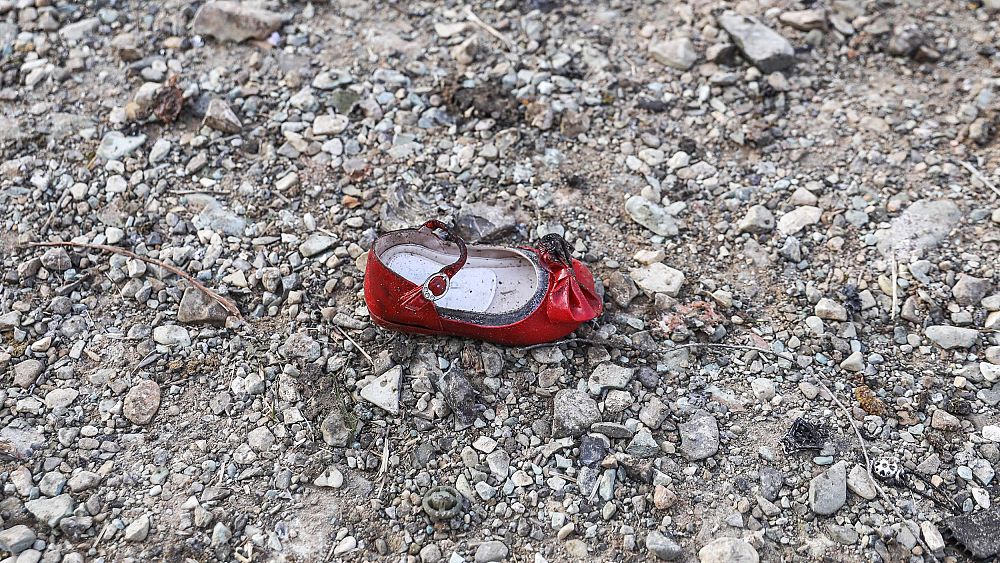
It’s been a hard week on the world stage. At the beginning of this year, U.S. forces attacked and killed Iranian general Qasem Soleimani, a man who the Pentagon says was “responsible for the deaths of hundreds of American and coalition service members and the wounding of thousands more” and “was actively developing plans to attack American diplomates and service members in Iraq and throughout the region.” Iran retaliated by launching a barrage of more the 20 missiles at two large military bases in Iraq, which, according to a statement from President Trump, did not, thankfully, kill any U.S. service members. Sadly, it has now become clear that even though the attacks on the bases did not kill any Americans, a rogue missile, launched during this attack, did accidentally down a Ukranian passenger jet, killing 176 people, many of whom were part of a wedding party from Canada. The picture above of a child’s shoe gives perhaps the most heart wrenching glimpse into the true scope of this tragedy. So-called “collateral damage” from Iran’s attack was not just damage – it was death.
One of the most roundly condemned sins in the Scriptures is the shedding of “innocent blood.” Innocent blood was shed by General Soleimani through his terrorist activities. Innocent blood was shed on this passenger flight, even if inadvertently, by Iranian forces. And now, the hearts of many families who have lost loved ones are breaking. So, at the same time we can give thanks that a full-fledged conflict has not broken out, we should also mourn with the grieving. They are the reasons we should continue to, in the words of the Psalmist, “seek peace and pursue it” (Psalm 34:14). By God’s grace, may we be successful in our search.


 Pastor Zach's Blog