Posts filed under ‘Current Trends’
The State Of Our Public Debate: Same-Sex Marriage As A Test Case
 When the Facebook page of the Human Rights Campaign changed their profile picture to a red and pink equal sign on March 25 in anticipation of the Supreme Court hearing cases on the constitutionality of Proposition 8, which prohibits same-sex marriage in California, and the Defense of Marriage Act, which restricts federal marriage benefits to only opposite sex marriages, the response of many in the Facebook universe was nearly instantaneous. By the time the Supreme Court was listening to arguments for and against Proposition 8 the next day, roughly 2.7 million people had changed their profile pictures to the red and pink equal sign.[1]
Welcome to the way we debate and discuss watershed issues in the digital age. We post a profile picture.
As I have watched the national debate over same-sex marriage unfold, I have been struck by the daftness of so many of the arguments concerning such a monumental issue. As a Christian, I have grave theological and moral concerns with same-sex marriage, but others have registered cogent concerns with same-sex marriage quite apart from the traditional moorings of biblical Christianity. For instance, in their book What Is Marriage? Man and Woman: A Defense, Sherif Girgis, Ryan Anderson, and Robert George offer an excellent argument for traditional or, as they call it, conjugal marriage over and against a revisionist view of marriage. The heart of their argument is this:
If the law defines marriage to include same-sex partners, many will come to misunderstand marriage. They will not see it as essentially comprehensive, or thus (among other things) as ordered to procreation and family life – but as essentially an emotional union…If marriage is centrally an emotional union, rather than one inherently ordered to family life, it becomes much harder to show why the state should concern itself with marriage any more than with friendship. Why involve the state in what amounts to the legal regulation of tenderness?[2]
The authors’ argument is simple, yet brilliant. Those who argue for same-sex marriage seem to define marriage based strictly on affection. But there are many relationships that are affectionate, such as friendships, and yet are not state-regulated. So marriage must be something more than simple affection. But what more is it? This is a question that proponents of same-sex marriage have a difficult time answering with any uniformity.
Sadly, the work of these authors has not been well received or responded to. Ryan Anderson, appearing on the Piers Morgan Show to explain the arguments of his book, was attacked by Suze Orman who dismissed him as “very, very uneducated in how it really, really works.”[3] Considering that Anderson is a fellow at the Heritage Foundation who received his degree from Princeton and is currently working on a Ph.D. from the University of Notre Dame, I find it hard to believe that he is “very, very uneducated.”
In another example of supporters of traditional marriage being flippantly dismissed, Kevin Drum of Mother Jones took Ross Douthat of the New York Times to task for daring to suggest that an orientation toward procreation ought to be part of the definition of what constitutes a marriage:
It was opponents [of same-sex marriage], after realizing that Old Testament jeremiads weren’t cutting it any more, who began claiming that SSM should remain banned because gays couldn’t have children. This turned out to be both a tactical and strategic disaster, partly because the argument was so transparently silly (what about old people? what about women who had hysterectomies? etc.) and partly because it suggested that SSM opponents didn’t have any better arguments to offer. But disaster or not, they’re the ones responsible for making this into a cornerstone of the anti-SSM debates in the aughts.[4]
In his response, Douthat questions Drum’s account of the origin of the procreation argument for traditional marriage:
If gay marriage opponents had essentially invented a procreative foundation for marriage in order to justify opposing same-sex wedlock, it would indeed be telling evidence of a movement groping for reasons to justify its bigotry. But of course that essential connection was assumed in Western law and culture long before gay marriage emerged as a controversy or a cause. You don’t have to look very hard to find quotes…from jurists, scholars, anthropologists and others, writing in historical contexts entirely removed from the gay marriage debate, making the case that “the first purpose of matrimony, by the laws of nature and society, is procreation” (that’s a California Supreme Court ruling in 1859), describing the institution of marriage as one “founded in nature, but modified by civil society: the one directing man to continue and multiply his species, the other prescribing the manner in which that natural impulse must be confined and regulated” (that’s William Blackstone), and acknowledging that “it is through children alone that sexual relations become important to society, and worthy to be taken cognizance of by a legal institution” (that’s the well-known reactionary Bertrand Russell).
Douthat ends his response to Drum with a brilliant one-liner: “Once you’ve rewritten the past to make your opponents look worse, then you’re well on your way to justifying writing them out of the future entirely.”[5]
This line, more than any I have read in a long time, encapsulates the problem with our public debates – not just over same-sex marriage, but over many controversial issues. No longer are people interested in debating a big issue with the kind of intellectual rigor or careful thought such issues deserve. Instead, we change our Facebook profiles to an equal sign. Or we ridicule a Notre Dame Ph.D. candidate as “uneducated.” Or we make patently false claims about the historical origins of our opponents’ arguments. We try to write our opponents out of the future entirely.
We, it seems, are much less interested in intelligently discussing and debating an issue and much more interested in asserting our will on an issue. We no longer care whether or not we arrive at the right position on an issue as long as others bow to our position on an issue. And, lest I be accused of intimating that only proponents of same-sex marriage engage in such dubious debate tactics, let me be clear that I have seen opponents of same-sex marriage pull these same kinds of sorry tricks. After all, they’re on Facebook too. They host cable news shows too. They write less than thoughtful columns too.
The nihilist Nietzsche seemed to take special delight in laying bare the basest corners of human nature. In his seminal work Beyond Good and Evil, he summarizes his thoughts on the heart of humanity: “A living thing seeks above all to discharge its strength – life itself is Will to Power.” Nietzsche purported that people, at their cores, desire to assert Machiavellian power over others much more than they ever desire to converse with others. This is why Nietzsche saw “slavery in some sense or other”[6] as necessary to human advancement. Those who are strong must assert their wills over those who are weak.
As I have watched the debate over same-sex marriage unfold, I have become worried that Nietzsche just might be right. In this debate, winning against the other side has become more important than discussing and reasoning with the other side to arrive at the right side. And because of that, I can’t help but think that, no matter who wins, we might just all lose.
[1] Alexis Kleinman, “How The Red Equal Sign Took Over Facebook, According To Facebook’s Own Data,” The Huffington Post (3.29.2013).
[2] Sherif Girgis, Ryan Anderson & Robert George, What Is Marriage? Man and Woman: A Defense (New York: Encounter Books, 2012), 7, 16.
[3] Jamie Weinstein, “Fresh off his Piers Morgan confrontation, Ryan Anderson explains his ‘un-American’ views on marriage,” The Daily Caller (3.30.2013).
[4] Kevin Drum, “The Gay Marriage Debate Probably Hasn’t Affected Straight Marriage Much,” Mother Jones (3.31.2013).
[5] Ross Douthat, “Marriage, Procreation and Historical Amnesia,” The New York Times (4.2.2013).
[6] Friedrich Nietzsche, Beyond Good and Evil (New York: The Macmillan Company, 1907), 20, 223.
The Price of Shame
 I’m not sure the framers of the sexual revolution of the 1960’s ever envisioned this. What they dreamed of was the freedom to sexually express themselves without having to answer to what they thought were the stifling restraints of a traditional – and, in their view, outdated – sexual ethic. What they wound up sowing, however, were the seamy seeds of sexual objectification and oppression among subsequent generations.
Cole Moreton, in his article for The Telegraph titled “Children and the Culture of Pornography,”[1] offers a disturbing peek inside a generation who has managed to shake itself free of the moral manacles which once guided the intimate encounters of yesteryear. I must warn you: the frank tone of his article is not for the faint of heart. He opens with the story of a thirteen-year-old girl named Chevonea. A boy had pressured her into performing a sex act on him, which he recorded with his cell phone’s camera and subsequently showed to all his buddies. Chevonea threatened to a jump from a window if he did not delete the recording. But before she could have second thoughts about her desperate threat, she slipped and fell sixty feet to her death. Chevonea’s story is nauseating. But her tale is, devastatingly, one among many spawned by a culture gone sexually mad.
The majority of Moreton’s article discusses the ease of access to pornography and how it distorts our children’s view of themselves and others. Indeed, many of our young people have gone from consuming these illicit materials to creating them with nothing more than the video recorders on their phones, as in Chevonea’s case. And many of the children who home grow these pornographic videos aren’t even teenagers yet.
So what are the consequences of growing up in such a so-called “sexually liberated” culture? Moreton explains the effects are especially severe on girls: “Sexual pressure can cause girls to contemplate suicide, self-harm, develop eating disorders, or try to lose themselves in drugs or alcohol.” For a movement that began as one of liberation, this hardly sounds like freedom to me.
The Scriptures remind us that sexual freedom can only be truly found within the context of sexual commitment. God’s created order for intimacy rings as true today as it ever has: “Therefore a man shall leave his father and his mother and hold fast to his wife, and they shall become one flesh” (Genesis 2:24). God sets a clear pattern: sexual intimacy which results in the joining of two fleshes into one is to take place only after a man is willing to “hold fast to” (i.e., commit to, or marry) his wife. Such commitment, in turn, results in true freedom: “And the man and his wife were both naked and were not ashamed” (Genesis 2:25).
As I read those final words from Genesis 2, I can’t help but think of Chevonea and the overwhelming shame she must have felt after a pushy boy devastated her dignity and betrayed whatever little trust she may have had in him by flaunting a sickly conceived video. This young man may have used his sexually liberated sensibilities to pressure a young girl to engage in acts completely outside the bounds of common decency, but such sexual freedom turned out to be nothing more than a Trojan horse in which were hidden the stifling shackles of shame.
Ultimately, when it comes to our sexual behavior, we must answer a fundamental question: To what do we want to be beholden? Because we will be beholden to something. We will either be beholden to the slavery of shame that masquerades as sexual liberation or we will be beholden to the constraints of divine law which free us to live without shame because we are within the comforting assurances of God’s will.
I know which one sounds better to me. Which one sounds better to you?
[1] Cole Moreton, “Children and the culture of pornography: ‘Boys will ask you every day until you say yes,’” The Telegraph (1.27.2013).
Sacrificing the Wrong Lives
 It was an article that took my breath away. Yes, I’ve read many an article arguing for “a woman’s right to choose.” Yes, I’ve heard the cries from Planned Parenthood, insisting that a woman’s “reproductive rights” be maintained. But this article did not invoke any of the more traditional language wielded by abortion proponents, except to criticize it. Writing for Slate Magazine, Mary Elizabeth Williams opens her article analyzing the state of the abortion debate thusly:
While opponents of abortion eagerly describe themselves as “pro-life,” the rest of us have had to scramble around with not nearly as big-ticket words like “choice” and “reproductive freedom.” The “life” conversation is often too thorny to even broach. Yet I know that throughout my own pregnancies, I never wavered for a moment in the belief that I was carrying a human life inside of me. I believe that’s what a fetus is: a human life. And that doesn’t make me one iota less solidly pro-choice.[1]
Mary Elizabeth Williams is bold enough to write what so many people have suspected for so long: there is no way around the fact that a fetus is a life. Abortion, then, by logical default, ends a life. Williams, in contradistinction to many other abortion advocates, is willing to admit this. But this does not temper her view on whether or not abortion should be legal and widely available:
Here’s the complicated reality in which we live: All life is not equal. That’s a difficult thing for liberals like me to talk about, lest we wind up looking like death-panel-loving, kill-your-grandma-and-your-precious-baby storm troopers. Yet a fetus can be a human life without having the same rights as the woman in whose body it resides. She’s the boss. Her life and what is right for her circumstances and her health should automatically trump the rights of the non-autonomous entity inside of her. Always.
Williams is willing to cede the argument on whether or not a fetus is a life. She admits it is. But that does not matter. It may be a life, but it is a life that can be extinguished at the will and whim of the woman who carries the fetus.
Such a crassly genocidal view of abortion is new, even for its advocates. Margaret Sanger, the very founder of Planned Parenthood, would have winced at this kind of notion:
We explained what contraception was; that abortion was the wrong way no matter how early it was performed it was taking life; that contraception was the better way, the safer way – it took a little time, a little trouble, but was well worth while in the long run, because life had not yet begun.[2]
Margaret Sanger, though she certainly paved the way for abortion’s modern-day legality, availability, and promotion, promoted contraception over abortion, at least publicly, because abortion ended life. Until now, pro-choice advocates have been largely unwilling to engage the question “Is the fetus a life or not?” and instead focus on a woman’s “right to choose” because many abortion advocates would be loath to talk about ending a life. No longer. Williams is perfectly willing to speak of a fetus as a life. And she’s perfectly willing to talk about ending it. As she concludes in her article, “I would put the life of a mother over the life of a fetus every single time – even if I still need to acknowledge my conviction that the fetus is indeed a life. A life worth sacrificing.”
In the face of words like Williams’, words from the prophet Jeremiah come to mind:
This is what the LORD says: “A voice is heard in Ramah, mourning and great weeping, Rachel weeping for her children and refusing to be comforted, because her children are no more.” (Jeremiah 31:35)
May we weep with Rachel at the children who are no more. They were not lives worth sacrificing. The life worth sacrificing has already been sacrificed.
[1] Mary Elizabeth Williams, “So What if Abortion Ends a Life?” Slate Magazine (1.23.13). NB: The link posted in the title Williams’ article takes you to Google’s cached version. The most inflammatory of Williams’ statements have since been removed. The current version of the article can be found here.
[2] Margaret Sanger, Margaret Sanger, An Autobiography (New York: W. W. Norton, 1938), 217.
A Minute Of Your Time
 How much is a minute worth? If you ask Volkswagen of America, it’s worth close to $10 million. At least if it’s a minute during the Super Bowl. In an article for USA Today, Bruce Horovitz writes about the high price – and high stakes – world of commercial advertising during the Super Bowl:
Few moments of public pressure compare to that of airing a Super Bowl commercial. Not only will it be watched by more than 110 million consumers, the social-media buzz before, during and after the game can generate tens of millions of additional views. Thirty-some advertisers – from veteran Anheuser-Busch InBev to newcomer SodaStream – will air 50-some commercials in Super Bowl airtime that cost them roughly $3.8 million per 30-second slot. That’s a record average price for Super Bowl slots.
It’s the most expensive media money can buy.[1]
If you want 30 seconds, it’ll cost you $3.8 million. 60 seconds will cost you more than twice that. Justin Osborne, general manager of marketing communications at VW, says of such an outlandish price, “If I put this in financial terms, it would give me hives. I can’t look at the zeros.”
Benjamin Franklin once said, “Time is money.” If you quoted Franklin’s axiomatic aphorism to a Super Bowl advertiser, I suspect he might respond with a hearty “Amen.” Of course, these advertisers are hoping that time is not only money spent, but that it is money made. This is why these advertisers are willing to pay such haranguingly hearty prices for airtime. After all, with hundreds of millions of people expected to watch the big game, some of them are bound to put their money into the companies, products, and services they see in the commercials. Right?
Macdonald Carey used to say during the opening sequence of the famed soap opera, “Like sands through the hour glass, so are the days of our lives.” It’s true. For the most part, our seconds, minutes, days, weeks, months, and sometimes even years slip past us with barely a notice – certainly not a Super-Bowl-sized-notice worthy of $10 million. But perhaps the time that all too often slips by us is worth more than we realize. For, as Scripture reminds us, time is a precious gift from God, not to be unthinkingly frittered away: “Teach us to number our days aright, that we may gain a heart of wisdom” (Psalm 90:12).
The other day, I attended an excellent presentation by the former publisher for the LA Times. As part of his presentation, he cited a poem by Benjamin Mays, mentor to Martin Luther King Jr. and former president of Morehouse College:
I have only just a minute. Only sixty seconds in it.
Forced upon me. Didn’t seek it, didn’t choose it,
But it’s up to me to use it.
I must suffer if I lose it. Give account if I abuse it.
Just a tiny little minute – But eternity is in it.
Every minute is precious. Every minute is a gift from God. How will you use yours?
[1] Bruce Horovitz, “Inside the making of VW’s Super Bowl ad,” USA Today (1.29.13).
Worst Funeral Ever
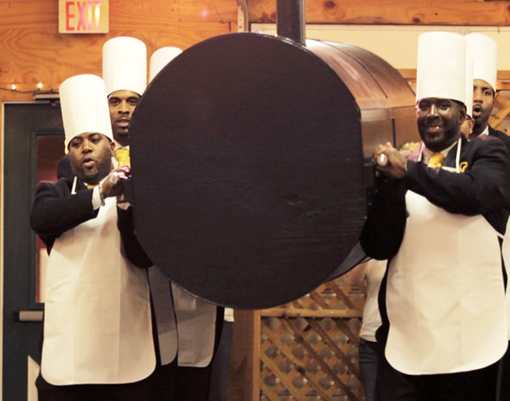 It started with MTV’s “The Real World.” And ever since, television has never been the same. So-called “reality TV” has become a staple of both cable and network prime time lineups. It used to be “Big Brother,” “Survivor,” “The Bachelor,” and “Fear Factor.” Then came reality talent competitions like “American Idol” and “Dancing with the Stars.” These days, shows like “The Biggest Loser” and “The Voice” top the ratings. And now, new to the reality TV field is the surprise hit … “Best Funeral Ever”?
I wish I was making this up, but I’m not. TLC’s newest reality show features over-the-top funerals directed by the over-the-top Golden Gate funeral home in Dallas. The funeral home’s motto describes its philosophy: “You may be in a casket, but it can still be fantastic.” So far, the show has featured a Christmas-themed funeral complete with a mourner dressed as a snowman as well as a funeral for the singer of the Chili’s Baby Back Ribs jingle, Willie McCoy, which boasted a barbeque sauce fountain, ribs for the guests, live pigs, and a coffin shaped like a smoker.
The garishness of these funerals may provide a ratings boost for “Best Funeral Ever,” but its irreverence also invokes deep discomfort. Clinton Yates of the Washington Post lamented, “TLC’s exploitation of how families mourn their dead is shameful in an era in which we can barely focus on keeping each other alive.”[1] Turning mourning into a spectacle just doesn’t seem right.
Of course, there is a reason turning mourning into a spectacle doesn’t seem right. It doesn’t seem right because it isn’t right. Death and the mourning that it brings is an indicator of something gone terribly wrong and tragically awry. This is why death is referred to in the Bible as an “enemy to be destroyed” (1 Corinthians 15:26). Death is no joking matter.
The ancients were well aware of the gravity of death. After all, it was all around them. In first century Rome, the average life expectancy was a mere twenty years. And the Romans hated this. This is why when a person died, he was taken outside the city to be buried. This is why a Roman law mandated, “No body be buried or cremated inside the city.” People did not want to be near death. They did not want to confront the mortality that surrounded them.
But then, something changed. Rather than burying the dead far away from the living, cemeteries began to become a part of the local landscape. As Christians began to build houses of worship, many cemeteries were plotted directly on church grounds. To worship the living God, you would have to walk through the valley of the shadow of death. In our day, we might find this unsettling. But for many early Christians, such a move was intentional. For these Christians believed that death was not only an enemy to be destroyed, but an enemy that would be destroyed. These Christians believed the somber scene of the cemetery was only temporary. Indeed, even the word “cemetery” is from the Greek word for “dormitory” – a place where one dwells only for a time. These cemeteries, then, were not tragically permanent dwellings, but only provisional dormitories. One day, the people buried in them would move out and move on to be with the Lord at the resurrection of the dead. There was no need to be scared of them.[2]
The tragedy of a show like “Best Funeral Ever” is that it replaces resurrection anticipation with TV tawdriness. Snowmen, barbeque fountains, live pigs, and smoker shaped caskets offer little in the way of true and lasting hope.
As Christians, we know that what a funeral needs is not cheap antics, but an empty tomb. It is there that we find cause for real celebration, for it is there that we find God’s promise of life.
[1] Clinton Yates, “‘Best Funeral Ever’: Most frightening reality TV show to date?” Washington Post (1.7.2013).
[2] For a good discussion of how the Christian hope of the resurrection changed ancient views on death, see John Ortberg, Who Is This Man? The Unpredictable Impact of the Inescapable Jesus (Grand Rapids: Zondervan, 2012), 191.
Moving In Together…Or Whatever You Call It
 “Now that we’ve come to some consensus on same-sex marriage, let’s move on to the next puzzle: what to call two people who act as if they are married but are not.” So begins Elizabeth Weil in her New York Times article, “Unmarried Spouses Have a Way With Words.”[1] Though I suppose I could quibble with whether or not judicial fiat or the vote of some states to legalize same-sex marriage really constitutes a “consensus” on this issue, that is beyond the aim of my thoughts here. No, the aim of my thoughts here is to address Weil’s call for a new vocabulary to address the ever-increasing number of cohabitating couples. Weil explains:
The faux spouse is a pretty ho-hum cultural specimen for such a gaping verbal lacuna. But none of the word choices are good. Everyone agrees that partner sounds awful – too anodyne, empty, cold. Lover may be worse – too sexualized, graphic, one-dimensional. Boyfriend sounds too young. Significant other sounds too ’80s. Special friend or just friend (both favored by the 65-and-over crowd) are just too ridiculous.
When it comes to people who are living together and are playing the roles of husband and wife, albeit without all the cumbrous pledges, but who are not legally or ecclesiologically husband and wife, there is a yawning verbal vacuum. Just what do you call these people?
The twentieth century French philosopher Jacques Derrida famously claimed, “There is nothing outside the text.”[2] Though this famous phrase has been unfairly disparaged and mischaracterized as a wild assertion that nothing exists outside of words in and of themselves, the context of this quote reveals Derrida’s claim to be far more modest. Derrida is countering a Rousseauian view of reality which see words as cracked and foggy lenses that inhibit and blur the experience of reality as it truly is. This is why Rousseau, in his writings, yearns to return to a time before language, for he believes that only in a proto-linguistic and, I might add, ruggedly individualistic society can people experience the fullness of reality.[3]
In contradistinction to Rousseau, Derrida takes a much more positive view of language. In his thinking, there is no such thing as an experience of reality which is somehow free from a person individual’s interpretation of it. Language, Derrida continues, provides the framework for this interpretation and can even provide a good framework to do good interpretations of the human experience. Words, therefore, have incredible formative power over our worldviews because words mediate and amalgamate our encounters and experiences with everything around us.
This leads us back to the vocabulary void that Elizabeth Weil decries. From the perspective of a Christian worldview, the dearth of terms for Weil’s mate that can make Weil feel good about her status and her relationship may perhaps reveal that, when it comes to cohabitation, there is not much to feel good about! For the vocabulary of marriage – terms like “husband,” “wife,” and “spouse” – grew up around marriage precisely because marriage between one man and one woman is a good and God-ordained institution that needed a full, rich, and positive cache of terms to describe it. Cohabitation can make no such claim. Thus, perhaps it is good for us to follow Derrida’s lead and let the vocabulary of one of society’s fundamental institutions inform the reality of our relationships. Perhaps we would do well to leave behind the verbal vacuum of cohabitation behind for the rich vocabulary of marriage. After all, words do matter. And words do shape worldviews. Why do you think Jesus came as the Word?
[1] Elizabeth Weil, “Unmarried Spouses Have a Way With Words,” New York Times (1.4.2013)
[2] Jacques Derrida, Of Grammatology (Baltimore: The John Hopkins University Press, 1997), 158.
[3] See Jean-Jacques Rousseau, “Essay on the Origin of Languages” (1781).
Is Christianity Dying?
 It was quite a byline: “‘Protestant’ is no longer America’s top religious umbrella brand. It’s been rained out by the soaring number of ‘Nones’ – people who claim no faith affiliation.” When Cathy Lynn Grossman, religion editor for USA Today, penned these words for her article, “As Protestants decline, those with no religion gain,”[1] they served as yet another sobering statistical reminder concerning the decline of Christianity in America. More and more people, it seems, are simply not concerned with matters of faith.
But not so fast. At least if you believe Ed Stetzer, president of Lifeway Research, who explains the statistical shift in the “nones” like this:
“Cultural Christians” mark “Christian” on a survey rather than another world religion because they know they are not Hindu, Jewish, etc., or because their family always has. “Churchgoing Christians” identify as such because they occasionally attend worship services. On the other hand, “conversion Christians” claim to have had a faith experience in which they were transformed, resulting in a deeply held belief. The recent growth in “nones,” I believe, comes primarily from cultural and churchgoing Christians shifting to the category no longer using a religious identification.[2]
Stetzer surmises that more and more people are increasingly feeling at liberty to publicly admit what many of them already privately suspected: that Christianity is not a tenable way to view of the world and so there is no reason to be overly concerned with what this faith – or any other faith, for that matter – teaches and preaches. And because there is no longer the social stigma attached to being irreligious that there once was, these people feel comfortable designating their faith commitment as “none.”
So what does all this tell us? I would offer two thoughts on this data.
First, this data is a good reminder that, contrary to the gleeful predilections of naysayers, Christianity is not on the brink of extinction. On April 8, 1966, TIME Magazine famously carried a cover story titled, “Is God Dead?” where eminent theologians opined on the possibility of doing theology without God. Christianity, it seemed to these scholars, was on the decline while secularism was on the rise. The “nones” were on the ascendancy and would shortly squelch the relic religious commitments of the Dark Ages. But those relic religious commitments to a God from ages past stubbornly refused to die. Christianity did not fall flat. And Christianity will not fall flat. As the above statistics intimate and as Ed Stetzer explains, it’s not that Christianity in America is declining per se, it’s that people are becoming more honest about what they actually believe.
Second, this data reminds us that Christianity and culture don’t mix quite as well as some might have previously thought and others might currently wish. The desire to have a culturally Christian nation didn’t work so well in the first century as the nascent Christian Church was belabored and bludgeoned by the Roman Empire and it doesn’t work so well in the twenty-first century in a secular society that disparages and derides the Christian faith. This should not come as a surprise. Christianity and culture will always be at odds with each other, for the perfect law of God and the sinful sensibilities of men can never coalesce.
Ultimately, this tendentious relationship between Christianity and culture should clarify our mission. For all too often, the Christian mission has been reduced and relegated to little more than that of fighting culture wars in hopes of forcibly shaping society. However, such efforts have proven largely futile. Yes, there are times when Christians need to stand up for the truth in society. And no, I do not have any problem with Christians lobbying governing officials on issues of moral import – issues such as abortion or caring for the poor. These things are indeed important. But in order to win on Christian positions, we must first win over people. After all, people hold positions. Positions do not hold people. If you don’t win over a person, you won’t win on a position.
Finally, even if things seem grim in society, take heart! Persecution, ridicule, and mockery from without the Church and scandal, avarice, and pride from within the Church have not been able to destroy a faith founded by an itinerant preacher from the backwaters of Galilee. I have a feeling some statistics about Christianity’s decline aren’t going to be able to take it down either.
[1] Cathy Lynn Grossman, “As Protestants decline, those with no religion gain,” USA Today (10.9.2012).
[2] Ed Stetzer, “Column: Christianity isn’t dying,” USA Today (10.18.2012).
When Darkness Closes In: Processing a Tragedy
 The tragedy at Sandy Hook Elementary School in Newtown, Connecticut has touched – and shattered – many lives. Last weekend in worship and ABC, the pastors of Concordia offered some thoughts on this tragedy in light of God’s Word and promises. You can check out Pastor Tucker’s message and my Adult Bible Class below.
We pray that God would comfort and keep all those devastated by this terrible travesty. And may the families find their solace and hope in God’s promise of the resurrection of the dead to eternal life!
The Problem with Poverty
 “The poor you will always have with you,” Jesus said (Matthew 26:11). This is most certainly true. Our best-laid plans to abolish poverty have fallen woefully short. New York Times journalist Nicholas D. Kristof shines a spotlight on just how short our plans have fallen in his recent column titled, “Profiting From a Child’s Illiteracy.”[1] His opening paragraphs are bone chilling:
This is what poverty sometimes looks like in America: parents here in Appalachian hill country pulling their children out of literacy classes. Moms and dads fear that if kids learn to read, they are less likely to qualify for a monthly check for having an intellectual disability.
Many people in hillside mobile homes here are poor and desperate, and a $698 monthly check per child from the Supplemental Security Income program goes a long way – and those checks continue until the child turns 18.
A plan that seeks to alleviate poverty in the form of Supplemental Security Income in some instances actually perpetuates it. After all, there is no immediate economic payoff for having a son or daughter learn how to read, only a potential loss. And though a myriad of statistics could be marshaled concerning how, over the long haul, children who enjoy solid educations early in life enjoy economic and social stability later in life, these parents can’t afford to concern themselves with “the long haul.” They’re just concerned about their next meal. And so these parents are pressed into a self-perpetuating poverty.
“The poor you will always have with you,” Jesus said. This means two things. First, it means that the sinfulness that leads to poverty will always be with us and in us, at least on this side of the Eschaton. There will always be some people who are lazy and refuse to work, placing themselves in poverty’s grip and on the government’s dole. There will always be some people who are victims of economic injustice – just ask those who were bamboozled by Bernie Madoff. There will always be some people who, because of some fortuitous tragic circumstance – a devastating illness, a lost job, a natural disaster – find themselves with bills they can’t pay and a family they can’t support. Satan will continue to find delight in impoverishing people.
And yet, Jesus’ words are not only a commentary on human sinfulness, they are also a call to Christian action. For with His words, Jesus opens for us plenty of opportunities to show mercy. After all, there are hungry people for us to feed. There are naked people for us to clothe. There are hopeless people for us to encourage. There are plenty of people to which we can offer a cup of water in Jesus’ name (cf. Mark 9:41). In fact, I love how Mark records Jesus’ statement: “The poor you will always have with you, and you can help them any time you want” (Mark 14:27).
Jesus says, “You can help.” So let’s get to it! How and who can you help this holiday season? Maybe you can serve at a soup kitchen. Maybe you can visit someone who is lonely. That’s your mission. That’s your calling. And, as Jesus says, you can carry out that mission “any time you want” – even beyond the holidays.
I hope you will.
[1] Nicholas D. Kristof, “Profiting From a Child’s Illiteracy,” New York Times (12.7.12).
When Darkness Closes In: Processing a Tragedy
 Please take a moment and read this brief important note from Pastor Bill Tucker and then make plans to join us for worship tomorrow at Concordia at 8, 9:30, or 11 am.
Beloved Concordia Family,
The events of Friday in Connecticut have shocked and appalled all of us. Our hearts are broken for the children and families lost…and for those whose lives will never be the same. I cannot imagine a person anywhere in the world who hears of this terrible tragedy that does not feel grief over what has happened.
In the wake of these events and the terrible grief we are all feeling, Pastor Zach and I have decided to divert from the planned messages for ABC and Worship tomorrow. Instead, we will talk about what has happened and address three questions:
1. Why?
2. What about the precious children who lost their lives?
3. What can we do now?
Please plan to join us. In these times of deep darkness, we must cling to our faith and turn to our God. Please invite your loved ones and friends to join us, as well.
You are loved!
Pastor Bill


 Pastor Zach's Blog