Posts filed under ‘Current Trends’
It’s Not About Gay Rights Versus Religious Freedom

Frank Bruni, columnist for The New York Times, has written a refreshingly honest, even if somewhat frightening, piece in response to the passage of the Religious Freedom Restoration Act in Indiana, which was signed into law last month by Governor Mike Pence. The Act prohibits “a governmental entity [from] substantially burden[ing] a person’s exercise of religion.”[1] LGBT groups are furious, arguing that this Act will open the door for Christian business owners to discriminate against LGBT people by refusing to offer them certain services because these business owners will be able to claim that offering these services, particularly services that have to do with same-sex weddings, would violate their religious tenets.
Mr. Bruni offers the following take:
The drama in Indiana last week and the larger debate over so-called religious freedom laws in other states portray homosexuality and devout Christianity as forces in fierce collision.
They’re not – at least not in several prominent denominations, which have come to a new understanding of what the Bible does and doesn’t decree, of what people can and cannot divine in regard to God’s will …
In the end, the continued view of gays, lesbians and bisexuals as sinners is a decision. It’s a choice. It prioritizes scattered passages of ancient texts over all that has been learned since — as if time had stood still, as if the advances of science and knowledge meant nothing …
So our debate about religious freedom should include a conversation about freeing religions and religious people from prejudices that they needn’t cling to and can indeed jettison, much as they’ve jettisoned other aspects of their faith’s history, rightly bowing to the enlightenments of modernity.[2]
Mr. Bruni is not only interested in whether a Christian small business owner should be forced to, let’s say, bake a cake for a gay wedding, he also launches into a critique of traditional Christian theology as a whole, stating that the faith should be “rightly bowing to the enlightenments of modernity.” This assumes, of course, that modernity is, in fact, enlightened – an assertion that Mr. Bruni seems to feel little need to defend. This also assumes that the Western version of modernity that embraces LGBT beliefs about human sexuality is the rightful moral pacesetter of our world, something with which many modernized Eastern nations may take issue. This also assumes that Christians should not only love LGBT individuals, but endorse LGBT lifestyles as morally acceptable.
The irony is not lost on me that although Mr. Bruni does address “the florists and bakers who want to turn [LGBT customers] away” because of the owners’ moral convictions, he is silent concerning the many businesses that are jettisoning the state of Indiana in light of its religious freedom law because of their owners’ moral convictions. Why the inconsistency? Because, for Mr. Bruni, this is not an issue of religious freedom or even of gay rights. This is an issue of what version of morality should hold sway in our society. In Mr. Bruni’s worldview, for a Christian to try to avoid baking a cake for a gay wedding is morally reprehensible. For a business to avoid a state because of a religious freedom act is morally commendable. Thus, it is not inconsistent that one business, whose owners are working out of a set of traditional Christian moral convictions, should not be able to avoid providing services for a same-sex wedding while another business, whose owners have more secularized moral convictions, should be able to dump a whole state. After all, the Christian set of moral convictions is, for Mr. Bruni, immoral! And immorality must be squelched.
Pastor Timothy Keller explains the necessary moral entailments of the debate over gay marriage using a brilliant analogy:
Imagine an Anglo-Saxon warrior in Britain in AD 800. He has two very strong inner impulses and feelings. One is aggression. He loves to smash and kill people when they show him disrespect. Living in a shame-and-honor culture with its warrior ethic, he will identify with that feeling. He will say to himself, That’s me! That’s who I am! I will express that. The other feeling he senses is same-sex attraction. To that he will say, That’s not me. I will control and suppress that impulse. Now imagine a young man walking around Manhattan today. He has the same two inward impulses, both equally strong, both difficult to control. What will he say? He will look at the aggression and think, This is not who I want to be, and will seek deliverance in therapy and anger-management programs. He will look at his sexual desire, however, and conclude, That is who I am.
What does this thought experiment show us? Primarily it reveals that we do not get our identity simply from within. Rather, we receive some interpretive moral grid, lay it down over our various feelings and impulses, and sift them through it. This grid helps us decide which feelings are “me” and should be expressed – and which are not and should not be.[3]
Being LGBT has often been cast in terms of identity. Pastor Keller argues that the issue at hand is really about morality. Is it acceptable or unacceptable to be a violent aggressor? Is it noble or troublesome to be in a same-sex relationship? Feelings and impulses do not give us the answers to these questions. Only moral grids do.
Frank Bruni offers some refreshing candor in his column. He knows that, ultimately, the fight over gay rights and religious freedom isn’t a fight over gay rights and religious freedom. It is a fight over what’s moral. And his conclusion bears witness to his moral conviction:
Creech and Mitchell Gold, a prominent furniture maker and gay philanthropist, founded an advocacy group, Faith in America, which aims to mitigate the damage done to LGBT people by what it calls “religion-based bigotry.”
Gold told me that church leaders must be made “to take homosexuality off the sin list.”
His commandment is worthy – and warranted.
Mr. Bruni is clear. Christians must be made to accept homosexuality. To settle for anything less would be unworthy and unwarranted. In other words, it would be immoral.
I would beg to differ.
But at least we know where he stands.
__________________________
[1] S.B. 101, 119th Leg., 1st sess. (Indiana 2015)
[2] Frank Bruni, “Bigotry, the Bible and the Lessons of Indiana,” The New York Times (4.3.2016).
[3] Timothy Keller, Preaching: Communicating Faith in an Age of Skepticism (New York: Viking, 2015), 135-136.
The Panama Pilferage
It used to be that Switzerland was the place to hide money. Now, apparently, Panama is the place.
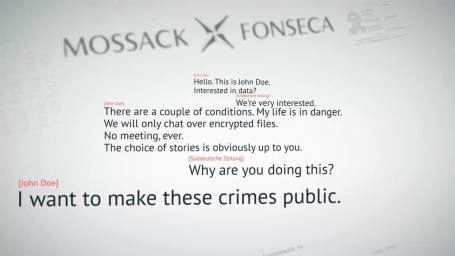
A week ago Sunday, a massive cache of some 11 million financial documents from the Panamaniam law firm, Mossack Fonseca, was leaked to the media. These files contained information about an “extensive worldwide network of offshore ‘shell’ companies – including ones with ties to Russian President Vladimir Putin – that allow the wealthy to hide their assets from taxes and, in some cases, to launder billions in cash.”[1] Several world leaders are implicated in this leak including the prime ministers of Iceland, Argentina, Ukraine, Saudi Arabia, and Iraq, and the former prime ministers of Georgia, Jordan, and Qatar. According to Lexi Finnigan of The Telegraph, the files “also contain new details of offshore dealings by the late father of British Prime Minister David Cameron.”[2]
Some of what has happened in these offshore accounts may be legal. As Ms. Finnigan explains in her article:
There is nothing unlawful about the use of offshore companies. However, the disclosures raise questions about the ways in which the system can be used – and abused. More than half of the 300,000 firms said to have used Mossack Fonseca are registered in British-administered tax havens, which Mr. Cameron has vowed to crack down on. And in one instance, an American millionaire was apparently offered fake ownership records to hide money from the authorities.
What has happened here is certainly troubling, even if it is not, at least for me, particularly surprising. Giving to Caesar what is Caesar’s may be a biblical mandate, but it is not a pleasant experience – even, as it turns out, when you happen to be Caesar. Nobody wants to pay taxes.
It should be reiterated that, in some instances, what appears to have happened with some of these accounts is little more than tax sheltering, which is legal and, according to many accountants, advisable. Others, however, have crossed a line into tax evasion, which is a crime. Still others have out and out used offshore accounts to try to launder dirty money.
Most world leaders are certainly not poor. So why would such a number of them be so allergic to paying the very taxes that ensure their gainful employment and continued power that they would engage in shady offshore deals? Perhaps it’s because Solomon was right: “Whoever loves money never has enough; whoever loves wealth is never satisfied with their income” (Ecclesiastes 5:10). Even a lot of money is never enough money when a person loves money.
Lust for more, of course, is not only a problem for world leaders, it is a problem for many people. Studies have shown that, proportionally, those who have higher financial means give less, as a percentage of their income, than those who have lower financial means. As Ken Stern reports for The Atlantic:
In 2011, the wealthiest Americans – those with earnings in the top 20 percent – contributed on average 1.3 percent of their income to charity. By comparison, Americans at the base of the income pyramid—those in the bottom 20 percent –donated 3.2 percent of their income. The relative generosity of lower-income Americans is accentuated by the fact that, unlike middle-class and wealthy donors, most of them cannot take advantage of the charitable tax deduction, because they do not itemize deductions on their income-tax returns.[3]
Just because a person has more doesn’t mean he will give more. Indeed, oftentimes, the more a person has, the more a person seems to think he needs, so the less he gives.
Perhaps we should keep in mind what Solomon says about money and the love thereof right after he explains that people who love money always want more money. He writes, “This too is meaningless.”
The love of money may be tempting, but it is not meaningful. It is not fulfilling. It is not worthwhile. This is a lesson, I fear, that these world leaders may have learned too late. May their folly be our warning.
_________________________
[1] Greg Toppo, “Massive data leak in Panama reveals money rings of global leaders,” USA Today (4.5.2016).
[2] Lexi Finnigan, “What are the Panama Papers, who is involved and what is a tax haven?” The Telegraph (4.7.2016).
[3] Ken Stern, “Why the Rich Don’t Give to Charity,” The Atlantic (April 2013).
The Art of Manliness
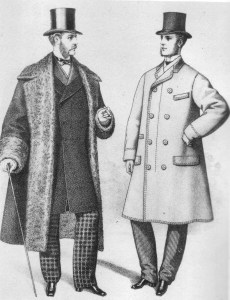 “I see some men that are men in mind and body and a great many that are only men in body.”[1] So said a Union soldier who fought in the Civil War.
In her book, The Gentlemen and the Roughs, Lorien Foote, professor of history of Texas A&M University, outlines two distinct types of masculinity prevalent during the Civil War. One was a gentlemanly type of masculinity, centered on self-control, character, and faithfulness. This type of masculinity embodied what we might think of today as “the family man.” The other type of masculinity was that of the “roughs” – those who are “rough around the edges,” so to speak. This type of masculinity focused on physical domination and sexual exploitation.
Writing for The New York Times, David Brooks outlines these same two types of masculinities when he writes:
The ideal man, at least in polite society, gracefully achieves a series of balances. He is steady and strong, but also verbal and vulnerable. He is emotionally open and willing to cry, but also restrained and resilient. He is physical, and also intellectual.
Today’s ideal man honors the women in his life in whatever they want to do. He treats them with respect in the workplace and romance in the bedroom. He is successful in the competitive world of the marketplace but enthusiastic in the kitchen and gentle during kids’ bath time.
This new masculine ideal is an unalloyed improvement on all the earlier masculine ideals. It’s a great achievement of our culture. But it is demanding and involves reconciling a difficult series of tensions. And it has sparked a bad-boy protest movement and counterculture.[2]
Brooks’ “new masculine ideal” is not really all that new. It shares much in common with the older masculine ideal of what it means to be a gentleman. Foote, in her book, writes about Francis Lieber, a nineteenth century political philosopher who outlined some rules for warfare that eventually came to serve as the basis for the Geneva Convention. Along with rules for warfare, Lieber also outlined traits essential to being a gentleman that included “self-possession,” “calmness of mind,” “a studious avoidance of giving offense to others,” and a refusal to indulge “in careless vulgarity, unmanly exaggeration, or violent coarseness.” The New York Illustrated News, in a fawning review of Lieber’s gentlemanly characteristics, wrote, “Let us have a new chivalry instituted – a new order of intellectual and moral knighthood.”[3] Lieber’s ideal masculinity was nothing short of a perfectly balanced chivalry that shares much, though not everything, in common with Brooks’ “new masculine ideal.”
There is much for us, as Christians, to learn from these two types of masculinity. Although neither comports perfectly with what it means to be a Christian man, one certainly comports better. A masculinity that is crude, sexually exploitive, and ostentatious not only does not make a man, it hurts a man because it is flatly sinful. On the other hand, masculinity cannot simply be reduced to a list of traits, as Lieber and Brooks attempt to do, no matter how virtuous those traits may be. After all, not every man is the same, so different men will inevitably display different traits, and not every life situation calls for the same masculine characteristics. Ultimately, to be a Christian man is much more about living out a vocation – a divine calling – than it is about living up to a checklist of virtues that inevitably changes, both in content and in emphasis, with each successive generation. To be a Christian man means to reflect Christ. To hearken back to the Union solider quoted at the beginning of this blog, being a man is not about only your body biologically, it is also about your mind. You can be a man in body without being a man whose mind has been renewed by Christ (cf. Romans 12:2).
In his column, David Brooks’ concern lies in how faulty masculinities affect the political arena. He notes that in this election cycle, there has been “a revolution in manners, a rejection of the civility codes.” This is certainly true and it is certainly troublesome. But what is even more troublesome is not how faulty masculinities affect our politics, but how they affect our families. Study after study has shown how men who reject their vocation to reflect Christ adversely affect their families. Faulty masculinities do not just plague national elections, they plague your neighbors down the street. And, if you’re really honest, they may even plague you.
So gentlemen – and I hope you do fashion yourself as and aspire to be gentlemen – the next time are tempted toward a masculinity that does not reflect your Savior, remember, to quote one more time from David Brooks, “This is the world your daughters are going to grow up in.”
That alone should be enough to make you stop and think.
__________________________
[1] Cited in Lorien Foote, The Gentlemen and the Roughs: Violence, Honor, and Manhood in the Union Army (New York: New York University Press, 2010), 3.
[2] David Brooks, “The Sexual Politics of 2016,” The New York Times (3.29.2016).
[3] Lorien Foote, The Gentlemen and the Roughs, 55.
Terror Hits Brussels: How Should Christians Respond?

It happened again.
Just four days after Paris terror suspect Salah Abdeslam was captured by Belgian law enforcement officials, two coordinated attacks – one at the airport and another on a subway – were carried out in Brussels at approximately 8 am local time. ISIS is taking responsibility for both.
Most of the scenes on the news right now are coming from the airport attack, and the pictures are ghastly. Physicians treating the wounded are describing severe nail injuries, indicating that the explosives were packed with materials designed to inflict maximum injury. As of the posting of this blog, CNN is reporting the provisional death toll at 34: 14 dead at the airport with 20 people killed in the subway bombing. We do not know whether or not the toll will rise.
At a time like this, it is always worthwhile to pause and reflect on how we, as Christians, are called to respond and react to a tragedy such as this. Christians are, after all, in a unique position to respond and react to tragedy, for our very faith was born out of tragedy, as this Good Friday will remind us. Our faith is rooted in “Christ and Him crucified” (1 Corinthians 2:2) – a gruesome thought if left by itself. So here are a few things to keep in mind.
Pray for Brussels
When terrorists attacked Paris, I wrote, “Pray for Paris.” The first thing we should do in an event like this is pray – always. For the vast majority of us, there is no help we can offer Brussels physically – we are not omnipresent. And there is no way we can thwart another attack in this beleaguered city – we are not omnipotent. So we must entrust Brussels and its future to the One who is omnipresent and omnipotent. We must entrust Brussels and its future to the One who can actually help. Such is the power of prayer. It not only offers real help to hurting people because it turns to a God who is in the business of helping hurting people, it also grows our faith when we cannot take charge of a situation like this because it teaches us to trust the One who is in charge of every situation like this.
Mourn for Brussels
The old saying goes, “Familiarity breeds contempt.” We have become all too familiar with terror attacks. With another one in the news this morning, although we may not be tempted to become outright contemptuous of what has happened, we may be tempted to respond to it with a mild dismissiveness. We see. We react with a bit of a groan. And we move on. I would encourage us to saunter at the scenes from Brussels for a bit. Look at the damage done at the airport. Look at the horrified faces of the people escaping from a bombed subway car. And grieve. Terror may be common nowadays, but that shouldn’t make it any less tragic in our hearts and minds. What has happened in Brussels is worth our grief. It is worth our sadness. It is worth our pain. We worship a Savior who shares in all our pain. He never passes us by “on the other side” (Luke 10:31). We should be willing to share in each other’s pain as well. For when we do, we “carry each other’s burdens” (Galatians 6:2).
Hope for Brussels
Christianity may have been borne out of the tragedy of death, but it is carried forth by the glory of life. This is what this Holy Week is all about – death on a Friday followed by life on a Sunday. The hope we have for Brussels, then, is the hope we have for all the world – that no matter how many people terrorists may kill, they cannot win by death because “death has been swallowed up in victory” (1 Corinthians 15:54). Christ portended our ultimate ends when, on Easter, He conquered His would-be end by walking out of His grave. We now share in the promise that our graves will not be our ends. Resurrection is coming.
One of my favorite Bible stories is the story of Armageddon – that great cosmic battle between good and evil at the end of days. The reason I love it so much is not just because of who wins, but because of how the battle is fought. The forces of evil, John says, are gathered “to the place that in Hebrew is called Armageddon. The seventh angel poured out his bowl into the air, and out of the temple came a loud voice from the throne, saying, ‘It is done’” (Revelation 16:16-17). And that’s the end of the battle. There are no swords drawn. There are no bullets fired. There are no bombs dropped. The forces of darkness combine to bring their worst. But they are no match for God’s simple declaration: “It is done.” In Greek, the declaration is just one word: gegonen. It turns out that even just one little word, to borrow a phrase from Martin Luther, really can fell Satan and his sympathizers.
We live in a world where deranged terrorists wage twisted jihad. But as Christians, we hope for a kingdom where battles are not won by an armed detachment, but by a divine decree: “Gegonen.” “It is done.”
And it will be.
Christianity, Culture, and Comparison
 There can be little doubt that Christianity is losing its place of primacy in American culture. According to a survey conducted last year by the Pew Research Center, Americans are becoming increasingly less religious and less willing to affiliate themselves with any particular religious tradition. As The Washington Post reports:
The “nones,” or religiously unaffiliated, include atheists, agnostics and those who say they believe in “nothing in particular.” Of those who are unaffiliated, 31 percent describe themselves as atheists or agnostics, up six points from 2007.[1]
A six-point increase of the religiously unaffiliated in eight years is not only statistically significant, it is an irreligious coup d’état. Consider this, also from The Washington Post: “There are more religiously unaffiliated Americans (23 percent) than Catholics (21 percent) and mainline Protestants (15 percent).”
Even among those who self-identify as religious, identifying as a faith does not necessarily correlate to the practice of that faith. One of the most striking demographic factoids of this presidential election cycle has been how evangelicals who attend church more frequently differ substantially in their candidate preferences from those who attend church less frequently.
Clearly, the religious terrain of America is experiencing tectonic shifts. What was once America’s so-called “moral majority” is now an apprehensive minority. So what is the way forward?
Myriads of options have been proposed and tried. Some people want to fight the secularizing spiral of American culture while others are more amicable to bargaining with and even capitulating to it. Still others, such as Rod Dreher, argue for a limited withdrawal from American culture, eschewing what they see as the culture’s inherently dangerous facets and foci. In many ways, these tensions and postures toward the broader culture are nothing new, as a read through H. Richard Niebuhr’s famous book, Christ and Culture, will reveal.
As worthy of discussion as all of these options may be, in this post, I would propose that it is just as important that we look at what we should not do as it is that we look at what we should do. Here’s why.
At the root of our anxiety over shrinking Christian cultural influence is our penchant to compare. We look at the political arena and we notice that we don’t wield the power we once did. And we compare the influence we had to the power we have. Or we look at demographic studies and we begin to notice that non-believers are on the increase while we’re on the decrease. And we compare the assembly of the despisers to the flock of the convinced.
Martin Luther has some great guidance when we are tempted toward comparison:
They surpass us by so many thousands, and all that we have seems to recede into nothing. But do not compare yourselves with them. No, compare yourselves with your Lord, and it will be wonderful to see how superior you will be … They would easily overcome us, but they cannot overcome that Christ who is in us.[2]
Comparing ourselves with the world as a starting place for responding to the world is dangerous business. It can lead us to an arrogant triumphalism if the world seems to be persuaded to our side. But it can also lead to an angry despair if the world rejects us. It is little wonder that the apostle Paul once wrote, “We do not dare to classify or compare ourselves with some who commend themselves” (2 Corinthians 10:12). If we are to compare ourselves with anyone or anything, it should be with the One who reminds us that even if we are a “little flock” in this age (Luke 12:32) – with little power, little influence, and little prestige – we are a “multitude that one one can count” (Revelation 7:9) in the next.
What strikes me about so many of our responses to Christianity’s diminishing cultural influence is not that they are wrong per se, but that they flow from the wrong place – they flow from anxious comparisons that grumble over Christianity’s diminishing cultural capital rather than from faith in Christ’s commandments and promises.
Perhaps it’s time to work less out of fear and more out of faith. Perhaps it’s time to stop comparing and start trusting – not because the decline of Christianity isn’t sad, but because the victory of Christ is certain.
_________________________
[1] Sarah Pulliam Bailey, “Christianity faces sharp decline as Americans are becoming even less affiliated with religion,” The Washington Post (5.12.2015).
[2] Martin Luther, Luther’s Works, vol. 30 (St. Louis: Concordia Publishing House, 1967), 289
Justice Antonin Scalia: 1936-2016
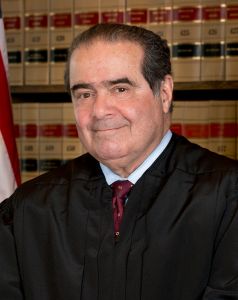 He was a man who combined a first-class intellect with a caustic whit. The world lost not only a legal titan, but a brilliant mind when Justice Antonin Scalia passed away. Sadly, some cheered his death in a macabre display of twisted politically-driven hatred. Others – even those who disagreed with him politically and legally – were far more charitable.
Justice Scalia was fiercely devoted to Constitutional originalism. He defined his originalism this way:
The Constitution that I interpret and apply is not living but dead, or as I prefer to call it, enduring. It means today not what current society, much less the court, thinks it ought to mean, but what it meant when it was adopted.[1]
His originalism came out in many ways, especially in his dissents. His famous 2001 dissent in PGA Tour, Inc. v. Casey Martin, for instance, is the stuff of legend. Mr. Martin was a golfer who wanted to participate in the PGA Tour, but could not because had a degenerative leg disorder that prevented him from walking any considerable distance. PGA rules required golfers to walk all 18 holes. He sued the PGA under The Americans with Disabilities Act. The high court ruled in his favor, noting, contrary to the PGA’s assertion, that using a golf cart does not “fundamentally alter the nature of the competition,” but its majority opinion did not find favor with Justice Scalia who believed the Court should not get involved in defining what does and does not constitute actual golf. In a sarcastic dissent, he wrote:
It has been rendered the solemn duty of the Supreme Court of the United States, laid upon it by Congress in pursuance of the Federal Government’s power “[t]o regulate Commerce with foreign Nations, and among the several States,” U. S. Const., Art. I, §8, cl. 3, to decide What Is Golf. I am sure that the Framers of the Constitution, aware of the 1457 edict of King James II of Scotland prohibiting golf because it interfered with the practice of archery, fully expected that sooner or later the paths of golf and government, the law and the links, would once again cross, and that the judges of this august Court would some day have to wrestle with that age-old jurisprudential question, for which their years of study in the law have so well prepared them: Is someone riding around a golf course from shot to shot really a golfer? The answer, we learn, is yes. The Court ultimately concludes, and it will henceforth be the Law of the Land, that walking is not a “fundamental” aspect of golf.[2]
No other Justice could turn the legal into the comedic the way Justice Scalia did.
At the same time Justice Scalia was a legal scholar, he was also a devoted Catholic. In a speech at a Living the Catholic Faith Conference, he rumbled:
God assumed from the beginning that the wise of the world would view Christians as fools…and he has not been disappointed.…If I have brought any message today, it is this: Have the courage to have your wisdom regarded as stupidity. Be fools for Christ. And have the courage to suffer the contempt of the sophisticated world.[3]
Justice Scalia’s call to endure scoffing from others for the sake of faith in and a witness to the gospel is quintessentially Christian. It is also, I would add, experientially true. After all, Justice Scalia himself had to endure countless questions – not all of which were inappropriate, but many of which were the product of a secular skepticism – about his faith and the ways in which he exercised it.
Of course, Justice Scalia did and does have his supporters – including some of those who most vehemently disagreed with him during his life. In a remembrance penned by Ruth Bader Ginsburg, one of the Supreme Court’s most liberal justices, she wrote of Justice Scalia:
He was a jurist of captivating brilliance and wit, with a rare talent to make even the most sober judge laugh. The press referred to his “energetic fervor,” “astringent intellect,” “peppery prose,” “acumen,” and “affability,” all apt descriptions. He was eminently quotable, his pungent opinions so clearly stated that his words never slipped from the reader’s grasp … It was my great good fortune to have known him as working colleague and treasured friend.[4]
For all of their political and legal differences, these two justices were best friends. And it is here that we find one of Justice Scalia’s most important legacies. Justice Scalia was strongly opinionated. He did not mince words concerning his legal or theological views. There was no question as to where he stood. But at the same time he was intellectually rigorous as a justice and theologically rigorous as a Catholic, he was also relationally generous. He befriended and loved even some of those with whom he vehemently disagreed.
From prostitutes to adulterers to tax collectors to religious elites, there was once another man who behaved similarly. He too could be known for His “peppery prose.” “You snakes! You brood of vipers!” He once thundered, “How will you escape being condemned to hell” (Matthew 23:33)? But the same people He thundered against in His words, He also died for on a cross. He was most certainly intellectually and theologically rigorous. Indeed, he was more: He was intellectually and theologically perfect. But He was – and is – also relationally generous. And somehow, the two went and worked together for us and for our salvation.
Justice Scalia leaves behind an impressive professional legacy. And he will continue to be criticized – sometimes thoughtfully and sometimes angrily – for many things. But beyond his professional legacy is his personal example of how intellectual and theological rigor can go hand in hand with relational generosity. They went hand in hand in him. And in this, Justice Scalia reflected how they go hand in hand in Christ.
At Justice Scalia’s funeral this past Saturday, his son, the Reverend Paul Scalia, began his homily:
We are gathered here because of one man, a man known personally to many of us, known only by reputation to many more; a man loved by many, scorned by others; a man known for great controversy and for great compassion … That man, of course, is Jesus of Nazareth.[5]
In his son’s mind, Justice Scalia’s greatest legacy is found not in what his father accomplished, but in how his father reflected Christ – even if imperfectly. This is why, for Reverend Scalia, Justice Scalia’s funeral was not about Justice Scalia. It was about Jesus.
May we be about Jesus too.
________________________
[1] NPR Staff, “Originalism: A Primer On Scalia’s Constitutional Philosophy,” npr.org (2.17.2016).
[2] PGA Tour, Inc. v. Casey Martin, 532 U.S. 661 (2001) (Scalia, J., dissenting)
[3] Ken McIntyre, “The Wit and Wisdom of Scalia: Nine Zingers,” Newsweek (2.14.2016).
[4] Marina Fang, “Ruth Bader Ginsburg Remembers Antonin Scalia, Her Dear Friend And Sparring Partner,” Huffington Post (2.14.2016).
[5] Julie Zauzmer, “A moving homily for Justice Scalia by his son, Rev. Paul Scalia,” The Washington Post (2.20.2016).
The Fight to Defeat Zika
Credit: AP Photo/Felipe Dana
When I searched for it, the first article that came up was from CNN and was titled, “What are the chances I’ll get it?” The “it” is the Zika virus. And right now, the virus constitutes a menacing epidemic.
On the one hand, societies have seen and battled viruses far more serious than Zika. As CNN explains:
Only about one in five people infected with Zika virus will actually become ill, according to the [Centers for Disease Control]. “The most common symptoms of Zika are fever are rash, joint pain or conjunctivitis (red eyes). Other symptoms include muscle pain and headache,” the CDC says. For most people, the illness is mild with symptoms lasting from several days to a week. People don’t usually get sick enough to require a hospital visit, and the virus very rarely results in death.[1]
This is not good, but it is also not particularly devastating. One needs only to remember the Ebola outbreak of 2014 to realize that Zika’s threat pales in comparison. Indeed, the CDC also notes that once a person has contracted the virus, he is likely to be inoculated from future infections.
So why all the concern?
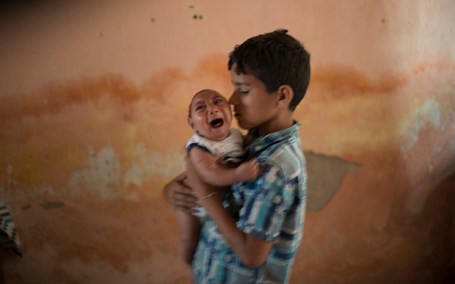
The concern lies primarily in Zika’s adverse effects during pregnancy. The virus has been linked to birth defects that include microcephaly and Guillain-Barré. Furthermore, the disease, it turns out, can be contracted not only from mosquitos, but also from sexual contact. On February 2, Dallas County Health and Human Services confirmed via the CDC that a woman contracted the Zika virus after having unprotected sex with a man who had just returned from a country where Zika is prevalent.
How the Zika virus will run its course and how far it will spread across not only other countries, but across this country, is still to be determined. But this much is already certain: our nation is facing a serious public health threat. As Christians, there are a few things we should keep in mind.
First, we should pray for those who have contracted the virus and we should pray that the spread of the virus would be quickly stymied. Even if the virus does not affect many of the infected adversely, any kind of sickness is never a part of God’s plan for His creation (cf. Matthew 4:23). It is always, therefore, appropriate to pray against disease. Because the virus is spread primarily by mosquitos, we should also pray that the governments of the nations who are being most affected by this virus would quickly develop effective methods of controlling these varmints.
Second, we should continue to declare that every life is precious – even those lives in the womb. Because Zika is widely associated with serious birth defects, many in Latin American countries, where Zika is most prevalent, are beginning to argue for looser abortion restrictions because of the large number of women who are pregnant and who are getting pregnant while being infected with the virus. The Washington Post reports:
Across Latin America, calls to loosen some of the most restrictive abortion laws in the world in the face of the Zika virus outbreak are gaining momentum but encountering strong and entrenched opposition.
In El Salvador, where abortions are banned under any circumstance, the health minister has argued for a revision of the law because of the dangers the virus poses to fetal development.
In Colombia, an organized movement to lift restrictions on abortion has gained allies in the government but has run into determined opposition from religious authorities. The same is happening in Brazil – and some doctors say that as a consequence, illegal, back-alley abortions are on the rise.
Nearly everywhere in Latin America, including in those countries hit hardest by Zika, women who wish to terminate their pregnancies have few legal options. But as U.N. health officials have projected as many as 4 million infections in the Americas this year, activists are pressing lawmakers to act as swiftly as possible to ease rigid restrictions …
“If I were a woman, had just got pregnant and discovered that I had been infected by the Zika virus, I would not hesitate an instant to abort the gestation,” columnist Hélio Schwartsman wrote in the daily newspaper Folha de Sao Paulo. Each mother should be able to follow her own instincts, he said.[2]
To use an epidemic to argue for American-style abortion legalization in countries that have traditionally looked at the practice with moral suspicion defies decency and smacks of the worst kind of political opportunism. The effects that Zika can have on the unborn are devastating. But a moral solution to this concern involves sexual self-control until this epidemic passes. It does not and cannot involve the taking of innocent human life. Indeed, Zika should remind us that sexual intimacy carries with it great power and responsibility. This is true both for the couple enjoying sexual intimacy and for the progeny who can result from such intimacy.
Passing the Zika virus through sexual contact is a real possibility. Thus, even for people who are married, sexual restraint may be in order. Sexual restraint is also necessary in order to avoid dangerous pregnancies. In a hyper-sexualized world, such self-control can appear to be impossible, regressive, and oppressive. But at a time like this, what an act of love it would be for a person to deny himself the pleasures of sex in order to protect both the health of his spouse and the life of one who could come after him. We must ask ourselves: are we willing to love even when it involves self-denial? Or have we become so selfish and base that to deny our desires is out of the question?
Finally, we should refuse to give into fear. Every epidemic raises questions. How will this epidemic be halted? How many lives might it take? How many birth defects might it result in? How widespread may it become? At this point, we do not have answers to these questions. But a lack of answers does not need to lead to an abundance of fear. This is not to say we should not be cautious. But there is a difference between caution and fear. Caution responds to a situation wisely. Fear panics about a situation needlessly.
As Zika continues to spread, I lean on the words of the Psalmist: “Praise the LORD, my soul, and forget not all His benefits – who forgives all your sins and heals all your diseases” (Psalm 103:2-3). The benefits of God are greater than the denouements of disease. Zika will not have the last word.
_____________________
[1] Ben Tinker, “Zika virus: What are the chances I’ll get it? (And other Q&As),” cnn.com (2.9.2016).
[2] Dom Phillips, Nick Miroff and Julia Symmes Cobb, “Zika prompts urgent debate about abortion in Latin America,” The Washington Post (2.8.2016).
More than “He” and “She”

What’s in a pronoun? This is the question Jessica Bennett of The New York Times asked in her article on the rapidly expanding list of gender pronouns from which a person can choose these days:
He, she, hers, his, male, female – there’s not much in between. And so has emerged a new vocabulary, of sorts: an attempt to solve the challenge of talking about someone who identifies as neither male nor female (and, inevitably, the linguistic confusion that comes along with it).
These days, on college campuses, stating a gender pronoun has become practically as routine as listing a major. “So it’s like: ‘Hi, I’m Evie. My pronouns are she/her/hers. My major is X,’” said Evie Zavidow, a junior at Barnard.
“Ze” is a pronoun of choice for the student newspaper at Wesleyan, while “E” is one of the categories offered to new students registering at Harvard.
At American University, there is ”ey,” one of a number of pronoun options published in a guide for students (along with information about how to ask which one to use).
There’s also “hir,” “xe” and “hen,” which has been adopted by Sweden (a joining of the masculine han and the feminine hon); “ve,” and “ne,” and “per,” for person, “thon,” (a blend of “that” and “one”); and the honorific “Mx.” (pronounced “mix”) — an alternative to Ms. and Mr. that was recently added to the Oxford English Dictionary. (The “x” in Mx. is meant to represent an unknown, similar to the use of x in algebraic equations.)[1]
Wow. I love language, but honestly, the array of gender pronouns now available is dizzying and a little intimidating to me. Indeed, one of the points that Ms. (or should it be Mx.?) Bennett makes in her article is:
Facebook now offers 50 different gender identity options for new users, including gender fluid (with a gender identity that is shifting), bigender (a person who identifies as having two distinct genders) and agender (a person without an identifying gender).
Without a degree in gender studies, how is one supposed to keep all these pronouns straight?
Even if they’re hard to keep straight, referring to someone by their preferred pronoun – no matter how many pronouns there may be from which to choose – is important, according to Ms. Bennett, who cites Caitlin Dewey of The Washington Post: “Misgendering ‘isn’t just a style error … It’s a stubborn, longtime hurdle to transgender acceptance and equality, a fundamental refusal to afford those people even basic grammatical dignity.’” In other words, misgendering someone is deeply insulting and morally reprehensible because it denies who a person is, or, to put it more pessimistically, would like to be.
This debate over gender pronouns fascinates me. It fascinates me first of all because of where it most often takes place. Ms. Bennett, albeit anecdotally, cites two places: college campuses and the secularly liberal and affluent Sweden. These are places of power and privilege. This is not to say that these debates take place only in places of power and privilege, but places of power and privilege are certainly pacesetters in these debates.
Today’s debates over gender pronouns in the halls of power and privilege may be connected to an influential – even if somewhat problematic and not wholly accurate – theory of psychological fulfillment that was first put forth by psychology professor Abraham Maslow in the previous century. In his 1943 paper, titled “A Theory of Human Motivation,” Professor Maslow famously identified what he termed a “hierarchy of needs.” At the bottom of Maslow’s hierarchy were physiological needs such as air, water, and food. These were followed by safety needs, which include things like national peace, job security, and a safe home environment free from abuse and neglect. Next came needs pertaining to love and belonging like the needs for friends and family. Then came the need for esteem, that is, respect.[2] Finally, at the top of Maslow’s hierarchy, came the need for self-actualization. In his paper, Maslow describes the need for self-actualization thusly:
We may still often (if not always) expect that a new discontent and restlessness will soon develop, unless the individual is doing what he is fitted for. A musician must make music, an artist must paint, a poet must write, if he is to be ultimately happy. What a man can be, he must be.[3]
Professor Maslow sagely puts his finger on the fact that before a person intently pursues self-actualization, he first must have his physiological, safety, love, and esteem needs met. Maslow’s sequence of needs seems to inform, at least in part, why the debate over gender pronouns is hottest in places of power in privilege. After all, these are the places, generally speaking, that have the highest potential to be the highest up Maslow’s hierarchy. The desire to self-actualize one’s gender and the pile of pronouns that comes with such a quest is much less pronounced when you’re wondering where your next meal is going to come from.
For the Christian, of course, the problems with self-actualization run deep. Maslow, understandably, seems unaware of the ways in which his notion of self-actualization could or would be used 73 years later. “What a man can be,” to use Maslow’s own words, is much greater than Maslow himself could have imagined, for, in the estimation of gender scholars, a man can be a woman, or a whole host of other things on the gender continuum. Maslow seems to think of self-actualization in terms of vocation rather than in terms of a psychological identity that bends a physical reality.
Ultimately, the very notion of self-actualization, even as Maslow understood it, is problematic. Christians believe that the road to fulfillment leads not through self-actualization, but self-denial: “Whoever wants to be My disciple must deny themselves and take up their cross and follow Me” (Matthew 16:24). Maslow himself seemed to intuit this when, in later years, he replaced the self-actualization at the pinnacle of his hierarchy with self-transcendence, arguing that, ultimately, human identity is found not so much in who one can be, but in how one can serve.
Christians know that self-actualization is nearly as old as history itself. It was a serpent, after all, who first touted the glory of self-actualization when he said to Adam and Eve, “You will be like God” (Genesis 3:5). But what the serpent said was self-actualization was in reality self-destruction.
Something tells me that all these pronouns, denying and sometimes even downright despising how God has made us “male and female” (Genesis 1:27), isn’t far off from this old, old version of self-actualization. The line between self-actualization and self-destruction, it turns out, is razor thin. Let us pray we have not crossed it.
______________________
[1] Jessica Bennett, “She? Ze? They? What’s In a Gender Pronoun?” The New York Times (1.30.2016).
[2] I find it troubling that Maslow places the need for esteem just under the need on the pinnacle of his hierarchy. I see the need for esteem as much more foundational, for as creatures who are crafted in God’s image (cf. Genesis 1:27), we are afforded an esteem by our Creator that is foundational because it is rooted in the very order of creation.
[3] Abraham Maslow, “A Theory of Human Motivation,” Psychological Review 50, no. 4 (1943): 382.
Planned Parenthood, Legality, and Morality
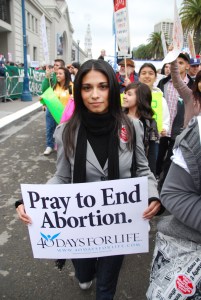 Last July, the Center for Medical Progress began releasing a series of undercover videos cataloguing conversations between its operatives, posing as potential buyers of aborted fetal parts for a human biologics company, and high level Planned Parenthood representatives, who appeared to be willing to sell fetal parts for profit, even if that profit was minimal. Selling fetal parts for profit is a federal offense. Getting reimbursed for the cost of procuring and transferring fetal parts, however, is not. Thus, there has been a protracted debate over whether or not Planned Parenthood has broken the law.
Last week, a grand jury in Houston took its shot at answering this debate. Though the grand jury did not find sufficient evidence to indict Planned Parenthood, it did indict David Daleiden, one of the producers of the undercover videos. Danielle Paquette, writing for The Washington Post, explains the reasoning behind the indictment:
David Daleiden, the director of the Center for Medical Progress, faces a felony charge of tampering with a governmental record and a misdemeanor count related to buying human tissue.[1]
In order to gain access to a Planned Parenthood facility in Houston, Mr. Daleiden and his companion, Sandra Merritt, presented fake California driver’s licenses. According to The Washington Post article, using fake IDs with “intent to cause harm” is a felony for which Mr. Daleiden could face anywhere from two to twenty years in prison if he is convicted. The misdemeanor charge has to do with Mr. Daleiden’s overtures to purchase fetal parts. According to Texas law, it is illegal, irrespective of whether or not Mr. Daleiden’s offers were genuine, to offer to pay for fetal parts.
This is a strange outcome to a sensational story. How many cases are there where a grand jury is asked to decide whether or not it should indict one party and it winds up indicting another party?
The New York Times editorial board came out in favor of the indictment of Mr. Daleiden, writing:
One after the other, investigations of Planned Parenthood prompted by hidden-camera videos released last summer have found no evidence of wrongdoing. On Monday, a grand jury in Harris County, Tex., went a step further. Though it was convened to investigate Planned Parenthood, it indicted two members of the group that made the videos instead.
The Harris County prosecutor, Devon Anderson, a Republican who was asked by the lieutenant governor, a strident opponent of Planned Parenthood, to open the criminal investigation, said on Monday that the grand jurors had cleared Planned Parenthood of any misconduct.
Yet despite all the evidence, Texas’ Republican governor, Greg Abbott, said on Monday that the state attorney general’s office and the State Health and Human Services Commission would continue investigating Planned Parenthood. This is a purely political campaign of intimidation and persecution meant to destroy an organization whose mission to serve women’s health care needs the governor abhors.
Fortunately, in the Harris County case, the jurors considered the facts.[2]
What is most fascinating about The New York Times’ editorial is not its opinion about this case, but how it reports the facts of this case: “One after the other, investigations of Planned Parenthood prompted by hidden-camera videos released last summer have found no evidence of wrongdoing.” It seems as though, for The New York Times editorial board, that which is legal is coterminous with that which is moral. Because Planned Parenthood was not found guilty of doing anything illegal, they must also not have been guilty of any, to use The New York Times’ own terminology, “wrongdoing.”
As a Christian, I have to disagree. The first and final source and arbiter of moral activity – what is right-doing and what is wrongdoing – is not rooted in a humanly contrived legality, but in a graciously given theopneusty.
At the church where I serve, we are preaching and teaching through the book of Judges and I was reminded once again of how the Bible views and treats unborn life when I came to the story of Samson. Samson, most famous for his strength, was also consecrated to the Lord as a Nazirite from before birth. Being a Nazirite involved a vow to reject, among other things, any food or drink made from grapes. When the Lord comes to Samson’s mother and announces that she will bear a deliverer for Israel, He says to her, “Now see to it that you drink no wine or other fermented drink and that you do not eat anything unclean, because you will conceive and give birth to a son” (Judges 13:4-5). Notice that the Lord is concerned not only with Samson keeping his vow, but with his mother keeping his vow in his stead even before he is born. The Lord regards the actions of Samson’s mother as his actions, knowing that her actions can affect the child in her womb not only medically – after all, refraining from “fermented drink” is sage advice for any expecting woman – but also spiritually. Samson’s vow, then, binds him not only from the day of his birth, but from the day of his conception. Why? Because even in the womb, he is alive. And his life is important to God and ought to be kept sacred for God. The taking of any life by abortion, therefore, though it may be legal, is certainly not moral.
As Albert Mohler, president of the Southern Baptist Theological Seminary, rightly points out in his commentary on this story, what The New York Times has posited in its editorial amounts to a kind of legal positivism – a theory of law that, while being acutely concerned with societal legality, has no use for transcendent morality. The editorial board applauds Planned Parenthood simply because its disbursement of fetal parts has been found to be purportedly legal. The board never takes the time, however, to go beyond the legal questions and consider the intrinsic merits and morality of abortion law itself, for these considerations involve all the questions legal positivism does not care or dare to ask. But I would argue that some of the greatest triumphs of justice over the previous century have come not because people were content with the law as it was, but because they strove for a moral standard beyond the law that, at the time, was not, but should be. Watershed victories like women’s suffrage and the Civil Rights Act happened not because editorial boards assumed that the legality of an issue was its warp and woof, but because they knew that legality must work in tandem with a higher morality.
This is not to say that there are no questions to be asked of the Center for Medical Progress. Its action of obtaining fake IDs and having misleading conversations with Planned Parenthood officials raise not only legal concerns, but moral ones too. There is the moral question of deceit. Is it ever moral to lie for the sake of a just cause? Uncovering the true and disturbing nature of what happens at Planned Parenthood clinics is certainly just, but should a person present a fake ID in order to gain access to what happens at these clinics? Rahab told a lie to her compatriots to protect the lives of a group of Israelite spies who had come to case her city, and she is hailed as a hero of the faith in the Bible (cf. Hebrews 11:31)! Can we not do the same?
My personal view is that though there may be an occasional extraordinary circumstance – such as trying to protect a life – where telling a lie is the lesser of two evils, this does not make lying moral, it only makes it understandable and, perhaps, reluctantly preferable. Furthermore, I would hope that we would generally try to avoid willingly placing ourselves in situations where we would feel compelled to lie.
There is also the moral problem of the Center for Medical Progress’ violation of the law in its use of fake IDs. Considering we are called to “be subject to the governing authorities” (Romans 13:1), it is important to ask if it is appropriate to violate the moral law of truthfully representing one’s identity in order to bring to light the immoral practice of aborting babies and harvesting their organs for disbursement.
I would note that even as the actions of the Center for Medical Progress raise some moral questions about truthfulness and legality, Planned Parenthood’s actions raise these same moral quandaries. By all appearances, Planned Parenthood’s desire to be less than forthcoming about its fetal tissue disbursement practices, perhaps even to the point of deceit, and the question of whether or not Planned Parenthood violated any laws in its handling of fetal organs are issues worth pursuing further. Planned Parenthood was, at the very least, living near the edge of the law, which oftentimes leads to, at minimum, isolated instances of going outside of the law.
There are many moral questions that surround this story, but this much is morally certain: Scripturally, putting an end to abortion and the gruesome harvesting of fetal organs for disbursement is one of the great ethical imperatives of our time. In a story that raises many moral question marks, this should be a moral period. This is something for which Christians must call.
___________________
[1] Danielle Paquette,“The charges against anti-Planned Parenthood filmmaker, explained,” The Washington Post (1.26.2016).
[2] The Editorial Board, “Vindication for Planned Parenthood,” The New York Times (1.26.2016).
You Didn’t Win Powerball…So Now What?

Credit: New York Daily News
The conversation across from me last Wednesday morning as I was sitting at Starbucks reading and sipping my coffee startled me. Next to me was a table of folks who, from the sound of their conversation, all worked in the same office. As coworkers, they were doing what coworkers should regularly be doing – they were strategizing, they were planning, they were setting goals, and they were developing financial models…for what they would do when they won the $1.5 billion Powerball jackpot.
With Powerball fever sweeping the nation last week with history’s largest ever jackpot up for grabs, these folks sounded like they needed some Tylenol to bring down their temperature. I’m not sure I’ve ever heard a more heated, even if not particularly informed, financial conversation in my life – much less a financial conversation that imagines a 1 in 292,201,338 scenario. Should we take the lump sum or should we take the annuity payments? How do we set up a trust fund since we’re splitting the pot when we win? Should we allow this or that coworker to join our pot?
Oh, if only. But as Daniel Victor of The New York Times points out:
If you printed out the name of every United States resident on individual pieces of paper, put them in a giant bowl and selected one at random, the odds of picking President Obama are not far from the odds of winning the Powerball.[1]
In other words, you are not going to win Powerball.
The way this office pool talked about Powerball, it sounded like all but a sure bet that they were going to be the big winners. But unless they happened to have just come back from Chino Hills, CA, Munford, TN, or Melbourne Beach, FL with just the right ticket in hand, they were not. Last Wednesday was not their day. And today is just another manic Monday at the office for them.
Powerball is an interesting enterprise. On the one hand, I appreciate that it helps fund education, although I can’t help but wonder if there are other, more efficient ways to fund educational programs. On the other hand, I am concerned that, from a systemic perspective, it acts as a regressive tax because it has a disproportionate appeal to lower income households who have big dreams of digging out of financial desperation. Even if it does act as a regressive tax, however, it is important to note that it is a voluntary regressive tax. No one has to buy a ticket. Indeed, the fundamental problem with Powerball is not really with Powerball at all. It’s with us. Far too many of us are quick to disregard the fundamentals of math for a quixotic wish.
“Someone has to win,” I’ve heard time and time again. “And it could be me!” Actually, someone does not have to win. This is precisely why the Powerball jackpot rose as much as it did – because someone did not have to win the jackpot and no one did win the jackpot for ten weeks straight because the odds of winning are so abysmal, they are, for all intents and purposes, at zero. Technically, they’re at .00000034223%. But it still takes a lot of zeroes in that percentage to get to any sort of a number that represents something rather than nothing.
Why in the world would we get so excited over odds like these? What are we thinking?
In one way, we’re not. We’re dreaming. And, if your dreams are anything like mine, dreams do not have to make sense or be rooted in reality. They can be sheer fantasy.
But something more is going on here. For not only are we dreaming, we’re hoping. We’re hoping lightning will strike and we will win. Or, to use the appropriate odds, we’re hoping lightning will strike 246 times and we will win one time. We’re hoping our financial troubles will be over. We’re hoping we’ll be able to quit our jobs and take life easy. We’re hoping to get rich.
The apostle Paul writes quite extensively to Timothy about the dangers associated with riches. Two of his statements are especially striking to me as the fervor over Powerball settles:
Those who want to get rich fall into temptation and a trap and into many foolish and harmful desires that plunge people into ruin and destruction. (1 Timothy 6:9)
And:
Command those who are rich in this present world not to be arrogant nor to put their hope in wealth, which is so uncertain, but to put their hope in God, who richly provides us with everything for our enjoyment. (1 Timothy 6:17)
In the first verse, Paul prohibits hoping for riches. We should not obsess over accumulating treasures on earth because such an obsession is a recipe for depression and, ultimately, for destruction. In the second verse, Paul prohibits hoping in riches. Wealth cannot do what many people think it can do. It certainly cannot solve all your problems, as past lottery winners will tell you.
The problem with the Powerball phenomenon is that its huge jackpots tempt us toward false hope – both for riches and in riches. And even if Powerball itself is nothing more than a silly game, the false hope it tempts us toward is a dangerous disease.
If you want to spend $2 on a ticket for fun, that’s one thing. But you should place about as much hope in that ticket as you do in winning your office fantasy football league where the grand prize is a Nerf football that someone spray painted gold to make it look like a trophy. If your hopes go much further than that, be careful. Your hope is not in a $2 ticket with long odds. Your hope is in Christ.
After all, He’s a sure bet.
_________________________
[1] Daniel Victor, “You Will Not Win the Powerball Jackpot,” The New York Times (1.12.2016).


 Pastor Zach's Blog