Posts filed under ‘Current Trends’
Pandemic Fatigue

The book of Leviticus is filled with all sorts of rules and regulations, many of which address cleanliness and purification in the face of infectious diseases. Here’s a sample:
When anyone has a swelling or a rash or a shiny spot on their skin that may be a defiling skin disease, they must be brought to Aaron the priest or to one of his sons who is a priest. The priest is to examine the sore on the skin, and if the hair in the sore has turned white and the sore appears to be more than skin deep, it is a defiling skin disease. When the priest examines that person, he shall pronounce them ceremonially unclean. If the shiny spot on the skin is white but does not appear to be more than skin deep and the hair in it has not turned white, the priest is to isolate the affected person for seven days.On the seventh day the priest is to examine them, and if he sees that the sore is unchanged and has not spread in the skin, he is to isolate them for another seven days. On the seventh day the priest is to examine them again, and if the sore has faded and has not spread in the skin, the priest shall pronounce them clean; it is only a rash. They must wash their clothes, and they will be clean. But if the rash does spread in their skin after they have shown themselves to the priest to be pronounced clean, they must appear before the priest again. The priest is to examine that person, and if the rash has spread in the skin, he shall pronounce them unclean; it is a defiling skin disease. (Leviticus 13:2-8)
This passage was the kind that used to make people roll their eyes and groan with boredom and wonder why God bothered to include such pedantic instructions concerning something as seemingly insignificant as a skin rash. Now, passages like these feel strangely relevant and current.
In these verses, we have it all: a health screening for signs of disease, a quarantine, a demand that a person test negative for that disease, and special concern with disinfecting practices. Sound familiar?
Beyond the specific instructions for addressing sicknesses, passages like these make a larger point: God cares about our health and wellbeing.
As we enter into the eleventh month of our battle with the COVID-19 pandemic, a fair amount of pandemic fatigue has set in. At least, it certainly has for me. I am looking forward to the day when the vaccine for this virus will be available for anyone who wants it. In the meantime, however, Leviticus 13 with all its regulations can serve as an encouragement to us: God sought to take care of His people by attending to their health. We can do the same as we continue to endure screenings, quarantines, testing, and disinfecting. Remember, we’re getting closer to having this pandemic under control! And for that, I rejoice and am extremely thankful.
A Jarring Protest at the Capitol – How Do We Respond?

Not that we needed any more convincing, but yesterday’s events reaffirmed that we live in tumultuous times. The events that unfolded in and the pictures that came out of our nation’s Capitol were disturbing. As we try to process what we saw, felt, and experienced, I have noticed two main reactions to these historic – and infamous – events.
The first reaction is that of anger. The protestors who stormed the Capitol were angry that Congress was moving to formalize the electoral college results because they believed the election results were infected with fraud. Others are now angry at those at the Capitol who were angry, seeing their actions as an attack on American democracy. And the anger continues to boil.
The second reaction is that of fear. The scenes at the Capitol were undeniably scary. The level of distrust of Americans at American institutions and at other Americans is startlingly high. We are scared of what we are seeing at places like the Capitol and we are scared of each other. And this fear shows no signs of abating.
As in our time, the night before Jesus’ death was a tumultuous time – for Jesus and for His disciples. And as things turned increasingly dark, the disciples’ reactions were utterly predictable. Sometimes, they reacted with anger. When Jesus is arrested by a mob of His detractors in the Garden of Gethsemane, for instance, Peter responds in violent fury:
Simon Peter, who had a sword, drew it and struck the high priest’s servant, cutting off his right ear. (John 18:10)
After Peter’s violent protest fails and Jesus is nevertheless arrested, the disciples react with unalloyed alarm:
Then all the disciples deserted Him and fled. (Matthew 26:56)
The disciples’ reactions, like our reactions, are understandable. But Jesus has a better way for them – and for us – to react to tumultuous times.
When Peter reacts with violent anger to Jesus’ arrest, Jesus rebuffs him:
Put your sword back in its place for all who draw the sword will die by the sword. (Matthew 26:52)
And right before Jesus and His disciples go to the Garden of Gethsemane, Jesus calls on them to not fall prey to fear:
Do not let your hearts be troubled. You believe in God; believe also in Me. (John 14:1)
So, if anger and fear are off the table, how does Jesus want us to respond to tumultuous times? After Jesus tells His disciples not to let their hearts be troubled, He tells them how to be rescued from fear:
Peace I leave with you; My peace I give you. I do not give to you as the world gives. Do not let your hearts be troubled and do not be afraid. (John 14:27)
The way forward when the world feels like it’s closing in around us is the way of peace. This is why, when tempers flare at injustices and offenses – be they perceived or real – we are called to respond peacefully:
Do not repay anyone evil for evil. Be careful to do what is right in the eyes of everyone. If it is possible, as far as it depends on you, live at peace with everyone. (Romans 12:17-18)
This is also why, when we are scared of others, Christians, just like Jesus did with His disciples after His crucifixion and resurrection, are called to offer peace to others:
When the disciples were together, with the doors locked for fear of the Jewish leaders, Jesus came and stood among them and said, “Peace be with you!” (John 20:19)
Growing up, I remember being told, “Cleanliness is next to godliness.” It’s a truism, but I’m not so sure it’s actually true – at least biblically. Biblically, “Peacefulness is next to godliness.” As the apostle Paul writes:
I urge, then, first of all, that petitions, prayers, intercession and thanksgiving be made for all people – for kings and all those in authority, that we may live peaceful and quiet lives in all godliness and holiness. (1 Timothy 2:1-2)
No matter what we may believe politically, listening to Paul’s appeal would be good for us – and for our nation – spiritually. May we be people of peace rather than anger or fear. May we demonstrate our godliness by our peacefulness. And may we pray for our leaders. They need it. And we do, too.
More Than A New Year

What a year 2020 has been. When this year began, I never dreamed that the way we do commerce, attend schools, worship at church, interact with each other, and generally live would change the way it has because of a virus that began spreading halfway across the world.
As this year draws to a close, I’ve heard people say again and again, “I sure am glad 2020 is almost over. We need a new year!” I understand the sentiment. I’ve felt it, too. And yet, we all know that a simple change on a calendar doesn’t mean the end of a pandemic. It also doesn’t mean the end of the frustration, fear, fury, and funk that this messy world can bring.
I’ve heard other people say, “This year has been bad, but we can still be thankful because it could have been worse!” This is certainly true. For example, the number of COVID cases to date is just now passing the total number of causalities during World War II, which were a shocking 75 million. But just asserting that things could have been worse doesn’t mean they couldn’t also have been much better. This assertion, even it’s true, isn’t really helpful. We can’t look at life through a Goldilocks lens. Just because something could be worse or could be better doesn’t make what we’re experiencing right now just right.
At a time like this, what we ultimately need is something more than a new year. We need a new creation – one that is not saddled with economic downturns, social isolation, and highly contagious viruses. We need what one of Jesus’ followers named John once saw in a vision:
Then I saw “a new heaven and a new earth,” for the first heaven and the first earth had passed away, and there was no longer any sea. I saw the Holy City, the new Jerusalem, coming down out of heaven from God, prepared as a bride beautifully dressed for her husband. And I heard a loud voice from the throne saying, “Look! God’s dwelling place is now among the people, and He will dwell with them. They will be His people, and God Himself will be with them and be their God. ‘He will wipe every tear from their eyes. There will be no more death’ or mourning or crying or pain, for the old order of things has passed away.” (Revelation 21:1-4)
John saw an age where all the pain, struggling, and suffering of this world would be wiped away. We’re certainly not there yet. But the promise is that we will get there.
I don’t know when John’s vision will come to pass. And the wait can get frustrating at times. This is why, after John has this vision, the voice from the throne continues:
“I am making everything new!” Then He said, “Write this down, for these words are trustworthy and true.” (Revelation 21:5)
While we struggle through this age waiting for the next, this voice from the throne wants us to know that He is in the process of making everything new – right now. And we can see it if we look for it. Every time an impoverished person is helped, things are being made new. Every time a lonely person is comforted, things are being made new. Every time a sick person is healed, things are being made new. And every time a person far from God is brought near in Christ, things are being made new. Yes, a lot of things are not new yet. But newness is on the march. And newness will win the war against “that ancient serpent, who is the devil, or Satan” (Revelation 20:2). A new year might not get rid of some old problems. But God’s persistent forging of a new creation will.
A new year may do us some good. But God’s new creation will is making everything great.
Election Day 2020

Election Day is one day away. And what an election season it’s been. In what has become a quadrennial ritual, campaigns have been waged, accusations have been leveled, statements that have very loose associations with the truth have been uttered, and our nation has become even more divided over politics than it already was.
It can be difficult for Christians to navigate through what feels like an exponentially increasing number of political landmines all around us. So, as we head into another Election Day fraught with fights and frights, let me remind you of two things.
First, Christians live as dual citizens. In his famous fifth-century work The City of God, the church father Augustine spoke of how Christians belong both to the City of Man and the City of God. Sadly, the City of Man is deeply disordered because of sin. Those who care only for the City of Man often gladly and unrepentantly operate in ways that involve much deception and transgression. Thus, though we may be among the City of Man, we cannot be in league with the City of Man. Our first, highest, and final allegiance must be to the City of God. This does not mean that we run away from the world, but it does mean that, in many ways, we refuse to operate like the world.
Second, the City of Man matters. For all its brokenness, God can still use what happens in the City of Man for His glory and the world’s good. This understanding of the City of Man was key to the success of the apostle Paul’s ministry. Paul, for instance, was not afraid to appeal to his Roman citizenship in the City of Man to protect himself from being mobbed (Acts 22:22-29). He also seems to have preferred his Roman name Paul to his Jewish name Saul. This is why, in the many letters he wrote to churches in the ancient world, he introduced himself as Paul rather than Saul, though he retained both names throughout his life (cf. Acts 13:9).
Why would this apostle prefer introducing himself using a pagan-sounding Roman name instead of his more traditional Jewish name? Because he fashioned himself as an apostle to people who were pagans in the City of Man – people who did not yet believe in the God of Israel and the Messiah He sent in Jesus. “I am an apostle to the Gentiles,” who were pagans, he wrote, and “I take pride in my ministry” (Romans 11:13). His Roman name – and his status as a Roman citizen – helped him reach pagan Roman citizens he may have not otherwise been able to reach with the gospel.
Some Christians can too often be tempted to leverage the resources of the City of Man primarily to win against others – political enemies, cultural contraries, and socioeconomic opposites. Paul, however, leveraged his citizenship – a gift bestowed on him by the City of Man – and his Roman name to win over people. He used what he gained from the City of Man to point people to the City of God.
In a recent article in National Review, Kevin Williamson wisely cautioned his readers: “There’s more to citizenship than voting, and partisanship is not patriotism.” Sometimes, I think we can be tempted to fall into the trap of believing the sum of our citizenship in the City of Man is winning an election through partisanship and voting. But being a good citizen in the City of Man goes so much further than that. Like Paul, may we use our citizenship in the City of Man not only to protect and further our interests, but to love and reach others.
That’s something we can all choose to do on Election Day – no matter who we vote for.
Name-Calling

One of the most common responses to last week’s vice-presidential debate that I heard was that of a sigh of relief. It was noticeably mild-mannered compared the first presidential debate held a week earlier. Both President Trump and Vice-President Biden came under sharp critique for their name-calling of each other. Check out these headlines:
‘Will you shut up, man?’: Debate devolves to name-calling as Trump derails with interruptions
First Trump-Biden Presidential Debate Devolves Into Interruptions, Name-Calling
First Presidential Debate Turns Into Fighting and Name-Calling
Quite apart from politics, name-calling, in general, concerns me. As anyone who has been badgered or belittled on a school playground knows, sticks and stones may break some bones, but names can also hurt you.
Last week, as I was preparing to lead a study on Isaiah 1, I came across this passage:
Hear the word of the LORD, you rulers of Sodom; listen to the instruction of our God, you people of Gomorrah! “The multitude of your sacrifices – what are they to Me?” says the LORD. “I have more than enough of burnt offerings, of rams and the fat of fattened animals; I have no pleasure.” (Isaiah 1:10-11)
Isaiah encourages the towns of Sodom and Gomorrah to hear the word of the Lord. Historically, the prophet writes these words around 740 BC. The towns of Sodom and Gomorrah, however, were famously destroyed by fire and brimstone some 1,300 years earlier. They no longer exist. So, to whom is Isaiah speaking?
Here, the famed cities are being invoked metaphorically to refer to the rebellious people of God – the Israelites. Isaiah is making the point that the wickedness of the Israelites has become so great that they might as well be the people of Sodom and Gomorrah – cities renowned for their depravity. In other words, Isaiah is calling the Israelites names.
Name-calling seems to be an awfully unbecoming behavior for a prophet of God. And yet, what sounds like disrespect at first is actually an act of desperation. He asks earlier:
Why should you be beaten anymore? Why do you persist in rebellion? Your whole head is injured, your whole heart afflicted. (Isaiah 1:5)
Isaiah longs for the Israelites to repent before they become afflicted by God. Isaiah’s name-calling, then, is not meant to insult, but to implore. The prophet is imploring people of Israel to understand just how precarious their spiritual situation really is. So, he uses the most jarring example of systemic and sanctioned sin he can think of: the cities of Sodom and Gomorrah.
Of course, this is not the only time Isaiah calls the Israelites names. Later in his book, he writes:
But now, this is what the LORD says – He who created you, Jacob, He who formed you, Israel: “Do not fear, for I have redeemed you; I have summoned you by name; you are Mine.” (Isaiah 43:1)
God calls the people of Israel names to help them understand their sin. But He also calls them a name to promise them redemption from their sin:
Mine.
I’m not big on name-calling, but that’s a name I’d love to be called by God any day. Because of Christ, I know I am. And because of Christ, you are too.
The President Tests Positive for COVID-19

Disease doesn’t discriminate. Anyone – high or low, rich or poor, powerful or powerless – can fall ill – sometimes mildly, sometimes seriously. This reality was brought forth in stark relief early Friday morning when the President of the United States tweeted that he and the First Lady had tested positive for COVID-19. Blessedly, their symptoms, so far, have been relatively mild and, according to his physician, the president is doing well.
But all of this has not quelled the barrage of questions that inevitably comes at news as big as this. People want to know: What is the fuller picture of the president’s health history? When, exactly, did the president first suspect or know that he had contracted the virus? Should the people in his inner circle have been more cautious in their meetings and interactions? From whom did the president contract the virus? What will happen if the president falls seriously ill? Will a second presidential debate be possible in a week and a half? And, how will all of this affect the 2020 presidential election?
Just as the brokenness of sickness can affect anyone – no matter who they are – the promises of God are offered to everyone – no matter who they are. As the Psalmist writes:
Hear this, all you peoples; listen, all who live in this world, both low and high, rich and poor alike. (Psalm 49:1-2)
God wants to speak to everyone. This is why, in the Scriptures, we read stories of God speaking to kings and to peasants, to the wise and to the foolish, to the righteous and to the depraved. Disease doesn’t discriminate. But neither does the Divine. He calls all to repentance and He promises all those who trust in Him salvation.
At a moment where so many are in danger of contracting a dangerous virus, I take comfort that even those who are high risk have a Most High God. He rules over these uncertain times and He will see us through to what will hopefully be better times.
I pray for the President and First Lady’s speedy recovery and I praise God that, even if many of the questions we have during a time like this are still unanswered, the God we serve is faithful.
Loneliness and Depression in a Time of COVID-19

Credit: Jeswin Thomas / Pexels.com
More and more research indicates that COVID-19 is affecting not only our physical health, but our mental health as well. David Kinnaman, who is the president of the Barna Group – a Christian research organization – outlined some of his organization’s latest research on just how lonely people have become because of the isolated situations in which so many of us find ourselves. He writes:
In a snapshot poll we took during the pandemic, we found that half of adults said they experience loneliness at least weekly. One third of adults (32%) say that loneliness affects their most important relationships.
As disturbing as a statistic like this may be, it is only the tip of the iceberg. The pandemic is creating and heightening all sorts of mental health struggles. In another statistic, David notes that 39% of people say they have become so depressed that their depression is destroying their relationships.
Speaking of depression, in an article for The Player’s Tribune, Kevin Love, who plays for the Cleveland Cavaliers, opened up about his personal struggle with the disease. The whole article is worth reading, but Kevin’s explanation of how he tried to achieve his way out of depression is especially striking:
Everybody who goes through mental health issues has a unique story, but for me (and I think this is probably true for a lot of people), my entire identity was tied to one thing in a really unhealthy way. Way before I was in the NBA or even in college, my self-worth was all about performing. I was what I did, which I think a lot of people can relate to, whether they’re a chef or a lawyer or a nurse or whatever the profession. I just happened to play basketball.
When I wasn’t performing, I didn’t feel like I was succeeding as a person.
I didn’t really know how to be comfortable in my own skin. I could never just be unapologetically Kevin, walking into a room. I was never in the moment, alive. It was always the next thing, the next game, the next, next, next. It was like I was trying to achieve my way out of depression.
Kevin goes on to write about how, years earlier, he had broken his wrist twice and was not able to “achieve” like he wanted to and what he wanted to in basketball. His depression became overwhelming for him:
The future started to feel meaningless. And when it gets to the point where you lose hope, that’s when the only thing you can think about is, “How can I make this pain go away?”
I don’t think I have to say much more than that.
If it hadn’t been for a couple of my closest friends, I don’t know if I would be here today telling my story. And 99.9% of the people in my life probably don’t know how bad it got for me. But as hard as that might be for them to hear, I feel like I need to get that off my chest for the people out there who might be in a similar situation right now …
All I can say to you is this:
Talk to somebody.
You would be amazed at how freeing it is just to talk to somebody, and tell them the truth about what you’re going through.
And listen, I’m not trying to sell you some fairy-tale version of mental health. It took me years and years – hell, it genuinely took 29 years for me to realize what I needed.
I needed medication. I needed therapy.
I still need those things now, and I probably always will.
This is incredible insight. And it goes to the heart of why David Kinnaman’s statistic on loneliness is so sinister. Loneliness cannot win if we’re going to be okay. Isolation cannot carry the day. We need each other. We need to talk to each other. And we need to be there for each other. This does not mean that we disregard protocols to protect our physical health against a serious virus. Social distancing, masks, handwashing, and avoiding large gatherings are still wise ideas. But none of these protocols need prevent us from picking up a phone and talking to each other, or FaceTiming with each other. None of these protocols need stall us in seeking professional help. None of these protocols need stop us from loving each other.
If you’re struggling right now, listen to Kevin Love:
Talk to somebody.
You’ll be glad you did. And they’ll be glad you did, too. Because they love you.
Dealing with Depression

This weekend at the church where I serve, we began a two-week series on mental health. A new study, published in The Journal of the American Medical Association, found that symptoms of depression in adults across the country has more than tripled since the COVID-19 pandemic began:
In the weeks after the outbreak prompted quarantines and stay-at-home orders, 27.8% of those surveyed had at least one symptom of depression. That compares to just 8.5% of people in 2017 and 2018.
And it’s not just that the proportion of people experiencing signs of depression had increased by mid-April – the burden of those symptoms increased as well. After the pandemic caused a radical shift in daily life, there were “fewer people with no symptoms and more people with more symptoms.”
None of this is particularly surprising. It is difficult to imagine a scenario where the societal upheaval we have endured over these past few months does not have an effect on our mental health.
Struggles with mental health are nothing new. In Psalm 119, the Psalmist has a line that jumped off the page at me as I was reading it as part of my morning devotions this past week:
My soul is weary with sorrow. (Psalm 119:28)
I wonder how many of us can relate to these words because we feel the weight of these words?
The question, of course, is: What do we do when we do feel the weight of these words? In the series we are at my church on mental health, we are talking about how there is both a clinical and a spiritual side to depression. Both must be addressed. Clinically, depression can – and often should – be treated through professional counseling and, perhaps, medication. Spiritually, the Psalmist offers a great place to start in order to address our depression:
My soul is weary with sorrow; strengthen me according to Your word. (Psalm 119:28)
To heal in our depression, we need a word from the Lord – a word that He loves us, that He will take care of us, and that there is hope for us.
If you’re struggling in depression right now, please know that you’re not alone. Please seek clinical help if you need it. But please also meditate on God’s Word. It is full of people who felt like you do. And it is full of people who God helped like He will you. Depression does not need to be determinative. God has a word of hope for you in His Word.
Divorce Inquiries Climb as the Pandemic Lingers

Among the casualties of the coronavirus are many Americans’ marriages. New released data indicates that sales of divorce agreements have soared by 34 percent during the pandemic. The pandemic seems to have had especially adverse effects on new marriages, with couples married five months or less pursuing divorce at double the rate of 2019. According to The Daily Mail, “the combination of quarantine life, wavering finances, mounting unemployment rates, illnesses, deaths of loved ones, mental illness and child care” has led to the spike in divorce inquiries.
As long as there has been marriage, there have been stressors and strains on marriages. History’s first marriage featured a husband who ill-advisedly blamed his wife for his bad behavior after he ate some forbidden fruit. When he was confronted by God over his sin, he claimed: “The woman You put here with me – she gave me some fruit from the tree, and I ate it” (Genesis 3:12). His was quick to blame his wife instead of taking responsibility for his own sin. And couples have been following in his footsteps ever since.
In Jesus’ day, countless numbers of marriages were crumbling. Many Jewish rabbis in the first century permitted husbands to divorce their wives for pretty much any reason. There was one school of thought that actually taught that a husband may divorce his wife “if she spoiled a dish for him,” or “even if he found another woman more beautiful than she.” Jesus, however, was having none of this. He pointedly declared: “I tell you that anyone who divorces his wife, except for sexual immorality, and marries another woman commits adultery” (Matthew 19:9). Jesus wants couples to remain together, even during trying times.
COVID-19 has certainly brought its share of trials. Many marriages are struggling. Some are not surviving. But hope is not lost. Jesus, at the same time He confronts those who don’t take seriously a commitment to marriage, also comforts those who are struggling in marriage. He knows circumstances can become difficult, and He cares.
So, if you are struggling in your marriage, now is the time to ask for help. You can certainly reach out to the church where I serve, Concordia, and we would be happy to talk with you. COVID-19 has created enough casualties. Let’s not add our marriages to that sad list.
Help After Hurricane Laura
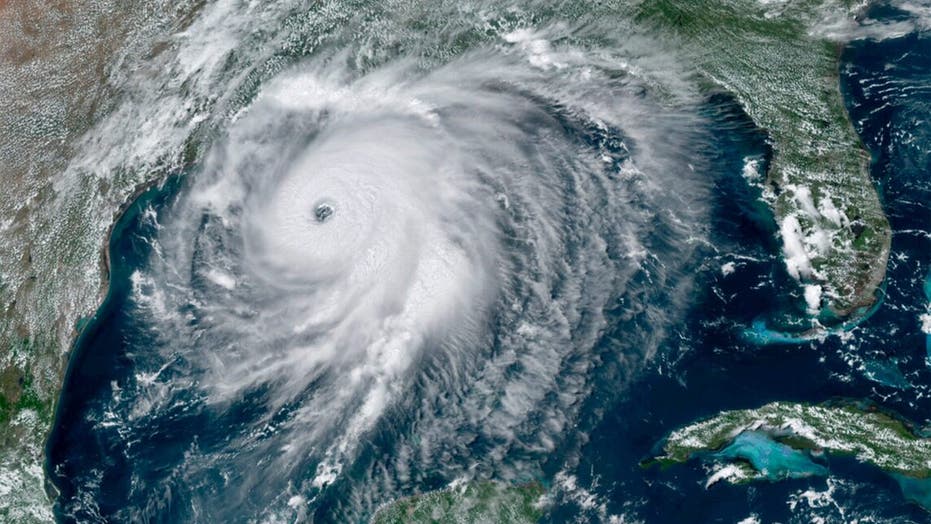
When Hurricane Laura slammed into the Louisiana and Texas Gulf Coast border, it cut a path of destruction that will take years to undo. The storm surge reached nine feet in some places. Sustained wind speeds peaked at 150 miles per hour, making it a Category 4 hurricane and tying the record for the strongest winds of any hurricane to make landfall in Louisiana. The scenes of devastation have been hard to look at. So many homes have been ruined. So many communities have been crushed. And even some lives have been lost.
The power of a storm like Laura reminds us of two things. First, it reminds us of the power we don’t have. We don’t have the power to stop a storm like this. We don’t even really have the power to fully prepare for a storm like this. But second, a storm like Laura also serves as a testament to the power we do have. We do have the power to help each other in times of crisis. We do have the power to love each other through seasons of pain.
And, as has been the case after so many other hurricanes, stories of those who have stepped up to help are already emerging – like that of Leonard Harrison, a volunteer with the Cajun Navy, who, while others were fleeing from the storm, drove 14 hours from Wilmington, North Carolina in his F-250, which he calls “Goliath,” to help with water rescues. He wound up rescuing 28 people from perilous high waters. He was using the power he had to help people in need.
While we do not have power over storms, God does. As the Psalmist reminds us:
He stilled the storm to a whisper; the waves of the sea were hushed. (Psalm 107:29)
But for all the power we don’t have over storms, we must keep in mind that we do have power after storms. We do have the power to love each other, like Leonard Harrison did. And this power has been given to us by God. As one of Jesus’ followers, John, writes:
Dear friends, let us love one another, for love comes from God. (1 John 4:7)
God has given us the power of His love so we can love each other. As we begin the process of cleaning up from Laura, now is the time to use the power God has given us instead of complaining about the power He hasn’t.
The Gulf Coast is counting on us.
To donate to Hurricane Laura relief, click here.


 Pastor Zach's Blog