Posts filed under ‘ABC Extra’
ABC Extra – Repeating the Past
 “Those who cannot remember the past are condemned to repeat it.” So said the Spanish philosopher George Santayana in his 1905 opus magnum The Life of Reason. If only Santayana was right. If only it was only those who had somehow forgotten the past who, ignorant of the lessons of yesteryear, repeated them in these years. Unfortunately, even those who do remember the past, as debase as it might be, often repeat it. The son who knows his father is an alcoholic drinks excessively himself and develops the same addiction. The daughter who is bitter and vindictive remembers well the grudges her mother held against others. The father who hits his wife passes his legacy down to a son who raises his hand to his girlfriend in a fit of rage. We have no problem remembering past calamities. But in spite of our well-defined memories, we all too often repeat them.
What reason can be given concerning those who remember the past and nevertheless consign themselves to repeat it? In our text from this weekend, the apostle Peter reminds us that we are all heirs to “the empty way of life handed to us by our forefathers” (1 Peter 1:18). The Greek word for “empty” is instructive. It is the word mataios which denotes the appearance of a thing as distinct from its essence. That is, mataios allows for a thing to look enticing in its appearance while leading to sin, despair, and death in its essence. One cannot help but think of how Satan tempted Adam and Eve in the Garden: “When the woman saw that the fruit of the tree was good for food and pleasing to the eye, and also desirable for gaining wisdom, she took some and ate it. She also gave some to her husband, who was with her, and he ate it” (Genesis 3:6). Satan tempted history’s first couple with the appearance of wisdom. But what Satan was leading Adam and Eve to, as appealing as its appearance may have seemed, was, in its essence, sin, despair, and death.
What Satan did with Adam and Eve he continues to do with us. He tempts us with a thing that has an appealing appearance, but, in its essence, leads us to sin, despair, and death. Satan tempts us with the appearance of joy through drunkenness. But that ephemeral joy quickly melts into the essence of regret as we suffer through a hangover. Satan tempts us with the appearance of pleasure through sex outside of marriage. But that illusory pleasure quickly melts into essence of pain as a marriage is destroyed. The temptations of Satan look full and marvelous, but, in reality, they are empty and tragic. They are mataios.
Thus, it is no surprise that we fall for temptations from our past. For though we may remember their appealing appearances, we all too often minimize or even forget their essential brokenness.
What remedy is there against Satan’s enticements toward all things mataios? Peter answers, “Set your hope fully on the grace to be given you when Jesus Christ is revealed” (1 Peter 1:13). Again, the Greek for the word “given” is instructive. It is the word phero which refers to something that is not only “given,” but “brought.” That is, God desires not only to give us His grace, He has actually made provision for it to be brought to us through His Son Jesus Christ. Indeed, this is what we celebrate at Christmas: How God was not content to leave His grace supinely suspended in heaven and so deigned to bring His grace to earth in the person and work of Jesus. Our ancestors, beginning with Adam and Eve, may have handed down to us the impoverished ways of mataios, but our God brings down to us His amazing grace in Christ. So instead of trying to remember the pain of past mataios so that you can learn from it, instead, rejoice in the peace of God’s present grace. Because, in the light of God’s eternal grace, mataios loses its appealing appearance. For we now have God’s grace and its incomparable essence of forgiveness. And that’s good news.
Want to learn more on this passage? Go to
www.ConcordiaLutheranChurch.com
and check out audio and video from Pastor Tucker’s
message or Pastor Zach’s ABC!
ABC Extra – Not Just Mighty, Almighty
 My Thanksgiving started out well enough. Melody and I hosted our family’s Thanksgiving dinner this year, complete with turkey, dressing, and all the trimmings. The food was delicious. In fact, everyone had to loosen their belts a couple of notches when we were finished. Thanksgiving success! But the most exciting part of my Thanksgiving was yet to come.
After having to turn down tickets three times this season because of previous commitments, I was offered some tickets to go see my Texas Longhorns play the Aggies on Thanksgiving night in Austin. I could hardly wait. It didn’t matter that I was full and tired. It didn’t matter that a cold front was blowing through, dropping temperatures to near freezing. I was ready for some football! And so, I arrived at Darryl K. Royal Memorial Stadium, decked out in orange, ready to watch the Longhorns run, pass, and tackle their way to victory in a last ditch effort to get a bowl bid. And we almost had it…until that interception at the end of the game. Final score: 24-17. Aggies win.
It was a long drive home that night. Last year, the scenario of a losing season seemed impossible. After all, less than a year ago, we were playing in the BCS Championship game. We were the mighty warriors of the gridiron. But what a difference a year makes. Oh, how the mighty have fallen (cf. 2 Samuel 1:25)!
Even the mightiest of men can fall. Isaiah puts it well: “Even youths shall faint and be weary; and young men shall fall exhausted” (Isaiah 40:30). This is demonstrated time and time again in the pages of Scripture.
In Joshua 10:2, we read about the city of Gibeon: “Gibeon was a great city, like one of the royal cities…and all its men were warriors.” The Hebrew word for “warriors” is gibor, meaning “mighty.” And yet, even the mighty men of Gibeon are no match for the Israelites. For the Gibeonites “fear greatly for their lives” (9:24) because of the Israelites’ success in their campaign against the nations of Canaan and even seek to make a peace treaty with the them. The Gibeonites’ mightiness fails.
Then, in 1 Samuel 17:51, we read about the Philistine fighter Goliath: “David ran and stood over the Philistine and took his sword and drew it out of its sheath and killed him and cut off his head with it. When the Philistines saw that their champion was dead, they fled.” The Hebrew word for “champion” is again gibor. With a smooth stone and a sling, David does what a whole Israelite army cannot: he slays the mighty man Goliath. And Goliath’s mightiness fails.
The mightiness of men, be they warriors or football players, fails. The mightiness of our God, however, does not.
Some 725 years before the birth of Christ, Isaiah prophesies concerning Him: “For to us a child is born, to us a son is given; and the government shall be upon His shoulder, and His name shall be called Wonderful Counselor, Mighty God, Everlasting Father, Prince of Peace” (Isaiah 9:6). “A child will be born,” Isaiah says, “and he will be called, ‘Mighty.’” The Hebrew word for “mighty” is, once again, gibor. However, this mighty One is unlike other mighty ones in the Bible. For when the word gibor is used, it is often used in conjunction with the word ish, the Hebrew word for “man.” But when it is used in Isaiah 9:6, it is used with the word el, Hebrew for “God.” And this makes all the difference. For when the Scriptures talk about the mightiness of men, time and time again, we watch their mightiness fall, falter, and fail. But when the Scriptures speak of the mightiness of God, they speak of it in eternal and unfailing terms. As Nehemiah explains, “God, the great, the mighty, and the awesome God, keeps covenant and steadfast love” (Nehemiah 9:32). God’s keeps His mightiness going, as demonstrated through His faithfulness to His covenant promises and His steadfast love to you and me.
Finally, our God is not just mighty, He is Almighty. That is, He is the supreme Mighty One. For this reason, we trust that His mightiness will never fail. So trust not in your own strength! Trust not in your own gibor! For you have someone much mightier than you. And He’s lying in a manger.
Want to learn more on this passage? Go to
www.ConcordiaLutheranChurch.com
and check out audio and video from Pastor Tucker’s
message or Pastor Nordlie’s ABC!
ABC Extra – The Man with the Plan
 Have you ever had a plan go south on you in a hurry? When I was in college, I was in charge of planning the Christmas service for our campus chapel. The plans did not come together as I expected. Right before the service, my choir director fell ill and was not able to lead the choir. My instrumentalists also did not rehearse as they should have. In fact, there was one instrumentalist who still stands out in my mind to this day.
One of the carols I had planned for the service was “Joy to the World.” Because this is such a boisterous song, I decided to incorporate some cymbal crashes into the arrangement. The difficulty was, the only pair of cymbals our college had were monstrous. Even a gentle crash of the cymbals easily filled the chapel. My cymbal player, however, did not know this. Thus, the beloved lyric, “And heaven and nature sing,” was answered by the biggest, baddest, moist boisterous cymbal crash I have ever heard. In fact, it wasn’t just a crash, it was a smash! The whole congregation jumped. And the joy of the song was replaced by snickers at the surprise.
Sometimes, our plans go south in a hurry. For our planning is never airtight and mistake-proof. The unexpected can smash even our best-laid plans.
This weekend in worship and ABC, we kicked off a new series for Advent titled, “Hello! My Name Is…” In this series, we are taking a look at the names for Jesus as they are famously given to us in Isaiah 9:6: “For to us a child is born, to us a son is given; and the government shall be upon His shoulder, and His name shall be called Wonderful Counselor, Mighty God, Everlasting Father, Prince of Peace.” This past weekend, we talked about what it means for Jesus to be our “Wonderful Counselor.”
In Hebrew, the word for “Counselor” is ya’as. In the Greek translation of the Old Testament, known as the Septuagint, this word is translated as boule. Notably, boule is often translated as the word “plan.” A couple examples will suffice:
- “If this plan or this undertaking is of man, it will fail; but if it is of God, you will not be able to overthrow them. You might even be found opposing God!” (Acts 5:38-39)
- When God desired to show more convincingly to the heirs of the promise the unchangeable character of His plan, He guaranteed it with an oath. (Hebrews 6:17)
In the first example, the Pharisee Gamaliel notes that though man’s plans eventually fail, God’s plans always endure and stand. The Psalmist explains it this way: “The LORD brings the plans of the nations to nothing; He frustrates the plans of the peoples. The plan of the LORD stands forever, the plans of His heart to all generations” (Psalm 33:10-11). Thus, what God plans to do, He always accomplishes, even when His plan includes the death of His one and only Son, as Peter attests to in his Pentecost sermon: “Men of Israel, hear these words: Jesus of Nazareth, a man attested to you by God with mighty works and wonders and signs that God did through Him in your midst, as you yourselves know – this Jesus, delivered up according to the definite plan and foreknowledge of God, you crucified and killed by the hands of lawless men” (Acts 2:22-23). It was God’s plan to kill His Son for the forgiveness of our sins all along. And God’s plan prevails.
God’s plan prevails. This is great comfort as we trust Christ, our Wonderful Counselor. For our Counselor’s plans are sure and good. After all, He has had our salvation planned from the very foundation of the world (cf. Matthew 25:34) and His plan came to pass with the cross. Thus, we can always trust His counsel because we know that it is part of His plan. And whereas our plans can fail, falter, and wind up in disaster, God’s plan remains, is resolved, and winds up in glory. Trust in the plan, found in God’s Word, of your Wonderful Counselor!
Want to learn more on this passage? Go to
www.ConcordiaLutheranChurch.com
and check out audio and video from Pastor Tucker’s
message or Pastor Zach’s ABC!
ABC Extra – Many Workers, Same Denarius
 One of my favorite parables is that of the Laborers in the Vineyard. Jesus says:
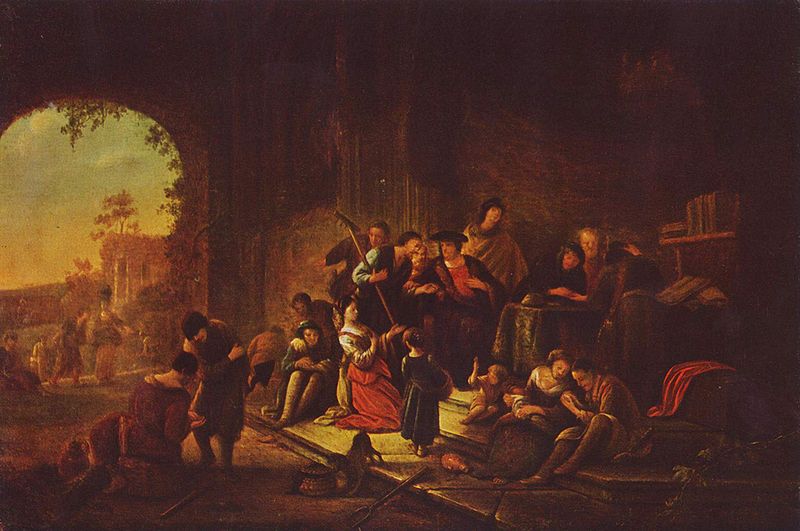
For the kingdom of heaven is like a landowner who went out early in the morning to hire men to work in his vineyard. He agreed to pay them a denarius for the day and sent them into his vineyard. About the third hour he went out and saw others standing in the marketplace doing nothing. He told them, “You also go and work in my vineyard, and I will pay you whatever is right.” So they went. He went out again about the sixth hour and the ninth hour and did the same thing. About the eleventh hour he went out and found still others standing around. He asked them, “Why have you been standing here all day long doing nothing?” “Because no one has hired us,” they answered. He said to them, “You also go and work in my vineyard.” When evening came, the owner of the vineyard said to his foreman, “Call the workers and pay them their wages, beginning with the last ones hired and going on to the first.” The workers who were hired about the eleventh hour came and each received a denarius. So when those came who were hired first, they expected to receive more. But each one of them also received a denarius. When they received it, they began to grumble against the landowner. “These men who were hired last worked only one hour,’ they said, ‘and you have made them equal to us who have borne the burden of the work and the heat of the day.” But he answered one of them, “Friend, I am not being unfair to you. Didn’t you agree to work for a denarius? Take your pay and go. I want to give the man who was hired last the same as I gave you. Don’t I have the right to do what I want with my own money? Or are you envious because I am generous?” (Matthew 20:1-15)
This is a parable, of course, about how all who believe in Christ, whether they have come to faith through baptism as an infant and have labored in the vineyard of Christ’s Church all their life, or whether they believe on their deathbed, finally receive the same heavenly reward. This is what the “denarius” stands for: eternal life. And Jesus’ point is that eternal life is a gift of God’s grace. It cannot be merited by our piety and works.
In verse 2, the landowner agrees “to pay them a denarius for the day.” The NIV here makes it sound as though the workers are somehow meriting their award of a denarius because they are getting paid for what they do in the vineyard. However, in Greek, the word “pay” never appears. The ESV does better: “After agreeing with the laborers for a denarius a day, he sent them into his vineyard.” There is no notion of payment, only a predetermined agreement. Finally, we learn that the denarius was not a payment at all, but a gift. After the laborers who began work at the start of the day begin to grumble because they receive the same denarius as those who began work at the end of the day receive, the landowner asks, “Didn’t you agree to work for a denarius? Take your pay and go.” (And again, the word “pay” does not appear in the Greek.) “I want to give the man who was hired last the same as I gave you. Don’t I have the right to do what I want with my own money? Or are you envious because I am generous” (verses 13-15)? It is the generosity of the landowner that leads to the gift of the denarius, not the work of the laborers. For eternal life is a gift of God’s grace.
Luther explains this well when he writes that in eternity, “In his person none shall be more or have more than the other, Saint Peter no more than you and I.” Even the most notable saints on earth finally all receive the same heavenly reward. For, “in short, all are to be alike before God in faith and grace and celestial bliss” (St. L. VIII:1223). It is important to note that Luther goes on to say that we are indeed recognized with differing degrees of glory for our good works (cf. Luke 19:12-19, 2 Corinthians 5:10, Galatians 6:8-9), but the reward of eternal life itself is universal for all who trust in Christ.
Thus, all Christians are all on their way to the same destiny: eternal life in, with, and through Christ. And when the days in the vineyard of this earth get long, that is a great hope. So lift up your eyes to the heavens! Your denarius awaits.
Want to learn more on this passage? Go to
www.ConcordiaLutheranChurch.com
and check out audio and video from Pastor Tucker’s
message or Pastor Zach’s ABC!
ABC Extra – “We Got Spirit, Yes We Do!”
 I went to junior high, high school, and college at three different places, but the cheer at the beginning of our school basketball games was the same. In order to get everyone hyped up, the cheerleaders would come prancing out and lead the crowd in saying, “We’ve got spirit. Yes, we do! We’ve got spirit. How ‘bout you?” at which time we would all wag our fingers at those on the opposing side of the gym, egging them on to respond. And respond they did – with the same cheer, except louder: “We’ve got spirit. Yes, we do! We’ve got spirit. How ‘bout you?” And this volley would continue back and forth, back and forth until everyone in the audience was hoarse, trying to “out-spirit” the opposing side by sheer volume.
The question cheerleaders ask at the beginning of basketball games is the same question people ought to ask of themselves, though they ought to ask it with a capital “S.” Do we have “Spirit,” as in the “Holy Spirit?” The apostle Peter says that we receive the Holy Spirit when we repent of our sins and are baptized into God’s name and family: “Repent and be baptized, every one of you, in the name of Jesus Christ for the forgiveness of your sins. And you will receive the gift of the Holy Spirit” (Acts 2:38). Thus, if you have been baptized and remember your baptism as you daily repent of sin, there is no question: You “got” Spirit.
Although Christians “got” Spirit, sometimes, some Christians want to know how they can get more Spirit. More than once, more than one person has asked me, “How can I be Spirit-led?” Or, “How can I be Spirit-filled?” Some in the Charismatic movement have made this kind of talk about the Holy Spirit the whole locus and focus of their theology. According to these folks, you must not only have the Holy Spirit, you must be filled with Him. And if you are not filled, some in the Charismatic movement would say that your faith is weak and, perhaps, even non-existent.
As a Christian, you “got” Spirit. But how much Spirit is enough Spirit? And wouldn’t it be nice to get a little more Spirit?
Being Spirit-led and Spirit-filled is not as mysterious, nor is it as exclusive, as some people would make it out to be. Not only does every Christian “got” Spirit, every Christian is filled with the Spirit thanks to God who continuously and generously pours out His Spirit into our lives and hearts. Indeed, this is precisely Peter’s point on Pentecost when he quotes from the prophet Joel: “In the last days, God says, I will pour out my Spirit on all people. Your sons and daughters will prophesy, your young men will see visions, your old men will dream dreams. Even on my servants, both men and women, I will pour out my Spirit in those days, and they will prophesy” (Acts 2:17-18). The Greek word for “pour out” is ekcheo, meaning not only “to pour out,” but “to pour out lavishly.” In other words, God, when He pours out His Spirit, does so generously.
Interestingly, this same word ekcheo is used in the Didache, a manual of early Christian liturgical practice, to describe baptism: “Pour water on the head three times in the name of the Father and of the Son and of the Holy Spirit” (Didache 7:3). The Greek word for “pour” is again ekcheo. The picture of baptism, then, is a powerful one: Just as water is poured lavishly over the head of a person in baptism, the Spirit is poured lavishly into his heart. In baptism, every Christian is generously filled with the Holy Spirit.
The Holy Spirit is often the most overlooked Person of the Trinity. And yet, His importance can hardly be overstated. For the Spirit dwells in us, leads us, guides us, and gives us faith in Christ. As I mentioned in Adult Bible Class, without the Holy Spirit, there would be no Christians because the Holy Spirit is one who converts us to Christ in the first place. So today, give thanks for the Spirit of God. Give thanks that you “got” Spirit. And not just a little Spirit, but a lot.
Want to learn more on this passage? Go to
www.ConcordiaLutheranChurch.com
and check out audio and video from Pastor Tucker’s
message or Pastor Zach’s ABC!
ABC Extra – Lots on the Last Day
 This weekend in worship and ABC, we talked about God’s Kingdom and its final and full arrival on the Last Day when Jesus will return to, as we confess in the Apostles’ Creed, “judge the living and the dead.” This Last Day is the subject of endless conversation and speculation. Indeed, visions of a gloomy apocalypse are frequently advanced in books and movies packed with foreboding buzzwords like “tribulation” and “antichrist” and “plagues” and “rapture” and “millennium.” Because there is so much discussion concerning the return of Christ – and so many different theories concerning the precise nature of His second coming – I thought it might be helpful, in this week’s blog, to survey some of these theories and then, to best of my ability, offer a more biblical picture of the end of days.
When it comes to Christ’s second coming, most interpretations of the nature of His coming center around this passage from John’s Revelation:
And I saw an angel coming down out of heaven, having the key to the Abyss and holding in his hand a great chain. He seized the dragon, that ancient serpent, who is the devil, or Satan, and bound him for a thousand years. He threw him into the Abyss, and locked and sealed it over him, to keep him from deceiving the nations anymore until the thousand years were ended. After that, he must be set free for a short time. (Revelation 20:1-3)
The question that has been the subject of much debate is, “What does it mean that an angel, perhaps representing Jesus, comes and binds Satan for a thousand years?” Four main answers have been given.
The Answer of Historic Millennialism
Historic Millennialism teaches that Christ will visibly return, raise the believing dead from their graves, and set up an earthly kingdom and reign for a thousand years. This will be a time of perfect peace and prosperity. After this, Christ will loose Satan for a small time to make his final assault against the redeemed before our Lord finally casts him into hell for eternity.
The Answer of Postmillennialism
Postmillennialism teaches that the “thousand years” of Revelation 20:3 is not to be taken literally. Rather, it represents a time of ever increasing peace and prosperity on this earth, with more and more people becoming Christians, reaching its climax in Christ’s visible second advent.
The Answer of Dispensational Premillennialism
Dispensational Premillennialism takes different forms, but in its most popular expression it envisions a “secret return” of Christ where believers are raptured into heaven. Following this rapture, the Antichrist arrives on the scene and a seven year period of tribulation ensues. The Antichrist allies himself with, and then breaks his alliance with, the Jews, persecuting them fiercely. Following this seven year tribulation, Christ visibly returns, sets up a perfect millennial kingdom, and then, at the end of a thousand years, releases Satan for a short time to wreak havoc on humanity until he is finally cast into the Abyss and Christ judges the living and the dead.
The Answer of Amillennialism
Like Postmillennialism, Amillennialism sees the “thousand years” of Revelation 20:3 as symbolic, referring to the time of Christ’s Church when the gospel is preached and eternal destinies are changed. However, Satan still works in this world and Satan’s work will become more pronounced shortly before Christ’s second coming.
I would humbly suggest that, out of the above accounts concerning the end of days, the answer of Amillennialism fits best with the biblical data. I say this for several reasons:
-
Following two World Wars in the previous century and terrorist threats and attacks in our own century, most people do not believe the world is slowly becoming better and safer or more Christian. Postmillenialism does not make sense of the world around us.
-
Dispensational Premillennialism is both a relatively new theory, being promoted on a widespread basis by John Nelson Darby in the 1830’s, and speaks of a secret return of Christ in a rapture, a theory nowhere promoted in Scripture. Indeed, according to the Bible, Darby’s so-called “rapture” will be quite visible and quite audible: “For the Lord himself will come down from heaven, with a loud command, with the voice of the archangel and with the trumpet call of God, and the dead in Christ will rise first. After that, we who are still alive and are left will be caught up together with them in the clouds to meet the Lord in the air. And so we will be with the Lord forever” (1 Thessalonians 4:16-17). This hardly sounds like a secret rapture to me.
-
Historic Millennialism has much to it to commend, but does not account for the highly symbolic nature of apocalyptic literature, and specifically the symbolic use of the number “one thousand,” and it essentially promotes a two-fold return of Christ: first at the beginning of the millennium and then again when He judges the living and the dead at the end of time. These events are elsewhere pictured as one episode (e.g., Matthew 25:31-46).
-
Amillennialism recognizes that in the Bible, the number “one thousand” is regularly used in symbolic terms to express completeness (e.g., Exodus 20:6, Deuteronomy 1:11, Psalm 50:10, 84:10, 90:4, Isaiah 60:22, 2 Peter 3:8). Thus, the millennium of Revelation 20:3 expresses the complete time of Christ’s Church on earth.
-
Amillennialism accounts for the fact that Christ’s second coming, the resurrection of the dead, and the final judgment are portrayed by the Bible one event, not as separate events separated by a thousand years (e.g., John 6:44, 1 Thessalonians 4:16-17, Matthew 25:31-46).
- Amillennialism, unlike Dispensational Premillennialism, has a long and distinguished history in the Church, being promoted by the likes of Clement of Alexandria, Origen, Augustine, Martin Luther, and John Calvin.
On balance, it seems as if a simple return of Christ to judge the living and the dead at the end of days is to be preferred to the more complicated end times schemas of Historic Millennialism, Postmillennialism, and Dispensational Premillennialism. Christ’s second return of Christ need not be complex and, for the Christian, it need not be frightening. For Christ’s coming means our salvation, as the preacher of Hebrews reminds us: “Christ was sacrificed once to take away the sins of many people; and He will appear a second time, not to bear sin, but to bring salvation to those who are waiting for Him” (Hebrews 9:28). Come, Lord Jesus!
Want to learn more on this passage? Go to
www.ConcordiaLutheranChurch.com
and check out audio and video from Pastor Tucker’s
message or Pastor Zach’s ABC!
ABC Extra – All Saints’ Day
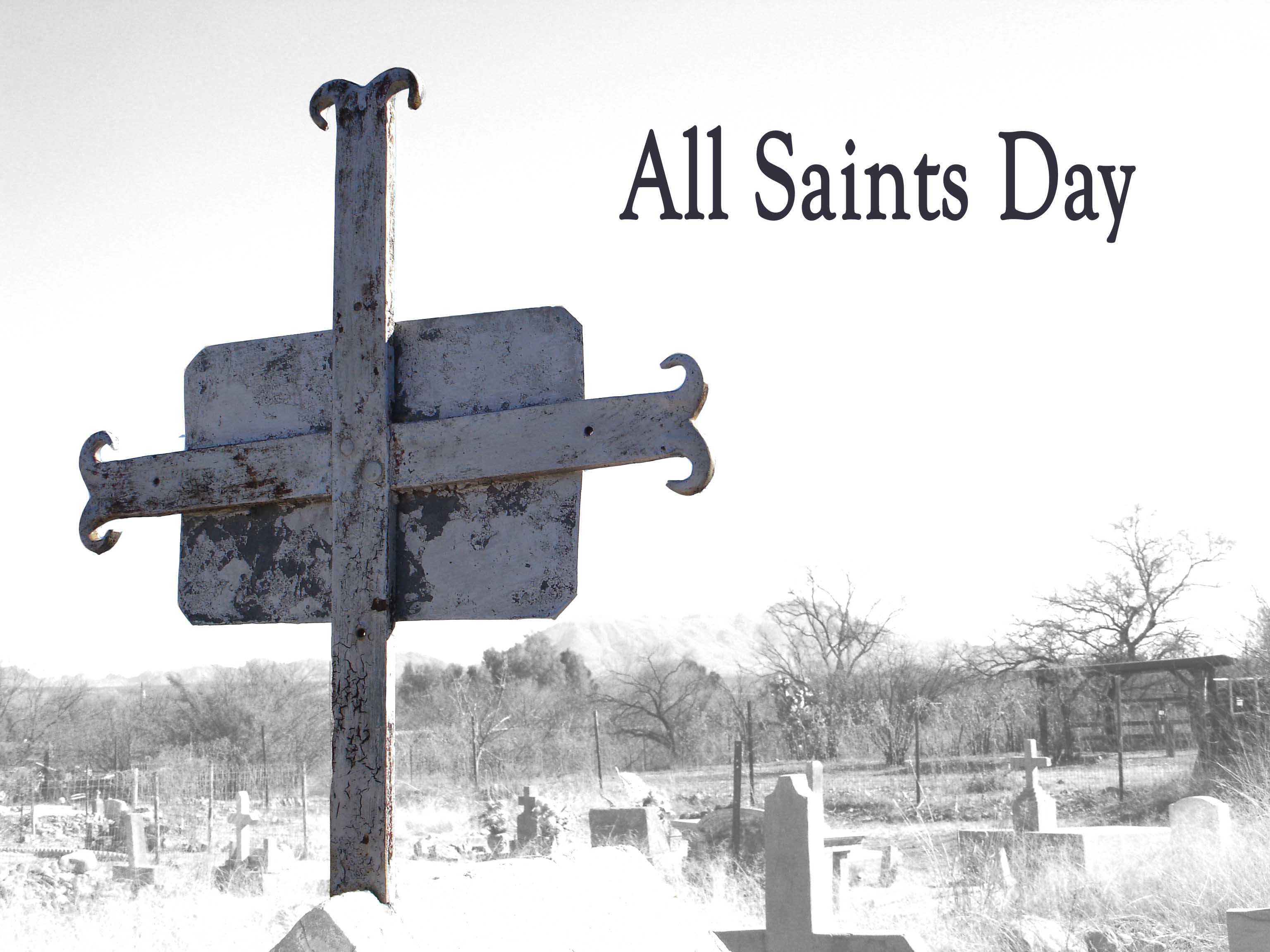 Today is All Saints’ Day, a day on which we remember those saints in Christ who have gone before us and celebrate how we have been made saints through Christ’s death and resurrection. The prayer for All Saints’ Day encapsulates the meaning of this day well:
O almighty God, by whom we are graciously knit together as one communion and fellowship in the mystical body of Jesus Christ, our Lord, grant us so to follow Your blessed saints in all virtuous and godly living that we may come to those unspeakable joys which You have prepared for those who sincerely love You; through our Lord Jesus Christ, Your Son, who lives and reigns with You and the Holy Spirit, one God, now and forever. Amen!
I love this prayer for two reasons. First, it appropriately reminds us that there is much to learn from the saints who have gone before us. Their ways of “virtuous and godly living” ought to be celebrated by us and their insights into God’s Word and Christ’s gospel ought to be studied by us. There is much to be said for remembering – and practicing – the ways of the saints of old. However, it is also important to understand that we do not become saints by remembering and practicing the holy ways of these historic Christians. And this leads me to the second thing I love about this prayer: It tells us also how we become “sainted.” It tells us that we become “sainted” by being “knit together as one communion and fellowship in the mystical body of Jesus Christ.” It tells us that we become “sainted” by being brought into the body of Christ by the blood of Christ. Everyone who is a member of Christ’s body is properly called a saint, even as the apostle Paul says to the church at Corinth: “To the church of God that is in Corinth, to those sanctified by Christ Jesus, called to be saints together with all those who in every place call upon the name of our Lord Jesus Christ, both their Lord and ours” (1 Corinthians 1:2). How are made a saint? We are sanctified and called by Christ. Who are the saints? Everyone, everywhere who calls on the name of Jesus. Indeed, it is this definition of sainthood that we confess in the Apostles’ Creed when we say, “I believe in the communion of saints.”
In my Adult Bible Class yesterday, I touched on two meanings of this phrase, “the communion of saints.” On the one hand, this phrase refers to all Christians from all times in all places, both in heaven and on earth. Nicetas, a bishop in Serbia in the fourth century, explains:
What is the Church but the congregation of all saints? Patriarchs, prophets, apostles, martyrs, all the just who have been, are, or shall be, are one Church because sanctified by one faith and life, marked by one Spirit, they constitute one body. Believe, then, that in this one Church you will attain the communion of saints. (Nicetas in Caspari, anecdota, i p. 355)
A good exposition of “the communion of saints” is also given to us in Hebrews 11, where the preacher takes us through a crash course on the saints of old and commends them for their faith (cf. Hebrews 11:1-2).
Then, on the other hand, I also mentioned that, in Greek, the word for “saints” can be either masculine, referring to people, or neuter, referring to things. Thus, “the communion of saints” can be taken to mean “the communion of sainted, or holy, things.” This is the way that Peter Abelard, the great twelfth century French theologian, understood this phrase. In this case, the phrase, “the communion of sainted things,” was understood to mean the holy things of God: His Word, baptism, and the Lord’s Supper. The Lutheran confessors actually incorporate both understandings of “the communion of saints” when they write, “The Church is the congregation of saints [sainted people] in which the Gospel is purely taught and the Sacraments are correctly administered [sainted things]” (AC VII:1). Thus, the Church is made up of the sainted people of God gathered around the sainted things of God!
But there is yet more to this phrase, “the communion of saints.” The Greek word for “communion” in the Creed is koinonia, a term that, even in secular Greek, describes not primarily communion with other human beings, but communion with God. For example, the first century Greek philosopher Epictetus wrote of the noble man in his “poor mortal body thinking of his fellowship (koinonia) with Zeus” (Epictetus, Discourses 2.19.27). Thus, even in the pagan mind, man desired to have koinonia with god, albeit a false god. This word koinonia was then commandeered by the Christians to describe communion not with false, pagan gods, but with the true God: “God is faithful, by whom you were called into the fellowship (koinonia) of His Son, Jesus Christ our Lord” (1 Corinthians 1:9). We have koinonia with Christ. The phrase, “communion of saints,” therefore, refers not only to the communion Christians have with each other, but to the communion they have with Christ. For without a communion with Christ who is the One who makes saints in the first place, there would be no saints to have communion with each other!
Finally, then, to say, “I believe in the communion of saints” is to say, “I believe that I have communion with Christ. I believe that He meets me by His Word and holy gifts, cleanses me by His blood, and sanctifies me by His Holy Spirit.” But saying all that is a mouthful. And so we simply say, “I believe in the communion of saints.” A simple phrase that means so much. For it describes not only who we are, but who we are with. We’re with Jesus. And being able to be with Jesus makes me feel like – well – a saint.
Want to learn more on this passage? Go to
www.ConcordiaLutheranChurch.com
and check out audio and video from Pastor Tucker’s
message or Pastor Zach’s ABC!
Sermon Extra – Jesus, Priceless Treasure
 The foot bone’s connected to the leg-bone; The leg bone’s connected to the knee bone; The knee bone’s connected to the thigh bone; The thigh bone’s connected to the back bone; The back bone’s connected to the neck bone; The neck bone’s connected to the head bone; Oh hear the word of the Lord!
I can remember singing the above words as a child, learning about the prophet Ezekiel and his encounter with God in the valley of dry bones in Sunday School (cf. Ezekiel 37:1-14). Besides being a fun way to learn a Bible story, this song also had the added benefit of teaching me some anatomy, no matter how rudimentary it may have been. At least I knew what was connected to what.
In our text from this past weekend in worship and ABC, we wrapped up our two week min-series on stewardship titled, “Give & Take” with a look at what we, as Christians, are called to take. In Jesus’ parable of the rich fool, we encountered a negative example of someone who tries to take all the wrong things:
The ground of a certain rich man produced a good crop. He thought to himself, “What shall I do? I have no place to store my crops.” Then he said, “This is what I’ll do. I will tear down my barns and build bigger ones, and there I will store all my grain and my goods. And I’ll say to myself, ‘You have plenty of good things laid up for many years. Take life easy; eat, drink and be merry.’ But God said to him, “You fool! This very night your life will be demanded from you. Then who will get what you have prepared for yourself?” (Luke 12:16-20)
This man tries to take barnfuls of grain only to learn that he can’t take them where it counts – into eternity.
Tragically, the reason this man obsesses over his barnfuls of grain has to do with what they are “connected to,” to use the words of my old Sunday school song. Two words in this text highlight especially well what this man’s windfall of grain is “connected to.” In verse 18, when this man determines that he will build bigger barns to “store” his grain and his goods, the Greek word for “store” is synago, from which we get our word “synagogue.” This man is building a synagogue, or a place of worship, for his stuff! For this man, his grain is an object of worship. Then, in verse 19, when this man says, “And I’ll say to myself, ‘You have plenty of good things laid up for many years,’” the Greek word for “self” is psyche, meaning, “soul.” This man is not only talking in his head, he is talking to his soul. This rich man’s grain has now taken up residence in his soul. Thus, this man is indeed deeply “connected to” his riches. It is the object of his worship and the resident of his soul.
Jesus says, “Where your treasure is, there your heart will be also” (Matthew 6:21). “Your heart will always follow your treasure,” Jesus says. And so, if your treasure is grain, your heart will follow barnfuls of bran. If your treasure is fame, your heart will lust after accolades and acclaim. If your treasure is cash, your heart will yearn after portfolios and scratch. Your heart follows your treasure. So what is your treasure?
Just as a song from my Sunday School years taught me the fundamentals of anatomy, an old hymn reminds me of my true treasure:
Jesus, priceless treasure,
Fount of purest pleasure,
Truest friend to me.
Ah, how long in anguish
Shall my spirit languish,
Yearning, Lord, for Thee?
Thou art mine, O Lamb divine!
I will suffer naught to hide Thee,
Naught I ask beside Thee.
Want to learn more on this passage? Go to
www.ConcordiaLutheranChurch.com
and check out audio and video from Pastor Zach’s
message or Pastor Nordlie’s ABC!
ABC Extra – The Joy of Giving
 The other night, we had a friend and his daughter staying with us. We enjoyed some lively evening conversation and then went off to bed. My buddy’s daughter was getting over an illness, so she was not feeling well and, apparently, she did not sleep well that night. I say, “Apparently, she did not sleep well that night” because, for the most part, I was oblivious to her whines, her cries, and general restlessness that night. My wife, however, who is a light sleeper, was not. “Did you hear her?” she asked me the next morning. “I felt so bad for her.” “I heard her one time…I think,” I stammered.
Being oblivious is nothing new for me. I am well known for overlooking and under-observing things and situations. My wife says it is because I am a guy. And this much I’ll grant her: guys don’t always pay as much attention as they should.
Although the prophet Malachi may have been simply speaking to a nation full of oblivious guys, I highly doubt that was the case. The year is 430 BC. Over one hundred years have passed since a decree went out from the Persian king Cyrus that the Israelites could return to their homeland from their deportation in Babylonia. But few have returned. And those who have returned are spiritually oblivious. Israel’s worship is in a state of despair. There are reports that the Israelites, rather than offering the best (cf. Exodus 23:19) and the first (cf. Exodus 34:19) of their resources to the Lord in worship, are offering animals which are “blind…lame or sick” (Malachi 1:8). And what’s worse, the Israelites seem completely oblivious to their state of spiritual anemia. In fact, one of the most striking rhetorical features of the book of Malachi its use of divine declarations. Throughout the book, God makes a series of lofty declarations, meant point out the complete oblivion of the Israelites to their state of spiritual peril:
- “I have loved you,” says the LORD. But you say, “How have you loved us?” (Malachi 1:2).
- “You, O priests, despise My name.” But you say, “How have we despised Your name?” (Malachi 1:6)
- “You have wearied the LORD with your words.” But you say, “How have we wearied Him?” (Malachi 2:17)
- “Will a man rob God? Yet you are robbing Me.” But you say, “How have we robbed You?” (Malachi 3:8)
Again and again, the Israelites prove themselves oblivious to God’s love and faithfulness and to their sin and wickedness. Indeed, in Malachi 3, God says that the Israelites even try to rob Him. How? “In your tithes and contributions. You are cursed with a curse, for you are robbing Me, the whole nation of you” (Malachi 3:8-9). The Israelites have been selfishly keeping for themselves what they should have been sharing with God. And they didn’t even know it. They were oblivious.
I often wonder if the vast majority of people are completely oblivious to their responsibility to give to God. I quoted these statistics in ABC this past weekend:
- More than one in four Americans give away $0 annually.
- The median annual giving for a Christian is $200, just over half a percent of their annual after-tax income.
- Among Protestants, 10% of evangelicals. 28% of mainline denominational members, 33% of fundamentalists, and 40% of liberal Protestants give away nothing.
Clearly, God’s command to give goes widely unheeded. Yet are we even aware of how much we neglect His statute? Or have we simply lulled ourselves into a state of oblivion, forever content to rehearse the same old chorus of all the reasons and excuses we can’t be generous?
God invites us to give to His work – not because He wants to take from us what we cannot afford, but because He wants to give to us what we do not yet have:
Bring the full tithe into the storehouse, that there may be food in My house. And thereby put Me to the test, says the LORD of hosts, [and see] if I will not open the window of heaven for you and pour down for you a blessing until there is no more need. (Malachi 3:8-10)
At the core of His being, our God is a giver. He loves to give! As Martin Luther so eloquently reminds us:
God has given me my body and soul, eyes, ears, and all my limbs, my reason, and all my senses, and still preserves them. In addition, He gives clothing and shoes, meat and drink, house and homestead, wife and children, fields, cattle, and all my goods. He provides me richly and daily with all that I need to support this body and life, protects me from all danger, and guards me and preserves me from all evil, all out of pure, fatherly, divine goodness and mercy, without any merit or worthiness in me. (Martin Luther, Small Catechism, First Article of the Apostles’ Creed)
What wonderful and bountiful gifts our Lord has given us! And now, He invites us to share in His joy of giving by giving as well – to God’s Church and His people. Will you joyfully receive God’s invitation to give?
Want to learn more on this passage? Go to
www.ConcordiaLutheranChurch.com
and check out audio and video from Pastor Tucker’s
message or Pastor Zach’s ABC!
ABC Extra – The Descent Into Hell
 This past weekend in worship and ABC, we continued our “Credo!” series with a look at the doctrine of the resurrection of Jesus, based on this line from the Apostles’ Creed: “Christ descended into hell. The third day He rose again from the dead.” The fact that Christ “rose again from the dead” is the linchpin of our faith. Indeed, the apostle Paul says it is “of first importance” (1 Corinthians 15:3). Without the resurrection, our “faith is futile” (1 Corinthians 15:17). Thus, in ABC, I spent a great deal of time defending the resurrection’s historicity against skeptics would try to undermine this cornerstone of Christian doctrine.
Blessedly, most Christians believe in Christ’s resurrection. And they appreciate its centrality to our faith. Thus, Christians proudly confess, “The third day He rose again from the dead.” What many Christians do not understand, however, is the line that comes before this: “Christ descended into hell.” In fact, the most common question I receive concerning the Apostles’ Creed is, “Does the Bible really teach that Christ descended into hell?” And, if so, “Where does the Bible teach this?” Though I touched on it in ABC, I wanted to take a slightly more in-depth look at the doctrine of Christ’s descent into hell in today’s blog.
The line, “He descended into hell,” is a relatively late addition to the Apostles’ Creed. It first appears as part of the Symbol of Sirmium in 359 and reads, “Christ died, and descended to the underworld, and regulated things there, whom the gatekeepers of hell saw and shuddered.” It first appears in the Apostles’ Creed in 570. However, just because it appears in the Creed at a late date does not mean it does not have an early origin. Consider, for instance, these quotes, from Irenaeus (c. 180) and Tertullian (c. 200):
It was for this reason, too, that the Lord descended into the regions beneath the earth, preaching His advent there also. (Irenaeus, Against Heresies, 4.27.2)
But it was for this purpose, say they, that Christ descended into hell, that we might not ourselves have to descend thither. (Tertullian, A Treatise on the Soul, 55)
Clearly, the church fathers had no problem with the notion that Christ descended into hell. Nevertheless, because of its late incorporation into the Creed, the phrase, “He descended into hell,” has caused much controversy among Christians. Indeed, some even go so far as refusing to speak this line when they recite the Creed. For those who do speak this line, there are multiple interpretations as to what this line means.
Some interpret this line simply as meaning that Christ descended into the grave, that is, He was buried and truly dead. The Greek of the Creed reads, “Christ descended into ta katotata,” meaning, “the lowest.” These interpreters take this phrase simply to mean not the lowest place of hell, but the low place of a grave in the ground. Roman Catholic interpreters believe that Christ did indeed descend into hell in the traditional sense, but did so to free virtuous people who had gone before Him, but nevertheless could not be saved because they had been born before His advent. The Catechism of the Roman Catholic Church explains: “In His human soul united to His divine person, the dead Christ went down to the realm of the dead. He opened heaven’s gates for the just who had gone before Him” (Catechism of the Catholic Church 637).
Finally, it is probably best to understand Christ’s descent into hell as it is explained in 1 Peter 3:18-19: “For Christ died for sins once for all, the righteous for the unrighteous, to bring you to God. He was put to death in the body but made alive by the Spirit, through whom also He went and preached to the spirits in prison.” The phrase “spirits in prison” is often taken to refer to the eternal prison of hell. As I mentioned in ABC, the Greek word for “preached” is kerysso, a word that was used in ancient Greek games to declare the victor of a contest. Thus, when Christ descended into hell, He did not do so to free the virtuous who had come before Him, for they had already received their salvation through faith in the promise of a coming Messiah (cf. Romans 4:3-8, 18-25). Rather, He descended into hell to kerysso Himself the victor over sin, death, and the devil. The descent into hell is Christ’s victory tour, for through the cross, He has conquered all things wicked. And this is good news!
At Jesus’ empty tomb, the angels sing, “Christ has risen” (Luke 24:6)! Perhaps it is appropriate to add as well, “Christ has descended!” For His descent gives a reason for us to celebrate and for hell to shudder. For Christ’s descent and resurrection, finally, point to the same promise: Christ has conquered the cross and has secured for us eternal life. Praise be to the One who descended and resurrected!
Want to learn more on this passage? Go to
www.ConcordiaLutheranChurch.com
and check out audio and video from Pastor Tucker’s
message or Pastor Zach’s ABC!


 Pastor Zach's Blog