Take Your Sin to the Right Place

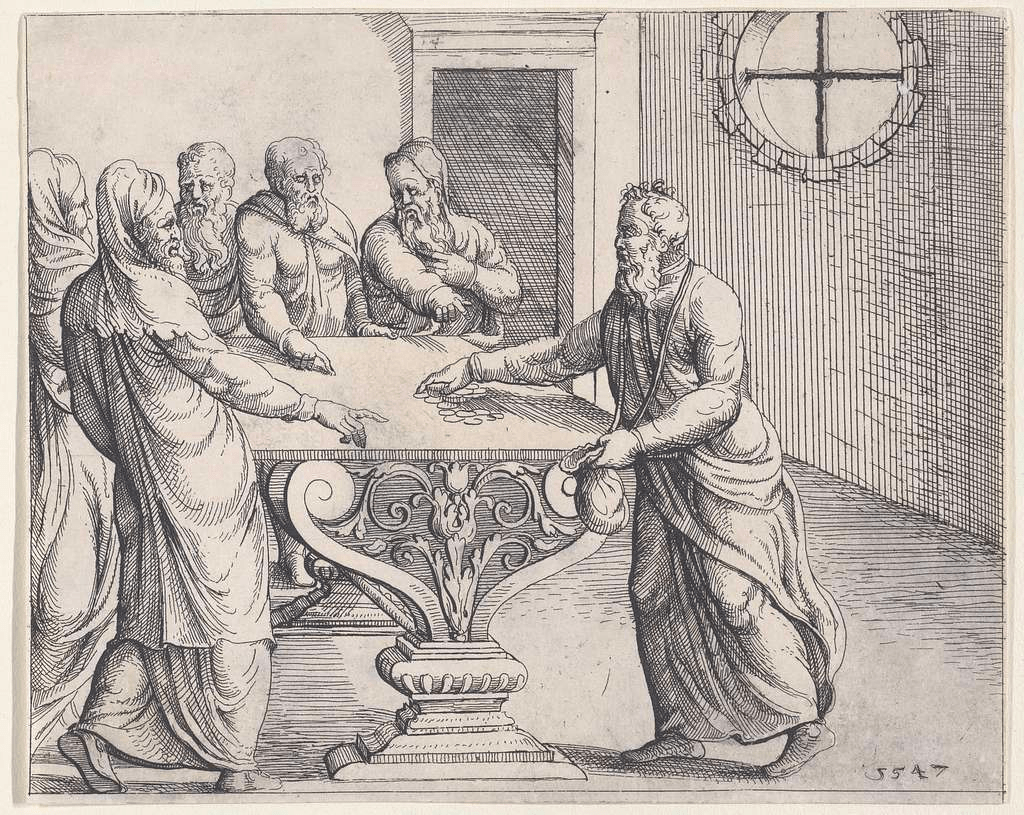
One of the most tragic stories in Scripture is that of Judas Iscariot – the one who betrayed Jesus into the hands of His enemies and, ultimately, His executioners for a pitiful pittance of 30 pieces of silver. Shortly after Judas leads the Jewish religious leaders to Jesus so they can arrest Him, he is overwhelmed by the anguish of his guilt:

When Judas, who had betrayed Him, saw that Jesus was condemned, he was seized with remorse and returned the thirty pieces of silver to the chief priests and the elders. “I have sinned,” he said, “for I have betrayed innocent blood.” “What is that to us?” they replied. “That’s your responsibility.” So Judas threw the money into the temple and left. Then he went away and hanged himself. (Matthew 27:3-5)

Judas’ actions against Jesus are treacherous and wicked. But this does not make his end any less tragic.

Part of what makes Judas’ end so devastating is that he understood the gravity of his actions and began looking for a path to redemption. He rushed back to the ones who had paid him the paltry sum of silver and confessed:

“I have sinned,” he said, “for I have betrayed innocent blood.”

But the religious leaders only lobbed his sin right back on him.

“What is that to us?” they replied. “That’s your responsibility.” (Matthew 27:4).

“That’s your responsibility.” These are the most damning words anyone can speak to any sinner. They remove every hope for redemption, restoration, or reconciliation. This is why it is so important that we not only feel remorse over our sin, but take our sin to the right person.

I have often wondered what would have happened if Judas would have taken his confession to Jesus. How would Jesus have responded? Here’s my guess:

“Judas, you mean the world to Me. I’ll take your sin to the very place to which you betrayed Me. But it is no longer your responsibility.”

Are you overwhelmed by remorse, guilt, or shame? Take it to Jesus – no matter what it is. He will take it from you and, in exchange, give you freedom, forgiveness, and righteousness.

One more thing: if you, like Judas, struggle, for whatever reason, with thoughts of taking your own life, seek help. Whatever it is that is leading you into these thoughts, Jesus wants more for you. Jesus wants life for you. He died so that you can live.

Suicide Rates Keep Climbing

woman-3478437_1920.jpg
Credit: cocoparisienne from Pixabay 

Suicide has become a national mental health crisis. Story after story bears this out. Take this, for instance, from Brianna Abbott of The Wall Street Journal:

The suicide rate among people ages 10 to 24 years old climbed 56% between 2007 and 2017, according to the report from the Centers for Disease Control and Prevention … Around 2010, the death rate of suicides among adolescents and young adults surpassed the rate of homicide deaths, according to the report.

This spike in suicides comes after a period of relatively stable suicide deaths between 2000 and 2007.  And it’s not just young people who are taking their own lives at an exponentially increasing rate. Ms. Abbott goes on to note:

Suicide rates in general have increased in the U.S. across all ages and ethnic groups, rising roughly 30% from 1999 to 2016. 

This is terrifying, especially since we can’t seem to figure out precisely why suicide rates are increasing so dramatically. EJ Dickson, also writing about the latest CDC statistics for Rolling Stone, explains:

Alarmingly, public health experts have no idea why the suicide rate for young adults is increasing so rapidly. “The truth is anyone who says they definitively know what is causing it doesn’t know what they’re talking about,” says Ursula Whiteside, a researcher with the University of Washington, recently told the Washington Post. “It’s a complex problem with no easy answers so far” …

Most mental health experts caution against isolating one “cause” or factor when discussing suicide. Though we know there are certain factors, such as a history of mental illness or substance use, that put teenagers at increased risk for taking their own lives, the mental health establishment simply doesn’t have enough research to draw “firm scientific conclusions” about what causes spikes in suicide, Dr. April Foreman, a psychologist and a board member at the American Association of Suicidology, previously told Rolling Stone. Regardless of what external factors may or may not be contributing, it is “much more likely there are complex things going on in society. We just don’t understand suicide well enough,” she said.

Dr. Foreman’s reference to “complex things going on in society” is ominous. We know monumental societal shifts are taking place. From the ascendency of social media, the overuse and misuse of which has been linked to depression, to the glorification of suicide itself, there are plenty of potential culprits behind these scary statistics, even if we can’t pinpoint precisely how much of a role these culprits play.

With societal shifts affecting how we see the value of our lives – even if their precise effects remain statistically vague – it has become clear that we need a way of seeing ourselves that does not shift with society, but is instead steady in spite of society. Christianity has consistently affirmed and defended the value and dignity of the human person and human life. Our value and dignity are not derived from our status, our income, or even our own feelings about our own selves. Instead, they are grounded in our Creator who, when He created us, called us “very good” (Genesis 1:31). Jesus affirms the value of humanity with a small, but powerful analogy:

Are not two sparrows sold for a penny? And not one of them will fall to the ground apart from your Father.  But even the hairs of your head are all numbered. Fear not, therefore; you are of more value than many sparrows. (Matthew 10:29-31)

“If God takes good care of the sparrows,” Jesus says, “it should be self-evident that He will take great care of you. After all, if the sparrows are valuable to Him, imagine how much more valuable you are to Him.”

Indeed.

So, if you are feeling worthless or like life is not worthwhile, Jesus invites you to drop the societal estimations of your value and find your value – and hope – in Him. He has given you a life worth living.

Hope in the Valley: In Memory of Jarrid Wilson

Jarrid Wilson
Credit: Christian Today

Any story of anyone who takes their own life always rends my heart. When it is the story of a pastor, it has a special poignancy for me. I would be lying if I said ministry is never difficult. It is. I would also be lying if I said I have not, at times, been haunted by deep sadness over a broken situation, an angry person, or a lost soul. I have been. In my theological tradition, pastors often wear stoles – a piece of cloth draped over a person’s shoulders. This is to remind a pastor that he carries a yoke – a burden – as he goes about his ministry. Ministry can be heavy.

What is true of my ministry I am certain was exponentially truer of Jarrid Wilson’s ministry. He was an associate pastor at a Riverside, California megachurch. He was a respected author. And he was the founder of Anthem of Hope, a nonprofit organization advocating for those struggling with depression. Hours before Jarrid took his own life, he preached at the funeral of a lady who herself had committed suicide. As a pastor myself who has preached at such funerals, I know they are some of the heaviest moments in ministry. But on top of all these responsibilities and burdens was Jarrid’s battle with depression. In his most recent book, Love Is Oxygen, he opened up about his own mental health struggles and described how he had contemplated suicide on multiple occasions. This past Monday, his struggles overtook him.

Depression can come for you regardless of your gender, age, success level, or even faith. There is no life hack a person can deploy or mind trick a person can play to shoo depression away. It is an ongoing struggle against darkness in life and heaviness of soul.

Thousands of years ago, the Psalmist knew something about darkness in life and heaviness of soul. In one of the most famous passages in all of Scripture, he writes:

The LORD is my shepherd; I shall not want. He makes me lie down in green pastures. He leads me beside still waters. He restores my soul. He leads me in paths of righteousness for His name’s sake. Even though I walk through the valley of the shadow of death, I will fear no evil, for You are with me; Your rod and Your staff, they comfort me. You prepare a table before me in the presence of my enemies; you anoint my head with oil; my cup overflows. Surely goodness and mercy shall follow me all the days of my life, and I shall dwell in the house of the LORD forever. (Psalm 23) 

The Psalmist did not try to downplay his struggles and sadness. Life, the Psalmist says, can sometimes feel like a “valley of the shadow of death.”  And yet, the Psalmist refused to give up hope.

There is an interesting switch in language that takes place in the midst of this psalm.  The Psalmist opens by talking about the Lord. He is the Psalmist’s shepherd. He makes him like down in green pastures. He leads him beside still waters. But then, suddenly, when the mood of the Psalmist changes, so does the orientation of the Psalm. Instead of talking about the Lord, he begins talking to the Lord: “Even though I walk through the valley of the shadow of death, I will fear no evil, for You are with me; Your rod and Your staff, they comfort me.” The Psalmist no longer talks about the Lord as “He.” Instead, he talks to the Lord as “You.” This is because the Psalmist knows that even when life feels its darkest and heaviest, the Lord is not far. He is right there, personally, with the Psalmist – and with us.

But there’s more. It is interesting that the Psalmist speaks of “the valley of the shadow of death” in the singular while speaking of “green pastures” and “still waters” in the plural. It’s almost as if no matter how dark this world may feel, the blessings of God always outnumber the sin in this world. The valley of the shadow of death may encroach on a person’s soul for a time. But more green pastures and still waters are on their way and are ultimately punctuated by a promise of eternity: “I shall dwell in the house of the LORD forever.”

The language of this ancient poem is not a prescription that can take away depression and suicidal thoughts, but it can offer some perspective if you do struggle with depression and suicidal thoughts. No matter how dark your valley may feel, the Lord walks with you. And no matter how tempted you may be to take your own life into your own hands, the Lord has something for you. He is your Shepherd who wants to lead you lovingly through this life even if you feel like you want to escape from this life.

So, if you’re struggling, pick up the phone. Reach out for help. Ask someone to help you find those “green pastures” and “still waters” that feel so lost and distant. And remember, not only does God love you, many others do, too. There are plenty of reasons to keep on fighting for the life God has given you.

If you are struggling with suicidal thoughts or feelings, call the National Suicide Prevention Lifeline at 1-800-273-8255, or visit suicidepreventionlifeline.org.

2018 in Review

new-year-happy-new-year-2019-beg.jpg

Another year is drawing to a close.  Here’s a look back at some of the stories that caught my attention in 2018.

January
President Trump sparks a controversy by making, behind closed doors, vulgar comments about places like Haiti and Africa, and expresses concern about accepting immigrants from nations like these.  His comments are part of a long-running debate and disagreement over the kind of immigration policy this country should pursue.

February
Marjory Stoneman Douglas High School in Parkland, Florida is shot up by a gunman who kills 17 and wounds 14.  The shooting gives rise to rallies across the country that debate the efficacy of stricter gun control policies.

March
A mystery bomber sparks terror across the city of Austin by leaving and mailing package bombs to apparently randomly selected people across the city.  As law enforcement officials close in on the subject, he blows himself up, killing himself and injuring a police officer.

April
The CEO of Facebook, Mark Zuckerberg, travels to Washington DC to testify before Congress and answer questions about how his company protects users’ data and what it did to stop Russian interference in the 2016 presidential election.

May
The nation of Ireland, which has been historically informed by Roman Catholicism in its national stances on various moral issues, votes to legalize abortion-on-demand when it votes to repeal the Eighth Amendment to its Constitution.

June
Two celebrities, Kate Spade, an iconic fashion designer, and Anthony Bourdain, a foodie and CNN adventurer, tragically take their own lives.  The suicide rate across the country continues to rise.

July
Justice Anthony Kennedy announces his retirement, effective the end of the month.  A so-called “swing” vote on the Supreme Court, his retirement sparks many questions and debate about who will replace him.

August
The New York Times publishes a bombshell report chronicling the abuse of over 1,000 children in the Dioceses of Pennsylvania by over 300 priests there.

September
Confirmation hearings for Judge Brett Kavanaugh, President Trump’s nominee for the man to replace Anthony Kennedy on the Supreme Court, explode after he is accused of sexually assaulting a woman while in high school.  He is eventually confirmed.

October
In the scope of one week, a bomber sends a series of explosive packages to public detractors of the president, and a gunman, armed with an AR-15 and three rifles, walks into a synagogue in Pittsburgh on the Sabbath and kills eleven.

November
The midterm elections are held.  Republicans keep and increase their lead in the Senate while Democrats flip the House of Representatives and give themselves a comfortable majority, leading many to describe the election as a “blue wave.”

December
The 41st President of the United States, George H.W. Bush, passes away.  A state funeral at the National Cathedral in Washington DC is held in his honor.

Needless to say, it’s been a busy year.  There were many more stories I wrote about that I didn’t include in this brief retrospective.  Along with the above stories, in 2018, the famed televangelist Billy Graham died, a columnist for the Washington Post, Jamal Khashoggi, was brutally murdered, a famous evangelical pastor had to step down after accusations of sexual impropriety surfaced in the Chicago Tribune, two major hurricanes crashed into continental United States, the deadliest and most damaging wildfires ever ravaged the state of California, the Hawaiian volcano Kilaeua spewed lava and destroyed homes, the US moved its embassy in Israel from Tel Aviv to Jerusalem, and the stock market took us on a wild ride.

So, what can we learn from all of these stories?  Here are a few thoughts.

First, there is a lot outside of us we cannot control.  From volcanos that erupt to hurricanes that flood to wildfires that scorch, the year’s events remind us that, for all our technological achievements and manpower, there is plenty we cannot control.  Indeed, there are many natural disasters to which we cannot even adequately respond.  The limits of our power should keep us humble in the face of the cosmos.  It is big.  We are small.

Second, there is a lot inside of us we cannot control.  Mass shootings, dangerous bombings, accusations of sexual harassment, and tragic suicides have become commonplace events.  Evil is grimly efficient, it seems, at infecting and overtaking people.  It is difficult to stop tragedy when it turns out that the perpetrator of the tragedy is us.

Third, all this means we need something or someone bigger than the cosmos’s brokenness and bigger than human sinfulness.  We need a Crafter of the cosmos to step in and reorder what has gone wrong.  We need a Helper for humanity to step in and rescue us from our willingly wicked ways.  In short, we need Jesus.  2018 needed Jesus.

My guess is 2019 will need Him, too.  So let’s not only hope for a good new year, let’s pray for one.

Heavenly Father, thank You for Your blessings in 2019. We ask You to guide us in righteousness in 2019 and guard us from sinfulness. Protect us from calamity, foster in us charity, and give us hearts that live in light of eternity.  In Jesus’ name.  Amen.

A Tragic Spate of Suicides

ny-1528472912-zdl3g246nx-snap-image
Credit: New York Daily News

One week.  Two tragic deaths.

First, it was iconic fashion designer Kate Spade, who was found dead in her apartment Tuesday night after she had hung herself.  Then last Friday, it was celebrity chef Anthony Bourdain who, while working on an upcoming episode of his CNN show “Parts Unknown,” also hung himself at the hotel where he was staying in Kaysersberg, France.

We are facing nothing short of a suicide epidemic in our country.  The Centers for Disease Control and Prevention report that suicide rates are up almost 30 percent nationwide since 1999.  During this time period, only one state saw a decrease in suicides: Nevada.  And Nevada’s rate decreased by only 1 percent.  In North Dakota, the suicide rate jumped more than 57 percent during this time period.  In 2016, nearly 45,000 people took their own lives across the United States, making suicide more than twice as common as homicide and the tenth leading cause of death overall.

We have a problem.

Mental illness certainly plays a role in many of these terrible deaths.  But more than half of the suicides in 27 states involved people who had no known mental health concerns.

Of course, no explanation, no matter how clinical or comprehensive it may be, can ever even begin to blunt the pain of a life lost on those left behind.  Mental health diagnoses of diseases like clinical depression often only leave people wondering why physicians weren’t able to help.  Suicide notes often raise more question than they answer.  It seems no explanation can really answer the furious and frustrated one-word interrogation of “why?”.  This is because this is an interrogation birthed by pain and bathed in pain. You see, there is a creeping realization that comes with death – a realization that a person who was once with us has now gone away from us and we will no longer be able to see them, talk to them, or hold them.  As many a grieving person has muttered after the suicide of a loved one: they were taken from us too soon.

The horror of suicide needs some sort of hope.  But hope is hard to find in something as final and gruesome as death.  This is why we need the gospel, for the gospel reminds us that there is a death that undoes death.  While suicide takes people we love from us, the gospel declares that Jesus, out of love, gave His life for us.  As the apostle Paul puts it in Romans 5:8: “God demonstrates His own love for us in this: while we were still sinners, Christ died for us.”

Suicides may feel final, but the cross of Christ reminds us that they do not have to be.  The cross’s effects held on for three days before the cross was double-crossed by an empty tomb.  The effects of a dark moment of despair that leads to a tragic end by one’s own hand may hold on for a little longer, but their days too are numbered.  A resurrection is on its way.

And so, to anyone who is suffering, perhaps in silence, let me say simply this:  you do not have to escape despair through your own death, because despair has already been defeated by Jesus’ death.

He’s your reason to live.

If you’re struggling with thoughts of suicide, you are loved and there is help.  Talk to a counselor or a pastor at your church.  If you need immediate help, please call the National Suicide Prevention Lifeline at 1-800-273-8255.  Do it now.  The life God has given you is far too valuable to lose.