Posts tagged ‘Suffering’
ABC Extra – From Agony to Glory – 1 Corinthians 9:24-27
 It’s not easy being a Christian. Sometimes, we too easily forget this important truth. Indeed, Jesus himself warns while also inviting us: “If anyone would come after me, he must deny himself and take up his cross and follow me” (Matthew 16:24). Following Jesus involves not only the cross of salvation, but a cross of suffering.
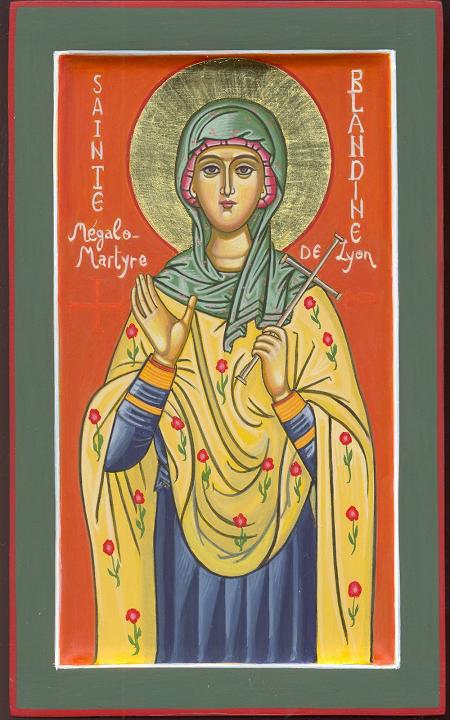
The early church fathers understood the cross of suffering well. For example, consider Blandina of Lyon. Blandina was a lowly slave, thrown into prison during the reign of Marcus Aurelius. When she was finally brought forth from her cell to be tortured, her companions pleaded for leniency, worried that her fragile body would not be able to endure brute beatings. The official presiding over Blandina, however, demanded that the executioners torture her in the most heinous manner possible.
Church lore has it that, even though the executioners brought their worst tortures against this frail lady, they could not kill her or even bring her down as she repeated over and over, “I am a Christian, and we commit no wrongdoing.” Being unable to kill her, she was finally scourged, placed on a red-hot grate, enclosed in a net, thrown before a wild steer who tossed her into the air with his horns, and at last killed with a dagger. Such was the gory martyrdom which this faithful woman endured.
This sad story prompted the famed church historian Eusebius to write: “Though small and weak and despised, yet clothed with Christ the mighty and conquering Athlete, she…having overcome the adversary many times might receive, through her conflict, the crown incorruptible” (Eusebius, Church History, 5.1.42). Blandina faced the most terrible of tortures, but because of her faith, even death could not thwart her final and eternal victory in Christ. Christ is “the mighty and conquering Athlete,” writes Eusebius, and he has given to Blandina “the crown incorruptible.”
Eusebius derives his analogy of Christ as an Athlete and the prize of salvation as a crown from our text for this past weekend in worship and ABC:
Do you not know that in a race all the runners run, but only one gets the prize? Run in such a way as to get the prize. Everyone who competes in the games goes into strict training. They do it to get a crown that will not last; but we do it to get a crown that will last forever. (1 Corinthians 9:24-25)
As I mentioned in ABC, the Greek word for “competes” is agonizomai, from which we get our English word “agony.” Thus, competing in the game of life is not always easy. Sometimes, it can involve agony, pain, and persecution. This is why the apostle Paul writes of his ministry: “We proclaim Christ admonishing and teaching everyone with all wisdom, so that we may present everyone perfect in Christ. To this end I labor, struggling” (Colossians 1:28-29). The Greek word for “struggling” is agonizomai. Paul freely admits that preaching the gospel and contending for the faith can sometimes be agonizing. But Paul continues: To this end I labor, struggling with all his energy, which so powerfully works in me” (Colossians 1:29). Paul’s ministry may involve agonizomai, but he does not have to face agonizomai alone. No, Christ’s strength powerfully works in him and endures it with him. After all, Christ endured the worst agonizomai of all – the agonizomai of the cross. Thus, he can surely help us as we face the agonizomais of life.
Are you suffering? Are you being persecuted? Are you hurting? Christ gives his energy to help us face the agonizomais of this world and of our lives. He gives us strength for today and a crown for eternity. And as Blandina and all the martyrs would most certainly tell us, the agonizomais of this life cannot even begin to compare with the crowns of glory which await us (cf. Romans 8:18). So stand strong!
Want to learn more on this passage? Go to
www.ConcordiaLutheranChurch.com
and check out audio and video from Pastor Tucker’s
message or Pastor Zach’s ABC!

Pondering Christ’s Passion
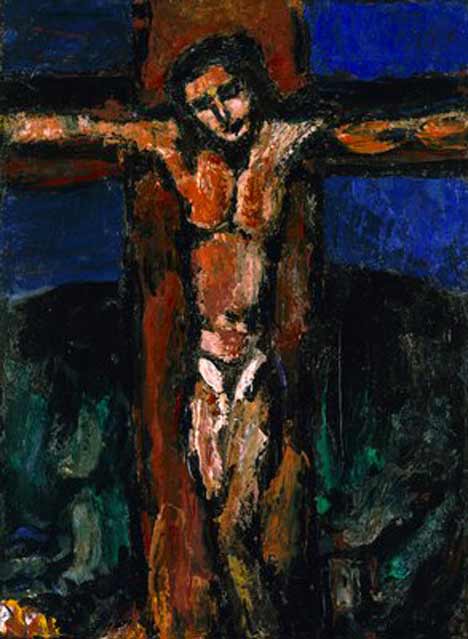 It is a traditional devotional practice during the season of Lent for Christians to take some time to reflect on Christ’s sacrifice for us on the cross. As we are in the midst of this special season, I thought it would be appropriate to share with you some selections from Martin Luther’s Meditation on Christ’s Passion from 1519. This meditation was one of Luther’s favorites. At one point he called it his “very best book.” Indeed, it is a brilliant reflection as Luther focuses with laser like clarity on Christ’s sacrifice.
As you read these words, I would encourage you to notice the way in which Luther draws a sharp distinction between God’s Law and God’s Gospel. God’s Law is expressed in a way that is harsh and inescapable. Luther’s expression and condemnation of our sinfulness might sound shocking, but it is certainly Scriptural. But Luther does not leave us in despair. With the heart of a pastor, he points us to the sacrifice of Christ and gloriously sets forth for us how it is all-sufficient for our sin.
And so I invite you to ponder now on Christ’s holy Passion. May this reflection be a blessing to you.
They contemplate Christ’s passion aright who view it with a terror-stricken heart and a despairing conscience. This terror must be felt as you witness the stern wrath and the unchanging earnestness with which God looks upon sin and sinners, so much so that he was unwilling to release sinners even for his only and dearest Son without his payment of the severest penalty for them. Thus he says in Isaiah 53:8, “I have chastised him for the transgressions of my people.” If the dearest child is punished thus, what will be the fate of sinners? It must be an inexpressible and unbearable earnestness that forces such a great and infinite person to suffer and die to appease it. And if you seriously consider that it is God’s very own Son, the eternal wisdom of the Father, who suffers, you will be terrified indeed. The more you think about it, the more intensely will you be frightened.
You must get this thought through your head and not doubt that you are the one who is torturing Christ thus, for your sins have surely wrought this. In Acts 2:36–37, St. Peter frightened the Jews like a peal of thunder when he said to all of them, “You crucified him.” Consequently three thousand alarmed and terrified Jews asked the apostles on that one day, “O dear brethren, what shall we do now?” Therefore, when you see the nails piercing Christ’s hands, you can be certain that it is your work. When you behold his crown of thorns, you may rest assured that these are your evil thoughts, etc.
We must give ourselves wholly to this matter, for the main benefit of Christ’s passion is that man sees into his own true self and that he be terrified and crushed by this. Unless we seek that knowledge, we do not derive much benefit from Christ’s passion.
After man has thus become aware of his sin and is terrified in his heart, he must watch that sin does not remain in his conscience, for this would lead to sheer despair. Just as our knowledge of sin flowed from Christ and was acknowledged by us, so we must pour this sin back on him and free our conscience of it. Therefore beware, lest you do as those perverse people who torture their hearts with their sins and strive to do the impossible, namely, get rid of their sins by running from one good work or penance to another, or by working their way out of this by means of indulgences. Unfortunately such false confidence in penance and pilgrimages is widespread.
You cast your sins from yourself and onto Christ when you firmly believe that his wounds and sufferings are your sins, to be borne and paid for by him, as we read in Isaiah 53:6, “The Lord has laid on him the iniquity of us all.” St. Peter says, “in his body has he borne our sins on the wood of the cross” (1 Peter 2:24). St. Paul says, “God has made him a sinner for us, so that through him we would be made just” (2 Corinthians 5:21). You must stake everything on these and similar verses. The more your conscience torments you, the more tenaciously must you cling to them. If you do not do that, but presume to still your conscience with your contrition and penance, you will never obtain peace of mind, but will have to despair in the end. If we allow sin to remain in our conscience and try to deal with it there, or if we look at sin in our heart, it will be much too strong for us and will live on forever. But if we behold it resting on Christ and see it overcome by his resurrection, and then boldly believe this, even it is dead and nullified. Sin cannot remain on Christ, since it is swallowed up by his resurrection. Now you see no wounds, no pain in him, and no sign of sin. Thus St. Paul declares that “Christ died for our sin and rose for our justification” (Romans 4:25). That is to say, in his suffering Christ makes our sin known and thus destroys it, but through his resurrection he justifies us and delivers us from all sin, if we believe this.
Luther’s Works: American Edition, Volume 42, pages 8-12


 Pastor Zach's Blog