Posts tagged ‘SCOTUS’
Justice Anthony Kennedy Will Retire
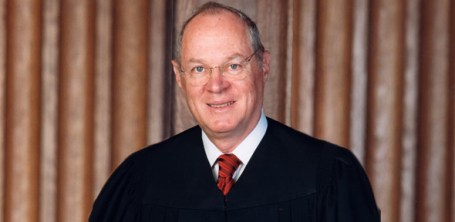
In what was one of the biggest stories of this past week, after 30 years on the bench of the Supreme Court, Justice Anthony Kennedy announced his retirement last Wednesday, effective July 31. Justice Kennedy’s tenure as a Supreme Court justice was fraught with anticipation and tension when various landmark cases were being decided, with many referring to Kennedy as the court’s “swing vote.” He voted with the more conservative branch of the court on issues such as gun control and campaign financing while siding with the more progressive branch on issues like same-sex marriage, abortion, and the death penalty.
Not surprisingly, the announcement of Justice Kennedy’s retirement has set off a flurry of political activity, with conservatives delighted that President Trump appears poised to deliver another proponent of originalist jurisprudence to the nation’s highest court while those on the liberal flank of the political divide worry about what such a justice could mean not only for the current progressive agenda, but for some of the most consequential Supreme Court decisions of the past half-century.
The fiery debate that is unfolding is a timely reminder for Christians that good judgment really does matter. Over the past few decades, it has become fashionable to decry nearly any sort of judgment as self-righteous judgmentalism, and to respond to those who call for keen legal, moral, ethical, or theological discernment with a cry for tolerance and relativism – living and letting others live. This is why an artist like Chris Brown can sing a song like “Don’t Judge Me,” where he asks his girlfriend to forgive his indiscretions. This is why Justice Kennedy himself could write, in a 1992 majority opinion on Planned Parenthood v. Casey in support of abortion:
At the heart of liberty is the right to define one’s own concept of existence, of meaning, of the universe, and of the mystery of human life. Beliefs about these matters could not define the attributes of personhood were they formed under compulsion of the State.
This is a judgment that refuses to make a judgment on something as basic and fundamental as what constitutes life. In this way, it is relativistic in the extreme. Of course, by not making a judgment on what constitutes life, Justice Kennedy makes a de facto judgment: either there is no human life in the womb, or there is no human life in the womb worth protecting. Either one is a judgment that carries with it massive life-and-death implications.
A moment like Justice Kennedy’s retirement reveals that an unmoored relativism and an absolutist tolerance ultimately cannot stand. Society needs and wants good judgment. After all, judgment, both legal and personal, decides how money is spent, how people are treated, what relationships are desirable and permissible, and, as Planned Parenthood v. Casey demonstrates, even which lives endure. The Supreme Court is called upon to render judgments on disputed issues according to the U.S. Constitution. As Christians, we are called, first and foremost, to judge our own lives according to the law of the Lord and then, second, to lovingly and compassionately call others to appreciate the beauty, the value, and the wisdom of this divine law.
Our society is in desperate need of good judgment. Sadly, we live in a time rife with poor judgment where standards, especially in the realm of politics, shift for the sake of expediency and, as the fight over a new nominee for the Supreme Court will surely reveal, power. But, as Jesus warns, “In the same way you judge others, you will be judged, and with the measure you use, it will be measured to you” (Matthew 7:2). We will not be able to elide consistent standards of judgment forever in order to suit our own fleeting fancies. Our standards and principles may slide and glide around today’s political ice rink, but God’s standards will outlast our shifts and will, ultimately, judge our shifts. Perhaps we would do well to consider His standards when making our judgments.
Obergefell v. Hodges
 When the Supreme Court ruled on Obergefell v. Hodges[1] a little over a week ago, the verdict was not a surprise, but the reaction was fierce. Facebook profiles and even the White House went rainbow. Crowds gathered to celebrate and shed tears of joy. Others were not nearly so jubilant. Jonathan Saenz, President of Texas Values, issued this statement:
This decision is the most egregious form of judicial activism of our time, overriding the votes of over 50 million voters, including millions in Texas. The freedom to democratically address society’s most fundamental institution is central to ordered liberty. The Court has taken that freedom from the people.
This decision has no basis in the text of the Constitution and will never be accepted by millions of Americans and Texans that understand that marriage, by nature and God’s design, can only be the union of a man and woman, husband and wife, mother and father. No decision by five judges can ever alter this fundamental truth.[2]
As Christians, it can be hard to know what to say or where to stand. The day the Supreme Court’s decision came down, I offered some initial reflections with the promise of more to come. These are those further reflections. Though these reflections will not address every concern, they will hopefully give us a way to begin to think theologically and pastorally about what has transpired and help us live together peacefully and in love.
What Scripture Says
As I said in my original blog on the Supreme Court’s decision, we need to remain committed to what Scripture says about all our relationships and, specifically, those that are deeply intimate in nature. But we also must remember that our understanding of Scripture can prove fallible. It is easy to fall prey to foolish and sloppy readings of what the Bible has to say on sexual ethics, making assumptions that are based more in our cultural biases than in careful exegetical study. As William Eskridge explains in an article for The New York Times:
Biblical support for slavery, segregation and anti-miscegenation laws rested upon broad and anachronistic readings of isolated Old Testament passages and the Letters of Paul, but without strong support from Jesus’ teachings in the Gospels … The current … view that God condemns “homosexual behavior” and same-sex marriages comes from the same kind of broad and anachronistic scriptural readings as prior support for segregation.[3]
Although Eskridge’s assumed contradiction between what Jesus taught and what the rest of the Bible has to say is problematic, he does have a point: we have not always gotten things right.
So how do we avoid misreading Scripture on gay marriage? To begin with, we must never handpick proof texts without context. Arguments made in this way against gay marriage are not only not persuasive theologically, they’re also not solid methodologically. A better hermeneutical case for traditional marriage can be made by looking at the sweep and scope of Scripture. Scripture begins (Genesis 2:24) and ends (Revelation 19:7) with the wedding of a bride and her groom. Jesus affirms both God’s creational and eschatological pattern for this staid institution as one that involves a husband and a wife (Matthew 19:4-6). Furthermore, when this pattern for marriage is abandoned, the results never seem to be good (e.g., Genesis 29:30; 1 Kings 11:1-4; Proverbs 6:32; 1 Corinthians 5:1-2).
The Bible does not seem to be nearly so concerned with condemning gay marriage specifically as it is with affirming God’s design for marriage generally – and not just because deviating from God’s design is morally wrong, though, in fact, it is, but because it is personally hurtful. Marriage has not only a moral design; it has a compassionate intent. This is why God institutes it as gracious gift (cf. Genesis 2:18). The biblical authors do not want people to miss out on God’s gracious gift by not receiving it as God intended it.
How We Say What Scripture Says
When speaking about same-sex marriage, we must stop embracing and employing over-the-top rhetoric. A pastor who threatens, even if figuratively, to immolate himself if the Supreme Court allows for nationwide gay marriage sounds, and perhaps is, insane. A preacher who drops the Supreme Court’s ruling to the ground while holding up the Bible in the middle of his sermon may garner some applause from the faithful, but such grandstanding does nothing to contribute to civil and important conversation.
I can’t help but wonder if the reason we are sometimes tempted by such silly stunts is because we live with a kind of Chicken Little apocalypticism. We really are afraid the sky is falling. But it is not.
Chief Justice John Roberts, in his dissenting opinion, writes:
The Court today not only overlooks our country’s entire history and tradition but actively repudiates it, preferring to live only in the heady days of the here and now. I agree with the majority that the “nature of injustice is that we may not always see it in our own times.” … As petitioners put it, “times can blind.” … But to blind yourself to history is both prideful and unwise.
This is well stated. As Justice Roberts notes, the ethical stances of yesteryear are by no means unimpeachable, but they are also not meant to be thoughtlessly discardable in an assumed inexorable evolutionary advancement toward ethical nirvana. C.S. Lewis would remind us that there is a “great cataract of nonsense that pours from the press and the microphone of [our] own age.”[4] In other words, we’re not as enlightened or as advanced as we think we are.
Thus, we need not fear. What is happening now does not mean the sky is falling. It simply means that history is marching – sometimes wisely and sometimes foolishly. Waiting and watching to see what comes of “the heady days of the here and now” is a much smarter – and, I would add, much less stressful – option than opining about the doom and gloom that lurks around the corner.
Religious Liberty and Pastoral Care
Sadly, the Supreme Court’s decision does raise real concerns over religious liberty. In the majority opinion, Justice Kennedy addresses these concerns, writing:
It must be emphasized that religions, and those who adhere to religious doctrines, may continue to advocate with utmost, sincere conviction that, by divine precepts, same-sex marriage should not be condoned. The First Amendment ensures that religious organizations and persons are given proper protection as they seek to teach the principles that are so fulfilling and so central to their lives and faiths, and to their own deep aspirations to continue the family structure they have long revered.
Justice Kennedy’s synopsis of the First Amendment is interesting – and troubling. He sees the First Amendment as protection to “teach the principles that are so fulfilling and so central to … lives and faiths.” This is well and good. But what happens when teaching faith translates into living faith? What happens when those living their faith intersect with others who do not share their faith? Does religious protection now extend only to what one says?
The dissenting justices are rightfully skeptical of the majority’s nod to and definition of religious liberty. Justice Thomas Roberts warns:
Religious liberty is about more than just the protection for “religious organizations and persons … as they seek to teach the principles that are so fulfilling and so central to their lives and faiths.” … Religious liberty is about freedom of action in matters of religion generally, and the scope of that liberty is directly correlated to the civil restraints placed upon religious practice.
It is not just paranoid, martyrly Christian activists who have concerns about the narrowing parameters for religious liberty; it is a sitting justice of the Supreme Court. So how are we to respond?
I would argue that the best way to respond to threats against religious liberty is not politically, but pastorally. This is not to say that Christians should never be involved in politics; it is only to say that politics must take the backseat to love. So rather than offering a political strategy, allow me to share a few pastoral thoughts.
What makes same-sex marriage an ethically thorny issue is that it simultaneously aches for something that deserves our compassion while also promoting something that calls for our repudiation. On the one hand, the desire to marry someone to whom you are attracted, whether that person is of the same or opposite sex, represents an ache for companionship. This is why, in the majority opinion, Justice Kennedy writes:
From their beginning to their most recent page, the annals of human history reveal the transcendent importance of marriage. The lifelong union of a man and a woman always has promised nobility and dignity to all persons, without regard to their station in life. Marriage is sacred to those who live by their religions and offers unique fulfillment to those who find meaning in the secular realm. Its dynamic allows two people to find a life that could not be found alone, for a marriage becomes greater than just the two persons. Rising from the most basic human needs, marriage is essential to our most profound hopes and aspirations.
Such an ache for companionship not only ought to be acknowledged, it ought to be affirmed by all Christians. God did, after all, create us as relational beings (cf. Genesis 2:18). Desire for companionship, regardless of whether you are gay or straight, is perfectly normal and natural.
At the same time the Bible affirms the human ache for companionship, however, it also puts boundaries on how such companionship is expressed erotically and, ultimately, maritally. Again and again, the Bible calls upon us to control our desires – erotic and otherwise (cf. James 1:14-15). Though such a call runs quite contrary to the spirit and sensibilities of our age, Christians must continually uphold this call in their speaking and living.
Tragically, many Christians have spent so much time proclaiming that people must control their desires that they have forgotten to empathize with them in their loneliness. People who are romantically attracted to the same sex have much deeper and more profound needs than just sex. They, like everyone, need love, which we must be prepared to show, lest we defy the command of Christ: “By this all men will know that you are My disciples, if you love one another” (John 13:35).
Ultimately, we must never forget that same-sex marriage involves people. Indeed, though nearly everyone knows the Supreme Court has now legalized nationwide same-sex marriage, few know the particulars of the plaintiff who brought the case. Jim Obergefell married John Arthur three months and 11 days before John died. Jim knew their marriage would not last long because, when they wed, John was in the dying throws of ALS. Jim brought a case to the Supreme Court because he wanted to be listed as the surviving spouse on John’s death certificate in Ohio, a state that heretofore did not allow for gay marriage. Their story, then, is not just about gay marriage. It’s also about sickness, sadness, and caregiving – all universal themes to the human experience. Even as we express concerns over same-sex marriages, we must also recognize that the people in them do things that are noble and hold values that we share.
Decrying same-sex marriage with protests, rallies, and votes will not change hearts. Love, however, just might. So let’s focus on what people actually need – not a vote against them, but love for them. In today’s milieu of broad and fierce political support for same-sex marriage, it is probably our only option. But that’s okay. Because it just so happens that it’s also our best option.
_________________________________
[1] Obergefell v. Hodges, 576 U.S. (2015).
[2] William Eskridge cited by David Walls, “Supreme Court’s Marriage Ruling Is Egregious Attack On Democracy, Will Never Be Accepted,” Texas Values (6.26.2015).
[3] William Eskridge, “It’s Not Gay Marriage vs. the Church Anymore,” The New York Times (4.25.2015).
[4] C.S. Lewis, “Learning in War-Time,” The Weight of Glory, Walter Hooper, ed. (San Francisco: HarperSanFrancisco, 2001), 59.
It’s Not About The Supreme Court Ruling

Credit: Wikipedia
There was the ruling. And then there was the reaction to the ruling. When the Supreme Court ruled in favor of the arts and crafts chain Hobby Lobby, saying it did not have to pay for certain types of birth control as mandated by the Affordable Care Act because it considered them abortifacients which violated the theological beliefs of the company’s owners, the reaction was swift and fierce – from both sides. Mark Goldfeder, senior fellow at the Center for the Study of Law and Religion at Emory University, announced:
Here is what the decision means: People have First Amendment rights, and even if the corporations themselves are not entitled to Free Exercise exemptions, the people behind the corporate veil, the business owners themselves, certainly are.
On the other side, Judy Waxman, vice president of health and reproductive rights at the National Women’s Law Center, lamented:
We think it’s a bitter pill to swallow for women, and that the decision is saying that bosses know best and their religious beliefs can trump very basic health-care coverage. It’s especially harmful to women, but beyond this, down the line, there will be other cases, other challenges, that could have an even broader effect.[1]
Of course, along with these measured responses, there were also the less measured responses of the Twitterverse, like one post advocating arson: “#HobbyLobby are scum of the earth. Burn every single one down, build a homeless shelter there instead.”[2] Then, there was another very humble post from a person who agreed with SCOTUS’s ruling: “Ha. Ha. It’s The. Law.”[3]
What fascinates me about all these responses – whether they be sophisticated or sleazy – is how little they have to do with the actual legal ins and outs of this case and how much they reflect the radically disparate worldviews of our society. I have found no better synopsis of the clash of worldviews in this case than this from Trevin Wax:
A generation ago, a person’s religious observance was a public matter, a defining characteristic of one’s identity, while a person’s sexual activity was something private. Today, this situation is reversed. A person’s sexual behavior is now considered a defining characteristic of identity, a public matter to be affirmed (even subsidized) by others, while religious observance is private and personal, relegated to places of worship and not able to infringe upon or impact the public square.
The culture clash today is less about the role of religion in business or politics, and more about which vision of humanity best leads to flourishing and should therefore be enshrined in or favored by law.[4]
This is exactly right. Different people value different things. For some, their faith is their defining characteristic. Thus, they have a strong desire to practice their faith in every area and aspect of their lives, including their business dealings. For others, some other thing – like their sexuality – is their defining characteristic. And anything perceived as an affront to their sexual identity is worthy of unrestrained caustic choler.
As a Christian, I really have no choice when it comes to how I will define myself: my life must be defined by Christ. In the words of the apostle Paul, “It is no longer I who live, but Christ who lives in me” (Galatians 2:20). So what does this mean for my interactions with those who define themselves by other things? A few things come to mind.
First, I must love those with differing worldviews. As Ed Stetzer so pointedly says in his article on the Hobby Lobby ruling, “You can’t hate a people and reach a people at the same time.”[5] People who live outside a Christian worldview are not to be destroyed or oppressed in a political or judicial power grab, but loved through a winsome witness.
Second, I must realize that my worldview is no longer a privileged majority worldview in our society. Indeed, many people are not at all concerned that a Christian may be legislatively or legally forced to do something that goes against his conscience. Again, Ed Stetzer writes, “Most Americans are not as passionate about the religious liberty issue (when connected to contraception, even abortifacient contraception) as most evangelicals and conservative Catholics.” Trevin Wax reveals that “a record number of Americans (1 in 3) said the first amendment [which grants religious liberty] goes too far in the freedom it promises.” This is just a reality.
Third, I must make the case – through both a rigorous intellectual defense and a gentle, quiet lifestyle – why my worldview should be seriously considered and why it does indeed lead to true human flourishing. It is important to note that this case cannot be made quickly. Indeed, it cannot even be made by just my life or in just my lifetime. No, this is a case the whole Church must make. And blessedly, the Church has been making it for millennia. For instance, the Church made its case here. And here. And here. And here. This is why I doubt any Supreme Court ruling – be it in favor of or against religious liberty – will kill the Church’s case. For this is the case and cause of Christ.
Let’s keep making it.
______________________________
[1] Ashby Jones, “Legal Experts, Advocates React to Supreme Court’s Hobby Lobby Ruling,” The Wall Street Journal (6.30.2014).
[2] Costa Koutsoutis, @costa_kout, 6.30.2014
[3] Harriet Baldwin, @HarrietBaldwin, 6.30.2014
[4] Trevin Wax, The Supreme Court Agrees With Hobby Lobby, But Your Neighbor Probably Doesn’t,” The Gospel Coalition (6.30.2014).
[5] Ed Stetzer, “Hobby Lobby Wins: Where Do We Go from Here?” The Exchange (6.30.2014).


 Pastor Zach's Blog