Posts tagged ‘Natural Selection’
Christianity in a Culture of Narcissism: From Darwin to Dawkins
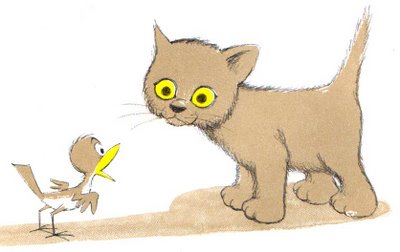 Growing up, one of my favorite books was P.D. Eastman’s Are You My Mother? If you have kids, or if you grew up with my generation, or even the generation before, you no doubt remember this jewel of a children’s story. It features a baby bird who hatches while his mother is out worm-hunting. When he discovers he is alone in the nest, he ventures out looking for his mother. But he does not know who she is or what she looks like. So he goes to a kitten and asks her if she is his mother. The cat remains silent. So he goes to a hen. No dice. She’s the wrong kind of bird. He journeys on to find a dog. But the dog insists she is not the bird’s mother. Desperate, the little bird presses on to even inanimate objects, asking if they are his mother – a car, a tugboat, a plane, and finally an enormous power shovel. “Are you my mother?” the bird asks the shovel. The shovel, much to the little bird’s fright, snorts smoke out of its exhaust stack and picks up the bird and lifts him high, high into the sky. But then, in a twist of fate, the shovel drops him right back into his nest just in time for his real mother to return. And when the bird sees her, he sings with delight, “I know who you are. You are not a kitten. You are not a hen. You are not a dog. You are not a cow. You are not a boat, or a plane, or a Snort!” – the little bird’s name for the power shovel – “You are a bird, and you are my mother.”[1]
Perhaps the reason this story has resonated with the hearts of so many children for so many years is because it touches on a need all of us have – to belong. The little bird wanted to know to whom he belonged. And so do we. As kids, we want to feel as though we belong to our parents. As we grow, we want to belong to a group of our peers. As we get yet older, we often will give ourselves to one another in marriage and thus belong to a spouse.
This desire to belong is not surprising. After all, the Bible says we are created in “the image of God” (Genesis 1:27) and, as such, are ultimately designed to belong to Him. As the apostle Paul reminds us, “You do not belong to yourself, for God bought you with a high price” (1 Corinthians 6:19-20 NLT). We all want to belong. And, by faith in Christ, we can belong, above everything and everyone else, to God.
Though we all feel a need to belong, a narcissism disguised and gilded in the sterile white lab coats of those who believe that science as a discipline demands a naturalistic worldview in toto is seeking to slowly undermine and supplant this natural desire. This narcissism is promoted by people who, with a paradoxical twist of religious fervency, ground themselves in a system of Darwinian evolution hitched to a strident atheism which espouses not a human desire to belong, but a human fight for survival.
It is well known that the mechanism by which Darwinian evolution works is Natural Selection, or, to use the phrase originally coined by the British philosopher Herbert Spencer, “the survival of the fittest.” Charles Darwin explains the principle:
Owing to this struggle for life, any variation, however slight and from whatever cause proceeding, if it be in any degree profitable to an individual of any species, in its infinitely complex relations to other organic beings and to external nature, will tend to the preservation of that individual, and will generally be inherited by its offspring. The offspring, also, will thus have a better chance of surviving, for, of the many individuals of any species which are periodically born, but a small number can survive. I have called this principle, by which each slight variation, if useful, is preserved, by the term of Natural Selection.[2]
Evolution, Darwin claims, lurches forward because those with less desirable traits die off while those with more desirable traits survive, passing on their superior attributes to subsequent generations. These subsequent generations, in turn, grow stronger and more environmentally adept. In short, they “evolve.” Survival, then, becomes a mark of success in a Darwinian system where propagation of oneself is the name of the game. Can there be a goal more blatantly narcissistic than this?
The difficulty with Darwin’s theory, of course, is that, even while it has succeeded at elevating biological narcissism to a cause célèbre, it has nevertheless failed to explain why humans sometimes act so un-narcissistically – even downright charitably! Indeed, Darwin decried this human tendency toward charity and warned of its ill effects:
We civilized men…do our utmost to check the process of elimination; we build asylums for the imbecile, the maimed, and the sick; we institute poor-laws; and our medical men exert their utmost skill to save the life of every one to the last moment. There is reason to believe that vaccination has preserved thousands, who from a weak constitution would formerly have succumbed to small-pox. Thus the weak members of civilized societies propagate their kind. No one who has attended to the breeding of domestic animals will doubt that this must be highly injurious to the race of man. It is surprising how soon a want of care, or care wrongly directed, leads to the degeneration of a domestic race; but excepting in the case of man himself, hardly any one is so ignorant as to allow his worst animals to breed.[3]
“If only,” Darwin opines, “we would not labor so compassionately to ‘check the process of elimination.’ If only we weren’t so charitable to each other!” According to Darwin, a narcissistic fight for one’s own survival and propagation that results in other, less fit creatures dying off and dying out is in line nature’s ultimate goal and good.
But this still does not solve the problem of human charity. If we are indeed the products of an inexorable evolutionary march propelled by Natural Selection, what causes us to trade the narcissism innate to this system for an unnatural, and even counterproductive, altruism?
Committed atheist and evolutionary biologist Richard Dawkins sought to address this difficulty in his 1976 classic, The Selfish Gene. Dawkins explains that, even when people act in seemingly altruistic ways, their genes are still driving them to act in a manner which ultimately protects their survival and insures their propagation. So if a mother runs into a burning car to save her children, for instance, she is doing so not out of authentic altruism, but so that her genes can live on in her children, even if she dies. Likewise, if someone helps someone else to whom is he not genetically related, Dawkins claims he is doing so out of “reciprocal altruism,”[4] a term Dawkins borrows from the sociobiologist Robert Trivers, which is essentially the genetic equivalent of the old saw, “You scratch my back, I’ll scratch yours.” In other words, when a person does something “nice” for someone else, that person expects some sort of genomic favor in return. Yet, not all cases of altruism can be accounted for so coldly. For instance, when a fireman risks his own life, storming a burning building to save another, how can one account for this biologically? He is usually not related to the person trapped inside. Thus, he cannot be said to be working out of an evolutionary mandate to propagate his progeny. And his chance of receiving a favor in return, though possible, is certainly not probable enough to drive the risk he takes. Even Dawkins must admit that there is such a thing as “pure, disinterested altruism” that “has no place in nature.” Indeed, it has “never existed before in the whole history of the world.”[5] Evolutionary biology simply cannot account for all the mysteries of human philanthropy.
If nothing else, the evolutionary attack on human charity in favor of a calculated, genomic narcissism shows that, no matter how prevalent narcissism may be in our world, it is not altogether systemic. There are still times and places in which people look outside of themselves. Belonging to each other through love and kindness still count. And lest one cynically protests that belonging is merely an underhanded means to propagation and survival, we must remember that sometimes, belonging means risking one’s livelihood and even life. Belonging to an army means risking one’s existence for the sake of a cause. Belonging to a philanthropic organization means risking one’s health and wellbeing for the sake of fighting the AIDS pandemic in Africa. And belonging to Christ means losing one’s life for the sake of the gospel. That’s not narcissistic. That’s selfless. And that’s still good…no matter what Natural Selection may claim.
[1] P.D. Eastman, Are You My Mother? (Random House Books, 1960), 62.
[2] Charles Darwin, On the Origin of Species (London: Cassell & Company, Ltd., 1909), 64.
[3] Charles Darwin, The Descent of Man (forgottenbooks.org, 1874), 116-117.
[4] Richard Dawkins, The Selfish Gene (Oxford: Oxford University Press, 1976), 202.
[5] Dawkins, 201.
Cosmology and Philosophy
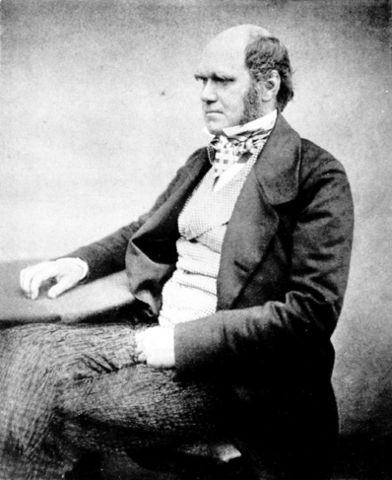 Your philosophy is an inextricable concomitant of your cosmology. Charles Darwin knew this all too well. Most people are at least passingly familiar with Darwin’s seminal work, The Origin of Species. In it, he proffers a framework for understanding the origins of human life – and all life – using his mechanism of evolution by natural selection. In his own words, here is Darwin’s theory in a nutshell:
As many more individuals of each species are born than can possibly survive, and as, consequently, there is a frequently recurring struggle for existence, it follows that any being, if it vary however slightly in any manner profitable to itself, under the complex and sometimes varying conditions of life, will have a better chance of surviving, and thus be naturally selected. From the strong principle of inheritance, any selected variety will tend to propagate its new and modified form. (Origin of Species, p. 29)
Darwin begins with the assumption that life, at its root, is a struggle for survival. He then concludes that those who win the struggle for survival carry on while those who lose the struggle do not. This is natural selection. Moreover, those who win the struggle for survival propagate more of their kind and develop “modified” characteristics which further benefit them in their struggle. This is evolution. Over time – indeed, over lots and lots of time – these beneficial characteristics continue to evolve so radically that whole new species arise from common ancestors while other, weaker species die out. This, then, is the origin of species. This is the origin of our species. We are the product of the cold hand of evolution by natural selection. This is Darwin’s cosmology, that is, his view of the laws of the world and, by extension, the cosmos.
But how you view things cosmologically inevitably informs how you view things philosophically. That is why, after publishing The Origin of Species, Darwin published The Descent of Man, a philosophical take on his cosmological theory. Thus, Darwin lamented according to the presuppositions of his cosmological theory of evolution:
We civilized men do our utmost to check the process of elimination; we build asylums for the imbecile, the maimed, and the sick; we institute poor-laws; and our medical men exert their utmost skill to save the life of every one to the last moment. There is reason to believe that vaccination has preserved thousands, who from a weak constitution would formerly have succumbed to small-pox. Thus, the weak members of civilized societies propagate their kind. No one who has attended to the breeding of domestic animals will doubt that this must be highly injurious to the race of man. It is surprising how soon a want of care, or care wrongly directed, leads to the degeneration of a domestic race; but excepting in the case of man himself, hardly any one so ignorant as to allow his worst animals to breed. (Descent of Man, p. 168)
Darwin laments that humans work against evolutionary progress through wrongheaded ignorant attempts to save and care for those which natural selection would eliminate. If evolution by natural selection is the incontrovertible law of the forward progress of life, then to work against it by tending to the weak and sick is to take life backwards rather than forwards.
Most people, of course, are not nearly so bold connecting cosmological evolution to philosophical evolution as was Darwin. Allowing our sick and maimed to die in the name of natural selection would appall the vast majority us. And yet, Darwin is simply teasing out the philosophical inevitabilities of his cosmological presuppositions. He is being perfectly consistent. Why aren’t we?
The fact of the matter is, the way one views the universe informs and, finally, dictates the morals and ethics one holds. Darwinian evolution, if it is perceived to be the engine behind the improvement of life, cannot be meddled with by the likes of so-called “do-gooders” who are not really doing good at all. For such people are slowing evolution’s forward march by caring for the lesser evolved among us.
Christianity, of course, has a very different view of humanity’s place and value. According to Christianity, human beings are not merely the products of an inexorable evolutionary march, eventually to be displaced as the kings of the cosmos by a better and higher form of life thanks to natural selection. Rather, we are specially created by God “in His own image” (Genesis 1:27) to be the caretakers of His creation (cf. Genesis 1:28-31). Thus, we can, and are even bound, not by some unfathomably lengthy evolutionary progress, but by the intentions of our Creator. And one of His intentions for us is “to love mercy” (Micah 6:8). So, we are merciful to each other. We care for those who cannot care for themselves.
Your philosophy is an inextricable concomitant of your cosmology. So what is your cosmology? One that is driven by evolution by natural selection? Or one that rejoices in the merciful, creative hand of our God? How you answer that question makes all the difference in how you view your life…and the lives of others.


 Pastor Zach's Blog