Posts tagged ‘Martin Luther’
ABC Extra – The Joy of Giving
 The other night, we had a friend and his daughter staying with us. We enjoyed some lively evening conversation and then went off to bed. My buddy’s daughter was getting over an illness, so she was not feeling well and, apparently, she did not sleep well that night. I say, “Apparently, she did not sleep well that night” because, for the most part, I was oblivious to her whines, her cries, and general restlessness that night. My wife, however, who is a light sleeper, was not. “Did you hear her?” she asked me the next morning. “I felt so bad for her.” “I heard her one time…I think,” I stammered.
Being oblivious is nothing new for me. I am well known for overlooking and under-observing things and situations. My wife says it is because I am a guy. And this much I’ll grant her: guys don’t always pay as much attention as they should.
Although the prophet Malachi may have been simply speaking to a nation full of oblivious guys, I highly doubt that was the case. The year is 430 BC. Over one hundred years have passed since a decree went out from the Persian king Cyrus that the Israelites could return to their homeland from their deportation in Babylonia. But few have returned. And those who have returned are spiritually oblivious. Israel’s worship is in a state of despair. There are reports that the Israelites, rather than offering the best (cf. Exodus 23:19) and the first (cf. Exodus 34:19) of their resources to the Lord in worship, are offering animals which are “blind…lame or sick” (Malachi 1:8). And what’s worse, the Israelites seem completely oblivious to their state of spiritual anemia. In fact, one of the most striking rhetorical features of the book of Malachi its use of divine declarations. Throughout the book, God makes a series of lofty declarations, meant point out the complete oblivion of the Israelites to their state of spiritual peril:
- “I have loved you,” says the LORD. But you say, “How have you loved us?” (Malachi 1:2).
- “You, O priests, despise My name.” But you say, “How have we despised Your name?” (Malachi 1:6)
- “You have wearied the LORD with your words.” But you say, “How have we wearied Him?” (Malachi 2:17)
- “Will a man rob God? Yet you are robbing Me.” But you say, “How have we robbed You?” (Malachi 3:8)
Again and again, the Israelites prove themselves oblivious to God’s love and faithfulness and to their sin and wickedness. Indeed, in Malachi 3, God says that the Israelites even try to rob Him. How? “In your tithes and contributions. You are cursed with a curse, for you are robbing Me, the whole nation of you” (Malachi 3:8-9). The Israelites have been selfishly keeping for themselves what they should have been sharing with God. And they didn’t even know it. They were oblivious.
I often wonder if the vast majority of people are completely oblivious to their responsibility to give to God. I quoted these statistics in ABC this past weekend:
- More than one in four Americans give away $0 annually.
- The median annual giving for a Christian is $200, just over half a percent of their annual after-tax income.
- Among Protestants, 10% of evangelicals. 28% of mainline denominational members, 33% of fundamentalists, and 40% of liberal Protestants give away nothing.
Clearly, God’s command to give goes widely unheeded. Yet are we even aware of how much we neglect His statute? Or have we simply lulled ourselves into a state of oblivion, forever content to rehearse the same old chorus of all the reasons and excuses we can’t be generous?
God invites us to give to His work – not because He wants to take from us what we cannot afford, but because He wants to give to us what we do not yet have:
Bring the full tithe into the storehouse, that there may be food in My house. And thereby put Me to the test, says the LORD of hosts, [and see] if I will not open the window of heaven for you and pour down for you a blessing until there is no more need. (Malachi 3:8-10)
At the core of His being, our God is a giver. He loves to give! As Martin Luther so eloquently reminds us:
God has given me my body and soul, eyes, ears, and all my limbs, my reason, and all my senses, and still preserves them. In addition, He gives clothing and shoes, meat and drink, house and homestead, wife and children, fields, cattle, and all my goods. He provides me richly and daily with all that I need to support this body and life, protects me from all danger, and guards me and preserves me from all evil, all out of pure, fatherly, divine goodness and mercy, without any merit or worthiness in me. (Martin Luther, Small Catechism, First Article of the Apostles’ Creed)
What wonderful and bountiful gifts our Lord has given us! And now, He invites us to share in His joy of giving by giving as well – to God’s Church and His people. Will you joyfully receive God’s invitation to give?
Want to learn more on this passage? Go to
www.ConcordiaLutheranChurch.com
and check out audio and video from Pastor Tucker’s
message or Pastor Zach’s ABC!
ABC Extra – Omnipresence and the Sacramental Union
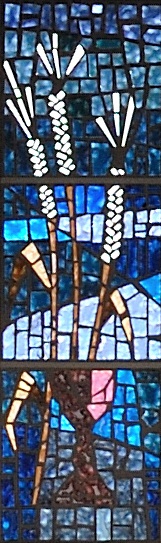 Every time I teach on a text which sets forth the Lord’s Supper, I am always amazed by the “theological heavy lifting” that needs to be done. The debates over the Supper have raged so hot for so long that I always find it necessary to address these debates, all the while, trying to proclaim the clear words of Christ. Such was the case in the Adult Bible Class that I taught this weekend on Mark 14:22-24: “While they were eating, Jesus took bread, gave thanks and broke it, and gave it to His disciples, saying, ‘Take it; this is My body.’ Then He took the cup, gave thanks and offered it to them, and they all drank from it. ‘This is My blood of the covenant, which is poured out for many,’ He said to them.” The crux of the debate over Jesus’ words rests on His statements, “This is My body…This is My blood.”
In Adult Bible Class, I outlined three main positions that have been taken concerning Jesus’ words, “This is My body…This is My blood.” The first is the position of Transubstantiation which contends that the bread and the wine turn into the literal, real body and blood of Jesus and, thus, the bread and the wine are no longer present in the Sacrament. The second is the position of Symbolism which asserts that the bread and the wine are only symbolic of Jesus’ body and blood and Jesus’ body and blood are not literally, really present. The third is the position of the Sacramental Union which explains that when Jesus declares, “This is My body…This is My blood,” His body and blood becomes really, literally present along with the bread and the wine. The Lutheran position is that of the Sacramental Union.
While I spent a fair amount of time addressing the position of Transubstantiation in Adult Bible Class, I wanted to spend some time addressing the position of Symbolism in this blog. Interestingly, the main objection of those who hold to a Symbolic view of the Sacrament is that Christ is now seated at the right hand of the Father in heaven and so His body and blood cannot be on earth on church altars worldwide.
Lutheran theologians have traditionally responded to this objection by asserting a Christological tenet known as Genus Majestaticum, which states that since there are two natures in Christ – a human nature and a divine nature – the divine nature can affect the human nature in such a way that the human nature can do things which it would not otherwise be able to do. For example, a mere human could not walk on water, but because Jesus was both divine and human, He could. Or, a mere human could not rise from death, but Jesus, as both God and man, did! Luther used this understanding of the two natures in Christ to argue that even though Jesus is seated at the right hand of the Father, His body and blood can still be on Christian altars because He, as God, is omnipresent, even if other humans are not, and indeed cannot be, omnipresent.
Luther’s primary antagonist in this debate, the great Swiss reformer Ulrich Zwingli, responded to Luther’s use of the Genus Majestaticum by saying that Christ’s body would then be in every piece of bread and even every corner of nature. This, of course, is pantheism and is a pagan, not a Christian, conception of God. Thus, according to Zwingli, Christ’s body and blood could not be with the bread and the wine. Luther’s response to Zwingli’s accusation of pantheism remains one of the finest defenses ever of the doctrine of the Sacramental Union in the Lord’s Supper:
It is one thing if God is present, and another if He is present for you. He is there for you when He adds his Word and binds Himself, saying, “Here you are to find Me.” Now when you have the Word, you can grasp and have Him with certainty and say, “Here I have Thee, according to Thy Word.” Just as I say of the right hand of God: although this is everywhere, as we may not deny, still because it is also nowhere, as has been said, you can actually grasp it nowhere, unless for your benefit it binds itself to you and summons you to a definite place. This God’s right hand does, however, when it enters into the humanity of Christ and dwells there. There you surely find it, otherwise you will run back and forth throughout all creation, groping here and groping there yet never finding, even though it is actually there; for it is not there for you. So too, since Christ’s humanity is at the right hand of God, and also is in all and above all things according to the nature of the divine right hand, you will not eat or drink Him like the cabbage and soup on your table, unless He wills it. He also now exceeds any grasp, and you will not catch Him by groping about, even though He is in your bread, unless He binds himself to you and summons you to a particular table by His Word, and He Himself gives meaning to the bread for you, by His Word, bidding you to eat Him. This He does in the Supper, saying, “This is My body,” as if to say, “At home you may eat bread also, where I am indeed sufficiently near at hand too; but…when you eat this, you eat My body, and nowhere else. Why? Because I wish to attach Myself here with My Word, in order that you may not have to buzz about, trying to seek Me in all the places where I am; this would be too much for you, and you would also be too puny to apprehend Me in these places without the help of my Word.” (AE 37:68)
Luther does not deny that Christ’s omnipresence allows Him to be everywhere at once, even, in my favorite line, in “the cabbage and soup on your table.” But this matters not to Luther. What matters to Luther is not just that Christ is present, but that Christ is present “for you.” For when Christ is present “for you,” He is present with His promise of forgiveness of sins, life, and salvation. And He is present in such a way in Communion, even as He promises: “This is my blood of the covenant, which is poured out for many for the forgiveness of sins” (Matthew 26:28). Christ has promised to be present with the bread and the wine for the forgiveness of our sins.
The point of all of the above “heavy theological lifting” is finally very simple: We can be comforted by Communion because Christ’s body and blood are as close as the bread and the wine. And as I mentioned in Adult Bible Class, that closeness is precious. Because whereas our sins against God and our betrayals of God separate us from God, He promises to come close by means of His holy meal. And I would have Communion no other way. For when I receive Communion, this is what I desire – to actually commune with God. To have Him close. And I know He is. For He has promised it.
Want to learn more on this passage? Go to
www.ConcordiaLutheranChurch.com
and check out audio and video from Pastor Josh’s
message or Pastor Zach’s ABC!

Letting Jesus Pick And Choose
 One of the joys I have as a pastor is being able to think through theological questions with the great folks here at Concordia. And the great folks here at Concordia aren’t afraid to ask. From questions about Christ’s work on the cross to questions about suffering to questions about heaven to questions about Hebrew and Greek, I’ve received plenty of terrific queries which have been a joy – and many times a challenge – for me to answer.
From time to time, I not only like to answer people’s questions in a meeting at my office, or on the phone, or in an email, but also on my blog, especially if it is a question that I commonly receive. And that is what I thought I’d do with this often asked question: “How does the Old Testament relate to the New Testament? If both testaments are God’s inspired Word, then why do we insist on following some of the Old Testament’s laws like the Ten Commandments while at the same time disregarding its ceremonial and sacrificial stipulations?” This is a good, and very complex, question!
It is true that, on the surface, it can almost seem like Christians sometimes pick and choose which Old Testament laws they would like to follow. The one about honoring your father and mother (cf. Exodus 20:12)? Yeah, we ought to keep that one around – especially if we have children. The one about sprinkling a bird’s blood over a house after it has been cleansed from mildew (cf. Leviticus 14:33-57)? We usually take a pass on that one.
So why do we follow some laws and not others? Classically, a distinction has been made between those laws which are moral and those which are ceremonial. Moral laws stand through both testaments. Thus, honoring fathers and mothers, as a moral mandate, continues to hold sway over our thoughts, words, and deeds, as do all of the Ten Commandments. Ceremonial laws, however, with all of their sacrifices and rituals, have been abrogated by Christ. As the preacher of Hebrews writes: “When [Jesus] had offered for all time one sacrifice for sins, He sat down at the right hand of God…And where [sins] have been forgiven, there is no longer any sacrifice for sin” (Hebrews 10:12, 18). Following Jesus’ sacrifice, no more sacrifices are needed. Therefore, to insist on following the Old Testament sacrificial stipulations is an affront to and a debasement of the sacrifice of Christ on the cross.
Finally, the reason we do not follow every Old Testament stipulation is because of the way we read our Bible. We read every page, even the ones with all of the strange rules and regulations, through the lens of what Christ has taught, done, and fulfilled. As Jesus Himself says, “These are the Scriptures that testify about Me” (John 5:39). Martin Luther echoes this sentiment when he writes: “I have often said that whoever would study well the Bible, especially the spiritual significance of the histories, should refer everything to the Lord Christ” (What Luther Says 207). Thus, we interpret and follow the Scriptures of the Old Testament the way that Christ follows and interprets the Scriptures of the Old Testament. No Old Testament Scripture, then, is to be read apart from God’s revelation in Christ.
Ben Witherington III, professor of New Testament at Asbury Theological Seminary, has perhaps written the finest, most succinct statement as to how the Old Testament relates to the New Testament that I have found: “Jesus, as God’s Wisdom come in person, acts with sovereign freedom when it comes to the law. Sometimes He intensifies its demands, sometimes He sets aside its demands, sometimes He affirms its demands, sometimes He offers a new teaching that can in some cases supplement and in others supplant previous teaching” (The Indelible Image, vol.1, 32). This is precisely right. As Paul writes, “Christ is the end of the law” (Romans 10:4). The Greek word for “end” is telos, meaning “goal.” Thus, the Old Testament laws find their goal in how Christ arbitrates, abrogates, interprets, and fulfills them. You cannot read the Old Testament correctly if you do not read it with Jesus in mind.
So why do we not offer sacrifices to God when our homes are filled with mildew? Because Christ has offered the perfect and final sacrifice for all time. Why do we still continue to honor our parents? Because Christ has taught us to do so (cf. Mark 7:9-13). We let Jesus pick and choose which laws we continue to follow and which laws have been abrogated by His work on the cross. Reading the Old Testament is as simple as listening to Jesus.
Want to learn more? Go to
www.ConcordiaLutheranChurch.com
and check out audio and video resources from Pastor Tucker’s
messages or Pastor Zach’s ABC’s!
Pondering Christ’s Passion
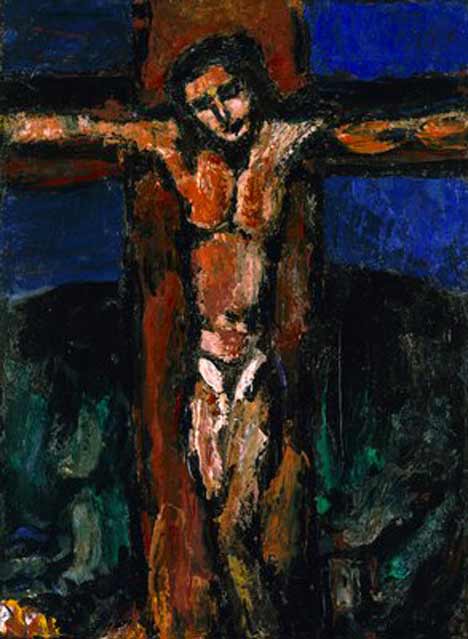 It is a traditional devotional practice during the season of Lent for Christians to take some time to reflect on Christ’s sacrifice for us on the cross. As we are in the midst of this special season, I thought it would be appropriate to share with you some selections from Martin Luther’s Meditation on Christ’s Passion from 1519. This meditation was one of Luther’s favorites. At one point he called it his “very best book.” Indeed, it is a brilliant reflection as Luther focuses with laser like clarity on Christ’s sacrifice.
As you read these words, I would encourage you to notice the way in which Luther draws a sharp distinction between God’s Law and God’s Gospel. God’s Law is expressed in a way that is harsh and inescapable. Luther’s expression and condemnation of our sinfulness might sound shocking, but it is certainly Scriptural. But Luther does not leave us in despair. With the heart of a pastor, he points us to the sacrifice of Christ and gloriously sets forth for us how it is all-sufficient for our sin.
And so I invite you to ponder now on Christ’s holy Passion. May this reflection be a blessing to you.
They contemplate Christ’s passion aright who view it with a terror-stricken heart and a despairing conscience. This terror must be felt as you witness the stern wrath and the unchanging earnestness with which God looks upon sin and sinners, so much so that he was unwilling to release sinners even for his only and dearest Son without his payment of the severest penalty for them. Thus he says in Isaiah 53:8, “I have chastised him for the transgressions of my people.” If the dearest child is punished thus, what will be the fate of sinners? It must be an inexpressible and unbearable earnestness that forces such a great and infinite person to suffer and die to appease it. And if you seriously consider that it is God’s very own Son, the eternal wisdom of the Father, who suffers, you will be terrified indeed. The more you think about it, the more intensely will you be frightened.
You must get this thought through your head and not doubt that you are the one who is torturing Christ thus, for your sins have surely wrought this. In Acts 2:36–37, St. Peter frightened the Jews like a peal of thunder when he said to all of them, “You crucified him.” Consequently three thousand alarmed and terrified Jews asked the apostles on that one day, “O dear brethren, what shall we do now?” Therefore, when you see the nails piercing Christ’s hands, you can be certain that it is your work. When you behold his crown of thorns, you may rest assured that these are your evil thoughts, etc.
We must give ourselves wholly to this matter, for the main benefit of Christ’s passion is that man sees into his own true self and that he be terrified and crushed by this. Unless we seek that knowledge, we do not derive much benefit from Christ’s passion.
After man has thus become aware of his sin and is terrified in his heart, he must watch that sin does not remain in his conscience, for this would lead to sheer despair. Just as our knowledge of sin flowed from Christ and was acknowledged by us, so we must pour this sin back on him and free our conscience of it. Therefore beware, lest you do as those perverse people who torture their hearts with their sins and strive to do the impossible, namely, get rid of their sins by running from one good work or penance to another, or by working their way out of this by means of indulgences. Unfortunately such false confidence in penance and pilgrimages is widespread.
You cast your sins from yourself and onto Christ when you firmly believe that his wounds and sufferings are your sins, to be borne and paid for by him, as we read in Isaiah 53:6, “The Lord has laid on him the iniquity of us all.” St. Peter says, “in his body has he borne our sins on the wood of the cross” (1 Peter 2:24). St. Paul says, “God has made him a sinner for us, so that through him we would be made just” (2 Corinthians 5:21). You must stake everything on these and similar verses. The more your conscience torments you, the more tenaciously must you cling to them. If you do not do that, but presume to still your conscience with your contrition and penance, you will never obtain peace of mind, but will have to despair in the end. If we allow sin to remain in our conscience and try to deal with it there, or if we look at sin in our heart, it will be much too strong for us and will live on forever. But if we behold it resting on Christ and see it overcome by his resurrection, and then boldly believe this, even it is dead and nullified. Sin cannot remain on Christ, since it is swallowed up by his resurrection. Now you see no wounds, no pain in him, and no sign of sin. Thus St. Paul declares that “Christ died for our sin and rose for our justification” (Romans 4:25). That is to say, in his suffering Christ makes our sin known and thus destroys it, but through his resurrection he justifies us and delivers us from all sin, if we believe this.
Luther’s Works: American Edition, Volume 42, pages 8-12
CHRIST.ology – Part 1
 Today begins a three-part series of blogs I plan to post on Christology. These are based on a three-week Bible study I am leading at Concordia’s Men’s Bible Breakfast on Tuesday mornings.
“Christology” is a compound word. The suffix “-ology” means “the study of” and the word “Christ” means, well, “Christ.” Thus, Christology is “the study of Christ.” And indeed, there is no important topic – or, more accurately, there is no more important person – to study. Martin Luther explains:
I have perceived and noted in all histories of all of Christendom that all those who have correctly had and kept the chief article of Jesus Christ have remained safe and secure in the right Christian faith. Although they may have sinned or erred in other matters, they have nevertheless been preserved at the last. For whoever stands correctly and firmly in the belief that Jesus Christ is true God and man, that he died and has risen again for us, such a person has all other articles added to him and they firmly stand by him…On the other hand, I have also noticed that all error, heresy, idolatry, offense, misuse, and evil in the church originally came from despising or losing sight of this article of faith in Jesus Christ. (AE 34:207-208)
If we lose a proper Christology, Luther argues, we lose all of theology and quickly lapse into rank heresy and wickedness. Therefore, Christology is foundational for everything we believe, teach, and confess. This is why it’s so important.
Classically, theologians have talked about two natures in Christ – a divine nature and a human nature. And yet, even though there are two natures, there is one Christ. Over the next two weeks, I will write about how people have gotten the two natures in Christ wrong as I survey the historical heresies that have plagued Christology. I will also write about how the two natures in Christ relate to each other. But in this blog, I just want to briefly comment on two passages of Scripture which I believe are foundational to properly understanding Christology. The first passage is Matthew 16:13-16:
When Jesus came to the region of Caesarea Philippi, he asked his disciples, “Who do people say the Son of Man is?” They replied, “Some say John the Baptist; others say Elijah; and still others, Jeremiah or one of the prophets.” “But what about you?” he asked. “Who do you say I am?” Simon Peter answered, “You are the Christ, the Son of the living God.”
Two things are especially notable about this exchange between Jesus and his disciples. First, the answers of the people as to Jesus’ identity are notable, especially when considered in light of Mark 6:14-15: “King Herod heard about Jesus’ miracles, for Jesus’ name had become well known. Some were saying, ‘John the Baptist has been raised from the dead, and that is why miraculous powers are at work in him.’ Others said, ‘He is Elijah.’ And still others claimed, ‘He is a prophet, like one of the prophets of long ago.’” These answers to Jesus’ identity of John the Baptist, Elijah, and one of the prophets were apparently stock answers. Herod Antipas believes that Jesus is John the Baptist come back to life to haunt him because he had earlier beheaded him. Peter however, has a different answer, “You are the Christ, the Son of the living God.” Peter defies all the stock answers and affirms Jesus’ divinity as “the Son of the living God.” He confesses good Christology. And this leads to the second especially notable thing about this passage. When Jesus asks, “But what about you? Who do you say I am?” the “you” is plural. It’s “y’all.” In other words, even though Peter is one who answers Jesus’ question, Jesus is positing this question others as well. Indeed, this is a question that Jesus asks every disciple, including you. And this means that every disciple must answer for him or herself, including you. Thus, Christology is vital because Jesus himself asks us to confess who he is. Do you have an answer to Jesus’ question?
The second passage that is especially pertinent to Christology is 2 John 7-11:
Many deceivers, who do not acknowledge Jesus Christ as coming in the flesh, have gone out into the world. Any such person is the deceiver and the antichrist. Watch out that you do not lose what you have worked for, but that you may be rewarded fully. Anyone who runs ahead and does not continue in the teaching of Christ does not have God; whoever continues in the teaching has both the Father and the Son. If anyone comes to you and does not bring this teaching, do not take him into your house or welcome him. Anyone who welcomes him shares in his wicked work.
In Matthew 16, the Christological problem is that those outside of Christ’s church are being deceived as to Christ’s identity. In 2 John, the problem is that some inside the church are trying to deceive others as to Jesus’ identity. And interestingly, they do this not so much by denying his divinity as they do by denying his humanity: “Many deceivers, who do not acknowledge Jesus Christ as coming into the flesh, have gone out into the world” (2 John 7). This heresy seems to be rooted in a philosophy called Gnosticism, which denied that the eternal God could or would ever want to become human. Thus, there were teachers who taught that even though Christ seemed human, his humanity was merely an illusion. We’ll look at this heresy more in-depth when we study the Docetists. For now, suffice it to say that John thunders against such people: “Do not take these people into your house or welcome them” (2 John 10).
But doesn’t this seem a little harsh? After all, isn’t Jesus known as a man who “welcomes sinners and eats with them” (Luke 15:2). Yes, but those “sinners” were people outside the faith who Jesus was evangelizing so that they might believe. In John’s case, there are people inside the faith – supposedly, at least – who are, through their false teaching, seeking to drag faithful Christians away from Christ. To them, John responds the same way that Jesus responded to the religious leaders of his day who also supposed themselves to be in the faith while leading people astray: “You brood of vipers, how can you who are evil say anything good” (Matthew 12:34)?
Thus, in these two passages, we read of the heart and soul of Christology. Jesus is “the Christ, the Son of the living God” (Matthew 16:16). That is, Jesus is true God. But Jesus has also “come into the flesh” (2 John 7). That is, Jesus is also true man. True God. True Man. This is Christ. And this is Christology.
Christology. Yes, it’s a big word. But it’s also central to everything we believe. I hope that this blog has helped you understand why. So, until next Thursday, I’ll simply leave you with these questions: Who do you say Jesus is? What’s your Christology? I hope that you can confess along with Peter and the church, “I believe, teach, and confess that Jesus, true God and true man, died and rose again for my forgiveness of sins, life, and salvation.”


 Pastor Zach's Blog